Jeffrey

Michigan arts center to demolish lodge formerly named for Jeffrey Epstein

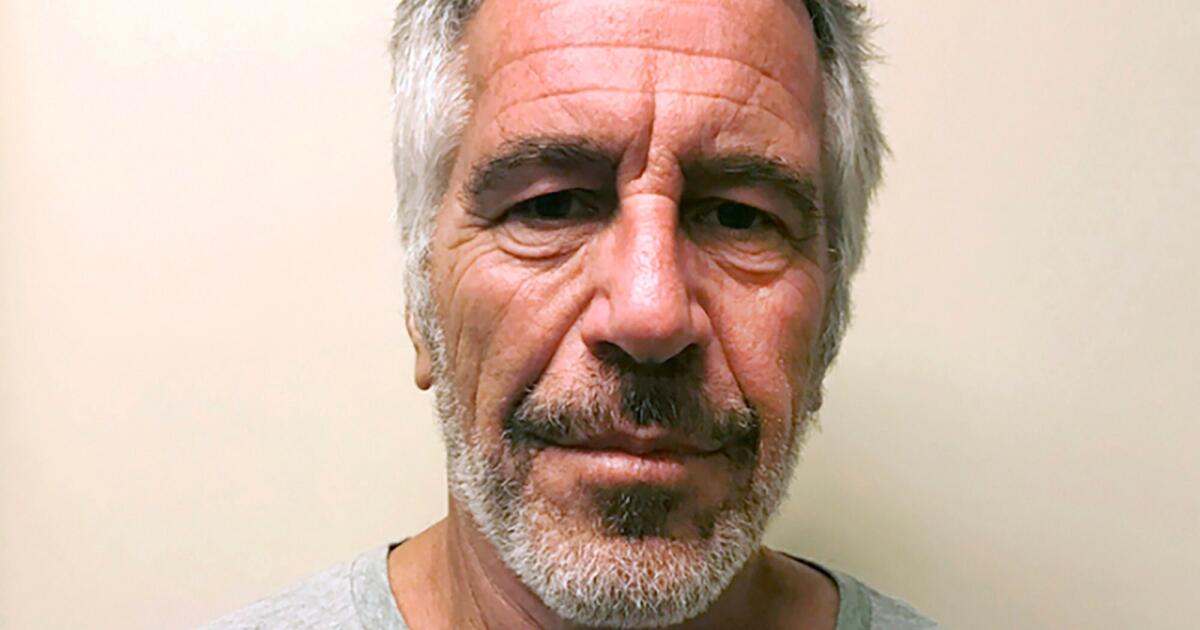
A Michigan summer arts camp and boarding school where Jeffrey Epstein has been accused of meeting at least two of his victims will tear down a lodge that once bore his name.

The Interlochen Center for the Arts said this week that its board of trustees has approved a plan to demolish the Green Lake Lodge, which had been known as Jeffrey E. Epstein Scholarship Lodge until the school cut ties and scrubbed references to the late millionaire sex offender after his first conviction in 2008.

Epstein attended the Interlochen Arts Camp in 1967 as a teenager, and donated more than $400,000 to the school between 1990 to 2003, including $200,000 for the construction of the lodge.

“The lodge has, over time, come to carry associations that are not reflective of who we are as an institution or the values we strive to uphold,” Interlochen said in a statement. “After careful consideration, the Board determined that removing this structure in a safe and timely manner is the right step for Interlochen at this time.”

A world-renowned destination for young artists, actors and musicians, Interlochen’s alumni include Grammy winners Chappell Roan and Norah Jones and Oscar winner Da’Vine Joy Randolph.

At least two of Epstein’s accusers have said they met him at Interlochen in the 1990s.

The school said it was aware of news reports about the women’s claims and said it has invited them to speak with an independent investigator as part of an external investigation into reports of historical misconduct at Interlochen.

A pair of internal reviews, most recently after Epstein’s sex trafficking arrest in 2019, found no reports of misconduct at Interlochen involving Epstein in its records, the school said.

Epstein visited Interlochen periodically, often with his confidante and former girlfriend Ghislaine Maxwell, and stayed in the lodge now marked for demolition.

According to correspondence included in the Justice Department’s recent release of Epstein-related records, he directed that tuition for at least one student be paid out of his donations and once flew violinist Itzhak Perlman to the school on his private jet.

Epstein killed himself in a federal jail in Manhattan in August 2019, a month after being indicted on federal sex trafficking charges. In 2008 and 2009, he served jail time in Florida after pleading guilty to soliciting prostitution from someone under the age of 18.

Maxwell was convicted in 2021 of sex trafficking for helping to recruit some of Epstein’s underage victims, and is serving a 20-year prison sentence.

Source link

DOJ asks court to halt Jeffrey Clark disbarment proceedings

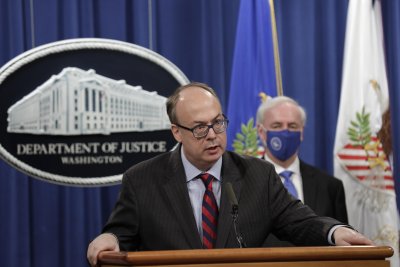
The Justice Department on Wednesday filed a lawsuit seeking to nullify D.C. disbarment proceedings against Jeffrey Clark, seen here in October 2020 as acting assistant U.S. attorney general. File Photo by Yuri Gripas/EPA-EFE

May 13 (UPI) — The Justice Department filed a lawsuit Wednesday evening against D.C. disciplinary officials who recommended Jeffrey Clark be disbarred over his efforts to overturn 2020 election results, the latest move by the Trump administration to defend allies accused of helping President Donald Trump remain in power after that election loss.

The lawsuit in a federal court in D.C. alleges the disciplinary officials used their powers to punish lawyers over what federal prosecutors describe as “internal Executive Branch deliberations” in order to regulate federal government actions.

“Weaponizing state bar discipline against Executive Branch attorneys in this way chills them from giving candid legal advice to others in the Executive Branch, including the president and attorney general,” the lawsuit states.

“To permit these proceedings is to allow state bar authorities to control the Executive Branch. That is not the law.”

Clark was an assistant attorney general at the Justice Department following Trump’s 2020 election loss to Joe Biden, and urged Justice Department officials to issue a letter he wrote casting doubt on election results, according to congressional investigators and D.C. disciplinary officials.

The letter specifically targeted the results in Georgia, a swing state Trump lost to Biden by 11,779 votes, alleging a Justice Department investigation had uncovered election “irregularities” despite Attorney General William Barr having already announced there was no evidence of outcome-determinative fraud in the election prior to his resignation.

Clark had prepared the letter to be signed by Barr’s replacement, then-acting Attorney General Jeffrey Rosen, and Principal Associate Deputy Attorney General Richard Donoghue, the second highest-ranking Justice Department lawyer, both of whom refused because they knew its contents were untrue.

Clark continued to push for the Justice Department to issue the letter, which he intended to be used as a template to be sent to other states. Amid the political turmoil, Trump considered appointing Clark as attorney general — a move Clark encouraged so he could launch nationwide investigations to uncover unfounded claims of election issues.

Trump abandoned the idea of appointing Clark only after being informed doing so would cause mass resignations among Justice Department leadership.

The D.C. Office of Disciplinary Counsel opened its investigation into Clark’s actions after Sen. Dick Durbin, as then-chairman of the committee, asked it to probe his “serious violations of professional conduct.”

The D.C. Court of Appeals Board on Professional Responsibility in July recommended that Clark be disbarred in D.C., stating that “when a lawyer attempts to make intentional false statements on an issue that the lawyer understands to be a ‘pressing matter of overriding national importance,’ or knowing that the false statement would have serious and far-ranging consequences, they deserve the ultimate sanction.”

A final judgment has not yet been issued in the case.

The Justice Department on Wednesday asked the court to quash the D.C. disciplinary proceedings against Clark, and alleged they violate the Supremacy Clause and Article II of the Constitution by arguing that Clark was acting as a federal government employee who cannot be punished for performing Executive Branch duties.

Federal prosecutors also frame the issue as involving internal discussions. They said Clark attempted to persuade his superiors to issue a draft letter “that he felt reflected the actual law and facts about the 2020 election.”

“D.C. disciplinary authorities may not punish a United States official for disagreeing with a superior or coworker or for sharing an opinion just because those disciplinary authorities disagree with it,” the filing states.

Acting Attorney General Todd Blanche also accused the D.C. Bar of being “a blatantly partisan arm of leftist causes,” accusing it of being weaponized.

“The D.C. Bar will no longer be permitted to probe sensitive Executive Branch deliberations and target Executive Branch officials with whom they happen to politically disagree, and federal attorneys will once again be free to share their candid legal advice with their bosses and colleagues,” he said in a statement.

Clark was never charged in federal court in connection with his role in the alleged scheme, but he, Trump and 17 others were indicted in Georgia on racketeering charges. The case was dismissed after the prosecutor appointed following Fulton County District Attorney Fani Willis’ removal declined to pursue the charges.

Other Trump allies accused of aiding his efforts to overturn the 2020 election have also been sanctioned in D.C., including Rudy Giuliani, who was disbarred in D.C. and New York, and John Eastman, whose D.C. law license was suspended on an interim basis after he was disbarred in California.

Wednesday’s lawsuit is the latest action by the federal government aiding those who supported Trump’s false election claims.

On Trump’s first day in office, he issued clemency to the roughly 1,500 people charged or convicted in the Jan. 6, 2021, insurrection.

He also issued pardons to Giuliani, Eastman, Clark, Sidney Powell and many others accused of aiding his efforts.

Source link

Purported Jeffrey Epstein suicide note had echoes of messages he had sent earlier

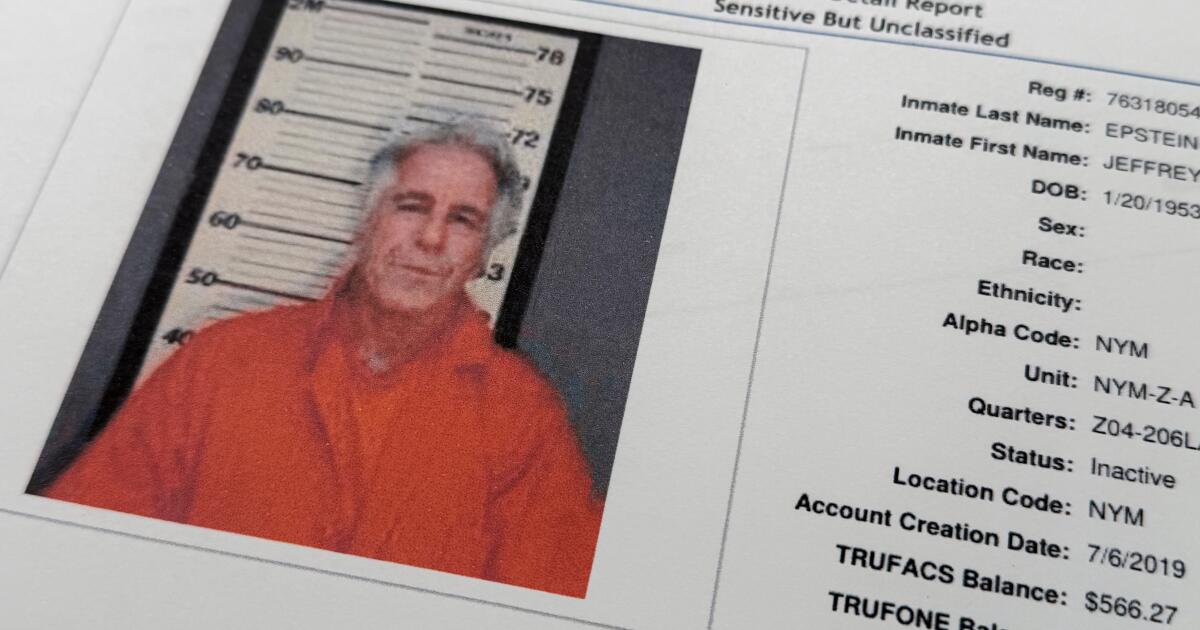
A federal judge in New York unsealed a suicide note Wednesday purportedly written by Jeffrey Epstein in July, 2019, before a failed suicide attempt soon after he had been taken into federal custody on sex trafficking charges.

The disgraced financier would ultimately die weeks later in the same New York facility in what was ruled a suicide.

While the note’s authenticity has not been established, it contains an apparent reference to a line from a 1931 Little Rascals film that Epstein had used in at least two email messages, according to the trove of Epstein documents released by the U.S. Department of Justice this year in response to the bipartisan Epstein Files Transparency Act.

In the short handwritten note released Wednesday, Epstein allegedly wrote, “They investigated me for month — Found nuthing!!!”

The note concludes, “Whatcha want me to do — Burst out cryin!! No Fun – Not Worth It!!”

It was a phrase Epstein had used before.

In a September, 2016, email to his brother, Mark, he wrote, “whtchoo want me toodo — bust out crying” in response to news that their cousin had become a grandfather.

And in another message the following year to his childhood friend Terry Kafka, Epstein wrote, “Whatcha want me todo/bust out cryin,” in response to a message from Kafka about being nostalgic

Epstein’s brother and Kafka did not immediately responded to requests for comment.

The line is an apparent reference to a 1931 Little Rascals short film “Little Daddy,” in which the character Stymie says, “Well, what do you want me to do, bust out crying?” when another character says that it will be their last breakfast together.

The note emerged from the court records of Epstein’s onetime cellmate Nicholas Tartaglione, a former police officer who is serving four consecutive life sentences for a 2016 quadruple murder.

It was released in response to a request by the New York Times.

The note itself was not included in the millions of pages released by the Justice Department.

In 2020, “60 Minutes” disclosed a note Epstein reportedly wrote days before his August, 2019, death that included complaints about his conditions and similarly concluded with the phrase “No fun!!!”

Journalist Katie Phang sued acting Atty. Gen. Todd Blanche for allegedly failing to comply with the requirements of the Epstein files law passed last year, which required that the documents be released in their entirety within 30 days, with reasoning provided for any documents not released.

The department released the files after the deadline passed and has faced criticism for removing or not releasing some documents and simultaneously failing to redact the names of numerous Epstein victims while redacting the names of some of Epstein’s friends and associates.

Source link