jefferson

Column: My pick for California governor is … I’m still working on it

Like millions of Californians, I haven’t voted yet in the primary election. That’s because I can’t decide who should be our governor. Here’s what I’m thinking:

It’s an underwhelming field. But one of these Democratic contenders will very likely replace Gov. Gavin Newsom in January.

Based on the latest polling, a Democrat — probably Xavier Becerra — will qualify for the November general election ballot. That Democrat will face a Republican — very likely Steve Hilton.

It’s inconceivable that a Democratic gubernatorial candidate would lose to a Republican in this polarized, deep blue state. That means we’ll actually be choosing the governor in next Tuesday’s primary. You can dismiss the November face-off as essentially moot.

You’re reading the L.A. Times Politics newsletter

George Skelton and Michael Wilner cover the insights, legislation, players and politics you need to know. In your inbox Monday and Thursday mornings.

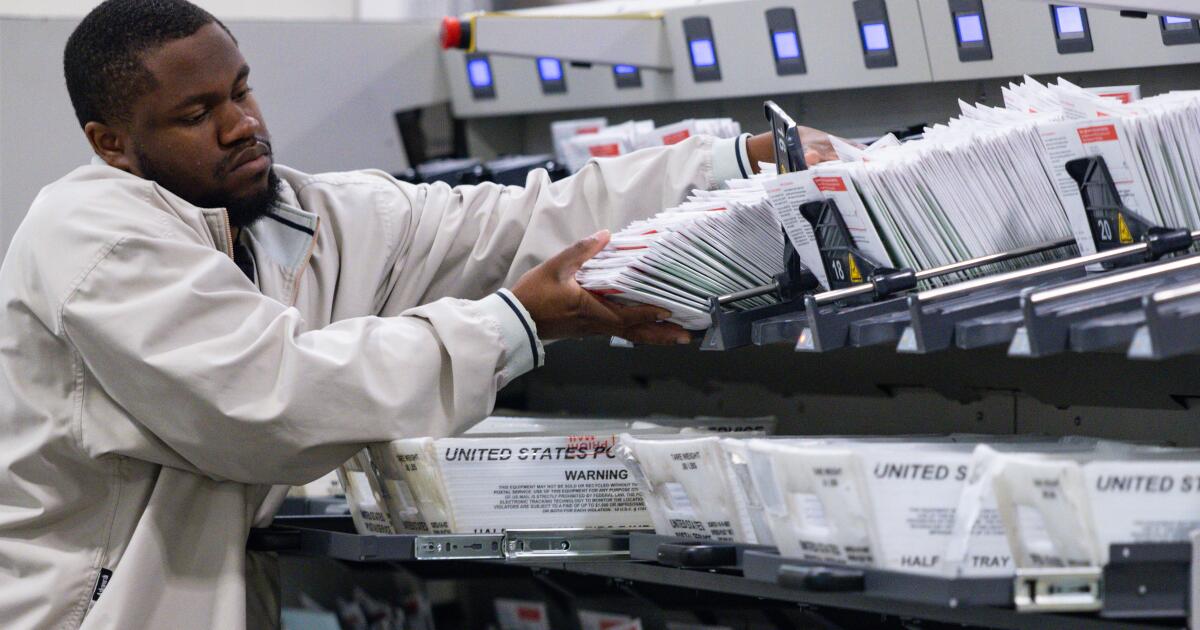
My mail ballot, like millions of others in California, has been sitting on the kitchen table for weeks.

As of this writing, I only know who I’m not voting for. And that’s either of the two Republicans: former Fox News host Hilton and Riverside County Sheriff Chad Bianco. That’s not because they’re Republicans. I’ve voted for plenty of Republicans — for governor, senator and president.

But Hilton won’t acknowledge that President Trump lost to Joe Biden in 2020. And anyone who doesn’t have the backbone to stand up to Trump and recognize a basic fact of our democracy shouldn’t be trusted as our governor.

Bianco disqualified himself by buying into Trump’s persistent lies about election fraud and seizing 650,000 ballots from last November’s Proposition 50 voting. The sheriff wasted taxpayer resources and, moreover, doesn’t have any vote-counting expertise.

Now for the Democrats:

It has been a disappointing campaign — a missed opportunity to seriously discuss crucial issues such as the need to become more self-sufficient locally on water supply, significantly improve wildfire prevention and regulate the coming AI menace.

I’ve winced during televised debates and TV ads at ugly attacks against opponents.

For a while, I considered casting my vote for the Democrat ranking highest in the polls. I thought that in a large Democratic field, the vote could be splintered and only two Republicans would qualify for November. But that now seems inconceivable because three Democrats dropped out.

Anyway, an individual’s vote is too precious not to be used for the candidate considered best for the job.

These are my thoughts on who that might be:

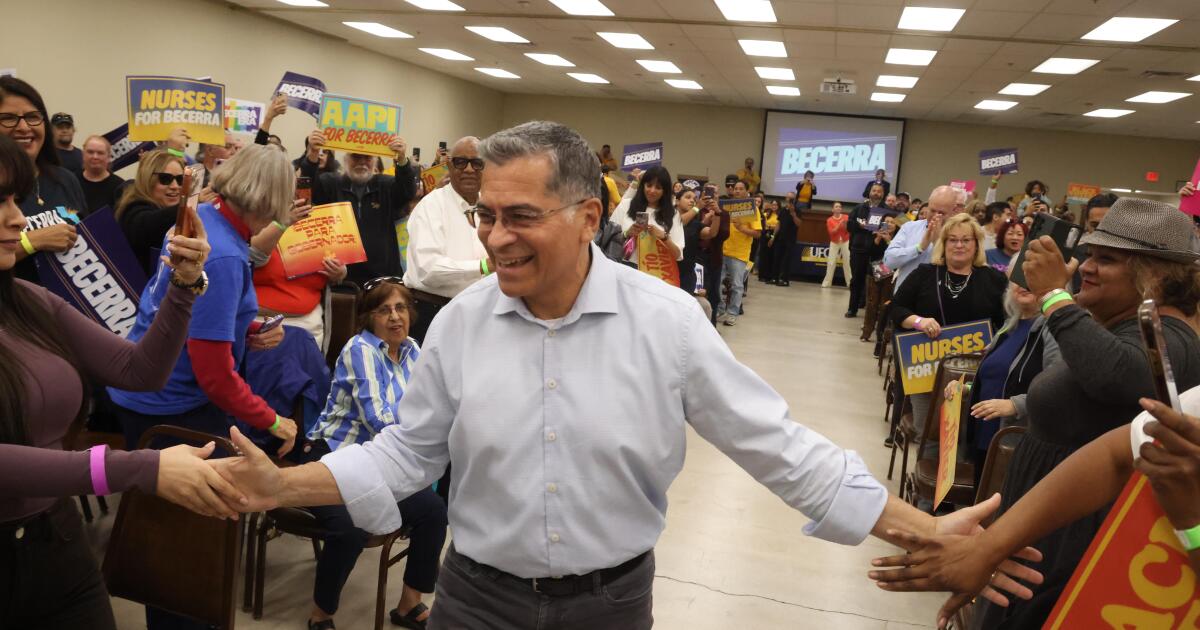
Becerra, 68. He’s the Democratic front-runner and seemingly the safe choice. Not a huge risk taker. He probably wouldn’t screw up and make things worse. He might even marginally improve some stuff.

Calm and understated. Decent. Likable. He brings an impressive resume with the experience and knowledge to handle the job: a former U.S. health secretary, California attorney general, longtime congressman from Los Angeles and a state assemblyman.

Unfortunately, he has often been too vague about what he’d do as governor. That’s largely because he’s not the sort who rushes into things. He wants to first “scrub” the matter. Not a bad trait.

He should have better answers, however, for accusations that he was derelict in Washington for releasing thousands of undocumented immigrant children to sponsors who exploited them as laborers — and also for a scandal involving his top aide who pilfered Becerra’s campaign account. Becerra said he didn’t know about it. But he should have.

Becerra would be California’s first elected Latino governor. Like many California Latinos, he’s the son of hardworking Mexican immigrants who took advantage of their opportunity to seek the California Dream.

Tom Steyer, 68. Here’s the liberal firebrand who wants to shake up Sacramento.

The question is whether he has the ability and knowledge to pull it off. Steyer wants to split up the private utility monopolies and lower consumers’ electricity bills. And how’s he going to do that? We really haven’t heard.

He’s a billionaire who has never held public office and is trying to start at the top by spending $200 million of his own money to buy into the governor’s suite. California voters have always rejected such candidates.

I’ve got nothing against billionaires. In fact, I think it’s a noble use of their money to participate in democracy and try to fix the state.

But in Steyer’s case, his recent unrelenting attack ads against surging Becerra — now his chief campaign rival — are disturbing and seem like overkill. He’d be better off telling us how he plans to improve our daily lives.

Katie Porter, 52. I find her refreshing, despite a feisty personality that grates on many voters.

She’s a former Orange County congresswoman and longtime professor of consumer law who’s plenty smart.

What I like is she has done her homework, is very conversant on most issues and is specific about what she’d do as governor.

OK, some of her goals are probably beyond financial reach: single-payer healthcare, free college tuition and free child care.

But she’d shake up Sacramento and that’s needed. She’d stand up to special interests. And she’d be California’s first female governor.

Could she work well with the Legislature? Probably well enough, given a governor’s immense power to reward and punish.

Matt Mahan, 43. The centrist San José mayor hasn’t spent enough time in his current job to prove himself to voters beyond the San Francisco Peninsula. And he entered the race too late.

He’s not quite ready. Knock again in a few years.

Antonio Villaraigosa, 73. He might be the best potential governor of the lot.

He understands Sacramento as a former Assembly speaker and urban problems as an ex-Los Angeles mayor. He’s a no-nonsense guy who has been leveling with voters..

But age discrimination is a problem, although he’s only five years older than Becerra and Steyer. And he hasn’t held office in many years. His time is past.

For me, it’s time to pick up my ballot and decide who should be California’s next governor.

What else you should be reading

The must-read: Voter guide to the 2026 California primary election
Money, it’s a gas: Billionaire Tom Steyer’s $192.4-million self-funded California gubernatorial bid shatters records
The L.A. Times Special: Steve Hilton and Spencer Pratt need Latinos, not Trump

Until next week,
George Skelton


Was this newsletter forwarded to you? Sign up here to get it in your inbox.
Source link

Column: MAGA still loves Trump. What does that mean for November?

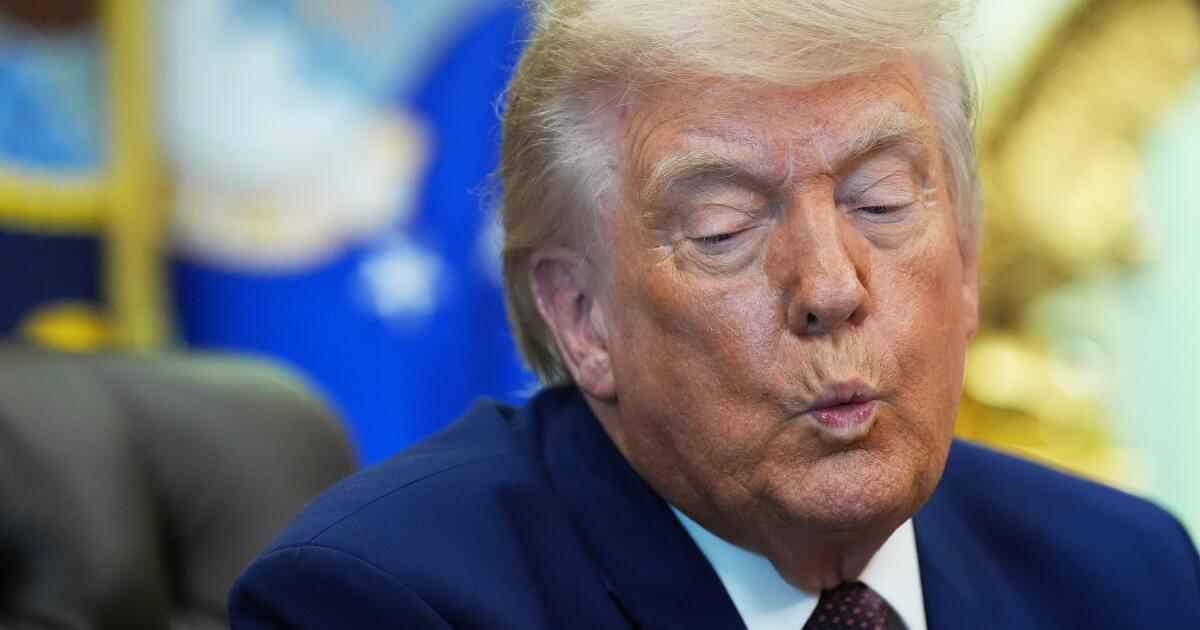
Tuesday night, America voted in primary elections and the big winner was President Trump.

One after another, his enemies — and by that I mean anyone who has ever done anything other than grovel — were defeated in elections across the country.

Rep. Thomas Massie, the Kentucky Republican, was perhaps the most high-profile to go down in flames. Massie, you may recall, joined with his California Democratic colleague Ro Khanna to campaign for the release of the Epstein files, which made Trump big-mad since his name is in them a lot.

The Trump-endorsed candidate Ed Gallrein won instead.

“You are ruled by the Epstein class that cares nothing about you,” former Georgia Rep. Marjorie Taylor Greene, also a victim of Trump’s ire, posted on social media after Massie’s loss. “Tonight the future of the Republican Party was destroyed.”

But was it? Or is it simply now crystal clear that it is a party that will follow its leader, no matter the consequence — even personal ruin? And if Trump still wields this much power over his base, what does it mean for the November general election?

“Republicans are united behind President Trump,” RNC spokesperson Kiersten Pels told Politico. “While the media tries to manufacture division, Republicans remain focused on delivering results for the American people and building momentum heading into 2026.”

As much as I’d like to believe Greene has a point (I can’t believe I’m saying that), all signs instead indicate Pels is, at least mostly, right — the Republican party is alive and well, by Trump’s standards, anyway, and may be gaining momentum for a November none of us will ever forget.

Tuesday’s proof

Gallrein wasn’t the only Trump-backed Republican to win voter approval. Trump also saw his candidates win in places including Idaho, Pennsylvania, Alabama and Georgia.

And in Texas, Trump threw down another retribution bomb by endorsing state Atty. Gen. Ken Paxton over incumbent Sen. John Cornyn. That race will go to a runoff next week, with Paxton’s chances significantly boosted.

And in case there’s any doubt on why Trump is choosing his favorites, just check out his reasoning in his own social media post for that endorsement. Spoiler: It has nothing to do with the good of the country or even the Grand Old Party.

Paxton, Trump wrote, is “someone who has always been extremely loyal to me,” even trying to help Trump overturn the 2020 election results. Meanwhile, Cornyn “was not supportive of me when times were tough.”

So personal loyalty is the name of the game, and Republicans seem more than willing to play it.

Still, there has been some chatter that ousted lawmakers including Louisiana Sen. Bill Cassidy, who just lost his primary to a Trump candidate, could gum up the works for Trump in their remaining months. Cassidy voted with Democrats this week on a war powers resolution to at least slow down Trump’s Iran offensive.

Personally, I wouldn’t bet on it. Recent polls have shown Trump’s approval ratings to be down in the dumps, but not with Republicans. They still love this guy.

A poll by Echelon Insights this week found that 74% of GOP voters view Trump favorably. That’s about the same percentage of people who love Costco and NASA, and who doesn’t love Costco and NASA?

Add to that a Wednesday poll from Quinnipiac University that found that while 64% of voters disapprove of the way Trump is handling the economy, 73% of Republicans actually approve — for real. They are OK with $6 gas and beef priced like gold.

Granted, that’s down from 88% of Republicans loving this economy a month ago, but still, three-quarters of Trump’s base backs this dumpster fire of financial mismanagement and looting.

In the same poll, 80% of respondents said congressional Republicans should be doing more to work with Trump, while 13% said they should be standing up to him.

Folks, Republicans are not turning away from this president — they are embracing not a party, but his one-man rule, and doing it with a big, warm bear hug.

Get to November

What does all that mean for the November election? Not a whole lot of good for Democrats, but I’ll start with one possible bright spot: Texas.

Yes, Texas — where, if Paxton does beat Cornyn, Democrats will do a happy dance. That’s because Paxton is seen as the more extreme candidate, plagued by scandal, and would be running against the increasingly popular everyman-preacher man James Talarico. If Talarico prevails, he would be the first Democratic to win a statewide office in the Lone Star state since the 1990s.

But on the national front, there is very little reason to believe any Republicans will break with Trump, as voters or candidates. That means it will come down to gerrymandering and independents, neither of which is especially hopeful for Democrats.

In the Echelon poll, 68% of independent voters said they believed the country was on the “wrong track,” with more than one-third citing the economy as their most important issue. The Quinnipiac poll found that only 26% of independent voters who responded approve of how Trump is handling the job of president.

But.

Both polls found independent voters also did not approve of the job Democrats are doing in Congress — almost three-quarters had a bad impression. Despite all of the middle-ground voter animus toward Trump and those he backs, Democrats apparently have done almost nothing to capitalize on it.

The takeaway is that the voters who will decide November — at least in the remaining places where maps are not rigged — really don’t like any of their choices, and may just hold their noses and vote for whoever seems least-worst.

If he finds a way to bring prices down, that could be Trump‘s GOP.

What else you should be reading

The must-read: Trump’s Spring Revenge Tour Routed G.O.P. Foes. But Fall Headwinds Loom.
The deep dive: A gray wolf has entered Sequoia National Park for the first time in a century
The L.A. Times Special: San Diego attackers’ hate manifesto targeted many groups, sought ‘destruction of political system,’ sources say

Stay Golden,
Anita Chabria

Was this newsletter forwarded to you? Sign up here to get it in your inbox.
Source link

Column: Jack up taxes on California’s rich? Popular liberal mantra, but bad idea

The Democrats’ mantra this election year — especially among wannabe governors — is that the richest Californians should “pay their fair share.” But by any objective measurement, they already do.

I’m referring to state taxes, not federal. It’s a valid argument that the most prosperous Americans should kick in more to the federal government, particularly after President Trump and the Republican Congress lowered taxes for the wealthy, who already had a pretty good deal.

But it’s a different story in California, where state government lives off the well-heeled. Yet, never-satisfied liberal Democrats and public employee unions constantly cry for more.

In fact, an unexpected surge of $16.8 billion in state tax revenue, mostly due to the stock market boom and capital gains earnings, is bailing out Gov. Gavin Newsom and allowing him to claim a balanced budget as he prepares to depart Sacramento and run for president in 2028.

You’re reading the L.A. Times Politics newsletter

George Skelton and Michael Wilner cover the insights, legislation, players and politics you need to know. In your inbox Monday and Thursday mornings.

The state Franchise Tax Board recently reported which income groups pony up the most taxes. The more money you earn, the steeper your income tax burden. Of course, that’s the way it should be. But California pushes its progressive tax system to the extreme.

We’ve got by far the highest state income tax rate in the nation at 13.3%.

In 2024, the latest year for which there’s complete data, the top 1% of California taxpayers accounted for 40% of the total state income tax revenue, the FTB reported. But they earned just 24% of the taxable income. To be in the top 1%, your annual earnings had to be at least $973,000.

The top 0.1% kicked in 21% of the tax, while earning 12% of the income. To be in that megarich class, you needed annual earnings of at least $4.7 million.

By contrast, middle-class families with incomes between $73,000 and $139,000 paid 9% of the state’s income tax take.

This doesn’t mean we should weep for the rich and demand more from the struggling lower middle class.

But the problem with Sacramento living off the wealthiest taxpayers is that they’re unreliable. Their fortunes flourish in boom times and fall when the economy busts. When the stock market sneezes, California state government catches pneumonia.

If the state treasury is overflowing, Democratic lawmakers tend to spend freely, expanding programs and creating new ones. Then when the cache inevitably shrinks in bad times, the policymakers’ usual response is to essentially turn their eyes.

Rather than sharply whack spending and raise taxes, they gimmick up the budget with borrowing, deferred spending and crossed fingers. And they dig the hole deeper.

For decades, under Democratic and Republican governors, we’ve sorely needed to update our archaic tax system to make it less volatile and more dependable.

A reform that makes lots of sense is to extend the sales tax to services primarily used by businesses. They could deduct the cost on their federal tax returns. And California state and local governments would steadily collect several billion dollars annually. Some income and sales tax rates could even be lowered.

California also has the nation’s highest state sales tax rate at 7.25%. Combining state and local sales tax rates, we have the seventh-highest at 8.99%.

Taxing deductible business services makes sense to many politicians — but only privately. They’re too weak-kneed to seriously consider it in public. There’d be winners and losers and high political risks.

When Xavier Becerra, the current Democratic front-runner in the June 2 gubernatorial primary, entered the race a year ago, I asked him about extending the sales tax to services, as all other states do. He wanted nothing to do with it.

“We need to stabilize our tax system in California with a more steady source of revenue,” he told me. “But I’m not a fan of the sales tax to begin with. It lands on working families.”

He was not interested in exploring a possible tax on services that didn’t hit working families.

Becerra, a former California attorney general and U.S. health secretary, added: “Before we start exploring new taxes, we should explore existing budget spending. We have to scrub the budget.”

In revising his new budget proposal last week, Newsom proposed $5.1 billion in modest tax hikes on businesses — even as unanticipated revenue was surging. He asked the Legislature for a limit on corporate tax credits and a tax on digital software.

He also proposed to trim $3.7 billion from Medi-Cal healthcare for the poor.

Newsom proposed spending $349.9 billion in the next fiscal year and asserted that budgets would be balanced for 18 months. But after that, he and practically everyone else in Sacramento foresee deficit spending without extensive fiscal restructuring.

But you don’t hear a peep about that from leading Democratic candidates running to replace Newsom. Most are talking about imposing significantly higher business taxes to pay for new or expanded programs.

Billionaire hedge fund founder Tom Steyer wants to close “the corporate tax loophole.” What he’s talking about is gutting Proposition 13’s property tax breaks for commercial holdings. He’d make it easier to reassess when partners sell their portions of a property — a commonly called “split roll” that would treat commercial property differently than residential.

That was tried in 2020 and rejected by voters.

Steyer also supports the billionaire tax that’s expected to be on the November ballot. It would impose a one-time 5% tax on the net worth of California’s 200-plus billionaires.

To their credit, no other gubernatorial candidate supports this misguided proposal. Practically all the $100-billion windfall would flow solely into healthcare while causing fed-up super wealthy to flee the state.

Former Orange County Rep. Katie Porter would raise taxes on the most profitable corporations to pay for free child care and college tuition. They’re both good causes but of questionable fiscal feasibility right now.

Rather than pushing rich investors and job creators out of state, we should be encouraging them to stick it out in California and continue to pay their fair share.

What else you should be reading

The must-read: Who won and who lost in Thursday night’s California gubernatorial debate? Our columnists weigh in
TikTok dough: The Steyer campaign pays influencers. Their posts don’t always make that clear
The L.A. Times Special: Steyer campaign staffer linked to video of rival Katie Porter berating staff

Until next week,
George Skelton


Was this newsletter forwarded to you? Sign up here to get it in your inbox.
Source link

3 ads that explain California politics

Three political ads meant to break through our collective indifference caught my eye this week, as we come down to the wire on the June 2 primary election.

Each one says less about the candidates involved, and more about this moment in politics and where the races for California governor and L.A. mayor may be headed. Each ad also hints at deeper issues that haven’t quite reached the water-cooler conversation level, but maybe should.

Becerra blunder

The first ad that grabbed my attention was a quick-turn by San José Mayor and gubernatorial candidate Matt Mahan (still stuck in single-digit polling numbers), who jumped on Xavier Becerra’s first major mess-up.

Becerra chastised KTLA interviewer — on camera — not to give him too many hard questions because, “This is not a gotcha piece, right?”

That left a lot of folks wondering about his temperament and transparency, something rival Katie Porter knows a bit about.

The video went viral, and Mahan mashed it up with now-infamous clips of Porter walking out of a different interview earlier in the campaign cycle.

The result was a fast, funny, pointed jab that made both Becerra and Porter look prickly and unaccountable. For Porter, that damage was done long ago. But this moment for Becerra, the very-slim-margin front-runner, could have sticking power.

New polls, which likely don’t account for the impact of this gaffe, have Becerra edging up in a lead over Tom Steyer or maybe just tied. If Becerra is leading, it’s not by much, and he’s not a shoo-in by any means.

The bigger issue is that there are many hard questions that Becerra will likely need to answer if he does make the general election — questions he’s largely been dodging with pat answers.

This week, one of the lobbyists charged in a scheme that allegedly stole more than $200,000 from one of Becerra’s old campaign accounts will appear in court again.

She’s apparently been working on a plea deal, so it’s likely either that will be formalized, or the case will move forward to a trial. Becerra is not accused of any wrongdoing and told my colleague Dakota Smith that he had testified before the grand jury in the case.

But Becerra has also said he was aware that up to $10,000 a month was being paid out of a dormant campaign account to manage that money, since his role as the Health and Human Services Secretary made it illegal for him to be involved directly.

The question that seems relevant in this age of fraud-and-waste panic is who pays $10,000 a month to have someone watch over a dormant account and doesn’t think that’s excessive? Becerra may have been an innocent victim, but $120,000 a year is a lot of money to pay someone to babysit a largely unused stack of cash.

If Becerra does make it through to the primary and faces Hilton or potentially Steyer, both successful businessmen, expect this lack of financial acumen to be an issue — a hard question that is fair to ask of the person who wants to run the fourth largest economy in the world.

Steyer backers

Speaking of money, the second ad (or sort-of ad) that caught my attention is tied to Steyer, the billionaire who has spent more than $100 million of his own money in this race.

The Sacramento Bee reported that Steyer’s campaign has been paying influencers to post support of him online. The account mentioned in the Bee’s report seems to have removed those videos, but others have archived some of them.

These posts are meant to decidedly not feel like advertisements, but just organic support from Steyer supporters. Steyer’s is far from the first campaign to do this and won’t be the last.

Trump, Kamala Harris, Charlie Kirk’s Turning Point USA — all of them have courted influencers, paid or unpaid, to reach voters, especially young ones. California is one of the few states with a law that tries to regulate some of this type of content, but it’s not a strong law.

While there may be nothing shocking in Steyer’s digital strategy, it should alarm us on the larger level of having a healthy democracy. We’ve largely forgotten the black hole of delusion that millions of Americans fell into during the pandemic era from online misinformation brokers. Remember QAnon?

Influence campaigns are shockingly powerful, and growing in sophistication by the minute. While Steyer’s efforts may be run-of-the-mill, it’s an area of political communication that demands greater transparency and regulation.

Pratt problems

Which brings us to Spencer Pratt, and the ad (ads, really) that caught everyone’s attention — the AI-generated mini-movies that blatantly steal the “Batman” and “Star Wars” intellectual property and which have earned so much viral attention that the mayor’s race can now fairly say it’s got national reach.

Pratt did not make these ads, but he’s reposted them, and millions have watched. Though it may seem obvious they are made by artificial intelligence, they are not identified as such.

Pratt has portrayed himself as angry with what he’s sees as Bass’ failure after the Palisades and Eaton fires — a fair criticism that many share. He’s made his own ads highlighting how his family is forced to now live in an Airstream trailer, though TMZ reported Wednesday that Pratt has actually been camping out at the Hotel Bel-Air, where rooms were starting at $1,420 a night this week. (Pratt disputes this reporting and said Wednesday that he doesn’t live anywhere.)

Though parody is protected speech, one of the AI videos Pratt has promoted ends with a crowd, including a child, pelting L.A. Mayor Karen Bass, Gov. Gavin Newsom and Kamala Harris with fruit until they flee.

Jeb Bush, the former governor of Florida, posted online that it was “maybe the best political ad of the year.”

I disagree. While a certain segment of conservative white male voters might find it hilarious to pelt women of color until they run in fear, I’m pretty sure there are some messages in that missive that aren’t getting the scrutiny they deserve.

The links between hate speech and political violence are well documented. Outrage and action are tied, but now increasingly removed from reality. How AI — especially AI depicting political rivals as unhinged, evil villains — will affect voters, and democracy in general, isn’t yet understood.

I doubt these ads on behalf of Pratt will change the minds of many voters, but they do change politics.

And not for the better.

What else you should be reading

The must-read: Ex-gubernatorial candidate Stephen Cloobeck interfered with witness in girlfriend’s case, authorities say
The deep dive: How a fast food taco showed us who Steve Hilton really is
The L.A. Times Special: A bombshell fraud case takes the spotlight in California’s high-stakes race for governor

Stay Golden,
Anita Chabria

Was this newsletter forwarded to you? Sign up here to get it in your inbox.
Source link

Column: Lots of ‘pie in the sky’ promises by governor wannabes with no way to pay for them

Here’s what the Democratic candidates for governor aren’t telling us: While promising the moon, they’ve avoided saying how they would keep paying for all of Sacramento’s current costly programs.

Termed-out Gov. Gavin Newsom and the Democratic-controlled Legislature have dug the state into a deep financial hole, and it faces severe deficit spending through the next governor’s first term.

The only honest solution is an unpopular mix of program cuts and tax increases, plus a focused, earnest and unlikely effort at making government more cost-effective and efficient.

The worst option would be the easy one that got Sacramento into its current mess: gimmicky budgeting that includes excessive borrowing, program delays rather than outright eliminations and fudged numbers.

Nonpartisan Legislative Analyst Gabriel Petek recently estimated “the state faces structural deficits running from $20 billion to $35 billion annually.”

He warned the state’s financial commitments funded by its revenue “[are] not sustainable” and added that mopping up the red ink “will likely require at least some — if not significant — spending reductions.”

The analyst pointed out that since 2019, under Newsom, state general fund spending has risen by $100 billion to $248 billion in the governor’s latest budget proposal in January. About 70% of the growth went to maintaining existing services and 30% was for expanding or creating new programs.

“In retrospect,” Petek continued, “the state could not afford to sustain its existing services while funding … expansions and new programs.”

Last week, the analyst reported some good news coupled with bad. He estimated a $25-billion boost in unanticipated revenue, driven by artificial intelligence enthusiasm and “the related stock market boom.” But, he added, “these surging revenues likely are not sustainable.”

You’re reading the L.A. Times Politics newsletter

George Skelton and Michael Wilner cover the insights, legislation, players and politics you need to know. In your inbox Monday and Thursday mornings.

The analyst said the stock market appears to be “in a speculative bubble, rivaled only by the dot-com boom” (that led to the Great Recession) “and the Roaring ‘20s” (that ushered in the Great Depression).

“The state should be prepared for revenues to be tens of billions lower within one or two years.”

Newsom will get another crack at legitimately balancing a budget on Thursday when he revises his spending proposal for the next fiscal year.

You can’t really blame the governor’s wannabe Democratic successors for dodging this fiscal thicket. Program cuts and higher taxes don’t attract voters. Moreover, the subject is weedy and boring. For that reason, I suspect, moderators didn’t even delve into it during three recent televised gubernatorial debates.

Regardless, budget-crafting is a governor’s most sacred duty and the source of much of their power. It would help voters to know where the candidates stand. Right now, they’re in hiding.

Former state Senate leader Don Perata, a Democrat, posted this last week about the chronic deficits:

“Apparently, candidates find this untroubling or maybe someone else’s worry. None … even mentioned it during those juvenile television ‘debates’ and the hundreds of millions spent on campaign commercials.”

Instead, various contenders have been promising voters a Santa’s sleigh of goodies: state-run single-payer healthcare, free childcare, partial no-tuition college, suspension of the gas tax, no state income tax for people earning under $100,000 and generous subsidies for Hollywood filmmaking.

Billionaire hedge fund founder Tom Steyer and former Orange County congresswoman Katie Porter have been touting single-payer healthcare, an idea pushed by politically potent nurses unions and Democratic progressives. Private insurance would be eliminated and, under most proposals, so would the popular Medicare. The state would manage all medical insurance — more efficiently and at less consumer expense, advocates insist.

But this concept seems far beyond the state’s financial reach and operational capability. Its cost could exceed twice the current state budget. And I shudder to think of our state bureaucracy trying to handle healthcare for 39 million people. First, get the DMV working right and the botched bullet train rolling.

For many years, underdog gubernatorial candidate Antonio Villaraigosa — a former Los Angeles mayor — has called the single-payer notion “snake oil.” In a CNN debate last week, he termed it “pie in the sky.”

Centrist San José Mayor Matt Mahan chimed in, asserting: “The candidates who are fighting for single-payer don’t know how to pay for it, and they’re not being honest about it.”

Practically everyone jumped on new Democratic frontrunner Xavier Becerra — former state attorney general and U.S. health secretary — for seemingly being unable to specify whether he’s for or against single-payer.

“I’ve been consistent for over 30 years,” he said, trying to explain that he favors Medicare-for-all as “the most efficient way that we can do healthcare.”

It was a silly waste of debate time. They were arguing over oranges and lemons — both citrus, but different. Becerra should have just made clear that he’s opposed to single-payer and supports a separate version of universal healthcare: Medicare-type coverage with a supplemental private insurance option for all Californians. If that’s indeed what he favors.

Mahan bragged that he’s “the only candidate in this race who is calling for a suspension of the gas tax.” It’s a highlighted Republican talking point. But no other Democratic candidate advocates suspending the tax because it’s a screwy idea.

The roughly 60-cent-per-gallon state gas tax pays for filling potholes and more serious road repairs and improvements. Moreover, the next governor won’t take office until January. Suspending the tax then — even if the Legislature approved — wouldn’t reduce today’s soaring pump prices.

My take on the debates:

Becerra survived. He’s refreshingly calm but needs to be more crisp.

Steyer was articulate and may have attracted Bernie Sanders fans.

Porter is a talented debater, but seemed overly defensive about her past hot temper.

Mahan was fine, but he just got off the bench and it’s late in the game.

Villaraigosa was straightforward as usual, and finally had a broad audience.

All should bone up on budget-balancing and tell us their thinking.

What else you should be reading

The must-read: How MAGA Sheriff Chad Bianco is shaking up the 2026 California gubernatorial primary
The other must-read: Tom Steyer tries to sell voters on his own personal change
The L.A. Times Special: Abortion access just took another blow. California wasn’t spared

Until next week,
George Skelton


Was this newsletter forwarded to you? Sign up here to get it in your inbox.

Source link