jazz

Award-winning 90s singer dies aged 70 surrounded by family and friends

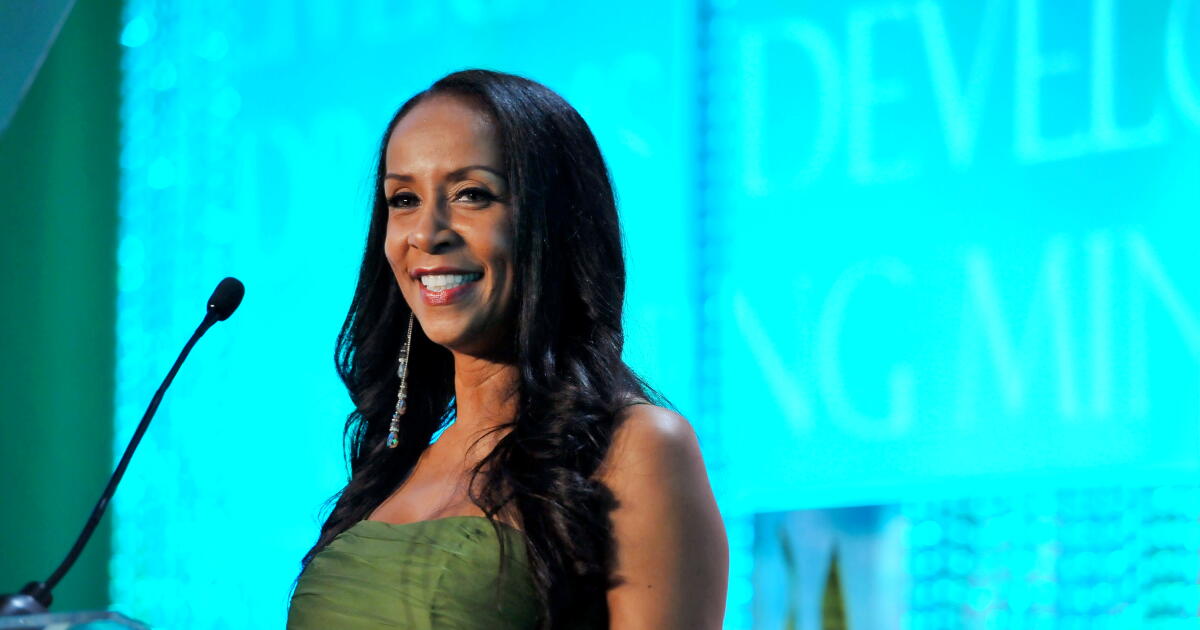
An image collage containing 2 images, Image 1 shows Cassandra Wilson, Image 2 shows Singer Cassandra Wilson performs at the 48th Annual Songwriters Hall of Fame Induction and Awards Gala

 GRAMMY-WINNING 90s singer Cassandra Wilson has died aged 70.

The jazz singer died surrounded by family and friends on Wednesday.

Jazz singer Cassandra Wilson has died aged 70 Credit: AP
The two-time Grammy-winning jazz vocalist worked with the Roots Credit: AP

The award-winning jazz vocalist from Jackson, Mississippi, worked with the Roots and co-founded the M-Base Collective.

Her manager of 20 years Robert Torre told WBGO: “It is with profound sadness that we announce the passing of Cassandra Wilson, the Grammy Award-winning and legendary jazz artist.

“Cassandra Wilson transitioned peacefully at home, surrounded by family, close friends, and her manager.”

Cassandra blended blues, country and folk music into her work.

PRIME LEGACY

Optimus Prime & Eeyore voice actor Peter Cullen’s cause of death revealed


HEALTH SCARE

Lionel Richie, 77, in intensive care after falling ill on stage during concert

The singer was nominated for four Grammys, and won two in the Best Jazz Vocal Album.

Cassandra won for her 1997 album New Moon Daughter and for her 2007 album Loverly.

She was described by critic Gary Giddins as “a singer blessed with an unmistakable timbre and attack who has expanded the playing field”.

Cassandra was named as a Jazz Master in 2022 by the National Endowment of the Arts.

Most read in Entertainment

Cassandra blended blues, country and folk music into her work Credit: AP
She worked with Elvis Costello, John Legend, Jon Batiste and Ravi Coltrane Credit: AP

Tributes flooded in for the star, with fellow NEA Jazz Master Dorthaan Kirk saying she is “devastated” by the loss.

She said they were like family and Cassandra called her “Mother Kirk”.

Dorthaan said: “I’m just devastated. Cassandra completely related to me because she looked up to me as an elder and somebody that was in the business.”

Cassandra took up piano at six, guitar at 12 and launched her career as a vocalist in the 70s, moving to the Big Apple the next decade where she became one of the founding members of the M-Base Collective.

She later signed with Blue Note Records in 1992 and released her seminal album titled Blue Light ‘Till Dawn.

The singer collaborated on albums with Coleman, Greg Osby, and Wynton Marsalis.

Cassandra sang as the character Leona in Marsalis’ recording of his Blood on the Fields oratorio, which became the first jazz composition to win a Pulitzer Prize.

She was a guest vocalist on the Roots’ Silent Treatment and One Shine.

And star collaborators on her own work included Elvis Costello, John Legend, Jon Batiste and Ravi Coltrane.

She told The New York Times in 1994: “I continue to choose the path I take musically,

“And it’s not motivated by becoming famous or having a lot money, or any other pop motivation.”

Source link

Local musicians hold pop-up after the city calls off L.A. Jazz Festival

In a nondescript black building in downtown L.A.’s Arts District, rich sounds of sax and bass filled the air for hours. Inside, surrounded by the paintings and posters of iconic musicians, albums and films, dozens of people gathered for a night designed to prove a simple point: You can’t “cancel” jazz.

On Thursday night, eight jazz artists and groups performed a pop-up show, including Okay Coleman!, the Don Brown Collective, Joy Guerilla, and Genghis Don, who also organized the event. All of these artists had one thing in common: They were billed to perform on the now-canceled inaugural L.A. Jazz Festival.

The planned 17-day event was supposed to kick off on Aug. 7 and feature dozens of performances spread throughout every City Council district. Organizers hoped the shows would draw 250,000 attendees and inaugurate the city as a home for jazz events on par with New Orleans and Montreal. The festival was to include a final show headlined by Janelle Monáe, John Legend, Charlie Wilson, Parliament Funkadelic and Raphael Saadiq at Dockweiler State Beach.

“When I got booked for it, I was really excited,” Genghis Don said. “It was one of the bigger festivals I’ve done so far in my career.”

Glen Turner of Joy Guerilla performing

Glen Turner of Joy Guerilla performs at the “Can’t Cancel Jazz” event Thursday.

(Brian Feinzimer / For The Times)

Then, the festival was abruptly canceled due to “last-minute public safety and municipal costs.”

But Don was determined for the show to go on. He partnered with Tída Norasingh of JIJI’s Jazz Club to host the “Can’t Cancel Jazz” pop-up show at Slow Jamz Gallery — a musical experience that was curated in less than 72 hours, according to Don.

“It all came together thanks to so many people who were involved in this,” Don said. “I really couldn’t have done any of this without them.”

The crowd, which leaned younger in part because the event allowed attendees 18 and older, trickled in around 7 p.m., and by 9 p.m., the party was in full swing. It was easy to see how audience members connected with the music by the way they cheered, danced and sang along through the night.

The pop-up show struck a balance between creating an accessible, music-forward environment for fans and providing support for the musicians who had been affected by the cancellation. The event’s entry fee was $20, while the nonalcoholic bar accepted additional donations. Some artists also had merch available for sale on site.

While “Can’t Cancel Jazz” may have been a response to the L.A. Jazz Festival being called off, it wasn’t aiming to replace it. Instead, the pop-up offered something more intimate. At times, the music overtook the gallery, completely captivating the attention of the room. At other moments, conversation and connection were happening right outside on the balcony between attendees, some of whom were meeting each other for the first time.

The result was something distinctly authentic with an underground quality that would have been hard to replicate at a sprawling, weeks-long festival.

“This was more so a test of L.A.’s community,” Don said. “They showed out, people came, the artists came together, and you know that’s the true definition of community.”

Source link

LA Jazz Festival, with John Legend and Janelle Monáe, is cancelled

This month’s LA Jazz Festival was slated to be one of the largest concerts in Los Angeles history.

With dozens of performances spread throughout every City Council district, organizers hoped the shows would draw 250,000 attendees and inaugurate the city as a home for jazz events on par with New Orleans and Montreal.

Those hopes will have to wait, as organizers announced the cancellation and postponement of the festival on Friday, including its main show Aug. 22-23 on Dockweiler Beach.

“Due to significant, unanticipated last-minute public safety and municipal costs associated with the final permitting of the On The Beach Festival, we have reached the decision to unfortunately postpone this year’s inaugural LA Jazz Festival,” organizer Martin Ludlow said in a statement to the Times. “Although this decision was an extremely difficult one to reach, our commitment to the audiences and artists participating in the festival is to have a first-class experience worthy of the great legacy of Jazz and our great city. We were encouraged by the enthusiastic support of the artists on the bill, the fans and our sponsors for this inaugural event, and we look forward to presenting all of the components of this incredible cultural opportunity for Los Angeles and the world in 2027 and beyond.”

John Legend, Janelle Monáe, Charlie Wilson, Parliament Funkadelic and Raphael Saadiq were booked to headline the main show.

“We are so grateful to all the artists–from our headliners to our musicians in the parks, many of whom went above and beyond to make this affordable to the community,” Ludlow added. “All current ticket holders for LA Jazz Festival events will be refunded in full within 30 days. We apologize deeply for this situation and vow to make this right over time.”

LA Jazz Festival was a major project for Ludlow, a former Los Angeles City Council member turned music promoter and community activist after pleading guilty to misappropriating funds in 2006.

Ludlow announced the show in a splashy speech on the steps of City Hall in February, flanked by Mayor Karen Bass and other civic leaders. “During this journey, you can only imagine there’s a lot of highs and a lot of lows,” Ludlow said then. “When you have those lows, you want a friend that really can lift you up.”

Back in February, Ludlow described the mission of LA Jazz Festival with a civil rights-inspired fervor, saying that “This festival is intended to lift up our ancestors that came to this country in bondage, terrorized, brutalized. It’s also about celebrating the end to those last bastions of Jim Crow racism, the days we were denied access to public drinking fountains, public swimming pools and public beaches. From the beginning of this journey, we’ve been very intentional about telling the narrative of that human rights struggle called Jazz.”

Source link

Utah Jazz guard Trey Alexander stretchered off court in NBA Summer League | Basketball News

Alexander, who signed a two-way deal with the Jazz last week. was injured in game against Chicago Bulls.

Utah Jazz guard Trey Alexander was taken from the court on a stretcher after appearing to injure his side on a drive to the basket in an NBA Summer League game against the Chicago Bulls.

Alexander, who signed a two-way deal with Utah last week, made contact with the Bulls’ Caleb Wilson during Monday night’s match while driving towards the basket. After tossing the ball towards the hoop, he went behind the basket, clutching his side or abdomen. He then dropped to the ground, appearing to be in great pain.

Recommended Stories

list of 4 itemsend of list

The 23-year-old was taken from the Thomas & Mack Center court on a stretcher. The incident occurred with just more than two minutes left in the fourth quarter.

There was no immediate word from the Jazz on Alexander’s injury.

Alexander played three seasons at Creighton University and skipped his final year of eligibility to turn pro. The rookie of the year in the G League, the NBA’s minor league, for the 2024-2025 season played 24 games for the Denver Nuggets that same season and nine games for the New Orleans Pelicans last season.

Under his current contract, Alexander is to play for the Jazz and its G League affiliate, the Salt Lake City Stars.

Source link

Calvin Hayes dead aged 63: Brit musician who co-founded Johnny Hates Jazz & made multi-platinum album collapses at home

An image collage containing 1 images, Image 1 shows Photo of JOHNNY HATES JAZZ

BRIT musician Calvin Hayes who co-founded 80s hit band Johnny Hates Jazz was tragically found dead at his home, aged 63 yesterday.

The talented keyboardist, drummer and heartthrob collapsed at his US property.

Photo of JOHNNY HATES JAZZ
Calvin Hayes, seen here in 2008, has died at the age of 63 Credit: Getty
Photo of JOHNNY HATES JAZZ
Johnny Hates Jazz, featuring Calvin Hayes, Clark Datchler and Mike Nocito perform live on German TV in July 1987 Credit: Getty

The hit group achieved major international success with 1988 album Turn Back the Clock, which topped the UK charts.

They enjoyed a popular reunion in 2010.

The star’s dad was Mickie Most, a prominent British record producer who worked with major artists in the 60s and 70s including cult group Hot Chocolate.

Hayes also found fame working alongside pin-up Kim Wilde, who he dated.

TRISHA HEARTBREAK

Trisha Goddard reveals breast cancer has returned and ‘it won’t go away’


J-LO CUT

Jennifer Lopez rocks sheer dress as she attends PFW with rarely-seen sister

He appeared as part of her promotional band and featured on the sleeve artwork of her self-titled debut album, released in 1981.

Kim recalled in a 1988 interview that she had known Hayes since recording Kids in America, noting they first got involved at a family party.

Pin-up Kim said: “We have fallen for each other totally. I can tell everybody that it’s the most wonderful feeling in the world.

“He is the greatest thing that has ever happened to me.

“I have never really liked talking about my love life but there have been so many rumours about me recently that I decided it was best to get it all out in the open.

“We always got on well, ever since he played drums in my first band seven years ago.

“And that’s why our love affair is stronger than most couples.

“We know that we have got a lot in common. I think that’s why we both know it will last.”

Hayes co-founded Johnny Hates Jazz in 1986 with singer Clark Datchler and bassist Mike Nocito.

The band self-produced their work and gained international recognition with their 1987 single Shattered Dreams, which reached the Top 10 in multiple countries including the US.

Turn Back the Clock achieved multi-platinum status and produced four consecutive UK Top 20 singles: I Don’t Want to Be a Hero, Turn Back the Clock and Heart of Gold alongside Shattered Dreams.

At the peak of their success after the first album, Datchler left the band.

Hayes and Nocito continued, recruiting Phil Thornalley as vocalist for the second album Tall Stories, though its release was delayed by a near-fatal car crash that kept Hayes in a body cast for nearly a year.

Johnny Hates Jazz appeared on Top of the Pops eight times between May 1987 and March 1988.

Hayes maintained a low profile in music for much of the 1990s and early 2000s.

They regrouped for a nostalgia arena tour.

The band performed multiple live shows across Europe and Southeast Asia during their comeback.

Hayes departed the group shortly after these performances for personal reasons.

Hayes and Wilde remained good friends since their initial collaboration in the early 1980s.

He tragically died in Spokane, Washington.

His death was confirmed by his grieving wife Kathy.

A pal said: “He was the sound of the 80s and a super talented man. He will be greatly missed.”

Source link

The budget Manchester hotel with American diner food and a secret jazz bar

An image collage containing 3 images, Image 1 shows Interior of Mollie's Diner and Hotel in Manchester, featuring a dining area, bar, and lounge, Image 2 shows A bed with a wooden headboard, two white pillows, two white decorative pillows with fringed edges, and a patterned tapestry above it, Image 3 shows A modern bathroom with a black freestanding bathtub, dual sinks, and two vertical mirrors

MOLLIE’S is the brand that’s making budget travel chic.

There’s only one problem with its new Manchester site… it’s so fun that you won’t want to leave. So here’s everything you need to know about staying there.

There are several room styles including bunks and doubles Credit: Unknown

Where is Mollie’s Manchester?

Unlike its two sister hotels in Oxfordshire and Bristol – both of which sit roadside and a short drive from the main hub of the city – the Manchester joint is slap bang in the city centre, close to the upmarket Deansgate area.

It’s a 15 or so minute walk from Manchester Piccadilly train station.

What’s it like?

This is the first hotel in the budget-luxe chain not to operate as a motel and has a slightly more sophisticated feel to it. 

You’ll likely spot locals popping in for coffee on their way to the shops, or mooching about in the very stylish lobby-cum-cafe where the atmosphere is reminiscent of a cool, unstuffy members club.

SHELL OUT

The new grown up hotel in one of the UK’s best seaside towns


SHELL SHOCKED

Southampton’s only five-star hotel with seashell massages and marina views

What are the rooms like?

Mollie’s rooms are consistently great across the board. 

All have the exact same Scandi-esque look no matter which county you’re staying in – think light wooden panels and eccentric lamps. 

The Manchester hotel features a couple of roomier options like the Studio, which comes with a lounge and freestanding tub, and several giant suites that boast a proper kitchen and living room plus an in-room Peloton bike.

Other options include doubles, twins and four-person bunk rooms.

Mollie’s diner serves American grub including frickles Credit: Supplied

What is there to eat and drink?

The American-style motel theme runs strong in the kitchen, with a knock-out menu of burgers, hot dogs and milkshakes at the onsite diner.

Dishes are filling so make sure to come hungry.

I tried the frickles – fried pickles – which came with a zingy dipping sauce and reminded me of the ones I ate in America’s Deep South.

Brekkie is a similar affair: pancakes stacked high and dripping in maple syrup and fry-ups that are piled with some of the best hash browns I’ve ever eaten – fluffy inside, wonderfully crispy on the outside.

What else is there to do?

The hotel has a cool, unstuffy members club feel to it Credit: Supplied

Don’t forget to book yourself into the downstairs cocktail bar where the atmosphere is sexy and sultry. 

Studio IV rather accurately describes itself as a “lively living room” – plush velvet sofas are framed around a stage where DJs and jazz musicians perform. 

It’s got somewhat of a secret speakeasy vibe to it, with dark corners to cosy up in and space for people to boogie.

The cocktails are very fun and staff are extremely attentive.

How much is Mollie’s Manchester?

Rooms cost from £90 per night. 

Rooms are well decorated in a Scandi style Credit: Supplied

Is it family friendly?

Yes, very much so.

There are plenty of adjoining rooms with twin and double options, as well as bunk rooms that are great for families with more than two kids.

There’s a children’s menu at the diner and games in the lobby that kids will love

Is there access for guests with disabilities?

Yes there are accessible rooms and toilets in the public areas, as well as lifts to all floors.


Source link

South African jazz icon Abdullah Ibrahim dies at age 91

Globally celebrated South African jazz icon Abdullah Ibrahim has died at age 91, his family announced in a statement Monday.

Ibrahim, formerly known as Dollar Brand, passed away peacefully in Germany following a short illness, surrounded by loved ones, the statement issued on behalf of his family said.

As one of South Africa’s most respected jazz figures, he famously played at Nelson Mandela’s 1994 presidential inauguration. Mandela referred to Ibrahim as “our Mozart.”

His final public concert in South Africa took place at the Cape Town International Jazz Festival in March, when he once again captivated audiences with the musical skill that defined his career.

Paying tribute to her partner, Dr. Marina Umari said he “passed away peacefully with South Africa and its people in his heart.”

“His love for his country never wavered, no matter where in the world he found himself,” she said.

His family said that even though his life is over, his influence and voice would continue to resonate around the world.

South African President Cyril Ramaphosa paid tribute to the musician, praising his contribution to the anti-apartheid struggle and acknowledging his lasting impact through music.

“Today our nation mourns the passing of an international icon and global citizen whose profound creations honored the South Africa that shaped his political commitment and musical brilliance,” said Ramaphosa.

Born Adolph Johannes Brand in Cape Town on Oct. 9, 1934, Ibrahim rose to international prominence as a pianist, composer and bandleader. With a career spanning more than seven decades, he forged a unique blend of jazz and South African musical traditions, making him a cultural ambassador whose music struck a chord with listeners worldwide.

Ibrahim’s mother Rachel Brand was mixed-race and under the apartheid system he was classified as “colored,” which afforded him certain social privileges that were denied Black South Africans. He was raised by grandparents and was told Rachel was his sister, only learning the truth in adulthood. Influenced by his grandmother and mother playing piano at the AME Church in Kensington, a Cape Town suburb, Irbrahim began piano lessons at age 7 and made his professional debut at 15.

In 1959 and 1960, he played with saxophonists Kippie Moeketsi and Mackay Davashe, trumpeter Hugh Masekela, trombonist Jonas Gwangwa, bassist Johnny Gertze and drummer Makaya Ntshoko in the Jazz Epistles. The group recorded the first full-length jazz LP by Black South African musicians, “Jazz Epistle — Verse 1.” The South African government began targeting jazz groups as part of increasing state repression, and following the Sharpeville massacre in March 1960, the Jazz Epistles broke up.

During this time, Ibrahim met jazz singer Sathima Bea Benjamin and the pair moved to Europe. The following year, in Zurich, Switzerland, Benjamin convinced Duke Ellington to come see Ibrahim perform with the Dollar Brand Trio. Impressed, Ellington helped arrange a recording session with Reprise Records, later released as “Duke Ellington presents The Dollar Brand Trio.”

In 1965, Ibrahim and Benjamin married and moved to New York. He played at the Newport Jazz Festival and toured throughout the U.S. In addition to playing with, and, on occasion, leading the Duke Ellington Orchestra, Ibrahim interacted with such musicians as Don Cherry, Ornette Coleman, John Coltrane and Pharoah Sanders, and was influenced by the Black Power movement, incorporating African elements into his jazz. His compositions also reflected the influence of Ellington and Thelonious Monk.

The musician returned briefly to Cape Town in 1968 and converted to Islam, changing his name from Dollar Brand to Abdullah Ibrahim. As an expatriate, he toured the world for decades, appearing at major venues and working with classical orchestras in Europe. His composition “Mannenberg” became noteworthy as an anthem of South Africa’s anti-apartheid movement.

In 2009, Ibrahim received an honorary doctorate in music from Wits University and the Order of Ikhamanga, a prestigious civilian award, from former President Jacob Zuma in the same year.

Ibrahim was named a Jazz Master by the National Endowment for the Arts in 2019.

Alan Winde, the mayor of the Western Cape, where Ibrahim’s hometown is located, honored the performer and commended him for capturing South Africa’s cultural richness and history in his music.

“South Africa has lost a legend,” Winde said. “Abdullah Ibrahim represented everything that makes South Africa and the Western Cape so remarkable. His music told the story of our unique cultural diversity and past.”

Ibrahim is survived by Umari; his son, Tsakwe, a musician; and his daughter, Tsidi, a rapper who goes by Jean Grae.

According to his family, Ibrahim will be laid to rest in the German state of Bavaria, where he lived.

Gumede writes for the Associated Press.

Source link

A night out with Cuban jazz maestro, Arturo Sandoval

On a Thursday in early June, under the hot bright lights of the famous Blue Note jazz club in Hollywood, the legendary trumpeter and composer Arturo Sandoval took center stage with a microphone in hand — and a hip wiggle for good measure. Rocking a silk shirt adorned with rhinestones, and backed by his incredibly nimble band, the Cuban-born virtuoso kicked off his four-night residency at the club with sizzling banter and panache.

“I had to watch what I said in Cuba,” he told the audience. “Now I live in the United States of America, man — I say whatever the hell I want. Do you like it? Well, if you don’t, I don’t care!”

Now 77, Sandoval feels he was liberated by the power of jazz. Released in May, his dynamic new album, “Sangú” — Spanglish for “sounds good!” — is bursting with the free-spirited energy he’s cultivated in the decades since he came to the United States from Cuba. Sandoval maintains a fiery pace throughout the album, commanding not only the trumpet, but the timbales and piano. (He even recorded his own scat singing for the appropriately-titled track, “Scat.”)

Once derided by the revolutionary government as “Yankee imperialism,” jazz music became a staple of Sandoval’s daily diet. As a young trumpet player in Cuba’s national band, he sought refuge in the sounds of Charlie Parker and Dizzy Gillespie by tuning into Voice of America: a radio program covertly broadcast from the States. Sandoval eventually served three-and-a-half months in jail in the 1970s when he was caught listening to the program — but with famed pianist and director Chucho Valdés, Sandoval would pioneer a distinctly Afro-Cuban jazz fusion with the Orquesta Cubana de Música Moderna, which was renamed Irakere and won a Grammy for best Latin recording in 1980.

It was in 1990, while touring Europe with his hero Gillespie, that Sandoval finally defected from Cuba with his wife and son — and found the refuge he’d been seeking in the U.S.

“Jazz is synonymous with freedom,” he said. “And I’ve always said the most important word in any dictionary around the world is the word ‘freedom.’”

Inside his Tuscan-style home in the Valley, Sandoval’s shelves are lined with the myriad of awards he’s collected in the time since he arrived in the States: an Emmy award for scoring the 2000 movie based on his own life, “For Love or Country,” which starred Cuban American actor Andy García; 10 Grammy statuettes and the Presidential Medal of Freedom, which was presented to him by President Obama in 2013.

Just last month, Sandoval was also awarded knighthood by the King of Spain. “Does that make me Don Arturo Sandoval?” he audibly asked the ChatGPT application on his phone; indeed, it does. (“My wife gets a little jealous of ChatGPT,” he added with a laugh.)

Come July 4, Sandoval will perform at the America250 concert in Washington D.C., which is a bipartisan celebration of the United States’ 250th birthday. Co-chairs of the event include former President George W. Bush, former First Lady Laura Bush, former President Obama and former First Lady Michelle Obama. Seated next to his Bösendorfer grand piano, Sandoval spoke with The Times while on break from his world tour to discuss the new album, his collaborations with Karol G and Ariana Grande, as well as his weakness for a good cigar.

This interview was edited and condensed for clarity.

  • Share via

What keeps you playing the trumpet after all these years?
I have no choice. The piano is not that complicated, but the trumpet is a pain in the butt. The trumpet is merciless. You have to practice every single day, otherwise it sends you a bill.

How do you smoke cigars and stay healthy enough to play the trumpet?
I’ve been a big time cigar smoker since I was 14 years old. I never miss a day. I had a good one already. Every year they put me in the MRI to check my lungs. And the doctor always says, “Man, you have lungs like a person who never smoked.” A cigar is completely different from cigarettes. [With] a cigar you don’t inhale to the bottom of the lung, you know, it’s from here [taps his throat]. That’s the art.

You’ve been knighted by the king of Spain! How does that feel?
Great! We’re having 30 people over tonight. My wife is cooking for everyone. The consul [from Spain] called me three or four days ago [and] said, “Arturo, I got a surprise for you. I just got a package from the king at my house, ready to give it to you.” And I said, “What kind of joke is that?” My four grandparents came from Spain to Cuba — from my mother’s side, they were from Tenerife, Isla Canaria. From my dad’s side, they were Gallegos from Galicia. Even if I weren’t related to my family in Spain, whatever — I love Spain!

Given how restricted music and expression were in Cuba, how did you get into the international jazz community?
We put together a big band called Orquesta Cubana de Música Moderna [later called Irakere]. I met a journalist who played the saxophone — he said, “Man, you ever hear any jazz music?” He played for me a compilation or recordings of Dizzy Gillespie and Charlie Parker. That was in ’67 or ’68. Ten years later, I got a phone call from the guy — there was a jazz cruise going around the Caribbean and they [were in Havana] for 48 hours. I told him, “Pretend we never had this conversation!” But I went to the harbor. When the boat arrived, I saw Maestro Gillespie coming down the stairs. I didn’t know how to say one word in English. But God has always been good to me.

A guy behind him started talking to me in perfect Spanish. He was a percussionist playing with the great Stan Getz … a bunch of good musicians there. Dizzy started asking me questions through him. They said, “You have a car?” I had a Primo 1951, but it was falling apart. He said, “Ok, show me Havana.” He stayed for a jam session that night with Irakere. Gillespie went back to New York and told everybody about those musicians he heard in Cuba. Then one day a guy came to Irakere’s rehearsal and introduced himself with a translator — he was the president of CBS Records. A few months later, he put us on the plane [to New York] and drove us in a little bus straight to [perform at] Carnegie Hall. CBS made a recording of that, [which gave us] our first Grammy.

Many years later, in 2013, you were awarded the Presidential Medal of Freedom. What’s something special you remember about that night?
My granddaughter Lola was there, she was 6. It’s customary to take a photo with the president and the first lady. And we did, the whole family. When we got together for the photo, Lola started pulling at Obama’s jacket. He looked her and said, “May I help you?” She said, “Mr. President, I missed school today. I need a note from you.”

I said, “Oh Lord.” But Obama smiled and said, “Of course.” Then he got a paper with the White House [logo] on top and wrote, “Please excuse Lola from the school today … [Signed,] Barack Obama.”

Legendary jazz trumpeter Arturo Sandoval, shown performing at Dorothy Chandler Pavillion in Los Angeles in 2016.

Legendary jazz trumpeter Arturo Sandoval, shown performing at Dorothy Chandler Pavillion in Los Angeles in 2016.

(Courtesy of Timothy Norris)

Your new album is so cinematic. What’s the story behind it?
One day my son and his wife, who’s my manager, came over and said, “Papa, you’re getting old. You have to change your repertoire.” I said to my son, “I’ve been feeding you for 50 years and then you come and tell me what to do? Gimme a break!” But to be honest, when the pandemic happened, I was locked [inside] here. I used to travel a lot, and I was so frustrated and sad. So for two-and-a-half years, I started writing two or three new tunes a day and recorded a few hundred on my own. They picked 100 out of those; I said, “[Now] pick 12.”

When I got with the band, when somebody told me what to play — a little faster, a little slower — I said, “What the heck, man?” But I did it. And they were right. I’m so happy, blessed and grateful because they are amazing musicians. Nobody’s weird. No drugs, no alcohol, strictly into the music.

You joined Karol G’s band at Coachella this year — how did that happen?
As an old man, it’s not every day you have the opportunity to play Coachella. She called me last year to play on a tune in her latest album, “Ivonny Bonita.” So when they invited her to Coachella, she said, “Arturo, we’d like to play with you there.” She’s got great charisma and knows how to put a show together. To play for [more than] 150,000 people each night? That’s not my daily gig. I was nervous, but grateful for the opportunity. And when I checked my followers on Instagram, I got like 5,000 people in a few days — that never happens to me!

Let’s talk about Instagram!
Oh that’s a funny story. [In 2018] I did an album of duets with Stevie Wonder, Pharrell Williams, Ariana Grande … big time people. When Pharrell wrote a song for our duet, we were in the studio, cutting the track. He said, “Arturo, I’m producing for Ariana Grande in a studio across the hall. You would like me to call her?” I said, “Of course, man.” They sang together, Pharrell and Ariana. And by the end, I got my phone and said, “Ariana, can we take a photo with Pharrell?” She took my phone out of my hand to take [a selfie] and said to me, “Put it on Instagram.” I didn’t know what that was. She said, “You don’t know what Instagram is?” Sorry, I’m old! But I put it on Instagram, thanks to Ariana Grande. She’s so talented, man.

How do you stay dedicated to music after all this time?
People talk a lot about the word “talent.” What’s that? A lot of people supposedly have big talent, but they don’t have the passion, the discipline, the commitment. See those roses in my yard? If somebody gave you a seed, you put it in a vase with fresh dirt. Add some vitamins and water, and if you’re lucky, you’re gonna have a rose. But if they gave somebody the exact same seed and they left it on a table somewhere, that rose is gonna die! I’m 77 years old and I still practice every day. Nothing goes to my head. All those awards would mean nothing if I didn’t take care of what I had.

Source link