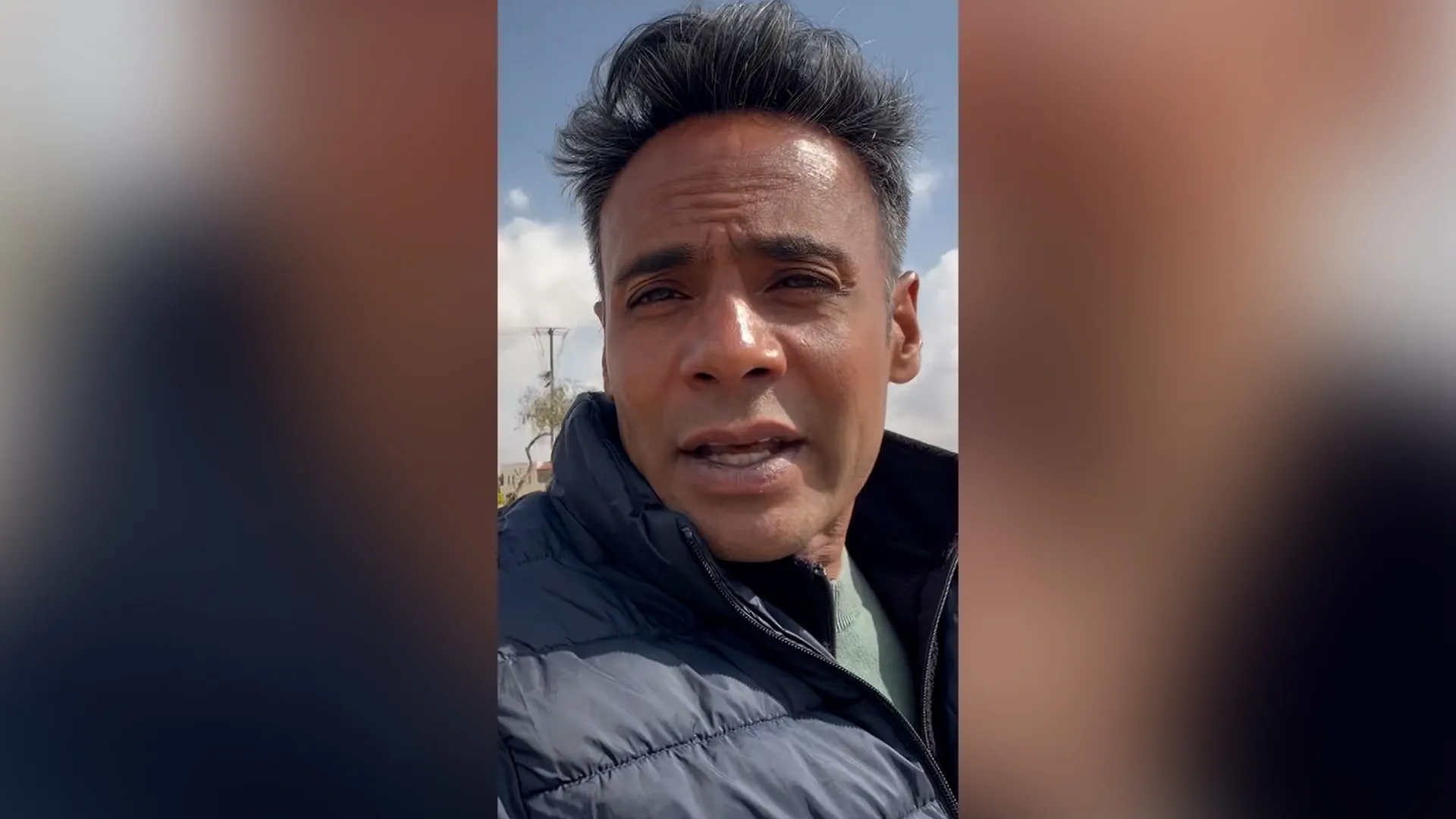
Fighting between Syrian government troops and the Kurdish-led Syrian Democratic Forces continues in Aleppo, where shelling near residential areas has prompted tens of thousands of civilians to flee. Al Jazeera’s Resul Serdar was reporting live as shots rang out nearby.
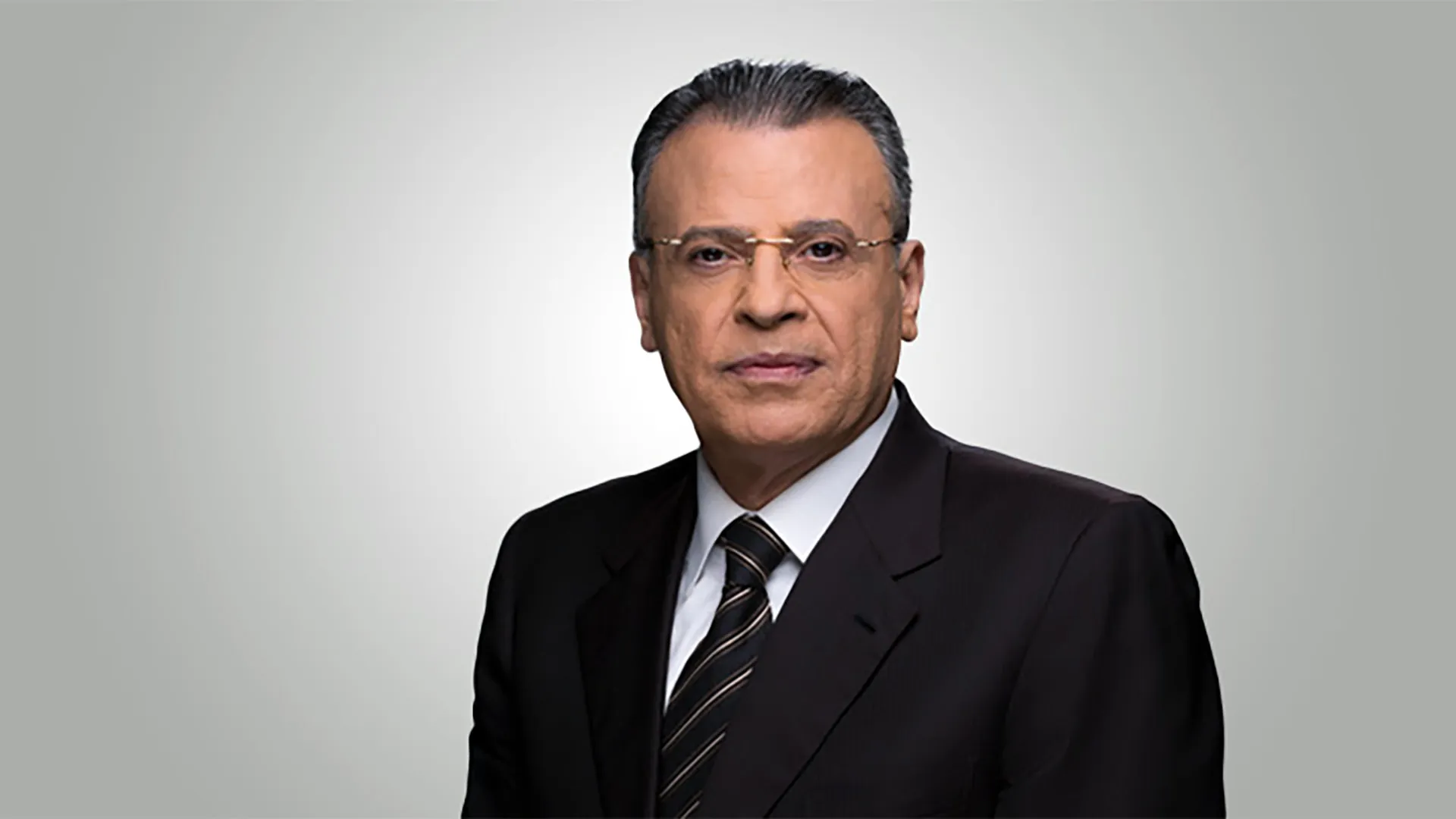
Jamil Azar, 89, was the author of Al Jazeera’s motto, ‘The opinion and the other opinion’.
Published On 4 Jan 20264 Jan 2026
Share
Longtime Al Jazeera Arabic anchor and journalist Jamil Azar, a pioneer of the network since its establishment three decades ago, has passed away.
Director-General Sheikh Nasser bin Faisal Al Thani lauded Azar, 89, in a statement on Sunday as a “distinguished linguist” and the author of the network’s motto, “The opinion and the other opinion”.
Recommended Stories
list of 3 itemsend of list
“Jamil Azar leaves behind a remarkable and lasting media legacy, a reputation defined by integrity and excellence, and a deep influence on generations of journalists who learned from him at Al Jazeera and other institutions where he served and helped shape professional standards,” Sheikh Nasser said.
“He was, in every sense, a living school of journalism and a trusted reference in editorial practice, the Arabic language, television presentation, and newsroom leadership. Always generous with his guidance and advice, he was known for his humility and openness, and remained steadfastly loyal to Al Jazeera, deeply committed to its values, standing and reputation.”
With Azar’s passing, Sheikh Nasser emphasised, Arab media “loses one of its most respected figures and Al Jazeera bids farewell to one of its brightest and most influential stars”.
Born in the town of al-Husn in Irbid, Jordan, in 1937, Azar began his career in journalism at the BBC’s Arabic Service, where he worked between 1965 and 1996 as a news translator and presenter.
During his time at the BBC, Azar held different positions, including producing programmes such as Politics Between the Questioner and the Respondent and Arab Affairs in the British Press.
In 1996, Azar joined Al Jazeera at its launch on July 30, playing a key role in the network’s early years as a news anchor and presenter, hosting the programme The Week in the News.
The Jordanian journalist stepped down from the network in 2011.
Protesters have rallied worldwide after Donald Trump announced the US would ‘run’ Venezuela following the abduction of President Nicolas Maduro and his wife. Demonstrators from Paris to Sao Paulo are denouncing what they call US aggression and imperialism.
Sina Azodi on escalating protests in Iran and how sanctions and corruption are deepening the country’s economic crisis.
Sina Azodi, a professor at George Washington University, discusses escalating protests in Iran and how sanctions and corruption are deepening the country’s economic crisis.
The Israeli government is cracking down on critical media outlets, giving it unprecedented control over how its actions are presented to its citizens.
Among the moves is the so-called Al Jazeera Law, which allows the government to shut down foreign media outlets on national security grounds. On Tuesday, the Israeli parliament approved the extension of the law for two years after it was introduced during Israel’s genocidal war on Gaza to essentially stop Al Jazeera’s operations in Israel.
Recommended Stories
list of 4 itemsend of list
Separately, the government is also moving to shut down the popular Army Radio network, one of two publicly funded Israeli news outlets. The radio station is often criticised by the Israeli right wing, which views Army Radio as being biased against it.
Israelis are still reliant on receiving their news from traditional outlets with about half relying on broadcast news for information on current affairs and about a third similarly relying upon radio stations.
The tone of the media that is allowed to publish and broadcast is important. According to analysts inside Israel, the selective broadcasting of Palestinian suffering during Israel’s war on Gaza has helped sustain the carnage and reinforced a sense of grievance that allows for Israel’s continued assaults on Gaza as well as regional countries, such as Syria, Yemen and Lebanon.
Despite what observers characterise as a media environment firmly rigged in its favour, the far-right government of Prime Minister Benjamin Netanyahu, which contains ministers convicted of “terrorism” offences and others who have repeatedly called for the illegal annexation of the occupied West Bank, is looking nevertheless to bypass legal checks on its control of the media and bring more of Israel’s information feed under its control.
Let’s take a closer look.
Because the government believes it is too critical.
Israeli politicians have long complained about how the war in Gaza has been covered in both the international and domestic media.
But the government added a new accusation in November, partly blaming the media for the Hamas-led attacks on southern Israel on October 7, 2023.
“If there hadn’t been a media entirely mobilised to encourage refusal [to volunteer to reserve duty] and reckless opposition to the judicial reform, there wouldn’t have been such a rift in the nation that led the enemy to seize the opportunity,” Communications Minister Shlomo Karhi said as he introduced a bill to increase government control of the news environment, referring to attempts by the Israeli government to reduce the independence of the judiciary.
Israeli Prime Minister Benjamin Netanyahu, right, speaks to Minister of Communications Shlomo Karhi in the Knesset in West Jerusalem [File: Maya Alleruzzo/AP Photo]
In addition to the ‘Al Jazeera Law’, there are three items of legislation under way: a plan to privatise Israel’s public broadcaster, Kan, the move to abolish Army Radio, and an initiative to bring the media regulator under government control.
Both Army Radio and Kan, the other state-funded outlet with editorial independence, have carried numerous reports critical of the government.
This week, Kan aired an interview with Netanyahu’s former spokesperson Eli Feldstein, who told the broadcaster that the prime minister had instructed him to develop a strategy to help evade responsibility for the October 7 attacks.
Meanwhile, Israeli Defence Minister Israel Katz, justifying the move to shut down Army Radio, said on Monday that the outlet had become a platform to attack the Israeli military and its soldiers.
Israel is also potentially changing the way it regulates its media. In November, the Israeli parliament pressed ahead with a bill that would abolish existing media regulators and replace them with a new authority appointed by the government, potentially allowing for even greater state interference.
Israeli Attorney General Gali Baharav-Miara attends a cabinet meeting at the Bible Lands Museum in Jerusalem [Gil Cohen-Magen/Pool via Reuters]
Lastly, Israel has also codified into law the emergency legislation banning foreign media outlets whose output it disagrees with. It was first enacted as emergency legislation in May 2024 when Israel used it to ban Al Jazeera from its territory, and it was then used in the same month to halt the activity of The Associated Press after the government accused the United States-based news agency of sharing footage with Al Jazeera.
Under the new law, the communications minister – with the prime minister’s sign-off and the backing of a ministerial committee – may halt a foreign broadcaster’s transmissions if the prime minister accepts a professional assessment that the outlet poses a security threat. The minister can also shut the broadcaster’s offices, confiscate equipment used to produce its content and block access to its website.
Have the moves been criticised?
The International Federation of Journalists (IFJ) and the United Kingdom’s National Union of Journalists have criticised Israel’s decision to legislate against foreign media platforms it deems a security threat.
In a statement, IFJ General Secretary Anthony Bellanger said: “Israel is openly waging a battle against media outlets, both local and foreign, that criticise the government’s narrative: that is typical behavior of authoritarian regimes. We are deeply concerned about the Israeli parliament passing this controversial bill, as it would be a serious blow to free speech and media freedom, and a direct attack on the public’s right to know.”
The attempt to shutter Army Radio has also been heavily criticised with Israeli Attorney General Gali Baharav-Miara declaring the move unlawful and accusing Netanyahu’s coalition of making public broadcasting “weakened, threatened and institutionally silenced and its future shrouded in mist”.
Baharav-Miara has also criticised the move to place media regulation under government control, saying the bill “endangers the very principle of press freedom”.
Not very.
The Israeli media have overwhelmingly been a consistent cheerleader of the Israeli government’s actions in Gaza, where more than 70,000 Palestinians have been killed by Israel, and in the occupied West Bank.
The suffering of Palestinians is rarely shown, and when it is, it is often justified.
That means Israelis often don’t recogise the hypocrisy of their government’s statements.
An example came in June after Iran struck an evacuated hospital during the 12-day war between Israel and Iran. The Israeli government called the incident a war crime, and the Israeli media reflected that outrage.
But the attack came after Israel had been accused by a variety of organisations, including the United Nations, of systematically destroying Gaza’s healthcare system with medical workers targeted for arrest and frequently tortured despite their protection under international law.
“The Israeli media … sees its job as not to educate – it’s to shape and mould a public that is ready to support war and aggression,” journalist Orly Noy told Al Jazeera from West Jerusalem in the wake of the strike on the Israeli medical centre. “It genuinely sees itself as having a special role in this.”
A mother and her teenage son died in fighting between the Syrian military and Kurdish-led SDF forces in Aleppo. The violence began shortly after talks in Damascus on integrating SDF forces into the army. Al Jazeera’s Ayman Oghanna is in Aleppo, where a truce has been called.
‘The scale of needs is so huge.’ As Gaza’s displaced Palestinians suffer from winter storms after surviving two years of genocidal war, UNICEF’s Jonathan Crickx explains how many clothes, blankets and tents are needed to save children from dying.
More than 8,000 candidates sat for a government exam on a runway in Odisha in India, to compete for only 187 positions with the state’s Home Guard. Drones were used to monitor examinees. 18% of Indians under 24 are unemployed, according to the ILO.