The top seeds defend their Asian Games squash titles, becoming the first players to qualify for the Los Angeles Games.
Published On 27 Sep 202627 Sep 2026
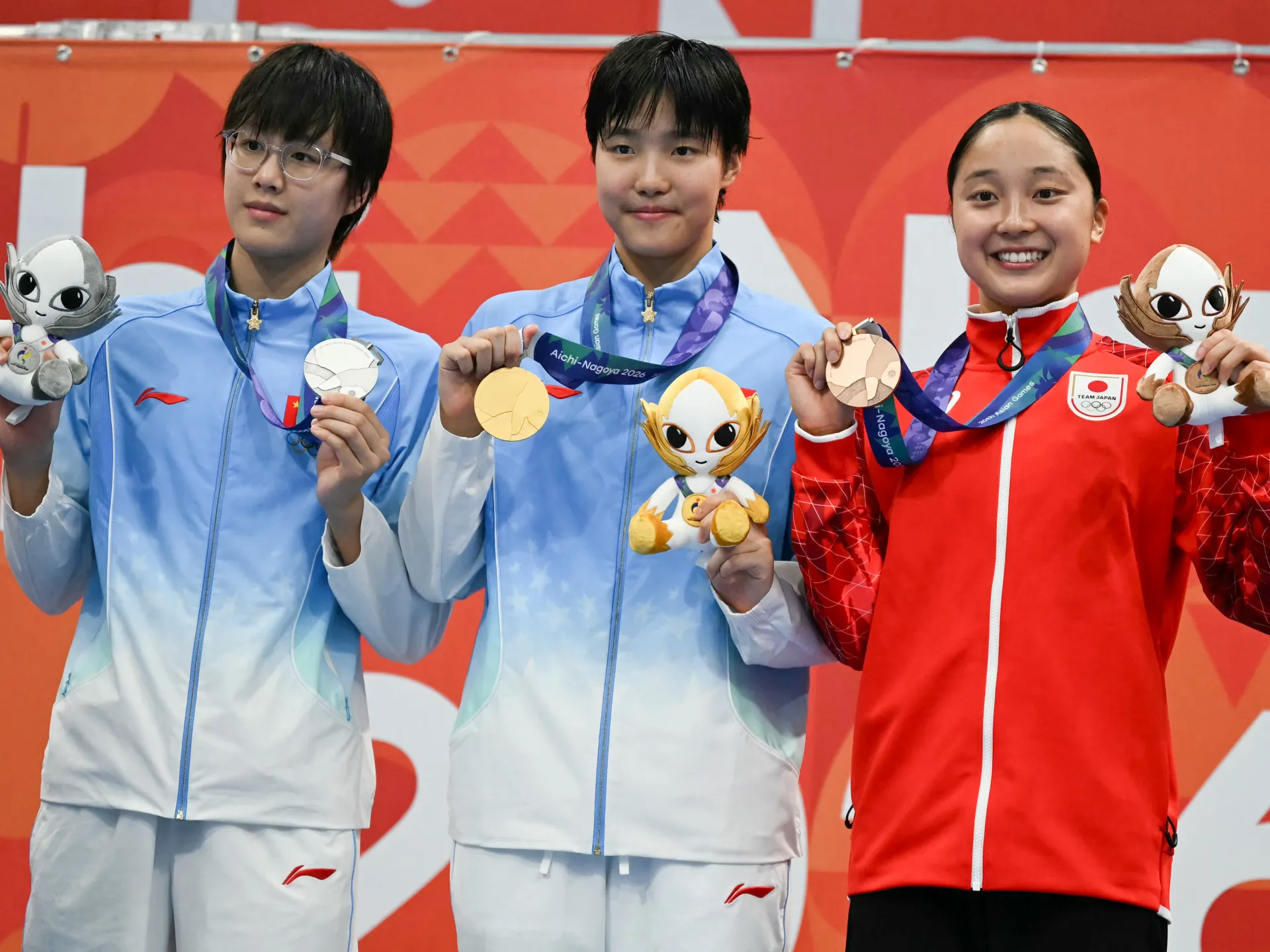
Malaysia’s Eain Yow Ng and Sivasangari Subramaniam have made history by becoming the first squash players to qualify for the Summer Olympics after winning gold medals at the Asian Games in Aichi-Nagoya, Japan.
The defending champions won the men’s and women’s finals on Sunday and earned a ticket to the 2028 Los Angeles Games, where squash will make its Olympic debut.
Recommended Stories
list of 4 itemsend of list
Squash is among a handful of sports at Aichi-Nagoya where a gold medal serves as automatic qualification for the next Olympics.
Both Eain and Sivasangari successfully defended their titles without dropping a single game in their campaigns. Their victories gave Malaysia its fifth and sixth gold medals.
World number 18 Eain thrashed India’s Abhay Singh 11-9, 11-5, 11-5 in 33 minutes at the Nagoya Kinjo Futo Arena and became the first Malaysian to qualify for the Olympics.
Subramaniam in action during the women’s singles gold medal match [Chalinee Thirasupa/Reuters]
World number five Sivasangari joined her compatriot soon after when she made quick work of the women’s final against India’s Anahat Singh.
She demolished Singh, ranked 17th in the world, 11-4, 11-4, 11-7 in just 23 minutes to clinch gold.
Earlier, Singh, the world junior champion, produced a stellar comeback in the semifinals from two sets down to overpower Japan’s Satomi Watanabe (9-11, 11-13, 12-10, 11-6, 11-3) on Saturday.
“I think it is the best win of my career,” Singh, 18, said after the match. “She’s number six in the world, and that’s the highest win I’ve ever had in my squash career.”
She made history even before Sunday’s match began when her semifinal victory made her the first Indian woman to reach the singles final at the Asian Games.
Earlier in the day, Pakistan picked up two more bronze medals at the games as third seed Noor Zaman toppled compatriot Ashab Irfan 3-0 in the bronze medal match. Watanabe took a 3-1 win over Hong Kong’s Sin Yuk Chan.
Pakistan’s Noor Zaman celebrates after winning his bronze medal match against compatriot Ashab Irfan [Chalinee Thirasupa/Reuters]
Towering teenager Zhang Zhanshuo became the first swimmer in history to win seven golds at a single Asian Games, while on the track, Thai sprinter Puripol Boonson powered to victory in the 100m.
China’s Zhang, 19, scorched to the men’s 400m freestyle title in the pool in Tokyo on Friday in a Games-record three minutes and 41.28 seconds.
He sat on the lane divider after the race and slowly counted off on his fingers all seven medals he had won.
Zhang also won individual golds in the 200m, 800m and 1,500m freestyle events, as well as three relays.
He said, after wrapping up a scintillating campaign, that it had been the “perfect week”.
“I think the most important thing is to stay grounded and focused, because the Asian Games are not my ultimate goal,” said Zhang, who stands 198cm (six feet, six inches).
With the Los Angeles Olympics less than two years away, China won 30 of the 42 golds in the pool this week.
Their 13-year-old phenomenon Yu Zidi was the undoubted superstar, taking home three individual golds and all in Games-record times.
Not to be outdone, Japan’s 17-year-old Shin Ohashi shattered the men’s 200m breaststroke world record on Thursday.
Swimming, equestrian and diving are taking place in Tokyo, but the city of Nagoya and the wider Aichi prefecture are the main Games host.
The men’s and women’s 100m sprints, the blue riband events in track and field, took place in front of rows of empty seats in Nagoya.
China’s Chen Yujie streaked to a comfortable victory in the women’s final in a Games-record 11.06 seconds.
The men’s was won by 20-year-old Puripol, who burst out of the pack in the final quarter of the race to win in 9.90 seconds, breaking his Games record from earlier in the evening.
It was Thailand’s first men’s 100m gold medal since Suchart Jairsuraparp on home soil at the 1978 Bangkok Games.
‘Today was a miracle for me’
On the last evening of gymnastics, Carlos Yulo won the men’s vault for his second gold of the Games.
The double Olympic champion won floor gold on Thursday to complete his collection of major titles.
“I can’t believe it,” the Filipino said.
“In this whole Asian Games, I felt really stressed, but at the same time, I enjoyed what I did today. I really did my part.
“Today was really a miracle for me.”
There’s little time to celebrate, however, with the world championships next month.
South Korea edged China 85-80 in the semifinals of the women’s basketball, and will face hosts Japan for gold.
China had their giant centre Zhang Ziyu, 19, but it was not enough.
Zhang Ziyu stands 223cm (seven feet, four inches) and scored 22 points.
“She was tough to guard,” said South Korea’s Kang Lee-seul.
“We couldn’t defend her, but we focused on fast breaks and shooting more three-pointers.”
North Korea’s women were again in record-setting form on the weightlifting dais.
Oh Kwang Ok set three world records on her way to women’s 57kg bodyweight class gold.
Oh lifted 104kg in the snatch and 134kg in the clean and jerk for a 238kg total – all world records to add to the two golds North Korea’s women won in the 49kg and 53kg classes this week.
North Korea has won four gold medals and two silvers in the six weightlifting events contested so far.
Tokyo, Japan – Nearly eight years after moving to Japan for work, Abdul feels more accustomed to life in the East Asian country than in his native Bangladesh.
But as the Japanese government moves to tighten the rules for permanent residency and public sentiment towards immigrants sours, Abdul is reconsidering his future.
Recommended Stories
list of 4 itemsend of list
“I don’t know what the Japanese government will do in the future, if they’ll make things stricter again,” Abdul, a tech engineer who lives in northern Tokyo with his Bangladeshi wife, told Al Jazeera.
Abdul, who is preparing to apply for both permanent residency and citizenship, is aware of the possibility that he may soon have to leave.
“I have to be prepared if both of my applications are rejected,” said Abdul, who asked not to be identified by his real name.
“Right now, I am starting to look for opportunities outside of Japan.”
Under rules set to come into effect in phases from October 1, applicants for permanent residency will need to show that their annual household income exceeds the Japanese average – a stipulation that will be applied retroactively for applications submitted since April – and demonstrate Japanese-language proficiency.
Applicants will also be required to have a pension pot equivalent to 30 years of payouts.
In an announcement detailing the changes, Japan’s Immigration Services Agency stressed the need for foreigners to “live independently” and have “a stable life without the risk of becoming a burden”.
Sarah Nelkin stands outside the Kawasaki Branch Immigration Office in Kawasaki, Japan, on August 18, 2026 [Genevieve Mansfield/Al Jazeera]
Sarah Nelkin, an American who has lived in Japan for the last 14 years, is among the many long-term residents who fear they will not qualify under the new rules.
A lover of Japanese animation and video games, Nelkin first moved to Japan as a university student and has since built a career in the country’s bustling entertainment industry.
Like Abdul, Nelkin, who submitted an application for permanent residency shortly before the announcement of the changes, is anxious about what the future holds.
If her application is rejected, she plans to apply to become a Japanese citizen – which would mean giving up her US citizenship, as Japan does not recognise dual nationality.
“I’ve lived my entire adult life in Japan … I would rather not give up my American passport. My mother lives in the US, and I want to retain my citizenship for a lot of reasons, like visiting family,” Nelkin told Al Jazeera.
“But at this point, I might have to give up my American nationality.”
Risa Hagiwara, a professor of economics at Meikai University in Urayasu, Japan, said the changes reflect a shift towards a “selective and conditional” immigration policy that is in tension with Japan’s need for labour amid a shrinking population.
“Japan needs foreign workers because of labour shortages. But if the conditions for long-term settlement become substantially more difficult, this could potentially reduce Japan’s attractiveness to foreign workers who are considering Japan as a place to build their long-term lives,” Hagiwara told Al Jazeera.
Hot-button issue
Immigration has become an increasingly hot-button topic in historically homogenous Japan.
Japan’s foreign resident population remains small compared with developed peers such as the United Kingdom and France, where 10 to 15 percent of residents were born overseas.
But it has been growing fast, hitting a record 4.12 million people, or about 3 percent of the total population, as of the end of 2025, according to government data.
By some estimates, Japan’s foreign-born population could reach the OECD average of 10 percent by 2070.
Meanwhile, the number of Japanese nationals fell by more than 900,000 between January 2025 and 2026 amid the country’s rock-bottom birthrate, according to government figures.
Hagiwara said that Japan is at a crossroads as foreign-born residents play an increasingly important role in Japanese society.
“If Japan wants to rely on foreign workers to address labour shortages, it also needs to consider what happens after they come to Japan,” Hagiwara said.
“The question is increasingly not only ‘how many foreign workers does Japan need?’, but also ‘what kind of society does Japan want to build with the people who come here?’” she said.
Japan’s mooted immigration shake-up comes amid a broader rightward shift in the country’s politics.
While campaigning for the leadership of the conservative Liberal Democratic Party last year, Japanese Prime Minister Sanae Takaichi said the country should “reconsider, at least for now, policies that allow in people with completely different cultures and backgrounds”.
Takaichi’s subsequent coalition agreement with the right-wing Japan Innovation Party (JIP) pledged a firm stance against foreigners who break the rules, as well as steps to address “potential social friction” from a growing foreign population.
Japan’s far-right Sanseito party leader, Sohei Kamiya, shows his party’s election pledge during a news conference after Japan’s Prime Minister Sanae Takaichi dissolved the lower house of parliament, in Tokyo, January 23, 2026 [Issei Kato/Reuters]
At the same time, the far-right, anti-immigration Sanseito party has gained ground with its “Japan First” messaging, winning a record 15 seats at the most recent lower-house election to become the third-largest opposition party.
Public opinion has also moved against immigrants.
In a recent survey by the Institute of Social Science at the University of Tokyo, 56.3 percent of Japanese people said they opposed accepting more foreigners, up from 35.6 percent in 2024.
Nelkin and Abdul have both felt the change in sentiment.
“Before 2024, I never felt any discrimination against foreigners, but recently there has been a shift … especially online,” Abdul said.
Nelkin said peers have become outspoken in their dislike of foreigners.
“Even seemingly decent people are just saying racist stuff,” she said.
“I’ve worked for this country and specifically avoided breaking any rules, and they’re saying you are never enough,” she added. “That’s really hard.”
Kovalam and Mumbai, India – When Sugar Shanti Banarse and Kamali Moorthy entered their first surfing event in 2022, the girls could scarcely have imagined they would end up representing India at the Asian Games within a few years.
Though the competition at the Covelong Classic in Kovalam, about an hour’s drive from Chennai in Tamil Nadu, southern India, featured just seven women among about 50 competitors, the possibility of winning was an afterthought. Their intention was to simply get a taste of competition.
At 12, Moorthy was the youngest of the lot, thrilled to surf alongside some of the senior girls. She failed to catch a single wave, but the experience stayed with her. She vowed to train harder and return stronger.
Finishing second was a decisive moment for Banarse, then aged 16. A recreational surfer until then, she loved the competitive aspect of the sport. In that moment, she knew she wanted to be a professional.
The duo has come a long way since then. Alongside their male counterparts Kishore Kumar and Sivaraj Babu, they will take on the best continental talent at September’s Asian Games in Japan, where surfing makes its debut and runs from Friday until Tuesday.
“We’ve been putting in the work over the last couple of years and made good progress. It’s our time to shine now,” Banarse told Al Jazeera.
Sugar Shanti Banarse catches a wave [Photo courtesy of the Surfing Federation of India]
Even though India has thousands of miles of coastline and breaks of different kinds, it’s taken a while for surfing to catch on.
India’s team coach Samai Reboul comes from the first generation of Indian surfers, who had few resources at their disposal. He would watch holidaymakers surf near his home in Auroville, Tamil Nadu in the late 1990s and had a go when they lent him a board. He was soon hooked.
“I grew up at a time when there were no coaches, no access to training material and no surfboards. [It was] really frustrating,” he told Al Jazeera.
Surf schools started cropping up along the coast over the next few years. This is how Banarse, now 20, got her first opportunity back home in Mandrem in Goa, when she decided to accompany a friend. Moorthy, now 16, was luckier – her uncle is a surf instructor who gave her the first lesson off the coast of Mahabalipuram in Tamil Nadu.
Kumar, 18, and Babu, 22, hail from families who fish for a living in Kovalam and Mahabalipuram, respectively. They started out by jumping into the sea on hot summer days, then body surfing, before finally hopping onto a board.
“A local school in Mahabalipuram would let us use surfboards in exchange for chores. There were a few boards and many boys, so a lot of fights once the patience ran thin,” Babu told Al Jazeera.
Though their lives revolved around the sea, it was difficult to get their families to understand what they were chasing.
A beating awaited Kumar when his family discovered he was sneaking away to surf – they considered it a waste of his time.
Babu was expected to help his father with his fishing, as his elder brother had done.
Moorthy’s mother, who runs a beach shack, knew what the harsh sun could do to her daughter’s complexion and asked her to stay out of the water.
“She was worried I would get [too dark], but at the back of her mind, she knew I was enjoying surfing and that it would reach a point of no return. And here I am today,” Moorthy says, laughing.
More importantly, the sport lacked structure. Though the Surfing Federation of India (SFI) was launched in 2011, there were no regular competitions, and participants had to fend for themselves when it came to travel and accommodation. Babu doubled up as an instructor and banked on community support to make money to compete. He once had to camp in a forest during an event in Mangaluru.
“My family didn’t quite understand the scope of what I was doing. But I had some imagination of what I wanted to achieve and persisted against their wishes,” Babu says.
Sivaraj Babu in action [Photo courtesy of the Surfing Federation of India]
Turning point
Circumstances improved after Arun Vasu took over as the president of the SFI in 2020. As chairman and managing director of the prominent Indian conglomerate TT Group, he secured money from the company’s Corporate Social Responsibility funds to support a handful of athletes. The older surfers were encouraged to pursue their coaching and judging licences to improve the level of domestic competitions.
Meanwhile, Vasu worked towards getting the SFI recognised by the Ministry of Youth Affairs and Sports. That moment arrived in March 2025, and changed the trajectory of the sport. Besides the injection of funds through the government-run Sports Authority of India, it brought stability for the SFI. Its members could now focus all their energy on growing the sport.
“The first generation of Indian surfers worked really hard without much support. They’ve brought us to this point where we are enjoying the benefits,” Moorthy says.
The goal was to prepare the athletes for the Asian Games. Reboul started monitoring the team and refining their technique during camps. A sports psychologist worked on the mental aspect of competition, while other staff focused on improving physical conditioning.
“Besides quality equipment, what really changed was access to cameras and software for video analysis. Even outside of camp, they could send across videos through which I could offer feedback,” Reboul said.
Over the last few years, the SFI has hosted prestigious competitions such as the World Surf League series and the Asian Surfing Championships, which have allowed Indians to rub shoulders with top international surfers. Trips across Asia have given them a feel for different conditions as well as elite competitions.
“It’s very different from a few years ago when we had limited opportunities to train systematically,” Banarse says.
The Olympic dream
Their performances have shown promise. Ramesh Budihal took bronze at the Asian Surfing Championships in August 2025, and a few months later, Kumar won silver at the Asian ProAm Surf Series.
“At the Asian Championships last year, [Kumar] beat Ikko Watanabe of Japan, a country that is up there [with the best]. So we know it’s possible [to compete],” Reboul says.
The focus is also on developing the next generation of surfers. SFI has joined the Asian Surf Ecosystem’s Grom Patrol – youth surf training camps and competitions – and runs three age group contests (under-12s, under-14s and under-16s), with the winners qualifying for the final in Bali.
Besides the talent that usually comes from fishing communities along the coast, it has attracted young surfers from cities such as Chennai, Bengaluru and Mumbai. And more importantly, girls who are ready to test the waters.
“We’ve struggled to find women surfers, so it was really encouraging to see 15-odd girls in every competition,” Vasu says. “Parents see a future, and these kids are hungry to learn. It makes us realise we are doing something right.”
Indian surfers still face a number of challenges. The monsoon season means surfers need to constantly shuttle between the two coasts or travel abroad to train year-round, which requires resources. There is also a need to create a deeper pool of skilled coaches to work with young athletes.
“More of the older surfers are getting into training. This year, we brought down an experienced coach, Ivan Villalba, to conduct a programme for them,” Reboul said.
“Good training and a competitive surf culture is what is required to put India on the map, rather than get a particular athlete to win.”
In the world of Asian surfing, India is still a young nation compared to the likes of Indonesia and Japan. Competing at the Asian Games will be valuable exposure for the current crop, especially ahead of the Los Angeles Olympics in 2028.
“A lot has happened for Indian surfing in the recent past. Some of the guys I’ll be competing against are my idols and I know I can put up a good fight for the podium,” Kumar says.
“The dream is to represent India at the Olympics.”
The 13-year-old beat the previous 400m Asian Games record, set by China’s Ye Shiwen in 2014, by about 4.5 seconds.
Published On 23 Sep 202623 Sep 2026
China’s 13-year-old swimming sensation Yu Zidi has completed a hat-trick of Asian Games golds with a dominant victory in the 400m individual medley, two years before the Los Angeles Olympics.
The schoolgirl powered home in an Asian Games-record 4 minutes 28.56 seconds (04:28.56) on Wednesday to make it a clean sweep of her three individual events in Tokyo, following victories in the 200m butterfly and 200m individual medley, also in games-record times.
Recommended Stories
list of 4 itemsend of list
She beat the previous 400m games record set by China’s Ye Shiwen in 2014 by approximately 4.5 seconds.
It was the fourth-fastest time in the world this year, with world record-holder Summer McIntosh owning the top three.
With the next Olympics two years away, Yu is shaping up to be a major medal contender at the 2028 Los Angeles Games.
Last year, she became the youngest medallist at the World Aquatics Championships, where she won bronze for China’s relay team at the age of 12, and has since been earmarked for success in the swimming world.
At the same championship, Yu finished fourth by a small margin in three individual events.
In March, the teen sensation built on her growing reputation with a 200m butterfly victory over seven-time American Olympic medallist Regan Smith at the China Swimming Open.
At the Asian Games, Yu has dominated the pool and showed another glimpse of her immense talent in the 400m individual medley, where she took the lead from the start and finished 3.95 seconds clear of silver medallist Ke Wenxi of China, with Japan’s Mio Narita finishing third.
In addition to grabbing international headlines, Yu has become a sensation at home following her Asian Games exploits.
The story of her introduction to competitive swimming after being spotted by a coach at a water park, and her struggle with interviews, has gone viral on local social media platforms.
At the games, Yu was asked by the media whether answering questions was the hardest part of competing. She replied, with a giggle: “Every time I just want to float off somewhere else.”
Ri Song-gum wins North Korea’s first gold at the games while Chanu finally clinches elusive Asian Games medal in Japan.
Published On 23 Sep 202623 Sep 2026
North Korean weightlifter Ri Song Gum has broken three world records en route to winning gold in the women’s 49kg (108lbs) competition, which saw India’s Mirabai Chanu win an elusive Asian Games medal by finishing second.
Ri gave North Korea its first gold of the games in Nagoya, Japan, on Wednesday, joining an elite club of four weightlifters who have won three Asian Games gold medals.
Recommended Stories
list of 4 itemsend of list
The 28-year-old hauled 94kg above her head in the opening snatch discipline – the first official segment of the competition where athletes lift a barbell from the floor to an overhead position in a single motion. The lift was 1kg heavier than the previous world record of 93kg.
Ri followed it up by breaking the world record twice in the 115kg clean and jerk – a two-part movement where a barbell is lifted from the floor to the shoulders and then pushed overhead. The 4ft-7in (139.7cm) weightlifter hoisted 116kg and 121kg above her head.
Ri’s total lift of 215kg obliterated the old world record total by 7kg.
She is the fourth lifter, and first woman, to win three Asian Games weightlifting golds and joined Iran’s Mohammad Nassiri (1966-74), South Korea’s Kim Tae-hyun (1990-98) and Iran’s Behdad Salimi (2010-18), who all won three gold medals. No athlete has won four weightlifting gold medals.
Ri joined an elite club of just four weightlifters who have won three Asian Games gold medals [Dita Alangkara/AP]
In the same category, India’s Chanu finally won an Asian Games medal at the third time of asking. She won a silver medal at the Tokyo Olympics in 2021.
The 32-year-old is India’s most decorated weightlifter, with three Commonwealth gold medals and a silver to her name, along with multiple global titles.
She lifted a total of 198kg after a snatch of 87kg and a clean and jerk of 111kg, while Indonesia’s Diana Tri Wijayana took bronze with a total of 191kg, comprising 88kg and 103kg.
Chanu’s silver also ended India’s 28-year wait for a weightlifting medal at the games since Karnam Malleswari won silver in 1998.
Mirabai Chanu during the women’s 49kg weightlifting final [Dita Alangkara/AP]
Sri Lanka were bowled out for 69 runs, 10 less than Mandhana’s belligerent match-winning innings as India retained gold.
Published On 22 Sep 202622 Sep 2026
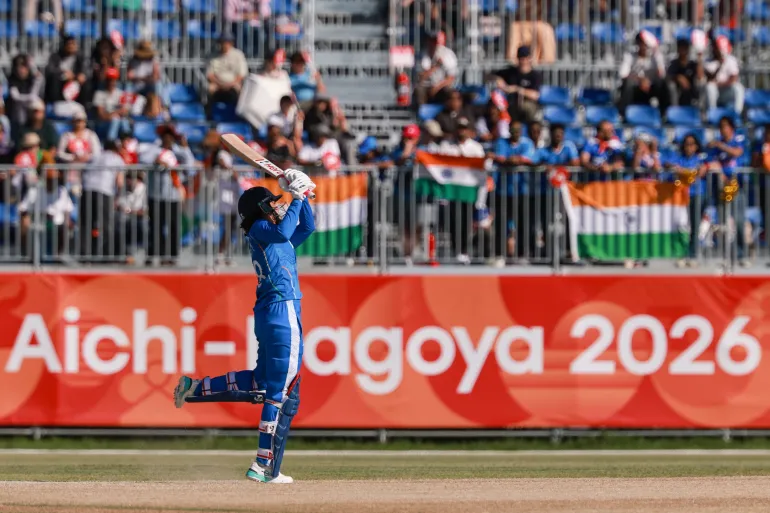
Smriti Mandhana’s whirlwind innings of 79 runs helped India crush Sri Lanka by 147 runs and win a second consecutive women’s cricket gold at the Asian Games.
India smashed 216-3 off their 20 overs, the highest women’s total in Asian Games history, with 18 fours and 13 sixes in the final on Tuesday.
Richa Ghosh and Bharti Fulmali plundered 25 off the final over from the hapless Mithali Ayodhya, who did not help her cause by conceding eight wides.
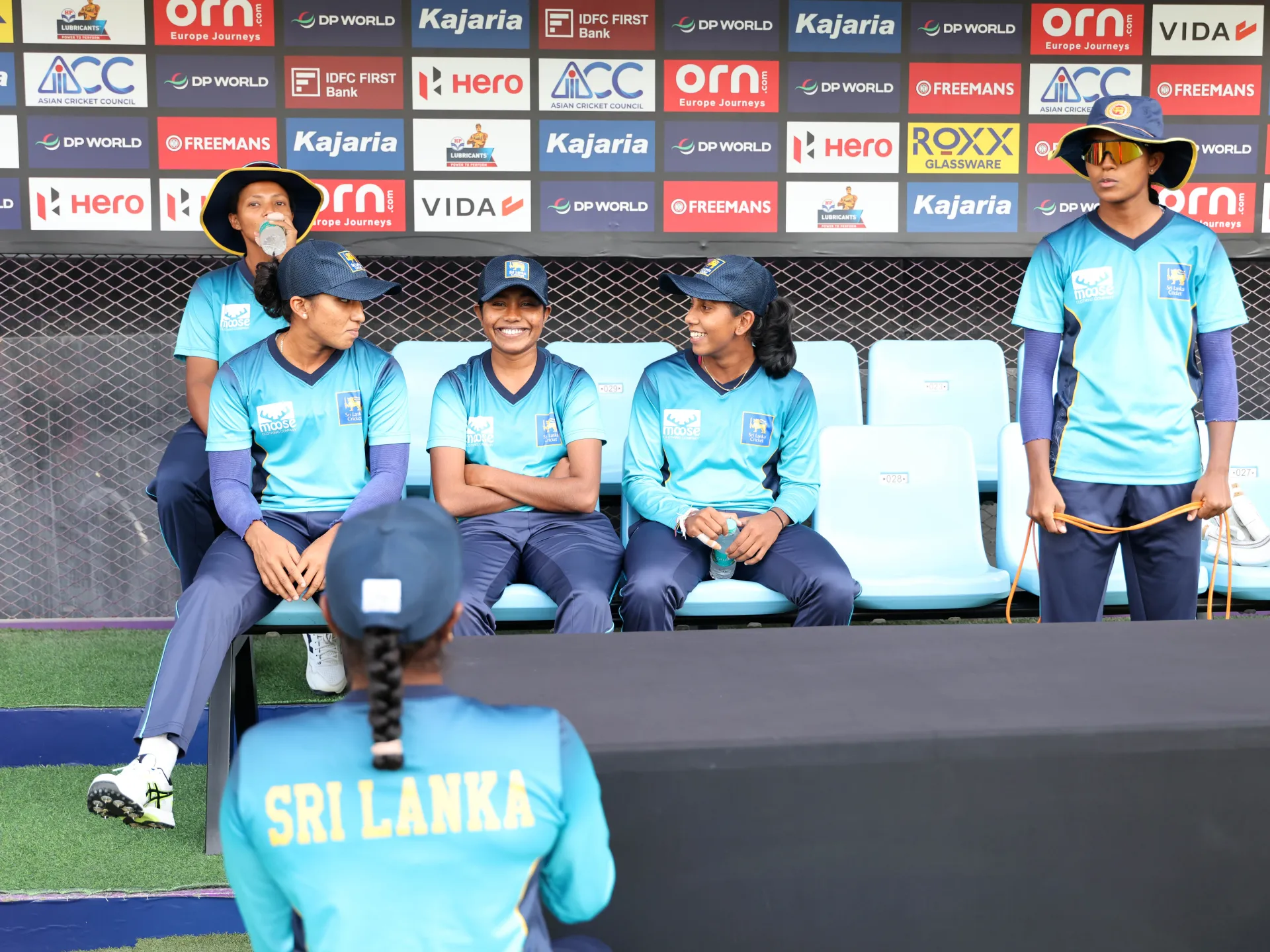
Sri Lanka were never in the hunt, and captain Chamari Athapaththu’s 29 was their only innings of note as they were skittled for 69 in 15.4 overs and had to settle for silver.
Opening batter Mandhana hit seven sixes and five fours in a 45-ball knock that sent the ball to all parts of the Korogi Athletic Park ground in Nagoya.
Smriti Mandhana hits a six [David Gray/AFP]
After India captain Harmanpreet Kaur won the toss and opted to bat, Shafali Verma, who made an unbeaten century in the semifinal, and Mandhana put on a blistering opening partnership.
The pair had raced to 99 in the 10th over when Verma had a rush of blood, playing a needless reverse sweep which she top-edged to Kawya Kavindi at point to fall for 48 off 29 balls.
Mandhana, the greatest run-scorer in women’s T20 cricket history, had reached her fifty earlier in the over and sailed on in style, clubbing anything loose to the boundary.
Harmanpreet joined her, and the pair took the score to 141 before the captain holed out to long-off for 19.
Mandhana, looking to accelerate further in the latter overs, skied an attempted six and was out in the 17th over with the score on 163.
Ghosh clattered 49 off 22 balls with three sixes and six fours to take India past 200 in the final over.
Mandhana scored 79 off 45 balls [Mark Baker/AP]
Earlier, some late-order hitting by Pakistan captain Fatima Sana set up a 31-run win over Bangladesh in the bronze medal match.
Sana came in with her side rocking at 67-5 in the 12th over but plundered 45 off 30 balls, including three fours and three sixes, and was out off the last ball of the 20 overs after seeing Pakistan to 145-8.
Her 67-run partnership with Aliya Riaz (25) for the sixth wicket proved the turning point, and Bangladesh could only muster 114-7 in reply.
Indian players celebrate after winning [Mark Baker/AP]
Storm is moving northeast of Japan’s eastern coast across the Pacific, leaving a path of destruction behind.
Published On 22 Sep 202622 Sep 2026
A powerful storm has triggered evacuation advisories for more than 1.6 million people, causing widespread travel chaos, flooding and landslides near Tokyo.
On Monday, Typhoon Dujuan packed wind speeds of about 144 kilometres (89 miles) per hour as it moved 130km (80 miles) south of Katsuura, near the Japanese capital, cutting power to thousands of households.
Recommended Stories
list of 3 itemsend of list
Two people have been confirmed dead, Kyodo News reported, citing local authorities.
By early Tuesday, the storm had shifted away from the coast and was heading northeast out to sea towards the Aleutian Islands, with slightly diminished winds, the Japan Meteorological Agency (JMA) said.
In areas where warnings have been issued, “there’s a risk the rain will continue as the typhoon moves north”, the JMA’s Takuya Hosomi said.
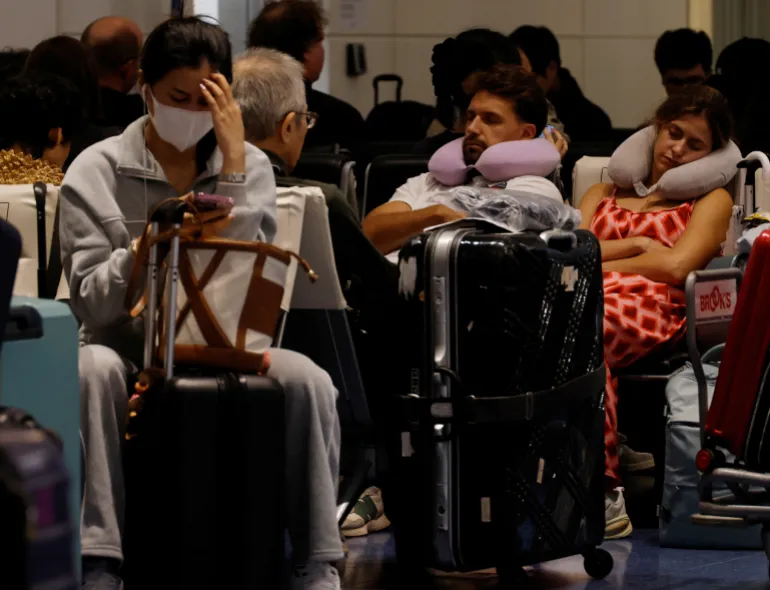
Passengers rest at Haneda Airport in Tokyo, Japan, as many flights are delayed and cancelled because of Typhoon Dujuan on September 21, 2026 [Kim Kyung-Hoon/Reuters]
Passengers were stranded at airports after Japan Airlines cancelled 135 flights and All Nippon Airways scrapped 140 on Monday.
Some rail services were suspended, including bullet train services connecting Tokyo and Osaka, Japan Railways said.
The JMA warned on Sunday that rain and winds were expected to intensify even before the typhoon’s arrival.
“The total rainfall through Tuesday could exceed the average monthly rainfall for September, resulting in record-breaking heavy rain,” the agency said.
Social media posts showed images of flooded roads in front of Kamakura station, a popular sightseeing spot.
“There is flooding in various parts of the city, so travelling by car is dangerous,” Kamakura Mayor Takashi Matsuo said on X.
Floodwaters also inundated parts of Ichikawa, east of Tokyo.
Dujuan forced the early closure of the Tokyo Game Show, one of the world’s biggest video game trade fairs, on Monday, its final day.
The area around a ramen restaurant is flooded by heavy rain as Typhoon Dujuan approaches Oamishirasato, Chiba Prefecture, Japan, on September 21, 2026 [Kyodo/Reuters]
A major outdoor music festival and a baseball match, both scheduled to be held in Chiba, were also cancelled.
Dujuan is Japan’s 25th typhoon this year. The country often sees strong typhoons in the late summer and early autumn.
The NATO Response Force (NRF) and EU Battlegroups have demonstrated that placing multinational forces on standby does not automatically make them immediately operational. German-Dutch military integration, in contrast, has generated a different outcome since cooperation was internalized within permanent command structures, units, training, and capability planning before a crisis occurred.
Such a comparison is becoming increasingly relevant to Northeast Asia. A Taiwan contingency could absorb American military assets at the very moment when North Korea embarks upon a serious provocation towards South Korea. Continued US commitments in Europe and the Middle East could further complicate the allocation of finite resources.
Why Standby Forces Encountered Problems
The NRF was established after the 2002 Prague Summit as a rapidly deployable multinational joint force of roughly 25,000 troops. Yet the NRF was heavily dependent on the member countries assigning their respective forces to particular rotations, while these governments had the final say over whether the forces could ultimately be employed. During the Afghanistan and Iraq wars—when operational demand was high—each government had strong disincentives in introducing scarce high-readiness units and specialized enablers to NRF rotational deployment.
Stay ahead of the geopolitical week.
MD Briefing delivers expert analysis across five global fronts — the Indo-Pacific, energy, geoeconomics, European security, and the Middle East — every Monday morning. Free.
This created a gap between designated readiness and actual availability. Strategic transportation, logistics, specialized support units, and communication capacity could still be subject to competing national demands. Eventually, in 2024, NATO replaced the NRF with the NATO Force Model, which emphasized a substantially larger pool of high-readiness forces that is closely aligned with specific defense plans.
Meanwhile, the EU Battlegroup was faced with an even clearer problem. Although the multinational battlegroups had been maintained on rotational standby since 2007, they had never been deployed. While acknowledging that the battlegroups enhanced interoperability and military transformation, the European Parliament attributed the shortcoming largely to insufficient political will, difficulties in decision-making, implementation problems, and the financing arrangements.
What Germany and the Netherlands Did Differently
German-Dutch cooperation developed according to a different institutional logic. Although the 1st German-Netherlands Corps was created in Münster in 1995, the integration later expanded deep into both militaries’ force structures. The Dutch 11th Airmobile Brigade was incorporated into the German Division Schnelle Kräfte (DSK) in 2014, while the Dutch 43rd Mechanized Brigade was integrated into Germany’s 1st Panzer Division in 2016, and the Dutch 13th Light Armoured Brigade joined Germany’s 10th Panzer Division in 2023.
The relationship was extended below the brigade level. Germany’s Panzerbataillon 414 is operated under the Dutch 43rd Mechanized Brigade, and Dutch personnel operate Germany’s Leopard 2A6MA2 tanks while serving within the battalion. Moreover, German officers serve in Dutch command headquarters and vice versa, turning multinational command into a routine organizational reality instead of a stopgap measure that is only activated during major exercises.
Needless to say, such an arrangement does not eliminate national sovereignty. Both Germany and the Netherlands preserve the political prerogative over whether and where their forces are deployed. Meanwhile, the benefits of integration would become observable once a crisis necessitates the deployment. Staff are already well-versed in each other’s procedures, and units have repeatedly conducted joint exercises, while command and logistics relations do not need to be newly constructed during mobilization.
The distinctions were visibly observable during training. For example, approximately 7,000 German and Dutch personnel participated in the 2026 Fighter Lion—the largest military exercise conducted by the Netherlands in two decades—ten years after the Dutch 43rd Mechanized Brigade was integrated into Germany’s 1st Panzer Division. These types of exercises strengthen existing command relations rather than creating temporary interoperability for a single event.
What Japan and South Korea Can Apply
It is quite obvious that Japan and South Korea cannot replicate the German-Dutch model. Neither country has a formal mutual defense pact nor a NATO-style integrated command structure. Therefore, the directly applicable lessons are more limited. Nonetheless, selected operational relationships can and should be institutionalized before multiple simultaneous contingencies make such coordination necessary.
The practical first step could be a standing bilateral adjustment mechanism that links Japan’s Joint Operations Command (JJOC) with relevant South Korean joint headquarters. Instead of exercising command authority, the mechanism could maintain procedures for intelligence exchange, deconfliction in the air and at sea, movement of US reinforcements, logistics coordination, and the use of Japanese facilities that support a Korean contingency. This would be especially crucial when Japan has to assist US operations related to Taiwan while installations across Japan—including Yokota, Yokosuka, Sasebo, Iwakuni, and other United Nations Command (UNC)-Rear facilities—play a pivotal role in US reinforcement to the Korean Peninsula in accordance with Operational Plan (OPLAN) 5055.
Under this mechanism, small-scale functional cells could concentrate on specific missions. Missile warning would be the most obvious starting point since the United States, Japan, and South Korea have conducted North Korean missile-warning data-sharing since December 2023. Additional cells could treat maritime domain awareness (MDA), anti-submarine warfare (ASW), cyber defense, transportation, medical evacuation, and logistics.
The exchange of officers should accompany the aforementioned measures. Japanese officers could participate in South Korean command posts, while South Korean officers could join Japanese operational staff who deal with naval operations, air defense, logistics, or reinforcement coordination. The goal is to get familiar with each country’s procedures, communications, command relations, and other miscellaneous constraints before wartime pressure markedly shortens the timeframe for decision-making.
Exercise Scarcity Rather Than Ideal Conditions
The most notable changes should be related to exercise design. Trilateral exercises should not be premised on the assumption that the full inventory of United States support capabilities will always be available. A more pessimistic scenario would begin with a Taiwan scenario that is already consuming a substantial amount of US assets—including its ISR capacity, strategic transportation, and precision-guided munitions—when North Korea embarks upon a serious horizontal or vertical military escalation on the Korean Peninsula.
In this particular situation, elaborated by the Atlantic Council report, South Korean military planners should determine which missions could be conducted independently and which can be addressed bilaterally. South Korea may assume greater responsibility for ISR, missile defense, logistics, and conventional firepower on the Korean Peninsula—yet this would be affected by the tempo of wartime operational control (OPCON) transition—while Japan could take on additional maritime surveillance, ASW, sea lines of communication (SLOC) protection, base defense, and logistics. The primary aim is not to divide the Taiwan and Korean Peninsula theaters between Seoul and Tokyo but to identify how both countries could most effectively conduct missions that complement US military operations across the two regions.
Logistics should be placed at the center of these exercises. A dual contingency could impose on the Japanese government the need to support both US operations on Taiwan and USFJ reinforcement to the Korean Peninsula, which inevitably involves Japanese ports and airfields. It could cause competition for fuel, maintenance, transportation, ammunition depots, runways, and port capacity. Thus, Tokyo and Seoul should develop procedures concerning reciprocal servicing, immediate repair, medical support, transportation, and selected supplies before the bottleneck transmogrifies into wartime problems.
Functional Integration Without a Bilateral Alliance
The German-Dutch case illustrates that political authority is not necessarily the same thing as operational preparedness. A government can maintain full authority over whether its forces enter conflicts and can also prepare in advance to cooperate effectively if that decision is made. These distinctions are highly relevant to Japan and South Korea since they enable a considerable level of operational preparedness without a formal defense pact. For instance, South Korea could discuss target allocations for North Korean TELs with its Japanese counterparts in order to effectively use the finite weapons available to Japan’s enemy base strike capability and South Korea’s Kill Chain and Korea Massive Punishment and Retaliation (KMPR).
Naturally, the primary objective should be functional integration in fields where both governments already have overlapping interests. A large set of measures—spanning from ISR coordination to cyber defense—can be institutionalized without creating either an integrated force or an Asian version of NATO.
Both the NRF and EU Battlegroups revealed the limits of formations that remained dependent on political and operational arrangements being assembled only when crises occur. German-Dutch cooperation worked better since many of those arrangements already existed.
Given the historical baggage that Japan and South Korea carry, it would undoubtedly be a Herculean task for them to take novel steps. Nonetheless, the emerging regional security environment is rapidly narrowing down the available options.
Players celebrate podium finish that brings exemption from conscription, saying the pressure was ‘out of this world’.
Published On 20 Sep 202620 Sep 2026
Iran withstood a late fightback to beat China 79-70 and win the Asian Games men’s basketball bronze, an achievement that left their players “speechless” after months of war back home.
China led 31-29 at half-time in Nagoya, but Iran took charge in the third quarter to lead 55-46 going into the fourth and held on to prompt wild celebrations and secure a place on the podium on Sunday.
Recommended Stories
list of 4 itemsend of list
“To be honest with you, I’m just speechless,” said 6ft 8in (203cm) power forward Arsalan Kazemi, who, in 2013, was the first Iranian to be drafted into the NBA by the Washington Wizards but never made a regular-season appearance.
“The pressure that we had on us is just out of this world,” he added.
“Not a lot of athletes can say that, with the way that it has been for almost six months, what we have been through, what our families have been through.”
“I just congratulate the people of Iran because they deserve much better.”
“And I think my teammates and I put our hearts out on the court today just to get this win and make them happy,” Kazemi said.
Iran’s Matin Aghajanpour and Mahdi Jafari celebrate [Edgar Su/Reuters]
Teammate Arman Zangeneh said the squad had been through a lot, but it was worth it.
“If you get the medal at the Asian Games, you don’t need to go to the army any more, so it’s huge for some players,” said the 6ft 6in (198cm) forward.
“We had a very tough two months. We went to the Philippines to play the qualifiers, then immediately we came here.”
“It was really difficult. And living in a container, with the food and everything, it was hard, very hard.”
“In the end, we got to the point where we go home with a medal, and it means a lot,” Zangeneh added.
Members of Iran’s coaching staff celebrate on court after the win [Anushree Fadnavis/Reuters]
Male athletes from the country’s national teams who win medals at the Asian Games are granted exemption from mandatory military conscription in a move announced by Iran’s former Supreme Leader Ayatollah Ali Khamenei in 2018.
Previously, only medallists at the Olympic or world games were exempt from the draft, according to Iran’s semi-official Tasnim news agency.
Iranian males reaching the age of 18 are required to serve two years on active duty and are then transferred to the reserve force.
Asia’s biggest sport stars will descend on Japan this week to battle it out for continental glory as the Asian Games get under way.
Aichi-Nagoya 2026 will see several athletes eyeing first-time podium finishes while others look to defend their crown.
Recommended Stories
list of 4 itemsend of list
This year’s edition will see six sports make their debut, while in some sports, a gold medal will double as automatic qualification for the LA 2028 Olympics.
From Olympic champions to teen sensations to breakout stars, Al Jazeera Sport takes a look at some of the top athletes to watch:
Alex Eala, Philippines — tennis
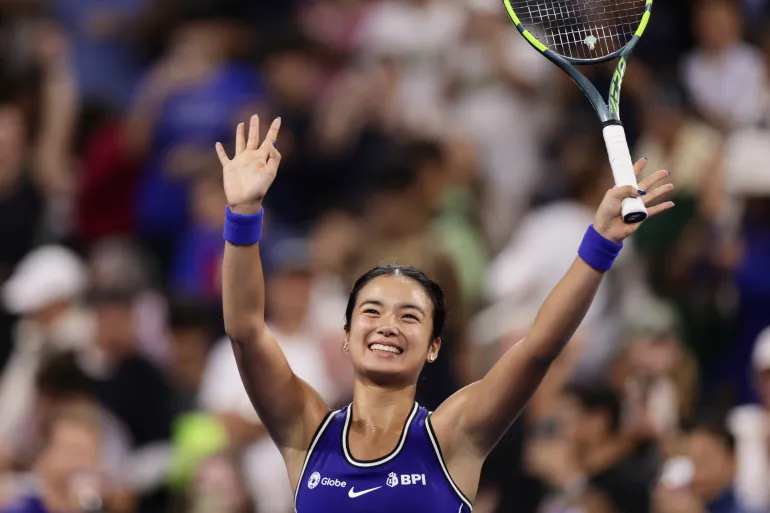
Tennis’s newest sweetheart will be the favourite for gold in women’s singles. The 21-year-old Filipino star is coming off a career-high season that saw her first WTA 1000 title last month and a third-round finish at the US Open.
Eala will compete at the Singapore Open just before the games, but will skip the concurrent Beijing Open – regardless of whether the WTA decide to punish her – since a gold medal at the Asian Games serves as automatic qualification for the LA 2028 Olympics.
Defending champion Zheng Qinwen and former world number one Naomi Osaka will not be competing in Japan, leaving it wide open for Eala to claim gold and upgrade from the bronze she won in 2022.
Eala acknowledges the crowd after defeating Mary Stoiana in the first round of the US Open in New York [Adam Hunger/AP Photo]
Rumesh Pathirage, Sri Lanka — javelin
The javelin phenom has been collecting gold medals like Pokemon cards this year, and another one at the Asian Games will add to his Diamond League, Commonwealth, and Ultimate Champion crowns.
But gold is not the biggest prize for the 23-year-old, although it is almost guaranteed after his nearest contender, India’s Neeraj Chopra, withdrew with injury. Pathirage is eyeing the Asian record of 92.97m set by Arshad Nadeem at the Paris 2024 Olympics, which he is poised to break after becoming the only thrower this season to breach 92m twice.
Pakistan’s Nadeem, on the other hand, is far from fit and will be lucky to end his season with a medal after a string of subpar throws.
Pathirage celebrates with the trophy after his victory in men’s javelin at the World Athletics Ultimate Championship in Budapest on September 13, 2026 [Ben Stansall/AFP]
Haruka Kitaguchi, Japan — javelin
Home favourite Kitaguchi is eyeing gold in the women’s javelin after being crowned Ultimate Champion in Budapest last week. Her 68.92m throw landed her a new national record and is tied for 10th-best in the world and second-best this season.
Surprisingly, the 28-year-old is making her Asian Games debut and will look to add continental gold in front of the home crowd after floundering at last year’s World Athletics Championships in Tokyo.
Yan Ziyi, China — javelin
Another javelin powerhouse to watch is world number one Yan Ziyi. She became only the sixth woman in history to surpass the 70m mark with her 71.74m throw in May that became a new Asian and World Under-20 record.
The Chinese teen sensation was unbeaten throughout the five Diamond League competitions she contested, but finished second to Kitaguchi at the Ultimate Championship after withdrawing with injury after one throw.
Should she recover in time, the 18-year-old can snatch back the crown from the Japanese veteran thrower to end the season on a high note.
Yan Ziyi heads to the Asian Games as world number one in the women’s javelin throw [Lintao Zhang/Getty Images/File]
Vaibhav Sooryavanshi, India — cricket
As India look to defend their men’s cricket crown, all eyes are on 15-year-old Sooryavanshi to produce another phenomenal result on the pitch.
India’s Vaibhav Sooryavanshi in action at the third India v England T20I in Nottingham [Andrew Boyers/Reuters]
Pan Zhanle, China — swimming
The Olympic champion returns to the stomping grounds where he first went sub-47 seconds in the men’s 100m freestyle – and became the first Asian male to do so – to break his own Asian record.
It was also on home soil at the Hangzhou 2022 games that he bagged a silver in the 200m and 400m freestyle, a bronze in the 50m, and a gold in the men’s 4x100m freestyle relay and 4x100m medley relay.
Pan Zhanle celebrates after winning the men’s 100m freestyle final at the 2024 Summer Olympics [Petr David Josek/AP Photo]
Yu Zidi, China — swimming
The Chinese prodigy was only 12 when she made waves as the youngest-ever medallist at the 2025 World Swimming Championships. She narrowly missed a podium finish in her individual events but found redemption at the Chinese National Swimming Championships later that year with two golds, one silver, and an Asian record in the 200m Individual Medley.
Now 13, she is looking to dominate at her first, hopefully of many, Asian Games where she’s entered in the 200m IM, 400m IM and 200m butterfly events, alongside relays.
While training with the China team in Beijing, she told local media this month she was “excited” for her Asian Games debut.
“Train well, don’t slack off. Demonstrate the level of your training and work hard to break past yourself,” she said, according to state news agency Xinhua.
Yu Zidi of China competes in the Women’s 200m individual medley final at the China Open Swimming Championship in Shenzhen, China on March 22, 2026 [Lintao Zhang/Getty]
101 East meets innovators across East Asia using digital technology to transform how we grieve those we love.
East Asia is facing a demographic reckoning, with societies in Japan, South Korea and Taiwan ageing rapidly.
With a drastic shortage of burial space, a lucrative new market is emerging.
From AI avatars to DNA gems, technology is bringing loved ones back to life – in digital forms – raising questions about whether it will help heal or hinder the grieving process.
101 East investigates how new technology is transforming the way we bid farewell to those we love.
Japan has said it is keeping the door open to acquiring nuclear-powered submarines, a potentially major shift for a country whose submarine force has historically relied exclusively on conventional propulsion. Defense Minister Shinjiro Koizumi confirmed recently that Tokyo is not ruling out nuclear-powered submarines as it considers the future requirements of the Japan Maritime Self-Defense Force (JMSDF).
Should Japan ultimately pursue the capability, it would join an exclusive group of nations operating nuclear-powered submarines. China, France, India, Russia, the United Kingdom, and the United States are currently the only countries with nuclear-powered submarines in active service. Brazil is already working to join the club, while Australian and South Korean nuclear-powered submarine plans are somewhat longer-term.
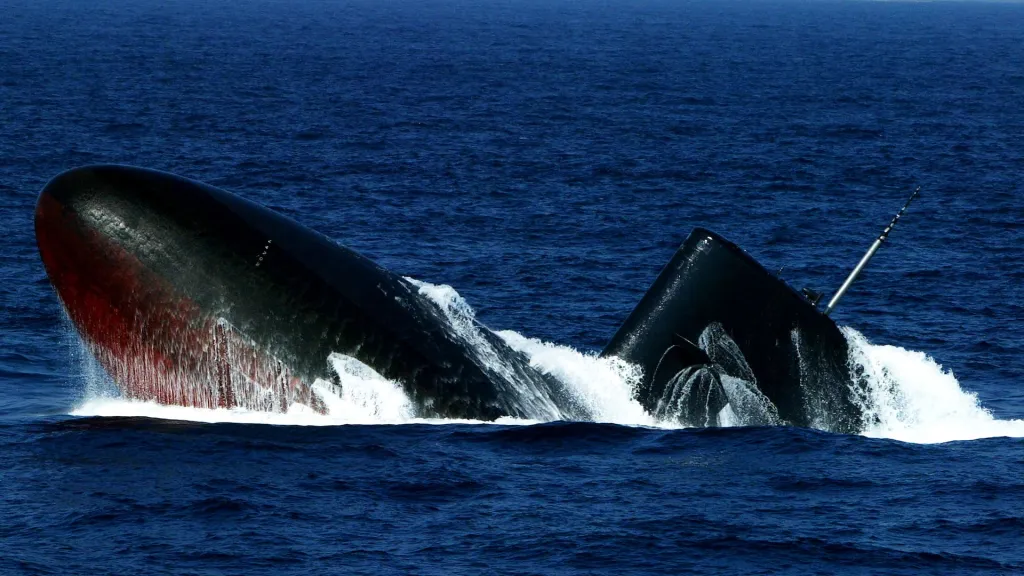
A submarine of the Japan Maritime Self-Defense Force surfaces during a naval review off Sagami Bay, Japan. Photo by Koichi Kamoshida/Getty Images
Japan’s submarine fleet is already regarded as among the most capable conventionally powered forces, and is very much at the forefront of advanced naval propulsion technologies. Even with that considerable expertise, however, developing and sustaining a nuclear propulsion capability would represent a huge challenge, requiring expertise and infrastructure far beyond those needed to build Japan’s existing conventionally powered submarines.
Koizumi’s comments do not represent a decision to acquire nuclear-powered submarines, nor do they indicate that Japan has begun a procurement program. They do, however, mark a significant evolution in the country’s public debate over submarine propulsion and point to a growing willingness within the Japanese defense establishment to consider capabilities that were previously largely outside the mainstream of defense planning.
Secretary of War Pete Hegseth hosts a bilateral meeting with Japanese Minister of Defense Shinjirō Koizumi at the Pentagon, Washington, D.C., Jan. 15, 2026. (DoW photo by U.S. Navy Petty Officer 1st Class Alexander Kubitza)
Currently, Japan operates one of the world’s most capable conventional submarine fleets, centered on increasingly sophisticated diesel-electric boats equipped with air-independent propulsion and advanced lithium-ion batteries. These submarines are well suited to operations around Japan and the country’s surrounding waters.
The JMSDF currently operates 22 conventionally powered submarines, maintaining the force structure established in the 2010s while progressively replacing older boats with the more capable Taigei class. Five Taigei class submarines are now in JMSDF service, with additional boats in the pipeline.
The first-of-class Taigei was launched on October 14, 2020, at the Mitsubishi Heavy Industries (MHI) shipyard in the city of Kobe, in the western prefecture of Hyogo. Japan Maritime Self-Defense Force
Nuclear propulsion, however, would offer substantially greater endurance and sustained underwater speed, allowing Japanese submarines to conduct longer-range operations across the broader Western Pacific with minimal support. This is a requirement that is becoming increasingly relevant as Tokyo’s strategic focus expands beyond its immediate maritime approaches.
China’s rapidly expanding naval force, including its growing submarine fleet and increasingly distant maritime operations, is forcing Tokyo to consider how it would monitor and potentially counter Chinese forces farther from the Japanese archipelago. A nuclear-powered attack submarine could remain submerged for extended periods without the endurance limitations imposed by conventional propulsion, making it particularly useful for long-range surveillance, tracking, and sea-denial missions.
Japan’s debate is also unfolding alongside a significant development in neighboring South Korea. Seoul has confirmed plans to develop a new class of nuclear-powered submarines, a move that could add further momentum to an emerging undersea competition in Northeast Asia. South Korea’s decision is particularly relevant to Tokyo because it demonstrates that nuclear propulsion is no longer merely a theoretical capability for U.S. allies in the region. While the missions and strategic priorities of the Japanese and South Korean navies are different, both countries face the challenge of operating in waters increasingly contested by China and North Korea.
A South Korean Ministry of Defense rendering shows how the nuclear-powered Jang Bogo N Project boats may look. MND
A Japanese decision to pursue SSNs could eventually create a much deeper basis for cooperation with Australia, including submarine interoperability, undersea warfare, workforce and technical expertise, infrastructure, sustainment, and potentially aspects of the industrial base. Analysts have already examined how Japan could fit into the wider AUKUS submarine ecosystem as Australia’s nuclear-submarine program develops.
Concept art of the submerged SSN-AUKUS nuclear-powered attack submarine. U.K. Ministry of Defense illustration
A Japanese nuclear-powered submarine with a robust capacity to launch land attack cruise missiles would also be a powerful component in the country’s emerging “counterstrike” posture, which is increasingly centered on acquiring the ability to strike targets at longer ranges.
Launch of the first Tomahawk missile from the Kongōclass Aegis destroyerChōkaiat an undisclosed location in the Pacific. Japan Ministry of Defense
An SSN would potentially add a highly survivable, mobile platform to this emerging strike architecture, allowing Japan to position long-range weapons farther from its home territory and complicating an adversary’s efforts to locate and neutralize them. That could be particularly valuable in a conflict in which Japanese air bases, missile batteries, and other fixed infrastructure were under attack.
The potential SSN requirement also fits with Japan’s expanding expeditionary ambitions. As the JMSDF converts its Izumo class helicopter destroyers to operate F-35B fighters, giving Japan a more credible carrier aviation capability, nuclear-powered attack submarines could provide a valuable escort for these increasingly important surface groups. Their speed, endurance, and ability to remain submerged for extended periods makes SSNs particularly well suited to accompanying carrier forces on longer-range deployments and supporting contingencies farther from Japanese waters.
U.S. F-35B Flies From Japanese Carrier; First Fighter Launched From Japanese Warship Since WWII
Looking at the bigger picture, it is highly significant that nuclear propulsion was effectively excluded from Japan’s conventional defense debate for decades. More recently, however, Japanese defense officials and policymakers have begun examining whether future submarines will require a different propulsion system. The issue is now one that can now be discussed openly at the ministerial level.
Nevertheless, pursuing a nuclear-powered submarine program would come with huge challenges.
The Japan Maritime Self-Defense Force Sōryū class submarine Hakuryū arrives at the submarine piers of Joint Base Pearl Harbor-Hickam. U.S. Navy photo by Mass Communication Specialist 1st Class Steven Khor/Released
Building and operating nuclear-powered submarines would require Japan to establish an entirely different industrial, regulatory, and training infrastructure. The vessels would also be considerably more expensive and complex to build and operate than Japan’s existing conventionally powered submarines. Tokyo would have to resolve questions involving nuclear regulation, reactor technology, maintenance facilities, crew training, and the handling of nuclear material.
There would also be a significant political dimension. Although naval nuclear propulsion is fundamentally different from possessing nuclear weapons, any move in that direction would inevitably receive scrutiny in a country whose postwar security policy has been shaped by its experience with nuclear weapons and its longstanding non-nuclear principles.
For those reasons, Koizumi’s statement should be viewed less as an announcement of a Japanese nuclear-submarine program than as evidence that the political barrier to discussing such a program is falling.
The Japanese Oyashio class submarine Yaeshio transits the Philippine Sea during Exercise Pacific Vanguard 23. U.S. Navy photo by Mass Communication Specialist 3rd Class Santiago Navarro
The next question is whether the Japanese government will move from keeping the option open to actually studying a nuclear-powered submarine design, propulsion technology and acquisition pathway in detail.
If it does, the consequences could extend well beyond Japan’s submarine fleet. A Japanese nuclear-powered submarine capability would represent a major enhancement of Tokyo’s ability to operate across the Western Pacific and could alter the undersea balance between Japan, China, and the United States’ other regional allies. At the very least, the idea is one that is now part of wider discussions at the highest levels.
Bank of Japan raises benchmark interest rate from 1 to 1.25 percent, pledging to help counter inflation risks.
Published On 18 Sep 202618 Sep 2026
The Bank of Japan (BoJ) has raised interest rates by 0.25 to 1.25 percent, pushing borrowing costs to their highest level in 31 years, amid rising inflation and wages, and pressure from Washington.
The move on Friday marked the first hike since June, and takes interest rates closer to levels the BoJ deems neutral to the economy, marking another step away from decades of ultra-low rates that cemented the yen’s status as a cheap global funding currency.
Japan is grappling to contain inflation, which is being driven by factors including rising energy prices, global supply pressures and domestic inflation exceeding the 2 percent target.
Core consumer inflation held steady near the target in August, data showed on Friday, as companies continued to pass on rising costs for a wide range of food and grocery items.
The country also faced a “slow-moving demographic shock” with a shrinking labour pool lifting wages, a structural factor that cannot be dismissed as temporary, BoJ Executive Director Koji Nakamura said on Monday.
The Federal Reserve’s rate hike on Wednesday, and the prospect of another one later this year, have added pressure on the BoJ to keep pace.
Further widening of the United States-Japan rate gap risks weakening the yen and lifting inflation through higher import costs, analysts told the Reuters news agency.
Its policy rate also remains lower than the European Central Bank, which raised its key rate to 2.5 percent last week.
Such pressure could affect the tone of BoJ Governor Kazuo Ueda’s post-meeting briefing, which will be closely watched by markets for clues on the timing and pace of further increases.
The Aichi-Nagoya Asian Games get under way this weekend under the shadow of a housing crisis that has organisers scrambling to placate athletes and officials from participating nations.
The tournament has been mired in complaints over housing options for athletes travelling to Japan, after the host nation decided not to build a dedicated Games village for the 17,000 competitors and officials.
Recommended Stories
list of 3 itemsend of list
To cut costs this year, organisers are relying on a cruise ship, temporary wooden cabins and hotels, but this temporary accommodation has met with criticism in the days leading up to the continental competition.
On Monday, South Korean officials slammed beds in shipping container-style huts as the “worst-ever”, as the South Korean basketball chief said the beds were too short to stretch out in.
Here’s everything we know:
Why are the Asian Games facing an accommodation crisis?
The official housing committee said the issue arose because they expected 15,000 athletes and officials, but numbers increased as new sports were added.
This year’s Games will feature several newcomers, including mixed martial arts, padel and surfing, as well as virtual taekwondo and teqball, which combines aspects of football and table tennis.
Ahead of the Games’ opening, chief organiser Hideaki Omura said efforts are being made to ensure athletes are comfortable.
“If there are different opinions, then we will respond to them appropriately,” Omura, who also serves as governor of Aichi prefecture, told the AFP news agency.
“At this point, while we are responding to individual opinions, we have been improving everything as issues arise, and we will continue to respond that way.”
He added that a committee of former athletes, including Olympians, gave a favourable assessment of the plans for the huts built this year.
“We explained everything to them and had them take a look around, and they said it looked functional and good,” he said.
Temporary wooden container huts being used to house athletes [David Gray/AFP]
Where will the Asian Games athletes stay?
Alternative housing options range from a cruise liner and wooden containers to hotel rooms.
On Tuesday, the Italian cruise ship, Costa Serena, which will host 4,000 athletes and officials, arrived in Nagoya.
The shipping container-style huts in the dock area of Japan’s biggest port will host 2,000 other athletes and officials.
On Thursday, Japan’s deputy Chef de Mission Hisashi Mizutori told a news conference that athletes have been going through entry procedures since the cruise ship village opened a day earlier.
“There have been cases where coaches, team officials and athletes have been assigned to the same room. There are also situations where room assignments were made purely based on the numbers, such as assigning five twin rooms for a group of five men and five women,” Mizutori said.
“While the numbers match on paper, practically it creates challenging situations such as men and women being assigned together, coaches being assigned with athletes, or trainers who need to accommodate a lot of medical equipment being assigned together.”
He added that the Japanese Olympic Committee (JOC) had also anticipated accommodation “challenges” and secured hotels in the city as a backup.
“We are currently working to coordinate and negotiate adjustments wherever possible. For cases where that proves too difficult, we are considering using the backup accommodations that Team Japan prepared in advance as alternatives.”
Why are participating nations and athletes complaining about the accommodation?
“Athletes who are over two metres tall cannot even stretch their legs out on the beds. It’s unreasonable.”
Jung also accused the organisers of failing to respond to South Korea’s concerns about the housing options.
“The organisers have still not said anything,” he said, adding: “We are very concerned and discussing extensively with the Korean Sport and Olympic Committee what to do about this.”
Player Byeon Jun-hyeong, from the basketball team, posted a video on social media showing a leaking sink and a soaked floor in his hut.
“Please help us,” he posted.
Philippine Olympic Committee president Abraham Tolentino also said that while all his athletes had been given a room, “some officials, like coaches, were moved to different hotels and Airbnb”.
The Costa Serena, a 290-metre-long cruise ship that will be used as an accommodation facility for athletes and officials during the 2026 Asian Games, is docked at the Port of Nagoya [Fred Mery/AFP]
Why will cricketers get the best accommodation at the Asian Games?
According to Miyaji, the cricket tournament is being run by the Asian Games organising committee in collaboration with the Asian Cricket Council.
He said that the two bodies had been discussing accommodation options “for a long time”.
“The participating teams in cricket are being offered hotel accommodation,” Miyaji said.
“Many other sports are being accommodated in much more limited facilities, such as a cruise ship or container hotels.”
What other issues have hit the Asian Games?
While the opening ceremony has yet to take place, several events such as basketball, football, cricket, hockey and modern pentathlon have already begun.
On Thursday, Tropical Storm Dujuan was located off Japan’s Pacific coast as of 03:00 GMT and heading northwest towards central Japan, where Nagoya is located.
Kosei Inoue, Japan’s chef de mission for the Games and a senior executive board member of the JOC, said at a news conference on Thursday that some competitions have already experienced “delays or postponements, and there is also a possibility that a typhoon could approach on September 21”.
“Under these circumstances, we are holding thorough meetings within the JOC to ensure that we are fully prepared and capable of responding appropriately to these situations.”
North Korea, enjoying support in the stands, were up 7-0 by half-time and are the favourites for the gold.
Published On 14 Sep 202614 Sep 2026
North Korea’s formidable women’s football team, cheered on by several hundred pro-Pyongyang fans in Osaka, Japan, launched their Asian Games campaign with a 10-0 hammering of Bangladesh.
The North Koreans have enjoyed stunning international success at the youth level and start among the favourites for gold in Japan.
Recommended Stories
list of 4 itemsend of list
They were far too hot for Bangladesh to handle and were seven goals ahead by half-time on Monday.
Striker Ri Song-a, who was born and raised in Japan, was in North Korea’s starting lineup and scored in the second half.
North Korea were cheered on by a large group of red-clad fans, who sang and chanted throughout the match.
The men’s and women’s football teams were welcomed by supporters waving flags as they arrived for the games last week wearing white blazers and pink ties.
More than 100 North Koreans are set to compete in 14 sports at the games, which take place in Nagoya-Aichi and officially open on September 19.
North Korea suspended participation in international sporting competitions during the COVID-19 pandemic, but returned at the Asian Games in China in 2023 and also took part in the Paris Olympics.
North Korea’s women face South Korea in a Group F grudge match on September 21.
The men’s team begin their campaign against China on Wednesday.
North Korean fans cheer for their team during the women’s group B football match [AFP]
Organisers in Japan say they had ‘neither the manpower nor the budget’ to deal with the accommodation shortage.
Published On 14 Sep 202614 Sep 2026
Accommodation at the Asian Games, which start this week in Japan, is the “worst ever”, say South Korean officials, warning of “a serious shortage” of rooms.
Beds in shipping container-style huts are too short for players to stretch out, the South Korean basketball chief said on Monday, while officials from the Philippines resorted to Airbnb.
Recommended Stories
list of 4 itemsend of list
There is no dedicated athletes’ village for the games, with organisers instead relying on a cruise ship, temporary wooden cabins and hotels to cut costs.
The games in the city of Nagoya in Aichi prefecture officially open on Saturday, but football and basketball are already under way.
Jung Jae-yong, vice president of the Korea Basketball Association (KBA), expressed his displeasure with the cabins where the men’s basketball team is staying.
“Based on my experience, this is the worst it has ever been,” he said.
“Athletes who are over two metres tall cannot even stretch their legs out on the beds. It’s unreasonable.”
Byeon Jun-hyeong, from the basketball team, posted a video on social media showing a leaking sink and a soaked floor in his hut.
“Please help us,” he posted.
The huts are set to be home to 2,000 athletes and officials over the more than two weeks of the games.
Worried about their athletes, Indian sports officials built replicas of cabins to help them get used to the games’ accommodation.
KBA’s Jung accused organisers of failing to respond to South Korea’s concerns.
“The organisers have still not said anything,” he said.
“We are very concerned and discussing extensively with the Korean Sport and Olympic Committee what to do about this.”
Hundreds of athletes were briefly evacuated from their accommodation last week as record rainfall lashed Nagoya.
More rain has been forecast in the coming days.
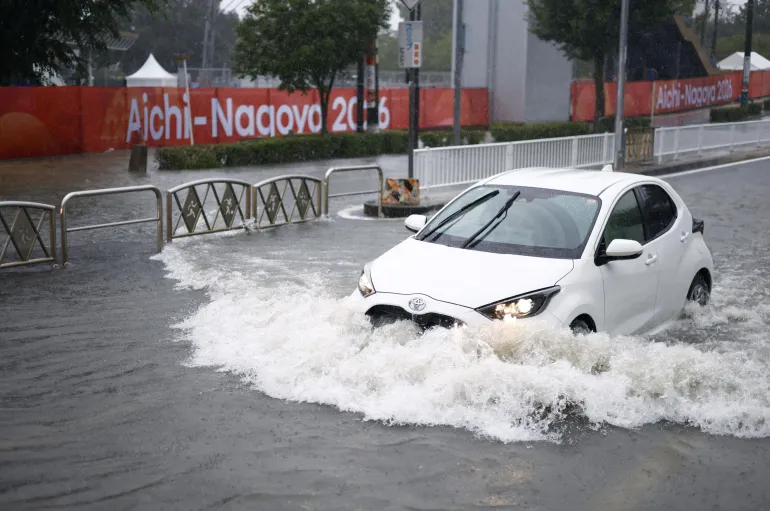
A car drives along a road flooded by heavy rain while banners for the Aichi-Nagoya Asian Games are visible in the background in Nagoya, central Japan [File: Kyodo via Reuters]
‘Serious shortage’ of accommodation
More than 17,000 athletes and officials are expected at the games — a bigger number than the Olympics.
Organisers were initially expecting 15,000 and argued last month that they had “neither the manpower nor the budget” to deal with ballooning numbers.
The Olympic Council of Asia later said everyone would get a place to stay.
Star cricketers have voiced fears about a lack of top-notch hotels.
A Korean Sport & Olympic Committee (KSOC) official agreed that problems persist with the games just days away.
“At the moment, there is a serious shortage of accommodation not only for the entire South Korean delegation to the Asian Games, but for delegations from around the world in the Aichi-Nagoya area,” the official said.
“We are doing everything we can to resolve the issue and ensure there are no such problems.”
Philippine Olympic Committee president Abraham Tolentino said all athletes from his country had been given a room. However, “some officials, like coaches, were moved to different hotels and Airbnb”.
The Italian cruise ship Costa Serena is due to arrive in Nagoya on Tuesday. Between 4,000 and 5,000 athletes will stay on the vessel.
The rest will be accommodated in hotels, including in Tokyo, where swimming, diving and equestrian events will take place.
TOKYO: Japan strongly condemned the attacks by the Houthis on Saudi Arabia and reiterated its call on them to refrain from escalating the situation both inside and outside Yemen.
“The Houthis’ continued military attacks have resulted in numerous casualties, including among civilians. Japan renews its strong denunciation of the recent series of attacks by the Houthis. Attacks on civilians and civilian facilities, as well as any actions that impede the free and safe navigation of vessels, cannot be tolerated,” Japan’s Foreign Ministry said in a statement on Friday night.
The ministry stressed that stability in Yemen is directly linked to the stability of the entire Middle East, and Japan reiterates the importance of achieving peace in Yemen. It also noted that peace and stability in the Middle East, including ensuring free and safe navigation through the Bab Al-Mandab Strait, are of the utmost importance to the entire international community, including Japan, from the perspective of energy security.
“Japan will continue to make every diplomatic effort, in cooperation with the international community, including Yemen and Saudi Arabia, toward an early de-escalation of the situation,” the statement said.
In a historic move last week, the United Nations General Assembly voted overwhelmingly to encourage the use of new world maps which more accurately depict continents with their true sizes.
The move followed months of lobbying by the African Union, which itself adopted a new map earlier in February. A total of 164 countries voted in favour while six abstained.
Recommended Stories
list of 4 itemsend of list
The United States was the only member to oppose it. US representative Yaryna Ferencevych said before the vote that the resolution was “the reason this institution is losing its credibility”.
“Instead of focusing on genuine problems … this body is debating map projects from the 16th century,” she said.
But since the resolution was approved, at least three other countries have voiced concerns about the changes: India, Ukraine and Japan.
None are explicitly opposed to adopting a new projection. However, they are raising concerns about how certain disputed territories should be depicted.
Here’s what we know:
Why is there a new world map?
The UN endorsed a resolution promoting the Equal Earth projection of the world map, rather than the Mercator projection, which is currently widely used.
The resolution does not ban Mercator or impose a particular replacement – it merely encourages nations to adopt the Equal Earth version, which was created by three researchers in 2018.
The Mercator projection, which was produced by Flemish cartographer Gerardus Mercator in 1569 when the West was busy “conquering” new territories, attempts to show a three-dimensional globe on a two-dimensional surface. That is why countries closer to the poles appear much larger than countries at the equator.
For decades, map experts have pointed out that Mercator’s projection disproportionately shrinks the true size of the African continent and that of other developing regions, while making Europe and the US seem much larger by comparison.
For example, Greenland is shown as roughly the same size as Africa, but, in reality, it could fit into the continent 14 times over. Europe, which is portrayed as bigger than South America, is actually half its size.
Advocates from African countries pointed out that the map is problematic because of the size issues. Importantly, they argued, it reinforces negative perceptions of Africa.
Several cartographers have attempted to develop equal area maps. However, African activists specifically pushed for the Equal Earth projection map, which significantly expands Africa and shrinks Europe and the US.
Experts say while maps are inherently inaccurate because of the constraints of depicting a spherical world on a flat plane, the Equal Earth projection is as close as it gets.
Why is Ukraine worried about the new map?
Ukraine was one of six countries which abstained from the vote at the UNGA, along with Estonia, Georgia, Moldova, Serbia and Lithuania, who voted in solidarity with Ukraine.
Kyiv has complained that the Equal Earth projection depicts the Russian-occupied Crimean peninsula in a distinctly lighter shade than mainland Ukraine.
Russia illegally occupied and annexed Crimea in February 2014, a move the UN has denounced.
Although the peninsula is also shaded differently from mainland Russia on the new map, its yellowish tint appears closer to the Russian shade than Ukraine’s.
“Ukraine does not in principle oppose the core issue addressed in this draft resolution,” Andrii Melnyk, the country’s permanent representative to the UN, said in an address to the assembly.
Melnyk said Kyiv had asked for corrections before the vote but had not received positive responses. The new map, he said, could be tantamount to opening a Pandora’s box, enabling the “abuse and distortion” of the world map.
“It would be a truly fatal mistake for all of us, and for this General Assembly, to seek to correct a historical injustice in the geographical depiction of countries and continents by simultaneously allowing a deeply troubling interpretation of the text of this draft resolution,” he added.
What is Japan demanding?
Meanwhile, on Thursday, Tokyo, which voted in favour of the new map, said it had also asked for corrections to the Equal Earth projection because the map uses the same colours and shades for Russian territory as it does for the disputed Kuril Islands.
Russia and Japan have long fought over control of the four islands, known in Russia as the Southern Kurils and in Japan as the Northern Territories. In 1945, during World War II, the Soviet Union invaded and annexed the islands as part of a pact with Western Allies that stipulated the Soviets would take the disputed territory. The islands’ Japanese inhabitants were removed.
Subsequently, Japan and the US have claimed that the islands were not part of the original pact. The islands, however, remain under Russian administration.
In August this year, Russia’s President Vladimir Putin paid his first-ever visit to the islands, drawing condemnation from Japan. Prime Minister Sanae Takaichi called the visit “absolutely unacceptable”, saying it “offends the sentiments of the Japanese people”.
This week, Chief Cabinet Secretary Minoru Kihara said the Japanese embassy in the US has asked Equal Earth’s creators to change the map.
“Displays that contradict the Japanese government’s position are seen [on the map],” Kihara said at a news conference. “We need to prevent incorrect perceptions regarding our country’s territories and geographical names from spreading.”
Why is India uneasy about the map?
India also voted in favour of the Equal Earth projection, but on Sunday, the Ministry of External Affairs published a caveat regarding depictions of the disputed border territory of Kashmir.
Following the Indian partition of 1947, both Pakistan and India lay claim to the former state of Jammu and Kashmir, which had been controlled by the British through indirect rule. The region has subsequently been a flashpoint for tensions between the two rivals and has led to several wars.
Parts of Kashmir are administered by Pakistan, while other parts are administered by India. China, which also disputes some Kashmir territory with India, administers its northeastern portion.
In his statement, spokesperson Randhir Jaiswal noted that the UN vote was in favour of encouraging the use of equal area projections and that it had not made the use of any one map mandatory.
“India’s sovereign territory, including the Union Territories of Jammu and Kashmir and Ladakh, must be depicted in accordance with India’s official map,” he said. “Any inaccurate or misleading depiction is unacceptable.”
World War Two continues to shape relations between Russia, China, Taiwan and Japan, with competing interpretations of the conflict increasingly intersecting with present day geopolitical tensions.
The issue resurfaced last week when Russian diplomats in Taiwan screened a film about Japanese militarism and World War Two. The screening raised concerns in Taiwan that Moscow was helping Beijing promote a narrative of a rising Japanese military threat while also creating divisions between Taipei, Tokyo and their Western partners.
The disagreement reflects fundamentally different interpretations of who fought Japan, who ultimately defeated Japanese forces in East Asia and which governments have the right to claim that legacy.
What’s Happening
Russia’s presentation of Japan’s wartime history comes against the backdrop of its own unresolved dispute with Tokyo over territory captured at the end of World War Two.
Stay ahead of the geopolitical week.
MD Briefing delivers expert analysis across five global fronts — the Indo-Pacific, energy, geoeconomics, European security, and the Middle East — every Monday morning. Free.
Soviet forces entered the war in East Asia only during its final weeks, when the Red Army moved into Japanese occupied northeastern China. Soviet forces withdrew from most of the region in 1946 and transferred many captured Japanese weapons to Mao Zedong’s communist forces.
The Soviet Union quickly recognized Mao’s government after the People’s Republic of China was established in October 1949 following the communist victory over Chiang Kai shek’s Republic of China.
Soviet forces also seized four islands off Japan’s Hokkaido at the end of the war. Russia calls them part of the Kurils, while Japan refers to them as the Northern Territories. Moscow continues to control the islands.
Russia and Japan have never signed a formal World War Two peace treaty, with the territorial dispute remaining a major obstacle.
China’s View of World War Two
Beijing presents the history of the war as a central part of China’s national narrative.
The Chinese government says China sacrificed 35 million people during its struggle against Japan, which Beijing dates back to Japan’s 1931 invasion of Manchuria.
China officially refers to the conflict as the Chinese People’s War of Resistance Against Japanese Aggression and describes World War Two as the World Anti Fascist War.
Beijing argues that China and the Soviet Union were the mainstays of resistance against Japan and Germany, while Chinese communist guerrilla forces formed the backbone of the resistance inside China.
This interpretation gives the wartime struggle an important role in China’s broader political narrative and its portrayal of Japan’s contemporary military posture.
Taiwan’s government argues that the People’s Republic of China cannot claim credit for a war fought before the PRC was established in 1949.
During World War Two, the Republic of China under Chiang Kai shek was China’s government, while Taiwan itself was under Japanese colonial rule. Republican forces carried out much of the fighting against Japan.
The Chinese civil war was temporarily suspended during the conflict as Chiang’s forces and Mao’s communists formed an uneasy alliance against Japan.
Taiwan also points to the formal Japanese surrender at the end of the war. The Republic of China, represented by Chiang’s government, signed the surrender alongside the other Allied powers, including the Soviet Union.
From Taipei’s perspective, Mao’s communist forces used the war to strengthen themselves and subsequently benefited from the civil war that resumed after Japan’s defeat.
Why It Matters
The competing historical narratives are not simply disagreements about the past. They influence how the governments involved portray present day security threats and diplomatic relationships.
For China, Japan’s wartime history remains an important element of its criticism of Japanese military development. For Taiwan, however, Beijing’s use of that history is also connected to its claim over Taiwan and its attempt to define the historical legitimacy of the Chinese state.
Russia’s involvement adds another layer because Moscow has its own unresolved territorial dispute with Japan stemming directly from the final stages of World War Two.
The screening of a film about Japanese militarism in Taiwan therefore carries significance beyond historical commemoration. Taipei sees the issue through the lens of its current relations with Japan and the West, while Russia and China share interests in challenging what they portray as a resurgence of Japanese military power.
Key Stakeholders
Russia retains control of the disputed islands off Hokkaido and has never concluded a formal World War Two peace treaty with Japan.
China presents itself as a central force in the wartime resistance against Japan and emphasizes the enormous Chinese sacrifice during the conflict.
Taiwan argues that the Republic of China, rather than the People’s Republic of China, represented China during World War Two and carried out much of the fighting against Japan.
Japan remains directly affected by the competing historical narratives, particularly because of its territorial dispute with Russia and its increasingly important relationship with Taiwan.
What’s Next
The dispute over World War Two history is likely to remain intertwined with current tensions in East Asia.
For Taiwan, the concern is that Russia and China could use wartime history to portray Japan as an emerging military threat and undermine Taipei’s growing ties with Tokyo and other Western partners.
For Japan, historical disputes remain connected to its relationships with both Russia and China.
For Russia and China, emphasizing their wartime resistance against Japan provides a historical framework through which they can criticize what they see as a revival of Japanese military power.
Analysis
The significance of the dispute lies in how history is being used as a tool of contemporary geopolitics. The same war produces fundamentally different political narratives depending on which government is telling the story.
Beijing emphasizes China’s enormous wartime sacrifice and the role of communist forces. Taipei emphasizes the Republic of China’s role as the government that fought Japan and signed the Japanese surrender. Moscow emphasizes the Soviet Union’s final campaign against Japan and retains territory captured during that period.
These competing narratives matter because they provide historical legitimacy for present day political positions. As Japan strengthens its security relationships with Taiwan and Western partners, wartime memory can be used to frame those developments not simply as responses to current security concerns, but as part of a longer historical confrontation.
The dispute therefore shows how the legacy of World War Two remains an active element of East Asian power politics rather than simply a question of historical interpretation.
The continental games will officially open on September 19, but several team competitions will get under way earlier.
Published On 10 Sep 202610 Sep 2026
The Asian Games have begun in Japan with Qatar beating Iran in men’s basketball, the first action in the continental multisport showpiece that has more participants than the Olympics.
Qatar held off a comeback from Iran to win their Group B encounter 59-35 at the Aichi International Arena in Nagoya on Thursday.
It was the first match of a men’s basketball competition that will have medal finals on September 20, the day after the opening ceremony.
“We know we need to win at least one game so we can qualify for the next round,” said Qatar’s Michael Lewis, the United States-born player who scored a game-high 21 points.
“Feels good to get some team camaraderie back, and now we have got to keep going.”
Later in Group B, Taiwan beat Jordan 83-80.
The Qatar vs Iran men’s basketball match was the first one of the Asian Games 2026 [AFP]
More than 17,000 athletes and officials are expected to take part in 43 sports at the Nagoya-Aichi Games, which do not officially start until the opening ceremony on September 19 and will run until October 4.
Several events such as basketball, football, cricket, hockey and modern pentathlon will get under way before the opening ceremony.
Los Angeles 2028 Olympics qualifying spots are up for grabs in several sports at the Asian Games, which are returning to Japan for the first time since 1994.
Organisers hope the athletes will have a “unique experience” staying in accommodation ranging from a cruise liner and wooden containers to standard hotel rooms.
Officials are confident that the plan will not be affected by Japan’s typhoon season, which is usually in full swing in September-October.
Rainwater also leaked into some competition venues, with more wet weather forecast for the coming days.
Among those in action at the Games will be Philippine tennis sensation Alexandra Eala and a pair of world-class teenage talents: 15-year-old Indian cricketer Vaibhav Sooryavanshi and 13-year-old Chinese swimmer Yu Zidi.


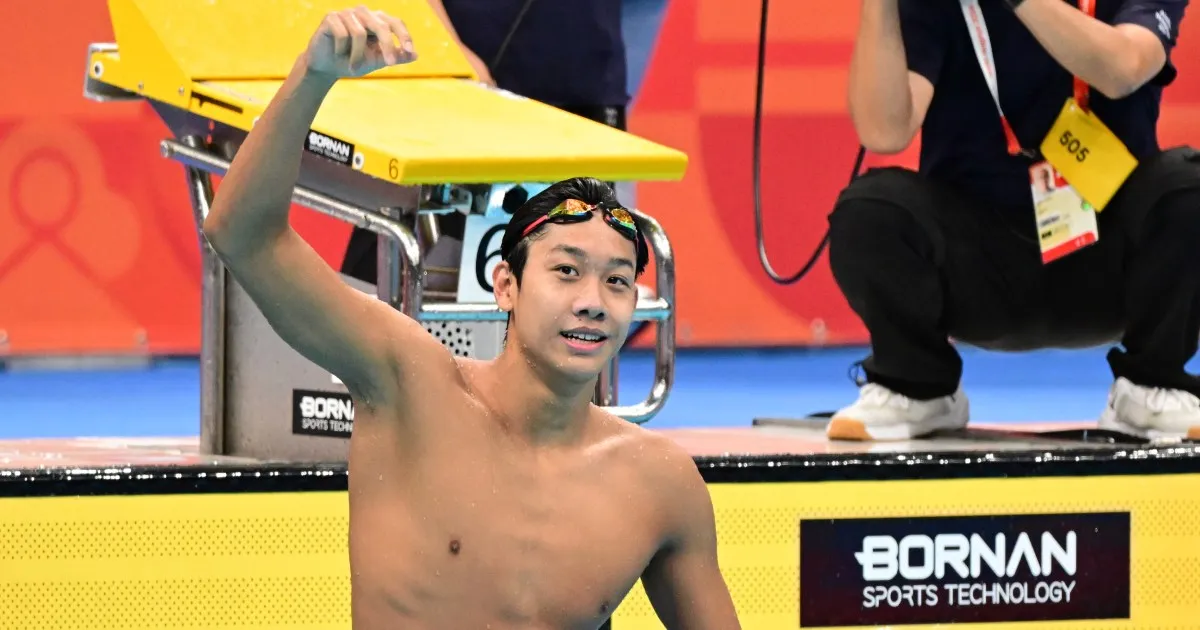




![Sugar Shanti Banarse catches a wave [Photo courtesy of the Surfing Federation of India]](https://i0.wp.com/occasionaldigest.com/wp-content/uploads/2026/09/Sugar-Shanti-1790080522.jpg?w=640&ssl=1)
![Sivaraj Babu in action [Photo courtesy of the Surfing Federation of India]](https://i0.wp.com/occasionaldigest.com/wp-content/uploads/2026/09/Sivaraj-1790081318.jpg?w=640&ssl=1)