January

Jill Biden’s first husband charged in killing of wife in domestic dispute at their Delaware home

The first husband of former First Lady Jill Biden has been charged in the killing of his wife at their Delaware home in late December, authorities announced in a news release Tuesday.

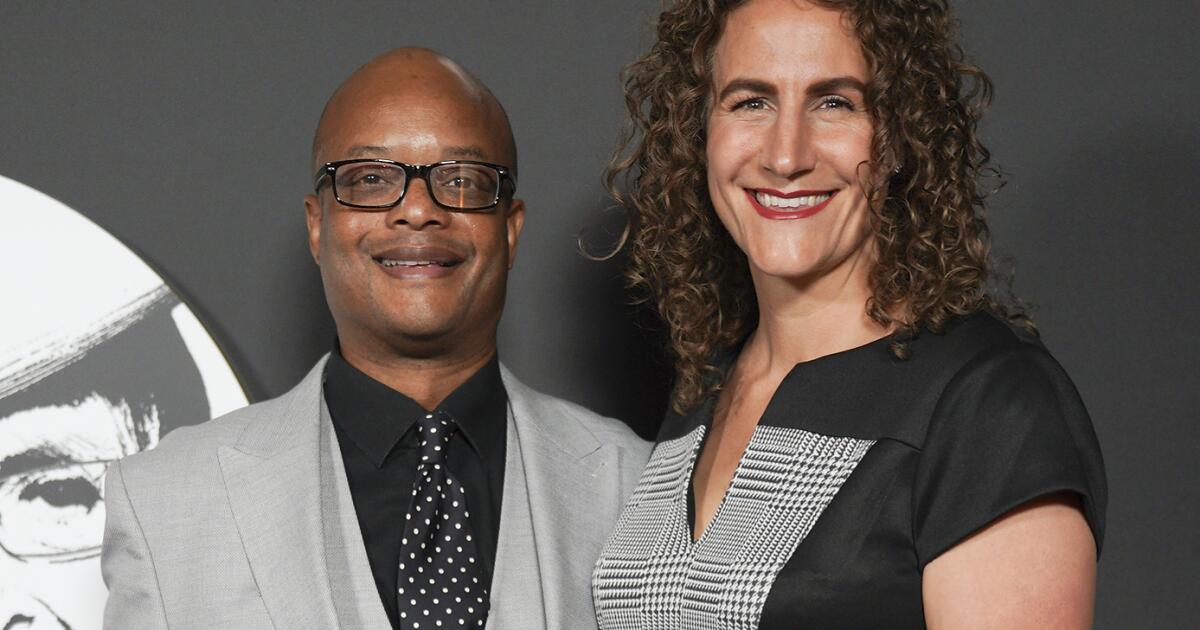
William Stevenson, 77, of Wilmington was married to Jill Biden from 1970 to 1975.

Caroline Harrison, the Delaware attorney general’s spokesperson, confirmed in a phone call that Stevenson is the former husband of Jill Biden.

Jill Biden declined to comment, according to an emailed response from a spokesperson at the former president and first lady’s office.

Stevenson remains in jail after failing to post $500,000 bail after his arrest Monday on first-degree murder charges. He is charged with killing Linda Stevenson, 64, on Dec. 28.

Police were called to the home for a reported domestic dispute after 11 p.m. and found a woman unresponsive in the living room, according to a prior news release. Lifesaving measures were unsuccessful.

She ran a bookkeeping business and was described as a family-oriented mother and grandmother and a Philadelphia Eagles fan, according to her obituary, which does not mention her husband.

Stevenson was charged in a grand jury indictment after a weekslong investigation by detectives in the Delaware Department of Justice.

It was not immediately clear if Stevenson has a lawyer. He founded a popular music venue in Newark called the Stone Balloon in the early 1970s.

Jill Biden married U.S. Sen. Joe Biden in 1977. He served as U.S. president from January 2021 to January 2025.

Source link

I escaped January to a celeb hotspot with poolside sun and rooms from £187

W Dubai Mina Seyahi offers the perfect January escape with guaranteed sunshine, private beach access, and diverse dining

By mid-January, I’d reached that all-too-familiar stage where British winter feels endless and I desperately craved some sunshine. Not the kind that requires a marathon flight and days of jet lag, but somewhere warm, bright and straightforward to reach. Dubai seemed like the obvious answer. It’s among the nearest destinations you can fly to where sunshine is virtually guaranteed, even during the bleakest January days, and after several dreary weeks at home, that alone was enough to convince me.

W Dubai Mina Seyahi, just a 6hr45 direct flight from London followed by a swift 20-minute taxi ride from Dubai airport, turned out to be precisely what I needed. Featuring 318 rooms, it sits right on the beach, offers a vibrant atmosphere without feeling overcrowded and provides plenty of choices depending on your energy levels that day (minimal, in my case).

Some days were spent lounging by the pool with an iced coffee, while others involved venturing out in the evening and embracing the chance to be somewhere that actually feels warm and lively in January.

The rooms

Upon entering my Deluxe Guest Room, I was immediately captivated by how spacious and bright it felt. The modern design is quintessentially W, featuring striking decor and an atmosphere of contemporary luxury, reports OK!. Check-in was effortless, whilst the team members were wonderfully welcoming and attentive. The bed offered exceptional comfort and there’s a well-appointed minibar available if you fancy a tipple.

The bathroom swiftly became my sanctuary, boasting a wet room with an enormous bathtub. The hotel had thoughtfully provided some pampering products for me to enjoy during a relaxing soak. My only recommendation would be to ask for accommodation overlooking the adjacent Westin hotel, as mine directly faced an active building site. Whilst it didn’t spoil my experience, and development work is to be anticipated in Dubai, it did mean the balcony went largely unused.

For those with flexibility in their spending, the Premier Room with ocean views is certainly worth considering, as these are typically situated on higher floors offering spectacular vistas. However, if a Deluxe represents the property’s entry-level option, it still delivered an extraordinarily indulgent experience.

Dining options

A genuine standout of my full board stay was the remarkable range of culinary options available. I was thrilled to discover I could reserve tables at any restaurant as frequently as desired – the property doesn’t push guests towards buffet dining. This thoughtful touch elevated the sense of exclusivity throughout my visit. The W boasts an impressive array of dining venues, ranging from laid-back poolside spots to sophisticated lounges serving creative cocktails and global cuisine.

Guests can explore restaurants across the entire complex, including two adjacent sister properties, ensuring each meal offers a fresh experience. Whether enjoying a leisurely Mediterranean lunch at the Greek restaurant, Fish, sampling sushi-focused fare, or sipping sunset drinks at Ginger Moon, there’s always a vibrant and elegant destination within the resort grounds.

A particular highlight was the Italian restaurant, Bussola, where an unforgettable aubergine-stuffed ravioli with burrata foam left a lasting impression. However, one area for improvement is the limited selection of dishes included without additional charges on restaurant menus. Whilst choice remains decent, some venues require a supplementary fee of around 50AED (approximately £10) for many options.

Regarding drinks, prices are steep. Even soft drinks cost around a tenner each, and bottled water comes at a premium – though complimentary bottles are provided in rooms and two free ones daily at the beach clubs.

An all-inclusive package is available for those who prefer it, but for non-drinkers, paying individually for desired refreshments proves perfectly manageable. The hidden gem I discovered, which has become something of a celebrity haunt, is the W’s rooftop Attiko bar. While it’s not part of meal packages, popping up for an evening cocktail rewards you with sweeping views across Dubai’s marina. What’s more, hotel guests can always secure a table, despite the venue operating a waiting list for external visitors.

Pools and beaches

Days at W Mina Seyahi revolve largely around poolside and beachfront relaxation. The pool spaces felt like their own self-contained paradise, from the striking infinity pool overlooking the water to the calmer sunbed areas perfect for unwinding with a chilled beverage.

The hotel’s private beach is genuinely special – soft golden sand, comfortable loungers and parasols positioned right beside the sea made transitioning between sunshine and shade effortless. Even better, having entry to extra pools at adjacent hotels ensured there was consistently a more peaceful location if one zone became too lively.

Something that added to the hotel’s sense of exclusivity is the sunbed reservation approach. Staff diligently ensure sunbeds remain occupied, preventing guests from dashing down at dawn to claim their preferred location. It’s an excellent arrangement guaranteeing availability whenever you fancy lounging. My top choice was Mare beach club, where the team were wonderful and children aren’t permitted.

Activities

My stay was a delightful blend of lazy poolside days and more active pursuits exploring the hotel’s extensive amenities. Fitness enthusiasts will appreciate the communal gym facilities (it’s definitely worth a visit– it has everything!) and spa options, while those seeking a slower pace can savour sunset drinks on the rooftop or leisurely strolls along the beachfront.

I indulged in the spa located on the upper floors, which proved to be an absolute sanctuary. I enjoyed a 60-minute aromatherapy massage that was so soothing, I drifted off to sleep.

The spa therapists don’t hustle you out post-treatment either. You’re welcome to linger with a herbal tea in a relaxation room adorned with pink quartz, whilst trying out an LED mask.

What to do nearby

Should you wish to venture beyond the hotel, Dubai’s iconic attractions such as The Walk, Ain Dubai and the marina are all conveniently close, making this an ideal base for exploring more of the city. A brief journey takes you to the promenade of Dubai Marina, offering endless dining, shopping and people-watching opportunities, while the Palm Jumeirah and city highlights like the Burj Khalifa and Dubai Mall are just a quick taxi ride away. Whether you’re here to unwind or explore, you’ve got the best of both worlds right at your doorstep.

Book It

Now is the ideal time to visit, with temperatures ranging in the low to mid twenties; however, the hotel operates all year round. You can reserve a room-only stay from £187 during off-peak times, with prices escalating for bed and breakfast, half board, full board and all-inclusive rates. For exclusive deals and offers, check Marriott’s official website.

Source link

The Gómez Template and Venezuela after January 3

In recent days, the Venezuelan public debate has been filled with comparisons between what has transpired after the January 3 US military operation and the era of Juan Vicente Gómez (1908–1935), the Andean strongman who ruled for 27 years. The immediate flashpoint is the National Assembly’s proposed reform of the 2006 Hydrocarbons Law, designed to reopen the oil industry to private capital. 

Displaced chavistas such as Andrés Izarra argue the reform is unconstitutional and evokes the “servile” terms under which Gómez granted oil concessions to foreign firms in the 1920s. Yet the comparison extends beyond oil: chavismo’s political economy resembles Gómez’s in three recurring ways: monopoly rents, opaque bargains with capital, and repression that doubles as a system of extraction.

Scholars of early twentieth-century Venezuela have shown that corruption and the privatization of public office of the Gómez era functioned as governing tools that helped finance coercion, reward loyalists, and develop a powerful and centralized state. Gómez assembled a ruling coalition by binding regional powerbrokers and emerging civilian interests to state-sanctioned rents, especially through monopolies granted under the dictator’s shadow. The arrangement remains familiar to Venezuelans who have watched chavismo merge political loyalty, access to state resources, and personal enrichment into a single logic of rule. Those mechanisms are easiest to see in the political economy of monopoly, contracts, and prisons.

Public office as private business

First, monopoly rents have flourished under authoritarian rule. Under Hugo Chávez, the progressive erosion of checks and balances, and the hollowing out of democratic constraints, helped reconstitute a patrimonial logic of governance. Discretionary access to state resources became a core currency of political loyalty. Over time, the government entrusted senior military officers with the “management” of strategic sectors and state enterprises, creating incentives in which institutional loyalty and personal stake became difficult to disentangle. Alongside these appointments, the state’s dense architecture of controls and bureaucratic choke points created new opportunities to extract rents, shifting costs onto ordinary Venezuelans while protecting insiders. A similar political logic constructed power in Venezuela more than a century ago.

Gómez consolidated his ruling coalition through a tacit understanding: public office could be treated as private business, so long as loyalty held and order endured. One reliable stream of income that lubricated those clientelistic networks came from the cattle business. Beginning early in the regime, the autocrat and his circle leveraged control over cattle supply and slaughtering channels, backed by selective taxation and regulatory privilege, to squeeze competitors and reward allies. Another, more explicitly fiscal mechanism, was tax farming. The state granted private individuals the right to collect specific federal taxes, liquor being a prominent case, in exchange for a fixed payment to the treasury, leaving the tax farmer free to pocket the surplus. Many of the habits we now associate with the petrostate were already baked into everyday monopolies on beef and booze. Oil did not invent rent-seeking; it amplified it, turning familiar practices of privileged access into vastly more lucrative rents.

Delcy’s CPPs transfer operational and investment burdens to private actors, while the state retains political control. These deals have created a new class of intermediaries whose profitability depends less on technical competence than on privileged access to decision-makers.

If the military profited from monopolies in agriculture and cattle ranching, oil gave Gómez a broader instrument: it allowed him to co-opt civilian elites who had long bristled at Andean hegemony. Beyond the autocrat’s immediate family, the most visible beneficiaries of the concession trade were lawyers, engineers, bankers, and other members of the professional classes who monetized access, paperwork, and proximity to power in the new petroleum economy.

A comparable dynamic has surfaced amid PDVSA’s collapse. As the government ignored the current hydrocarbons framework, “productive participation contracts” (CPPs) emerged as a salient workaround. These arrangements effectively transfer operational and investment burdens to private actors, while the state retains political control. Investigative outlets have traced how these opaque deals created a new class of intermediaries whose profitability depends less on technical competence than on privileged access to decision-makers. The Anti-Blockade Law, in turn, has provided the legal umbrella for confidentiality, shielding contract terms from public scrutiny in the name of national security and sanctions evasion. 

This pattern is not an accidental echo of the 1920s concession era: the bargain with foreign capital then was not merely economic, but political and deliberately opaque. And when monopolies and privileged access harden into a system, those who cannot buy their way around it are left to absorb the costs; those who challenge it often face a harsher penalty than economic hardship, imprisonment. 

Extractivist fear

La Rotunda became a landmark of political oppression under Gómez. In its cells, political prisoners endured systematic torture and humiliation, and the regime’s agents turned captivity into a market through constant extortion for money, food, and favors. Many detainees suffered forced labor so that the infrastructure they built (roads and highways), and that the dictatorship showcased as “modernization,” often bore the hidden imprint of coerced bodies. 

That same logic is painfully recognizable today for families with relatives held at El Helicoide and other detention centers. Relatives bring medicines, food, and basic supplies only to face a system in which guards and intermediaries can confiscate, withhold, or demand payments simply to deliver necessities, or even to confirm that a detainee is still there. Imprisonment becomes not only repression, but another revenue stream: a mechanism of extraction layered onto fear.

If the Gómez precedent teaches anything, it is that once an authoritarian equilibrium is broken, restoring the old order is far harder than improvising a new one.

These parallels go a long way toward explaining why both systems proved so resilient, able to ride out internal shocks by combining repression with co-optation, and by making access to rents the glue of elite cohesion. Important differences remain, however. 

The dawn versus the sunset of democracy

Gómez ruled over a country still shaped by civil war legacies and weak national institutions. Part of his historical significance lies in how his dictatorship centralized coercion, built a state apparatus, and disciplined regional caudillos, an infrastructure that later governments could eventually open. Democracy did not arrive automatically, but the post-1935 succession did produce a cautious opening under presidents Eleazar López Contreras and Isaías Medina Angarita as the political opposition pressed for change. 

Chavismo, by contrast, emerged through elections. It initially spoke the language of participation and inclusion, yet over time it systematically hollowed out checks and balances and concentrated authority in ways that destroyed institutional autonomy. In any case, neither model was indefinitely sustainable. Both eventually confronted moments of succession, and the question shifted from endurance to what, exactly, would replace them.

In both transitions, it was not ordinary domestic pressure that structurally broke the authoritarian bargain, but a decisive external shock. Gómez weathered conspiracies, incursions, and waves of dissent; in the end, only death removed him. For chavismo, the US extraction of Maduro abruptly altered the balance of power inside the ruling coalition, fracturing the status quo among factions and forcing them to operate under Washington’s shadow for the foreseeable future.

After 1935, López Contreras and Medina Angarita moved quickly to neutralize the most predatory residues of Gomecismo, including the family clique. They steered the system gradually toward institutional consolidation and political opening. Echoes of that succession moment now hover over Venezuelan politics. 

It is too soon to tell where this transition leads, who will define its project, or what counter-moves it will invite. If the Gómez precedent teaches anything, it is that once an authoritarian equilibrium is broken, restoring the old order is far harder than improvising a new one. Whether that improvisation produces a democratic opening, or a reconstituted chavismo capable of surviving even where Gomecismo could not, remains the central question.

Source link

Ryanair tells all passengers to stop packing 1 item in hand luggage from January

Ryanair has told all passengers to stop putting a popular item in their hand luggage from January. It turns out, it should never be stored there and could cause problems at security

With the UK being so wet and dreary at this time of year, it’s no wonder people dream of escaping to other parts of the world, but there are some things you need to know if you’re preparing to hop on a plane. When it comes to packing, there are some important rules you need to follow to ensure your airport experience goes smoothly.

According to Ryanair, certain items should never be packed in your hand luggage, and one of them is super popular at this time of year. From January, you may want to think a little more about how you’re preparing to travel.

The thought of jetting off abroad may be lovely, but air travel comes with its stresses. There are some key guidelines you need to follow when it comes to your hand luggage.

Previously, the topic came up on Reddit when a social media user asked: “Looking for a trekking pole to buy. Which kind of pole (collapsible/telescopic) would be better so that it could be brought as a carry-on bag on Ryanair/Iberia?”

It got a lot of people talking, and they were quick to point out an essential piece of information, and it’s worth noting if you’re planning on going skiing any time soon. One person replied: “I don’t think it really matters what airline you fly. You have to get past security with them, and they are usually not allowed.”

Another wrote: “You will always be taking a risk unless you put them in a checked bag.” A third also replied: “Trekking poles are not allowed in your carry-on. This rule is not always enforced, but that is the rule.

“One time I flew to a location with my poles in my carry-on, but they wouldn’t let me on the flight to come back with those same poles in my carry-on (same airline).”

However, according to Ryanair, this isn’t the only thing you need to be aware of. If you’re going skiing any time from January, you need to stop packing poles in your carry-on luggage too.

What does Ryanair say?

According to the airline, various items are prohibited in carry-on luggage, and all of these are detailed on the website. However, when it comes to poles, it offers specific advice.

It reads: “The following items must not be carried on board, but may be carried as part of your checked baggage. Objects with a sharp point or sharp edge capable of being used to cause serious injury.”

Ski poles and hiking poles feature in the list, so it’s important you don’t take them in your hand luggage. Generally, they need to be checked in, as they are deemed too sharp to carry through airport security.

Due to their length and sharp tips, they are considered potential weapons. While some travellers may find success with collapsible poles tucked away, security agents typically require them to be checked.

Though some airline guidelines may differ, the safest option is to put them in your checked luggage. This will help avoid any problems or delays at airport security.

If you opt to try and take them through, you risk having to surrender them at airport security. It’s a gamble that’s really not worth taking when you travel.

Source link