Jan

U.S. Capitol Police to open California office

The U.S. Capitol Police on Tuesday announced that the agency was opening regional field offices in California and Florida to investigate threats to members of Congress in the wake of the Jan. 6 attack on the Capitol.

Threats against members of Congress have increased in recent years. As of Tuesday, total threats so far in 2021 were double what they were at this point a year ago, according to Capitol Police.

Home to House Speaker Nancy Pelosi (D-San Francisco), House Minority Leader Kevin McCarthy (R-Bakersfield) and other prominent members of Congress, California gives the law enforcement agency a Western base to investigate claims of threats made against members. The state is also home to the nation’s largest congressional delegation.

Yogananda Pittman, the department’s acting chief, told lawmakers in March that the vast majority of the increased threats were from people who didn’t live near Washington..

The field offices will be in the Tampa and San Francisco areas, according to Capitol Police.

“At this time, Florida and California are where the majority of our potential threats are,” a department spokesperson said in a statement. “The field offices will be the first for the Department. A regional approach to investigating and prosecuting threats against Members is important, so we will be working closely with the U.S. Attorney’s Offices in those locations.”

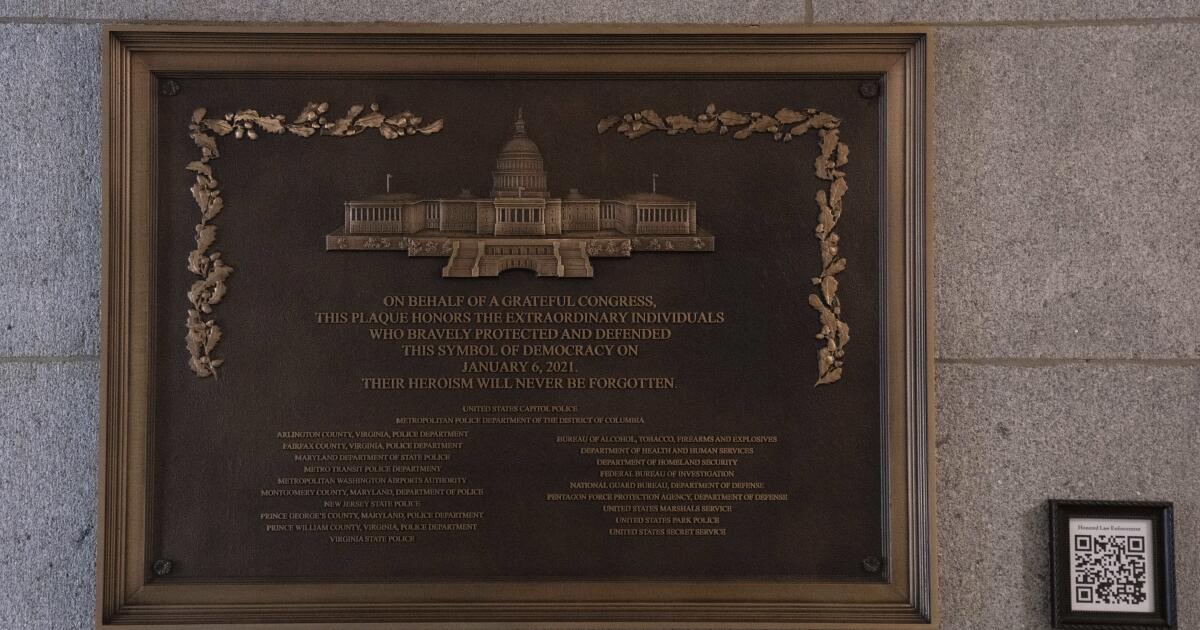
The new field offices are among the changes made since the attack six months ago in which Capitol Police were quickly overwhelmed by thousands of pro-Trump supporters, hundreds of whom were able to break into the Capitol building, forcing members to temporarily halt certification of the 2020 election results and flee for safety. Capitol Police leaders told congressional committees investigating the incident that they had no information that the crowd would become violent.

Five people died in the melee or the days after. Two officers died by suicide, and more than 140 were injured — some permanently. More than 500 people have been charged for participating in the attack.

Other changes, spurred in part by congressional investigations and reports by the department’s internal watchdog, include increased training for officers alongside the National Guard, improved intelligence-gathering efforts and protocols for reporting sensitive information, and new equipment and technology for officers.

The police agency rarely provides information to the public on how it operates, citing security concerns and member safety. For example, unlike other government agencies, the internal watchdog’s reports are not publicly available.

A spokesperson did not answer questions Tuesday about how many staff would be hired or what the cost to taxpayers would be.

The spokesperson said other regional offices were expected.

Very few members of Congress are accompanied by security outside of the Capitol building, and it is unclear if the new offices will primarily investigate threats against members or also will help when security is needed in the state. The Capitol Police have jurisdiction to investigate all threats made against a member of Congress.

Source link

Citing wildfires, LAFD requests 15% budget increase

The Los Angeles Fire Department is requesting a budget of more than $1 billion for the coming year, arguing that the additional funding is necessary to be prepared for wildfires like the one that devastated Pacific Palisades in January.

The request, which represents a more than 15% increase over this year’s budget, includes money for 179 new firefighting recruits and a second crew dedicated to fighting wildfires, as well as helitanker services to battle fires from the air.

In the immediate aftermath of the Palisades fire, which killed 12 people and destroyed thousands of homes, top LAFD officials blamed a lack of resources and extraordinarily high winds for their failures in combating the flames.

United Firefighters of Los Angeles City Local 112, the union that represents the city’s firefighters, has long argued that the department is severely underfunded and is pushing for a half-cent sales tax that, if approved by voters, would generate hundreds of millions of dollars annually.

Fire Chief Jaime Moore, who was appointed to his post earlier this month, wrote in a memo to the Board of Fire Commissioners last Friday that “the proposed budget will reinforce and accelerate operational enhancements implemented following the devastating Palisades wind-driven vegetation fire in January 2025.”

Moore’s request is the first step in a lengthy process to hammer out a city budget that requires approval by the City Council and the mayor. This year, the city had to close a nearly $1-billion shortfall caused largely by rising personnel costs, soaring legal payouts and a slowdown in the local economy.

City department heads often request amounts far higher than they eventually receive. With the city still in a budget crunch, the outlook for the LAFD’s request is unclear.

“The budget process is in its early stages. Reforms must continue to be implemented at the department and Mayor Bass looks forward to working with Chief Moore to strengthen the city’s emergency preparedness,” said Clara Karger, a spokesperson for Mayor Karen Bass.

Genethia Hudley Hayes, who heads the civilian Board of Fire Commissioners, said Tuesday that she had not yet seen the request but that she generally supports a 15% increase in the LAFD budget.

“We need it,” she said. “The smart thing would be to let the public know what you are going to do with that money.”

In the days leading up to Jan. 7, LAFD officials decided not to order firefighters to remain on duty for a second shift — which would have required paying them overtime — and staffed just a few of the more than 40 engines available to aid in battling wildfires, despite warnings of life-threatening winds, a Times investigation found.

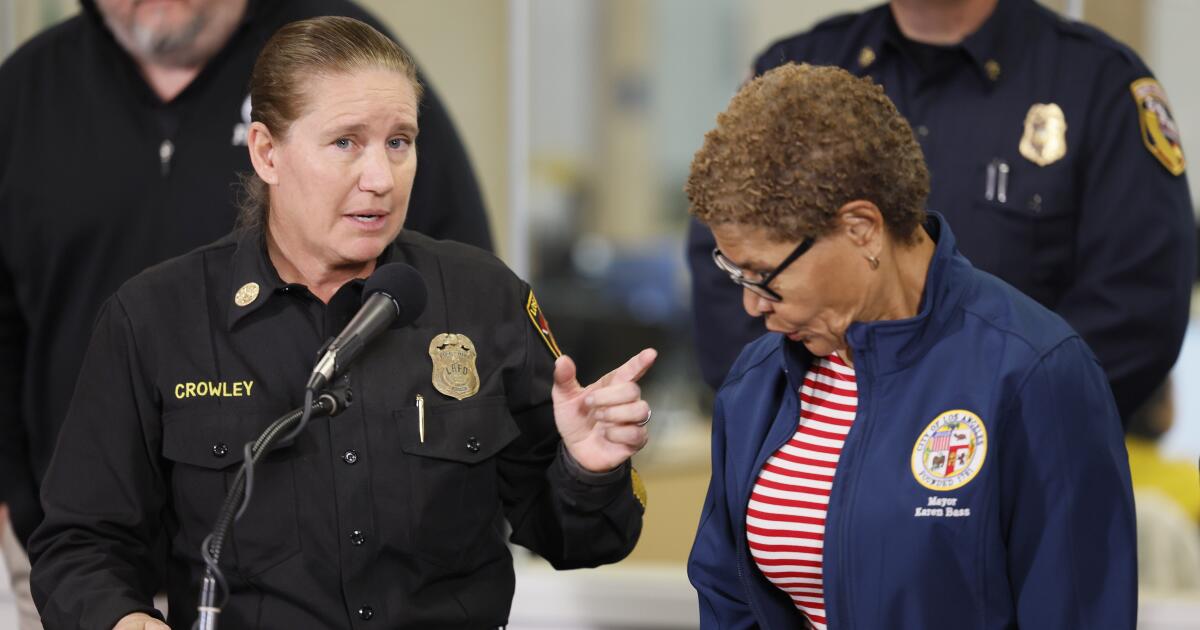
Then-Fire Chief Kristin Crowley said that commanders had to be strategic with limited resources while continuing to handle regular 911 calls.

An LAFD after-action report released last month cited “financial constraints” as a factor in pre-deployment decisions.

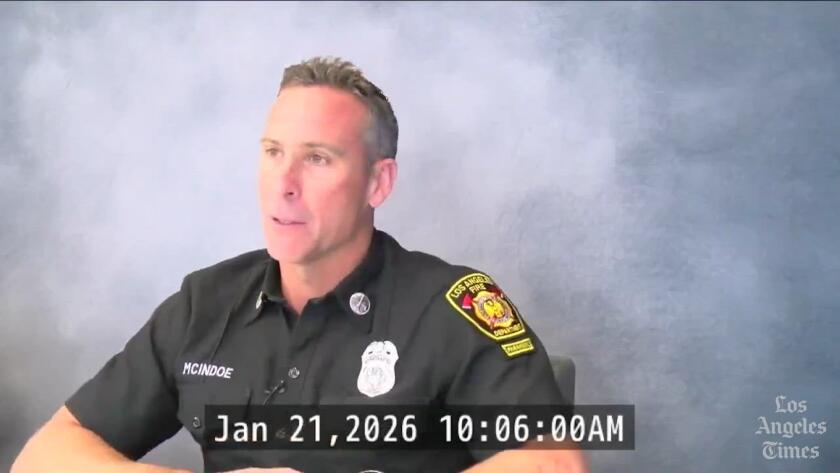
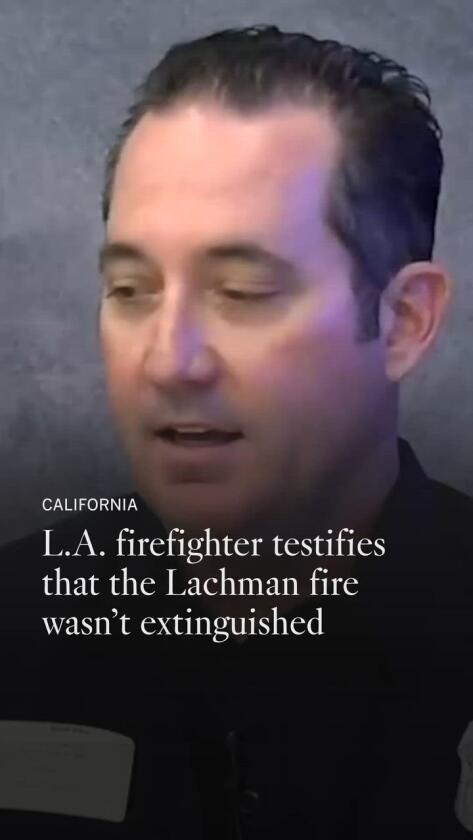
The Times also found that an LAFD battalion chief ordered firefighters to leave the site of the Jan. 1 Lachman fire, despite firefighters’ complaints that the ground was still smoldering. That fire later reignited into the Palisades fire.

Moore’s budget memo tied many of his requests to the Palisades fire.

The second wildland hand crew, which would include 32 positions for $2 million, would supplement a hand crew formed this year, after the Palisades fire. The crew’s 26 recruits, who are trained in wildfire fighting and management, establish fire lines to stop flames from spreading. Throughout the year, they do brush clearance around the city.

The helitanker lease, costing slightly less than $1 million, would support aerial attacks of flames that are difficult for crews on the ground to reach.

Moore’s budget request includes the reinstatement of the LAFD’s emergency incident technicians, who help coordinate responses to fires — positions that were cut in the last budget cycle. The after-action report described the LAFD’s disorganized response to the Palisades fire, citing major issues with staffing and communications.

In the fire’s aftermath, the LAFD’s budget was a subject of public debate, with some saying that Bass had reduced it. The 2024-25 budget actually increased slightly after firefighters received raises and the city invested in new firetrucks and other purchases. The budget increased again in 2025-2026.

Bass said she has committed additional resources to the Fire Department in each year she has been mayor.

The half-cent sales tax proposed by the firefighters union would go before city voters as a ballot measure next November.

By 2050, the sales tax would raise at least $9.8 billion, funding at least 30 new fire stations and new fire trucks, as well as adding 1,400 Fire Department employees, according Doug Coates, the acting president of UFLAC, and Councilmember Traci Park, whose district includes Pacific Palisades.

Source link

LAFD records show no sign of ‘cold trailing’ again at Lachman fire, as interim chief had claimed

In the weeks since federal investigators announced that the devastating Palisades fire was caused by a reignition of a smaller blaze, top Los Angeles Fire Department officials have insisted that they did everything they could to put out the earlier fire.

But The Times has obtained records that call into question the agency’s statements about how thoroughly firefighters mopped up the Jan. 1 Lachman fire in the days before it reignited.

In an interview last month, then-Interim Fire Chief Ronnie Villanueva said that firefighters returned to the burn area on Jan. 3 — due to a report of smoke — and “cold-trailed” an additional time, meaning they used their hands to feel for heat and dug out hot spots.

“We went back over there again. We dug it all out again. We put ladders on it. We did everything that we could do — cold-trail again,” Villanueva told The Times on Oct. 8. “We did all of that.”

A dispatch log obtained by The Times, however, shows that firefighters arrived at the scene that day and quickly reported seeing no smoke. They then canceled the dispatch for another engine that was on the way, clearing the call within 34 minutes. The log does not mention cold trailing. It’s unclear if crews took any other actions during the call, because the LAFD has not answered questions about it.

The Times has made multiple requests for comment to LAFD spokesperson Capt. Erik Scott by email, text and in person, but the agency has refused to explain the discrepancy. Villanueva also did not respond to an emailed request for comment and an interview request.

The conflict between the LAFD’s statements and its own records is likely to intensify frustration and anger among Palisades fire victims over contradictory and incomplete information about what was done to protect their community. With the first anniversary approaching, gaps remain in what the LAFD has told the public about what it did to prepare for and respond to the fire, which killed 12 people and destroyed thousands of homes.

The LAFD’s after-action report on the Palisades fire makes only a cursory reference to the Lachman blaze. Missing from the 70-page document, released last month, are the report of smoke in the area on Jan. 3 and a battalion chief’s decision to pull firefighters out of the scene the day before, even though they warned him that there were signs of remaining hot spots.

The head of the board that oversees the LAFD has maintained that information about the firefighter warnings — or any examination of the Lachman fire — did not belong in the after-action report.

“The after-action review that was presented to the commission is exactly what we asked for,” Genethia Hudley Hayes, president of the Board of Fire Commissioners, said at the board’s meeting on Tuesday. She said the review was only supposed to cover the first 72 hours after the Palisades fire erupted.

“It is not an investigation,” she said. “It should not include things that the newspaper seems to feel like should be included.”

The after-action report detailed missteps in fire officials’ response to the Palisades fire, including major failures in deployment and communications, and made recommendations to prevent the issues from happening again.

Two former LAFD chief officers said the report also should have provided an examination of what might have gone wrong in the mop-up of the Lachman blaze, which investigators believe was deliberately set, as part of its “lessons learned” section.

“A good after-action report documents what happened before the incident,” said former LAFD Battalion Chief Rick Crawford, who retired from the agency last year and is now emergency and crisis management coordinator for the U.S. Capitol. “The after-action report should have gone back all the way to Dec. 31.”

Patrick Butler, a former assistant chief for the LAFD who has worked on several after-action teams, including for the federal government, agreed.

“If you limit an after-action to an artificial timeline, you’re not going to uncover everything you need to learn from,” said Butler, who is the Redondo Beach fire chief.

He noted that the reports shape training and operational improvements for the Fire Department.

“To exclude the Lachman fire from the report gives the appearance of a coverup of foundational facts,” Butler added. “It’s not a harmless oversight. The consequences can be significant and far-reaching.”

The Jan. 3 report of smoke at the Lachman burn area came in shortly before noon, according to a dispatch log of the incident. Firefighters from Fire Station 23 — one of two stations in the Palisades — arrived on the scene about 10 minutes after they were dispatched.

A couple minutes later, they reported “N/S,” or nothing showing, according to the log. A few minutes after that, they canceled the dispatch for an engine from Fire Station 69, the other Palisades station.

The last entry in the log was from 12:20 p.m., indicating that an L.A. County crew was working in the area.

The L.A. County Fire Department said in a statement that the crew was at the scene for less than 30 minutes conducting an “informal ‘lessons learned’ discussion of their actions from the night of the fire.”

“They did not gear up or perform any work while there and they did not see anything of note,” the statement said.

The L.A. County crew left the scene about 12:40 p.m.

The Times previously reported that firefighters were ordered to roll up their hoses and leave the burn area of the Lachman fire on Jan. 2, even though they had complained that the ground was still smoldering and rocks remained hot to the touch. The paper reviewed text messages among three firefighters and a third party, sent in the weeks and months after the fire, in which they discussed the handling of the blaze.

LAFD officials also opted not to use thermal imaging technology to detect lingering hot spots. Despite warnings of extreme winds leading up to Jan. 7, they failed to pre-deploy any engines or firefighters to the burn area — or anywhere in the Palisades.

At least one battalion chief assigned to the LAFD’s risk management section has known for months that crews had complained about hot spots after the Lachman fire. But the department kept that information hidden from the public.

At the Tuesday fire commission meeting, newly appointed Fire Chief Jaime Moore — in an apparent reference to The Times reporting — slammed what he called media efforts to “smear” firefighters who battled the worst fire in city history.

“Something that’s been very frustrating for me as fire chief, and through this process, is to watch my friends in the media smear our name and the work that our firefighters did to combat one of the most intense fires, the Palisades, the wind-driven monstrosity that it was,” Moore, a 30-year LAFD veteran, said on his second day on the job.

He added: “The audacity for people to make comments and say that there’s text messages out there that say that we did not put the fire out, that we did not extinguish the fire. Yet I have yet to see any of those text messages.”

Moore made those remarks despite having been tasked by Mayor Karen Bass with conducting an investigation into The Times report about the LAFD’s response to the Lachman fire.

Bass had requested that Villanueva investigate, saying that “a full understanding … is essential to an accurate accounting of what occurred during the January wildfires.”

Critics have said it would be improper for the LAFD to investigate itself and called for an independent review.

Before the City Council confirmed his appointment as chief, Moore also had called for an outside organization to conduct the inquiry, describing the reports of the firefighters’ warnings on Jan. 2 as alarming.

On Tuesday, he said he would review the LAFD’s response to the Lachman fire.

“I will do as Mayor [Karen] Bass asked, and I will look into the Lachman fire, and we will look at how that was handled, and we will learn from it, and we’ll be better from it,” he said.

A Bass spokesperson said Wednesday that the mayor “has made clear to Chief Moore” that the investigation into the Lachman fire should be conducted by an independent entity.

The LAFD has not responded to a question about who will conduct the probe.

Source link

USWNT to open January camp, play first friendly of 2026 in Carson

The women’s national soccer team will return to Carson in 2026 for the first time in nearly two years for its annual January training camp, U.S. Soccer will announce Thursday.

The 10-day camp will run from Jan. 17-27 and will conclude with two international matches. The first, on Jan. 24 against Paraguay, will be played at Dignity Health Sports Park and will include a tribute to two-time World Cup champion Christen Press, who announced her retirement this fall.

The venue and opponent for the second match on Jan. 27 has not been finalized.

“January camp is a vitally important part of our yearly schedule, especially with 2026 being a year that will host World Cup qualifying,” USWNT coach Emma Hayes said in a statement. “We don’t get many training days together during any given year, so there is a high value in getting a whole week of training as well as two matches.

“I was pleased with the progress we made as a team in 2025, but we still have a ways to go to get to where we want to be heading into the CONCACAF W Championship in the fall.”

Press, who was born and raised in Palos Verdes Estates, about 10 miles from Dignity Health Sports Park, scored 64 goals for the USWNT, ninth-most in team history. She helped the U.S. to back-to-back Women’s World Cup titles in 2015 and 2019 and played the final four years of her professional club career for her hometown Angel City FC.

The first 2,000 fans through the gates on Jan. 24 will receive a commemorative Christen Press bobblehead.

No venue has played host to more USWNT matches than Dignity Health Sports Park which, under various names, has been the site of 21 games for the U.S., dating to 2003, soon after the stadium opened. The U.S. went 20 games unbeaten at the venue (19 wins and one tie) before losing its most recent match there, a 2-0 upset to Mexico on Feb. 26, 2024, in the CONCACAF W Gold Cup, a tournament the U.S. would go on
win.

The USWNT was scheduled to hold its January training camp in Carson last year, but the deadly Southern California wildfires forced U.S. Soccer to move the camp to Fort Lauderdale, Fla.

Presale tickets for the January matches will be available for purchase from 10 a.m. PST Friday through 8 a.m. PST Monday.

Tickets for both matches will go on sale to the public on Tuesday at 10 a.m. PST.

Source link

Column: Instead of addressing injustice, pardons now pervert justice

It’s sheer coincidence that I’m writing here on the same subject as my Los Angeles Times colleague Jonah Goldberg’s most recent column: The crying need to amend the Constitution to do something about the much-abused presidential pardon power, the only unchecked power that a president has.

The fact that both Goldberg, a right-of-center commentator, and I, center-left, would near-simultaneously choose to vent on this topic — to call, in effect, for a national uprising against this presidential prerogative despite the evident difficulty of amending the Constitution — is telling: It’s a reflection of Americans’ across-the-spectrum disgust with how modern presidents have perverted it for personal and political benefit, usually on their way out the door. (Goldberg makes the case to get rid of the pardon power altogether. I would give Congress a veto, so presidents still can right actual wrongs of the justice system, as the founders intended.)

Yes, “both sides” are culpable. And yet, Goldberg and I agree, one president has surpassed all others in the shamelessness of his pardons: Donald Trump. In just 10 months he’s built a track record sorrier than that of his first term, which is saying something, and elevated clemency reform to an imperative.

We can’t stop Trump before he pardons again. Nor, probably, would an amendment campaign succeed before (if?) he leaves office in January 2029. But Americans of all political stripes can at least join in getting the process rolling, if only to protect against future presidents’ abuses.

From his first day in office, when Trump granted clemency to nearly 1,600 rioters who beat cops and stormed the Capitol to overturn his 2020 defeat, already 20 times this year he’s either pardoned or commuted the prison sentences of additional scores of undeserving hacks, fellow election deniers, war criminals, donors, investors in Trump businesses and career criminals who just happen to support him. (Recidivism among Trump’s beneficiaries is proving a problem; among the new charges: child sex abuse.)

The clemency actions have come so fast and furious that they hardly register as the scandals that they are, especially as the news about them vies for attention with the many other outrages of Trump’s presidency.

“No MAGA left behind,” Trump pardon attorney “Eagle Ed” Martin brazenly posted in May and again this month in announcing preemptory pardons for former Trump lawyer Rudy Giuliani and more than 75 other Republicans who were part of the fake-elector schemes to reverse Trump’s 2020 losses in battleground states, as well as other efforts after the 2020 election to keep him in power.

Those grants were followed last weekend by mercy for two more MAGA militants: Suzanne Kaye, a Florida woman sentenced to prison for threatening in video posts to “shoot their [expletive] a–” if FBI agents tried to question her about her involvement in the Jan. 6 insurrection, and Daniel Edwin Wilson of Kentucky, who was among those pardoned for his crimes on Jan. 6 but later sentenced by a Trump-appointed district judge on gun charges related to an illegal cache of weaponry that agents found at his home.

To Trump, absolving his supporters as victims of a supposedly weaponized justice system in effect absolves him as well, and furthers his false narrative — his big lie — that the 2020 election was stolen from him. As Martin, the White House pardon attorney, wrote in this month’s passel of pardons: “This proclamation ends a grave national injustice perpetrated upon the American people following the 2020 Presidential Election.” The opposite is true.

Lo, Trump’s mercy knows no bounds — of propriety, that is. The president won’t even rule out a pardon for convicted child-trafficker Ghislaine Maxwell, longtime procurer for, and participant with, Jeffrey Epstein in the sexploitation of young girls.

Even if Trump’s abuse of the pardon power isn’t unprecedented, its scale and shamelessness is. His Day One mass pardons for Jan. 6 participants set the tone. That action kept his 2024 campaign promise to “free the J-6 hostages,” but it broke an earlier, videotaped vow he’d made on Jan. 7, 2021, when anger at the Capitol attack was near-universal: “To those who broke the law, you will pay.” Hundreds did pay, convicted by juries and judges of both parties and sentenced to up to 22 years in prison. Until Trump got back in power.

Need evidence of how Trump’s pardons corrode the rule of law? Last December, weeks before he returned to the White House, yet another Jan. 6 participant, Philip Sean Grillo, was sentenced. The Reagan-appointed federal judge in the case, Royce Lamberth, admonished: “Nobody is being held hostage. … Every rioter is in the situation he or she is in because he or she broke the law, and for no other reason.” Grillo shouted back, as U.S. marshals led him off: “Trump’s gonna pardon me anyways.” He was right, of course.

Then there’s this: In September, after a Republican former Tennessee House speaker and his aide were sentenced in a fraud case, the government’s announcement quoted a senior FBI agent in Nashville calling the punishment “a wake-up call to other public officials who believe there are no consequences for betraying the public trust.” On Nov. 7, Trump pardoned both men.

Trump’s promiscuous use of his power has even spawned a niche business of Trump-connected lawyers peddling their influence to pardon-seekers willing to shell out tens of thousands of dollars to get out of jail not-so-free.

Consider the case of Changpeng Zhao, billionaire founder of the crypto exchange Binance, who served time in 2023 for facilitating money laundering, including for terrorist groups. Zhao didn’t just hire Trump-friendly lawyers. His company helped secure a $2-billion investment in the Trump family’s crypto startup. Last month, Trump pardoned Zhao. “I heard it was a Biden witch hunt,” he nonchalantly told CBS News’ “60 Minutes.”

Zhao’s success alone should be scandal enough to fuel a campaign to repeal or reform the pardon power. But there is so much more. And we surely haven’t seen the last.

Bluesky: @jackiecalmes
Threads: @jkcalmes
X: @jackiekcalmes

Source link

New LAFD chief slams media ‘smear’ of firefighters who battled Palisades fire

On his second day as chief of the Los Angeles Fire Department, Jaime Moore criticized what he called media efforts to “smear” firefighters who responded to the worst wildfire in city history.

Moore’s comments Tuesday appeared to be in reference to a Times report that a battalion chief ordered firefighters to roll up their hoses and leave the burn area of the Jan. 1 Lachman fire, which days later reignited into the deadly Palisades fire, even though they had complained that the ground was still smoldering.

The Times reviewed text messages between firefighters and a third party, sent in the weeks and months after the Palisades fire, indicating that crews had expressed concerns that the Lachman fire would reignite if left unprotected.

“The audacity for people to make comments and say that there’s text messages out there that say that we did not put the fire out, that we did not extinguish the fire,” Moore told the Board of Fire Commissioners. “Yet I have yet to see any of those text messages.”

Moore’s statements represented a dramatic shift from his comments last week, when he told the L.A. City Council’s public safety committee — two days before the full council approved his appointment as chief — that the reports had generated an “understandable mistrust” of the fire department.

“The most alarming thing to me is … our members were not listened to, or they were not heard,” he said last Wednesday.

In response to Mayor Karen Bass’ request that he investigate the department’s missteps during the Lachman fire, Moore had called for an outside organization to conduct the probe.

On Tuesday, he said he would review LAFD’s response to the Lachman fire, though he did not specify who would conduct the investigation.

“I will do as Mayor Bass asked, and I will look into the Lachman fire, and we will look at how that was handled, and we will learn from it, and we’ll be better from it,” he said.

In one text message reviewed by The Times, a firefighter who was at the Lachman scene Jan. 2 wrote that the battalion chief in charge had been told it was a “bad idea” to leave because of visible signs of smoldering terrain.

A second firefighter was told that tree stumps were still hot at the location when the crew packed up and left, according to the texts. And another firefighter said in more recent texts that crew members were upset when directed to leave the scene, but that they could not ignore orders.

The firefighters’ accounts line up with a video recorded by a hiker above Skull Rock Trailhead late in the morning Jan. 2 — almost 36 hours after the Lachman fire started — that shows smoke rising from the dirt. “It’s still smoldering,” the hiker says from behind the camera.

At least one battalion chief assigned to LAFD’s risk management section knew about the complaints for months, The Times found. But the department did not include that finding, or any detailed examination of the reignition, in its after-action report on the Jan. 7 Palisades fire — or otherwise make the information public — despite victims demanding answers for months about how the blaze started and whether more could have been done to prevent it.

Moore, a 30-year LAFD veteran, told the City Council on Friday that one of his top priorities is raising morale in a department that has come under heavy criticism for its handling of the Palisades fire, which killed 12 people and destroyed thousands of homes.

In January, The Times reported that LAFD officials decided not to pre-deploy any engines or firefighters to the Palisades — as they had done in the past — despite being warned that some of the most dangerous winds in recent years were headed for the region.

The LAFD after-action report released last month described fire officials’ chaotic response, which was plagued by major staffing and communication issues, as the massive blaze overwhelmed them.

After Bass ousted Fire Chief Kristin Crowley over her handling of the Palisades fire, the department was led by interim Chief Ronnie Villanueva until Moore took over Monday.

Genethia Hudley Hayes, president of the Board of Fire Commissioners, which provides civilian oversight for the fire department, said at Tuesday’s meeting that she had not seen the text messages quoted in The Times. Because she hadn’t seen them, she said, the messages have “no bearing on the work of the fire commission.”

She also said that the commission supported the fire department’s after-action report, noting that that the report was not about the rekindling of the Lachman fire, but about the first 72 hours of the department’s response to the Palisades fire.

“It has nothing to do and should not have had anything to do with the Lachman fire, because that is not what we asked for,” Hudley Hayes said.

Source link

Trump issues secnd pardons for crimes related to Jan. 6

Nov. 15 (UPI) — President Donald Trump has issued second pardons to supporters who breached the U.S. Capitol on Jan. 6, 2021, this time on separate related offenses.

The clemancy for Dan Wilson and Suzanne Kaye were announced online on Saturday by Ed Martin, a longtime supporter of the Jan. 6 rioters who is the Justice Department’s pardon attorney.

They were signed Friday by Trump.

“Thank you: Post! Danny Wilson is now a free man. When I was DC’s U.S. Attorney, and now as U.S. Pardon Attorney, I advocated for this clemency, which the president granted Friday.@POTUSThank you,” Ed Martin posted on X with a copy of the pardon.”

In another post with the document, Martin wrote: “Thank you: POTUS! The Biden DOJ targeted Suzanne Kaye for social media posts-and she was sentenced to 18 months in federal lock up. President Trump is unwinding the damage done by Biden’s DOJ weaponization, so the healing can begin.”

In May 2024, Wilson pleaded guilty to conspiracy to impede or injure a federal officer and was sentenced to five years in prison.

But the Louisville, Ky., man was in prison for possession of a firearm by a prohibited person and possession of an unregistered firearm. He was sentenced in August 2024 to prison until 2028.

It stems from when his home was searched in June 2022 as part of the federal government’s investigation of the intrusion.

A White House official told Politico that “because the search of Mr. Wilson’s home was due to the events of January 6, and they should have never been there in the first place, President Trump is pardoning Mr. Wilson for the firearm issues.”

When Trump retook office on Jan. 20, he pardoned him along with clemency to about 1,500 Jan. 6 defendants, including pardons and commutations.

But Wilson had remained in prison on another conviction, along with a few other defendants for other federal crimes.

The Department of Justice at the time said “numerous firearms and ammunition” were recovered and forbidden because of previous felony convictions.

“For too long, my client has been held as a political prisoner by a government that criminalized dissent,” George Pallas, his attorney, said in a statement to CBS News. “President Trump’s pardon rights this wrong and sends a clear message that peaceful Americans will not be persecuted for their beliefs. Mr. Wilson is innocent, he has always been innocent, and this pardon proves it.”

Wilson had occasionally discussed bringing firearms to the Capitol, but ultimately arrived unarmed.

During the day, he posted messages and spoke to other members of his far-right groups, the Oath Keepers and Gray Ghost Partisan Rangers militia.

Initially, the Justice Department argued that Trump’s pardons did not extend to Wilson’s gun charges, but later changed its position. They received “further clarity on the intent of the Presidential Pardon.”

U.S. District Judge Dabney Friedrich, who oversaw Wilson’s case, criticized extending the pardon to cover offenses discovered in the course of the investigations. He was nominated by Trump.

Kaye, of Boca Raton, Fla., was sentenced two years ago to 18 months in prison for threatening to shoot FBI agents who had sought to question her about her involvement in the Capitol attack.

She denied that she had been at the Capitol that day, according to court records obtained by The New York Times. Before meeting FBI agent, she posted a series of videos online threatening the agents.

Jeremy Brown, also an Oath Keeper, was released from a seven-year sentence after his attorneys and the Justice Department claimed the pardon covered Brown’s unrelated conviction for illegally possessing classified information and grenades.

Elias Costianes also was released from jail after the Justice Department declined to fight the appeal of his conviction for illegally possessing firearms.

Edward Kelley was recently sentenced to life in prison for conspiring to kill the officers and FBI agents who investigated his involvement in the Jan. 6 attack. Kelley had contended Trump’s pardon covered the conspiracy charge, but the Justice Department opposed him.

The Justice Department has opposed efforts by David Daniel after the FBI discovered child pornography on his computer during a Jan. 6-related search.

Source link

LAFD insider named chief amid lingering questions about Palisades fire

As Jaime Moore prepares to take the helm of the Los Angeles Fire Department, he said he plans to commission an outside investigation into missteps by fire officials during the mop-up of a small brush fire that reignited days later into the destructive Palisades fire.

Mayor Karen Bass had requested a probe late last month in response to reporting by The Times that firefighters were ordered to roll up their hoses and leave the burn area, even though they had complained that the ground was still smoldering.

Moore — a 30-year department veteran whose appointment was confirmed Friday by the Los Angeles City Council — said the reports have generated “understandable mistrust” in the agency.

The Times found that at least one chief assigned to LAFD’s risk management section knew about the complaints for months, but that the department kept that information hidden despite Palisades fire victims pleading for answers about whether more could have been done to protect their community.

On Wednesday, Moore told the council’s public safety committee that bringing in an outside organization to investigate the LAFD’s handling of the Jan. 1 Lachman fire would be one of his first moves as chief.

“Transparency and accountability are vital to ensure that we learn from every incident and is essential if we are to restore confidence in our Fire Department,” Moore said. “As fire chief, I will focus on rebuilding trust, not just with the public, but within the LAFD itself.”

Federal investigators say the Lachman fire was deliberately set on New Years’ Day and burned underground in a canyon root system until it was rekindled by high winds on Jan. 7. LAFD officials have said they believed the earlier fire was fully extinguished.

Moore said one of his top priorities is raising morale in a department that has come under heavy criticism for its handling of the worst wildfire in city history, which killed 12 people and destroyed thousands of homes.

In the days after the Jan. 7 Palisades fire, The Times reported that LAFD decided not to pre-deploy any engines or firefighters to the Palisades — as they had done in the past — despite being warned that some of the most dangerous winds in recent years were headed for the region.

An LAFD after-action report released last month described fire officials’ chaotic response, which included major staffing and communication issues.

Moore — who has the backing of the United Firefighters of Los Angeles City, the union that represents firefighters — said his other priorities include better preparation for major disasters, with a focus on pre-deployment and staffing, as well as for the 2026 World Cup and the 2028 Olympics.

“I’ve got skin in the game,” he said, adding that his son is an LAFD firefighter. “We need to address the amount of calls they’re going on, and make sure that they’re going on the right calls with the right resources, and if that means us having to change our department model, so be it. I have the courage to do that.”

He also said he wants to expand the LAFD’s technological capabilities and better deploy the equipment it already has, like the thermal imaging cameras and heat-detecting drones that officials did not deploy during the Lachman fire mop-up.

“We are now requiring them to be used, and we’re not picking up any type of hose until we know that we’ve been able to identify through the use of the drone, thermal imaging cameras to ensure that those surface hot spots are all taken care of,” he said.

“I wish it didn’t take this for us to have to learn the lesson about using the tools we already have,” Councilmember Traci Park replied.

Park grilled Moore on reporting by The Times that firefighters warned a battalion chief about the Lachman fire not being fully extinguished.

“We know now that our own firefighters on the ground were offering warnings that it was still too hot, that it was still too smoldering,” Park said. “For Palisades residents and Angelenos across the city who have questions and concerns, what would you say to them at this point?”

Moore referred back to independent investigation he plans to launch.

“I want to know why it happened, how it happened, and take the necessary steps to ensure that never happens again,” he said.

The Times reviewed text messages among firefighters and a third party that indicated crews had expressed concerns that the Lachman fire would reignite if left unprotected. The exchanges occurred in the weeks and months after the Palisades fire.

In one text message, a firefighter who was at the Lachman scene Jan. 2 wrote that the battalion chief in charge had been told it was a “bad idea” to leave because of visible signs of smoldering terrain, which crews feared could start a new fire.

A second firefighter was told that tree stumps were still hot at the location when the crew packed up and left, according to the texts. And another said in texts last month that crew members were upset when directed to leave the scene, but that they could not ignore orders.

The firefighters’ accounts line up with a video recorded by a hiker above Skull Rock Trailhead late in the morning on Jan. 2 — almost 36 hours after the Lachman fire started — that shows smoke rising from the dirt. “It’s still smoldering,” the hiker says from behind the camera.

A federal grand jury subpoena was served on the LAFD for firefighters’ communications, including text messages, about smoke or hot spots in the area of the Lachman fire, according to an LAFD memo. It is unclear if the subpoena is directly related to the arson case against Jonathan Rinderknecht, who is accused of setting the Jan. 1 fire and has pleaded not guilty.

Complaints that the city and state failed to properly prepare for and respond to the Palisades fire are the subject of numerous lawsuits and a Republican-led inquiry by a U.S. Senate committee.

In addition to the pre-deployment issue, the LAFD’s after-action report found other problems during the Jan. 7 fire fight. The initial dispatch called for only seven engine companies, when the weather conditions required 27. Confusion over which radio channel to use hampered communication. At one point in the first hour, three L.A. County engines showed up requesting an assignment, and received no reply. Another four LAFD engines assembled, but waited 20 minutes without an assignment. In the early afternoon that day, the staging area — where engines were checking in — was overrun by fire.

Moore said he is closely evaluating the 42 recommendations in the report to make sure they are properly implemented.

Bass announced Moore’s selection last month after conducting a nationwide search that included interviews with fire chiefs of other cities. She had ousted Kristen Crowley, who was chief during the Palisades fire, citing deployment decisions ahead of the extreme weather, and appointed interim Fire Chief Ronnie Villanueva in February.

Moore — who said he grew up in the Mar Vista and Venice area — joined the LAFD as a firefighter in 1995, working his way up the ranks in various assignments throughout the city, including supervising arson investigations and serving as a spokesperson for the agency, according to his resume. He most recently was deputy chief of Operations Valley Bureau, directing the response to emergencies across 39 fire stations.

Source link

BBC apologizes to Donald Trump over Jan. 6 speech, issues retraction

Three days after U.S. President Donald Trump threatened it with a $1 billion defamation lawsuit over misleading editing of a speech he gave on Jan. 6, Britain’s BBC issued a retraction but refused to pay compensation. Photo by Andy Rain/EPA

Nov. 14 (UPI) — The BBC issued a retraction and a formal apology to U.S. President Donald Trump for edits to a speech he gave ahead of the Jan. 6 riots on Capitol Hill that made it appear as if he was inciting his supporters to violence.

The British public service broadcaster apologized Thursday night via the corrections page on its website, with the apology the lead story across all of its news platforms on television, radio and online during the evening and first thing Friday morning.

BBC Chairman Samir Shah also penned a personal written apology to the White House, however, the BBC indicated it would not be paying compensation, as demanded by Trump.

The retraction said an edition of Panorama titled Trump: A Second Chance, broadcast on Oct. 28, 2024, used excerpts lifted from different parts of Trump’s speech in a way that inadvertently made it appear they were contiguous.

The BBC’s version had Trump saying, “We’re going to walk down to the Capitol and I’ll be there with you. And we fight. We fight like hell,” when his actual words were, “We’re going to walk down to the Capitol, and we’re going to cheer on our brave senators and congressmen and women.”

The BBC said it accepted that this “gave the mistaken impression that President Trump had made a direct call for violent action.”

“The BBC would like to apologize to President Trump for that error of judgment.”

However, the notice made no mention of compensation, one of President Trump’s key demands in his letter threatening the BBC with a $1 billion lawsuit alleging the program had defamed him and giving it until 5 p.m. EST on Friday to respond.

A BBC spokesman said the corporation strongly disagreed “there is a basis for a defamation claim.”

There was no immediate response from either the White House or Trump’s legal counsel.

The Panorama program was not an isolated incident, according to The Telegraph, which said the BBC’s Newsnight program did something very similar with the same speech in a broadcast in 2022.

A spokesman for Trump’s legal team said that from the latest revelation it was “now clear that the BBC engaged in a pattern of defamation against President Trump” and accused it of attempting to try to influence the outcome of the 2024 election.

The debacle has sparked a furious debate about editorial impartiality at the BBC, which is funded by a $229 annual license that every household with a TV must pay, prompting calls for an overhaul of internal processes and procedures.

Culture Secretary Lisa Nandy acknowledged the BBC’s editorial rules were “in some cases not robust enough and in other cases not consistently applied,” and appeared to suggest the replacement for director-general Tim Davie, who quit Sunday, must be from a journalism background.

Davie spent the first half of his career as a senior marketing executive at PepsiCo before joining the BBC’s marketing division.

The opposition Conservative’s Shadow Culture Secretary, Nigel Huddleston, said he was waiting to see if Trump accepted the BBC’s response to be the “fulsome apology” he was entitled to receive.

“I do not want the British license fee payer or the rest of the BBC to pay the price for poor editorial decisions made by BBC journalists, he said in a post on X.

“However, we would all be in a better position if the BBC had never made these errors in the first place. The BBC needs a fundamental review of processes and procedures to ensure that such failures in impartiality never happen again.”

President Donald Trump signs the funding package to reopen the federal government in the Oval Office of the White House on Wednesday. Photo by Bonnie Cash/UPI | License Photo

Source link

Sarah Jessica Parker to receive Golden Globes’ Carol Burnett Award

Sarah Jessica Parker is adding one more trophy to her collection.

The six-time Golden Globe-winning actor will receive the 2026 Carol Burnett Award for excellence in television. Parker will be presented with the prize, named for its inaugural winner, during the first-ever “Golden Eve” special, airing Jan. 8 on CBS and streaming on Paramount+.

The Golden Globes previously announced that Helen Mirren will be honored with the Cecil B. DeMille Award at the January ceremony, part of a celebratory “Golden Week” kicking off the awards season.

“Sarah Jessica Parker’s career embodies the very spirit of the Carol Burnett Award,” Golden Globes President Helen Hoehne said in a press release Thursday. “Her trailblazing impact on television and her dedication to storytelling across stage and screen have left an indelible mark on popular culture. We are honored to celebrate her extraordinary contributions to entertainment.”

Past winners of the Carol Burnett Award include Ted Danson (2024), Ryan Murphy (2023) and Norman Lear (2021).

Best known for her role as Carrie Bradshaw in the epoch-defining “Sex and the City” — she reprised the character for the divisive HBO sequel “And Just Like That” — Parker has also received Golden Globe nominations for her performances in the beloved 2005 Christmas comedy-drama “The Family Stone” and the HBO drama series “Divorce.”

Parker is also the co-founder of Pretty Matches Productions, alongside producer Alison Benson. With the production company, Parker and Benson have made a concerted effort to hire more women for on- and off-camera roles, exceeding standard mandates with “Divorce.”

Parker is also the founder of SJP Lit, an imprint from independent publisher Zando that has ushered in acclaimed titles including Mai Sennaar’s “They Dream in Gold” and Alina Grabowski’s “Women and Children First.”

Recently, Parker served on the judging panel for the 2025 Booker Prize.

Comedian Nikki Glaser will return as host for the 83rd annual Golden Globes ceremony, which airs Jan. 11 on CBS and streams on Paramount+.

Source link

Trump’s $1-billion lawsuit threat casts shadow over the BBC, but it could also be a bluff

President Trump’s threat to bring a billion-dollar lawsuit against the BBC has cast a shadow over the British broadcaster’s future, but it could also be a bluff with little legal merit.

The president’s lawyer sent the threat to the BBC over the way a documentary edited his Jan. 6, 2021, speech before a mob of his followers stormed the U.S. Capitol.

Trump’s history of suing news media companies — sometimes winning multimillion-dollar settlements — is part of a long-running grievance against the industry he describes as “fake news” that has often focused a critical eye on his actions.

But Trump faces fundamental challenges to getting a case to court, never mind taking it to trial. He would also have to deal with the harsh glare of publicity around his provocative pep talk the day Congress was voting to certify President-elect Joe Biden’s victory in the 2020 election that Trump falsely alleged was stolen from him.

“If he sues, he opens a Pandora’s box and inside is every damning quote he’s ever uttered about the ‘steal,’” said attorney Mark Stephens, an international media lawyer who practices in the U.S. and U.K.

The BBC documentary

The BBC’s “Panorama” series aired the hourlong documentary titled “Trump: A Second Chance?” days before the 2024 U.S. presidential election.

The third-party production company that made the film spliced together three quotes from two sections of the 2021 speech, delivered almost an hour apart, into what appeared to be one quote in which Trump urged supporters to march with him and “fight like hell.” Among the parts cut out was a section where Trump said he wanted supporters to demonstrate peacefully.

BBC Chairman Samir Shah apologized Monday for the misleading edit that he said gave “the impression of a direct call for violent action.”

Director-General Tim Davie and news chief Deborah Turness quit Sunday over accusations of bias and misleading editing.

From letter to lawsuit

A lawsuit in England is unlikely because the one-year deadline to bring one expired two weeks ago, experts said. If successful in overcoming that barrier, libel awards in the High Court rarely exceed 100,000 pounds ($132,000), experts said.

Trump could still bring a defamation claim in several U.S. states, and his lawyer cited Florida law in a letter to the BBC.

Filing a lawsuit and demanding money is one thing, but prevailing in court is much different. To succeed, Trump would have to clear many hurdles to get a case before a jury.

Before any of that could happen, Trump faces a more fundamental challenge: The BBC program was not aired in the U.S., and the BBC’s streaming service is also not available there. Americans could not have thought less of him because of a program they could not watch, Stephens said.

“The other ticklish problem for Trump’s lawyer was that Trump’s reputation was already pretty battered after Jan. 6,” he said. “Alleging ‘Panorama’ caused additional harm when your reputation is already in tatters … is a tough sell.”

Trump was impeached on a charge of inciting insurrection over the Jan. 6, 2021, attack on the Capitol by some of his supporters, though he was acquitted by the Senate.

The demands

Trump’s lawyer Alejandro Brito threatened the BBC with a defamation lawsuit for “no less than” $1 billion. The letter spelled out the figure and used all nine zeros in numeric form.

The letter demanded an apology to the president and a “full and fair” retraction of the documentary along with other “false, defamatory, disparaging, misleading or inflammatory statements” about Trump.

It also said the president should be “appropriately” compensated for “overwhelming financial and reputational harm.”

The letter cites Florida’s defamation statute that requires a letter be sent to news organizations five days before any lawsuit can be filed.

If the BBC does not comply with the demands by 5 p.m. EST Friday, then Trump will enforce his legal rights, the letter said.

“The BBC is on notice,” it said.

While many legal experts have dismissed the president’s claims against the media as having little chance of success, he has won some lucrative settlements against U.S. media companies.

In July, Paramount, which owns CBS, agreed to pay $16 million to settle a lawsuit filed by Trump over a “ 60 Minutes” interview with former Vice President Kamala Harris. Trump alleged that the interview was edited to enhance how Harris, the Democratic nominee for president in 2024, sounded.

That settlement came as the Trump-appointed head of the Federal Communications Commission launched an investigation that threatened to complicate Paramount’s need for administration approval to merge with Skydance Media.

Last year, ABC News said it would pay $15 million to settle a defamation lawsuit over anchor George Stephanopoulos ’ inaccurate on-air assertion that the president-elect had been found civilly liable for raping writer E. Jean Carroll. A jury found that he was liable for sexually abusing her. Trump asked the Supreme Court on Monday to throw out that jury’s finding.

Litigation threat could leverage payout

London lawyer David Allen Green dismissed the litigation letter for failing to spell out any actual harm Trump suffered. But he said Trump’s willingness to use lawsuits as a form of deal making could leverage a payout because the edit was indefensible.

“Putting aside the theatrics of a bombastic letter with its senseless $1 billion claim, there is a power play here which Trump has done many times before,” Green said on the Law and Policy Blog. “The real mistake of the BBC (and the production company) was opening itself up to such a play of power.”

Stephens said if Trump were somehow to win billions from the BBC, it could crush the news organization that is mostly funded through a fee charged to all television owners in the U.K.

But he said that outcome was unlikely and the broadcaster should stand its ground. He recommended Trump take the public relations win and avoid the damage from revisiting the Jan. 6 events that would be dredged up at trial.

He said Trump was due an apology, which Shah offered, for the BBC not upholding high journalistic standards.

“The question is, ‘Did it cause harm in people’s minds?’” he said. “Because he was elected afterwards, it doesn’t appear it did.”

Melley writes for the Associated Press.

Source link

BBC director resigns after criticism of the broadcaster’s editing of a Trump speech

The head of the BBC resigned Sunday after criticism of the broadcaster’s editing of a speech by President Trump.

The BBC said that Director-General Tim Davie and head of news Deborah Turness both announced their resignations Sunday.

Britain’s public broadcaster had been criticized for its editing of a speech Trump made on Jan. 6, 2021, before a mob of his supporters attacked the U.S. Capitol in an attempt to overturn his election defeat.

Critics said that the way the speech was edited for a BBC documentary was misleading in that it cut out a section in which Trump said that he expected his supporters would demonstrate peacefully.

“I know that everyone here will soon be marching over to the Capitol building to peacefully and patriotically make your voices heard,” Trump said in the speech, during which he also urged his supporters to “fight like hell.”

Trump was impeached and criminally indicted over his role in the ensuing Jan. 6 riot and insurrection. The felony charges were dropped after he won the 2024 election, as U.S. Justice Department policy holds that a sitting president may not be criminally prosecuted.

In a letter to staff, Davie said quitting the job after five years “is entirely my decision.”

“Overall the BBC is delivering well, but there have been some mistakes made and as director-general I have to take ultimate responsibility,” Davie said.

He said that he was “working through exact timings with the Board to allow for an orderly transition to a successor over the coming months.”

Turness said that the controversy about the Trump documentary “has reached a stage where it is causing damage to the BBC — an institution that I love. As the CEO of BBC News and Current Affairs, the buck stops with me.”

Pressure on the broadcaster’s top executives has been growing since the Daily Telegraph newspaper published parts of a dossier complied by Michael Prescott, who had been hired to advise the BBC on standards and guidelines.

As well as the Trump edit, it criticized the BBC’s coverage of transgender issues and raised concerns of alleged anti-Israel bias in the BBC’s Arabic service.

Source link

Federal prosecutors subpoena L.A. firefighter text messages

A federal grand jury subpoena has been served on the Los Angeles Fire Department for firefighters’ text messages and other communications about smoke or hot spots in the area of the Jan. 1 Lachman brushfire, which reignited six days later into the massive Palisades fire, according to an internal department memo.

The Times reported last week that a battalion chief ordered firefighters to pack up their hoses and leave the burn area the day after the Lachman fire, even though they complained that the ground was still smoldering and rocks were hot to the touch. In the memo, the department notified its employees of the subpoena, which it said was issued by the U.S. attorney’s office in Los Angeles.

“The subpoena seeks any and all communications, including text messages, related to reports of fire, smoke, or hotspots received between” 10 p.m. on New Year’s Eve and 10 a.m. on Jan. 7, said the memo, which was dated Tuesday.

A spokesperson with the U.S. attorney’s office declined to confirm that a subpoena was issued and otherwise did not comment. The memo did not include a copy of the subpoena.

The memo said the subpoena was issued in connection with an “ongoing criminal investigation” conducted by the Bureau of Alcohol, Tobacco, Firearms and Explosives.

Last month, an ATF investigation led to the arrest of former Pacific Palisades resident Jonathan Rinderknecht, who was charged with deliberately setting the Jan. 1 fire shortly after midnight near a trailhead.

It is unclear from the memo whether the subpoena is directly related to the case against Rinderknecht, who has pleaded not guilty.

During the Rinderknecht investigation, ATF agents concluded that the fire smoldered and burned for days underground “within the root structure of dense vegetation,” until heavy winds caused it to spark the Palisades inferno, according to an affidavit attached to the criminal complaint against Rinderknecht.

The Palisades fire, the most destructive in the city’s history, killed 12 people and destroyed thousands of homes, businesses and other structures.

Last week, The Times cited text messages among firefighters in reporting that crews mopping up the Lachman fire had warned the battalion chief that remnants of the blaze were still smoldering.

The battalion chief listed as being on duty the day firefighters were ordered to leave the Lachman fire, Mario Garcia, has not responded to requests for comment.

In one text message, a firefighter who was at the scene on Jan. 2 wrote that the battalion chief had been told it was a “bad idea” to leave because of the visible signs of smoking terrain, which crews feared could start a new fire if left unprotected.

“And the rest is history,” the firefighter wrote in recent weeks.

A second firefighter was told that tree stumps were still hot at the location when the crew packed up and left, according to the texts. And a third firefighter said this month that crew members were upset when told to pack up and leave but that they could not ignore orders, according to the texts. The third firefighter also wrote that he and his colleagues knew immediately that the Palisades fire was a rekindle of the Jan. 1 blaze.

The Fire Department has not answered questions about the firefighter accounts in the text messages but has previously said that officials did everything they could to ensure that the Lachman fire was fully extinguished. The department has not provided dispatch records of all firefighting and mop-up activity before Jan. 7.

After The Times published the story, Mayor Karen Bass directed interim Fire Chief Ronnie Villanueva to launch an investigation into the matter, while critics of her administration have asked for an independent inquiry.

Source link

LAPD report says confusion hampered Palisades Fire response

The Los Angeles Police Department has released a report that identifies several shortcomings in its response to the devastating Palisades fire, including communication breakdowns, inconsistent record-keeping and poor coordination at times with other agencies — most notably the city’s Fire Department.

The after-action report called the January blaze a “once in a lifetime cataclysmic event” and praised the heroic actions of many officers, but said the LAPD’s missteps presented a “valuable learning opportunity” with more climate-related disasters likely looming in the future.

LAPD leaders released the 92-page report and presented the findings to the Police Commission at the civilian oversight panel’s public meeting Tuesday.

The report found that while the Fire Department was the lead agency, coordination with the LAPD was “poor” on Jan. 7, the first day of the fire. Though personnel from both agencies were working out of the same command post, they failed to “collectively establish a unified command structure or identify shared objectives, missions, or strategies,” the report said.

Uncertainty about who was in charge was another persistent issue, with more confusion sown by National Guard troops that were deployed to the area. Department leaders were given no clear guidelines on what the guard’s role would be when they arrived, the report said.

The mix-ups were the result of responding to a wildfire of unprecedented scale, officials said. At times the flames were advancing at 300 yards a minute, LAPD assistant chief Michael Rimkunas told the commission.

“Hopefully we don’t have to experience another natural disaster, but you never know,” Rimkunas said, adding that the endeavor was “one of the largest and most complex traffic control operations in its history.”

Between Jan. 11 and Jan. 16, when the LAPD’s operation was at its peak, more than 700 officers a day were assigned to the fire, the report said.

The report found that officials failed to maintain a chronological log about the comings and goings of LAPD personnel at the fire zone.

“While it is understandable that the life-threatening situation at hand took precedence over the completion of administrative documentation,” the report said, “confusion at the command post about how many officers were in the field “resulted in diminished situational awareness.”

After the fire first erupted, the department received more than 160 calls for assistance, many of them for elderly or disabled residents who were stuck in their homes — though the report noted that the disruption of cell service contributed to widespread confusion.

The communication challenges continued throughout the day, the report found.

Encroaching flames forced authorities to move their command post several times. An initial staging area, which was in the path of the evacuation route and the fire, was consumed within 30 minutes, authorities said.

But because of communication breakdowns caused by downed radio and cellphone towers, dispatchers sometimes had trouble reaching officers in the field and police were forced to “hand deliver” important paper documents from a command post to its staging area on Zuma Beach, about 20 miles away.

Several commissioners asked about reports of journalists being turned away from fire zones in the weeks that followed the fire’s outbreak.

Assistant Chief Dominic Choi said there was some trepidation about whether to allow journalists into the fire-ravaged area while authorities were still continuing their search for bodies of fire victims.

Commissioner Rasha Gerges Shields said that while she had some concerns about the LAPD’s performance, overall she was impressed and suggested that officers should be commended for their courage. The department has said that dozens of officers lost their homes to the fires.

The report also recommended that the department issue masks and personal protective equipment after there was a shortage for officers on the front lines throughout the first days of the blaze.

The Palisades fire was one of the costliest and most destructive disasters in city history, engulfing nearly 23,000 acres, leveling more than 6,000 structures and killing 12 people. More than 60,000 people were evacuated. The deaths of five people within L.A. city limits remain under investigation by the LAPD’s Major Crimes Division and the Bureau of Alcohol, Tobacco, Firearms and Explosives.

The LAPD reports details how at 11:15 a.m., about 45 minutes after the first 911 calls, the call was made to issue a citywide tactical alert, the report said. The department stayed in a heightened state of alert for 29 days, allowing it to draw resources from other parts of the city, but also meaning that certain calls would not receive a timely police response.

As the flames began to engulf a nearby hillside, more officers began responding to the area, including a contingent that had been providing security at a visit by President Trump.

Initially, LAPD officers operated in largely a rescue- and traffic-control role. But as the fire wore on, police began to conduct crime suppression sweeps in the evacuation zones where opportunistic burglars were breaking into homes they knew were empty.

In all, 90 crimes were reported in the fire zone, including four crimes against people, a robbery and three aggravated assaults, 46 property crimes, and 40 other cases, ranging from a weapons violation to identity theft. The department made 19 arrests.

The new report comes weeks after the city of Los Angeles put out its own assessment of the fire response — and on the heels of federal prosecutors arresting and charging a 29-year-old Uber driver with intentionally setting a fire Jan. 1 that later grew into the Palisades fire.

The LAPD’s Major Crimes and Robbery-Homicide units also worked with the ATF to investigate the fire’s cause.

Source link