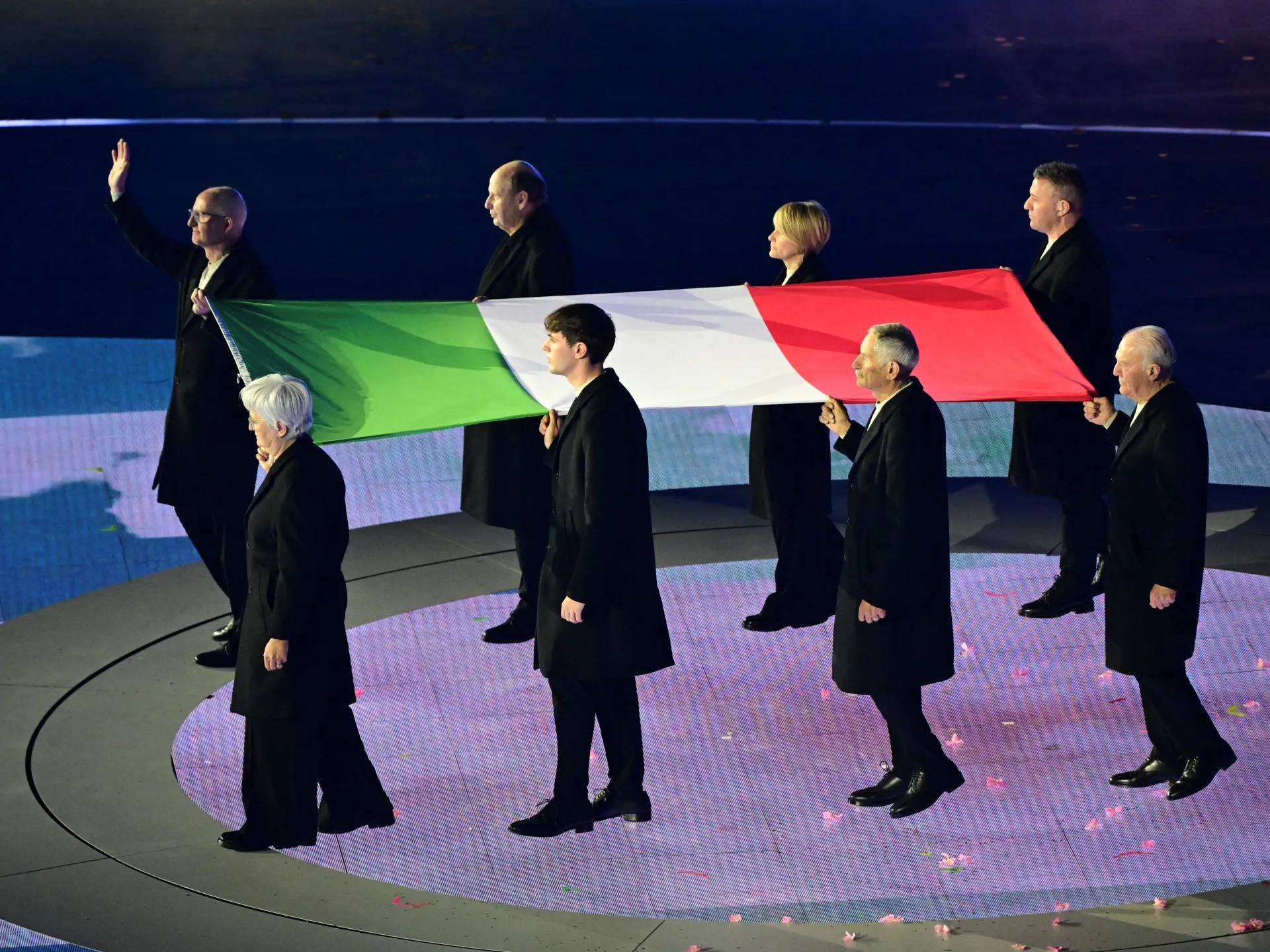
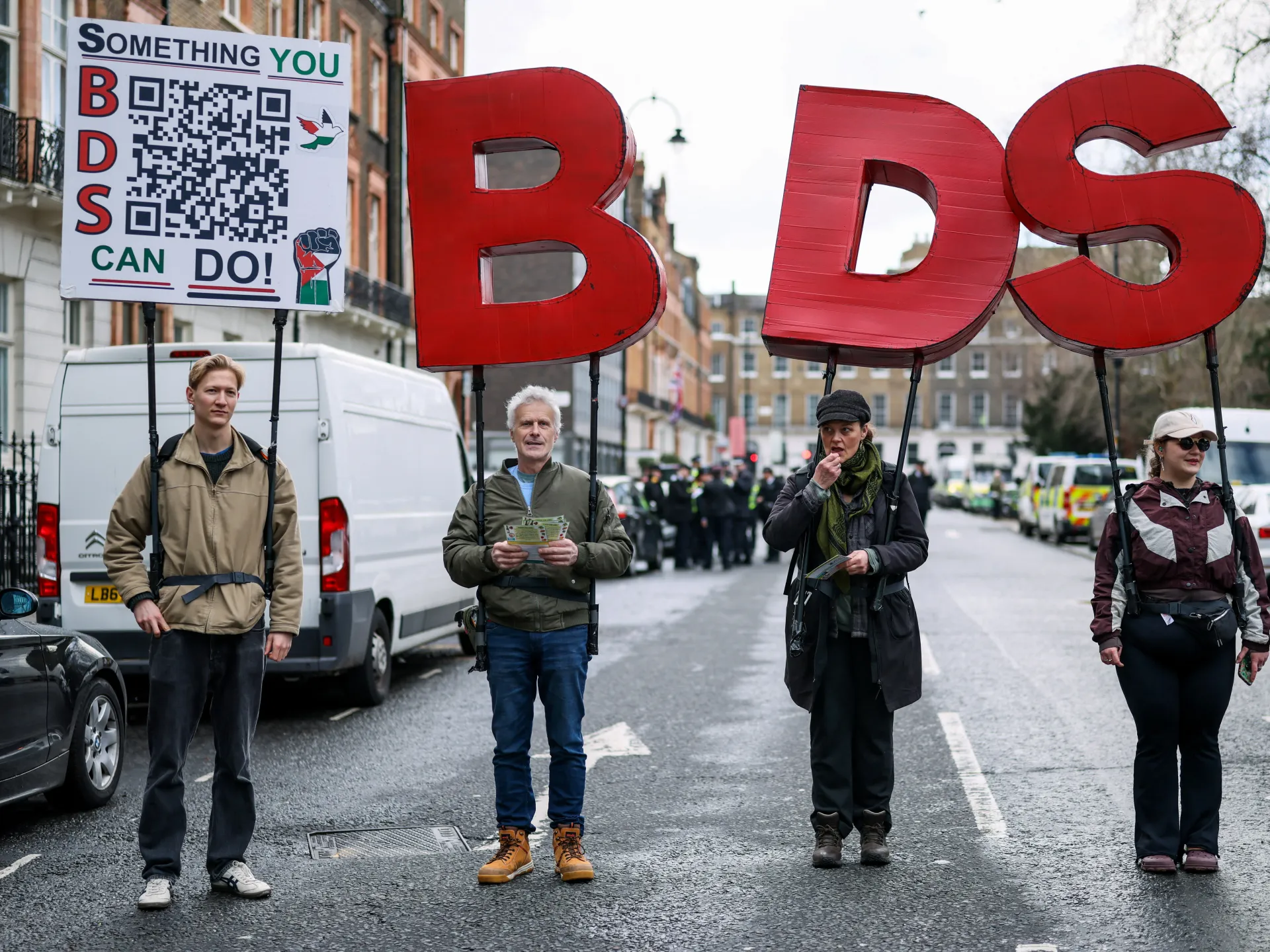
Activist Greta Thunberg and the UN’s Francesca Albanese joined hundreds of pro-Palestine protesters in Genoa on Friday, as nationwide strikes took place across Italy over Prime Minister Giorgia Meloni’s proposed military spending and support for Israel.
If you’re planning a trip to Venice, there is one law you need to be aware of – as you could be in for a nasty surprise if you’re caught ignoring the rules
Venice is gorgeous but make sure you know the laws(Image: Getty)
With winter gripping the UK and temperatures plummeting towards freezing, you’re probably not the only one fantasising about your next summer getaway. But if you’re planning a trip to one beloved Italian hotspot, there’s an obscure regulation you need to know about.
Ignore this rule at your peril, as you could find yourself stung with a massive €500 penalty – that’s roughly £438. The regulation applies to the waterway city of Venice, where countless tourists descend annually.
There’s a social media trend of capturing snaps in the city’s Piazza San Marco while surrounded by the flocks of pigeons that congregate there, reports the Express.
Yet these birds have turned into a public relations disaster for the city.
From 2008 onwards, local officials have implemented a rigorous prohibition on selling and handing out grain to nourish pigeons and other birds throughout the city.
This measure was introduced following numerous grievances from residents and holidaymakers about the sheer amount of bird droppings blanketing the city.
Currently, if officials spot you attempting to capture that perfect shot by feeding the pigeons, you might find yourself liable for a €500 penalty for your efforts.
Street sellers around the square frequently attempt to flog you bird feed for photographs, but this regulation means both parties face fines.
Simon Hood, Executive Director of relocation firm John Mason International, said: “Everyone’s seen the photos of tourists covered in pigeons in the Piazza San Marco; it’s become something of a Venetian tradition.
“But few know it’s illegal to feed any pigeons in the square, meaning attracting them to take the photo using bird feed makes you liable for a fine from Italian authorities, not just the vendor who sold it to you.”
As Italy gears up to host the 2026 Winter Olympics, Simon cautions that the authorities are likely to be even more watchful next year.
He warned: “We’ve heard the cycle that comes with international sporting and athletic competitions from clients. Globally, it’s the same pattern: local authorities put massive amounts of time into cleaning up streets, creating additional transport links, dealing with the small issues – in this case, pigeons. So, I’d recommend thinking twice about whether that Venice snap is really worth it.”
There are some well-known Christmas markets dotted across Europe, but there’s one fairytale location that boasts more than 200 stalls and is just two hours from the UK
The Italian Christmas market has a charm of its own(Image: Getty Images)
It’s that time of the year when many of us are turning our attention to booking that famed Christmas market trip for the ultimate yuletide to wander around charming chalets while hugging a warming cup of mulled wine. With thousands dotted across Europe, there’s a catalogue to choose from, but there’s one that offers something rather unique for some festive merriment.
Italy might not spring to mind when you think of Christmas markets, but in fact, it has one of the most magical, nestled in Verona. While the Italian city is famed as the setting for Shakespeare’s play Romeo and Juliet, with its Roman ruins and Renaissance buildings, it welcomes just as much jollity as any other European city, if not more.
From November 21 to December 28, the Verona Christmas market, located in Piazza dei Signori, graces and dazzles the city with festive charm. More than 200 stalls adorn the square offering traditional gift inspiration, artisan products and seasonal treats in one of Italy’s most beautiful cities.
Christmas trees and glittering lights decorate the market, while the aromas of gingerbread and mulled wine fill the air. Unlike many other European Christmas markets, in Verona, you can even ride a horse-drawn carriage in a truly magnificent experience as you pass illuminated palaces.
Expected to return this year is the incredible star installation at Piazza Bra, which has previously been one of the most iconic sights in the city, and is perfect for a festive snap! The Verona Christmas market takes inspiration from one of the oldest and most famous German markets in Nuremberg, which is said to be the “birthplace of this cherished tradition”.
It’s the ideal spot for some Christmas shopping, with the charming cabins filled with handmade souvenirs, ceramics, jewellery, soaps, liqueurs, and wooden and wool items. There’s also plenty of flavours to taste, from steaming-hot pearà, creamy sauce served with pork sausage and rustic bread, to sausage sandwiches and German-style bretzels and bratwurst.
There is also an abundance of sweet treats from luxury chocolate, a warming cup of mulled wine, known as vin brulè in Italy, or a refreshing boccale of a craft ale. And a visit here isn’t complete without sampling Verona’s famous Christmas cake, pandoro – a fluffy sweet bread similar to panettone, known as ‘golden bread’, that was created in 1894 by patissier Domenico Melegatti.
In addition to the market, festive celebrations will be spread far and wide in the city with Christmas concerts, theatre and ballet shows, along with an International Exhibition called ‘Nativities from the World’ taking place. There will also be Verona’s Christmas run, New Year’s Eve celebrations in Piazza Bra, and a New Year’s concert, along with fun-packed activities for children, including the House of Santa Claus, the Enchanted Forest, and ice-skating rinks in Piazza Sacco e Vanzetti.
Visitors have praised the Verona Christmas market, as one wrote on TripAdvisor: “I say well hidden because all the tourist maps say it’s there but I eventually found it, and there was a Christmas market going on, and the buildings around it are beautiful – well worth a visit.”
Direct flights from London to Verona start from £20, with the flight duration just under two hours for a festive winter getaway.
A travel writer who visited Italy with her mother earlier this year said she visited two cities that gave a more authentic experience of Italy than the likes of Rome or Venice
A travel writer who went to Italy recommended two alternative places to visit (stock)(Image: Getty)
A woman who visited Italy with her mother elected not to visit popular cities like Rome, Florence, or Venice, instead opting to try less famous and more unusual destinations.
Travel writer Jenna DeLaurentis took her mother on a “retirement trip” to the iconic European country frequented by millions of tourists each year and her verdict was that the likes of Padua and Ravenna would result in a “more authentic” experience of Italy.
For geographical context, Ravenna is located in the north east, 50 miles from Bologna whilst Padua is just 20 miles from Venice.
Jenna said that whilst Ravenna receives a lot of tourists, these mainly appeared to be day trips from Bologna which meant many of them left during the afternoon, leaving the area calm.
Meanwhile, in Padua, Jenna wrote in Business Insider that they encountered a “similar scenario”. She explained: “Sites like the Basilica of St. Anthony and Scrovegni Chapel were busy in the morning, but most tourists seemed to be gone before it got dark.
“As crowds dwindled in both Ravenna and Padua, my mum and I spent our evenings trying local cuisine and sipping cocktails at outdoor bars.”
Jenna’s conclusion was that visiting smaller cities like Padua and Ravenna gave them a much better experience than visiting major tourist hubs such as Rome and Venice.
She explained: “Though the attractions are noteworthy, they’re often overshadowed by overwhelming crowds.
“Visiting Ravenna and Padua, on the other hand, gave us the best of both worlds. We made wonderful memories together while exploring each city’s historical attractions, and loved spending quiet evenings wandering around picturesque city centres.”
Jenna’s comments about her trip in late May come as Europe recovers from another heavy tourism season and the annual questions about overtourism, a phenomenon that has raised questions about how many tourists as city can take.
However, at the start of next year, the tourism season may start earlier in Italy as the country prepares to host the Winter Olympics and Paralympic Games due to take place between February 6 and February 22 and March 6 to March 15 respectively.
In response, the UK’s Foreign Commonwealth and Development Office (FCDO) has updated its travel guidance for Italy, encouraging Britons to get travel insurance. In an update they said: “If you choose to travel, research your destinations and get appropriate travel insurance. Insurance should cover your itinerary, planned activities and expenses in an emergency.”
Addressing the Olympic Games directly, they added: “Get advice on weather and avalanche conditions before you travel and familiarise yourself with local skiing laws and regulations. You can contact the Italian State Tourist Board for advice on safety and weather conditions before you travel.”
I now know the awful reason olive oil is so expensive(Image: Jane Lavender)
Strolling through an olive grove in southern Italy, surrounded by trees, many of which were more than 200 years old, I was bathed in sunshine and calm with only the warm breeze floating through to branches to break the idyllic silence.
Frantoio Mafrica is a family-owned olive mill, which has been handed down from generation to generation. While it looks like little more than olive trees in a sunlight dappled grove to us visitors, to the owner they’re his family heritage. When he looks at them he sees his grandfather, who also worked the land.
The mill also uses donkeys to help transport the olives after picking, which is done in the traditional way by shaking the tree when they’ve 50 percent green and 50 percent black. And meeting the baby donkey who wanted nothing more than cuddles was one of the highlights of my entire trip to Calabria with Great Rail Journeys.
The family secret to processing the olives into the highest quality extra virgin olive oil was also unexpected. Rather than pressing the olives, they’re washed with water as they’re pulped to make sure every bit of Italian goodness goes into the oil. The process is all completed 24 hours after harvesting.
After trying the oil with bruschetta I can confirm it was like nothing available in your local Tesco: utterly delicious. Calabria is one of Italy’s major olive producing regions, with more than 50 types grown there including the only white olive. However, you would have had to have been hiding under a rock to be unaware of the soaring cost of olive oil.
Frantoio Mafrica explained the heart-breaking reason behind this alarming rise, and it’s not the market forces behind the soaring costs of other food. In fact, it’s because huge swathes of Italian olive groves have been hit by a terrible disease, which has killed the trees, many of them hundreds of years old.
As olive trees take so long to grow, the devastation of burning huge numbers of the diseased and dead trees has been a terrible price to pay for a country and region so fiercely proud of its ‘liquid gold’.
Knowing the passion, work and care that goes into making the best olive oil – and the devastation this blight has caused – I’ll complain much more quietly at the price next time.
Sinner, a key member of the Italian team which triumphed at the past two editions, elected to maximise his recovery during the sport’s brief six-week off-season after triumphing at last week’s ATP Finals.
But, after Berrettini and Cobolli starred for Italy in their quarter-final against Austria, both players spoke about the privilege they feel in competing for their nation at the Finals.
Berrettini maintained momentum from his opening straight-set win as he clinched an early break of serve and would not be caught after racing into a 3-0 lead.
The former Wimbledon runner-up, ranked 56th in the world, then broke immediately in set two after Collignon double-faulted twice.
However, his charge to the finish was slowed when Collignon took his first opportunity to level at 2-2 – and the Belgian was denied a fourth-straight game when Berrettini landed a sensational cross-court forehand to shut down another break point two games later.
But Berrettini would not lose his grip on the contest after reasserting himself with another break, serving out for his 10th consecutive singles win when playing for his country.
Speaking post-match, Berrettini said: “Pressure is a privilege. Obviously I feel the pressure, but you’re playing in front of your home country, my whole family is here, we are all great friends in our team.
“It is such a special feeling for me. I take the bad feelings away and just enjoy the moment.”
Dramatic hills and medieval charm in Emilia-Romagna
Approaching the town of Brisighella in Emilia-Romagna, it feels as though you are rapidly incorporating yourself in the backdrop of a Renaissance masterpiece, with dramatic rocky hills with singular trees perched upon them, and mysterious towers standing in solitary self-possession – leaving you to wonder what they must have witnessed over the years. The town is the perfect launchpad to explore such remarkably beautiful scenery, but it is also absolutely worth exploring its many medieval alleyways and its particularly unique elevated path, granting private nooks to take in the town’s charm. Gioia
Profile
Readers’ tips: send a tip for a chance to win a £200 voucher for a Coolstays break
Show
Guardian Travel readers’ tips
Every week we ask our readers for recommendations from their travels. A selection of tips will be featured online and may appear in print. To enter the latest competition visit the readers’ tips homepage
–
Walk in the heart of Sicily
Gangi was one hill village on the walking route to Cefalù from Caltanissetta. Photograph: Mirko Costantini/Alamy
We have just walked the Via dei Frati from Caltanissetta to Cefalù on Sicily. During the 54-mile walk across the Madonie mountains, we saw no walkers or tourists. Views are sublime and each day finishes in a beautiful Sicilian village such as Gangi. Although no one spoke English, communication was never a problem. Michael
Castles and catacombs in Basilicata
Ancient catacombs in Venosa. Photograph: Toni Spagone/Alamy
The southern Basilicata region is packed with interesting places, but Venosa, birthplace of the Roman poet Horace, is unmissable. Once a major centre, now a remote small town, it has extensive Roman ruins, ancient Jewish catacombs, a breathtaking castle, beauty and interest at every turn. Local food and wine is terrific. Nearby, the castles at Melfi and Lagopesole and the ducal palace at Pietragalla are among several places that would be internationally famous if they were located in more touristy areas, but you can’t easily go wrong in this part of Basilicata as long as you skip Potenza. Andy
Eco bliss in the Apennines
Eco hotel Mulino delle Cortine
Eco hotel Mulino delle Cortine, lost at the end of a three-mile dirt track deep in the Apennines east of Florence, is almost cartoonishly peaceful. With its shaded river swimming pool accessed by climbing down a rope into the riverbed, array of hiking trails in the surrounding forests and along streams and not a single bar of phone reception, it’s the perfect place to truly switch off. Rustic plates of pasta, regional cheeses, meats and cheesecakes served slowly under planetarium skies add to the appeal. Cath
Medieval gem in Friuli
The Devil’s Bridge in Cividale. Photograph: Wirestock/Alamy
In the heart of Friuli-Venezia Giulia in the north-east, Cividale is a destination that feels like stepping into a living postcard. This Unesco world heritage site is a treasure trove of history, from its Roman roots to one of Italy’s most remarkable medieval sites: the exquisite eighth-century Tempietto Longobardo built by the Lombards. Wander through cobblestone streets, cross the Devil’s Bridge and soak in views of the emerald Natisone River. Beyond its beauty, Cividale offers authentic Italian charm – think family-run trattorias, local wines and vibrant cultural traditions. Steve Bassett
A mini-Venice without the crowds
‘Chioggia is what Venice must have looked like in an earlier iteration.’ Photograph: Ermess/Getty Images
I doubt many tourists to Italy know about the mini-Venice, 16 miles south of its more famous sibling city, and easy for a day trip. Chioggia is what Venice must have looked like in an earlier iteration, and was actually mentioned by Roman author Pliny the Elder. It also features canals and narrow alleys, and has an important Museum of Adriatic Zoology to boast about, as well as beaches, a fort and medieval architecture. Michael
The mountainous countryside around Santo Stefano d’Aveto in Liguria. Photograph: Reda/Getty Images
I used to live not far from Santo Stefano d’Aveto, and I go back to the town in the Ligurian Apennines north-east of Genoa whenever I can. It’s a great base for exploring the Aveto natural regional park with trails winding around Monte Aiona, Monte Penna, Ramaceto and Zatta, with peaks rising to about 1,800 metres. Small lakes lie in the valleys, perfect for a pause on long hikes. The old Gambatesa mine makes a fun stop, especially with kids. Meals are simple: polenta, mushrooms, San Stè cheese, maybe wild boar. It’s not picture-perfect, just real. Federico Bozzini
Truffle tagliatelle in the heart of Lazio
Truffles on sale in Campoli. Photograph: Znatalias/Shutterstock
Tucked away in Lazio’s wild heart, Campoli Appennino perches dramatically on the edge of a vast sinkhole, a medieval village wrapped in dense forests, gorges and the hush of mountains. Hikers lose themselves on the Gole del Lacerno trail, chasing waterfalls and rugged ravines, while rescued brown bears roam freely in the village sanctuary. And then there’s the food: truffle tagliatelle at Il Tartufo, cream-filled pastries that vanish in a bite, and wonderful pizza. Hidden, wild and utterly captivating, Campoli Appennino is the kind of place you stumble upon once – and never forget. Louise Warrington
Sweet wines in a Piedmont mountain village
Piedmont’s vineyards are gorgeous in autumn. Photograph: Fabrizio Malisan/Alamy
Loazzolo is the home of a magnificent sweet wine and many fantastic classic sparkling wines. The little mountain villages are breathtaking, especially in the autumn when the landscape is painted in various hues of reds, yellows and greens. With truffles, porcini and hazelnuts too, this area is a culinary feast, best served in the early afternoon sun. This part of the Piedmont region always surprises me, especially because it is so overlooked by non-Italian visitors. Close to the vineyards of Barolo and the beautiful towns of Asti and Alba, it remains a hidden treasure. Ruan Smit
Winning tip: explore Roman remains at your leisure, Le Marche
The medieval village of Urbisaglia neighbours Urbs Salvia achaeological park. Photograph: Universal Images /Alamy
Even the locals thought it was hot when we visited the archaeological park at Urbs Salvia, south of Ancona in the Marche region. Walking between the perfectly preserved Roman theatre, the temple dedicated to Augusta and the amphitheatre, we sheltered under trees, drinking from our rapidly emptying water bottles. The guide clearly thought we were deranged – mad dogs etc – but free from the crowds of Rome or Pompeii, we had time to marvel at the city before us. Afterwards we detoured to Le Logge, a restaurant in Urbisaglia, the medieval upstart neighbour, and had a perfect lunch in the shade. Alex
Former Ukrainian officer Serhii Kuznietsov faces charges in Germany of collusion to cause an explosion, sabotage and destruction of infrastructure.
Published On 20 Nov 202520 Nov 2025
Share
Italy’s top court has approved the extradition to Germany of a Ukrainian man suspected of coordinating the sabotage of the Nord Stream gas pipelines between Russia and Europe in 2022.
The suspect, Serhii Kuznietsov, 49, has denied being part of a cell of saboteurs accused of placing explosives on the underwater pipelines in the Baltic Sea, severing much of Russia’s gas transfers to Europe and prompting supply shortages on the continent.
Recommended Stories
list of 4 itemsend of list
After Italy originally blocked Kuznietsov’s extradition last month over an issue with a German arrest warrant, Italy’s Supreme Court of Cassation approved the transfer on Wednesday.
Kuznietsov “will therefore be surrendered to Germany within the next few days”, his lawyer Nicola Canestrini said.
The suspect, a former officer in the Ukrainian military, has denied any role in the attack and has fought attempts to transfer him to Germany since he was detained on a European arrest warrant in the Italian town of Rimini, where he was vacationing with his family, in August.
“However great the disappointment, I remain confident in an acquittal after the full trial in Germany,” Canestrini said in a statement.
Last month, a court in Poland ruled against handing over another Ukrainian suspect wanted by Germany in connection with the pipeline explosions and ordered his immediate release from detention.
Kuznietsov faces charges in Germany of collusion to cause an explosion, sabotage and destruction of important structures.
German prosecutors said he used forged identity documents to charter a yacht that departed from the German city of Rostock to carry out the attack near the Danish island of Bornholm on September 26, 2022.
According to extradition documents, prosecutors said Kuznietsov organised and carried out the detonation of at least four bombs containing 14kg to 27kg (31lb to 62lb) of explosives at a depth of 70 to 80 metres (230ft to 263ft).
The explosions damaged both the Nord Stream 1 and the Nord Stream 2 pipelines so severely that no gas could be transported through them. In total, four ruptures were discovered in the pipelines after the attack.
Kuznietsov says he was a member of the Ukrainian armed forces and in Ukraine at the time of the incident, a claim his defence team has said would give him “functional immunity” under international law.
Earlier this month, members of the European Parliament (MEPs) sent a letter to Italian Prime Minister Giorgia Meloni expressing concern about Kuznietsov’s extradition.
Al Jazeera
“The destruction of the pipelines dealt a significant blow to Russia’s war machine in its ongoing war of aggression against Ukraine,” the MEPs wrote.
“From the standpoint of international law, actions undertaken in defence against such aggression, including the neutralisation of the enemy’s military infrastructure, fall within the lawful conduct of a just war,” they wrote.
“We, therefore, urge the Italian government to suspend any steps toward extradition until the guarantees of functional immunity and state responsibility are thoroughly and independently assessed,” they added.
Kuznietsov, who faces up to 15 years in prison if found guilty by a German court, has been held in a high security jail in Italy since his arrest and at one point staged a hunger strike to protest against his prison conditions.
The city of Reggio Calabria, in the Calabria region of southern Italy, is said to be home to the prettiest kilometre in the whole country
The Lungomare Falcomatà is a seafront promenade
Italy – the land of pasta, pizza, gelato and dolce vita.
We all know Italy is packed with stunning cities, towns, lakes, mountains and beaches. From the splendour of Florence, the historic significance of Rome and the waterways of Venice to the peace and tranquility of Lake Garda, this really is a country with something for everyone.
However, the southern tip of this beautiful country has long been ignore for its more famous neighbours. Calabria, right on the toe of Italy and just a few miles from the coast of Sicily, it the country’s poorest region but many would argue also its most beautiful.
Its coastline is surrounded by azure blue waters and golden sandy beaches and pretty, and totally unspoilt, villages and towns pepper the seafront.
Inland, the traditional way of life is still very much in evidence, with churches and monasteries the heart of communities.
From the stunning town of Tropea, where we were staying and which has recently been voted the prettiest town in the whole of Italy, to the quaint fishing village of Scilla, a visit to Calabria is like a visit to no other part of Italy.
One of the big draws to the region is the city of Reggio Calabria, the largest in the whole region. Just a few miles from the coast of Sicily, separated only by the impressive Strait of Messini, Reggio Calabria is also said to be home to the prettiest kilometre in Italy.
The Lungomare Falcomatà is a seafront promenade with, on a clear day, spectacular views of the sea, the Strait of Messina, where the Tyrrhenian and Ionian seas meet, Sicily and Mount Etna.
The promenade is also home to some stunning sculptures, both natural and man-made. Some of these are the huge and must be seen to be believed magnolia trees which stand proud and tall along the street.
Elegant buildings line one half of the promenade not taken up by the breathtaking views of the sea.
On the day I visited, while I was blown away by this beautiful city, which is also home to the Riace Bronzes, life-size statues dating back more than 2,500 years and housed in the National Archaeological Museum, there was one major problem which hampered by enjoyment of Italy’s prettiest kilometre – it was absolutely chucking it down.
Don’t get me wrong, I was visiting at the start of October so putting up with some inclement weather should be expected but it was sad not to be able to see this wonderful city in all of its glory, especially the stunning walk alone the Lungomare Falcomatà. No views of Etna for me, and while I could just about make out the coast of Sicily, it was at best murky.
However, this just gives me the perfect excuse to return to the stunning region of Calabria.
Kat Smith, an American who has spent years travelling the world, has highlighted the underrated place that she loves the most and which she keeps coming back to
Kat Smith has made Trieste her home
A seasoned traveller who has visited almost every corner of Italy has chosen an often overlooked one to be her home.
Kat Smith has be travelling the world for the past 13 years, putting down roots for short periods before moving on. The one place that has captured the American globetrotter’s heart, and where she has been living for the past two and a half years, is one that rarely receives much attention from tourists. Although that does seem to be changing.
Trieste saw its overnight stays more than double from around 700,000 in 2021 to 1.5 million in 2024, a significant increase driven by a growing number of tourists visiting the city. That compares to 29 million overnight stays in Rome last year.
“I’ve traveled Italy extensively, going to at least one new place every month since moving here in August 2023. Some cities, like Naples, Rome, and Venice, I’ve found myself returning to again and again, but I always make time to explore a new corner of Italy. I’ve traveled from the southern tip of Puglia to the northern border with Austria, making plenty of stops throughout the country and even to Sardinia,” Kat, co-founder of Mamma Mia Indeed, told the Mirror.
“One of my favorite cities is Trieste. Although still relatively unknown outside of Italy, Trieste is slowly starting to come out of its shell and get the recognition it deserves.”
Here are some of the reasons why she loves the north-eastern coastal city so much.
“From the architecture to the food and even the local dialect, Trieste is like nowhere else in Italy. Here, you’ll feel closer to Vienna than to Rome when wandering the streets, particularly in the center around Piazza Unità or down grandiose Via Carducci. Sacher cakes sit in bakeries side-by-side with your typical croissants (called “brioche” here), and goulash often accompanies pasta on menus. Given the proximity to the border, road signs tend to be in both Italian and Slovenian, especially true as you explore the hillside surrounding the city center.”
It has a strong sense of identity
“When speaking with locals, especially the older generation, they tend to stress that they’re Triestino first, Italian second, paying homage to those few years after WW2 that Trieste was actually independently recognized as the Free State of Trieste. While not all are itching for those days like some are, they’re proud of their unique culture. A short anecdote to emphasis this unique history comes from my neighbor, a man in his late 70s. All born in the same area we now know as Trieste, his parents were born under the Austro-Hungarian Empire, his parents-in-law in the Kingdom of Italy, him in the Free Territory of Trieste, and his wife in Italy. Although much of Italy shares a unique history and moments in time when it was independent, few have such drastic changes within the last 100 years.”
It’s a city on the water
“Trieste is built around the water, which is something I truly love about living here. Regardless of the season, you’ll find people flocking to the sea or to the coast for the daily ritual of watching the sunset over the Adriatic. It feels as though everyone who lives here is drawn to the water one way or another. Many of our neighbors own sailboats, and friends often call to walk along Barcolana (Trieste’s “beach”) for an aperitivo. We’ve also started rowing most mornings in the sea with a group of locals. The public transportation even stretches past the shore with the ferry being the best way to get around the coastline and even across in the bay in the summer. There’s nothing quite like swapping the bus for a boat, especially once you’ve gotten your first glimpse of Trieste from the water.”
It’s cut off
“Situated on the border with Slovenia, it’s just about as far away from the rest of Italy as you can get, with most towns in Slovenia and even northern Croatia a closer trip. The architecture looks more Austrian than Venetian or Roman, paying homage to the centuries spent as part of the Austro-Hungarian Empire. Today it’s a coastal city bursting with a unique culture and plenty of places to catch the sunset over the Adriatic while you enjoy your aperitivo. In the summer, you can take the public ferry around the coast, visiting smaller towns and seeing the iconic Miramare Castle from the sea. The Osmiza culture comes alive in the summer and spring, with numerous farm-to-table “restaurants” opening their doors with fresh meats, cheeses, and wines. In the winter, the city’s main square, Piazza Unità, gets into the holiday spirit, filling itself with Christmas trees and lights.”
STRICT new rules are being rolled out in one of Europe’s prettiest cities next year.
Florence, which was named the best city in Europe by Travel + Leisure this year, is cracking down on outdoor dining in the popular tourist areas.
Sign up for the Travel newsletter
Thank you!
New outdoor dining rules will see a ban on tables in some of Florence’s most historical streetsCredit: AlamyIt includes the famous Ponte Vecchio bridgeCredit: Alamy
The new rules, the Times reports, will see outdoor seats banned across 50 streets in Florence.
This mainly affects the city centre, which is UNESCO protected.
Along with the bans, another 73 locations will see stricter regulations on outdoor seating areas.
This could mean while seating is allowed, umbrellas and plexiglass barriers could be banned.
Local restaurant owners have slammed the rules, saying it is an important part of their service especially in the summer months.
The owner of Ristorante Pizzeria Il David, which has 60 seats outside, said: “Our outdoor seating is fundamental.”
Another said: “True restaurateurs have begun to close.
“They are crushed by impossible costs and by city policies more concerned with the aesthetics of outdoor seating than with the survival of those who brought these spaces to life.”
But locals have said the new rules are needed as the narrow streets can’t cope with the outdoor terraces, many of which were introduced during Covid.
Some said it had made roads unliveable, and like an “obstacle course”.
It isn’t the only strict ban introduced over the years in Florence.
It comes after fears of overtourism across Florence.
Cecilie Hollberg, director of the Galleria dell’Accademia, toldlocal media: “Florence is very beautiful and I would like it to return to its citizens and not be crushed by tourism.”
Many restaurant added the outdoor seating during CovidCredit: Alamy
Jannik Sinner beat Carlos Alcaraz for just the second time this year and defended his ATP Finals crown in Turin.
Published On 17 Nov 202517 Nov 2025
Share
Italy’s Jannik Sinner retained his ATP Finals title on Sunday, sending the Turin crowd wild as he battled past Spanish world number one and rival Carlos Alcaraz 7-6(4) 7-5 in the decider to the season-ending championships.
Sinner, backed by a raucous Italian crowd, fell to the floor after breaking his rival’s serve in the final game before racing to celebrate with his team as chants of “Ole, Ole, Ole, Sinner, Sinner” rang around the Inalpi Arena.
Recommended Stories
list of 4 itemsend of list
“Finishing in front of the Italian public was a fantastic thing, maybe even better than last year. Thank you very much for the support, it was incredible,” Sinner said.
“Thanks to all of you, it felt like being on a football pitch.”
In a season defined and dominated by the rivalry between the two players, it seemed inevitable that they would meet in the title clash, and both obliged by easing through the tournament unbeaten to set up one last dance in Turin.
Sinner hits a return to Alcaraz during the final match at the ATP Finals [Marco Bertorello/AFP]
Sinner under pressure
Alcaraz forced the only break point in the first set, but Sinner held firm and brought the crowd to its feet with a tiebreak win and sealed the match when the Spaniard was unable to hold while serving to stay in the contest.
Sinner missed out on ending the year as world number one to Alcaraz after the Spaniard won his three round-robin matches this week, but the Italian won the last act of 2025 to crown the best season of his career.
The 24-year-old reached the final of all four Grand Slams, winning the Australian Open and Wimbledon, while Alcaraz has also had a stellar year, winning Roland Garros and the US Open, beating Sinner in both finals.
“Hopefully you’re going to be ready for next year,” Alcaraz said with a smile.
“Because I will be ready.”
Alcaraz put Sinner to the test in Turin, but despite not being at his best and struggling with his service game – which had powered him past opponents all week – the Italian held his nerve.
Sinner won his opening service game to love with Alcaraz responding in kind, and at 2-2 the Spaniard forced deuce before a medical emergency in the stands led to a 10-minute break, the duo chatting over the net, belying the tension in the arena and on court.
When play resumed, Sinner advanced to the net to slam down a winning volley and fired an ace to hold. Alcaraz required a medical time-out during the break at 5-4 up before forcing the first break point of the match at 6-5.
Sinner survived and after letting slip a mini-break in the tiebreak, the champion brought the crowd to its feet, smashing down a lob after Alcaraz had chased back to return a drop shot and then catching out the Spaniard with a lob of his own to take the first set.
The Spaniard had chances to take the final the distance, breaking the Italian in the opening game of the second set, where Sinner hit two double faults. Yet Sinner came back to level the set at 3-3 and came through when it counted.
Sinner arrived in the final on a remarkable indoor hardcourt winning run of 30 matches since losing to Novak Djokovic in the 2023 decider in Turin, also the last time the Italian dropped a set in the competition.
Appearing in his third successive final in the season-ender, Sinner had lost four of his previous five meetings with Alcaraz this year, which all came in finals, but he was not to be denied in Turin, where his win earned him a record $5.07m in prize money.
Sinner, left, is congratulated by Alcaraz at the end of their match [Marco Bertorello/AFP]
Portugal recovered from a shock loss to Ireland on Thursday to qualify, while Norway is through for the first time since 1998.
Portugal booked their ticket to the 2026 World Cup with a 9-1 victory over Armenia on Sunday, while an Erling Haaland brace rubber-stamped Norway’s place in the global showpiece as they romped to a 4-1 win in Italy.
After being held by Hungary and then stunned by the Republic of Ireland last time out, Portugal sealed top spot in Group F at the third time of asking with a resounding win over bottom-side Armenia.
Recommended Stories
list of 4 itemsend of list
In the absence of the suspended Cristiano Ronaldo, star midfielders Bruno Fernandes and Joao Neves both scored hat-tricks as the Portuguese ran riot in Porto.
Renato Veiga, Goncalo Ramos and Francisco Conceicao were also on the scoresheet.
“The most important thing was qualifying for the World Cup,” Paris Saint-Germain linchpin Neves told RTP.
“For me, as I always say, the team always comes before the individual. I’m very happy to have scored my first goal for the national team, and my second and third as well.”
Portugal will compete in a seventh consecutive edition of the World Cup, a tournament which the Euro 2016 champions have yet to win.
“We’re at the World Cup! Let’s go, Portugal!” Ronaldo posted on social media.
The striker could miss the start of the tournament depending on whether FIFA extend his suspension beyond the mandatory one-match ban he served against Armenia.
Ireland sewed up the playoff place in the group thanks to Troy Parrott’s 96th-minute hat-trick goal, handing them a 3-2 win over third-placed Hungary.
Daniel Lukacs gave the hosts the lead in Hungary after four minutes, before Parrott levelled from 12 yards shortly afterwards.
Barnabas Varga’s 37th-minute goal looked to have been enough for Hungary to seal second spot until 23-year-old Parrott notched his fourth and fifth international goals this week.
Parrott was the hero with his brace in Thursday’s 2-0 defeat of Portugal, and he struck to equalise again for Ireland with 10 minutes remaining in the Hungarian capital.
The AZ Alkmaar forward then sparked wild Irish celebrations as he prodded home Liam Scales’s knockdown deep into injury time to send Heimir Hallgrimsson’s side into March’s playoffs.
Portugal’s Bruno Fernandes scores a hat-trick against Armenia from the penalty spot in the 72nd minute [Luis Vieira/AP Photo]
‘Absolutely insane’
Italy needed a miracle in Milan to pip Norway to first place in Group I due to the visitors’ gargantuan goal difference advantage.
Pio Esposito scored early at the San Siro to give the home side the faintest of hopes, but they were unable to again break down stubborn Norwegian defending as Stale Solbakken’s side held firm.
Antonio Nusa levelled just after the hour before Haaland, inevitably, netted twice in 60 seconds to turn the tie on its head. Jorgen Strand Larsen then put gloss on the result in injury time as Norway romped to an eighth win from eight outings.
It will be Norway’s first appearance at the World Cup in 28 years.
“I’m happy, but more relieved. There’s a lot of pressure and stuff, and I feel it. But it’s fun,” Haaland, who netted 16 goals across the campaign, told TV 2.
“It’s indescribable. Absolutely insane. The way we did it is absolutely incredible. It’s huge,” Martin Odegaard said.
Israel beat Moldova 4-1 but finished six points adrift of second-placed Italy, who go into the playoffs.
France booked their place in next year’s tournament in North America with a win over Ukraine earlier in the week, and a much-changed side concluded their campaign with a 3-1 win in Azerbaijan.
Ukraine saw off Iceland 2-0 thanks to two strikes inside the final 10 minutes from Oleksandr Zubkov and Oleksii Hutsuliak to claim second place in Group D.
Thomas Tuchel’s England completed a perfect group-stage performance as they won 2-0 against Albania to finish their campaign with a 100 percent record, featuring 22 goals scored and zero conceded – a European record for a team playing at least six qualifying matches.
“I think it’s as good [a squad] as we’ve ever had,” Harry Kane, who scored both England goals, told ITV.
“I think when you look at the starting 11, you look at the players coming off the bench, we’re going to go into the tournament as one of the favourites.”
With Albania already assured of second place, Serbia beat Latvia 2-1 in a dead-rubber in Group K’s other match.
Norway’s captain Erling Haaland and teammate Julian Ryerson celebrate their victory at the end of the FIFA World Cup 2026 European qualification match between Italy and Norway, at the San Siro Stadium, in Milan, on November 16, 2025 [Alberto Pizzoli/AFP]
Italy won the European Championship in 2021, but have not played at a World Cup finals since 2014 when they beat England but lost to Costa Rica and Uruguay and failed to make it beyond the group phase.
Their 2026 World Cup qualifying campaign could not have got off to a worse start.
From then on, Italy have been playing catch-up, with flawless Norway winning their opening seven qualifiers, scoring 33 goals in the process, including 14 for Haaland.
Italy turned to Gennaro Gattuso, a former combative midfielder who helped AC Milan twice win the Champions League and Italy secure their last World Cup trophy in 2006.
Despite managing AC Milan and then winning the Coppa Italia with Napoli, a 23-day spell at Fiorentina saw him leave without taking charge of a game, before he only lasted seven months at Valencia and five months at Marseille.
His most recent appointment had been with Croatian club Hajduk Split, and many felt him becoming Italy manager was a mistake.
“When I heard Gattuso was in line it just seemed to demonstrate the giant collapse of Italy,” Italian football journalist Mina Rzouki told the Euro Leagues podcast.
“There were so many clips going around on social media about that Italy team just before they won the World Cup and you are talking about Paolo Maldini, [Fabio] Cannavaro, [Alessandro] Nesta, [Francesco] Totti, [Alessandro] Del Piero and it was just an embarrassment of riches.
“Now when you look at Italy over the last few seasons, even though they won the Euros, there was just a fall – but the one thing you could rely on was that Italy created these great coaches. Yet none of these great coaches were called up or have succeeded. Spalletti did not succeed.”
Horncastle added: “The players have had their backs against the wall after losing to Norway in June and now the approach that is being imposed on Italy by the Italian media is ‘you have to win all your remaining games and have to score lots and lots of goals’.
“Italy had a great coach in Luciano Spalletti, although, for whatever reason, it didn’t work out. Gattuso is a more famous manager for his press conferences than the football he has put on the pitch.”
Diners fall silent as the haunting sound of the aulos – a double-piped wind instrument from ancient Greece – echoes through the vaulted breakfast room. The musician, Davide, wears a chiton (tunic), as do the guests; the mosaic floor, decorated vases and flicker of flames from the sconces add to the sense that we’ve stepped back in time.
This is Moyseion, a one-of-a-kind hotel-museum in the famous troglodyte city of Matera, in Basilicata, known for its sassi – cave dwellings carved into the limestone mountainside. Every detail has been carefully designed to transport visitors to Magna Graecia, as this area of southern Italy was known when it was ruled by the ancient Greeks from the 8th-6th century BC.
Dreamed up by owner Antonio Panetta, an artist and lawyer turned hotelier who grew up nearby, the idea was to create “an immersive experience of history – a living work of art, where archaeology, myth and hospitality combine”. Four years in the making, it opened fully this summer in a series of restored sassi close to the city centre.
Replicas of museum artefacts are on display, from urns to jewellery, while the handmade furniture copies designs seen on ancient pottery – three-legged tables, wall-mounted torches, vast wooden chests. Eight of the 16 stone dwellings are inspired by ancient Greece – high wooden beds, natural fabrics, cabinets with items depicting daily life of the era. They’re spacious, comfortable and remarkably calming (mod cons such as mirrors and hairdryers are carefully hidden from view). Other rooms reflect pre-Greek periods.
The lobby of hotel-museum Moyseion. Photograph: Adriano Fedele
In the basement, the Sanctuary of Waters is a multilevel spa dedicated to the goddess Demeter, evoking sacred sites of a lost world. It’s a moodily lit space with pools, statues of deities and stone basins based on Hellenistic thermal complexes. The floor mosaics are replicas of archaeological finds.
But what really makes this place special is the young in-house team of archaeologists, classicists, musicians, performers, costume designers and dancers that bring everything to life with a passion for history that they’re keen to share. Staff have worked with international specialists in everything from ancient music to choreography and cuisine to ensure an authentic experience – it took a year simply to master the circular breathing needed to play the aulos, Davide tells me. Guests become part of the action as they take part in daily rituals and symposiums. I’d worried it would feel like a theme park, but as I wander around in my chiton, a musician playing a specially created trigonon (small triangular harp), it somehow feels magical, not gimmicky.
Matera itself is layered with history. Believed to be the third oldest city in the world, after Aleppo in Syria and Jericho in Palestine’s West Bank, its location on the edge of a ravine adds to the drama. We arrive at night, a bright moon hanging above the rocky limestone landscape and maze of honey-coloured streets, like a timeless nativity scene. No wonder this place has had a starring role in countless films, from Mel Gibson’s controversial The Passion of the Christ and the 2016 remake of Ben-Hur (both times standing in for Jerusalem), to James Bond’s famous car chase through the old town in No Time to Die.
Davide, dressed in a chiton, plays the aulos, an ancient Greek wind instrument. Photograph: Caroline Gavazzi
We explore the sassi with guide Sandra, navigating the winding streets and piazzas, a jigsaw puzzle worthy of an Escher drawing. Divided into two ancient districts, Sasso Caveoso and Sasso Barisano, with the medieval Civita (old town) between, dwellings were both natural and human-made, partly dug into the rock and extended over millennia. Some were homes, some became part of the many monasteries and churches, incorporated into newer buildings that rose above them. Later, grand villas and palaces sprang up, such as Palazzo Viceconte (a Bond location), and Palazzo Malvinni Malvezzi, where Francis Ford Coppola is shooting his new film, Distant Vision, opposite the 13th-century romanesque cathedral.
By the 1950s, however, the city had been dubbed the “shame of Italy” due to the poverty and unsanitary living conditions in the sassi. A 1952 law declared them uninhabitable and more than 15,000 people were moved to new, modern quarters on the outskirts of town. The cave dwellings stood empty until the late 1980s, when people slowly started moving back to restore them as hotels and restaurants. Unesco world heritage status came in 1993 and it was a European capital of culture in 2019, putting the city firmly on the tourist map.
Breakfast at Moyseion. Photograph: Adriano Fedele
At every turn there is something new to gawp at. We visit the preserved cave house in Vico Solitario, which shows how life would have been when it was last inhabited in 1956 – mules and chickens living alongside the family, shelves and niches carved into the walls. We admire frescoes in churches excavated into rock – the Santa Maria de Idris and adjoining San Giovanni in Monterrone on a rocky spur with amazing views are among the most impressive.
I love Musma, a wonderful sprawling gallery space that’s part 16th-century palazzo, part ancient cave complex, dedicated to contemporary art and sculpture. We visit artists keeping traditional crafts alive, too, weaving cloth on looms and carving wooden bread stamps, once used to imprint the owner’s initials on huge durum wheat loaves before they were cooked in the communal ovens.
On a dine-with-locals experience we’re welcomed into the home of Marisa and Fernando and feast on endless plates of fried olives, bocconcini and artichoke, homemade pasta and fichi d’india (cactus fruit) as they share stories of Matera past and present. One afternoon we cross the suspension footbridge over the Gravina River to the other side of the gorge and climb to Murgia park, a vast wild rocky plateau pocked with hundreds of rupestrian churches (churches carved into rocks or cave walls). It’s the perfect vantage point to look back and watch the sunset paint the pale limestone town rose gold.
A musician plays a trigonon in Moyseion’s spa, based on a Hellenistic thermal complex. Photograph: Moyseion
But it’s time spent at Moyseion and the people we meet there that stick in my mind. The ritual held in the water sanctuary each day, where we follow performers playing the lyre and recreating mythical tales of gods and goddesses; the evening symposiums where wine, music, dance and conversation are shared, as they would have been in ancient Greece.
Even breakfast – akratisma – is an experience, the menu carefully researched and curated by food anthropologists and historians, and prepared by chef Vita. The table is laden with various breads and cheeses and cakes – melitoutta made with yoghurt, honey and cinnamon, plakous made of filo pastry with ricotta, figs and walnuts. There’s barley salad with pomegranate, spreads made of wild onion, mushrooms or olives, quails’ eggs and sausage. The hotel has also started hosting courses and residencies in ancient music and dance, the first focusing on the lyre, working with Lotos Lab, a research centre in Cambridge, and world-class scholars.
Matera has an important archaeological museum (closed for refurbishment during our visit), but few visitors to the city actually go, Panetta tells me. “People don’t want to just observe history and stare at things in a museum, they want to experience it in a real way,” he says. “When guests come here, they soon realise this is not Disney. The past is still alive in our souls – we want you to feel the past in the present, to make the past live again.”
The trip was provided by Moyseion. Rooms from €184 a night, including breakfast, rituals and symposium. Ferula Viaggi offers a range of tours in Matera, Basilicata and Puglia
Escape to the Dolomite mountains in northern Italy this winter for stunning scenery and rooms with a view at this striking treehouse spa hotel
We discovered a stunning mountain escape(Image: Benno Prenn)
There’s certainly something magical about being in the mountains at this time of year, and if you’re looking for an upmarket alpine escape, Brixen in Italy’s Dolomites region ticks all the boxes.
South Tyrol’s oldest town, Brixen – also known as Bressanone – is a popular destination for domestic and international holidaymakers alike, who come for skiing in the winter and walking in the summer. With German as the locals’ first language, the region feels much more Austrian than Italian. It was, in fact, part of Austria-Hungary until the end of the First World War.
If you’re lucky enough to have snow when you visit, Brixen will look like a scene from a snowglobe, with medieval churches, traditional Christmas markets and a festive light and music show held throughout the small town.
Brixen is easily accessible from Bolzano, Innsbruck, Venice and Verona airports, but if the flights work for you, do try to fly via SkyAlps, South Tyrol’s very own airline, direct from London to Bolzano. The journey is a delight, and you’ll feel like you’ve gone back to a golden age of aviation as you board the little propeller plane, which carries no more than 76 passengers. Drinks and snacks (many of which are local to the region) are complimentary, and you get to enjoy stunning views of the mountains as you fly over them.
My Arbor hotel
The My Arbor hotel, a few kilometres uphill from Brixen, has the wow factor as soon as you pull up to it. Perched on the side of a mountain, half of the hotel is raised up on what look like impossibly spindly stilts, as if the architect sketched a design for a treehouse after watching War Of The Worlds . The result is modern yet also completely in tune with the surrounding nature.
The ‘tree hotel’ theme continues as you step through the front door, with huge trunks hanging from the ceiling of the spacious lobby, leading onto a terrace that opens out onto views of the valley below.
The bedrooms are wood-panelled too, in a contemporary chalet-style design. The highlight is the huge daybed in the windows of the rooms, putting you right among the treetops as you lounge with your morning coffee, watching the clouds clear off the mountains in the distance. For total luxury, you can stay in one of three Treetop Suites, which have private terraces and their own whirlpool hot tubs.
The spa at My Arbor
The Spa Arboris is the star of the show at My Arbor, with two entire floors dedicated to wellness, and it’s clearly popular with guests. The first floor allows clothing and has a large indoor/outdoor pool, sauna and plenty of beds. But if you want to embrace German spa culture and leave your swimsuit and your inhibitions behind, then head down to the ‘textile-free’ floor (no one is looking, trust us), where you’ll find lots more saunas, steam rooms and an outdoor hydropool. It’s down here where ‘sauna infusions’ take place four times a day too, involving intense heat, powerful music and essential oils.
Outside, cosy heated ‘cuddle nests’ can also be booked for two-hour periods, filled with snuggly blankets and uninterrupted views.
My Arbor
This article contains affiliate links, we will receive a commission on any sales we generate from it. Learn more
A striking treehouse-style hotel in Italy’s beautiful South Tyrol, with stunning views, seven-course dinners and a world class spa.
The food at My Arbor
Most guests at My Arbor stay half-board, and you certainly won’t go hungry here. Dinner consists of a seven-course menu with a changing theme every night, alongside buffet salads, cheese boards and desserts. To accompany it is a huge wine list that the helpful staff are only too happy to advise on. Impressively, our waiter expertly talked us through the 600-bottle offering in English, his third language.
At breakfast you’ll find a selection of all the usual continental favourites – breads, meats, cheeses and pastries – as well as healthier options such as kefir water, freshly squeezed blueberry juice and different flavours of porridge every day.
What to do around My Arbor
The Plose ski resort and cable car is nearby, but locals tell us it’s not one of the Dolomites’ major ski destinations. Instead, most visitors come for the walking, with dozens of picturesque, well-signposted trails around the area. We visited earlier in the year, so our hiking routes felt like scenes straight out of The Sound Of Music , taking us past wildflower meadows, bleating baby goats, ancient churches and trickling streams. We don’t think it gets any more idyllic than that.
How much does it cost to stay at My Arbor?
Rooms at My Arbor start from about £225 per person, per night. SkyAlps operates flights from London Gatwick to Bolzano three times a week, from around £140 each way. Children under two travel free of charge.
Jannik Sinner stayed on course to defend his ATP Finals title, while Felix Auger-Aliassime claimed the last semi spot.
Published On 15 Nov 202515 Nov 2025
Share
Canada’s Felix Auger-Aliassime reached the last four of the ATP Finals with a 6-4 7-6(4) round-robin win over two-time winner Alexander Zverev on Friday, and Jannik Sinner extended his indoor hardcourt unbeaten run by beating American Ben Shelton.
Germany’s Zverev and Auger-Aliassime both defeated Shelton and lost to Sinner to set up a winner-takes-all clash for the runners-up spot in the Bjorn Borg Group, and the Canadian clinched a place in Saturday’s semifinal against world number one Carlos Alcaraz.
Recommended Stories
list of 4 itemsend of list
“You want to be in the final, but I’ll have to go through a great player to do that,” Auger-Aliassime said.
“I will take my chance if I have it.”
Zverev was left to rue his failure to take any of his seven break points against Sinner, and it was a similarly frustrating story against the Canadian.
The German held break points in both sets but again could not make them count, and the Canadian broke Zverev at 5-4 up to take the first set, before going on to win the second set tiebreak.
Auger-Aliassime was put under pressure in the opening set, saving break points at 2-2 and 4-4, while Zverev came back from 0-40 down only to lose serve and hand the Canadian the set.
Zverev spent much of the second set gesturing to his team, with Auger-Aliassime winning his first two service games to love before both players were guilty of throwing away chances to break.
Auger-Aliassime let slip a 2-0 lead in the tiebreak, but when Zverev stepped up to serve at 4-5, the Canadian came through to earn consecutive minibreaks and send the German home.
Canada’s Felix Auger-Aliassime celebrates after winning his group stage match against Germany’s Alexander Zverev [Guglielmo Mangiapane/Reuters]
Sinner stays unbeaten
Sinner is unbeaten in 29 matches on indoor hardcourt after a 6-3 7-6(3) victory over Shelton in their dead rubber round-robin match.
There was a relaxed atmosphere in the Inalpi Arena as the Italian had already secured top spot in the group and a semifinal against Alex de Minaur.
Shelton was broken in the opening and closing games of the first set, unable to take advantage of a break point at 2-1 down, while Sinner was always capable of pulling out an ace at the crucial time, hitting two in that fourth game to hold serve.
The American put up more fight in the second set, serving to love on three occasions, rescuing a match point at 5-4 down and forcing Sinner into a tiebreak for the first time in the last two editions of the season-ending championships, before the Italian sealed the win.
Sinner’s chances of ending the year as world number one evaporated on Thursday when Alcaraz completed a clean sweep in the Jimmy Connors Group with a win over Lorenzo Musetti, leaving little at stake against Shelton apart from his unbeaten run.
Before Sinner and Shelton emerged, Alcaraz was presented on court with the ATP year-end world number one trophy, which the Italian won last year, and the pair may yet do battle one last time in 2025 in Sunday’s final.
“It’s a pleasure being the number one of the world. It’s something that I’m working really hard for every day. It is a goal, to be honest,” Alcaraz said.
“For me, it’s a great achievement. It means the world to me and I’m just really proud and happy.”
Sinner, right, shakes hands with Ben Shelton after winning their group stage match [Guglielmo Mangiapane/Reuters]
VISITING London can be great, but one couple decided to ditch the Big Smoke for a trip abroad and they managed to do it for less than a day out in the capital.
Nick Choudhury, 45, and his girlfriend, Laura Allcock, 45, decided they wanted a trip abroad but had a tight budget and schedule.
Sign up for the Travel newsletter
Thank you!
A couple from the UK decided to head on a day trip to Italy… and it cost them less than a day out in LondonCredit: SWNSNick and his girlfriend, Laura, managed to book return flights to Milan for £27Credit: SWNS
So, the duo decided to fly to Milan in Italy and back, in just a day, for £27.
The couple set off from London Stansted at 7:25am on November 8, arriving in the fashion capital of the world just a couple of hours later.
During the day, the couple spent a total of £115 each, which included their return flights.
Nick, a programme manager from Ealing, London, said: “Planning trips is a military operation for us – we have to work around budgets, childcare and school holidays.
“We both always wanted to travel but being grown-ups just got in the way of life.
“We wanted to go away for the day and get as much value for money as possible, while still enjoying ourselves.
“On the way home, we were asking ourselves ‘is this all we spent?’.”
The couple had seen other people doing similar ‘extreme day trips’ online for a while, but Milan was their first time trying one for themselves.
“It was such a nice day,” Nick added.
When in Milan the duo started by enjoying a coffee and a pastry each, they then purchased an all-day metro ticket (£6.70pp) so they could hop on and off transport as they liked throughout the day.
According to Nick, the metro was comparable to the tube in London.
As for activities, the couple headed to Piazzale Cadorna and explored the square before heading to the Convent of Santa Maria delle Grazie to see Leonardo Da Vinci’s ‘Last Supper’ – they spent €15 (£13.26) on tickets.
Nick said: “The reverence hits you straight away.
“You can feel the history, it’s calming. It takes you to another place.”
After this they decided to hop on a tram to the cathedral and wandered around Piazza del Duomo.
They also visited the famous shopping arcade, Galleria Vittorio Emanuele II.
The couple managed to see some key sights in the city, such as the terraces of the cathedral – Duomo di MilanoCredit: SWNS
The couple had prebooked one activity online, which was to go into the terraces of the cathedral – Duomo di Milano.
This cost £22.91 per person and included a pass to use the lift.
Nick said: “It’s stunning, the level of detail is crazy. I would recommend pre-booking that.”
Starbucks then provided a cheap spot for another coffee and pastry.
The final activity the couple chose to do was to visit the Navigli canal district, with picturesque canals and a vibrant social scene.
While the couple didn’t book a sit-down meal, they snacked on street foods such as panzerotti – deep-fried cheese-filled dough pockets – to ensure they didn’t go hungry.
They were even invited into a cafe by a host who said they had no customers, so he gave them a discount on their order as a result.
For food, they snacked off of street food and pastriesCredit: SWNS
Following this, the duo got back on a bus – which cost £17.63 per person, for a return – to the airport and landed back down in London Stansted at 11:45pm, where they had parked their car for £17 for the day.
Nick said: “We wanted to get the main bits done – any more and we would have been rushed.
“We wanted to experience Milan in a relaxed way.
“We used public transport and walked as much as possible. Milan is a very connected place.”
Jannik Sinner extends his unbeaten indoor hardcourt record to 28 matches with straight sets win over Alexander Zverev.
Published On 13 Nov 202513 Nov 2025
Share
Defending champion Jannik Sinner reached the semifinals of the ATP Finals with a 6-4 6-3 win over two-time winner Alexander Zverev on Wednesday, with Ben Shelton eliminated after losing earlier to Felix Auger-Aliassime in the same group.
Italy’s Sinner extended his indoor hardcourt winning streak to 28 matches, but victory over his German rival was not as comfortable as the scoreline suggests, with the world No 2 under pressure early in both sets.
Recommended Stories
list of 4 itemsend of list
“A very, very competitive match, a very close match,” Sinner said. “I felt like I was serving very well in important moments. I tried to play the best tennis possible when it mattered, which fortunately went my way.”
The pair, the only two previous ATP Finals champions in this year’s competition in Italy, had both won their opening Bjorn Borg Group matches.
Sinner returns the ball to Germany’s Alexander Zverev during their match in Turin [Antonio Calanni/AP]
Zverev fails to capitalise on break opportunities
On Wednesday, Sinner faced seven break points compared with Zverev’s four but pulled out aces and delightful drop shots when it counted.
Sinner made a slow start, facing two break points in the opening game, but found four aces at vital points to hold after nine minutes. He let slip two break points at 5-4 up before racing to the net to outwit Zverev and take the first set.
Sinner came back from 0-40 to hold his first service game of the second set, and Zverev forced another break point when the Italian next served, but the champion’s composure never wavered and he broke to lead 4-2, a sliced drop shot the winning point.
Zverev responded by taking a 30-40 lead in the following game, but Sinner held firm. At one stage, a whipped backhand down the line had the German shaking his head in disbelief, and he fell to his third loss to Sinner in 17 days, while the Turin crowd rose to acclaim the Italian.
Sinner must retain his title undefeated to have any chance of ending the year as world number one, while Carlos Alcaraz needs one more match win to stay top of the rankings.
Alcaraz, with two wins from two, faces Lorenzo Musetti on Thursday, with Taylor Fritz meeting Alex de Minaur in the other match of the tournament’s second Jimmy Connors Group.
Sinner, left, with Zverev after winning his group stage match [Guglielmo Mangiapane/Reuters]
Auger-Aliassime earns first win
Canada’s Auger-Aliassime, who lost his opener against Sinner, came from a set down to beat Shelton 4-6 7-6(7) 7-5, to leave the American without a win after his defeat against Zverev.
Shelton powered through the opening set, but Auger-Aliassime forced a decider with a tiebreak victory in the second and broke serve to convert a third match point in the final set.
The American lost his cool when failing to serve out for the first set, launching his racket in frustration when Auger-Aliassime made it 5-4, but Shelton broke again.
In the second set tiebreak, where Shelton fell and hurt his knee, Auger-Aliassime took a 3-0 lead. Shelton managed to save three set points before a double fault ended his valiant effort.
The Canadian held break points at 2-1 up in the final set but had to wait until the final game, where Shelton was guilty of gifting match points, and Auger-Aliassime did not refuse.
Auger-Aliassime will face Zverev on Friday, with a semifinal place on the line.
Canada’s Felix Auger-Aliassime returns the ball to United States’ Ben Shelton during their ATP World Tour Finals match [Antonio Calanni/AP]
Jannik Sinner begins his ATP Finals title defence with victory against Felix Auger-Aliassime on home soil in Italy.
Published On 11 Nov 202511 Nov 2025
Share
Italy’s Jannik Sinner began his bid to retain the ATP Finals title with a resounding 7-5, 6-1 win over injury-hit Canadian Felix Auger-Aliassime in their round-robin clash at a packed Inalpi Arena in Turin on Monday.
The pair were meeting for the fourth time since August, and eight days after their last clash, with the outcome the same as Sinner eased into the match before overpowering Auger-Aliassime, who needed medical attention during the second set.
Recommended Stories
list of 1 itemend of list
Sinner extended his incredible indoor hardcourt winning streak to 27 matches, his last defeat on the surface coming against Novak Djokovic in the 2023 ATP Finals decider.
The 24-year-old is also in a battle with Carlos Alcaraz to end the year as world number one. Sinner must retain his title in Turin to have any chance, while the Spaniard can secure the prize by winning two more matches after victory in his opener.
Sinner began with intent by winning the first game to love and went on to give up just three points on serve in the opening set while forcing five break points, displaying an impressive mixture of sharp backhand and forehand shots down the line.
Auger-Aliassime hung in, smashing eight aces to Sinner’s one during the first set, often at just the right time as he saved four break points, but the Italian came through when it mattered, breaking to win the set.
“It was a very tough match until 6-5. I had some chances to break,” Sinner said.
“He played some very aggressive tennis, so I’m happy to overcome a very tough test today. Obviously, winning the first match is very important in this competition and this format.”
Sinner returns the ball to Canada’s Felix Auger-Aliassime during their ATP World Tour Finals match in Turin, Italy, on November 10, 2025 [Antonio Calanni/AP Photo]
Sinner stormed into a 3-0 lead in the second, and his opponent took a medical timeout for a problem in his left calf.
“I hope it’s nothing too serious,” Sinner said.
“I wish him obviously a very speedy recovery, and hopefully he is back to 100 percent physically.”
Auger-Aliassime saved two break points to avoid losing touch completely before Sinner sank the Canadian with another break to leave the Italian serving for the match, which he did in style, hammering home an ace to clinch the win.
While the Canadian struggled in the second set, Sinner began to enjoy himself, playing some deft drop shots to the delight of his home crowd, who rose to their feet to acclaim the win.
On Sunday, German Alexander Zverev beat American Ben Shelton 6-3, 7-6(6) in the other Bjorn Borg Group match. All four players in the group will meet each other, with the top two qualifying for the semifinals.
Tuesday’s action features the Jimmy Connors Group, where Alcaraz takes on last year’s finalist Taylor Fritz, with both players on one win each, and Italian Lorenzo Musetti faces Australian Alex de Minaur.
Sinner shakes hands with Auger-Aliassime, right, after winning his group stage match [Guglielmo Mangiapane/Reuters]