Italian

The 16 new easyJet routes launching next year from Italian port towns to jet-lag free islands 

IF you’re searching for quick, easy and affordable flights for your holiday next year – then check out easyJet’s new routes.

The budget airline has added a whopping 16 new flights to its roster including beautiful islands as well as places within the British Isles – including one that’s been compared to the Caribbean.

easyJet is offering new flights from the UK with lots taking off in March next yearCredit: Alamy
Cape Verde is known for its beautiful beaches and they’re just 5 hours from the UKCredit: Alamy

Cape Verde

Cape Verde is made up of 10 islands and the best news for Brits is that these sunny spots are just five hours from the UK.

The islands are known for having great winter high temperatures with beautiful beaches and plenty to do – plus there’s only a one hour time difference.

easyJet launched their first-ever flights from the UK to Sal back in April, with routes from London Gatwick and Manchester.

Now, the budget airline has since confirmed that another flight route will be launching to Sal, from Bristol Airport.

STREET SMARTS

I visit New York 6 times a year – my expert budget guide including £1 pizzas


CHRIMBO WIN

Enter these travel comps before Xmas to win £2k holidays, ski trips & spa stays

Flights will take off from 1 May 2026 and operate on Mondays, Wednesdays and Fridays.

Bari, Italy

Another new route from easyJet will offer new routes from Bristol to Bari.

The port city on the Adriatic Sea coast of southern Italy – the Pugliese capital has even been nicknamed the ‘Jewel of the Adriatic‘.

You can delve into the city’s history in Bari Vecchia which is the historical centre where you’ll find a maze of narrow alleyways, open piazzas, and cobbled side streets.

Most read in Beach holidays

For sightseeing, you’ll find 40 churches in Bari – but one of the most popular is Basilica di San Nicola. It was originally constructed to hold the remains of Father Christmas, which were stolen from Turkey in the 11th century.

Flights start from April 18, 2026 twice-weekly on Tuesdays and Saturdays.

In Bari you’ll find pretty piazzas and 40 churches within the cityCredit: Alamy

Seville

If you fancy a trip to Spain’s fourth-largest city of Seville – easyJet has added more flights to its roster.

Anyone living in and around Bristol can rejoice as the new route will launch from the airport next spring.

Top sites include the Royal Alcázar of Seville, Seville Cathedral and Plaza de España which is a cobbled square with four bridges over its small river.

easyJet is launching a new route from Bristol to Seville from May 2, 2026 – it will operate twice-weekly on Tuesdays and Saturdays.

Inverness

It might be less exotic but easyJet is also starting a new route between Birmingham and the Highlands’ capital city of Inverness.

It’s surrounded by water as it’s the city where the River Ness meets the Moray Firth – and there are plenty of great sites like the cathedral and Old High Church.

There’s also the indoor Victorian Market where you can pick up food, clothes and crafts.

The new service starts on March 30, 2026, operating twice weekly on Mondays and Fridays.

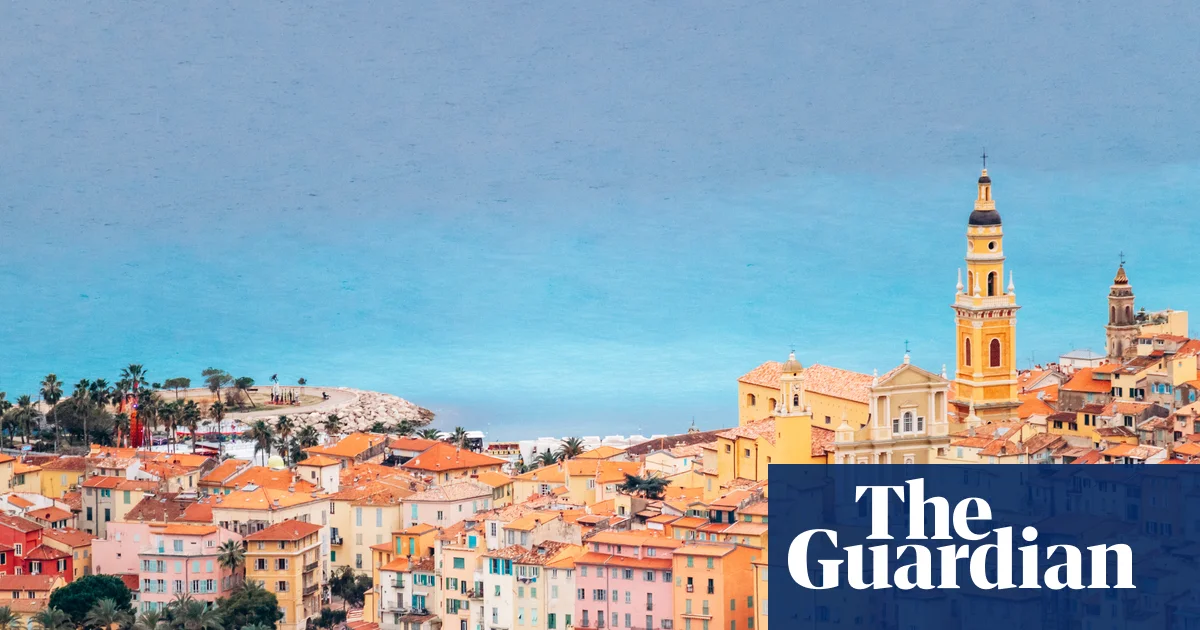
New flights will go between Birmingham and Nice from May 2026Credit: Alamy

Nice

If the delightful Mediterranean coast calls to you then head to the French city of Nice.

Here you can stroll along vibrant the city’s cobbled streets, check out the art-deco architecture and ornate 19th-century properties that rival Paris.

Nice is also a great spot if you want to explore the likes of Monaco, Antibes and Cannes.

The main boulevard of Promenade des Anglais holds a classic French market on a Saturday where you can buy flowers, goats’ cheese, cured meats, cakes and grab a souvenir like lavender soap.

Flights from Birmingham start from May 1, 2026, which operates twice weekly on Mondays and Fridays.

Montpellier

Very near the Mediterranean coast of southern France is the city of Montpellier.

It’s filled with grand buildings that are a mix of medieval and modern architecture – in the summer it can reach highs of 28C.

While Montpellier isn’t directly on the coast, you don’t have to travel far to find pretty beaches like Carnon, La Grande Motte, GrandsTravers, and Palavas-les-Flots.

Not to mention that just outside of Montpellier, Domaine de Massereau was named the most eco-responsible campsite in Europe last year.

It has plenty to entertain the kids like the Aquatic area which heated swimming pool and one that’s for adults-only with whirlpools and water jets.

For little ones, there’s a spray park, waterslides and a paddling pool as well as two on-site kids’ clubs.

The airline is launching new flights to Montpellier from Manchester on 30 March 2026.

Preveza is the capital of the Epirus region in GreeceCredit: Alamy Stock Photo

Preveza

On the west side of Greece is the city of Preveza which is the capital of the Epirus region.

The region itself is known for its incredible mountain landscape, as well as pretty beaches.

It’s home to Vikos Gorge, one of the world’s deepest, and clean rivers where locals and tourists like to go kayaking, rafting, and canoeing.

In Preveza you can explore sites like the Nicopolis Museum and Pantocrator Castle or relax on the long, sandy Monolithi Beach.

If you fancy checking out some other places too then you can head to other destinations like Parga, Lefkada and Sivota easily from Preveza.

Flights to Preveza from Manchester start on June 24, 2026.

Lisbon

The capital of Portugal has always been a solid choice of holiday for Brits.

With a flight time under three hours and plenty to do from riding the iconic trams up the hilly roads, to hiking up to Castelo de São Jorge – Lisbon is a solid choice.

And there are plenty of viewing points to see the incredible views across the city like Miradouro de Santa Luzia.

There are two new routes to Lisbon, the first is from Manchester with flights departing from March 31, 2026.

The other route is from Glasgow which will provide direct links to Lisbon from March 29, 2026

Paphos in Cyprus is a great summer spot with blue watersCredit: Mlenny

Paphos

Last year, Paphos in Cyprus was been voted the most liveable small city in the world.

When one writer visited the seaside spot, she made sure to check out the delicious seafood, and headed out to sea on a boat trip to the Blue Lagoon.

She also said that “the Unesco World Heritage site of Kato Pafos really is a must-see. The park includes sites and monuments from the 4th century BC to the Middle Ages”.

Paphos is a great option for summer if what you like is the heat as it has highs of 30C in July and August.

Or even during the cooler months like November where you can still have average highs of 22C.

You’ll be able to fly from Manchester to Paphos from August 2, 2026.

The beaches in Jersey have been compared to those in the CaribbeanCredit: Alamy

Jersey

Another short journey that’s easy to make is to Jersey – the British Isle that gets summer weather before the mainland.

The Channel Island has even compared to the Caribbean and its one of the warmest places in spring.

It even has some of the country’s best beaches – and you can get there in under an hour.

easyJet will start its route from Southend Airport to Jersey from March 30, 2026.

Paris

Another new route is from Stansted to Paris – the capital of France is known for its great food and plenty of iconic landmarks like the Eiffel Tower.

It’s also home to the theme park, Disneyland Paris, which is set to open its new Frozen land on March 29, 2026.

There will be new rides, frosty mountain peaks and you can see it all from inside a miniature Arendelle.

Find out more from The Sun’s Assistant Travel Editor Sophie Swietochowski who got an exclusive peek at the new land.

Flights from London Stansted to Paris will start on March 5, 2026

Tenerife is a great option for all-round sunshine and buzzing nightlifeCredit: Freeartist

Tenerife

Tenerife is well known for its year-round sunshine, beautiful beaches, amazing stargazing opportunities, and lively nightlife.

For years its been a popular place for Brits to visit, particularly those looking for some winter sun.

It’s good news for those who are fans of the island as Ryanair recently announced it would be cutting flights due to rising tax.

Flights from Newcastle to Tenerife will start on August 1, 2026.

Pisa

The city of Pisa in the Tuscan region of Italy is of course best known for its Leaning Tower which is a must-see when visiting.

But there are lots of other positives too like exploring the beautiful cobbled streets and tasting fantastic food from pizza to cecina (a savory chickpea flour pancake) and Torta co’ Bischeri (a chocolate-filled pastry).

easyJet flights from Glasgow to Pisa start from August 1, 2026.

Holidays are back on the rise to Egypt and easyJet is offering new flights from GlasgowCredit: Alamy Stock Photo

Sharm El Sheikh

Trips to Egypt are back on the rise with the likes of TUI starting trips and holidays there – and now easyJet is offering flights too.

The holiday destination that was huge with Brits in the noughties has plenty of pretty beach resorts, high temperatures and year-round sunshine.

During the summer months, temperatures in Sharm el Sheikh sit between 35C – 38C.

Sharm el Sheikh is also a popular winter sun destination because its average temperature is 24C which is around 17C warmer than the UK for that time of year.

Routes between Glasgow to Sharm El Sheikh will start from August 1, 2026.

Malta

Malta, which is smaller than the Isle of Wight, can slip under the radar when it comes to holidays.

But with new flights from easyJet, it’s bound to get more popular.

When one Sun writer visited the country, she discovered plenty of things that Brits will love from its red telephone boxes to restaurants offering English breakfasts.

Locals drive on the left and speak English (along with Maltese).

New flights from Glasgow to Malta will start from August 4, 2026.

For more holiday destinations – here are five alternative European holiday destinations you can still fly to after Ryanair axed hundreds of flights.

Plus, one of the best budget getaways in Europe for winter has been revealed and pints are 90p.

easyJet is starting 16 new routes from March 2026Credit: Alamy Stock Photo

Source link

History comes alive at a new hotel-museum in the ancient Italian city of Matera | Italy holidays

Diners fall silent as the haunting sound of the aulos – a double-piped wind instrument from ancient Greece – echoes through the vaulted breakfast room. The musician, Davide, wears a chiton (tunic), as do the guests; the mosaic floor, decorated vases and flicker of flames from the sconces add to the sense that we’ve stepped back in time.

This is Moyseion, a one-of-a-kind hotel-museum in the famous troglodyte city of Matera, in Basilicata, known for its sassi – cave dwellings carved into the limestone mountainside. Every detail has been carefully designed to transport visitors to Magna Graecia, as this area of southern Italy was known when it was ruled by the ancient Greeks from the 8th-6th century BC.

Dreamed up by owner Antonio Panetta, an artist and lawyer turned hotelier who grew up nearby, the idea was to create “an immersive experience of history – a living work of art, where archaeology, myth and hospitality combine”. Four years in the making, it opened fully this summer in a series of restored sassi close to the city centre.

Replicas of museum artefacts are on display, from urns to jewellery, while the handmade furniture copies designs seen on ancient pottery – three-legged tables, wall-mounted torches, vast wooden chests. Eight of the 16 stone dwellings are inspired by ancient Greece – high wooden beds, natural fabrics, cabinets with items depicting daily life of the era. They’re spacious, comfortable and remarkably calming (mod cons such as mirrors and hairdryers are carefully hidden from view). Other rooms reflect pre-Greek periods.

The lobby of hotel-museum Moyseion. Photograph: Adriano Fedele

In the basement, the Sanctuary of Waters is a multilevel spa dedicated to the goddess Demeter, evoking sacred sites of a lost world. It’s a moodily lit space with pools, statues of deities and stone basins based on Hellenistic thermal complexes. The floor mosaics are replicas of archaeological finds.

But what really makes this place special is the young in-house team of archaeologists, classicists, musicians, performers, costume designers and dancers that bring everything to life with a passion for history that they’re keen to share. Staff have worked with international specialists in everything from ancient music to choreography and cuisine to ensure an authentic experience – it took a year simply to master the circular breathing needed to play the aulos, Davide tells me. Guests become part of the action as they take part in daily rituals and symposiums. I’d worried it would feel like a theme park, but as I wander around in my chiton, a musician playing a specially created trigonon (small triangular harp), it somehow feels magical, not gimmicky.

Matera itself is layered with history. Believed to be the third oldest city in the world, after Aleppo in Syria and Jericho in Palestine’s West Bank, its location on the edge of a ravine adds to the drama. We arrive at night, a bright moon hanging above the rocky limestone landscape and maze of honey-coloured streets, like a timeless nativity scene. No wonder this place has had a starring role in countless films, from Mel Gibson’s controversial The Passion of the Christ and the 2016 remake of Ben-Hur (both times standing in for Jerusalem), to James Bond’s famous car chase through the old town in No Time to Die.

Davide, dressed in a chiton, plays the aulos, an ancient Greek wind instrument. Photograph: Caroline Gavazzi

We explore the sassi with guide Sandra, navigating the winding streets and piazzas, a jigsaw puzzle worthy of an Escher drawing. Divided into two ancient districts, Sasso Caveoso and Sasso Barisano, with the medieval Civita (old town) between, dwellings were both natural and human-made, partly dug into the rock and extended over millennia. Some were homes, some became part of the many monasteries and churches, incorporated into newer buildings that rose above them. Later, grand villas and palaces sprang up, such as Palazzo Viceconte (a Bond location), and Palazzo Malvinni Malvezzi, where Francis Ford Coppola is shooting his new film, Distant Vision, opposite the 13th-century romanesque cathedral.

By the 1950s, however, the city had been dubbed the “shame of Italy” due to the poverty and unsanitary living conditions in the sassi. A 1952 law declared them uninhabitable and more than 15,000 people were moved to new, modern quarters on the outskirts of town. The cave dwellings stood empty until the late 1980s, when people slowly started moving back to restore them as hotels and restaurants. Unesco world heritage status came in 1993 and it was a European capital of culture in 2019, putting the city firmly on the tourist map.

Breakfast at Moyseion. Photograph: Adriano Fedele

At every turn there is something new to gawp at. We visit the preserved cave house in Vico Solitario, which shows how life would have been when it was last inhabited in 1956 – mules and chickens living alongside the family, shelves and niches carved into the walls. We admire frescoes in churches excavated into rock – the Santa Maria de Idris and adjoining San Giovanni in Monterrone on a rocky spur with amazing views are among the most impressive.

I love Musma, a wonderful sprawling gallery space that’s part 16th-century palazzo, part ancient cave complex, dedicated to contemporary art and sculpture. We visit artists keeping traditional crafts alive, too, weaving cloth on looms and carving wooden bread stamps, once used to imprint the owner’s initials on huge durum wheat loaves before they were cooked in the communal ovens.

On a dine-with-locals experience we’re welcomed into the home of Marisa and Fernando and feast on endless plates of fried olives, bocconcini and artichoke, homemade pasta and fichi d’india (cactus fruit) as they share stories of Matera past and present. One afternoon we cross the suspension footbridge over the Gravina River to the other side of the gorge and climb to Murgia park, a vast wild rocky plateau pocked with hundreds of rupestrian churches (churches carved into rocks or cave walls). It’s the perfect vantage point to look back and watch the sunset paint the pale limestone town rose gold.

A musician plays a trigonon in Moyseion’s spa, based on a Hellenistic thermal complex. Photograph: Moyseion

But it’s time spent at Moyseion and the people we meet there that stick in my mind. The ritual held in the water sanctuary each day, where we follow performers playing the lyre and recreating mythical tales of gods and goddesses; the evening symposiums where wine, music, dance and conversation are shared, as they would have been in ancient Greece.

Even breakfast – akratisma – is an experience, the menu carefully researched and curated by food anthropologists and historians, and prepared by chef Vita. The table is laden with various breads and cheeses and cakes – melitoutta made with yoghurt, honey and cinnamon, plakous made of filo pastry with ricotta, figs and walnuts. There’s barley salad with pomegranate, spreads made of wild onion, mushrooms or olives, quails’ eggs and sausage. The hotel has also started hosting courses and residencies in ancient music and dance, the first focusing on the lyre, working with Lotos Lab, a research centre in Cambridge, and world-class scholars.

Matera has an important archaeological museum (closed for refurbishment during our visit), but few visitors to the city actually go, Panetta tells me. “People don’t want to just observe history and stare at things in a museum, they want to experience it in a real way,” he says. “When guests come here, they soon realise this is not Disney. The past is still alive in our souls – we want you to feel the past in the present, to make the past live again.”

The trip was provided by Moyseion. Rooms from €184 a night, including breakfast, rituals and symposium. Ferula Viaggi offers a range of tours in Matera, Basilicata and Puglia

Source link

‘Trifole’ review: Ancient art of Italian truffle hunting gets dramatized

To watch “Trifole” is to fall in love with Langhe, a gorgeous section of the Piedmont region of northern Italy. Famed for its farming, cheeses and wine, this hilly, rural countryside feels cut off from modernity: an agrarian past perfectly preserved in an uncertain present. Among Langhe’s hallmarks is its rich tradition of truffle foraging, which becomes the centerpiece for director Gabriele Fabbro’s gentle drama about an aging truffle hunter, his restless granddaughter and a way of life vanishing before their eyes. Unfortunately, this heartfelt film resonates most strongly through those majestic landscapes, not via the story that unfolds.

Constructed with the elemental purity of a fable, “Trifole” introduces the viewer to Dalia (Ydalie Turk), who’s in her late 20s and visiting her grandfather Igor (Umberto Orsini). The trip is a reluctant one for Dalia. Prompted by her anxious mother Marta (Margherita Buy), she’s taking a break from her stalled life in London to check in on him due to Marta’s concern that his failing memory may require him to abandon his beloved crumbling cottage and enter a nursing home. When Igor initially mistakes Dalia for his daughter — Dalia’s mother — his confusion validates Marta’s worries.

Happy to live out the rest of his days in his remote paradise alongside his loyal dog Birba, who ably assists him in his truffle hunts, Igor is displeased that Dalia has rejected her family roots for the big city. Indeed, Dalia has trouble with her Italian, and when she offers to help him find truffles, he insists his granddaughter doesn’t have the instincts or the calloused hands necessary for the job. But Igor isn’t just adept at sniffing out truffles — he quickly deduces that she’s emotionally lost. (A writing career hasn’t materialized as she’d hoped.) Both of them are at a crossroads, neither sure what the future holds.

Turk and Fabbro, who co-wrote the screenplay, did extensive research on the region, incorporating locals’ stories into the narrative. No matter how fantastical “Trifole” eventually becomes, the filmmakers insist the plot points derive from tales they collected. (To that end, there actually is an Igor, Birba is a real truffle-hunting dog and there’s a 2020 documentary, “The Truffle Hunters,” that correlates with much of what we see.) Not surprisingly, this melancholy picture celebrates and mourns Langhe, a region imperiled by global warming and encroaching industrialization that threaten the once-fecund practice of truffle gathering. Igor’s fading memory proves to be an apt, albeit obvious metaphor for a vocation slowly losing its connection to its past as truffles have emerged as a hot gastronomic trend.

In its early stretches, “Trifole” is almost rudimentary in its storytelling, establishing a familiar generational conflict between Dalia and Igor, who live under the same roof but can’t see eye to eye. When she tries to compliment his picturesque farmland, he curtly responds, “It’s nothing like the soil I knew when I was young.” The tension only escalates once Dalia discovers he’s terribly behind on his mortgage, owing hundreds of thousands he doesn’t have. Igor’s only hope is to find an elusive (and valuable) white truffle that could save him from foreclosure. But he is now too frail to brave the deep woods. Dalia, guided by Birba, must take up the quest.

The film’s themes are simply drawn and easy to follow. Dalia may reside in cosmopolitan London but is, of course, miserable, with wise old Igor immediately diagnosing the cause of her malaise. “You don’t love anything,” he advises sagely. “This will end up hurting you a lot.” Consequently, Dalia’s journey to find the mythical white truffle will also be an opportunity to locate a sense of purpose, coming to appreciate her grandfather in a more profound way. Turk conceives her character as a collection of insecurities and hesitant expressions, making Dalia the perfect candidate to be metaphorically reborn through an unlikely forest adventure in which magical events will occur.

In his sophomore feature, Fabbro, who previously directed the 2021 romantic thriller “The Grand Bolero,” juxtaposes the quiet grace of Igor’s modest life with the cacophony and commercialism of contemporary truffle auctions. But Fabbro’s wistful salute to bygone traditions has significant limitations, especially noticeable in the reductive design of his diametrically opposed main characters. Now in his early 90s, Orsini (best known for Luchino Visconti’s 1969 drama “The Damned”) projects a fragile but resilient gravitas that’s quite affecting, but Igor is reduced to a noble symbol — a simplification that also undercuts Dalia, who is little more than a stand-in for a younger generation ignorant of its country’s history.

Only when Fabbro trains his camera on the Langhe skies, the land stretching off into the distance, does “Trifole” suggest the weight and majesty of a culture in danger of disappearing. You can almost touch the sacred soil of Igor’s youth, a world that he alone remembers.

‘Trifole’

In Italian and English, with subtitles

Not rated

Running time: 1 hour, 40 minutes

Playing: In limited release Friday, Nov. 14

Source link