issue

BBC Breakfast’s Jon Kay forced to issue on-air warning to co-star

BBC Breakfast host Jon Kay was forced to issue a warning to his co-star Carol Kirkwood live on air as he insisted that one guess could cause chaos in the studio

BBC Breakfast presenter Jon Kay issued an on-air warning to colleague Carol Kirkwood, suggesting one particular guess could spark mayhem in the studio.

During Tuesday’s (November 25) broadcast of the popular programme, the presenter was back on screens with co-host Sally Nugent, delivering the day’s major news stories from Britain and around the world.

The pair were later joined by Carol, who appeared in the studio for her regular weather update. However, as she wrapped up the day’s forecast, Jon highlighted that the team needed to stay alert for their next visitor.

They were preparing to welcome a “huge dog”, prompting him to advise his colleague to finish their breakfasts quickly to prevent the animal from nabbing it. Jon began by enquiring: “Have you got any toast or cereal?” Carol responded: “No but I could smell yours and it’s making me really hungry.

“We’ve been eating ours just now, getting it out of the way because there is a huge dog on the way in a moment,” Jon clarified, reports the Express.

Sally confirmed: “Huge.” Jon then stressed: “You have been warned.” Sally interjected: “We’ve just had to hide our breakfast.” The team erupted in laughter as Jon gestured to his stomach and quipped: “I’ve hidden it in here.”

The touching segment featured the presenters discussing ‘ hero dogs ‘ following an incident where one man’s four year old canine helped rescue his life.

Jon stated: “We’ve got an amazing story. Adam Cooke went into cardiac rest while he was asleep, it was the quick thinking of his four year old day Polly that helped save his life.”

Sally went on to say: “The beautiful Golden Retriever woke up Adam’s wife Hannah, who then carried out CPR before an ambulance arrived.”

The programme then transitioned to a pre-recorded segment of the couple and their dog, where they shared their emotional experience.

Adam and Hannah confessed that they believed Polly had sensed Adam’s severe illness and alerted them.

Clearly touched, Adam recounted the moment he was reunited with Polly after his hospital stay: “I’m not going to shy away from it. I cried and I think she cried too because she was like ‘wow you’re back home'”.

Hannah chimed in: “I love her to bits and I think she is the best dog in the world.”

BBC Breakfast is broadcast every day from 6am on BBC One and iPlayer.

Source link

I’m A Celeb’s Ant and Dec hit back as viewers issue same complaint

Viewers of I’m A Celebrity…Get Me Out of Here! have been quick to issue the same complaint, but now presenters Ant and Dec have had their say on the divisive matter

Ant and Dec have addressed one of the major complaints from viewers of this year’s I’m A Celebrity Get Me Out Of Here! The Geordie duo, both 49, have returned to screens once again, this time to put stars like Emmerdale legend Lisa Riley, rapper Aitch and actress Ruby Wax through their paces in jungle life.

The programme has become known for putting famous faces in gruelling circumstances normally a million miles away from their usual lifestyles, and as such, they have to compete in grisly Bushtucker Trials to earn meals for camp. Panto legend Christopher Biggins, who won the programme in 2007, spoke about the weight loss he achieved whilst in the jungle due to the food conditions, and Nick Knowles managed to shed more than two stone following his 2018 stint in the outback.

Sometimes, the celebrities have to live on rice and beans, especially when contestants struggle so much in the trials that they return to camp with little to no stars. In the past, contestants like former Coronation Street actress Helen Flanagan, model Katie Price, and presenter Gillian McKeith were regularly voted to participate in the trials and often returned to the camp empty-handed.

READ MORE: I’m a Celeb Angry Ginge lined up for astonishing new job after frantic bidding warREAD MORE: Vogue Williams shares why she joined I’m A Celeb and calls the jungle a ‘sadistic retreat’

But so far this year, the celebrities have been scoring consistently high in the trials, and a group of them were recently rewarded with a luxury breakfast less than a week into the show’s run.

This has prompted fans to complain on social media and, during an appearance on Saturday night’s Unpacked, former Byker Grove stars Ant and Dec hit back as they wondered what the problem was.

Dec explained: “I saw a couple of people online during the show go urgh they’re had marshmallows, they’ve had hot chocolate, they’ve had breakfast and it’s only been a week. What are they moaning for?

“But when you think of that expansive time over a week, and most of it has been rice and beans, to go out for that breakfast must have been a taste sensation.”

Insisting that the stars are still surviving on less food than usual, Ant added: “Yeah, because most people eat what they’ve eaten in a week in a day. So they are hungry.

“This year, what they’ve been given [to cook] hasn’t been awful. Even octopus, if you cook it right, is nice. They just cooked it badly!” It all comes after fans took to social media in their droves to moan about the situation.

One wrote on X: “S*** trials, too much food,” whilst another said: “Drinking tea, which used to be a treat. Access to treats daily, pretty much, easy tasks to get 12 stars.”

A third added: “They won 10 stars and that’s the food they get?” But a fourth weighed in with: “The state of the food. i’d find a corner and cry!”

Earlier this week, the news was delivered that those who had received a badge from the then-camp leaders – Vogue and Tom Read Wilson – would be enjoying a cooked breakfast away from the camp, but EastEnders star Shona McGarty and Lioness Alex Scott were left out.

“We promised you would be rewarded for your badges – you will be heading out of camp for a delicious, slap-up breakfast,” the duo revealed, to cheers from the campmates. However, Alex and Shona were the only two not to receive a badge, which meant that they had to take part in the next Bushtucker trial with Vogue and Tom.

“However, Alex and Shona, unfortunately for you, you weren’t awarded with a badge, which means there’s no breakfast for you, and you have to take on today’s trial,” they added. Shona and Alex looked disheartened upon hearing the news, with Alex saying: “No way.”

Join The Mirror’s WhatsApp Community or follow us on Google News , Flipboard , Apple News, TikTok , Snapchat , Instagram , Twitter , Facebook , YouTube and Threads – or visit The Mirror homepage.


Source link

Japan Will Lose More Than It Gains by Exploiting the Taiwan Issue

Because of Japanese Prime Minister Sanae Takaichi’s statements in the Diet regarding the Taiwan issue, the already fragile China–Japan relationship has deteriorated rapidly. China has issued travel and study-abroad warnings for Japan, effectively halted imports of Japanese seafood, sent coast guard vessels into the “territorial waters” of the disputed Senkaku/Diaoyu Islands, and had three warships transit the Osumi Strait in southern Japan.

At the same time, Beijing took the unusual step of announcing in advance that Premier Li Qiang would not meet the Japanese prime minister at the G20 summit. In just ten days, China launched a strong, multi-domain counterattack—political, diplomatic, economic, and military—with no signs of de-escalation.

If Prime Minister Takaichi does not retract her remarks, Beijing is likely to escalate even further and drag the United States into the dispute.

What actually happened? Is China overreacting? How far will Beijing take this confrontation?

Let us revisit the origin of the incident. In response to questioning in the Diet, Prime Minister Takaichi stated, “If China blockades Taiwan using warships and employing force, then no matter how you look at it, this could become a survival-threatening crisis for Japan.”

Pressed by the opposition, she added, “If China imposes a maritime blockade on Taiwan and U.S. forces intervening in that blockade come under armed attack, a crisis could arise.”

International media paid no attention to Takaichi’s clarification and focused only on the headline question: Will Japan send troops if military conflict breaks out in the Taiwan Strait? Accordingly, France’s Le Monde, Britain’s The Guardian, and the Associated Press all ran titles implying that Japan would dispatch forces if Taiwan were subjected to military action.

Japanese scholars have since written articles in U.S. media explaining that “Japanese military intervention in a Taiwan contingency” presupposes that U.S. forces have already intervened, and only then could Japan exercise the right of collective self-defense. Yet the Japanese government has not actively clarified this prerequisite on the international stage, drawing sharp criticism from well-known Japanese commentator Hiroyuki Nishimura for dereliction of duty.

Nishimura’s criticism exposes a widespread misunderstanding: even if the United States militarily intervenes in the Taiwan Strait, as long as Japanese territory is not under armed threat, Tokyo is legally barred from exercising collective self-defense. In other words, under the U.S.–Japan Security Treaty, the United States is obligated to defend Japan, but Japan has no treaty obligation to send troops to support U.S. forces in a war that does not concern Japan.

Therefore, the mitigating explanations offered by Japanese scholars on Takaichi’s behalf do not hold water. The Japanese government’s failure to clarify the issue in international media is naturally out of fear of offending Washington. It remains unclear whether President Trump fully understands the “asymmetric” nature of the U.S.–Japan Security Treaty, and Tokyo has no desire to remind this shrewd deal-making president that when American soldiers are dying on the battlefield, Japan actually has no treaty obligation to send troops.

Unless, of course, the reason for U.S. intervention in the Taiwan Strait is explicitly “to protect Japan.” Political rhetoric is one thing; the law is another. The fact remains that neither the U.S.–Japan Security Treaty nor Japan’s domestic legislation imposes any legal obligation on Japan to exercise collective self-defense when its ally, the United States, comes under attack.

Another fact: the Philippines is in exactly the same position as Japan. Unless U.S. forces become involved in order to protect the Philippines or Philippine territory is affected by the war, Manila has no obligation to send combat troops to assist the U.S.—it can only provide logistical and base support.

Of course, if the United States does intervene militarily in the Taiwan Strait, it will inevitably claim it is to protect Japan (and the Philippines). But the authority to make that determination lies with Tokyo and Manila, both of which retain a certain right to stay out of the fight. This is precisely why U.S. Deputy Secretary of Defense Elbridge Colby earlier this year demanded that Japan and Australia state clearly what actions they would take to support the United States in the event of a Taiwan contingency. That demand makes it crystal clear that America’s mutual defense treaties do not obligate allies to unconditionally fight alongside U.S. forces.

In short: when their own security is at stake, allies will send troops; otherwise, they will at most offer logistics and bases—no allied soldiers will go to the front lines.

This explains Beijing’s fierce reaction. Even if Takaichi did not mean Japan would intervene unilaterally in the Taiwan Strait, her remarks effectively expanded the “applicability scenarios” of the U.S.–Japan Security Treaty. If such moves are not checked, they will only encourage the Philippines, Australia, and other anti-China neighbors to follow suit—using the same logic to blackmail or bleed China.

This is not an overreaction, nor is it making a mountain out of a molehill. Beyond realpolitik necessity, the Chinese people have not forgotten Japan’s history of invading China—especially in this 80th anniversary year of the victory in the War of Resistance Against Japanese Aggression. If Beijing were to let the matter slide, it would face intense domestic backlash.

Therefore, unless Takaichi retracts her remarks, China–Japan relations will continue to worsen, eventually leading to a situation where “Taiwan is fine, but Japan is in crisis.”

Takaichi may well have intentionally provoked Beijing in order to shore up LDP support, rally Japanese nationalism, loosen the “three non-nuclear principles,” and expand conventional military capabilities. But the backlash has likely been far greater than she anticipated. The key still lies in America’s attitude.

Although the U.S. ambassador to Japan publicly expressed support for Tokyo and criticized Beijing, Washington’s overall response has been relatively muted—Trump has zero interest in letting Japan torpedo his scheduled China trip next April.

On the other hand, Beijing may well conclude that Washington is deliberately allowing Japan to interfere in China’s internal affairs in order to gain negotiating leverage. That would only reduce China’s inhibitions about sanctioning Japan and could lead it to directly challenge the U.S.–Japan Security Treaty, pushing the situation to the brink of losing control and forcing the U.S. to rein in Japan.

China has many tools to test the treaty—economic and trade measures, cultural exchanges, diplomacy, and even military options are all on the table. The disputed uninhabited Senkaku/Diaoyu Islands and the Ryukyu Islands, whose sovereignty remains unresolved, are both historical issues left over from World War II. Although both fall within the scope of the U.S.–Japan Security Treaty, Washington has never recognized Japanese sovereignty over them.

Regarding the Ryukyus, Beijing can wage a protracted legal battle, continually emphasizing that the Potsdam Declaration never returned the islands to Japan. Regarding the Senkaku/Diaoyu, Beijing could move directly to military control—land on the islands, demolish Japanese facilities, raise the Chinese flag, and expel foreign vessels—forcing the United States to get involved.

If Beijing is pushed to the point of letting the situation spiral, its price to Washington will be high: it may include, but is not limited to, demanding that the U.S. block Japan from abandoning the three non-nuclear principles, block Japan’s “normalization” (turning the Self-Defense Forces into a full-fledged military), force Japan to pay tangible and intangible reparations for its invasion of China, or even force Takaichi to step down.

Would Trump risk a second Chinese rare-earth embargo over an uninhabited island whose sovereignty does not belong to Japan? The answer is obvious.

Beijing’s current Taiwan strategy has shifted from “opposing independence” to “advancing unification.” Part of that strategy is to make neighboring countries acknowledge—through actual state behavior, not just words—that the Taiwan issue is China’s internal affair. Japan is the poster child for neighboring hypocrisy—talking peace while acting otherwise. It will be shown no mercy for breaking the promises of diplomatic normalization; Beijing is determined to make a chicken of Japan to scare the monkey.

From this perspective, Prime Minister Takaichi may have thought she could achieve a classic boomerang effect (using the Taiwan issue for domestic political gain by first exporting strong rhetoric abroad). Instead, Beijing has been handed a rare opportunity to use Japan as a target and demonstrate to the world how it will reduce obstacles to unification.

The United States wants to avoid direct confrontation with China and prefers to let proxies stand on the front line so it can reap the benefits while remaining in the rear. On the surface this creates trouble for Beijing, but in reality it also creates endless headaches for Washington—because China will not limit itself to dealing with the proxies; it will drag the United States into the fight.

This is the new tactical phase in U.S.–China competition following the Busan meeting, testing the one-year truce both sides agreed to. Whether proxies are an advantage or a liability for Washington depends entirely on how Beijing chooses to handle the dispute—and Tokyo makes the ideal canary in the coal mine.

Source link

One issue is uniting Americans in a time of polarization, according to a new poll

Pessimism about the country’s future has risen in cities since last year, but rural America is more optimistic about what’s ahead for the U.S., according to a new survey from the American Communities Project.

And despite President Trump’s insistence that crime is out of control in big cities, residents of the nation’s largest metropolitan centers are less likely to list crime and gun violence among the chief concerns facing their communities than they were a couple years ago.

Optimism about the future is also down from last year in areas with large Hispanic communities.

These are some of the snapshots from the new ACP/Ipsos survey, which offers a nuanced look at local concerns by breaking the nation’s counties into community types, using data points like race, income, age and religious affiliation. The survey evaluated moods and priorities across the 15 different community types, such as heavily Hispanic areas, big cities and different kinds of rural communities.

The common denominator across the communities? A gnawing worry about daily household costs.

“Concerns about inflation are across the board,” said Dante Chinni, founder and director of ACP. “One thing that truly unites the country is economic angst.”

Rising optimism in rural areas, despite economic anxiety

Rural residents are feeling more upbeat about the country’s trajectory — even though most aren’t seeing Trump’s promised economic revival.

The $15 price tag on a variety pack of Halloween candy at the Kroger supermarket last month struck Carl Gruber. Disabled and receiving federal food aid, the 42-year-old from Newark, Ohio, had hardly been oblivious to lingering, high supermarket prices.

But Gruber, whose wife also is unable to work, is hopeful about the nation’s future, primarily in the belief that prices will moderate as Trump suggests.

“Right now, the president is trying to get companies who moved their businesses out of the country to move them back,” said Gruber, a Trump voter whose support has wavered over the federal shutdown that delayed his monthly food benefit. “So, maybe we’ll start to see prices come down.”

About 6 in 10 residents of Rural Middle America — Newark’s classification in the survey — say they are hopeful about the country’s future over the next few years, up from 43% in the 2024 ACP survey. Other communities, like heavily evangelical areas or working-class rural regions, have also seen an uptick in optimism.

Kimmie Pace, a 33-year-old unemployed mother of four from a small town in northwest Georgia, said, “I have anxiety every time I go to the grocery store.”

But she, too, is hopeful in Trump. “Trump’s in charge, and I trust him, even if we’re not seeing the benefits yet,” she said.

Big-city residents are worried about the future

By contrast, the share of big-city residents who say they are hopeful about the nation’s future has shrunk, from 55% last year to 45% in the new survey.

Robert Engel of San Antonio — Texas’ booming, second most-populous city — is worried about what’s next for the U.S., though less for his generation than the next. The 61-year-old federal worker, whose employment was not interrupted by the government shutdown nor Trump’s effort to reduce the federal workforce, is near retirement and feels financially stable.

A stable job market, health care availability and a fair economic environment for his adult children are his main priorities.

Recently, the inflation outlook has worsened under Trump. Consumer prices in September increased at an annual rate of 3%, up from 2.3% in April, when the president first began to roll out substantial tariff increases that burdened the economy with uncertainty.

Engel’s less-hopeful outlook for the country is broader. “It’s not just the economy, but the state of democracy and polarization,” Engel said. “It’s a real worry. I try to be cautiously optimistic, but it’s very, very hard.”

Crime, gun violence are less a concern in urban America

Trump had threatened to deploy the National Guard to Chicago, New York, Seattle, Baltimore, San Francisco and Portland, Ore., to fight what he said was runaway, urban crime.

Yet data shows most violent crime in those places, and around the country, has declined in recent years. That tracks with the poll, which found that residents of America’s Big Cities and Middle Suburbs are less likely to list crime or gun violence among the top issues facing their communities than they were in 2023.

For Angel Gamboa, a retired municipal worker in Austin, Tex., Trump’s claims don’t ring true in the city of roughly 1 million people.

“I don’t want to say it’s overblown, because crime is a serious subject,” Gamboa said. “But I feel like there’s an agenda to scare Americans, and it’s so unnecessary.”

Instead, residents of Big Cities are more likely to say immigration and health care are important issues for their communities.

Big Cities are one of the community types where residents are most likely to say they’ve seen changes in immigration recently, with 65% saying they’ve seen a change in their community related to immigration over the past 12 months, compared with only about 4 in 10 residents of communities labeled in the survey as Evangelical Hubs or Rural Middle America.

Gamboa says he has witnessed changes, notably outside an Austin Home Depot, where day laborers regularly would gather in the mornings to find work.

Not anymore, he said.

“Immigrants were not showing up there to commit crimes,” Gamboa said. “They were showing up to help their families. But when ICE was in the parking lot, that’s all it took to scatter people who were just trying to find a job.”

Hispanic communities are less hopeful about the future

After Hispanic voters moved sharply toward Trump in the 2024 election, the poll shows that residents of heavily Hispanic areas are feeling worse about the future of their communities than they were before Trump was elected.

Carmen Maldonado describes her community of Kissimmee, Fla., a fast-growing, majority-Hispanic city of about 80,000 residents about 22 miles south of Orlando, as “seriously troubled.”

The 61-year-old retired, active-duty National Guard member isn’t alone. The survey found that 58% of residents of such communities are hopeful about the future of their community, down from 78% last year.

“It’s not just hopelessness, but fear,” said Maldonado, who says people in her community — even her fellow native Puerto Ricans, who are American citizens — are anxious about the Trump administration’s aggressive pursuit of Latino immigrants.

Just over a year ago, Trump made substantial inroads with Hispanic voters in the 2024 presidential election.

Beyond just the future of their communities, Hispanic respondents are also substantially less likely to say they’re hopeful about the future of their children or the next generation: 55% this year, down from 69% in July 2024.

Maldonado worries that the Trump administration’s policies have stoked anti-Hispanic attitudes and that they will last for her adult child’s lifetime and beyond.

“My hopelessness comes from the fact that we are a large part of what makes up the United States,” she said, “and sometimes I cry thinking about these families.”

Beaumont, Parwani and Thomson-Deveaux write for the Associated Press. Parwani and Thomson-DeVeaux reported from Washington. The American Communities Project/Ipsos Fragmentation Study of 5,489 American adults aged 18 or older was conducted from Aug. 18 – Sept. 4, 2025, using the Ipsos probability-based online panel and RDD telephone interviews. The margin of sampling error for adults overall is plus or minus 1.8 percentage points.

Source link

Iran says no prospect of talks as West builds pressure over nuclear issue | Israel-Iran conflict News

Foreign minister says Iran has not been enriching uranium at any of its sites since Israel and the US bombed them.

Tehran, Iran – Iranian authorities maintain that the United States and its allies are set on a forceful approach over the country’s nuclear programme, so negotiations appear far off.

The administration of US President Donald Trump has left no room for talks by repeatedly presenting “maximalist demands”, Iranian Foreign Minister Abbas Araghchi said on Sunday at a news conference in Tehran.

Recommended Stories

list of 4 itemsend of list

“The current approach of the US government in no way shows readiness for an equal and fair negotiation to secure mutual interests,” he said on the sidelines of the state-organised Tehran Dialogue Forum, which diplomats and envoys from across the region attended.

Iranian officials said they have been receiving messages from neighbouring countries that are trying to mediate and keep the peace. A letter from Araghchi was also delivered to Qatari Prime Minister Sheikh Mohammed bin Abdulrahman bin Jassim Al Thani on Sunday that deals with Iran, the ceasefire in Gaza and other issues, according to Iranian media.

Araghchi said communication channels remain open with the International Atomic Energy Agency (IAEA) as well. Iran’s envoy to Vienna, where the nuclear watchdog is based, was joined on Friday by counterparts from China and Russia in a meeting with the representatives of the United Nations agency.

“There’s no enrichment right now because our nuclear enrichment facilities have been attacked,” the foreign minister said at the news conference. “Our message is clear: Iran’s right for peaceful use of nuclear energy, including enrichment, is undeniable, and we will continue to exercise it.”

Last week, the latest IAEA confidential report on Iran’s nuclear programme was leaked to Western media, which reported that the UN agency has not been able to verify Iran’s stockpile of 60 percent-enriched uranium since its facilities were bombed and severely damaged by the US and Israel in June.

The IAEA said it needed “long overdue” inspections of seven of the sites targeted during the war, including Fordo, Natanz and Isfahan.

Iran has granted the IAEA access to the Bushehr Nuclear Power Plant and the Tehran Research Reactor but has said security and safety conditions have not been met for inspections at other facilities as the high-enriched uranium stays buried.

Another resolution?

Iranian officials signalled over the weekend that three European powers – France, the United Kingdom and Germany – which were part of the country’s now-defunct 2015 nuclear deal with world powers, may be mobilising to introduce another Iran-focused resolution to the IAEA’s board.

Iran responded to several previous censure resolutions with escalations in uranium enrichment, and Israel launched its June attacks on Iran a day after the IAEA passed a European-tabled resolution that found Tehran noncompliant with its nuclear safeguards commitments.

Speaking to reporters in Tehran on Sunday, the deputy for international and legal affairs in Iran’s Ministry of Foreign Affairs, Kazem Gharibabadi, said Iran “reserves the right to reconsider its approaches” if a new resolution moves through.

He said the three European countries’ effort was a US-backed move to reinstate UN sanctions against Iran despite strong opposition from China and Russia last month and it “eliminated them from the field of dialogue and diplomacy with Iran”.

“Another resolution will bear no additional pressure on Iran, but the message it will send shows that collaboration and coordination are not important to them,” Gharibabadi said.

Iran’s nuclear programme chief, Mohammad Eslami, also slammed the West and the IAEA, telling reporters on Sunday that the UN agency is being used for political purposes, which “enforces double standards and a law of the jungle that must be stopped”.

“The attacks on Iran’s facilities were unprecedented. It was the first time that nuclear facilities under agency supervision were attacked, which meant a violation of international law, but the IAEA did not condemn the attacks,” Eslami said.

Iran’s military commanders continue to signal defiance as well. Defence Minister Amir Hatami told a meeting of lawmakers on Sunday that armed forces have been “sparing no moment in improving defence capabilities” after the 12-day war with Israel.

Tensions remain high in the region after the war with Iran’s Islamic Revolutionary Guard Corps on Saturday confirming that it seized a Cyprus-registered tanker that transited through the Strait of Hormuz.

Source link

Gabriel injury: Arsenal defender suffers groin issue in Brazil friendly win

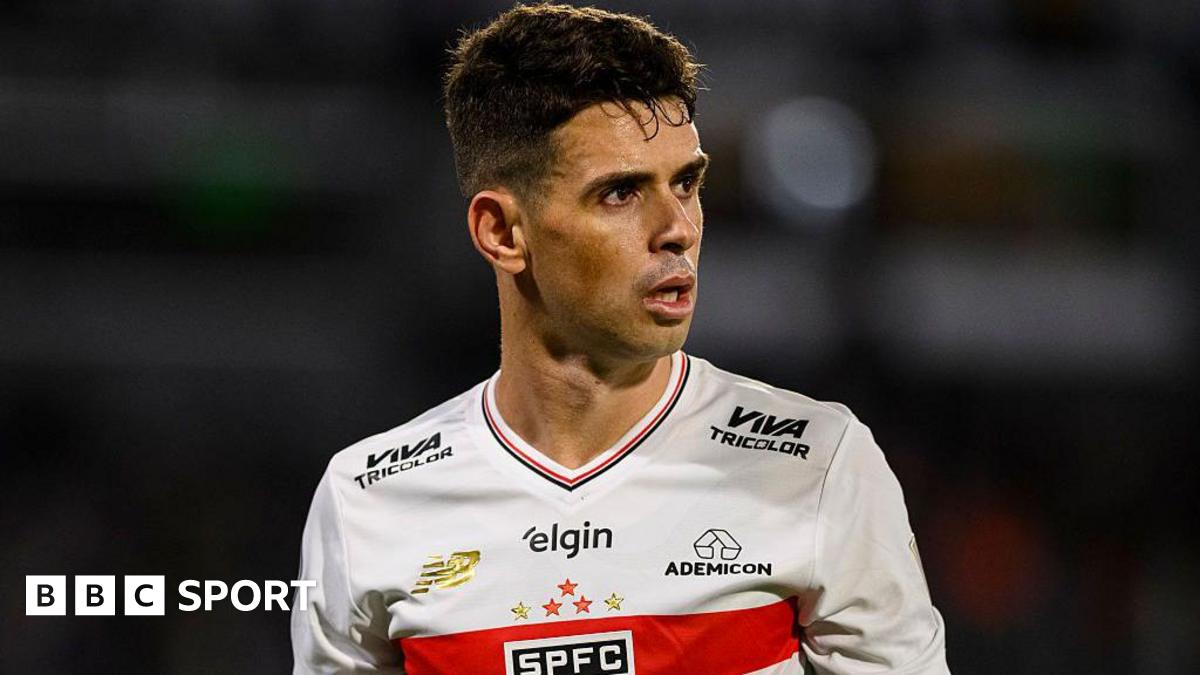
Brazil manager Carlo Ancelotti says Gabriel will be assessed on Sunday after the Arsenal defender suffered a groin injury in a friendly win over Senegal in London.

The 27-year-old pulled up off the ball just before the hour mark and received treatment to his right thigh before being substituted.

Gabriel has formed a key part of the Arsenal defence as they top the Premier League table, having conceded just five goals in 11 league games.

The Gunners face North London rivals Tottenham on 23 November before welcoming Bayern Munich in the Champions League the following Wednesday.

“Bad? I don’t know. He had an injury in his adductor,” said Ancelotti. “The medical staff has to check tomorrow.

“We are really sorry for this, really disappointed. When a player has an injury, you hope they can recover well and soon.”

Brazil beat Senegal 2-0 at Arsenal’s Emirates Stadium through goals from Chelsea’s teenage winger Estevao and Manchester United midfielder Casemiro.

Meanwhile, Italy boss Gennaro Gattuso says Arsenal defender Riccardo Calafiori has left the international camp.

He did not play in Italy’s World Cup qualifying win over Moldova on Thursday, having been following an individual training programme for load management.

“We tried Calafiori, he had a few issues,” Gattuso told Sky Sports Italia, external before Italy’s match against Norway on Sunday.

“I thank him for his commitment. He stayed here for a week, he could have played perhaps, but it wouldn’t have been fair to him or Arsenal.”

A source told BBC Sport that Calafiori has not returned to Arsenal for any treatment.

Source link

Meet the McOskers: How one South Bay family wields power at City Hall

As Los Angeles city officials worked on an agreement to modernize the Convention Center, more than one member of the McOsker family was playing a key role.

City Councilmember Tim McOsker supported the $2.6-billion expansion, which could bring more tourism but threatens to further exacerbate Los Angeles’ dire fiscal situation.

Nella McOsker, his daughter, runs the Central City Assn., an influential downtown Los Angeles business group, which advocated strenuously for the project.

And his nephew, Emmett McOsker, who was an aide to former Mayor Eric Garcetti, works for the Tourism Department — handling the Convention Center.

Nella McOsker

Central City Assn. President and Chief Executive Nella McOsker.

(Juliana Yamada/Los Angeles Times)

Nella McOsker often argued for the project as her father listened with his council colleagues. In September, he cast a “yes” vote.

“It’s just a family tradition of public service,” said Doane Liu, executive director of the Tourism Department, who is a longtime friend and former colleague of Tim McOsker — and Emmett McOsker’s boss. “I wish there were more McOskers working at City Hall.”

And there are. Flying a little beneath the radar, due to her last name, is a fourth family member, Anissa Raja — the councilmember’s niece (cousin to Emmett and Nella), who is also his legislative director and president of the Los Angeles County Young Democrats.

Raja does not lead with the fact that she is the councilmember’s relative.

“I don’t mention it because I’m a staffer. I keep it professional at work,” she said.

While the interplay between McOskers can create potential conflicts of interest, Nella says she logs every lobbying conversation she has with Tim’s office to the city’s Ethics Commission, just like she does with other councilmembers.

Plus, she and her dad often disagree. And in L.A. city government, lobbying a close family member is perfectly legal, as long as neither party has a financial stake.

“As a city, we made a policy decision that it shouldn’t be just because you’re related to someone that you can’t try to exert influence over them if they’re in an elected position,” said Jessica Levinson, a professor of law at Loyola Marymount University and former head of the city’s Ethics Commission.

Councilmember Tim McOsker stands and gestures while speaking at the dais in City Hall

Councilmember Tim McOsker speaking during a 2023 meeting at City Hall.

(Jay L. Clendenin/Los Angeles Times)

For decades, the McOskers — a large, tight-knit Irish Catholic family from San Pedro — have wielded power at Los Angeles City Hall. Unlike the Garcettis and the Hahns, the McOskers have not served in citywide or countywide elected office. But their breadth of influence in Los Angeles politics over the last quarter century may be unparalleled.

The McOskers are hardly alone in making city politics the family business.

There’s Councilmember Katy Yaroslavsky, whose father-in-law Zev Yaroslavsky once held her seat. And Herb Wesson, the former council speaker, whose son was his aide and whose daughter-in-law Alexis Wesson is chief of staff to Councilmember Adrin Nazarian.

Sometimes that leads to family members bumping up against each other in questionable ways.

Eric Garcetti’s father, Gil Garcetti — perhaps best known for being L.A. County district attorney during the O.J. Simpson trial — was president of the Ethics Commission when his son was on the City Council. That led to issues in 2006, when Gil inadvertently contributed to Eric’s reelection campaign, which was not allowed. Or consider Councilmember Curren Price, who has been charged with allegedly voting in favor of development projects his wife’s company was being paid to consult for.

The McOskers’ tradition of city service predates Tim, who worked for City Attorney James Hahn in the 1990s before becoming Hahn’s chief of staff when Hahn was mayor in the early 2000s. Tim’s father, Mac, was a city firefighter, which many in the family cite as the origin of the public service bug.

To this day, the family is as much, or more of, a fire family than a politics family — and some members have combined the two.

Tim’s brother Patrick is a retired LAFD engineer who served as president of United Firefighters of Los Angeles City, the powerful firefighters union. Another brother, Mike, who died in 2019, was vice president of the same union.

Emmett, Patrick’s son, said his father was always his hero and that he wanted to be a firefighter. But when he graduated college in 2011 following the Great Recession, the fire department wasn’t hiring, so he got into politics instead.

Tim, too, aspired to be a firefighter at one point. Two of his children are firefighters, one for LAFD and the other for the California Department of Forestry and Fire Protection, while a cousin works for the county fire department.

In 2003, then-Councilmember Janice Hahn — sister of Mayor James Hahn and daughter of longtime county supervisor Kenneth Hahn — told The Times that Tim and his brothers Patrick, Mike and John (then vice president of the city’s Harbor Area Planning Commission) “are involved in everything.”

McOsker family tree: William "Mac"; children Michael, Patrick, Tim, Dani, John, Kevin; grandchildren Emmett, Nella, Anissa

Rebecca Liu Morales, a former aide to then-Councilmember Eric Garcetti, was Nella McOsker’s close childhood friend in San Pedro.

“We grew up super familiar with public life and what it looks like. We were dragged to campaign events. We spent Saturdays volunteering,” said Liu Morales, who as Doane Liu’s daughter was also raised in a political family.

Little did Nella McOsker know that decades down the line, she would still be attending her father’s campaign events, helping him get elected to the City Council in 2022.

She worked as his operations director, referring to herself as his “Ego Killer” for always being willing to knock him down a peg. The campaign was filled out by volunteers from the family, from Tim’s wife, Connie, to brother Patrick, who was an avid doorknocker.

One politico who lives in the district noted that two McOskers separately knocked on his door and a third called him as part of a phone banking operation.

After Tim won his council seat, Nella took a job running the Central City Assn. Now, she lobbies councilmembers, including her father’s office.

Councilmember McOsker, along with Councilmember Yaroslavsky, proposed a law in 2023 that would have required lobbyists like Nella who are close relatives of councilmembers or high-level council staffers to disclose the relationship. They would have been prohibited from lobbying on land use development projects in that councilmember’s district. Because Nella works on issues involving downtown, not the San Pedro area, she and Tim would likely not have been affected. The law was never passed.

Rob Quan, who runs a transparency-focused good government advocacy group,
said there is no evidence that the McOskers have leveraged their relationships for undue advantage.

Tim said the family rarely talks local politics at dinners and holidays. First off, there are so many of them that the atmosphere can become chaotic.

Last time he hosted Thanksgiving, Tim said about 47 people showed up, and the tables stretched all the way outside onto the back patio. Mostly, they dote on the kids, and cousins reconnect.

“It’s not a lot about politics. It’s a lot about family,” Tim said.

When politics do come up, the McOskers often land on opposite sides.

Tim said he disagreed with his firefighter daughter Miranda and his brother Patrick, who believed LAFD Chief Kristin Crowley should have been reinstated after Mayor Karen Bass ousted her over her handling of the Palisades fire. The two showed up with other firefighters at the council chambers when the council was voting on the issue.

“You can’t have a mayor and a chief of fire … on different pages. It is dangerous,” Tim said.

While Tim and Nella both supported the Convention Center expansion, the two have split on other issues.

Earlier this year, Tim voted to increase the hotel and airport worker minimum wage — which Nella and the Central City Assn. fiercely opposed.

“There’s a different intensity I can get to with him [than with other councilmembers],” she said, referring to her conversations with her father about politics.

This summer, Nella McOsker and the Central City Assn. were part of a business coalition that proposed a ballot measure to repeal the city’s gross receipts tax on businesses, which generates about $800 million for the city annually. Her goal was to help struggling businesses by reducing their taxes.

“Terrible idea,” Tim McOsker said.

That was probably the most annoyed “Tim” got with her, Nella said.

She calls him Tim, not Dad — partially out of decorum in a world where she is lobbying him and his colleagues on a regular basis.

It’s also how she and her four younger siblings grew up — they’ve always called their parents Tim and Connie.

Nella’s son Omero is 4. She says he can be whatever he wants when he grows up, but some in the city family already have their eyes on him.

“I’m ready to offer him an internship,” Liu said.

Source link

Tesla inquiry grows over door handle issue

A Tesla pictured in Oct. 2022 near the Meta campus in Menlo Park, Calif. According to the National Highway Traffic Safety Administration, Tesla received 16 reports of exterior door handles becoming “inoperative due to low 12VDC battery voltage in certain MY 2021 Tesla Model Y vehicles.” File Photo by Terry Schmitt/UPI | License Photo

Nov. 3 (UPI) — Federal regulators have ordered Tesla to comply with an investigation into possibly defective door handles that reportedly led to trapped passengers.

The National Highway Traffic Safety Administration told the Elon Musk-owned Tesla that the federal government received scores of complaints on its electric vehicles.

As of Oct. 27, the NHTSA said it received 16 reports of exterior, retractable door handles becoming “inoperative due to low 12VDC battery voltage in certain MY 2021 Tesla Model Y vehicles.”

Reports indicated children were trapped in the cars in some cases, and owners unable to enter or exit vehicles due to battery that impeded door handle use.

A deadly 2024 crash in Wisconsin led to a lawsuit that claimed Tesla was negligent in its door handle designs.

Meanwhile, Tesla officials have until Dec. 10 to provide records to federal regulators.

Source link