IsraelPalestine

Israel releases five Palestinian prisoners as killings continue in Gaza | Israel-Palestine conflict News

Gaza’s Health Ministry says it also received the remains of 45 Palestinians from Israel through the Red Cross.

Israel has released five Palestinian prisoners as part of a fragile ceasefire deal with Hamas, offering a rare moment of relief for the families in Gaza.

The five men, freed on Monday evening, were taken to Al-Aqsa Hospital in Deir el-Balah for medical examinations, Al Jazeera’s Hind Khoudary reported from outside the facility.

Recommended Stories

list of 4 itemsend of list

Relatives gathered at the hospital, some embracing the freed prisoners, while others anxiously sought information about missing family members.

“This is the first time since the ceasefire that Israeli forces have released unknown Palestinian prisoners,” said Khoudary.

Thousands of Palestinians remain imprisoned in Israel, many held without charge under what rights groups call arbitrary detention.

Israel returns remains of Palestinians

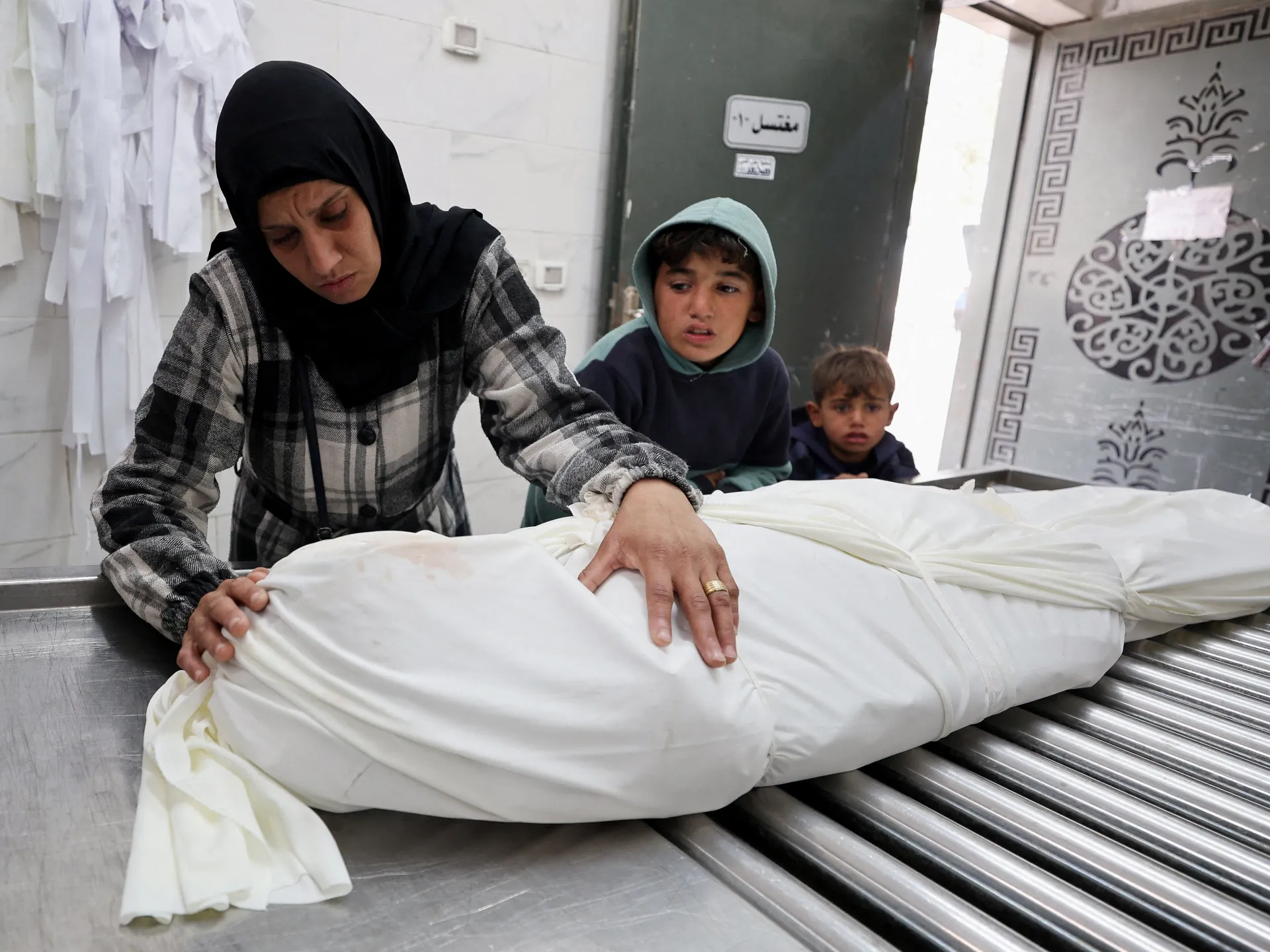
Earlier on Monday, Gaza’s Health Ministry said it received the remains of 45 Palestinians from Israel through the International Committee of the Red Cross (ICRC), bringing the total number of bodies handed over under the ceasefire agreement to 270.

Forensic teams have identified 78 bodies so far and will continue their examinations “in accordance with approved medical procedures and protocols” before returning the remains to families, the ministry said in a statement on Monday.

Officials previously reported that many of the returned bodies bore evidence of torture and abuse, including bound hands, blindfolds, and facial disfigurement, and were handed back without identification tags.

The handover forms part of the first phase of the ceasefire agreement that took effect on October 10, which includes prisoner and body exchanges mediated by Turkiye, Egypt, and Qatar, with involvement from the United States.

Reporting from Deir el-Balah in central Gaza, Khoudary said, “Many of the bodies returned show signs of torture.” She added that families of missing Palestinians are still searching for relatives among the dead.

“If these bodies are not identified, they will be buried along with other Palestinians in a mass grave in Deir el-Balah,” she said.

Israeli ceasefire violations

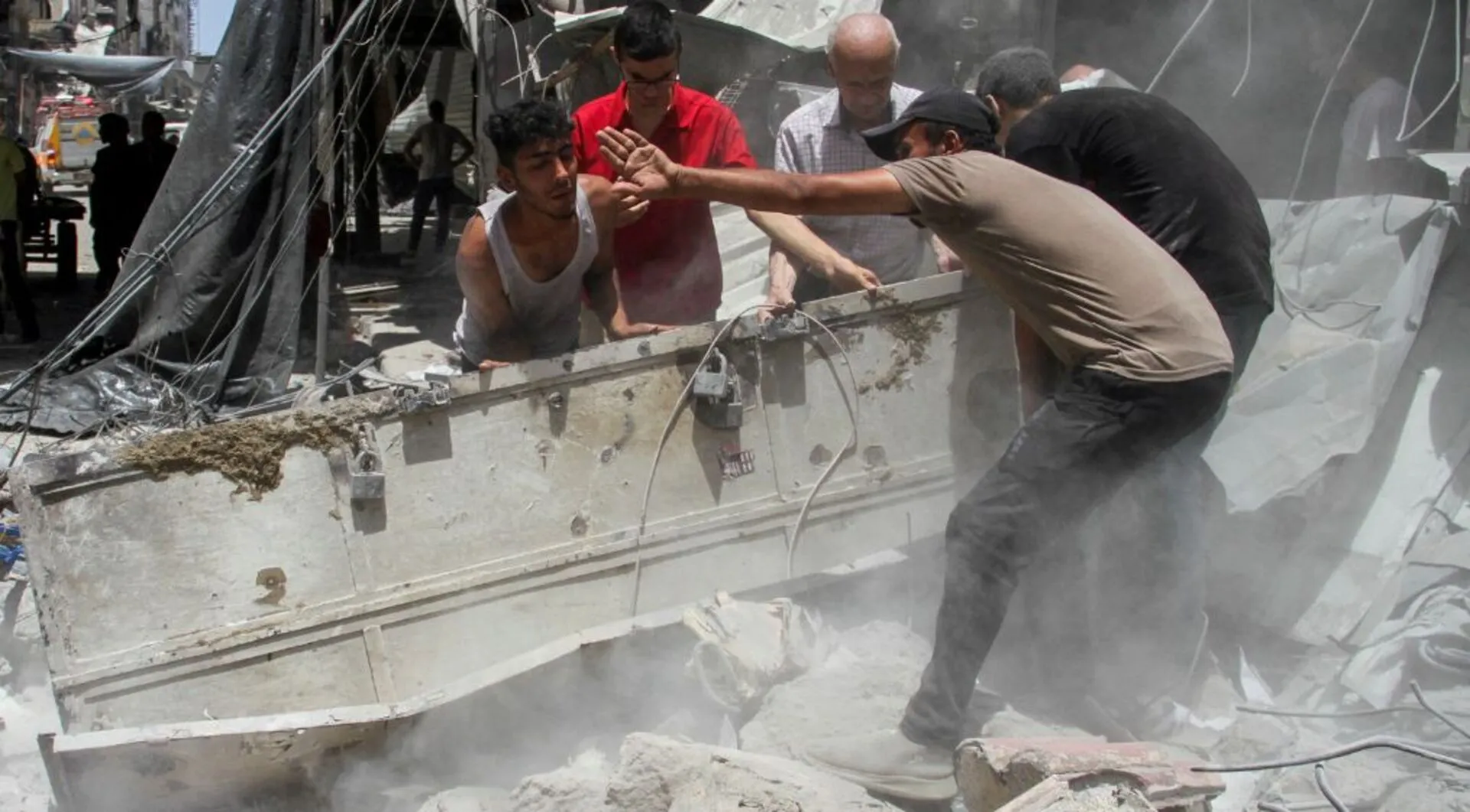
Despite a ceasefire, Israel continues to carry out deadly attacks. A source at Nasser Medical Complex told Al Jazeera Arabic that three Palestinians were killed on Monday by Israeli fire north of Rafah in southern Gaza.

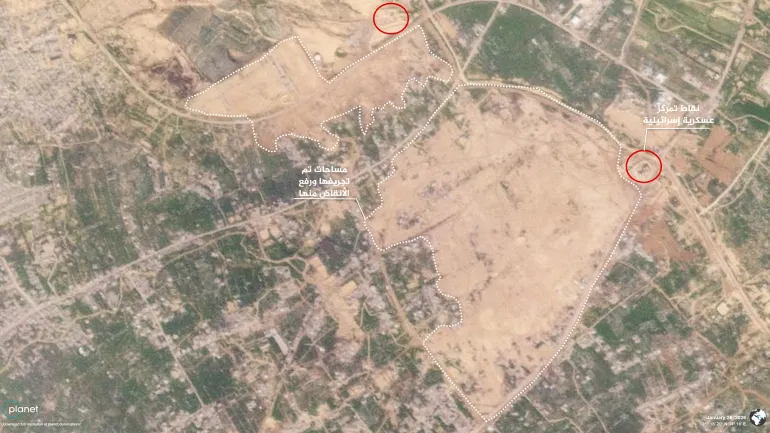
The Israeli army said it launched strikes on southern Gaza, claiming individuals had crossed the “yellow line”, an Israeli-controlled area, in what it called a ceasefire violation.

The Israeli version of events could not be independently verified. It also remains unclear whether the Israeli military was referring to the same attack that killed the three Palestinians.

In Gaza City, a child was among three people wounded by Israeli fire in the city’s east, a source at al-Ahli Arab Hospital told Al Jazeera.

Reporting from Gaza City, Al Jazeera’s Tareq Abu Azzoum said Israel continues to use quadcopter drones to drop grenades on buildings left partially standing. “Authorities here describe these acts as violations of the ceasefire,” he said.

The Gaza Government Media Office has accused Israel of committing more than 125 ceasefire violations since the truce took effect, warning that continued attacks threaten to reignite full-scale hostilities.

Source link

Hundreds of children detained in the occupied West Bank | Israel-Palestine conflict

NewsFeed

Israel is holding a record 360 Palestinian children from the occupied West Bank in its prisons, many without charge or trial, in what rights groups call a system of control and abuse. Families say the detentions, marked by torture and neglect, are meant to crush Palestinians.

Source link

Israel arrests ex-army lawyer over leaked video showing Palestinian’s abuse | Israel-Palestine conflict News

Yifat Tomer-Yerushalmi has reportedly acknowledged that her office released a video of troops abusing a Palestinian detainee.

Israeli police have arrested a former military prosecutor after she leaked a video appearing to show soldiers abusing a Palestinian detainee.

Major General Yifat Tomer-Yerushalmi was detained overnight on Monday, according to the country’s national security minister, following a scandal that erupted after she leaked a video, resigned and then disappeared.

Recommended Stories

list of 4 itemsend of list

Israeli Prime Minister Benjamin Netanyahu has called the leaking of the video perhaps the most “severe public relations attack” on Israel since its founding.

Tomer-Yerushalmi disappeared for several hours on Sunday after she announced her resignation, sparking speculation of a possible suicide attempt.

According to a copy of her resignation letter published by Israeli media on Friday, Tomer-Yerushalmi acknowledged that her office had released the video to the media last year. Five reservists were later charged with mistreating prisoners.

National Security Minister Itamar Ben-Gvir said on Monday on Telegram: “It was agreed that in light of last night’s events, the prison service would act with extra vigilance to ensure the detainee’s safety in the detention centre where she has been placed in custody.”

The statement did not indicate what charges she faced.

According to Israeli media, a Tel Aviv court ordered Tomer-Yerushalmi’s remand in custody until noon on Wednesday.

Public broadcaster Kan reported that she was suspected of “fraud and breach of trust, abuse of office, obstruction of justice and disclosure of information by a public servant”.

Former chief military prosecutor Colonel Matan Solomesh was also arrested overnight in connection with the case and was appearing in court Monday, reported Israeli Army Radio.

‘Severe violence’

On Friday, the Israeli military announced that Tomer-Yerushalmi had resigned from her post pending an investigation into leaked footage taken at the Sde Teiman military base in southern Israel last year.

The case began in August 2024 when Israel’s Channel 12 broadcast footage from Sde Teiman, which has been used to hold Palestinians taken during the war in Gaza.

The surveillance camera footage indicated that soldiers had committed illicit acts, without explicitly showing it, as it appeared to take place behind troops holding up shields.

The video was picked up by several media outlets, triggering international outrage and protests within Israel.

The Israeli military said in February that it had filed charges against five reservist soldiers connected with mistreatment at Sde Teiman.

They were charged with “acting against the detainee with severe violence, including stabbing the detainee’s bottom with a sharp object, which had penetrated near the detainee’s rectum”.

It added “the acts of violence have caused severe physical injury to the detainee, including cracked ribs, a punctured lung and an inner rectal tear”.

The indictment said that the abuse took place on July 5, 2024 during a search of the detainee.

Speaking after a cabinet meeting on Sunday, Netanyahu blasted the leak of the video, labelling it as perhaps the most “severe public relations attack” on Israel in the country’s history.

Source link

Hamas rejects US accusation it looted aid trucks in Gaza | Israel-Palestine conflict News

Hamas says US claim is ‘unfounded’, calling it ‘an attempt to justify further reduction of already limited’ aid in Gaza.

Hamas has denied accusations by the US Central Command (CENTCOM) that the Palestinian group looted aid trucks in the Gaza Strip.

CENTCOM had published drone footage that allegedly showed an aid truck being looted in the enclave. It said in a statement that the drone observed suspected Hamas operatives looting the truck that was travelling as part of a humanitarian convoy in northern Khan Younis on October 31.

Recommended Stories

list of 4 itemsend of list

On Sunday, Hamas called the United States’ accusations “unfounded” and “part of an attempt to justify the further reduction of already limited humanitarian aid, while covering up the international community’s failure to end the blockade and starvation imposed on civilians in Gaza”.

“All manifestations of chaos and looting ended immediately after the withdrawal of the [Israeli] occupying forces, proving that the occupation was the only party that sponsored these gangs and orchestrated the chaos,” it added.

Hamas said more than 1,000 Palestinian police and security forces had lost their lives and hundreds were wounded while trying to provide protection for humanitarian aid convoys and ensure that assistance reaches those in need.

It affirmed that none of the international or local institutions, nor any driver working with the aid convoys, has filed any report or complaint about looting by Hamas.

“This clearly demonstrates that the scene cited by the US Central Command is fabricated and politically motivated to justify blockade policies and the reduction of humanitarian aid,” it said, blaming the US for failing to document the ongoing Israeli attacks following the ceasefire agreement that killed 254 Palestinians and wounded 595.

CENTCOM said that the MQ-9 aerial drone was flying overhead to monitor the implementation of the ceasefire between Hamas and Israel.

“Over the past week, international partners have delivered more than 600 trucks of commercial goods and aid into Gaza daily. This incident undermines these efforts,” it said in the statement.

Hamas said the average number of aid trucks entering Gaza daily does not exceed 135, while the rest are commercial trucks bearing goods that Gaza’s population cannot afford “despite our repeated calls to increase the number of humanitarian aid trucks and reduce commercial shipments”.

“The US adoption of the Israeli narrative only deepens Washington’s immoral bias and places it squarely as a partner in the blockade and the suffering of the Palestinian people,” it said.

The ceasefire took effect on October 10 under US President Donald Trump’s 20-point plan.

Phase one of the deal includes the release of the captives in exchange for nearly 2,000 Palestinian prisoners. The plan also envisages the rebuilding of Gaza and the establishment of a new governing mechanism without Hamas.

Since October 2023, Israel’s war on Gaza has killed more than 68,500 people and wounded over 170,600 across Gaza.

Source link

Israel still blocking most Gaza aid as military carries out more attacks | Israel-Palestine conflict News

Gaza Government Media Office says just 24 percent of agreed aid allowed into Gaza since ceasefire deal came into force.

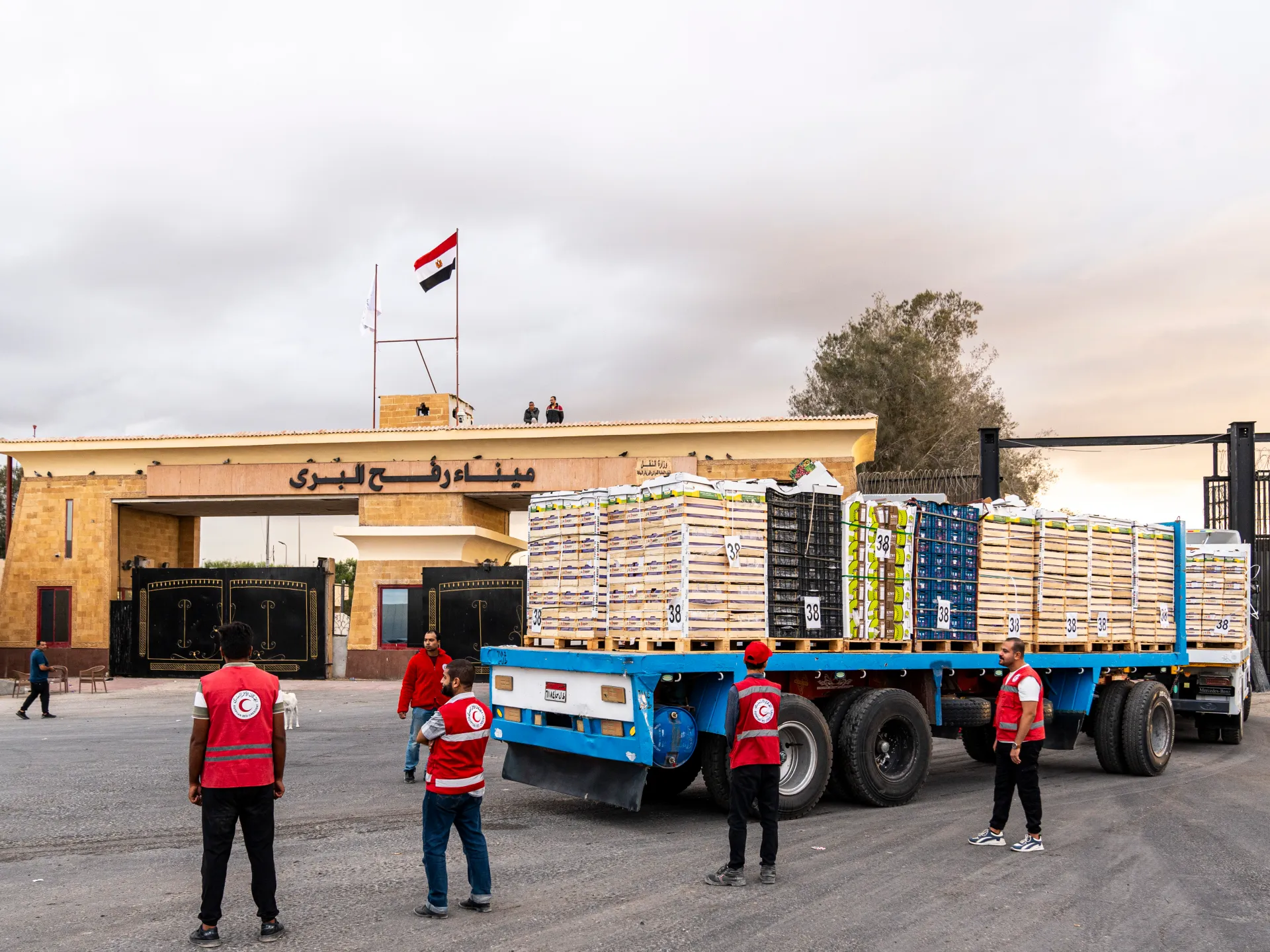
Authorities in Gaza say that Israel has only allowed a fraction of the humanitarian aid deliveries agreed on as part of the United States-brokered ceasefire into the enclave since the agreement came into effect last month.

In a statement on Saturday, Gaza’s Government Media Office said that 3,203 commercial and aid trucks brought supplies into Gaza between October 10 and 31.

Recommended Stories

list of 3 itemsend of list

This is an average of 145 aid trucks per day, or just 24 percent of the 600 trucks that are meant to be entering Gaza daily as part of the deal, it added.

“We strongly condemn the Israeli occupation’s obstruction of aid and commercial trucks and hold it fully responsible for the worsening and deteriorating humanitarian situation faced by more than 2.4 million people in the Gaza Strip,” the office said in a statement.

It also called on US President Donald Trump and other ceasefire deal mediators to put pressure on Israel to allow humanitarian aid into Gaza “without restrictions and conditions”.

While aid deliveries have increased since the truce came into force, Palestinians across Gaza continue to face shortages of food, water, medicine and other critical supplies as a result of Israeli restrictions.

Many families also lack adequate shelter as their homes and neighbourhoods have been completely destroyed in Israel’s two-year military bombardment.

A spokesperson for United Nations chief Antonio Guterres said on Thursday that the UN’s humanitarian office reported that aid collection has been “limited” due to the “rerouting ordered by the Israeli authorities”.

“You will recall that convoys are now forced to go through the Philadelphi Corridor along the border with Egypt, and then up the narrow coastal road. This road is narrow, damaged and heavily congested,” Farhan Haq told reporters.

“Additional crossings and internal routes are needed to expand collections and response.”

Meanwhile, the Israeli military has continued to carry out attacks across Gaza in violation of the ceasefire agreement.

On Saturday, Israeli fighter jets, artillery and tanks shelled areas around Khan Younis, in the south of the territory. The army also demolished residential buildings east of the Jabalia refugee camp in northern Gaza.

Al Jazeera’s Tareq Abu Azzoum reported that witnesses in Khan Younis described “constant heavy shelling and drone fire hitting what’s left of residential homes and farmland” beyond the so-called yellow line, where Israeli forces are deployed.

“We have also been told by Gaza’s Civil Defence agency that it’s struggling to reach some sites close to the yellow line because of the continuation of air strikes and Israeli drones hovering overhead,” Abu Azzoum said.

Israeli attacks on Gaza have killed at least 222 Palestinians and wounded 594 others since the ceasefire took effect, according to the Ministry of Health in the enclave.

Israeli leaders have defended the continued military strikes and accused Hamas of violating the ceasefire agreement by not returning all the bodies of deceased Israeli captives from the enclave.

But the Palestinian group says that retrieval efforts have been complicated by widespread destruction in Gaza, as well as by Israeli restrictions on the entry of heavy machinery and bulldozers to help with the search.

Late on Friday, the International Committee of the Red Cross said it had transferred the bodies of three people to Israel after they were handed over by Hamas.

But Israel assessed that the remains did not belong to any of the remaining 11 deceased Israeli captives, according to Israeli media reports.

Source link

Israeli attacks on olive harvest ‘threaten Palestinian way of life’: UN | Israel-Palestine conflict News

UNRWA says October ‘on track to be the most violent month’ since it began tracking settler violence in 2013.

Israeli settlers have carried out more attacks against Palestinians across the occupied West Bank, as the United Nations warned that this year’s olive harvest is on track to be the most violent in more than a decade.

The Palestinian official news agency Wafa reported several incidents of settler violence on Saturday, including in fields close to the towns of Beita and Huwara, near the northern West Bank city of Nablus, and in Sinjil, a town near Ramallah.

Recommended Stories

list of 3 itemsend of list

Three Palestinian farmers also were wounded in al-Maniya, southeast of Bethlehem, after Israeli settlers opened fire on them as they were harvesting their olives.

Palestinians in the West Bank have experienced a surge in settler and military attacks since Israel launched its Gaza war in 2023. But this year’s olive harvest season, which began last month, has brought an even greater increase in violent incidents.

The UN’s agency for Palestinian refugees (UNRWA) said on Saturday that October “is on track to be the most violent month since UNRWA began tracking settler violence in 2013”.

“The annual olive harvest is the primary livelihood for tens of thousands of Palestinians, with olive trees deeply rooted in Palestinian heritage and identity,” Roland Friedrich, director of UNRWA affairs in the West Bank, said in a statement shared on social media.

“Attacks on the olive harvest threaten the very way of life for many Palestinians and further deepen the coercive environment in the occupied West Bank,” Friedrich said. “Families should be allowed unhindered access to their lands to harvest their olives in safe conditions.”

According to the latest UN figures, released on Thursday, at least 126 Israeli settler attacks have been recorded in 70 Palestinian towns and villages so far this olive harvest season.

More than 4,000 olive trees and saplings also have been vandalised, the UN’s humanitarian office (OCHA) found.

Meanwhile, OCHA said that the expansion of illegal Israeli settlement outposts in the West Bank has “further undermined Palestinian farmers’ ability to reach their lands” to harvest their olive trees.

Israeli Prime Minister Benjamin Netanyahu’s government has been rapidly expanding settlement activity in the shadow of the Gaza war, drawing condemnation and warnings from the UN and international human rights groups.

Far-right Israeli politicians, including members of Netanyahu’s governing coalition, have also been pushing for Israel to formally annex the West Bank.

In July, the UN human rights office warned that escalating settler violence in the West Bank is being carried out “with the acquiescence, support, and in some cases participation, of Israeli security forces”.

Settler and military attacks “are part of a broader and coordinated strategy of the State of Israel to expand and consolidate annexation of the occupied West Bank, while reinforcing its system of discrimination, oppression and control over Palestinians there”, it said.

Source link

Why has the Israeli army’s top lawyer resigned after leaking rape evidence? | Israel-Palestine conflict News

The Israeli military’s top lawyer, Major-General Yifat Tomer-Yerushalmi, has resigned after admitting to leaking footage showing the gang rape of a prisoner at the Sde Temain prison facility in August last year.

The video of the rape had originally been leaked to the press in early August in the midst of a right-wing backlash following the arrest of a number of soldiers for the rape of a Palestinian prisoner.

Recommended Stories

list of 4 itemsend of list

In her resignation statement on Friday, Tomer-Yerushalmi blamed pressure from the right-wing on her rape investigation for her decision to leak the footage, claiming that she was countering “false propaganda directed against the military law enforcement authorities”.

In the leaked footage, soldiers can be seen grabbing and leading away a blindfolded Palestinian prisoner before surrounding him with riot shields to obscure the rape.

“For 15 minutes, the accused kicked the detainee, stomped on him, stood on his body, hit him and pushed him all over his body, including with clubs, dragged his body along the ground, and used a taser gun on him, including on his head,” the original indictment stated.

According to medical information obtained by the Israeli daily Haaretz, the victim suffered a ruptured bowel, severe anal and lung injuries, and broken ribs as a result of the assault. He later required surgery.

What happened to the soldiers?

At least nine soldiers were detained in connection with the man’s rape. All but five were released relatively quickly.

In February, the remaining soldiers were indicted for “severely abusing” the detainee, but not raping him. The trial is ongoing.

A United Nations commission, reviewing the change of indictment and other instances of Israel’s use of sexual and gender-based violence, determined that the decision to downgrade the indictments, despite the evidence, “will inevitably result in a more lenient punishment” if there is a conviction.

Why weren’t Israeli politicians calling for accountability?

Because they determined that doing so was somehow unpatriotic.

A number of Israel’s far-right politicians, including Heritage Minister Amichai Eliyahu, were among those who stormed the Sde Teiman prison in protest at the arrest of the soldiers for rape.

Israel’s hard-right National Security Minister Itamar Ben-Gvir appeared to address Tomer-Yerushalmi directly in July 2024, writing in Hebrew, “The Military Advocate General, take your hands off the reservists!” he said, referring to the soldiers accused of rape.

Ben-Gvir’s fellow traveller on the far-right, Finance Minister Bezalel Smotrich, was equally active on social media at the time, writing that the alleged rapists should be treated like “heroes, not villains”.

a man in a suit smiles in a crowd
Israeli minister of National Security and far-right politician Itamar Ben-Gvir called upon Major-General Yifat Tomer-Yerushalmi to halt her investigation into the soldiers accused of rape ([Ahmad Gharabli/AFP]

Returning to social media during the furore following the rape, Smotrich chose to ignore the credible accusations of rape and instead called for “an immediate criminal investigation to locate the leakers of the trending video that was intended to harm the reservists and that caused tremendous damage to Israel in the world, and to exhaust the full severity of the law against them”.

How have the critics reacted to Tomer-Yerushalmi’s resignation?

Many of the loudest voices in defending the alleged rapists were equally vocal in welcoming the resignation of the woman responsible for sharing evidence of that rape.

Writing on social media hours after Tomer-Yerushalmi’s resignation, Smotrich accused her and much of Israel’s judicial system of rank corruption, as well as launching what he called an “anti-Semitic blood libel” against their military.

Ben-Gvir was no less critical of Israel’s judicial system in the leaking of the footage, writing: “All those involved in the affair must be held accountable.”

Both ministers are active supporters of Prime Minister Benjamin Netanyahu’s ongoing attempts to weaken the judiciary and reduce its political oversight.

Have other crimes been committed at Sde Teiman against Palestinians?

At least 135 of the mutilated bodies returned to Palestinian officials in Gaza by Israel last week as part of the Gaza ceasefire deal, had been held at Sde Teiman, documents that accompanied each corpse showed.

Several of the bodies had been left with blindfolds on, and some had their hands still tied behind their back. One had a rope around its neck.

The same UN report that examined the reduced indictment against the soldiers also noted that detainees at Sde Teiman – including children – were regularly shackled, forced into stress positions, denied toilets and showers and beaten.

Some were subjected to sexual violence, including the insertion of objects, electric shocks and rape.

Source link

Rebuilding Gaza begins in the classroom | Israel-Palestine conflict

It has been two weeks since world leaders gathered in Sharm el-Sheikh and declared, once again, that the path to peace in the Middle East had been found. As with previous such declarations, the Palestinians, the people who must live that peace, were left out.

Today, Israel holds the fragile ceasefire hostage while the world is fixated on the search for the remaining bodies of its dead captives. There is no talk of the Palestinian right to search for and honour their own dead, to mourn publicly the loss.

The idea of reconstruction is dangled before the residents of Gaza. Those who call for it from abroad seem to envision just clearing rubble, pouring concrete, and rehabilitating infrastructure. There is no talk of rebuilding people – restoring their institutions, dignity, and sense of belonging.

But this is what Palestinians need. True reconstruction must focus on the people of Gaza and it must begin not with cement but with the restoration of classrooms and learning. It must begin with young people who have survived the unthinkable and still dare to dream. Without them – without Palestinian educators and students at the centre – no rebuilding effort can endure.

Reconstruction without exclusion

The plans for governance and reconstruction of Gaza currently circulating are excluding those Palestinians most affected by the genocide. Many aspects of these plans are designed to control rather than empower – to install new overseers instead of nurturing local leadership. They prioritise Israel’s security over Palestinian wellbeing and self-determination.

We have seen what such exclusion leads to in the Palestinian context: dependency, frustration and despair. As scholars who have worked for years alongside Palestinian academics and students, we have also seen the central role education plays in Palestinian society.

That is why we believe that reconstruction has to start with education, including higher education. And that process has to include and be led by the Palestinians themselves. Palestinian educators, academics and students have already demonstrated they have the strength to persevere and rebuild.

Gaza’s universities, for example, have been models of resilience. Even as their campuses were razed to the ground, professors and scholars continued to teach and research in makeshift shelters, tents, and public squares – sustaining international partnerships and giving purpose to the most vital part of society: young people.

In Gaza, universities are not only places of study; they are sanctuaries of thought, compassion, solidarity and continuity – the fragile infrastructure of imagination.

Without them, who will train the doctors, nurses, teachers, architects, lawyers, and engineers that Gaza needs? Who will provide safe spaces for dialogue, reflection, and decision-making – the foundations of any functioning society?

We know that there can be no viable future for Palestinians without strong educational and cultural institutions that rebuild confidence, restore dignity and sustain hope.

Solidarity, not paternalism

Over the past two years, something remarkable has happened. University campuses across the world – from the United States to South Africa, from Europe to Latin America – have become sites of moral awakening. Students and professors have stood together against the genocide in Gaza, demanding an end to the war and calling for justice and accountability. Their sit-ins, vigils and encampments have reminded us that universities are not only places of learning but crucibles of conscience.

This global uprising within education was not merely symbolic; it was a reassertion of what scholarship is about. When students risk disciplinary action to defend life and dignity, they remind us that knowledge divorced from humanity is meaningless.

The solidarity they have demonstrated must set the tone for how institutions of higher education approach engagement with and the rebuilding of Gaza’s universities.

The world’s universities must listen, collaborate and commit for the long term. They can build partnerships with Gaza’s institutions, share expertise, support research and help reconstruct the intellectual infrastructure of a society. Fellowships, joint projects, remote teaching and open digital resources are small steps that can make a vast difference.

Initiatives like those of Friends of Palestinian Universities (formally Fobzu), the University of Glasgow and HBKU’s summits, and the Qatar Foundation’s Education Above All already show what sustained cooperation can achieve. Now that spirit of solidarity must expand – grounded in respect and dignity and guided by Palestinian leaders.

The global academic community has a moral duty to stand with Gaza, but solidarity must not slide into paternalism. Reconstruction should not be a charitable gesture; it should be an act of justice.

The Palestinian higher education sector does not need a Western blueprint or a consultant’s template. It needs partnerships that listen and respond, that build capacity on Palestinian terms. It needs trusted relationships for the long term.

Research that saves lives

Reconstruction is never just technical; it is moral. A new political ecology must grow from within Gaza itself, shaped by experience rather than imported models. The slow, generational work of education is the only path that can lead out from the endless cycles of destruction.

The challenges ahead demand scientific, medical and legal ingenuity. For example, asbestos from destroyed buildings now contaminates Gaza’s air, threatening an epidemic of lung cancer. That danger alone requires urgent research collaboration and knowledge-sharing. It needs time to think and consider, conferences, meetings, exchanges of scholarships – the lifeblood of normal scholarly activity.

Then there is the chaos of property ownership and inheritance in a place that has been bulldozed by a genocidal army. Lawyers and social scientists will be needed to address this crisis and restore ownership, resolve disputes and document destruction for future justice.

There are also the myriad war crimes perpetrated against the Palestinian people. Forensic archaeologists, linguists, psychologists and journalists will help people process grief, preserve memory and articulate loss in their own words.

Every discipline has a role to play. Education ties them together, transforming knowledge into survival – and survival into hope.

Preserving memory

As Gaza tries to move on from the genocide, it must also have space to mourn and preserve memory, for peace without truth becomes amnesia. There can be no renewal without grief, no reconciliation without naming loss.

Every ruined home, every vanished family deserves to be documented, acknowledged and remembered as part of Gaza’s history, not erased in the name of expedience. Through this difficult process, new methodologies of care will inevitably come into being. The acts of remembering are a cornerstone of justice.

Education can help here, too – through literature, art, history, and faith – by giving form to sorrow and turning it into the soil from which resilience grows. Here, the fragile and devasted landscape of Gaza, the more-than-human-world can also be healed through education, and only then we will have on the land once again, “all that makes life worth living”, to use a verse from Palestinian poet Mahmoud Darwish.

Rebuilding Gaza will, of course, require cranes and engineers. But more than that, it will require teachers, students and scholars who know how to learn and how to practise skilfully. The work of peace begins not with cement mixers but with curiosity, compassion and courage.

Even amid the rubble, and the ashlaa’, the strewn body parts of the staff and students we have lost to the violence, Gaza’s universities remain alive. They are the keepers of its memory and the makers of its future – the proof that learning itself is an act of resistance, and that education is and must remain the first step towards sustainable peace.

The views expressed in this article are the authors’ own and do not necessarily reflect Al Jazeera’s editorial stance.

Source link