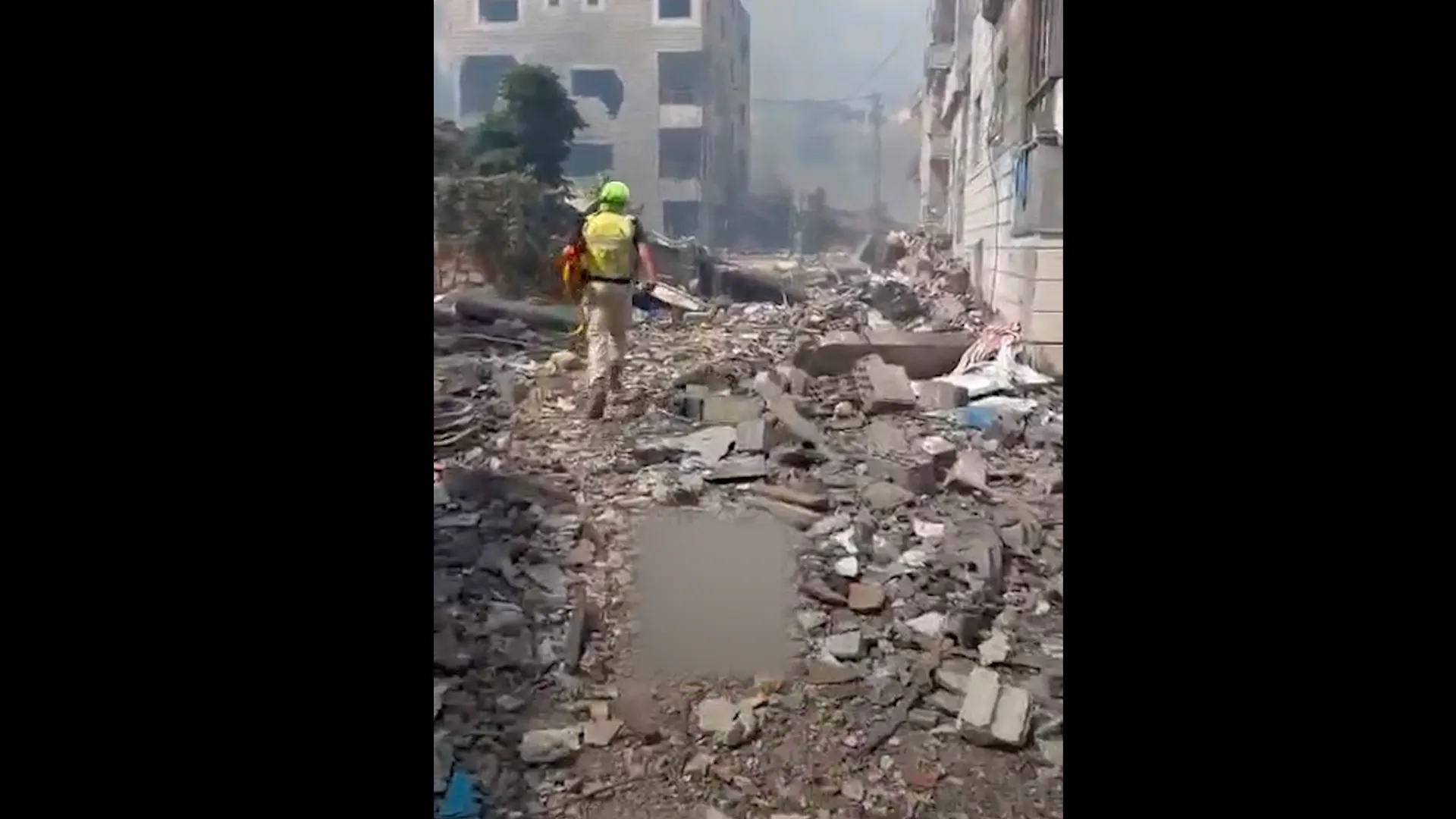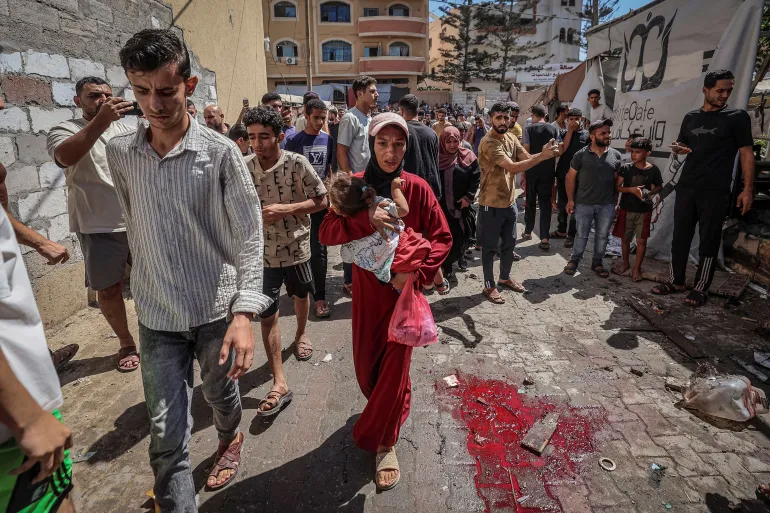
Deadly attack comes as Gaza government media office says Israel violated ceasefire 875 times since it began in October.
Israeli forces have killed at least two Palestinians in the Gaza Strip as Israel continues to violate a ceasefire agreement and block desperately needed humanitarian aid to the war-ravaged coastal enclave.
The Palestinian news agency Wafa reported on Monday that two people were killed after Israeli troops opened fire in the Shujayea neighbourhood of eastern Gaza City.
Recommended Stories
list of 3 itemsend of list
Their deaths bring the total number of Palestinians reported killed in Gaza over the past 24 hours to at least 12, including eight whose bodies were recovered from the rubble in the territory.
The Gaza City attack is the latest in hundreds of Israeli violations of a United States-brokered ceasefire between Israel and Hamas, which came into effect on October 10.
Gaza’s Government Media Office on Monday condemned Israel’s “serious and systematic violations” of the truce, noting that the Israeli authorities had breached the ceasefire 875 times since it came into force.
That includes continued Israeli air and artillery attacks, unlawful demolitions of Palestinian homes and other civilian infrastructure, and at least 265 incidents of Israeli troops shooting Palestinian civilians, the office said in a statement.
At least 411 Palestinians have been killed and 1,112 others wounded in Israeli attacks on Gaza since the ceasefire began, it added.
Worsening shelter conditions
Meanwhile, hundreds of thousands of Palestinian families displaced by Israel’s genocidal war on Gaza continue to grapple with a lack of humanitarian supplies, including adequate food, medicine and shelter.
As the occupying power in Gaza, Israel has an obligation under international law to provide for the needs of Palestinians there.
But the United Nations and other humanitarian groups say it has systematically failed to allow unimpeded deliveries of aid into Gaza.
The situation has been worsened by a series of winter storms that have pummelled the Strip in recent weeks, with rights groups saying Israel’s refusal to allow tents, blankets and other supplies into Gaza is part of its genocidal policy and threatening Palestinian lives.
On Monday, the Gaza Government Media Office said that only 17,819 trucks entered the territory out of the 43,800 that were supposed to be allowed in since the ceasefire came into effect in October.
That amounts to an average of just 244 trucks per day – far below the 600 trucks that Israel agreed to allow into Gaza daily under the ceasefire agreement, the office said.
On Monday, a spokesperson for UN chief Antonio Guterres reiterated the call “for the lifting of all restrictions of the entry of aid into Gaza, including shelter material”.
“Over the past 24 hours, and despite the ceasefire, we have continued to receive reports of air strikes, shelling and gunfire in all five governorates of Gaza. This has resulted in reported casualties and disruptions to humanitarian operations,” Stephane Dujarric said.
He said that the UN’s humanitarian partners are working to address the significant shelter needs, particularly for displaced families living in unsafe conditions.
“Our partners continue to work to improve access to dignified shelter for approximately 1.3 million people in Gaza in the past week, about 3,500 families affected by storms are living in flood prone areas,” he said.
Dujarric said that aid deliveries have included tents, bedding sets, mattresses and blankets, as well as winter clothing for children, but the needs remain overwhelming.
Palestinians struggle with flooding after heavy rain hits the Bureij refugee camp in Gaza City [File: Moiz Salhi/Anadolu]
The appeals come a day after the Palestinian Ministry of Health in Gaza said that a lack of drugs and other healthcare supplies was making it difficult to provide care to patients.
Nearly all of Gaza’s hospitals and healthcare facilities were attacked during Israel’s two-year bombardment of the territory, damaging at least 125 facilities, including 34 hospitals.
The Israeli army has killed at least 70,937 Palestinians in Gaza, mostly women and children, and injured 171,192 others since its genocidal war began in October 2023.
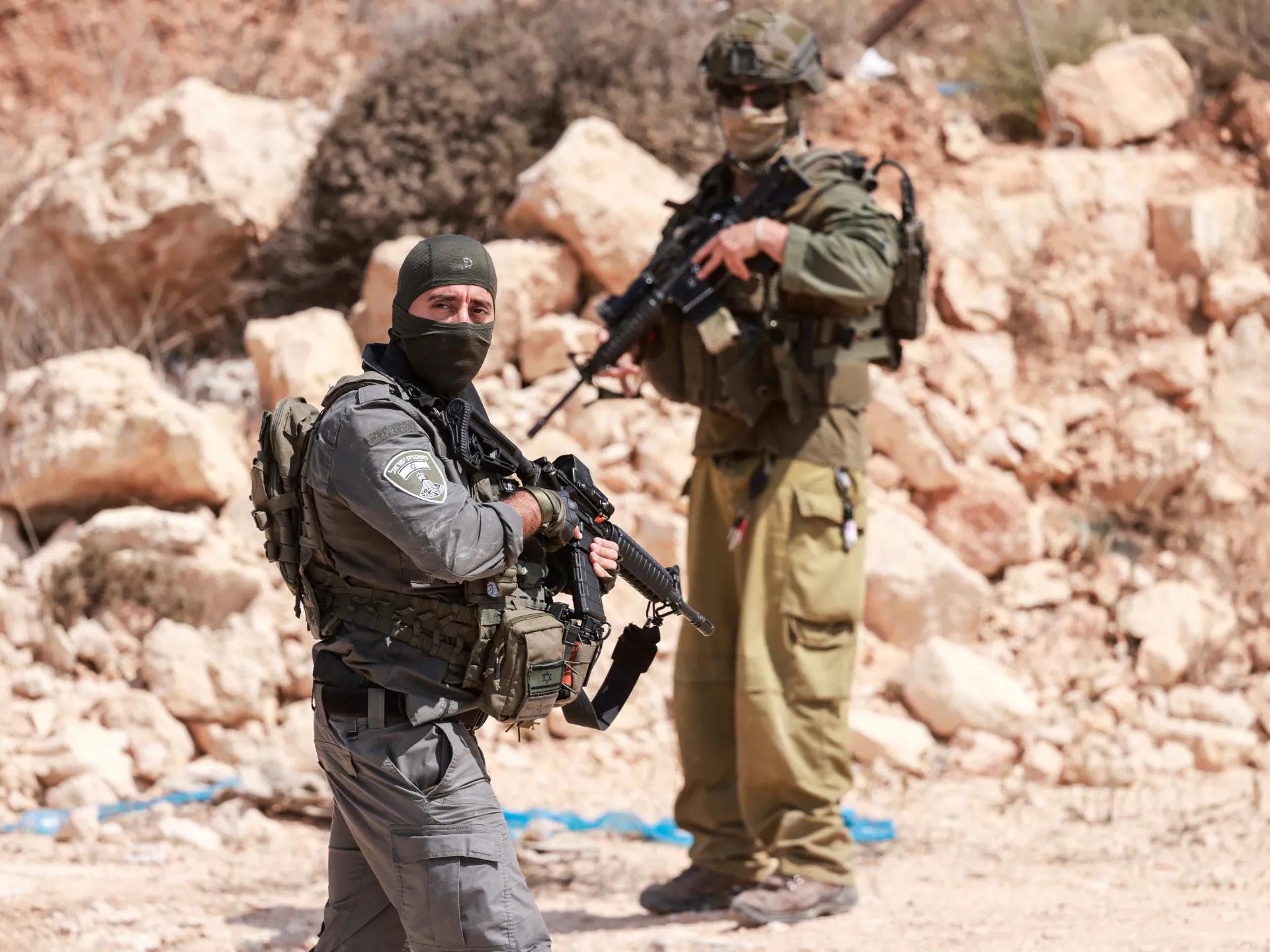
The Israeli security cabinet has approved 19 new settlement outposts in the occupied West Bank as the right-wing government headed by Prime Minister Benjamin Netanyahu moves to prevent the formation of a viable Palestinian state.
As Netanyahu’s government has made the annexation of occupied Palestinian territory a priority, the United Nations has said Israeli settlement expansions in 2025 have reached their highest level since 2017.
“These figures represent a sharp increase compared to previous years,” UN Secretary-General Antonio Guterres said, noting an average of 12,815 housing units were added annually from 2017 to 2022.
Under the current far-right government, the number of settlement and outposts in the West Bank and occupied East Jerusalem has risen by nearly 50 percent – from 141 in 2022 to 210 now. An outpost is built without government authorisation while a settlement is authorised by the Israeli government.
Nearly 10 percent of Israel’s Jewish population of 7.7 million people lives in these settlements, which are considered illegal under international law.
Here’s everything you need to know about the newly approved settlements and what they mean for the future of Palestinian statehood.
(Al Jazeera)
Where are the new settlements?
The new settlements are spread across the West Bank – home to more than three million Palestinians – from Jenin in the north to Hebron in the south.
Most of them are close to the densely populated Palestinian villages of Duma, Jalud, Qusra and al-Lubban Asharqiya in the Nablus governorate and Sinjil in the Ramallah and el-Bireh governorate, according to Peace Now, an antisettlement watchdog group based in Israel. Other locations identified by the watchdog for the new settlement areas are in the northwestern West Bank, in the Salfit governorate, near the Palestinian towns of Sa’ir and Beit Sahour, and other areas near Bethlehem and in the Jericho governorate.
Israel’s construction spree is entrenching the occupation and squeezing Palestinians out of their homeland. Settlements dot the West Bank and are often connected by Israeli-only highways while Palestinians face roadblocks and security checks, making their daily commutes harrowing experiences.
Israel has also built Separation Barrier that stretches for more than 700km (435 miles) through the West Bank restricting movement of Palestinians. Israel says the wall is for security purposes.
Under a dual legal system, Palestinians are tried in Israel’s military courts while crimes committed by settlers are referred to a civilian court.
Israel’s latest approval also includes settlements in Ganim and Kadim, two of the four West Bank settlements east of Jenin that were dismantled as part of Israel’s 2005 disengagement plan, a unilateral withdrawal ordered by then-Prime Minister Ariel Sharon.
Five of the 19 settlements already existed but had not previously been granted legal status under Israeli law, according to a statement from the office of Finance Minister Bezalel Smotrich.
Israel controls most of the West Bank and East Jerusalem, territory Palestinians want to be part of a future state along with Gaza. Israel captured East Jerusalem, the West Bank and the Gaza Strip in a 1967 war. It later annexed East Jerusalem, which Palestinians see as their future capital.
Israeli settlements and outposts are Jewish-only communities built on Palestinian land and they can range in size from a single dwelling to a collection of high-rises. About 700,000 settlers live in the West Bank and East Jerusalem, according to Peace Now.
The latest approval comes at a time when the United States has been working with Israel and Arab allies to move the Gaza ceasefire into a second phase. After a meeting on Friday of top officials from the US, Egypt, Turkiye and Qatar in the US city of Miami, Florida, Turkish Foreign Minister Hakan Fidan accused Israel of committing repeated violations of the ceasefire that began in October.
Israel still controls nearly half of Gaza’s territory since a ceasefire was announced on October 10 after more than two years of a genocidal war killed more than 70,000 Palestinians.
Palestinian farmers, left, scuffle with Israeli settlers during the olive harvest in the Palestinian village of Silwad,near Ramallah in the Israeli-occupied West Bank on October 29, 2025 [AFP]
Has settlement construction spiked in recent years?
The new settlements bring the total number approved over the past three years to 69, according to a statement from the office of Smotrich, who is a vocal proponent of settlement expansion and a settler himself.
In May, Israel approved 22 new settlements in the West Bank, the biggest expansion in decades.
The UN chief has condemned what he described as Israel’s “relentless” expansion of settlements in occupied Palestinian territory. It “continues to fuel tensions, impede access by Palestinians to their land and threaten the viability of a fully independent, democratic, contiguous and sovereign Palestinian state”, Guterres said this month.
Palestinians have also been facing increasing settler violence since Israel’s war on Gaza began.
According to data from the UN Office for the Coordination of Humanitarian Affairs (OCHA), settlers have attacked Palestinians nearly 3,000 times over the past two years.
Settler attacks often escalate during the olive harvest from September to November, a vital time of year that provides a key source of income for many Palestinian families.
Settlers are often armed and frequently accompanied or protected by Israeli soldiers. In addition to destroying Palestinian property, they have carried out arson attacks and killed Palestinian residents.
Every West Bank governorate has faced settler attacks over the past two years, data from OCHA shows.
(Al Jazeera)
Are the settlements legal under international law?
No. The UN, the International Court of Justice (ICJ) and the International Committee of the Red Cross all consider Israeli settlements as a violation of the Fourth Geneva Convention, which outlaws settler activity.
In a landmark judgement in July 2024, the ICJ, the UN’s top court, found that Israel’s occupation, settlement activity and annexation measures are illegal. In its nonbinding advisory opinion, the ICJ ruled that Israel’s continued presence in occupied Palestinian territory is unlawful and should come to an end “as rapidly as possible”.
The judges pointed to a wide list of policies – including the building and expansion of Israeli settlements in the West Bank and East Jerusalem, use of the area’s natural resources, the annexation and imposition of permanent control over lands and discriminatory policies against Palestinians – all of which it said violated international law.
Two months later, the UN General Assembly adopted a resolution demanding that Israel end its occupation of Palestinian territory within a year.
But Israel has defied the resolution by the global body backed by its ally – the United States. Washington has extended diplomatic cover to Israel against numerous UN resolutions.
Palestinians harvest olives near the occupied West Bank village of Turmus Aya near Ramallah on October 19, 2025 [Hazem Bader/AFP]
Since returning to power in January, US President Donald Trump has adopted a permissive stance towards Israeli settlement activity, breaking with longstanding US policy.
In 2019, he said Israeli settlements in the West Bank were not inherently illegal under international law. Trump also revoked his predecessor President Joe Biden’s sanctions on several settlers and groups accused of perpetrating violence against Palestinians in the West Bank.
US sanctions on settlers under Biden came under Washington’s long-held policy that settlements are the biggest impediments to the two-state solution to the conflict.
However, Trump and his officials have repeatedly said Israel cannot annex the West Bank. “It won’t happen because I gave my word to the Arab countries,” Trump told Time magazine in October. “Israel would lose all of its support from the United States if that happened.”
Israelis walk past soldiers standing guard during a weekly settlers tour in Hebron in the Israeli-occupied West Bank on December 13, 2025 [Mussa Qawasma/Reuters]
What will the new settlements mean for the future of a Palestinian state?
The growing settlements – together with other projects undertaken by Netanyahu’s government like the E1 settlement plan that will split the West Bank – are further squeezing Palestinians in occupied territory.
Settlement expansions have drawn criticism from the international community, including Israel’s European allies, who said the steps undermine prospects for a two-state solution.
But Netanyahu and his far-right cabinet, including Smotrich and National Security Minister Itamar Ben-Gvir, have doubled down on their rhetoric against a Palestinian state.
“On the ground, we are blocking the establishment of a Palestinian terror state,” Smotrich said in his statement on Sunday.
In June, the United Kingdom, Australia, Canada, New Zealand and Norway slapped sanctions on Smotrich and Ben-Gvir for inciting violence.
Several European nations, including the UK and France, as well as Australia recognised Palestinian statehood in September in a push for the two-state solution.
Israel condemned the move, and Netanyahu said he won’t allow a Palestinian state. He has previously boasted how he scuttled the 1993 and 1995 Oslo peace accords by boosting settlement expansion in occupied territory.
“It’s not going to happen. There will be no Palestinian state to the west of the Jordan River,” Netanyahu said in an address in September. “For years, I have prevented the creation of that terror state against tremendous pressure, both domestic and from abroad.”
Deadly Israeli air strike is latest in Israel’s near-daily violations of 2024 ceasefire agreement with Hezbollah.
At least three people have been killed in an Israeli attack near the southern Lebanese city of Sidon, the country’s National News Agency (NNA) is reporting, in the latest Israeli breach of a ceasefire agreement with Hezbollah.
Lebanon’s Ministry of Health said on Monday that the three people were killed in an Israeli air strike on a vehicle on Quneitra Road in the southern Sidon district, according to NNA.
Recommended Stories
list of 4 itemsend of list
The Israeli military said in a statement that it had targeted Hezbollah members in the Sidon area, without providing further details.
The deadly strikes come a day after another Israeli attack on southern Lebanon on Sunday killed one person and wounded two others. The Israeli army said it killed a Hezbollah member in that attack.
Israel has repeatedly violated the November 2024 ceasefire agreement with the Lebanese group, carrying out near-daily attacks across Lebanon, particularly in the south, that have drawn widespread condemnation.
Between January and late November, Israeli forces carried out nearly 1,600 strikes across Lebanon, according to data compiled by the Armed Conflict Location and Event Data Project (ACLED).
Late last month, the United Nations said at least 127 civilians had been killed in Israeli attacks on Lebanon since the ceasefire took effect, prompting a call from the United Nations human rights office for a “prompt and impartial” investigation.
Delegations meet in southern Lebanon
Israel’s attacks have continued despite the November 2024 ceasefire agreement, which includes provisions for Hezbollah’s disarmament in parts of southern Lebanon and the withdrawal of Israeli forces.
On Saturday, Prime Minister Nawaf Salam said Lebanon was close to completing the disarmament of Hezbollah in the area south of the Litani River.
That is a key provision of UN Security Council Resolution 1701, which designates the zone between the Litani River and the Israeli border as an area where only the Lebanese army and UN peacekeepers are permitted to operate.
Hezbollah has long rejected calls for full disarmament, saying its weapons are necessary to defend Lebanon against Israeli attacks and occupation.
Hezbollah leader Naim Qassem has consistently said the group will end its military presence south of the Litani River in line with the ceasefire, but insists it will retain its weapons elsewhere in Lebanon.
Under the 2024 ceasefire agreement, Israeli forces were also required to withdraw fully from southern Lebanon, south of the Litani River, by January. But Israeli troops have only partially pulled back and continue to maintain a military presence at five border outposts inside Lebanese territory.
Hezbollah officials have previously said the group would not fully implement its commitments under the ceasefire while Israeli forces remain deployed in southern Lebanon.
Meanwhile, a committee overseeing the ceasefire agreement continues to hold talks in southern Lebanon as Israel and the United States increase pressure on Hezbollah to disarm.
Civilian and military delegations from Israel and Lebanon met in the southern town of Naqoura on Friday in closed-door discussions.
Following the talks, Lebanese President Joseph Aoun met with diplomat Simon Karam, who has been appointed as Lebanon’s chief civilian negotiator.
Hezbollah has been critical of the appointment of Karam, who has previously served as the ambassador of Lebanon to the US.
In a statement, the Lebanese presidency said Aoun stressed that enabling tens of thousands of displaced Lebanese civilians to return to their villages and homes was “an entry point for addressing all other details” of the agreement.
Aoun said the committee’s next meeting is scheduled for January 7.
He also welcomed a separate diplomatic agreement reached in Paris between the US, France and Saudi Arabia to organise an international conference in early 2026 to support the Lebanese army and internal security forces.
The Great Omari Mosque is one of Gaza City’s most significant landmarks, with origins dating back more than 2,000 years. It was destroyed in an Israeli strike in December 2023. Hatem Haniya, the mosque’s administrator, reflects on its history and its deep significance to the people of Gaza.
Israeli settlers attacked Palestinians who were forced out of their homes in occupied East Jerusalem, as Israeli forces demolished a four-storey residential building displacing around 100 people on Monday. It was the latest in a series of demolitions targeting Palestinian homes in the area.
Palestinian officials condemn the actions as part of a ‘systematic policy of displacement’ in the occupied territory.
Israeli forces have stormed towns in the occupied West Bank and demolished a residential building.
Soldiers fired stun grenades and tear gas on Monday as they carried out the demolition in East Jerusalem. Palestinian officials accused Israel of a campaign of displacement in the city, saying the operation was part of a systematic attempt to ethnically cleanse Palestinians from their land.
Recommended Stories
list of 4 itemsend of list
Scores of Palestinians were displaced as Israeli bulldozers tore through a four-storey residential building. Activists called it the largest such demolition in the area this year.
Three bulldozers destroyed the building with 13 apartments in the Wadi Qaddum neighbourhood of the Silwan district, south of Jerusalem’s Old City, Al Jazeera Arabic correspondents reported.
Israeli forces cordoned off surrounding roads, deployed heavily across the area and positioned security personnel on the rooftops of neighbouring houses. During the operation, a young man and a teenage boy were arrested.
Residents were told the demolition order was issued because the building had been constructed without a permit.
Palestinians face severe obstacles in obtaining building permits due to Israel’s restrictive planning policies, activists say, a policy that they assert is part of a systematic attempt to ethnically cleanse Palestinians from their land.
Israel’s security cabinet has recently approved the recognition of 19 new settlements in the West Bank, expanding the total number approved this year to 69 as the government continues its settlement push.
‘Systematic policy of displacement’
The Jerusalem governorate, affiliated with the Palestinian Authority, condemned the demolition.
“The building’s destruction is part of a systematic policy aimed at forcibly displacing Palestinian residents and emptying the city of its original inhabitants,” the governorate said in a statement.
“Any demolition that expels residents from their homes constitutes a clear occupation plan to replace the land’s owners with settlers.”
The Jerusalem municipality, an Israeli authority whose jurisdiction over East Jerusalem is not recognised under international law, said the demolition was based on a 2014 court order.
Israeli human rights groups Ir Amim and Bimkom said the demolition was carried out without warning despite a scheduled meeting on Monday to discuss steps to legalise the building.
“This is part of an ongoing policy. This year alone, around 100 East Jerusalem families have lost their homes,” the groups said, calling Monday’s demolition the largest of 2025.
Escalated attacks
Elsewhere in the West Bank, Israeli forces damaged agricultural land and uprooted trees in the northern town of Silat al-Harithiya.
In the city of Halhul, north of Hebron, Israeli forces stormed several neighbourhoods with large numbers of military vehicles, deployed sniper teams and took up positions across the city.
Al Jazeera Arabic journalists reported that Israeli vehicles entered Halhul through multiple checkpoints, including Nabi Yunis, while closing the Halhul Bridge checkpoint linking the city to Hebron.
Since Israel launched its war on Gaza in October 2023, Israeli forces and settlers have also sharply escalated attacks across the West Bank.
More than 1,102 Palestinians have been killed in the territory, about 11,000 wounded and more than 21,000 arrested, according to Palestinian figures.
‘The scale of needs is so huge.’ As Gaza’s displaced Palestinians suffer from winter storms after surviving two years of genocidal war, UNICEF’s Jonathan Crickx explains how many clothes, blankets and tents are needed to save children from dying.
Let’s jump into her list and maybe you’ll find your own shop that offers the best of both worlds.
(Lisa Boone/Los Angeles Times )
Flowerboy Project (Venice)
With Flowerboy Project, equal parts coffeehouse, florist and gift shop, partners Sean Knibb and Stella Shirinda have created an intriguing space that offers a feel-good mix for all the senses.
On Lincoln Boulevard in Venice, the concept cafe and flower shop offers apparel, jewelry, Venice Organics chocolate, home decor and apothecary items alongside fresh-cut and dried floral arrangements.
The cafe serves hot and cold coffee drinks, plus a few specialty drinks such as the Dirty Rose Girl (rose latte) and Lavender Boy (lavender latte), served with flowers on top. Custom flower arrangements are offered at prices ranging from $90 to $175.
(Lisa Boone/Los Angeles Times )
Javista at the Atrium (West Hollywood)
Billed as “The Botanist’s Bodega,” the bustling two-story Atrium in West Hollywood is a unique blend of coffee and plants. With Javista Coffee on the ground floor and a delightful array of plants, gifts and additional seating upstairs, the Atrium is a haven for plant enthusiasts and coffee lovers alike.
In addition to coffee staples such as macchiato and espresso, the bodega offers some exotic beverages like the CBTea Latte.
But that’s not all. The Atrium also hosts plant-related workshops, such as a recent one on how to mount a staghorn fern and create a terrarium. Plant lovers will appreciate a variety of plant accessories, including ceramic pots, misters, river stones and LED grow lights.
To support other small businesses, owner Andrew Ruiz stocks a wide selection of books and clothing along with candles from Flamingo Estate, Lavune and Marak, adding a local touch to the Atrium’s offerings.
(Lisa Boone/Los Angeles Times)
Little Nelly (Burbank)
Conveniently located in a Burbank neighborhood with plenty of parking, this takeout spot is a great place to shop for gifts while you wait for your espresso or hot combo sandwich (shaved turkey, hot coppa, Gioia burrata, giardiniera, wild arugula and pesto).
The market and sandwich shop, which also offers catering, is filled with cookbooks, handmade ceramics, wood carving boards perfect for charcuterie displays, candles and greeting cards. And for the foodies in your life, the market stocks unique pantry items such as spices, olive oils, vinegar and hot sauce that are perfect for stocking stuffers.
Made by DWC Cafe and Gift Boutique (Downtown L.A.)
Made by DWC, the Skid Row gift shop launched by the Downtown Women’s Center in Los Angeles in 2011, offers handmade gifts — soaps, bath salts, soy candles and greeting cards — crafted by women on L.A.’s Skid Row area as part of a vocational training program.
All profits from the Made store and cafe, which sells organic coffee, smoothies, salads and pastries from Homeboy Industries, help fund the center’s career training and mentorship programs. Note: The gift shop is not open on weekends.
(Lisa Boone/Los Angeles Times)
Sachi.LA (Del Rey)
Influenced by their Japanese heritage, sisters Sachi and Chiyo Hartley opened their Del Rey coffeehouse in 2018 to share “Sachi” — the Japanese kanji character meaning happiness, fortune or good luck — with their community. The coffeehouse, which serves a wide variety of coffee drinks including matcha and the Sachi Special, a signature cold brew with oat milk and vanilla syrup, is just the beginning.
Adjacent to the coffeehouse, which also serves pastries, the sisters have opened a retail space that is a treasure-trove filled with houseplants, gifts, vintage clothes and plant accessories such as bud vases and planters. They also host occasional pop-ups, so keep an eye on their Instagram for updates.
You’re reading the Essential California newsletter
The week’s biggest stories
(Tomas Ovalle/For The Times)
Crime, courts and policing
Apps, social media and tech
Statewide news
What else is going on
Must reads
Other meaty reads
For your downtime
(Illustrations by Lindsey Made This; photograph by Kim Newmoney)
Going out
Staying in
L.A. Affairs
Get wrapped up in tantalizing stories about dating, relationships and marriage.
L.A. Timeless
A selection of the very best reads from The Times’ 143-year archive.
Have a great day, from the Essential California team
Jim Rainey, staff reporter Hugo Martín, assistant editor, fast break desk Kevinisha Walker, multiplatform editor Andrew J. Campa, weekend writer Karim Doumar, head of newsletters
The talks between the four countries lauded the first stage of the truce, including expanded humanitarian assistance, return of captives, force withdrawals and reduction in hostilities.
The United States, Egypt, Qatar and Turkiye have urged the parties to the Gaza ceasefire to honour their commitments and show restraint, the chief US envoy says after talks in the US city of Miami.
Senior officials from the four mediator countries met Steve Witkoff, US President Donald Trump’s special envoy, on Friday to review the first phase of the ceasefire between Israel and Hamas, which took effect on October 10, according to a joint statement released on Saturday.
Recommended Stories
list of 4 itemsend of list
The meeting was held against the backdrop of ongoing Israeli attacks on the enclave. The Palestinian Civil Defence in Gaza said that six people were killed on Friday when an Israeli strike hit a school housing displaced people, raising the number of Palestinians killed by Israeli fire since the deal took effect to about 400.
“We reaffirm our full commitment to the entirety of the President’s [Trump’s] 20-point peace plan and call on all parties to uphold their obligations, exercise restraint, and cooperate with monitoring arrangements,” Witkoff said in a statement posted on X.
First phase of truce
Saturday’s statement cited progress yielded in the first stage of the peace agreement, including expanded humanitarian assistance, the return of captives’ bodies, partial force withdrawals and a reduction in hostilities.
It called for “the near-term establishment and operationalisation” of a transitional administration, which is due to happen in the second phase of the agreement, and said that consultations would continue in the coming weeks over its implementation.
Under the truce deal’s terms, Israel is supposed to withdraw from its positions in Gaza, an interim authority is to govern the Palestinian territory instead of Hamas, and an international stabilisation force is to be deployed.
On Friday, US Secretary of State Marco Rubio expressed hope that countries would contribute troops for the stabilisation force, but also urged the disarmament of Hamas, warning the process would unravel unless that happened.
Hamas statement
A meeting was also held between Hamas’s chief negotiator, Khalil al-Hayya, and Turkish intelligence chief Ibrahim Kalin in Istanbul on Saturday.
In a statement from Hamas after the meeting, the group said it was committed to abiding by the ceasefire agreement, despite Israeli violations.
“The delegation stressed the urgent need to halt these continuous violations,” the statement added.
“The delegation also reviewed the deteriorating humanitarian situation in the Gaza Strip with the onset of winter, emphasising the critical priority of urgently bringing in tents, caravans, and heavy equipment to save our people from death by cold and drowning, given the destruction of infrastructure and homes.”
Winter storms have been worsening the conditions for hundreds of thousands of displaced Palestinians in Gaza, as aid agencies warn that Israeli restrictions are preventing lifesaving assistance from reaching people across the besieged enclave.
Bodies recovered, Israeli strikes continue
On Saturday, an Israeli air strike targeted two people in northern Gaza, according to a statement from the military, which alleged that they “posed an immediate threat” to Israeli troops after crossing the so-called yellow line, which separates areas under Israeli army control from those where Palestinians are permitted to move.
No details were yet available on whether the two people were killed or injured.
Gaza’s Civil Defence on Saturday also said it recovered the bodies of 94 Palestinians from the rubble in the enclave.
The bodies were retrieved in central Gaza City and transferred to the forensic department at Al-Shifa Medical Complex to arrange their burial in the Martyrs’ Cemetery in the central city of Deir el-Balah, according to a statement from the Civil Defence.
Thousands of Palestinians are believed to still be buried under the rubble of destroyed buildings in Gaza.
The Israeli army has killed more than 70,700 people in Gaza, mostly women and children, and injured more than 171,000 others since it began its genocidal war on the enclave in October 2023.
Red ribbons and Palestinian flags were seen in London at a vigil calling for the release of thousands of Palestinians being held without charge in Israeli prisons. The vigil focused on Dr. Hussam Abu Safia, director of Gaza’s Kamal Adwan Hospital, who’s been held for nearly one year. Al Jazeera’s Milena Veselinovic was there.
NEWS BRIEF Iran executed a man on Saturday accused of spying for Israel, the latest in an escalating series of death sentences carried out amid a deepening shadow war between Tehran and Jerusalem. The execution, described by human rights groups as based on coerced confessions, underscores Iran’s harsh response to perceived security threats and the […]
The PM says the part of the plan on south of the Litani River is ‘only days away from completion’.
Published On 20 Dec 202520 Dec 2025
Share
Lebanon is close to completing the disarmament of Hezbollah in the south of the Litani River before a year-end deadline as part of a ceasefire deal with Israel, according to Prime Minister Nawaf Salam.
Saturday’s statement comes as the country races to fulfil the key demand in the US-backed deal agreed in November last year and ended more than a year of fighting between Israel and Hezbollah.
Recommended Stories
list of 3 itemsend of list
The agreement requires the disarmament of the Iran-aligned Lebanese armed group, starting in areas south of the river adjacent to Israel.
Lebanese authorities, led by President Joseph Aoun and Salam, tasked the US-backed Lebanese army on August 5 with devising a plan to establish a state monopoly on arms by the end of the year.
“Prime Minister Salam affirmed that the first phase of the weapons consolidation plan related to the area south of the Litani River is only days away from completion,” a statement from his office said.
“The state is ready to move on to the second phase – namely [confiscating weapons] north of the Litani River – based on the plan prepared by the Lebanese army pursuant to a mandate from the government,” Salam added.
Committee meeting
The statement came after Salam held talks with Simon Karam, Lebanon’s top civilian negotiator on a committee overseeing the Hezbollah-Israel truce.
In a meeting on Friday, the committee focused on how to return displaced people to their homes, addressing civilian issues to help prevent renewed war if the year-end deadline to disarm Hezbollah is not met.
The 15th meeting of the committee reflected a longstanding US push to broaden talks between the sides beyond monitoring the 2024 ceasefire.
At Friday’s meeting in the southern Lebanese coastal town of Naqoura, civilian participants discussed steps to support safe returns of residents uprooted by the 2023-24 war and advance economic reconstruction, the US Embassy in Beirut said.
Since the ceasefire, Israeli warplanes have repeatedly targeted parts of Lebanon, mostly southern Lebanon, but sometimes even the capital.
Israel says it is questioning the Lebanese army’s efforts to disarm Hezbollah.
Hezbollah, a Shia Muslim armed group, has tried to resist the pressure – from its mainly Christian and Sunni Muslim opponents in Lebanon as well as from the US and Saudi Arabia – to disarm, saying it would be a mistake while Israel continues its air strikes on the country.
Israel has publicly urged Lebanese authorities to fulfil the conditions of the truce, saying it will act “as necessary” if Lebanon fails to take steps against Hezbollah.
Syrian state television denounces the Israeli incursion as another violation of the nation’s sovereignty.
Israeli forces have advanced into the Quneitra area of Syria’s occupied Golan Heights and set up two military checkpoints, an Al Jazeera correspondent on the ground reports.
The Israeli military operation on Saturday took place in the villages of Ain Ziwan and al-Ajraf in the southern part of the country.
Recommended Stories
list of 4 itemsend of list
For months, Israeli forces have conducted near-daily incursions into southern Syria, particularly in the Quneitra governorate, carrying out arrests, erecting checkpoints, and bulldozing land, all of which have prompted growing public anger and unrest.
Syrian state television said the Israeli incursion was a violation of Syrian sovereignty, noting that the army used five military vehicles to set up the checkpoint in Ain Ziwan.
The latest raid comes one day after Israeli forces advanced towards the towns of al-Asha, Bir Ajam, Bariqa, Umm al-Azam and Ruwayhina in the southern Quneitra countryside, according to the Syrian News Agency (SANA).
Dozens of Syrians on Friday protested the Israeli incursion in the city of al-Salam in the Quneitra Governorate, condemning the ongoing Israeli attacks against citizens and their properties.
The demonstrators, part of a group called “Syrians with Palestine”, held banners denouncing what they stated were repeated Israeli violations of Syrian lands.
Despite a reduction in direct military threats, the Israeli army continues to carry out air raids that have caused civilian casualties and destroyed Syrian army sites and facilities.
Over the past year, Israel has launched more than 600 air, drone or artillery attacks across Syria, averaging nearly two attacks a day, according to a tally by the Armed Conflict Location and Event Data (ACLED).
Israeli military incursions have become more brazen, more frequent and more violent since Israel expanded its occupation of southern Syria following the ousting of President Bashar al-Assad in December 2024.
Disengagement accord
After al-Assad’s fall, Israel declared the 1974 Disengagement Agreement – brokered after the 1973 war, in which Syria failed to regain the occupied Golan Heights – void.
The agreement had established a UN-patrolled buffer zone, which Israel has since violated, advancing deeper into Syrian territory.
Citing al-Assad’s flight, Israel says the accord no longer applies, while carrying out air raids, ground incursions, reconnaissance flights; setting up checkpoints; and arresting or disappearing Syrians. Syria has not responded with attacks.
In September, Syrian President Ahmed al-Sharaa stated that Israel had conducted more than 1,000 air attacks and more than 400 ground incursions in Syria since al-Assad was overthrown, describing the actions as “very dangerous”.
Syrians believe that the continuation of these violations hinders efforts to restore stability in the region and undermines attempts to improve the economic situation in southern Syria.
Al Jazeera visited Quneitra in recent weeks and spoke to Syrians about Israeli incursions and abductions there, which have stoked fears.
Syria and Israel are currently in talks to reach an agreement that Damascus hopes will secure a halt to Israel’s air raids on its territory and the withdrawal of Israeli troops who have pushed into southern Syria.
In the background, the United States has been pushing diplomatic efforts to restore the 1974 deal.
I visited Disneyland last weekend expecting huge crowds, busy restaurants and monster ride wait times. But the day was quite enjoyable thanks in part to Disneyland’s Lightning Lane Pass.
I commented to some employees throughout the day, “I thought this would be worse.”
Almost unanimously, each had the same answer: The real rush was yet to come.
You’re reading the Essential California newsletter
That’s when the cost of a single-day adult park-hopper pass, which allows a patron to visit Disneyland and adjacent California Adventure Park, soars to $314 (buy a week later, prices will drop by $50.)
Many Disney experts and influencers advise you to avoid the resort during this time.
But what if you’ve already bought tickets? What if out-of-town family is desperate to visit? What if this is the only free time to take the kids?
Traver explained to me that preparing for the holiday rush is not all too dissimilar from spring break.
One essential tip is to arrive at Disneyland before the park’s opening at 8 a.m.
Security checks begin as early as 7 a.m. and the gate, which opens around 7:20 to 7:30, allowing patrons to line up for the rope drop.
“For people interested in getting on the most popular rides, this is how you cut down on wait times,” Traver said.
He noted rope drop, the insider term for the moment a literal rope around attractions, restaurants and shops drops when the park opens at 8 a.m. is the best time to head to the “Star Wars”-themed “Rise of the Resistance,” which can easily draw two-hour lines later in the day.
Traver added this tidbit: Disney hotel guests receive early entry on Tuesdays, Thursdays and Saturdays, so the other days are best for early arrivers.
Consider eating at the bigger restaurants
He said patrons looking to maximize time and find a seat should search for larger capacity places.
Those include Rancho del Zocalo in Frontierland, the Red Rose Taverne in Fantasyland, the Hungry Bear Barbecue Jamboree in Bayou Country, Galactic Grill and Alien Pizza Planet in Tomorrowland.
“The larger the crowd, the bigger the fight for seats,” Traver said. “Go to places with more seats.”
Next week, there might be one more consideration: Forecasters predict rain on Tuesday and Thursday.
Traver said restaurants like Alien Pizza Planet, which is 90% covered, or the Golden Horseshoe Restaurant in Frontierland, which is completely indoors, will be in high demand.
Take advantage of single rider
Both Disneyland and California Adventure offer a handful of single-rider lines.
If family members don’t mind riding alone, they can cut long waits at Tiana’s Bayou Adventure, the Matterhorn Bobsleds, Space Mountain and Millennium Falcon: Smugglers Run in Disneyland, the lone single-rider attractions at the park.
Traver’s favorite single rider attraction is California Adventure’s Radiator Springs Racer, where wait times are notorious.
“It will cut the wait time by a third,” Traver said.
Be realistic, but bring a good attitude
Maybe the biggest secret: Set proper expectations, Traver said.
“If you expect things to go smoothly and they don’t, now you’re disappointed,” he said. “But, if you arrive with lower expectations and an understanding that lines are going to be long and you’re just going to have to wait, you may be pleasantly surprised.”
The week’s biggest stories
(Jim Cooke / Los Angeles Times; Photos via Getty Images)
A chance for justice. A strain on today’s classrooms
Starting in 2020, Assembly Bill 218 offered survivors of childhood sex abuse in California a three-year window to sue over past molestation and sexual assault.
The wave of litigation has caused financial strain across the state’s schools and programs.
Tyler Skaggs’ family reaches settlement with Angels
Friday’s settlement in the wrongful death case brings an end to several days of juror deliberations and a four year legal battle.
Terms of the agreement, which follows previous unsuccessful settlement efforts from the former Angels pitcher’s family, were not immediately available.
Reiner slayings
After the fires…
What else is going on
Must reads
Other gripping reads
Nearly a year after the L.A. fires, the television drama “Fire Country” drew inspiration from those who fought it.
Six directors on “wasting” (and saving) money, the future of movie theaters and more.
For your downtime
Lively video projections behind a 1965 Ford Mustang make guests feel like they’re on a ride through Southern California at “American Icon: A Mustang Immersive Experience.”
(Ronaldo Bolanos/Los Angeles Times)
Going out
Staying in
L.A. Timeless
A selection of the very best reads from The Times’ 143-year archive.
Have a great day, from the Essential California team
Jim Rainey, staff reporter Hugo Martín, assistant editor, Fast Break desk Kevinisha Walker, multiplatform editor Andrew J. Campa, weekend writer June Hsu, editorial fellow Karim Doumar, head of newsletters
Doctors Without Borders, known by its French initials MSF, has warned that babies and children in the Gaza Strip are dying from harsh winter weather, calling on Israel to ease its aid blockade as the military continues to violate the ceasefire and press on with its genocidal war.
Citing the death of a 29-day-old premature baby, Said Asad Abedin, from severe hypothermia in southern Gaza’s Khan Younis, MSF said on Friday that winter storms “combined with the already dire living conditions [are] increasing health risks”.
Recommended Stories
list of 4 itemsend of list
The death toll from extreme weather stood at 13 as of Thursday, according to Gaza’s Ministry of Health. Another two-week-old baby, Mohammed Khalil Abu al-Khair, froze to death without access to proper shelter or clothing earlier this week.
Ahmed al-Farra, head of the maternity paediatric department at Nasser Medical Complex, said in a video update that “hypothermia is very dangerous” for babies. “If nothing is offered for these families in the tents, for warming, for mobile homes, for caravans, unfortunately, we will see more and more” deaths, al-Farra said.
Children are “losing their lives because they lack the most basic items for survival,” Bilal Abu Saada, a nursing team supervisor at Nasser Hospital, told MSF. “Babies are arriving to the hospital cold, with near-death vital signs.”
In addition to the growing number of deaths, MSF said its staff has recorded high rates of respiratory infections that it expects to increase throughout the winter, posing a particular danger to children under five.
“As Gaza is battered by heavy rains and storms, hundreds of thousands of Palestinians continue to struggle in flooded and broken makeshift tents,” the organisation added. “MSF calls on Israeli authorities to urgently allow a massive scale up of aid into the Strip.”
No letup in Israeli attacks
Palestinian news agency Wafa, meanwhile, reported that Israeli forces demolished buildings, carried out artillery shelling and shot guns in areas east of Gaza City on Saturday morning, with more gunfire reported east of Khan Younis.
On Friday, an Israeli strike on a shelter for displaced Palestinians killed at least six people. The Israeli military claimed to be firing on “suspects”.
Graphic videos from the scene showed body parts and terrified civilians trying to carry wounded people out of danger.
Military vehicles also descended upon the town of az-Zawiya, located west of Salfit in the occupied West Bank, where forces severely beat and injured a number of citizens and stormed homes, the agency said.
‘I can still hear his tiny cries’
Heavy rain, high winds and freezing temperatures have battered Gaza in recent weeks, flooding or blowing away more than 53,000 tents that have served as makeshift shelters for displaced Palestinians.
With huge swaths of buildings and infrastructure destroyed, streets are quick to flood and sewage overflows. Displaced families have sought refuge in the shells of partially fallen-down buildings despite the risk of collapse, with 13 buildings caving in across Gaza last week.
The winter weather and Israel’s blocking of vital aid and mobile homes for shelter have proven deadly for children and babies.
Late in the evening of December 13, Eman Abu al-Khair, a 34-year-old displaced Palestinian living in al-Mawasi west of Khan Younis, found her sleeping baby Mohammed “cold as ice”, his hands and feet frozen and “his face stiff and yellowish”, she told Al Jazeera.
She and her husband couldn’t find transportation to get to hospital, and intense rain made it impossible to make the trek by foot.
After rushing Mohammed by animal-drawn cart to Red Crescent Hospital in Khan Younis at dawn, he was admitted to intensive care with a blue face and convulsions. He died two days later.
“I can still hear his tiny cries in my ears,” Eman said. “I sleep and drift off, unable to believe that his crying and waking me at night will never happen again.”
Mohammed “had no medical problems,” she added. “His tiny body simply couldn’t withstand the extreme cold inside the tents.”
Since the October 10 ceasefire took effect, Israel has continued to block the entry of humanitarian aid into the Gaza Strip despite calls from a host of United Nations agencies, international organisations and other states for it to stop.
The UN has said that Israel has prevented tents and blankets from reaching Palestinians, even as an estimated 55,000 families have seen their belongings and shelters damaged or destroyed in the storm.
Dozens of child-friendly spaces have also been damaged, affecting 30,000 children, according to the UN.
Natasha Hall, a senior advocate for Refugees International, told Al Jazeera that aid is entering Gaza in a “trickle” in part due to its opaque list of “controlled dual-use items” that has included nappies, bandages, tools, tents and other essentials.
“It’s unclear how those could be used as weapons or any kind of dual use,” Hall said.
A shell company with Israeli ties exploited Palestinians desperate to flee the ongoing war in Gaza, charging them large sums of money to covertly exit the country in what may be an official plan to ethnically cleanse the territory.
In an exclusive digital investigation, Al Jazeera probed last month’s mystery flight that spirited 153 passengers from Gaza to South Africa, unearthing figures working for Al-Majd Europe, an unregistered front organisation that falsely claimed to be working for humanitarian aims.
Recommended Stories
list of 3 itemsend of list
The Palestinians arrived at OR Tambo International Airport, which serves the cities of Johannesburg and Pretoria, on November 13. Refused entry by border police as they did not have departure stamps from Israel on their passports, they were stuck on the aircraft for 12 hours before being allowed to disembark.
South African President Cyril Ramaphosa admitted the passengers “out of compassion”, but said at the time that his government, which has long been a strong supporter of the Palestinian cause, would investigate as it seemed that they had been “flushed out” of the Gaza Strip.
Forced evacuations
Israeli officials have previously openly stated that they support what they have termed the “voluntary emigration” of Palestinians from Gaza, in what effectively would be their forced evacuation.
In March 2025, Israel’s security cabinet set up a controversial bureau to get Palestinians to leave Gaza voluntarily, which was headed by former deputy director of the Ministry of Defence, Yaakov Blitstein. Israeli Defence Minister Israel Katz said at the time that 40 percent of Gaza residents were “interested in emigrating”.
The previous month, Al-Majd Europe set up its online presence with a new website stating that it focused on relief efforts in Muslim countries, specifically “for Gazans wishing to exit Gaza”, with claims that it had organised mobile health clinics in the enclave and trips for Palestinian doctors abroad that Al Jazeera later discovered to be false.
A passenger from the November flight to South Africa, whose identity was kept hidden for his own protection, said he contacted the organisation after finding the link online, which promised not only a way out of Gaza, but safety and medical treatment for injuries. “Initially, it said it was free. Then they asked for $1,400 [per person]. Then the price went up to $2,500,” he said.
Testimonies gathered by Al Jazeera showed that payments requested varied from $1,000-2,000 per person, with strict criteria for signing up. Only families would be accepted on condition that they kept their departure secret, with details on flight departures only released a few hours before takeoff.
Passengers say they were told to arrive at the Karem Abu Salem crossing (called Kerem Shalom in Israel) in southern Gaza. When they arrived, their personal belongings were confiscated, and they were put on buses to Ramon Airport, near the Israeli city of Eilat, apparently by Israeli authorities.
Nigel Branken, a South African social worker who helped tho Palestinians on the plane, previously told Al Jazeera that there were “very clearly … marks of Israel involved in this operation to take people … to displace them”.
Evacuees told Al Jazeera they were not informed of their final destination until moments before boarding. They were then escorted onto a flight registered to a brand new airline called FLYYO without exit stamps in their travel documents.
Al Jazeera discovered that FLYYO has organised a number of similar flights, all taking off from Israeli airports, headed to Romania, Indonesia, South Africa, Kenya and other destinations.
False identity
Further scrutiny of Al-Majd Europe, which said it was a “humanitarian foundation established in 2010 in Germany”, with a head office located in Sheikh Jarrah, a neighbourhood in occupied East Jerusalem, later revealed its identity to be a sham.
Al Jazeera found no company registered by that name on any German or European database. The supposed address does not appear in official Jerusalem records, with the location on Google Maps corresponding to a hospital and a cafe.
While digging into the flights, Al Jazeera found two faces linked to the organisation – both Palestinians. The first was Muayad Hisham Saidam, which the organisation lists as its humanitarian projects manager in Gaza.
A search of Saidam’s name reveals that in May 2024, his wife created a public page to ask for donations to help her family leave Gaza. A year later, Saidam posted an image of himself boarding a plane chartered by Fly Lili, another Romanian airline, announcing that he was departing Gaza.
Using the angle of his shadow, time of the flight and the location of the plane on the Ramon Airport runway, Al Jazeera discovered Saidam was likely on a flight on May 27, 2025, which left Israel for Budapest, with 57 Palestinian passengers from Gaza.
It appears that Saidam’s identity is real, and that his family was likely evacuated to Indonesia. But his connection to Al-Majd Europe is unclear.
The second public face of the organisation belongs to a man named only as Adnan, though he appears to have no digital footprint.
On November 13, the day of the Johannesburg flight, a page containing a number of partner companies was deleted from Al-Majd’s website. Using open-source intelligence techniques, Al Jazeera recovered the page, which showed a number of well-known groups that Al-Majd claimed to have been working with, including the International Red Cross.
One name stood out: Talent Globus – a recruitment company established in Estonia in 2024, with a fund containing only $350. Its website lists four employees, including Director Tom Lind, a businessman with Israeli and Estonian citizenship.
Lind’s name has been linked to a number of other companies where he’s listed either as a founder or director – all without official registration or physical addresses.
Lind’s name appeared in reports by Israeli newspaper Haaretz as one of the coordinators of the flights of Palestinians leaving Ramon Airport.
In May 2025, Lind posted on his LinkedIn page that he had left Talent Globus, and was instead focused on “humanitarian efforts to support Palestinians”. He said that, alongside a network of individuals and groups, he had assisted with the evacuation of a “substantial number” of people from Gaza.
Photos of the other three employees of Talent Globus from its website – James Thompson, Maria Rodriguez, David Chen – all turned out to be stock images.
And much like those employees, it appears as though Al-Majd itself is a fake humanitarian group, leading to the question of what those behind the organisation are trying to hide.
Publicly, Israel has seemed to back down from its plan to encourage “voluntary emigration”. But Al Jazeera’s investigation poses more questions – is Al-Majd part of a bigger plan, a way to quietly empty Gaza of its inhabitants, one secret flight at a time?
Responding to reports that Hamas may be willing to partially disarm, handing over heavy weaponry but keeping its small arms, US Secretary of State Marco Rubio said peace will never happen if the group has the capability to “threaten or attack Israel.”
The United States Middle East envoy, Steve Witkoff, will hold talks in Miami, Florida, with senior officials from Qatar, Egypt and Turkiye as efforts continue to advance the next phase of the Gaza ceasefire, even as Israel repeatedly violates the truce on the ground.
A White House official told Al Jazeera Arabic on Friday that Witkoff is set to meet representatives from the three countries to discuss the future of the agreement aimed at halting Israel’s genocidal war on Gaza.
Recommended Stories
list of 3 itemsend of list
Axios separately reported that the meeting, scheduled for later on Friday, will include Qatari Prime Minister and Foreign Minister Sheikh Mohammed bin Abdulrahman bin Jassim Al Thani, Turkish Foreign Minister Hakan Fidan and Egyptian Foreign Minister Badr Abdelatty.
At the same time, Israel’s public broadcaster, quoting an Israeli official, said Prime Minister Benjamin Netanyahu is holding a restricted security consultation to examine the second phase of the ceasefire and potential scenarios.
That official warned that Israel could launch a new military campaign to disarm Hamas if US President Donald Trump were to disengage from the Gaza process, while acknowledging that such a move was unlikely because Trump wants to preserve calm in the enclave.
Despite Washington’s insistence that the ceasefire remains intact, Israeli attacks have continued almost uninterrupted, as it continues to renege on the terms of the first phase, as it blocks the free flow of desperately needed humanitarian aid into the besieged Palestinian territory.
According to an Al Jazeera analysis, Israeli forces carried out attacks on Gaza on 58 of the past 69 days of the truce, leaving only 11 days without reported deaths, injuries or violence.
In Washington, Trump said on Thursday that Netanyahu is likely to visit him in Florida during the Christmas holidays, as the US president presses for the launch of the agreement’s second phase.
“Yes, he will probably visit me in Florida. He wants to meet me. We haven’t formally arranged it yet, but he wants to meet me,” Trump told reporters.
Qatar and Egypt, who are mediating and guaranteeing the truce after a devastating two-year genocide in Gaza, have urged a transition to the second phase of the agreement. The plan includes a full Israeli military withdrawal and the deployment of an international stabilisation force (ISF).
Fragile truce, entrenched occupation
Qatar’s prime minister warned on Wednesday that daily Israeli breaches of the Gaza ceasefire are threatening the entire agreement, as he called for urgent progress towards the next phase of the deal to end Israel’s genocidal war on the besieged Palestinian enclave.
Sheikh Mohammed made the appeal following talks with United States Secretary of State Marco Rubio in Washington, where he stressed that “delays and ceasefire violations endanger the entire process and place mediators in a difficult position”.
The ceasefire remains deeply unstable, and Palestinians and rights groups say it is a ceasefire only in name, amid Israeli violations and a rapidly deteriorating humanitarian situation in Gaza.
Since the truce took effect on October 10, 2025, Israel has repeatedly breached the agreement, killing hundreds of Palestinians.
Gaza’s Government Media Office says Israel committed at least 738 violations between October 10 and December 12, including air strikes, artillery fire and direct shootings.
Israeli forces shot at civilians 205 times, carried out 37 incursions beyond the so-called “yellow line”, bombed or shelled Gaza 358 times, demolished property on 138 occasions and detained 43 Palestinians, the office said.
Israel has also continued to block critical humanitarian aid while systematically destroying homes and infrastructure.
Against this backdrop, Israel Hayom quoted an Israeli security official as saying the so-called “yellow line” now marks Israel’s new border inside Gaza, adding that Israeli forces will not withdraw unless Hamas is disarmed. The official said the army is preparing to remain there indefinitely.
The newspaper also reported that Israeli military leaders are proposing continued control over half of Gaza, underscoring Israel’s apparent intent to entrench its occupation rather than implement a genuine ceasefire.
Compounding the misery in Gaza, a huge storm that recently hit the Strip has killed at least 13 people as torrential rains and fierce winds flooded tents and caused damaged buildings to collapse.
Israel’s two-year war has decimated more than 80 percent of the structures across Gaza, forcing hundreds of thousands of families to take refuge in flimsy tents or overcrowded makeshift shelters.
Israeli Prime Minister Benjamin Netanyahu has announced ‘the largest gas deal in Israel’s history’, worth around $35 billion, with Egypt. Cairo has been a vocal critic of Israel’s genocide in Gaza, but experts say the country is facing an energy crisis.
In a national address, US President Donald Trump claimed the Gaza truce he helped broker brought peace to the Middle East “for the first time in 3,000 years.” Trump’s statement comes despite ongoing Israeli ceasefire violations and near-daily attacks on Gaza.