Israel-Palestine conflict

How Israel’s expansion push deepens Palestinian suffering in West Bank | Israel-Palestine conflict News

A new wave of Israeli policies is changing the reality and boundaries on the ground in the occupied West Bank.

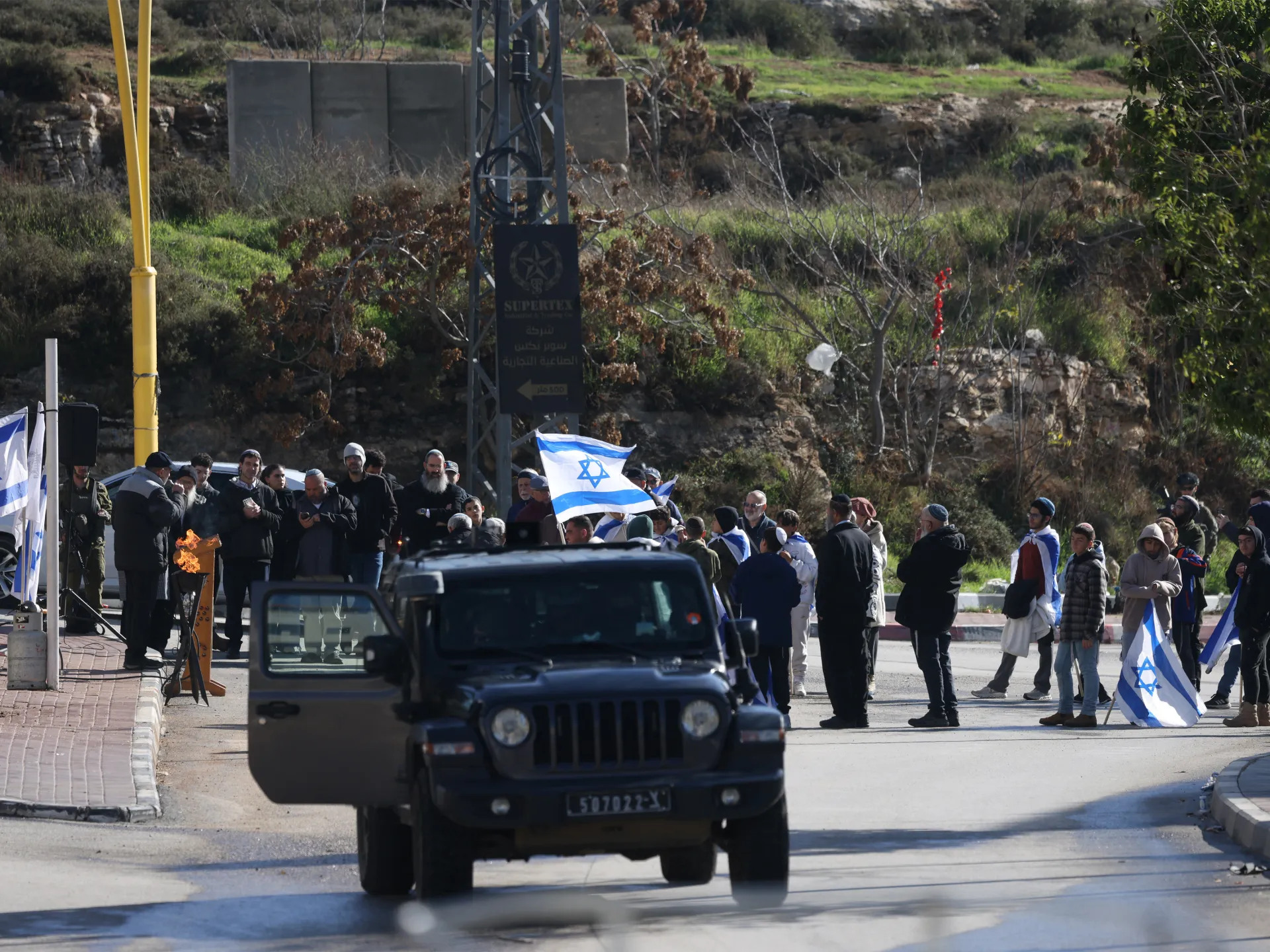
The Israeli government has approved the formalisation of 19 so-called settlement outposts as independent settlements in the occupied West Bank. This is the third wave of such formalisations this year by the government, which considers settlement expansion and annexation a top priority. During an earlier ceremony of formalisation, Finance Minister Bezalel Smotrich said, “We are advancing de facto sovereignty on the ground to prevent any possibility of establishing an Arab state in [the West Bank].”

Settlement outposts, which are illegal under international law, are set up by a small group of settlers without prior government authorisation. This does not mean that the settlers, who are often more ideological and violent, do not enjoy government protection. Israeli human rights organisations say that settlers in these so-called outposts enjoy protection, electricity and other services from the Israeli army. The formalisation opens the door to additional government funds, infrastructure and expansion.

Many of the settlement outposts formalised in this latest decision are concentrated in the northeastern part of the West Bank, an area that traditionally has had very little settlement activity. They also include the formalisation of two outposts evacuated in 2005 by the government of Israeli then-Prime Minister Ariel Sharon.

While these government decisions may seem bureaucratic, they are in fact strategic in nature. They support the more ideological and often more violent settlers entrenching their presence and taking over yet more Palestinian land, and becoming more brazen in their attacks against Palestinians, which are unprecedented in scope and effect.

The Israeli human rights organisation B’Tselem estimates that settler attacks against Palestinians have forcibly displaced 44 communities across the West Bank in the past two years. These arson attacks, vandalism, physical assault and deadly shootings are done under the protection of Israeli soldiers. During these settler attacks, 34 Palestinians were killed, including three children. None of the perpetrators has been brought to justice. In fact, policing of these groups has dropped under the direction of Israel’s national security minister, Itamar Ben-Gvir, who is a settler himself.

United Nations Secretary-General Antonio Guterres recently sounded the alarm about Israel’s record-breaking expansion of illegal settlements in the West Bank and the unprecedented levels of state-backed settler violence. In a briefing to the UN Security Council, Guterres reminded states that all settlements are illegal under international law. He also warned that they erode Palestinian rights recognised under this law, including to a state of their own.

In September, United States President Donald Trump said he “will not allow” Israel to annex the West Bank, without offering details of what actions he would take to prevent such a move.

But Israel is undeterred. The government continues to pursue its agenda of land grab, territorial expansion and annexation by a myriad of measures that fragment, dispossess and isolate Palestinians in the West Bank, including East Jerusalem, and continues its genocidal violence in Gaza.

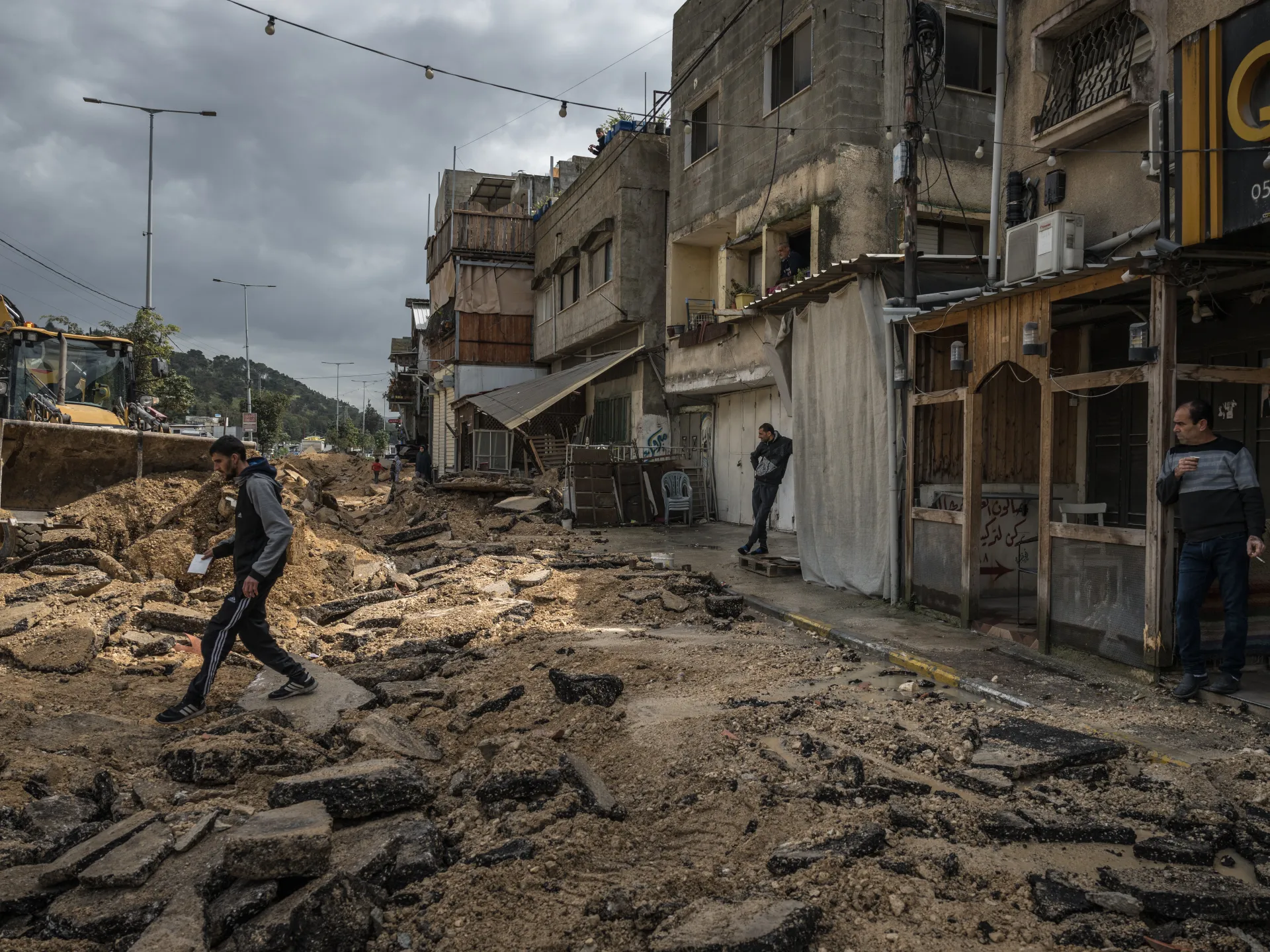
More than 32,000 Palestinians have been forcibly displaced from their homes in three refugee camps in the occupied West Bank for nearly a year. The Israeli army continues to occupy Nur Shams, Tulkarem and Jenin refugee camps and ban residents from returning. Meanwhile, Israeli forces have demolished and damaged 1,460 buildings in those camps, according to a preliminary UN estimate. This huge, destructive campaign has changed the geography of the camps and plunged more families into economic and social despair.

This is the state hundreds of thousands of Palestinians across the West Bank find themselves in because of Israeli restrictions, home demolitions and land grabs. The Israeli army has set up close to 1,000 gates across the West Bank, turning communities into open-air prisons. This has a direct and devastating effect on the social fabric, economy and vitality of these communities, which live on land that is grabbed from under them to execute the expansion of illegal settlements, roads and so-called buffer zones around them.

According to the UN Conference on Trade and Development, Israeli practices and policies over the past two years have cost the Palestinian people 69 years of development. The organisation recently reported that the Palestinian gross domestic product (GDP) has shrunk to 2010 levels. This is visible most starkly in Gaza, but it is palpable in the West Bank as well.

The results of these policies and this reality are Palestinians leaving their homes and Israel expanding. During the summer, Israeli Prime Minister Benjamin Netanyahu told a local news station he was on a “historic and spiritual mission”, in reference to the vision of the Greater Israel that he said he was “very” attached to.

Source link

Israel to demolish 25 homes in occupied West Bank’s Nur Shams camp | Occupied West Bank News

Rights groups say the demolition order, which will affect 100 Palestinian homes, is an attempt to ‘cage in’ Palestinians.

The Israeli military will demolish 25 residential buildings in the occupied West Bank’s Nur Shams refugee camp this week, according to local authorities.

Abdallah Kamil, the governor of the Tulkarem governorate where Nur Shams is located, told the AFP news agency on Monday that he was informed of the planned demolition by the Israeli Defence Ministry body COGAT.

Recommended Stories

list of 4 itemsend of list

Faisal Salama, the head of the popular committee for the Tulkarem camp, which is near Nur Shams, said the demolition order would affect 100 family homes.

Israel launched Operation Iron Wall in the occupied West Bank in January. It says the campaign is aimed at combating armed groups in refugee camps in the northern West Bank.

Human rights organisations have warned that Israel is using many similar tactics it used in its genocidal war against the Palestinian people in Gaza to seize and control territory across the occupied West Bank.

“This is part of a wider campaign that has persisted for about a year, targeting three refugee camps and demolishing or damaging a total of about 1,500 homes in the past year, and forcibly displacing 32,000 Palestinians,” said Al Jazeera’s Nour Odeh, reporting from the West Bank’s Ramallah.

Palestinians and human rights organisations say such demolitions are an attempt to “cage in” Palestinians and alter the geography in the West Bank, she added.

On Monday, a dozen displaced Nur Shams residents held a demonstration in front of armoured Israeli military vehicles blocking their way back to the camp. They protested against the demolition orders and demanded the right to return to their homes.

The head of the Palestinian National Council, Rouhi Fattouh, said that the Israeli decision is part of “ethnic cleansing and continuous forced displacement”, the Palestinian news agency Wafa reported.

‘Social death’

Omer Bartov, a professor of holocaust and genocide studies at Brown University, told Al Jazeera that Israel was “dehumanising” the Palestinian population in the occupied West Bank.

“[It is creating] a growing situation of social death, which is a term that was used to describe what happened to Jewish populations in Germany in the 1930s. That is, that your population, the Jewish population of Israel, increasingly has no contact with the people on the other side, and it exists as if they don’t exist,” he said.

“It dehumanises the population because you treat it as a population that has to be controlled, and it dehumanises the people doing it because they have to think of that population as being lesser than human.”

Aisha Dama, a camp resident whose four-floor family home, housing about 30 people, is among those to be demolished, told the AFP she felt alone against the military.

“On the day it happened, no one checked on us or asked about us,” she said.

“All my brothers’ houses are to be destroyed, all of them, and my brothers are already on the streets,” said Siham Hamayed, another camp resident.

Nur Shams, along with other refugee camps in the West Bank, was established after the 1948 Nakba, when hundreds of thousands of Palestinians were forcibly displaced from their homes in what is now Israel.

With time, the camps they established inside the West Bank became dense neighbourhoods. Residents pass on their refugee status from one generation to the next.

Source link

Gaza authorities struggle to recover bodies from rubble amid winter storms | Israel-Palestine conflict News

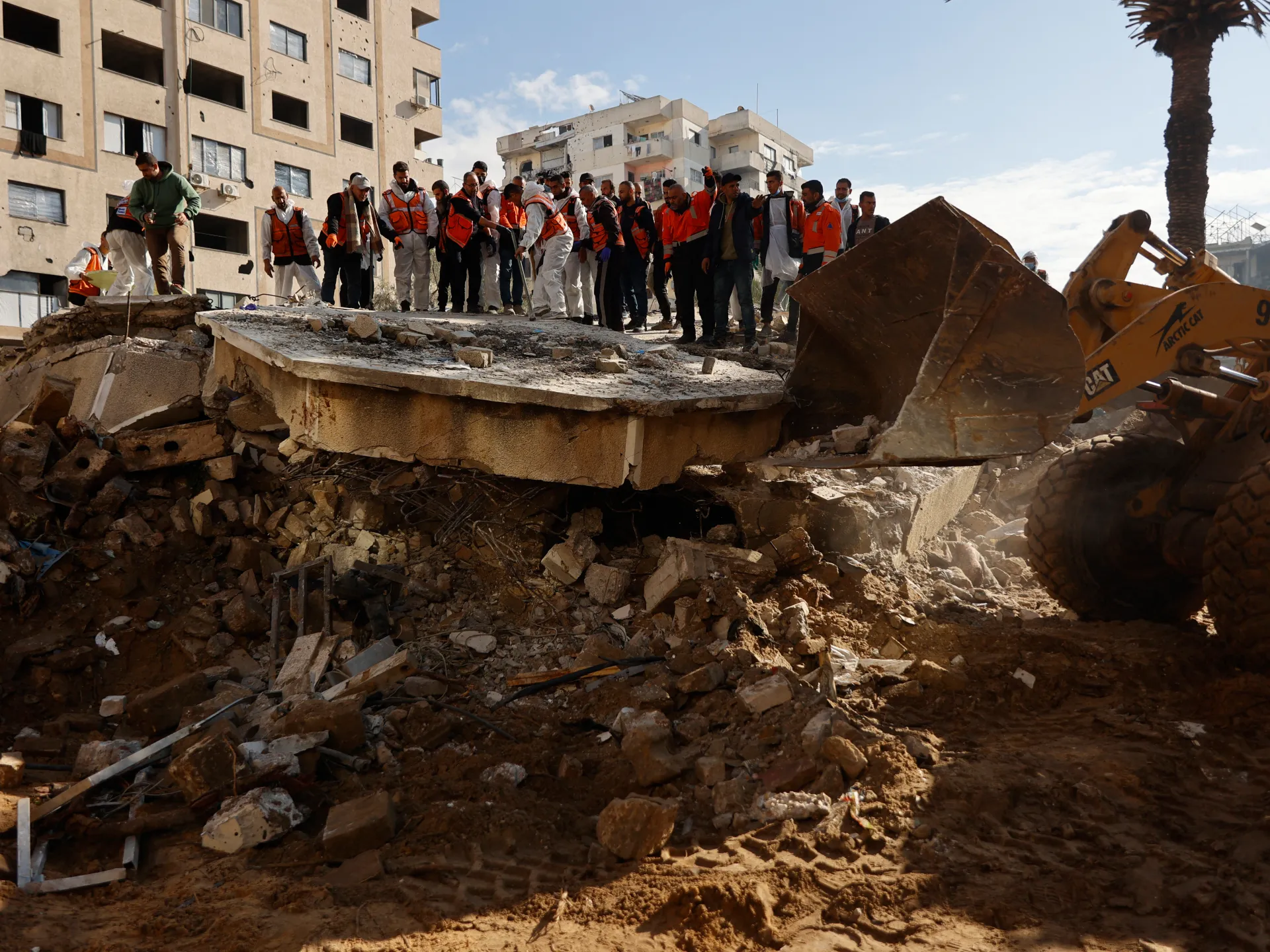
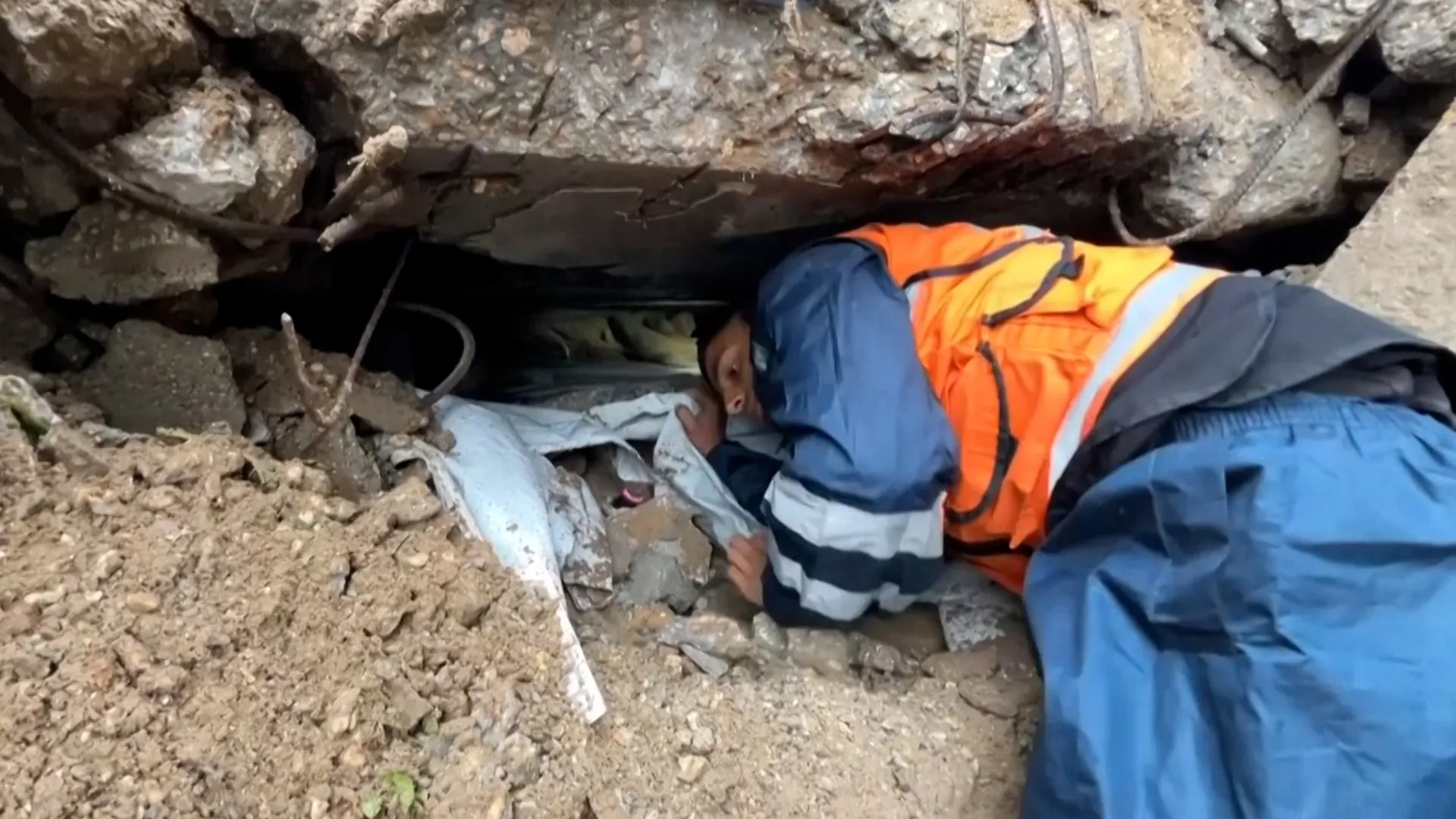
Authorities in Gaza have warned that stormy weather could spur more war-damaged buildings to collapse and heavy rains are making it more difficult to recover bodies still under the rubble.

Authorities sounded the alarm on Monday, three days after two buildings collapsed in Gaza, killing at least 12 people, during winter rains that have also washed away and flooded the tents of displaced Palestinians and led to deaths from exposure.

Recommended Stories

list of 4 itemsend of list

A ceasefire has been in effect since October 10 after two years of Israel’s genocidal war against the Palestinian people in Gaza, but humanitarian agencies said Israel is letting very little aid into the enclave, where nearly the entire population has been displaced.

Al Jazeera’s Tareq Abou Azzoum said despite a shortage of equipment and fuel and the weather conditions in the enclave, Palestinian Civil Defence teams retrieved the bodies of 20 people on Monday.

The bodies were recovered from a multistorey building bombed in December 2023 where about 60 people, including 30 children, were believed to be sheltering.

Gaza Civil Defence spokesman Mahmoud Basal called on the international community to provide mobile homes and caravans for displaced Palestinians rather than tents.

“If people are not protected today, we will witness more victims, more killing of people, children, women, entire families inside these buildings,” he said.

Father mourns children killed in building collapse

Mohammad Nassar and his family were living in a six-storey building that was badly damaged by Israeli strikes earlier in the war and collapsed in heavy rain on Friday.

His family had struggled to find alternative accommodation and had been flooded out while living in a tent during a previous bout of bad weather. Nassar went out to buy some necessities on Friday and returned to a scene of carnage as rescue workers struggled to pull bodies from the rubble.

“I saw my son’s hand sticking out from under the ground. It was the scene that affected me the most. My son under the ground and we are unable to get him out,” Nassar said. His son, 15, died as did a daughter, aged 18.

Exposure warning

The head of the United Nations agency for Palestinian refugees warned on Monday that more aid must be allowed into Gaza without delay to prevent putting more displaced families at serious risk.

“With heavy rain and cold brought in by Storm Byron [late last week], people in the Gaza Strip are freezing to death,” UNRWA Commissioner General Philippe Lazzarini posted on X.

“The waterlogged ruins where they are sheltering are collapsing, causing even more exposure to cold,” he added.

Lazzarini said UNRWA has supplies that have waited for months to enter Gaza that he said would cover the needs of hundreds of thousands of Gaza’s more than two million people.

UN and Palestinian officials said at least 300,000 new tents are urgently needed for the roughly 1.5 million people still displaced. Most existing shelters are worn out or made of thin plastic and cloth sheeting.

Gaza authorities, meanwhile, were still digging to recover about 9,000 bodies they estimated remain buried in rubble from Israeli bombing during the war, but the lack of machinery is slowing down the process, spokesman Ismail al-Thawabta said.

Azzoum reported that Civil Defence teams said they require a surge in heavy machinery to expedite the work.

“They are saying that they are still in need, initially, for 40 excavators and bulldozers in order to achieve some slight progress in the whole process on the ground,” Azzoum said, reporting from Gaza City.

Israel’s continuing ban on the entry of heavy machinery into the Gaza Strip is a violation of the ceasefire, he added.

Earlier on Sunday, Hamas said Israel’s continuing violations of the ceasefire risk jeopardising the agreement and progress towards the next stage of United States President Donald Trump’s plan to end the war.

Since the ceasefire began, Israel has continued to strike Gaza on a daily basis, carrying out nearly 800 attacks and killing nearly 400 people, according to authorities in Gaza, while blocking the free flow of humanitarian aid.

“There is no real sense of safety nor protection for families,” Azzoum said of the ongoing violations.

Source link

Israel demolishes more buildings in military-controlled Gaza: Analysis | Gaza News

Satellite images show ongoing demolitions behind the ‘yellow line’; experts warn actions likely violate Geneva Convention.

Satellite images reviewed by Al Jazeera’s Sanad fact-checking agency show that the Israeli military has continued to demolish buildings in areas of Gaza it has occupied since a ceasefire with Hamas went into effect.

The Palestinian group has decried such demolitions as a violation of the ceasefire deal, which went into force on October 10. Legal experts and United Nations officials have said throughout the war that the destruction of civilian infrastructure could constitute a war crime.

Recommended Stories

list of 3 itemsend of list

The Israeli military did not immediately respond to a request for comment from Al Jazeera, but officials have previously said such actions have been done within the ceasefire’s framework and were in response to active threats.

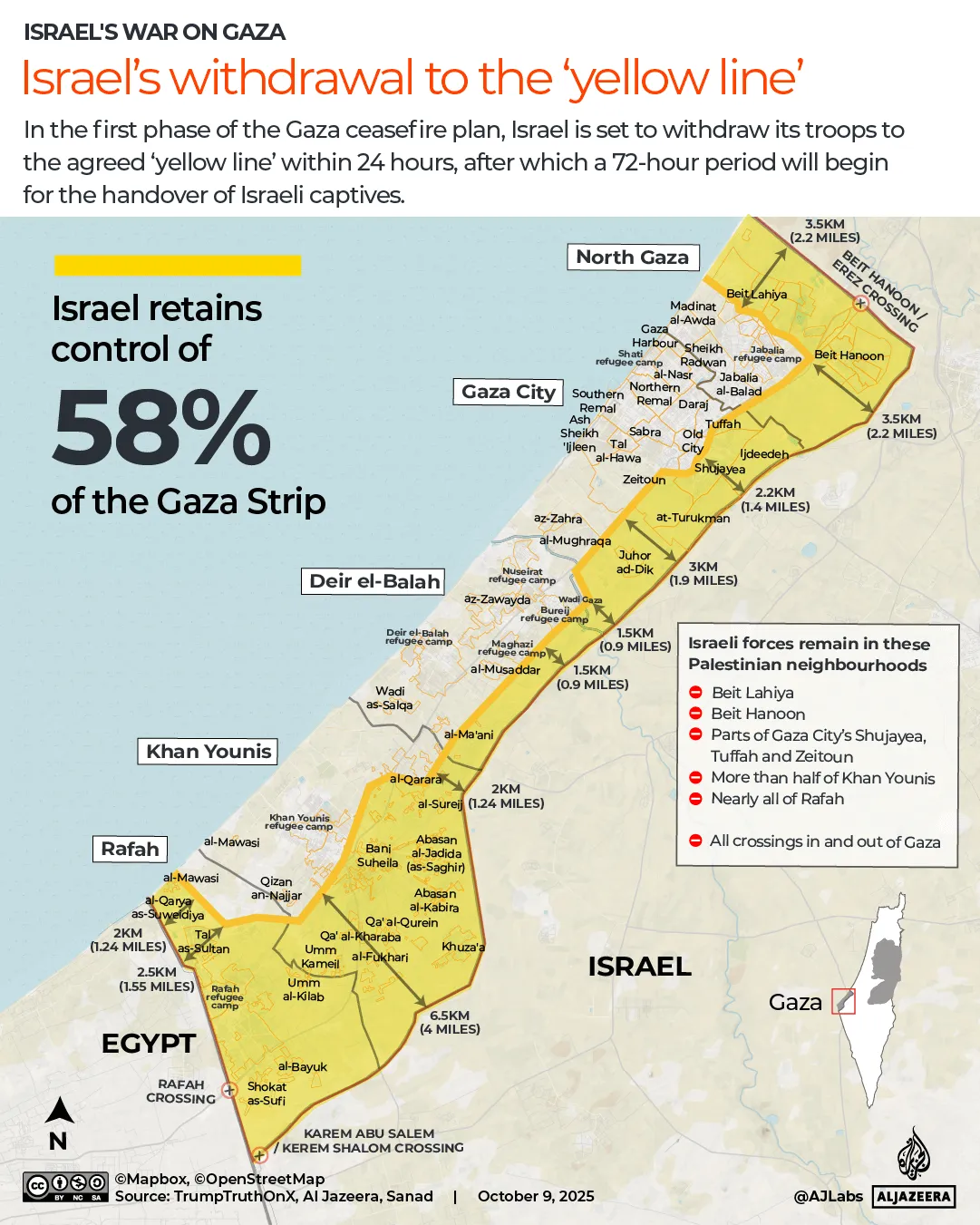
Israel has remained in control of about 58 percent of Gaza since the ceasefire began, withdrawing behind the so-called “yellow line” that divides coastal Gaza from its border regions.

Satellite images showed the latest demolitions took place between November 5 and December 13, with most concentrated in the Shujayea and the Tuffah neighbourhood in Gaza City.

INTERACTIVE - Gaza map Israel’s withdrawal in Trump’s 20-point plan yellow line map-1760017243

The images also appeared to show demolitions in the southern city of Rafah as well as the apparent destruction of agricultural facilities east of Deir el-Balah in central Gaza.

In an email to Al Jazeera, Adil Haque, a professor of law and armed conflict at Rutgers Law School, explained that under the Fourth Geneva Convention, “any destruction by an Occupying Power of private property is prohibited, except where such destruction is rendered absolutely necessary by military operations”.

“The exception is extremely narrow. The destruction must be absolutely necessary, not merely convenient or advantageous,” Haque said. “And the absolute necessity must arise from military operations, that is, from combat or direct preparations for combat.”

“With a general ceasefire in place, and only a few sporadic exchanges of fire, it is not plausible that such significant destruction of civilian property has been rendered absolutely necessary by military operations,” he added.

Violations continue

The Sanad analysis further found that Israel appears to have created a new advanced military outpost in Tal al-Za’atar in northern Gaza, with new tents and equipment added between November 5 and December 13.

Before its creation, there were 39 active Israeli military points inside the enclave, according to Sanad.

Israeli military operations have devastated Gaza throughout the war, with the UN Relief and Works Agency for Palestine Refugees (UNRWA) reporting last month that 282,000 housing units have been destroyed in the enclave, where about 1.5 million Palestinians remain displaced.

About 93 percent of schools have been destroyed or damaged throughout the war, with 63 percent of hospitals remaining out of commission as of December 9.

A UN Human Rights Council independent commission in September repeatedly cited attacks on civilian infrastructure, particularly medical facilities, in finding that Israel has committed genocide in Gaza.

INTERACTIVE - Where Israeli forces are positioned yellow line gaza map-1761200950

Meanwhile, Gaza’s Health Ministry has said that 391 Palestinians have been killed in Israeli attacks in the enclave since the ceasefire went into effect.

All told, at least 70,663 Palestinians have been killed in Gaza since the Hamas-led attack on southern Israel on October 7, 2023, which killed at least 1,139 people.

Last week, Hamas political bureau member Hossam Badram decried a reported statement by Israeli army chief Eyal Zamir in which the military official described the “yellow line” as the “new borderline” with Gaza.

At the time, Badran said that Hamas viewed Israeli demolitions in the area as a continuation of military operations.

Source link

The real reason Israel wants to open the Rafah crossing | Israel-Palestine conflict

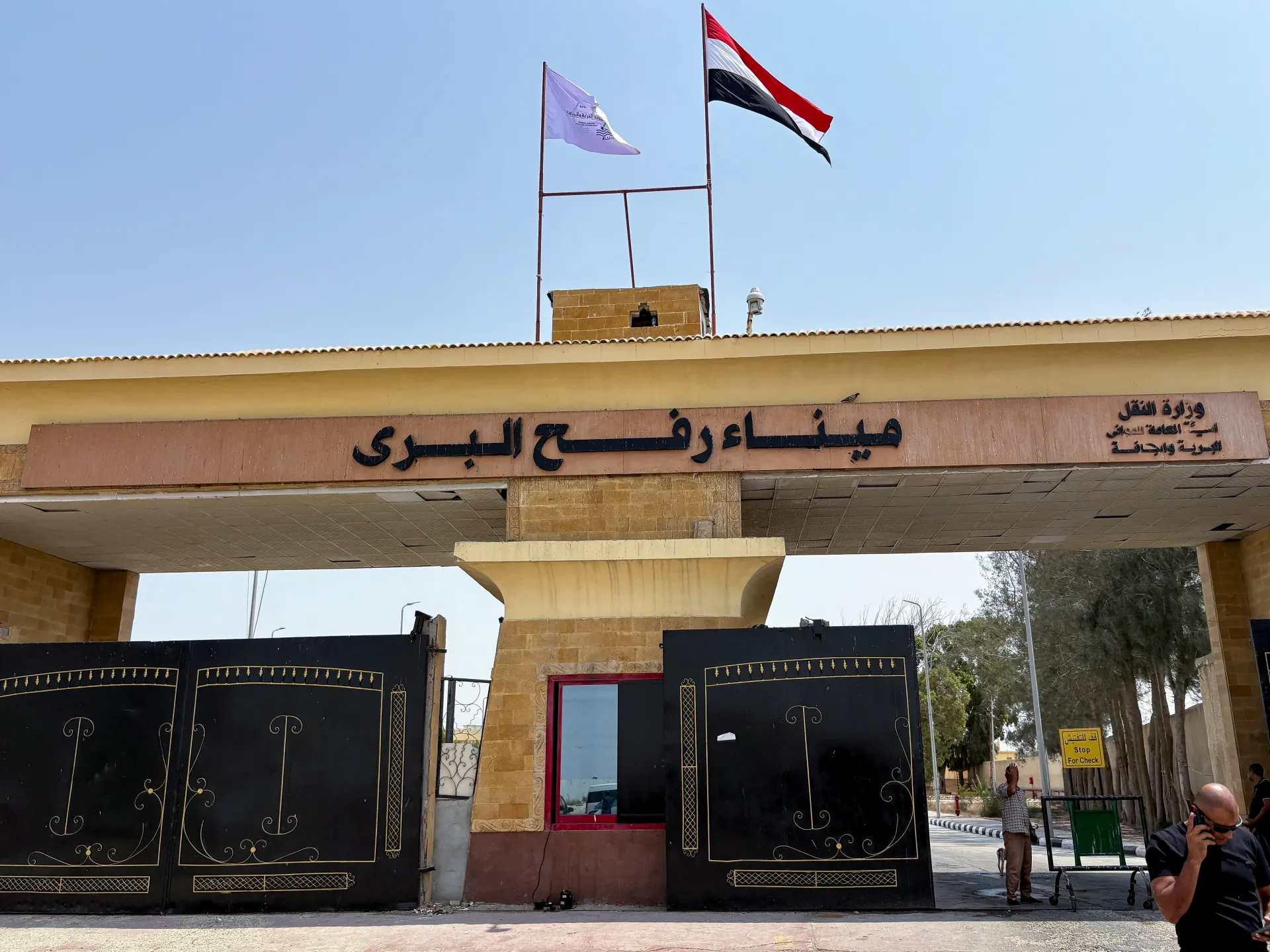
On December 3, Israel announced that the Rafah border crossing with Egypt would reopen “in the coming days”, allowing Palestinians to leave Gaza for the first time in months. The statement was, of course, framed as a humanitarian gesture that would allow those in urgent need to travel for medical care, education or family reunification to leave.

However, Israel’s announcement was met almost immediately with Egypt’s denial, followed by a firm rejection from several Arab and Muslim states.

To the rest of the world, this response may seem cruel. It may seem like Arab states want to forcibly keep in Gaza Palestinians desperate to evacuate to safety. This fits right into the Israeli narrative that neighbouring Arab countries are responsible for Palestinian suffering because they would not “let them in”.

This is a falsehood that has unfortunately made its way into Western media, even though it is easily disproved.

Let us be clear: No, Arab states are not keeping us against our will in Gaza, and neither is Hamas.

They want to make sure that when and if some of us evacuate temporarily, we are able to come back. We want the same – a guarantee of return. Yet, Israel refuses to grant it; it made clear in its December 3 announcement that the Rafah crossing would be open only one way – for Palestinians to leave.

So this was clearly a move meant to jump-start forced displacement of the Palestinian population from their homeland.

For Palestinians, this is not a new reality but part of a long and deliberate pattern. Since its inception, the Israeli state has focused on the dispossession, erasure, and forced displacement of the Palestinians. In 1948, 750,000 Palestinians were expelled from their homes and were not allowed to return. My 88-year-old grandfather was among them. He still keeps the Tabu (land registry document) for the dunams of land he owns in his village of Barqa, 37km (23 miles) north of Gaza, where we are still not allowed to return.

In 1967, when Israel occupied Gaza, it forbade Palestinians who were studying or working abroad from returning to their homes. In the occupied West Bank, where colonisation has not stopped for the past 58 years, Palestinians are regularly expelled from their homes and lands.

In the past two years alone, Israel has seized approximately 55,000 dunams of Palestinian land, displacing more than 2,800 Palestinians. In Jerusalem, Palestinians whose families had lived in the holy city for centuries risk losing their residency there if they cannot prove it is their “centre of life”. In the past 25 years, more than 10,000 Palestinian residencies have been revoked.

Since October 2023, Israel has repeatedly attempted to engineer forced mass displacement in Gaza – dividing the Strip into isolated zones separated by military corridors and “safe” axes and launching successive operations to push residents of the north towards the south. Each wave of mass bombing carried the same underlying objective: to uproot the people of Gaza from their homes and push them towards the border with Egypt. The most recent push occurred just before the latest ceasefire took effect.

According to Diaa Rashwan, chairman of the Egyptian State Information Service, Cairo rejected Israel’s proposal because it was an attempt to shun its commitments outlined in the second phase of the ceasefire. That phase requires Israel to withdraw from Gaza, support the reconstruction process, allow the Strip to be administered by a Palestinian committee, and facilitate the deployment of a security force to stabilise the situation. By announcing Rafah’s reopening, Israel sought to bypass these obligations and redirect the political conversation towards depopulation rather than reconstruction and recovery.

That Israel wants to create the conditions to make our expulsion inevitable is clear from other policies as well. It continues to bombard the Strip, killing hundreds of civilians and terrorising hundreds of thousands.

It continues to prevent adequate amounts of food and medicines from getting in. It is allowing no reconstruction materials or temporary housing. It is doing everything to maximise the suffering of the Palestinian people.

This reality is made even more brutal by the harsh winter. Cold winds tear through overcrowded camps filled with exhausted people who have endured every form of trauma imaginable. Yet despite hunger, exhaustion, and despair, we continue to cling to our land and reject any Israeli efforts to displace and erase us.

We also reject any form of external guardianship or control over our fate. We demand full Palestinian sovereignty over our land, our resources, and our crossings. Our position is clear: the Rafah crossing must be opened in both directions; not as a tool of displacement, but as a right to free movement.

Rafah must be accessible for those who wish to return, and for those who need to leave temporarily: students seeking to continue their education abroad, patients in urgent need of medical treatment unavailable in Gaza, and families who have been separated and long to be reunited. Thousands of critically ill Palestinians have been denied life-saving care due to the siege, while hundreds of students holding offers and scholarships from prestigious universities around the world have been unable to travel to pursue their education.

Rafah should also be open to those who simply need rest after years of trauma – to step outside Gaza briefly and return with dignity. Mobility is not a privilege; it is a basic human right.

What we demand is simple: the right to determine our future, without coercion, without bargaining over our existence, and without being pushed into forced displacement disguised as a humanitarian project.

The views expressed in this article are the author’s own and do not necessarily reflect Al Jazeera’s editorial stance.

Source link