Israel-Palestine conflict

Israel kills two Palestinians in Gaza City as ceasefire violations mount | Gaza News

Deadly attack comes as Gaza government media office says Israel violated ceasefire 875 times since it began in October.

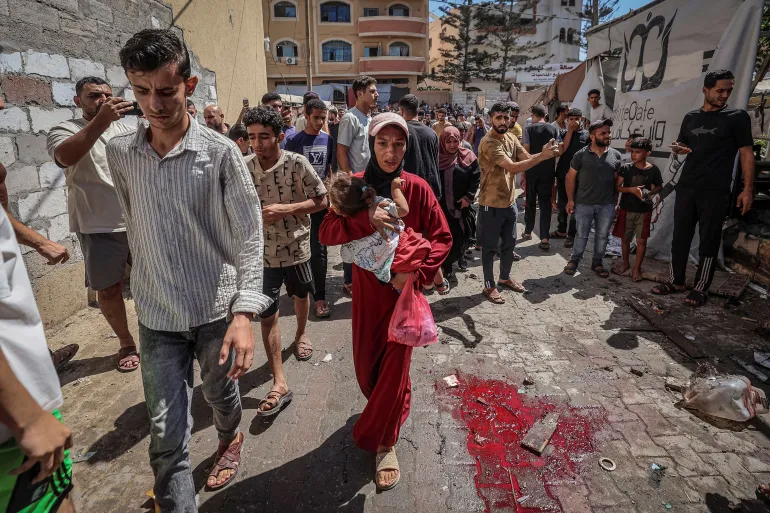
Israeli forces have killed at least two Palestinians in the Gaza Strip as Israel continues to violate a ceasefire agreement and block desperately needed humanitarian aid to the war-ravaged coastal enclave.

The Palestinian news agency Wafa reported on Monday that two people were killed after Israeli troops opened fire in the Shujayea neighbourhood of eastern Gaza City.

Recommended Stories

list of 3 itemsend of list

Their deaths bring the total number of Palestinians reported killed in Gaza over the past 24 hours to at least 12, including eight whose bodies were recovered from the rubble in the territory.

The Gaza City attack is the latest in hundreds of Israeli violations of a United States-brokered ceasefire between Israel and Hamas, which came into effect on October 10.

Gaza’s Government Media Office on Monday condemned Israel’s “serious and systematic violations” of the truce, noting that the Israeli authorities had breached the ceasefire 875 times since it came into force.

That includes continued Israeli air and artillery attacks, unlawful demolitions of Palestinian homes and other civilian infrastructure, and at least 265 incidents of Israeli troops shooting Palestinian civilians, the office said in a statement.

At least 411 Palestinians have been killed and 1,112 others wounded in Israeli attacks on Gaza since the ceasefire began, it added.

Worsening shelter conditions

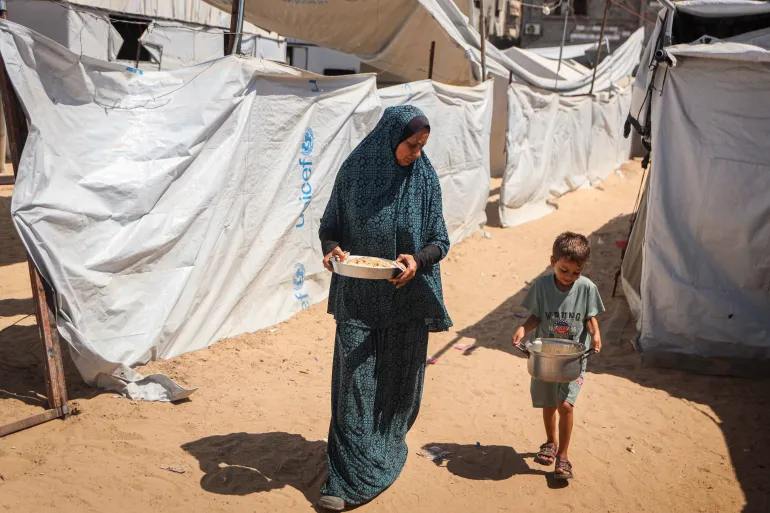
Meanwhile, hundreds of thousands of Palestinian families displaced by Israel’s genocidal war on Gaza continue to grapple with a lack of humanitarian supplies, including adequate food, medicine and shelter.

As the occupying power in Gaza, Israel has an obligation under international law to provide for the needs of Palestinians there.

But the United Nations and other humanitarian groups say it has systematically failed to allow unimpeded deliveries of aid into Gaza.

The situation has been worsened by a series of winter storms that have pummelled the Strip in recent weeks, with rights groups saying Israel’s refusal to allow tents, blankets and other supplies into Gaza is part of its genocidal policy and threatening Palestinian lives.

On Monday, the Gaza Government Media Office said that only 17,819 trucks entered the territory out of the 43,800 that were supposed to be allowed in since the ceasefire came into effect in October.

That amounts to an average of just 244 trucks per day – far below the 600 trucks that Israel agreed to allow into Gaza daily under the ceasefire agreement, the office said.

On Monday, a spokesperson for UN chief Antonio Guterres reiterated the call “for the lifting of all restrictions of the entry of aid into Gaza, including shelter material”.

“Over the past 24 hours, and despite the ceasefire, we have continued to receive reports of air strikes, shelling and gunfire in all five governorates of Gaza. This has resulted in reported casualties and disruptions to humanitarian operations,” Stephane Dujarric said.

He said that the UN’s humanitarian partners are working to address the significant shelter needs, particularly for displaced families living in unsafe conditions.

“Our partners continue to work to improve access to dignified shelter for approximately 1.3 million people in Gaza in the past week, about 3,500 families affected by storms are living in flood prone areas,” he said.

Dujarric said that aid deliveries have included tents, bedding sets, mattresses and blankets, as well as winter clothing for children, but the needs remain overwhelming.

Flooding hits displaced Palestinians’ tents after heavy rain in Gaza
Palestinians struggle with flooding after heavy rain hits the Bureij refugee camp in Gaza City [File: Moiz Salhi/Anadolu]

The appeals come a day after the Palestinian Ministry of Health in Gaza said that a lack of drugs and other healthcare supplies was making it difficult to provide care to patients.

Nearly all of Gaza’s hospitals and healthcare facilities were attacked during Israel’s two-year bombardment of the territory, damaging at least 125 facilities, including 34 hospitals.

The Israeli army has killed at least 70,937 Palestinians in Gaza, mostly women and children, and injured 171,192 others since its genocidal war began in October 2023.

Source link

Illegal settlement expansion: How Israel is redrawing occupied West Bank | Explainer News

The Israeli security cabinet has approved 19 new settlement outposts in the occupied West Bank as the right-wing government headed by Prime Minister Benjamin Netanyahu moves to prevent the formation of a viable Palestinian state.

As Netanyahu’s government has made the annexation of occupied Palestinian territory a priority, the United Nations has said Israeli settlement expansions in 2025 have reached their highest level since 2017.

“These figures represent a sharp increase compared to previous years,” UN Secretary-General Antonio Guterres said, noting an average of 12,815 housing units were added annually from 2017 to 2022.

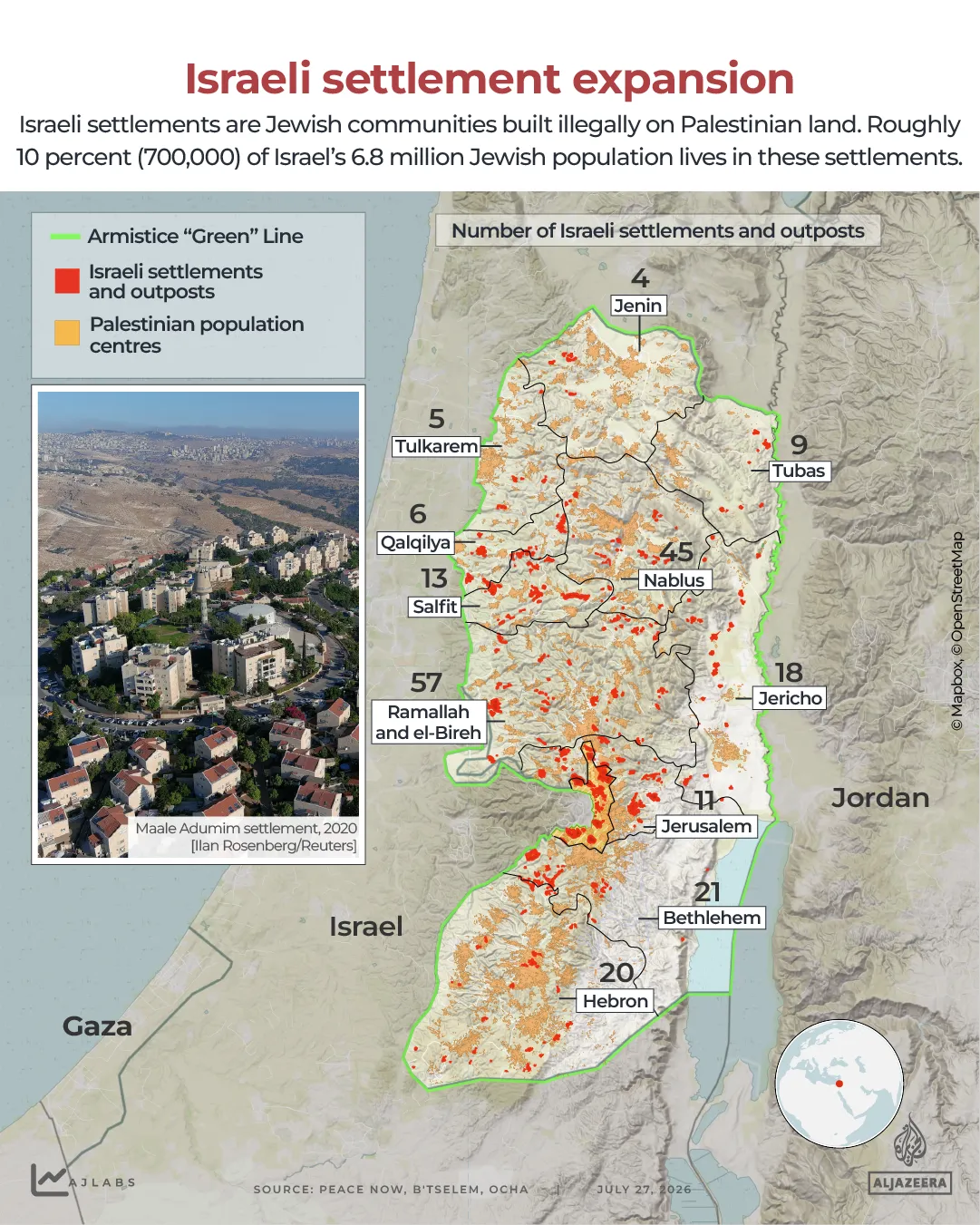
Under the current far-right government, the number of settlement and outposts in the West Bank and occupied East Jerusalem has risen by nearly 50 percent – from 141 in 2022 to 210 now. An outpost is built without government authorisation while a settlement is authorised by the Israeli government.

Nearly 10 percent of Israel’s Jewish population of 7.7 million people lives in these settlements, which are considered illegal under international law.

Here’s everything you need to know about the newly approved settlements and what they mean for the future of Palestinian statehood.

INTERACTIVE - Occupied West Bank - Israel approves 19 new illegal settlements-1766394958
(Al Jazeera)

Where are the new settlements?

The new settlements are spread across the West Bank – home to more than three million Palestinians – from Jenin in the north to Hebron in the south.

Most of them are close to the densely populated Palestinian villages of Duma, Jalud, Qusra and al-Lubban Asharqiya in the Nablus governorate and Sinjil in the Ramallah and el-Bireh governorate, according to Peace Now, an antisettlement watchdog group based in Israel. Other locations identified by the watchdog for the new settlement areas are in the northwestern West Bank, in the Salfit governorate, near the Palestinian towns of Sa’ir and Beit Sahour, and other areas near Bethlehem and in the Jericho governorate.

Israel’s construction spree is entrenching the occupation and squeezing Palestinians out of their homeland. Settlements dot the West Bank and are often connected by Israeli-only highways while Palestinians face roadblocks and security checks, making their daily commutes harrowing experiences.

Israel has also built Separation Barrier that stretches for more than 700km (435 miles) through the West Bank restricting movement of Palestinians. Israel says the wall is for security purposes.

Under a dual legal system, Palestinians are tried in Israel’s military courts while crimes committed by settlers are referred to a civilian court.

Israel’s latest approval also includes settlements in Ganim and Kadim, two of the four West Bank settlements east of Jenin that were dismantled as part of Israel’s 2005 disengagement plan, a unilateral withdrawal ordered by then-Prime Minister Ariel Sharon.

Five of the 19 settlements already existed but had not previously been granted legal status under Israeli law, according to a statement from the office of Finance Minister Bezalel Smotrich.

Israel controls most of the West Bank and East Jerusalem, territory Palestinians want to be part of a future state along with Gaza. Israel captured East Jerusalem, the West Bank and the Gaza Strip in a 1967 war. It later annexed East Jerusalem, which Palestinians see as their future capital.

Israeli settlements and outposts are Jewish-only communities built on Palestinian land and they can range in size from a single dwelling to a collection of high-rises. About 700,000 settlers live in the West Bank and East Jerusalem, according to Peace Now.

The latest approval comes at a time when the United States has been working with Israel and Arab allies to move the Gaza ceasefire into a second phase. After a meeting on Friday of top officials from the US, Egypt, Turkiye and Qatar in the US city of Miami, Florida, Turkish Foreign Minister Hakan Fidan accused Israel of committing repeated violations of the ceasefire that began in October.

Israel still controls nearly half of Gaza’s territory since a ceasefire was announced on October 10 after more than two years of a genocidal war killed more than 70,000 Palestinians.

Palestinian farmers (L) scuffle with Israeli settlers during the olive harvest in the Palestinian village of Silwad, near Ramallah in the Israeli-occupied West Bank, on October 29, 2025.
Palestinian farmers, left, scuffle with Israeli settlers during the olive harvest in the Palestinian village of Silwad,near Ramallah in the Israeli-occupied West Bank on October 29, 2025 [AFP]

Has settlement construction spiked in recent years?

The new settlements bring the total number approved over the past three years to 69, according to a statement from the office of Smotrich, who is a vocal proponent of settlement expansion and a settler himself.

In May, Israel approved 22 new settlements in the West Bank, the biggest expansion in decades.

The UN chief has condemned what he described as Israel’s “relentless” expansion of settlements in occupied Palestinian territory. It “continues to fuel tensions, impede access by Palestinians to their land and threaten the viability of a fully independent, democratic, contiguous and sovereign Palestinian state”, Guterres said this month.

Palestinians have also been facing increasing settler violence since Israel’s war on Gaza began.

According to data from the UN Office for the Coordination of Humanitarian Affairs (OCHA), settlers have attacked Palestinians nearly 3,000 times over the past two years.

Settler attacks often escalate during the olive harvest from September to November, a vital time of year that provides a key source of income for many Palestinian families.

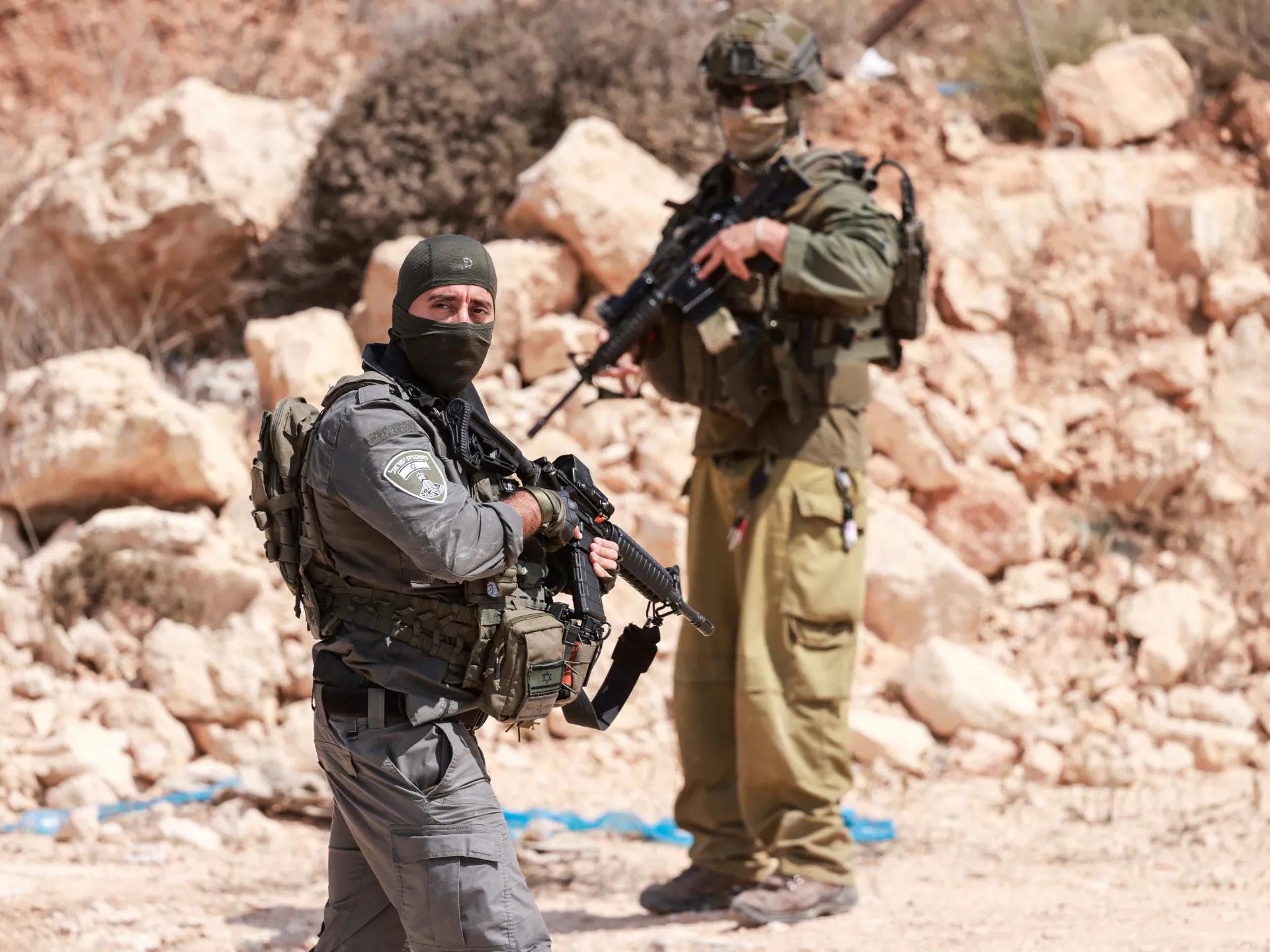
Settlers are often armed and frequently accompanied or protected by Israeli soldiers. In addition to destroying Palestinian property, they have carried out arson attacks and killed Palestinian residents.

Every West Bank governorate has faced settler attacks over the past two years, data from OCHA shows.

INTERACTIVE - Settler attacks across theoccupied West Bank (2024-2025)-west bank - October 14, 2025-1760450290
(Al Jazeera)

No. The UN, the International Court of Justice (ICJ) and the International Committee of the Red Cross all consider Israeli settlements as a violation of the Fourth Geneva Convention, which outlaws settler activity.

In a landmark judgement in July 2024, the ICJ, the UN’s top court, found that Israel’s occupation, settlement activity and annexation measures are illegal. In its nonbinding advisory opinion, the ICJ ruled that Israel’s continued presence in occupied Palestinian territory is unlawful and should come to an end “as rapidly as possible”.

The judges pointed to a wide list of policies – including the building and expansion of Israeli settlements in the West Bank and East Jerusalem, use of the area’s natural resources, the annexation and imposition of permanent control over lands and discriminatory policies against Palestinians – all of which it said violated international law.

Two months later, the UN General Assembly adopted a resolution demanding that Israel end its occupation of Palestinian territory within a year.

But Israel has defied the resolution by the global body backed by its ally – the United States. Washington has extended diplomatic cover to Israel against numerous UN resolutions.

a lady in a pink dress and head scarf picks olives
Palestinians harvest olives near the occupied West Bank village of Turmus Aya near Ramallah on October 19, 2025 [Hazem Bader/AFP]

Since returning to power in January, US President Donald Trump has adopted a permissive stance towards Israeli settlement activity, breaking with longstanding US policy.

In 2019, he said Israeli settlements in the West Bank were not inherently illegal under international law. Trump also revoked his predecessor President Joe Biden’s sanctions on several settlers and groups accused of perpetrating violence against Palestinians in the West Bank.

US sanctions on settlers under Biden came under Washington’s long-held policy that settlements are the biggest impediments to the two-state solution to the conflict.

However, Trump and his officials have repeatedly said Israel cannot annex the West Bank. “It won’t happen because I gave my word to the Arab countries,” Trump told Time magazine in October. “Israel would lose all of its support from the United States if that happened.”

Israelis walk past troops standing guard during a weekly settlers' tour in Hebron, in the Israeli-occupied West Bank, December 13, 2025. REUTERS/Mussa Qawasma
Israelis walk past soldiers standing guard during a weekly settlers tour in Hebron in the Israeli-occupied West Bank on December 13, 2025 [Mussa Qawasma/Reuters]

What will the new settlements mean for the future of a Palestinian state?

The growing settlements – together with other projects undertaken by Netanyahu’s government like the E1 settlement plan that will split the West Bank – are further squeezing Palestinians in occupied territory.

Settlement expansions have drawn criticism from the international community, including Israel’s European allies, who said the steps undermine prospects for a two-state solution.

But Netanyahu and his far-right cabinet, including Smotrich and National Security Minister Itamar Ben-Gvir, have doubled down on their rhetoric against a Palestinian state.

“On the ground, we are blocking the establishment of a Palestinian terror state,” Smotrich said in his statement on Sunday.

In June, the United Kingdom, Australia, Canada, New Zealand and Norway slapped sanctions on Smotrich and Ben-Gvir for inciting violence.

Several European nations, including the UK and France, as well as Australia recognised Palestinian statehood in September in a push for the two-state solution.

Israel condemned the move, and Netanyahu said he won’t allow a Palestinian state. He has previously boasted how he scuttled the 1993 and 1995 Oslo peace accords by boosting settlement expansion in occupied territory.

“It’s not going to happen. There will be no Palestinian state to the west of the Jordan River,” Netanyahu said in an address in September. “For years, I have prevented the creation of that terror state against tremendous pressure, both domestic and from abroad.”

Source link

Israeli military storms West Bank towns, carries out demolition | Occupied West Bank News

Palestinian officials condemn the actions as part of a ‘systematic policy of displacement’ in the occupied territory.

Israeli forces have stormed towns in the occupied West Bank and demolished a residential building.

Soldiers fired stun grenades and tear gas on Monday as they carried out the demolition in East Jerusalem. Palestinian officials accused Israel of a campaign of displacement in the city, saying the operation was part of a systematic attempt to ethnically cleanse Palestinians from their land.

Recommended Stories

list of 4 itemsend of list

Scores of Palestinians were displaced as Israeli bulldozers tore through a four-storey residential building. Activists called it the largest such demolition in the area this year.

Three bulldozers destroyed the building with 13 apartments in the Wadi Qaddum neighbourhood of the Silwan district, south of Jerusalem’s Old City, Al Jazeera Arabic correspondents reported.

Israeli forces cordoned off surrounding roads, deployed heavily across the area and positioned security personnel on the rooftops of neighbouring houses. During the operation, a young man and a teenage boy were arrested.

Residents were told the demolition order was issued because the building had been constructed without a permit.

Palestinians face severe obstacles in obtaining building permits due to Israel’s restrictive planning policies, activists say, a policy that they assert is part of a systematic attempt to ethnically cleanse Palestinians from their land.

Israel’s security cabinet has recently approved the recognition of 19 new settlements in the West Bank, expanding the total number approved this year to 69 as the government continues its settlement push.

‘Systematic policy of displacement’

The Jerusalem governorate, affiliated with the Palestinian Authority, condemned the demolition.

“The building’s destruction is part of a systematic policy aimed at forcibly displacing Palestinian residents and emptying the city of its original inhabitants,” the governorate said in a statement.

“Any demolition that expels residents from their homes constitutes a clear occupation plan to replace the land’s owners with settlers.”

The Jerusalem municipality, an Israeli authority whose jurisdiction over East Jerusalem is not recognised under international law, said the demolition was based on a 2014 court order.

Israeli human rights groups Ir Amim and Bimkom said the demolition was carried out without warning despite a scheduled meeting on Monday to discuss steps to legalise the building.

“This is part of an ongoing policy. This year alone, around 100 East Jerusalem families have lost their homes,” the groups said, calling Monday’s demolition the largest of 2025.

Escalated attacks

Elsewhere in the West Bank, Israeli forces damaged agricultural land and uprooted trees in the northern town of Silat al-Harithiya.

In the city of Halhul, north of Hebron, Israeli forces stormed several neighbourhoods with large numbers of military vehicles, deployed sniper teams and took up positions across the city.

Al Jazeera Arabic journalists reported that Israeli vehicles entered Halhul through multiple checkpoints, including Nabi Yunis, while closing the Halhul Bridge checkpoint linking the city to Hebron.

Since Israel launched its war on Gaza in October 2023, Israeli forces and settlers have also sharply escalated attacks across the West Bank.

More than 1,102 Palestinians have been killed in the territory, about 11,000 wounded and more than 21,000 arrested, according to Palestinian figures.

Source link

Two Palestine Action hunger strikers in UK prisons admitted to hospital | Israel-Palestine conflict News

London, United Kingdom – Two Palestine Action-affiliated remand prisoners on hunger strike have been taken to hospital, according to a family member and a friend, adding to fears that the young Britons refusing food in protest could die at any moment.

Twenty-eight-year-old Kamran Ahmed, who is being held at Pentonville prison in London, was hospitalised on Saturday, his sister, Shahmina Alam, told Al Jazeera.

Recommended Stories

list of 4 itemsend of list

Amu Gib, 30, who has not eaten food for 50 days at HMP Bronzefield in Surrey, was taken to hospital on Friday, said the Prisoners for Palestine group and friend Nida Jafri, who is in regular contact with them. Gib uses the pronoun they.

Ahmed and Gib are among six detainees protesting across five prisons over their alleged involvement in break-ins at the United Kingdom’s subsidiary of the Israeli defence firm Elbit Systems in Bristol and a Royal Air Force base in Oxfordshire.

They deny the charges against them, such as burglary and violent disorder.

“It’s day 42 [of Ahmed’s hunger strike], and at this point, there’s significant risk of organ damage,” said his sister, Alam. “We know that he’s rapidly been losing weight in the last few days, losing up to half a kilogram [1.1lbs] a day.”

Ahmed’s last recorded weight was 60kg (132lbs).

When Al Jazeera first interviewed Alam on December 12, Ahmed, who is 180cm (5′ 11”), weighed 64kg (141lbs), having entered prison at a healthy 74kg (163lbs). On Thursday, Alam told journalists at a news conference in London that he weighed 61.5kg (136lbs).

Ahmed’s speech was slurred in a call with the family on Friday, said Alam. He is said to be suffering from high ketone levels and chest pains.

“Honestly, I don’t know how he’s going to come out of this one,” said Alam.

It is the third time Ahmed has been hospitalised since he joined the hunger strike.

Shahmina Alam with Kamran Ahmed - Palestine Action linked hunger striker [Courtesy of Alam family]
Shahmina Alam with her younger brother, Kamran Ahmed, a Palestine Action-linked hunger striker [Courtesy of the Alam family]

‘Critical stage’

The hunger strikers’ demands include immediate bail, the right to a fair trial and the de-proscription of Palestine Action, which accuses the UK government of complicity in Israel’s war crimes in Gaza. The UK government banned Palestine Action in July, branding it a “terror” group, a label that applies to groups such as ISIL (ISIS).

The protesters have called for an end to their alleged censorship in prison, accusing authorities of withholding mail, calls and books. They are also urging that all Elbit sites be closed.

The six are expected to be held for more than a year until their trial dates, well beyond the UK’s six-month pre-trial detention limit.

Qesser Zuhrah, a 20-year-old who has refused food for 50 days, is also in hospital, having lost 13 percent of her body weight, according to her lawyers. The other protesters are Heba Muraisi, Teuta Hoxha and Lewie Chiaramello, who is diabetic and refuses food every other day.

There was no immediate comment from either Pentonville or HMP Bronzefield.

‘I’m scared’

Gib called their friend, Jafri, on Thursday from prison, telling her they needed a wheelchair to attend a doctor’s appointment where their vital signs would be checked.

Prison staff at first “refused” to provide a wheelchair, and later, after offering one, “refused to push” it, Jafri said. “So they laid there with … no check of their vitals on day 47 of their hunger strike,” Jafri said.

When they are hospitalised, the prisoners are unable to call their loved ones, as they can from jail.

Jafri told Al Jazeera, “I’m scared they’re there alone with no phones and no calls allowed.”

Gib, who has lost more than 10kg (22lbs), is below the normal range for most health indicators, which is “highly concerning” for their immune system, their lawyers have said.

Prison officials have “failed to provide [Gib] with thiamine [a vitamin] consistently, and Amu is feeling the effects on their cognitive function”, the lawyers said.

Gib’s eyes are also “sore with the bright [prison] lights”, Jafri said.

Nida
Amu Gib (left) with their friend, Nida Jafri [Courtesy: Nida Jafri]

The lawyers have demanded a meeting with Secretary of State for Justice David Lammy, hoping his intervention could be life-saving. Thousands of everyday Britons, hundreds of doctors and dozens of MPs have urged Lammy to heed their call. But so far, he has refused, leading critics to accuse the UK government of wilfully ignoring the issue.

The UK media have also been accused of downplaying the protest and its dangers.

The protest is said to be the largest coordinated hunger strike in UK prisons since 1981, when Irish Republican inmates led by Bobby Sands refused food.

“In contrast to the robust media coverage of the Irish hunger strikes in the 1980s, the Palestine Action hunger strikes have been largely met with media silence,” wrote Bart Cammaerts, a professor of politics and communication at the London School of Economics.

“What will it take for the British media to pay attention to the plight of jailed pro-Palestinian activists? The death of an activist? Or the awakening of a moral conscience?”

Source link

‘Alarming’ medicine shortages in Gaza amid Israeli restrictions | Israel-Palestine conflict News

Gaza’s Ministry of Health has appealed for increased drug, medical consumables and laboratory supplies, warning of severe shortages after more than two years of Israel’s genocidal war against the Palestinian people in Gaza and a crippling blockade.

The ministry said on Sunday that the shortages were making it difficult to provide diagnostic and treatment services.

Recommended Stories

list of 4 itemsend of list

Doctors in the war-ravaged Palestinian territory have long warned that they are struggling to save lives because Israel is not allowing the most essential medical supplies in. During Israel’s genocidal war, which has spanned more than two years, nearly all of Gaza’s hospitals and healthcare facilities were attacked, with at least 125 health facilities damaged, including 34 hospitals.

“The number of items completely out of stock on the essential medicines list has reached 321, representing a 52 percent shortage,” the Health Ministry said in a statement.

“The number of items completely out of stock on the medical consumables list has reached 710, representing a 71 percent shortage. The shortage rate for laboratory tests and blood bank supplies has reached 59 percent,” it added.

The most critical drug shortages are in emergency services, particularly life-saving intravenous solutions, intravenous antibiotics, and pain killers, the ministry said.

The shortage in emergency and intensive care services is potentially depriving 200,000 patients of emergency care, 100,000 patients of surgical services, and 700 patients of intensive care, it added.

The ministry cited additional shortages in kidney, oncology, open-heart surgery, and orthopedic supplies, among others.

“Given these alarming figures, and with the continued reduction by the occupation of the number of medical trucks entering Gaza to less than 30 percent of the monthly need, and with the insufficient quantity of supplies available, the Ministry of Health urgently appeals to all relevant parties to fully assume their responsibilities in implementing emergency interventions,” it said.

Despite a United States-backed ceasefire that took effect on October 10, Israel continues to violate its agreement with Hamas by failing to allow in the agreed quantities of medical aid trucks, deepening what the Gaza Health Ministry has described as a critical and ongoing health emergency.

Amid the shortages of medical supplies, 1,500 children are awaiting the opening of border crossings to travel and receive treatment outside Gaza.

Zaher Al Waheidi, the head of the Information Unit at Gaza’s Health Ministry, said on Sunday that 1,200 patients, including 155 children, have died after being unable to be evacuated from Gaza for medical treatment.

Palestinian detainees released

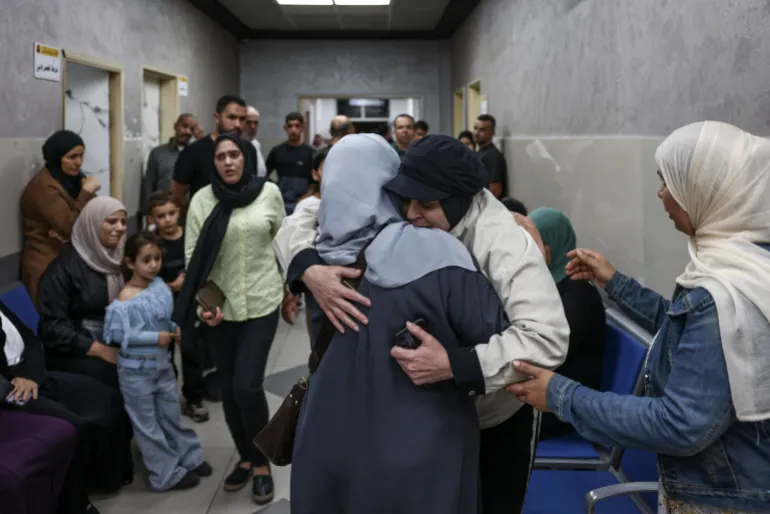
Meanwhile, six Palestinian detainees released from Israeli detention arrived at Al-Aqsa Martyrs Hospital in Deir el-Balah on Sunday for medical treatment, according to medical sources. A correspondent for the Anadolu news agency said the men were transferred via the International Committee of the Red Cross (ICRC).

Rights groups say Israel had detained the men without clear legal procedures. The ICRC says it has not been granted access to Palestinians held in Israeli detention since October 2023, warning that international humanitarian law requires humane treatment and family contact.

The releases are part of sporadic Israeli actions involving Gaza detainees held for months. Many former prisoners report malnutrition and injuries from abuse.

About 1,700 detainees were released in October under the ceasefire deal, but more than 10,000 Palestinians – including women and children – remain in Israeli prisons, where rights groups report widespread abuse, starvation and medical neglect.

Elsewhere in the enclave, Gaza’s Civil Defence said it rescued five people, including a child and two women, who were trapped under the collapsed roof of their house in Sheikh Radwan, northwest of Gaza City.

The roof collapse killed four people, according to Gaza’s Ministry of Interior and National Security.

At least 18 people have been killed due to the collapse of 46 buildings in Gaza since the ceasefire came into effect, according to the ministry.

More than 70,000 Palestinians, mostly women and children, have been killed, and more than 171,000 others have been wounded in attacks in Israel’s war on Gaza since October 2023.

Source link

US, Egypt, Qatar, Turkiye urge restraint in Gaza as Israeli attacks continue | Israel-Palestine conflict News

The talks between the four countries lauded the first stage of the truce, including expanded humanitarian assistance, return of captives, force withdrawals and reduction in hostilities.

The United States, Egypt, Qatar and Turkiye have urged the parties to the Gaza ceasefire to honour their commitments and show restraint, the chief US envoy says after talks in the US city of Miami.

Senior officials from the four mediator countries met Steve Witkoff, US President Donald Trump’s special envoy, on Friday to review the first phase of the ceasefire between Israel and Hamas, which took effect on October 10, according to a joint statement released on Saturday.

Recommended Stories

list of 4 itemsend of list

The meeting was held against the backdrop of ongoing Israeli attacks on the enclave. The Palestinian Civil Defence in Gaza said that six people were killed on Friday when an Israeli strike hit a school housing displaced people, raising the number of Palestinians killed by Israeli fire since the deal took effect to about 400.

“We reaffirm our full commitment to the entirety of the President’s [Trump’s] 20-point peace plan and call on all parties to uphold their obligations, exercise restraint, and cooperate with monitoring arrangements,” Witkoff said in a statement posted on X.

First phase of truce

Saturday’s statement cited progress yielded in the first stage of the peace agreement, including expanded humanitarian assistance, the return of captives’ bodies, partial force withdrawals and a reduction in hostilities.

It called for “the near-term establishment and operationalisation” of a transitional administration, which is due to happen in the second phase of the agreement, and said that consultations would continue in the coming weeks over its implementation.

Under the truce deal’s terms, Israel is supposed to withdraw from its positions in Gaza, an interim authority is to govern the Palestinian territory instead of Hamas, and an international stabilisation force is to be deployed.

On Friday, US Secretary of State Marco Rubio expressed hope that countries would contribute troops for the stabilisation force, but also urged the disarmament of Hamas, warning the process would unravel unless that happened.

Hamas statement

A meeting was also held between Hamas’s chief negotiator, Khalil al-Hayya, and Turkish intelligence chief Ibrahim Kalin in Istanbul on Saturday.

In a statement from Hamas after the meeting, the group said it was committed to abiding by the ceasefire agreement, despite Israeli violations.

“The delegation stressed the urgent need to halt these continuous violations,” the statement added.

“The delegation also reviewed the deteriorating humanitarian situation in the Gaza Strip with the onset of winter, emphasising the critical priority of urgently bringing in tents, caravans, and heavy equipment to save our people from death by cold and drowning, given the destruction of infrastructure and homes.”

Winter storms have been worsening the conditions for hundreds of thousands of displaced Palestinians in Gaza, as aid agencies warn that Israeli restrictions are preventing lifesaving assistance from reaching people across the besieged enclave.

Bodies recovered, Israeli strikes continue

On Saturday, an Israeli air strike targeted two people in northern Gaza, according to a statement from the military, which alleged that they “posed an immediate threat” to Israeli troops after crossing the so-called yellow line, which separates areas under Israeli army control from those where Palestinians are permitted to move.

No details were yet available on whether the two people were killed or injured.

Gaza’s Civil Defence on Saturday also said it recovered the bodies of 94 Palestinians from the rubble in the enclave.

The bodies were retrieved in central Gaza City and transferred to the forensic department at Al-Shifa Medical Complex to arrange their burial in the Martyrs’ Cemetery in the central city of Deir el-Balah, according to a statement from the Civil Defence.

Thousands of Palestinians are believed to still be buried under the rubble of destroyed buildings in Gaza.

The Israeli army has killed more than 70,700 people in Gaza, mostly women and children, and injured more than 171,000 others since it began its genocidal war on the enclave in October 2023.

Source link

‘Red Ribbon’ vigil for Palestinian prisoners held by Israel | Israel-Palestine conflict

NewsFeed

Red ribbons and Palestinian flags were seen in London at a vigil calling for the release of thousands of Palestinians being held without charge in Israeli prisons. The vigil focused on Dr. Hussam Abu Safia, director of Gaza’s Kamal Adwan Hospital, who’s been held for nearly one year. Al Jazeera’s Milena Veselinovic was there.

Source link

MSF urges Israel to let critical aid into Gaza as children freeze to death | Israel-Palestine conflict News

Doctors Without Borders, known by its French initials MSF, has warned that babies and children in the Gaza Strip are dying from harsh winter weather, calling on Israel to ease its aid blockade as the military continues to violate the ceasefire and press on with its genocidal war.

Citing the death of a 29-day-old premature baby, Said Asad Abedin, from severe hypothermia in southern Gaza’s Khan Younis, MSF said on Friday that winter storms “combined with the already dire living conditions [are] increasing health risks”.

Recommended Stories

list of 4 itemsend of list

The death toll from extreme weather stood at 13 as of Thursday, according to Gaza’s Ministry of Health. Another two-week-old baby, Mohammed Khalil Abu al-Khair, froze to death without access to proper shelter or clothing earlier this week.

Ahmed al-Farra, head of the maternity paediatric department at Nasser Medical Complex, said in a video update that “hypothermia is very dangerous” for babies. “If nothing is offered for these families in the tents, for warming, for mobile homes, for caravans, unfortunately, we will see more and more” deaths, al-Farra said.

Children are “losing their lives because they lack the most basic items for survival,” Bilal Abu Saada, a nursing team supervisor at Nasser Hospital, told MSF. “Babies are arriving to the hospital cold, with near-death vital signs.”

In addition to the growing number of deaths, MSF said its staff has recorded high rates of respiratory infections that it expects to increase throughout the winter, posing a particular danger to children under five.

“As Gaza is battered by heavy rains and storms, hundreds of thousands of Palestinians continue to struggle in flooded and broken makeshift tents,” the organisation added. “MSF calls on Israeli authorities to urgently allow a massive scale up of aid into the Strip.”

No letup in Israeli attacks

Palestinian news agency Wafa, meanwhile, reported that Israeli forces demolished buildings, carried out artillery shelling and shot guns in areas east of Gaza City on Saturday morning, with more gunfire reported east of Khan Younis.

On Friday, an Israeli strike on a shelter for displaced Palestinians killed at least six people. The Israeli military claimed to be firing on “suspects”.

Graphic videos from the scene showed body parts and terrified civilians trying to carry wounded people out of danger.

Military vehicles also descended upon the town of az-Zawiya, located west of Salfit in the occupied West Bank, where forces severely beat and injured a number of citizens and stormed homes, the agency said.

‘I can still hear his tiny cries’

Heavy rain, high winds and freezing temperatures have battered Gaza in recent weeks, flooding or blowing away more than 53,000 tents that have served as makeshift shelters for displaced Palestinians.

With huge swaths of buildings and infrastructure destroyed, streets are quick to flood and sewage overflows. Displaced families have sought refuge in the shells of partially fallen-down buildings despite the risk of collapse, with 13 buildings caving in across Gaza last week.

The winter weather and Israel’s blocking of vital aid and mobile homes for shelter have proven deadly for children and babies.

Late in the evening of December 13, Eman Abu al-Khair, a 34-year-old displaced Palestinian living in al-Mawasi west of Khan Younis, found her sleeping baby Mohammed “cold as ice”, his hands and feet frozen and “his face stiff and yellowish”, she told Al Jazeera.

She and her husband couldn’t find transportation to get to hospital, and intense rain made it impossible to make the trek by foot.

After rushing Mohammed by animal-drawn cart to Red Crescent Hospital in Khan Younis at dawn, he was admitted to intensive care with a blue face and convulsions. He died two days later.

“I can still hear his tiny cries in my ears,” Eman said. “I sleep and drift off, unable to believe that his crying and waking me at night will never happen again.”

Mohammed “had no medical problems,” she added. “His tiny body simply couldn’t withstand the extreme cold inside the tents.”

Since the October 10 ceasefire took effect, Israel has continued to block the entry of humanitarian aid into the Gaza Strip despite calls from a host of United Nations agencies, international organisations and other states for it to stop.

The UN has said that Israel has prevented tents and blankets from reaching Palestinians, even as an estimated 55,000 families have seen their belongings and shelters damaged or destroyed in the storm.

Dozens of child-friendly spaces have also been damaged, affecting 30,000 children, according to the UN.

Natasha Hall, a senior advocate for Refugees International, told Al Jazeera that aid is entering Gaza in a “trickle” in part due to its opaque list of “controlled dual-use items” that has included nappies, bandages, tools, tents and other essentials.

“It’s unclear how those could be used as weapons or any kind of dual use,” Hall said.

Source link

Al-Majd Europe: The secret shell company smuggling Palestinians out of Gaza | Israel-Palestine conflict News

A shell company with Israeli ties exploited Palestinians desperate to flee the ongoing war in Gaza, charging them large sums of money to covertly exit the country in what may be an official plan to ethnically cleanse the territory.

In an exclusive digital investigation, Al Jazeera probed last month’s mystery flight that spirited 153 passengers from Gaza to South Africa, unearthing figures working for Al-Majd Europe, an unregistered front organisation that falsely claimed to be working for humanitarian aims.

Recommended Stories

list of 3 itemsend of list

The Palestinians arrived at OR Tambo International Airport, which serves the cities of Johannesburg and Pretoria, on November 13. Refused entry by border police as they did not have departure stamps from Israel on their passports, they were stuck on the aircraft for 12 hours before being allowed to disembark.

South African President Cyril Ramaphosa admitted the passengers “out of compassion”, but said at the time that his government, which has long been a strong supporter of the Palestinian cause, would investigate as it seemed that they had been “flushed out” of the Gaza Strip.

Forced evacuations

Israeli officials have previously openly stated that they support what they have termed the “voluntary emigration” of Palestinians from Gaza, in what effectively would be their forced evacuation.

In March 2025, Israel’s security cabinet set up a controversial bureau to get Palestinians to leave Gaza voluntarily, which was headed by former deputy director of the Ministry of Defence, Yaakov Blitstein. Israeli Defence Minister Israel Katz said at the time that 40 percent of Gaza residents were “interested in emigrating”.

The previous month, Al-Majd Europe set up its online presence with a new website stating that it focused on relief efforts in Muslim countries, specifically “for Gazans wishing to exit Gaza”, with claims that it had organised mobile health clinics in the enclave and trips for Palestinian doctors abroad that Al Jazeera later discovered to be false.

A passenger from the November flight to South Africa, whose identity was kept hidden for his own protection, said he contacted the organisation after finding the link online, which promised not only a way out of Gaza, but safety and medical treatment for injuries. “Initially, it said it was free. Then they asked for $1,400 [per person]. Then the price went up to $2,500,” he said.

Testimonies gathered by Al Jazeera showed that payments requested varied from $1,000-2,000 per person, with strict criteria for signing up. Only families would be accepted on condition that they kept their departure secret, with details on flight departures only released a few hours before takeoff.

Passengers say they were told to arrive at the Karem Abu Salem crossing (called Kerem Shalom in Israel) in southern Gaza. When they arrived, their personal belongings were confiscated, and they were put on buses to Ramon Airport, near the Israeli city of Eilat, apparently by Israeli authorities.

Nigel Branken, a South African social worker who helped tho Palestinians on the plane, previously told Al Jazeera that there were “very clearly … marks of Israel involved in this operation to take people … to displace them”.

Evacuees told Al Jazeera they were not informed of their final destination until moments before boarding. They were then escorted onto a flight registered to a brand new airline called FLYYO without exit stamps in their travel documents.

Al Jazeera discovered that FLYYO has organised a number of similar flights, all taking off from Israeli airports, headed to Romania, Indonesia, South Africa, Kenya and other destinations.

False identity

Further scrutiny of Al-Majd Europe, which said it was a “humanitarian foundation established in 2010 in Germany”, with a head office located in Sheikh Jarrah, a neighbourhood in occupied East Jerusalem, later revealed its identity to be a sham.

Al Jazeera found no company registered by that name on any German or European database. The supposed address does not appear in official Jerusalem records, with the location on Google Maps corresponding to a hospital and a cafe.

While digging into the flights, Al Jazeera found two faces linked to the organisation – both Palestinians. The first was Muayad Hisham Saidam, which the organisation lists as its humanitarian projects manager in Gaza.

A search of Saidam’s name reveals that in May 2024, his wife created a public page to ask for donations to help her family leave Gaza. A year later, Saidam posted an image of himself boarding a plane chartered by Fly Lili, another Romanian airline, announcing that he was departing Gaza.

Using the angle of his shadow, time of the flight and the location of the plane on the Ramon Airport runway, Al Jazeera discovered Saidam was likely on a flight on May 27, 2025, which left Israel for Budapest, with 57 Palestinian passengers from Gaza.

It appears that Saidam’s identity is real, and that his family was likely evacuated to Indonesia. But his connection to Al-Majd Europe is unclear.

The second public face of the organisation belongs to a man named only as Adnan, though he appears to have no digital footprint.

On November 13, the day of the Johannesburg flight, a page containing a number of partner companies was deleted from Al-Majd’s website. Using open-source intelligence techniques, Al Jazeera recovered the page, which showed a number of well-known groups that Al-Majd claimed to have been working with, including the International Red Cross.

One name stood out: Talent Globus – a recruitment company established in Estonia in 2024, with a fund containing only $350. Its website lists four employees, including Director Tom Lind, a businessman with Israeli and Estonian citizenship.

Lind’s name has been linked to a number of other companies where he’s listed either as a founder or director – all without official registration or physical addresses.

Lind’s name appeared in reports by Israeli newspaper Haaretz as one of the coordinators of the flights of Palestinians leaving Ramon Airport.

In May 2025, Lind posted on his LinkedIn page that he had left Talent Globus, and was instead focused on “humanitarian efforts to support Palestinians”. He said that, alongside a network of individuals and groups, he had assisted with the evacuation of a “substantial number” of people from Gaza.

Photos of the other three employees of Talent Globus from its website – James Thompson, Maria Rodriguez, David Chen – all turned out to be stock images.

And much like those employees, it appears as though Al-Majd itself is a fake humanitarian group, leading to the question of what those behind the organisation are trying to hide.

Publicly, Israel has seemed to back down from its plan to encourage “voluntary emigration”. But Al Jazeera’s investigation poses more questions – is Al-Majd part of a bigger plan, a way to quietly empty Gaza of its inhabitants, one secret flight at a time?

Source link

Gaza’s tech workers code from rubble as Israel’s war destroys digital life | Israel-Palestine conflict News

In a territory where 81 percent of buildings lie damaged or destroyed, a small community of young Palestinians is fighting to preserve what remains of Gaza’s digital world.

Coders, repair technicians and freelance workers are labouring under impossible conditions to keep the besieged enclave connected to the outside world.

Recommended Stories

list of 3 itemsend of list

Against all odds, Gaza’s youths continue to adapt. They work offline, code in notebooks, store solar power whenever the sun is out, and wait for rare moments of connectivity to send their work to clients around the world.

In a war that has taken nearly everything, digital skills have become a form of survival – and resilience.

Many now also rely on online work to make a living. But even that fragile lifeline is now hanging by a thread after more than two years of Israel’s genocidal war.

Gaza coders
Palestinians work on laptops and mobile devices in Gaza despite widespread destruction of telecommunications infrastructure [Al Jazeera]

According to the Palestinian Central Bureau of Statistics, Israeli forces have “deliberately and systematically destroyed” the telecommunications infrastructure.

“We just always look for another way to get connected, always find another way,” said Shaima Abu Al Atta, a coder working from a displacement camp. “This is what actually gave us purpose because if we didn’t do this, we would just die surviving and not doing anything. We would die internally.”

Before the war erupted in October 2023, Gaza had a modest but vibrant tech scene. Innovation hubs hosted coding bootcamps, and hundreds of freelancers worked remotely for international clients. Much of that ecosystem now lies in ruins.

Shareef Naim, an engineer who led a technology hub, described what was lost. His building housed more than 12 programmers with contracts for companies outside Gaza, he said. “The team was very active,” Naim told Al Jazeera.

Today, the structure is destroyed, though some team members are still trying to work from tents and emergency shelters.

Gaza coders
Technicians in Gaza work to repair telecommunications equipment amid severe shortages of spare parts and electricity [Al Jazeera]

Computer technician A’aed Shamaly says, “The main challenge is electricity. Today, electricity is not available all the time, and if it is available, it is unstable,  and there will be a lot of cuts. Prices are also high.”

Electricity, when available at all, is unstable and prohibitively expensive, $12 per kilowatt compared with $1.50 for 10 kilowatts before the war, he said. “There are no spare parts,” he added, so technicians must scavenge components from broken equipment pulled from bombed buildings.

The scale of destruction is staggering. According to the United Nations Satellite Centre (UNOSAT), approximately 198,273 structures across Gaza have been damaged, with 123,464 completely destroyed. The telecommunications sector has been particularly hard hit.

Data from the Palestinian Central Bureau of Statistics reveals that 64 percent of mobile phone towers were out of service as of early April 2025. In Rafah, coverage has collapsed to just 27 percent, down from near-universal access before the war.

During the war, connectivity watchdog NetBlocks documented repeated disruptions, including what it called a “near-total telecoms blackout” in January 2024 that lasted for days.

Israel has long restricted Gaza to outdated 2G mobile technology while allowing 4G in the occupied West Bank.

The telecommunications sector’s value has cratered from $13m in 2023 to just $1.5m in 2024, an 89 percent collapse. Estimated losses exceed half a billion dollars, while reconstruction is projected to cost at least $90m.

Gaza coders
Palestinians struggle to maintain internet connectivity in Gaza, where most telecommunications infrastructure has been destroyed [Al Jazeera]

The consequences ripple across Gaza’s economy and society.

Remote work was a crucial income source in a territory where unemployment exceeded 79 percent even before October 2023. Now, erratic internet access has pushed many freelancers into joblessness just as Israeli-induced famine has sent food prices soaring.

The telecommunications collapse has also paralysed the banking system, preventing money transfers and leaving families unable to access cash. Healthcare has been disrupted, with the World Health Organization documenting deaths caused by the inability to contact emergency services in time.

Even during the fragile ceasefire that took effect in October 2025, Israel has blocked essential repair equipment from entering Gaza. The restrictions form part of what analysts describe as a deliberate strategy to maintain control over Palestinian digital infrastructure and suppress the flow of information to the outside world.

The future remains deeply uncertain, as efforts to push a fragile ceasefire forward appear to stall and Israel threatens the possibility of returning to full-scale war.

Source link

US to host Qatari, Turkish and Egyptian officials for Gaza ceasefire talks | Israel-Palestine conflict News

The United States Middle East envoy, Steve Witkoff, will hold talks in Miami, Florida, with senior officials from Qatar, Egypt and Turkiye as efforts continue to advance the next phase of the Gaza ceasefire, even as Israel repeatedly violates the truce on the ground.

A White House official told Al Jazeera Arabic on Friday that Witkoff is set to meet representatives from the three countries to discuss the future of the agreement aimed at halting Israel’s genocidal war on Gaza.

Recommended Stories

list of 3 itemsend of list

Axios separately reported that the meeting, scheduled for later on Friday, will include Qatari Prime Minister and Foreign Minister Sheikh Mohammed bin Abdulrahman bin Jassim Al Thani, Turkish Foreign Minister Hakan Fidan and Egyptian Foreign Minister Badr Abdelatty.

At the same time, Israel’s public broadcaster, quoting an Israeli official, said Prime Minister Benjamin Netanyahu is holding a restricted security consultation to examine the second phase of the ceasefire and potential scenarios.

That official warned that Israel could launch a new military campaign to disarm Hamas if US President Donald Trump were to disengage from the Gaza process, while acknowledging that such a move was unlikely because Trump wants to preserve calm in the enclave.

Despite Washington’s insistence that the ceasefire remains intact, Israeli attacks have continued almost uninterrupted, as it continues to renege on the terms of the first phase, as it blocks the free flow of desperately needed humanitarian aid into the besieged Palestinian territory.

According to an Al Jazeera analysis, Israeli forces carried out attacks on Gaza on 58 of the past 69 days of the truce, leaving only 11 days without reported deaths, injuries or violence.

In Washington, Trump said on Thursday that Netanyahu is likely to visit him in Florida during the Christmas holidays, as the US president presses for the launch of the agreement’s second phase.

“Yes, he will probably visit me in Florida. He wants to meet me. We haven’t formally arranged it yet, but he wants to meet me,” Trump told reporters.

Qatar and Egypt, who are mediating and guaranteeing the truce after a devastating two-year genocide in Gaza, have urged a transition to the second phase of the agreement. The plan includes a full Israeli military withdrawal and the deployment of an international stabilisation force (ISF).

Fragile truce, entrenched occupation

Qatar’s prime minister warned on Wednesday that daily Israeli breaches of the Gaza ceasefire are threatening the entire agreement, as he called for urgent progress towards the next phase of the deal to end Israel’s genocidal war on the besieged Palestinian enclave.

Sheikh Mohammed made the appeal following talks with United States Secretary of State Marco Rubio in Washington, where he stressed that “delays and ceasefire violations endanger the entire process and place mediators in a difficult position”.

The ceasefire remains deeply unstable, and Palestinians and rights groups say it is a ceasefire only in name, amid Israeli violations and a rapidly deteriorating humanitarian situation in Gaza.

Since the truce took effect on October 10, 2025, Israel has repeatedly breached the agreement, killing hundreds of Palestinians.

Gaza’s Government Media Office says Israel committed at least 738 violations between October 10 and December 12, including air strikes, artillery fire and direct shootings.

Israeli forces shot at civilians 205 times, carried out 37 incursions beyond the so-called “yellow line”, bombed or shelled Gaza 358 times, demolished property on 138 occasions and detained 43 Palestinians, the office said.

Israel has also continued to block critical humanitarian aid while systematically destroying homes and infrastructure.

Against this backdrop, Israel Hayom quoted an Israeli security official as saying the so-called “yellow line” now marks Israel’s new border inside Gaza, adding that Israeli forces will not withdraw unless Hamas is disarmed. The official said the army is preparing to remain there indefinitely.

The newspaper also reported that Israeli military leaders are proposing continued control over half of Gaza, underscoring Israel’s apparent intent to entrench its occupation rather than implement a genuine ceasefire.

Compounding the misery in Gaza, a huge storm that recently hit the Strip has killed at least 13 people as torrential rains and fierce winds flooded tents and caused damaged buildings to collapse.

Israel’s two-year war has decimated more than 80 percent of the structures across Gaza, forcing hundreds of thousands of families to take refuge in flimsy tents or overcrowded makeshift shelters.

Source link

‘No evidence’ Australia’s Bondi gunmen trained in the Philippines: Official | Crime News

Philippine official said ‘a mere visit’ to the country does not support claims the men underwent ‘terrorist training’.

There is no evidence the suspected gunmen in the deadly Bondi Beach attack received military training in the southern Philippines, Manila’s national security adviser has said, as Australia announced plans to introduce measures to tighten the country’s hate speech laws.

In a Wednesday statement, Philippine National Security Adviser Eduardo Ano confirmed the two suspects in Sunday’s attack in Sydney, Australia – which saw 15 people killed after gunmen opened fire at a Jewish event – were in the country from November 1 to 28 this year.

Recommended Stories

list of 3 itemsend of list

Ano said immigration records showed that 50-year-old Sajid Akram and his 24-year-old son Naveed Akram travelled via the Philippine capital Manila to Davao City on the southern island of Mindanao. He added that Sajid had entered the country on an Indian passport, while Naveed entered on an Australian one.

Ano added that there was “no evidence” that the men had received “any form of military training” while in the country.

“A mere visit does not support allegations of terrorist training, and the duration of their stay would not have allowed for any meaningful or structured training,” he said.

The men mostly stayed in their hotel rooms when in Davao, according to a report by local news outlet MindaNews. Staff at the hotel said the pair checked in on November 1 and rarely went out for more than an hour at a time during their almost monthlong stay.

Australian authorities announced on Wednesday that Naveed Akram had been charged with 59 offences for his role in the attack, including murder and terror charges, when he woke from his coma. Sajid Akram, his father, was shot dead by police at the scene.

Ano also suggested that reports describing Mindanao – a Muslim-majority region in the Catholic-majority country, plagued by a decades-long secessionist conflict – as a “hotspot for violent extremism or Islamic State ideology” were “outdated and misleading”.

“Since the 2017 Marawi Siege, Philippine security forces have significantly degraded ISIS-affiliated groups in the country,” he said, referring to a five-month battle in which the ISIL-inspired Maute group seized the southern city and fought government forces.

“The remnants of these groups have been fragmented, deprived of leadership, and operationally degraded,” Ano added.

A 2014 peace agreement, which saw rebels drop their secessionist aspirations in exchange for a more powerful and better-funded Muslim autonomous region called Bangsamoro, has also brought a degree of calm to Mindanao.

But smaller rebel groups continue to carry out sporadic, deadly attacks across the restive southern Philippines’ region.

‘Also an attack on the Australian way of life’: Anthony Albanese

On Thursday, Australian Prime Minister Anthony Albanese pledged to introduce new legislation cracking down on hate speech in response to the Bondi Beach attack, as he acknowledged that Australia had witnessed an increase in anti-Semitism since the Hamas-led October 7, 2023, attacks on Israel, and Israel’s genocidal war on Gaza.

Announcing the new measures at a news conference, Albanese said his government will seek to introduce legislation making it easier to charge people promoting hate speech and violence – including religious preachers – while new powers will be created to cancel or reject visas of people who spread “hate and division”.

The legislation would also develop a regime to target organisations whose leaders engage in hate speech, Albanese added.

Albanese said rising anti-Semitism “culminated on Sunday in one of the worst acts of mass murder that this country has ever seen”.

“It was an attack on our Jewish community – but it was also an attack on the Australian way of life. Australians are shocked and angry. I am angry. It is clear we need to do more to combat this evil scourge, much more,” he said.

New South Wales Premier Chris Minns said on Wednesday he would recall the state parliament next week in order to pass urgent reforms on gun laws.

Source link

Winter storms worsen Gaza humanitarian crisis as UN says aid still blocked | Israel-Palestine conflict News

Winter storms are worsening conditions for hundreds of thousands of displaced Palestinians in Gaza, as aid agencies warn that Israeli restrictions are preventing lifesaving shelter assistance from reaching people across the besieged enclave.

The United Nations has said it has tents, blankets and other essential supplies ready to enter Gaza, but that Israeli authorities continue to block or restrict access through border crossings.

Recommended Stories

list of 4 itemsend of list

In Gaza City’s Shati refugee camp, the roof of a war-damaged family home collapsed during the storm, rescue workers said on Wednesday. Six Palestinians, including two children, were pulled alive from the rubble.

It comes after Gaza’s Ministry of Health said a two-week-old Palestinian infant froze to death, highlighting the risks faced by young and elderly people living in inadequate shelters.

A spokesperson for UN Secretary-General Antonio Guterres said the storms had damaged or destroyed shelters and personal belongings across the territory.

“The disruption has affected approximately 30,000 children across Gaza. Urgent repairs are needed to ensure these activities can resume without delay,” Farhan Haq said.

The Palestinian Civil Defence in Gaza added in a statement that “what we are experiencing now in the Gaza Strip is a true humanitarian catastrophe”.

Ceasefire talks and aid access

The worsening humanitarian situation comes as Qatar’s Prime Minister Sheikh Mohammed bin Abdulrahman bin Jassim Al Thani held talks in Washington, DC, with United States Secretary of State Marco Rubio on efforts to stabilise the tenuous ceasefire in Gaza.

According to Qatari officials, the talks focused on Qatar’s role as a mediator, the urgent need for aid to enter Gaza, and moving negotiations towards the second stage of a US-backed plan to end Israel’s genocidal war against the Palestinian people in Gaza.

Al Jazeera’s Alan Fisher, reporting from Washington, said Sheikh Mohammed stressed that humanitarian assistance must be allowed into Gaza “unconditionally”.

“He said aid has to be taken into Gaza unconditionally, clearly making reference to the fact that a number of aid agencies have said that Israel is blocking the access to aid for millions of people in Gaza,” Fisher said.

The Qatari prime minister also discussed the possibility of an international stabilisation force to be deployed in Gaza after the war, saying such a force should act impartially.

“There has been a lot of talk in the US over the past couple of weeks about how this force would work towards the disarmament of Hamas,” Fisher said.

Sheikh Mohammed also called for swift progress towards the second phase of the ceasefire agreement.

“He said that stage two of the ceasefire deal has to be moved to pretty quickly,” Fisher said, adding that US officials were hoping to announce early in the new year which countries would contribute troops to a stabilisation force.

Israeli attacks continue

Meanwhile, violence continued in Gaza despite the ceasefire, with at least 11 Palestinians wounded in Israeli attacks in central Gaza City, according to medical sources.

The Israeli army said it is investigating after a mortar shell fired near Gaza’s so-called yellow line “missed its target”.

Al Jazeera journalists in Gaza reported Israeli artillery shelling east of the southern city of Khan Younis. Medical sources said Israeli gunfire also wounded two people in the Tuffah neighbourhood of eastern Gaza City.

In the occupied West Bank, where Israeli military and settler attacks have escalated in recent days, Palestinian news agency Wafa reported that Israeli troops shot and wounded a man in his 20s in the foot in Qalqilya. He was taken to hospital and is reported to be in stable condition.

Since October 2023, at least 70,668 Palestinians have been killed and 171,152 wounded in Israeli attacks on Gaza, according to Palestinian health authorities. In Israel, 1,139 people were killed during the Hamas-led October 7 attack, and more than 200 others were taken captive.

Source link

Israel to advance plans for 9,000 houses in occupied East Jerusalem | Israel-Palestine conflict News

Israeli authorities are engaged in multiple major efforts, including building settlements and pursuing annexation, to ensure there will be no Palestinian state in the future.

Israeli authorities are expected to advance plans to build 9,000 new housing units in an illegal settlement on the site of the abandoned Qalandiya airport in occupied East Jerusalem, in another attempt to cut off Palestinian lands from each other and block any possibility of a contiguous Palestinian state ever emerging.

The so-called Atarot neighbourhood in northern East Jerusalem, reminiscent of the E1 plan to undermine Palestinian statehood, is to be discussed and have its outlines approved on Wednesday by the District Planning and Building Committee, according to Israeli group Peace Now.

Recommended Stories

list of 3 itemsend of list

The advocacy group said the new settlement is envisioned to be built within a densely populated Palestinian urban area, stretching from Ramallah in the occupied West Bank and Kafr Aqab in the north through the Qalandiya refugee camp, ar-Ram, Beit Hanina and Bir Nabala.

It would build an Israeli enclave in an area where hundreds of thousands of Palestinians live in close proximity, with the aim of blocking development in a key area and further damaging the likelihood of a sovereign Palestinian state being established.

“This is a destructive plan that, if implemented, would prevent any possibility of connecting East Jerusalem with the surrounding Palestinian area and would, in practice, prevent the establishment of a Palestinian state alongside Israel,” Peace Now said.

Translation: The massacre government is working to establish a new ultra-Orthodox mega-settlement across the Green Line north of Jerusalem. The new political attack called ‘Atarot’ is planned to be built in the heart of the Palestinian state that will be established alongside Israel. This involves 9,000 housing units that Israel will have to evacuate. Isn’t it a shame?

The organisation said the far-right government of Prime Minister Benjamin Netanyahu is seizing every moment to bury chances for a future of peace and compromise.

“Especially now, when it is clear to everyone that the ideas of ‘managing the conflict’ and ‘decisive victory’ have led to a security disaster for Israel, we must act to resolve the conflict.”

The plan’s advancements date back to early 2020, when Israel’s Housing Ministry sent it to the Jerusalem municipality to prepare it for approval. It completed the bureaucratic preparation process within months, but faced objections from the Environmental Protection and Health ministries, according to Peace Now, which said the administration of United States President Barack Obama had also opposed it.

It would need further government consideration and approval before being given legal effect and moving towards tender processes to select construction contractors.

Most of the plan area is designated as “state land” by Israeli authorities, meaning they would not have to seek permission from Palestinian landowners.

Israel has been quickly advancing with several major projects to build illegal settlements on occupied Palestinian territory and pursuing annexation of the occupied West Bank, alongside its genocidal war on Gaza that started in October 2023 and has now killed more than 70,000 people.

The E1 plan, which would see the construction of thousands of illegal Israeli homes in the occupied West Bank, is hailed by Israeli officials despite international condemnation.

Israel’s security cabinet last week signed off on plans to formalise 19 illegal settlements across the West Bank.

Demolitions and widespread arrests

Israeli forces continue to launch raids across the occupied West Bank and support violent settlers in attacking Palestinian lands while issuing permits to demolish Palestinian homes.

Israeli authorities began carrying out demolition operations Wednesday morning in the town of Biddu, located northwest of occupied East Jerusalem, under the pretext that the Palestinian buildings lacked permits.

In the central part of the West Bank, settlers, who have been rampaging with impunity often backed by the Israeli military, burned Palestinian vehicles and wrote racist slogans in the village of Ein Yabrud in Ramallah on Wednesday.

Several Palestinians were also arrested during raids across the West Bank, including in Nablus.

Local authorities said the Israeli military plans to demolish 25 residential buildings in the Nur Shams refugee camp this week.

Source link