Ayatollah Alireza Arafi, member of a constitutional watchdog, appointed to temporary council, along with Iranian president and chief justice.
Published On 1 Mar 20261 Mar 2026
Share
Iran has announced the formation of a three-member transitional council to handle the state duties following the killing of Supreme Leader Ayatollah Ali Khamenei.
Ayatollah Alireza Arafi, member of a powerful constitutional watchdog, was appointed on Sunday to the temporary council, whose other two members are President Masoud Pezeshkian and Supreme Court Chief Justice Gholam-Hossein Mohseni-Ejei.
Recommended Stories
list of 4 itemsend of list
The 67-year-old cleric, who is a member of the Guardian Council that must later choose a supreme leader, was confirmed to the council by the Expediency Council, a powerful arbitration body.
According to Article 111 of the Iranian Constitution, the transitional council will govern the country until an 88-member panel called the Assembly of Experts chooses a new supreme leader after almost 37 years of rule by Khamenei.
His killing on Saturday by the joint United States and Israeli forces has raised crucial questions about Iran’s future.
Although the leadership council will govern in the interim, the Assembly of Experts “must, as soon as possible,” pick a new supreme leader, according to the Iranian constitution.
The Islamic Revolutionary Guard Corps (IRGC) and Iran’s security chief Ali Larijani are also expected to play pivotal roles in the transitional council, but it remains to be seen where the balance of power lies.
The commander-in-chief of the IRGC was also killed in the US-Israeli attack on Saturday – the second such killing in less than a year – and the next leader of the elite military and economic force is yet to be announced.
IRGC-linked Telegram channels are citing deputy chief Ahmad Vahidi, who was appointed to the position by Khamenei two months ago, as a likely candidate.
Earlier on Sunday, Larijani accused the US and Israel of trying to plunder and break apart Iran and warned “secessionist groups” within Iran of a harsh response if they attempt action, state media said.
“The brave soldiers and the great nation of Iran will teach an unforgettable lesson to the international oppressors,” he said.
A former parliamentary speaker and senior policy adviser, Larijani was appointed to advise Khamenei on strategy in nuclear talks with US President Donald Trump’s administration.
The crossing with Egypt is considered vital for the delivery of humanitarian aid and the evacuation of critically ill patients.
Published On 1 Mar 20261 Mar 2026
Share
Israel has closed Gaza’s Rafah border crossing with Egypt amid the joint Israeli-United States attacks on Iran.
“Several necessary security adjustments have been implemented, including the closure of the crossings into the Gaza Strip, among them the Rafah Crossing, until further notice,” Israel’s Coordinator of Government Activities in the Territories (COGAT) said in a statement.
Recommended Stories
list of 4 itemsend of list
The Rafah crossing, located on Gaza’s southern border, had reopened only last month, allowing a limited number of Palestinians to leave for the first time in months, including patients in urgent need of medical care.
The crossing is considered vital for the delivery of humanitarian aid and the evacuation of critically ill patients.
Virtually all of Gaza’s population of more than two million people was displaced during Israel’s genocidal war on the territory, and the enclave remains heavily dependent on humanitarian assistance.
In mid-February, the United Nations said it continued to face impediments in delivering lifesaving aid to Gaza.
In a February report, Human Rights Watch said Israeli restrictions had contributed to shortages of medicines, reconstruction materials, food and water inside the Strip.
COGAT claimed that sufficient food had entered Gaza since the start of the ceasefire to meet four times the nutritional needs of the population. However, it did not provide any evidence to back its claim.
“The substantial quantities of food that have entered since the beginning of the ceasefire amount to four times the nutritional needs of the population,” the Israeli defence body said. “Therefore, the existing stock is expected to suffice for an extended period.”
It added that “the closure of the crossings will have no impact on the humanitarian situation in the Gaza Strip”, saying it would remain in contact with the international community and provide updates on any developments.
COGAT is the Israeli military body responsible for overseeing civil affairs in the occupied Palestinian territory. Critics say it functions as an instrument of surveillance and control, particularly in enforcing movement restrictions and closures.
Iran has begun 40 days of mourning after Supreme Leader Ayatollah Ali Khamenei was killed in ongoing attacks by the United States and Israel, according to Iranian state media.
Top security officials were also killed in Saturday’s strikes, along with Khamenei’s daughter, son-in-law and grandson. The killings mark one of the most significant blows to Iran’s leadership since the 1979 Islamic revolution.
Recommended Stories
list of 4 itemsend of list
President Masoud Pezeshkian condemned the killing as “a great crime”, according to a statement from his office. He also declared seven days of public holidays in addition to the 40-day mourning period.
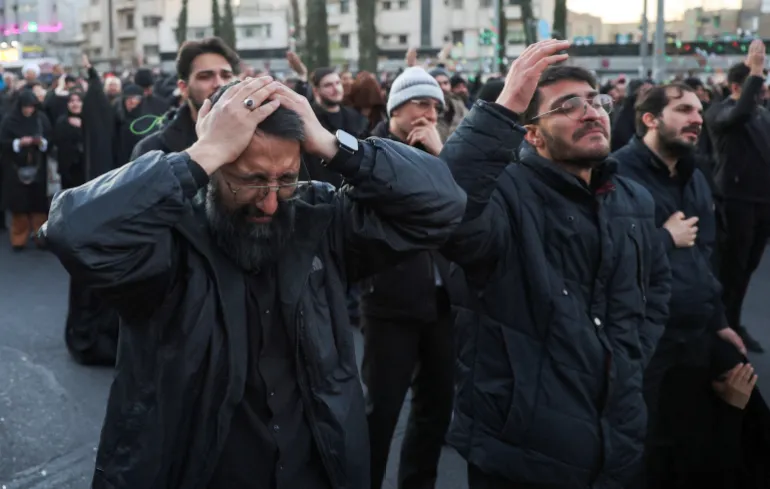
Reporting from Tehran, Al Jazeera’s Tohid Asadi said people were pouring into the streets of the capital following the news of Khamenei’s killing.
“There will be expected ceremonies,” he said, noting they would likely take place amid continuing bombardment across the country.
People mourn at the Enghelab Square in Tehran [Majid Asgaripour/West Asia News Agency via Reuters]
Protests denouncing Khamenei’s killing were also reported elsewhere, including Shiraz, Yasuj and Lorestan.
“There will be expected ceremonies,” he said, noting they would likely take place amid continuing bombardment across the country.
Footage aired by Iranian state media showed supporters mourning at the shrine of Imam Reza in Mashhad, with several people seen crying and collapsing in grief.
The killing also led to protests in neighbouring Iraq, which declared three days of public mourning. In Baghdad, protesters confronted security forces in the heavily fortified Green Zone, which houses Iraqi government buildings and foreign embassies.
Videos verified by Al Jazeera showed demonstrators waving flags and shouting slogans, with witnesses saying some were attempting to mobilise towards the US Embassy. Footage also showed protesters blocking vehicles at a roundabout near one of the entrances to the area.
Protesters demonstrate near the entrance of the Green Zone after the killing of Iran’s Supreme Leader Ayatollah Ali Khamenei, in Baghdad, Iraq, March 1, 2026 [Thaier Al-Sudani/Reuters]
There was also a protest in the Pakistani city of Karachi, where footage, verified by Al Jazeera, showed people setting fire to and smashing the windows of the US consulate.
However, there have also been reports of celebrations in Iran, with the Reuters news agency quoting witnesses as saying some people had taken to the streets in Tehran, the nearby city of Karaj and the central city of Isfahan.
Meanwhile, the official IRNA news agency reported that a three-person council, consisting of the country’s president, the chief of the judiciary, and one of the jurists of the Guardian Council, will temporarily assume all leadership duties in the country. The body will temporarily oversee the country until a new supreme leader is elected.
Khamenei assumed leadership of Iran in 1989 following the death of Ayatollah Ruhollah Khomeini, who had led the Islamic revolution a decade earlier.
While Khomeini was regarded as the ideological force behind the revolution that ended the Pahlavi monarchy, Khamenei went on to shape Iran’s military and paramilitary apparatus, strengthening both its domestic control and its regional influence.
Attacks across the region
Meanwhile, the Islamic Revolutionary Guard Corps (IRGC) pledged revenge and said it had launched strikes on 27 bases hosting US troops in the region, as well as Israeli military facilities in Tel Aviv.
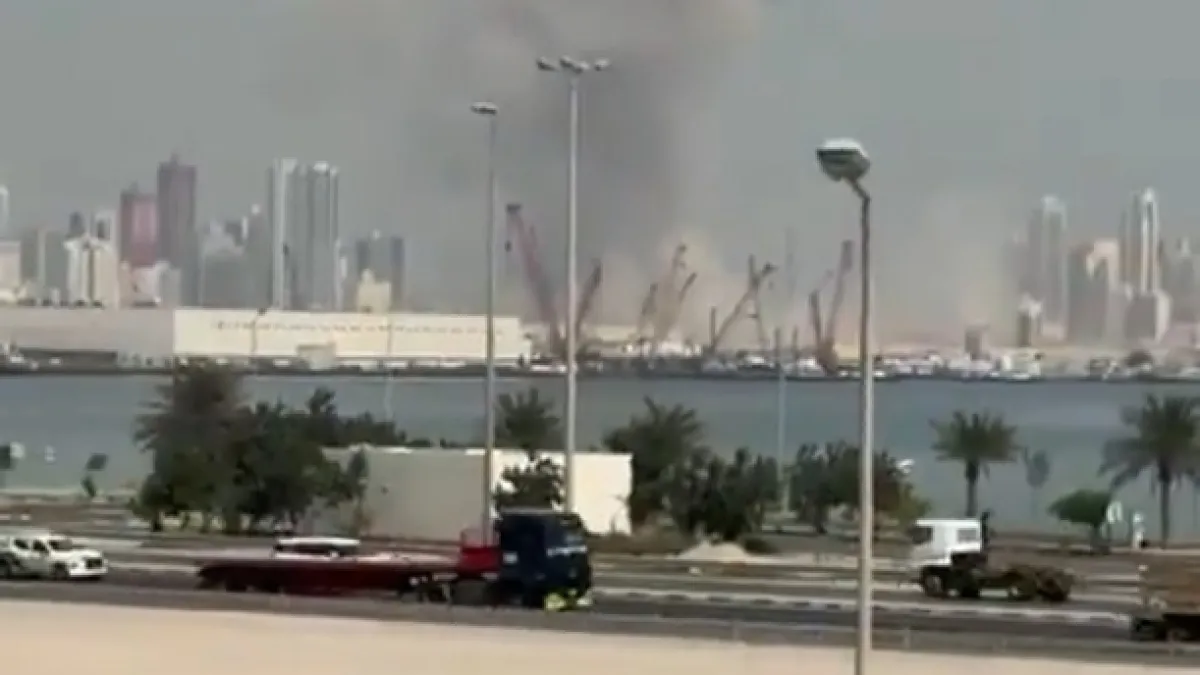
Explosions have continued to be reported in Qatar and the United Arab Emirates, while security alerts are in place in several countries across the region.
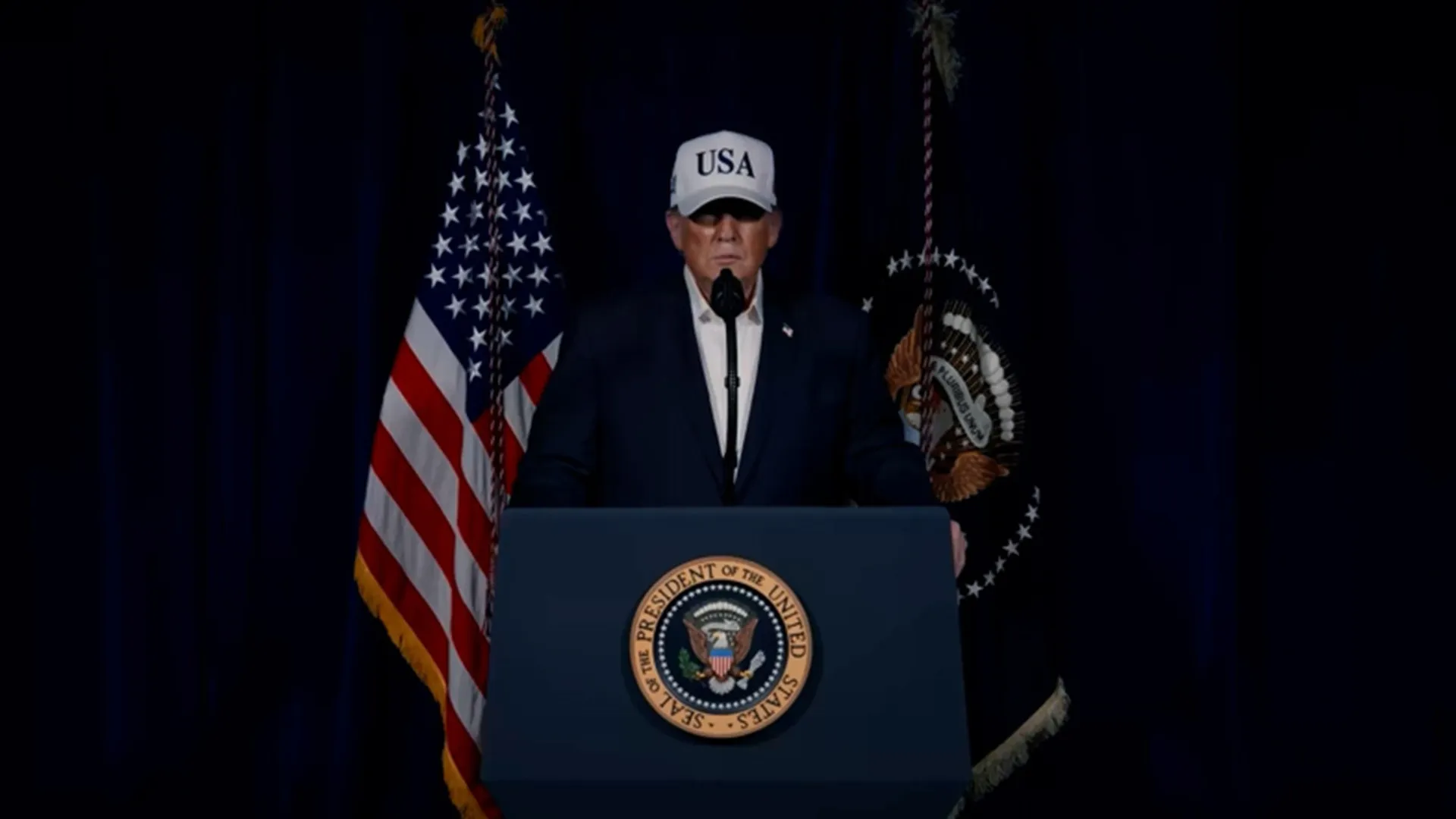
US President Donald Trump, in a social media post on Sunday, warned Iran that it would be hit “with a force that has never been seen before” if it retaliated.
Iran’s retaliatory attacks since Saturday have targeted Israel and US assets across multiple Middle East countries, including Qatar, the UAE, Kuwait, Bahrain, Jordan, Saudi Arabia and Iraq.
Harlan Ullman, chairman of the strategic advisory firm Killowen Group and an adviser to the Atlantic Council in Washington, DC, said the US may have made a “big mistake” by killing Khamenei.
“Decapitation only works when you get all the leaders, and I don’t think that we got all the leaders,” Ullman said, adding that the US should not expect Iran’s leadership to enter negotiations in the immediate aftermath.
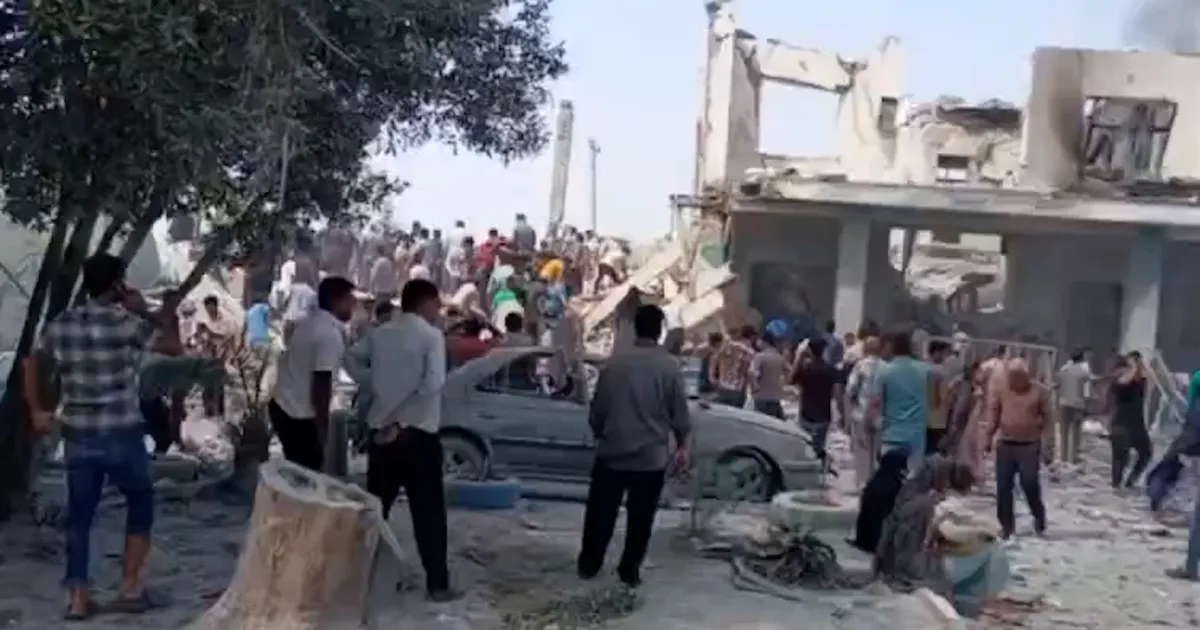
Iranian state media reported on Saturday at least 201 people have been killed in the joint US-Israeli attacks across 24 provinces, citing the Red Crescent. In southern Iran, at least 148 people were killed and 95 wounded in a strike on an elementary girls’ school in Minab on Saturday, with the toll continuing to rise, according to state media.
Iran has retaliated, firing at Israel, as well as US military assets, in the Middle East.
The United States and Israel have attacked Iran, and Tehran has retaliated, firing missiles at Israeli targets and US assets in the region.
The attacks come after weeks of Washington’s massive build-up of military assets in the Middle East, as well as indirect talks between the US and Iran over its nuclear programme.
So, how dangerous is the situation?
Presenter: James Bays
Guests:
Daniel Levy – president of the US/Middle East Project and a former Israeli negotiator
Mehran Kamrava – professor of government at Georgetown University in Qatar
Richard Weitz – senior fellow at the NATO Defense College in Washington, DC
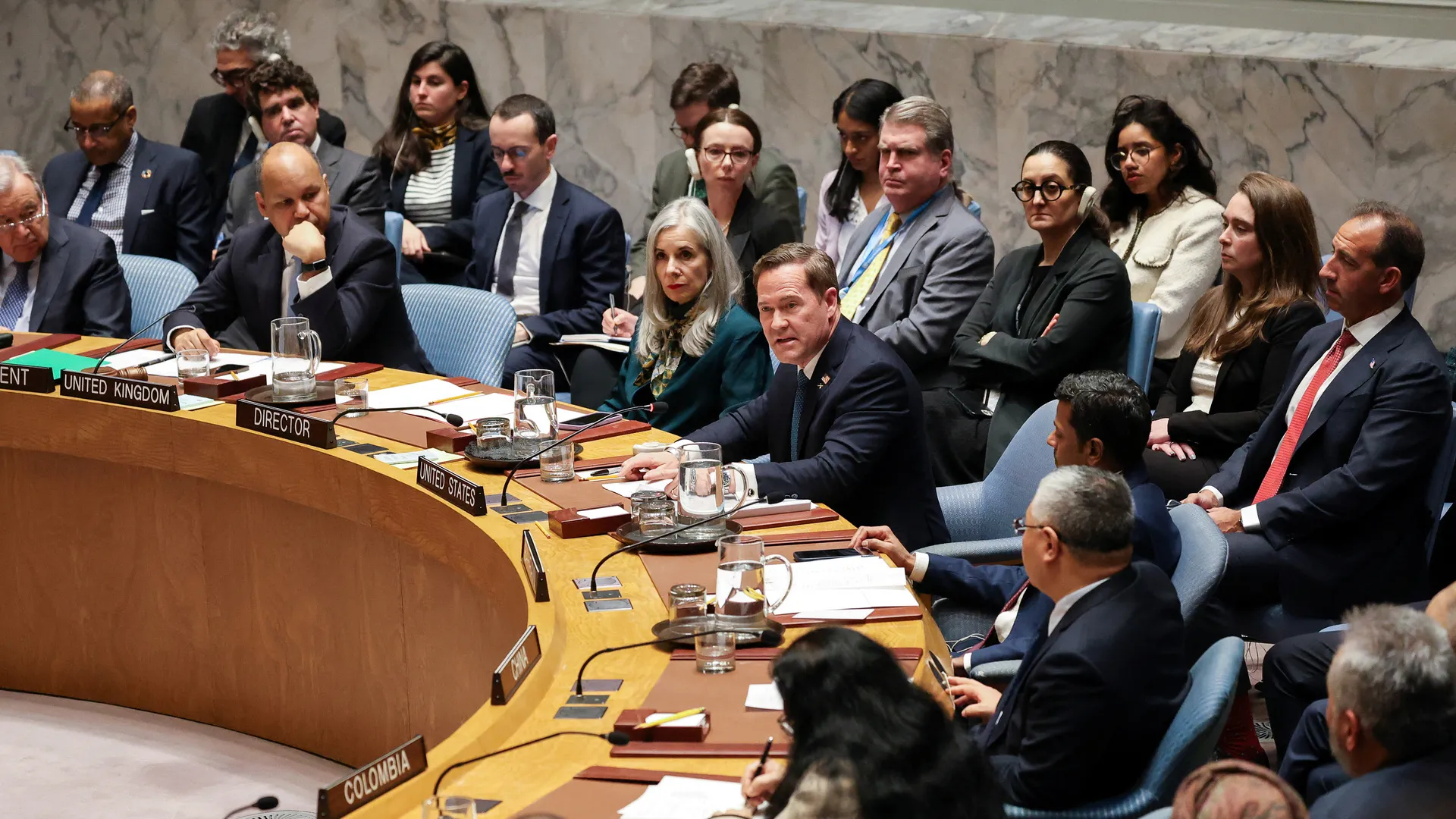
The US Ambassador to the United Nations Mike Waltz says striking Iran was necessary to protect American allies, prevent proxy militias, and to ensure that Tehran can never “threaten the world with a nuclear weapon.”
Figures from across the United States political spectrum have reacted to President Donald Trump’s joint attack with Israel on Iran, with Republicans largely expressing support and Democrats failing to offer a robust and unified response.
The attacks have reportedly killed at least 201 people, including more than 80 in a school in southern Iran, many of them children.
Recommended Stories
list of 3 itemsend of list
Iran has launched retaliatory strikes on Israel as well as US bases across the region, located in countries such as Bahrain, Qatar, the United Arab Emirates, Saudi Arabia, Jordan, and Kuwait, prompting fears that the conflict could spiral out of control and plunge the region into violence.
An initial YouGov poll conducted on February 28, after the strikes, suggested that 33 percent of US adults approved of the US attacking Iran, while 45 percent disapproved. Among Democrats and Independents, approval was just 10 percent and 21 percent, respectively, while 68 percent of Republicans expressed support.
Here’s how some of the US’s most prominent elected representatives and political figures have reacted.
President Donald Trump: “A short time ago, the United States military started major combat operations in Iran. Our objective is to defend the American people by eliminating imminent threats from the Iranian regime, a vicious group of very hard, terrible people. Its menacing activities directly endanger the United States, our troops, our bases overseas, and our allies throughout the world.”
Republican House of Representatives Speaker Mike Johnson: “Today, Iran is facing the severe consequences of its evil actions. President Trump and the Administration have made every effort to pursue peaceful and diplomatic solutions in response to the Iranian regime’s sustained nuclear ambitions and development, terrorism, and the murder of Americans—and even their own people.”
Republican Senate Majority Leader John Thune: “For years, Iran’s relentless nuclear ambitions, its expanded ballistic missile inventory, and its unwavering support for terror groups in the region have posed a clear and unacceptable threat to U.S. servicemembers, citizens in the region, and many of our allies. Despite the dogged efforts of the president and his administration, the Iranian regime has refused the diplomatic off-ramps that would peacefully resolve these national security concerns. I commend President Trump for taking action to thwart these threats.”
Democratic House Minority Leader Hakeem Jeffries: “Donald Trump failed to seek Congressional authorization prior to striking Iran. Instead, the president’s decision to abandon diplomacy and launch a massive military attack has left American troops vulnerable to Iran’s retaliatory actions. We pray for the safety of the men and women of the US military as they have been put into harm’s way in a dangerous theatre of war.”
Democratic Senate Minority Leader Chuck Schumer: “The administration has not provided Congress and the American people with critical details about the scope and immediacy of the threat. Confronting Iran’s malign regional activities, nuclear ambitions, and harsh oppression of the Iranian people demands American strength, resolve, regional coordination, and strategic clarity. Unfortunately, President Trump’s fitful cycles of lashing out and risking wider conflict are not a viable strategy.”
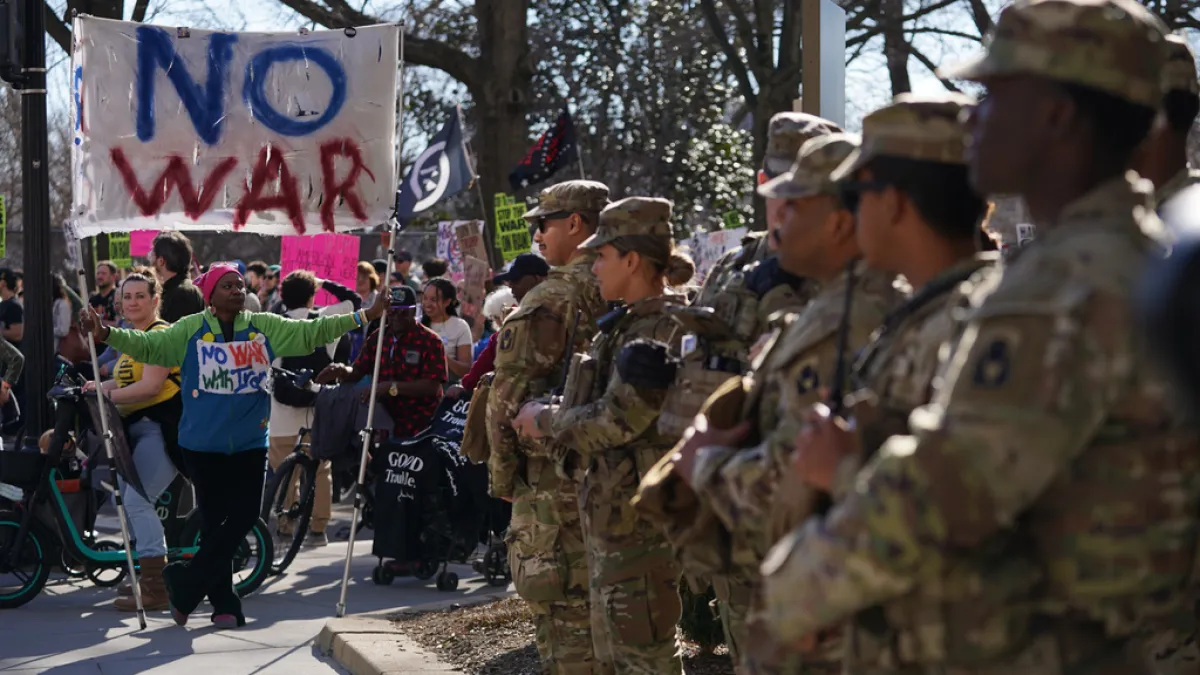
Democratic Representative Rashida Tlaib: “The American people do not want a war with Iran. Trump is acting on the violent fantasies of the American political elite and the Israeli apartheid government, ignoring the vast majority of Americans who say loud and clear: No More Wars.”
Democratic Representative Alexandria Ocasio-Cortez: “The American people are once again dragged into a war they did not want by a president who does not care about the long-term consequences of his actions. This war is unlawful. It is unnecessary. And it will be catastrophic. Just this week, Iran and the United States were negotiating key measures that could have staved off war. The president walked away from these discussions and chose war instead.”
New York City Mayor Zohran Mamdani: “Today’s military strikes on Iran — carried out by the United States and Israel — mark a catastrophic escalation in an illegal war of aggression. Bombing cities. Killing civilians. Opening a new theatre of war. Americans do not want this. They do not want another war in pursuit of regime change. They want relief from the affordability crisis. They want peace.”
Democratic Senator Bernie Sanders: “This Trump–Netanyahu war is unconstitutional and violates international law. It endangers the lives of U.S. troops and people across the region. We’ve lived through the lies of Vietnam and Iraq. No more endless wars. Congress must pass a War Powers Resolution immediately.”
Democratic Senator Chris Van Hollen: “Trump is lying to the American people as he launches an illegal, regime-change war against Iran. This is endangering American lives and has already resulted in mass civilian casualties. This is not making us safer & only damages the US and our interests. The Senate must immediately vote on the War Powers Resolution to stop it.”
Republican Senator Lindsey Graham: “I fervently pray that the long-suffering people of Iran will have their oppression ended soon. I also fervently pray that we’re on the verge of a new dawn in the Middle East, with historic opportunity for lasting peace and prosperity. As to our allies in Israel, President Trump and all under his command, your bravery has set in motion the end of evil and darkness, and the beginning of the light. Well done.”
Democratic Representative Ro Khanna: “Trump has launched an illegal regime change war in Iran with American lives at risk. Congress must convene on Monday to vote on Representative Thomas Massie and my WPR [War Powers Resolution] to stop this. Every member of Congress should go on record this weekend on how they will vote.”
Republican Representative Thomas Massie: “I am opposed to this War. This is not “America First.” When Congress reconvenes, I will work with Representative Ro Khanna to force a Congressional vote on war with Iran. The Constitution requires a vote, and your Representative needs to be on record as opposing or supporting this war.”
Republican Senator Tom Cotton: “Iran’s missile program poses an imminent threat to the United States and our allies. I’m thankful President Trump is taking necessary action to protect our homeland.”
Democratic Senator Adam Schiff: “Trump is drawing our country into yet another foreign war that Americans don’t want and Congress has not authorised. The Iranian regime is a brutal and murderous dictatorship. But that does not give Trump the authority to unilaterally initiate a war of choice.”
Democratic Senator John Fetterman: “Operation Epic Fury. President Trump has been willing to do what’s right and necessary to produce real peace in the region. God bless the United States, our great military, and Israel.”
Former Democratic Presidential Nominee Kamala Harris: “Donald Trump is dragging the United States into a war the American people do not want. Let me be clear: I am opposed to a regime-change war in Iran, and our troops are being put in harm’s way for the sake of Trump’s war of choice.”
Former Republican Representative Marjorie Taylor Greene: “We said “No More Foreign Wars, No More Regime Change!” We said it on rally stage after rally stage, speech after speech. Trump, Vance, basically the entire admin campaigned on it and promised to put America FIRST and Make America Great Again. My generation has been let down, abused, and used by our government our entire adult lives and our children’s generation is literally being abandoned.”
President Donald Trump stood in front of regional leaders during a visit to the Middle East in May and declared a new era of US foreign policy in the region, one that is not guided by trying to reshape it or change its governing systems.
“In the end, the so-called nation-builders wrecked far more nations than they built, and the interventionists were intervening in complex societies that they did not even understand themselves,” the US president said in rebuke of his hawkish predecessors.
Recommended Stories
list of 3 itemsend of list
Less than a year later, Trump ordered an all-out assault on Iran with the stated goal of bringing “freedom” to the country, borrowing language from the playbook of interventionist neoconservatives, like former President George W Bush, whom he spent his political career criticising.
Analysts say the war with Iran does not fit with Trump’s stated political ideology, policy goals or campaign promises.
Instead, several Iran experts told Al Jazeera that Trump is waging a war, together with Israel, that only benefits Israel and its prime minister, Benjamin Netanyahu.
“This is, once again, a war of choice launched by the US with [a] push from Israel,” said Negar Mortazavi, a senior fellow at the Center for International Policy in Washington, DC.
“This is another Israeli war that the US is launching. Israel has pushed the US to attack Iran for two decades, and they finally got it.”
Mortazavi highlighted Trump’s criticism of his predecessors, who had waged regime-change wars in the region.
“It is ironic, because this is a president who called himself the ‘president of peace‘,” she told Al Jazeera.
History of warnings of the Iranian ‘threat’
Netanyahu, who promoted the 2003 US invasion of Iraq, has been warning for more than two decades that Iran is on the cusp of acquiring nuclear weapons.
Iran denies seeking a nuclear bomb, and even Trump administration officials have acknowledged that Washington has no evidence that Tehran is weaponising its uranium enrichment programme.
After the US bombed Iran’s main enrichment facilities in the 12-day war in June last year – an attack that Trump says “obliterated” the country’s nuclear programme – Netanyahu pivoted to a new supposed Iranian threat: Tehran’s ballistic missiles.
“Iran can blackmail any American city,” Netanyahu told pro-Israel podcaster Ben Shapiro in October.
“People don’t believe it. Iran is developing intercontinental missiles with a range of 8,000km [5,000 miles], add another 3,000 [1,800 miles], and they can get to the East Coast of the US.”
Trump repeated that claim, which Tehran has vehemently denied and has not been backed by any public evidence or testing, in his State of the Union address earlier this week.
“They’ve already developed missiles that can threaten Europe and our bases overseas, and they’re working to build missiles that will soon reach the United States of America,” he said of the Iranians.
Trump has been building the case for a wider war with Iran since the June conflict, repeatedly threatening to bomb the country again.
But the US president’s own National Security Strategy last year called for de-prioritising the Middle East in Washington’s foreign policy and focusing on the Western Hemisphere.
Meanwhile, the US public, wary of global conflict after the wars in Iraq and Afghanistan, has also been largely opposed to new strikes against Iran, public opinion polls show.
Only 21 percent of respondents in a recent University of Maryland survey said they favoured a war with Iran.
The first day of the war saw Iran fire missiles against bases and cities that host US troops and assets across the Middle East in retaliation for the joint US-Israeli strikes, plunging the region into chaos.
Trump acknowledged that US troops may suffer casualties in the conflict. “That often happens in war,” he said on Saturday. “But we’re doing this not for now. We’re doing this for the future. And it is a noble mission.”
‘Ignoring the vast majority of Americans’
The Trump administration had appeared to step back from the brink of conflict earlier this month by engaging in diplomacy with Tehran.
US and Iranian negotiators held three rounds of talks over the past week, with Tehran stressing that it is willing to agree to rigorous inspections of its nuclear programme.
Omani mediators and Iranian officials had described the last round of negotiations, which took place on Thursday, as positive, saying that it yielded significant progress.
The June 2025 war, initiated by Israel without provocation, also came in the middle of US-Iran talks.
“Netanyahu’s agenda has always been to prevent a diplomatic solution, and he feared Trump was actually serious about getting a deal, so the start of this war in the middle of negotiations is a success for him, just like it was last June,” Jamal Abdi, the president of the National Iranian American Council (NIAC), told Al Jazeera.
“Trump’s embrace of regime change rhetoric is a further victory for Netanyahu, and loss for the American people, as it suggests the US may be committed to a long and unpredictable military boondoggle.”
While announcing the strikes on Saturday, Trump said his aim is to prevent Iran from “threatening America and our core national security interests”.
But US critics, including some proponents of Trump’s “America first” movement, have argued that Iran – more than 10,000km (6,000 miles) away – does not pose a threat to the US.
Earlier this month, US Ambassador to Israel Mike Huckabee told conservative commentator Tucker Carlson that “if it were not for Iran, there wouldn’t be Hezbollah; we wouldn’t have the problem on the border with Lebanon”.
Carlson said, “What problem on the border with Lebanon? I’m an American. I’m not having any problems on the border with Lebanon right now. I live in Maine.”
On Saturday, Congresswoman Rashida Tlaib stressed that the US public does not want war with Iran.
“Trump is acting on the violent fantasies of the American political elite and the Israeli apartheid government, ignoring the vast majority of Americans who say loud and clear: No More Wars,” Tlaib said in a statement.
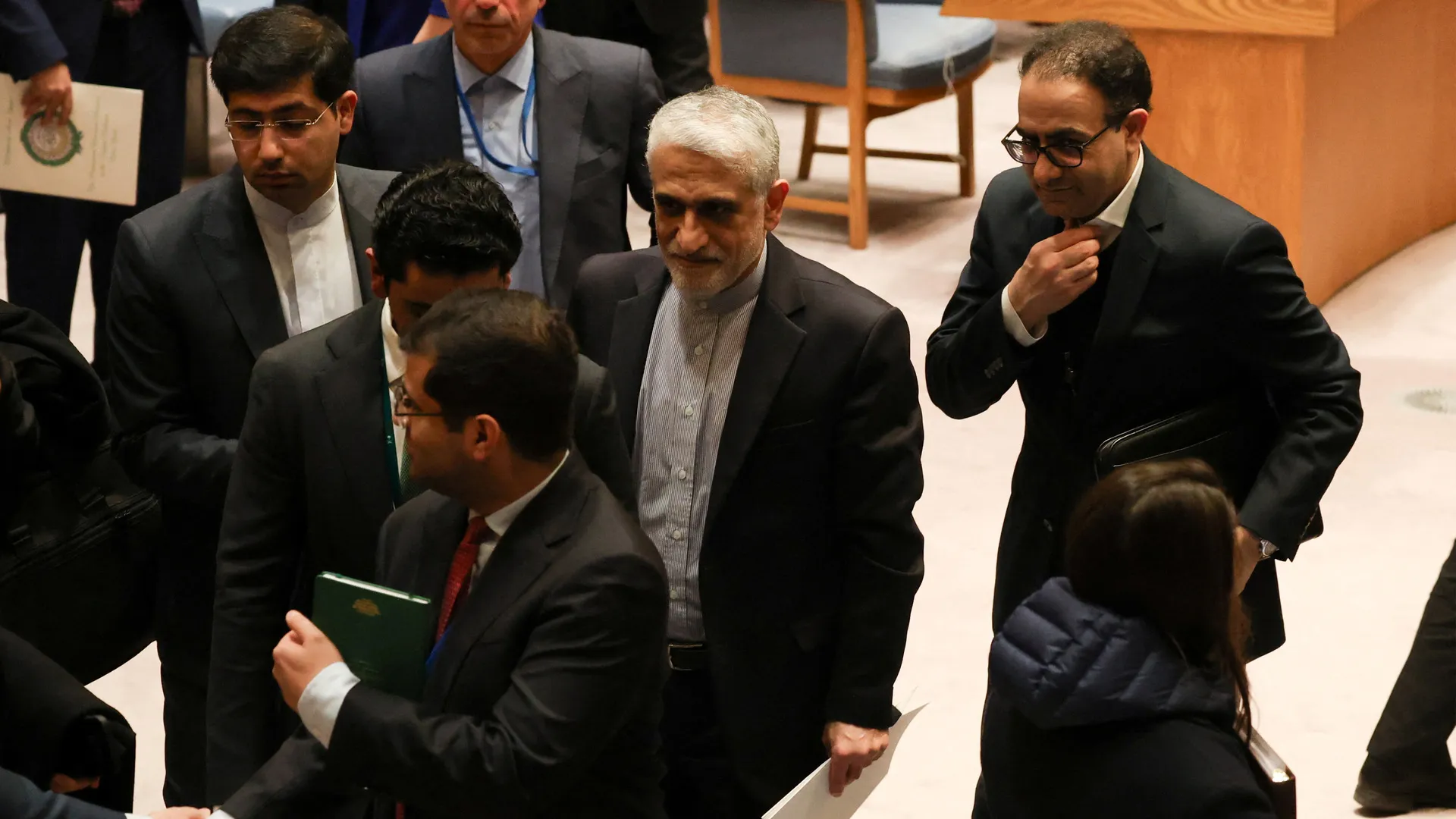
Iranian Ambassador to the United Nations, Amir-Saeid Iravani denounced US-Israeli military strikes across the country, decrying the deaths and injuries of hundreds of civilians as a war crime.
Democratic lawmakers have largely condemned the strikes on Iran, emphasizing the lack of congressional approval.
Published On 1 Mar 20261 Mar 2026
Share
Lawmakers from the Democratic Party have condemned the US attacks on Iran as a “dangerous” and “unnecessary” escalation, and called on the Senate to immediately vote on legislation that would block the president’s ability to take further military action without congressional approval.
Senator Tim Kaine, a member of the Senate Armed Services and Foreign Relations Committees and the primary author of the war powers resolution, called President Donald Trump’s order to attack Iran a “colossal mistake”.
Recommended Stories
list of 3 itemsend of list
“The Senate should immediately return to session and vote on my War Powers Resolution to block the use of US forces in hostilities against Iran,” Kaine said in a statement on Saturday. “Every single Senator needs to go on the record about this dangerous, unnecessary, and idiotic action.”
House of Representatives Minority Leader Hakeem Jeffries echoed Kaine, saying that House Democrats are committed to forcing a floor vote on a measure to restrict Trump’s war powers regarding Iran.
“Donald Trump failed to seek Congressional authorisation prior to striking Iran. Instead, the President’s decision to abandon diplomacy and launch a massive military attack has left American troops vulnerable to Iran’s retaliatory actions,” he said in a statement. “The Trump administration must explain itself to the American people and Congress immediately.”
The push for a legislative check on Trump’s executive power has gained significant bipartisan momentum in the Senate, of which the Republican Party maintains a slim majority.
Senate Minority Leader Chuck Schumer demanded on Saturday that Congress be briefed immediately about the Iran attacks, including an all-senators classified session and public testimony, criticising the administration for not providing details on the threat’s scope and immediacy.
“The administration has not provided Congress and the American people with critical details about the scope and immediacy of the threat,” he said in a statement.
Senator Mark Warner, vice chairman of the Senate Select Committee on Intelligence, described the strikes in a statement posted on X as “a deeply consequential decision that risks pulling the United States into another broad conflict in the Middle East”.
He questioned the urgency and intelligence behind the attack, warning of repeating “mistakes of the past”, like the Iraq war.
“The American people have seen this playbook before – claims of urgency, misrepresented intelligence, and military action that pulls the United States into regime change and prolonged, costly nation-building,” he said.
Not just Democrats
While the push to curb executive military authority is largely driven by the Democratic caucus, a growing contingent of Republican lawmakers has signalled a rare break from the White House to join the effort.
Republican representative Thomas Massie, one of the most outspoken critics, described the strikes as “acts of war unauthorised by Congress”.
“I am opposed to this War. This is not America First,” he wrote on X.
In the Senate, Republican Senator Rand Paul, who also co-sponsored the war powers resolution, said his opposition to the war is based on constitutional principles.
“My oath of office is to the Constitution, so with studied care, I must oppose another Presidential war,” he said on X.
Interior Ministry official says 66 missiles were fired at Qatar, and there were 114 reports of falling shrapnel.
Published On 28 Feb 202628 Feb 2026
Share
Doha, Qatar – Eight people have been injured in Qatar after missile shrapnel landed in multiple locations across the country, authorities said, following a barrage of Iranian missiles that Qatar said were intercepted by its air defences.
Brigadier Abdullah Khalifa Al-Muftah, the head of public relations at Qatar’s Ministry of Interior, said in a televised address on Saturday that 66 missiles were fired at Qatar and that authorities received 114 reports of shrapnel falling nationwide. He said one of the injured people was in serious condition.
Recommended Stories
list of 3 itemsend of list
The Interior Ministry issued an emergency alert urging the public to stay away from military sites and remain indoors, warning people not to approach or handle any unidentified debris and to report any to authorities.
Qatar’s Ministry of Defence said it had “successfully intercepted” a second wave of attacks targeting several areas. It said all missiles were intercepted before reaching the country’s territory, and urged residents to remain calm and follow official instructions.
Qatar’s Ministry of Foreign Affairs condemned what it said was the targeting of Qatari territory with Iranian ballistic missiles, calling it “reckless and irresponsible”, as well as a “flagrant violation” of sovereignty and an escalation threatening regional stability.
Ibrahim Sultan Al-Hashemi, the head of public relations at the Foreign Ministry, said the attack was inconsistent with the principles of “good neighbourliness”, and that Qatar reserved the right to respond “in accordance with international law”.
The ministry also called for an immediate halt to escalation and a return to negotiations.
The missile barrage came as Iran launched strikes across the Gulf after the US-Israeli attacks on Iran, an escalation that prompted air-defence interceptions over several countries. The news agency Reuters reported that Kuwait, Qatar, the United Arab Emirates and Bahrain said they intercepted Iranian missiles, while Jordan also intercepted missiles.
This is not the first Iranian attack on Qatar. In June 2025, during the 12-day war between Iran and Israel, Iran launched missiles at the Al Udeid airbase, a key facility hosting US forces near Doha.
Saturday’s barrage came after the United States and Israel carried out strikes on Iran, raising fears of a wider conflict and increasing pressure on Gulf states that host US forces and critical energy infrastructure.
The developments heightened anxiety across the Gulf, where Ramadan routines were disrupted by air raid alerts, interceptions and warnings about unexploded fragments, as leaders urged restraint amid fears of a widening confrontation.
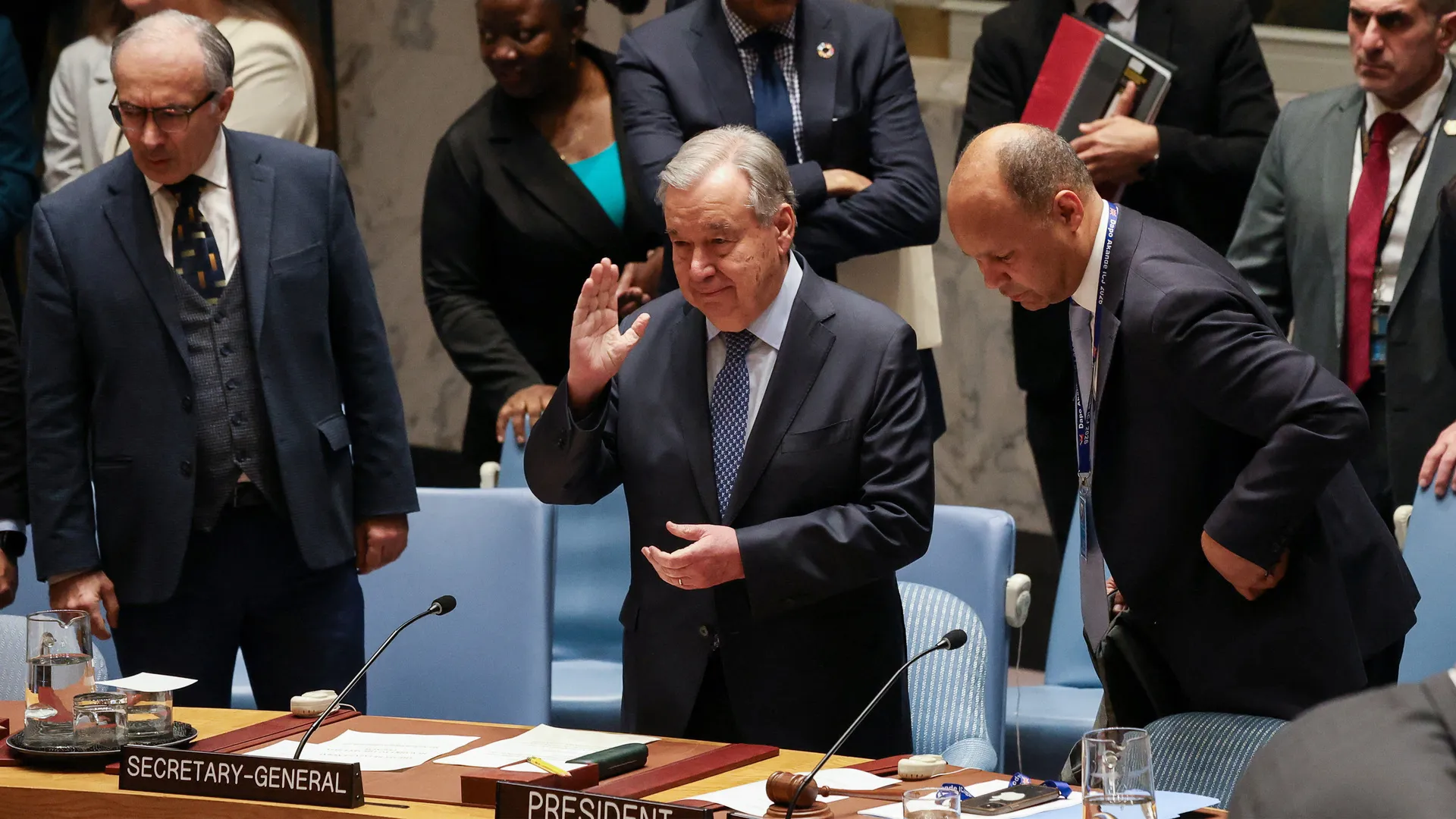
United Nations Secretary-General Antonio Guterres is calling for “genuine dialogue and negotiations” after the US and Israel launched massive military strikes across Iran, calling the attacks a grave threat to “international peace and security.”
Commentators within Israel have described a sense of business as usual in the wake of the country’s joint attack with the United States against Iran.
“It’s Saturday, so the streets are naturally quiet,” political analyst Ori Goldberg said from outside Tel Aviv, as he returned from his shelter for the second time.
“I think, politically, there’s a sense of triumphalism, of having attacked an enemy regime. Not really because we’re greatly invested in the future of the Iranian people, but because, through the genocide on Gaza, we’ve devalued human life,” he said, referring to the Israeli attacks on the besieged territory since October 2023.
Returning to shelters around the country is now the stuff of everyday life for most Israelis, he said.
Israel has been on high alert since it launched a wave of attacks on Iran, the country that its leaders have consistently portrayed as its nemesis for decades.
Announcing the attack through a video post on X, Israeli Prime Minister Benjamin Netanyahu framed the attack in characteristically apocalyptic terms, saying Israel and the US had launched attacks to “remove the existential threat posed [to Israel] by the terror regime in Iran”, and going on to call upon the Iranian people to rise against their own leaders in response to the US and Israeli unprovoked strikes upon their cities.
Iran has retaliated with its own waves of missiles and drones against Israel and US assets in the region. At least one person was reported wounded in northern Israel.
But the latest strikes against Iran were met warmly by Israel’s political elite.
“I want to remind us all: The people of Israel are strong. The IDF [Israeli army] and the Air Force are strong. The strongest power in the world stands with us,” opposition leader Yair Lapid wrote on social media, referring to the US.
“In moments like these we stand together – and we win together. There is no coalition and no opposition, only one people and one IDF, with all of us behind them.”
In a subsequent post written in Farsi, he echoed the prime minister’s calls for Iran to enact regime change from within, a longstanding Israeli policy.
‘It’s crazy’
Accounts of the relative calm in Israel stand in sharp contrast to previous escalations, when sources described panic and bulk buying before an anticipated Iranian response to the wave of strikes Israel launched against targets in Iran.
“People here are well trained,” Aida Touma-Suleiman, a Palestinian member of the Israeli parliament representing the left-wing Hadash-Ta’al faction, which is almost alone in opposing the strikes, said from her apartment near Haifa, where she had just returned from her shelter.
“This is what they’re saying all the time in the media: How well-trained and ready we are. It’s crazy. I don’t think any country in the world has experienced more war than we have, so this is what they mean by ‘trained’,” she said, referencing the wars on Iran, Lebanon, Yemen and Gaza that Israel has waged since the Hamas-led attack of October 2023.
As Touma-Suleiman spoke, she was interrupted by an alarm on her phone. “That’s not the alert. That’s a warning on my phone telling me there’s going to be an alert and then I’ll have to return to the shelter,” she explained, laughing drily. “You see what I mean about being well trained?”
Texting from Israel, Ahron Bregman, a senior teaching fellow at the Department for War Studies at King’s College London, described the relative calm and almost relief felt by many within the country that the uncertainty over war with Iran was at an end.
“Both Israel and the US are after the Iranian leadership. They hope to weaken it substantially, though I doubt they could topple it from the air,” he said, raising the possibility of a prolonged conflict.
However, how ready Israel might be for a lengthy war, and to what degree that might be Israel’s choice, was far from certain, Touma-Suleiman said.
“It will be the United States that determines how long the war will be. They’ll continue until they’ve achieved whatever it is they want,” she said.
“I don’t think Israel is ready for that. People are exhausted. The army is exhausted. I don’t know if they even have the reserves to manage a long war, and this is what Netanyahu is willing to gamble with, just so he can say to the public before elections: ‘Here is at least one victory.’”
The United States and Israel have launched strikes on Iran despite ongoing talks between Washington and Tehran over Iran’s nuclear programme.
Iran responded to Saturday’s attacks with missile and air strikes across the region, including in Israel, Bahrain, Saudi Arabia, Qatar, the United Arab Emirates and Iraq.
Recommended Stories
list of 3 itemsend of list
Israeli officials said their strikes targeted Iran’s military and nuclear-related infrastructure, while airspace across Israel was closed and emergency measures imposed. Several other countries in the region also announced the closure of their airspace.
Meanwhile, President Donald Trump said Washington has begun a “major combat operation” in Iran, aimed at “eliminating threats from the Iranian regime”.
“This regime will soon learn that no one should challenge the strength and might of the United States Armed Forces,” he said.
The strikes came just two days after high-stakes US–Iran nuclear negotiations in Geneva, mediated by Oman, ended without a breakthrough. The US-Israel attack marks the most serious escalation since the brief but intense June 2025 war.
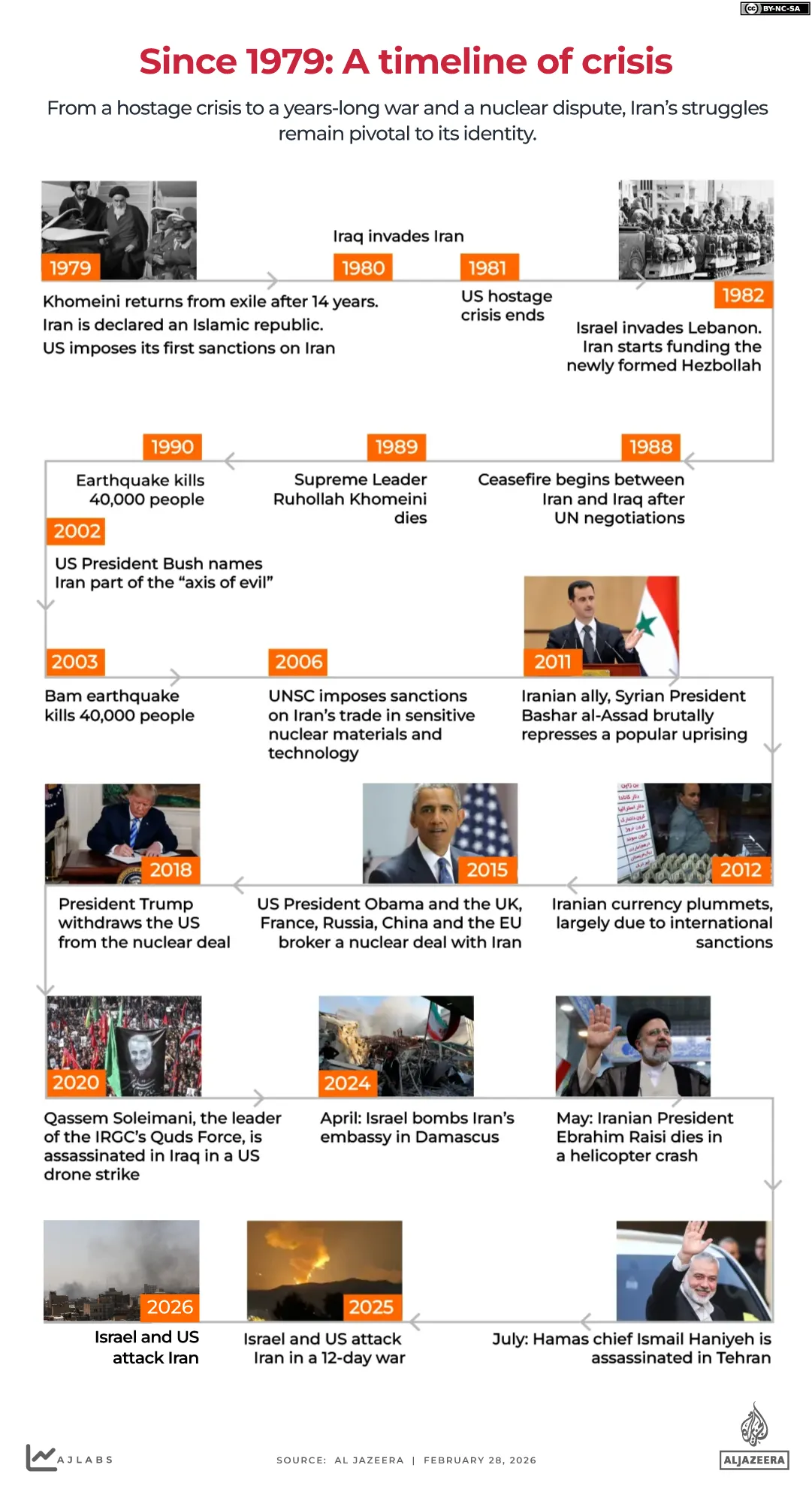
Here is a timeline of the events, including attacks and diplomatic overtures leading up to Saturday’s strikes by the US and Israel, and Iran’s fierce response.
June 13, 2025 — Israel launches major air strikes against Iranian nuclear and military facilities, amid ongoing talks between the US and Tehran. Iran responds within hours with large-scale missile and drone attacks on Israeli cities.
June 22 – The US strikes Iranian nuclear facilities at Natanz, Fordow and Isfahan, with Trump claiming the attacks degraded Tehran’s nuclear programme. Iranian officials said their programme was set back but not destroyed.
June 23 – In retaliation, Iran fires missiles towards Al Udeid airbase in Qatar, housing US soldiers. The missiles are intercepted, and no casualties are reported.
June 24 – After 12 days of fighting, a US-brokered ceasefire takes effect between Iran and Israel, ending all hostilities. Iran says at least 610 of its citizens were killed in the war, while Israel claimed 28 were killed on its side.
July 2 – Iranian President Masoud Pezeshkian signs legislation halting cooperation with the International Atomic Energy Agency (IAEA), barring its inspectors from accessing Iran’s nuclear facilities unless specifically authorised by the country’s Supreme National Security Council.
July 22 – Abbas Araghchi, Iran’s foreign minister, says Tehran will not give up its uranium enrichment programme, despite a temporary halt due to “serious and severe” damages.
August 12 – Iranian police arrest as many as 21,000 people related to the 12-day war with Israel, according to state media.
August 22 – Iran agrees to resume nuclear talks later in the month with the United Kingdom, France and Germany, despite the threat of revived sanctions.
August 28 – The three European countries trigger a mechanism reinstating the United Nations’ sanctions on the Islamic republic for the first time in a decade.
November 1 – Oman urges both the US and Iran to go back to the negotiating table as Iran reiterates it will not stop enriching uranium.
November 7 – Trump says Iran has requested that Washington remove its crippling sanctions on Tehran, and that he is willing to talk about the issue.
December 28 – Protests break out in major cities, including Tehran, over soaring prices after the rial plunges against the US dollar.
January 8, 2026 – The internet is shut down across Iran following the outbreak of antigovernment protests, which have now spread beyond cities. The blackout lasts for more than two weeks.
January 13 – Trump tells Iranians to “keep protesting” , claiming that “help is on the way”, and that the US may be preparing for military intervention against Tehran. The US begins to bolster its military presence off Iran.
February 6 – Iran and the US begin indirect nuclear negotiations in Geneva, mediated by Oman, with the aim of reaching a deal to curb Tehran’s nuclear programme.
February 17 – High-level US–Iran nuclear talks resume in Geneva, again with Omani mediation.
(Al Jazeera)
February 22 – Oman confirms another round of discussions in Geneva, describing a “positive push” but admits that significant differences remain.
February 26 – A third round of nuclear talks concludes in Geneva, with mediator Oman saying “significant progress” was made and more discussions would be held the following week in Vienna.
February 27 – Oman’s foreign minister says Iran has agreed to degrade its current stockpiles of nuclear material to “the lowest level possible” — effectively to unrefined levels. US President Donald Trump says he prefers diplomacy but warns that “all options” remain available if diplomacy fails.
February 28 – Israel launches coordinated strikes on Iranian targets, including sites in and around Tehran. Iran retaliates by launching air and missile strikes across the region, including Qatar, United Arab Emirates, Saudi Arabia, Bahrain and Kuwait.
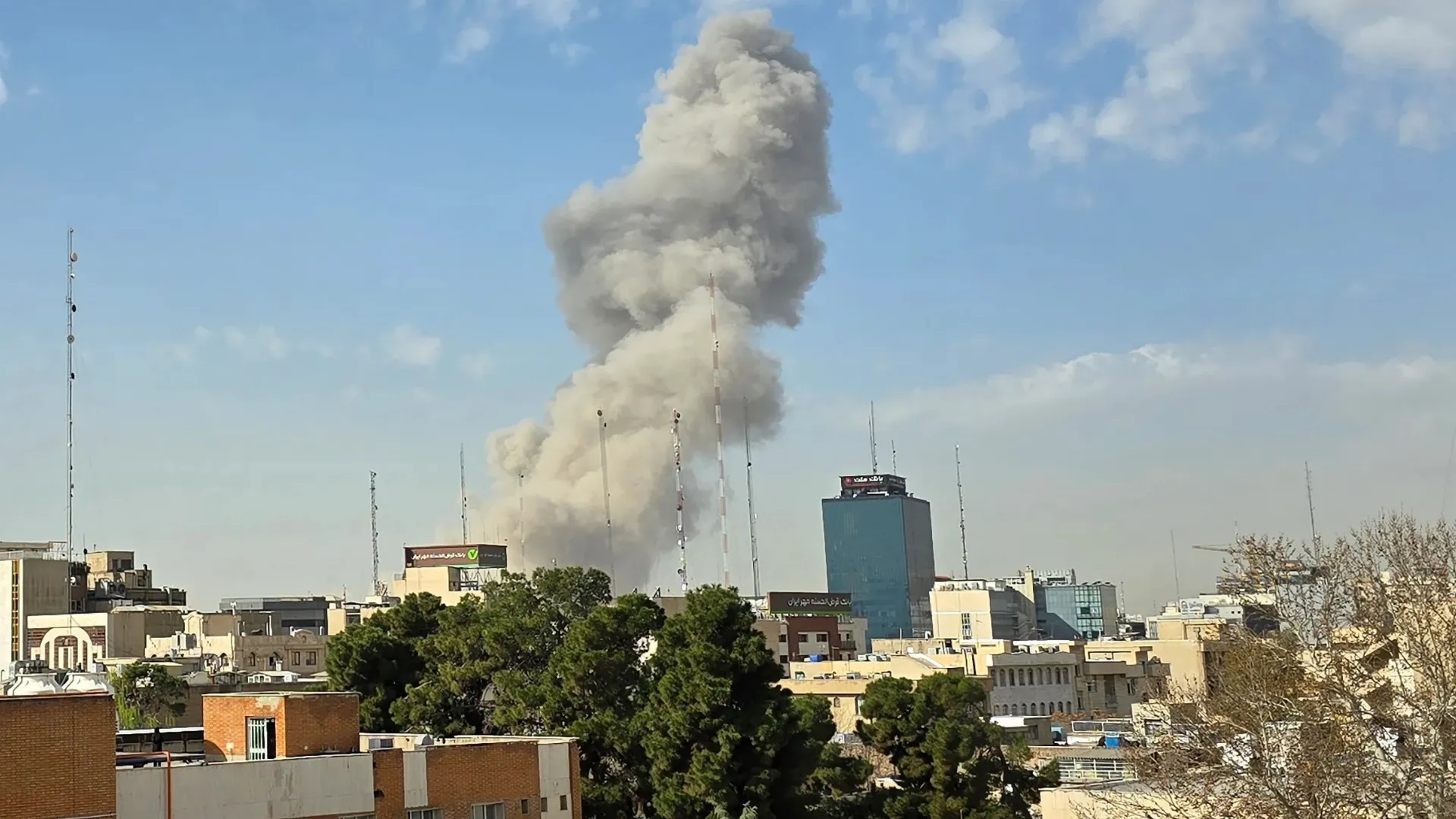
Video shows plumes of smoke rising after Iran targeted a United States military base in Bahrain, following Israel–US attacks across Iran. Two missiles were intercepted over Qatar and explosions were reportedly heard in Abu Dhabi, Kuwait and Saudi Arabia.
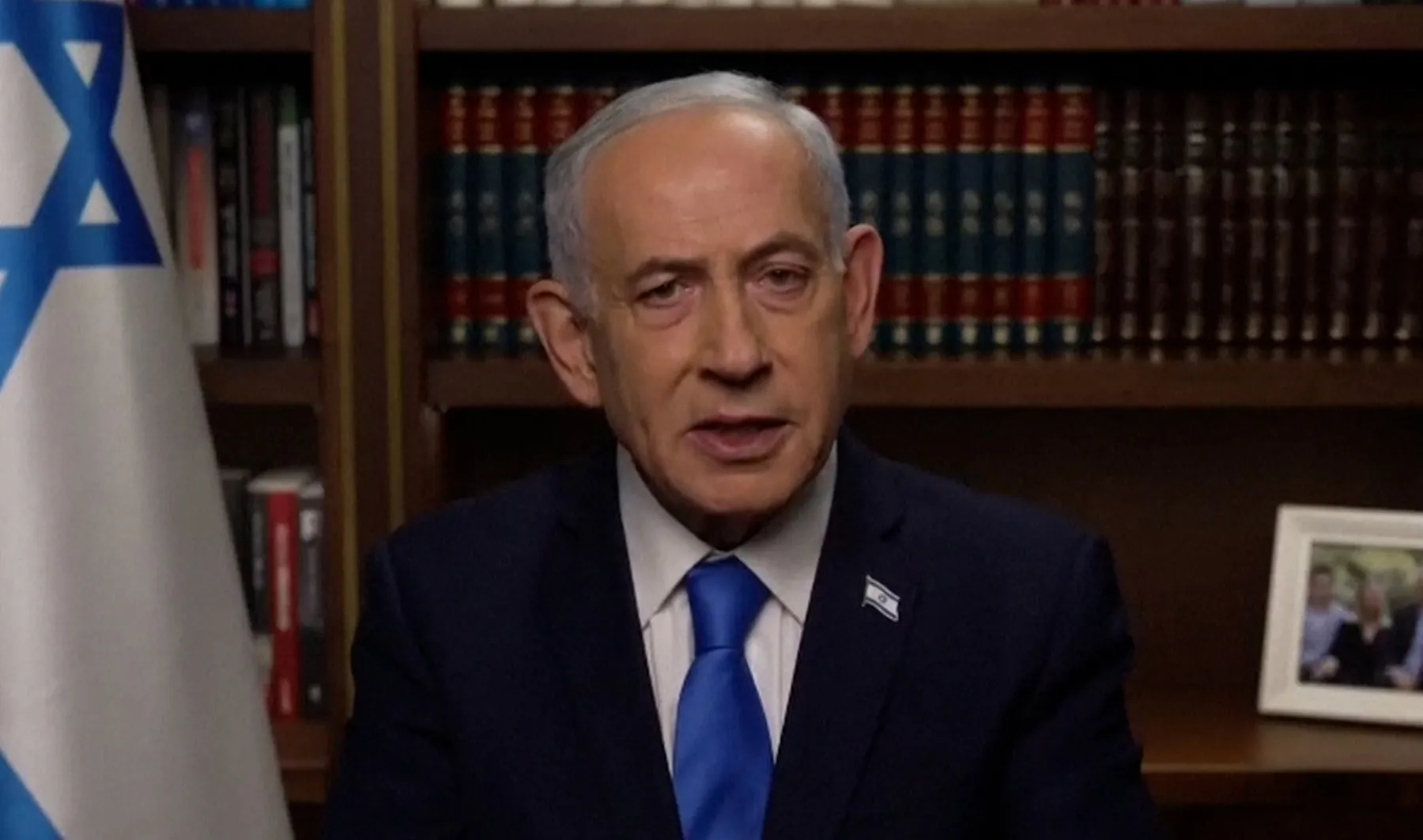
Israel’s Prime Minister Benjamin Netanyahu says the joint US‑Israel strikes on Iran aim to remove an ‘existential threat.’ He hailed the joint action as empowering the Iranian people to shape their own future and praised US President Donald Trump for his leadership.
US President Donald Trump says American forces have begun “major combat operations” in Iran alongside Israel, aiming to eliminate what he described as imminent threats from the Iranian regime and defend the American people.
Oman’s Foreign Minister says most recent indirect talks between US, Iran ‘really advanced, substantially’ and diplomacy must be allowed do its work.
Iran agreed during indirect talks with the United States never to stockpile enriched uranium, said Oman’s top diplomat, who described the development as a major breakthrough.
Oman’s Foreign Minister Badr bin Hamad Al Busaidi also said on Friday that he believed all issues in a deal between Iran and the US could be resolved “amicably and comprehensively” within a few months.
Recommended Stories
list of 4 itemsend of list
“A peace deal is within our reach … if we just allow diplomacy the space it needs to get there,” Al Busaidi said in an interview with CBS News in Washington, DC, after Oman brokered the third round of indirect talks between the US and Iran in Geneva on Thursday.
“If the ultimate objective is to ensure forever that Iran cannot have a nuclear bomb, I think we have cracked that problem through these negotiations by agreeing [on] a very important breakthrough that has never been achieved any time before,” Al Busaidi said.
“The single most important achievement, I believe, is the agreement that Iran will never ever have nuclear material that will create a bomb,” he said.
“Now we are talking about zero stockpiling, and that is very, very important because if you cannot stockpile material that is enriched, then there is no way that you can actually create a bomb,” he added.
There would also be “full and comprehensive verification by the IAEA [International Atomic Energy Agency]”, he said, referring to the UN’s nuclear watchdog.
Oman’s top diplomat also said Iran would degrade its current stockpiles of nuclear material to “the lowest level possible” so that it is “converted into fuel, and that fuel will be irreversible”.
“This is something completely new. It really makes the enrichment argument less relevant, because now we are talking about zero stockpiling,” Al Busaidi said.
Regarding recent US demands regarding Iran’s missile programme, Al Busaidi said: “I believe Iran is open to discuss everything”.
Asked if he thought enough ground was covered in the most recent talks in Geneva to hold off a US attack on Iran, the minister said, “I hope so.”
“We have really advanced substantially, and I think, obviously, there remains various details to be ironed out, and this is why we need a little bit more time to really try and accomplish the ultimate goal of having a comprehensive package of the deal,” he said.
“But the big picture is that a deal is in our hands,” he added.
The foreign minister’s comment followed after he met earlier on Friday with US Vice President JD Vance and as US President Donald Trump continued to sabre-rattle while at the same time declaring he favoured a diplomatic solution with Tehran.
Trump said on Friday that he was not happy with the recent talks that concluded in Geneva.
“We’re not exactly happy with the way they’re negotiating,” Trump told reporters in Washington, adding that Iran “should make a deal”.
“They’d be smart if they made a deal,” he said.
Trump later said that he would prefer it if the US did not have to use military force, “but sometimes you have to do it”.
The US and Iranian sides are expected to meet again on Monday in Vienna, Austria, for more indirect negotiations.
As Washington escalates threats of military action against Iran, negotiations over Tehran’s nuclear programme continue behind the scenes. But while the Trump administration insists that the standoff is about security, Iran’s state media are pushing a very different narrative: that the crisis is a deliberate distraction from the Epstein scandal that continues to implicate the US president.
Contributors: Dina Esfandiary – Middle East Lead, Bloomberg Economics Fereshteh Sadeghi – Iranian journalist Jamal Abdi – President, National Iranian American Council Sina Toossi – Senior Fellow, Centre for International Policy
On our radar:
Indian Prime Minister Narendra Modi travelled to Israel this past week in a carefully choreographed display of solidarity. While Modi’s trip was celebrated in the Israeli media, criticism by Indian journalists was blocked back home. Leaving the two leaders to sign arms deals that will boost an already significant military partnership.
The Rise of Digital Micro-Bolsonaros
Nearly two years after Jair Bolsonaro’s fall from power in Brazil, the movement he built is searching for a new figurehead. A rising generation of young, evangelical, and hyper-online politicians is stepping in.
They are leveraging a sophisticated, decades-old religious media machine that evolved from radio and television into a powerful force on social media. Brazil’s political right is being reshaped for the digital age.
Featuring: Anna Virginia Balloussier – Journalist, Folha de Sao Paulo Caro Evangelista – Executive Director, ISER Magali Cunha – Editor-in-Chief, Berreia Project
Days after Israeli Prime Minister Benjamin Netanyahu proposed forging a network of allied nations, including in the Middle East and Africa, to stand against what he called “radical” adversaries, the country’s president is on an official visit to key ally, Ethiopia.
It is not yet known which Arab and African countries will form part of Netanyahu’s hypothetical “hexagon of alliances”, which he said on Sunday will include Israel, India, Greece, Cyprus and others to stand against their enemies in the Middle East. Chief among those enemies is presumably Iran and its network of resistance groups from Hezbollah in Lebanon to the Houthis of Yemen.
Recommended Stories
list of 3 itemsend of list
Analysts doubt Israel could secure enough influence over nation-states to form a formal security pact.
However, the country is deepening its ongoing charm offensive in Africa, which it began during the genocide in Gaza, as its reputation suffered a decline on the continent, with the African Union (AU) releasing multiple statements condemning Israeli attacks on Palestinian civilians.
In a rare visit, Israeli President Isaac Herzog arrived in Ethiopia on Tuesday. The last presidential trip to the East African country took place in 2018.
“The relationship between our peoples is woven deep into the pages of history and human tradition,” Herzog said in a statement upon his arrival. “At the heart of the story of both our nations lies a clear common thread – the ability to join hands, unite resources of spirit and substance, to innovate, develop, and grow for the benefit of all.”
Herzog, on Wednesday, met with Prime Minister Abiy Ahmed who said the two leaders talked about “ways to improve collaboration in areas of mutual interest,” without revealing further details.
But beneath the surface, observers say the visit also represents a battle for influence over Addis Ababa, which has received similar high-level delegations from Turkiye and Saudi Arabia in recent days.
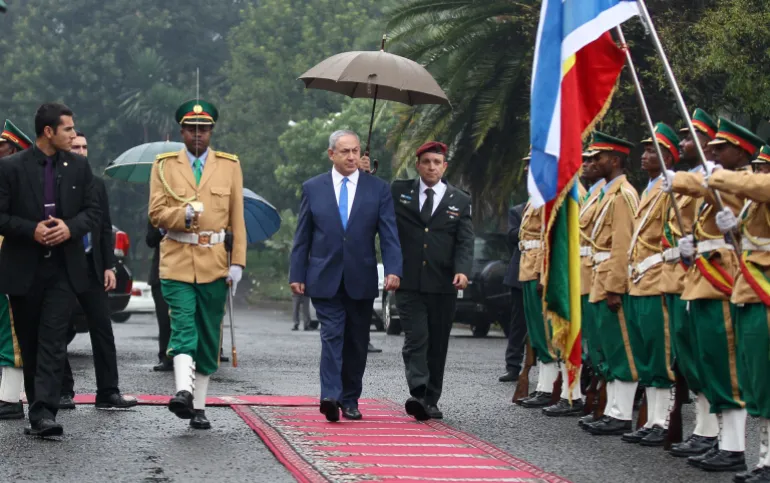
Israeli Prime Minister Benjamin Netanyahu inspecting a guard of honour at the National Palace during his State visit to Ethiopia in 2016 [File: Tiksa Negeri/Reuters]
Shared ties and shared anger
Ethiopia and Israel are bound by several links, from shared histories of their people to shared scrutiny over recent political moves in the Horn of Africa that have angered several of the region’s influential nations.
Both countries maintain friendly ties largely due to the Beta Israel community, or Ethiopian Jews, who hail from northern Tigray and Amhara. Historically, Ethiopian Jews suffered religious persecution, and after Israel’s formation, it sought their emigration under its Law of Return policy. Between the late 1970s and mid-1990s, tens of thousands of Ethiopian Jews were covertly transported to Israel – during a time when several African countries, including Ethiopia, had cut off ties with Israel over the 1973 Yom Kippur War and its invasion of Egypt.On the cusp of a civil war in Ethiopia in 1991, Mossad, Israel’s spy agency, launched a daring operation that airlifted 14,000 Ethiopians over the course of just two days.
About 160,000 Ethiopian Jews now live in Israel. Many within the community have struggled to integrate and have complained of discrimination and racism. In 2019, tens of thousands of Ethiopian Jews flooded the streets in protest across Israeli cities after a 19-year-old of Ethiopian origin was shot dead by the police.
Ethiopia-Israel state relations have, meanwhile, remained steady. In 2016, when Netanyahu visited the country in his first prime ministerial visit – Addis Ababa became one of the first African countries to voice support for Israel’s long-sought observer status at the AU. Fierce opposition from South Africa, Algeria and other countries supporting Palestine delayed the process until 2021. Later, in 2023, the AU confirmed it had withdrawn the status.
Mashav, Israel’s aid agency, has, in the past decade, provided aid to Ethiopia in the form of agriculture and water cooperation projects, although Addis Ababa receives much more significant funding from wealthier partners like China. When Israel sponsored several African journalists on media trips to the country last year, Ethiopia was among the countries it invited journalists from.
More recently, both countries are bound by their support for Somaliland, which Somalia claims as part of its territory and which Israel sees as critical to its own national security, Hargeisa-based analyst Moustafa Ahmad told Al Jazeera.
In December, Israel recognised Somaliland’s statehood, becoming the first country to do so. Months before, there were unconfirmed talks about plans to move displaced Palestinians to Somaliland or to South Sudan, another key Israeli ally in the region. Analysts speculate that countries like South Sudan and the United Arab Emirates, another close friend of Israel, may also recognise Somaliland.
Israel’s focus on the Horn of Africa intensified after a late 2024 report from a United Nations expert panel, which found that the Somalia-based armed group, al-Shabab, was actively collaborating with Yemen’s Houthis. Where the Houthis were providing weapons and drone training, al-Shabab was, in return, granting access to a smuggling corridor stretching along the Somali coast and connecting to the Gulf of Aden, where Iranian weapons could be smuggled into Yemen.
The move to recognise Somaliland was therefore meant to disrupt that cooperation by stationing an Israeli naval base in the region, analysts note.
“It’s part of their calculations even if they haven’t said it publicly,” Ahmad said.
Several countries, as well as the AU, have pushed back on Israel’s recognition of Somaliland, calling it a violation of Somalia’s sovereignty. In Somaliland, however, many have celebrated the move.
Turkish President Recep Tayyip Erdogan holds hands with Somali President Hassan Sheikh Mohamud and Ethiopian Prime Minister Abiy Ahmed, left, following a media conference in Ankara, on December 11, 2024 [File: Murat Kula/Presidential Press Office/Handout via Reuters]
Addis Ababa under pressure
While neither Israel nor Ethiopia has provided details of topics on the agenda during Herzog’s visit, Somaliland is likely at the top of the list.
Addis Ababa had in 2024 enraged its neighbours after it signed a controversial port deal with Hargeisa that would allow it access to the sea, reportedly in exchange for a future recognition of Somaliland. Although massive and rapidly industrialising, Ethiopia is landlocked, having lost its sea access after Eritrea seceded in 1993. Prime Minister Abiy has often said sea access is critical for his country.
The fall-out between Ethiopia and Somalia was so severe that analysts sounded the alarm over possible armed conflict between the two neighbours until Turkiye, a key development partner for Mogadishu, stepped in to smooth things over by pressuring Addis Ababa to coordinate with Mogadishu instead.
It is likely, analysts say, that Israel is now hoping to push Ethiopia further towards recognising Somaliland, which boasts a 850km (528-mile) coastline. In Hargeisa, many are disappointed after more countries failed to follow Israel’s steps, Ahmad said.
Addis Ababa, though, might not appreciate further pressure at the moment as it faces increasing regional isolation on several fronts.
One key reason is the controversial Grand Ethiopian Renaissance Dam (GERD), which Egypt and Sudan say is blocking the water supply they need for irrigation.
A source of national pride for Ethiopians, the dam was funded almost entirely through citizens’ donations and government funds. Israeli engineers participated in the project, and Israel reportedly sold weapons to Ethiopia to protect the dam amid tensions with its neighbours, although the Israeli government denies this.
At the same time, Addis Ababa is also facing tensions with Eritrea, which has moved closer to Somalia and Egypt. Both countries have historically feuded, and recently, tensions have again risen over the 2020 Tigray War and Abiy’s repeated statements about his country needing access to the sea.
“Addis Ababa is cautious of making a decision that will cement its regional isolation at this time [because] it is clearly hedging among various actors seeking to influence the Horn of Africa and Red Sea region,” Ahmad said.
Pressure is also mounting on Addis Ababa from countries eager to keep the status quo.
On Sunday, Turkiye’s President Recep Tayyip Erdogan visited Ethiopia and said in his speech: “I would like to emphasise that Israel’s recognition of Somaliland does not benefit Somaliland or the Horn of Africa.”
His statement drew a backlash from Hargeisa, which called it “unacceptable interference” aimed at wrecking relations between Somaliland and its partners.
Meanwhile, Saudi Arabia, which is embroiled in an ongoing rift with the United Arab Emirates over how to deal with the conflict in Yemen, also intervened in the fray in February. Vice Minister of Foreign Affairs Waleed Elkhereiji was in Addis Ababa this week to discuss “regional peace”, just two weeks after Foreign Minister Prince Faisal bin Farhan Al Saud arrived in the city for talks with Abiy.
So far, it is unclear if Riyadh has recorded any success in influencing Addis Ababa.
How Israel will fare in that regard is also still unclear.
The White House’s comment comes days after a senior Trump aide said Iran is one week away from having material for nuclear bomb.
The White House has insisted that last year’s strikes against Iran destroyed the country’s nuclear programme despite a recent claim by a senior US official that Tehran is a week away from having bombmaking material.
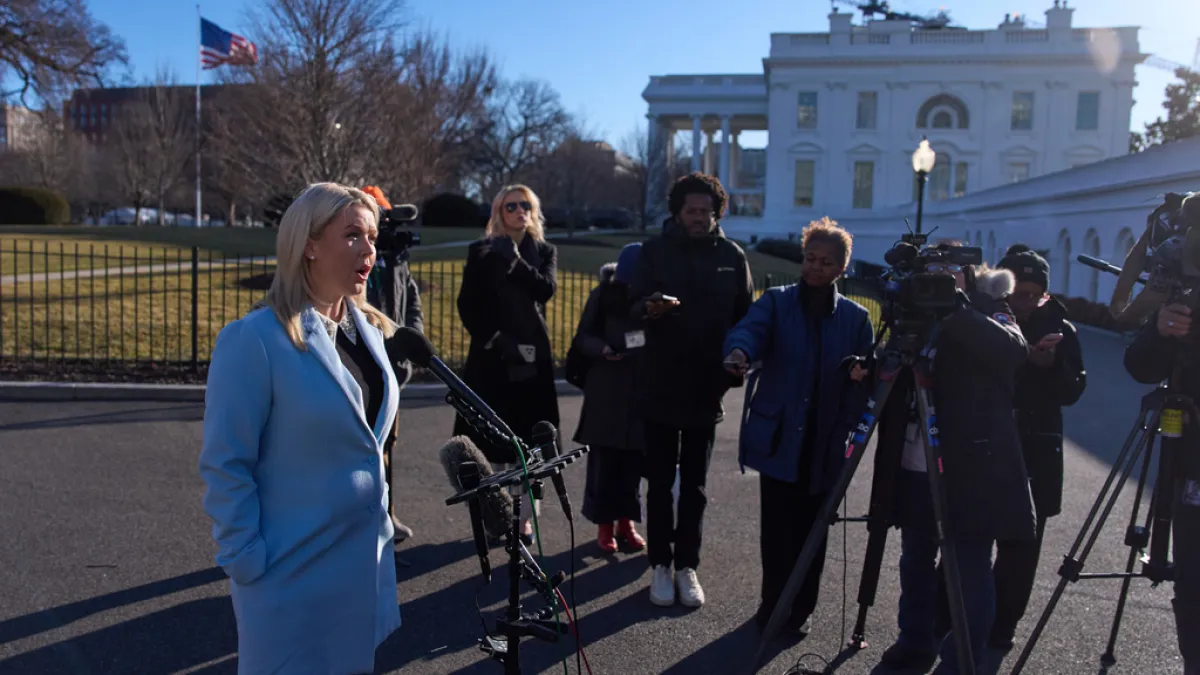
Karoline Leavitt, the White House spokesperson, told reporters on Tuesday that the June 2025 attack on Iran’s nuclear facilities, known as Operation Midnight Hammer, was an “overwhelmingly successful mission”.
Recommended Stories
list of 3 itemsend of list
The attack “did, in fact, obliterate Iran’s nuclear facilities“, Leavitt said.
But just this weekend, President Donald Trump’s envoy Steve Witkoff suggested that Iran is close to having enough material to build a nuclear weapon.
“They’re probably a week away from having industrial-grade bomb-making material,” Witkoff told Fox News on Saturday.
Since last June’s strikes, Trump has repeatedly hailed the attack, arguing that it eliminated Iran’s nuclear programme and led to “peace” in the Middle East. Operation Midnight Hammer came towards the end of a 12-day war Israel initiated with Iran that month.
But eight months later, US and Iranian officials are once again holding talks to reach a nuclear deal and avert another war.
On Tuesday, Leavitt said the destruction of Iran’s nuclear programme had been “verified” by Trump and the United Nations’ watchdog, the International Atomic Energy Agency (IAEA).
“That does not mean that Iran may never try again to establish a nuclear programme that could directly threaten the United States and our allies abroad, and that’s what the president wants to ensure can never happen again,” she added.
Last year, after the US attack, IAEA chief Rafael Grossi said Iran could resume uranium enrichment “in a matter of months”.
But the UN agency’s inspectors have not been able to assess Iran’s nuclear sites since the US strikes.
The Pentagon’s public assessment was that the Iranian nuclear programme was set back by one to two years.
There has been no official confirmation of the US claims that Iran has restarted nuclear enrichment after the attack.
After a visit by Israeli Prime Minister Benjamin Netanyahu to the US in December, Trump renewed his threats to attack Iran if it tries to rebuild its nuclear or missile programme.
Still, Tehran and Washington are set to hold the third round of negotiations this year to push for a nuclear deal.
Iran, which denies seeking a nuclear weapon, has said it would agree to minimal uranium enrichment under strict IAEA supervision in exchange for lifting sanctions against its economy.
But Trump has repeatedly stressed that it is seeking zero enrichment.
Enrichment is the process of isolating and concentrating a rare variant, or isotope, of uranium that can produce nuclear fission.
At low levels, enriched uranium can power electric plants. If enriched to approximately 90 percent, it can be used for nuclear weapons.
Before the June 2025 war, Iran was enriching uranium at 60 percent purity.
Tehran had been escalating its nuclear programme since 2018, when Trump, during his first term, nixed a multilateral agreement that capped Iran’s enrichment at 3.67 percent. He instead started piling up sanctions on the Iranian economy, as part of a “maximum pressure” campaign.
The White House on Tuesday suggested the military option against Iran remains on the table.
“President Trump’s first option is always diplomacy. But as he has shown, he is willing to use the lethal force of the United States military if necessary,” Leavitt said.