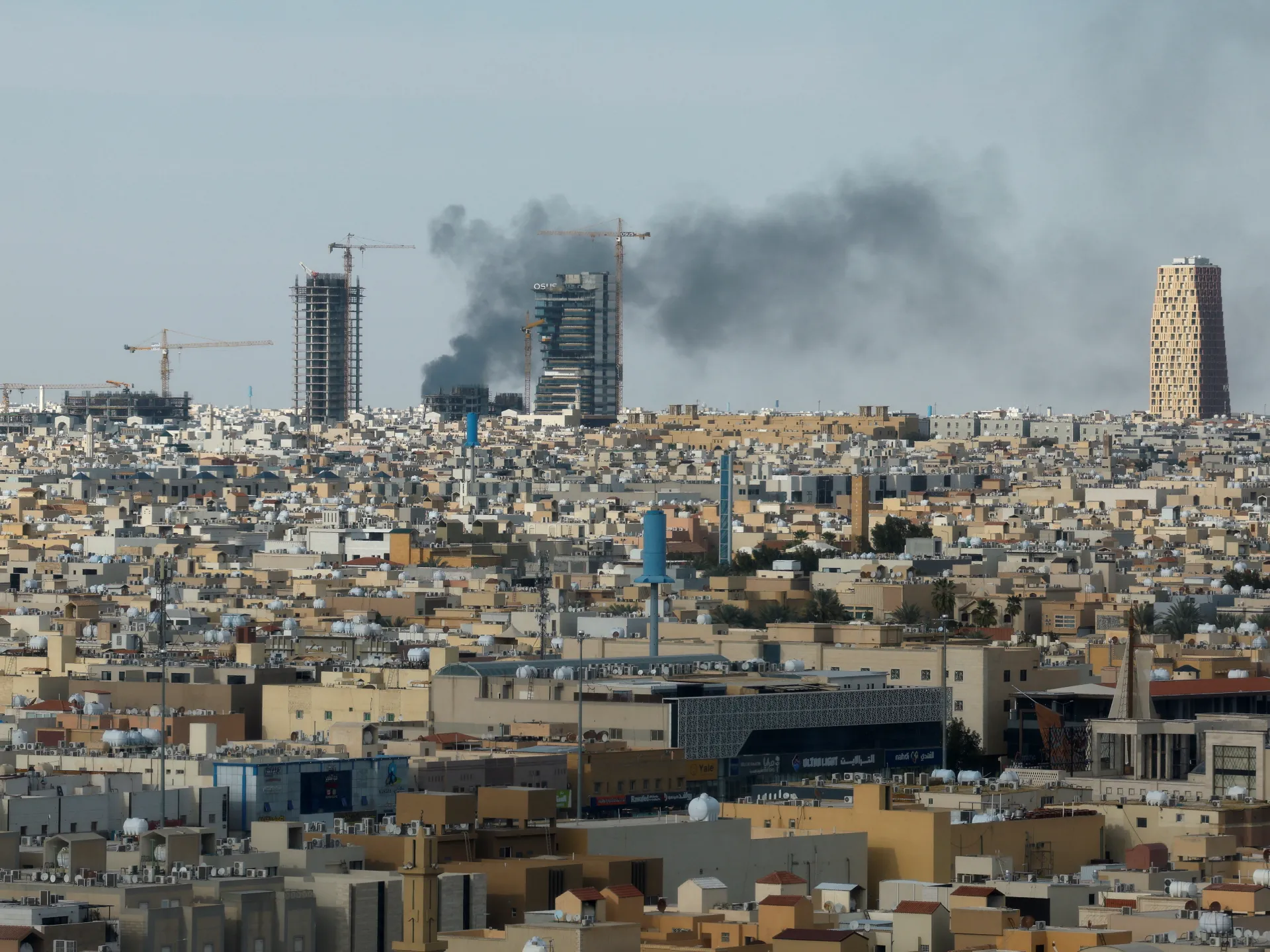
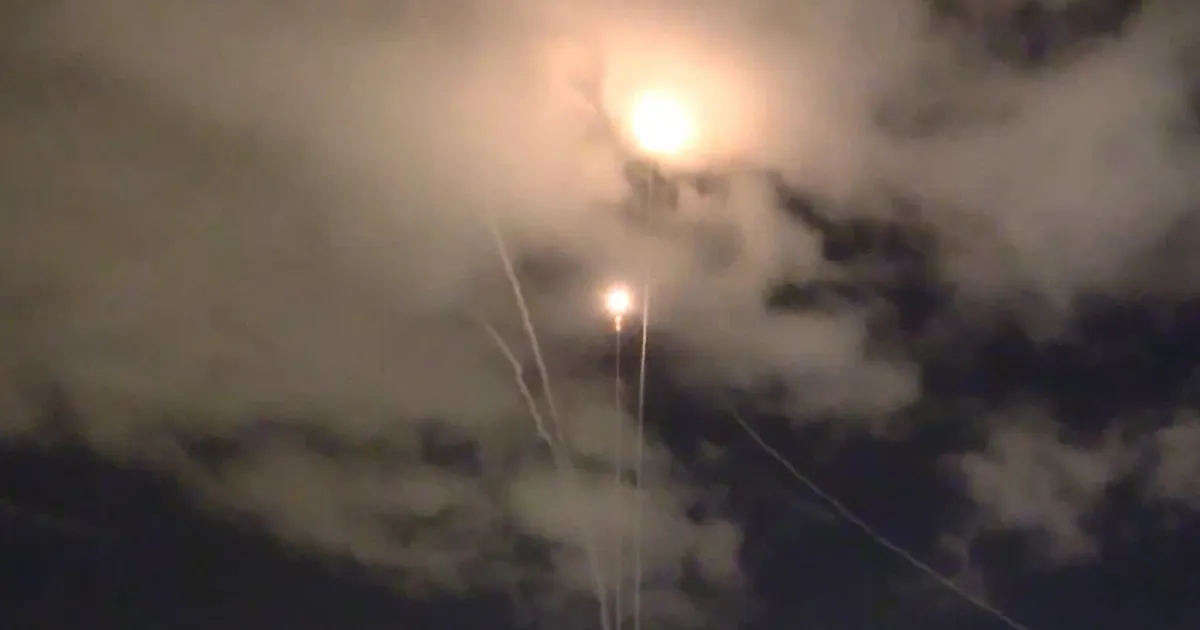
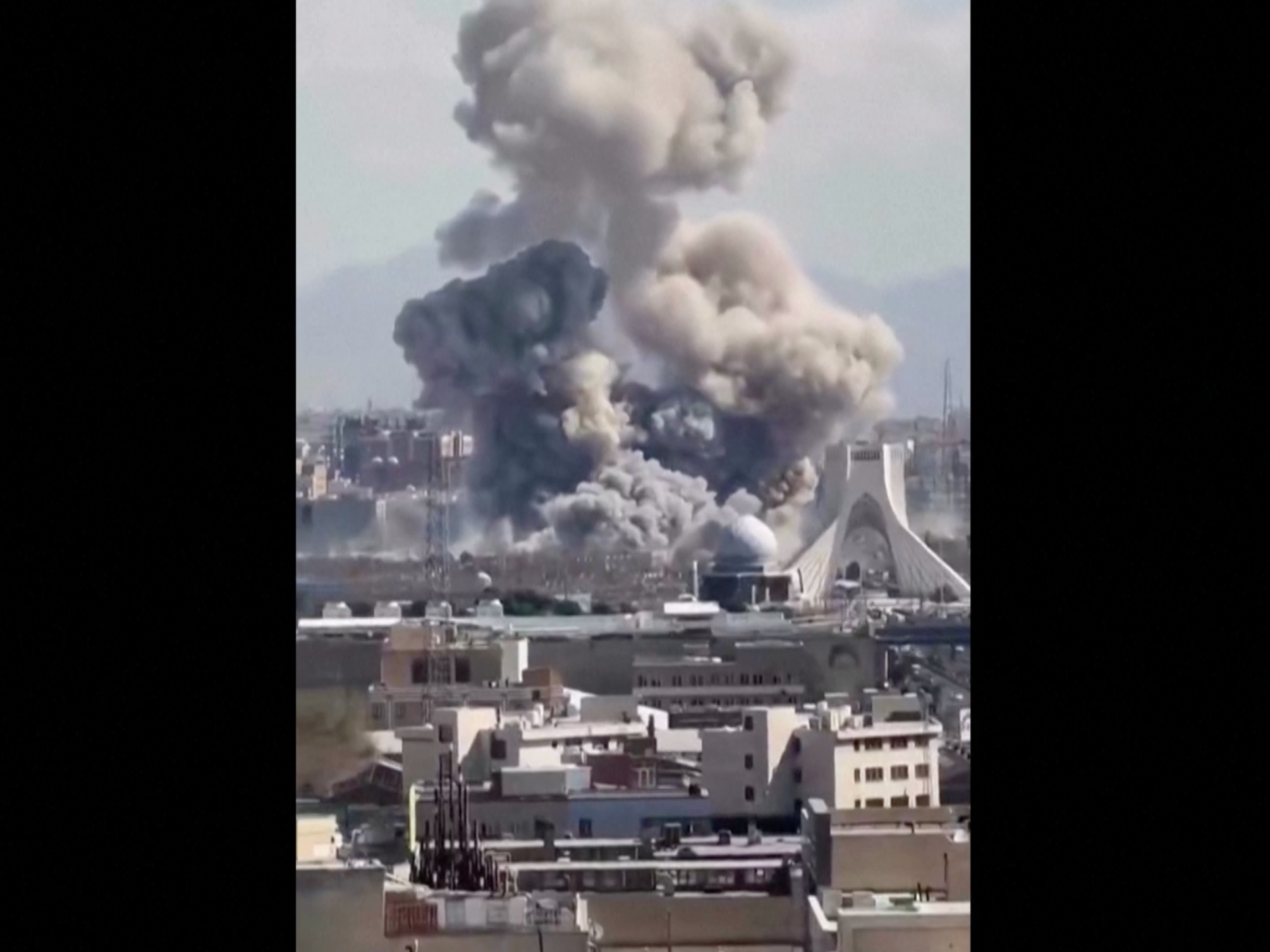
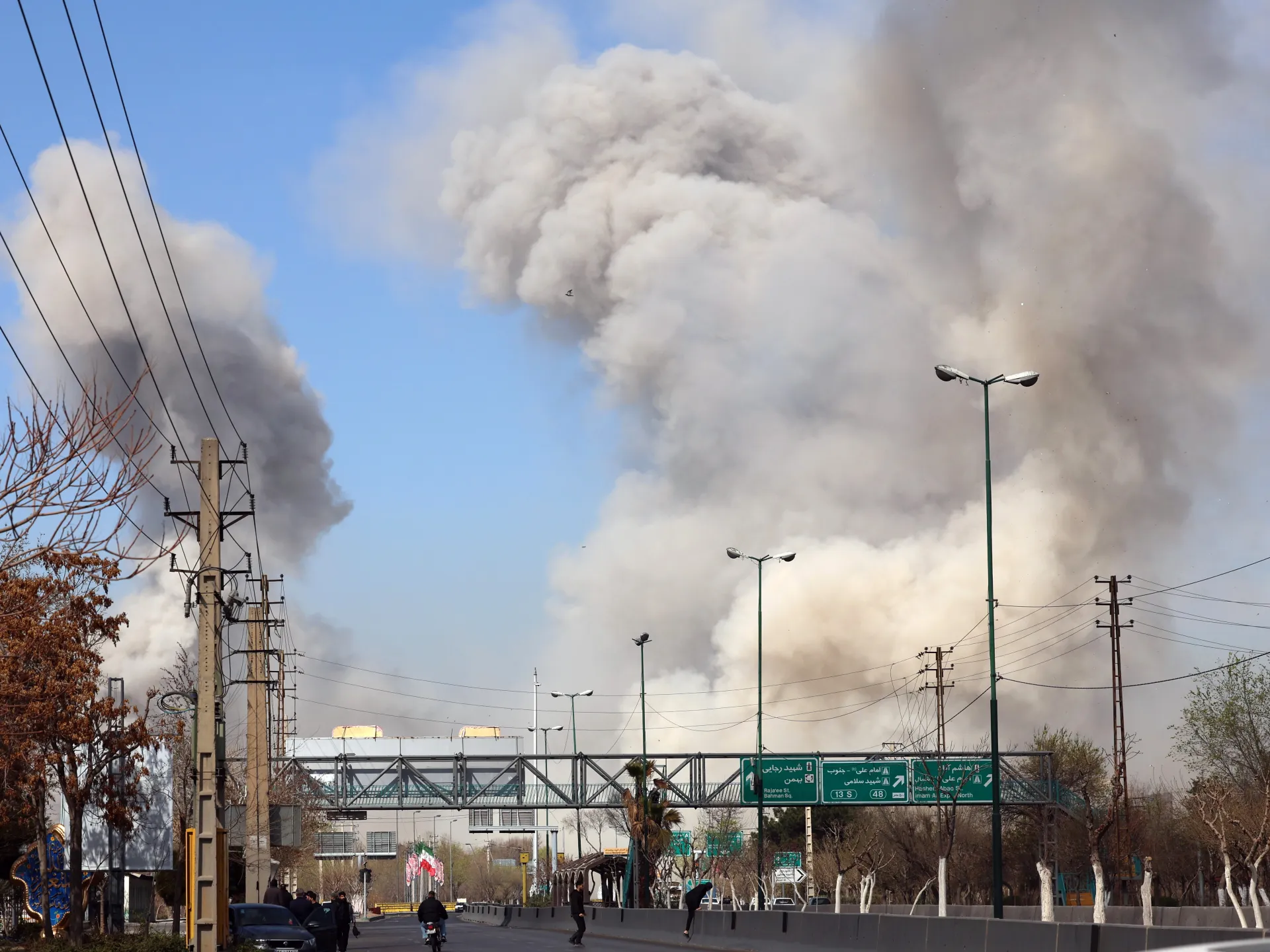
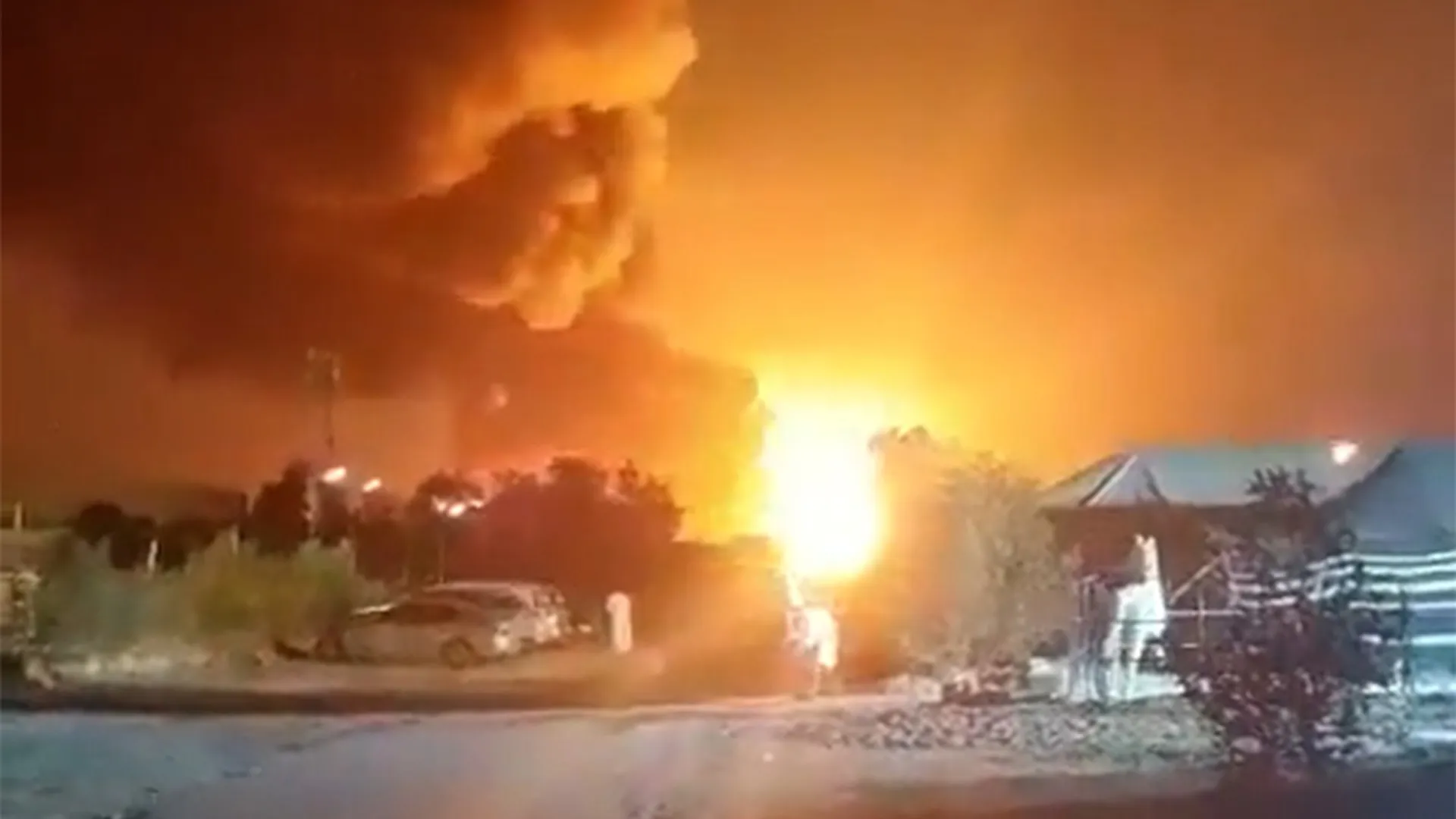
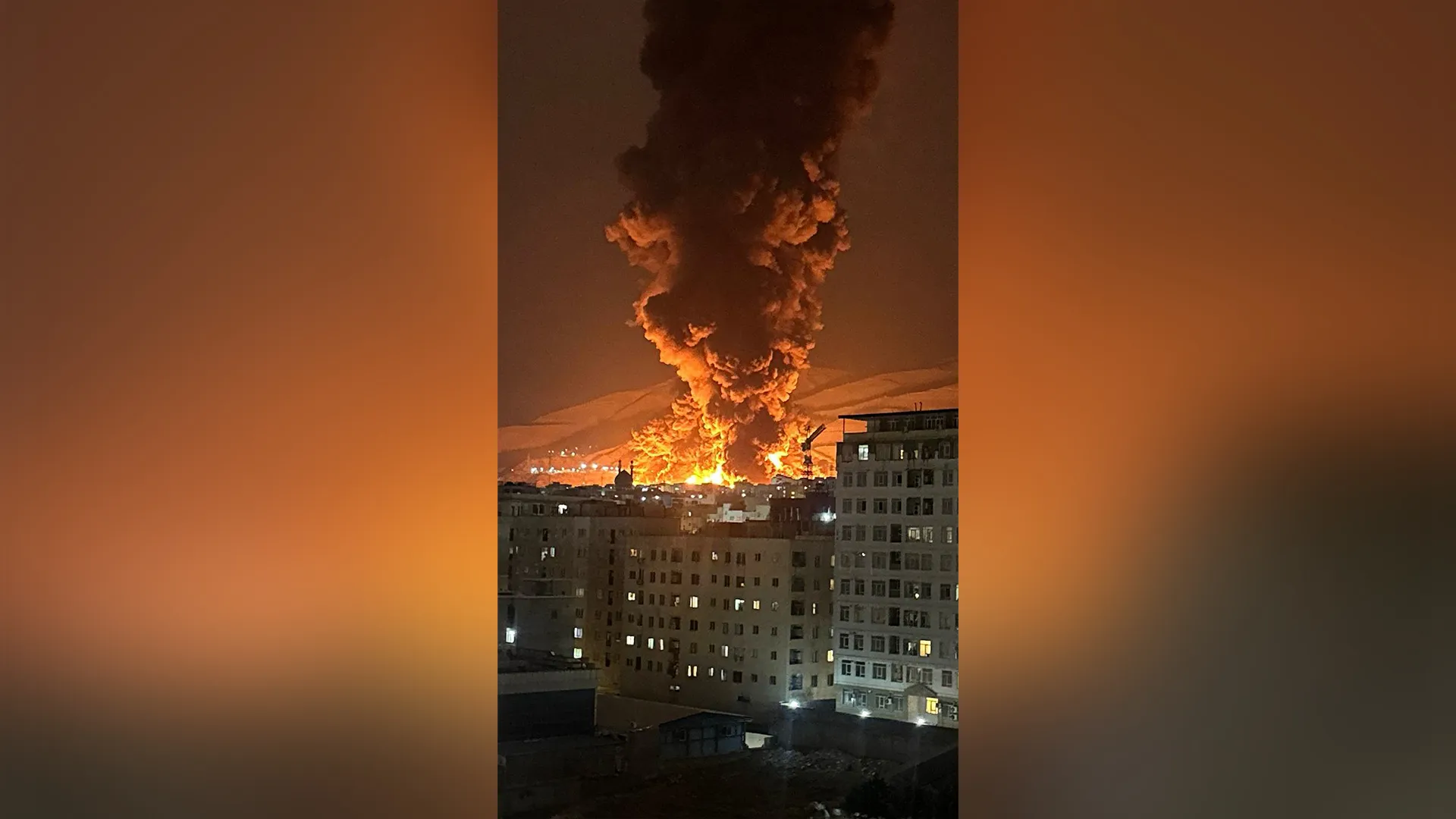
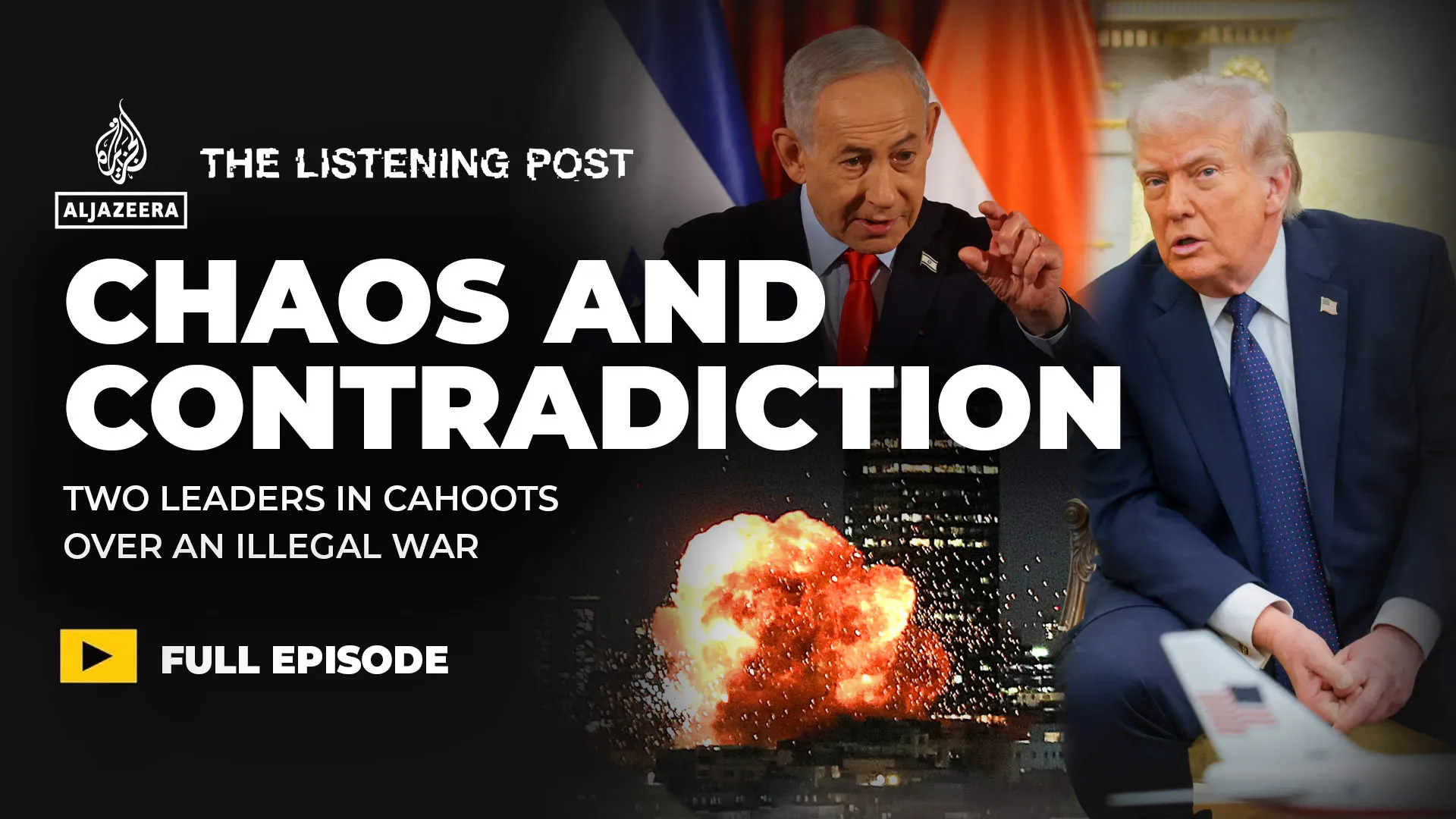
Footage captured a massive fire raging at the Shehran oil depot on the outskirts of northern Tehran following an Israeli attack late Saturday night. The Israeli military claimed responsibility for striking fuel storage and related sites it alleges are affiliated with the Iranian armed forces.
United States President Donald Trump has posted on social media that he does not need the United Kingdom to deploy aircraft carriers to the Middle East, amid the ongoing war with Iran.
Saturday’s post on Truth Social follows a statement from the UK’s Ministry of Defence that one of its two flagship aircraft carriers, the HMS Prince of Wales, has been placed on “high readiness”.
Recommended Stories
list of 3 itemsend of list
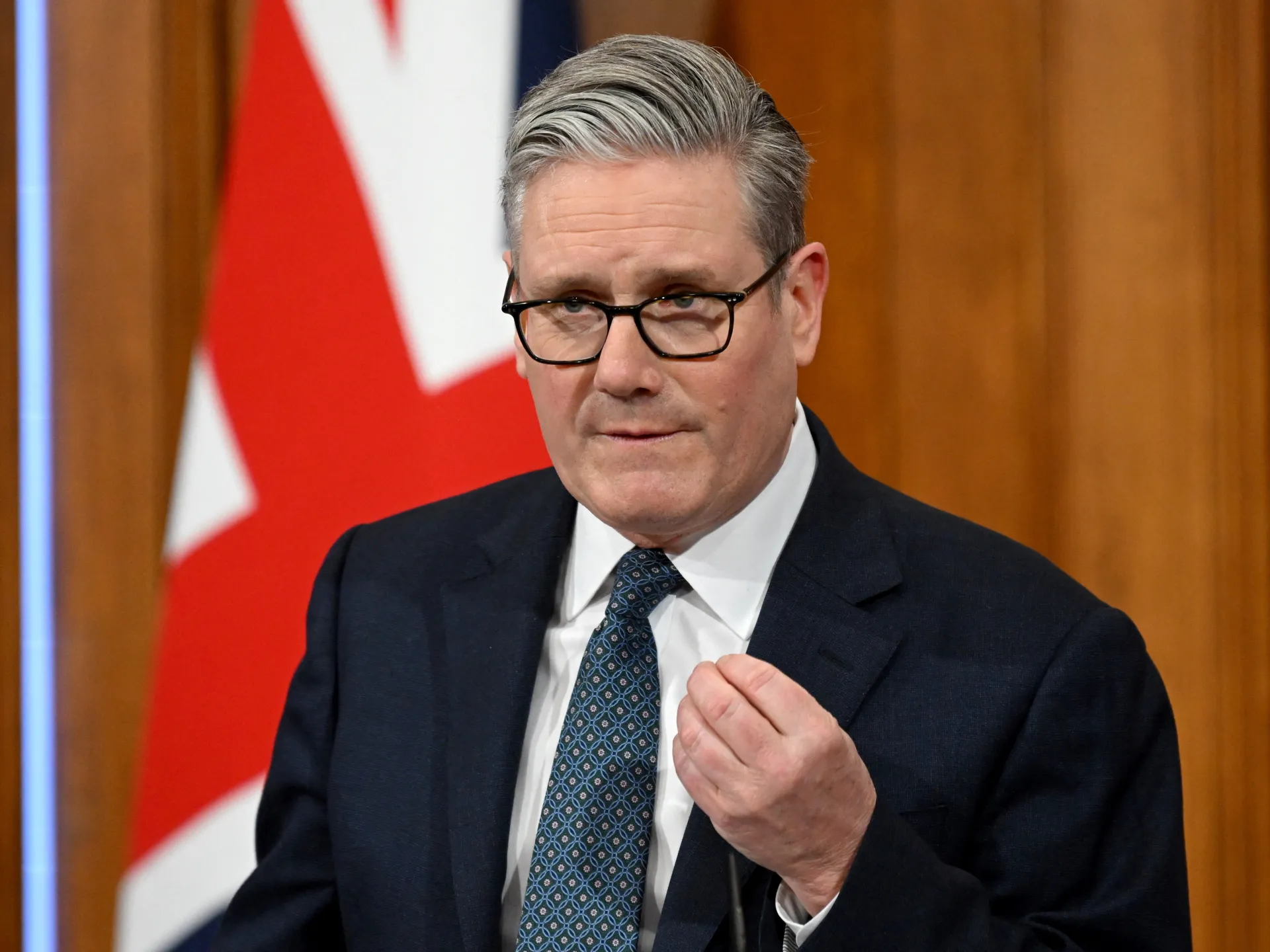
“The United Kingdom, our once Great Ally, maybe the Greatest of them all, is finally giving serious thought to sending two aircraft carriers to the Middle East,” Trump wrote.
“That’s OK, Prime Minister Starmer, we don’t need them any longer — But we will remember. We don’t need people that join Wars after we’ve already won!”
The post, with its reference to the UK as a “once great ally”, signals a deepening rift between the two countries that has emerged since Trump returned to office last year.
The divide appears to have deepened over the past week, as the US and Israel continue to hammer Iran as part of a war they launched on February 28.
The conflict has sparked fears across the Middle East, as retaliatory strikes from Tehran target US allies across the region.
Already, an estimated 1,332 people have been killed in Iran, and the US has confirmed the deaths of six of its service members. More deaths have been reported in countries like Lebanon, Kuwait, the United Arab Emirates and Iraq.
The UK government has increased its involvement in the war on Iran, widely considered illegal under international law.
The UK Defence Ministry, for instance, said on Saturday that the government of Prime Minister Keir Starmer had allowed the US to use its military bases for what it termed “limited defensive purposes”.
The bases include RAF Fairford in Gloucestershire and the Diego Garcia site in the Chagos Islands, located in the Indian Ocean. Initially, there had been reports that Starmer had blocked the US use of the bases.
In the immediate aftermath of the initial US-Israeli strike, Starmer appeared to blanche at the prospect of joining the war.
He and the leaders of France and Germany issued a joint statement, underscoring that any actions they might take would be defensive in nature.
“We will take steps to defend our interests and those of our allies in the region, potentially through enabling necessary and proportionate defensive action to destroy Iran’s capability to fire missiles and drones at their source,” the joint statement said.
“We have agreed to work together with the US and allies in the region on this matter.”
But Starmer has had to push back on domestic criticism both for and against joining the war.
On Monday, he told the UK Parliament, “We are not joining the US and Israeli offensive strikes”, citing the need to protect “Britain’s national interest” and “British lives”.
The war in Iran remains largely unpopular in the UK. The polling firm Survation conducted a survey over the last week of 1,045 British adults, in which 43 percent of respondents called the war not justifiable.
When asked if they supported Starmer’s initial decision not to allow the US to use UK bases, 56 percent of respondents approved. Only 27 percent said it was the wrong choice.
Thousands of protesters gathered outside the US Embassy in London on Saturday to call for an end to the ballooning conflict.
The US president, meanwhile, has upped his criticism of Starmer over the past week, further fraying relations with the UK government.
On March 3, for instance, Trump held an Oval Office meeting with German Chancellor Friedrich Merz, in which he said repeatedly he was “not happy with the UK”.
Of Starmer, Trump said, “This is not Winston Churchill that we’re dealing with.”
Trump has long admired Churchill, and last year installed a bust of the late UK wartime leader in the Oval Office, just as he had during his first term.
By contrast, Trump has issued a flood of criticism against Starmer, particularly for his 2024 decision to transfer control of the Chagos Islands to Mauritius.
The transfer came after the International Court of Justice found the UK acted unlawfully in 1965 by separating the islands from Mauritius to create a separate colony.
The deal with Mauritius allows the US and the UK to maintain a military base on Diego Garcia, part of the archipelago.
However, Trump has repeatedly slammed the transfer, writing on social media that “giving away extremely important land is an act of GREAT STUPIDITY”.
Tensions between the US and UK also rose in January after Trump told Fox News that NATO allies had “stayed a little off the front lines” during the US war in Afghanistan.
Starmer had responded that he found Trump’s comments “to be insulting and frankly appalling”.
The Trump administration has signalled it is pivoting away from its traditional European allies in favour of more politically aligned countries.
At a summit on Saturday with right-wing Latin American leaders, US Secretary of State Marco Rubio appeared to praise the attendees while casting shade on other allies.
“At a time when we have learned that, oftentimes, an ally, when you need them, maybe may not be there for you, these are countries that have been there for us,” Rubio told the summit.
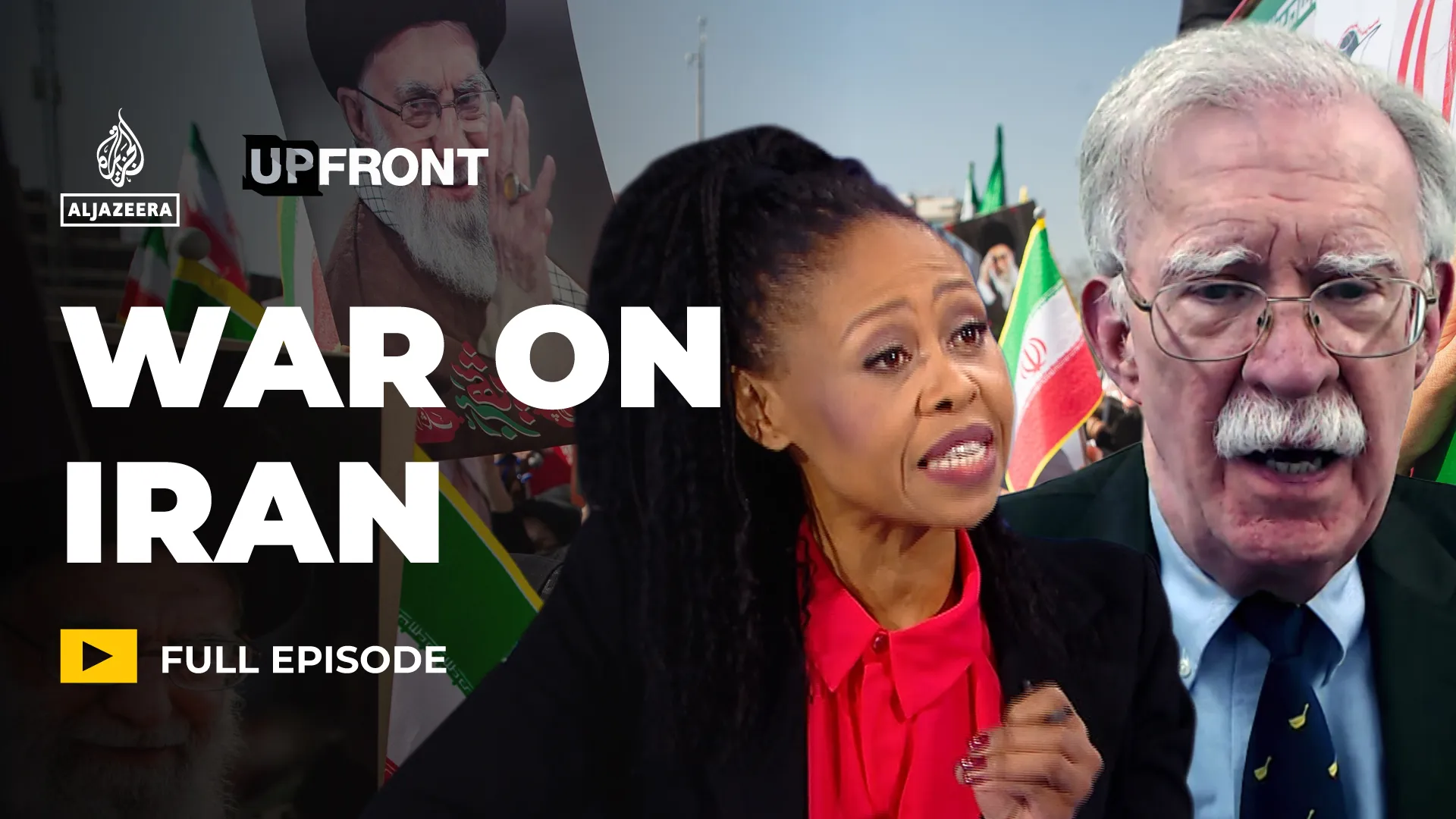
Redi Tlhabi challenges former US Ambassador to the UN John Bolton on why he supports war and regime change in Iran.
This past week, the United States and Israel launched a war on Iran under the banner of regime change. But as the war escalates and with Iran firing missiles at US bases across the region and at Israel – questions are mounting over how far this conflict could spiral.
This week on UpFront Redi Tlhabi challenges former National Security Adviser and former US Ambassador to the United Nations John Bolton on why he believes that a diplomatic end to the war would be a mistake, and we speak to Joe Cirincione, author of, Nuclear Nightmares: Securing the World Before it is Too Late, about the risk of nuclear proliferation.
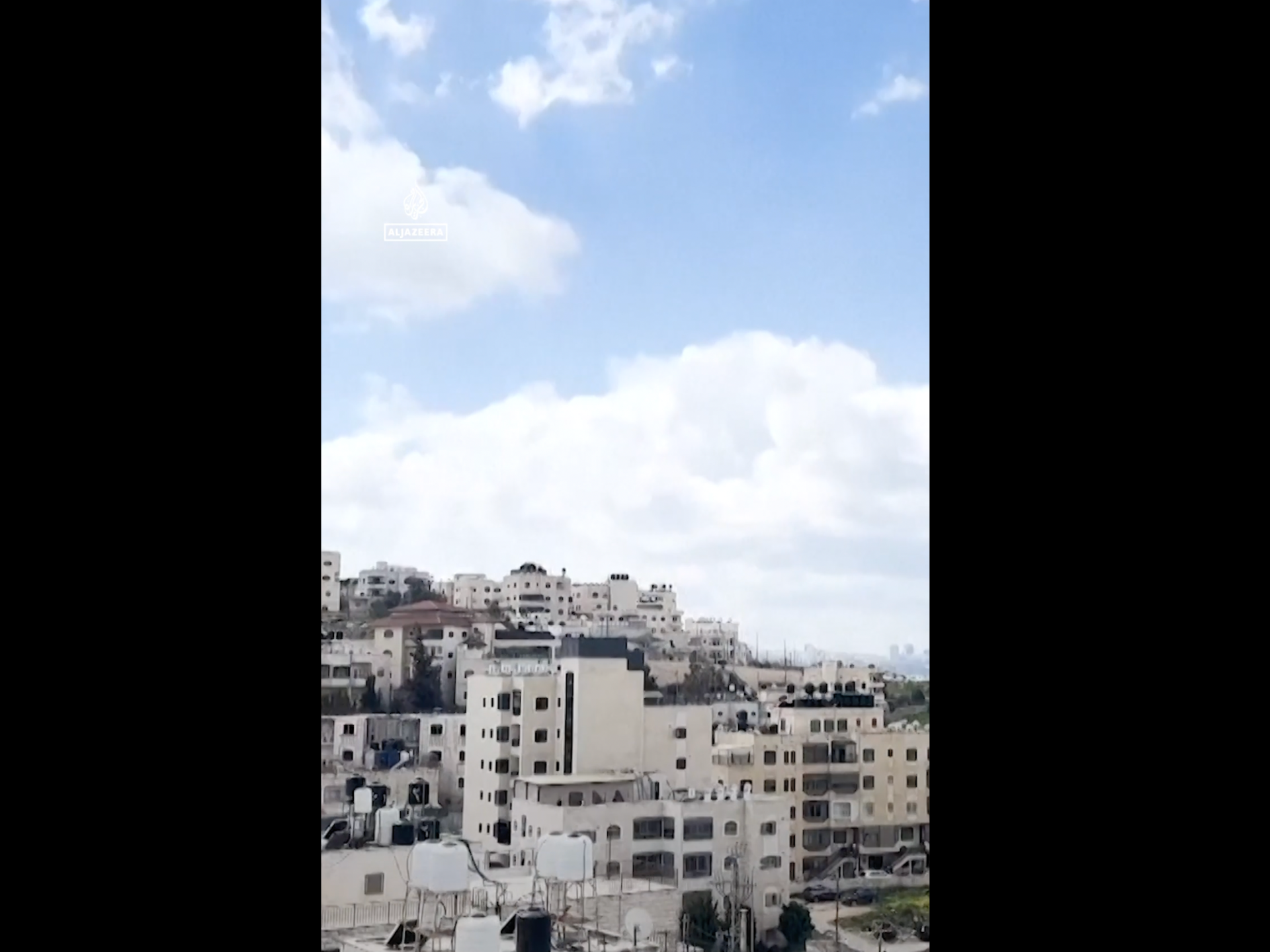
Air raid sirens blared across occupied East Jerusalem on Saturday after missiles were reportedly fired by Iran, with explosions heard and interception trails visible in the sky.
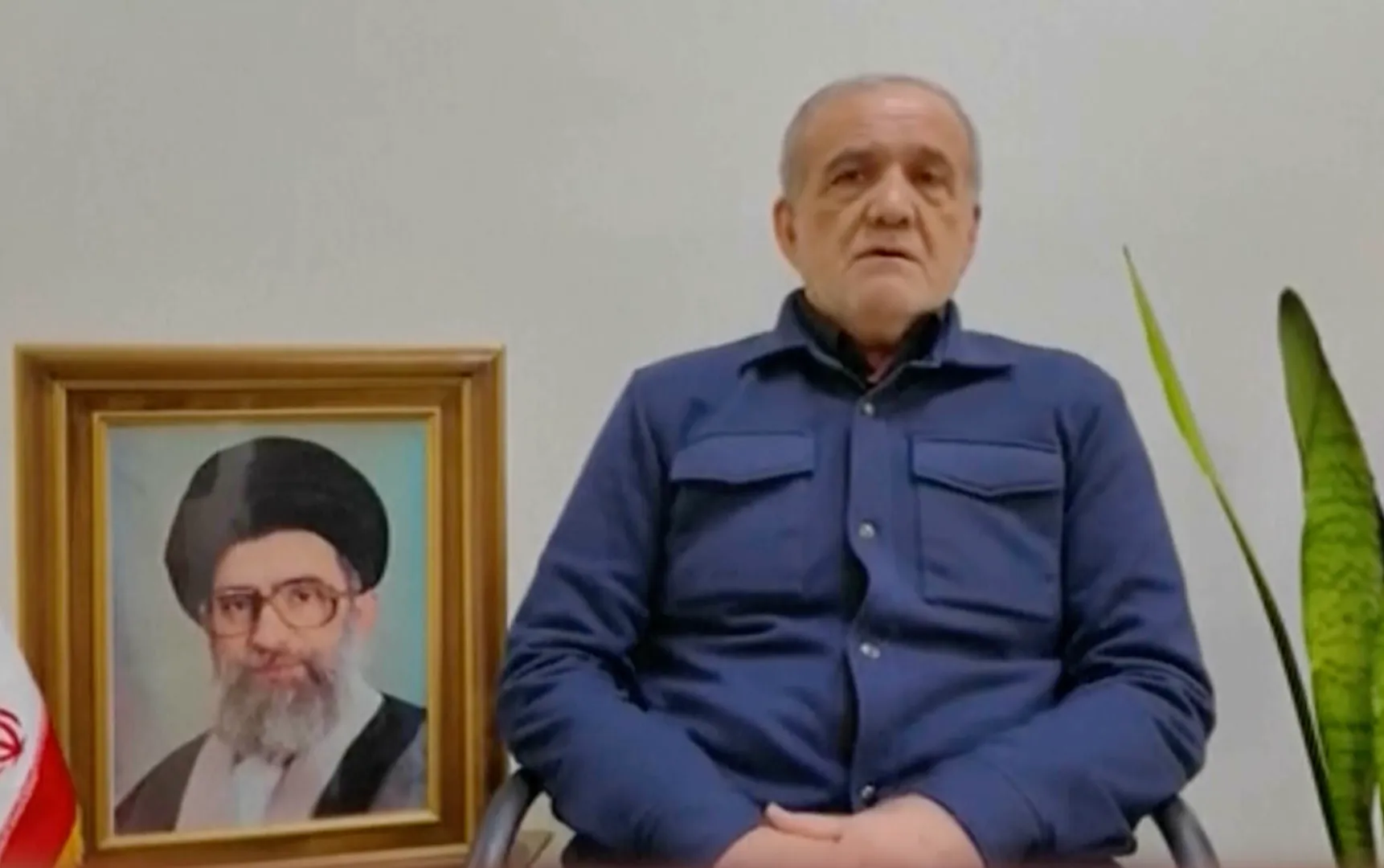
Iran’s President Masoud Pezeshkian has apologised for attacking neighbouring countries, in a pre-recorded address released on state television. Within minutes of the statement’s release, an explosion was heard over Doha, as attacks on Gulf nations continue.
Explosions shake Tehran as US-Israel attacks intensify, marking eight days of conflict and retaliation from Iran.
Published On 7 Mar 20267 Mar 2026
Share
Huge explosions have hit several locations across Iran, including the capital, Tehran, as the war that has ignited the Middle East entered its eighth day.
The United States-Israeli attacks sent up clouds of dark smoke in the Iranian capital early on Saturday, and Tehran retaliated by firing missiles at Israel.
Recommended Stories
list of 4 itemsend of list
The US has warned of a forthcoming bombing campaign that officials said would be the most intense yet in the weeklong conflict, which has already killed at least 1,230 people and is set to cause further casualties daily.
Israel’s military said early on Saturday it had started a “broad-scale wave of strikes” on targets in Tehran.
“Iranians are now waking to day eight since the initiation of the US-Israeli air strikes targeting different facilities and places across the Iranian capital and elsewhere in the country,” said Al Jazeera’s Tohid Asadi, reporting from Tehran.
Continuous attacks have been occurring since midnight, he said.
“According to the latest reports, Mehrabad, which is one of the two main airports in the Iranian capital, was targeted. The nearby area was said to be affected, as well,” said Asadi.
Meanwhile, attacks have been taking place in other cities across the country – targeting not just military areas or political centres, but also residential areas, schools and hospitals, he added.
Amir-Saeid Iravani, Iran’s ambassador to the United Nations, told the UN Security Council on Friday that the US and Israel are bombing civilian areas in his country, stating: “These acts constitute clear war crimes and crimes against humanity.”
The continued fighting comes as US President Donald Trump’s administration approved a new $151m arms sale to Israel after Trump said he would not negotiate with Iran without its “unconditional surrender”.
Iran’s UN ambassador said the country would “take all necessary measures” to defend itself.
Iran’s strategy to ‘keep Israelis in shelters’
Meanwhile, Iran has continued to strike back at Israel.
The Israeli military said early on Saturday that it had detected another round of Iranian missile fire headed towards Israel, and a series of explosions were heard in Tel Aviv following the launches from Iran.
Missiles were also detected heading towards other parts of the country, including southern Israel.
“Since midnight, the Israelis have detected at least five ballistic missile launches coming into Israel from Iran,” said Al Jazeera’s Nida Ibrahim, reporting from Ramallah in the occupied West Bank.
“They have led millions of Israelis into shelters throughout the night, which is something that Israeli analysts say the Iranians are intending to do to put more pressure on the Israeli government – by keeping Israelis in shelters and by keeping these missiles launching coming at different times.”
Islamabad, Pakistan – The reverberations of a war in which US-Israel attacks have killed more than a thousand people in Iran, including the country’s supreme leader Ali Khamenei, and Iranian missiles and drones have fallen on Israel in retaliation, are being felt deeply in Pakistan.
Six Gulf countries have also come under Iranian missile and drone attacks, putting Pakistan in a tough position.
Recommended Stories
list of 4 itemsend of list
The country shares a 900-kilometre (559 miles) border with Iran in its southwest, and millions of its workers are residents in Saudi Arabia and other Gulf nations.
Since September last year, Islamabad has also reinforced its decades-long ties with Riyadh by signing a formal mutual defence agreement that commits each side to treat aggression against the other as aggression against both.
As Iranian drones and ballistic missiles continue to target Gulf states, the question being asked with increasing urgency in Pakistan is what Islamabad will do next if it finds itself pulled into the war.
Islamabad’s answer so far has been to work the phones furiously, engaging regional leaders, including Iran and Saudi Arabia.
When US-Israeli strikes killed Supreme Leader Ayatollah Ali Khamenei on February 28, Pakistan condemned the attacks as “unwarranted”. Within hours, it also condemned Iran’s retaliatory strikes on Gulf states as “blatant violations of sovereignty”.
Deputy Prime Minister and Foreign Minister Ishaq Dar, who was attending an Organisation of Islamic Cooperation meeting in Riyadh when the conflict began last week, launched what he later described as “shuttle communication” between Tehran and Riyadh.
Speaking in the Senate on March 3, and at a news conference later the same day, Dar disclosed that he had personally reminded Iranian Foreign Minister Abbas Araghchi of Pakistan’s defence obligations to Saudi Arabia.
“We have a defence pact with Saudi Arabia, and the whole world knows about it,” Dar said. “I told the Iranian leadership to take care of our pact with Saudi Arabia.”
Araghchi, he said, asked for guarantees that Saudi soil would not be used to attack Iran. Dar said he obtained those assurances from Riyadh and credited the back-channel exchange with limiting the scale of Iranian strikes on the kingdom.
On March 5, Iran’s ambassador to Saudi Arabia, Alireza Enayati, said his country welcomed Saudi Arabia’s pledge not to allow its airspace or territory to be used during the ongoing war with the US and Israel.
“We appreciate what we have repeatedly heard from Saudi Arabia – that it does not allow its airspace, waters, or territory to be used against the Islamic Republic of Iran,” he said in an interview.
But only a day later, during early hours of March 6, Saudi Arabia’s defence ministry confirmed it intercepted three ballistic missiles targeting the kingdom’s Prince Sultan Air Base. And hours later, Pakistan’s Field Marshal Asim Munir was in Riyadh, meeting Saudi Defence Minister Prince Khalid bin Salman, where they “discussed Iranian attacks on the Kingdom and the measures needed to halt them within the framework” of their mutual defence pact, the Saudi minister said in a post on X.
As the war escalates, analysts say that Pakistan’s tightrope walk between two close partners could become harder and harder.
A defence pact under pressure
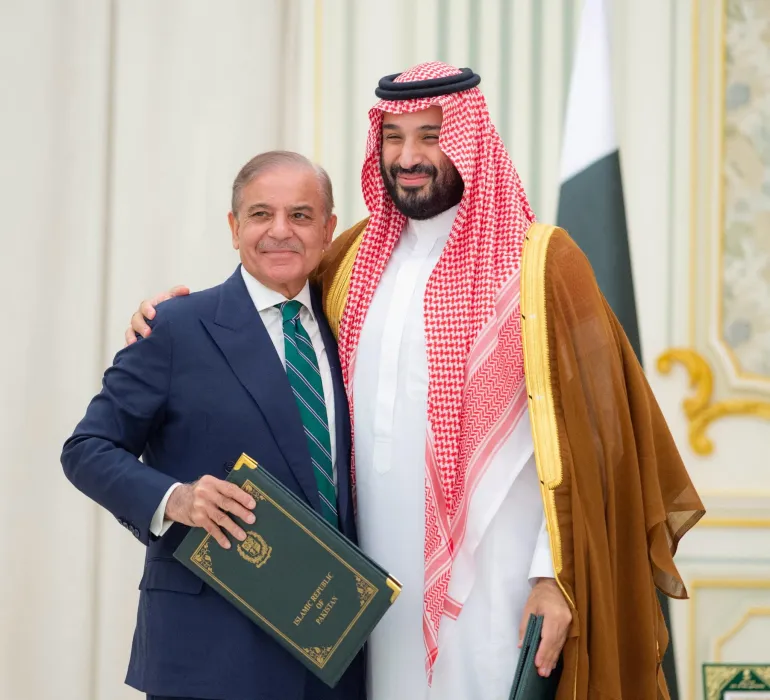
A month after Iranian president’s visit to Islamabad, Pakistani Prime Minister Shehbaz Sharif met Saudi Crown Prince Mohammed bin Salman in Riyadh in September 2025 to sign a defence agreement [File: Handout/Saudi Press Agency via Reuters]
The Strategic Mutual Defence Agreement, signed on September 17, 2025, in Riyadh by Crown Prince Mohammed bin Salman and Prime Minister Shehbaz Sharif alongside army chief Asim Munir, was the most significant formal defence commitment Pakistan had entered into in decades.
Its central clause states that any aggression against either country shall be considered aggression against both. The wording was modelled on collective defence principles similar to NATO’s Article 5, though analysts have cautioned against interpreting it as an automatic trigger for military intervention.
The agreement followed Israel’s September 2025 strikes on Hamas officials in Doha, an event that shook confidence in US security guarantees across the six Gulf Cooperation Council states: Bahrain, Kuwait, Oman, Qatar, Saudi Arabia and the United Arab Emirates.
Nuclear-armed Pakistan has maintained a military relationship with Saudi Arabia for decades, according to which an estimated 1,500 to 2,000 Pakistani troops remain stationed in the kingdom.
Now the pact is being tested under conditions neither side anticipated.
Umer Karim, an associate fellow at the Riyadh-based King Faisal Center for Research and Islamic Studies, called Pakistan’s current predicament the outcome of a miscalculation.
Islamabad, he argued, likely never expected to find itself caught between Tehran and Riyadh, particularly after the China-brokered rapprochement between Saudi Arabia and Iran in 2023.
“Pakistani leaders were always careful not to take an official plunge vis-a-vis Saudi defence. It was done for the first time by the current army chief, and though the potential dividends are big, so are the costs,” Karim told Al Jazeera.
“Perhaps this is the last time the Saudis will test Pakistan, and if Pakistan doesn’t fulfil its commitments now, the relationship will be irreversibly damaged,” he added.
In 2015, it declined a direct Saudi request to join the military coalition fighting in Yemen, following a parliamentary resolution that the country must remain neutral.
Aziz Alghashian, senior non-resident fellow at the Gulf International Forum in Riyadh, pointed to that episode. “The limitation of the Saudi-Pakistan treaty is clear. Treaties are only as strong as the political calculations and political will behind them,” Alghashian told Al Jazeera.
But Ilhan Niaz, a professor of history at Islamabad’s Quaid-e-Azam University, said that if Saudi Arabia feels sufficiently threatened by Iran to formally request Pakistani military assistance, “Pakistan will come to Saudi Arabia’s aid.”
“To do otherwise would undermine Pakistan’s credibility,” he told Al Jazeera.
The Iran constraint
The complicating factor for Pakistan is that it cannot afford to treat Iran simply as an adversary if Riyadh calls for military assistance.
The two countries share a long and porous border, maintain significant trade ties, and have recently stepped up diplomatic engagement. Iranian President Masoud Pezeshkian visited Islamabad in August 2025, and the two governments maintain a range of formal and backchannel contacts.
Niaz acknowledged that Tehran has also been “a difficult neighbour”, pointing to the January 2024 exchange of cross-border strikes initiated by Iran as evidence of the relationship’s unpredictability.
Even so, he said Pakistan had “vital national interests” in ensuring Iran’s stability and territorial integrity.
“The collapse of Iran into civil war, its fragmentation into warring states, and the extension of Israeli influence to Pakistan’s western borders are all developments that greatly, and rightly, worry Islamabad,” he said.
The domestic fallout from the US-Israel strikes and Iran’s response has already been immediate.
The army was deployed and a three-day curfew imposed in Gilgit-Baltistan after at least 23 people were killed in protests across Pakistan following Khamenei’s assassination. The protests were driven largely by Pakistan’s Shia community, estimated to make up between 15 and 20 percent of the 250 million population, which has historically mobilised around developments involving Iran.
Pakistan’s violent sectarian history adds another layer of risk.
The Zainabiyoun Brigade, a Pakistan-origin Shia militia trained, funded and commanded by Iran’s Islamic Revolutionary Guard Corps, has recruited thousands of fighters from Pakistan over the past decade. While many fought in Syria against ISIL (ISIS), many Syrians activists accuse them of committing sectarian violence.
Two years ago, Pakistan’s northwestern Kurram district, the Zainabiyoun’s primary recruitment ground, saw more than 130 people killed in sectarian clashes in the final weeks of 2024 alone.
Pakistan formally banned the group in 2024, but many believe the designation has done little to dismantle its networks.
Analysts warn that fighters hardened in Syria’s civil war could, if Iran’s conflict with Pakistan’s Gulf partners deepens, shift from a defensive to an offensive posture on Pakistani soil.
“Iran has significant influence over Shia organisations in Pakistan,” Islamabad-based security analyst Amir Rana, executive director of the Pak Institute of Peace Studies, told Al Jazeera. “And then you have Balochistan, which is already a highly volatile area. If there is any confrontation, the fallout for Pakistan would be severe.”
Pakistan’s Balochistan province borders Iran, and has been ground-zero for a decades-long separatist movement. “That reality cannot be ignored,” Muhammad Khatibi, a political analyst based in Tehran, said, pointing out that geography itself constrains Islamabad’s choices.
“Any perception that Islamabad is siding militarily against Tehran could inflame domestic sectarian divisions in ways that a full-scale regional war would make very difficult to contain,” Khatibi told Al Jazeera.
Violence erupted in Pakistan following news of US and Israeli strikes on Iran that killed Iran’s Supreme Leader Ayatollah Ali Khamenei on February 28. At least 23 people were killed in violence across the country, with at least 10 people killed in Karachi during a protest outside the US Consulate General [Akhtar Soomro/Reuters]
What are Pakistan’s options?
Analysts say direct offensive military action against Iran, such as deploying combat aircraft or conducting strikes on Iranian territory, is not a realistic option for Pakistan, given its domestic constraints.
Rana describes Islamabad’s current posture as an attempt to placate both sides.
“Iran’s primary threat is through air strikes using drones and missiles, and that is an area where Pakistan can help and provide assistance to Saudi Arabia. But that would mean Pakistan becoming a party to the war, and that is a major question mark,” he said.
He added that the most viable option for Pakistan could be to provide covert operational support to Saudi Arabia while maintaining diplomatic engagement with Iran.
Alghashian also agreed; he identified air defence cooperation as the most concrete role Pakistan could play — it would be both “militarily meaningful and politically defensible”
“They could help create more air defence capacity,” he said. “This is tangible, it is defensive, and it is in Pakistan’s interest that Saudi Arabia becomes more stable and prosperous.”
Karim, however, warned that the window for Pakistan’s balancing act may be closing faster than Islamabad realises.
“As the situation reaches a tipping point and as Saudi energy installations and infrastructure are hit, it is only a matter of time that Saudi Arabia will ask Pakistan to contribute towards its defence,” he said.
He added that if Pakistan deploys air defence assets to Saudi Arabia, doing so could leave its own air defences dangerously exposed, while deeper involvement could carry political costs at home.
For now, Islamabad’s strongest card remains diplomacy, using its access to both Riyadh and Tehran and the trust it has accumulated. Khatibi said Pakistan should protect that position “at all costs”.
“Pakistan’s most realistic positioning is as a mediator and leveraging its relationships with both sides. It is highly unlikely that Pakistan deploys forces into an anti-Iran coalition. The risks would outweigh the benefits,” he said.
The stakes for Pakistan
The scenario least favourable to Islamabad would be a collective Gulf Cooperation Council decision to enter the war directly, and the warning signs are mounting.
Saudi Arabia and the United Arab Emirates have both declared that Iranian attacks “crossed a red line”.
A joint statement issued on March 1 by the United States, Bahrain, Jordan, Kuwait, Qatar, Saudi Arabia and the UAE said they “reaffirm the right to self-defense in the face of these attacks.”
For Pakistan, such an escalation could carry serious consequences.
Economically, with millions of Pakistani workers living and earning their wages in Gulf states, remittances from the region provide crucial foreign exchange for an economy still recovering from a balance of payments crisis.
Khatibi said any prolonged regional war that disrupts Gulf economies would directly affect Pakistan’s financial position.
“Energy prices could also spike, adding further strain,” he said, noting Pakistan’s heavy dependence on Gulf states for its energy needs.
Pakistan is also simultaneously managing its own military confrontation with the Afghan Taliban which began two days before the US-Israel strikes.
Karim warned that deeper involvement in the regional conflict could trigger internal instability.
“Sectarian conflict,” he said, “can reignite, taking the country back to the bloody 1990s. The government already has lean political legitimacy, and such an occurrence will make it even more unpopular.”
Alghashian also highlighted Pakistan’s reluctance to be drawn into the conflict.
“Saudi Arabia does not want to be in this war and is getting dragged into it. Pakistan will also certainly not want to be dragged into somebody else’s war that they didn’t want to be dragged into. It just wouldn’t make any sense,” he says.
But Niaz said that if the crisis eventually forces Islamabad to choose, the calculus may become unavoidable.
“If Tehran forces Pakistan to choose between Iran and Saudi Arabia, the choice would unquestionably be in favour of the Saudis.”
The Gulf states have spent years trying to broker peace between Iran and the West: Qatar brokered nuclear talks, Oman provided back-channel diplomacy, and Saudi Arabia maintained direct dialogue with Iran through 2024 and into 2025. Iran attacked them anyway. The idea that the Gulf states have a responsibility, a moral one, to protect Iran from the consequences of its actions because of good neighbourliness is now grotesque in context. Iran did not return good neighbourliness. Iran returned ballistic missiles.
Iran’s position is based on three propositions. First, that Iran acted in lawful self-defence pursuant to Article 51 of the UN Charter; that host countries relinquished territorial sovereignty by allowing US military bases on their territory; and that the definition of aggression in Resolution 3314 justifies the attack on those bases as lawful military objectives. Each of these propositions is legally flawed, factually skewed, and tactically wrong. Collectively, they add up to a legal argument that, if accepted, would ensure that the Gulf is permanently destabilised, the basic principles of international law are destroyed, and, in a curious twist, the very security threats that Iran is reacting to are reinforced.
The self-defence claim does not meet the required legal threshold
The UN Charter, in Article 51, permits the use of force only in self-defence against an “armed attack”, and this term is not defined by reference to the state invoking it. The International Court of Justice, in cases such as Military and Paramilitary Activities in and against Nicaragua (Nicaragua v. United States) (1986) and Oil Platforms (Iran v. United States) (2003), has interpreted the requirement of an “armed attack” under Article 51 of the UN Charter restrictively. The Court distinguished between the most grave forms of the use of force, which qualify as armed attacks triggering the right of self-defence, and less grave uses of force that do not. Accordingly, not every use of force, such as minor incidents or limited military activities, amounts to an armed attack. In this light, the mere presence of foreign military bases in Gulf states, maintained for decades under defence agreements with host governments, would not in itself constitute an armed attack against Iran.
Necessity and proportionality are also part of customary international law, requiring that self-defence be necessary and proportional. Iran has not demonstrated either. Targeting the territory of other sovereign Arab states in response to the policy decisions of the United States is neither necessary, since diplomatic and United Nations avenues are still available, nor proportional, since it imposes military consequences on states that are not a party to any conflict with Iran.
Critically, Article 51 also has a mandatory procedural element, in that any state employing self-defence is immediately required to notify the Security Council. Iran has consistently evaded this requirement in each of its escalatory actions. While this may seem to be a minor element, it is in fact the means by which the international community is able to verify and check self-defence claims. A state that evades this requirement is not employing Article 51. It is exploiting the language of Article 51.
Iran’s reading of Resolution 3314 is a fundamental distortion
The provision of Article 3(f) of the Annex to United Nations General Assembly Resolution 3314 (XXIX) (1974) states that an act of aggression includes the “action of a State in allowing its territory, which it has placed at the disposal of another State, to be used by that other State for perpetrating an act of aggression against a third State”. Iran could rely on this provision to hold the Gulf states that host United States military bases liable for any act of aggression committed from their territories against Iran. Nevertheless, the mere presence of military bases is not sufficient to hold them to be lawful military objectives; this will depend on their actual contribution to military activities against Iran based on the rules of international humanitarian law.
Thus, such an Iranian reading would be wrong on three distinct legal grounds.
First, Resolution 3314 is definitional in nature. The resolution was adopted to assist the Security Council in determining when aggression has taken place, not to confer upon states the unilateral power to punish states deemed to have committed aggression through the use of force. The resolution itself, in Article 2, asserts the power of the Security Council to make the determination of what constitutes aggression. The self-application of Article 3(f) of the resolution is therefore bypassed altogether.
Second, Article 3(f) speaks of the active launching of an attack, not the passive hosting of a military base. The legal distinction is fundamental. A state, in signing a defence treaty with another and hosting the latter’s troops on its soil, is engaging in a measure of sovereignty. A state, actively launching, coordinating, or enabling military strikes against a third party, is engaged in a different matter altogether. Iran has not credibly shown this latter case. The presence of US troops or bases in the Gulf has been a fact for decades, and this has not constituted armed aggression against Iran under any legal standard.
Third, even if Article 3(f) were applicable, the appropriate course would be to bring the matter to the Security Council, not to launch unilateral military strikes. General Assembly resolutions do not override the Charter. Iran cannot rely upon a non-binding resolution defining terms to override the Chapter VII requirements for the use of force or the clear criteria of Article 51.
Sovereignty cannot be dictated by a neighbour’s strategic preferences
Iran, in invoking the principle of good neighbourliness, asks the Arab Gulf states to deny the United States basing rights. Good neighbourliness is a two-way principle, and it does not allow for interference in the internal affairs of other states, certainly not interference in the decisions of other states simply because they are deemed inconvenient to the interfering state. All UN states possess the inherent right to conclude defence treaties with whomever they choose, and this is so regardless of the opinion of their neighbours.
The asymmetry of Iran’s position is striking and self-disqualifying. Iran itself has active military relationships with Russia and China. Iran arms, finances, trains, and supports the activities of non-state military actors in Lebanon, Syria, Iraq, and Yemen. The Islamic Revolutionary Guard Corps Quds Force operates openly in various states, and this has been extensively documented in United Nations Panels of Experts reports, as well as other international monitoring reports. According to the standards that Iran applies to the Gulf states, any state that hosts the activities of the IRGC, the transfer of Iranian arms, or the coordination of Iranian proxies on its soil would be engaging in aggression against third parties. Iran will not accept this principle when it is applied to itself. A legal principle that is unacceptable to the party to whom it would be applied is not a legal principle at all; it is a political tool.
A doctrine that defeats Iran’s own strategic interests
From the perspective of international relations theory, Iran’s position follows the logic of offensive realism, which seeks to remove the external balancing architecture of regional neighbours by claiming it to be hostile in nature. However, this approach is empirically self-defeating.
Under balance of threat theory, states react to offensive capability, geographic proximity, and aggressive intentions. Iran’s doctrine, in asserting the right to strike any state that hosts forces it perceives as a threat, drives each and every threat variable to maximum levels for each and every state in the region. The obvious consequence, evident in the data, is that the states in the region and external powers are becoming more, rather than less, securely integrated. The Fifth Fleet’s permanent base in Bahrain, the UAE’s negotiations over F-35s, Saudi Arabia’s deployments of THAADs, and Qatar’s expansion of the Al Udeid base are reactions to Iran’s escalation, not causes of it.
From the perspective of constructivism, the legitimacy of a legal argument is also partly based on the normative credibility of the state that presents the argument. The record of Iran’s compliance with IAEA regulations, including the enrichment of uranium to a purity level of 60 percent or more in 2023–2024, interference with inspections, the removal of monitoring cameras, and the overall violation of the non-proliferation regime, has undermined the credibility of the state significantly. A state that is itself a violator of the legal regime cannot claim the role of a law-abiding state seeking protection under the norms of the legal regime.
Iran’s legal rationale was always theoretically wrong. What has occurred since February 28, 2026, has made Iran’s actions morally and politically wrong. Iran did not simply target US military assets. The reality of the situation is now documented and undeniable. Ballistic missiles and drones were launched against Gulf states in the opening days of the conflict. This marked the first time one actor had simultaneously attacked all six GCC states. Iran escalated its attacks in deliberate stages. Day 1: Iranian missiles were fired against military bases. Day 2: Iranian missiles were fired against civilian infrastructure and airports. Day 3: Iranian missiles were fired against the energy sector. Days 3 and 4: The US Embassy in Riyadh was attacked by Iran. International airports in Dubai, Abu Dhabi, and Kuwait were attacked by Iranian missiles, resulting in the suspension of flights throughout the region. Videos from Bahrain documented an Iranian Shahed drone attacking an apartment building. This is not self-defence. This is the collective punishment of sovereign nations that went to extraordinary lengths to avoid the conflict.
The rationale provided by Iran falls flat when one considers the actions Iran itself took. Its doctrine held that only targets involved in the preparation or launch of an attack against Iran were legitimate targets. Civilian airports are not military bases. Hotels in Palm Jumeirah are not military command centres. An apartment complex in Manama is not a weapons storage facility. By Iran’s own stated legal rationale, none of these targets was legitimate, yet they were attacked. This was not a legal doctrine at all; it was a pretext for coercion, and the conduct of war revealed this to be the case.
The views expressed in this article are the author’s own and do not necessarily reflect Al Jazeera’s editorial stance.
Witness videos captured Iranian projectiles soaring over Tel Aviv as sirens blared and Israeli interceptors launched. Residents could be heard shouting as one of the missiles appeared to break apart into dozens of smaller projectiles.
Lionel Messi has been criticised for meeting US President Donald Trump and applauding his latest brief on the Iran war at a White House event honouring the Argentinian superstar and his Inter Miami team.
A video has been released showing huge explosions near Tehran’s Azadi Tower. The US and Israel are continuing to target locations across Iran as the war enters its seventh day.
Iran state TV presenter has threatened women’s national team for not singing anthem at opening AFC Cup match.
Published On 6 Mar 20266 Mar 2026
Share
The global representative organisation for professional footballers, FIFPRO, has urged governing bodies responsible for the 2026 Women’s Asian Football Confederation Cup to protect the Iran national team after they were labelled “wartime traitors” by an Iranian state television presenter.
Both FIFA, world football’s governing body, and the AFC have been called upon to “undertake all necessary steps to ensure the safety of Iran’s Women’s National Team players”.
Recommended Stories
list of 4 itemsend of list
The Iran women’s national football team players did not sing their national anthem before their Asian Cup opener against South Korea in Australia earlier this week.
Islamic Republic of Iran Broadcasting presenter Mohammad Reza Shahbazi said in a video that the players showed a lack of patriotism and their actions amounted to the “pinnacle of dishonour” in footage circulating widely on social media.
“Let me just say one thing: traitors during wartime must be dealt with more severely,” Shahbazi said.
“Anyone who takes a step against the country under war conditions must be dealt with more severely. Like this matter of our women’s football team not singing the national anthem … these people must be dealt with more severely.”
In a statement released on the social media platform X, FIFPRO released a strong and lengthy statement outlining its concerns.
“In addition to the dangerous situation the players would face if they return to Iran following the tournament, FIFPRO Asia/Oceania is deeply concerned by reports that Iranian state television has publicly attacked the members of the team for remaining silent during the national anthem before their opening match,” the statement read.
“Footage circulating online shows Mohammad Reza Shahbazi, a state TV presenter, calling for them to face the ‘stigma of dishonour and betrayal’.
“These statements significantly heighten concerns for the players’ safety should they return to Iran after the tournament.
“FIFPRO Asia/Oceania has once again written to the AFC and FIFA, calling on them to uphold their human rights obligations under the UN Guiding Principles on Business and Human Rights and FIFA’s Human Rights Policy and protect the players.
“We call on the AFC and FIFA to urgently engage with the Iranian Football Association, the Australian Government and all other relevant authorities to ensure that every effort is made to protect the safety of the players.”
The Iranian players stood in silence when Iran’s anthem was played at the Gold Coast ahead of their 3-0 opening loss to South Korea on Monday, though they sang and saluted before a 4-0 defeat by hosts Australia three days later.
The Reuters news agency has contacted both the Asian Football Confederation, the Iranian football federation and the team at the Asian Cup for comment.
Ahead of their game against Australia, Iran forward Sara Didar fought back tears and spoke about the war, while coach Marziyeh Jafari said her players were doing their best to focus on the tournament despite concern for their families back home.
Iran face the Philippines on Sunday in their final group match.
The United States used Precision Strike Missiles (PrSMs) for the first time during its ongoing war with Iran, US Central Command (CENTCOM) said on Wednesday.
The war entered its seventh day on Friday, with attacks continuing across Iran and other countries in the Middle East.
CENTCOM stated in an X post that PrSMs provide an “unrivaled deep strike capability”.
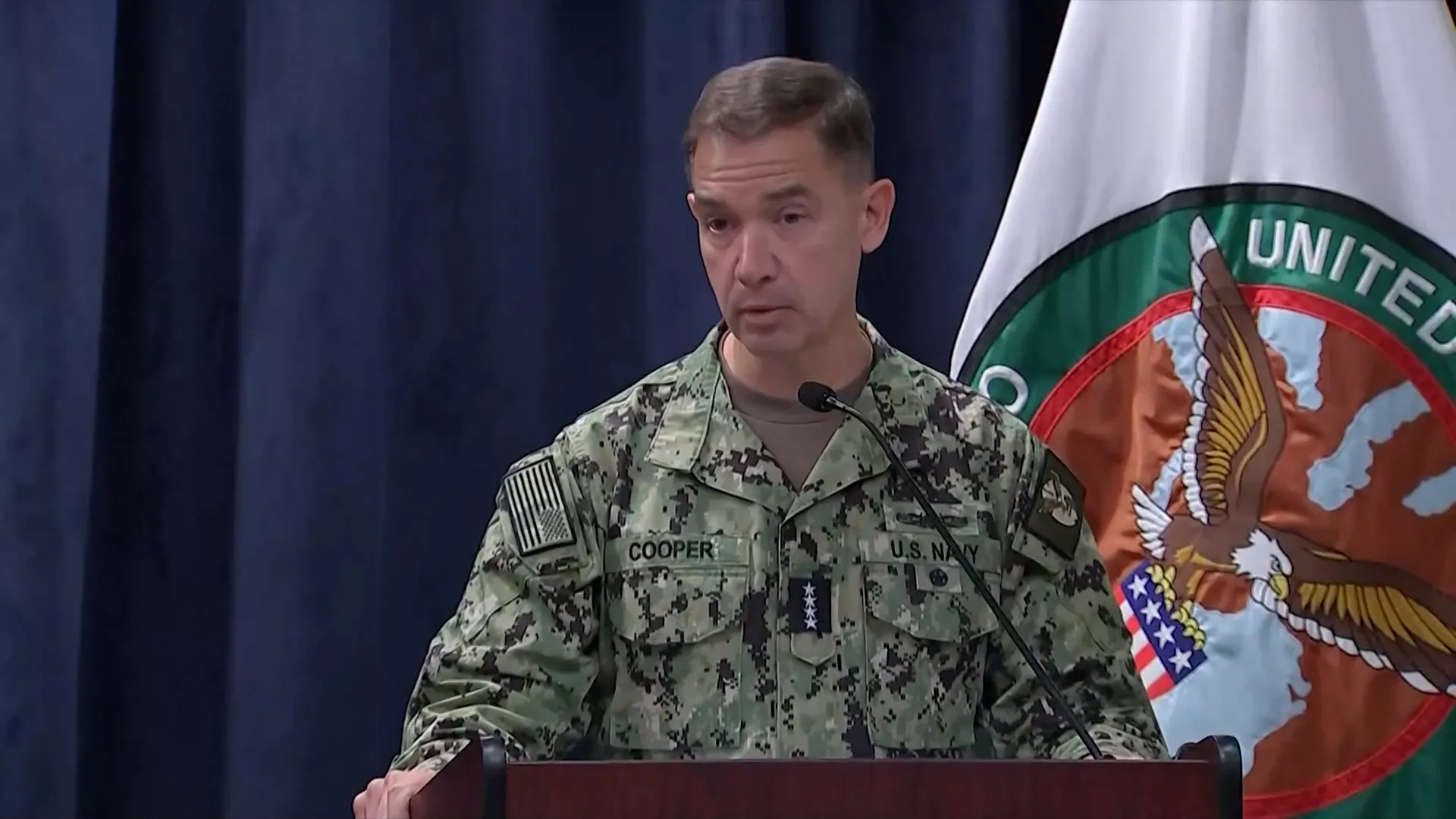
“I just could not be prouder of our men and women in uniform leveraging innovation to create dilemmas for the enemy,” the post quoted Admiral Brad Cooper, head of CENTCOM.
It is unclear where these PrSMs were launched from, or which specific targets they hit in Iran.
So what is the PrSM, and why is it significant that it has been used by the US for the first time?
What are Precision Strike Missiles?
PrSMs are described as long-range precision strike missiles by their developer, the Maryland, US-headquartered defence firm Lockheed Martin, which delivered the first PrSMs to the US Army in December 2023.
PrSMs can hit targets ranging from 60km (37 miles) to more than 499km (310 miles) away, according to Lockheed Martin.
The company’s website adds that PrSMs are compatible with the MLRS M270 and HIMARS family of launchers, both also developed by Lockheed and used by both the United Kingdom and US armies.
MLRS stands for multiple-launch rocket systems, used to launch missiles. The UK sent a number to Ukraine in 2022. HIMARS stands for High Mobility Artillery Rocket System. In 2022, the US sent a number to Ukraine, as well.
M-142 HIMARS is a high-tech, lightweight rocket launcher that is wheel-mounted, giving it more agility and manoeuvrability on the battlefield. Each unit can carry six GPS-guided rockets, or larger missiles like Army Tactical Missile Systems (ATACMs) and PrSMs, which can be reloaded in about a minute with only a small crew.
Lockheed Martin adds that PrSMs can be rapidly developed. “We are ready to produce and deliver to meet the US Army’s accelerated timeline for this long-range precision fires priority,” the website says.
PrSMs feature “open systems architecture”, which means that it is easier to plug in new components, upgrade parts, or work with equipment from other companies. Similarly, they are “modular and easily adaptable”, enabling components to be switched around.
They also feature “IM energetic payload”, or Insensitive Munitions energetic payload, which makes explosions safer, the producer says. This means the warhead is made from explosives that are less likely to blow up accidentally if hit by fire, shrapnel or by accident, but still explode properly when triggered as intended.
What is different about the PrSMs?
PrSMs will ultimately replace the ATACMs currently being fired from the HIMARS launchers, significantly increasing their range from 300km (186 miles) to more than 499km (310 miles), without changing the vehicle carrying the missile.
PrSMs also offer double the “missile load” of ATACMs. While a HIMARS launcher is able to carry one ATACMS missile in its pod, it can carry two PrSMs per pod.
Does the PrSM give the US a strategic advantage?
CENTCOM confirmed that PrSMs have been used in the US and Israel’s attacks on Iran, codenamed Operation Epic Fury and launched on February 28.
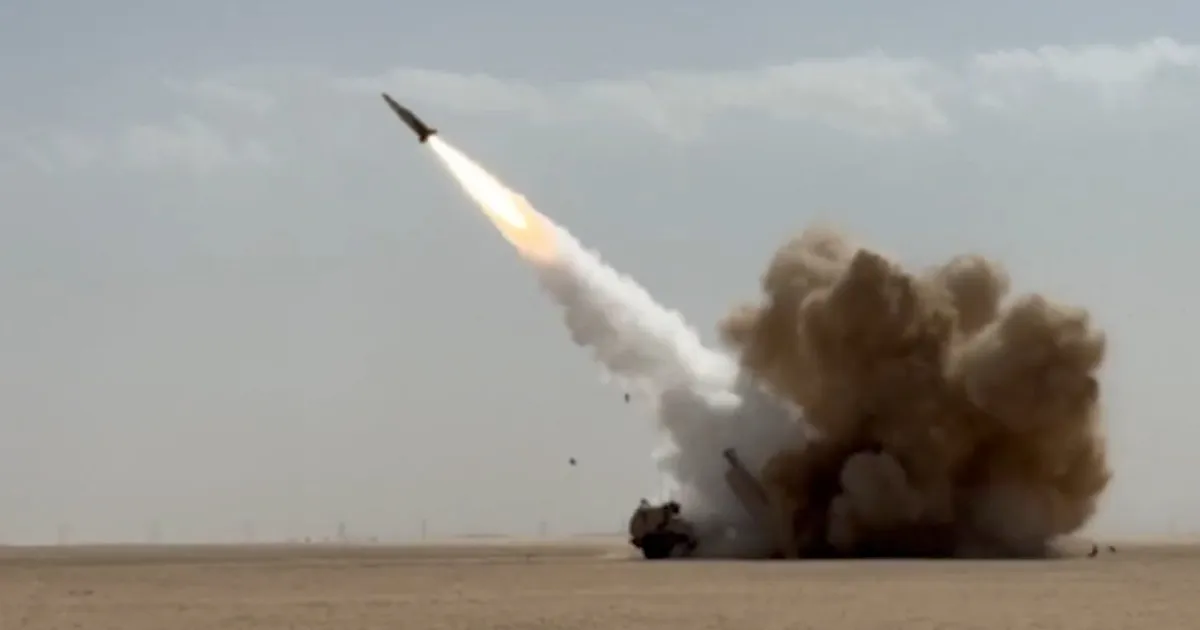
CENTCOM posted a video of the PrSMs being launched from M142 High Mobility Artillery Rocket Systems in an open desert terrain.
PrSMs do give the US military a boost for its pre-existing long-range capabilities.
Gulf countries such as Kuwait, Saudi Arabia, Bahrain, Qatar, the United Arab Emirates and Oman, specifically the Musandam Peninsula, which have military bases hosting US assets and troops, have at least some territory within 400km (250 miles) of Iran.
The US is using PrSMs in conjunction with other long-range missiles such as Low-Cost Unmanned Combat Attack System (LUCAS) one-way drones, MQ-9 Reaper drones, ATACMs and Tomahawk Cruise Missiles.
The range for LUCAS one-way drones is about 800km (500 miles), while the range for ATACMs is about 300km (186 miles) and the range for Tomahawk cruise missiles is about 1,600km (1,000 miles).
Why is the introduction of the PrSM significant?
The range of this missile is significant as it is likely that it would not have been permitted under the Intermediate-Range Nuclear Forces (INF) Treaty with Russia, which the Trump administration withdrew the US from in 2019. This is because it can exceed the maximum 500km (310-mile) range the treaty imposed on certain land-launched missiles.
The treaty was signed in 1987 by US and Soviet Union leaders Ronald Reagan and Mikhail Gorbachev. It sought to eliminate the presence of land-based nuclear missiles and medium-range arsenals between 500km and 5,500km (310 and 3500 miles) from Europe.
The US suspension of the treaty allowed Washington to resume development of its own medium-range, land-based arsenal.
Following the US suspension, Russia invited the US to reciprocate in a unilateral moratorium on the deployment of ground-launched intermediate-range missiles instead. While Washington initially rejected the offer, in 2022, it said it would be willing to discuss this.
In August last year, the Russian Ministry of Foreign Affairs announced Russia’s withdrawal from this moratorium, however, saying the US had “made significant progress” and “openly declared plans to deploy US ground-launched INF-range missiles in various regions”. INF stands for intermediate-range nuclear forces.
The statement added that such actions by Western countries posed a “direct threat” to Moscow’s security.
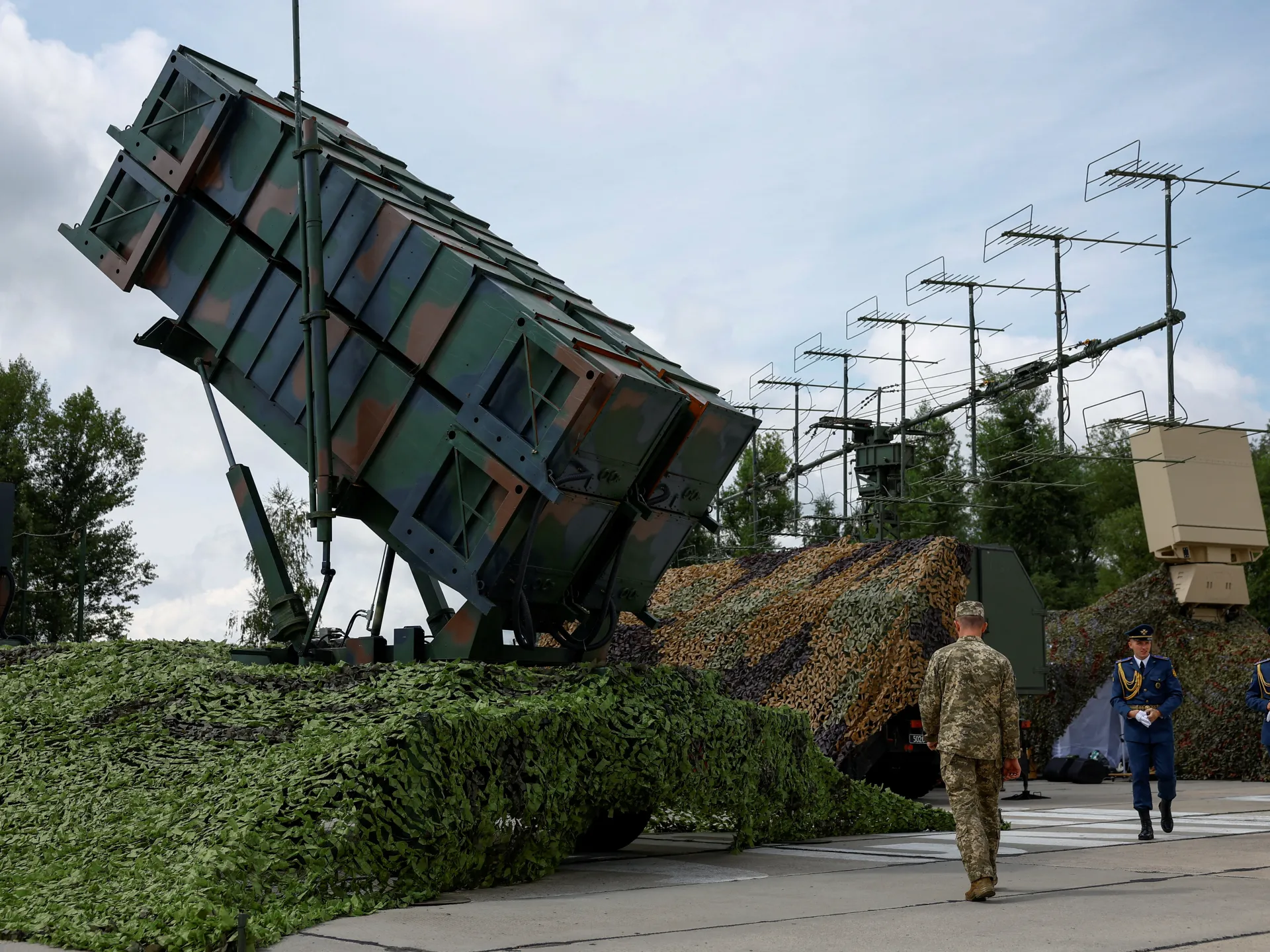
Kyiv, Ukraine – As Washington’s Middle Eastern allies use US-made Patriot air defence systems to shoot down Iranian missiles and drones, Ukraine is about to face a dire shortage of ammunition for them.
And Russian President Vladimir Putin is sure to exploit the shortage of pricey guided missiles the truck-mounted Patriots launch at machinegun speed to down his pride and joy, Russia’s ballistic missiles that he once declared were “indestructible”, experts have told Al Jazeera.
Recommended Stories
list of 4 itemsend of list
The Patriots were developed in the 1970s to down Soviet missiles whose modifications Russia still rains on Ukraine.
The supply of Patriots to Ukraine began in 2023 and was initially limited to several batteries stationed in the capital, Kyiv. The location of the systems was constantly changed to protect them from Russian attacks.
The Patriots utilise advanced radars to detect targets flying at supersonic speeds and launch their guided missiles with the sound that resembles super-fast electronic beats – up to 32 missiles per minute.
But the noise – along with thunderous shockwaves that follow split-second, sun-bright explosions – made Ukrainians feel safe during harrowing, hours-long Russian assaults that have targeted civilian areas and involve hundreds of drones and dozens of missiles.
Within weeks after their deployment, the Patriots intercepted Russia’s Kinzhal (Dagger) intercontinental ballistic missiles that are launched by supersonic fighter jets and fly in the Earth’s stratosphere.
The interceptions disproved Putin’s earlier claims that the Kinzhals made any Western air defence systems “useless”.
The safety, however, came with a hefty price tag – each Patriot guided missile costs several million dollars, and their manufacturing never exceeded more than 900 units a year.
‘Tomorrow’s problem’
Some 800 guided missiles have been used to repel Iranian aerial attacks within just three days after Tehran began raining its missiles and drones on almost a dozen nations, Ukrainian President Volodymyr Zelenskyy said on Thursday.
“Ukraine has never had this many missiles to repel attacks,” Zelenskyy said, reiterating his readiness to dispatch Ukrainian experts and drone interceptors to help Gulf nations counter the attacks.
The shortage of guided missiles is, however, not immediate and may occur in several weeks.
“This is not today’s problem, this is tomorrow’s problem,” Volodymyr Fesenko, head of the Kyiv-based Center for Applied Political Studies (Penta) think tank, told Al Jazeera.
But the problem may become catastrophic.
In recent days, Moscow stopped attacking Ukraine with drones and missiles – a sign of amassing them for massive raids in the near future, Fesenko said.
“Russia’s most obvious actions would be to bleed Ukraine’s stock of Patriot missiles dry to inflict maximal damage on us through massive missile attacks,” he said.
Kyiv already faces a less critical problem with the shortage of missiles for Western-supplied F-16 fighter jets that proved effective in downing Russian missiles.
“The problem is less critical, but also vital for us,” Fesenko said.
Ukraine has experienced a shortage of Patriot missiles before.
Last summer, when the US and Israel struck Iranian nuclear sites, the Pentagon stopped the Patriot missiles’ supply as it was “auditing” its own stocks.
The suspension of Patriot interceptors and HIMARS multiple rocket launchers left Ukrainian civilian infrastructure, including thermal power stations and transport hubs, more vulnerable to Russian attacks.
Russia’s tactics of indiscriminate aerial strikes have been tried and tested over the past four years.
Moscow starts an air raid with drones and decoy drones to make Ukrainian air defence units use as many Patriot missiles as possible.
It then launches several more waves of attack drones and ballistic and cruise missiles.
As to upcoming attacks, “the question is that this time, it won’t be energy infrastructure, but whatever other targets the Kremlin will want to choose”, Kyiv-based analyst Igar Tyshkevych told Al Jazeera.
He referred to devastating attacks on energy and central heating facilities that left millions of Ukrainians without power and heat this winter, triggering health problems and deaths from hypothermia.
Russia already targets sites unprotected by Patriots: Military expert
Meanwhile, Israel and the European nations that pledged to transfer their stock of Patriot missiles to Ukraine are reluctant to do so now.
“Considering the general instability, I don’t think that many nations will open up their stock and pass it on to us,” Tyshkevich said.
Since the supplies of Patriots began, the US-Russian technological battle has kept raging on, according to the former deputy head of Ukraine’s general staff of armed forces, who for decades specialised in air defence.
“There is a confrontation in engineering,” Lieutenant-General Ihor Romanenko told Al Jazeera.
“Russians change something, Americans together with our experts change something else, because remaining on the old [technological] level means losing the battle before it begins.”
Russian engineers “modified software making the [Iskander-M] missiles able to manoeuvre mid-air, and the modernisation largely complicated the operation of the few Patriot systems that we have to destroy them,” Romanenko said.
The Patriots, however, have not become a Ukraine-wide aegis against the Russian strikes.
Ukraine has fewer than a dozen batteries, while Kyiv said it needed at least 25.
Russians “already know that we have but a few Patriot batteries against their ballistic missiles, so they were hitting the sites that had not been covered by the Patriots, or where they had not been deployed,” Romanenko said.
Luckily, Ukraine has an alternative.
A handful of French-Italian SAMP/T systems with solid-fuel anti-aircraft missiles have been deployed to Ukraine since 2023 and showed the advantages of their radars and “engagement logic” with high-speed targets.
While a Patriot battery requires up to 90 support servicemen and takes half an hour to deploy, SAMP/Ts require about a dozen.
But their ability to down modified Russian missiles will have to be battle-tested, Romanenko said.
Meanwhile, Ukraine’s increasingly daring drone and missile strikes deep inside Russia destroy or damage their arm depots and plants producing drones and missiles.
In recent weeks, they hit the Admiral Essen, a Russian frigate capable of launching Kalibr cruise missiles from the Black Sea, nine air defence systems in Russia-occupied Donetsk and Crimea, and Russia’s only plant that produces fibre-optic cable for drones.
Supporters of the United States and Israeli military campaign against Iran argue that weakening Tehran by degrading its missile capabilities, crippling its navy and reducing its ability to project power through regional allies will make the Middle East safer. But this strategy rests on an assumption that a weaker Iran would produce a more stable region. In reality, destabilising one of the Middle East’s largest and most strategically important states could unleash forces far more dangerous than the status quo.
According to briefings provided to congressional staff in Washington, DC, there was no intelligence suggesting Iran was planning to attack the US. Yet military escalation continues in the belief that weakening Iran will ultimately serve US interests. If that assumption proves wrong, the consequences could be severe not only for the region but also for American strategic interests.
The first danger is internal fragmentation. Iran’s population is ethnically diverse. While Persians form the majority, the country is also home to large Azeri, Kurdish, Arab and Baloch communities, among others. Several of these groups already have histories of political tension or insurgency, including Kurdish militant activity in the northwest and a long-running Baloch insurgency in the southeast.
A strong central state has largely kept these fault lines contained. But if Iran’s governing structures weaken significantly, those tensions could intensify. The result could resemble the fragmentation seen in other Middle Eastern states after external military pressure or regime collapse.
Recent history offers sobering examples. In Iraq, the dismantling of state institutions after the 2003 US invasion created the conditions for years of sectarian violence and ultimately the rise of ISIL (ISIS). Libya’s state collapse in 2011 left the country divided between rival governments and armed militias, a crisis that persists more than a decade later. Syria’s civil war produced one of the worst humanitarian catastrophes of the century while turning large swaths of territory into battlegrounds for militias and extremist groups. At the height of the conflict, ISIS was able to seize and govern territory across eastern Syria, declaring a so-called caliphate that controlled millions of people.
Iran’s collapse would produce an even more dangerous scenario. Its population is far larger than Iraq, Libya or Syria, and its territory borders multiple conflict-prone regions. The emergence of armed factions, ethnic militias or insurgent groups inside Iran could quickly transform the country into another arena of prolonged instability.
Such instability would not remain local. Iran sits at the heart of the Gulf, one of the world’s most strategically important energy corridors. Roughly a fifth of global oil supplies pass through the Strait of Hormuz along Iran’s southern coastline. Armed factions, rival militias or uncontrolled naval forces operating along Iran’s coast could disrupt shipping lanes, attack tankers or try to block access to the strait, turning a regional crisis into a global energy shock. That would have consequences far beyond the Middle East. Higher energy prices would ripple through global economies, affecting everything from transportation costs to inflation. American policymakers often view energy instability as a regional problem, but in reality, it quickly becomes a global one.
The strategic consequences would extend further. Iran currently serves as a central node in a network of regional alliances and proxy groups that includes Hezbollah in Lebanon, various militia groups in Iraq and the Houthis in Yemen. These actors operate within a framework influenced, to varying degrees, by Tehran. If the Iranian state weakens dramatically, that structure could fragment. Some groups might operate independently, others might compete for influence, and still others could radicalise further without central coordination. The result would be a far more unpredictable security environment across the Middle East, which would make diplomatic engagement more difficult and military conflicts harder to contain.
Another risk lies in leadership uncertainty. Some policymakers assume that weakening the current Iranian leadership will produce a more moderate political order. But regime change rarely follows a predictable script.
Iran’s political system contains multiple competing factions, including conservative clerical networks, reformist politicians and powerful elements within the security establishment such as the Islamic Revolutionary Guard Corps (IRGC). Iran’s leadership transition is less about a single successor than about the balance of power between clerical institutions, elected offices and the security apparatus. If the existing leadership were weakened or removed during wartime conditions, that balance could quickly unravel. The IRGC, which already commands vast military and economic resources, could try to consolidate authority, potentially pushing Iran towards a more overtly militarised political order. In such an environment, more radical actors, particularly those who view compromise with the US as impossible, could gain influence.
There is also little evidence that sustained military strikes will generate pro-American sentiment among the Iranian population. History suggests that external pressure often strengthens nationalist sentiment rather than weakening it. The 2003 invasion of Iraq, for example, did not produce pro-American attitudes but instead fuelled resentment and insurgency. Similarly, repeated Israeli military campaigns in Lebanon have tended to strengthen support for Hezbollah rather than weaken it.
Beyond the Middle East itself, instability in Iran could also trigger significant migration flows. Iran already hosts millions of refugees from neighbouring countries, particularly Afghanistan. If internal conflict were to erupt inside Iran, even a small share of Iran’s population of more than 90 million people seeking refuge abroad could produce migration flows far larger than those seen during recent Middle Eastern crises.
Many of those migrants would likely move towards Turkiye and eventually Europe, placing additional pressure on governments already grappling with migration crises. While this may appear distant from American shores, the political consequences for US allies in Europe would inevitably affect transatlantic relations and Western cohesion.
Taken together, these risks illustrate a broader strategic problem. Weakening Iran may appear attractive to the US from a narrow military perspective, but destabilising a large regional power rarely produces orderly outcomes.
The United States has confronted similar dynamics before. The collapse of state authority in Iraq after 2003 did not eliminate threats in the region; it produced new ones. Libya’s fragmentation after 2011 created an enduring security vacuum. Syria’s civil war turned into a multisided conflict that reshaped the politics of the entire region.
For Washington, the question should be whether the long-term consequences of destabilising Iran would ultimately make the region and the world more dangerous. If recent history offers any guidance, destabilising Iran may ultimately create the very threats Washington hopes to eliminate.
The views expressed in this article are the author’s own and do not necessarily reflect Al Jazeera’s editorial stance.
The head of US Central Command says B-2 bombers have dropped dozens of 2,000-pound bombs on buried Iranian ballistic missile launchers, contributing to a 90% drop in missile attacks. The commander added an Iranian “drone carrier ship” is currently on fire after being hit.
The US House of Representatives has joined the Senate in killing a war powers resolution that would have forced Donald Trump to end his war on Iran. Although the vote was largely symbolic, Al Jazeera’s Patty Culhane says Democrats are using it to get Republicans on the record.
New Delhi, India — Dressed in a blue Navy uniform and sleek sunglasses, Indian Prime Minister Narendra Modi, in late October, addressed a gathering of the country’s sea warriors.
He listed out the strategic significance of the Indian Ocean — the massive volumes of trade and oil that pass through it. “The Indian Navy is the guardian of the Indian Ocean,” he then said, to loud, proud chants of “Long Live Mother India” from his audience.
Less than five months later, India has been shown up as a “guardian”, unable to protect its own guest.
On Wednesday, the Iranian warship, IRIS Dena, was torpedoed by a US submarine just 44 nautical miles off (81km) southern Sri Lanka, as it was returning home from naval drills hosted by India. During the “Milan” biennial multilateral naval exercise, Indian President Droupadi Murmu had posed with sailors from the Dena.
Yet it took the Indian Navy more than a day after the Iranian warship was struck to respond formally to the attack, which US officials made clear was a sign of how the Donald Trump administration was willing and ready to expand its war against Iran.
“An American submarine sank an Iranian warship that thought it was safe in international waters,” US Defense Secretary Pete Hegseth said at the Pentagon on Wednesday. “Instead, it was sunk by a torpedo. Quiet death.”
Tehran is furious over the attack on its warship hundreds of miles away from home. And Iran made sure to note that the IRIS Dena warship was “a guest of India’s navy”, returning after completing the exercise it joined upon New Delhi’s invitation.
“The US has perpetrated an atrocity at sea, 2,000 miles [3,218km] away from Iran’s shores,” Iran’s foreign minister Abbas Araghchi said, referring to the sinking of the frigate. “Mark my words: The US will come to bitterly regret [the] precedent it has set.”
Now, the IRIS Dena is at the bottom of the Indian Ocean, and more than 80 Iranian sailors, who marched during joint parades and posed for selfies with Indian naval officers during their two-week visit, are dead.
What has also fallen, said retired Indian naval officers and analysts, is India’s self-image as a net security provider in the Indian Ocean. Instead, they said, the US attack on the Dena has exposed the limits of India’s power and influence in its own maritime back yard.
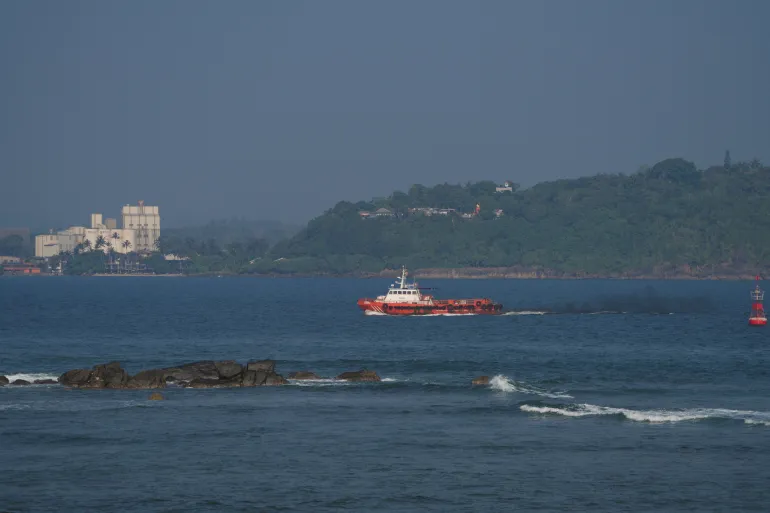
A vessel sails off the Galle coast after a submarine attack on the Iranian military ship, Iris Dena, off Sri Lanka, in Galle, Sri Lanka, March 4, 2026 [Thilina Kaluthotage/Reuters]
‘War reaches India’s backyard’
After participating in the naval exercises, IRIS Dena left Visakhapatnam on India’s eastern coast on February 26. It was hit in international waters, just south of Sri Lanka’s territorial waters, in the early hours of March 4, local time.
In response, Sri Lankan Navy rescuers recovered more than 80 bodies and picked up 32 survivors, reportedly including the commander and some senior officers from the warship. More than 100 men are still missing.
In a tweet welcoming the Dena to the naval drills, the Indian Navy’s Eastern Command had posted: “Her arrival … [reflects] long-standing cultural links between the two nations [Iran and India]”.
Vice Admiral Shekhar Sinha, the former vice chief of India’s naval staff, told Al Jazeera that he attended the Iranian parade at the function.
“I met and really liked them, especially their march for sailors travelling thousands of miles,” Sinha said. “It is always sad to see a ship sinking. But in a war, emotions don’t work. There’s nothing ethical in a war.”
Sinha said that the Indian Ocean — central to the strategic and energy security of the nation with the world’s largest population — was thought to be a fairly safe zone earlier. “But that is not the case, as we are learning now,” he told Al Jazeera.
“The unfolding battle [between the US and Israel on the one hand, and Iran on the other] has reached India’s back yard. New Delhi has to be concerned,” Sinha, who served in the Indian Navy for four decades, added. “The liberty we enjoyed in the Indian Ocean has apparently shrunk.”
Security personnel stand guard as an ambulance enters inside the Galle National Hospital, following a submarine attack on the Iranian military ship, IRIS Dena, off the coast of Sri Lanka, in Galle, Sri Lanka, March 5, 2026 [Thilina Kaluthotage/Reuters]
India’s Catch-22 situation
Only on Thursday evening did the Indian Navy issue any formal statement on the attack — more than 24 hours after the Dena was hit by a torpedo.
The Navy said that it received distress signals from the Iranian ship and had decided on deploying resources to help with rescuing sailors. But by then, it said, the Sri Lankan Navy had already stepped to lead the rescue effort.
Neither New Delhi nor the Navy has criticised — even mildly — the decision by the US to sink the Iranian warship.
Military analysts and former Indian naval officers say India is caught in a classic catch-22: Was India aware of the incoming US attack in the Indian Ocean on an Iranian warship, or was it blindsided by a nuclear-submarine in its backyard?
Admiral Arun Prakash, the former chief of India’s naval staff, told Al Jazeera that if New Delhi was blindsided, “it reflects on the US-India relationship directly.”
“If it is a surprise, then that’s a great concern since we have a so-called strategic partnership with the USA.”
And if India knew about the attacks, it would be seen by many as strategically siding with the US and Israel over their war on Iran.
C Uday Bhaskar, a retired Indian Navy officer and currently the director of the Society for Policy Studies, an independent think tank based in New Delhi, said that the US sinking an Iranian warship in the Indian Ocean muddies the Indian perception of itself as a “net security provider” in the region.
Bhaskar said the incident is a “strategic embarrassment” for India and weakens New Delhi’s credibility in the Indian Ocean, while its moral standing “takes a beating” because of the Indian government’s near-silence.
An injured Iranian sailor is moved on a stretcher at Galle National Hospital, where the sailors are receiving treatment, following a submarine attack on the Iranian military ship, IRIS Dena, off the coast of Sri Lanka, in Galle, Sri Lanka, March 5, 2026 [Thilina Kaluthotage/Reuters]
‘India on aggressor’s side’
In the post-colonial world order, India was a leader of the non-alignment movement, the Cold War-era neutrality posture adopted by several developing nations.
India now no longer calls its approach non-alignment, instead referring to it as “strategic autonomy”. But, in reality, it has inched closer to the United States and its allies, most importantly, Israel.
Merely two days before the US and Israel bombed Iran, Modi was in Israel, addressing the Knesset and warmly hugging Prime Minister Benjamin Netanyahu, who called his Indian counterpart a brother.
But Iran, under the late Supreme Leader Khamenei, was a friend of India as well, with New Delhi making strategic, business, and humanitarian investments in the country.
However, Modi has not said a word in condolence after Khamenei’s assassination. On Thursday, Indian Foreign Secretary Vikram Misri visited the Iranian embassy in New Delhi to sign a memorial book. Indian governments normally deploy ministers — not bureaucrats or diplomats — for such sombre occasions.
It is against that backdrop that India’s response to the attack on the Dena has come under scrutiny.
Because the frigate was hit when it was in international waters, India had “no formal responsibility”, said Srinath Raghavan, an Indian military historian and strategic analyst.
“But the US Navy’s actions underline both the spreading geography of this war and the sharp limits of India’s ability to manage, let alone control, its fallout,” Raghavan told Al Jazeera.
Diplomatically, India has “objectively positioned itself on the side of the aggressors in this war,” he said, by “acts of commission — visit to Israel on the eve of war — and of omission, with not even [an] official condolence, let alone condemnation, of the assassination of the Iranian head of state.” Modi visited Israel on February 25-26.
Mallikarjun Kharge, the president of India’s opposition Congress party, said the Modi government had recklessly abdicated “India’s strategic and national interests”. And the government’s silence “demeans India’s core national interests and destroys our foreign policy, carefully and painstakingly built and followed by successive governments over the years.”
In addition, Raghavan highlighted that Modi has only criticised Iran’s retaliation, which threatens to drag the Gulf region to the brink of war.
“It is difficult not to conclude that India has drastically downgraded its interests in the relationship with Iran,” he said.
“All of this detracts from India’s credibility as a player in the region and will have short and long-term consequences for the equities in West Asia [as the Middle East is referred to in India],” Raghavan told Al Jazeera.
Videos showed a projectile striking near Kuwait’s Ali al-Salem Air Base, which has hosted a substantial number of US forces. Earlier on Thursday, the United States announced it was closing its embassy in the country and is reportedly evacuating its staff.


![A month after Iranian president's visit to Islamabad, Pakistani PM Shehbaz Sharif met Saudi Crown Prince Mohammed bin Salman in Riyadh in September 2025 to sign a defence agreement. [File: Handout/Saudi Press Agency via Reuters]](https://i0.wp.com/occasionaldigest.com/wp-content/uploads/2026/03/2025-09-17T193003Z_2033872192_RC2VTGAIIE3P_RTRMADP_3_SAUDI-PAKISTAN-DEFENCE-1772753571.jpg?w=640&ssl=1)
![Violence erupted in Pakistan following news of US and Israeli strikes on Iran that killed Iran's Supreme Leader Ayatollah Ali Khamenei on February 28. At least 23 people were killed in violence across country, with at least 10 people killed in Karachi during a protest outside the US Consulate General. [Akhtar Soomro/Reuters]](https://i0.wp.com/occasionaldigest.com/wp-content/uploads/2026/03/2026-03-01T152518Z_797272407_RC2NVJALJ3YW_RTRMADP_3_IRAN-CRISIS-PAKISTAN-PROTESTS-1772753695.jpg?w=640&ssl=1)