Islands

The 10 barely-visited holiday destinations which need MORE tourists from tiny Greek islands to Latvian beach cities

THE holiday destinations without the crowds that want MORE tourism have been revealed.

Intrepid has released its annual ‘Not Hot’ List, partnering with Globetrenders to look at alternative destinations to visit instead of the popular, oversaturated places.

Intrepid’s underrated travel destinations for 2027 have been named Credit: Alamy
Alonnisos island in Greece sees a fraction of tourists compared to other islands Credit: Alamy

Using both Intrepid’s local leaders and destination experts, along with trend forecasts, the study looks at three key elements – areas with few visitor numbers, their ability to welcome more tourists, and any new infrastructure for 2027 such as big events or transport systems.

When it comes to Europe, you might be surprised to realise there are still some Greek islands that don’t have the tourist crowds.

Intrepid named Alonnisos as a “not hot” destination which is a more sustainable holiday experience in the region.

They said: “Alonnisos is a slice of paradise that plays host to an array of aquatic and land-based delights, including the endlessly entertaining – and endangered – Mediterranean monk seals.”

ISLE GO

I’ve booked trips to a Spanish island for a decade – here’s the best hidden spots


LITTLE KNOWN

10 under-the-radar destinations from tiny European islands to seaside cities

The island is actually home to the National Marine Park of Alonnisos and Northern Sporades (Europe’s largest marine protected area), as well as Greece’s only underwater museum, the Peristera shipwreck.

It remains off the radar for most tourists as you can’t fly to the island, with it only accessible by ferry or private yacht.

In 2024, it saw just 70,000 tourists – compared to its neighbour Skiathos’ 500,000 or Santorini’s 3.4million.

Intrepid’s eight-day Sail Greece excursion which includes a trip to Alonnisos starts from £2,102.

Another European destination highlighted was Liepāja, a beach city in Latvia.

Nicknamed the Baltic Mediterranean, next year it will become Europe’s Capital of Culture, meaning hundreds of events, festivals and shows.

Samburu Game Reserve in Kenya is a quieter safari destination Credit: Alamy
Canad’s Whitehorse, in Yukon Territory was named as well Credit: Alamy
When it comes to Europe Dalsland in Sweden was highlighted, often nicknamed the country’s ‘Lake District’ Credit: Alamy
Carretera Austral in Chile also made the list Credit: Alamy

Just under 120,000 tourists visited last year, meaning you’ll get the five-mile, white sand beach all to yourself.

To get there, Ryanair fly to Palanga from London Stansted for £25, which is around an hour from Liepāja

Sweden‘s Dalsland made the top 10 list as well, for being “unspoilt and unexplored”.

Around two hours from both Gothenburg and Oslo, it is known as Sweden‘s ‘Lake District’ for all of its outdoor activities from wild camping to kayaking and hiking.

Just 320,000 people visited last year, compared to the capital of Stockholm which saw 16million.

Other destinations on Intrepid’s list included Samburu National Reserve in Kenya, named for being the place for both “crowd-averse safari fans” and an “emerging astrotourism destination”.

Georgia is fast becoming a new holiday destination, after both British Airways and easyJet launched direct flights to the capital Tbilisi last year.

But Intrepid praised Mestia as an alternative, quieter place which, while popular with neighbouring tourism, is set to become bigger with international tourism due to new infrastructure plans.

The Pekoe Trail is Sri Lanka’s first long-distance walking trail, and an alternative way of seeing the island nation Credit: Alamy
Timor-Leste is one of Southeast Asia’s least visited destinations, and is getting easier to go to thanks to new flight connections Credit: Alamy
Jordan’s North Highlands were named as a great alternative to the country’s iconic desert landscapes Credit: Alamy
And Mestia in Georgia is set to become more popular as well Credit: Alamy

Otherwise it is popular as an outdoor adventure holiday destination, with both hiking and skiing experiences.

Also mentioned was the Northern Highlands in Jordan, a green “alternative to the country’s iconic landscapes” while “Arctic tourism” was highlighted for visiting Whitehorse in Canada.

Timor-Leste, one of South East Asia’s least-visited destinations was also highlighted, with new flight routes to connect the capital of Dili to major hubs such as Kuala Lumpar.

Sri Lanka‘s first long-distance walking trail Pekoe Trail (with a new 10-day Intrepid trip launched) and Chile‘s ‘route 7’ Carretera Austral rounded out the list.

Intrepid’s ‘Not Hot’ List 2027

  • Samburu National Reserve, Kenya
  • Mestia, Georgia
  • Northern Highlands, Jordan
  • Whitehorse, Canada
  • Alonnisos, Greece
  • Dili, Timor-leste 
  • Pekoe Trail, Sri Lanka
  • Liepaja, Latvia
  • Carretera Austral, Chile
  • Dalsland, Sweden

Source link

Sun Travel’s favourite islands from Europe’s Caribbean and Peter Pan isles to a £2 wine paradise

DESPITE being island-dwellers ourselves, there’s something much more exciting about a holiday abroad on one.

There’s the party islands of Ibiza or how about a trip to the Caribbean complete with pina coladas?

The Sun Travel team reveal their island faves Credit: Getty
And offer top tips for finding a bargain Credit: Getty

The Sun Travel team have certainly racked up the air miles when it comes to travelling the world, and have found their ultimate island holidays along the way.

That’s not to say there aren’t a few closer to home that we love, including ones across Scotland and Wales.

So here are some of our faves – and our top tips for finding a bargain.

Sicily 

Sicily is a great cheaper alternative to the Amalfi coast Credit: Alamy

Skip Tuscany or the Amalfi coast – if you want a cheap Italy experience, go to Sicily for £5 Aperol Spritzs instead of £15, or £4 takeaway pizzas.

I enjoyed an idyllic stay in Ad Astra, a villa right on the beach at Finale di Pollina, part of the hand-picked collection from Wish Sicily.

With four bedrooms, a gorgeous pool and wonderful outside eating areas, it would have been tempting to just laze around on the sunbeds, taking the occasional dip in the sea.

But there’s so much more to enjoy here with the nearby medieval hilltop village of Pollina, home to sleepy streets, ancient amphitheatres and £2 glasses of wine.

We escaped the crowds by taking a dip in the clear waters of the pebble bay of Spiaggia Torre Conca, tucked beneath the cliffs by Finale di Pollina.

Just minutes from the villa was the rustic Beach Club Costa Turchina, a family-run restaurant with £10 bowls of pasta, and massive dinner plate-sized steaks for £14.

For 2026, the owners are expanding and are offering yurt stays with private hot tubs in a field next to the restaurant, and you can hire bikes, scooters and boats from the club as well.

Sicily delivered great value, far less crowds and a slice of la dolce vita without the price tag! – Lisa Minot, Head of Travel

Golden Isles, France

Porquerolles is part of the Golden Isles off the coast of France Credit: Alamy
Head of Travel Lisa Minot is a fan of French islands

The Golden Isles off the coast of the South of France – and made up of three Caribbean-like, unspoilt islands – offer an incredibly peaceful antidote to the crowds of the Cote D’Azur.

Porquerolles is the largest despite being just 7km long and 3km wide and is car free, with 50kms of cycle paths instead (you can rent bicycles in the main village).

There is the pine-fringed beach of Plage Notre Dame, or Plage du Langoustier on the island’s western-most tip has a strip of sparkling white sand to the north, and a black sand beach to the south (save time for Restaurant Porquerollais for traditional Med fish specialities).

Smaller Port Cros is a rugged haven for hikers and snorkellers, also with no cars, but also no bikes and absolutely no smoking allowed anywhere outdoors to protect this piece of paradise, France’s first marine national park.

(For the freshest seafood and colourful cocktails, reserve a table at Restaurant Hostellerie Provencale right next to the harbour.)

And finally Ile De Levant has yet another surprise up its sleeve.

While most of the island is inaccessible for military testing, Heliopolis is one of Europe’s oldest naturist villages, founded in 1931 and clothes are entirely optional everywhere on the island, except in the harbour and village square.

Getting to the islands is easy too, with regular ferries to Porquerolles from Hyeres taking just 15 to 20 minutes and other regular boat transfers to Port Cros and Ile de Levant from nearby coastal towns like Le Lavandou. – Lisa Minot, Head of Travel

Eilean Shona

One of Scotland’s most beautiful islands is Eilean Shona Credit: Alamy
Some of the waters are just as clear as those in the Maldives Credit: TripAdvisor

Did you know that Scotland has around 900 offshore islands and only between 94 and 97 of these are permanently inhabited? I would say that makes them more special to visit.

Eilean Shona is a tiny tidal island in the Inner Hebrides, about an hour from Fort William. 

To reach the island – where only nine people live – you need to take a small ferry and once there you won’t find cars or roads. 

Instead, you’ll find a green haven with abundant wildlife and cosy cottages to stay in.

In fact, the island inspired J.M. Barrie’s Neverland in Peter Pan.

To visit the island, you must be booked to stay in one of the various accommodations on the island – which cost from £1,100 per week for two people (so £78.58 per person per night).

There’s not much to do on the island itself – but for those who want a peaceful retreat or love hiking it is the ideal spot. 

And make sure to visit Shoe Bay at one end of the island – it boasts a white sand beach with crystal clear waters that looks like the Maldives. – Cyann Fielding, Travel Reporter

Spinalonga

Spinalonga is tiny but makes for a great day trip from Crete Credit: Alamy
One of the tourist highlights are the ancient Venetian fortresses Credit: Alamy

Spinalonga is a small island off the northeast coast of Crete known for its huge 16th century Venetian fortress that later became one of Europe’s last active leper colonies between 1903 and 1957. 

The fortress itself dates back to 1579 and when you visit the island, you can see some of the ruined buildings as well as others that are more intact. 

There are information points across the island as well, where you can learn about the history of Spinalonga.

The island is great for a half-day trip, the ferry only takes about 10 minutes to reach Spinalonga from Plaka – a pretty Cretian town with a few shops and tavernas overhanging the water. 

A round-trip boat transfer from Plaka to Spinalonga costs €12 (£10.28) for adults and €6 (£5.14) for children.

The boats run every 30 minutes. – Cyann Fielding, Travel Reporter

Puerto Rico

Travel Reporter Alice Penwill fell in love with Puerto Rico
If you love Bad Bunny and pina coladas, the island is one for you Credit: Alamy

Sun, sand, sea and some of the best food I’ve ever eaten – Puerto Rico is an island that I cannot fault.

Firstly off, even if you’re heading elsewhere on the island, its capital, San Juan, is not to be missed.

The colourful streets are ripe for exploring during the day filled with cafes and jewellery shops, then as night falls, the bars come alive enticing you in with loud music and cheap drinks.

Nearby is the trendy neighbourhood of Santurce which is known to be one of Bad Bunny’s favourites thanks to its huge street murals

My favourite part though was exploring the western region of the island to find its incredible beaches like Crash Boat Beach in Aguadilla.

The popular family spot has soft sand perfect for sunbathing, and it’s Caribbean Sea so it’s warm to swim in too (the north coast of the island borders the Atlantic Ocean).

It’s tradition here to jump off the fishing pier too. Another is Jobos Beach in Isabela which is a prime surfing spot for both advanced and beginners.

Food in Puerto Rico is delicious, but don’t expect to be healthy – from mofongo (fried balls of mashed plantain) or tasty empanadillas… you’ll definitely be feeling the extra pounds on your way back. Alice Penwill, Travel Reporter

Anglesey

A favourite staycation destination is Anglesey in Wales Credit: Alamy
Grab a coffee, go for a paddle and then go to Puffin Island for the perfect day Credit: Alamy

Anglesey has all the ingredients for a Great British break – beautiful beaches, plenty of attractions and when it comes to nature, quite often you’ll see dolphins, grey seals and puffins off the coast.

During my visit, I set up camp in the little village of Moelfre which was incredibly quiet even during the height of summer.

It’s not the place for huge entertainment, but what you’ll find instead are gorgeous pubs, a cute little coffee shop called Ann’s Pantry and beach of its own called Taeth Moelfre.

If you’re after a longer stretch of sand to go out and paddle or sunbathe, then head to Traeth Lligwy for golden shores and a sandbank when the tide goes out so the kids can carry on playing without going too far.

To see more of the island, definitely take or hire a car so you can drive to Beaumaris to see its castle and pier.

If it’s not too windy then make sure to hop on the ferry to see Puffin Island – a small wildlife sanctuary for the birds on the eastern side of Angelesey.

I loved our cottage we stayed in called Bryn Awel and sleeps up to six people.

With seven nights costing £577 (or £13.74ppn each), it’s snug with a cosy woodburner to fire up in the winter months and a large suntrap patio for the summertime. Alice Penwill, Travel Reporter

Ibiza

Ibiza is well known for its party trips but there is more to it Credit: Alamy
Assistant Travel Editor Sophie Swietochowski goes nearly every year Credit: Alamy

My deep-rooted love for Spain’s White Isle is shared among many Brits. It’s cheap and easy to reach from the UK, with plenty of flights, and is now littered with some of the hottest restaurants and chicest hotels in Europe.

While many come here to party (the island is home to UNVRS, the largest nightclub in the world, and Hï, frequently voted one of the best in the world) those in the know appreciate its quieter side and rustic beauty.

A holiday in Ibiza, for me, is rarely complete without a boat trip around the coast, stopping off at secluded coves where you’ll find nothing other than a few locals playing chess above the craggy rocks.

You don’t have to spend hundreds. SamBoat has some very affordable deals.

Beach clubs and bars are, of course, in abundance, but they come with a hefty price tag these days.

So if you’re strapped for cash, just lay a towel down and enjoy the vibes. Afterall, every beach in Ibiza is publicly owned, so no one can stop you enjoying the sands.

If you are willing to splurge a little, Beach House in Playa d’en Bossa is one of my all-time favourites.

The food is outstanding – think grilled king crab and sizzling rice dishes – while the atmosphere is mellow and rather unpretentious compared to some other spots. Sophie Swietochowski, Assistant Travel Editor

Sri Lanka

Assistant Travel Editor Sophie Swietochowski fell in love with Sri Lanka last year
BA is even about to launch new flights to Sri Lanka this year Credit: Alamy

I still lust over the meals I ate during my trip to Sri Lanka. Choose local and you won’t regret it – just make sure to alert the staff if you’re not good with spice.

Authentic restaurants will also charge you a much more reasonable price than the plush holiday resorts.

Keep your eyes peeled for hoppers, a traditional street food that’s essentially a spongy bowl-shaped pancake, often served with a soft egg at its centre and used to scoop up all manner of curries and saucy dishes.

The east coast is where to head for a more laidback and quieter scene, away from the crowded tourist areas in the south.

The sands here are so white and the waters so blue, it felt as close to paradise as I’ll ever get.

Don’t be surprised to spot cows strolling along the sands while you kip on your sunlounger or monkeys poised in the trees above, waiting to pinch your chips.

The wildlife is so spectacular here and another reason why I love this island so much.

In the more suburban areas you may even spot elephants casually crossing the road, bringing traffic to a halt. Sophie Swietochowski, Assistant Travel Editor

Phuket

For the ultimate cheap winter sun, Phuket in Thailand is tough to beat Credit: Alamy
Where else can you find fantastic street food and beers for just a few quid? Credit: Alamy

It’s no surprise to me that Thailand’s second largest island attracts up to 14 million visitors annually.

Phuket is home to beaches that look like those in the movies: fringed by swaying palm trees and overlooking a clear ocean that is teeming with colourful fish.

Ao Sane Beach and Kata Noi Beach are two popular spots where you can snorkel without needing to shell out for a boat trip.

It may cost you a wad of cash to fly here but once you’re on the island, basics are really budget-friendly.

Find your nearest night market and get fully stuck in, exploring the food stalls serving sizzling fish, meat and potatoes on a skewer or dancing to live music.

Food tends to be cheap and properly authentic and you can pick up local beers for around 60 baht (£1.34) or affordable, hand-made clothing – just be warned, Thai people tend to be tiny in comparison to Brits, so you’ll likely need to up-size.

For a bit of culture, make your way to the peak of the Nakkerd Hills to observe the Big Buddha, a 45-metre-high statue made from tiny marbles. Phuket Old Town is great to potter around, too.

Some of the trendy coffee shops wouldn’t look out of place in a sweet market town right here in the UK. Sophie Swietochowski, Assistant Travel Editor

Ria Formusa

Go to Portugal if you want Caribbean like sands, according to Deputy Travel Editor Kara Godfrey
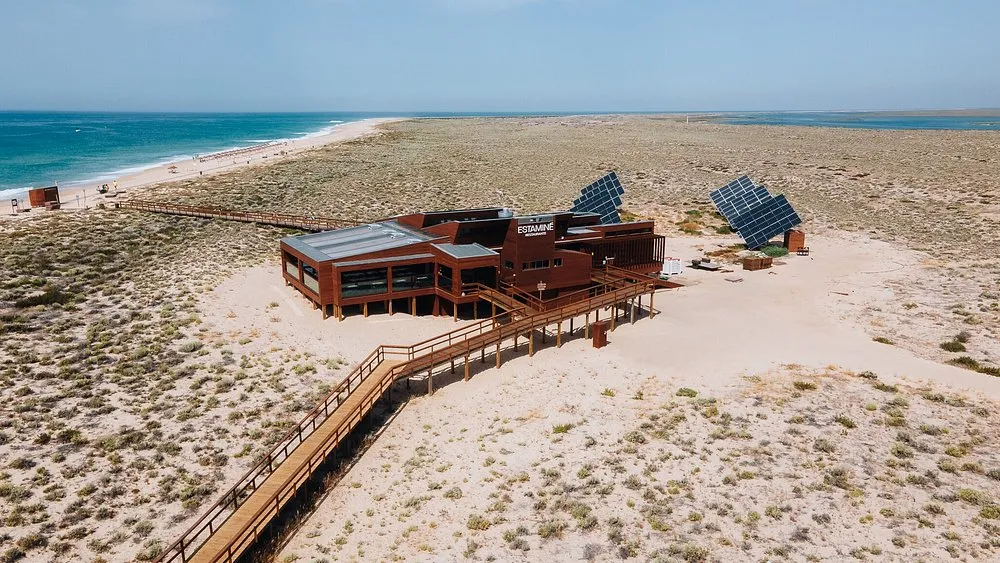
Ilha Deserta looks like it is thousands of miles away Credit: Alamy

If you want Caribbean sands with Europe-length flights, then you’re going to want to head to Portugal.

Just off the coast of Faro is the Ria Formosa, a protected lagoon area with a number of tiny islands.

They’re easy to get to, with boats just a few euros and being no more than 45 minutes.

My favourite was Ilha Deserta, also known as Baretta.

We had the white sandy beaches all to ourselves, with the only thing on the island being the standalone restaurant Restaurante Estaminé (come for the panoramic views, stay for the succulent fresh fish).

Or there is the slightly, but barely more built up Ilha Culatra, with a few more beach shacks and cafes but just as stunning stretches of water.

You’re best staying on the mainland as most of these places are both car and hotel free, with hotels from around £65 a night.

Or splash the cash on 3HB Faro, the only five star hotel in town complete with rooftop bar and trendy, mod-conned rooms. Kara Godfrey, Deputy Travel Editor

Isla del Cano 

You won’t have heard of Isla del Cano – as it strictly limits tourists
You can’t stay the night but it is is worth a day trip to feel like you are on a desert island

Some of my favourite islands around the world are the ones that make you feel like you’re the only person on the planet.

One that recently took my breath away was Isla del Cano in Costa Rica.

It’s a wildlife reserve, so you can’t stay on the island, but you can explore the waters by boat before hopping onto land for a drink and beach shower.

Having the place almost to ourselves, we saw everything from turtles and humpback whales to bright corals. 

For the best views, climb the wooden lookout platform to overlook the waters, where you can see the multicoloured waters mixing together.

They even limit the amount of daily visitors to just 200, to try and protect the ecosystem, and guides must have an official permit.

Robinson Crusoe, eat your heart out.

Stay at Drake Bay, as this is where the boats leave for the island. You can find home stays and cheap hotels from around £30 a night. Kara Godfrey, Deputy Travel Editor

Source link

A guide to camping at Channel Islands’ Prisoners Harbor Campground

It was a Thursday evening, and I was performing Gloria Gaynor’s 1978 hit “I Will Survive” for my audience of three on an ocean pier as we waited for the partial lunar eclipse.

As we shimmied to ‘70s hits via a Bluetooth speaker, I boasted about winning a talent competition in my tiny town thanks to my rendition of the disco classic. “We need to see these dance moves!” a fellow camper proclaimed.

Somehow, we had this island all to ourselves.

This was one of several memories I made last week when I traveled to Santa Cruz Island in Channel Islands National Park to stay at Prisoners Harbor Campground on its opening night. When the National Park Service announced that reservations would open Aug. 18, I spent 11 hours that day refreshing the page, waiting for my chance. At last, site No. 1 was mine.

A small dirt tent pad surrounded by wood beams with a small picnic table and brown metal box surrounded by trees

Campsite No. 2 at the Prisoners Harbor Campground on Santa Cruz Island.

(Jaclyn Cosgrove / Los Angeles Times)

In this edition of The Wild, I lay out how you can create your own memories at this quiet campground on a lesser traveled side of Santa Cruz Island. I will explain how to book your site and ferry, what to pack and what you can do while on the island.

You are reading The Wild newsletter

Sign up to get expert tips on the best of Southern California’s beaches, trails, parks, deserts, forests and mountains in your inbox every Thursday.

Step 1: Book your campsite ⛺

Prisoners Harbor Campground is a small, rustic campground open year-round on Santa Cruz Island, the largest island in California. Although the National Park Service lists the campground as having six sites, it technically has seven. Reservations can be made for $15 a night through Recreation.gov.

Prisoners Harbor Campground is about a 13-mile hike southwest from Scorpion Canyon Campground, the popular 31-site spot where most folks visiting the island camp. Unlike Scorpion Canyon, Prisoners Harbor does not have any water on site and is a more DIY experience. There are also fewer tours and experiences led by outfitters on this side of the island.

A green map with dots and icons identifying the locations of campsites and other amenities and landmarks

The map of Prisoners Harbor Campground.

(Jaclyn Cosgrove / Los Angeles Times)

Each campsite at Prisoners Harbor has a dirt-packed tent pad, a picnic table and metal food storage containers that everyone called “fox boxes,” as the island fox is the largest land predator on the island (and will absolutely steal your food, and maybe your shoes).

From the pier, you’ll walk about one-fifth of a mile on a mostly flat dirt road, passing the brick Prisoners Harbor warehouse and two pit toilets. You will cross the Cañada del Puerto, which was dry during our visit but can swell to 3 feet and become impassable, according to the park service.

I was pleased to find that site No. 1 is tucked away in the campground’s northern corner. It is shaded by oak trees and surrounded by thick brush, offering privacy and the feeling like you exist only in this one little corner of the world.

Site No. 2 is on the path to site No. 1 and isn’t presently bookable on Recreation.gov. (I’m guessing the park service will remedy that soon, as the site exists and is ready for campers!)

A campsite with a dirt tent pad with wooded beams on its sides and a brown metal storage box and black-brown picnic table

The shaded campsite No. 6 at Prisoners Harbor Campground.

(Jaclyn Cosgrove / Los Angeles Times)

Sites No. 3, 4, 5 and 6 are all positioned in a row on the southwestern corner of the campground. Similar to site No. 1, site No. 6 is tucked under thick tree canopy. I think it’s probably shaded for most, if not all, of the day. Sites No. 3, 4 and 5 also have some shade.

Site No. 7 is the accessible campsite and has a ramp leading up to it. It is fairly exposed, appearing to have the least amount of shade and privacy. It is closest to the pit toilet, though, which also has a ramp leading up to it.

As I was getting ready for bed, I noticed the soothing sound of ocean waves. My friend Christine was already cozy inside the tent, and I asked her if she’d turned on an ambient soundtrack on her phone to fall asleep. “No, that’s just the ocean!” she said.

Step 2: Book your ferry ⛴️

There are only two ways to get to Santa Cruz Island: Take a private boat or, the more popular route, book a ferry through Island Packers, leaving out of Ventura Harbor.

A roundtrip ferry to Prisoners Harbor costs $72 for children ages 3 to 12, $96 for campers ages 13 to 54, $91 for those 55 and older. It is also $91 for members of the U.S. military.

Upon booking your ferry, you must read the rules that Island Packers emails to you. I cannot stress that enough. There are weight limits (i.e. no single item may weigh more than 45 pounds) and limitations about what you’re allowed to bring. That said, it’s all fairly easy to follow — like not packing your water or fuel inside your bag, as those both are packed in specific places on the boat.

A person in a large hat sits aboard a yellow kayak in the ocean with a paddle in her hands near a rocky jagged coastline

Christine, a friend of The Wild, paddles along the coastline of Santa Cruz Island near Prisoners Harbor.

(Jaclyn Cosgrove / Los Angeles Times)

Step 3: Plan out what you’d like to do on the island 🚣😎

With Prisoners Harbor being more of a DIY experience than Scorpion Canyon, one of the most important things you can do is plan ahead and book your activities at least a full day — ideally a few days — before your trip.

I knew I wanted to try snorkeling, but I don’t own gear — yet. Thanks to a recommendation from Island Packers, whose staff graciously answered all my questions, I contacted Ventura Dive and Sport to see what was doable. Owner Zach Cantrell was helpful and accommodating, setting me up with everything I needed, including a 7-mm wetsuit that made me feel like an actual marine mammal thanks to my ability to float while wearing it. Cantrell also made it easy to return my gear since the ferry was returning after his shop was closed.

Outside of snorkeling, you can also rent a kayak through Channel Islands Kayak Center. Or you can bring your own kayak, keeping in mind that Island Packers has specific rules around which kayaks you’re allowed to bring. You should also take a look at the National Park Service’s safety guidance regarding the risks of ocean kayaking.

A steep wide dirt road with views opening to blue ocean water and mountains in the distance

The hike along Navy Road offers nice views of ocean and mountain ranges on the mainland.

(Jaclyn Cosgrove / Los Angeles Times)

You can also swim near the Prisoners Harbor pier, but you should keep in mind:

  • The beach here is not sandy, but rather covered with rocks of varying sizes; pack swim shoes to protect your feet
  • The waves can get choppy, so make sure not to swim alone
  • There are stingrays in the area, so enter the water doing the stingray shuffle
  • There are sea urchins on some rocks in the area, so watch out for those as well, as their sting also hurts

On the island, there’s, of course, hiking. There are two trailheads at Prisoners Harbor:

  • The 4-mile out-and-back Pelican Bay hike, a challenging trek that traverses along the coastline, offering seemingly endless views of the area, before ending at the bay and Tinkers Harbor, another spot where you can swim and snorkel; The hike is on Nature Conservancy land, an environmental nonprofit that owns 76% of the island, and the conservancy requires that you sign a waiver and only traverse the hike when an Island Packers staffer is present on the trail.
  • A hike along Navy Road that you can take to the backcountry Del Norte campground, or to a variety of other spots on the island, should you pack a paper map or download a map before your trip.

Christine and I had originally planned to check out the Pelican Bay hike on Friday morning, but then a kind island visitor said we could borrow their kayaks for free. That was an irresistible offer.

I’ve kayaked several times on rivers and in lakes but never on the ocean, so I wanted to be fairly cautious. We paddled northwest along the island’s coast, taking in the island’s jagged rocky cliffs. We spotted what appeared to be a small sea cave but agreed it wasn’t a good idea to explore without a guide who knows the island. You should always be ready on any adventure to check in with yourself and your travel companions about your skill and comfort levels. If the reason you’re wanting to do something is really just “FOMO,” ask yourself if it should instead be a “NO-GO.” (Yes, I just made that up.)

Three paddlers in brightly colored kayaks head toward a rocky coastline on the blue ocean water

Kayakers leave out of Scorpion Anchorage on Santa Cruz Island.

(Jaclyn Cosgrove / Los Angeles Times)

I saw repeatedly on the National Park Service website that the island’s weather conditions can change rapidly, including while out on the kayak. Christine was out front and noted the wind was picking up. We swiftly paddled back, carried in part by the waves, which pushed our kayaks along in a similar sensation to surfing. I quickly fell in love with that feeling!

Despite the campground being fully booked, there were only two other campers during our trip — retired educators and travel besties Kim Eaton and Annemarie Lee, both of Riverside. They’d visited the Channel Islands multiple times, including Anacapa, Santa Rosa, San Miguel and had made previous trips to Santa Cruz, and they’d always wanted to do the Pelican Bay hike.

We were all on the island when it was particularly hot and humid, so the duo chose to go halfway and turn around.

A cloudy night sky with white-golden light and a deep blue sky with twinkling white stars above the dark ocean

The cloudy night sky, as seen from the Prisoners Harbor pier.

(Jaclyn Cosgrove / Los Angeles Times)

“The views were beautiful,” Eaton said, noting how clearly they could see the rugged coastline and waves. “We saw you guys kayaking!”

“The color of that ocean is beautiful,” Lee added.

Rocky outcroppings near Scorpion Anchorage.

Rocky outcroppings near Scorpion Anchorage.

(Jaclyn Cosgrove / Los Angeles Times)

Step 4: Plan what you’ll pack, including all your water

Everything you pack in, including your trash, you must pack out. There is no food for purchase, and there is no water at Prisoners Harbor, so you must bring whatever you plan to use for drinking and other purposes. I brought 4 gallons, and Christine packed 2. As I said, it was pretty hot, and we left the island with about a gallon and a half left.

I didn’t realize coolers were allowed. Nearby in campsite No. 4, Kim and Annemarie not only had a cooler but large ice cubes they’d frozen specifically for the trip, which last longer thanks to their size. “So if you like your cocktails, you’ll have ice” for multiple days, Kim said.

Step 5: Don’t miss the boat!

Island Packers requires campers to check in an hour before the boat leaves.

I left my home just before 6 a.m., picked up Christine and boogied to Island Packers, parking just before 8 a.m. Parking at Ventura Harbor is free Monday through Thursday, and $10 for a full-day pass Friday through Sunday and on major holidays.

After checking in, we worked with Island Packers staffers to load our gear onto the boat. I also thankfully had time to buy a four-shot latte next door at Freedom Coffee. Island Packers has several items for sale in their gift shop, including waterproof phone cases and other items you might have forgotten at home.

As you board the boat, make sure you remember wherever you tuck your return ticket. Our departure time from the island was 4:15 p.m. Friday, which gave us the better part of the day to explore.

An island fence lizard rests on a log at campsite No. 1, scoping out the new visitors to its island.

An island fence lizard rests on a log at campsite No. 1, scoping out the new visitors to its island.

(Jaclyn Cosgrove / Los Angeles Times)

Step 6: Have fun!

Full of motion-sickness drugs and glee, we boarded the boat. I tried to keep my expectations low for what we’d see on the trip to the island. I’ve been on three whale watching excursions out of Long Beach, including once when we didn’t see any whales.

A bottlenose dolphin swims alongside the Island Packer boat on its journey to Santa Cruz Island.

A bottlenose dolphin swims alongside the Island Packer boat on its journey to Santa Cruz Island.

(Jaclyn Cosgrove / Los Angeles Times)

However, shortly into our trip, our boat was visited by bottlenose dolphins that swam next to us. As we neared Scorpion Anchorage to drop off the passengers day-tripping and camping there, we saw so many common dolphins, it felt like an organized and official welcoming celebration.

A humpback whale near the coastline of Santa Cruz Island.

A humpback whale near the coastline of Santa Cruz Island.

(Jaclyn Cosgrove / Los Angeles Times)

But the real magic happened shortly before we docked at the Prisoners Harbor pier when our captain Pancho spotted at least one (maybe two) humpback whale. We paused for a bit to take in the majestic animal’s movements. Christine and I agreed it was easy to see how sailors believed in sea monsters, given how otherworldly the humpback’s body appears as it slithers in and out of the water.

Before leaving for the island, I’d read about how the island foxes will approach you while you’re eating, and that they’ll come into your campsite to try to snag your food. We didn’t have that experience, thankfully, as the campground is so new, and the animals aren’t used to people being there yet.

These tiny canines remained rather elusive — until just before we left. We were headed to the restroom when I gasped. An island fox, about the size of a large house cat, was busy foraging for food in the leaves. It made me happy to see it act naturally, rather than begging us for human food.

An island fox roots through leaves in pursuit of a meal.

An island fox roots through leaves in pursuit of a meal.

(Jaclyn Cosgrove / Los Angeles Times)

The fox cautiously walked a few feet past us on its journey for bugs and other snacks. It was a last bit of island magic before we left.

Although the beauty and biodiversity of the island is a major reason to visit, I carried something else with me back to the mainland, though. To a person, everyone was kind to each other. Prisoners Harbor, through its simple design, offers you the opportunity to move slower, notice more and just enjoy life in a way that’s harder to do when you have cellphone service.

For those looking for a simple escape near L.A., Prisoners Harbor Campground is that and so much more. Late-night karaoke is not required — but highly recommended.

A wiggly line break

3 things to do

Declan Beck, left, his brother Colson and friend Dayna Monbello visit Malibu Creek State Park near Calabasas.

Declan Beck, left, his brother Colson and friend Dayna Monbello visit Malibu Creek State Park near Calabasas.

(Mel Melcon / Los Angeles Times)

1. Celebrate biodiversity around L.A. and beyond
California Biodiversity Day, which actually runs for a week from Saturday through Sept. 13, will include several opportunities to get outside and learn in L.A. County. Malibu Creek State Park and UCLA Stunt Ranch are both hosting one-day data collection events, called bioblitzes. Friends of Ballona Wetlands will offer a freshwater marsh tour on Sept. 12 in Playa Vista. And Arroyos & Foothills Conservancy will host a native plant walk. Find events near you at californianature.ca.gov.

2. Celebrate the black walnut in Ascot Hills
Coyotl wan Macehualli and several other local groups will host a “Black Walnut Day” from 10 a.m. to 4 p.m. Saturday at Ascot Hills Park. The annual gathering will include plant adoptions, a bird walk, a community bike ride, hiking and more. Learn more at the organization’s Instagram page.

3. Plant seedlings near Agoura Hills
The Santa Monica Mountains Fund, a local nonprofit, needs volunteers from 9 a.m. to noon Saturday to work at Cheeseboro Canyon. Volunteers will plant hundreds of live plants grown from locally collected seed. Register at eventbrite.com.

A wiggly line break

The must-read

Illustration of a female figure balancing on one leg with arms outstretched below a blue cloudy sky. A gray cat looks on.

(Ryan Gillett / For The Times)

Falling during a hike can lead to a serious injury, or even worse. This is why it’s crucial that hikers not only wear appropriate footwear but also ensure their ability to balance isn’t being hampered by underlying health issues. Times staff writer Deborah Vankin recently wrote “Get A Leg Up,” a multipart series on improving our balance. First, you read about how to test your balance IQ to discern any issues you might have. Then, you can use exercises that Deborah explains to improve your balance. “Knowing your balance ability is a critical component of self-care,” says Mike Teater, director of balance for Fyzical, a national network of clinics specializing in balance and dizziness, “so you can age gracefully and do the things you want to do — and enjoy the life you built for yourself.”

Happy adventuring,

Jaclyn Cosgrove's signature

P.S.

The L.A. River community is mourning the loss of Steven Appleton, founder of the LA River Kayak Safari. A longtime L.A. River supporter, Appleton died July 25 at his Elysian Valley home following an 18-month battle with a rare and aggressive form of esophageal cancer, according to a GoFundMe page launched to help his family. Times staff writer Doug Smith wrote of Appleton in 2019, “For more than a decade, he has been launching kayak expeditions just upstream from his newly acquired parcel. He has literally blazed water trails by moving broken chunks of concrete to eliminate obstacles to wading and kayaking.” Money from the GoFundMe fundraiser will help Appleton’s family cover his memorial and final expenses. Thank you, Steven, for doing your part to help our local river.

For more insider tips on Southern California’s beaches, trails and parks, check out past editions of The Wild. And to view this newsletter in your browser, click here.


Source link

Tuscany’s treasured islands: five to explore | Tuscany holidays

Scattered between the Tuscan coast and Corsica, the seven islands of the Tuscan archipelago offer a striking contrast to mainland Tuscany. All are part of a protected national park, but each has its own character – some are lively, others tiny and sparsely inhabited. Montecristo and Gorgona are only accessible via strictly limited guided tours, but here’s a brief guide to the highlights of the other five.

Photograph: Guardian Graphics

Elba: the all-year-rounder

As Italy’s third-largest island, and with a year-round community, Elba is the archipelago’s main tourist hub, blending Napoleonic history with rugged landscapes, lively seaside towns and fine beaches. It is famous for Napoleon’s brief 1814 exile at the Palazzina dei Mulini, but its history runs much deeper, with 16th-century Medici fortifications to defend against pirate raids around the coast, and medieval hill towns, some standing on sites occupied since Roman times, inland.

Beach lovers tend to divide between the white-pebble coves of Sansone and Capo Bianco near the largest town, Portoferraio, in the north, and the golden sands of Fetovaia and Cavoli in the south-west beneath Monte Capanne. Marina di Campo on the south coast is a favourite for watersports, and windsurfing and sailing schools are popular in many resorts, from Procchio in the north to Lacona in the south.

The Medici fortifications in Portoferraio on Elba. Photograph: Stevan ZZ/Shutterstock

Hikers can explore the 36-mile (58km) Grande Traversata Elbana, crossing the island from Cavo in the north-east to Pomonte or Patresi on the west coast, passing along mountain ridges and through traditional villages. Usually completed in three or four days, it’s best tackled in spring or autumn.

Where to eat: In Portoferraio, Ristorante da Gianni is a favourite for handmade pasta, seafood and traditional cuisine. Try the house speciality, orecchiette with prawns and courgettes. In Marina di Campo, Da Piero serves seafood-focused dishes right on the beach.
Where to stay: Near Fetovaia, Hotel Montemerlo (doubles from about £88 B&B) offers a relaxed, eco-conscious stay among olive groves. In Marina di Campo, Hotel Punto Verde (doubles from about £90 B&B) is a charming family-run hotel near the beach. On the west coast Hotel Gallo Nero (doubles from £79) is a family-run hotel overlooking Capo Sant’Andrea Bay. In an 18th-century building in Portoferraio’s historic centre, Indarsena (doubles from £86 B&B) is 10 minutes’ walk from several beaches.
Getting there: Ferries from Piombino to Portoferraio take about an hour with Toremar, Moby or Blu Navy.


Giglio: the charming isle

The village and harbour of Giglio Porto. Photograph: Image Broker/Alamy

At just 21 sq km, Giglio is small but has three villages, secluded coves, an extensive coastline and a landscape of historic terraced vineyards. Access for private vehicles is heavily restricted during August, with exceptions for longer stays, which helps preserve its peaceful atmosphere, while buses and taxis link the harbour, villages and beaches, so a car-free holiday is easy.

From Giglio Porto, trails lead to hidden coves and hilltop viewpoints, while the medieval lanes of Giglio Castello, a fortified 12th-century hilltop village, are perfect for an aperitivo and an evening stroll.

Beaches have distinct characters. Campese, on the north-west coast, is the largest, with reddish-gold sand and views of the 16th-century Torre del Campese. Cannelle, in the east, offers pale sand and crystalline water, while farther north, Arenella combines golden sand, granite boulders and clear water for snorkelling.

Where to eat: In Giglio Porto, Ristorante Doria is a seafood favourite with a sea-view terrace (try spaghetti alla chitarra with sea urchin and toasted breadcrumbs). In Campese, Da Zio Meino offers cucina povera (peasant cooking) such as pancotti di mare and spaghetti alle vongole e alla bottarga (with clams and cured mullet roe).
Where to stay: On a hillside overlooking Giglio Porto, B&B La Vela (doubles from £87 B&B) is a small guesthouse with maritime-themed interiors. On a headland above Campese Bay, Le Poste di Simplicio (doubles from £100 B&B) is a family-run B&B with sweeping sea views.
Getting there: Toremar or Maregiglio ferries run from Porto Santo Stefano to Giglio Porto in about an hour.


Capraia: a wild hikers’ paradise

Capraia is best explored on foot. Photograph: Arkanto/Alamy

Located just over 20 miles (33km) north-west of Elba, Capraia is one of the archipelago’s most remote islands. Largely car-free, with few roads, it is best explored on foot along mule tracks winding between sea cliffs, hidden coves and 16th-century Genoese fortifications, although taxi boats and a bus provide limited transport.

Highlights include the red rock formations of Cala Rossa, the Genoese fortress of San Giorgio and the 16th-century Torre dello Zenòbito.

Beaches are few, but swimmers can cool off at Cala San Francesco, hike to Cala del Ceppo and Cala dello Zurletto, or take a taxi boat to Spiaggia della Mortola, one of the few sandy stretches.

skip past newsletter promotion


Where to eat: In the main village, the fixed menu at Il Carabottino changes according to what the local fishers happen to bring ashore, while Il Pigghiolo takes a more contemporary approach, reworking island flavours in dishes such as squid parmigiana and cod croquette.
Where to stay: Accommodation is limited, but La Mandola Eco Hostel (doubles from £70 room-only) near the port is a restorative basecamp for walkers, beachgoers and divers, with a sheltered saltwater pool. In Capraia village, Il Saracino Boutique Suites is a small, characterful retreat with sea views (doubles from £130 B&B).
Getting there: The ferry from Livorno takes 1 hour 45 minutes with Toremar.


Pianosa: the protected isle

The harbour on Pianosa, where visitor numbers are strictly limited. Photograph: Fabiano Sodi/Alamy

Daily visitor numbers to Pianosa are restricted, helping preserve the island’s fragile environment and tranquil atmosphere. You can either buy a ticket on the limited ferry service or join an authorised guided excursion.

Roman remains (including early Christian catacombs) and abandoned prison buildings from when the island served as a penal colony offer glimpses of its history. And the restored Casa dell’Agronomo and Museo delle Scienze Geologiche e Archeologiche explore its agricultural, geological and archaeological heritage.

Guided walks, cycling and kayak excursions are among the best ways to explore. Swimming is restricted to Cala Giovanna, an easy walk from the small port and historic village, to help safeguard the marine ecosystem.

Where to eat: Da Brunello in the small harbour village is Pianosa’s only cafe/restaurant, with a focus on fresh fish and vegetables grown on the island.
Where to stay: Close to the cafe and run by the same management, the island’s only accommodation, Albergo Milena (doubles from £95 half-board) offers simple rooms in a historic building.
Getting there: There are authorised excursions from Elba with Acquavision (45 minutes), and limited Toremar ferry services run from Piombino to Pianosa (about three hours).


Giannutri: the roadless retreat

A Roman column on the beach at Cala Maestra on Giannutri. Photograph: Image Broker/Alamy

While Elba hums with holidaymakers and Vespas, this tiny, car-free limestone crescent, where scent-heavy macchia slopes into ink-blue waters, offers a radical detox from modern life.

With only one restaurant-cafe, which also functions as a small grocery shop, day trippers are advised to bring their own water and lunch. Most people swim at Cala Spalmatoio and Cala Maestra, while much of the coastline forms part of a protected marine reserve renowned for its diving and snorkelling. A guided tour of a Roman villa linked to the Domitii Ahenobarbi family is a must.

Where to eat: La Vela Giannutri, the island’s only dining option, focuses on seafood dishes, from tuna tartare to spaghetti alle vongole.
Where to stay: Accommodation is limited to the family-run A Casa Diana (doubles from £123 B&B), with simple rooms and sea views, and a scattering of holiday rentals.
Getting there: Maregiglio runs ferries from Porto Santo Stefano, or there are seasonal excursion boats (taking about an hour). In summer, Maregiglio also operates excursions and mini-cruises between Giglio and Giannutri.


Source link

‘Lapped by the turquoise, crystal seas’: readers’ favourite unsung European islands | Europe holidays

Winning tip: a bird’s-eye view of wild Croatia

Giant griffon vultures glided parallel with my bus as it reached the highest point of Cres, the least populated of the four main islands in the Kvarner Gulf at the very north of the Croatian Adriatic. Covered in scrubby heath, olive groves and lavender, with small towns and villages on its coastline, its wildness is its appeal. Some, like Cres town, are unobtrusively set up for holidaymakers; in others local people just quietly get on with the life they’ve lived since the Venetians ruled here. All are lapped by the turquoise, crystal seas Croatia is known for.
Rhiannon

Profile

Readers’ tips: send a tip for a chance to win a £200 voucher for a Coolstays break

Show

Guardian Travel readers’ tips

Every week we ask our readers for recommendations from their travels. A selection of tips will be featured online and may appear in print. To enter the latest competition visit the readers’ tips homepage

Thank you for your feedback.

Swimming off the Kerry coast

The view across Valentia island and beyond. Photograph: David Lyons/Alamy

Earlier this summer, my sister and I took a road trip along the south-west coast of Ireland. Our favourite place was Valentia island, a small land mass slightly off the more touristy Ring of Kerry, accessed via a bridge to the south and a ferry to the north. Head for Glanleam beach, an idyllic secluded cove surrounded by rich vegetation, which looks out on to the mountains of the Dingle peninsula, and take a dip in the Atlantic. Like us, you’ll probably want to return the next day and do it again.
Ellie

Going back in time in Greece

Apella beach on Karpathos is one of Europe’s finest. Photograph: Straga/Getty Images

Between Rhodes and Crete, Karpathos slips under the radar: no package crowds, just goats, wildflowers and twisting mountain roads that cling to the cliffs. The remote village of Olympos feels frozen in time, its older women still in traditional dress, drying pasta-like makarounes in the open air. Apella and Achata rank among Europe’s finest beaches, with turquoise water backed by unspoilt pine-covered mountainsides. Hotel Lefkorama provides a spectacular valley-to-sea view and a breakfast feast of fruit, jams, yoghurt and freshly baked bread. End the day at a family-run taverna, sipping local wine as the sun drops into the Aegean.
Stephen and Luca

A car-free outpost off Brittany

The waterfront of the car-free Île de Sein. Photograph: Crystite RF/Alamy

After an exciting 60-minute ferry crossing from Audierne, which includes the Pointe du Raz where currents off the Breton coast create weird wave formations that carry bemused seabirds in opposite directions even when they are only feet apart, you arrive on the Île de Sein, an island mostly only 1.5 metres above sea level. There are no cars and you can walk the entire island in a couple of hours. We loved the cowrie shell-rich beaches and plants forming carpets over pebbles. There is plenty of history here, an impressive lighthouse and a handful of stylish cafes (we had crepes in Chez Bruno). We felt very jealous of those people who had bags to stay the night.
Miles

Castles and cocktails in Italy

Lipari is one of the volcanic Aeolian islands. Photograph: AP Photo/Alamy

Jauntily perched off the north-east coast of Sicily, Lipari has an energy to it that perhaps comes from its volcanic origins. It is the largest of the Aeolian islands and great fun to visit. Lipari town hugs the water and is dominated, Game of Thrones-style, by a brooding castle. The cathedral and the archaeological museum, with its ancient statues and artefacts, are worth checking out. My family and I enjoyed taking part in the evening passeggiata, sipping island-themed cocktails – the worryingly named Volcano, for example – or eating delicious gelatos. The Corso Vittorio Emanuele II is lined with restaurants down to the picturesque port of Marina Corta. We swam on the nearby beaches of Papesca and Porticello – the rocky white seabed and clear waters create a magical shimmering sea that enticed us in hour after hour.
April

Lanzarote’s quiet, tiny neighbour

La Graciosa pictured from Mirador del Rio on Lanzarote. Photograph: Rusm/Getty Images

Most visitors to La Graciosa arrive from Lanzarote for the day, but if you stay overnight it becomes wonderfully peaceful. This tiny volcanic island feels different from the rest of the Canaries, with sandy, largely traffic-free streets in Caleta de Sebo. Swim or snorkel in the clear turquoise water, walk or cycle among the volcanic peaks and enjoy fresh fish in the village. You can take a boat around the coast or simply find a quiet stretch of sand. By evening, the island feels a world away from the busy resorts of Lanzarote – exactly what an island escape should be.
Susanna

skip past newsletter promotion


Puffin-watching in Pembrokeshire

Puffins off the coast of Skomer. Photograph: WL Davies/Getty Images

My absolute favourite island trip is seeing the puffins off the coast of Skomer in Pembrokeshire. Arriving at an unassuming pier (and getting on a somewhat unassuming boat), we were slightly unsure about whether the planned family outing would succeed or flop. But, in fact, Dr Samuel Johnson’s quote should be amended: a man who is tired of watching puffins is tired of life. A few hours spent on the Welsh coastline watching potentially the world’s most joyful bird can cure many an ill.
Rosie

Medieval city walls and fossils in the Baltic

Visby is a preserved medieval town on the island of Gotland. Photograph: Makasana Photo/Alamy

Gotland is a magical island in the Baltic. Get there via a three-hour ferry from Nynäshamn, south of Stockholm. The main town, Visby, is a perfectly preserved medieval dream complete with wraparound city walls, cobbled streets and no cars. Take the bus and ferry to the island of Fårö, hire bikes and cycle to the famous rauks – massive limestone columns by the sea. It’s also a fantastic place for fossil hunting as the whole island was once a coral reef.
Gaynor

Walk around meteorite craters in Estonia

A crater lake in Kaali. Photograph: Tomasz Wozniak/Alamy

On the Estonian island of Saaremaa, you can walk around meteorite craters. The nine Kaali craters were formed when meteorites crashed into the island about 3,500 years ago. The area later became a cult site, with archaeological finds suggesting animal offerings, and has been linked to old Finnic tales of the sun falling from the sky. The tiny Meteoritics Museum costs just €2 (£1.70). Cosmic drama on a very Estonian budget.
Elina

Source link

‘It risks becoming a monster’ – the beautiful European islands hitting their limits

The beautiful but small islands of the South Aegean, namely Kos, Santorini and Rhodes, recorded the highest tourism saturation of any region in the European Union in 2024

A set of beautiful European islands face becoming ‘monsters’ as locals grapple with major overcrowding.

The charming but small islands of the South Aegean, namely Kos, Santorini and Rhodes, recorded the highest tourism saturation of any region in the European Union in 2024, with visitors spending more nights per resident there than anywhere else in the bloc, according to Eurostat.

Tourists logged 127.2 nights for every resident last year, the widest gap between visitors and residents found anywhere in the EU. The figures underline the challenge the islanders face in terms of managing their huge popularity, and not losing what makes them so desirable.

When I visited Rhodes in 2023 to see how the island was recovering from wildfires that had forced thousands of holidaymakers to evacuate, a number of independent hoteliers and restaurateurs told me how hard times had been in the past decade. While they cited numerous factors, the biggest one in their minds was the arrival of several large all-inclusive hotels.Do you have a travel story or opinion to share? Email webtravel@reachplc.com

TUI is a big force on the island, running two of its flagship TUI Blue hotels and offering package stays at dozens of others.

Both times I visited, I stayed at the Atlantica Imperial Resort and Spa, a palatial place that stretches its Greek-style whitewashed buildings and lake-sized pool across several acres of coastline in Kolymbia, over in the east of the island.

It was a difficult place to leave, such was the comfort of the beds, the extensive options at the all-you-can-drink bars and restaurant, and the fact it was separated from the nearest sizeable conurbation, Faliraki, by 5km of motorway, with another similarly lengthy stretch to get to the old town.

But when I did make the trip, I found a place that lived up to the Eurostat figures. Quaint alleyways were packed wall to wall with tourists; restaurants were choc-a-bloc full; knick-knack shops were difficult to squeeze into and hard to navigate without accidentally causing a stack of Colossus lighters to tumble to the floor.

At the other end of the island, I found the exact same scenes in Lindos, except the beautiful village and its cliffside acropolis had been swamped by an even denser pack of day-trippers.

The island is home to 115,000 permanent residents and welcomed 3.5 million tourists between January and September 2024, giving a local-to-tourist ratio of roughly 1:30.

Such demand has led to large-scale hotel construction projects, rapidly rising rents that are making it harder for locals to find a place to live, and damage to Rhodes’ natural assets, including by increasing the risk of wildfires.

Action is being taken. The national government has placed dozens of Rhodes beaches under protected status, while some areas are to become ‘red zones’ where new hotels can’t be built.

While Rhodes is struggling with high tourism numbers, Santorini’s problems are on a different scale altogether.

For many months of the year, the postcard-worthy town is taken over by battalions of tourists armed with selfie sticks and phones, jumping off massive cruise ships and making land via dinghies, riding up the steep hills on coaches and donkeys willing to haul them up cobbled streets.

They’re mostly there for the sunset. “This has been my dream since high school,” American tourist Maria Tavarez, 40, told NBC after watching the rays disappear beneath the horizon.

Residents are increasingly worried that the island of 20,000 is being overwhelmed by the nearly four million tourists who visit it each year.

“Our standards of living have gone down. It’s as simple as that,” said hotel owner Georgios Damigos, who warned the “wonder of nature” he lives on risks being turned into “a monster”.

As on Rhodes, work is being done, including a daily 8,000-cruise-passenger limit and a per-passenger €20 fee during the summer, with some parts of the coast now given “Untrodden Beaches” protection, meaning no sunbeds, no commercial activities and no structures.

Whether the South Aegean, along with the rest of Greece, successfully grapples with the challenges that come with its popularity remains to be seen.

If it doesn’t, it risks jeopardising a huge part of its economy. Between January and June, travel receipts across Greece increased by 14.8%, reaching €8.80 billion, while inbound travel traffic rose by 15.4% to 13.49 million travellers.

Source link

The insanely cheap deal that lets you holiday on TWO Spanish islands for a week

WHY settle for one pretty European island, when you could head to two?

Located just 25 minutes apart, you could head to both Lanzarote and La Graciosa in Spain in one holiday.

You could experience two Canary Islands for just £254 per person Credit: Alamy

Travel experts at Sundeals have shared that you could head to both Lanzarote and neighbouring La Graciosa without having to get another flight.

And the best part? A seven-night package costs as little as £254 per person.

From Lanzarote, it only takes 25 minutes on the ferry to reach La Graciosa, which is a volcanic island with less than 750 residents.

The ferry costs around €32 (£27.37) return per person.

Read more on travel inspo

GO ON

All the little-known websites for cheap or FREE tickets to gigs, theatre & festivals


SO FLY

Our fave beach hols under 5 hours from UK with Caribbean dupes & £2 bottles of wine

Sarah Jooste, Product Executive at Sundeals said: “Taking the ferry across to La Graciosa for the day completely changes your perspective of Lanzarote and feels like discovering a hidden island that many visitors never see.”

“For lunch, I’d recommend Casa Enriqueta on La Graciosa, where tapas start from around €6 (£5.13) per dish, while traditional rice and seafood dishes such as paella are typically around €16 (£13.69) per portion, served overlooking the harbour.”

While on the island, you can also head to Caleta de Sebo, which is the main hub of the island where you will find local shops and places serving fresh fish.

For a beach spot, visit Playa de las Conchas, which boasts golden sand and amazing views.

Both Lanzarote and La Graciosa both have amazing beaches Credit: Alamy
And the two islands are just a short ferry ride from each other Credit: Alamy

Thanks to the rugged landscape, another popular activity is to head off on a 4×4 Jeep Safari across volcanic land formations.

Prefer hiking? Head up Montaña Amarilla for panoramic views over the sea and coast.

Of course, Lanzarote has many amazing spots too including diving around Museo Atlántico which is Europe’s only underwater sculpture museum, with more than 300 sculptures.

You could also head to Jameos del Agua where you’ll find an underground lagoon inhabited by tiny blind albino crabs found nowhere else in the world.

There is even a restaurant hidden inside the volcanic cave too.

The restaurant serves traditional Canarian dishes but you could also book onto the Insólita Experience guided tour, which includes access to hidden areas of the caves, a tasting at Bar Galería and entry to the Casa de los Volcanes Museum from €41.20 (£35.24) per person.

You could even head to an underwater museum and an underground lagoon Credit: Alamy
Collage of travel items including a plane, sunscreen, passport, suitcase, and plane tickets, advertising The Sun's travel Instagram account.

Sarah also recommends: “Back on Lanzarote, Bodega Rubicón, in the La Geria region, is a brilliant place to experience the island’s unique volcanic wine culture, with tastings from around €22 (£18.82). It is one of those places where the landscape is just as memorable as the wine itself.”

Kevin Nelson, Managing Director at Sundeals said: “Our research tells us travellers are looking for smart ways to book holidays that give them exactly the experiences they want, with flexibility and a great price.

“A two-in-one holiday, where you have a central base but other destinations or countries nearby to spend a day in, are a great way to pack a lot in for a low-cost.

“Lanzarote is a brilliant example of that. Visitors can enjoy everything they expect from a Canary Island escape but also discover a real hidden gem in La Graciosa.

“For anyone looking to make the most of their holiday time, Lanzarote offers something increasingly valuable – the chance to experience several different sides of a destination without spending your trip travelling between airports.”


Source link