This stunning island, less than five hours from the UK, has been named the best destination for October sun
14:50, 24 Sep 2026Updated 14:54, 24 Sep 2026
This article contains affiliate links, we will receive a commission on any sales we generate from it. Learn more
Beautiful European island named best destination for autumnal sun(Image: Getty Images)
As the weather starts to drop and we head further into autumn, you may be looking for somewhere to jet off to for a week or two in order to enjoy some sun. Some of our favourite summer destinations can always carry a bit more of a weather risk in autumn, and British holidaymakers are increasingly likely to get caught in the rain while away.
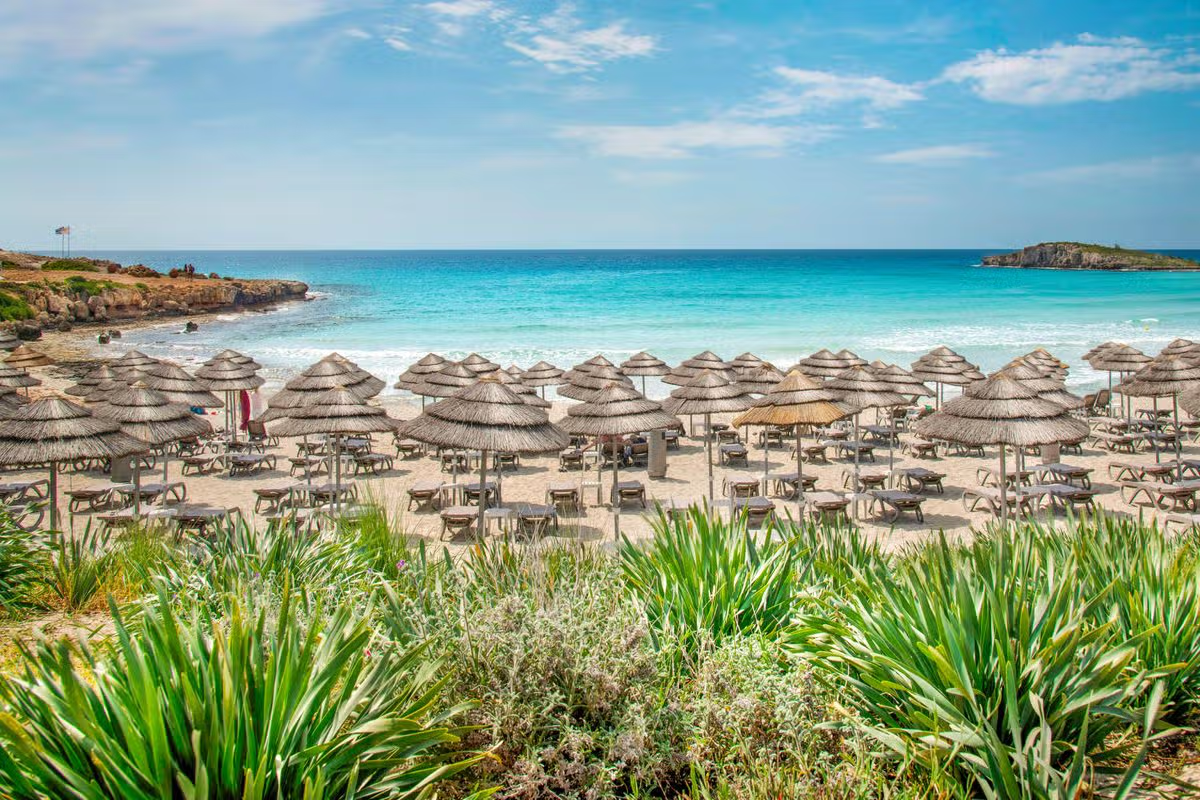
With this in mind, the travel experts at Solmar Villas have looked at average weather patterns across Europe to determine the top 10 destinations for sun between September and November. Topping the list was Ayia Napa in Cyprus, with the beautiful island taking all four top spots, with Limassol and Larnaca in second and third, respectively, and Paphos in fourth.
It is perhaps unsurprising that Cyprus topped the list with an average of just 2.3 wet days per month during autumn, and an average temperature of 24°C to 29°C.
According to Skyscanner, the flight fare can be as little as £31 one-way, and will take around just four and half hours for most UK flyers.
Ayia Napa may be best known for its summer party scene, but in the autumn it begins to quieten down (although there certainly is still some nightlife for those wanting some), and you’ll certainly get a much better price than in party season.
The resort town is full of stunning beaches, from Nissi Beach with its beautiful white sands, and the clear waters of Makronissos Beach.
Taking to TripAdvisor, a September visitor to Nissi Beach wrote: “Nissi Beach is heaven just around the corner! Probably one of the most popular beaches in Cyprus—and for good reason.
“Crystal-clear water, beautiful soft sand, and that creamy, turquoise texture that makes you feel like you’re in paradise. Add the amazing atmosphere and beautiful people, and you have the perfect beach experience.”
While an autumnal visitor to Makronissos commented: “The most beautiful beach, clean, lots of sunbeds, clear warm waters, absolutely amazing. The best beach we found. Lovely atmosphere. Bravo municipality, this beach and its staff do you proud. The sunbed prices are the same on every beach, ten euros for a set, so cheap compared to most places, bravo.”
Brits can get to Zanzibar in around 9 hours – and there’s no jet lagCredit: Alamy
These will take off from London Gatwick Airport and head to Kilimanjaro before heading onto Zanzibar.
The route launches on May 29 and flights will run for the season until October 31 – return flight prices start from £849.
The time difference is small too, currently being two hours ahead of the UK so unlike a lot of far-flung islands, there’s no jet lag.
As for what you’ll find there, Zanzibar is known for having a beautiful coastline with soft sandy beaches.
Some of the best include Kendwa Beach which previously ranked the fourth-best beach in the world and number one in Africa by Big 7 Travel.
Nungwi Beach is perfect for all-day swimming, while Paje and Jambiani are known for their world-class kitesurfing and lagoons.
Stone Town is the older part of the city – and the birthplace of Freddie MercuryCredit: AlamyTUI is starting the very first direct flights to Zanzibar next yearCredit: Alamy
It’s not all coastal, explore the city too – the capital of Zanzibar is Zanzibar City, which is made of two parts, Stone Town and Ng’ambo, which were historically divided by a creek.
The newer portion of the city is known as Ng’ambo, Swahili for ‘the other side’.
Meanwhile, Stone Town is the historic side where you’ll find the Old Fort, Christ Church Cathedral — the oldest church in East Africa, and the Sultan’s Palace.
Stone Town was also the birthplace of Queen frontman, Freddie Mercury.
Zanzibar is also nicknamed Spice Island thanks to its Indian and African influences – if you want to pick some up yourself, head to Darajani Bazaar.
Zanzibar isn’t a particularly expensive place either as, according to Wise, a beer can cost as little as £1 and a meal at an inexpensive restaurant can start from £3.54.
What is it like going on holiday to Zanzibar?
The Sun’s UK Digital Editor Stewart Jackson recently visited– here’s what he thought of Zanzibar…
“The warmth with which I was greeted was genuine and universal — from the barman trying out his own cocktail creations as I chilled out before dinner, to the gardener snipping away at the perfectly manicured foliage framing the spotlessly clean hotel grounds.
“It offers the perfect environment for a relaxing stay which, let’s face it, is exactly what you’re looking for in a five-star tropical resort with breathtaking views over the turquoise waters of the Indian Ocean.
“It is worth exploring the island itself, including a tour of Stone Town, the oldest part of Zanzibar’s capital.
“You will take in atmospheric spice markets, historic landmarks and — perhaps the island’s biggest claim to fame among British visitors — the birthplace of Queen frontman Freddie Mercury.”
Swedish and German forces are conducting what appears to be the first joint rehearsal of their rapid-reinforcement plans for the Baltic island of Gotland. The exercise is another step in Sweden’s defense planning for an island whose position in the middle of the Baltic gives it an outsized strategic importance for controlling access, protecting the Baltic states, and maintaining NATO’s freedom of movement in a region where Russian military activity remains a persistent concern.
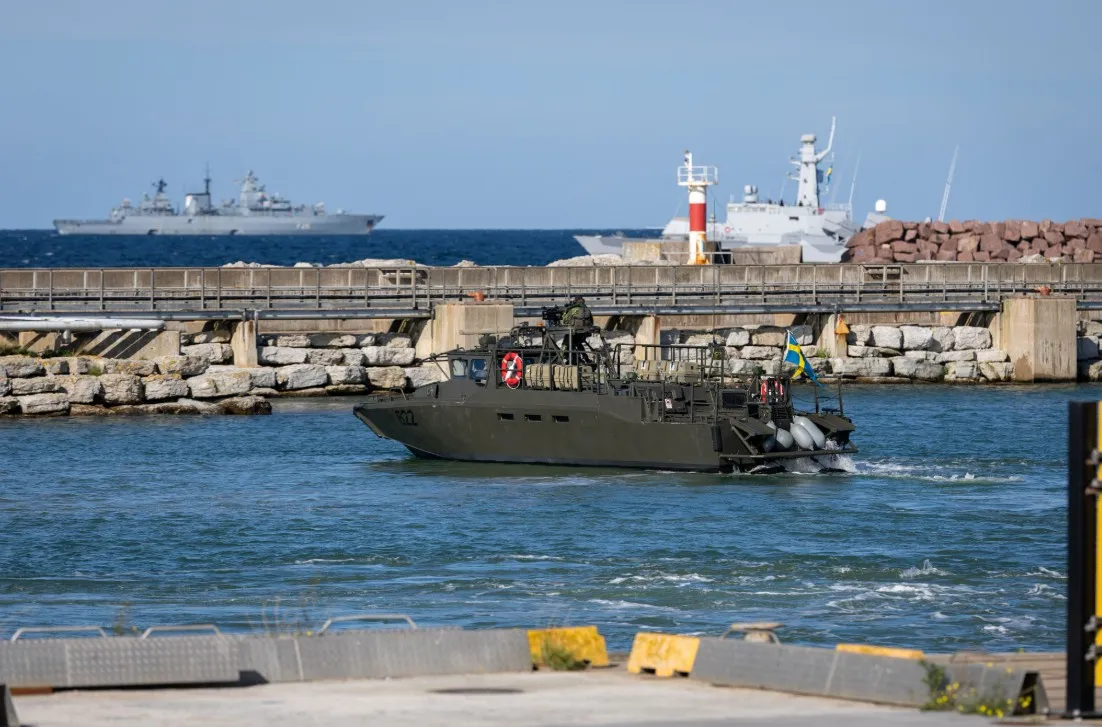
German and Swedish warships stand offshore while a Swedish CB90 fast assault craft operates in the harbor at Visby. Bundeswehr/Marc Tessensohn
The exercise, Silver Wotan 2026, running between September 14-23, brings together Swedish and German forces across the land, maritime, and air domains. The scenario is built around a Swedish request for allied assistance, with German forces moving personnel and equipment across the Baltic before integrating with Swedish units already defending the island. The operation is testing the entire process of getting allied combat power to Gotland, protecting it during the movement to Visby, and rapidly incorporating it into the island’s existing defensive network.
A video shows troops coming ashore on Swedish CB90 fast assault craft, a type that German soldiers are also trained to operate:
A rapid deployment of German and Swedish forces to Gotland island is being carried out today. Units from 🇸🇪 and 🇩🇪 are rehearsing the swift reinforcement of the strategic island in order to ensure the security of the Baltic Sea.#SilverWotan#NATOpic.twitter.com/A0r3LF8XUP
The strategic importance of Gotland has grown considerably following Sweden’s accession to NATO in March 2024, which was a direct response to the full-scale Russian invasion of Ukraine.
Located approximately halfway between mainland Sweden and the Baltic states, the island occupies a central position in the Baltic Sea, close to the maritime approaches to the Gulf of Finland and within reach of the Russian exclave of Kaliningrad. Its location gives forces operating from Gotland a potentially significant position from which to conduct surveillance, air defense, and maritime operations, while also making the island an important part of the wider network connecting NATO’s northern and eastern members.
The location of Gotland within the Baltic region. Google Earth
At the same time, Gotland sits within an extremely complex littoral environment, where shallow waters, islands, narrow maritime approaches, and the proximity of multiple states can make both offensive operations and defensive planning more difficult. The region has also been shaped by longstanding Swedish concerns about Russian clandestine activity, including intelligence gathering and other forms of covert or deniable activity. The complexity of the Baltic operating environment can make such activities harder to detect and attribute, adding another layer of uncertainty alongside the more conventional military challenges facing the region.
The unloading operation in Visby. The vehicles seen here were transported by sea from Karlskrona to the Swedish mainland. Bundeswehr/Marc Tessensohn
Geography has long made Gotland important to Swedish defense planning, but its significance has taken on a broader dimension since Sweden joined the alliance. NATO has described the island as strategically important to its freedom of maneuver in the Baltic, while Swedish officials have highlighted its potential role as a hub for military operations and logistics in the region.
The current exercise is designed around the practical difficulties of reinforcing such a position.
Military equipment is being transported by sea to Visby, Gotland’s principal port, including by commercial ferry. In Visby, Swedish and German personnel are securing the harbor and conducting the reception of the arriving force. Among the equipment being moved are air defense systems, while Swedish forces are also operating coastal defense systems armed with anti-ship missiles.
German Army vehicles roll into Visby during Silver Wotan. Bundeswehr/Marc Tessensohn
Meanwhile, publicly available flight-tracking data showed German Luftwaffe transport aircraft, including at least one Airbus A400M airlifter, apparently involved in the effort. The commercial airport at Visby has long also been used for military activities related to Gotland and the wider Baltic region.
The movement is supported by Swedish and German naval forces and other aircraft, creating a scenario in which the maritime transit, protection of the port, air operations, and subsequent movement of troops and equipment ashore all form part of the same military problem. Once ashore, the arriving forces have to be moved into position and integrated with Swedish units already responsible for defending the island.
The Swedish Gotland Regiment, P 18, provides the core of the island’s permanent military presence. The regiment, Sweden’s youngest and smallest, has been rebuilding its capabilities since Sweden began expanding its military presence on Gotland. Its forces form the basis of the ground-defense structure into which allied reinforcements would be incorporated.
Soldiers of the Gotland Regiment of the Swedish Army camouflage an armoured vehicle during an earlier field exercise near Visby. Photo by Jonathan NACKSTRAND / AFP
Swedish coastal defense capabilities are another important element of the drill. Land-based anti-ship missiles provide the island with a means of threatening hostile surface vessels operating in the surrounding waters, giving the defense of Gotland a direct connection to the wider maritime battle for the Baltic. During Silver Wotan, Swedish and German forces are also conducting anti-surface warfare activities alongside the broader reinforcement operation.
Germany is contributing more than 500 troops to the exercise, part of approximately 2,000 Bundeswehr personnel involved, including elements from the army, navy, and air force. The German Luftwaffe has deployed Panavia Tornado aircraft for surveillance, while German naval forces are participating in the maritime component, and German ground personnel are involved in the reinforcement and security activities on Gotland.
Stock photo of a Luftwaffe Tornado ECR equipped for a reconaissance mission. Bundeswehr
The exercise scenario is particularly relevant against the backdrop of Russia’s continuing military presence in the Baltic region.
Russia maintains major military infrastructure in Kaliningrad, including naval, air, missile, and air defense capabilities, while the Russian Baltic Fleet operates from bases in the region. Kaliningrad’s position between Poland and Lithuania gives Moscow a significant military foothold inside the NATO area, while Russian forces and military infrastructure elsewhere along the Baltic add to the complexity of operating and reinforcing allied territory in the region.
The security environment around the Baltic has also deteriorated considerably since Russia’s full-scale invasion of Ukraine. NATO has increased its surveillance and military activity in the region, including the launch of Baltic Sentry in January 2025 following a series of incidents involving critical undersea infrastructure. The alliance has subsequently expanded efforts to monitor maritime activity and protect infrastructure and sea lines of communication.
A Swedish Navy Helicopter 15 on the flight deck of patrol ship HMS Carlskrona as part of the NATO Baltic Sea patrol mission, Baltic Sentry, aimed to secure critical underwater infrastructure. Photo by Johan NILSSON / TT NEWS AGENCY / AFP
Swedish authorities have stressed that Silver Wotan was planned in advance and is not being conducted in response to a specific imminent Russian threat. The exercise nonetheless reflects the operational environment in which Swedish and NATO planners now have to consider the possibility that maritime and air movements across the Baltic could be monitored, disrupted, or contested.
The exercise also builds on a series of increasingly large Swedish-led activities designed to test the reception of allied forces on Swedish territory. During Aurora 26 earlier this year, more than 18,000 troops from 13 countries participated in operations across Sweden, including the deployment of allied forces to Gotland alongside the Gotland Regiment and Swedish Home Guard. NATO described that activity as an emergency deployment intended to test the reinforcement of the island.
A Dutch AH-64 Apache attack helicopter takes part in Exercise Aurora 26 in southern Sweden on April 29, 2026. Photo by Johan NILSSON / various sources / AFP
Silver Wotan places a more concentrated emphasis on the Swedish-German relationship and on the movement of an allied force into the island’s existing defensive structure.
Germany’s participation is also consistent with its growing military role in the Baltic and along NATO’s northeastern flank. Berlin is already providing forces for NATO’s forward defense in Lithuania and has increasingly emphasized the ability to move German forces rapidly across northern Europe in support of allied operations.
For Sweden, meanwhile, Gotland has become one of the clearest examples of how NATO membership has changed the country’s defense planning. The island remains a Swedish responsibility, but its location means that what happens there has consequences well beyond Sweden’s territorial defense.
German and Swedish troops on a Swedish CB90 fast assault craft. Bundeswehr/Marc Tessensohn
A defended and adequately supplied Gotland provides NATO with a strategically positioned base for surveillance and defensive operations in the Baltic, while the ability to reinforce it demonstrates that the alliance can maintain access to the island even as the surrounding maritime and air environment becomes more contested.
The exercise comes as European allies are being forced to plan for a NATO in which the United States may provide less of the conventional military weight it has supplied for decades. The Pentagon is reviewing the size and posture of U.S. forces in Europe, including the forces and capabilities Washington would make available in a European crisis, while NATO’s top commander has said further U.S. troop withdrawals should be expected as European allies build up their own conventional capabilities.
A German and a Swedish soldier involved in securing Visby during Silver Wotan 2026. Bundeswehr/Marc Tessensohn
At the same time, the alliance now describes Russia as its most significant and direct security threat, citing military activity alongside airspace violations, sabotage, cyber operations, and other forms of hybrid pressure. There are also growing concerns that Russia could try something in the Baltics, while it continues to step up its gray-zone activities regardless. NATO officials have warned that Russia could rebuild enough military capacity to pose a more serious conventional challenge to the alliance before the end of the decade.
There are escalating warnings from Poland that Russia is preparing to widen its war against Ukraine, with “accidental” missile and drone strikes on NATO territory.
Such a move – Russia falsely claiming air strikes that hit NATO allies happened by accident – would be designed to…
For Sweden and Germany, the Silver Wotan exercise is a practical test of how quickly European forces can reinforce and defend one of the Baltic’s most strategically important positions. As the security environment grows more contested and Europe prepares for a future in which U.S. forces may not be as readily available, the ability to move allied combat power across the region and integrate it into existing defenses is becoming an increasingly important part of NATO’s deterrence.
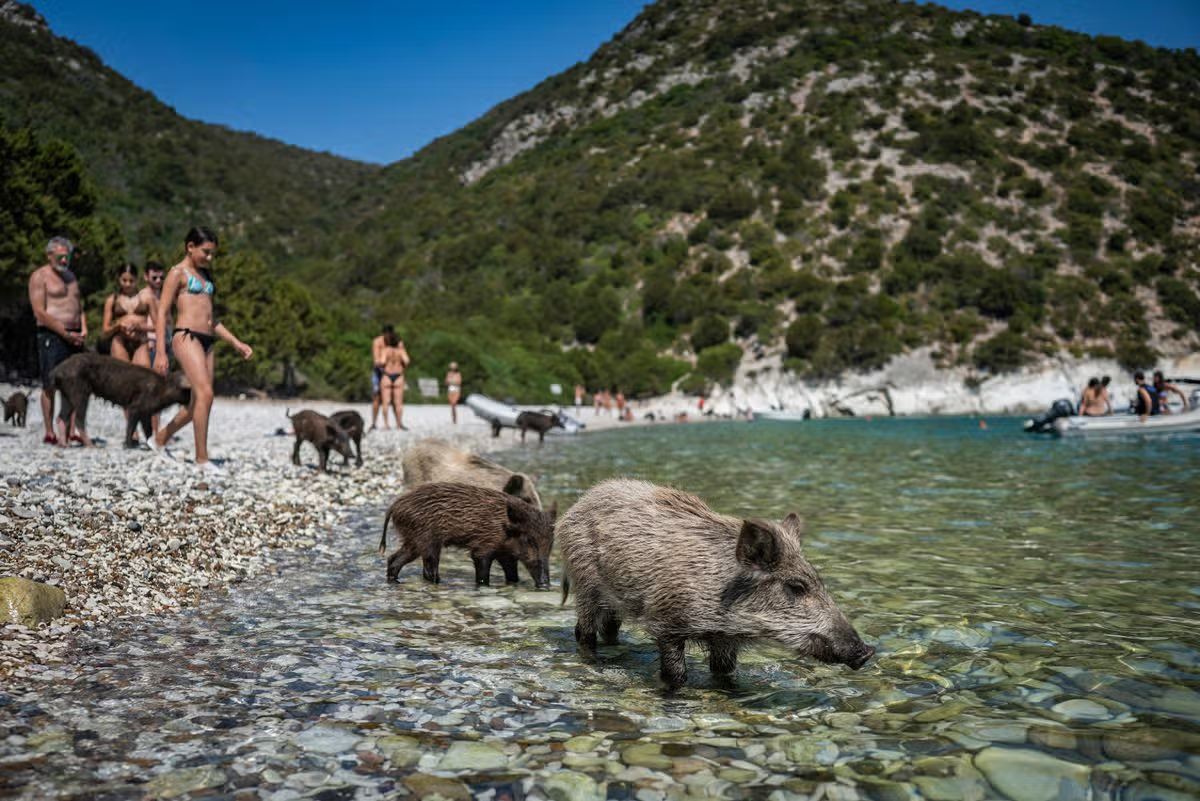
Atokos is a tiny island near Lefkada in the Ionian Sea, off the coast of Acarnania. It is one of the most westerly and remotest of the Echinades Islands, home to no one but a colony of pigs
No one lives on Atokos, except the pigs(Image: AFP via Getty Images)
Pig Beach is an irresistible place. It’s a place where a family of adorable hogs, as pink as a Brit at the end of a long summer holiday, trot around on the sand, run through the shallows and piggy-paddle in the waves.
It’s not clear exactly how the colony of oinkers made it to their Bahaman paradise home. Some say the pigs were dropped off by a group of sailors who wanted to come back and cook them, only to get diverted, leaving the pigs to survive on excess food dumped from passing ships. Another tale suggests the pigs were survivors of a shipwreck, while a third argues that they were placed there as a cynical ploy to attract tourists.
If the final explanation is true, then fair play to the inspired swine herder responsible. The Bahamas’ swimming pigs are one of the most popular tourist attractions in the whole region, attracting thousands of porcine enthusiasts into the shallows each year. Pig Beach has about 20 individual piggies and a cast of piglets that varies in size each year, but other islands, including Eleuthera, Rose, Abaco, and Ship Channel Cay, have also gotten in on the action in recent years.
Charmed by the idea of splashing around in the warm waves with a lovely little swine, when I heard that Europe has its very own version of Pig Island, and that it was a short sail away from where I’d be exploring, I couldn’t resist.
Do you have a travel story to share? Email webtravel@reachplc.com
Atokos is a tiny island near Lefkada in the Ionian Sea, off the coast of Acarnania. It is one of the most westerly and remotest of the Echinades Islands. No one lives on Atokos, not even its shipping magnate owner, Panayiotis Tsako. But it attracts a handful of brave yachtspeople who are allowed to anchor in the shallows.
My friends and I found ourselves in their number on a hot May day, jumping into the water and swimming onto the beach, wetsuit shoes providing crucial protection against the burning-hot pebbles. We’d expected to be met by a group of friendly pigs splashing around in the shallows, but the beach was empty. Of both pigs and people.
Assuming that the hogs were sheltering in the woods at the top of the beach, we walked in, finding them ringing with loud cicadas as we wandered down a path. At the bottom was a single two-storey house, which appeared habitable enough despite its doors being locked and its windows boarded up. Not a pig in sight.
We wandered back towards the beach down winding paths thick with pinecones and sticks, swiping away the thick spider webs that stretched between the trees. Despite the intense Greek sunshine and glistening blue water, the place had a spooky atmosphere, intensified by the empty chapel rising above the sand. I’d read it was well looked after by a visiting janitor, but it looked dusty and unloved. I flicked a large spider off my shoulder.
And then the pigs arrived.
Just as we’d resigned ourselves to returning to the boat light of a soul-cleansing frolick with the promised porsine inhabitants, guess who came snuffling out of the woods? Not a sweet piggy, but a hog. A big, hairy, grunting hog. I’m not an expert, but I’d put a 50/50 wager on it being a wild boar.
The pig wandered towards us, stopping about a metre away. He looked at us, and we looked back. Then out of the woods came three more pigs, seemingly a mum and two piglets. They joined the bigger, dad-looking pig.
There was something about the biggest pig’s tusks and the way it was looking at our now shivering, unprotected but for swimming trunks bodies, that made us feel nervous. These piggies didn’t look amenable to a quick pic.
Suddenly, the big pig roared and lurched forward towards us. I don’t know whether we’d strayed too close to his family, looked at him the wrong way, or stayed too long on the creepy island, but the noise was far from an Instagram-reel-friendly oink. To our shame, we ran. We ran all the way into the sea, powering through the shallows before launching ourselves into a swim. It was only once back to our boat that we risked a look back towards the Atokos and its inhospitable pig masters. There they stood, looking out across the water, unfriendly stares boring into us.
Yemen’s Houthis have seized the strategic Mayun Island (also known as Perim Island) as they cement control over the Bab al-Mandeb Strait. The rebels also now control millions of dollars worth of seized US-made military hardware.
Croatian authorities have issued an emergency alert as a wildfire rages on Brac Island, off the Dalmatian coast. Strong winds have hampered efforts to stop the blaze near the island village of Milna.
Travelzoo members can unlock super cheap holidays in the UK. Europe and beyondCredit: Getty
Sign up to Travelzoo for £1 (30 day trial)
Travelzoo is a money-saving club where members can bag super cheap holiday deals both abroad and in the UK.
We’ve found UK breaks from £89pp, Portugal holidays from £127pp, and even an incredible 11-night River Nile cruise and hotel package for £549pp.
Sign up for the Travel newsletter
Thank you!
Plus there’s extra benefits for members like free airport lounge access if your flight is delayed, so you can enjoy free food and drink and have somewhere comfy to sit.
Here’s some of the best bargains members can grab, which include a luxurious Italian island stay and an all inclusive break to the Canaries.
Bag a two night stay in Amsterdam for £137ppCredit: Getty
Tick off an Amsterdam city break with this two night stay in the Dutch capital.
The deal includes return flights plus a stay at the Chasse Boutique Hotel, which puts you within walking distance of the sprawling Vondelpark, Amsterdam‘s largest park.
You’re also close to Foodhallen, where you can grab lunch from 20 different street food stalls including gourmet hot dogs and tasty dim sum.
A 10-minute bike ride will take you to Jordaan, a pretty, narrow street neighbourhood packed with boutique shops and canalside cafes.
Sign up to Travelzoo for £1 (30 day trial)
11 Night Nile cruise & beach stay – £549pp
Stop off at the Avenue Of The Sphinxes on your Nile cruiseCredit: Getty
If you tot up your flights, cruise, hotel, plus food and drink for this stay, it works out to less than £50pp per night – which is incredible value for a River Nile break.
This package combines an all inclusive four night stay at the Royal Lagoons Resort with a seven night MS Royal Adventure Cruise, with all of your transfers and meals included.
The Royal Lagoons Resort & Aqua Park is a spectacular hotel in Hurghada with four pools, its own waterpark, a spa and a private beach.
And the scenic Nile cruise itself has stops at places like Luxor, home to the Avenue of Sphinxes, and Edfu, a collection of temples covered in hieroglyphics.
Sign up to Travelzoo for £1 (30 day trial)
Porto – £127pp
Book a stay in Porto for three nights for £127pp with this Travelzoo dealCredit: Getty
Enjoy three nights in a swanky hotel plus return flights to Porto for £127pp with this bargain city break deal.
Swap the grey UK weather for Porto‘s sun-drenched cobbled streets, where riverside wine bars offer glasses of Vino Verde for as little as €3.
The package includes a stay at the HF Tuela Porto, which is close to the pretty Palacio de Cristal gardens, where you’ll find manicured gardens, fountains and wandering peacocks.
Plus the flexibility of Travelzoo deals means you can travel as soon as next weekend, or book ahead for next year.
Sign up to Travelzoo for £1 (30 day trial)
Italian island escape – £499pp
Visit the island of Ischia for its pretty pastel buildings and bubbling hot springsCredit: Getty
If you fancy visiting an Italian island with postcard-perfect, colourful towns, lush landscaped and even bubbling hot springs, look no further than Ischia.
This deal includes flights. transfers, and a five night, half board stay at the Hotel La Pergola & Villa Flavio Thermal Resort.
You’ll receive a cheeky welcome drink on arrival, before checking into the traditional, coral-coloured hotel and taking a dip in its hot spring baths.
You even get a half-day tour in Lacco Amen, an elegant coastal town, plus a Limoncello tasting session.
Sign up to Travelzoo for £1 (30 day trial)
Scandinavian tour – £499pp
Soak up the colourful houses of Copenhagen on this Scandinavian three country breakCredit: Getty
Visit Sweden, Norway and Denmark on this combined Scandinavian sightseeing trip.
You’ll start by flying to Copenhagen, where you’ll spend two nights at the stylish Copenhagen Island hotel, where you can head out to explore the pastel-coloured houses that line the waterfront.
Next you’ll hop on an overnight cruise from Copenhagen to Oslo, before spending two nights at the Scandic Helsfyr hotel.
Spend your days here taking in the views of the city from the rooftop of the striking Oslo Opera House, or tour the medieval Akershus Fortress for a dose of history.
Then you’ll hop on a short flight from Oslo to Stockholm, where you’ll stay at the boujee Hotel Gio, BW Signature Collection hotel, a 10-minute walk from the royal Haga Park and the massive Brunnsviken Lake.
After enjoying a Stockholm archipelago cruise tour with a hot drink, you’ll be headed back to the UK having ticked off three countries.
Sign up to Travelzoo for £1 (30 day trial)
Tenerife – £499pp
This £1 travel club unlocks SERIOUSLY cheap holiday deals abroad from £137Credit: Travelzoo
This deal bags you flights plus an all inclusive seven night stay in Puerto de la Cruz, with airport transfers included.
Stay in the four-star Fergus Puerto de la Cruz, a hotel surrounded by suptropical gardens that feels like an island oasis.
The hotel sits on a hilltop overlooking the coastal town, plus there’s three outdoor pools to pick from with fantastic volcanic views.
Your all inclusive break includes a huge buffest restaurant with live show cooking stations, plus plenty of bars to grab a drink, including the lounge bar which comes alive in the evenings with live entertainment.
Voters in two US states — New Hampshire and Rhode Island — will head to the polls this week to select Democratic and Republican candidates for this November’s United States midterm elections.
In what’s been a campaign season full of unexpected twists and turns, from the continued growth of the Democrats’ progressive arm to mixed results for President Donald Trump-endorsed Republican candidates, the contests mark some of the last primaries before the US makes a final determination on which party will control both chambers of the US Congress.
Recommended Stories
list of 3 itemsend of list
Before that happens, candidates in some of these New England states’ most notable races will have to contend with some of this midterm’s biggest themes: How much Republicans should align with Trump, and whether a Democratic incumbent can fight off a primary challenger.
Here are the races to watch:
US Representative Chris Pappas of New Hampshire announces his bid to succeed retiring US Senator Jeanne Shaheen, a fellow Democrat, in Manchester, New Hampshire, the US [File: Robert F. Bukaty/AP Photo]
In New Hampshire, a battle to replace a retiring senator
When does voting in New Hampshire start? Opening times for polling locations vary across the state, but all polls must open on Tuesday, September 8 by 11am (15:00 GMT).
When does voting in New Hampshire end? Closing times also vary, but state law stipulates polls cannot close earlier than 7pm (23:00 GMT).
The most notable race in New Hampshire will determine the two candidates who will face off to replace outgoing Democratic Senator Jeanne Shaheen.
US Representative Chris Pappas has emerged as the frontrunner to win the Democratic nomination. On the Republican side, John Sununu holds the benefit of strong name recognition from being a part of the state’s most prominent political dynasty.
Democrats have hoped to retain this seat, a critical must-keep as they look to take back the US Senate currently controlled by Republicans. But recent polling of likely voters conducted by Senate Republicans’ campaign arm shows Sununu leading Pappas by one point. The survey, conducted in the final days of August, found nearly one in four voters are undecided.
However, both candidates, if they win their primaries on Tuesday, may have to confront actions by their party’s top figures, who could complicate their campaigns.
In the Democratic primary, Pappas remains the favourite, but his lead has dropped by double digits, according to some polls.
Pappas’s closest opponent is democratic socialist Karishma Manzur, who has picked up support, in part, over her calls to “end US complicity in the genocide of Palestinians”. While Pappas has stressed the importance of the current US-Israel relationship, the congressman has also said he supports a two-state solution and “increasing” aid to Gaza.
Manzur has criticised Pappas for connections to political donors, including those connected to Israel.
Former US Vice President Kamala Harris endorsed Pappas last week. Harris’s support, which Pappas said he was “proud” to receive, could help him across the finish line in the state’s Democratic primary, where most of the party’s voters lean more moderate. Pappas has served in the US House since 2019 and has held elected office almost continuously since graduating from college in 2002. He defeated Karoline Leavitt in his 2022 reelection bid before her stint as Trump’s White House press secretary.
In the Republican primary, Sununu is running to recapture the Senate seat he once held before being defeated by Shaheen in 2008. He faces Scott Brown, also a former senator who once held Massachusetts US Senator Elizabeth Warren’s seat, along with seven other opponents.
Sununu has been trying to put distance between himself and Trump. Trump is, however, backing Sununu over Brown in the primary, despite an ongoing war of words he’s had with Sununu’s family over the years — Sununu’s father and brother have both served as governor, and all have been critical of Trump.
Brown won a special election in Massachusetts after the death of Senator Ted Kennedy in 2009, lost his seat three years later, and unsuccessfully challenged Shaheen in 2014. In Trump’s first administration, Brown served as the US Ambassador to New Zealand and Samoa.
Rhode Island Governor Dan McKee speaks at the local Democratic Party headquarters in Johnston, Rhode Island, the US [File: David Goldman/AP Photo]
In Rhode Island, can an unpopular sitting Democratic governor fight off a challenge?
When does voting in Rhode Island start? With the exception of one town, voting starts on Wednesday, September 9 at 7am (11:00 GMT).
When does voting in Rhode Island end? Polls close at 8pm on Wednesday (00:00 GMT on Thursday).
Unlike other states this election cycle, the biggest race in Rhode Island is for governor, not for seats in the US Congress.
Vulnerable Democratic Governor Dan McKee is fighting off a strong primary challenge from pharmacy executive Helena Foulkes.
The highly unpopular incumbent has trailed Foulkes, whose grandfather and uncle were both lawmakers in the neighbouring US state of Connecticut, by as much as 38 points, according to a recent poll. Foulkes has also outraised McKee.
This race is a rematch of a bitter, hard-fought primary four years ago, when McKee, who had been elevated to governor when his predecessor became former US President Joe Biden’s commerce secretary, narrowly beat Foulkes in a crowded race.
While most of this year’s competitive midterm primaries have centred on ideological or generational differences, the outcome of this race could come down to complaints about a freeway bridge in Providence, the state’s largest city, that was partially closed in 2023 due to safety issues.
The resulting congestion and economic fallout caused by the closure have fuelled strong voter resentment towards McKee, one of the most endangered elected Democrats this cycle. Should McKee be unsuccessful in warding off Foulkes, he would become the first sitting US governor to lose a primary in eight years.
In the Republican primary, Aaron Guckian and Elaine Pelino are vying for the nomination. Guckian is a state trade association executive and was the nominee for lieutenant governor in 2022. He won the two-way primary that year with about 68 percent of the vote. Pelino is a former actress and first-time candidate. The state’s Republican Party has endorsed Guckian.
It’s been 20 years since Rhode Island elected a Republican governor.
I NEVER ever thought I’d be into geology – but after a week on a nature reserve in Tenerife, I’m officially an earth geek.
Admittedly, the ice-cold margaritas served inside the tranquil oasis of Barcelo Tenerife oiled my educational rediscovery of the island’s natural wonders, but now I am well and truly hooked.
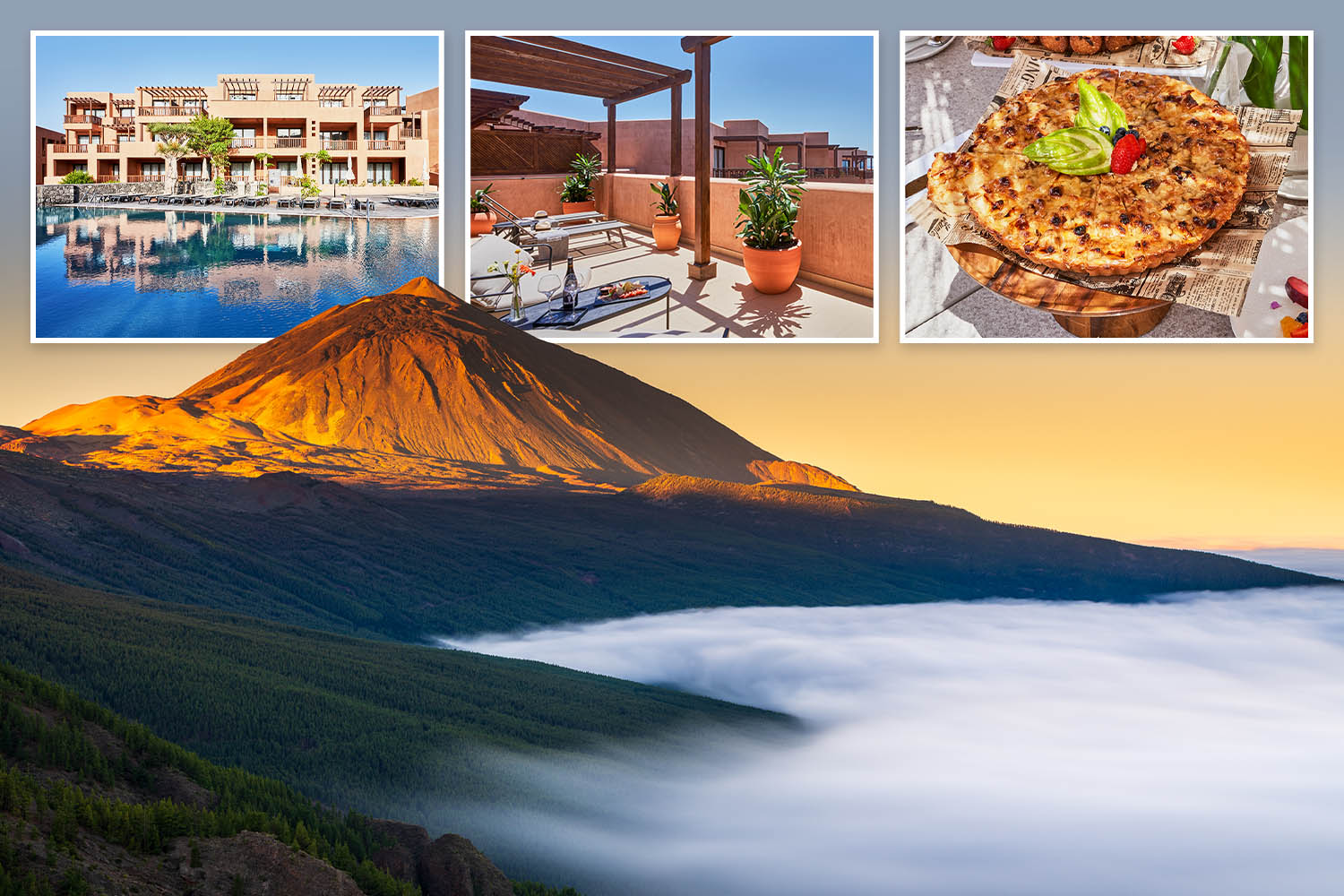
Mount Teide volcano erupted millions of years agoCredit: GettyKick back and relax on the hotel terraceCredit: Manolo Yllera
My last memory of visiting Tenerife, the largest of the Canary Islands, was marred by an over-excited, elderly sailor who threatened to throw my beloved teddy bear into the path of an approaching pod of pilot whales when I was only eight years old.
But after touching down 31 years later, I rediscovered my love for it.
Sign up for the Travel newsletter
Thank you!
The Barcelo Tenerife, my home for the trip, is set within 124 acres of almost untouched land in the San Blas Environmental Reserve — and it fully takes advantage of its rural surroundings.
It’s not just the decor that sets the tone for rustic Tenerife — guests at the resort can book a guided tour through the reserve that will showcase the best of Tenerife’s wild scenery.
During my two-hour or so trek through the fascinating landscapes, I touched stone formed by molten lava as well as compressed volcanic ash, a type of rock that created the foundations of the island after the (still active) Mount Teide volcano erupted millions of years ago.
It was one of the best experiences I’ve had — and reminded me that this gorgeous island offers so much more than just sun-drenched beaches and cocktails by the pool.
Make sure to try and catch a look at Teide on your flight in — the mountain top peeps out above the clouds.
While it is still active, the last eruption happened in 1909 and there’s nothing to suggest it’s going to happen again in the next 100 years or so, so visitors need not panic.
The Sun’s Ellie crosses a lake on a pulley boatCredit: UnknownEnjoy some paddle board fun in the hotel pool
When it comes to history, the mighty volcano isn’t all the island has to boast about, though.
Travellers visiting the San Blas Environmental Reserve can observe the archaeological remains of the Guanches, an indigenous community who first inhabited the islands.
Fans of The Lord Of The Rings will also recognise many of the rocky pastures as sets from the show.
It’s well worth exploring this striking landscape — if you can tear yourself away from the seven luxurious swimming pools at the hotel.
The Barcelo Tenerife manages to exude luxury without stomping on thousands of years of history — as the incredible scenery has been incorporated into the hotel’s earthy design.
The beauty of the land is seen in every inch of the hotel, from the terracotta plant pots on the terraces to its clay-coloured buildings.
Barcelo Tenerife also prides itself on its eco-friendly ethos, with sustainability built in, not tacked on — and walking through the building, you feel immersed in the natural environment.
Along with solar powerenergy, the hotel relies on energy-efficient lighting and ethical food supplies.
Enjoy a break at the blissful Barcelo Tenerife hotelCredit: M CollectiveIt’s foodie heaven at Barcelo TenerifeCredit: Manolo Yllera
And with a 500,000-square-metre nature reserve on your doorstep, you could walk a different route every day and still feel like you have explored more of Tenerife than anyone else.
The food options include an impressive and tasty buffet for breakfast, while fine-dining restaurant La Dolce Vita Trattoria brings a taste of Italy while using superb Spanish produce.
Creamy burrata served with locally-reared beef carpaccio was a highlight, as was a tasting menu inside the Arrozante Restaurant — where I had a truly wonderful paella.
The hotel is a five-star — and worth it — but if you fancy spending a little more, upgrading to the Royal Level is worth saving your cash for.
A private pool and access to a premium bar and restaurant give you a chance to live the high life without breaking the bank too much (from just £160 per night).
Rooms have a slightly more elevated feel to them, too, with chic, sandy-toned furnishings inspired by the nature reserve and fabulous views of the ocean.
But the hotel is so well proportioned and the nature reserve so vast, I don’t think you could ever feel cramped, even during the high season.
Now is the best time to visit, too, with the weather in the UK finally taking a rather more drizzly turn, announcing the official arrival of autumn.
San Blas Environmental ReserveCredit: Alamy
GO: TENERIFE
GETTING THERE: Ryanair flies from London Southend to Tenerife from £50 return. See ryanair.com.
STAYING THERE: Rooms at the Barcelo Tenerife hotel cost from £139 per night based on two people sharing on a B&B basis.
Royal Level rooms at the Barcelo Tenerife are from £160 per night based on two people sharing and including breakfast. See barcelo.com.
In Tenerife, by contrast, temperatures tend to stay balmy throughout this time of year — with highs of 26C in October perfect for both sunbathing and exploring the island — and even into winter.
My helpful hotel guide informed me that Tenerife has only had five days of rain in the last four years, so the sunshine is pretty much guaranteed.
It’s a go-to destination for winter sun and I, for one, am sold.
See you again in November, Tenerife — and this time, I’ll be bringing along my walking boots.
THE best hotels in the world have been revealed from luxury resorts to former celebrity escapes in LA.
Two that are in the UK have also made the cut – one in London and the other in Scotland.
The World Best Hotels have been named – including San Pietro di Positano in ItalyCredit: UnknownThe Beverly Hills Hotel is another in the top 100Credit: bevhillshotel / instagram
The list has been drafted by The World’s 50 Best who have released the best hotels from 51-100.
If you want to know The World’s 50 Best Hotels from 1-50, these will be revealed on September 15.
Inside the Junior Suite is a marble bathroom with a tub and walk-in shower and a personal bar.
The hotel currently offers an immersive afternoon tea inspired by the works of Claude Monet.
It has its own Pie Room as well which as it suggests in the name is dedicated to pie making – guests can book private dining or even give it a go themselves in a pie masterclass.
The Scarfes Bar has a Heroes and Villains-style cocktail menu with specially curated drinks with names like Diva and Foul Play.
When the sun shines, spritzes and Italian pizzas can be enjoyed on the Mediterranean terrace.
The other UK entry comes in 100th position and it’s Gleneagles in Auchterarder, Scotland.
Hotel das Cataratas is the only luxury resort next to Iguazu FallsCredit: Alamy Stock Photo
The 232-room hotel boasts 10 restaurants and bars ranging from fine dining to casual spots like The Chicken Coop and organised picnics.
It has luxurious bedrooms and suites with a “mix of homeliness and glamour.”
Outdoorsy guests can make the most of the activities, with everything from falconry and archery to horse riding and off-road driving available.
It’s known as one of the best places to golf too with three of the top courses in Scotland.
Plenty of other impressive hotels made the list too – some of the most beautiful include Il San Pietro di Positano.
The beautiful five-star hotel in Italy is literally carved into the cliffside.
It even has its own lift which guests can take down to the private beach, there’s also a tennis court by the water.
For swimming, there’s a beautiful pool with a sun terrace looking over the sea.
Gleneagles in Scotland is surrounded by sprawling golf coursesCredit: Michael SchofieldThe Rosewood in Covent Garden is another of the world’s bestCredit: Unknown
The Beverly Hills Hotel is a Hollywood classic that featured on the cover of the Eagles album, Hotel California.
Found on Sunset Boulevard, the famous hotel is as LA as it gets – surrounded by palm trees with Barbiepink accents and even its own red carpet.
Rooms range from Hollywood glamour-style Superior Rooms to restored bungalows – one of which was a favourite of frequent guest, Marilyn Monroe.
There are over 100 Four Seasons hotels across the world and two have made the list.
The one in Hong Kong boasts views across the skyline and Victoria Harbour from a rooftop infinity pool.
It has three fine-dining restaurants and plenty of luxury touches.
The second Four Seasons on the list is in La Manzanilla and it’s super luxurious reachable only by private plane or boat.
It has beachfront casitas and hillside villas with regular sightings of humpback whales, dolphins and sea turtles from private plunge pools.
The Italian hotel in Positano has a unique sea front tennis courtCredit: ilsanpietrodipositano / instagram The Four Seasons in Hong Kong has an infinity pool with skyline viewsCredit: Seet, Ken
Another private resort to make it onto the list is Soneva Fushi in the Maldives.
It’s found on an island called Kunfunadhoo in the Baa Atoll with huge villas, open-air bathrooms with plenty of experiences all arranged by a barefoot butler – shoes aren’t a thing here.
Hotel das Cataratas is the only luxury resort situated inside Brazil’s Iguazu National Park right next to Iguassu Falls.
Guests even get special entry to the waterfalls before the park opens and after it closes to visitors.
It also has a huge outdoor swimming pool, tennis court and spa.
The list of the World’s Best Hotels…
Here is the list of the World’s Best Hotels – from 51-100…
Love Island host Maya Jama’s mysterious role in the Gentlemen season two has been revealed.
Hayley Anderson Screen Time TV Reporter
11:28, 03 Sep 2026
Netflix releases The Gentlemen season 2 trailer
Love Island icon Maya Jama has made her debut in The Gentlemen season two on Netflix.
A number of new faces are being welcomed into the fold of Netflix’s epic crime drama The Gentlemen season two, including Downton Abbey star Hugh Bonneville.
But someone who subscribers may not have been expecting to see in the eight-part second outing is Love Island presenter Maya Jama as it marks her first major scripted TV debut.
The only other acting experience that the 32-year-old has had was in a breif cameo role for Katherine Ryan’s The Duchess on Netflix six years ago.
With The Gentlemen season two now ready to binge-watch, fans are eager to find out all there is to know about Maya Jama’s role.
When does Maya Jama appear in The Gentlemen season 2?
It isn’t long before Maya Jama pops up on our screens as she features in the first episode of The Gentlemen season two.
She is mostly seen speaking to Kaya Scodelario’s Susie Glass but shows up once again in episode four.
Maya Jama’s The Gentlemen season 2 role explained
Maya Jama portrays a character named Aisha in the second season of The Gentlemen on Netflix.
She plays the wife of one of Eddie Horniman’s (played by Theo James) criminal associates, Prince Amir bin Abdullah al-Hadidi, brought to life by actor Amra Mallassi, reports the Express.
Susie Glass (Kaya Scodelario) describes her as a “clever girl” and “aspirational”, saying: “Looks after herself and everyone who comes within her orbit. She moved out to the Middle East five years ago to work in hospitality. Now she’s snagged herself a seat at the royal table.”
Talking about her experience shooting The Gentlemen, Jama described creator Guy Ritchie as “very personable” to Variety.
She continued: “He’s really kind and nice. He doesn’t feel as intimidating as you’d think, being who he is. He’s very personable and he would be like, ‘Yeah, you’re doing well’, and reassure me, which was really nice.
“He’s just really involved and kind of a genius to watch, because everyone’s practising their lines and then he says something that’s way better than the original. You just feel like you’re in the presence of greatness.”
The Paps of Jura disappear into the mist as I pedal along the shores of Loch Indaal, and the rain cloud I’ve been racing finally catches up. I stash my hire bike at Port Charlotte youth hostel, quickly change and make it to Lochindaal Seafood Kitchen just before the downpour.
I’m soon warmed, by the welcome then by a bowl of creamy fish chowder. “We’ve plenty of fresh seafood just in,” is all the temptation I need to order the seafood plate. It’s a bowl for one, but a hungry one, and soon I’m picking and cracking my way through piles of fat langoustines and crab claws, with hot whisky-butter scallops and plenty of bread and butter.
The island of Islay, off the west coast of Scotland, is far better known for its drinks than its food. With 10, soon to be 11, working whisky distilleries, Islay is synonymous with rich, heavily peated single malts. But, over several days cycling around the island, I find that whisky does much more than fill warehouses and attract tourists. It is helping to support an island where agriculture, fishing and hospitality have long struggled to provide year-round employment.
Lunch at Lochindaal Seafood Kitchen. Photograph: Ailsa Sheldon
At Bruichladdich, one of Islay’s smallest distilleries but the largest private employer, that begins with the barley. When the distillery was bought by a pair of wine merchants after being mothballed several times in the 1990s, they questioned why the barley arriving at the distillery was being sourced from so many different places. Surely, they thought, like vineyards, where the grain was grown would influence the whisky’s terroir.
They began encouraging farmers to grow barley on Islay, which hadn’t been done since before the second world war. Farmers were understandably wary of taking on an unfamiliar crop, particularly as the tens of thousands of migratory geese from Greenland are partial to a field of young barley. When Islay’s last creamery closed in 2000, the dairy industry collapsed, so growing barley offered farmers another way to use their land, and Bruichladdich guaranteed to buy the crop regardless of the yield. Today, 21 Islay farms grow barley for the distillery, producing half of its requirements, and early experiments with rye have been promising.
Eva MacIntyre grew up on Islay, tried living on the mainland and came back. She now works for Bruichladdich as a brand ambassador and takes me up the hill to see the distillery’s water source.
“Growing up on Islay, whisky was a way of life,” she tells me. “It’s not just a drink; it’s all about who you share it with.” Before her whisky presentations, she practises with her grandfather. Her story is not unusual. “Every family has at least one person working in whisky,” she tells me.
Room with a lighthouse view … at Port Charlotte youth hostel. Photograph: Ridgeline_Prints
I meet Kate Hannett, a full-time forager responsible for gathering the 22 botanicals used in the Botanist gin across peaty bogs and hillsides. Her brother, Adam, is Bruichladdich’s master blender, having started his career as a tour guide. Lisa Matthews, the assistant blender, is also anIleach (a person from Islay) and the distillery’s first female blender. Her brother is a brand ambassador in the US. There are jobs in whisky, and reasons to stay on the island, that most rural communities could only dream of offering their young people.
The distilleries are woven into Islay life. I hear frequent stories of distilleries helping each other out and lending equipment when machinery breaks down. “It’s really not competitive,” Eva says. As well as the employment opportunities, whisky benefits the infrastructure. There’s a full-time fire service, unusual across rural Scotland. Even the swimming pool is heated by waste energy from Bowmore distillery.
At Islay Ales, another island-made drink begins with barley and soft west coast water. The brewery, founded in 2004, opened a new brewhouse last year. Its spent grain, or draff, goes to local farms for feed and wastewater is treated through a reed bed. On an island where the growing season is short and the weather can change before you’ve finished your pint, making food and drink locally is not necessarily easy. “After the Agricultural Show, which is the third Thursday in August, it’s winter,” I’m told.
Islay Cocoa uses several local ingredients in its chocolates. Photograph: Islay Cocoa
Emma Goudie of Islay Cocoa began making chocolates as an easily transportable product that wouldn’t compete directly with other island food businesses. She uses local ingredients where they make sense, rather than simply because they are local.
“It’s quality first, but I’m lucky that the produce we have here is excellent.” Her current range includes Orsay sea salt, Argyll coffee, and sourdough from neighbouring Jura. She also works with the whisky industry, creating chocolates designed to pair with Ardbeg and for Caol Ila tours. “It grew quite organically and in the best way,” she says.
Iain and Alexander MacLellan are the fourth and fifth generations of a family whose hospitality business stretches back to the late 19th century. At Lochindaal Seafood Kitchen, Iain tells me he grew up with the fishers who supply the restaurant and remembers cooking mackerel and scallops on their boats. “I’ve been 52 years behind the bar,” he tells me. The restaurant grew out of the family pub at Lochindall hotel, partly because, as Iain puts it, “we ran out of space to serve our seafood platters”.
Ailsa Sheldon enjoying a drink at Ardbeg House hotel. Photograph: Ailsa Sheldon
Chef Ajish Johny came to Port Charlotte hotel after working in India and Dubai, on cruise ships and in Wales, and has now been here for four years. His menus feature a curry of the day alongside Loch Gruinart oysters, locally caught fish and burgers made with beef from nearby Octomore Farm. “We never compromise on quality,” he says. “People on Islay are well travelled. They know what good food is.”
And then there is Ardbeg House in Port Ellen, a once tired traditional hotel that has been transformed into a maximalist extension of the Ardbeg brand. There are 12 quirkily themed bedrooms, a fishing boat suspended over the bar and a theatrical restaurant with a beaten-metal ceiling, bold lighting and tables made from marble bathroom offcuts. It’s an exuberant place, but the food is excellent and well priced. I eat bread made with eight-year-old Ardbeg and thyme; langoustine bisque with pickled fennel and tarragon, then the catch of the day, sea bass, with cabbage, kale, roast potatoes and split beurre blanc. My taxi driver insisted that I try the sticky toffee pudding. My server does the same, so I take the hint and am rewarded with a treacly wedge of cake with whisky ice-cream. Outside, it’s raining again.
Before the Clearances, about 15,000 people lived on Islay. Today, there are just over 3,000. Islay may have been built, in part, on whisky. But increasingly, the whisky is helping build something back: farms, breweries, restaurants, food businesses and reasons to stay.
Ailsa Sheldon was a guest of Hostelling Scotland and Bruichladdich Distillery. Port Charlotte youth hostel has dorm beds from £28 and private rooms from £78 (open late March to early October). Travel to Islay from the Scottish mainland by Caledonian MacBrayne (CalMac) ferry from Kennacraig or by flying with Loganair from Glasgow. Hire bikes from Islay E-Wheels in Port Ellen from £25a day for non-electric, £35 for electric, delivery available across the island
A HIDDEN Greek island is set to boom next year thanks to a major blockbuster movie.
Ithaca in Greece is known as being the home of Odysseus from Homer’s Odyssey.
Ithaca in Greece is known as being the home of Odysseus from Homer’s OdysseyCredit: AlamyThe island has pretty beaches as well as quaint villagesCredit: Getty
And thanks to the recent Hollywood movie release, the island is expecting more tourists.
Quieter than its famous neighbours, you’ll find olive groves across the island as well as secluded coves that are ideal for snorkelling.
Sign up for the Travel newsletter
Thank you!
In the capital, Vathy, you can head to one of the world’s largest natural harbours.
The town is also home to an Archaeological Museum with artefacts dating back to the Roman times.
And if you hadn’t had enough of museums, you could then head to the Nautical and Folklore Museum, which dates back to 1923 and showcases the lifestyle of Old Ithaca.
Like many places in Greece, there are also a number of archaeological sites to explore such as the School of Homer.
Or you could visit Aestos – an ancient acropolis sat on a hilltop.
According to Sunvil, the island has “barely changed for centuries” making it the perfect Greek holiday without the crowds and influences of modernity.
Across the island there are also a number of historical sitesCredit: Getty
There are several beaches across the island to explore including Gidaki Beach, which is a white pebble beach with clear waters.
Filiatro Beach is probably the most accessible; it is a short drive from Vathy.
At the beach you can rent a sunbed and there is a small beach bar as well.
A recent visitor said: “Love this beach, parking simple, turquoise waters, calm, great for snorkeling, toilets available, paddle boards to hire kept our kids happy, loads of shade under the olive trees.”
From Ithaca you can also head to a number of other islands, including Kefalonia and seasonally to Lefkada, Corfu and Zante.
There are lots of places to stay on Ithaca, though most of the options are villas – including ones with breathtaking views and pools.
The best way to get to Ithaca is by flying to Kefalonia Airport, which costs from £28 per flight.
The drive is around 30 minutes to the port of Sami where you can catch a ferry over to Ithaca, which takes around another 30 minutes.
Aug. 30 (UPI) — U.S. forces struck a pair of rocket launchers on an island in the Strait of Hormuz on Sunday in the first military action taken against Iran in weeks, military officials said.
The strikes on Larak Island were carried out to prevent Islamic Revolutionary Guard Corps forces from deploying new sea mines into the strait, a spokesman for the U.S. Central Command said in a statement issued to media outlets.
The strike comes after two days after CENTCOM announced it had completed clearing sea mines from the main shipping lane in the strategic waterway.
Sunday’s military action represents the first publicly announced attack against Iranian forces since Aug. 1 when President Donald Trumpbegan a pause in the hostilities after saying the “perimeters of a deal” to end the U.S. war against Tehran had been reached.
The Strait of Hormuz is a seen as a key factor in the conflict. Iran has been restricting maritime traffic at the chokepoint through the use of mines, missiles and military drones since the conflict began in February.
Despite Trump’s frequent assertions that the strait is open, only three vessels were transiting the waterway on Sunday — just 5% of the normal daily volume — while 383 vessels were waiting to pass through, according to the Hormuz Strait Monitor.
Iran and Oman reached a revenue-sharing arrangement and agreed to temporary shipping lane coordinates last week but the IRGC is maintaining its closure until the United States meets its conditions.
Trump earlier this month threatened to bomb Oman if it “gets in the way” with a deal to reopen the waterway. However, direct talks between Washington and Tehran talks expired on Aug. 17 with no deal reached and no new negotiations have been announced.
A missile identified as “Khorramshahr-4” was on display during a public rally in Tehran’s Enghelab Square on April 21, 2026. Photo by Behnam Tofighi/UPI | License Photo
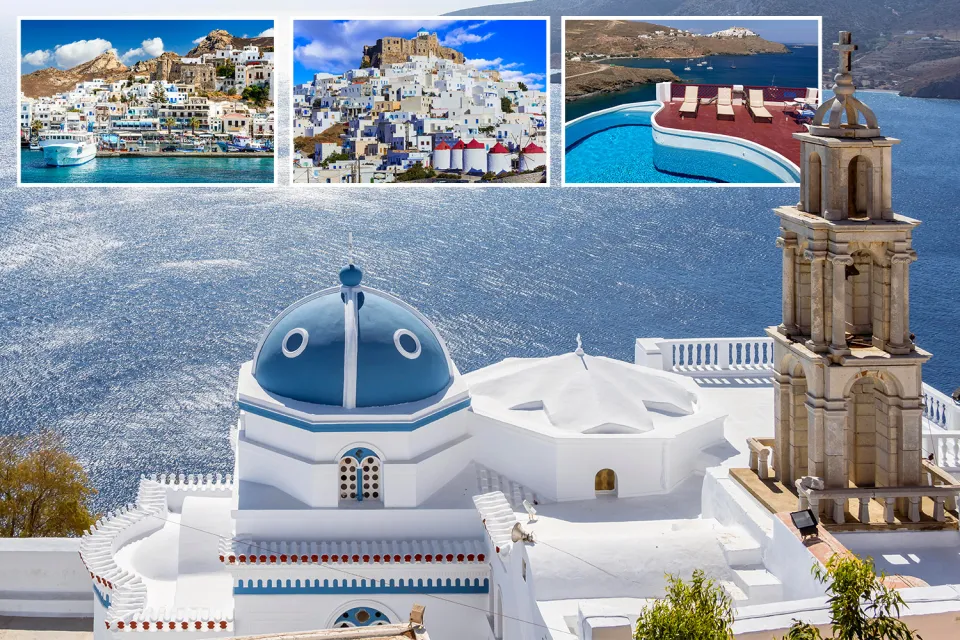
Idyllic view of the Aegean Sea from a church in AstypaleaCredit: GettyThe sensational view of Chora and the castleCredit: Getty
It has white-walled, blue-domed churches, idyllic beaches with turquoise coves and spectacular sunsets that paint the sky in shades of gold, pink and orange.
Chora, the capital, is perched on a conical hilltop overlooking the bay.
Sign up for the Travel newsletter
Thank you!
At the top sits a Venetian castle, surrounded by sugar cube houses which cascade down the hillside.
Its eight red-roofed windmills evoke the vibe of Mykonos.
Yet, unlike its more popular neighbours, you’ll find yourself admiring the views in blissful peace.
And you can enjoy a trip around the historic citadel and a seafood dinner on the coast for less than the price of a cocktail on the more popular islands.
We took a British Airways flight to Kos before catching a ferry, which whisked us to Astypalea in under two hours.
The best way to arrive on any Greek island is by sea and our first close-up glimpse of this one left us spellbound.
As it emerged from the shimmering sea, it instantly rekindled awe-inspiring memories of our first visit to Santorini on our honeymoon, more than four decades ago — before the crowds arrived.
Which is probably why you shouldn’t leave it too long before you visit Astypalea.
It’s cheap and easy to get around, and with no giant cruise ship crowds pouring on to the streets, sometimes it feels like you have the place to yourself.
We stayed at the Arhitektoniki studios, which cling to the side of a cliff a short drive from Chora.
The well-equipped rooms combine traditional island charm and simplicity with a luxurious modern touch.
There’s a kidney-shaped swimming pool and a sun terrace overlooking the bay with spectacular views of the citadel.
It’s a pleasant ten-minute walk from here to Livadi beach, with a row of lively beach restaurants, bars and shops.
Astypalea has become a model for sustainability after the municipality and the Greek government teamed up with Volkswagen to develop a unique climate-neutral transport system.
Take a dip in the pool at Arhitektoniki studiosCredit: SuppliedMost of the island cars are eco-friendlyCredit: VW
All the hire cars are electric and there are charging points everywhere. All power comes from solar and wind generation.
If you don’t want to drive, just use the Astymove app to book an Astybus — an on-demand electric minibus service which will pick you up within 15 minutes and take you to your destination for just three euros.
It’s not just the transport that’s eco-Greco, the restaurants are, too.
We were served a delicious meal at Ducato di Astypalea, which ensures all its ingredients are sustainably sourced and prices remain refreshingly reasonable.
Be sure to try the delicious Asty pasta. At Aiolos Pizza we enjoyed the thick, homemade spaghetti, incorporated into the island’s cuisine when it was part of Mussolini’s Mediterranean empire. It’s best eaten with rosto — slow-cooked pork or lamb.
There’s no better way to work off lunch than meandering through Chora’s narrow, stone-stepped streets towards the castle to enjoy the view from the top.
Close by is the blue-domed church of Panagia Portaitissa, built in 1762 and the spiritual centre of the island.
Maltezana, named after the Maltese pirates who once wreaked havoc here, is just five miles from Chora — ideal for a day trip.
Naxos’ seafront bustles with restaurants and shops and has a vibrant nightlifeCredit: GettyThe Sun’s Dave Wooding enjoys his own Greek odysseyCredit: Supplied
It features a beautiful sandy beach, some fine fish tavernas and some recently excavated Roman baths.
It’s also worth a trip to Vathi on the northeastern side of the island.
Close by is the Cave of Drakos, which is adorned with stalactites and stalagmites of many colours and was once used by marauding pirates to hide their treasure.
If two weeks of peace and quiet are too much, you can easily hop to a more lively island for a contrast.
We opted for Naxos, the largest island of the Cyclades, four hours away by ferry.
The first thing you see as you dock is the Portara — a colossal marble doorway which is all that is left of the Temple to Apollo, built in 530BC.
The seafront bustles with restaurants and shops and has a vibrant nightlife.
The best place to stay is on the south side of Naxos town.
Princess Mare Hotel is less than a two-minute walk from sandy St George’s beach and barely ten minutes to the seafront restaurants and ferry terminal.
Naxos is famed for its marble and many famous artworks and buildings — including parts of the Acropolis in Athens — are made from it.
Try exploring one or two picture-postcard mountain villages.
Aperathos and Chalki have pretty shops to explore and tavernas with spectacular views.
Naxos Bus Transfer does a full-day island highlights tour, which includes a stop for lunch.
It also takes in the statue of Apollo — though modern historians argue it is Dionysus — at Kouros.
It is 35ft long, weighs 80 tons and hasn’t moved in 2,000 years, either because it was too heavy or somebody didn’t pay the bill.
It’s only a two-minute drive from here to Apollonas beach, ideal for a swim or to relax in one of the shaded beach tavernas.
Before you leave Naxos town, be sure to explore the streets leading up to the 13th-century castle.
It’s a beautiful, labyrinth-like maze of historic, cobblestone and marble-paved alleys originally designed to confuse invading pirates.
As well as blooming bougainvillea, stray cats, art galleries, boutiques and tiny, centuries-old stone chapels, there’s a little museum at the top with a lovely rooftop bar.
After cramming so much into our three days in Naxos, it was good to return to the slower pace of life in our newfound hideaway, Astypalea
But secrets such as this rarely stay hidden forever. So whatever you do, don’t tell too many people . . .
GO: ASTYPALEA
GETTING THERE: British Airways flies direct to Kos from Gatwick daily from May to October.
Summer is nearly over and TV is gearing up for winter TV, and this Love Island star could be the new face of the jungle
22:27, 28 Aug 2026Updated 22:47, 28 Aug 2026
Chloe is a firm favourite with ITV fans and bosses think she would be perfect for the I’m A Celeb…(Image: Getty Images for Bauer Media)
Love Island favourite Chloe Burrows has been tipped to be heading Down Under after reportedly entering talks for this year’s I’m A Celebrity… Get Me Out Of Here!
The 30-year-old shot to fame on Love Island in 2021 and proved a huge hit with viewers, eventually finishing runner-up alongside her then-boyfriend Toby Aromolaran. Now producers are allegedly keen to sign her up for I’m A Celeb, with Chloe said to be enthusiastic about swapping her home comforts for life in camp.
She is said to have held a number of meetings with bosses behind the ITV jungle show ahead of its return to Australia later this year.
A source told The Sun: “Chloe is in advanced talks and they love her. She was hugely popular in Love Island. She made it clear she’d love a chance to go to Australia to be on the show.”
Her sizeable online following is also reportedly attractive to producers as ITV continues to bring social media personalities into the jungle.
The insider added: “She has a very big following on social media too, very much like Angry Ginge and GK Barry, and ITV bosses think she could bring in a younger audience.
“ITV moves with the times. They’ve seen the surge of popularity with influencers.”
YouTuber and streamer Angry Ginge was crowned King of the Jungle last year after securing 13million votes, while podcaster and social media star GK Barry finished fifth in the 2024 series.
Since leaving the Love Island villa, Chloe has successfully built a career away from the dating show. She now hosts her own podcast, Chloe vs The World, and can also be heard on Kiss Breakfast alongside Strictly Come Dancing star Tyler West.
It wouldn’t be her first experience of being pushed outside her comfort zone on reality television either. Last year, she signed up for Celebrity SAS: Who Dares Wins, although her time on the gruelling Channel 4 programme was short-lived. She chose to leave the process during the second episode after struggling with its demanding challenges.
If she does sign on the dotted line for I’m A Celeb, Chloe is expected to fly to Australia’s Gold Coast ahead of filming beginning in November.
She isn’t the only famous face being linked with this year’s line-up. Paralympian and television presenter Ade Adepitan, 53, and Gavin & Stacey actress Joanna Page, 49, have also reportedly been approached about taking part. It’s worth nothing, however, no contestants have yet been officially confirmed.
After The Mirror reached out for comment, ITV said, “Any names suggested for I’m A Celebrity…Get Me Out Of Here! are just speculation.”
The ITV reality star was shown falling from a horse while riding in Meet the Owens.
Meet The Owens teased in trailer from Prime Video
Former Love Island star Gemma Owen’s horror horse riding accident has been aired in her new show Meet the Owens on Prime Video. The six-part programme follows former England footballer-turned-horse breeder Michael Owen and his family, including his feisty eldest daughter Gemma.
In a harrowing episode on the show, Gemma, 23 is shown falling from a horse and appearing to hit a railing while she is training to compete in the charity race the Magnolia Cup. Gemma, who represented Team GB in Dressage at youth and junior levels, is an experienced horse rider and the fall came as a shock to her family.
Luckily, Gemma escaped the fall without any broken bones, however she did get whiplash and sustained cuts to her face, as well as being covered in bruises. Gemma was riding her father’s horse He’s A Gentleman when she suffered the accident, after the horse appeared to bolt.
Audiences were shown images of Gemma’s huge bruises and she could be seen sporting a cut on the left side of her face, near her chin. The accident came six days before she was due to compete.
Speaking about the incident, her father Michael, 46, said Gemma was “tough as nails” and got back on a horse the day after. Meet the Owens then showed Gemma competing in the Magnolia Cup, despite being hardly able to move her neck.
Despite the accident, Gemma ended up coming fourth in the race after being initially stuck in 12th position when she was boxed in early on in the race. Michael later commented in a VT: “She came fourth but it’s just the start” as he knew Gemma would be gearing up to race another day in the future.
Reflecting on the fourth-place position, Gemma said she was “beyond gutted” and confirmed she would be doing it again, saying, “because I need to b****y win!” She also conceded that her father Michael had been right when he’d encouraged her to try horse racing.
She’s initially been skeptical about becoming a jockey, but over the course of training Gemma realised that this was what she wanted to do. Gemma was previously a contestant on season eight of Love Island back in 2022 and was a runner-up in the dating series.
Along with focusing on Gemma, Meet the Owens also delves into Michael and his wife Louise’s sweet marriage after the pair grew up together and attended the same primary school. They also touched on a tough point in their marriage during Michael’s move to Real Madrid, which had left new mother Louise isolated and without a support network.
Get Amazon’s Prime Video free for a month
This article contains affiliate links, we will receive a commission on any sales we generate from it. Learn more
TV lovers can get 30 days’ free access to tantalising TV like The Boys, Reacher and Clarkson’s Farm by signing up to Amazon Prime. Just remember to cancel at the end and you won’t be charged.
Michael’s only son, James, and his degenerative eye condition are also spotlighted in another episode. James was born with the genetic condition Stargardt disease, which means he is clinically blind.
Despite this, James showed his ambitions to become part of Michael’s family business, Manor House Stables and help to get potential investors on board. At one point, Michael and James even went to Bahrain together in the hopes of securing some more potential buyers and money for the stables.
Famous for its walls bearing scribbles and sketches left behind by patrons for over 60 years, El Batey, a bar in Old San Juan, is a Puerto Rican institution serving locals and tourists alike.
It was inside this famed establishment that filmmakers Lorraine Jones Molina and Cristian Carretero first met one night back in 2008. Since then, the two have joined forces in both life and art; they are a married couple, as well as parents and close collaborators on film projects.
Their first feature, “Esta Isla,” which is now available on VOD, made history as the first Puerto Rican film to win at the Independent Spirit Awards in February, taking home the John Cassavetes Award honoring a production made for under $1 million. At the 2025 Tribeca Film Festival, it received three prizes, including best new narrative director.
A politically charged, coming-of-age road-trip movie, “Esta Isla” follows Bebo (Zion Ortiz), a young man from the “caserios,” or projects, and Lola (Fabiola Victoria Brown), a well-off girl unhappy in her bubble of privilege. Violence forces Bebo to run away to the mountains. Lola tags along and together they come across a series of people who expand their worldview.
There’s a grounded, earthy lyricism to the images captured in “Esta Isla” that show a Puerto Rico that’s at once lush and entrancing but also undiscovered and unseen in cinema.
Fabiola Brown, pictured above, plays “Lola” in the new Puerto Rican film “Esta Isla.”
(Experimento Ludico)
Key to their professional success thus far, the filmmakers believe, is their loving personal bond. “We’re always together and talking about ideas. When we were working on ‘Esta Isla,’ it helped a lot to really dig deep and have long conversations about certain details and topics,” Carretero says during a recent video call. “We do mostly everything ourselves, just me and Lorrie. Sometimes I do camera, Lorrie does sound. We keep it pretty small.”
In 2010, Carretero and Jones Molina founded the production company called Experimento Lúdico in the western town of Mayagüez with the intent of decentralizing production on the island. Most opportunities for filmmaking are still based in the San Juan metropolitan area.
“I’m from Arecibo, from the north, and Cristian is from here, from Mayagüez. That’s part of who we are, and we want to tell these stories from here. It’s part of resisting. It feels like somebody has to do this,” Jones Molina says with a laugh, while sitting next to Carretero.
Lorraine Jones Molina and Cristian Carretero are the filmmakers behind the Puerto Rican road trip movie “Esta Isla.”
(Experimento Ludico)
When Carretero and Jones Molina first met, it was the documentary scene that sustained Puerto Rican cinema because those stories could be told with fewer resources. Karen Rossi’s 2007 environmentalist doc “Isla Chatarra,” for example, inspired Jones Molina.
She and Carretero later directed the 2016 medium-length doc “Seeds, Chronicles of the Earth,” about GMO experimentation on the island.
Most of the fiction production on the island then pertained to Hollywood films, such as “Pirates of the Caribbean: On Stranger Tides” (2011). In the 2010s, however, a string of fiction films, including Ari Maniel Cruz’s “Under My Nails” (2012) and “Before a Rooster Crows” (2016) and Ángel Manuel Soto’s “La Granja” (2015), pushed local storytelling forward.
And while those movies, just like “Esta Isla,” don’t address the socioeconomic issues facing Puerto Ricans didactically, their mere existence is in itself a statement. “Making Puerto Rican films in Puerto Rico is political,” says Jones Molina. “Talking about who we are, our identity, our culture, our history and saying that we are here and we exist is political.”
Residents in San Juan are currently experiencing a water crisis, and while the scarcity hasn’t directly affected Jones Molina and Carretero in Mayagüez, this problem is not new and has only turned more urgent in the aftermath of Hurricane Maria.
That’s why they deliberately wrote a scene in “Esta Isla” showing people getting water from a water truck.
“It’s crazy that we filmed that a couple of years ago to talk about that issue, and it’s just gotten worse,” says Carretero. “Now we have a drought, and you have to have water rationing. It’s something that is reflective of a bigger problem in the island: the neglect of the most important needs of the citizens.”
Puerto Rico’s status as a colony of the U.S., where the interests of corporations supersede the well-being of the local population, is the source of many of its challenges. And for a long time, even referring to Puerto Rico as a colony was taboo. A history of persecution on behalf of the U.S. government ingrained fear in Puerto Ricans.
“The FBI would keep ‘carpetas,’ or files with information on regular people, who were suspected of organizing or fighting for independence,” Carretero says. “People were being surveilled by the FBI, and they’d pay family members or people they knew to survey them.”
“Esta Isla” touches on the troubled relationship between Puerto Rico and the U.S. via Lola’s deceased father, who is a stand-in for Filiberto Ojeda Ríos, a Puerto Rican revolutionary and leader of the pro-independence militant group Los Macheteros. After years on the run, the FBI assassinated him in 2005. In the film, the character Cora (Teofilo Torres) lives in the mountains and works the land. The location used for his house carries great significance.
“The inside shots, with the bullet holes, and the windows, and the books, all of that is from Filiberto’s actual house where he was assassinated,” says Jones Molina. “When you go there, you see all those bullet holes; it’s heavy.”
To that, Carretero adds: “There’s an inferiority complex that the colony perpetuates, which has to do with not knowing where you come from. Once you know all these names and all the stories of women and men who’ve worked for the good of Puerto Rican people, here and in the States, it opens up this whole other space for inspiration that’s from our ancestors”
Carretero and Jones Molina found the core concept for “Esta Isla” on the first page of Octavio Paz’s seminal novel “The Labyrinth of Solitude,” where the Mexican author discusses adolescence as a moment in a person’s life where they open up to the world, while at the same time noting that societies themselves also go through a coming-of-age.
Zion Ortiz, pictured above, plays “Bebo” in the new Puerto Rican film “Esta Isla.”
(Experimento Ludico)
“Puerto Rico is still an evolving organism. It’s a country, a people and a culture still evolving,” Carretero explains. “We’re still trying to understand who we are and where we’re going. Are we a country? Are we not? Are we part of the U.S., or not? Are we Americanos, or somos latinoamericanos?Tantas preguntas that are still unresolved.”
Jones Molina continues: “There’s this idea that you have to just be grateful that you’re a part of the United States and don’t complain. But when you question that, and when you want to really look at why you love and care about your country and your culture and want to educate yourself, then you’re definitely going through this kind of coming-of-age.”
For this filmmaking couple, reaching maturity as artists forged in the complex context of a modern colony hinges on acknowledging their limitations and still persevering.
“We also wanted to show that you can make films with very little; you don’t have to wait for the perfect moment or all the different resources. That’s what we call tropical realism. Not only the style of the filmmaking, but it’s also the means, and how that matches your reality,” explains Carretero. “We cannot pretend to be something that we are not. We have to develop our own language, our own way of filming, our way of telling our stories.”
Locals on Indonesia’s Borneo Island are struggling to breathe as the smoke from wildfires is turning the air toxic. Al Jazeera’s Jessica Washington reports from Borneo on how conditions are complicating efforts to stop the fires.