Islamabad

Vance warns Iran not to ‘play us’ ahead of diplomatic mission in Pakistan

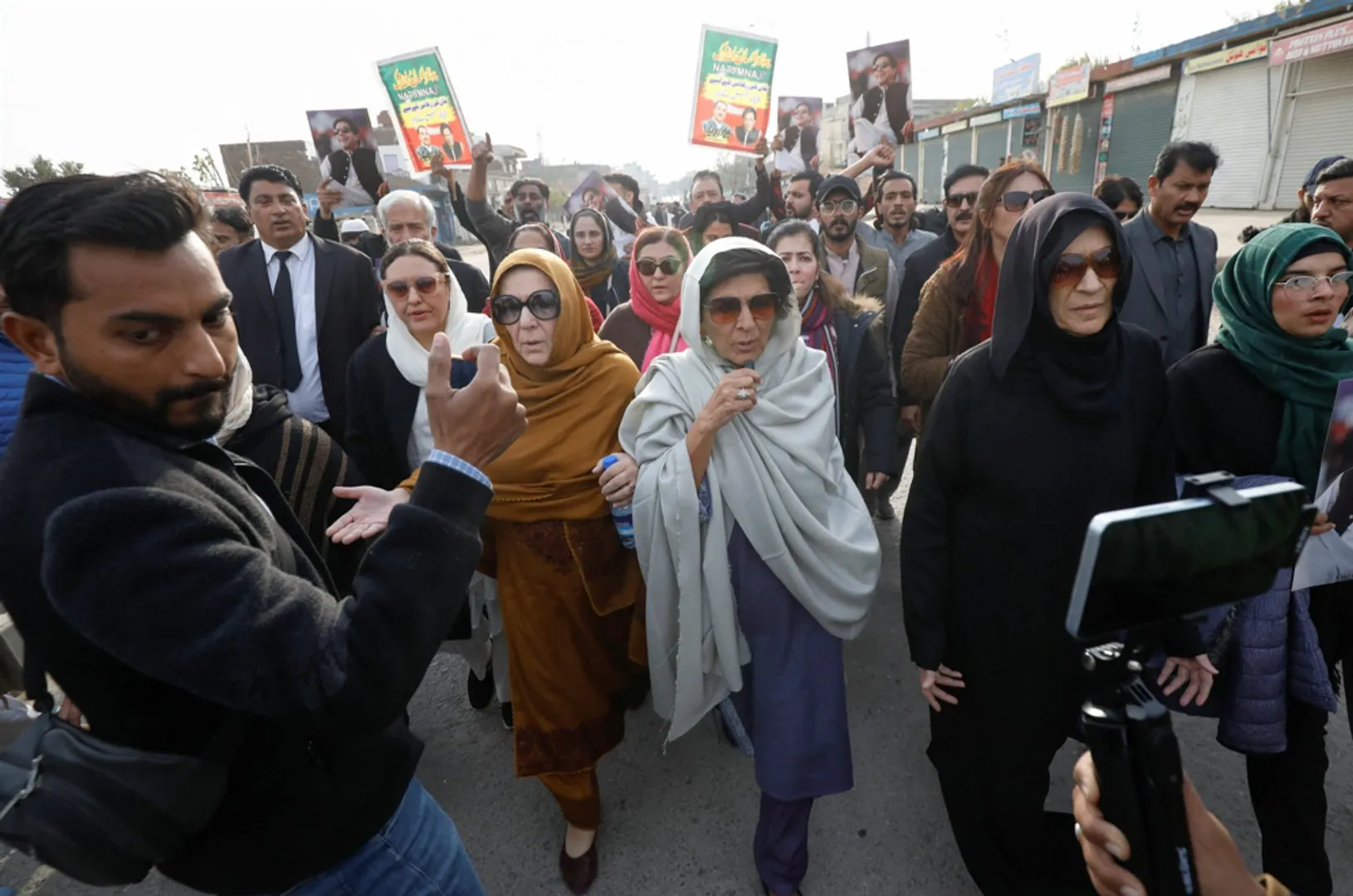
Vice President JD Vance departed Friday for Islamabad, Pakistan, to open the first direct negotiations aimed at ending the war between the United States and Iran.

Together with a delegation of deeply mistrusting negotiators from Tehran, Vance is tasked with striking a lasting peace between rival nations which have failed to keep promises made days ago in a delicate last-minute ceasefire. Ongoing military activity in the Middle East and disagreements over Iran’s control of key shipping routes have left the diplomatic effort vulnerable to collapse before the talks even begin.

“If the Iranians are willing to negotiate in good faith, we’re certainly willing to extend the open hand,” Vance told reporters before boarding Air Force Two. “If they’re gonna try and play us, then they’re gonna find that the negotiating team is not that receptive.”

On Tuesday, President Trump called off his plans to unleash “hell” on Iran based on assurances that it lift its blockade of the Strait of Hormuz, but traffic through the vital waterway was still at a trickle Friday, as more than 600 ships remained stranded in the Persian Gulf, according to marine tracking data. Trump accused Iran on Thursday of doing a “very poor job, dishonorable some would say,” of allowing oil through the strait.

“The Iranians don’t seem to realize they have no cards, other than a short term extortion of the World by using International Waterways. The only reason they are alive today is to negotiate!” he wrote on Truth Social Friday.

Meanwhile, Lebanon has emerged as the central dispute threatening to derail the talks before they begin.

Hours after the ceasefire took effect, Israel launched what Lebanese officials described as its heaviest wave of strikes since the war began, killing at least 303 people, according to local health officials.

Jerusalem argues the Lebanese front is still on the table, but Iran and Pakistan disagree.

“The Iran–U.S. Ceasefire terms are clear and explicit: the U.S. must choose — ceasefire or continued war via Israel. It cannot have both,” Iranian Foreign Minister Abbas Araghchi said earlier this week. “The world sees the massacres in Lebanon. The ball is in the U.S. court, and the world is watching whether it will act on its commitments.”

Vance has acknowledged a “legitimate misunderstanding” over whether Lebanon was included in the ceasefire terms, telling reporters Washington never made that promise.

Separate negotiations regarding Lebanon are expected next week in Washington, Lebanese President Joseph Aoun confirmed Friday. Israeli Prime Minister Benjamin Netanyahu has also OK’d the talks, but said a ceasefire is not possible.

Parliament Speaker Mohammad Bagher Qalibaf and the Iranian delegation arrived early Saturday in Islamabad, Iranian state media reported. Hours earlier he said a ceasefire in Lebanon “must be fulfilled before negotiations begin.”

Bagher Qalibaf added a second condition — the release of frozen Iranian assets — which he suggested must be returned before Tehran takes its seat at the bargaining table. Little is known about the halted Iranian funds overseas, but such assets are typically held back as a result of U.S.-imposed sanctions.

The vice president’s role in peace talks has grown in recent weeks. Administration officials have cast Vance as one of the few leaders Tehran would be willing to engage with directly. With a global economy upended by Trump’s far-reaching military ambitions, a victory in Islamabad could spike Vance’s standing as a prospect to lead the GOP post-Trump.

That’s if he’s able to take pressure off American wallets with an agreement that liberates Iran’s grip over the strait, which has choked much of the world’s oil supply,

Americans have continued to feel the fallout at the gas pump and grocery stores, as U.S. inflation climbed to 3.3% in March, the highest annual rate in nearly two years, according to the data released Friday by the Bureau of Labor Statistics.

Monthly prices rose 0.9%, a sharp increase from February’s 0.3% monthly rise, when annual inflation sat at 2.4%, the new data showed.

The White House characterized the rising inflation as a short-term disruption caused by the Iran war, while noting that the administration is “diligently working to mitigate” rising costs.

“As the Administration ensures the free flow of energy through the Strait of Hormuz, the American economy remains on a solid trajectory thanks to the Administration’s robust supply-side agenda of tax cuts, deregulation, and energy abundance,” White House spokesperson Kush Desai wrote on X.

Britain announced a meeting next week with dozens of countries to coordinate efforts to reopen the Strait of Hormuz. The summit will focus countering Iran’s proposal to charge transit tolls to allow ships through the waterway.

In a televised address to the nation, Pakistan’s Prime Minister Shehbaz Sharif spoke of a “devastating storm of inflation,” if peace talks don’t succeed in liberating the Middle East’s oil supply. He characterized the current stage as a “make-or-break moment.”

“We will make every possible effort to ensure the success of the peace process,” he said.

Source link

Iran says talks with US will begin in Pakistan’s Islamabad on Friday | News

Tehran says the negotiations will be based on its 10-point proposal, which calls for control over Strait of Hormuz and lifting of all sanctions.

Iran has agreed to a two-week ceasefire with the United States, with its National Security Council saying talks with Washington will begin in the Pakistani capital, Islamabad, on Friday, based on Tehran’s 10-point proposal.

The statement on Wednesday came after US President Donald Trump said he was calling off a threat to end Iranian civilisation and “suspend” attacks on the country for two weeks.

Recommended Stories

list of 4 itemsend of list

Trump said the truce was contingent on Iran agreeing to the “complete, immediate and safe opening” of the Strait of Hormuz, the narrow waterway that connects the Gulf to the Arabian Sea and through which a fifth of the global oil supply passes.

Iran’s partial blockade of the strait – imposed in the aftermath of the US and Israel’s attacks on February 28 – has disrupted global trade, driving up oil prices and causing fuel shortages across the world.

Iran’s retaliatory attacks have also reverberated across the Gulf and drawn in Lebanon’s Hezbollah and Yemen’s Houthis, both of which have launched attacks on Israel, significantly widening the conflict.

Trump said in his Truth Social statement that the US has received a 10-point proposal from Iran, “and believe it is a workable basis on which to negotiate”.

He said the US and Iran have agreed on “almost all of the various points of contention” and that the two-week period will allow the agreement to be “finalised and consummated”.

Iran’s Minister of Foreign Affairs Abbas Araghchi, speaking on behalf of the Iranian National Security Council, confirmed Tehran’s decision to halt the fighting.

“If attacks against Iran are halted, our powerful armed forces will cease their defensive operations,” he said in a post on X.

Araghchi said that safe passage through the Strait of Hormuz will be possible in coordination with Iran’s Armed Forces, and that the decision was taken in light of Trump’s acceptance “of the general framework of Iran’s 10-point proposal as a basis for negotiations”.

For his part, Pakistan’s Prime Minister Shehbaz Sharif said the warring sides had agreed to an “immediate ceasefire everywhere including Lebanon and elsewhere”.

The move is “EFFECTIVE IMMEDIATELY”, he wrote on X.

Sharif thanked the US and Iran and extended an invitation to “their delegations to Islamabad on Friday, 10th April 2026, to further negotiate for a conclusive agreement to settle all disputes”.

According to Iran’s National Security Council, its 10-point proposal calls for Iranian dominance and oversight of the Strait of Hormuz, which it said would grant it a “unique economic and geopolitical position”.

The proposal also calls for the withdrawal of all “US combat forces” from bases in the Middle East and a halt to military operations against allied armed groups across the region. It goes on to demand “full compensation” for war damages, as well as the lifting of all sanctions by the US, the United Nations Security Council and the International Atomic Energy Agency.

The proposal also calls for the release of frozen Iranian assets abroad and the ratification of any final agreement in a binding UN Security Council resolution.

The council said that while Tehran has agreed to talks, it does so “with complete distrust of the American side”.

It said Iran will allocate two weeks for these negotiations and that the time period “can be extended by agreement of the parties”.

The council added that Iran stood ready to respond with “full force” as soon as “the slightest mistake by the enemy is made”.

There has been no comment from Israel.

Source link

Pakistan proposes hosting U.S.-Iran negotiations in Islamabad

March 24 (UPI) — Pakistani officials said Tuesday they’re prepared to host negotiations between the United States and Iran, with in-person meetings possibly set to take place in Islamabad.

Pakistani Foreign Ministry spokesman Tahir Andrabi told Al Jazeera that Pakistan would be willing to play a part in the talks “if the parties desire.”

The government “has consistently advocated for dialogue and diplomacy to promote peace and stability in the region,” Andrabi said.

Pakistani Prime Minister Shehbaz Sharif confirmed the offer, saying he’s ready to “facilitate meaningful and conclusive talks.”

Unnamed Pakistani sources told The Guardian that Vice President JD Vance would potentially serve as chief U.S. negotiator if such talks went forward. Iranian officials have said they will not speak with President Donald Trump‘s pre-war negotiators, Middle East envoy Steve Witkoff and adviser Jared Kushner.

Witkoff and Kushner met with Iranian officials in the month leading up to the war in an attempt to reach a deal to limit Iran’s nuclear program. The talks were unfruitful and Trump ordered the launch of attacks on Iran on Feb. 28 alongside Israel.

In nearly a month, the war has killed more than 2,000 people and displaced millions of others, NBC News reported.

Trump said Monday that he hopes there will be an agreement with Iran amid renewed talks, which Iranian state-run media have denied has taken place. The U.S. president said he’s holding off on strikes on Iran’s energy infrastructure for five days after “very good and productive conversations.”

President Donald Trump presents the Commander in Chief’s Trophy to the Navy Midshipmen football team during a ceremony in the East Room of the White House on Friday. The award is presented annually to the winner of the football competition between the Navy, Air Force and Army. Navy has won the trophy back to back years and 13 times over the last 23 years. Photo by Bonnie Cash/UPI | License Photo

Source link