Iraq

US transfers ISIL detainees to Iraq as northeast Syria base draws down | Conflict News

Iraq launches investigations into ISIL detainees from Syria, with 7,000 expected to arrive in total.

United States forces have transported a third group of ISIL (ISIS) detainees from Ghwayran prison in Syria’s Hasakah province to Iraq by land, as activity around a US military base in the region points to possible operational changes, an Al Jazeera correspondent reports.

The transfer on Saturday forms part of a trilateral arrangement, which has emerged as part of a painstaking ceasefire after deadly clashes involving the Syrian government and the Syrian Democratic Forces (SDF), under which detainees held in northeastern Syria are being relocated to Iraqi custody. US forces are the third party to that agreement.

Recommended Stories

list of 3 itemsend of list

Earlier, US Central Command (CENTCOM) confirmed the start of a broader operation to move detainees from facilities across the region, with officials outlining a plan to transfer about 7,000 prisoners.

Iraq has launched investigations into ISIL detainees from Syria over atrocities committed against its citizens.

Security developments in northeastern Syria have accelerated in recent weeks in the wake of government forces sweeping across the north and SDF retreats.

On Saturday, SDF governor-designate Nour Eddien Ahmad met a Damascus delegation at the Hasakah government building before a Syrian national flag-raising ceremony.

The meeting carries political significance as the agreement between Damascus and the SDF allows the group to nominate the governor of Hasakah, with Ahmad expected to be formally appointed by the Syrian government.

The visiting delegation includes senior government security officials, underscoring Damascus’s expanding administrative control in the province. The raising of the Syrian national flag over the government building signals the reassertion of central government authority in Hasakah.

Syrian government forces entered the city of Qamishli earlier this week, one of the remaining urban strongholds of the Kurdish-led SDF, following a ceasefire agreement reached on Friday last week.

The accord ended weeks of confrontations and paved the way for the gradual integration of SDF fighters into Syrian state institutions, a step Washington described as an important move towards national reconciliation.

The agreement followed territorial losses suffered by the SDF earlier this year as government troops advanced across parts of eastern and northern Syria, reshaping control lines and prompting negotiations over future security arrangements.

Separately, an Al Jazeera correspondent on the ground reported that US personnel vacated most watchtowers surrounding a military installation in the al-Shaddadi area of Hasakah province, leaving only the western tower staffed.

Soldiers were also seen lowering the US flag from one tower, while equipment used to manage aircraft take-offs and landings at the base’s airstrip was no longer visible.

No combat aircraft were present at the facility, although a large cargo aircraft landed at the base, remained for several hours, and later departed.

The US established its formal military presence in Syria in October 2015, initially deploying about 50 special forces personnel in advisory roles as part of the international coalition fighting ISIL. Since then, troop levels have fluctuated.

Reports in mid-2025 indicated that roughly 500 US troops withdrew from the country, leaving an estimated 1,400 personnel, though precise figures remain unclear due to the classified nature of many deployments.

US forces continue to focus on countering ISIL remnants, supporting the Syrian government now, providing intelligence and logistical assistance, and securing oil and gas infrastructure in Hasakah and Deir Az Zor provinces.

The US carried out another round of “large-scale” attacks against ISIL in Syria in January, following an ambush that killed two US soldiers and a civilian interpreter in the city of Palmyra in December.

Source link

Iraq’s Shia bloc divided over tactics after US rejects al-Maliki for PM | Politics News

Najaf, Iraq – Leaders of Iraq’s Coordination Framework – the Shia political coalition that came out on top in November’s parliamentary elections – are adamant that Nouri al-Maliki will be their candidate for the Iraqi premiership, even after threats from United States President Donald Trump.

Trump warned in late January that if al-Maliki, who previously served as Iraq’s prime minister between 2006 and 2014, returned to the role, then the US would cut off aid to Iraq.

Recommended Stories

list of 3 itemsend of list

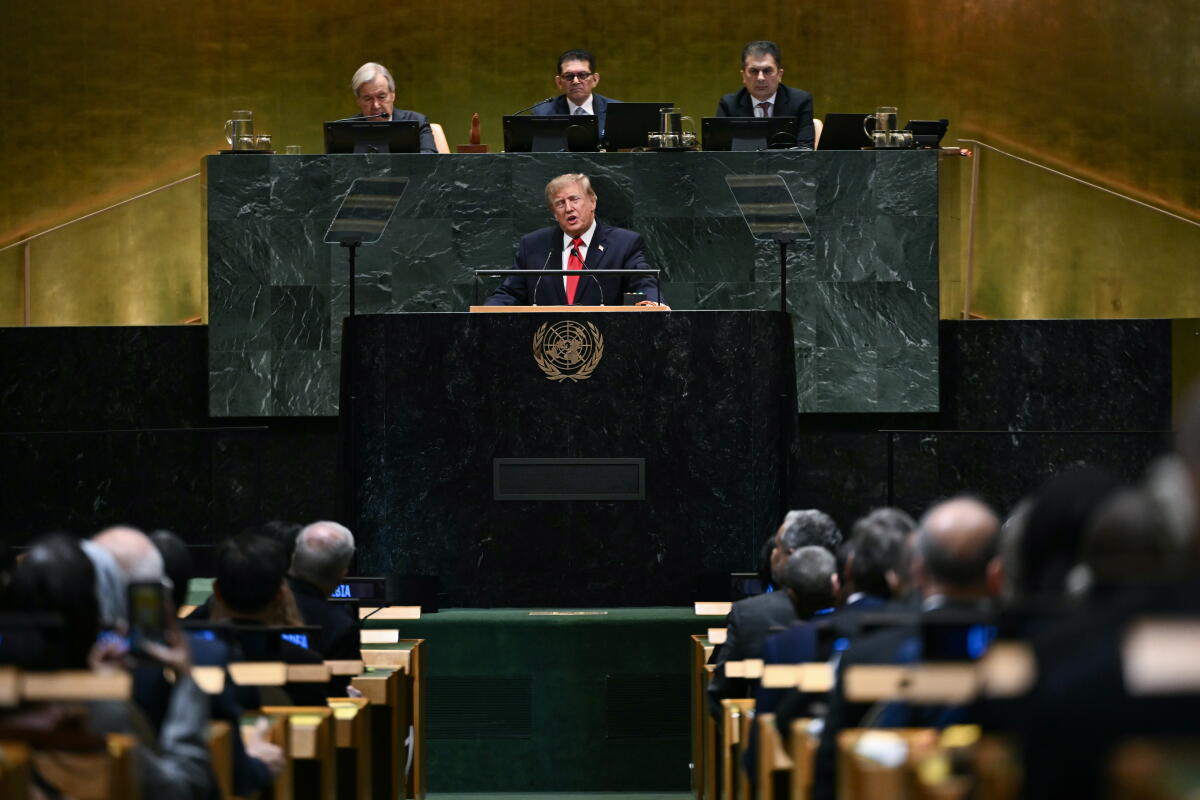
“If we are not there to help, Iraq has ZERO chance of success, prosperity or freedom,” the US president wrote in a post on his Truth Social website.

Trump, and the US administration, view al-Maliki as part of Iran’s direct network of influence in Iraq, and fear that his return would undermine American efforts to weaken Iran’s power in its western neighbour, including limiting the reach of Iran-backed armed groups.

But, even with pressure ramping up, it appears that a majority of the Coordination Framework’s most influential actors are not willing to give up on al-Maliki, and are determined to find a way to push his candidacy forward.

Coordination Framework divided

The Coordination Framework (CF) is a coalition of Shia political parties established in 2021. It represents the biggest Shia bloc in the Iraqi parliament.

The loose nature of the coalition that makes up the CF means that opinions on al-Maliki’s candidacy are varied, with some opposing it, others willing to bend to Trump’s will and switch their backing, and still others who are adamant that they will push forward.

And it seems as though the majority are in the latter camp.

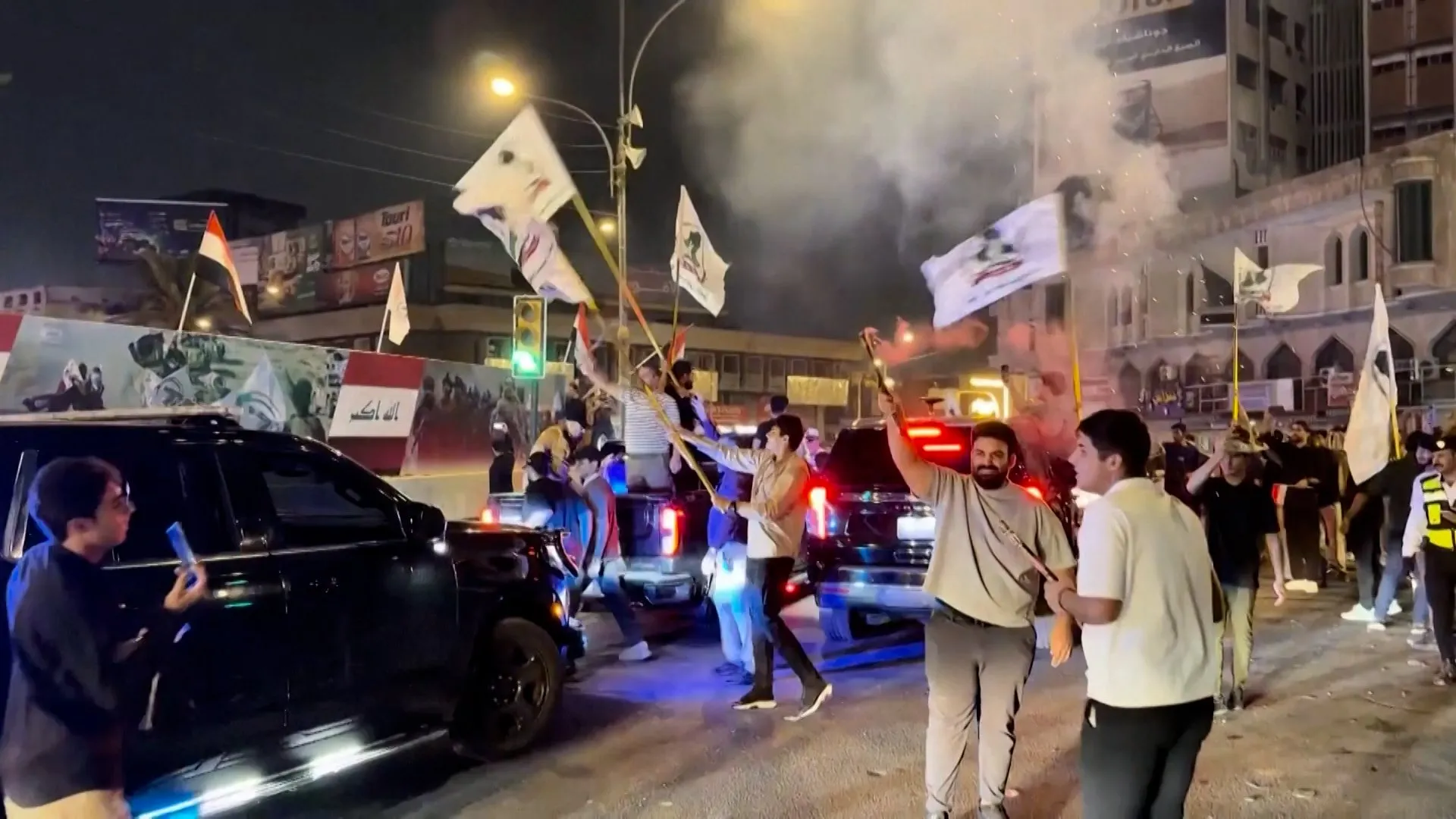
The CF issued a statement on Saturday reiterating its support for al-Maliki. “Choosing the prime minister is an exclusively Iraqi constitutional matter … free from foreign interference,” the statement added.

The statement reflects the position of various pro-Maliki forces in the CF, including former deputy parliament speaker Mohsen al-Mandalawi; the Badr Organization, led by Hadi al-Amir; and the Islamic Supreme Council, led by cleric Humam Hamoudi.

Current Prime Minister Mohammed Shia al-Sudani, whose party received the most votes in the elections but who did not receive the CF nomination despite his membership within it, is also officially supportive of al-Maliki’s nomination, even if he has not abandoned the possibility of continuing as prime minister himself.

Several of these factions did well in last year’s parliamentary elections, including al-Maliki’s own State of Law Coalition, as well as Badr and al-Sudani’s Reconstruction and Development Coalition.

But, with support from Kurdish and Sunni parties, the Shia al-Maliki sceptics have enough seats, and enough of a voice, to block the nomination if they desire to do so.

These include important Shia figures such as Qais al-Khazali, the leader of the Asaib Ahl al-Haq group; Ammar al-Hakim, the leader of the National State Forces alliance; and former Prime Minister Haider al-Abadi.

Al-Hakim, whose parliamentary bloc has 18 seats, warned that there would be “incoming economic repercussions” if al-Maliki was chosen, and added that “public interest must be prioritised over private interests”.

Meanwhile, the Victory Alliance, led by al-Abadi, issued a statement calling for “[the prioritisation of] the people’s vital interests given the exceptional circumstances Iraq and the region are experiencing”. Al-Abadi’s group has no seats in parliament, but retains an important voice within the CF.

Both statements contain a tacit acknowledgment of Iraq’s inability to withstand US pressure and the need for an alternative candidate suited to the current reality.

Other roadblocks

The CF, therefore, still has an uphill battle to confirm al-Maliki as prime minister. Outside of the Shia political groups, there is also opposition to al-Maliki, a divisive figure remembered negatively by many Iraqis, particularly Sunnis.

And there are also divisions within the non-Shia groups that are also slowing down the nomination process.

Under the Iraqi Constitution, parliament must first elect a president for Iraq, who then mandates the nominee of the largest parliamentary bloc to form the government. According to Iraq’s post-2003 “muhasasa” system of dividing political offices by sect and ethnicity, the prime minister must be a Shia, the president a Kurd, and the parliamentary speaker a Sunni.

To date, the main Kurdish factions – the Kurdistan Democratic Party (KDP) led by Masoud Barzani and the Patriotic Union of Kurdistan (PUK) led by Bafel Talabani – have failed to agree on a consensus candidate for the presidency.

The CF is attempting to broker an agreement between the Kurds. Recent efforts included a delegation led by al-Sudani meeting with both parties, and a personal visit by al-Maliki to Barzani. But these initiatives have not yet succeeded, and without a political agreement on the presidency, the process of designating a prime minister cannot proceed.

And even if the Kurds reach an agreement and don’t stand in the way of al-Maliki, the CF must persuade a long list of the former prime minister’s opponents.

Among them is Mohammed al-Halbousi, former speaker of parliament and leader of the Takadum Party, who issued a statement prior to the US veto implicitly rejecting al-Maliki’s candidacy.

Collectively, the anti-al-Maliki groups could gather roughly a third of the seats in parliament, enough to prevent a presidential election session due to a lack of quorum.

To avoid that scenario, the CF would have to either reset internal negotiations regarding the next prime minister, or nominate al-Sudani for a second term.

Al-Sudani’s party issued a statement on January 28 calling for “positive relationships with the United States” – a move interpreted as an indirect pitch for his renewal, leveraging his proven track record of managing relations with Washington during his tenure.

US leverage

The US may no longer be the occupying power in Iraq, but it still has enormous economic leverage over the country.

The revenue from Iraq’s main export – oil – is routed through the US Federal Reserve Bank in New York.

Trump may decide not to renew a presidential executive order, issued originally by President George W Bush in the wake of the Iraq War, that grants legal protection for the oil revenue funds and prevents them from being frozen by Iraq’s creditors. The order had been expected to be renewed as a formality upon its expiration in May.

If the US president decides against renewal, creditors will seek to claim their funds, and New York courts may issue rulings to freeze the Iraqi assets. This would disrupt the transfer of funds necessary to pay public salaries and sustain the economy for months or even years. In practical terms, the Iraqi economy would grind to a halt.

That therefore explains why the pro-al-Maliki bloc in the CF is attempting to persuade the US to change its position, rather than simply ignore Trump.

A high-ranking source in the CF’s State of Law coalition, who wished to remain anonymous in order to speak freely on the topic, told Al Jazeera there are “ongoing attempts to convince the US administration to lift the veto on al-Maliki”.

Aqeel al-Fatlawi, the State of Law spokesperson, also said he was hopeful that the US “will change its stance in the coming period”.

While blaming regional states, including Turkiye and Syria, for the US position towards him, al-Maliki himself has sought to soften his positions.

Syria has been one of the main points of difference between al-Maliki and the US, which has backed Syria’s President Ahmed al-Sharaa, even as the former Iraqi prime minister has denounced him for his past membership of al-Qaeda.

In a televised interview on Tuesday, al-Maliki used al-Sharaa’s full name, rather than the Syrian leader’s nom de guerre of “al-Jolani”, an attempt to emphasise that he was willing to move on from the past. Al-Maliki also attempted to soften his stance towards the Syrian government, directing his criticism towards the former regime of ousted President Bashar al-Assad and its role in supporting “terrorism” in Iraq.

Whether these attempts will go far enough to placate the US remains to be seen.

Reports indicate that US Special Envoy to Iraq Mark Savaya may have been removed from his position, although there is no official confirmation. His replacement would likely be Tom Barrack, currently the US ambassador to Turkiye and special envoy to Syria.

The CF favours Savaya, who has proven to be more supportive of using a more gradual approach in reducing the power of Iraq’s Shia militias, versus Barrack, who is viewed by the CF more negatively for his role in weakening Hezbollah in Lebanon and his support for Syria’s al-Sharaa.

An official announcement of a change could indicate where Trump’s thoughts are in the critical next few weeks – and whether the president will choose to not renew the US guarantee to protect Iraq’s oil revenue in May.

Source link

US abandoning the SDF has impacted Kurds across the region | Kurds

Last month during the violent clashes between Kurdish forces and the Syrian army, the United States delivered a devastating message to Syria’s Kurds: Their partnership with Washington had “expired“. This was not merely a statement of shifting priorities – it was a clear signal that the US was siding with Damascus and abandoning the Kurds at their most vulnerable moment.

For the Kurds across the region watching events unfold, the implications were profound. The US is no longer perceived as a reliable partner or supporter of minorities.

This development is likely to have an impact not just on the Kurdish community in Syria but also those in Iraq, Turkiye and Iran.

Fears of repeat marginalisation in Syria

US support for Damascus under interim President Ahmed al-Sharaa paves the way for a centralised Syrian state – an arrangement that Kurds throughout the region view with deep suspicion. Their wariness is rooted in bitter historical experience.

Centralised states in the Middle East have historically marginalised, excluded and assimilated Kurdish minorities. The prospect of such a system emerging in Syria, with US backing, represents a fundamental divergence from Kurdish hopes for the region’s future.

The approach the Assad regime to the Kurdish question was built on systematic denial. Kurds were not recognised as a distinct collective group within Syria’s national fabric; the state banned the public use of the Kurdish language and Kurdish names. Many Kurds were denied citizenship.

Al-Sharaa’s presidential decree of January 16 promised Kurds some rights while the January 30 agreement between Damascus and the Kurdish-led Syrian Democratic Forces (SDF) included limited recognition of Kurdish collective identity, including acknowledgment of “Kurdish regions” – terminology conspicuously absent from Syria’s political vocabulary and government documents in the past.

These represent incremental gains, but they are unfolding within a transitional government structure that aims for centralisation as its ultimate objective. That is why Syrian Kurds remain suspicious of whether the promises made today will be upheld in the future.

While a consensus has emerged among the majority of Kurdish groups that armed resistance is not strategically viable at this stage, any future engagement with the US will be perceived with mistrust.

Possibility of renewed Shia-Kurdish alliance in Iraq

After years of power rivalries between Shia and Kurdish parties in Iraq, both groups are now observing developments in Syria and potential changes in Iran with a shared sense of threat and common interests. If in 2003, their alliance was driven by a shared past – the suffering under Saddam Hussein’s regime – today it is being guided by a shared future shaped by fears of being marginalised in the region.

At both the political and popular levels, Shia and Kurdish parties and communities have had much more in common over the past few weeks than in the past. This convergence is evident not only in elite political calculations but also in public sentiment across both communities.

For the first time in recent memory, both Kurdish elites and ordinary citizens in Iraq are no longer enthusiastic about regime change in Iran, a position that would have been unthinkable just a few weeks ago.

In addition, last month, Iraq’s Shia Coordination Framework, an alliance of its Shia political parties, nominated Nouri al-Maliki for prime minister, the most powerful position in the Iraqi government. Remarkably, the Kurdistan Democratic Party (KDP), the dominant Kurdish political force, welcomed the nomination.

The KDP’s support for al-Maliki was not solely a reaction to anger over US policy in Syria. It was also rooted in Iraqi and Kurdish internal politics. The endorsement is part of an ongoing rivalry between the KDP and the Patriotic Union of Kurdistan (PUK) over Iraq’s presidency, an office reserved for the Kurds. The KDP needs allies in Baghdad to ensure its candidate, rather than the PUK’s, secures the position.

However, Washington might see an alignment between the KDP-led Kurdistan Regional Government in northern Iraq and an al-Maliki-led government or a similar government in Baghdad as not conducive to its interests in Iraq, especially its efforts to curb Iranian influence.

Before casting blame, Washington should ask itself why the Kurds feels compelled to adopt this position. The Kurdish stance cannot be fully understood without factoring US policy in Syria into the discussion. From a Kurdish perspective, the US has not been a neutral arbiter in Syria.

The peace process in Turkiye

Over the past year, many believed that the sustainability of Turkiye’s peace process with the Kurdistan Workers’ Party (PKK) hinged on a resolution of the Kurdish question in Syria and the fate of the SDF.

The violent clashes between Damascus, backed by Ankara and Washington, and the SDF threatened to close the door on negotiations. Remarkably, however, not all avenues have been shut.

It now appears the two issues are being treated as separate files. Negotiations with the PKK are likely to continue within Turkiye’s borders, and crucially, PKK leaders have not translated their disappointment over the weakening of the SDF into a definitive rejection of talks with Ankara.

What sustains this dynamic is that the SDF has not been entirely dismantled, leaving some breathing room for continued dialogue between Ankara and the PKK.

The Iranian Kurds

The Iranian Kurds, although farther away from Syria, have also observed events there and made their conclusions. The abandonment of the SDF reveals the unpredictable nature of US support for the region’s minorities.

In light of this and given continuing US incitement against the Iranian regime, it is quite significant that the Iranian Kurds collectively and deliberately decided not to be at the forefront of the recent protests or allow themselves to be instrumentalised by Western media.

The Kurdish community in Iran is not enthusiastic about a potential return of Reza Pahlavi, who clearly enjoys support from Washington, and the restoration of the shah’s legacy, which was also oppressive. Iranian opposition groups – many of them based in the West – have not offered a better prospect for the Kurdish question. There is widespread fear that the current regime could simply be replaced by another with no guarantee for Kurdish rights.

Some Iraq-based Iranian Kurdish armed groups did carry out attacks on Iranian positions near the Iran-Iraq border. But the main Iranian Kurdish armed actors chose not to engage directly or escalate militarily. Their calculations are based on the uncertainty about the endgame envisioned by Israel and the US and the reality that any escalation would provoke Iranian retaliation against Iraqi Kurds.

With each abandonment of its Kurdish allies, the US further erodes the foundation of trust upon which its local partnerships rest. Iraqi and Syrian Kurds have learned to live with American unreliability, but this arrangement may not endure indefinitely. When it fractures, the consequences for US influence in the region could be profound.

The views expressed in this article are the author’s own and do not necessarily reflect Al Jazeera’s editorial policy.

Source link

Iraq Shia bloc reiterates support for al-Maliki despite Trump’s threats | Nouri al-Maliki News

The Coordination Framework said that selecting a PM is an internal constitutional matter and should take place without foreign interference.

Iraq’s main Shia alliance, which holds a parliamentary majority, has reiterated its support for reinstating Nouri al-Maliki as prime minister, despite United States President Donald Trump threatening to end US support to the country.

The Coordination Framework said in a statement on Saturday that it “reiterates its support for its nominee, Nouri Kamel al-Maliki, for the premiership.”

Recommended Stories

list of 3 itemsend of list

“Choosing the prime minister is an exclusively Iraqi constitutional matter … free from foreign interference.”

Earlier this week, Trump warned Iraq that if al-Maliki were chosen as Iraq’s next prime minister, then Washington would withdraw support, the latest in a growing list of interventions in the politics of other nations made by Trump or members of his administration.

Al-Maliki rejected Trump’s threat on Wednesday in a post on X, condemning the “blatant American interference in Iraq’s internal affairs” and insisting that he would not withdraw his candidacy for the top job.

Trump has been running a campaign to curb the influence of Iran-linked groups in Iraq, which has long walked a tightrope between its two closest allies, Washington and Tehran.

Al-Maliki, 75, is a senior figure in the Shia Islamic Dawa Party. His tenure as prime minister from 2006 to 2014 was a period marked by a power struggle with Sunni and Kurdish rivals, accusations of corruption and growing tension with the US.

He stepped down after ISIL (ISIS) seized large parts of the country in 2014, but has remained an influential political player, leading the State of Law coalition and maintaining close ties with Iran-backed factions.

The US wields key leverage over Iraq, as the country’s oil export revenue is largely held at the Federal Reserve Bank in New York in an arrangement reached after the 2003 US invasion that toppled Iraqi leader Saddam Hussein.

Source link

French ISIL suspects transferred from Syria allege torture in Iraqi prisons | ISIL/ISIS News

French lawyers for suspected ISIL members transferred from Syria say the men are suffering inhumane treatment in Iraqi jails.

Lawyers for a group of French nationals accused of being part of ISIL (ISIS) and transferred by the United States from Syria to prisons in Iraq say the inmates have been subjected to “torture and inhumane treatment” there.

French media reported on Wednesday that lawyers Marie Dose and Matthieu Bagard visited the accused men in Baghdad during a recent visit and said their clients had been subjected to ill-treatment in detention in Iraq.

Recommended Stories

list of 4 itemsend of list

The abuse – including being slapped, strangled, handcuffed behind their backs “with a pulley system” and threatened with rape with iron bars – was inflicted to “make them confess to their presence in Iraq” during their alleged time in ISIL, which would give the Iraqi justice system jurisdiction to try them for their alleged crimes, the lawyers said.

The lawyers were quoted as saying the accused ISIL members “assured us that they had not been in Iraq before their arrest in Syria and their transfer to Baghdad”.

Deaths in Syrian custody

During their two-day visit, which began on Sunday, the lawyers, acting on behalf of the families of the prisoners, said they met 13 of the 47 French nationals alleged to be ISIL members who are being held in Iraq.

The 13 men said they were arrested from 2017 to March 23, 2019, the day ISIL lost control of Baghouz, Syria, ending its final hold on territory.

They said they were imprisoned in a jail in northeastern Syria under challenging conditions, in which four French inmates died due to illness and “severe deficiencies”, and they were interrogated on numerous occasions by the FBI, CIA and other agencies believed to represent France and the European Union.

US military transfers

The lawyers made the comments amid the transfer of large numbers of ISIL detainees from prisons and detention camps in Syria to Iraq on US military flights.

The wave of transfers was being carried out after a recent advance by Syrian government forces in the northeast against the Kurdish-led Syrian Democratic Forces (SDF), which the US trained and supported to fight ISIL. The SDF has controlled camps and prisons holding suspected ISIL members for years.

The escape of ISIL detainees during the fighting in cities like al-Shaddadi sparked concerns that they could regroup and pose a renewed security threat, prompting an arrangement for the US military to run flights transferring the prisoners to Iraqi jails.

The Associated Press news agency reported on Sunday that 275 prisoners had been transferred so far while the Anadolu Agency reported that thousands were planned to be transferred under the agreement.

Iraqi Prime Minister Mohammed Shia al-Sudani on Sunday said the transfer of the ISIL detainees was “temporary” and urged countries to repatriate their nationals.

In a separate statement on Sunday, Iraq’s highest judicial body said it would prosecute the transferred detainees after a meeting of top security and political officials.

Source link

Trump says US will end support for Iraq if al-Maliki reinstated as PM | Nouri al-Maliki News

Al-Maliki has been nominated by the largest Shia bloc in parliament as its candidate for PM.

President Donald Trump has threatened that the United States will end support for Iraq if Nouri al-Maliki, a former prime minister with ties to the US’s longstanding foe Iran, is reinstated to the post.

Trump, in his latest intervention in another country’s politics, said on Tuesday that Iraq would be making a “very bad choice” with al-Maliki, who just days previously was nominated by the Coordination Framework, the largest Shia bloc in parliament, as its candidate.

Recommended Stories

list of 3 itemsend of list

“Last time Maliki was in power, the Country descended into poverty and total chaos. That should not be allowed to happen again,” Trump wrote on his Truth Social platform.

“Because of his insane policies and ideologies, if elected, the United States of America will no longer help Iraq,” he said.

“If we are not there to help, Iraq has ZERO chance of Success, Prosperity, or Freedom. MAKE IRAQ GREAT AGAIN!”

Trump’s comments are the starkest example yet of the Republican president’s campaign to curb Iran-linked groups’ influence in Iraq, which has long walked a tightrope between its two closest allies, Washington and Tehran.

In a letter, US representatives said that while the selection of the prime minister is an Iraqi decision, “the United States will make its own sovereign decisions regarding the next government in line with American interests”.

As part of Trump’s pressure campaign, Washington has also threatened senior Iraqi politicians with sanctions on the country should armed groups backed by Iran be included in the next government, the Reuters news agency reported last week.

Al-Maliki, 75, is a senior figure in the Shia Islamist Dawa Party. His tenure as prime minister from 2006 to 2014 was a period marked by a power struggle with Sunni and Kurdish rivals and growing tensions with the US.

He stepped down after ISIL (ISIS) seized large parts of the country in 2014, but has remained an influential political player, leading the State of Law coalition and maintaining close ties with Iran-backed factions.

The US wields key leverage over Iraq, as the country’s oil export revenue is largely held at the Federal Reserve Bank in New York in an arrangement reached after the 2003 US invasion that toppled Iraqi leader Saddam Hussein.

Source link

Iraq presidential vote delayed as Kurdish blocs struggle to pick candidate | Elections News

Whoever is nominated from the two Kurdish parties still needs the approval from the Shia and Sunni blocs in the parliament.

Iraq’s parliament has postponed the election for the country’s next president to allow for more consultations between the two Kurdish parties to agree on a candidate.

The Iraqi News Agency (INA) said the parliamentary vote scheduled for Tuesday was delayed at the request of the Kurdistan Democratic Party (KDP) and the Patriotic Union of Kurdistan (PUK).

Recommended Stories

list of 4 itemsend of list

Iraq follows a sectarian quota system, according to which the post of the prime minister goes to a Shia, the parliament’s speaker is a Sunni, and the largely ceremonial presidency goes to a Kurd.

Usually, in an agreement between the two main Kurdish parties, a PUK member holds the presidency. In contrast, the president and regional leader of the semi-autonomous Kurdish region are selected from the KDP.

However, in this instance, the KDP announced its own candidate, Foreign Minister Fuad Hussein, for the election.

Reporting from the capital, Baghdad, Al Jazeera’s Mahmoud Abdelwahed said whoever is nominated from the two Kurdish parties still needs the approval from the Shia and Sunni blocs in the parliament.

After the election, the new president will have 15 days to appoint a prime minister, who is widely expected to be the former leader, Nouri al-Maliki.

Al-Maliki, 75, has already served as Iraq’s prime minister for two terms from 2006 to 2014 before he quit under pressure from the United States. He is seen as being close to Iran.

On Saturday, the Coordination Framework, an alliance of Shia parties which holds a parliamentary majority, endorsed Maliki. The next day, the US Secretary of State Marco Rubio warned against a pro-Iranian government in Iraq.

An Iraqi source close to the Coordination Framework told the AFP news agency that Washington had conveyed to it that it “holds a negative view of previous governments led by former Prime Minister Maliki”.

In a letter, US representatives said that while the selection of the prime minister is an Iraqi decision, “the United States will make its own sovereign decisions regarding the next government in line with American interests”.

Another Iraqi source confirmed the letter, adding that the Shia alliance had still moved forward with its choice, confident that Maliki could allay Washington’s concerns.

Iraq has long been a proxy battleground between the US and Iran, with successive governments negotiating a delicate balance between the two foes.

Source link