Trump jokes, rants, talks price of pens as Iran war enters fifth week
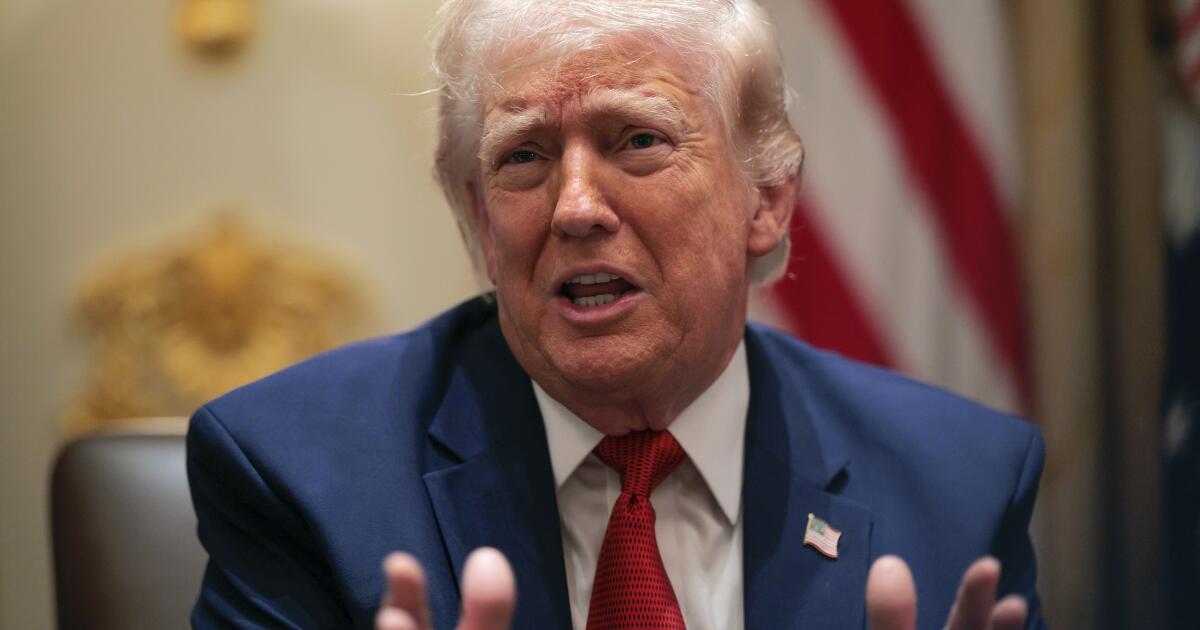
During his first Cabinet meeting since launching the U.S. war on Iran, President Trump spent 10 minutes talking about the price of ceremonial White House pens — which he claimed to have brought down, from $1,000 to $5, by switching to his favored Sharpie brand.
Trump was trying to make the point during the Thursday meeting that he’s a great money saver. He seemed chipper, joking with the other leaders of his administration at the table.
Late Thursday, when asked on “The Five” on Fox News about whether Iranian people have access to basic necessities such as drinking water and food, Trump complimented the looks of Dana Perino, the Fox host who’d asked the question, compared to when he’d met her years before.
“Now I’m not allowed to say this, it’s the end of my political career, but you may be even better looking, OK?” Trump said. “You’re not allowed to say a woman’s beautiful anymore.”
He then talked about Iranian authorities killing protesters, but said he’d been pleased with them more recently because they had given him a “present” by allowing oil ships through the Strait of Hormuz.
Through both discussions, Trump maintained a flippant, casual tone — the same he has maintained since the war began a month ago, and a vast departure from that of past wartime presidents.
For weeks, Trump has batted away criticisms of the war campaign and questions about why it was justified and how long it will last. He has derided reporters for asking questions about tactics and whether he’ll deploy boots on the ground as inappropriate and foolish, and repeatedly met concerns about the human toll of the war by shrugging them off or changing the subject.
Meanwhile, his war has cost the U.S. billions of dollars and depleted its global reserves of critical weapons systems such as Tomahawk missiles, which cost millions of dollars each and are needed to maintain U.S. security around the world, according to the Washington Post.
Entering its fifth week, the war has badly disrupted markets, with U.S. stocks falling Friday as Wall Street approached the end of its fifth straight losing week — the longest such streak in nearly four years — and oil prices rising again.
Markets have fluctuated based on Trump’s changing messages on an end to the war, planned and then postponed strikes on Iran’s power plants, strikes on oil and gas infrastructure across the Middle East and Iran’s stranglehold on the Strait of Hormuz, through which a quarter of global oil usually passes.
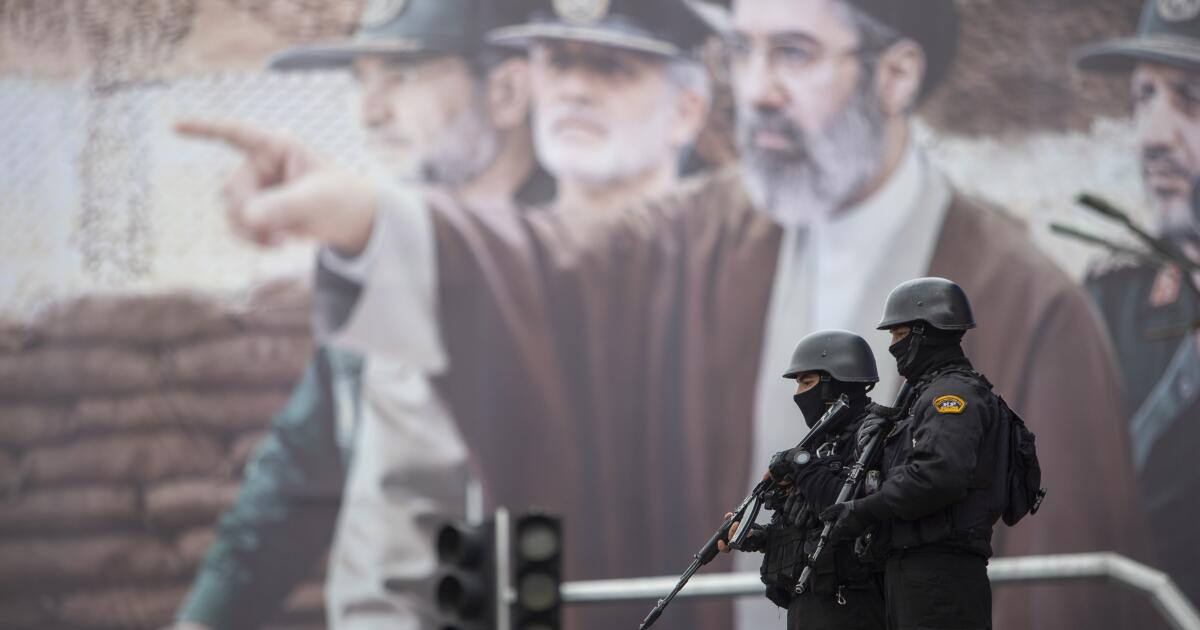
Trump has talked in recent days about an impending deal to end the war, but so far it has not materialized, with Iran downplaying the seriousness of the negotiations. Iran instead appeared to be formalizing its hold on the strait, including by creating what amounts to a toll on ships seeking passage through the channel from its Islamic Revolutionary Guard Corps.
The number of U.S. deaths in the conflict has held steady for days — at 13 — but the war continues to exact a daily, devastating toll in the Middle East. In Iran, thousands of targets continued being hit, with the death toll ticking toward 2,000.
Speaking by video during a Human Rights Council meeting in Geneva on Friday, Iranian Foreign Minister Abbas Araghchi accused the United States and Israel of harboring a “clear intent to commit genocide” in Iran, claiming that more than 600 schools had been damaged or demolished and more than 1,000 students and teachers “martyred or wounded.”
The discussion related in part to a Feb. 28 strike on an elementary school in Minab that killed more than 165 people, most of them children, which evidence reportedly suggests was the work of the U.S. and which the U.S. says is under investigation.
Casualties also continued in Gulf nations allied with the U.S., where Iran continues to strike U.S. military installations and other infrastructure, and in Lebanon, which Israel has invaded and bombed relentlessly in its own war with the Iranian-aligned Hezbollah force.
And yet, Trump has bounced between speaking engagements and more formal meetings with an apparent lightness — seeming unbothered by the weight of the conflict and acting as if U.S. victory were already at hand.
“We’ve already won the war. Militarily we’ve totally won the war,” he told “The Five” on Thursday.
After Trump’s exchange with Perino, fellow host Greg Gutfeld began to change the topic, saying, “I’m debating whether to be serious or not serious.”
“Do you think Biden would do this interview? Can you imagine? You think Biden — Sleepy Joe — he would do it?” Trump said.
He called the war a “little bit of a detour” from what he said were his otherwise winning economic policies, and asserted again — without providing evidence — that Iran was on the cusp of having a nuclear weapon and would have used it to cause devastation across the Middle East and to the U.S. if the U.S. hadn’t struck first, including when it bombed Iran’s nuclear sites last summer.
“You can’t let a madman or you can’t let a mad ideology have a nuclear weapon,” Trump said.
He repeated his long-pushed lie that he won the 2020 election, and suggested his support among his MAGA base remains at 100%.
An AP-NORC poll this week found that most Americans believe that the U.S. military campaign in Iran has gone too far — including about a quarter of Republicans — and that many are worried about gas prices.
During his Cabinet meeting Thursday, Trump seemed supremely confident, but also aware that the conflict was far from settled.
He said that the U.S. was “extremely — really a lot — ahead of schedule” in its war effort, and that “the Iranian regime is now admitting to itself that they have been decisively defeated.” But he also said that “even now, we don’t know if there are any mines” in the Strait of Hormuz, despite the U.S. having wiped out Iran’s “mine droppers,” and acknowledged that “if you think there may be a mine, that’s a bad thought and it stops things up.”
He said the U.S. has “decimated” about 99% of Iranian capabilities, but “the problem with the strait” is that the remaining 1% threat “is unacceptable, because 1% is a missile going into the hull of a ship that cost $1 billion.”
“If we do a 99% decimation, that’s no good,” he said.
During “The Five” interview, Trump was also asked if the CIA had told him that Supreme Leader Ayatollah Mojtaba Khamenei — who took on the Iranian leadership role after his father, Supreme Leader Ayatollah Ali Khamenei, was killed in initial strikes — is gay, which would be a crime under Iranian law.
“Well they did say that, but I don’t know if it was only them. I think a lot of people are saying that. Which puts him off to a bad start in that particular country, you know?” Trump said, in a stunning acknowledgment of a previously rumored intelligence briefing.