IPO

AI giant Anthropic files for US IPO as investors bet big on AI future | Technology News

Anthropic, which operates AI chatbot Claude, did not disclose the size or the terms of the offering.

Artificial intelligence giant Anthropic has confidentially filed for an initial public offering (IPO) in the United States, teeing up what could become a watershed moment for Wall Street’s AI frenzy.

The move, announced on Monday, sets up a high-stakes test of whether investor appetite for the AI revolution that has reshaped white-collar work around the world can match the sky-high expectations surrounding the booming sector.

Recommended Stories

list of 4 itemsend of list

Anthropic, which operates AI chatbot Claude, did not disclose the size or the terms of the offering. Confidential submissions let companies advance IPO preparations while shielding sensitive financial details from rivals and the public.

Anthropic last raised $65bn at a post-money valuation of $965bn in late May, putting it ahead of rival OpenAI. The company said at the time it was making annualised revenue of $47bn from selling its technology to people and organisations using Claude to write code and do other work and personal tasks on their behalf.

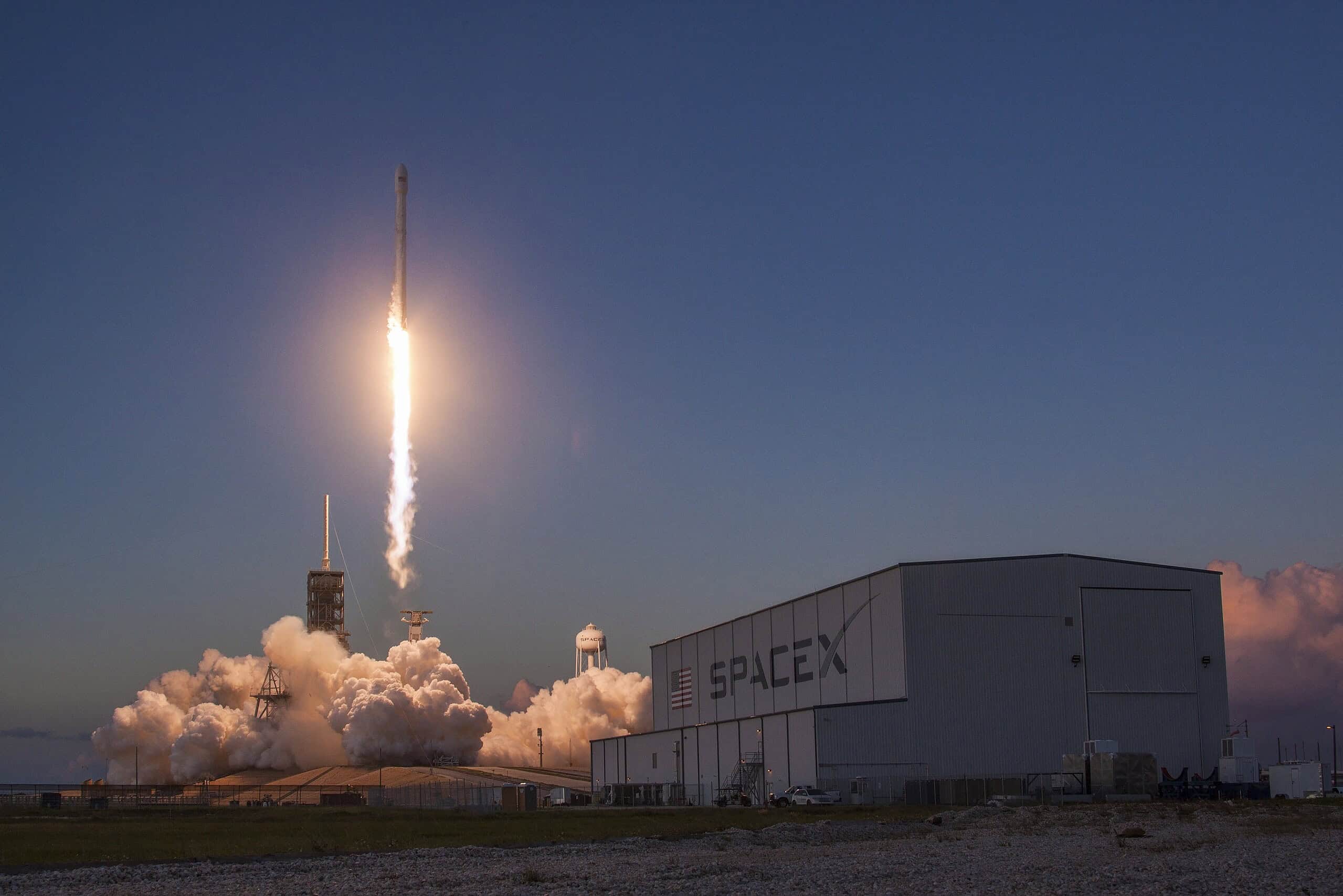
The crucial step towards a listing comes on the heels of SpaceX’s mega-IPO, which is on course to rewrite the record books as the Elon Musk-led company pursues a $75bn offering at a $1.75 trillion valuation.

Anthropic was formed in 2021 by ex-OpenAI leaders, and now both AI firms, along with Elon Musk’s rocket and AI company SpaceX, are all expected to become publicly traded. All three are also still losing more money than they make, fuelling concerns of an AI bubble.

OpenAI and Anthropic have become the face of the AI boom that has redrawn corporate strategies, sparked a global arms race for computing power and talent, and turned AI-linked companies into some of the market’s most richly valued firms.

Anthropic’s rapid rise in early 2026 rattled markets, triggering sharp sell-offs in software and IT stocks as investors worried its increasingly autonomous AI tools could upend traditional business models and accelerate disruption across industries.

“OpenAI and Anthropic are in a race to go public before capital runs out,” said analyst Gil Luria from the investment firm DA Davidson.

“The other reason for Anthropic to try to beat OpenAI out to the public market is that they will get to set the agenda for how a frontier model reports financials and do so in a way that is favourable to their financial model.”

OpenAI is also preparing to confidentially file for a US IPO in the coming weeks, adding to a wave of blockbuster ‌listings anticipated in the year ahead.

A market milestone

As many blockbuster listings race towards public markets, companies from SpaceX to AI giants are competing for a finite pool of investor capital.

“The combined demand for capital from SpaceX, OpenAI and Anthropic will be so considerable that it is likely to create disruptions in the capital markets, so going early will be a great advantage,” Luria said.

The listing would represent one of the most consequential stock market debuts in years, potentially reshaping benchmark indexes, investor flows and the broader narrative driving US equities.

At close to a $1 trillion valuation, Anthropic would vault into the top tier of the S&P 500, alongside a handful of elite companies that dominate global equity markets.

An Anthropic debut would be a major boost for the long-sluggish IPO market, though experts and bankers warn an offering of such scale could drain liquidity and investor attention from smaller listings.

Source link

Finnish smart ring maker Oura plans IPO at over €9 billion as wearable market heats up

Published on

Oura, the Finnish company that created the ring-shaped health tracker worn by millions worldwide, has confidentially submitted draft paperwork to the US Securities and Exchange Commission for a proposed IPO, according to several reports.


ADVERTISEMENT


ADVERTISEMENT

While the number of shares and the expected price range remain undisclosed, the company had a recent funding round in the fall of 2025 that valued the business at around $11 billion (€9.5bn), more than double the $5 billion (€4.3bn) valuation it earned in a previous round in 2024.

According to CEO Tom Hale, more than 5.5 million Oura rings had been sold up to the end of last year’s third quarter.

At the time, Hale also projected that the company would reach $2 billion (€1.7bn) in annual revenue in 2026 compared with $500 million (€430mn) just two years ago.

The move towards an IPO puts a European wearable brand on Wall Street’s radar at a time when investor appetite for consumer health technology appears to be returning.

Oura has become a standout name in the fast-growing smart ring category, competing against smartwatch giants such as Apple, Garmin and Samsung, while carving out a niche with a distinct piece of hardware that some consumers find less obtrusive.

Over the past two years, the company has expanded aggressively into software, subscriptions and AI-powered health analysis. Its wearable platform now focuses on long-term health signals including sleep, readiness, heart rate, stress and recovery.

More recently, Oura has pushed further into women’s health and AI-based personal coaching, including tools designed to interpret physiological data and provide tailored wellness recommendations.

Analysts see that transition from device maker to subscripton-based health platform as central to its IPO pitch as the firm is currently on pace to surpass 5 million paid members.

A European tech champion heading to US markets

The IPO filing marks a significant moment for one of Europe’s most prominent health tech success stories.

Founded in Finland and developed around research into sleep, recovery and biometric monitoring, Oura has grown from a Nordic hardware start-up into a global player in the wearable market.

However, for Europe’s start-up ecosystem, Oura’s planned listing carries broader significance.

While its roots and design philosophy are deeply tied to Finland, the company recently transitioned to a US-based parent company, named Oura Inc. and headquartered in San Francisco, to access American venture capital while keeping its European operations.

Its decision to prepare for a US listing rather than a European one reflects a wider pattern among high-growth European tech firms seeking deeper capital markets and greater visibility among global investors.

The planned flotation arrives during renewed debate over whether Europe is losing some of its most successful technology companies to US exchanges.

Oura joins a growing list of European-founded businesses choosing Wall Street as their route to public markets, drawn by scale, liquidity and stronger investor familiarity with consumer technology.

The company’s IPO will also be seen as a test of investor sentiment towards wearable technology after a mixed few years for the sector.

Unlike smartwatches, smart rings remain a relatively young category, though interest has accelerated rapidly.

Oura is widely viewed as the segment’s category leader and its public debut could offer a clearer benchmark for how markets value next-generation health hardware combined with software subscriptions and AI services.

Source link

SpaceX IPO ready for launch as countdown begins for what could be the biggest ever listing

SpaceX founder Elon Musk announced plans on Wednesday for one of the biggest stock sales ever, by taking a space company public that is currently losing billions of dollars a year.


ADVERTISEMENT


ADVERTISEMENT

A filing shows that SpaceX lost $2.6 billion (€2.24bn) from operations last year on $18.7 billion in revenue, and the losses continued at the start of this year.

The prospectus did not put a dollar figure on the amount Musk hopes to raise, but various reports have estimated it at around $75bn (€64.5bn). An offering of that size would easily surpass the current title holder, Saudi Aramco, the oil giant that went public seven years ago and raised $26bn (€22.4bn).

SpaceX, formally known as Space Exploration Technologies Corp., said the money will help finance projects to put people on the Moon and Mars, as part of its goal to make humans an interplanetary species in the face of existential threats that could wipe out civilisation.

“We do not want humans to have the same fate as dinosaurs,” the filing states.

The prospectus reads, in part, like a Hollywood-style vision of the future, detailing in one section that part of Musk’s compensation will be granted only if he maintains “a permanent human colony on Mars with at least one million inhabitants.”

Short of that, the stock sale alone could make Musk — the founder and a major shareholder of SpaceX — the world’s first trillionaire. Forbes currently estimates his net worth at $839bn (€722bn), roughly equivalent to Poland’s annual GDP.

Losses mount despite strong revenue and Starlink growth

In addition to making reusable rockets to send astronauts into orbit, SpaceX has other businesses, some successful and others struggling, with plenty of question marks.

The document shows that Starlink, the world’s largest satellite communications company, is a major source of cash, generating $4.4bn (€3.8bn) in operating income last year. The business uses 10,000 satellites in low orbit to provide internet service to 10 million people in 150 countries and territories.

Among the struggling businesses are two Musk ventures recently acquired by SpaceX — his social media platform X, formerly Twitter, and his artificial intelligence firm xAI. Those purchases were criticised by some SpaceX investors as bailouts, as both are significant loss-makers.

The prospectus said its AI business lost $6.4bn (€5.5bn) from operations last year.

The original SpaceX business — building rockets and conducting launches — has benefited from major government contracts, raising questions that could come back to affect the company. Given Musk’s close ties to the Trump administration, government ethics lawyers and watchdogs have questioned whether he received preferential treatment in securing taxpayer-funded contracts, and whether that support will continue once Donald Trump leaves office.

SpaceX has won contracts worth $6bn (€5.2bn) from NASA, the Defence Department and other government agencies over the past five years, according to USAspending.gov. The company noted in its filing that one-fifth of its revenue last year came from the federal government.

Musk was the biggest donor to Trump’s presidential campaign and remains a major backer, despite a sometimes rocky relationship following his role in the government cost-cutting effort known as DOGE early last year.

Musk’s pay tied to ambitious targets as he retains firm control

Like many corporate CEOs, Musk’s compensation goes far beyond his annual salary, which was $54,080 (€46,538.5)in 2025 and has remained unchanged since 2019, according to the filing.

The prospectus says stock grants for him will be divided into 15 nearly equal tranches — 67 million shares each — and will vest only as the company reaches preset market capitalisation targets. In addition to the Mars colony milestone, SpaceX’s market value would need to reach $7.5 trillion (€6.45tr) for him to receive the full award.

He would receive additional stock awards if SpaceX succeeds in deploying giant data centres the size of football fields in space.

The document shows Musk will retain significant control over the business.

It states that he and certain other shareholders will receive shares in a special class of stock that gives them 10 votes per share. These shareholders will be able, among other things, to elect a majority of the company’s board of directors.

“This will limit or preclude your ability to influence corporate matters and the election of our directors,” SpaceX said in a warning to prospective investors.

SpaceX will be able to market the offering to investors — in what is known on Wall Street as a “roadshow” — 15 days after making its prospectus public. In this case, that would be 4 June.

Source link

UzNIF debuts on London market in first international Uzbek IPO

Uzbekistan’s National Investment Fund, known as UzNIF, began trading on the London Stock Exchange on Monday, marking the country’s first international equity offering.


ADVERTISEMENT


ADVERTISEMENT

The fund, which is managed by Franklin Templeton, also launched simultaneously on the Tashkent Stock Exchange through a dual listing structure, bringing Uzbek state-linked assets to international equity markets for the first time.

The opening ceremony at the London Stock Exchange brought together executives, investors and Uzbek officials, with speakers presenting the listing as a significant step in the country’s efforts to expand access to international capital markets.

First international equity offering

Speaking during the ceremony, Julia Hoggett, Chief Executive Officer of the London Stock Exchange, described the IPO as “the first ever international IPO out of Uzbekistan” and said the transaction could help “more global investment to flow” into the country’s economy.

Hoggett also said the dual listing marked “a new chapter both in London and in Tashkent”, adding that the offering connected international investors with a portfolio of Uzbek companies through a single fund managed by an international asset manager.

Saida Mirziyoyeva, Head of the Administration of the President of Uzbekistan, said Uzbekistan was preparing “new listings” and expanding private sector participation, while also working on plans linked to the proposed Tashkent International Financial Centre.

Speaking from the London Stock Exchange balcony, Mirziyoyeva said the IPO was “not just about raising capital” but also about “building trust in a new generation of Uzbek institutions”.

Jenny Johnson, President and Chief Executive Officer of Franklin Templeton, described the IPO as “a defining and historic milestone” for both Uzbekistan and Franklin Templeton, saying the transaction had generated more than $2.8 billion in investor demand globally.

Johnson said orders exceeded the initial offering by more than four times during the bookbuilding process, which ran from late April to mid-May. She added that the domestic offering in Tashkent had become the country’s “largest local listing to date”, allowing local investors to participate alongside international institutional funds.

International investors and state assets

Thirty percent of the fund’s shares were offered internationally through global depositary receipts, while part of the allocation was also made available to domestic investors through the Tashkent Stock Exchange.

According to previously released information from the fund and its advisers, international demand reached around $2.9 billion (€2.6bn), with more than 160 institutional investors participating in the offering. Among them were BlackRock, Franklin Templeton and Redwheel.

The IPO raised approximately $603.6 million (€540m), valuing the fund at around $1.95 billion (€1.74bn) at the offer price. The shares were sold by Uzbekistan’s Ministry of Economy and Finance, meaning the proceeds from the transaction will go to the state rather than directly to the fund itself.

The international tranche included more than 23 million global depositary receipts, or GDRs, listed in London under the trading symbols UZNF and UZ20. One GDR represents 64,700 shares in the fund.

Cornerstone investors, including funds and accounts managed by BlackRock, Franklin Resources and Redwheel, as well as treasury companies linked to the Allan & Gill Gray Foundation, committed a combined $300 million (€268m) to the offering.

UzNIF was established in 2024 under a presidential decree and is managed by Franklin Templeton, the US-based investment company that oversees more than $1.4 trillion (€1.25 trn) in assets globally and operates in more than 150 countries.

The fund’s portfolio includes stakes in 13 state-linked companies operating in sectors considered strategic for the Uzbek economy, including electricity distribution, thermal power generation, hydropower, telecommunications, aviation, rail infrastructure, utilities and banking.

Among the companies included in the portfolio are Uzbektelecom, Uzbekistan Airways, Uzbekhydroenergo and several state energy and infrastructure operators.

The listing also reflects broader efforts to develop domestic capital markets in Uzbekistan and increase participation from local investors alongside international institutions.

Source link

China’s AI IPO Boom Leaves US in the Dust

Chinese AI firms dominate Hong Kong IPOs with $22 billion in exits, while US tech listings lag amid investor skepticism.

China’s artificial intelligence companies are driving a sharp divergence in global IPO markets, dominating first-quarter listings in Hong Kong and outpacing U.S. tech peers as investor sentiment fractures across regions.

Consider the trend: Chinese AI firms listed in Hong Kong accounted for four of the largest public listings in the first quarter. According to new data from PitchBook, these companies — Z.ai, MiniMax, Biren Technology and Iluvatar CoreX Semiconductor — collectively helped drive more than $22 billion in AI-related exit value during the quarter.

Adding Edge Medical, a surgical robotics company, brings the total for all five Chinese listings to over $24 billion.

The performance stands in sharp contrast to the muted reception many U.S. technology IPOs have faced. Investors have grown increasingly skeptical of richly valued software companies amid concerns that AI could disrupt traditional software business models.

“It’s genuinely a confluence of factors rather than any single driver,” Harrison Rolfes, senior research analyst at PitchBook, told Global Finance. “The DeepSeek moment in early 2025 fundamentally shifted investor perception of Chinese AI capability, and that rerating carried momentum into these listings.”

Rolfes said geopolitical considerations also played a major role, creating what he described as a “national champion premium” among investors in Hong Kong and broader Asian markets.

“Structurally, these companies came to market at more digestible valuations relative to their growth profiles compared to U.S. tech IPOs, which have repeatedly disappointed at high entry multiples,” he said.

Investor enthusiasm surrounding Chinese AI firms has emerged as U.S. IPO performance deteriorates.

A Record Stretch of IPO Underperformance

According to PitchBook data, the median U.S. IPO has underperformed its benchmark by 42 percentage points within 120 days of listing over the trailing 12 months.

“That’s historically the worst stretch in our dataset,” Rolfes said.

PitchBook noted that 2025 already represented a record low, with median IPOs trailing benchmarks by 35.6 percentage points after 120 days. Early 2026 listings are performing even worse, according to the report.

The closest comparison, Rolfes said, was the post-boom correction in 2021, when median U.S. IPOs lagged their benchmarks by 32 percentage points following aggressive pricing during the .

Globally, the median venture capital-backed IPO has underperformed the Morningstar U.S. Market Broad Growth Extended Index—a broad U.S. equity benchmark—by nearly seven percentage points over the past year. In the U.S., the index as a growth-stock yardstick shows that the gap widens sharply to 42 percentage points within 120 days of listing.

Roughly 66% of companies that have gone public since the start of 2025 are currently trading below their IPO prices, PitchBook found.

“The deterioration is progressive, suggesting that initial pricing optimism is giving way to fundamental reassessment as lockup expirations approach and more information reaches the market,” according to the May 5 report.

The divergence in performance has been particularly stark among high-profile tech listings.

SaaSpocalypse to Blame?

CoreWeave, based in Livingston, New Jersey, saw its shares nearly triple since its debut as investor demand for AI computing infrastructure accelerated. But many other venture-backed listings have struggled—badly.

Among the U.S.-listed laggards are shares of eToro, down 45.2%; Netskope, down 61%; Klarna, down 67.1%; Figma, down 85.7%; and Gemini Space Station, down 86.3%.

PitchBook said broader public SaaS markets have also weakened as investors increasingly treat AI as a threat to incumbent software firms rather than a growth catalyst.

“Public markets appear to be treating AI not as a tailwind for existing software but as a displacement risk, which many are calling a ‘SaaSpocalypse,’ in which incumbents are repriced downward even as private AI unicorns command record valuations,” according to the report.

For investors, the divergence raises questions about whether U.S.-listed AI companies still offer the best risk-adjusted exposure to the global AI boom.

“The companies leading Hong Kong’s surge — semiconductor designers, applied AI platforms and robotics-adjacent businesses — are generating real revenue with defensible vertical positioning, and they have outperformed their U.S. counterparts by a wide margin,” Rolfes said.

What’s Next?

Expect investors to take a closer look at how heavily their portfolios are tilted toward specific geographies, considering AI-related valuation premiums are persisting longer in Hong Kong than in New York.

Rolfes also cautioned that some of the highest-valued Chinese AI names could eventually face corrections. Still, the underlying businesses are stronger than many Western investors have assumed, he argued.

“The broader takeaway,” he said, “is that Chinese AI has likely graduated from a risk to monitor to a market to understand.”

Source link