The Invisible Data Trail Behind Everyday Life in Nigeria
Even before the first naira changes hands or the first customer calls, Musa Lekki reaches for his phone. It is 5:32 a.m. on a Tuesday, and like many smartphone users, he begins his day with a glance at his phone screen. The 42-year-old provisions trader lives in Yola, northeastern Nigeria, and runs a small wholesale business supplying neighbouring shops and customers with rice, beverages, and household goods.
As he unlocks his phone, there is already work waiting for him. A supplier has sent a voice note. A customer wants to confirm a payment. Another customer has placed an order. Before he has even left his bed, Musa is responding to messages and preparing for the business day ahead.
What appears to be a routine start to the morning is also a series of digital interactions. Within minutes of waking up, Musa has engaged with systems that recognise his phone number, device information, account credentials, and network location.
Each interaction leaves a data trail. A phone call generates telecommunications records. A bank transfer creates transaction logs. A utility payment produces another digital entry. Individually, these fragments may seem insignificant. Together, they form an increasingly detailed portrait of everyday life, which is increasingly mediated and supported by Digital Public Infrastructure (DPI) rails, a set of foundational digital systems that form the backbone of modern societies, enabling secure and seamless interactions between people, businesses, and governments.
Musa does not think about any of this. Most mobile phone and internet users do not.
“During the day, I use my phone for transfers, calls, and ordering goods, and by night I check my account balance before closing for the day,” he said.
As Nigeria expands its digital identity and payment systems, everyday activities such as making calls, sending money, paying bills, and accessing services are becoming increasingly dependent on interconnected digital infrastructure. Musa’s daily routine shows how Digital Public Infrastructure is reshaping daily life, expanding access to services while also raising questions about privacy, transparency and accountability.
What Musa sees is a phone. What he does not see is an invisible infrastructure that increasingly determines who can communicate, who can make payments, who can access services, and who can participate fully in modern economic life. By the time he goes to bed, several institutions will have processed fragments of his personal information. Many of those interactions will happen without him ever knowing.
This is how millions of Nigerian residents increasingly navigate life as data points within systems they rarely see.
The identity that travels ahead
At 6:45 a.m., Musa calls a supplier in Kano. The conversation lasts less than three minutes. It is a routine business call, yet that call depends on a national identity system. In 2020, the Nigerian Communications Commission (NCC) directed all mobile network operators to link users’ Subscriber Identification Module (SIM) cards to their National Identification Number (NINs) and to bar those who did not comply. Musa’s line was among those affected.
“There was a time my SIM was restricted because of an issue with my NIN linkage,” he recalled. “I couldn’t make calls for some days and also lost customers, until I sorted it out.”
The experience taught him something many Nigerians have learned: The ability to make a phone call increasingly depends on proving who you are. Identity is one of the key layers of a DPI. In Nigeria, the NIN is the foundational identity document, managed by the National Identity Management Commission (NIMC).
As of December 2025, the NIMC reported more than 127 million NIN enrolments nationwide, making it one of Africa’s largest digital identity databases, while over 172.67 million SIM cards had been linked to NINs.
Nunaya David, a senior enrolment officer at the NIMC, Yola, said, “NIN is increasingly required for banking, telecommunications, social programmes, and several government services.” Identity is no longer simply something Nigerians carry in a wallet; it is increasingly verified continuously in the background.
The money moves, the data moves too
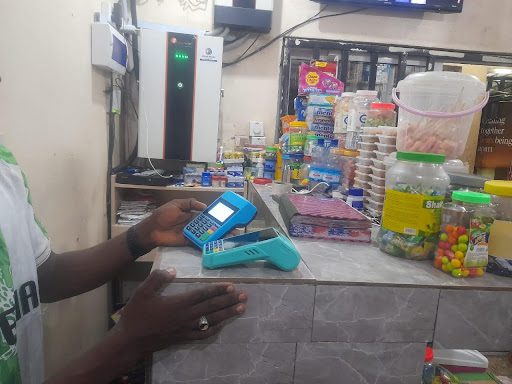
Shortly after 7 a.m., Musa pays ₦45,000 to a supplier. The transfer takes less than a minute. Money leaves one account and appears in another. With a few taps, Musa has interacted with another stack of the DPI: the payment layer. Behind that transaction, the payment infrastructure operated by banks, fintechs, and the Nigeria Interbank Settlement System (NIBSS) performs multiple checks.
“Once a transfer is initiated, the request passes through several systems before reaching the recipient,” Hakeem Abdulkareem, a tech specialist with NIBSS, explained. “These systems communicate with one another to confirm and complete the transaction.”
Identity verification, fraud screening, account authentication and transaction routing all happen in the background. Most of it occurs within seconds. The customer sees only a debit alert while the infrastructure works in the background.
According to the Central Bank of Nigeria, electronic payment channels now account for the majority of retail payment activity, with internet transfers, mobile payments and point-of-sale transactions becoming increasingly dominant. Data from NIBSS show that Nigeria recorded ₦284.99 trillion in electronic payment transactions in the first quarter of 2025, representing a 17.7 per cent year-on-year increase compared with ₦234.49 trillion recorded in the same period in 2024. This reflects how deeply electronic payments have become embedded in everyday economic activity. Each transfer generates records that move across banks, payment switches, and settlement systems, creating the digital trail that allows modern commerce to function.
A market built on digital trust
For Musa, these systems are largely invisible. What he sees are payment alerts arriving on his phone and customers walking through his door. By mid-morning, those customers have started to arrive. One of them is Aisha Bello, a 21-year-old student at Modibbo Adama University, preparing for a new academic session. Like Musa, she relies on digital systems she rarely thinks about.
Her school registration requires identity verification. Her bank account relies on Bank Verification Number (BVN). Her mobile line and BVN are all linked to her NIN.
As she pays Musa electronically, two very different lives intersect through the same digital infrastructure. Neither sees the systems operating behind the scenes, yet both depend on them.
The same is true for Grace Ezra, a nurse at Modibbo Adama University Teaching Hospital in Yola. Like Musa and Aisha, she increasingly relies on digital systems to manage her salary payments, telecommunications services, tax records, and pension contributions.
Frank Akabueze, a digital identity expert, describes Nigeria’s journey as a gradual shift from fragmented systems to interconnected ones. “We have moved from having several disconnected identity systems toward greater integration.”
Increasingly, a person’s ability to study, work, save, communicate, and transact begins with a digital identity record. This speaks to the third layer of DPI, interoperability, the ability of different digital systems to speak to each other securely.

The invisible checks
Around noon, Musa buys airtime through a mobile app. Moments later, he pays an electricity bill. The transactions feel routine, but each leaves a digital footprint. Each creates records, generates data and triggers some form of verification.
Airtime purchases, utility payments, transfers and merchant payments may appear unrelated, but increasingly they travel through interconnected platforms that rely on identity verification, payment infrastructure and data exchange mechanisms working together in the background. The power of DPI lies in the ability of these systems to communicate with one another. This interoperability allows a verified identity, a payment instruction and a service request to move across different platforms within seconds.
Esther Kolo, a staff member at Opay, a leading digital financial services provider in Nigeria, explains that many customers only notice verification during registration. “Most people notice identity verification during account registration, but checks can also happen when account details are updated or when unusual transactions are detected. In many cases, these checks happen in the background.”
The reality is that verification does not end after account creation. It becomes part of daily life. The systems simply become invisible. Every interaction leaves behind another record. Those records may sit in various databases, often connected in ways users never see. By midday, Musa has become far more than a trader buying and selling goods. He is part of a growing collection of records moving across this ecosystem.
When identity becomes the gatekeeper
Later in the afternoon, Musa receives a call from his younger brother. He is trying to resolve a problem involving identity records required to open a bank account.
Across Nigeria, mismatched records, incorrect dates of birth, missing details, and verification failures have become common sources of frustration. As systems become more interconnected, a discrepancy in one database can sometimes affect access to services that depend on another.
Such complaints have become familiar in identity management centres and online forums, where citizens report problems ranging from incorrect personal details and outdated biometric records to difficulties validating identity information across different systems. According to Nunaya of NIMC, “The person may experience delays in accessing certain services until the issue is resolved.”
As more services become interconnected, identity functions as a gatekeeper. When systems work properly, access becomes easier. When records fail, opportunities can disappear, sometimes without warning. The same infrastructure designed to enable inclusion can also create new barriers.
For instance, in August 2025, Catherine Bello, a beneficiary of a humanitarian cash assistance programme in Adamawa, was unable to receive support because a minor discrepancy between her name on the beneficiary list and her National Identification Number (NIN) record caused the verification process to fail. Similarly, others have recounted losing access to mobile services and facing banking restrictions because their NIN, BVN, and SIM records did not match across government databases.
Who is watching the data trail?
As evening approaches, conversations throughout the day prompt Musa to reflect on something he rarely considers: who actually has access to all this information? His answer is uncertain. “I know my bank, telecom company, and government agencies have my details. Honestly, I don’t really know who else can access the information or how it is being used.”
Digital rights advocates say Musa’s uncertainty underpins the challenges facing millions of Nigerians. As more services become digital and become interconnected through digital identity and payment systems, citizens often have little visibility into how their information is shared, stored, or processed across institutions.
Gbenga Sesan, Executive Director of Paradigm Initiative, a digital rights advocacy organisation, said the challenge is not only the collection of personal information but the lack of transparency surrounding its use.
“Many people provide information to access essential services without fully understanding where that data goes, who can access it, or how long it may be retained,” he said, adding that public trust in digital systems depends not only on efficiency and convenience but also on clear safeguards, transparency and accountability.
As identity systems, payment systems, and service delivery platforms become more interconnected, questions about transparency become increasingly important.
According to Vincent Olatunji, the Nigeria Data Protection Commission (NDPC), for identity management to be effective, there is a need for harmonised policies, secure technologies and inclusive systems. “The more systems are connected, the greater the impact if information is mishandled or exposed,” he noted.
Reports have shown how vulnerable these systems can be when safeguards fail. In 2025, the Foundation for Investigative Journalism uncovered websites that offered access to Nigerians’ sensitive personal information, including NINs, BVNs, photographs, and other identity records, for small fees. One platform reportedly sold access to personal records for ₦70-₦150, while another provided unauthorised identity-related services despite not being licensed by the NIMC.

These incidents illustrate the risks that emerge when large volumes of personal data are concentrated within interconnected digital systems without proper safeguards.
Olatunji of NDPC noted that the Nigeria Data Protection Act has established rules governing how personal information should be collected, processed, stored, and shared. Citizens have rights and organisations have obligations, but awareness is limited. “Organisations are generally expected to explain why information is being collected and how it will be used,” he explained.
Under the Act, citizens have several rights over their personal information. These include the right to know why their data is being collected, the right to request access to personal information held about them, the right to seek correction of inaccurate records, the right to withdraw consent for certain forms of data processing, and the right to seek redress when their information is misused. The law also requires organisations to explain how personal data will be used and gives individuals the right to lodge complaints with the NDPC when they believe their rights have been violated.
In practical terms, these rights mean that citizens are not merely sources of data, but they are entitled to ask questions about how their information is used, request access to records held about them, and challenge organisations that fail to protect their information. Yet awareness of these protections remains low among ordinary users.
Musa says he has heard of data protection laws but does not know what rights they give him. Like many Nigerians, he uses digital services every day without fully understanding who controls the information he generates.
Before bedtime, by 9:45 p.m., Musa checks his account balance for the final time. The day is over. He has made phone calls, received payments, sent transfers, paid utility bills, purchased airtime and verified identities. Each action took only seconds. Each left a record somewhere. Some records sit inside telecom databases. Others exist in banking systems, payment switches, identity registries and government platforms. Together they form a digital version of Musa’s day, one that is often more detailed than he realises.
“Many people do not realise how often their identity is being checked behind the scenes,” Frank noted.
This report is produced under the DPI Africa Journalism Fellowship Programme of the Media Foundation for West Africa and Co-Develop.