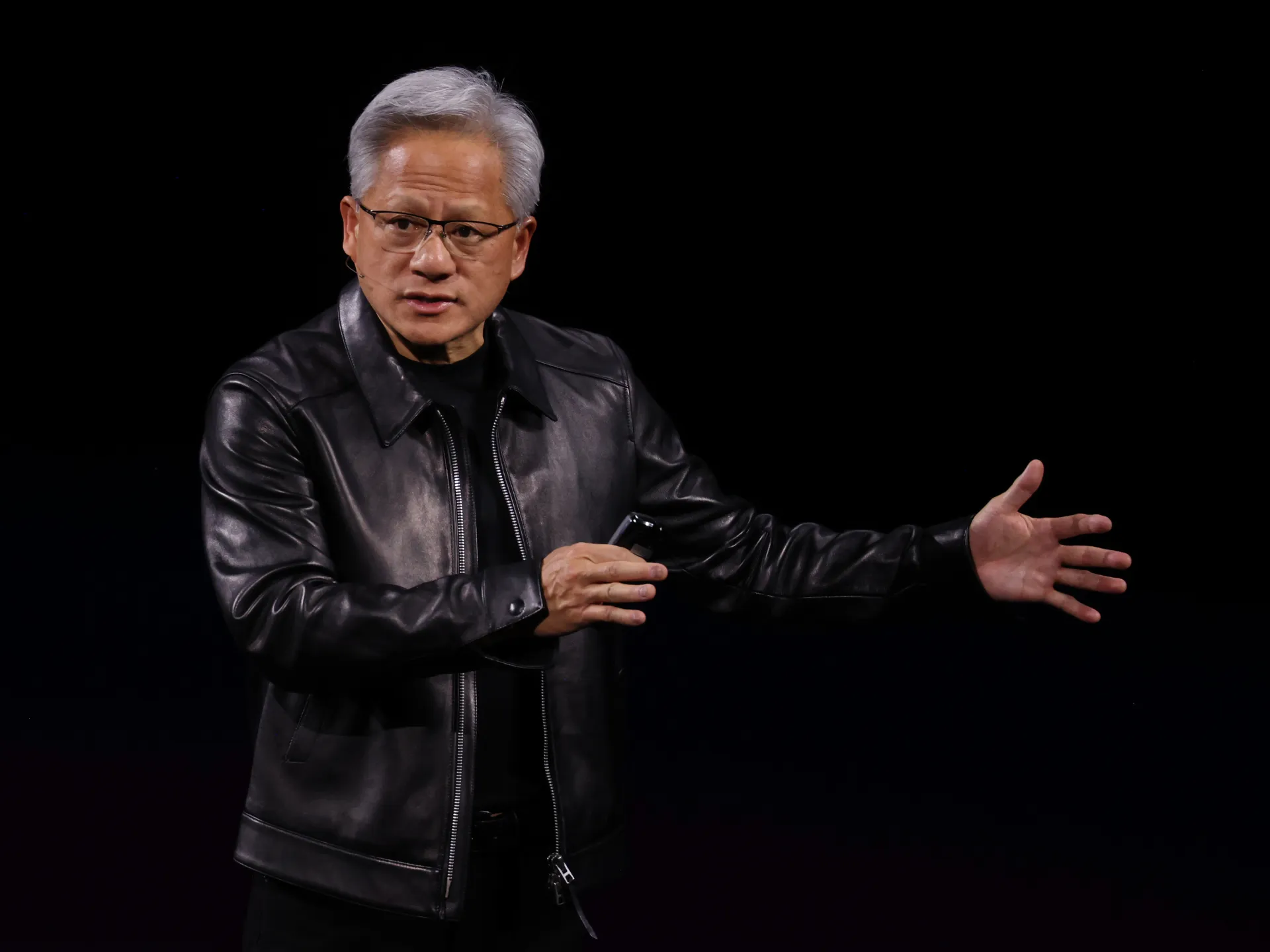
US chipmaker Nvidia investigates CEO Jensen Huang over affair | Crime News
United States-based chipmaker Nvidia is investigating its chief executive officer, billionaire Jensen Huang, after he confirmed he had an intimate relationship with a woman accused of working for Chinese intelligence.
In an announcement on Sunday, Nvidia said the probe would be conducted by a “committee of independent directors” with outside counsel.
Recommended Stories
list of 3 itemsend of list
“While the board has no reason to believe that either national security or Nvidia secrets were compromised, the board’s inquiry will examine all available information,” Nvidia’s board of directors said.
It said the board continued to have “confidence in Jensen and his leadership team”. Huang will continue to lead Nvidia during the probe.
The investigation follows a report in The New York Times last month that Jensen may have been the target of a Chinese espionage plot.
China and the US have been in competition to dominate key tech sectors like artificial intelligence (AI).
Amid the AI boom, Nvidia has seen demand for its chips and programming interfaces explode, resulting in the company being valued in the trillions of dollars.
For years, the US has sought to restrict the export of advanced chips to China, fearing the Asian superpower could gain an edge over its technology and military sectors.
But on October 29, The New York Times said it had obtained exclusive information that a Chinese woman named Alice Huang, or Huang Le, sought to cultivate close ties with Jensen Huang in an effort to glean information about Nvidia’s technology.
The Chinese Embassy in Washington, DC, has denied any allegations of spying in the case.
The New York Times also reported that Alice Huang’s employer, Megaspeed, had become one of Nvidia’s largest buyers, purchasing some $4.8bn in equipment from the US firm.
Jensen Huang’s ties to Alice Huang, who is of no relation, spurred fierce bipartisan backlash in the US Congress in the aftermath of the report.
“For months, bipartisan members of Congress have raised concerns about NVIDIA’s advanced AI chips going to China,” Democratic Senator Elizabeth Warren wrote in a statement.
“NVIDIA’s Jensen Huang and NVIDIA’s board owe Congress answers. And we need to pass bipartisan legislation we have ready to stop advanced American technology from going to China.”
Republican lawmakers in the House of Representatives also called on Huang to appear and testify before Congress about the affair on November 18.
“It is vital that Congress determines the extent to which US national security has been placed at risk,” Republicans John Moolenaar, Brian Mast and Rick Crawford said in a statement.
In an email to Nvidia staff on Sunday, Huang had admitted to having an extramarital relationship.
“I was unfaithful to my wife. My actions hurt her and our children. There is no excuse for what I did,” Huang said.
Nvidia has grown rapidly in recent years with the rise of AI, producing chips for large language models developed by companies like OpenAI, Anthropic, Meta and Google.
Huang has also been closely working with US President Donald Trump since the Republican leader returned to office in 2025.
In August of that year, the Trump administration announced it would take a 15 percent cut of certain Nvidia chip sales to China.
Trump reportedly bought as much as $1.6m in Nvidia stock and sold about $1m in August, ahead of November’s midterm elections.
After the midterm races last Tuesday, stocks for AI-related companies, including Nvidia, tumbled in reaction to widespread Republican losses.
Trump has pushed back against calls to regulate AI companies, but many Democrats during the midterms campaigned on placing restrictions on the companies, including on the construction of data centres.
Nvidia lost $450bn in market value in a single trading day last week, but it rebounded on Friday, regaining 4 percent of its losses.