International Energy Agency (IEA)

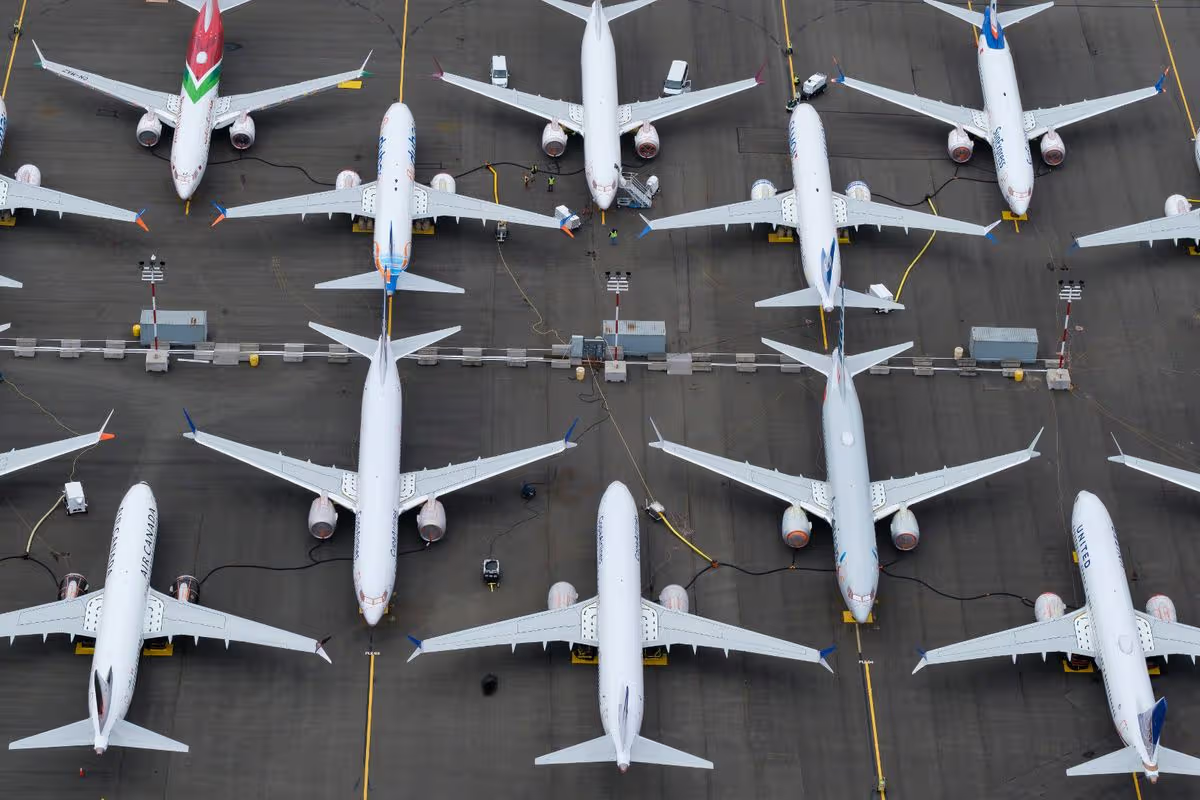
Ten airlines cancelling and grounding flights because of the fuel crisis

Europe is facing a severe jet fuel crisis due to the Middle East conflict, with International Energy Agency chief Fatih Birol warning the region has ‘maybe six weeks or so’ of jet fuel left and that flight cancellations could follow

Europe has just six weeks’ worth of jet fuel remaining due to the ongoing Middle East conflict, with major airlines grounding flights.

Fatih Birol, executive director of the International Energy Agency (IEA), warned that flight cancellations could follow “soon” if oil supplies continue to be restricted by the Iran war. Iran maintains a firm grip on tankers navigating through the Strait of Hormuz, with Mr Birol telling the Associated Press this is triggering “the largest energy crisis we have ever faced”.

He warned that Asian nations such as Japan, India and China, which depend heavily on Middle Eastern energy supplies, are on “the front line”, with the pressure set to “come to Europe and the Americas” shortly after.

Europe has just six weeks of fuel left, according to the IEA director. He added that if the Strait of Hormuz remains blocked, the knock-on effect could mean “some of the flights from city A to city B might be canceled as a result of a lack of jet fuel”.

READ MORE: Jet2 holidays changes to 14 day rule for all travellers and sends emailREAD MORE: Flight cancellations over fuel as passengers told to know their rights

Which airlines are cancelling flights?

A number of airlines have warned that they might have to cancel flights if the situation continues, but the number of those that have already done so is fewer.

Swedish flag carrier SAS has said it would cancel 1,000 flights in April because of high oil and jet fuel prices, after cancelling a “couple hundred” flights in March.

United Airlines said that five per cent of flights would be cancelled in the second and third quarters of 2026, while Dutch airline KLM has cancelled 160 flights for the coming month.

South Korean airline Asiana will slash 22 flights between April and July due to the fuel cost increase.

Hong Kong airline Cathay Pacific will cut some flights from mid-May until the end of June, with about 2% of its scheduled passenger flights grounded. Its budget airline HK Express is cutting around 6% of flights.

German airline group Lufthansa said it would ground 27 planes servicing its short-haul CityLine subsidiary earlier than it had planned, blaming jet fuel prices.

Vietnam Airlines plans to cancel 23 flights per week across domestic routes from April.

Air New Zealand will be cutting back on flights over the next two months, it announced in March. It is expected that 1,100 flights will be impacted.

Norse Atlantic Airways has removed all flights to Los Angeles International Airport from its summer schedule, blaming the fuel shortage.

Although major airlines including British Airways, Ryanair and easyJet have highlighted the potential impact of the fuel price rise on ticket costs and schedules, they are yet to cancel flights as a direct consequence.

However, BA is stopping its route from London Heathrow to Jeddah, although this is due to a shift in demand, according to the airline.

Last week, easyJet chief executive Kenton Jarvis sought to reassure passengers, stating that all airports the airline serves are “operating as normal”.

He continued: “We only ever in this industry have three to four weeks’ visibility (of jet fuel supplies), and that is the same as it was pre-crisis. We have visibility to the middle of May, and we have no concerns. What we’re seeing is airports and fuel suppliers working well to bring jet fuel to the airports.”

EasyJet revealed the Middle East conflict set the airline back roughly £25 million in elevated jet fuel costs last month. The Luton-based carrier said it anticipates reporting a headline pre-tax loss of between £540 million and £560 million for the six months ending in March.

The conflict has created “near-term uncertainty around fuel costs and customer demand”, easyJet revealed.

Bookings have dropped by two percentage points for the three-month periods ending in both June and September when compared with the previous year.

The alert regarding larger-than-anticipated first half losses sent easyJet shares tumbling by as much as 9% during early Thursday trading, before stabilising around 4% down.
Source link

Jet2 holidays changes to 14 day rule for all travellers and sends email

Airline and travel company has contacted all passengers with holidays booked to inform them of a change to when booking documents are sent out amid Middle East conflict concerns

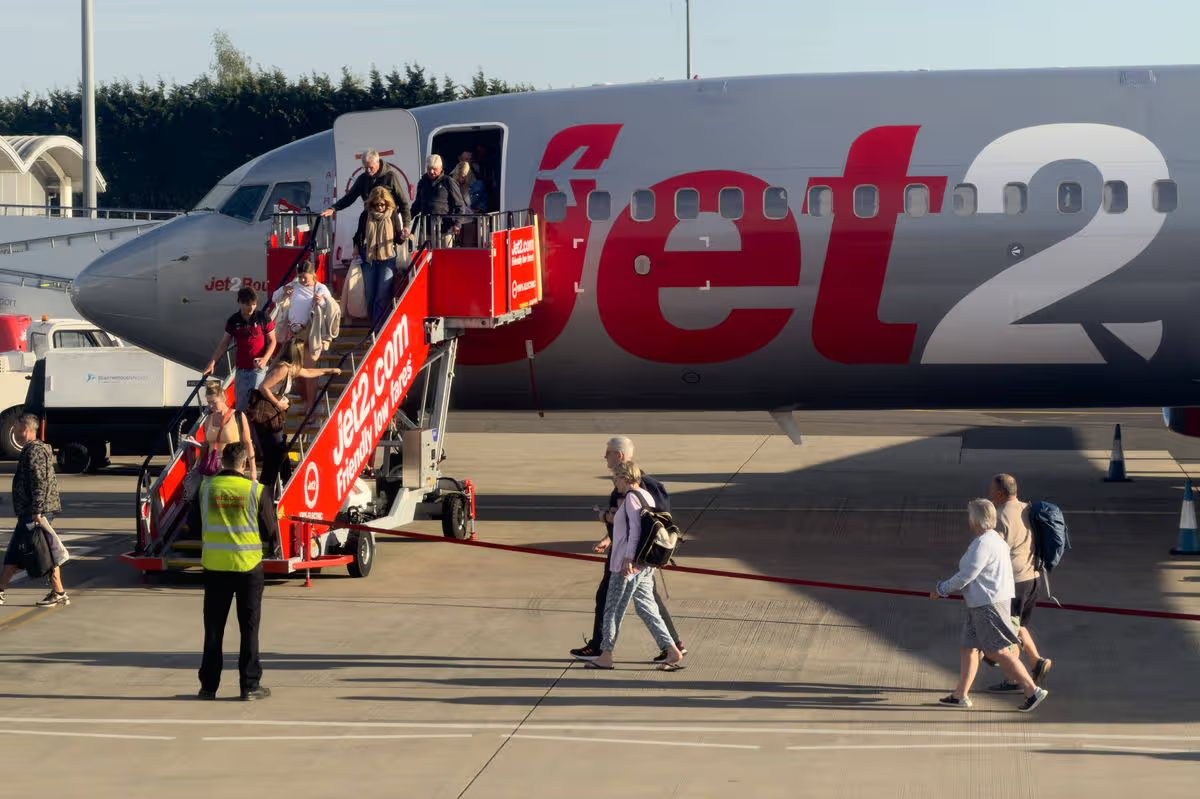
All Jet2 passengers with holidays booked have been contacted by the operator regarding an important change. Thousands of travellers have received emails notifying them that their holiday documents will be arriving later than originally expected.

This has raised alarm bells among some customers who fear it could be a scam – particularly as Jet2 has recently been warning about numerous fake social media accounts being created in an attempt to defraud passengers.

One passenger wrote on X: “@jet2tweets Hi, I’ve just received this email apparently from Jet2 saying I will now get my holiday documents 14 days before my holiday departure instead of 28, is this true or is it still 28, I’ve a feeling this was a spam email though.”

Another passenger added: “I had the same email. Flying on 25 May with jet2,” A traveller added: “Ive just had the same email !”

The email says: “Just so you know, following a change to when we send out the documents for your holiday, you’ll now receive your documents 14 days before departure, rather than 28 days as stated on your original booking confirmation. You don’t need to contact us or take any action – you’ll recveive your documents 14 days before you travel. Have a lovely holiday!”

Responding on X, Jet2 confirmed it was a genuine message and explained: “Hi there, thanks for reaching out. Yes we can confirm that you will receive your documents 14 days before departure. Should you require any further assistance, then please feel free to send us a DM. “

The shift towards holidaymakers securing their travel documents closer to their departure dates comes amid growing uncertainty sparked by the Middle East conflict. Last week, Fatih Birol, executive director of the International Energy Agency (IEA), warned there could be flight cancellations “soon” if oil supplies remain restricted by the Iran war.

The head of the world’s energy watchdog also cautioned that Europe has only six weeks’ supply of jet fuel because of the Middle East conflict. Iran continues to have a stranglehold on tankers passing through the Strait of Hormuz and has fired at several over the weekend.

Worried holidaymakers have been flooding Jet2’s social media channels with their concerns. One wrote: “@jet2tweets Hi there – we are looking to go away for a week to Malaga in June and want to know how concerned we should be about the reporting of lack of airport fuel and what happens to our holiday should something like this happen and impact our holiday. Can you help…?|”

Another posted: “Are holidays going ahead as usual? We’ve booked an all inclusive 10 day to Crete in June. I’m worried about jet fuel prices.” While a further traveller asked: “You guys aren’t planning on last-minute flight cancellations due to potential jet fuel shortages, are you? Family holiday booked in May, FYI” Jet2 responded: “Hi all, flights are planned to go ahead as normal. If anything were to change regarding your booking, we would be sure to reach out to you directly to make you aware and discuss the options available to you. Thanks”

Meanwhile, Javier Gándara, easyJet’s CEO for Spain and Portugal, spoke at the reopening of the airline’s base in Palma, Mallorca, where he gave his assessment of the current fuel supply situation: “What the producers and airports are telling us is that there won’t be any supply problems for the next three or four weeks.

“Beyond that, it’s difficult to see. In Spain, we are in a comparatively better situation than neighbouring countries for two reasons. Firstly, because of all the crude oil that is imported and then refined here, only 11% comes from the Middle East, which is the percentage affected by the closure of the Strait of Hormuz; the remaining 89% comes from elsewhere.”

He went on to warn: “No one will be immune to potential supply problems. Ships that leave and pass through the Strait of Hormuz and come to Europe take an average of 45 days, and they have already been practically out of service for two months. It will take time to recover all of that. It’s difficult to know what will happen, so we’ll react as we go.”

Source link

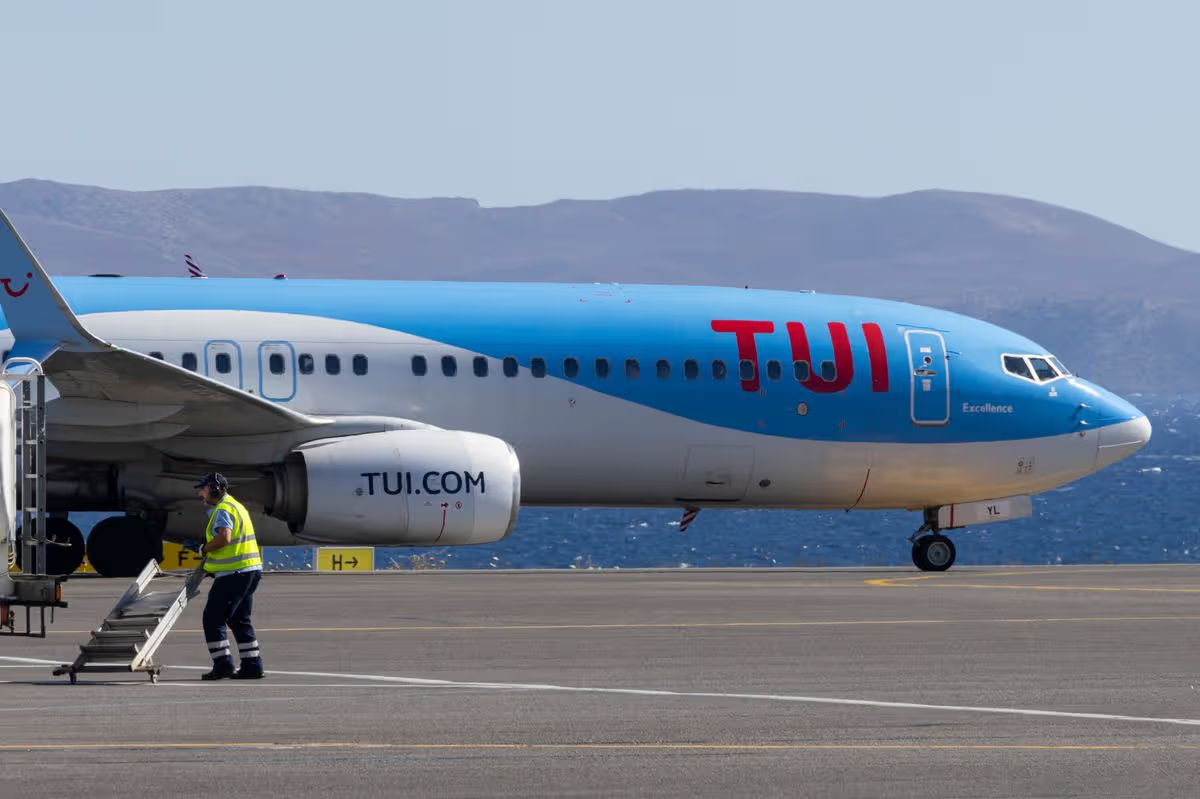
TUI update for passengers worried about risk of ‘fuel shortages’

The airline responded to a passenger who asked for an update on upcoming flights

TUI has shared a message to passengers worried about possible ‘fuel shortages’. The travel company issued advice on social media, responding to a customer with concerns.

The update comes as experts have warned Europe could face jet fuel shortages if the Strait of Hormuz is not fully reopened in the coming weeks. Airports Council International (ACI) Europe, the trade body for European airports, previously said: “At this stage, we understand that if the passage through the Strait of Hormuz does not resume in any significant and stable way within the next three weeks, systemic jet fuel shortage is set to become a reality for the EU.

“The fact that we are entering the peak summer season… is only adding to those concerns.” On Thursday, the head of the International Energy Agency (IEA) warned Europe has “maybe six weeks of jet fuel left”.

Ryanair boss Michael O’Leary has also said disruption could begin in May. He previously told Sky News: “Fuel suppliers are constantly looking at the market.

“We don’t expect any disruption until early May, but if the war continues, we do run the risk of supply disruptions in Europe in May and June, and we hope the war will finish sooner than that and the risk to supply will be eliminated.”

Content cannot be displayed without consent

In response to the developments, a TUI passenger contacted the airline on X to ask if it could share an update for any flights booked after May 1. The social media user wrote: “TUIUK, with the reported jet fuel shortages, are you expecting holidays from May 1st to be affected?”

Replying to the message on April 16, a customer service team member answered on behalf of the airline. She wrote: “Hey, we’re closely monitoring the developing situation in the Middle East and its potential impact on global aviation fuel supplies.

“At present, we’re not anticipating any immediate disruption to our flight schedules or holiday programmes from fuel shortages.”

Other airlines have faced similar questions from passengers. In an X post shared with easyJet Holidays last week, a customer asked: “How concerned should we be that, given the potential aviation fuel shortages from end May, that our July flights Gatwick Bordeaux will be cancelled? Do you have surety of supply from Canada for example?”

In a response on April 10, an employee told the passenger they would be notified if any changes were made to the booking. easyJet Holidays said: “Hi there, thanks for reaching out. We do appreciate your concerns.

“Please be assured, we are monitoring the situation closely and if there were to be any changes to your booking at all, our dedicated pre-travel team would be in touch to advise on your options.”

Source link