intelligence

N. Korea’s Spy Agency a ‘Complex Threat’ Beyond Intelligence Role

Greg Scarlatoiu, executive director of the Committee for Human Rights in North Korea, speaks at an event hosted by the Washington chapter of the Korean American Union Society at the Washington Korean Community Center in Alexandria. File. Photo by Asia Today

Feb. 26 (Asia Today) — North Korea’s Reconnaissance General Bureau operates as a “complex threat entity” that merges military operations, cybercrime and terrorism under a single command structure reporting directly to leader Kim Jong Un, according to a new report from a Washington-based human rights organization.

The Committee for Human Rights in North Korea released the report Sunday, titled Reconnaissance General Bureau: The Kim Regime’s Precious Treasured Sword. It offers one of the most detailed public examinations to date of the agency’s structure, financing and global reach.

The report was authored by Robert Collins, a former U.S. Army strategist with extensive Korea-related experience, including serving as chief of strategy at the ROK-U.S. Combined Forces Command – the joint military structure that oversees the defense of South Korea.

Collins argues that the RGB defies easy comparison to conventional intelligence agencies. Unlike South Korea’s National Intelligence Service or the U.S. Central Intelligence Agency, which operate within defined mandates, the RGB consolidates military reconnaissance, special operations, cyberwarfare, espionage, psychological operations and operations targeting South Korea under one centralized chain of command.

The bureau reports to North Korea’s State Affairs Commission and ultimately to Kim Jong Un, who the report says treats it as a core instrument of regime survival. Kim has personally referred to its cyber units as a “precious treasured sword,” according to the report.

Seven Bureaus, One Command

Established in February 2009 through the merger of several intelligence and operations units, the RGB currently operates through six main bureaus and a seventh logistics unit.

The first bureau oversees agent training and infiltration missions. The second conducts military reconnaissance along the Demilitarized Zone and coastal areas. The third manages overseas intelligence and alleged international operations. The fourth handles inter-Korean dialogue and related policy support. The fifth directs cyber operations, including hacking and communications interception. The sixth provides technical support and electronic warfare capabilities, while the seventh handles rear services and logistics.

Taken together, the report assesses that the RGB maintains operational capacity across land, sea, air and cyberspace – a multi-domain reach that few comparable organizations possess.

Cyber Operations as a Revenue Engine

A substantial portion of the report is devoted to North Korea’s cyber activities, which Collins describes as both strategically and financially central to the regime.

The report estimates that North Korea maintains approximately 5,900 cyber personnel and identifies hacking groups Lazarus, Andariel and Bluenoroff as operating under the RGB’s organizational umbrella. These groups have been linked by U.S. and international authorities to some of the most significant state-sponsored cyberattacks in recent years.

Drawing on international assessments, the report alleges that North Korean-linked hackers stole approximately $1.7 billion in cryptocurrency in 2022 alone – funds it says are funneled into the country’s nuclear and missile programs, helping Pyongyang sustain its weapons development despite sweeping international sanctions.

The report also raises concern about reported cooperation between North Korean operatives and foreign cybercriminal networks, suggesting the bureau’s reach may extend further into the global criminal ecosystem than previously documented.

Human Rights in the Crosshairs

The report draws an explicit connection between the RGB’s security operations and human rights, an angle that sets it apart from purely strategic assessments of the bureau.

It argues that cyber intrusions, surveillance and information disruption campaigns may violate international covenants protecting privacy and freedom of expression. It further contends that revenue generated through cybercrime – redirected to weapons programs rather than civilian welfare – could breach obligations under international agreements on economic and social rights.

The report also revisits a series of past incidents attributed to North Korean operatives, including armed infiltrations, bombings and assassinations, characterizing them as violations of the right to life and other fundamental protections under international law.

A Threat Beyond the Peninsula

In its conclusion, the report warns that the RGB can no longer be viewed solely as a regional security concern. The integration of its cyber capabilities with emerging technologies – including drones and advanced reconnaissance systems – could significantly complicate the security environment in coming years, the report said.

The committee said the study is intended as a reference for policymakers, researchers and security specialists seeking to understand the bureau’s expanding operational scope.

No response from the North Korean government was immediately available. Pyongyang does not typically comment on reports issued by foreign organizations.

— Reported by Asia Today; translated by UPI

© Asia Today. Unauthorized reproduction or redistribution prohibited.

Original Korean report: https://www.asiatoday.co.kr/kn/view.php?key=20260226010007781

Source link

The CIA’s China Playbook and the Shadow War

In a recent move, China’s top general and a longtime confidant of President Xi Jinping, Zhang Youxia, and Joint Staff chief Liu Zhenli were removed from the Central Military Commission (CMC). An editorial published in Liberation Army Daily described both men as “seriously betraying the trust and expectations” of the Communist Party of China (CPC) and the CMC.

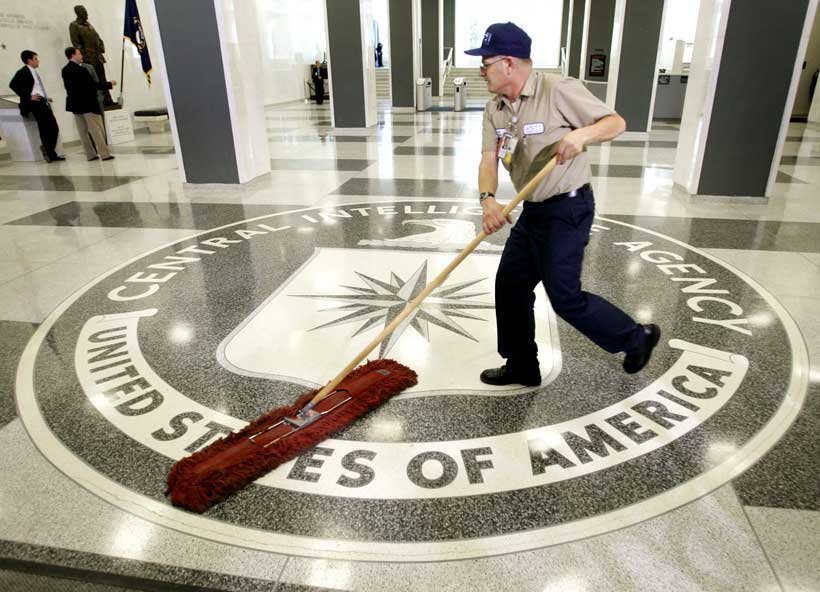
Beyond corruption allegations, Zhang was reportedly accused of leaking core technical data on China’s nuclear weapons programme to the United States. In the aftermath, the Central Intelligence Agency (CIA) released a Mandarin language recruitment video targeting disaffected Chinese soldiers. Titled “The Reason for Stepping Forward To Save the Future,” portrays a disillusioned midlevel officer choosing to contact American intelligence. The outreach appears aimed at deepening internal doubts and positioning itself as an alternative confidant for officers who may feel exposed. However, this is not the first time the agency has sought to infiltrate the country.

A History of Intelligence Operations and Resets

Intelligence rivalry stretches back to the late 1940s, when the CIA tried to monitor the Soviet nuclear programme by placing listening devices within China and along its Soviet border. Surveillance also extended to the Xinjiang region, tracking uranium, gold, petroleum, and Soviet aid to the CPC during its war with the US backed Guomindang for regional control. Despite these efforts, the intelligence gathered remained minimal at best, from October 1950 to July 1953 the agency also failed to achieve its primary objective of diverting significant resources away from China’s military campaign in Korea.

As Cold War rivalries hardened, the CIA launched Operation Circus in the late 1950s to support Tibetan rebels against the CPC. The CIA supplied guerrilla groups, including the most active Chushi Gangdruk group, with arms and ammunition and trained fighters at Camp Hale. Allen Dulles, then CIA deputy director, saw the effort as an opportunity to destabilize the CPC and counter Communist influence across Asia. The group continued its operations from Nepal until 1974, when funding ended after US-China rapprochement.

During the 1970s and 1980s, the CIA cooperated with Chinese intelligence under Project Chestnut, establishing listening posts in the northwest to monitor Soviet communications. In 1989, as the Tiananmen Square protests rocked the CPC, the CIA provided communications equipment, including fax machines and typewriters to protestors. It also assisted in the escape of protest leaders with the help of sympathizers in Hong Kong under Operation Yellow Bird. Relations deteriorated in 2001, when an aircraft built in the US for General Secretary Jiang Zemin was found to contain at least 27 listening devices, including one embedded in the headboard of a bed, operable via satellite.

However, these gains proved fragile as major setbacks soon followed, with reports that between 2010 and 2012 Chinese authorities dismantled a large CIA network. In total, between 18 and 20 sources were killed or imprisoned, according to two former senior American officials. One asset was reportedly shot in front of colleagues in the courtyard of a government building as a warning to others suspected of working with the CIA.

Espionage in the Xi Jinping Era

Estimates in 2024 suggested the Ministry of State Security (MSS) employed as many as 800,000 personnel, compared with roughly 480,000 at the height of the KGB. After taking power in 2012, Xi further consolidated control over its security apparatus, chairing a high level national security task force.

His approach also followed revelations that an American informant network had infiltrated the MSS. An executive assistant to MSS Vice Minister Lu Zhongwei was discovered in 2012 to have passed sensitive information to the CIA. The ministry was also influenced by former security chief Zhou Yongkang, who was charged with abuse of power and intentionally leaking state secrets in 2014. He was subsequently expelled from the politburo in one of the most consequential purges in the country’s history.

In light of these developments, Xi’s “comprehensive state security concept,” promulgated in 2014, linked internal and external threats and underscored the dangers of destabilization through foreign subversion and infiltration. He also enacted the 2014 Counter Espionage Law, revised in 2023 to broaden espionage definitions, coinciding with detentions of foreign firm employees and tighter data controls.

Under his leadership, another major initiative allowed the MSS to establish direct public contact in 2015 through a hotline and website urging citizens to report threats to national security. In 2017, MSS offered rewards of up to 500,000 RMB for reporting suspected threats. In the same year, counterintelligence services also launched a broad awareness campaign through websites, animations, and television dramas promoting this “special work,” often targeting journalists, academics, and Chinese American and Taiwanese businesspeople.

Chinese courts have also imposed severe punishments in such cases. In April 2025, a former employee of a military research institute was sentenced to life imprisonment for selling secret documents to foreign intelligence agencies. The ruling followed the sentencing of a former engineer to death in March on similar charges.

China also deploys operatives abroad to curb criticism and preserve regime stability. Overseas police stations reportedly directed by provincial MSS offices combine administrative services with intelligence functions. One established in New York by the Fuzhou Public Security Bureau drew headlines in 2023. In fact, the earliest cyber incidents targeting UK government systems in the early 2000s originated not from Russia but from China, and were aimed at gathering information on overseas dissident communities, including Tibetan and Uighur groups.

New Intelligence Order Enters a Decisive Era

As China’s influence grew in the 2000s, Western policymakers were focused on the war on terror and interventions in Afghanistan and Iraq. At the same time, political leaders often preferred that intelligence chiefs avoid publicly naming China. Businesses faced mounting pressure to prioritize access to its vast market, while remaining reluctant to acknowledge that their proprietary information was being targeted.

In 2021, the FBI reported opening a new Chinese espionage case roughly every 12 hours, most involving cyber disruption. Cybersecurity and Infrastructure Security Agency (CISA), the Department of Justice, and other US bodies repeatedly identified MSS affiliated actors in advisories and indictments. Analysts assess MSS linked groups have surpassed PLA associated actors in both the sophistication and scope of their hacking campaigns. In 2024, authorities announced that Salt Typhoon had breached major US telecommunications companies in one of the most damaging publicly reported cyber campaigns. The National Security Agency (NSA) also noted that China’s reliance on indigenous technology makes its networks harder to track.

Former CIA director William J. Burns, under the Biden administration described these intelligence shortcomings as a “pacing challenge.” The administration created a China Mission Centre and a technology intelligence centre to address it. An executive order was also issued in 2024, prohibiting funding for Chinese semiconductors, microelectronics, quantum computing, and certain AI applications in sectors that are considered capable of enhancing military capabilities.

When the Trump administration returned in 2025, it triggered significant disruptions across the US government. In early May 2025, plans were announced to cut 1,200  positions at CIA and 2,000 at the NSA, with similar reductions reportedly planned for other intelligence bodies as well. Such cuts were expected to disrupt operations and deter long term asset relationships. The “Signalgate scandal” further revealed that senior national security officials had shared classified information in an unsecured Signal group chat. These avoidable lapses posed a serious threat to operational security and heightened the risks faced by intelligence assets worldwide.

As China pursues its vision of a unipolar world while escalating espionage and global security threats, international attention on its actions has intensified. Trump’s planned visit to China in April 2026 will be closely watched to assess whether the recruitment videos are part of a broader strategy targeting Xi’s establishment or merely a pressure tactic.

Source link

Chinese measures to curb Western and American intelligence activities in Beijing

China reacted angrily to the CIA’s public campaign, launched in February 2026, to recruit spies from within the ranks of the Chinese military, vowing to take “all necessary measures” to protect its national security. The Chinese response to the “recruitment video” included an official warning: Foreign Ministry spokesperson “Lin Jian” stated that the attempts by forces hostile to China “will not succeed,” emphasizing that Beijing would resolutely counter foreign infiltration and sabotage operations. In addition to Beijing’s accusation that the United States engaged in blatant political provocation, the Chinese Embassy in Washington described the American recruitment video targeting Chinese military personnel as a “blatant political provocation” and an explicit admission by the United States of its attempts to steal other countries’ secrets. This was especially true given the nature of the video, released by the CIA, which featured Mandarin Chinese and targeted “disillusioned” Chinese military officers, exploiting corruption within the Chinese army and recent purges within the Chinese military leadership. While other foreign intelligence agencies typically maintain contact with sources and agents within both friendly and hostile militaries, observers noted that the 95-second CIA video was “unusually explicit,” as described by Newsweek magazine. This angered China, prompting it to lodge a formal protest through the Chinese Embassy in Washington.

To counter this American intelligence campaign, official Chinese measures to contain Western and American intelligence intensified. Beijing pursued a multi-pronged strategy to tighten the noose on espionage activities, including expanding the Anti-Espionage Law: China amended its laws to broaden the definition of “espionage” to include any data or documents that threaten national security, granting authorities greater powers to search and access electronic devices. (Increasing Public Awareness and “Reporting Hotlines”): The Chinese Ministry of State Security, which acts as China’s intelligence agency, encouraged citizens to report suspicious activities through substantial financial rewards and released educational videos on how to detect “foreign spies” who might be disguised as researchers or diplomats. (Chinese Technological Counter-Response): China used artificial intelligence and simulation tools to mock American recruitment videos, releasing videos that mimicked the same style to highlight “Wall Street corruption” and internal American crises. With (China’s purge of sensitive leaders): Beijing launched a widespread purge within the People’s Liberation Army, targeting high-ranking generals such as “Zhang Youxia” on charges of corruption and leaking sensitive information. With China’s expansion in drafting and enacting counter-sanctions laws: In March 2025, China activated new regulations for its Foreign Counter-Sanctions Law, allowing it to freeze assets and impose visa bans on any foreign individuals or entities that interfere in its internal affairs or threaten its security interests.

This confrontation comes at a time when reports indicate that the CIA is seeking to rebuild its human network in China after most of it was dismantled between 2010 and 2012. China has begun intensifying its internal security measures to counter Western espionage, particularly American espionage, by updating its anti-espionage laws, strengthening cybersecurity, and raising public awareness, targeting the activities of the CIA and Mossad. These efforts include strict data controls, protecting sensitive technology, dismantling spy recruitment networks, and considering Western espionage a direct security threat. Among the most prominent Chinese measures to contain Western and American intelligence activities are the following (updating anti-espionage laws): China has broadened the definition of espionage in its laws to include any documents, data, or materials related to national security, granting authorities wider powers to search and investigate suspects. (Strengthening cybersecurity): Beijing is conducting intensive campaigns to secure sensitive networks and data and is working to protect its digital infrastructure from infiltration, especially after reports indicating widespread cyber operations by Western actors. This is in addition to (Chinese security awareness campaigns): The Chinese Ministry of State Security (MSS) is urging citizens to report any suspicious activities, considering counter-espionage a societal responsibility. It has also published warnings about methods used to recruit spies. Along with Chinese authorities tightening control over foreigners and foreign companies in China, control has been intensified over foreign consultancies and companies that could be used as cover for intelligence activities, with a focus on uncovering foreign spies, whether affiliated with the CIA or any other foreign agency. Along with China’s emphasis on protecting technology and scientific research: Here, Beijing is taking strict measures to protect its technological and industrial secrets from theft, especially in the fields of artificial intelligence and computing, to prevent their exploitation to advance the interests of foreign countries.

This Chinese escalation comes at a time when US intelligence reports have described China as the “greatest overall military and security threat” to the interests of the United States and its allies, further intensifying the intelligence conflict between the two sides. Therefore, China began taking strict and decisive measures to contain Western and American intelligence activities within the People’s Liberation Army (PLA). These measures include strengthening information security through the Information Support Force, enforcing anti-espionage laws, and increasing internal oversight to ensure the protection of national security and development interests from infiltration and sabotage. The most prominent measures include tightening digital surveillance by enhancing capabilities in electronic espionage, signals intelligence, and cybersecurity to counter any breaches; strengthening internal security by tightening security measures around personnel and sensitive data to prevent recruitment or leaks; and activating the role of the Ministry of State Security domestically. The Chinese intelligence ministry, “MSS,” has become highly effective in combating foreign espionage, particularly American espionage, and in maintaining political security within military and civilian institutions. The Chinese authorities also established the Information Support Force: this force was created to promote the development and implementation of secure network information systems, thereby enhancing the army’s ability to repel infiltrations. With China’s keenness to modernize its anti-espionage laws, it has taken strict measures against infiltration and sabotage activities, pledging to protect China’s national security.

Based on the preceding analysis, we understand that these Chinese security measures are a response to intensive US intelligence efforts to recruit informants within the Chinese military, which has provoked Beijing’s ire and resentment. This is especially true given the sensitive timing for the Chinese military establishment, coming just weeks after another senior officer was implicated in President Xi Jinping’s anti-corruption campaign within the army. The video released by the CIA showing the recruitment and targeting of Chinese military personnel represents the latest episode in a US intelligence campaign targeting Chinese military personnel on social media. This campaign, which openly targets China, has been described by CIA Director “John Ratcliffe” as the agency’s top intelligence priority amidst what he called a generational competition with Beijing.

Source link

Bernie Sanders formally kicks off California wealth tax campaign

Populist Sen. Bernie Sanders on Wednesday formally kicked off the campaign to place a billionaires tax on the November ballot, framing the proposal as something larger than a debate about economic and tax policy as he appeared at a storied Los Angeles venue.

“The billionaire class no longer sees itself as part of American society. They see themselves as something separate and apart, like the oligarchs,” he told about 2,000 people at the Wiltern. The independent senator from Vermont compared them to kings, queens and czars of yore who believed they had a divine right to rule.

These billionaires “have created huge businesses with revolutionary technologies like AI and robotics that are literally transforming the face of the Earth,” he said, “and they are saying to you and to everybody in America, who the hell do you think you are telling us what we — the ruling elite, the millionaires, the billionaires, the richest people on Earth — who do you think you are telling us what we can do or not?”

California voters can show the billionaires “that we are still living in a democratic society where the people have some power,” Sanders said.

The senator is promoting a labor union’s proposal to impose a one-time 5% tax on the assets of California billionaires and trusts to backfill federal healthcare funding cuts by the Trump administration. Supporters of the contentious effort began gathering voter signatures to place the measure on the November ballot earlier this year. Sanders previously endorsed the proposal on social media and in public statements, and said he would seek to create a national version of the wealth tax.

But Wednesday’s event, a rally that lasted more than two hours and featured a lengthy performance by Rage Against the Machine guitarist Tom Morello, was framed as the formal launch of the campaign.

“Some people are free to choose between five-star restaurants, while others choose which dumpster will provide their next meal,” Morello said. “Some are free to choose between penthouse suites, while others are free to choose in which gutter to lay their heads.”

The guitarist’s comments came amid a set that included Rage’s protest song “Killing in the Name” and Bruce Springsteen’s social justice ballad “The Ghost of Tom Joad.”

“The people who’ve changed the world in progressive, radical or even revolutionary ways,” Morello said, “did not have any more money, power, courage, intelligence or creativity than anyone here tonight.”

Milling about outside the Wiltern, a historic Art Deco venue, were workers being paid $10 per signature they gathered to help qualify the proposal for the November ballot. Inside, attendees heard from labor leaders, healthcare workers and others whose lives are being affected by federal funding cuts to healthcare.

Lisandro Preza said he was speaking not only only as a leader of Unite Here Local 11, which represents more than 32,000 hospitality workers, but also as someone who has AIDS and recently lost his medical coverage.

“For me, this fight is very personal. Without my health coverage, the thought of going to the emergency room is terrifying,” he said. “That injection I rely on costs nearly $10,000 a month. That shot keeps my disease under control. Without it, my health, my life, are at risk, and I’m not alone. Millions of Americans are facing the same after massive federal healthcare cuts are putting our hospitals on the brink of collapse.”

Sanders, who punctuated his remarks with historic statistics about wealth in the United States and anecdotes about billionaires’ purchases of multiple yachts and planes, tied the impending healthcare cuts to broader problems of growing income and wealth inequality; the consolidation of corporate ownership, including over media outlets; the decline in workers’ wages despite increased productivity; and the threats to the job market of artificial intelligence and automation. He said all these issues were grounded in the greed of the nation’s wealthiest residents.

“For these people, enough is never enough,” he said. “They are dedicated to accumulating more and more wealth and power … no matter how many low-income and working-class people will die because they no longer have health insurance.”

“Shame! Shame!” the audience screamed.

In addition to the wealth tax event, Sanders also plans to use his time in California to meet with tech leaders and speak on Friday at Stanford University about the effects of artificial intelligence and automation on American workers alongside Rep. Ro Khanna (D-Fremont).

Millions of California voters deeply support the Vermont senator, who won the state’s 2020 Democratic presidential primary over Joe Biden by eight points, and narrowly lost the 2016 Democratic primary to Hillary Clinton.

Sanders were the first presidential candidate Elle Parker, 30, ever cast a ballot for in a presidential election.

“He’s inspired me,” said the podcaster, who lives in East Hollywood. “I just love the way he uses his words to inspire us all.”

Supporters proposed the wealth tax to make up for the massive federal funding cuts to healthcare that Trump signed last year. The California Budget & Policy Center estimates that as many as 3.4 million Californians could lose Medi-Cal coverage, rural hospitals could shutter, and other healthcare services would be slashed unless a new funding source is found.

But the tax proposal is controversial, creating a notable schism among the state’s Democrats because of concerns that it will prompt an exodus of the state’s wealthy, who are the major source of revenue that buttresses California’s volatile budget.

Gov. Gavin Newsom is among the Democrats who oppose it, as is San Jose Mayor Matt Mahan, who is among the dozen candidates running to replace the termed-out governor.

Mahan argued that the proposal had already hurt the state’s finances by driving economic investment and tax revenue out of California to tax-friendly environs.

“We need ideas that are sound, not just political proposals that sound good,” he said. “The answer is to close the federal tax loopholes the ultra-wealthy use to escape paying their fair share and invest those funds in paying down our debt, rebuilding our infrastructure, and protecting our most vulnerable families from skyrocketing healthcare premiums. The only winners in this proposal are the workers and taxpayers of Florida and Texas, who will take our jobs and benefit from the capital and tax revenue California is losing.”

A group affiliated with the governor plans to run digital ads opposing the proposal featuring Newsom along with other politicians on both sides of the aisle, as first reported by the New York Times.

The proposal has received more expected and unified backlash from the state’s conservatives and business leaders, who have launched ballot measures that could nullify part if not all of the proposed wealth tax. This is dependent on which, if any, of the measures qualify for the ballot — the number of votes each receives in November compared to the labor effort.

Silicon Valley billionaires, notably PayPal co-founder Peter Thiel and venture capitalist David Sacks — both major Trump supporters — announced they had already decamped California because of the effort.

Rob Lapsley, president of California Business Round Table, added that if the wealth tax is approved, it would destroy the state’s innovation economy, destabilize tax revenue and ultimately result in all Californians paying higher taxes.

“Let’s be clear — this $100-billion tax increase isn’t just a swipe at California’s most successful entrepreneurs; it’s a tax no one can afford because it weakens the entire economic ecosystem that supports jobs, investment, wages, and public services for everyday Californians,” he said. “When high earners leave, the cost doesn’t vanish — it lands on everyone through fewer jobs, less investment, and a weaker tax base — a recipe for new and higher taxes for everyone.”

Source link

Frederick Wiseman, legendary documentarian, dies at 96

Frederick Wiseman, a preeminent documentary filmmaker, has died. He was 96.

The filmmaker’s death was announced by his family Monday in a statement released by Zipporah Films, Wiseman’s distribution company.

In a career that lasted nearly 60 years, Wiseman produced and directed 45 films beginning in 1967 with “Titicut Follies,” a documentary on the the patient-inmates of Bridgewater State Hospital for the Criminally Insane in Massachusetts, through 2023’s “Menus-Plaisirs — Les Troisgros,” a documentary on the Troisgros family’s Michelin three-starred restaurant in Ouches, France. His final film earned universal critical acclaim, and was recognized as the best nonfiction film of 2023 by the New York Film Critics Circle, the Los Angeles Film Critics Assn. Awards and the National Society of Film Critics.

“Wiseman, whose observational approach has often been mischaracterized as objective or omniscient, here drops any pretense to neutrality, so potent and overpowering is his sense of kinship with a fellow artist,” wrote Justin Chang in his 2023 review. “The marriage of sensibilities in front of and behind the camera is the stealthiest meeting in ‘Menus-Plaisirs — Les Troisgros,’ and the most unexpectedly satisfying.”

Chefs in white coats and toques surround a table during a meeting.

A scene from Frederick Wiseman’s “Menus-Plaisirs – Les Troisgros.”

(PBS)

The filmmaker considered both Cambridge, Mass., and Paris his homes. His films, to an extent, reflected that transatlantic residency in their freshness of perspective. They display an innate curiosity and astonishing degrees of empathy, intelligence and perceptiveness, with subjects ranging from public and social institutions to cultural and specialized spaces and the minutiae of human interactions.

Wiseman’s other films included “High School” (1968), “Welfare” (1975), “Juvenile Court” (1973), “Public Housing” (1997), “La Danse” (2009), “National Gallery” (2014), “Ex Libris — The New York Public Library” (2017) and “City Hall” (2020). The varied body of work earned three Emmy Awards and an honorary Academy Award. Wiseman was also awarded Guggenheim and MacArthur Prize fellowships.

Beyond documentaries, the director also made three fiction films, “Seraphita’s Diary” (1982), “The Last Letter” (2002) and “A Couple” (2022). In reviewing the last, Chang wrote, “I suspect [Wiseman] is no more likely to impose himself on one of his fictions than he would on one of his documentaries, which ‘A Couple’ may resemble more than it appears. Wiseman has spent a career probing the complex inner workings and painfully human errors of America’s establishments, but in marriage itself, he may have found the most fraught, mysterious and unreformable institution of all.”

Nathalie Boutefeu in the movie "A Couple."

Nathalie Boutefeu in the movie “A Couple.”

(Film Forum)

Frederick Wiseman was born Jan. 1, 1930, in Boston. He graduated from Willams College and Yale Law School before embarking on a filmmaking career in the mid-1960s. He remained staunchly independent, establishing Zipporah Films, named for his wife, in 1971, in order to maintain control over distribution of his work.

In addition to his filmmaking career, Wiseman worked as a theater director and actor, including a recent appearance in Rebecca Zlotowski’s 2025 film “A Private Life,” starring Jodie Foster.

Wiseman’s wife of 65 years, Zipporah Batshaw Wiseman, died 2021. He is survived by his two sons, David (Jennifer) and Eric (Kristen Stowell), and three grandchildren, Benjamin, Charlie and Tess, as well as his friend and collaborator Karen Konicek, with whom he worked for 45 years.

Source link

Exclusive: Police intelligence revamp raises fears of dragnet

The South Korean National Police Agency headquarters in Seoul. Photo by Asia Today

Feb. 11 (Asia Today) — South Korea’s National Police Agency is moving to dismantle a metropolitan-level intelligence structure created under the previous administration and restore intelligence units at local police stations, prompting renewed concerns about broad surveillance of civilians and “dragnet” information gathering.

Critics said the plan clashes with the broader push to reform powerful state institutions, particularly after South Korea abolished the National Intelligence Service’s domestic intelligence functions. Civic groups urged stronger outside oversight and called for curbs on police intelligence work.

Concerns intensified after the police agency said Monday it plans to replace the bottom 15% of officers in performance evaluations for intelligence police. Some officers said the policy could encourage quantity-driven reporting rather than careful, limited collection.

“If the volume of intelligence becomes the basis for evaluation, there will be pressure to put even wide-ranging trends into reports,” an intelligence officer said, speaking on condition of anonymity.

Police station intelligence units have historically tracked local “trends” across political and social fields, with some critics alleging they expanded monitoring to civic groups and individuals. Past controversies over civilian surveillance helped drive efforts to reduce the size and role of intelligence police, with many station-level units later disbanded or scaled back and reorganized into a metropolitan system.

The National Police Agency has argued that strengthening foreign affairs and intelligence functions is needed to combat transnational crime, citing incidents such as the “Cambodia case” last year. Late last year, the National Police Commission approved a plan to revert metropolitan intelligence teams back to police station intelligence units.

Officers said the change could also strengthen the influence of station chiefs, who under the metropolitan system did not directly oversee intelligence officers assigned to provincial police agencies. With station-level units returning, officers said some chiefs could effectively regain their own internal intelligence teams.

The Police Reform Network, a coalition that includes the People’s Solidarity for Participatory Democracy, said in a statement Tuesday that authorities must clearly explain how standards, reporting and management systems would change if station-level intelligence units are restored.

A National Police Agency official said safeguards are already in place following a 2021 reform, including rules defining the scope of intelligence activities under presidential decree and potential criminal penalties for violating political neutrality obligations.

The official said compliance officers conduct routine inspections and training and described the performance-based personnel pool as a measure aimed at screening out individuals deemed problematic in the past.

— Reported by Asia Today; translated by UPI

© Asia Today. Unauthorized reproduction or redistribution prohibited.

Original Korean report: https://www.asiatoday.co.kr/kn/view.php?key=20260211010004272

Source link