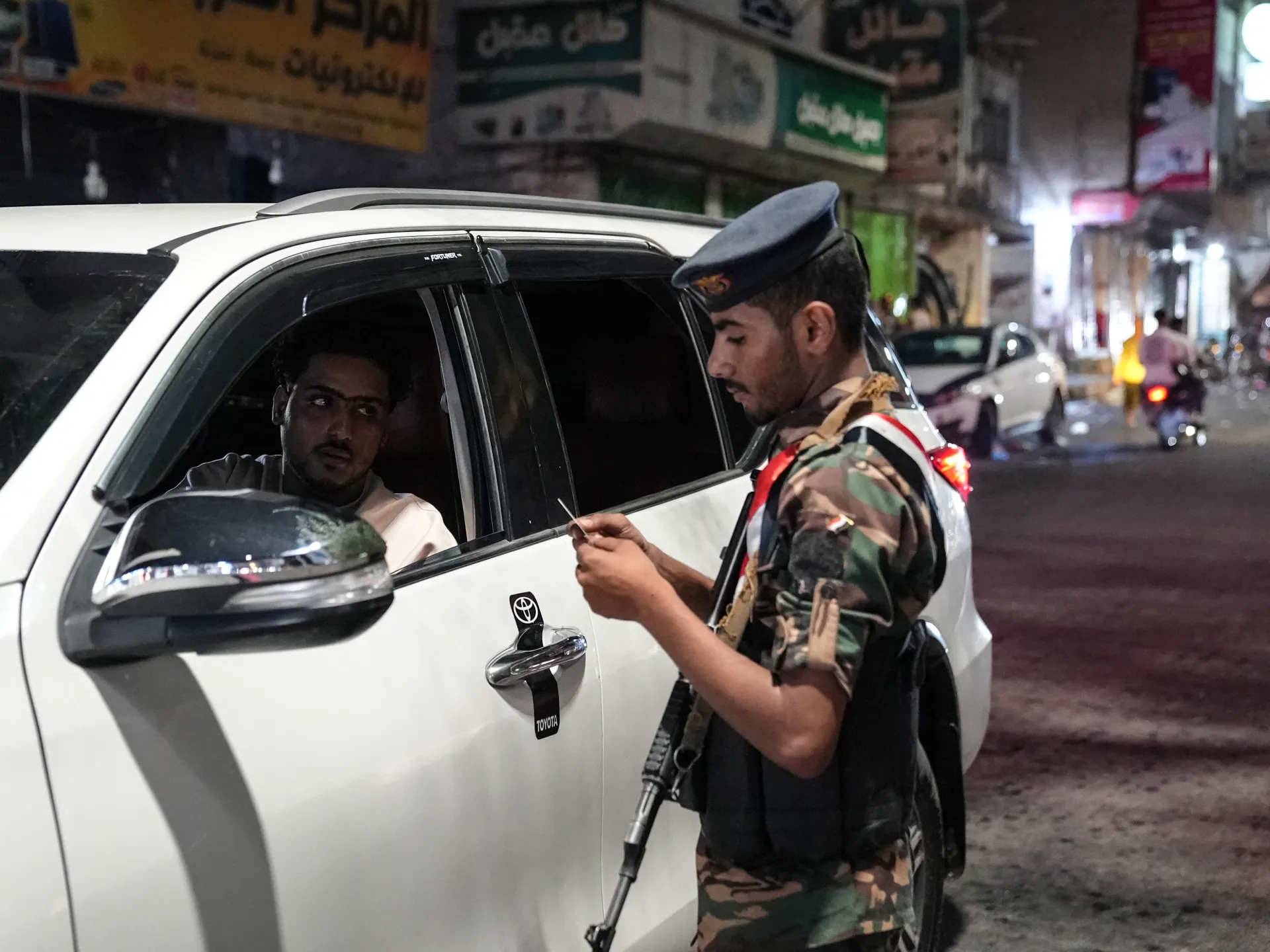
Iran war live: Fighting intensifies in Yemen, hundreds killed or injured
Fighting intensifies across Yemen as the army says 474 attacks in 24 hours killed or wounded 1,540 Houthi fighters.
Source link
Fighting intensifies across Yemen as the army says 474 attacks in 24 hours killed or wounded 1,540 Houthi fighters.
Source link
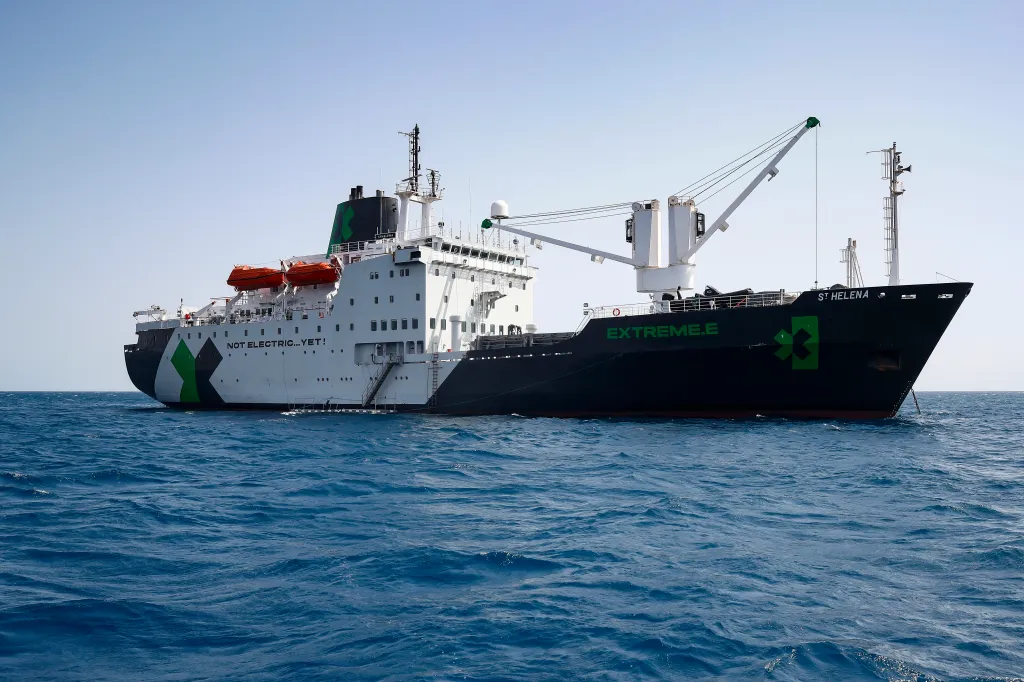
On Sunday, NBC News reported that Marines were injured during an Iranian cruise missile attack while transiting the Strait of Hormuz on Sept. 14. The network’s sources said the Marines were not on a U.S. Navy ship, but they did not identify which vessel they were on. However, a former Royal Mail vessel that at one point was being converted into a floating armory stands out as a strong possibility.
While much remains unclear about the Sept. 14 incident, there was only one vessel known to have been struck that day, according to the United Kingdom Maritime Trade Operations (UKMTO) and a maritime security official we spoke with. The ship was eventually identified by several maritime media outlets as the M/V St. Helena. Again, the St. Helena’s involvement remains unconfirmed, but the ship’s interesting background is of particular note.

“Eight U.S. Marines were injured two weeks ago when an Iranian cruise missile attacked the ship they were operating on in the Strait of Hormuz,” NBC reported, citing three U.S. officials. “The Marines were not seriously injured, but they sustained smoke inhalation and possibly traumatic brain injuries, as they had symptoms of concussions, such as headaches, the officials said.”
“The Marines, seven of them enlisted and one officer, all returned to duty soon after the Sept. 14 attack, the U.S. officials said,” according to the network. “The officials said the Marines were operating as part of a battalion landing team during the Iranian anti-ship cruise missile attack.”
TWZ cannot independently confirm that Marines were on board the St. Helena or that they were injured. We reached out to the Pentagon and U.S. Central Command (CENTCOM) for more information. The Pentagon referred us to CENTCOM, and CENTCOM declined comment.
The incident took place amid an uneasy truce between Iran and the U.S. broken up by sporadic Iranian attacks on ships transiting the Strait of Hormuz. At the same time, the U.S. military is enforcing a blockade on Iranian ships, during which it has struck several for trying to bypass that effort as well as in retaliation for Iranian attacks on shipping. Negotiations between Washington and Iran have ebbed and flowed, and U.S. President Donald Trump is once again mulling a choice between continuing talks or renewing large-scale attacks.
As we noted earlier in this piece, after the vessel was struck, several maritime industry trade publications identified it as the St. Helena.
“Iran has attacked a historic former British Royal Mail passenger ship in the Strait of Hormuz,” TradeWinds News reported on Sept. 15, a day after the incident. “Maritime security sources identify the 6,800-gt St Helena (built 1989) as the latest vessel to be hit by an ‘unknown projectile’ in the war-torn waterway. The attack was reported late on Monday, according to UK Maritime Trade Operations, which cited a ‘verified source’ for the incident without identifying the vessel.”

“UKMTO has received a time late report of an incident within the Strait of Hormuz,” the organization reported on Sept. 15, citing an incident that took place a day earlier. “A verified source has reported that a vessel has been struck by an unknown projectile.”
“There is no reported damage or environmental impact,” UKMTO added. “Authorities are investigating.”
According to Lloyd’s List, the ship was being operated by the Ambrey maritime security firm at the time it was struck. Ambrey declined to comment.
Shipping expert Sal Mercogliano and open-source investigator Tom Bike were among those suggesting the St. Helena could have been the vessel at the heart of the NBC report.
So piecing together the evidence it appears that the US may have converted St Helena into a armed merchant cruiser.
The Marines looked at putting Armed Guards on board commercial ships three years ago as reported by @USNINews.
Add modular/containerized weapon systems,… https://t.co/48lJ1BDMfs
— Sal Mercogliano (WGOW Shipping) 🚢⚓🐪🚒🏴☠️ (@mercoglianos) September 28, 2026
Exactly what the St. Helena was doing at the time it was struck is unclear; however, the ship has had a very unusual past.
The vessel entered into service in 1990 and “sailed between Cape Town, South Africa and Saint Helena and Ascension Islands, carrying both passengers and cargo, some of which was Royal Mail, earning her the rare RMS designation,” according to Cruise Arabia and Africa.
The St. Helena was Britain’s last working postal ship, according to Maritime Executive. After it was retired in 2018 because it was no longer needed for that function, things got really interesting.
Two different organizations took over the vessel, including, as we noted earlier in this story, a company that was planning to use it as a floating armory in the Middle East.
“Renamed MNG Tahiti, the 103-meter (340-foot) ship is being readied by her new owner MNG Maritime to become a floating armory working in the Gulf of Oman,” Maritime Executive wrote on April 22, 2018. “She will deliver security guards and weapons to vessels sailing through the region and is expected to be operational in her new role in the next few months.”
It is unclear what happened to that plan. However, two years later, an off-road racing series called Extreme E said that it “secured exclusive use of the former Royal Mail ship in 2018.” After that, the ship underwent “an extensive refurbishment process, which has included total overhaul of steelwork, engines, generators, propellers, interior and cabin space, and more, making it not only fit for purpose, but also as efficient as possible ahead of its new mission.”

The ship was “specifically designed to transport all the infrastructure and equipment the Extreme E needs for their race weekends,” the organization stated. The plan was to have the ship serve “as its freight and logistics hub due to her versatility and ability to carry and unload a mixture of cargo, like all 10 of the championship’s ODYSSEY 21’s [electric off-road racecar], as well as team members and guests. This was also fit with a Science Laboratory so research can be conducted enroute to the race locations.”
Both the St. Helena and MNG Tahiti have the same international shipping identification number of IMO 8716306, according to the MarineTraffic website.
On Sept. 17, 2024, the St. Helena was put up for sale, according to Horizon Ship Brokers. The current ownership is unclear. We reached out to Horizon Ship Brokers for more details.

Last year, the saga of the St. Helena took a new turn. A company called Terra Nova Expeditions chartered the vessel for Antarctic cruises, but those plans were scrubbed last month because the vessel was stuck in the Persian Gulf and was no longer available for the Antarctic sailing season.
It was last tracked via its transponder near Dubai nearly two months ago, according to MarineTraffic.
While we can’t confirm that Marines were onboard when St. Helena was hit, Marines have been training for this exact mission set. USNI News reported in 2023 that a “force of 100 Marines, newly trained by Navy personnel,” stood ready “to respond, if ordered, to provide armed security aboard foreign commercial ships transiting the Strait of Hormuz.”
Those Marines were members of the 26th Marine Expeditionary Unit (MEU) embarked on the three-ship Bataan Amphibious Ready Group (ARG), USNI added at the time.
It is unclear if those plans are still in place and if Marines in the region have actually been ordered to provide armed security for foreign vessels sailing through or near the strait. Regardless, Marines could be quickly trained to take on this mission set and have drilled for ship boarding and searches for years, especially special operations and specially-tasked units. CENTCOM declined to comment when we asked if there are U.S. personnel embarking on commercial ships transiting the Strait of Hormuz.
At the same time, it is possible that the unique attributes of St. Helena made it a convenient host ship for sea base operations for U.S. forces in the region specifically for this crisis. Adapting commercial vessels for exactly this purpose has a long history around the Strait of Hormuz, as it was a central facet of the Tanker Wars during the 1980s, that saw U.S. forces operate from barges in the region. Today, commercial vessels remarkably similar to St. Helena operate in similar roles, especially in support of special operations and interdiction operations.

Once again, we have no idea what the ship’s mission was at the time of the incident and if Marines were simply helping it transit safely out of the Persian Gulf or something more, but the attack did expose the fact that individual Marines are more involved with activities in this tumultuous body of water than it may seem.
Contact the author: howard@twz.com.
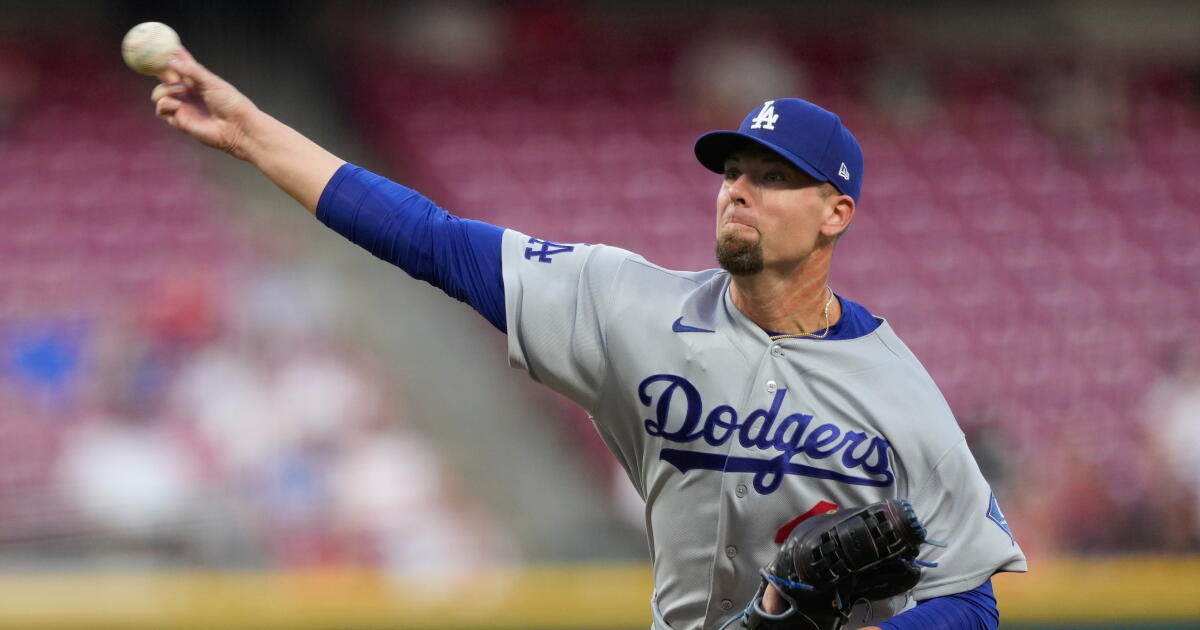
SAN FRANCISCO — Dodgers reliever Blake Treinen is likely out for the postseason, after injuring his right shoulder warming up in the bullpen Saturday.
“I don’t know if it was a complete blowout, but really unfortunate,” manager Dave Roberts said after the Dodgers’ 4-3 win against the San Francisco Giants.
The Dodgers plan to put Treinen on the injured list Sunday, Roberts said. And he’ll undergo imaging to diagnose the injury.
“It just popped up,” Roberts said.
Treinen, 38, is the longest-tenured Dodgers pitcher on the roster. He spent over two months on the IL earlier this season with inflammation in his right elbow. But in 36 appearances this season, he posted a 3.64 ERA.
Treinen has a history of shoulder injuries and underwent right shoulder labrum and rotator cuff repair surgery after the 2022 season.
By Cybele Mayes-OstermanAssociated Press/Report for America
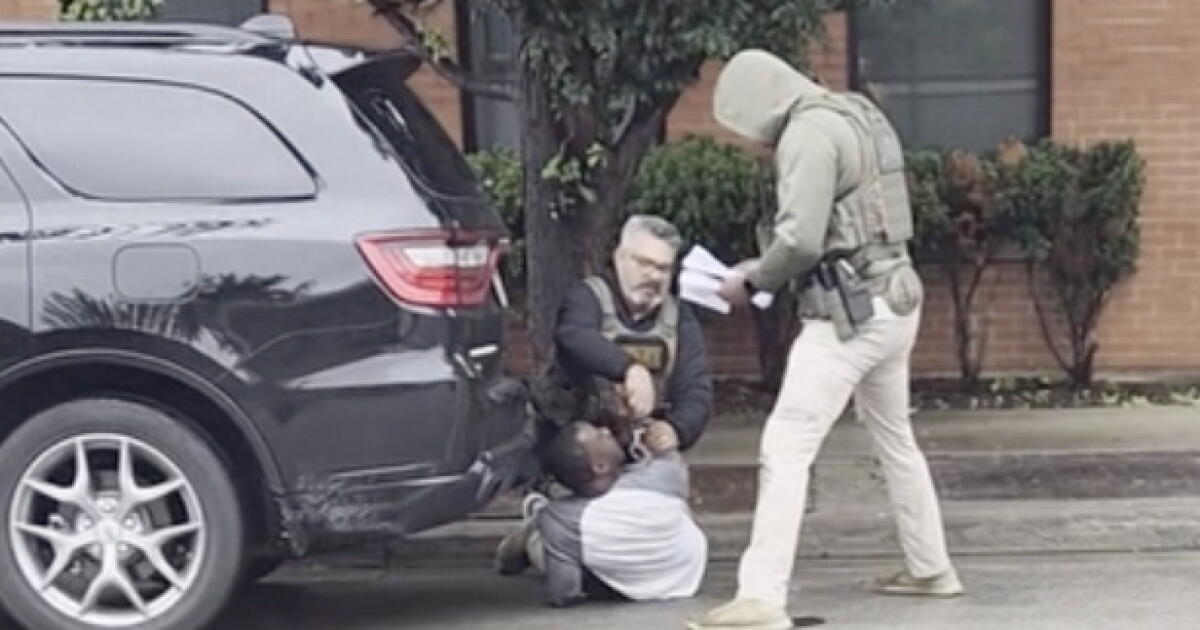
CHICAGO — A U.S. citizen was left bloodied and injured on the side of the road in a Chicago suburb after a confrontation with immigration enforcement agents who mistook him for a fugitive, according to local police and a resident who tried to help the man.
The man, whose identity was not disclosed, was taken away in an ambulance after the encounter on Sunday in Evanston, a city around 12 miles north of downtown Chicago. He told police his head, neck and teeth were injured, according to a news release from the Evanston Police Department.
A federal agent told officers who responded to calls reporting an altercation at just before 10 a.m. that morning that five agents in separate vehicles were looking for a fugitive with a Chicago address and a warrant for his arrest, according to the release. The agents mistook the man for the fugitive, the agent told police.
When the man refused to give his identification, the agents tried to handcuff him, the agent said. After realizing he was a U.S. citizen and not the person they were seeking, they released him.
One police officer saw blood on the agent’s hands, according to the release. The agent told police he was injured while trying to handcuff the man, and that they left the area immediately after because they feared protesters who had gathered would attack them, it noted.
Police have visited the man at the hospital and photographed his injuries, and are investigating the encounter.
Evanston Mayor Daniel Biss said in a post on X that the man was treated at St. Francis Hospital for minor injuries. The police department “continues to investigate the situation, and we will remain vigilant about federal activities,” he wrote.
U.S. Immigration and Customs Enforcement officers had “encountered an individual who resembled the target” of a “targeted enforcement operation,” the Department of Homeland Security said in a statement. “The individual was given lawful commands but was not cooperative and refused to identify himself.”
The officers “left the scene without further incident” after the man identified himself, according to the statement. “When ICE officers offered the individual assistance, he refused.”
The incident drew condemnation from Illinois officials as backlash grows against ICE’s presence in communities around the country. ICE announced a record number of arrests last month, with nearly 51,000 people arrested.
“I am disgusted and outraged by reports of what happened in my hometown of Evanston on Sunday,” Illinois Rep. Jan Schakowsky said in a statement.
Ryan Garton, 56, told the Associated Press that he saw the agents pinning down the man, who was Black, on the side of the road as he was driving home. He pulled over to document what was happening on video.
One agent had his knee on the man’s back and was “beating up on him,” Garton told the AP. “I’m a citizen, leave me alone,” Garton said the man screamed as the agent pinned him down. Around five people stood nearby and yelled at the agent to stop.
Garton said he urged the agent to get off the man so he could inspect his injuries, and that the agent acknowledged that he was already aware the man was a U.S. citizen. When the agent stepped away, Garton saw bloodstains in the shape of handprints on the man’s shirt.
“His upper right eye socket and temple were swollen as if he had been punched” and his face was scraped “as if it had been ground into the sidewalk,” he said.
The man told Garton that he had been walking to the pharmacy to pick up a prescription when the agents stopped him.
Michael Lipson, the owner of a store across the street from where the incident occurred, said he saw the agents wrestle the man to the ground as he repeatedly yelled that he is a U.S. citizen. The man’s face looked “badly messed up,” Lipson told the AP.
Lipson said the agents checked cards and papers from the man’s wallet before leaving them scattered on the road. Lipson laid out his sweatshirt for the man to rest on while Garton inspected his injuries.
The same day, ICE agents shot and wounded a man in Austin, Texas, the latest in a string of shootings by federal immigration agents that have prompted growing backlash against the Trump administration’s aggressive immigration tactics.
At least 10 people have died in encounters with immigration agents in President Trump’s second term, including a Colombian man shot dead in Maine in July by an agent with a history of violent behavior, and a Mexican man hit by a tractor trailer as he fled agents in Florida the same month. ICE agents fatally shot Renee Good and Alex Pretti, both U.S. citizens, during the Trump administration’s siege of Minneapolis, named “Operation Metro Surge,” earlier this year.
Mayes-Osterman writes for the Associated Press.

Bystander video of ICE agents forcibly arresting a US citizen in the Chicago suburb of Evanston, Illinois, has gone viral after federal officers mistook the man for a suspect they were seeking. The man was hospitalised with head and neck injuries. Police are investigating.
Published On 24 Sep 202624 Sep 2026
Share
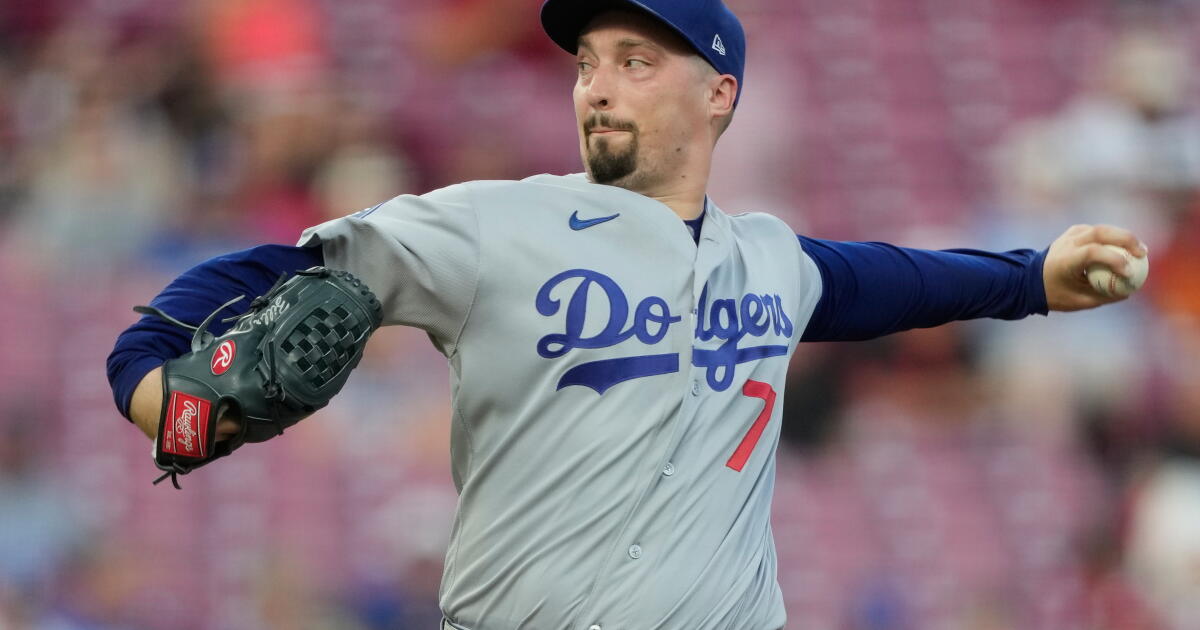
From Maddie Lee: The trouble started as Dodgers left-hander Blake Snell threw in the Great American Ball Park bullpen before the game.
“I felt good all day, and then the second-to-last pitch of the bullpen, I threw a slider and then I felt it grab,” Snell said of the groin tightness that would later take him out of the Dodgers’ 6-2 loss to the Reds early. “So I was like, ‘Alright, let’s see what we can do.’ ”
Guiding the ball without driving hard off his back leg, Snell’s velocity was down a tick or two through a 19-pitch first inning. He gave up one hit, a single to Sal Stewart, which he quickly erased with a successful pick-off that caught Stewart in an inning-ending run-down.
“I was going to try to get through five [innings],” he said, “but I just knew I didn’t really have a good shot at doing that and remaining healthy.”
In a conversation with manager Dave Roberts, pitching coach Mark Prior and head athletic trainer Thomas Alberts, they all agreed the best course of action would be to pull Snell from the game. Right-handed reliever Blake Treinen replaced him in the second inning.
With only 10 games left in the season, it’s unclear when Snell will be ready to pitch again.
“The next couple days are really going to decide,” Snell said. “But I’d love to throw on my next [scheduled start day]. Either there or a couple days after. But definitely, I want to try to get one more in the regular season.”
Get the latest on L.A.’s teams in the daily Sports Report newsletter.
By continuing, you agree to our Terms of Service, which include arbitration and a class action waiver. You agree that we and our third-party vendors may collect and use your information, including through cookies, pixels and similar technologies, for the purposes set forth in our Privacy Policy such as personalizing your experience and ads.
From Ryan Kartje: Trent Mosley, USC’s rising star freshman receiver, will miss this week’s Big Ten opener against Rutgers and could be out an extended period of time after suffering an injury during the Trojans’ Week 2 win over Louisiana.
USC coach Lincoln Riley said that he doesn’t expect Mosley to be out “extremely long term,” but that any timeline for his return was “still a little inconclusive … depending on how he responds.”
Riley didn’t offer any details on the nature of the injury, but he said that it became clear after USC’s 49-30 win over Louisiana that “there was something we needed to get looked at.” Mosley still spoke to reporters after the game.
From Connor Dullinger: In a bid to pack the Rose Bowl and Pauley Pavilion, tickets to all UCLA home football and men’s and women’s basketball games will be free for undergraduate, graduate and extension students going forward, UCLA athletics announced Wednesday.
Previously, the Bruins had to purchase a Den Pass for $199 to gain access to home football and men’s basketball games. Students who have already purchased the Den Pass for the 2026-2027 academic year will be reimbursed.
“We have an exciting team led by [head football coach] Bob Chesney and a lot of momentum surrounding UCLA Athletics,” new UCLA chief executive and athletic director Tim Harris said in a news release. “Now it’s time for our students to help set the standard. Arrive early. Be loud. Be relentless. We can’t wait to see a sea of Bruin Blue at the Rose Bowl this Saturday.”
The free student tickets are one of many changes Harris has made in an effort to bring new energy to the school’s signature sports that had struggled under previous athletic director Martin Jarmond.
From Gary Klein: In the aftermath of the Rams’ humiliating season-opening defeat in Australia, the team’s defense is dominating the news cycle: edge rusher Myles Garrett’s knee surgery, lineman Aaron Donald’s potential season debut.
But as coach Sean McVay prepares his team for Monday night’s game against the New York Giants, the Super Bowl-favorite Rams’ suddenly not-so-super offense also demands scrutiny.
Consider: Every starter is back from a unit that in 2025 led the NFL in offense and scoring, including quarterback Matthew Stafford, the reigning NFL most valuable player.
And yet the Rams managed just 190 yards and scored one touchdown in their 27-7 loss to the San Francisco 49ers.
That’s it.
Cal Raleigh had two hits and three RBIs, Josh Naylor had two hits and two RBIs and the Seattle Mariners kept their slim playoff hopes alive with a 7-2 victory over the Angels on Wednesday night.
Randy Arozarena also walked, singled and scored three runs for Seattle, which is 5 1/2 games behind Texas and Houston in the American League West and 6 1/2 games behind the Chicago White Sox for the third AL wild-card spot with nine games left.
It was 2-2 when Angels starter Yusei Kikuchi (1-6) walked Arozarena and Dominic Canzone with one out in the fifth. Raleigh roped an RBI double to left for a 3-2 lead, and Julio Rodriguez was walked intentionally to load the bases.
Ally Sentnor, Ary Borges and Taylor Suarez scored in Angel City’s 3-1 victory over the Seattle Reign on Wednesday night at BMO Stadium.
In the 18th minute, Angel City midfielder Maiara Niehue’s volley attempt drew a handball on Seattle Reign midfielder Angharad James-Turner. Sentnor converted her second penalty kick in consecutive weeks to open the scoring.
Off a corner kick from defender Evelyn Shores in the 40th minute, an unmarked Borges headed it home to double the lead. Within 30 seconds of subbing on, Suarez raced past multiple defenders and placed it in the side-netting for the 3-0 lead in the 81st minute.
1897 — England’s Joe Lloyd beats Scotland’s Willie Anderson by one stroke to win the U.S. Open in Wheaton, Ill.
1920 — The forerunner of the NFL, the American Professional Football Assn., is founded in an automobile showroom in Canton, Ohio. Twelve teams pay a $100 fee to obtain a franchise.
1938 — Don Budge completes the Grand Slam with a four-set victory over Gene Mako in the U.S. Lawn Tennis Assn. championships.
1954 — Rocky Marciano knocks out Ezzard Charles in the eighth round at Yankee Stadium in New York to retain his world heavyweight title.
1955 — In the first color telecast of a football game by NBC, No. 10 Georgia Tech defeats No. 9 Miami 14-6 in Atlanta. The winning score comes in the final minute when linebacker Jimmy Morris returns an interception 25 yards for a touchdown.
1961 — The Minnesota Vikings, the newest NFL franchise, beats the league’s oldest franchise, the Chicago Bears, 37-13 win in the season opener. Minnesota’s Fran Tarkenton, playing his first NFL game, comes off the bench to become the only quarterback to throw four touchdown passes in his first game.
1966 — In his head coaching debut, coach Joe Paterno leads Penn State past Maryland 15-7.
1967 — Johnny Unitas of the Baltimore Colts passes for 401 yards and two touchdowns in a 38-31 victory over the Atlanta Falcons.
1977 — The U.S. wins the Ryder Cup 12½-7½ at Royal Lytham & St Annes England. It’s the last time that a Britain and Ireland team competes for the Ryder Cup. The Ryder Cup expands the GB&I to include golfers from all of continental Europe in 1979.
1994 — UNLV receiver Randy Gatewood catches 23 passes for 363 yards and a touchdown in a 48-38 loss to Idaho.
2000 — Dan Marino’s No. 13 jersey is retired by the Miami Dolphins.
2002 — Suzy Whaley becomes the first woman to qualify for a PGA Tour event, earning an exemption to the 2003 Greater Hartford Open by winning a PGA Section Championship. Whaley is also is the first woman to win a Section Championship.
2016 — Cam Pedersen kicks a 37-yard field as time expired and North Dakota State of the FC, rallies to beat No. 13 Iowa 23-21 for its sixth straight win over an FBS opponent.
Compiled by the Associated Press
1912 — Brooklyn’s Casey Stengel makes his major league debut against the Pittsburgh Pirates, finishing with four singles, two RBIs and two steals in a 7-3 win.
1920 — Bobby Veach of the Detroit Tigers hit for the cycle in a 14-13 12-inning win over the Boston Red Sox at Navin Field. Veach had six hits, achieving the cycle with a double in the ninth.
1930 — Cleveland’s Earl Averill drove in eight runs with three consecutive home runs to lead the Indians to a 13-7 victory over the Washington Senators in a doubleheader opener. Averill added another homer in the nightcap, setting an American League record with 11 RBIs in a doubleheader.
1941 — Stan Musial makes his major league debut.
1947 — Jackie Robinson named Rookie of the Year by The Sporting News.
1968 — Gaylord Perry of the San Francisco Giants pitched a no-hitter, a 1-0 victory over the St. Louis Cardinals and Bob Gibson. Ron Hunt homered for the only run.
1984 — Reggie Jackson became the 13th player to hit 500 home runs. The milestone shot came off Kansas City pitcher Bud Black. His homer came exactly 17 years after his first career hit.
1984 — Rookie pitcher Dwight Gooden of the New York Mets struck out 16 Phillies in a 2-1 loss at Philadelphia. Five days earlier, Gooden fanned 16 Pittsburgh Pirates tying a major league record for 32 strikeouts in two consecutive games.
1988 — Jeff Reardon became the first pitcher to save 40 games in both leagues as the Minnesota Twins beat the Chicago White Sox 3-1. Reardon, who saved 42 games for the Montreal Expos in 1985, pitched the ninth inning for his 40th save in 47 opportunities.
1996 — Hideo Nomo pitched a no-hitter against the Colorado Rockies, leading the Dodgers to a 9-0 victory. Nomo walked four batters and struck out eight.
2004 — San Francisco’s Barry Bonds hit the 700th home run of his career, joining Babe Ruth (714) and Hank Aaron (755) as the only players to reach the milestone. Bonds connected in the third inning at home, a 392-foot solo shot to left-center. San Francisco beat San Diego 4-1.
2004 — Seattle’s Ichiro Suzuki broke Lloyd Waner’s season record for singles with his 199th in a 6-3 win over Oakland. Suzuki’s two hits gave him 235 for the season, 22 shy of the major league record set by George Sisler of the St. Louis Browns in 1920.
2008 — Seattle’s Ichiro Suzuki matched Willie Keeler’s major league record of eight straight 200-hit seasons, beating out an infield single in the eighth inning for his third hit against Kansas City.
2018 — Christian Yelich became the first major leaguer to hit for the cycle twice in one season against the same team, driving in four runs to lead the Milwaukee Brewers over the Cincinnati Reds 8-0.
2024 — With a stolen base in the 1st inning, Bobby Witt Jr. becomes the first shortstop to have more than one 30-30 season, as he now has 30 steals and 32 homers; he also just the 8th player to accomplish the feat in consecutive seasons.
Compiled by the Associated Press
That concludes today’s newsletter. If you have any feedback, ideas for improvement or things you’d like to see, email me at houston.mitchell@latimes.com. To get this newsletter in your inbox, click here.
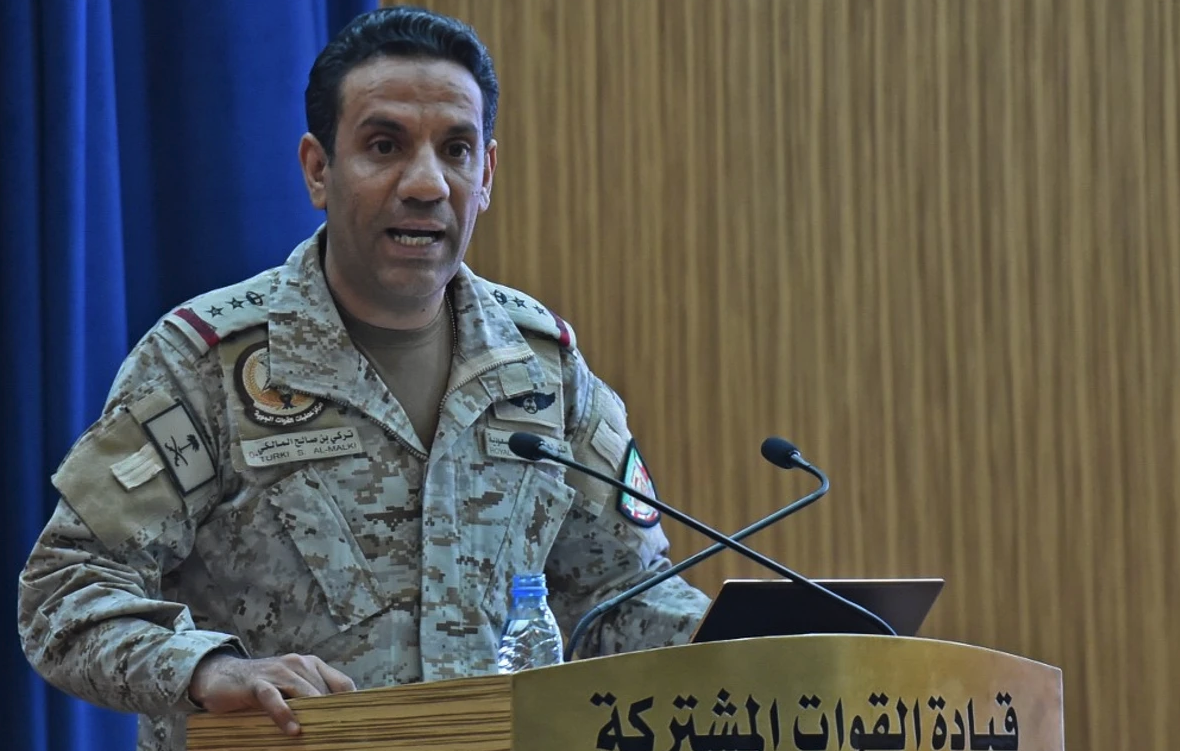

RIYADH: Thirteen civilians were injured after attacks on several Saudi cities by Yemen’s Houthi militia, authorities said early on Tuesday.
The Iran-backed group targeted civilian areas in
Khamis Mushait, Abha and Taif with ballistic missiles and drones on Monday.
The strikes resulted in “minor to moderate injuries to 13 civilians and damage to 7 houses and two vehicles,” said Major General Turki Al-Malki, spokesperson for the Coalition to Restore Legitimacy in Yemen, in a statement issued on social media early on Tuesday.
“The Terrorist Houthi Militia continues its heinous and deliberate attacks on civilian objects and civilians in the Kingdom,” the statement read.
“The continuation of these deliberate and repeated attacks proves the Terrorist Houthi Militia’s approach and extremist ideology of escalation and targeting civilian objects and civilians.”
The Coalition said its joint forces will deal with the attacks
“responsibly and firmly to protect the sovereignty of the Kingdom, civilian objects, and civilians.”
Last week an attack by the militia left more than 70 people injured, including women and children, in various towns and cities across Saudi Arabia.
The Kingdom on Friday temporarily shut down its East-West Pipeline after it was targeted in several drone attacks in the Riyadh and Madinah regions.
Gulf and Muslim organizations condemned the attack on the pipeline, expressing solidarity with the Kingdom.

At least 10 people were killed and around 60 wounded in central Mexico when fireworks detonated during a religious festival. Residents had been honouring the patron saint of Temascalcingo, a municipality in central Mexico, when tragedy struck.
Published On 7 Sep 20267 Sep 2026
Share