There is arguably no better way to end a meal than with a sticky toffee pudding. The soft and tender sponge cake, made from a batter with softened dates, arrives hot and drowned in a rich, glossy toffee sauce. It is often crowned with a scoop of ice cream for a glorious interplay of temperatures. It’s not difficult to see why it’s one of Britain’s favorite desserts. And luckily for Angelenos, you can now find great sticky toffee pudding on the menu at several restaurants across the city.
The rise of sticky toffee pudding makes a lot of sense. There is a growing interest in British cooking in Los Angeles recently — particularly among restaurants that reinterpret dishes through a Californian lens, such as Tomat and Wilde’s. The dessert’s enthusiastic use of dates also makes it a very Southern Californian dessert, given the abundance of date trees that grow in the region.
Chef Brian Bornemann, who added sticky toffee pudding to the dessert menu at his new pasta-focused restaurant Bar Fortuna in Santa Monica, says the dessert’s recent surge in popularity is also likely due to the fact that it is not overly complicated to make. “In a world where most restaurants in Los Angeles cannot afford pastry chefs anymore, this is a dessert that is easy to execute with a small margin of error.”
Across Los Angeles, restaurants of all kinds are putting their own spin on the dessert. Some are giving it a cultural reinterpretation: a Persian restaurant in Century City adds candied orange and walnuts, while a West African-inspired spot in Inglewood makes a version with both dates and plantains. Some chefs are using unexpected ingredients like fish sauce or aged vanilla jaggery powder, while others are serving more traditional takes. There has never been a better time to be a sticky toffee pudding-lover in Los Angeles. Here are 11 versions worth ending your meal with:
A look at the top performers from high school football games across the Southland this week.
RUSHING
• CJ Dickerson, La Habra: Rushed for 203 yards in win over Etiwanda.
• Grady Long, La Serna: Rushed for 122 yards and two touchdowns, passed for 136 yards in win over Valencia.
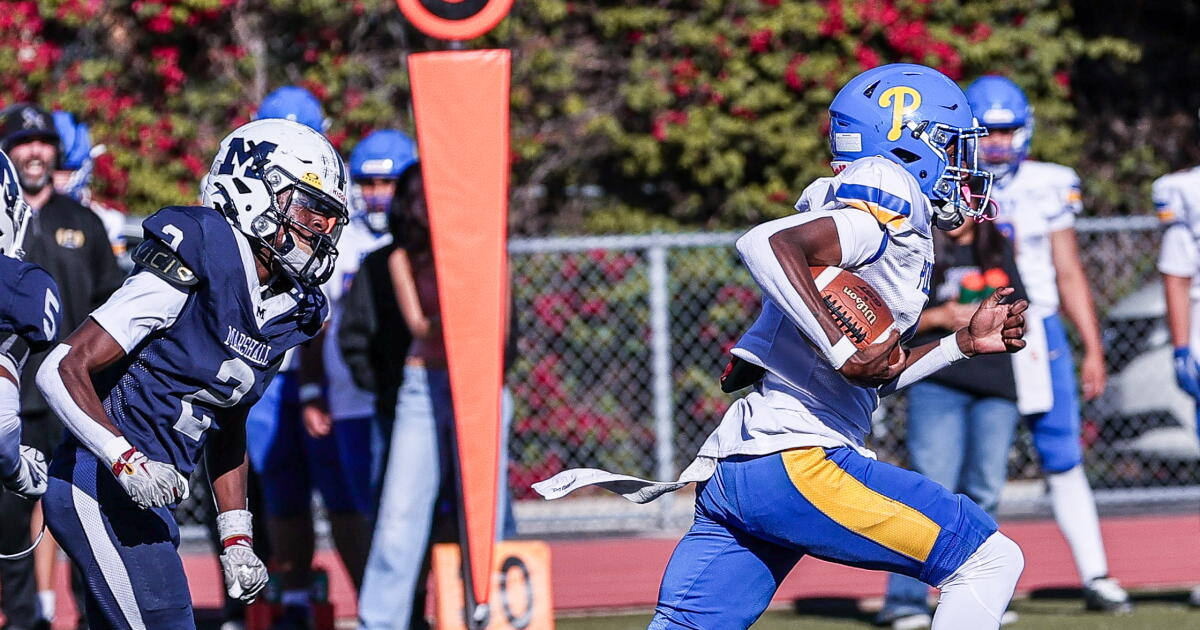
• King Exusdus, Sun Valley Poly: Rushed for 174 yards and one touchdown in win over Marshall.
• Marlon Watson, Inglewood: Rushed for 197 yards and two touchdowns in win over Huntington Beach.
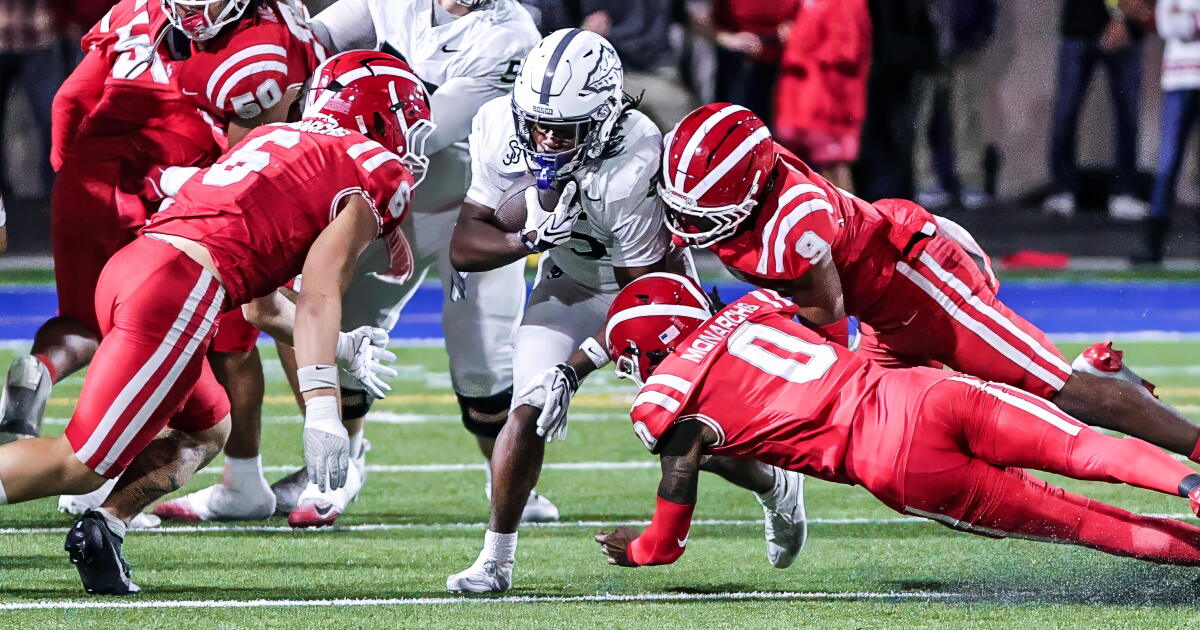
• Ayden Bias, Bishop Amat: Rushed for 289 yards and three touchdowns in loss to Oxnard Pacifica.
• Joseph Lara, Bonita: Rushed for 224 yards and two touchdowns in loss to Great Oak.
• Dominik Hardy, Calabasas: Rushed for 276 yards in win over Glendora.
• Raphael Graham, Cathedral: Rushed for 185 yards and two touchdowns in win over Cypress.
• Raphael Graham, Cathedral: Rushed for 185 yards and two touchdowns in win over Cypress.
PASSING
• Lincoln Jahn, Inglewood: Passed for 255 yards and four touchdowns in win over Huntington Beach.
• Magnus Merriman, Viewpoint: Passed for 220 yards and two touchdowns in win over Hemet.
• Kale Murphy, Downey: Passed for 258 yards and three touchdowns in win over Newbury Park.
• Brady Edmunds, Huntington Beach: Passed for 379 yards and three touchdowns in loss to Inglewood.
• Ryan Rakowski, Palos Verdes: Completed 11 of 14 passes for 248 yards and one touchdown, rushed for 85 yards and one touchdown in win over Gardena Serra.
• Bradley Cassier, St. Monica: Completed 24 of 30 passes for 409 yards and three touchdowns in win over Los Altos.
• Taylor Lee, Oxnard Pacifica: Passed for 346 yards and five touchdowns in win over Bishop Amat.
• Bryce Johnson, South East: Passed for 302 yards and one touchdown in win over Fremont.
• Thaddeus Breaux, Hamilton: Passed for 308 yards and six touchdowns in win over South Gate.
• Dutch Burbidge, Charter Oak: Passed for 228 yards and three touchdowns in win over Vista del Lago.
• Trent Lux, Great Oak: Passed for 304 yards and three touchdowns in win over Bonita.
RECEIVING
• Jack Norman, Dana Hills: Had five receptions for 181 yards in win over Westlake.
• Alijah Royster, Oxnard Pacifica: Caught four passes for 173 yards and three touchdowns vs. Bishop Amat.
• Zion Anderson, Long Beach Poly: Made five catches for 150 yards and two touchdowns in win over Norco.
DEFENSE
• Ceasar Reyes, Garfield: Had two interceptions, including a pick six, and rushed for 150 yards and three touchdowns in win over Taft.
• Blake Shingleton, Quartz Hill: Recorded two sacks in win over Hart.
• Hudson Manning, Chaminade: Had four sacks in win over Corona del Mar.
• Weston Reis, Palos Verdes: Returned interception 25 yards for a touchdown in win over Gardena Serra.
• Elijah Williams, Chaminade: Made game-winning pick-six interception in win over Corona del Mar.
• Abel Carreles, South East: Had four sacks in win over Fremont.
• Gianni Haynes, Cathedral: Returned interception 80 yards for touchdown in win over Cypress.
• Sammy Timu, Long Beach Poly: Had two sacks in win over Norco.
SPECIAL TEAMS
• Kaden Nesen, Oaks Christian: Made 38-yard field goal at end of regulation to send game into OT in loss to Temecula Valley.
• Mateo Akerman, Corona del Mar: Made 44-yard field goal in loss to Chaminade.
• Mateo Akerman, San Juan Hills: Made field goals of 35 and 38 yards in win over Tustin, making him 10 of 11 on attempts this season.
• Landon Perkins, Long Beach Poly: Returned punt for touchdown in win over Norco.
Hollywood Park was winning one fight and losing another, both by slim margins, as vote counting continued Tuesday night on two ballot measures in Inglewood.
According to results posted by the Los Angeles County registrar shortly after 10:30 p.m., Measure AT was losing, 51.9% to 48.1%, a margin of 583 votes; and Measure BB was losing 51% to 49%, a margin of 307.
Measure AT would mean more ticket taxes for big events in Inglewood, home to SoFi Stadium, Intuit Dome and the Forum. The City of Inglewood wants that.
Measure BB would bar the city from allowing billboard advertising on sidewalks, medians and the like. Owners of those sports and entertainment venues, who have their own sponsorship deals, are backing that measure.
Meanwhile, City Council member Gloria D. Gray led incumbent Mayor James T. Butts Jr., 34.6% to 29.8%, putting them on an early track for a runoff election in March.
Los Angeles County does not provide a timeline for when the election results will be listed as final.
The ballot measures were spawned by a feud between Inglewood and Hollywood Park, the nearly 300-acre development anchored by SoFi Stadium and owned by Rams owner Stan Kroenke.
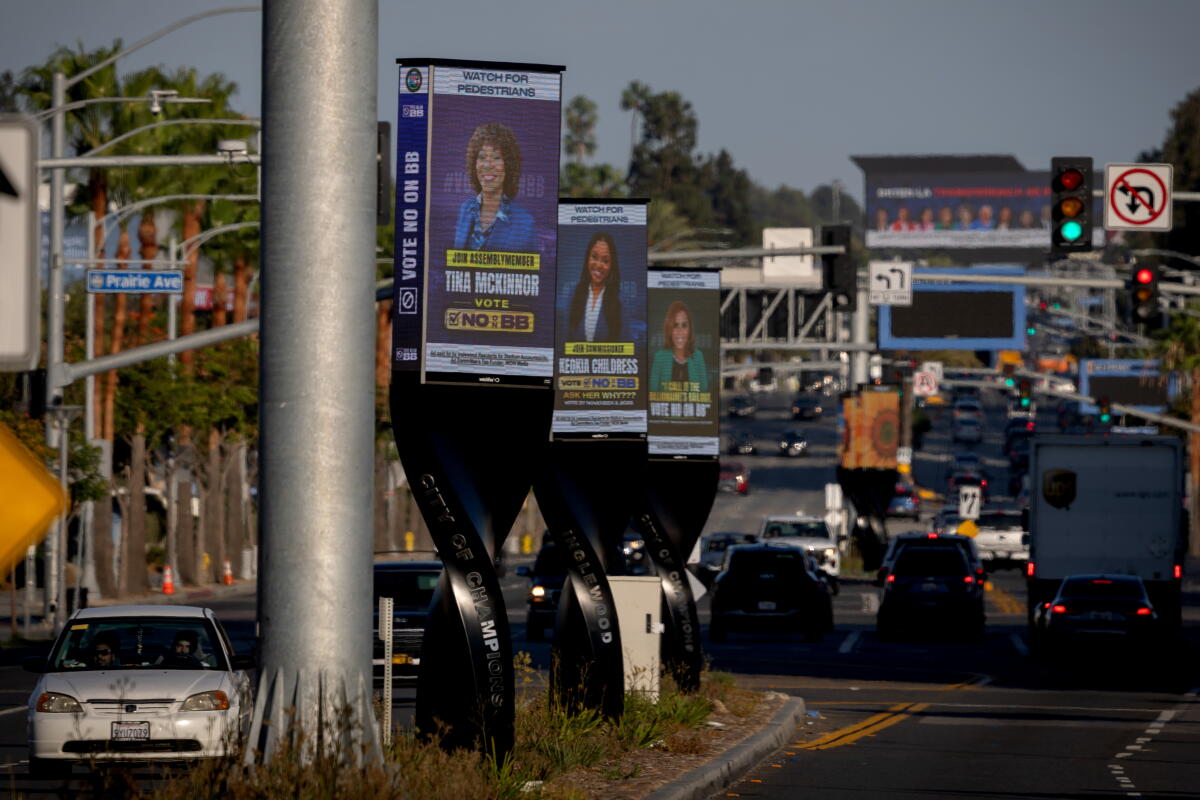
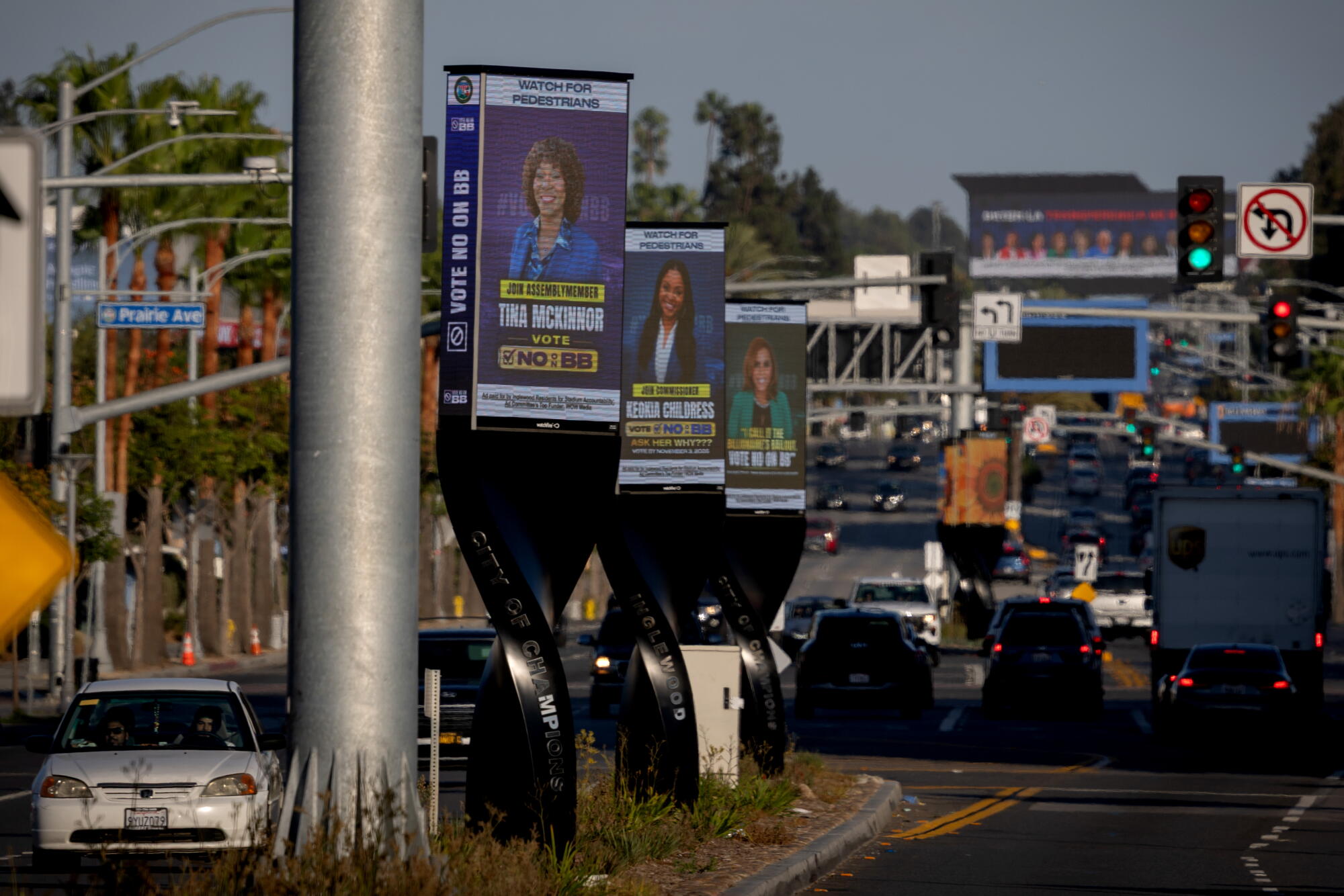
The fight started last year over billboards. Inglewood signed a deal with WOW Media for 60 digital signs carrying 108 screens, some of them bus-shelter-sized kiosks. Others are street displays up to 22 feet tall on sidewalks and medians.
SoFi Stadium, Intuit Dome and the Forum sued to block the deal, arguing the signs would undercut their individual sponsors who paid for exclusivity. A judge sided with the city and an appeal is underway.
Measure BB, short for “Billboard Blight,” aimed to restrict billboard advertising on public property. It qualified with nearly 13,000 signatures.
The WOW deal runs 20 years with two 10-year options, so it could be around for 40 years.
“It’s biblical in length,” said John Shallman, the political strategist managing the “Yes on BB” campaign. “You go back 40 years. We didn’t even have the Internet. We didn’t have cell phones.”
Skip Miller, lead attorney for the city, said the kiosks “blend in with the surrounding areas” and connect to a network that provides traffic and safety information.
The billboards are subject to Inglewood Ballot Measure BB, which calls for the halt of advertising on them.
(Eric Thayer/Los Angeles Times)
Measure AT, backed by the city, would lift a $15-million cap on the 10% admission tax the stadium pays. Hollywood Park sees it as punishment for challenging the billboard deal.
The billboard fight led to a bigger one. Last month, a Los Angeles County Superior Court judge ruled void the 2015 development agreement that cleared the way for SoFi Stadium, citing a 2018 Moreno Valley decision.
Under the 2015 agreement, Hollywood Park paid up front for roads, water lines, streetlights and event-day police and emergency services, with the city agreeing to eventually reimburse Kroenke for those expenses. Now that the agreement has been voided, the city argues it isn’t required to pay.
We are tracking all races across Los Angeles County, in dozens of cities, communities and school districts.
Of note in this year’s elections are a neck-and-neck Los Angeles mayoral race, a rematch for the L.A. County sheriff and nearly 100 city council seats (two of which are in L.A.). Less prominent races cover water district boards, school district trustees and the judge’s bench. Angelenos were asked to vote on propositions, measures and charter amendments — many of which involve funding programs with bonds or new taxes — at both the county and city levels.
With a few exceptions, the Associated Press does not call local city and county races. The county has 30 days to submit certified results to the secretary of state.
Jump to:
Countywide
Only three races are on the ballot for all of L.A. County.
Alex Villanueva is seeking to reclaim his position leading the L.A. County Sheriff’s Department. He is running against the incumbent, Robert Luna, who unseated him in 2022.
Measure A would require binding arbitration if talks between county officials and unions representing sheriff’s deputies, firefighters, lifeguards and other public safety groups reach an impasse.
A “Yes” on Measure E would do two things: enshrine previously approved Board of Supervisors ethics reforms into the county charter, and fix a problem created by a 2024 measure that invalidated a previously approved jail alternatives funding proposal.
Multiple water district board members will be decided by voters in Los Angeles. In several districts where voters could select multiple candidates, the two with the most votes win.
SoFi Stadium is going strong. The deal that built it is in a smoldering heap.
A decade ago, Rams owner Stan Kroenke and Inglewood Mayor James T. Butts Jr. happily dug ceremonial shovels into the dirt at Hollywood Park, celebrating the impending construction of the world’s most expensive stadium.
Electronic billboards are seen along Century Boulevard in Inglewood on Tuesday, Oct. 20.
(Eric Thayer / Los Angeles Times)
Now they’re on opposite sides of a court fight that has spilled onto the Nov. 3 ballot and threatens further development on the nearly 300-acre site.
The feud started over billboards. Last year, Inglewood signed a deal with WOW Media to put electronic advertising all around the city — 60 digital signs carrying 108 screens. Some are bus-shelter-sized kiosks, while others are street displays up to 22 feet tall and positioned on sidewalks and medians.
Those present problems for SoFi Stadium, Intuit Dome and the Forum because they have their own advertising deals and sponsors who paid for exclusivity. Those venues collectively sued Inglewood and WOW Media to block the deal, raising this scenario in a court filing: “Will Pepsi want to sponsor the Super Bowl, knowing Coca-Cola could pay WOW to put up full-motion billboards next to the stadium?”
Skip Miller, lead attorney for the city, said the kiosks are “quite nice and blend in with the surrounding areas,” and that they are connected to a network that provides critical traffic and safety information to thousands of drivers and pedestrians.
Electronic billboards are seen on along Century Boulevard on Tuesday, Oct. 20, 2026 in Inglewood, CA.
(Eric Thayer / Los Angeles Times)
A judge sided with Inglewood, and an appeal is under way.
In the meantime, those opposed to the billboards are taking it to the voters. On the ballot is Measure BB — as in “Billboard Blight” — which would restrict billboard advertising on public property. Miller said the city will challenge it in court if it passes, calling it free-speech discrimination.
The signs generate as much as $7.4 million a year, according to Inglewood budget records.
A consultant hired by the Yes on BB campaign estimated the city’s digital kiosk deal with WOW Media would generate $280,000 to $1.1 million a year, roughly 0.1% to 0.5% of Inglewood’s $238-million general fund.
John Shallman, a Los Angeles-based political strategist managing the “Yes on BB” campaign, also pointed to the unusual length of the billboard deal, which is 20 years plus two 10-year options.
Rams owner Stan Kroenke, right, talks to team president Kevin Demoff before a game against the New York Giant at SoFi Stadium on Sept. 21.
(Allen J. Schaben / Los Angeles Times)
“It’s biblical in length,” Shallman said. “You go back 40 years. We didn’t even have the Internet. We didn’t have cellphones.”
The billboards are part of the fight, but there’s a lot more. Back when the development agreement was signed in 2015, the deal was that Hollywood Park — interchangeable here with Kroenke’s companies — would pay up front for all the improvements around SoFi Stadium and eventually be reimbursed by the city. That means all the road upgrades, water lines, streetlights and the like. Same for event-day police and emergency services.
Over the years, that ran up a significant bill. Kroenke’s companies now want $448 million from the city. Inglewood, which last year wired Kroenke $20 million, is demanding that money back.
So how could that chasm be so wide? A turning point came last month when Los Angeles County Superior Court Judge David K. Reinart ruled the 2015 development agreement “void from the beginning and unenforceable.”
To understand why the judge ruled that way, it’s important to go back a decade and examine how the agreement was constructed.
One of the appealing aspects of building an NFL stadium in Inglewood was the speed with which a development agreement could be assembled and approved. Los Angeles went 20 years without an NFL franchise, during which all sorts of stadium ideas were proposed and eventually died. One of the stumbling blocks for those was the environmental-review process, which could take months or even years.
But at that time in California, there was an opportunity for Inglewood to fast-track the process. Instead of negotiating a new development agreement — there was one from 2009, when Hollywood Park was still a racetrack — supporters of the NFL stadium could bring it to the Inglewood City Council as a voter initiative.
People cross Century Boulevard near an electronic billboard in Inglewood.
(Eric Thayer / Los Angeles Times)
The council then had the choice to either adopt the initiative word for word, or send it to voters. No new environmental review required. Sure enough, in February 2015, the council approved the initiative, 5-0.
Now Kroenke had an approved stadium plan and not just fancy renderings to bring to fellow NFL owners, who 11 months later gave the thumbs up to a state-of-the-art venue at Hollywood Park. There was a competing stadium plan in Carson backed by the San Diego Chargers and Oakland Raiders that was taking the same fast-track approach with its city.
Regardless, the Hollywood Park plan won and the stadium was ultimately constructed, a $5-billion marvel that in February will play host to its second Super Bowl. It has also played host to the World Cup, major concerts by Taylor Swift and Beyoncé, and will be the swimming venue for the 2028 Summer Olympic Games. The Chargers moved to Los Angeles as tenants in the stadium.
“Inglewood loves SoFi Stadium,” said Miller, the city’s attorney. “Nothing is ever going to happen to SoFi Stadium. … As far as the rest of Hollywood Park, the developer has to follow the law, just like any other developer. This developer, who’s a very powerful, very wealthy person, has to follow the law just like anybody else.”
That’s not something you would have heard in 2015 when Kroenke and the city were pulling in the same direction. Something happened in 2018 that changed the landscape in California, and gave Inglewood an argument for why it shouldn’t be required to reimburse the developer for nearly half a billion dollars in public improvements.
It was a court decision involving Moreno Valley, a city about 75 miles east of Inglewood that planned to build a major development through the same approval process that was used in Inglewood. But environmental groups challenged that in court and won. A judge determined that type of development agreement requires negotiations and public hearings, not just a voter initiative. The agreement was voided.
SoFi Stadium in Inglewood, home of the Los Angeles Rams, hosts events throughout the year.
(Eric Thayer / Los Angeles Times)
Meanwhile, everything was moving forward in Inglewood. SoFi Stadium was constructed. The big events rolled in. Promises made, promises kept.
All the while, there was the outstanding issue of the city paying back Hollywood Park for all those improvements, but that arrangement was configured to ensure Inglewood could do so without going into the red. The deal said the city could keep the first $25 million in tax revenue from the stadium every year, then use the revenue generated beyond that to reimburse Kroenke’s companies.
In May 2025, Inglewood made a payment of $20 million.
Two months later, pointing to the Moreno Valley decision, the city deemed the development agreement invalid and demanded its money back.
Hollywood Park found that especially galling because four times over the past decade the city signed assurances to Kroenke’s lenders that the money would be paid back — and three of those times were after the Moreno Valley decision.
In the view of Hollywood Park, Inglewood welcomed the jobs, tax revenue, increased property values and heightened prestige for a decade, then walked away from the deal when the bills came due.
“Now that it’s time for the city to essentially uphold its end of the bargain, now that it’s received all the benefits, it’s saying, ‘Well, actually, we consider this agreement void. Thank you for the stadium, thank you for everything else, but we’re not going to uphold our end of the deal,’” said John Quinn, outside counsel for Hollywood Park in the matter.
An electronic billboard on Century Boulevard in Inglewood.
(Eric Thayer / Los Angeles Times)
Hollywood Park’s argument is that it followed the rules in 2015 in getting the development agreement unanimously approved by the City Council, and the results — a bustling stadium district and development around it — speak for themselves.
The city’s side said it connected the dots on the Moreno Valley case only after the lawsuit was filed against Inglewood and WOW Media last year.
And the city is backing a ballot initiative of its own, Measure AT, which would eliminate a $15-million cap on the 10% admission tax on ticket sales the stadium pays. Venues with fewer than 20,000 seats, including Intuit Dome, would for the first time be charged a 2.5% admission tax on ticket sales.
The ballot measure could generate an additional $47 million to $50 million annually, a city of Inglewood impact report states. Olympic events at both venues in 2028 could be especially lucrative for the city.
Hollywood Park sees that as punishment for challenging the billboard deal.
Also on the ballot, the contentious Inglewood mayor’s race. Butts is running for a fifth term, and his main challenger is Gloria Gray, an Inglewood City Council member.
Meanwhile, Hollywood Park’s legal losses are stacking up. The judge last month rejected the argument that because Inglewood is a charter city, one that operates under its own constitution, it should abide by the original development agreement.
The city is billing the fight as a billionaire versus the people. Those representing Kroenke’s interests say Inglewood should honor its commitment and provide the reimbursements it long promised.
An attorney representing Hollywood Park says changing the rules midstream could have a chilling effect on future developments in California.
“It’s going to seriously discourage new development throughout the state, and we’re not just talking about stadiums,” said Quinn, chairman and founding partner of Quinn Emanuel Urquhart & Sullivan LLP. “We’re talking about all kinds of planning and zoning decisions — including affordable housing projects.
“This just creates a really damaging cloud of legal uncertainty over all development in California.”
Dread is usually the first sensation Angelenos conjure when they hear “LAX.” It doesn’t have to be this way, L.A.
You might be preparing to check in toward a faraway destination, or doing what is often called the ultimate expression of love here: driving someone to or from one of the busiest airports in the world. Either way, if timed right, your journey can become a satisfying dip into the culinary scene surrounding our vice for the airborne, our awkward beauty, El Ay Ex.
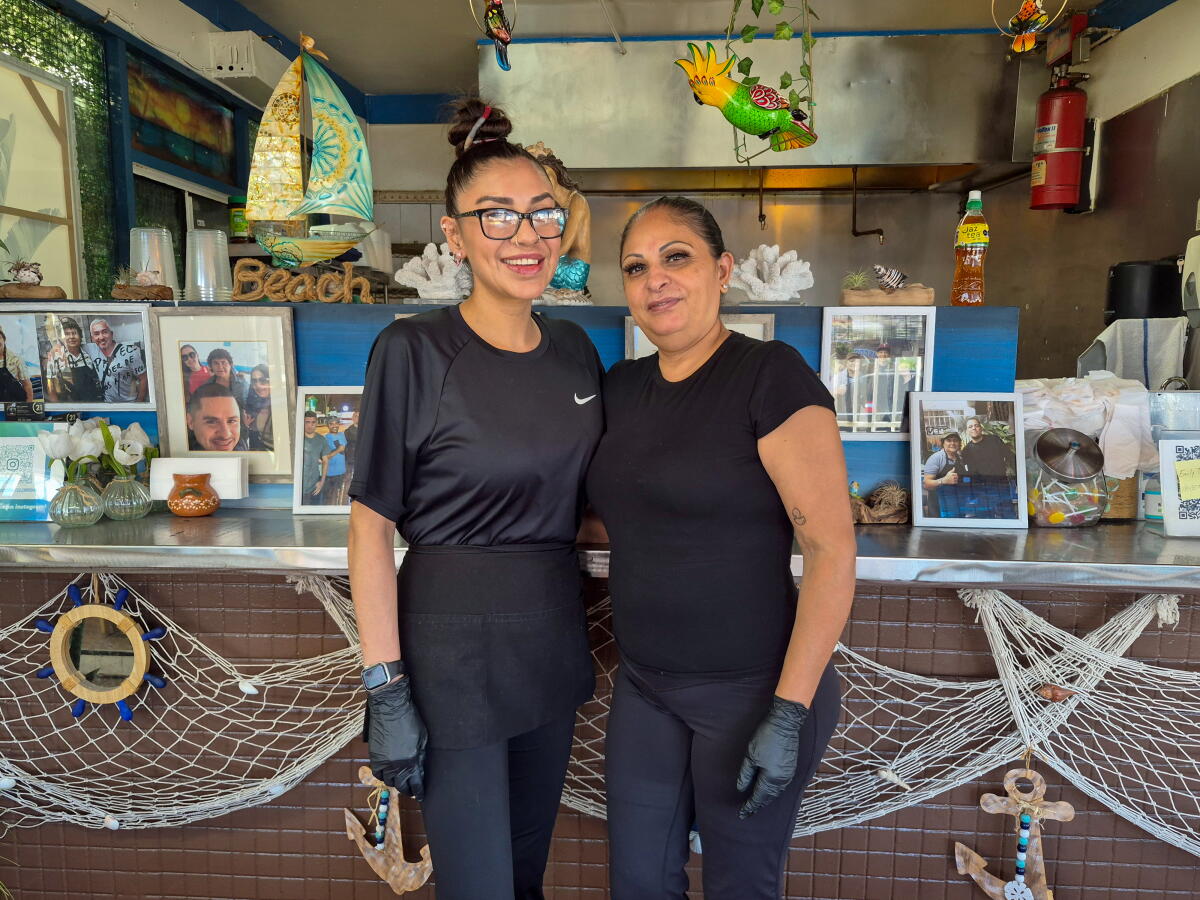
Mariscos El Chente staff members Denise Miranda and Maria Peñuelas.
(Daniel Hernandez / Los Angeles Times)
No, you don’t have to limit yourself to the touristy In-N-Out on Sepulveda Bouelvard. Skip Randy’s Donuts if you’ve done it before. For this guide, we’re zeroing in on local favorites in the quietly robust scene of dining and drinking within one mile of the airport’s perimeter. No hotel restaurants or lounges.
A tight proximity to the runways means you’re mostly surrounded by busy LAX workers and hardcore locals from the communities of Westchester, El Segundo, Lennox, Hawthorne and Inglewood. Sprinkle in people who’ve just landed from just about anywhere in the world, and the magic of the LAX cultural orbit comes alive. I’m no longer kidding or holding my secret: Because of the restaurants and bars, I actually love hanging out around the airport.
This makes me part of a low-key membrane of Angeleno who enjoys watching jetliners serenely glide their passengers through the sky, landing a kiss away from the gleaming Pacific, as we sip a nice lager or chomp into a mulita. I can trick my brain on any day into thinking I’m just about to take off myself.
Put away the holochess board, C-3PO is going to the 2027 Super Bowl!
An animated “Star Wars” version of Super Bowl LXI featuring characters from the galaxy far, far away will air live, simultaneously with the game, on Feb. 14 on Disney Channel and Disney XD, the NFL announced Monday along with partners ESPN, Lucasfilm and Disney. “Star Wars Funday Football” will also be available on Disney+ and the ESPN app.
Anthony Daniels, who has portrayed C-3PO since the original “Star Wars” trilogy, will voice the worry-prone protocol droid in the live alternate telecast. If the brief teaser video is any indication, C-3PO will be joined by his favorite astromech, R2-D2.
“Star Wars Funday Football” will feature live-animated avatars of all of the players on the field as they play the game. Viewers can expect “Star Wars” characters to sub in during special moments, as well as various Easter eggs to appear throughout the game.
The “Star Wars” themed telecast follows previous “Funday Football” installments that were themed to “Toy Story,” “The Simpsons,” and “Monsters, Inc.” This marks the first time that the Super Bowl is getting the “Funday Football” treatment.
The traditional telecast, featuring announcers Joe Buck and Troy Aikman with reporters Lisa Salters and Laura Rutledge, will be available on ESPN, ABC and Disney+.
Super Bowl LXI will be held at SoFi Stadium in Inglewood. Details for the halftime performance have not officially been announced, but Jay-Z is rumored to be the headliner.
Following “Star Wars Funday Football” and Super Bowl LXI, a newly restored version of “A New Hope” will return to theaters on Feb. 19. “Star Wars: Starfighter,” a new standalone film starring Ryan Gosling as Kade Auberon, is slated to hit theaters May 28.