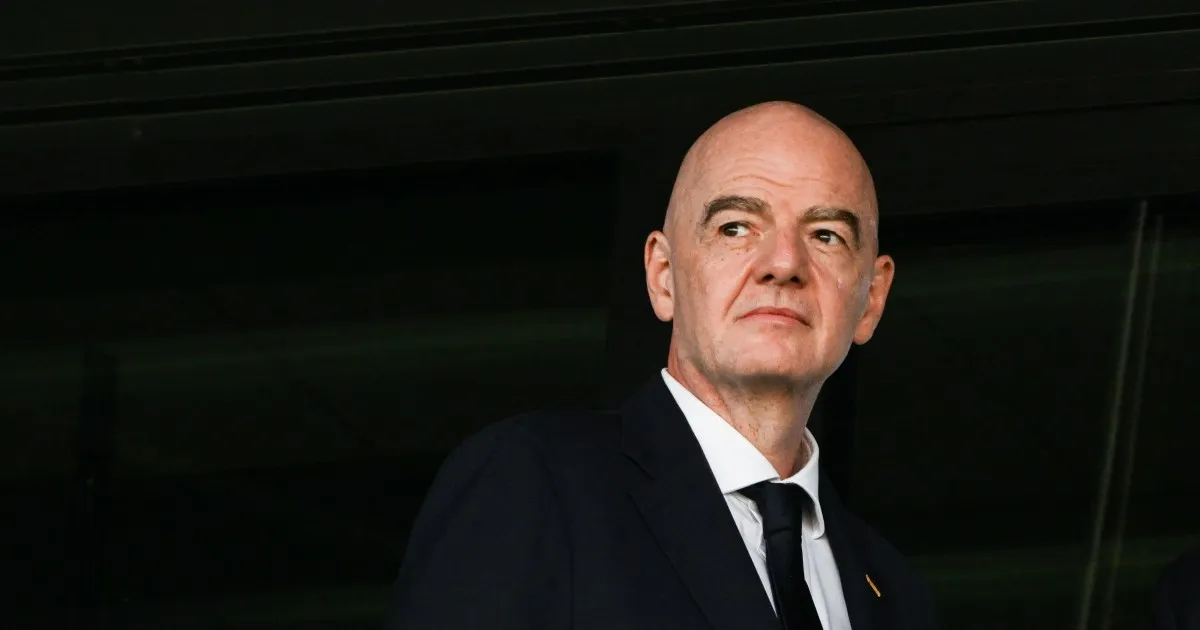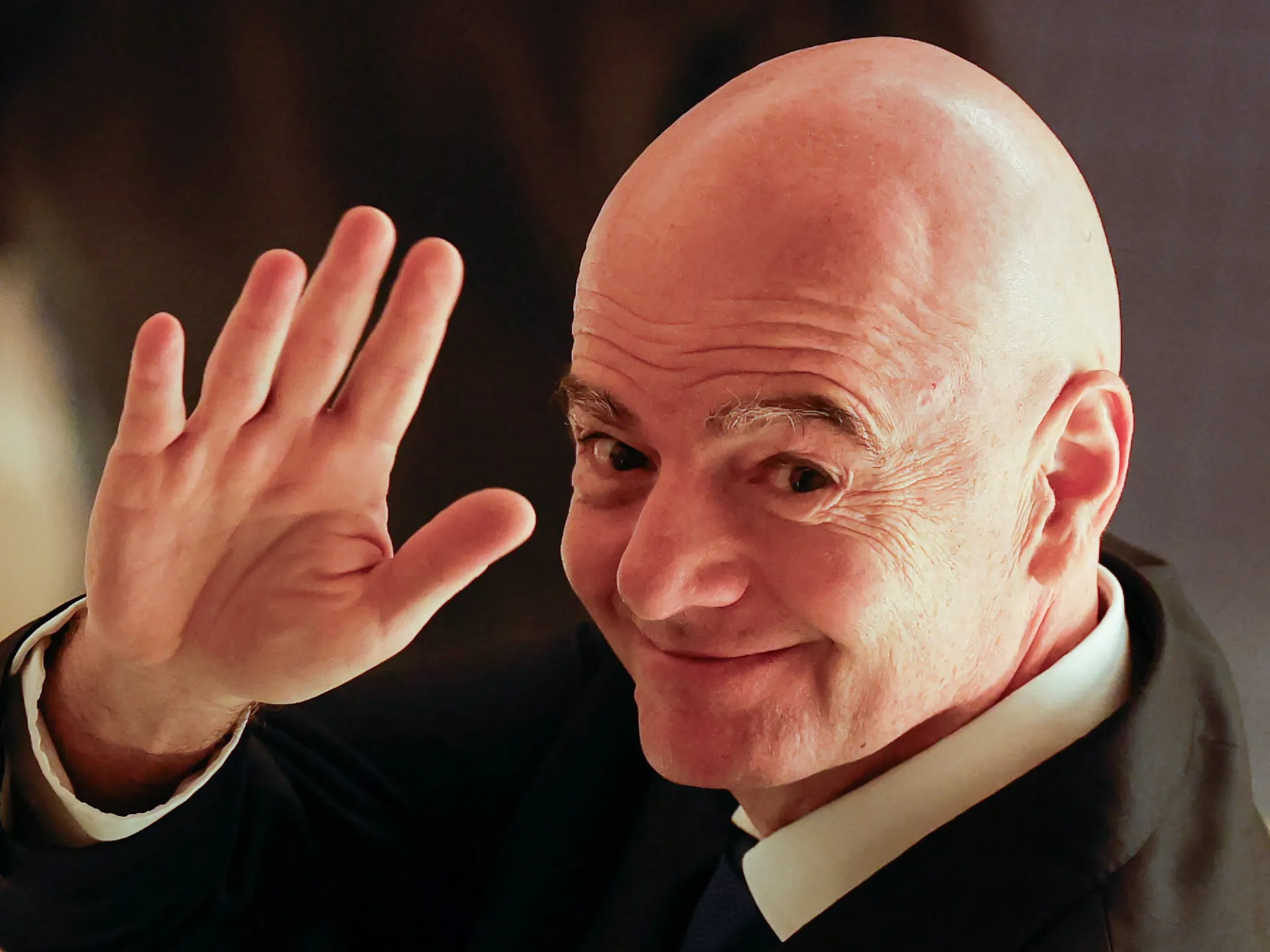
FIFA executive Arsene Wenger backs decision to drop FIFA President Gianni Infantino’s World Cup sell-off plan.
Published On 4 Aug 20264 Aug 2026
FIFA executive Arsene Wenger has distanced himself from President Gianni Infantino’s failed plan to sell stakes in future World Cup profits to private investors and says it was “absolutely necessary” to drop the proposal.
Wenger’s statement on Tuesday on the controversy came after a preservation letter from UEFA, confirmed to Al Jazeera by European football’s governing body, was sent to FIFA, the world governing body.
Recommended Stories
list of 4 itemsend of list
Upon confirming the legal request was sent, UEFA said it would be making “no further comment at this stage”.
The Associated Press news agency, however, has reported that it has seen a letter from lawyers representing UEFA that has named Wenger, the French coaching great, among 18 executives whose data and communications should be retained as potential evidence.
“I was not involved in this strategic plan and first became aware of the project through media reports,” said Wenger, who was hired by Infantino in 2019 and is FIFA’s chief of global football development.
The statement by the former Arsenal coach did not name Infantino and comes after a weeklong furore across world football.
“The decision to withdraw the project was absolutely necessary and beyond question, because I firmly believe in an independent FIFA that serves our game with commitment, transparency, and integrity,” Wenger wrote.
Infantino withdrew his $20bn proposal early on Saturday after a furious backlash by global football officials and organisations, including UEFA warning of a boycott of all FIFA games and events.
The plan would have created a subsidiary, known as FIFA Forward Enterprise (FFE), to run the money-making parts of the nonprofit football body’s work, including organising tournaments like the World Cup and selling broadcasting and sponsorship rights and tickets.
It proposed raising $4.2bn from investors by selling stakes amounting to about 20 percent in FFE, based on an equity valuation of $20bn.
The “anchor investor” would have been Thrive Eternal, launched by Joshua Kushner, whose brother, Jared Kushner, is a son-in-law of United States President Donald Trump.
FIFA’s 211 member federations – already the essential owners of the governing body as a nonprofit association under Swiss law – were offered $20m each. The deadline to accept was September 19.
They also were promised a doubling of their FIFA funding for the four years through 2030 to $20m instead of the previously announced $10m.
Infantino shared details of the project to FIFA management just one week after the July 19 final of the financially successful World Cup in North America that drove FIFA’s revenues to $15bn for the 2023-2026 commercial cycle, almost double the income tied to the 2022 World Cup in Qatar.
Wenger said his FIFA duties were to “oversee the data analysis of the game, the FIFA online training centre, the development of youth education through 60 academies across 60 countries where they are most needed, and youth competitions around the world”.
When Gianni Infantino was chosen to replace Sepp Blatter as president of FIFA, he was seen as a reformer, someone who would bring transparency and openness to soccer’s international governing body, which had long been mired in scandal and deceit.
A decade later the reformer has been exposed, hoisted by his own petard after a secret partnership with a member of President Trump’s family circle to sell 20% of the World Cup to private investors was exposed. It was a deal so brazen it made past FIFA transgressions seem quaint by comparison.
Less than two weeks after Infantino closed one of the most successful World Cups in history, one that brought in a record $15 billion in revenue, The Times of London revealed that Infantino had begun bribing FIFA’s 211-member associations, giving them until Sept. 19 to accept his plan to sell a stake in the commercial and tournament rights to the World Cup and other FIFA tournaments to a private equity firm headed by Joshua Kushner, the brother of Jared Kushner, Trump’s son-in-law and an inveterate White House counselor.
Sign on, the federations were told, and you’ll get $20 million. Decline, and FIFA will give you just a fraction of that.
Under pressure, Infantino announced Friday he was withdrawing the plan, known as the FIFA Forward Enterprise. But it turns out there was more to the proposal than originally thought.
Much, much more.
Which is why Infantino’s campaign for reelection to a fourth term as FIFA president next March, a campaign which had the support of more than 200 FIFA members two weeks ago, now appears doomed.
The national federations of Serbia, Sweden and Wales on Monday withdrew their support for Infantino and England’s FA is expected to do the same. UEFA, the governing body for European soccer and the largest and most powerful of FIFA’s six continental confederations, is threatening legal action while two other confederations — CONCACAF, the largest of FIFA’s two confederations in the Americans and the AFC, which manages soccer in Asia — have issued condemnations.
Those three confederations together represent nearly 140 FIFA members, meaning if they hold together there is no path for Infantino to get the 106 votes he would need to win reelection.
So how did we get here? How did Infantino go from progressive reformer, the overseer of newly transparent and accountable FIFA, to the man who literally tried to sell the World Cup? The journey may not have been as long as it seemed because Infantino may never have been the Boy Scout he was initially perceived to be.
Days after his first election as president in 2016, his name surfaced in leaked documents indicating that, while a senior legal official at UEFA, he had co-signed a broadcast deal with a company subsequently linked to a U.S. investigation into FIFA corruption. Later that same year, a FIFA committee opened an investigation into whether Infantino breached the organization’s Code of Ethics.
Infantino was eventually cleared by that probe but another pattern soon emerged, one that saw the president morph from a soccer bureaucrat into someone who believes he should be mixing with presidents and kings.
Infantino inherited World Cups that had already been awarded to Russia and Qatar, but he aggressively downplayed the human rights abuses in the two countries. Russian President Putin rewarded that by presenting the FIFA chief with the Order of Friendship medal. Qatar did better than that, giving Infantino use of a luxury Gulfstream G650 jet from its government fleet.
FIFA president Gianni Infantino, far left, takes a selfie with (from left) President Trump, Mexican President Claudia Sheinbaum and Canadian Prime Minister Mark Carney during the World Cup draw in Washington on Dec. 5.
(Andrew Harnik / Getty Images)
If Infantino, born to blue-collar Italian parents in Switzerland, had previously been driven by a desire for power and money, one former close associate told The Times of London that the FIFA president “views himself as one of the oligarchs now.”
And no government gave Infantino more access to the corridors of power than the Trump administration. Infantino rented office space in Trump Tower, attended Trump’s second inauguration, mingled with him and his guests at Mar-a-lago, accompanied him on diplomatic missions to the Middle East and was a frequent visitor to the White House.
Last October, Infantino took to Instagram to say that Trump “definitely deserves” the Nobel Peace Prize. When he didn’t get it, Infantino simply created his own award, presenting Trump with first FIFA Peace Prize last December.
But the access to the top levels of the U.S. government may have created Infantino’s Icarus moment. The beginning of Infantino’s fall may have started last year at the White House when he and Portuguese star Cristiano Ronaldo attended a black-tie dinner to honor Saudi Arabia’s crown prince Mohammed bin Salman.
Five days earlier Ronaldo had been given a red card and a three-game suspension for a serious foul, a penalty that would have forced him to miss the start of the World Cup. After the White House event, FIFA announced Ronaldo’s suspension had been lifted, allowing one of the World Cup’s star attractions to play in the tournament.
That was an incident Trump remembered last month when he personally — and successfully — petitioned Infantino to lift a red-card suspension for U.S. striker Folarin Balogun the day before a World Cup round-of-16 game with Belgium. It was just the second time in history a suspension was overturned during a World Cup.
Infantino also pushed through a number of other World Cup firsts for this summer’s tournament. He added three-minute hydration breaks each half, upsetting more than a century and a half of soccer tradition while giving six more minutes of advertising space to broadcasters; he introduced a halftime show for the final, nearly doubling the intermission break for the tournament’s most important game; and he pioneered a dynamic pricing scheme that more than doubled the cost of tickets from 2022.
Those moves were designed to boost FIFA revenues, and they did — as did Infantino’s push to expand the 2026 World Cup to 48 teams and 104 games. But his luck ran out with his plan to give outside investors a share of the tournament, a scheme known to the White House — Jared Kushner was originally involved, according to reports — but few others.
One damning part of the plan involved a potential future role for Infantino in the investment fund. As FIFA’s president, Infantino earns an annual salary of $6 million, but if reelected, he can serve just one more term, meaning he’d be out of a job in 2031. However, multiple reports, citing unnamed sources, said Infantino was positioned to be chief executive of the investment arm in his post-FIFA days, a job that pays $30 million a year.
FIFA said that idea was never discussed. It also denied reports that Infantino had been rebuffed Monday in efforts to contact Trump for help in saving his presidency. But should he be pushed aside and should his days as a private equity manager never come to pass, there is another job Trump thinks he could do.
The president is reportedly considering pushing Infantino to become the next United Nations secretary-general when António Guterres’ term expires in December.
⚽ You have read the latest installment of On Soccer with Kevin Baxter. The weekly column takes you behind the scenes and shines a spotlight on unique stories. Listen to Baxter on this week’s episode of the “Corner of the Galaxy” podcast.
Backlash to FIFA’s private investment plan for World Cups and events was huge; now football reacts to the U-turn’s fallout.
Published On 1 Aug 20261 Aug 2026
FIFA President Gianni Infantino has said that world football’s governing body had scrapped plans to sell a stake in the World Cup and other events to private investors after widespread backlash.
The response to the plan, which was announced on Tuesday by Infantino, was overwhelming.
Recommended Stories
list of 4 itemsend of list
The wording of the outcry from around the globe was damning of the proposal, but stopped short of directly criticising Infantino.
The reaction to Infantino’s decision late on Friday to scrap the investment scheme, which would have sold minority stakes in World Cups and other FIFA events, ranges from overt votes of no confidence in the FIFA president to more subtle, but equally notable, condemnation of the week’s events.
“UEFA welcomes FIFA’s decision to withdraw its plan to sell a stake in its competitions – including the World Cup – into private hands,” European football’s governing body said.
“The current FIFA leadership has not only lost UEFA’s confidence but also that of many other members of the football family.”
“UEFA will begin work immediately with partners and stakeholders all over the world and right across the game to propose a new way of distributing resources through the existing FIFA Forward programme.”
“This is a victory for the whole game. But it must not be the end of the story. The proposal has gone. The task of rebuilding trust in FIFA has only just begun.”
AFC’s president, Sheikh Salman bin Ebrahim Al Khalifa
“The future of global football must always be shaped through proper consultation, collective dialogue and respect for the established governance structures of our game,” said Sheikh Salman, president of the Asian Football Confederation.
“The AFC stands ready to support any initiative that strengthens the unity of the football family, contributes to the continued growth of the game globally and delivers meaningful benefits to all stakeholders.”
“We stand shoulder to shoulder with our European colleagues and fully support the collective view,” an FA spokesperson wrote on its website.
“We oppose FIFA’s plans – the FIFA World Cup belongs to football and always will.”
Dutch FA statement
“With the withdrawal of the proposal, the matter is not settled for the KNVB,” the Dutch statement read.
“The way this process has unfolded has led to a fundamental breach of trust in the leadership of FIFA President Gianni Infantino. The KNVB no longer has confidence in his leadership.”
“We welcome FIFA’s decision not to proceed with the proposal. It is in line with our expectations in light of the flawed process and the reactions the proposal has provoked,” Astrom said.
“At the same time, we are still concerned about deficiencies in transparency and governance, and want to emphasize the importance of continued discussion and dialogue about how football should be governed and developed.”
“As a founding member of FIFA and a representative on the FIFA Council, the RBFA remains committed to a strong, independent and sustainable model for international football,” Van Damme said.
“Football has never stood still, nor should it,” Isaac said.
“Throughout its history, our game has evolved through innovation, investment and new ideas that have strengthened football, created greater opportunities for players, coaches and referees, and enhanced the experience of supporters around the world. That spirit of progress must continue.
“Some principles, however, should never change. Integrity. Independence. Good governance. Transparency. Meaningful consultation. Due process. These are not constraints on progress. They are what make lasting progress possible.”
Heading into the final weekend of this summer’s World Cup, The Guardian reported that support for FIFA president Gianni Infantino had climbed to record levels. More than 200 of FIFA’s 211 member associations formally endorsed Infantino’s bid for a fourth term as head of world soccer’s governing body, the paper reported, making next March’s vote more of a coronation than an election.
Two weeks later, that support disappeared. Not only is Infantino’s reelection campaign in tatters, but there’s a chance he won’t survive until the spring, with British Prime Minister Andy Burnham and Javier Tebas, president of Spain’s soccer association, calling for his resignation and close confidants such as Carlos Cordeiro, the former president of U.S. Soccer, and Kevin Lamour, FIFA’s chief operating officer, publicly breaking with their boss.
At the center of that reversal was a closely guarded scheme to raise $4.2 billion by selling a 20% stake in the World Cup to private investors, who would be given influence in planning and executing future events, including broadcasting and commercial deals tied to the tournament.
In short, Infantino was planning, in secret, to sell shares in the World Cup. And once details began leaking in the media, he was forced Friday to scrap the whole thing, an embarrassing retreat that has left him vulnerable just two weeks after he had seemingly reached the heights of his third term as FIFA president.
Infantino’s idea, called the FIFA Forward Enterprise, was intended to turn the World Cup, FIFA’s milk cow, into a golden calf. But to do so, he needed the approval of at least 106 of FIFA’s 211 member countries, so he promised countries that backed him that they would receive $20 million each by mid-September. Those who declined would get just a fraction of that.
Infantino was certain the piles of cash would buy the acquiescence — or at least the silence — of enough members for the plan to go through. Instead, the bribe blew up in his face and FIFA issued a statement late Friday, under Infantino’s name, that basically said “never mind.”
“Having listened carefully to all the views, it has become clear that the project has created divisions of a nature that, regardless of the level of support, are no longer in the interest of the objective set out in the first place,” the statement read.
The question now becomes whether Infantino’s presidency will proceed.
He wouldn’t be the first FIFA president to be grievously wounded by unbridled ambition, but the speed and depth of his fall is staggering. The 2026 World Cup was, by nearly every measure, wildly successful. The largest and most complex sporting event in history the tournament, hosted by the U.S., Mexico and Canada, exceeded expectations, drawing more than 6.8 million live fans and a global TV audience of more than six billion. The four-year World Cup cycle brought FIFA revenues of about $15 billion, making it the first sporting event in history to earn more than $10 billion.
Infantino has never been shy about pushing boundaries despite heading a Swiss-based organization that, its wealth notwithstanding, is officially a nonprofit. Nor was this the first time he tried to bring private equity into the World Cup: In 2018, two years into his first term as FIFA president, he considered a plan to raise $25 billion to fund tournaments, only to cave in the face of massive opposition.
He didn’t give up the idea of squeezing more money out of the World Cup, though.
This summer, he introduced three-minute hydration breaks in the middle of each half — ostentatiously a nod to the heat and humidity, but in reality a ruse that allowed broadcasters to generate millions in additional revenue through TV commercials. FIFA also staged a halftime show for the first time ever during the final, sold VIP tickets priced at more than $1 million each and introduced dynamic pricing for the tournament’s 104 games, driving prices for some seats to four times what fans paid four years ago in Qatar.
That pushed the tournament beyond the reach of many of the sport’s most loyal supporters — and soccer, more than any other sport, belongs to the fans. It’s why teams are called clubs and fans are called supporters.
The World Cup, then, wasn’t Infantino’s to sell. So the pushback to his latest idea was immediate and unsparing.
“Football does not belong to investors,” Burnham said in an Instagram post. “Once you have sold a piece, you have sold out. Football belongs to the fans. It always has, and it always will.”
What really angered stakeholders, however, was Infantino’s brazen move to develop the FFE in secret, only to have its details leak out.
Bernd Neuendorf, president of the German soccer association and a member of the FIFA Council, the group’s most influential body, said he first learned of the FFE by reading about it.
“I was very surprised, and also annoyed, that we had to find out about something like this from the press,” he told a German news outlet last week.
Another self-inflicted wound was Infantino’s decision to launch the project with Thrive Eternal, a venture capital firm founded by Joshua Kushner, the 41-year-old brother of Jared Kushner, President Trump’s son-in-law and a kind of all-purpose White House advisor and negotiator. Thrive Eternal focuses on long-term investments in scarce cultural institutions that technology cannot replace, but it has little relevant experience in managing something as large and complicated as a World Cup.
FIFA president Gianni Infantino, left, and President Trump wave during an award ceremony following Spain’s win over Argentina in the World Cup final July 19.
(David Ramos / Getty Images)
Moreover, the partnership would draw Infantino further into the orbit of Trump, whom the FIFA president has openly courted for years. Infantino, who has been a frequent visitor to the Oval Office and Trump’s Mar-a-Lago estate in Florida, attended the president’s inauguration and accompanied him on visits around the world.
Trump’s relationship to Infantino was questioned when Infantino presented him with the first FIFA Peace Prize last December, then became even more controversial when Trump phoned Infantino three times to lobby to have the red-card suspension of U.S. forward Folarin Balogun overturned ahead of a World Cup elimination game last month.
FIFA eventually cleared Balogun to play, marking just the second time in tournament history a red card ban has been lifted. For some, Infantino’s decision to partner with someone close to Trump on his latest venture was a bridge too far.
“It’s a really bad look for Infantino given the concerns about political interference that were already there after Balogun,” said Steven A. Bank, a professor of business law at UCLA who has written and lectured extensively on the economics of soccer. “Especially with the fund led by Jared Kushner’s brother.”
Once details of Infantino’s secret plan began to leak, UEFA, the confederation that governs European soccer, held an emergency meeting during which all 55 members — including Spain, the reigning men’s and women’s World Cup champion — voted to boycott all FIFA competitions.
“Some things are simply too important to sell. The FIFA World Cup belongs to football. It always will,” UEFA, the largest and most powerful of FIFA’s six continental confederations, said in a statement.
CONCACAF, which oversees soccer in North America, Central America and the Caribbean, said its 41 countries also rejected the plan, an opinion the U.S. Soccer Federation backed in a sparse post on X.
“U.S. Soccer stands with CONCACAF and its members,” it wrote.
The Asian Football Confederation joined in, saying in a statement its 47 members stand “in solidarity with UEFA and CONCACAF in expressing serious concerns over FIFA’s proposal to introduce private investment into FIFA’s flagship competitions.”
When it became obvious Infantino would not get the votes he needed to go forward, he pulled the plug on his plan. But it may not have been so much that the idea was bad as it was the execution.
Soccer is awash with private investors. The biggest clubs are owned by billionaires or sovereign wealth funds and many leagues — including Spain’s La Liga, which Tebas oversees — have sold commercial stakes to private equity firms in much the same way FIFA proposed.
Alan Rothenberg, a former U.S. Soccer president and the driving force behind the 1994 men’s World Cup and 1999 women’s World Cup, among the most successful tournaments in history, said the idea of selling a private equity stake in the World Cup isn’t a bad idea. But the way Infantino tried to implement his plan led it to failure.
“What is proposed is not that revolutionary,” Rothenberg said. “There have been private equity investors in MLS, in one of the subsidiaries of the NFL, in F1.
“But I think the combination of everything has doomed it. It does raise the possibility that Infantino, he’s finally become Icarus and gotten too close to the sun. It actually may doom him politically.”
Others including Cordeiro, a former vice chairman at Goldman Sachs, questioned the need to bring in outside investors.
“FIFA already has access to extraordinary financial resources. The organization sits on billions of dollars in reserves and no debt,” Cordeiro pointed out in his resignation letter. “If member associations believe additional investment is needed to develop the game, FIFA already has the financial capacity to provide that support from its existing resources.”
Infantino has flaunted consensus before without significant consequence, cozying up to autocrats while overseeing the 2018 World Cup in Vladimir Putin’s Russia and the 2022 tournament in Qatar before being accused of awarding the 2034 tournament to Saudi Arabia in a rigged vote.
This time, however, the stakeholders within FIFA were pushed too far by Infantino’s penchant for wielding unilateral power, so they pushed back and the president blinked. Hours before he backed down, an ally of Infantino’s told the Financial Times that he would not bend, seeing the standoff as “a fight to the death.”
Infantino’s presidency might not be dead, but it is surely in critical condition.
Fifa president Gianni Infantino says he has scrapped the controversial plan to sell off stakes in the governing body’s major competitions, following widespread opposition.
Infantino said it had become clear the project had “created divisions” that are “no longer in the interest” of its original objective.
The Swiss added: “As a result, this proposal will not proceed.”
Infantino had offered all 211 member associations $40m (£30m) if they backed a proposal for private investment in its tournaments, including the men’s and women’s World Cups.
Carlos Cordeiro – Infantino’s senior adviser on global strategy and governance – resigned over the mater, saying the proposal was “a bad deal for football” and would “mortgage football’s future”.
That came after two other major confederations spoke out against the plans.
Concacaf, which governs football in North, Central America and the Caribbean – and hosted this summer’s World Cup – said its members “rejected” the proposal, with sources saying the vast majority of associations from the region are losing, or have lost, faith in Infantino.
The Asian Football Confederation (AFC) said it stood in “solidarity” with Uefa and Concacaf, while UK Prime Minister Andy Burnham said Infantino was “the wrong man” to lead Fifa.
Infantino, 56, is now under immense pressure as he seeks re-election for a fourth term as president at the Fifa Congress in March.
He said he now intends to “bring all interested parties back together” in the “spirit of shared interest” in football.
Uefa’s 55 member associations have voted to boycott the World Cup if Fifa proceeds with its plan to sell stakes in its competitions to private investors.
The decision was made at an emergency meeting on Thursday to discuss the proposals announced by Fifa – world football’s governing body – on Tuesday.
Uefa, which governs European football, had made its opposition clear by releasing two damning statements about the plans – and that strength of feeling has now been reaffirmed.
The boycott would cover all Fifa competitions, including the men’s and women’s World Cups and Club World Cup and be triggered if Fifa president Gianni Infantino’s proposals are voted through by member associations.
The first time this stance will be tested is October, when the Women’s World Cup play-offs are due to be held.
The dust has barely settled on the expanded 48-team FIFA World Cup 2026, yet further development of the competition’s future has already been mooted, as well as struck by a fierce backlash.
The shine on the trophy, now held by Spain after their defeat of Argentina in the final, still glitters brightly, but there were tarnishes to this year’s event.
Recommended Stories
list of 3 itemsend of list
Now, the game’s global governing body, FIFA, and its president, Gianni Infantino, face yet more criticism after a plan was released to sell stakes in future World Cups and other events to private investors.
From European football’s governing body, UEFA, to the United Kingdom’s new prime minister, Andy Burnham, FIFA’s plan has been slammed. There has even been a suggestion of a boycott by UEFA.
Al Jazeera Sport takes a look at what the latest proposals on FIFA’s desk mean.
What are Gianni Infantino and FIFA’s new World Cup plans?
FIFA announced plans on Tuesday to sell stakes in future World Cups and other events to private investors in a bid to maximise revenue for the sport.
The proposal is to create a $20bn subsidiary to run the World Cup and other events.
FIFA says it would retain the majority share of a newly created FIFA Forward Enterprise (FFE) scheme, meaning it would still preside over football governance, competitions, match calendars and regulatory and sporting decisions.
Minority stakes, however, would be sold to external investors to raise up to $4.2bn as part of the new proposal.
Why do Infantino and FIFA want to sell stakes in the World Cup?
Debate raged for months in the build-up to World Cup 2026 that FIFA’s ticket pricing was pushing fans out of “the people’s game”, as it has long been regarded.
FIFA’s defence was that the World Cup is their main source of income to support the game around the globe – from the sport’s grassroots to the administration of the major international events.
This latest proposal is FIFA’s attempt to stretch that revenue potential even further.
How would the new plan for the FIFA World Cup work?
Billions of dollars are already raised by FIFA tournaments, largely from broadcasting rights, sponsorship and other commercial deals.
This new commercial subsidiary, the FFE, would extend beyond traditional means of raising funds and would be akin to the franchise model that many sports have now turned to.
The Indian Premier League (IPL), a T20 cricket tournament, was one of the first competitions to fully exploit the potential of franchise models, selling stakes in teams in a newly formed competition.
Teams in that competition are owned by majority investors, who therefore hold significant sway in how it is run.
Other models, including The Hundred of the England and Wales Cricket Board (ECB) – an attempt to rival the IPL – have sold minority ownership of the teams.
ECB, as a result, retains control of the competition, and this is what FIFA is proposing for the share of the World Cup and its events that it intends to sell privately.
Nonetheless, a share is a share and new investors, be it in cricket’s The Hundred or in the FIFA World Cup, will expect at the very least to be heard when it comes to decision-making.
This is where concerns are being raised about the proposals.
US President Donald Trump and FIFA President Gianni Infantino, left, hand the World Cup trophy to Spain’s Rodri before the 2026 trophy lift [Hannah Mckay/Reuters]
Who are the potential investors in the World Cup and other FIFA events?
Thrive Eternal, a United States venture capital firm, has been put forward to lead the proposed investor group, FIFA said.
The vehicle was founded by Joshua Kushner, the brother of US President Donald Trump’s son-in-law, Jared Kushner.
Any potential investors would thereafter buy into the FIFA events via Thrive Eternal.
What benefits are FIFA claiming if the World Cup and events plan succeeds?
FIFA has said all net benefits will be reinvested in football, and that all countries should benefit from the ever-increasing profitability of the sport.
“Football is the world’s most popular sport,” FIFA President Gianni Infantino said in a statement.
“Parts of the game have turned that popularity into remarkable commercial value – and we celebrate that success and want it to continue, because it lifts the whole game.
“Our job is to make sure the rest of football grows with it: FIFA exists to support sustainable, inclusive development in every corner of the world.”
‘It is not FIFA’s to sell’: UEFA and UK PM reaction to Infantino’s World Cup plan?
FIFA has already clashed with domestic and continental governing bodies during World Cup 2026. The European powerhouse, UEFA, was the first to speak out against the new proposals.
“This crosses a line that football’s governing institutions should never cross,” UEFA said.
“UEFA takes it extremely seriously. So should every National Football Association. So should every stakeholder who cares about the future of the game.
“The soul and governance of football are not assets to trade – especially with zero transparency as to who gains financially. None of us are the owners of football. It is not FIFA’s to sell.”
Andy Burnham, who only replaced Keir Starmer as the United Kingdom’s prime minister last week, wrote on X: “Let me say this very directly. Football does not belong to investors. It belongs to the people who fill the stands and who stand on the touchline week in, week out, rain or shine.
“The World Cup is not a product. It is the greatest competition in world sport, and it was never anyone’s to sell. Dress the deal up however you like. Once you have sold a piece of it, you have sold out.
“Football belongs to the fans. It always has, and it always will,” he added.
The Confederation of North, Central America and Caribbean Association Football (CONCACAF) said on Wednesday that it had not been informed of FIFA’s proposed sale of equity to outside investors and was “deeply concerned” over a lack of due process.
What will happen next for FIFA’s World Cup plans, and will UEFA boycott?
Any change will need to be voted through by FIFA’s 211-country membership.
Of that number, 55 nations fall within UEFA’s governance.
The European body will hold an emergency meeting later this week to discuss the proposals.
Were FIFA to implement such a plan, one possible response UEFA could take would include a boycott of FIFA competitions.
Although at just above a quarter of FIFA membership, Europe has produced the winner of six of the last eight World Cups.
Argentina and Brazil are the only teams to prevent a clean sweep by the Europeans in that time, and, indeed, are the only nations outside Europe to win the World Cup since fellow South Americans Uruguay won their second and last title in 1950.
What were the main criticisms of FIFA World Cup 2026?
The main criticism going into the 2026 World Cup, held in the US, Canada and Mexico, was pricing. From tickets to transport links, it was felt that football fans on median salaries around the world were being priced out of the game.
During the World Cup, the decision to suspend a red card shown to USA striker Folarin Balogun “undermined the game’s integrity and credibility,” according to UEFA.
US President Donald Trump said he called Infantino about the ban that Balogun faced – the forward lined up for USA in their next match against Belgium.
FIFA also faced a backlash over hydration breaks that were introduced midway through each half of those matches. Critics said the breaks functioned primarily as commercial opportunities for broadcasters and disrupted the traditional flow of football matches at the tournament.
Argentina superstar Lionel Messi, right, during a hydration break at the World Cup [Lee Smith/Reuters]