The Directors Guild of America on Thursday night said it approved a four-year contract with the major studios.
The new contract will boost studio contributions to DGA’s healthcare plan, increase minimum salaries and offer AI protections. The DGA declined to say how many voted in favor of the contract, but in a memo to members, union President Christopher Nolan and National Executive Director Russell Hollander said members “voted overwhelmingly” to ratify it.
“Throughout this process, our focus was clear: protect our members, strengthen the Guild, and address the challenges facing our industry during a period of profound change,” Nolan and Hollander wrote in a memo to members sent on Thursday. “… We have achieved critical wins that put the Guild in a position to further protect our members economic and creative rights now and into the future.”
The newly ratified contract provides some stability in Hollywood, about three years after a summer of strikes led by the Writers Guild of America and performers guild SAG-AFTRA. WGA approved a contract with major studios under the Alliance of Motion Picture and Television Producers in April and SAG-AFTRA members ratified their contract in June. All the contracts extend the terms to four years instead of three years, which studios had sought out.
The AMPTP in a statement thanked DGA, WGA and SAG-AFTRA “for their thoughtful and collaborative approach to negotiations.”
“Together, we reached agreements that deliver substantial gains for guild members while supporting greater stability across the entertainment business,” the AMPTP said. “We are encouraged by the trust built throughout this cycle and look forward to building on that momentum to advance opportunity and shared success across our industry.”
The new DGA contract starts on July 1 and runs through June 30, 2030. Key aspects of the agreement include requiring the studios to increase their contribution to DGA’s health plan by 24.4% over four years. In return, the DGA would support “modest” increases to the eligibility threshold and annual premiums.
The contract also increases minimum salaries on many jobs by 2.5% in the first year and up 3% for each of the following years in the agreement.
It also adds more rules around the use of AI technology, including requiring that directors oversee any footage created by artificial intelligence.
When David Jacks published a biography of Peter Asher in 2022, the veteran record producer and manager expressed surprise that anyone would have deemed his life worthy of the treatment. Four years later, he’s no less baffled to have become the subject of a new documentary, “Peter Asher: Everywhere Man,” directed by the filmmakers Dan Geller and Dayna Goldfine.
“It just seemed to me,” he says, “that I wouldn’t be that fascinating.”
The movie, in theaters now, argues otherwise: A child actor alongside his two younger sisters, the bespectacled Asher became an unlikely pop star during the British invasion as half of the duo Peter & Gordon, whose debut single, “A World Without Love” — written by Paul McCartney — hit No. 1 on Billboard’s Hot 100 in 1964. (McCartney offered the song to Asher while the Beatle was dating Asher’s sister Jane.) In 1968, the Beatles made Asher head of A&R at Apple Records, where he signed James Taylor; the two soon moved to Los Angeles and turned Taylor into music’s biggest heartthrob folkie.
Asher went on to shepherd Linda Ronstadt to stardom and to produce records by Diana Ross, Cher, Bonnie Raitt, Randy Newman, Neil Diamond and 10,000 Maniacs, among many others. And at 82 he’s still at it: Last year he produced Barbra Streisand’s latest duets album — they’re due to start work on a new Streisand solo LP, he says — and he’ll perform a show of his own July 19 at the Grammy Museum. Asher, who broke his leg in a recent fall, spoke about it all the other morning at his home in Malibu, where he walked into the kitchen using a cane before sitting down at a table set with pastries and several of the day’s newspapers.
What unites the jobs of musician, producer, executive, manager? What’s the through line? Love of music and admiration for the people who do it. They’re very different jobs, and I came at them from very different perspectives. Record production was something I set out to do once I understood what a record producer did. Hire musicians much better than yourself and tell them what to do? That’s a cool job — how do I get in on that racket? Whereas I never had any ambitions to be a manager. It’s just that when James and I decided to go out on our own and try to put a career together, we didn’t know who we trusted to do it, so I kind of went, I’ll do it.
What’d you discover about the job of management? The ingredients are common sense, not being a crook and having a great client.
Which is the hardest of those three? The last one. I got to induct the first managers inducted into the Rock & Roll Hall of Fame: Brian Epstein and Andrew Loog Oldham — the Beatles and the Stones. That’s the hard part. The only thing that would tempt me back into management would be lightning striking for a third time — to see James, to see Linda, then to see somebody comparably brilliant, which I occasionally do. But usually they have a manager already.
What’s the last new act that knocked you out? Ed Sheeran.
Was that just because he looks like he could be your grandson? That certainly crossed my mind.
As a producer, your records helped define the sound of rock in the ’70s. The so-called California sound.
Then the zeitgeist shifted. One became aware of that. Pop music got very electronic, which I loved.
Was there a place for you in that style? I didn’t consciously try to make records in that style because I don’t think I could have — not as well as they were being made anyway.
What’s a record from the early ’80s that made you think that? “Sweet Dreams (Are Made of This).” I couldn’t do that.
Back to the ’70s: The doc is filled with pictures of James looking — Like a movie star. With the cover of “JT,” I finally went all the way and said, “We’re doing the the glamour shot.” Then we did “Flag,” which everyone hated.
With the maritime flag. A truly perverse album cover. I loved it. James loved it. Everyone thought we were crazy.
How crucial do you think James’ good looks were to his whole proposition? I don’t know.
Oh, come on. I really don’t. I mean, how would you gauge that? There’s probably girls who fell in love with him without listening to the record.
I think you just gauged it. If he was ugly, would he be as big a star? Probably not.
(Evan Mulling / For The Times)
Same applies to Linda, right? When I first saw Linda, it was stages of realization. Someone said to me, “You’ve got to go down and see this girl at the Bitter End.” I walk in and she’s singing so well — unspeakably good. Then she looks incredibly great — barefoot, short-shorts. Oh, my God, my heart. Then you meet her, and it turns out she’s a remarkably brilliant woman — extremely well read. You just kind of go, “All these things together — how can it be?” It’s the same thing talking about the Beatles: If you cast it like the Spice Girls, you still couldn’t have gotten four to fit together so perfectly.
Did you like the Spice Girls? Terrific. “Tell me what you want / What you really, really want” — it’s a smash. And yet none of them are particularly good singers, which is kind of the point.
I went to an event not long ago where Paul McCartney played his new album for a small group of fans. It was fascinating to see the spell McCartney casts over people. He’s had to get used to it — to admit to himself that he can’t meet people who aren’t amazed that they’re meeting him. Even as someone who’s known him off and on for a long time, you still get the wave of: Holy s—.
You’re still amazed to be around him? Of course. I get it less — I’m ready for it. But you can’t pretend he’s not Paul McCartney. And he’s gotta live with that his whole life.
You grew up a member of the upper crust, I think it’s fair to say. I don’t think we were that crusty. But upper, probably, yes.
I wondered how that situated you to live and work among artistic types. If anything, the upper crust have more time to be artistic — less preoccupied with getting a job and making a living. But my parents worked incredibly hard — we weren’t upper crust in the sense of inherited wealth. My father was a doctor, my mother was a professor of music. But I never struggled, to be honest. I had a comfortable allowance, and then I went to school and worked hard. Everyone talks about sharing a flat with a million people, living on borrowed sandwiches — I skipped that phase.
Did that shape you in any meaningful way? I don’t know. But I think when people do struggle, it becomes a meaningful part of their lives to get away from it. With someone like James, the struggle was a struggle with drugs. Now he says the worst thing about drugs is they’re a complete waste of time — you waste time doing nothing except looking for drugs. And I think that made him anxious to succeed and to be taken seriously.
I’m sure you saw the New York Times’ list of the 30 greatest living American songwriters. You knew it was gonna be silly. Randy Newman, for God’s sake — you just cannot not include him.
No Neil Diamond either. Insane.
And no Billy Joel. [Shrugs].
How’s your health? High blood pressure, high cholesterol, need to work out more — old man stuff. Other than that and a broken leg, great.
You’re OK with the cane? It’s a considerable upgrade from the wheelchair. I like the cane — it’s kind of elegant.
What seems scarier: the body going or the mind going? The mind going. And it is, slightly. I had a stroke, and bits of my brain aren’t quite working right. But compared to other people I know, I’m fine.
We’re at a moment when a lot of foundational rock ’n’ roll figures — Are dying. It’s all the rage.
What’s it feel like to see your friends and colleagues go? Better them than me.
Couple more for you: You managed Courtney Love for a spell. I met her here in Malibu. I also managed Pamela Anderson for a while because she was a neighbor and asked me to help.
What, you put a shingle out? “Manager for hire.” I’m trying to remember how I first met Courtney — I think Merck Mercuriadis was talking to her about publishing and Kurt stuff. I liked her. Very smart. I like smart women.
She’s easy to work with? Hard to work with? Impossible to work with.
What’s James Taylor’s best album? “JT,” maybe.
What’s Linda Ronstadt’s best album? “Heart Like a Wheel.” With Linda, it’s unfair because they’re so radically different. How do you compare that to a mariachi record and then to Nelson Riddle?
Working with Riddle on those albums must have been a thrill. He told us all these incredible stories about Frank Sinatra, who he didn’t like although he admired him enormously. It was John David Souther who originally suggested Nelson. Linda had tried doing the album a different way — did some versions with Jerry Wexler and it didn’t work out. So we had a meeting with Nelson: Would he consider doing a couple of arrangements for us? He went, “No.” We said, “What?” He said, “I’ll do an album, though.”
“A World Without Love” was one of eight songs to top the chart in 1964 with “love” in the title. What’s that say about pop music in the mid-’60s? Same thing it says about pop music of all time: It’s either “I love you” or “She loves you” or “Why don’t you love me?” Weird Al pointed out to me that when you’re looking for a parody of a song, any song that has “love” in the title, substitute “lunch” and it’s funny. “A World Without Lunch” — I mean, who would want to live in such a place?
A coalition of advocacy groups for artists, songwriters and managers is warning musicians about the growing risks of artificial intelligence music.
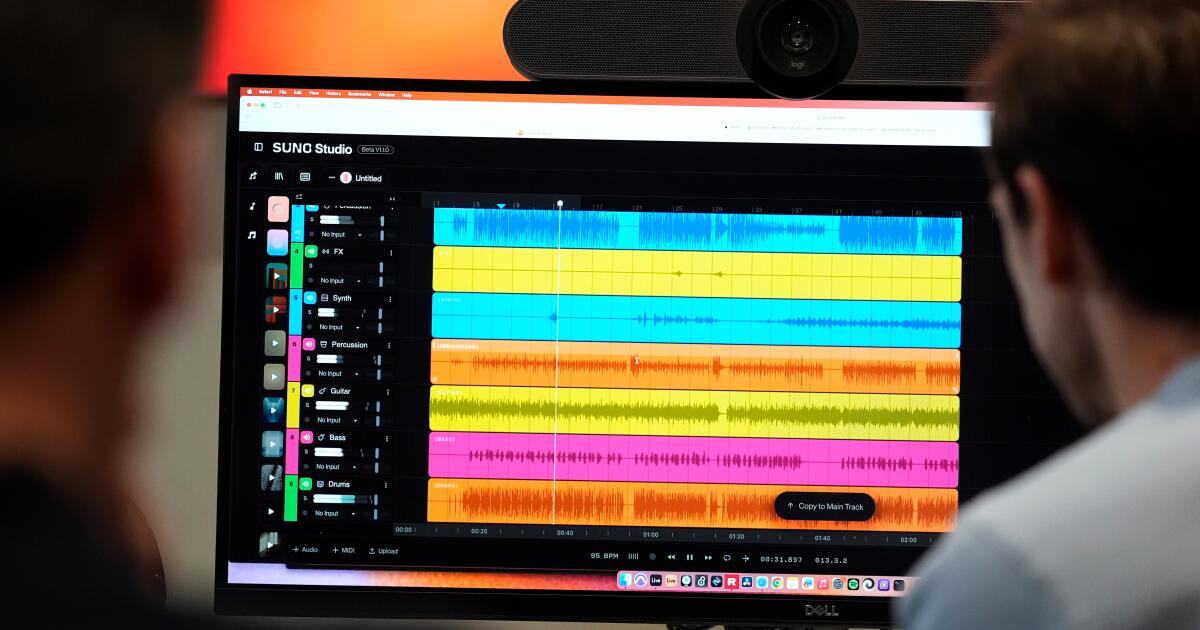
Recently, many major record labels have inked deals with AI music startups such as Suno, Udio and Klay. But the coalition, which includes organizations such as the Music Artists Coalition and the Songwriters of North America, argues in a new letter that “artists and songwriters whose works, voices, performances, likenesses and creative identities make those deals valuable are not being meaningfully consulted.”
The letter, released Monday, stated that many artists and songwriters in existing recording and publishing agreements are currently receiving letters from their labels and publishers claiming that they “will be opted in to AI-related uses by default, with little actual choice offered.” Even new artists are receiving agreements that include “AI rights clauses as a standard condition of signing.”
“We support innovation and recognise that AI can create new opportunities for music,” the coalition wrote in the letter. “However artists are not simply catalogue assets, and innovation cannot be used to override artists’ rights.”
The National Independent Talent Organization, a live entertainment advocacy group that signed the letter, said many of its members are coming to the organization with label contracts that include “non-negotiable AI usage clauses.”
“We can’t allow for contract language signed decades before this technology existed to be the standard bearer. These rights belong to the creators and they get the final say on usage,” said Nathaniel Marro, NITO’s executive director, in a statement to The Times.
“Music companies are leading the fight to protect artists’ and songwriters’ rights in the age of AI,” said a spokesperson for IFPI, the recording industry’s global trade body.
“While our members have taken different approaches, they share the same fundamental objectives: combating the unauthorized use of music and establishing licensing models that return revenue to artists and songwriters,” the IFPI spokesperson added.
The coalition is asking the industry to move forward on AI deals only under four conditions: that musicians directly consent to any agreement; that artists receive fair compensation; that there be transparency between the companies and the talent; and that companies make a public commitment to end contracts built on default AI opt-ins and forced AI clauses.
“Artists need a real seat in these conversations, clear terms on revenue share, and the ability to say no without losing their deal,” said Ron Gubitz, the Music Artists Coalition’s executive director, in a statement.
A little over two weeks ago, the American Federation of Musicians sued Universal Music Group and Warner Music Group. The complaint claims the major labels “received significant compensation” from the AI companies for past copyright violations and licensed “substantial” portions of their music catalogs to them, but haven’t shared that with the musicians.
Despite the confrontational tone of the letter, some signatories struck a more conciliatory note. Overall, the industry seems to be receptive to these AI changes, said Willie “Prophet” Stiggers of the Black Music Action Coalition, another signatory advocacy group. At this point in AI’s development, he added, everyone in the industry — from artists and labels to AI start-ups and policymakers — has a responsibility to establish effective guardrails.
“The companies building these technologies understand that trust is essential to long-term success, and trust begins with respecting creators’ rights,” Stiggers said in a statement to The Times. “There’s still important work ahead, but we’re encouraged that the conversation has shifted from whether protections are needed to how we build them together.”
“The structures being created now will shape the music ecosystem for years to come,” the coalition’s letter said. “The future of music must be built with artists, songwriters and their representatives, not imposed on them.”
Times staff writer Wendy Lee contributed to this report.
One day, when people say “they don’t make ’em like they used to,” they will be saying it about “Industry.”
First filmed before the pandemic and launched in its throes, a survivor of the era of streaming wars, corporate consolidation and Hollywood strikes, HBO’s addictively dissolute workplace drama remains as ambitious and authoritative as ever. Indeed, despite being divided from predecessors like “Mad Men,” “Succession” and “The Leftovers” by a series of epochal crises, it more closely resembles a vestigial tail of the medium’s past than most of its current counterparts: Out of place and out of time, “Industry” can best be understood as the last great drama of TV’s golden age.
Cast member and “Game of Thrones” alum Kit Harington, resident expert on series that reshaped the medium, agrees that “Industry” is a bit of a throwback in this respect.
“If you scroll back to ‘Game of Thrones’ in the first two seasons, it wasn’t a massive Goliath success, and it exploded after Season 3 with the Red Wedding. I think there’s a similar story going on here,” he says. “So often in TV at the moment, you’re given one season and everyone needs to pack in f— everything to get people hooked. But they’re burning through too much story. Season 2 is then done; the characters haven’t got anywhere to go. I think this is where this show has been successful, is that it was given that time to breathe.”
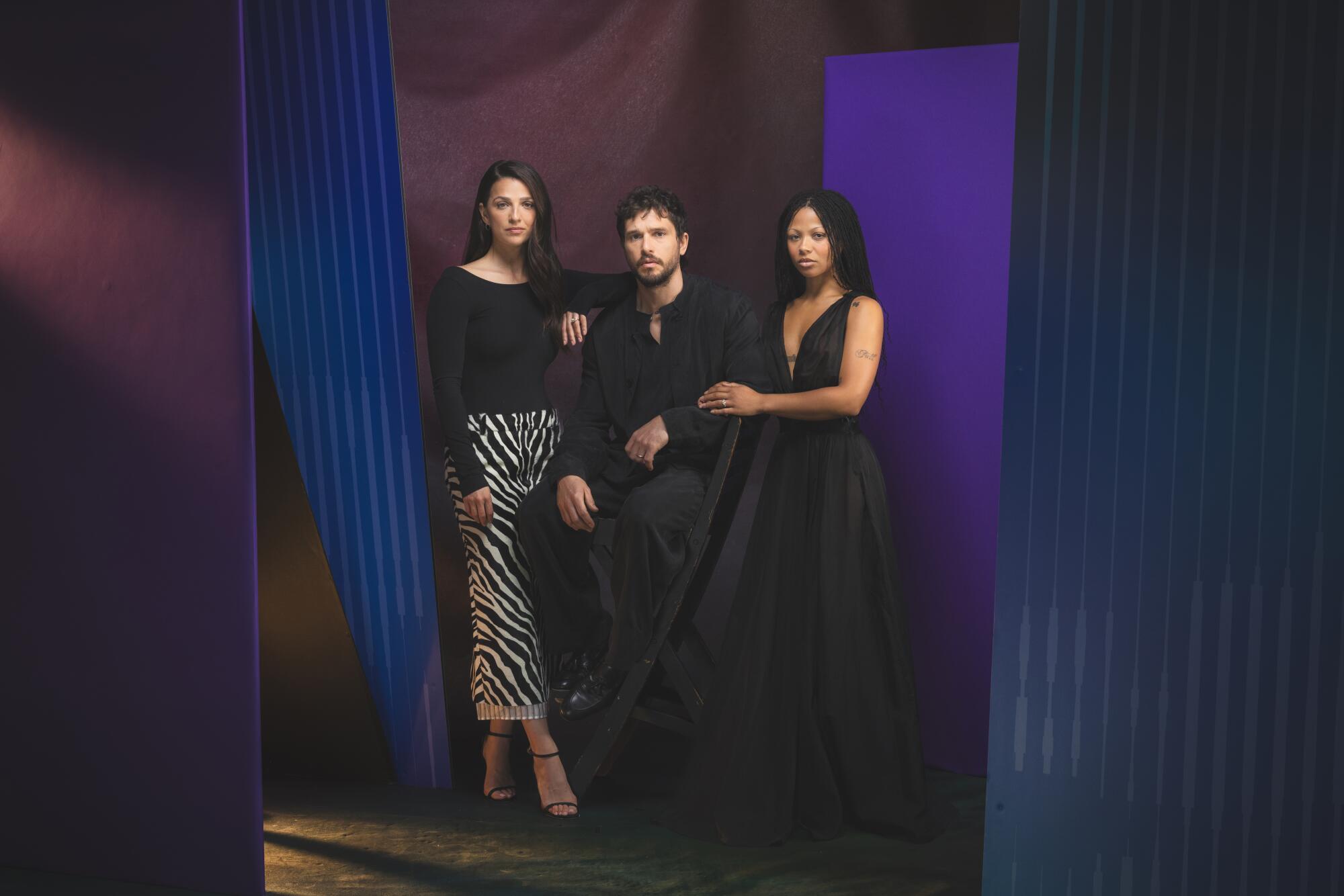
Earlier this spring, I convened “Industry’s” creators and cast in a conference room at The Times to walk me through its evolution into one of the best shows on television, and what to expect from its impending end.
Marisa Abela, left, Kit Harington and Myha’la.
(Jason Armond / Los Angeles Times)
‘What the f— are you thinking, guys?’
Atrading-floor knife fight of hot, young strivers, or “grads,” competing for a permanent place at the fictional Pierpoint investment bank, the first season of “Industry,” filmed in 2019, premiered in the waning months of 2020 as a warped love letter to office culture. But for Konrad Kay and Mickey Down, the emerging writers at the helm, the voice of the series didn’t fully take shape until they’d found their main cast, including Myha’la, as hard-charging American Harper Stern, and Marisa Abela, as privileged publishing heiress Yasmin Kara-Hanani.
Kay: Season 1, me and Mickey were really green.
Down: We actually pitched HBO on the idea that it was going to be eight episodes, it was going to be in different months, and the big-bang dramatics were going to happen between the episodes. A bit like “Boyhood.” Huge things would happen in between episodes, and the episode would be about the reaction to those huge things. And they were like, “What the f— are you thinking, guys?” It was so antidramatic.
Abela: I had a lot of rounds of auditioning for Yasmin. They weren’t sure about me at all. I think part of it was because they were quite hellbent on her being vulnerable, on her being soft, and that was what I was playing in those first two, three episodes. … And what happens in any functional collaboration is you start to see what they really want from you — what it is that they need from your character. And in those moments of conflict, the moments of change, Yasmin has to stand up for herself at some point, otherwise it’s too wet.
Mickey Down.
(Jason Armond / Los Angeles Times)
Down: Yasmin was all vulnerability masked by Prada in script, and then you came in and you were very hard. [Laughs.]
Abela: There is one scene with [Yasmin’s abusive supervisor] Kenny [played by Conor MacNeill] in Season 2 where … Yasmin turns around to him and tells him to f— off, basically: “You don’t have a disease, you’re a narcissist, with a new excuse to lord it over people. You’re weak.” I think that’s the first time that Yasmin became a gangster. I was watching “Real Housewives of New Jersey” at the time, being completely honest. She can go really mob wife really quick.
Myha’la: I had almost the exact opposite experience in terms of finding or deciding who Harper was. When I read the scripts initially, I just thought, “There’s no way in hell that Harper can’t be steely and [on offense], because she’s clearly feeling out of her depth, and as a young woman of color going into a new space like this, you can’t show up like you’re vulnerable. You’re already expected to do poorly.” … On the page, Harper was an anxious person when I first met her in the pilot episode. She was sweaty and clammy and stammering. And I just thought, “Hell no!”
Down: Sometimes when we write the character, we focus on one thing, and then the actor comes in and then that one thing we thought the character was becomes the artifice that they have to play.
Harington: Great TV writers genuinely learn their actors as well as their characters, and they tie those things in as it goes through.
Abela: As much as they know how we speak now, we know how they speak. If Yasmin has a “F— off,” I know what they want with that. If she says “F— off,” it’s very different to “F— you.”
Down: It’s like playing the piano with the foot pedal, blindfolded.
Kay: When you get super-talented actors doing your writing, you sort of fall in love with them doing everything. There’s no story we can’t tell with them.
‘Am I being fired?’
The series’ second season, which opens with Pierpoint’s post-COVID return to office, found the grads established enough to become “active characters,” and the creators confident enough to begin breaking the mold they’d set for themselves in Season 1. From the nail-biting trade sequence with which Harper wins over hedge fund manager Jesse Bloom (Jay Duplass) to her firing from Pierpoint in the Season 2 finale, it marked the arrival of “Industry’s” distinctive, go-for-broke aesthetic.
Kay: [In] Season 2 we were still figuring out what the show was, and we had Jami O’Brien as our co-showrunner, who really professionalized me and Mickey towards the American system, towards how to be producers, curbed some of our more bombastic instincts, made us more professional in terms of some of the style of the writing we were doing, found a cleaner version of the show and a cleaner version of the story.
Konrad Kay.
(Jason Armond / Los Angeles Times)
Down: [The Bloom trade] was one of the first times in the show where we were like, “Wow, we’ve actually created something kind of singular,” in that we were able to create scenes of people trading, [using] financial jargon that no one understands, and make it feel like a car chase. The contrast between the Harper that’s on the trading floor being able to be in command of that with all the people looking at her, and then the Harper that’s in the loo afterwards in floods of tears, that for me was kind of the moment where we thought that we had a completely 3D, rounded character.
Myha’la: If you asked me to do the Jesse Bloom trade scene again, I’d piss myself. Because at least when I did it two seasons ago, I could have anxiety and fear percolating inside me. If I had to do it today, I’d have to do it confidently, and I would have to try really hard because so much of the language is truly blind memorization and being able to juggle particularly the f— phones. … You have to get the choreo[graphy] so good and you have to know the words so well so that you can do the important part, and that’s the subtext — communicating the feelings of the thing, which are not in the words. Which I love. It is so hard.
Harington: When you first read the scripts, you can’t understand a lot of what’s on the page. … You look at it, you go, “This is f— impossible.”
Myha’la.
(Jason Armond / Los Angeles Times)
Myha’la: This is not spoon-feeding the audience. “I’m sorry that you’re hurting because I know last summer your mom died in a car crash.” They don’t do that.
Kay: Do you know who hates that about us? Network executives. [Laughs.]
Down: We had a kind of mantra the first season especially, and then going into the second, that we would never have a scene that didn’t have one of our four main leads in it. And then, just for the necessity of the storytelling, we said, “We have to pop out of that perspective.” I don’t think HBO realized what a big decision that was, because I don’t think they’d actually realized we’d kept this mantra that we were never going to go away from the perspective of the grads.
Kay: It’s also where we broke the rule of, “We’re not going to just tell the bottom-up story; we’re going to go to the top.” When we sold the show, we were like, “This is a bottom-up story,” and then by that point we were like, “Actually, we have these older characters who might have these really rich inner lives that we should also explore.”
Myha’la: We blew the s— up. [Harper’s firing] forced us all outside the bank, which was dangerous and scary for me and really exciting and was how we got to see all the other things that Mickey and Konrad are capable of doing. I think they didn’t tell me before, so I was like, “Am I being fired?” [Laughs.]
Down: We thought we were all being fired. The reason the show evolves so much is because we basically never know whether we’re coming back, so we just blow up everything. We try to leave the audience with a satisfying conclusion. And then we get renewed, and then we have to basically write ourselves out of a corner. So Harper getting fired could have ended the whole show.
‘Oh, poor Henry’
Given time to develop its characters, refine its style and grow its audience, “Industry” returned for Season 3 with all the trappings of a series that had finally arrived: effusive critical acclaim, proliferating fan accounts and buzzy arcs by Sarah Goldberg and Harington, as playboy and erstwhile green–energy executive Henry Muck. Had it premiered just a few years later, “Industry” may have ended up on the chopping block before finding its footing; instead, it was allowed to achieve “terminal velocity.”
Kay: What happened between Seasons 2 and 3 was, we got renewed. We didn’t think we were going to get renewed. We operated from the principle of, “We might never get to do this again.” And that was incredibly freeing for me and Mickey because it was just like, “We’re gonna get eight hours, let’s just do everything we possibly can within that eight hours. Let’s indulge every creative impulse we’ve ever had. Let’s take the stabilizers off the story. Let’s not necessarily keep it within Pierpoint.” What we felt like was a perfect marriage of creative latitude, trust in ourselves and the right point in our arc of writing the show and directing and producing. We reached terminal velocity, where we could actually do all of the stuff that we were pretending we could do in the first two seasons.
Kit Harington.
(Jason Armond / Los Angeles Times)
Harington: When I joined up in Season 3, I had a good handful of friends who watched the show. It may be bigger than you think it was from the inside. It’s been fascinating for me, joining when I did and seeing it grow again … We all want to do stuff that people actually watch. We’d be lying if we said we didn’t. We’ve all done jobs that we really love and no one’s f— seen. When there’s a focus in on something that you know is good and you love, that’s more rare than you think. I started in this job in “Game of Thrones” and just assumed, “That’s, like, how jobs go. You get invited to the Emmys every year and everyone frigging watches it.”
Kay: The softness in Henry was a function of Kit playing the character and us writing to that vulnerability. There’s a totally different version of that character which never unlocks that kind of thinking in me and [Mickey].
Harington: You know that moment where it’s all going to s— with Lumi and he just gets up and he’s like, “None of this is real” and he f— off? For me, that was it. Because it was like, “Wait a minute, he can’t just leave the f— room” — and he does. I think that kind of sums him up. I got a handle of him properly then, and that was quite an early one we shot.
Down: He has a sense of entitlement most of the other characters don’t have.
Myha’la: But you still manage to make me feel bad for you. I’m like, “Oh, poor Henry.” Do you know what I mean? Isn’t that psychotic?
Down: I said it to him in an email recently. Somehow he managed to make an ex-Tory minister who bankrupted his company twice and needed bailouts from the British public — [a] junkie, adulterer — the most vulnerable and probably most empathetic character on the show, in some respects.
Harington: He’s one of the few characters who is actually trying to do good. Even if it’s about him being perceived as doing good. … It’s also very smartly done in how you demarcate addiction and drug-taking. You’ve got most of the characters, who can kind of put it down, but then you’ve got Rishi [a Pierpoint trader played by Sagar Radia] and Henry, who are a different kettle of fish. And also how it creeps up.
Kay: As a sober person playing that stuff, is there a psychic trigger in your brain that sort of feels like it’s happening?
Harington: I was very worried about coming in and doing some of this stuff, but quite quickly realized I was A) sober enough for long enough to go back there safely; and B) it was a sort of muscle memory, a lot of it. I get to exorcise this stuff in my job. How many ex-addicts get to do that? It was a kind of cathartic thing.
Marisa Abela.
(Jason Armond / Los Angeles Times)
Abela: There’s a real freedom that comes with drugs, alcohol, whatever it is, for the character. Those are the moments when you can really open the lid on something.
Myha’la: When you’re f— up, you’re uninhibited, so you can do your own thing, but I think you’re also taking the other person at face value. I feel like it sort of takes the judgment away. It creates a kind of childlike innocence.
Down: If you’re in a situation like that, you can skip like five stages of relationship if there’s a big bag of drugs in front of you. That’s something we try to capture.
‘Where we leave the characters feels so perfect’
Earlier this year, HBO announced that “Industry” had been renewed for a fifth and final season. But it was Season 4 — which finds Harper and Yasmin’s friendship in tatters, Yasmin and Henry’s marriage at an end, and the structure of the show evolving yet again to draw on new characters and genre influences — that led Down and Kay to determine that the series’ time had come.
Kay: We did think to ourselves, “OK, so we’re going to do a Season 4, which means the show is a kind of success in and of itself, which means we can start to think about ending. If you get four seasons, you’re probably going to get five. So we felt that it created latitude there. What we thought to ourselves was, “We meet these two women in the pilot. If you’re going to spend five seasons of TV with them, what is the starkest contrast you can do between how you meet them and where they end up?” … When we started, the show was about not having power. Five seasons in, they have it. Then what do you do with it? The phrase me and Mickey have been talking about is this idea of “arrival fallacy.” You climb and climb, you’re at the top of the mountain. Is there another peak? Do I sit here and enjoy the view?
Down: We’re writing Season 5 right now, and without giving too much away, we’re approaching that season very differently in terms of how information’s parceled out.
Kay: It’s very dense, though, isn’t it? Honestly, it might be the densest season. There’s a lot of theology in it, actually.
Down: We talked about doing a sixth [season], and then quite honestly we thought that was going to be diminishing returns. … We would have been pulling our punches constantly. This has been one of the most creatively fulfilling versions of the show, because we are writing towards a conclusion that we know is the conclusion. We’re thinking of images for the last 10 minutes that we know are going to be what the audience is left with, and that’s really, really thrilling for us as writers. I’ve never once thought, “God, I wish we were doing a sixth one,” as much as I love writing and making the show. Where we leave the characters feels so perfect.