Indonesia

South Korea’s EcoPro expands Indonesia nickel investment

Dump trucks transport nickel slag at a nickel processing plant operated by PT Vale Indonesia in Sorowako, South Sulawesi, Indonesia. Photo by MAST IRHAM / EPA

June 30 (Asia Today) — South Korean battery materials producer EcoPro Group is expanding its investment in an Indonesian nickel smelter to more than double its access to the critical mineral used in electric vehicle batteries.

EcoPro and its subsidiary EcoPro BM plan to increase their combined stake in the Bahodopi Nickel Smelting Indonesia project to 39%, becoming major shareholders and taking a leading role in its development. The smelter is under construction at the International Green Industrial Park on the Indonesian island of Sulawesi.

The total investment is estimated at about 1.5 trillion won, or $967 million, based on an exchange rate of 1,550.77 won per dollar.

EcoPro completed the first phase of its Indonesian investment over the past four years, securing rights to about 29,000 metric tons of nickel. Once the second phase is completed, the group expects its total nickel supply rights to reach about 65,000 metric tons.

The group also plans to increase the BNSI smelter’s annual production capacity from the originally planned 66,000 metric tons to 90,000 metric tons. EcoPro said that would be enough nickel for batteries used in about 2 million electric vehicles.

The investment is part of EcoPro’s effort to secure raw materials directly and reduce the cost of nickel-rich cathode materials used in nickel-cobalt-manganese batteries.

EcoPro said it intends to establish an integrated supply chain covering nickel, precursors and cathode materials. The company said the structure is designed to meet U.S. requirements limiting reliance on prohibited foreign entities in clean-energy supply chains. U.S. tax rules restrict access to certain clean-energy credits when components or critical minerals receive material assistance from such entities.

EcoPro expects greater control over raw-material procurement to improve its cost competitiveness and strengthen its ability to win orders from global battery-cell manufacturers and automakers.

EcoPro BM will finance the investments through a 1.2 trillion won, or about $774 million, rights offering. Its board approved the issuance of 9,900,990 new common shares Tuesday.

Of the proceeds, 915 billion won, or about $590 million, will be used to acquire the BNSI stake and complete remaining investments in EcoPro BM’s Hungarian subsidiary.

An additional 135 billion won, or about $87 million, will be used as operating capital, including purchases of raw materials. The remaining 150 billion won, or about $97 million, will finance production facilities.

EcoPro, the group’s holding company, plans to subscribe for more than 120% of the shares allocated to it. The company said the decision demonstrated confidence in the Indonesian mineral business and a commitment to minimizing concerns about the dilution of shareholder value.

“This rights offering is a strategic decision to establish an early position in the global nickel market and improve our competitiveness in nickel-cobalt-manganese cathode materials,” EcoPro BM Chief Executive Officer Choi Moon-ho said.

“By combining EcoPro’s high-nickel technology with a decisive cost advantage, we will work to secure leadership in the global market for nickel-based batteries,” Choi said. EcoPro BM’s official English-language materials identify its chief executive as Choi Moon-ho.

— Reported by Asia Today; translated by UPI

© Asia Today. Unauthorized reproduction or redistribution prohibited.

Original Korean report: https://www.asiatoday.co.kr/kn/view.php?key=20260630010010768

Source link

Gojek co-founder Nadiem Makarim sentenced to 10 years for corruption | Corruption News

Indonesia court finds former education minister guilty of abuse of authority and of causing state losses.

A court in Indonesia has sentenced former Education Minister Nadiem Makarim, co-founder of the Gojek app, to 10 years in prison on corruption charges.

Judges at the Jakarta anti-corruption court on Tuesday found Makarim guilty of corruption related to the procurement of Chromebook laptops for schools during the COVID-19 pandemic.

Chief Judge Purwanto Abdullah, presiding over the ruling at Indonesia’s Corruption Court in Jakarta, said a panel of judges had found Makarim guilty of abuse of authority and of causing state losses. He was found not guilty of directly seeking to enrich himself.

The court said the case caused state losses of approximately $120m. It also ordered Makarim to pay a fine of Rp1 billion ($55,850) and Rp809 billion (more than $45m) in restitution, or face additional prison time.

The verdict marks a sharp fall for the Ivy League-educated entrepreneur once seen as a symbol of Indonesia’s startup sector.

Makarim, 41, co-founded Gojek in 2010, growing it from a call centre with 20 motorcycle drivers into a major ride-hailing and delivery platform.

He became one of Indonesia’s youngest cabinet ministers in 2019 and served as education minister until 2024.

A Gojek driver pillions a customer as he rides his motorcycle through a business district street in Jakarta
A Gojek driver carries a passenger through a business district in Jakarta. Gojek’s app lets users book motorcycle taxis to navigate the city’s gridlock [File: Beawiharta/Reuters]

Prosecutors said his decision to purchase Chromebook laptops, which run Google’s ChromeOS, was linked to the US tech giant’s investment in Gojek.

Makarim has consistently denied wrongdoing and vowed to appeal.

“The judges couldn’t even look me in the eye,” he said, adding he could not pay the amount ordered under the ruling.

The former minister has said the procurement saved money and called the case an “investigative error”.

In his defence this month, he said: “Experts and factual witnesses have stated: there is no element of state loss, no element of violation of the law, no element of self-enrichment, enrichment of another person or company, and no malicious intent or bad intentions.”

Prosecutors had sought an 18-year prison sentence and Rp5.68 trillion (about $313m) in restitution. Google was not charged and has denied any wrongdoing.

GoTo Group, formed after Gojek merged with Tokopedia in 2021, said Makarim had not had a decision-making role since resigning in 2019.

Makarim, whose lawyer father once served on the ethics committee of Indonesia’s anti-corruption body, said he joined the government to encourage professionals to enter public service.

Source link

Rescuers race to save two people still trapped in cave in Laos | Floods News

Rescuers face heavy rains, equipment failures in search for two people trapped in central Laos cave by flash floods.

Heavy rains have threatened to delay the search for two people who remain missing in a flooded cave in Laos, after five others were rescued after being trapped underground for more than a week.

Finnish diver Mikko Paasi, one of the first international rescuers to arrive at the site, told The Associated Press news agency that rains on Sunday had filled the cave up to the second chamber, preventing divers from entering until pumps can lower the water level.

Recommended Stories

list of 3 itemsend of list

A drainage pump also broke, making the situation even more difficult, said fellow diver Yoshitaka Isaji of Japan.

Rescue teams from Laos and neighbouring Thailand have been working together over the past week to rescue the trapped villagers, alongside divers from countries including Finland, Malaysia, Japan, Indonesia, France and Australia.

Seven people entered the cave in a remote mountainous area of central Xaysomboun province last week to look for valuable minerals such as gold, before being trapped by a flash flood that blocked their way out, according to local media reports.

One other person escaped and alerted the authorities.

A Laotian rescue group said on Sunday it had received “substantial” information on the cave system from the five men who were rescued earlier this week. “The hope is that today’s mission will locate both remaining victims,” the group wrote on social media.

The rescued men were being treated at a local hospital and were doing well, Malaysian diver Lee Kian Lie, who is taking part in the operation, told AP.

“We interviewed them about how the deeper part of the cave looks like. We will continue to search based on the information we have, and perhaps we will be able to get to the other two,” he said.

Rescuers said they navigated more than 200m (650 feet) into the cave and discovered five chambers in the system. The five people rescued so far were found in the fifth chamber.

Paasi, the Finnish diver, told AP that the survivors reported a narrow crack in the fifth chamber that could be a passage leading to a deeper part of the cave system.

“This was the only place that we haven’t checked in the mine, where the two lost miners could still be,” he said in a video interview.

The five men who were rescued – identified by their first names as Khamla, Mued, Ee, Ing and Laen – were first found last Wednesday.

The first man was safely extracted on Friday, guided through a narrow flooded passage by an expert diver. The remaining four left the cave on Saturday, after the water receded enough for them to walk out on their own, rescuers said.

Videos posted online on Saturday showed emotional moments as the men emerged one by one from the cave. Some collapsed on the ground at the cave’s entrance, and were hugged by a group of workers who cried with joy.

Later moments showed them lying on stretchers, wrapped in foil blankets and fitted with oxygen masks before being transported out.

Source link

Indonesia’s Mount Merapi volcano erupts, spewing ash into the sky | Volcanoes

NewsFeed

Videos show Indonesia’s Mount Merapi spewing a column of ash around 2 kilometres high in West Sumatra’s Tanh Datar District. Authorities have enforced an “exclusion zone” within a 3-kilometre radius around Mount Merapi since an eruption in 2023.

Source link

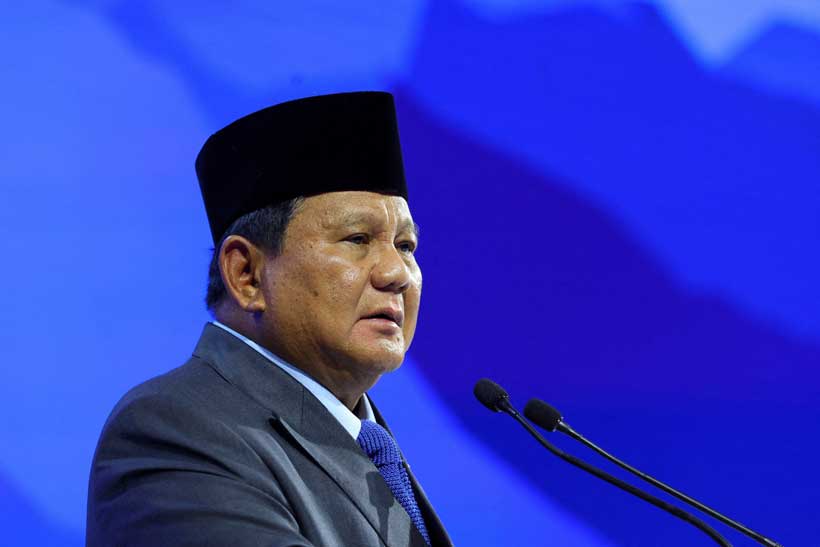
Indonesia Targets Strong Economic Growth as Prabowo Pushes Fiscal Reform Agenda

Indonesian President Prabowo Subianto unveiled ambitious economic growth and fiscal deficit targets for 2027 while promising reforms aimed at restoring investor confidence and strengthening state institutions. The announcement comes after months of market concerns over government spending plans, policy uncertainty, and weakening confidence in Southeast Asia’s largest economy.

Government Sets Ambitious Economic Targets

Prabowo outlined a growth target of 5.8 percent to 6.5 percent for next year while aiming to lower the fiscal deficit to between 1.8 percent and 2.4 percent of gross domestic product. The government also expects inflation to remain under control and pledged to improve food security and attract greater investment.

Investor Confidence Faces Pressure

Indonesia has faced growing scrutiny from investors and rating agencies this year. Credit rating outlooks were downgraded due to concerns about policymaking credibility, fiscal discipline, and transparency. Market fears intensified after discussions around possible changes to the country’s long standing fiscal deficit ceiling and rising state spending commitments.

Commodity Control Plan Sparks Market Concerns

Prabowo confirmed plans to establish a new state agency to oversee exports of major commodities including coal, palm oil, and nickel. The government says the move is intended to reduce revenue losses and strengthen national control over natural resources, but investors worry it could disrupt pricing systems and reduce private sector profitability.

Private Sector Role Remains Important

Despite increasing state involvement in strategic sectors, Prabowo stressed that Indonesia still welcomes private companies and small businesses as partners in economic development. He called for cooperation between the government and the private sector to achieve long term prosperity.

Analysis

Indonesia’s latest economic strategy reflects a balancing act between ambitious state led development goals and the need to maintain investor confidence. While the government aims to accelerate growth and strengthen control over key resources, markets remain cautious about rising fiscal risks and unpredictable policy changes.

The proposed commodity export agency could significantly reshape Indonesia’s role in global resource markets because the country is one of the world’s largest exporters of coal and palm oil. However, stronger government intervention may create uncertainty for foreign investors and commodity traders.

At the same time, maintaining fiscal discipline will be critical as Prabowo moves forward with large welfare programmes and economic reforms. The success of his agenda will likely depend on whether the government can reassure markets while delivering growth, stability, and stronger institutional credibility.

With information from Reuters.

Source link