Incoming

Arab News | As new session opens at UN, outgoing and incoming leaders warn it will erode without reform

NEW YORK: The UN closed the books on the 80th session of the General Assembly on Tuesday and opened the 81st in a single day of ceremony, amid warnings from its outgoing and incoming leadership that the world body must reform itself or face erosion.

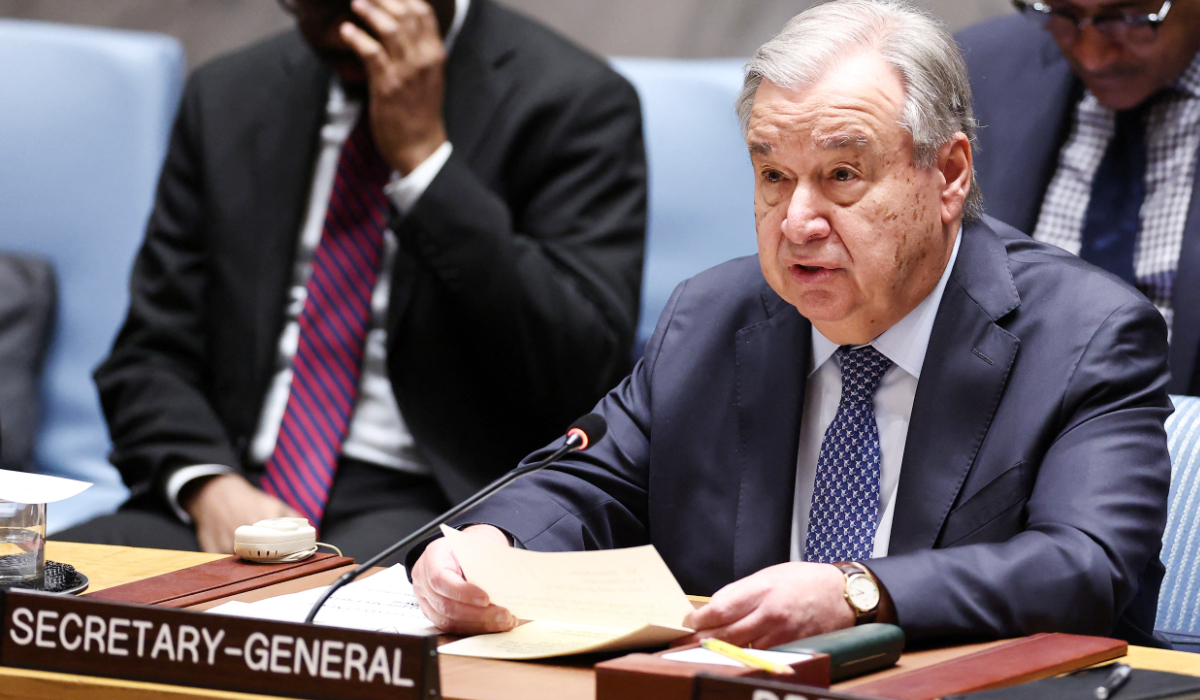
Secretary-General Antonio Guterres, who was addressing the assembly for what he noted was his final time as UN chief, painted a bleak picture of the present moment in the world: wars that carry a risk of nuclear escalation; worsening climate chaos; advances in artificial intelligence without adequate governance; and human suffering that is intensifying even as aid funding has been slashed.

“Geopolitical mistrust and suspicion continue to block the effective solutions we need — and erode people’s faith in the possibilities of global cooperation,” Guterres said.

Still, he told delegates, he has “enormous hope,” pointing in particular to the UN’s Pact for the Future and the UN80 reform initiative as “a blueprint for action, solutions and bold reforms.”

The UN80 Initiative is a reform drive launched by Guterres in March last year, the organization’s 80th anniversary. It aims to overhaul overlapping structures and outdated mandates that officials say have rendered the UN slow and bureaucratic.

The departing president of the General Assembly, Annalena Baerbock, described the initiative as unfinished business that she and her successor, Khalilur Rahman, were carrying into the 81st session.

Baerbock described the 80th session one that had found itself at “a crossroads” over whether a handful of states could effectively impose a veto on the General Assembly’s consensus. Member states, she said, had answered by refusing “to allow compromise to become compromising,” by pushing through 317 resolutions, holding 116 plenary meetings and opening a new chapter on AI governance, despite the challenges and only a few processes concluding through consensus.

“Not a single day, not a single country would be better off without the United Nations,” Baerbock told the assembly as she rejected the argument that the body had become irrelevant.

She credited Guterres with forcing the question of reform onto the agenda through the UN80 Initiative, including cuts to mandates and a merger of the UN System Staff College, which provides personnel and partners with the knowledge, skills and tools to act collaboratively and effectively, with UN Institute for Training and Research.

“If we are not capable of freeing this organization from overlapping structures and mandates, as well as a heavy bureaucratic mentality, it will erode over time,” she warned, describing the upcoming selection of a new secretary-general, a process she formally handed over to her successor, as “the credibility test of this institution for this decade.”

Rahman was then sworn in. He is from Bangladesh and told reporters he intended to run an open, media-engaged presidency built around the theme “Restoring Trust, Managing Transformation.”

During his formal address to the assembly he lamented that the UN “has often fallen short of the expectations placed upon us,” citing in particular a “widening trust deficit” that member states must work to close through the delivery of results, not rhetoric.

“Trust cannot simply be requested, it must be earned,” he added.

Rahman outlined six priorities for the coming 12-month session: peacekeeping-driven conflict prevention; acceleration of the Sustainable Development Goals, with just four years left to achieve them and only 36 percent of targets on track; climate adaptation ahead of the UN Climate Change Conference, COP31, in November, and a high-level meeting this month on rising sea levels; human rights, including the anniversaries of the Durban Declaration to combat racism and other forms of discrimination and intolerance, and the Declaration on the Right to Development, an issue he described as personal, given that Bangladesh hosts more than a million displaced Rohingya; inclusive governance of AI; and institutional solvency, as he appealed to member states to pay their assessed dues “in full, on time and without conditions.”

Rahman also inherits oversight of the selection process for the next secretary-general, under Article 97 of the UN Charter, to replace Guterres, whose term ends on Dec. 31. He pledged to run it “fairly, inclusively and transparently,” alongside the Security Council.

He said he had built his office to reflect the opening words of the Charter — “We the peoples,” not “We the states” — and noted that women make up 60 percent of his cabinet.

Guterres closed the day with a separate, more somber commemoration: a wreath-laying ceremony for Dag Hammarskjold, the second secretary-general of the UN, who was killed in the course of his duties, along with 15 others, in plane crash on Sept. 18, 1961.

Citing a new report from investigator Mohammed Chande Othman, Guterres renewed his appeal for undisclosed records relating to the crash in what is now Zambia, and said he would soon send recommendations to the General Assembly.

He also noted that UN personnel had been killed “in record numbers” over the past three years and added: “Their sacrifice reminds us of all the women and men who have lost their lives while serving the United Nations.”


Source link

Incoming House intelligence chairman pushed for drone strikes

Five years ago, U.S. Rep. Mike Rogers (R-Mich.) was visiting a thinly guarded U.S. special operations base in a remote part of Afghanistan near the border with Pakistan. One of his hosts took him up to the roof, where he peered through binoculars at militants loading 122-millimeter rockets.

Those rockets soon will be raining down on this base, the officer told the congressman.

“What are you going to do about it?” Rogers asked with a note of concern, according to someone who was present.

“I can’t do anything about it,” the officer replied. “They are on the wrong side of the Durand Line” — the Pakistan side of the century-old British-decreed border between the two countries. Pakistan was off-limits.

Rogers and an aide were hustled onto a helicopter and flown out. The Afghan base indeed was rocketed. Rogers, whose resume includes a stint as an Army officer and another as an FBI investigator, returned to Washington determined to find out, as part of his role on the House Intelligence Committee, why the U.S. wasn’t doing more to strike Taliban militants in Pakistan.

The responses he received frustrated him, those close to Rogers say, and led him to mount a campaign to press the George W. Bush administration to do more. In a story known only to a small group of participants, Rogers played a role in convincing President Bush to issue a July 2008 order that dramatically expanded the scope of Predator drone strikes against militants in Pakistan, according to two former Bush administration officials close to the matter and two members of the House Intelligence Committee who were involved. The officials declined to be named speaking about secret deliberations.

Rogers’ unpublicized efforts as an advocate for that covert program, which has been expanded dramatically by President Obama, helped convince House Republican leader John Boehner last week to name Rogers incoming chairman of the intelligence committee.

“Mike went out and found out the ground truth on this stuff,” said U.S. Rep. Peter Hoekstra (R.-Mich.), who is retiring as the ranking Republican on the committee.

These days, unmanned U.S. Predator drones are raining Hellfire missiles on militants in Pakistan’s tribal areas at a rate of twice a week. But for much of his two terms, Bush used the drones sparingly. The State Department and some in the CIA opposed expanding the targeted killing program over fears it would destabilize the fragile Pakistani government, former U.S. officials said.

Military officials also argued that troops on the border already had authorization to call in airstrikes in Pakistan under “hot pursuit” doctrine.

But that wasn’t happening in practice, Rogers found, and front-line soldiers and spies were furious.

Rogers cut through a bureaucratic fog by confronting senior policymakers with anecdotes from his trips to CIA and special operations bases along the Afghan-Pakistan border, said a former senior U.S. intelligence official who played a key role in the debate.

Rogers also pressed the issue with senior U.S. diplomats and CIA officials in Pakistan and Afghanistan, and he worked back channels with junior CIA officers who shared his agenda but found themselves stymied by their cautious bosses, current and former U.S. officials said.

“I would say he played a unique role,” said the former official, who was involved in crafting the new policy. “There was no one who took this on like he did.”

Boehner spokesman Michael Steel would not discuss drone strikes in Pakistan, which are officially denied by the U.S. government. Rogers got the chairmanship, Steel said, in part because he “has traveled extensively to the real down-and-dirty areas, the front lines in our war on terrorism. And that’s gotten him a lot of respect from the intelligence community and a real hands-on feel for the challenges we face.”

Rogers declined to comment on the classified drone program. But he said his trips to remote corners of the U.S. war effort were grounded in basic investigative techniques he learned in the FBI: Go ask the people who actually know.

“Proper congressional oversight is a lot like the work of the FBI,” he said. “Especially in a business that is designed to be clandestine, you have to be a little more tenacious to get the whole story. You have to go to where things are happening.”

Rogers, 47, who is remarried with two teenagers, is an anti-abortion, down-the-line conservative from a solid Republican district in southern Michigan. As intelligence committee chairman, he can be expected to challenge the Obama administration aggressively over what he views as a law enforcement approach to terrorism. For example, he ripped the decision by federal authorities to read Miranda warnings to Umar Farouk Abdulmutallab, the Nigerian accused of trying to blow up a plane over Detroit last Christmas Day with a bomb sewn into his underwear. The priority should have been intelligence gathering, Rogers said, especially given the other evidence against Abdulmutallab.

Rogers also has blasted Obama’s decision to restrict CIA questioning of detainees to the strictures of the U.S. Army Field Manual, which he argues are more restrictive than the rules governing FBI agents when questioning criminal suspects.

And he made news when he said the death penalty should apply to Bradley Manning, accused of being the source of classified U.S. documents posted by WikiLeaks.

But Rogers has a knack for disagreeing without being disagreeable, a trait that has engendered warm feelings among at least some Democrats. CIA Director Leon Panetta, for example, said in a statement that Rogers “is one of Congress’ foremost experts on intelligence and the fight against terrorism,” and that “I have come to know him and respect his insights.”

Kansas Rep. Todd Tiahrt, a Republican who traveled with Rogers while he served on the intelligence committee, said Rogers is well-liked “because he’s very personable. He’s tough as nails, but he can do it with a way that’s not offensive.”

Rogers poked and prodded behind the scenes — and finally made a personal appeal to Bush — to force the U.S. military to better secure unguarded Iraq weapons and ammunition storage sites after the 2003 invasion, sites that were fodder for the burgeoning insurgency.

A 1985 graduate of Adrian College in Michigan, Rogers served three years in the Army and then joined the FBI, where he worked until he ran and won a state Senate seat in 1994. He served as Michigan Senate majority Leader from 1999 to 2000 and was elected to Congress that fall.

On the walls of his Capitol Hill office, Rogers displays a tomahawk made of metal from a Soviet tank given to him by Afghans, and a long knife given to him by Pakistanis.

There is also a framed Chicago newspaper front page about the biggest chapter of his FBI career. Rogers built the case that mushroomed into a massive public corruption prosecution in Cicero, Ill., just outside Chicago. The town that once hosted Al Capone’s gang was still, in the late 1980s, infiltrated by the mob. Betty Loren-Maltese, the town president, was sentenced to nine years in prison in 2002 after she and six others were convicted of stealing $12 million from the town.

It started with a telephone tip about a missing woman, Rogers said, which led him to set up surveillance on a Cicero strip club that fronted for a brothel. The place was under the protection of corrupt Cicero police officers, Rogers soon realized.

“I thought it was a few bad cops,” he said. It turned out to be a well-orchestrated conspiracy.

His biggest break came when he went to the hospital to see a woman who had been stabbed in the club, he said. She had previously refused to talk. But on this day, a mobster had just turned down her request to pay her medical expenses.

“She was upset,” Rogers said. “She asked, ‘Well, would you pay for my hospital bill?’ I said, ‘Yeah, sure,’ Then I said to myself, ‘Oh, my God, I hope the Bureau will pay for this.’ ”

Rogers showed her pictures, and she identified mob figures and police who frequented the club.

“That’s what really started the Cicero case,” Rogers said.

Rogers had a similar break in his effort to convince Boehner and other House leaders to press the Bush administration to expand drone strikes, according to some who were there.

One day in 2008, Rogers, Hoekstra and Boehner attended a meeting in the Capitol with a group of CIA officials. Some of the senior CIA officials expressed opposition to expanding drone strikes, say two of them who were there, and some argued that Rogers was overstating the targeting capabilities.

A junior CIA officer spoke up and acknowledged that there were targeting “packages” against militants in Pakistan that were viable but had not been used.

“The front-row guys, they didn’t have a clue what to say,” one meeting attendee said.

Not long afterward, then-CIA Director Michael Hayden briefed Bush on a series of more aggressive covert options in Pakistan, including drone strikes that went after Taliban networks, in addition to high-value al Qaeda targets.

ken.dilanian@latimes.com

Source link