Venezuela: US Prosecutors Challenge Maduro Immunity Claim, Cite Rodríguez’s ‘Devastating Silence’
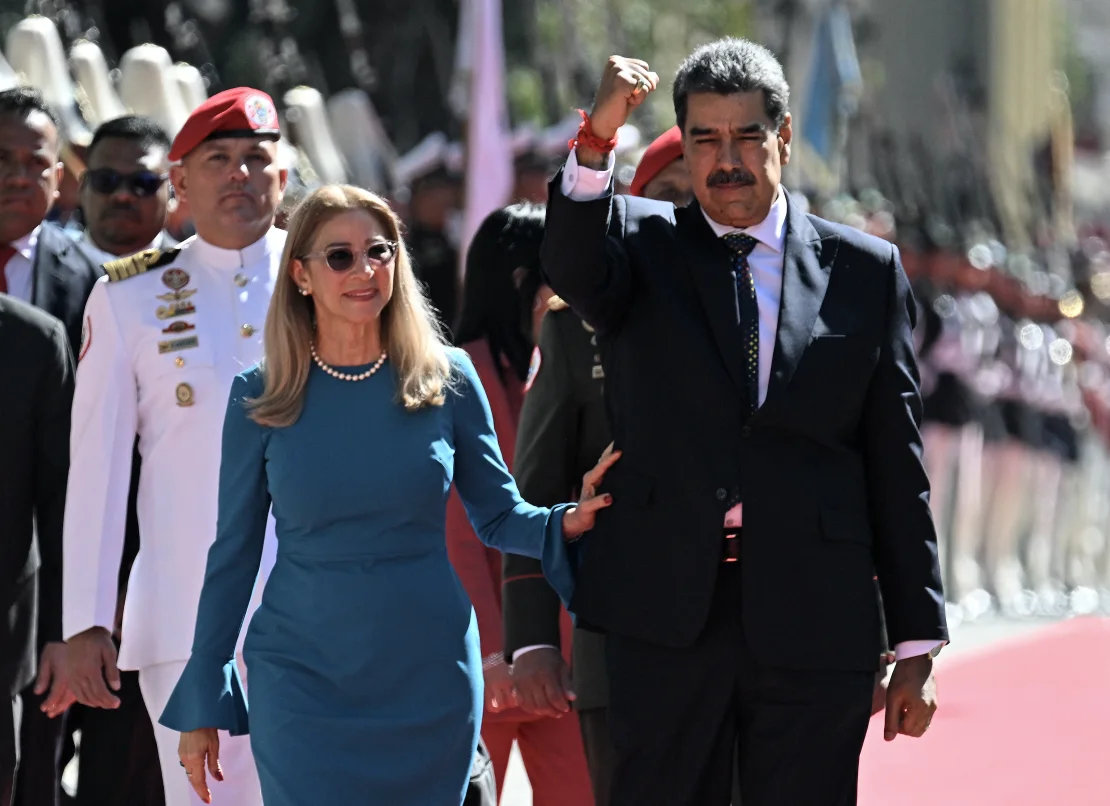
Maduro and Flores were kidnapped by US forces on January 3, 2026. (AFP)
Caracas, October 6, 2026 (venezuelanalysis.com) – The US Justice Department has urged New York District Judge Alvin Hellerstein to reject Venezuelan President Nicolás Maduro and First Lady Cilia Flores’ sovereign immunity claims amid their ongoing legal case.
In a court filing submitted on October 2, prosecutors told the court that Maduro and Flores’ motions to dismiss their indictments “should be denied.”
The Venezuelan president and first lady, who is also a legislator, were kidnapped in Caracas by US forces on January 3. They were charged with drug trafficking conspiracy and weapons possession, with Maduro additionally facing a “narco-terrorism” accusation.
The pair’s defense teams filed motions to dismiss the case in September, arguing that their respective positions in the Venezuelan government should make them immune to criminal prosecution in a third country.
In response, the Justice Department stated that the recognition of a foreign head of state is the exclusive competency of the executive branch, and that Washington has not recognized Maduro since 2019. Historically, US courts have deferred to the White House and State Department on foreign policy matters.
However, in the ongoing case, Justice Department officials sought to bolster their argument by stating that the Venezuelan government, led by Acting President Delcy Rodríguez, has declined to invoke immunity for Maduro and Flores.
“If Venezuela wished to assert its view that the defendants were entitled to immunity in this, it could have,“ the submitted document read. “The defendants’ attempt to claim the contrary is an admission that such silence is devastating to their claims.”
The prosecutors pointed to an ongoing civil lawsuit in Florida against Maduro, Rodríguez, and other defendants, where the Venezuelan government, through its US embassy, requested that the Trump administration communicate to the respective court that the acting president should “enjoy absolute immunity from judicial proceedings in foreign domestic courts.”
The State Department sent a letter in June calling on the Florida district court to “promptly dismiss the proceedings.” The White House likewise communicated to the court that all claims against Rodríguez should be “dismissed without prejudice.”
In August 2025, three US nationals who were imprisoned in Venezuela sued Maduro, Rodríguez, and several other current and former state officials. The plaintiffs claimed to have suffered “torture” and to have been used in “hostage diplomacy.” The judge issued a default ruling after Maduro and other defendants failed to show and awarded $314 million in damages to the plaintiffs.
“Venezuela did not request immunity in this case, despite every opportunity to do so. Indeed, there is no doubt that the current Venezuelan government knows how to request immunity,” the Justice Department’s recent filing continued.
Prosecutors went on to claim that the Trump administration’s foreign policy views, coupled with the Venezuelan government not explicitly invoking immunity, should outweigh the defense’s assertion that the United Nations recognized Maduro’s presidency.
Hellerstein is scheduled to hear oral arguments on the pre-trial motions to dismiss on November 17 before issuing a ruling. If the trial goes forward, it will begin on June 1, 2027.
Caracas has not commented on the latest developments in Maduro and Flores’ legal case. In recent months, Venezuelan officials have occasionally expressed hope that the two will eventually return to the country but without demanding their immediate release.
Rodríguez made no mention of Maduro and Flores’ kidnapping and prosecution during her recent trip to New York for the 81st session of the UN General Assembly. In a July interview, she claimed that Maduro has the right to “demonstrate the truth” before the US Justice system but did not call for his liberation.
The Venezuelan government is covering the pair’s legal defense costs after the US Treasury Department lifted restrictions blocking it.
In his UN speech on September 22, Trump celebrated the military operation that led to the abduction of Maduro, whom he called an “outlaw dictator.” Trump and Rodríguez met on the sidelines of the UN General Assembly, with the Venezuelan leader thanking the US president for supporting “Venezuela’s reinsertion into multilateral spaces.”
Edited by Lucas Koerner in Philadelphia, USA.