ideology

FBI fires several analysts tied to disputed ‘Catholic ideology’ memo

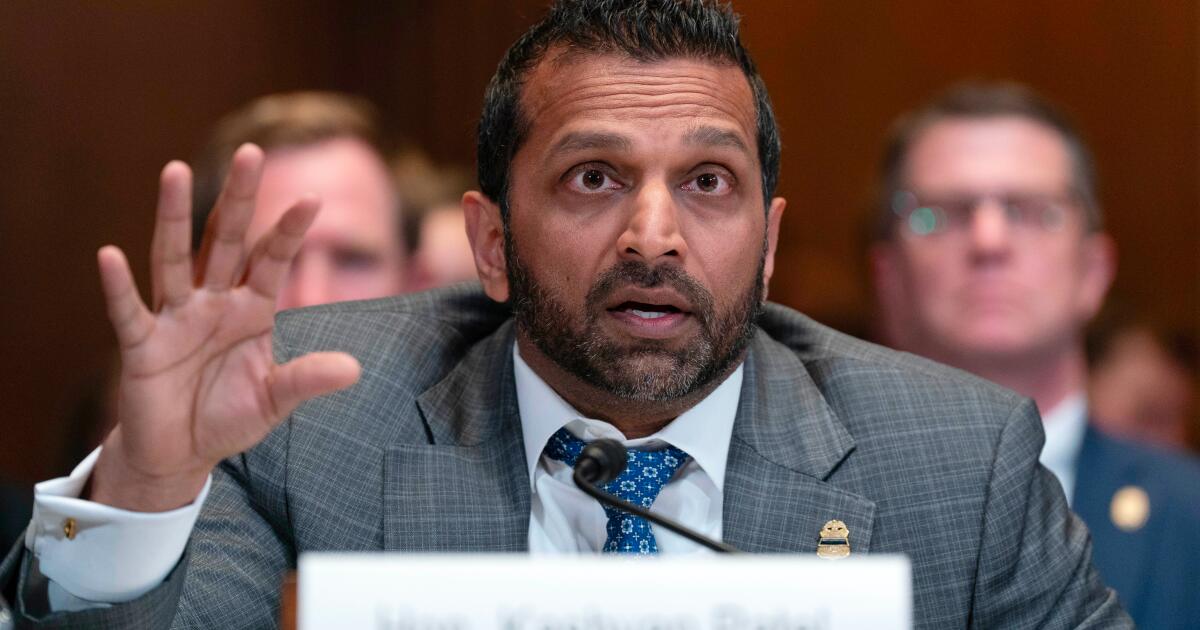
Several FBI analysts tied to the creation of a 2023 memo warning of a potential threat from Catholic “violent extremists” were fired Friday, according to their lawyer, the latest wave of terminations under Director Kash Patel.

The fired employees included four intelligence analysts and a supervisory analyst. The FBI declined to comment.

“This action is manifestly unjust, completely unsupported by the facts, and subverts standard FBI policy and procedure,” their lawyer, David Laufman, said in a statement. “These individuals deserved far better for the exceptional and faithful public service they rendered to protect our country.”

The January 2023 intelligence product produced by analysts in the FBI’s Richmond, Va., field office emerged as a political focal point after it was issued, with Republicans in Congress citing it as part of their broader claim that the FBI during the Biden administration was targeting conservatives.

Then-FBI Director Chris Wray denied that allegation and the agency has said the document was quickly retracted and an internal review was launched. Merrick Garland, the attorney general under President Biden, has said he was “appalled” by the memo.

Earlier Justice Department investigations into the memo challenged the analytical tradecraft but did not find intentional misconduct by the analysts involved.

The firings are part of a broader personnel purge under Patel, a President Trump loyalist who over the last year has pushed out dozens of employees who either contributed to investigations of the president or who were perceived as not in alignment with the administration’s agenda. The Justice Department has engaged in similarly sweeping firings of prosecutors since Trump took office last year.

In February, for instance, the FBI fired a group of counterintelligence agents who participated in the investigation into Trump over his retention of classified documents at his Mar-a-Lago estate in Palm Beach, Fla.

Critics including former federal officials say the purge has transformed federal law enforcement agencies into politically motivated extensions of the Trump White House. The classified documents investigation resulted in a federal indictment against Trump, but the case was dismissed after his 2024 election.

The Richmond memo, which emerged from a domestic terrorism investigation, sought to examine a potential link between what it called “Radical Traditionalist Catholic” ideology and racially and ethnically motivated extremists. It warned of the potential for violence and also highlighted what the authors described as “new avenues for tripwire and source development.” FBI leadership quickly condemned those findings once the document became public.

An internal FBI review described in a 2023 letter to Congress and based on interviews with 26 people “found that all individuals involved in the creation, review and approval of the product failed to adhere to analytic tradecraft standards and failed to recognize that the product, as drafted, equated the subjects’ interest in their self-described form of religion with racially or ethnically motivated violent extremist (RMVE) ideology without sufficient evidence or articulable support.”

The failure to adhere to standards, including on proper domestic terrorism terminology, “created the appearance that the FBI conducts investigative activity based on religious affiliation,” the letter said. “One of the FBI’s most fundamental principles is that investigative activity may not be based solely on the exercise of rights guaranteed by the First Amendment.”

A Justice Department inspector general report in 2024 summarized the earlier FBI review by saying that though there were departures from proper analytic tradecraft, “no evidence of a malicious intent or an improper purpose” were found.

MS NOW earlier reported the firings.

Tucker and Richer write for the Associated Press and reported from Los Angeles and Washington, respectively.
Source link

China’s Xinhua to Invest in AI Tool to Promote Xi Jinping’s Ideology

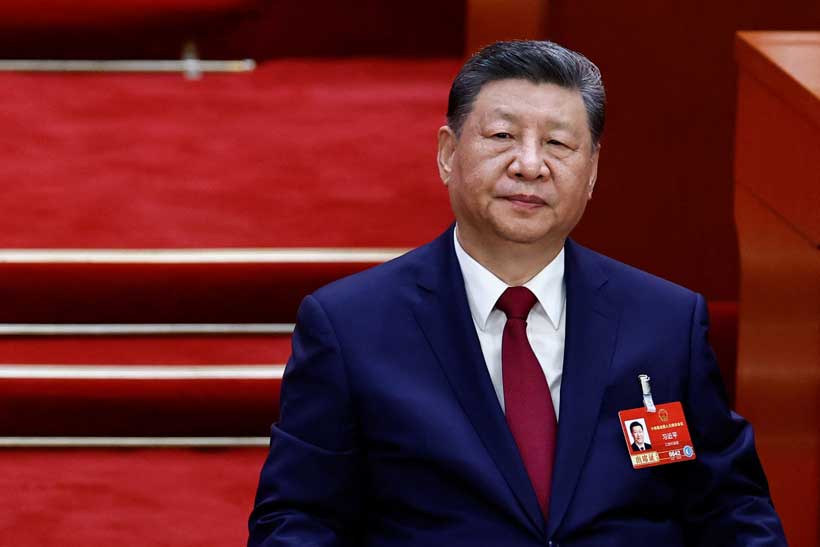
China’s state-linked media system is preparing a major investment in artificial intelligence aimed at advancing and disseminating President Xi Jinping’s political ideology. According to Shanghai Stock Exchange filings, Xinhuanet, owned by the official Xinhua News Agency, plans to invest over 1.1 billion yuan (about $162 million) in an AI system called “Xinhua Yudian,” or “Xinhua lexicon.”

The AI agent is designed as an “authoritative” tool for learning, researching, and distributing Xi Jinping Thought on Socialism with Chinese Characteristics for a New Era. It will draw on a curated state-controlled database and is intended to deliver official narratives, current affairs, and political content in a structured format.

The project builds on China’s broader national strategy to integrate artificial intelligence across governance, industry, and society under the “AI+” initiative launched in 2025, which encourages widespread adoption of AI technologies in both public and private sectors.

Why It Matters

This development highlights how artificial intelligence is increasingly being used not only as a technological tool but also as an instrument of political communication and ideological reinforcement. Unlike commercial AI systems designed for open-ended information retrieval, this platform is explicitly structured to promote state-approved interpretations of policy and leadership thinking.

The initiative reflects Beijing’s growing emphasis on controlling information ecosystems in an era of information overload and competing narratives. By positioning AI as a “trust layer” for political and policy information, China is attempting to address concerns about misinformation while simultaneously strengthening ideological consistency across digital platforms.

The project also signals a broader convergence between state power and emerging technologies. As AI systems become more integrated into education, media, and governance, they are increasingly shaping not only what information is accessed but how it is interpreted. This raises important questions about transparency, bias, and the role of algorithmic systems in political messaging.

Chinese Government and Communist Party
Seeking to strengthen ideological cohesion and ensure consistent dissemination of Xi Jinping’s political doctrine.

Xinhuanet and Xinhua News Agency
Acting as the implementing body, responsible for building and deploying the AI system using state-approved datasets.

Technology Sector in China
Participating in the broader “AI+” initiative, which encourages integration of artificial intelligence across industries.

Chinese Citizens and Digital Users
Target users of the system, particularly students, officials, and professionals seeking policy-related information and official references.

Global Technology Community
Observing China’s use of AI in state communication as part of a wider debate on governance, censorship, and AI ethics.

Future Outlook

The rollout of “Xinhua Yudian” is likely to deepen the integration of artificial intelligence into China’s political and information architecture. If successful, it could serve as a model for other state-backed AI systems designed to standardize ideological communication and policy interpretation.

In the near term, the platform is expected to function as both an information retrieval system and a citation verification tool for official discourse. This may reduce ambiguity in policy communication but also further centralize control over authoritative narratives.

Longer term, the project raises questions about how AI will shape political legitimacy and information control in authoritarian systems. As AI becomes more capable of generating and filtering content at scale, its role may shift from a neutral tool to an active participant in shaping public perception and ideological alignment.

The initiative underscores a broader global trend in which artificial intelligence is not only transforming economies and industries but also becoming a strategic instrument in statecraft and governance.

With information from Reuters.

Source link

Is pragmatism replacing ideology in international affairs? | Business and Economy News

The United States and India are seeking to mend ties after a year of diplomatic see-saw during which tariffs were imposed and then quickly scrapped because of the US-Israel war on Iran.

This is just one example of how international relations and conflict have become more complex and interlinked in recent years.

So, is pragmatism replacing ideology in today’s diplomatic world?

Presenter: Scott McLean

Guests:

Brahma Chellaney – Professor emeritus of strategic studies at the Centre for Policy Research

Chris Weafer – Chief executive officer at Macro-Advisory strategic consultancy

Shaun Rein – Founder and managing director of the China Market Research Group

Source link