India now sets the terms of global cricket | Cricket
After Pakistan announced their boycott of the forthcoming T20I World Cup match against India, the International Cricket Council (ICC) was quick to lament the position the Pakistan Cricket Board (PCB) had put fans in. “[Pakistan’s] decision is not in the interest of the global game or the welfare of fans worldwide,” the ICC said in a release, before going on to make special mention of “millions in Pakistan”, who will now have no India fixture to anticipate.
Through the course of this statement, and the one the previous week, justifying the ICC’s ultimatum to the Bangladesh Cricket Board (BCB) – which eventually led to Bangladesh’s exit from the tournament – the ICC leaned on ideals of fairness and equality. The “integrity and sanctity” of the World Cup was invoked, as well as the “neutrality and fairness” of such an event.
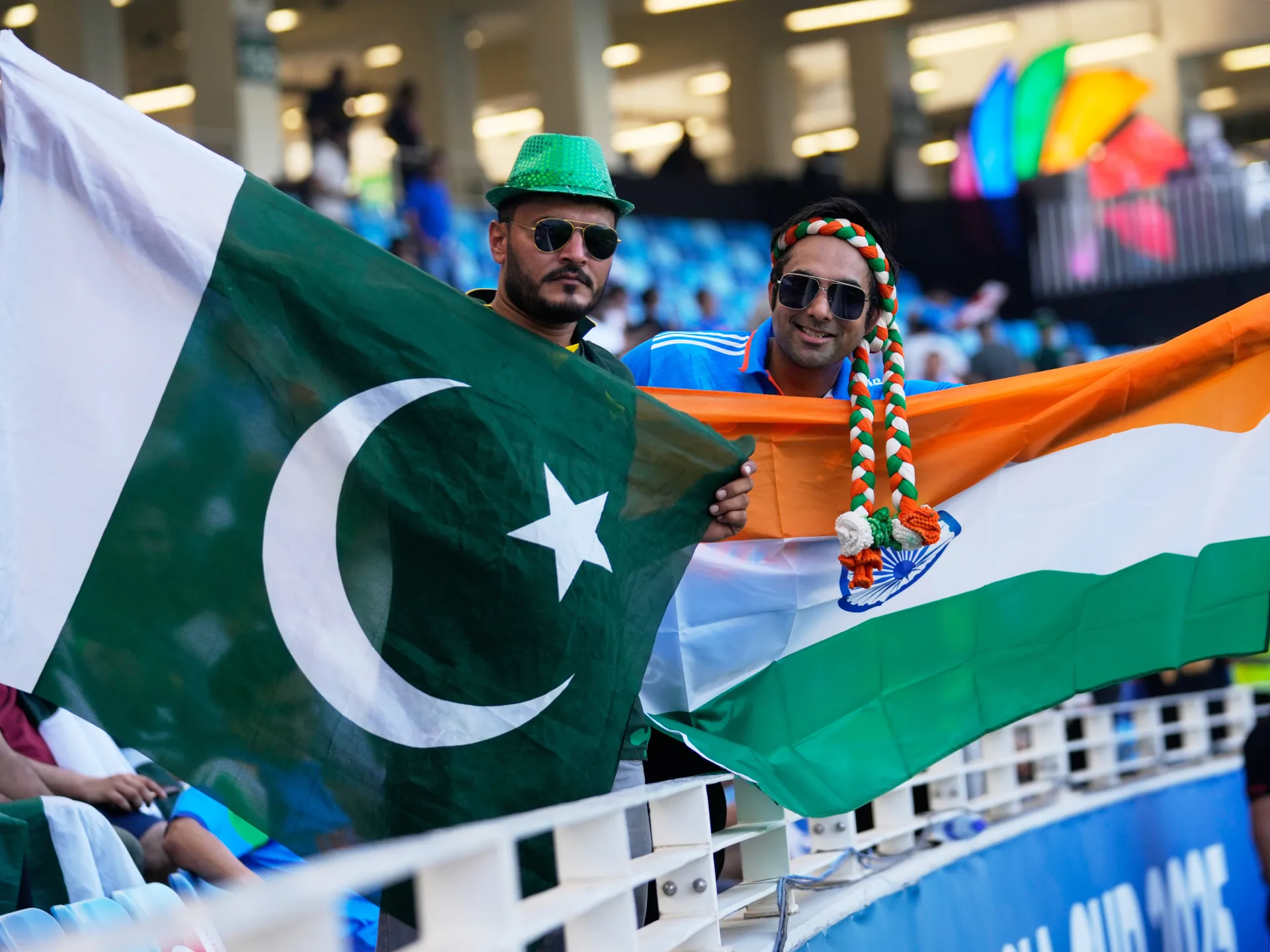
Pakistan’s fans may clock, of course, that they had not attracted such concern before the Champions Trophy in 2025, when India had refused to play in Pakistan for what were, in truth, purely political reasons. As it happened, a semifinal and the final of that tournament were eventually moved away from Pakistan, India’s cricketing magnetism pulling the knockouts to Dubai, after the ICC had adopted a “hybrid” model wherein India played all its matches outside the “host” country.
This was a key moment setting cricket on its current trajectory. In return for India’s refusal to play in its home country, Pakistan insisted they would not travel to India for this year’s T20 World Cup – two of the most storied cricketing nations on the planet descending to reciprocal petulance. In the lead-up to this World Cup, Bangladesh was also drawn into the fray, the Indian Premier League (IPL) franchise’s jettisoning of Bangladesh bowler Mustafizur Rahman prompting Bangladesh to demand all its matches be played in Sri Lanka (India’s co-host for this tournament), and that demand, in turn, leading to it being thrown out entirely.
All claims that any of these boycotts are founded on security concerns are, in fact, bogus; security assessments ordered by the ICC had found India sufficiently equipped to handle Bangladesh’s visit, while Pakistan had hosted ICC-sanctioned international cricket involving multiple touring teams, and Pakistan had played an entire One Day International (ODI) World Cup in India as recently as 2023.
What is also clear, however, is that the ICC has now allowed its sport to become the medium through which South Asian states, currently as riven as they have been for decades, exchange geopolitical blows. What’s more, the ICC has begun to favour one set of geopolitical ambitions over others, India never so much as copping a censure for its refusal to play in Pakistan, while India’s men’s team’s refusal to shake hands with the Pakistan players in last year’s Asia Cup has now been adopted across the Board of Cricket in Control’s (BCCI’s) teams – the women’s and Under-19 (U19) sides following suit. To take the ICC at face value would also require believing that ICC Chair Jay Shah is conducting his business in complete separation from Amit Shah, who is India’s home minister.
It is India’s stupendous cricket economy that has chiefly brought about this imbalance. Since 2014, when a Big Three (India, Australia, England) takeover at the ICC diverted cricket to a hypercapitalist path, the game’s top administrators have been adamant that it is profits that must define cricket’s contours. Because India is the wellspring of much of the game’s finances, the ICC has organised for the Board of Control for Cricket in India (BCCI) to receive close to 40 percent of the ICC’s net earnings, while international men’s cricket largely surrenders a fifth of the calendar to the IPL. The sport’s high-octane driver of financial growth demands protection, or so the official line goes. If member boards fail to align with the BCCI agenda at the ICC, it has long been taken as read that the BCCI may threaten to cancel India’s next tour of that country, which in turn may shatter the smaller board’s revenues. The vote to issue that ultimatum to the BCB had run 14-2 against Bangladesh. A board must never forget at whose table it eats.
A cricket world that has spent 12 years lionising economic might cannot now be surprised that politics has now begun to overrun even the game’s financial imperatives. That monopolies tend to lead to appalling contractions in consumer choice has been a fundamental tenet of economics for generations. Hundreds of millions of Bangladesh fans are about to discover this over the next few weeks, as will the remainder of the cricketing world on February 15, when India and Pakistan were due to play. That profit-driven systems, which equate wealth with power, frequently lose the means to check the most powerful, is another longstanding principle in political economics.
The tournament’s competitive standards will also undoubtedly slip for Bangladesh’s absence. Bangladesh have a body of work in cricket that, respectfully, utterly dwarfs that of Scotland, who have replaced them. There are warnings here, too, for other cricketing economies. Although broadcast revenues from Bangladesh are a mere sliver of the mountains India presently generates, macroeconomic indicators from Bangladesh (a growing population, an improving gross domestic product (GDP) per capita and Inequality-adjusted Human Development Index (IHDI) ranking) suggest that market is set to grow in future decades. If the ICC is willing to freeze a Full Member with Bangladesh’s potential, what will it do to more vulnerable boards – Sri Lanka, New Zealand, and the West Indies, for example?
The irony for many boards is that they have largely served the BCCI’s agenda at the ICC for a dozen years, helping extend its financial dominance. Since the Big Three first carved up governance and finances at the ICC in 2014, most smaller boards have been enthusiastic supporters of the BCCI’s programme, believing that only by appeasing India can they survive, which in itself is a tacit admission of a galling lack of ambition. And still, a dozen years of carrying this water has delivered them to no less bleak a position. In fact, several of the smaller Full Members have regressed..
Sri Lanka Cricket, for instance, has in recent years been among the BCCI’s most loyal allies. But it has now been a dozen years since any of their senior teams made the semifinal of a global tournament. Their Test cricket survives, but barely – the schedule is increasingly thin. Sri Lanka men only have six Tests on their slate in 2026, having had as few as four Tests to play last year. Cricket West Indies, meanwhile, has not seen a major resurgence on the field either, their men’s T20 fortunes having subsided since 2016, while both their men’s and women’s ODI teams have failed to qualify for the most recent World Cups. Zimbabwe Cricket is in no less challenging a footing now than it was two decades ago.
New Zealand and South Africa have held their own on the field, especially in women’s cricket and in the Test format. But to get here, Cricket South Africa (CSA), in particular, has had to be publicly chastened by the BCCI – in 2013, when India shortened a tour there because the BCCI resented the appointment of a CEO it didn’t like. More recently, South Africa’s top T20 league has also failed to feature Pakistan players, because each of the SA20’s franchise owners has a base in India. Excluding sportspeople based on the circumstances of their birth cuts hard against the ethos of post-Apartheid sport in South Africa. And yet even this national ambition has been subjugated by Indian political interests. Smaller boards have become so reliant on funds flowing from India that India increasingly chooses the terms of their cricketing survival.
Now, a World Cup is about to begin with Bangladesh having learned the harshest lesson of all. The BCB had been among the first of the smaller boards to sign away power to the Big Three during the first takeover in 2014. In 2026, the BCB now finds itself deeply out of favour for non-cricketing reasons.
India is inarguably the greatest cricketing superpower there ever has been. Even in the days of the Imperial Cricket Conference (the ICC’s predecessor), Australia and England could perhaps be relied on to check each other’s most predatory instincts. Such checks do not hold when one board is the sun, and the remainder are merely planets in its orbit. Perhaps the lesson for CA and the ECB – the BCCI’s most eager collaborators – is that the time may be coming when India has decided they are past their use-by date too. Why shouldn’t the BCCI freeze them out eventually? Would India not merely be doing what all superpowers tend to do, which is to leverage its stupendous power until all others either conform or are cast off? And why should the BCCI’s ambitions fall short of gobbling up even those established markets?
Cricket is now making clear its allegiances, and despite the ICC’s rhetoric, its commitments are no longer to neutrality and competitive equilibrium which are such vital rudiments of any sport. Other boards have allowed India’s will to prevail to such an extent that its motives now need not be merely economic; they can be nakedly political. And cricket is being eaten alive in this dark intersection between money and politics.
The views expressed in this article are the author’s own and do not necessarily reflect Al Jazeera’s editorial stance.