Hurricane

Hurricane Polo brings fears of heavy rain and landslides in Mexico | Climate News

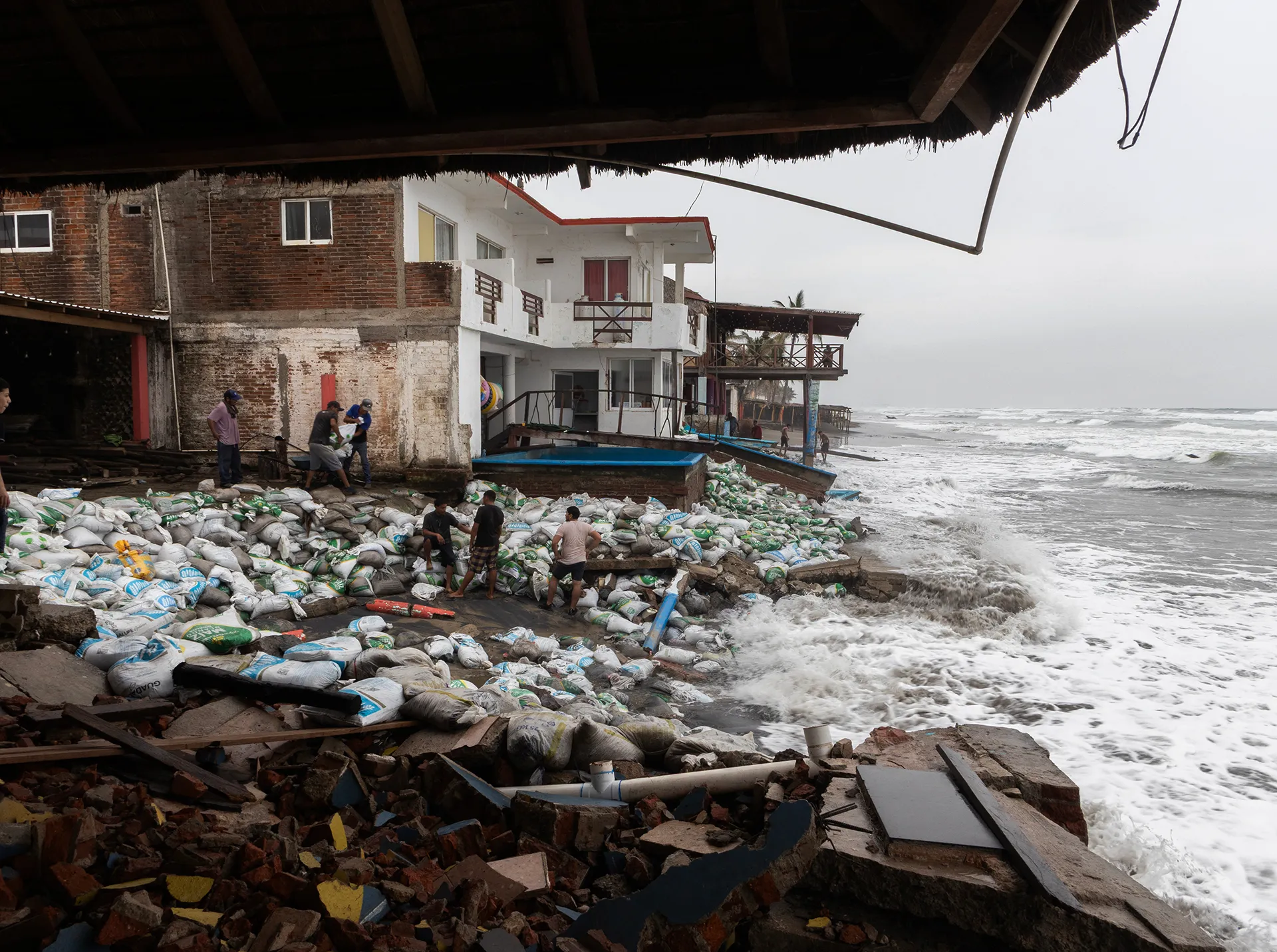
Heavy rains could cause life-threatening flooding and landslides on Mexico’s Pacific Coast, the US National Hurricane Center warned.

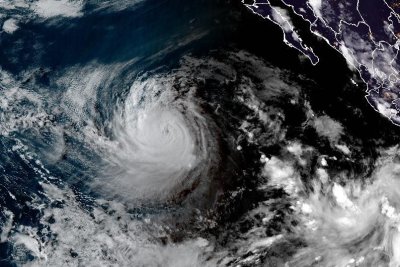
Hurricane Polo has sent heavy rain and strong waves across Mexico’s Pacific coast, while Tropical Storm Nolo is approaching Hawaii with the potential for catastrophic flooding.

Early on Thursday, the hurricane was swirling about 130 miles (209 kilometres) south-southwest of the Mexican city of Zihuatanejo. It was moving northwest at 7mph (11kph) and forecast to turn west-northwest later in the day, taking it further out to sea, before turning northwest on Saturday.

Polo was forecast to maintain Category 5 strength as it moves along Mexico’s coast over the next few days.

While the eye and the strongest winds were expected to remain at sea, the heavy rains could cause life-threatening flooding and landslides, warned the US National Hurricane Center in Miami.

A hurricane watch was issued for Hawaii county and disaster preparations are under way because Tropical Storm Nolo could hit the island on Friday or Saturday, warned the National Weather Service.

John Bravender, a weather service warning coordination meteorologist, said during a news conference on Wednesday afternoon that the tropical storm could develop into a major hurricane.

Hawaii County Mayor Kimo Alameda told residents in a video message that they should start preparing for the storm. He urged them to put together emergency kits with food, water and medications, as well as trim vegetation and clear drains.

“This is a very serious situation,” he said. “We do believe that the rain is going to come. It’s coming already.”

Governor Josh Green’s office said public schools and state and county offices across Hawaii’s Big Island will close on Thursday and Friday, while Maui County will shut them on Friday ahead of the threat of heavy rain, winds and flooding.


Source link

Ocean Way canceled due to offshore hurricane: Santa Monica festival called off

The beach has claimed another first-time music festival this year.

Ocean Way, the beachfront Santa Monica music fest, has been canceled just two weeks before debuting. The two-day event was set for Sept. 26-27.

Goldenvoice, the promoter behind Ocean Way as well as the Coachella Valley Music and Arts Festival, announced the news Friday in an email from its ticketing platform AXS.

“Due to the impacts of Hurricane Marie, the City of Santa Monica has canceled the inaugural Ocean Way festival,” organizers said in a statement. “Storm surf and runoff [have] caused significant beach erosion and the festival can no longer be safely held as planned. Plans are already underway to bring the festival back to Santa Monica in 2027.”

Tickets, which ran from $249 to $2,250, will be refunded within five to seven business days, the promoter said.

Hurricane Marie, spurred by the “Super El Niño” weather pattern resulting from warming waters in the eastern Pacific Ocean, severely damaged coastal areas from Malibu to Long Beach and Dana Point

“I am deeply saddened that severe weather and beach conditions have forced the City and Goldenvoice to make this difficult decision. However, the safety of festival-goers, our residents and the Pier must remain our priority,” Santa Monica City Council member Dan Hall said in a statement to The Times. “With Hurricane Marie also causing sinkholes in Malibu and triggering home evacuations in Long Beach due to rising surf, the rapid erosion of the beach near the Sandbox event space over the past few days is deeply concerning. The City is working rapidly to keep the Pico storm drain and shoreline repaired and ready for upcoming weather.”

“While we are all disappointed,” Hall said, “I remain optimistic about bringing Ocean Way back next summer.”

The fest was slated to have headline sets by the Killers and Olivia Dean, along with Khruangbin, Sublime, Jack White and many others.

Goldenvoice announced the festival in July, with high hopes that it would open up the waterfront to more public events and concerts in Santa Monica and establish a new marquee festival on the west side of Los Angeles. Santa Monica’s retail and nightlife scenes have struggled in the wake of the COVID-19 pandemic, and the festival, which promoters touted as car-free, would have set a precedent for transit-oriented concertgoing.

“We’ve got to take a chance on new things,” Goldenvoice concert producer Nic Adler told The Times in August. ”There is pressure. I think the city wants it, but that takes a little bit of risk and trying something new.”

“We really cannot keep doing the same things that we’ve always done and expect for Santa Monica to shine,” Santa Monica Mayor Caroline Torosis said in an earlier interview. “We have to invite people back to our city. We have been yearning to get back a big music festival on our beach to showcase the city, because the beach is our best asset.”

The festival is the second major beachside concert to go down this year. The inaugural LA Jazz Festival on Dockweiler Beach was canceled on what would have been its opening day, after its finances and permitting fell through.

Climate change and weather damage have become a major concern for festivals. Bonnaroo, in Tennessee, announced last month that the festival would take 2027 off to repair the grounds, after heavy storms canceled sets and prompted evacuations this year. Stagecoach, the country music festival on the same site as Coachella, also temporarily shut down this year due to strong winds.

Source link

Torrential rains, winds from Hurricane Lowell leaves 30,000 without power | Weather News

The Category 1 hurricane misses Kauai but causes widespread destruction, power outages and evacuations.

Catastrophic winds and torrential rains from Hurricane Lowell have pelted Hawaii’s western island of Kauai, knocking out power to at least 30,000 residents and ripping up tracts of beachside roads.

Vicious winds knocked down trees and left nearly 92 percent of Kauai Island Utility Cooperative (KIUC) residents without power by early Tuesday as the storm moved north into the open sea.

While the now-weakened Category 1 hurricane did not make landfall on Kauai, it blew down trees, power poles and lines, causing massive destruction from about 128 kilometres (80 miles) west of the island, according to the Hawaii County Civil Defense Agency.

With approximately 85mph (137km/h) wind gusts, the storm brought a deluge that flooded coastal roads and forced roughly 300 residents to evacuate.

The centre of the storm passed west of the islands in the overnight hours on Tuesday and receded further throughout the day, but dangerous surf from the remnants of the hurricane will impact the Southern California coast for several days given the intensity of the winds, the Miami-based National Hurricane Center said.

Emergency officials are asking residents to conserve water and stay off the roads.

Hawaiian mayor Derek Kawakami said that there was “extensive damage” being reported on Tuesday.

“Everyone’s participation has gone from preparation to sheltering to staying off roads …. to now gathering data and information,” the mayor stated.

The Kauai County government urged locals to shelter in place to allow crews to assess damage, clear debris, and restore power and services safely.

This satellite image released by NOAA shows Hurricane Lowell approaching Hawaii, Sunday, Sept. 6, 2026. (NOAA via AP)
This satellite image released by NOAA shows Hurricane Lowell approaching Hawaii, on September 6, 2026 [NOAA via AP]

Flooding and mudslides will continue to be a risk through the day, said Eric Blake of the National Hurricane Center.

The force of the sustained winds had decreased overall by early Tuesday, and the centre forecasts gradual weakening over the next few days.

In its latest advisory late Tuesday morning local time, the hurricane centre said Lowell had maximum sustained winds near 65mph with higher gusts and was moving north at 14mph.

Hurricane warnings for Kauai and the tiny island of Niihau, which has fewer than 100 permanent residents, were no longer in place by Tuesday morning local time. But high surf and deadly rip currents from the waning storm will continue to affect Hawaii’s exposed coasts for the next day or two.

A tropical storm warning was also lifted for Oahu, the state’s most populated island.

Source link

Karina becomes major Cat. 3 hurricane in Pacific Ocean

Hurricane Katrina was located nearly 1,000 miles west-southwest of the southern tip of the Baja California Peninsula on Sunday evening. Image courtesy NOAA

Aug. 30 (UPI) — Karina rapidly strengthened into a major Category 3 hurricane Sunday evening and was moving west over the Pacific Ocean, forecasters said.

The hurricane had maximum sustained winds of 125 mph and was located about 960 miles west-southwest of the southern tip of Baja California in northwestern Mexico, the National Hurricane Center said in its 5 p.m. PDT update.

It was moving west at 9 mph. Hurricane-force winds extend outward up to 5 miles, according to the NHC.

Forecasters said the storm is expected to take a slower westward to west-northwest motion over the next few days, with some additional strengthening possible.

Swells generated by the storm are forecast to affect the coast of southwest Mexico and the Baja California Peninsula during that time, according to the NHC, which warned that they are likely to cause life-threatening surf and rip current conditions.

Source link