humangleat6

#HumAngleAt6: Sally Hayden Shares on Ethical Dilemmas in Conflict Reporting

As part of its sixth-anniversary celebrations, HumAngle, Africa’s leading conflict and humanitarian crises reporting newsroom, held a training session on “ethical dilemmas in conflict reporting” on Tuesday, March 3, in Abuja, North Central Nigeria. 

The session, which brought together HumAngle editors and reporters, was led by award-winning journalist Sally Hayden and focused on the challenges and responsibilities of reporting from conflict zones. 

Founded in 2020, HumAngle has been at the forefront of covering insurgency and mass displacement, publishing investigations and exposés on state failure, human rights violations, climate vulnerability, abductions, disappearances, and systemic corruption.

According to Ahmad Salkida, Founder and CEO of HumAngle, the training is part of its bold agenda to transform the newsroom into a lasting knowledge institution.

“The initiative reflects our commitment to equipping journalists with skills that align with global standards, ensuring they are prepared to navigate the complexities of reporting in conflict-affected regions while maintaining professional integrity,” he said. 

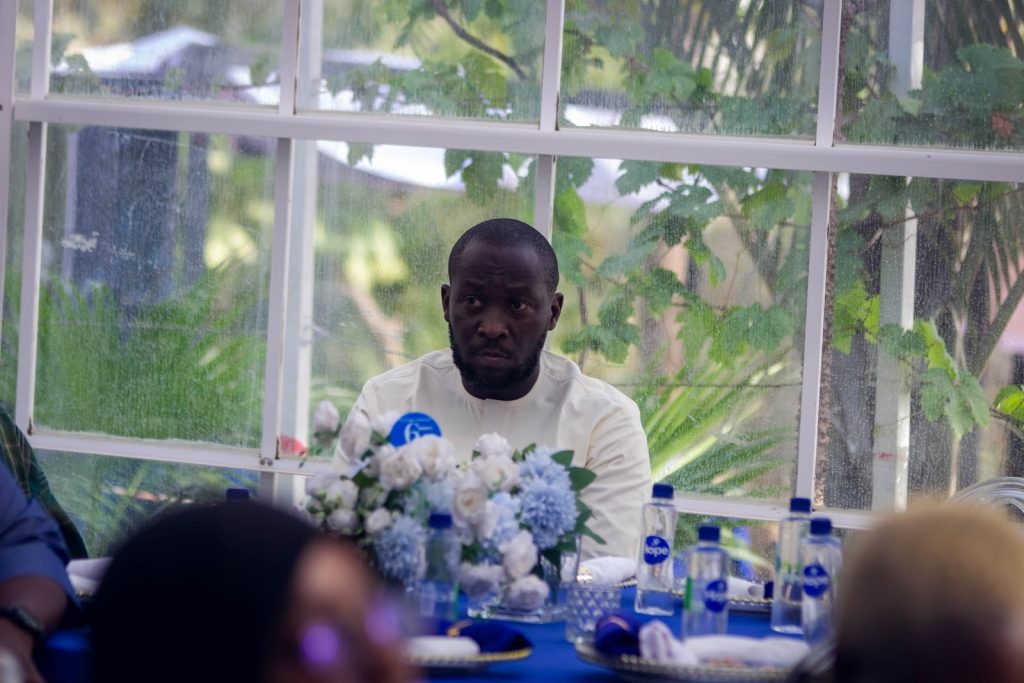
Man seated at a table with white flowers and bottled drinks in the foreground, greenery visible through nearby window.
Ahmad Salkida, Founder and CEO of HumAngle. Photo: Al’amin Umar/HumAngle

Ahmad also revealed that over the last six years, HumAngle has consistently shifted the world’s gaze to underreported stories, fought for accountability, and demanded justice. “When we started HumAngle, we knew the road would be tough, but we also knew it was necessary. We set out to create a platform that would not only report the news but transform it into a tool for change,” he added. 

A woman speaking into a microphone at an indoor event, with people in the background.
Award-winning journalist Sally Hayden. Photo: Al’amin Umar/HumAngle 

The CEO also highlighted plans to strengthen digital security and newsroom resilience by expanding the scope and quality of fellowships and investing in capacity-building initiatives. He added that a key part of this vision is establishing permanent institutional infrastructure, which he described as critical to sustaining HumAngle’s mission and impact in the long term.

“Going forward, our newsroom focus will be on scaling investigative capacity across the Sahel, expanding immersive and data-driven storytelling, and deepening transitional and reparative justice and reporting,” he noted.

Through interactive discussions, Sally unpacked the ethical grey zones that define conflict reporting: access negotiated under restrictive conditions, the burden of bearing witness, and the solitude of decision-making in volatile environments. Drawing on years of reporting from Iraq, Syria, Sudan, Burkina Faso, Lebanon, Palestine, Nigeria, and beyond, she shared practical frameworks for risk assessment, personal safety, and editorial judgement.

Two people in a meeting room: a woman speaking into a microphone and a man listening attentively, both with laptops in front of them.
Sally Hayden, during a training with HumAngle journalists on Tuesday, March 3. Photo: Al’amin Umar/HumAngle

“Sometimes, you face situations that no one has ever faced because you’re the only one in that specific place at that specific time, so sharing experiences helps other journalists who may be there some day,” she reflected. 

Drawing on her years of experience covering conflict-affected regions such as Iraq, Syria, and Sudan, among others, risk assessment and decision-making were also central to the discussions, equipping attendees with frameworks to evaluate personal and organisational safety in volatile contexts.

One such moment came in 2025, when she reported from a Syrian prison housing suspected Islamic State members. The access was conditional.

“We were told we could go to the prison as long as we followed certain rules. We could not ask how the prisoners were or about other things. Most importantly, we could not tell them about current events. We were told this was for security reasons.”

Sally and the attendees further discussed how ethical reporting in conflict zones demands constant negotiation between access, accuracy, and accountability.

Equally pressing was the psychological toll of the work. She spoke candidly about trauma, burnout, and the importance of self-awareness. In conflict reporting, she stressed, it does not merely document suffering; it absorbs it.

“When you’re constantly surrounded by insecurity, it can be helpful to find something to do rather than constantly be lost,” she advised, urging journalists to cultivate routines and boundaries that protect their mental health.

People sit around a conference table with laptops and papers during a meeting in an office setting.
HumAngle journalists during the training session with Sally Hayden. Photo: Al’amin Umar/HumAngle.

According to Saduwo Banyawa, HumAngle’s Adamawa and Taraba Correspondent, the conversation made her realise that “it is okay to feel stuck as a journalist at times and when one gets unnecessarily pressured or has their mental health strained, they should prioritise self-care.”

Over the years, HumAngle has prioritised the mental well-being of reporters and other team members through an Employee Assistance Programme, which offers confidential, one-on-one counselling sessions with our in-house licensed clinical psychologist.

Recently, the newsroom introduced an Anti-Burnout Work Policy that has embedded a three-month rest period into newsroom staff contracts while still providing full annual pay. 

“HumAngle’s reporters routinely work in and around conflict zones, camps for displaced people, and communities living with violence and trauma. This kind of journalism demands not just technical skill but emotional stamina and deep empathy, and the costs are often borne silently,” the CEO noted. 

Reflecting on the training, Sabiqah Bello, Multimedia Reporter, described it as both relevant and validating to the experiences of conflict reporters.

“It was particularly insightful because it came from a journalist with extensive, cross-regional experience covering conflict and war, and who has had to confront the realities of that work firsthand. It was especially valuable that we explored ethical dilemmas faced in conflict reporting,” she added. 

As part of its sixth-anniversary celebrations, HumAngle, a leading African conflict and humanitarian crisis reporting newsroom, held a training on “ethical dilemmas in conflict reporting” in Abuja, led by journalist Sally Hayden.

The session gathered HumAngle editors and reporters to discuss the challenges of reporting in conflict zones and emphasized maintaining professional integrity. Founded in 2020, HumAngle aims to transform its newsroom into a lasting knowledge institution and is investing in digital security, quality of fellowships, and capacity building.

Ahmad Salkida, HumAngle’s Founder, highlighted the organization’s role in spotlighting underreported stories, accountability, and justice, with plans to enhance investigative reporting and storytelling. Sally Hayden shared frameworks for risk assessment and editorial judgment based on her extensive experience in conflict areas like Iraq, Syria, and Sudan. The session also addressed the psychological toll on journalists and the importance of self-care. HumAngle supports its team with an Employee Assistance Programme and an Anti-Burnout Work Policy, ensuring their reporters are both technically skilled and emotionally resilient.
Source link

Reflecting on Six Years of Conflict Reporting in Africa

Every March 2, HumAngle Media marks its anniversary. This year, the award-winning newsroom turns six, a milestone for a publication that has dedicated itself to covering conflict, humanitarian crises, and development challenges across Africa.

This year’s anniversary is marked by reflection and knowledge-sharing activities. On Monday, award-winning Irish investigative journalist Sally Hayden attended HumAngle’s editorial meeting, where she met the newsroom team. During the session, she described herself as “a big follower of the work” and added, “I’m star-struck,” expressing admiration for the organisation’s impact and growth over the years.

Founded in March 2020 by Ahmad Salkida, HumAngle was born out of a determination to report on conflict and terrorism with nuance, depth, and humanity. Over the years, Ahmad’s work – and that of the newsroom he built – has shaped both local and global understanding of crises across Nigeria and the wider Lake Chad region.

“HumAngle stands as one of the most consequential media institutions covering conflict, displacement, extremism, governance failures, and community resilience in Nigeria and the Lake Chad Basin,” he said. 

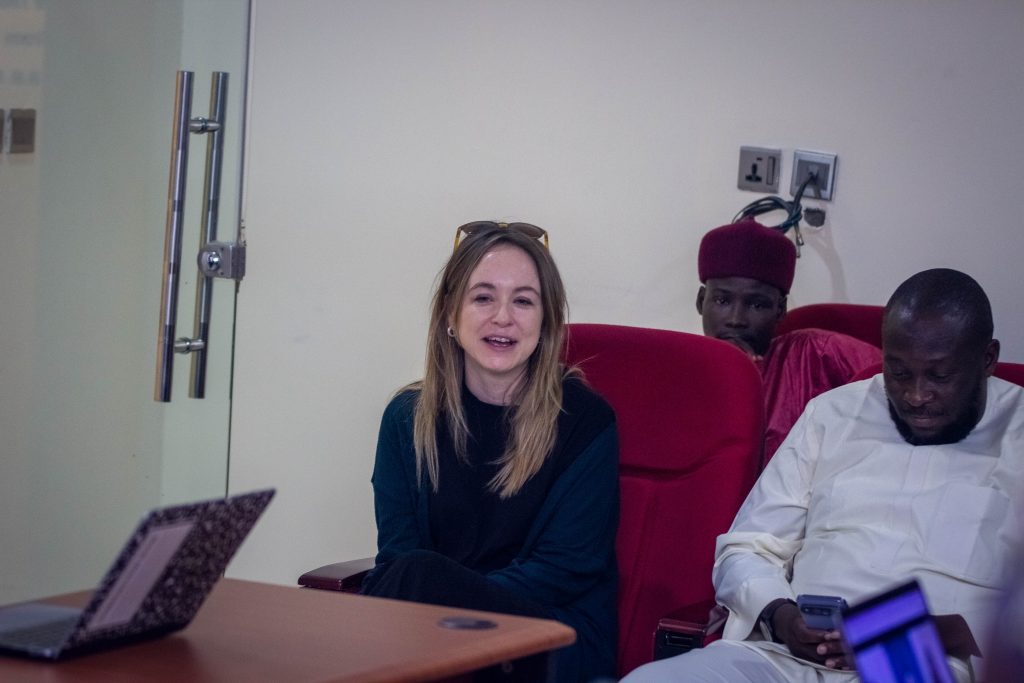
Three people sitting in a room; a woman smiling and two men beside her, with one using a smartphone, and a laptop in the foreground.
Sally Hayden and Ahmad Salkida during HumAngle’s editorial meeting on Monday, March 2, in Abuja, Nigeria. Photo: Al’amin Umar/HumAngle.

From the outset, the newsroom set itself apart by centring people rather than power. Its investigations and analyses prioritise lived experiences, while holding authorities accountable. Through solutions journalism, HumAngle not only documents harm but also explores pathways to peacebuilding and conflict resolution across the continent. 

A HumAngle investigation on the social media interactions fuelling the ethno-religious violence crisis in Plateau State, North Central Nigeria, was recently shortlisted in the Outstanding Contribution to Peace Category of the 2025 Festisov Journalism Awards. 

For the editorial team, the past six years have been defined by innovation, resilience, impact, creativity, and challenge.

Mansir Muhammed, Senior Specialist in GIS, open-source intelligence, and emerging technology, describes the journey as deeply impactful. In 2023, he collaborated with HumAngle’s former investigations editor, Kunle Adebajo, on an investigation that uncovered mass graves in Nigeria’s North East.

“We had access to knowledgeable fixers who took our reporter close to these scenes. We then took pictures and collected supplementary information. We further probed the coordinates using open-source intelligence and geospatial tools, including satellite imagery and data, alongside contextual information,” Mansir wrote in a reporter’s diary. 

The investigation went on to win the Sigma Award for Outstanding Data Journalism in 2024, a recognition of the newsroom’s growing strength in digital and data-driven reporting.

“The award showcases the kind of work we have been doing with digital journalism and geographic information systems,” he said. He urged the public to look out for more innovations and impressive output from the newsroom. 

The Sigma Award is only one of several recognitions HumAngle investigations have received. Beyond accolades, however, the team points to something more important: measurable impact on communities whose stories might otherwise have gone unheard. 

Most recently, an investigation by Hauwa Shaffii Nuhu, the Managing Editor, won the Konrad-Adenauer-Stiftung (KAS) Media Africa Award. The story explored the life of Modu Bakura, a 30-year-old resident of Bama, northeastern Nigeria, whose house was robbed in 2022, his wife killed, and his source of livelihood taken away. 

In its citation, the jury reflected on the story’s lasting power:

“There are some stories, even great stories, that one reads and immediately forgets. And then there are the stories that stay with you, that you think about days, weeks or even months later. Hauwa Shaffii Nuhu’s fascinating and heartbreaking profile of Modu Baraka – a trader in northeastern Nigeria whose life was unravelled by a robbery – is in the latter category.”

A woman in a green headscarf smiles while seated in front of a partially visible sign, with a blue circle in the background.
Hauwa Shaffii Nuhu leading the weekly editorial meeting on March 2. Photo: Al’amin Umar/HumAngle.

For Ibrahim Adeyemi, Investigations Editor, HumAngle’s defining feature is its editorial culture.

“We don’t tell basic stories. We ask critical questions which make our work distinct,” he said, adding that the most interesting thing about working with HumAngle is that every reporter is encouraged to think like an investigative journalist: to dig deeper, question assumptions, and follow evidence wherever it leads.

That philosophy has culminated in the development of the HumAngle Investigations Handbook, a practical guide designed to support reporters in producing rigorous, groundbreaking work.

Innovation at HumAngle extends beyond investigations.

“I’m proud to say that HumAngle is six. It’s been really fun watching HumAngle grow,” said Damilola Lawal, Creative and Innovation Manager at HumAngle. Working across animation, multimedia, motion graphics, and virtual reality, she has helped shape the newsroom’s visual and immersive storytelling. She describes her work as exciting. 

Looking ahead, she plans to push those boundaries even further. “I’m going to be diving into immersive storytelling and also look at creative and impressive ways that we can apply virtual reality,” she noted. 

HumAngle’s sixth anniversary will be marked with a week-long programme of activities, including editorial sessions and workshops with Sally Hayden. The sessions are aimed at strengthening capacity, refining processes, and scaling impact. 

In the years ahead, HumAngle plans to expand its investigative and storytelling capacity, strengthen digital security and newsroom resilience, and broaden its fellowships and capacity-building initiatives. Ahmad said that HumAngle remains committed to documenting Africa’s most complex conflicts, not only with rigour and courage, but with empathy, accountability, and an unwavering belief in journalism’s power to serve the public good.

HumAngle Media celebrated its sixth anniversary, marking its dedication to conflict, humanitarian, and developmental stories in Africa.

Founded in 2020 by Ahmad Salkida, the platform emphasizes people-centered reporting with solutions journalism, which holds authorities accountable while exploring peace pathways.

The newsroom, known for its investigative depth, was recently acknowledged with prestigious journalism awards. Notable works include investigations on ethno-religious violence and mass graves, showcasing their expertise in digital and data-driven reporting.

The anniversary aligns with reflection and innovation, with editorial meetings featuring Sally Hayden.

HumAngle plans to expand its investigative efforts, enhance digital security, and build on creative storytelling techniques like virtual reality, maintaining its mission to document Africa’s complex conflicts with empathy and rigor.

Source link