Houston

President Bush Could Retire to 13-Foot-Wide House in Houston . . . if He Doesn’t Mind Spending a Bundle

It wasn’t exactly a political bombshell. More like a political cherry bomb. But it made waves all the same.

A group of President Bush’s critics took reporters at the Republican National Convention to a lot he owns in an upscale Houston neighborhood and charged that Bush uses it as a tax dodge.

To fortify his claim of Texas residence, Bush signed an affidavit in 1985 stating that he intends to return to Houston when he retires and build a house on that lot.

His critics say it’s just a way to avoid state income tax. If he’s officially a Texas resident, he pays state income tax there, not in Maine, where he keeps house at Kennebunkport. And Texas has no income tax.

It’s far-fetched to think Bush will ever live on the lot, his critics say, because it’s only 33 feet wide. Taking into account the required setbacks, the house could only be 13 feet wide. They called it “unbuildable.”

Newport Beach architect Brion S. Jeannette, who specializes in big-ticket custom homes on difficult sites, viewed the problem at The Times’ request. During his 20 years of work, he’s built houses with garage-top heliports, with underground bowling alleys and pistol ranges, with complete theaters. Now he’s designing a beachfront house inside a huge, hollowed-out boulder.

But fit a presidential mansion onto a lot the size of two, end-to-end tennis courts?

Seated at a conference table with only a pen and paper, Jeannette was concerned about the building width. “Thirteen feet? Jeez.” Yes, and 110 feet long, when you subtract the front and rear setbacks. About the proportions of a good cigar.

But an hour later, Jeannette had good news for the President. If he really wants to live on this lot, he can have a 10,000-square-foot mansion with quarters for servants, Secret Service and guests, with walk-in closets, a 15-seat theater, a 14-person dining room, a wine cellar and tasting room, an exercise room, a large, high-security vault and a seven-car garage with room for a stretch limousine for around $3 million.

If he wants to spend a little more (and exert his influence with the neighbors), he can have a heliport on the roof.

If 10,000 square feet is too meager, he can have more space. Two of this house’s five levels are underground, and if waterproofed to fend off Houston’s high water table, levels could be added there.

“When you go underground, it opens up some things,” Jeannette said. “I can build below grade virtually to the property lines. Zoning restricts construction above grade.

“So you decide what types of functions don’t need to be above ground, don’t need sunlight or natural ventilation. Parking, pistol ranges, swimming pools–there’s a whole range of things you can do underground.” All you need is money.

The President has officially declared his intention to retire there, and presumably money will be no object. “It’s possible to build there, and I’m quite astounded that it is,” Jeannette said.

If Jeannette’s design were built, this is how the home of George and Barbara Bush at 9 West Oak Drive South in Houston, would appear:

You turn off Post Oak Road onto West Oak Drive South into a small tract of large, suburban homes on large lots.

The third house on the left stands out as different. It’s a classic little New England saltbox, tall and narrow, with clapboard sides and shingle roof, sitting 40 feet back from the street. A meandering path leads to a traditional front porch. These people must be from Maine, you say.

You identify yourself through the intercom at the fence, the electric gate swings open, and you descend along a steep driveway to the underground parking garage. Just before you disappear below ground, you notice that thick vegetation and fences conceal the sight of this cute little saltbox extending back nearly 40 yards.

You park and are escorted to the center of the garage and the spiral staircase that extends all the way through the house’s five levels. You decide instead to take the glass elevator that runs up the center of the spiral.

One floor above, the ground floor, you are welcomed and taken to the living room at the front of the house. On the way, you pass the dining room with its unusually long, narrow table and buffets. The bow windows in both the dining and living rooms make the narrow rooms seem more spacious.

You’re offered a tour of the house and see the kitchen and family room that make up the rest of the this floor. Bow windows on three sides of the family room look out onto a tree-shaded lawn.

Upstairs, you see the master bedroom and a guest bedroom. You’re told there are two more guest bedrooms and maid’s quarters in the loft above, but the Secret Service is using most of the space. You assume you’ll be staying at a motel tonight.

You take the elevator to the bottom floor, two levels underground, to see the theater. It can show movies or big-screen TV to 15 people seated in ultra-comfy loungers. A small bar is in the corner to assist in the entertainment.

On the other side of the staircase is the workout room. You can see through the glass wall that it’s impressively outfitted.

A little farther on is the door to the wine-tasting room. Once inside, one door leads to the wine cellar, the other to a bank-style vault.

You’re impressed.

You should be. Putting 10,000 square feet of floor space on this misshapen lot would be expensive–in Jeannette’s words, “very, very expensive.” Today it would cost about $3 million, he said. On a normal site, you could build a luxurious custom house nearly twice as large for the same money.

The idea that the President might retire to this lot comes from an affidavit he filed with the county assessor in Houston in 1985.

Responding to critics who challenged his status as a Texas voter, Bush listed the reasons he qualified: He lived in Houston for three years before being elected vice president and moving to Kennebunkport; he does not claim Maine residence (although once he tried); he’s voted in every Houston election since moving away; and he owns the residential lot on West Oak Drive South.

In effect, the Texas Election Code says once you’re a Texan, you’re always a Texan–until you no longer intend to return. A Texan “does not lose his residence by leaving his home to go to another place for temporary purposes only,” the code states, but offers no definition of temporary . Texas courts have upheld the validity of intent when determining residence.

“It is our intent to return to Houston and build a single family residence on that property” when his public service ends, Bush declared in the affidavit.

According to financial disclosure reports, the Bushes paid old friends John C. and Barbara S. Fitch $50,009 for the lot, a 33-foot slice of the Fitches’ property that originally was 111 feet wide.

Filed with the deed is an agreement that before the Bushes build anything on the lot, the Fitches may buy it back by paying “fair market value.” The agreement also includes a pledge to move the property line between their lots “in order to reasonably accommodate their mutual development plans.”

According to the White House press office, the Bushes “have yet to decide” what they’ll do with the lot. But according to Jeannette, building a nice, big house is an option, though a difficult and expensive one.

“This was a fine exercise,” Jeannette said. “At first I thought, ‘This is silly.’ I expected to come up with something that was cornball and camp. But it really is doable.

Source link

From Monterrey to Houston, Nsqk makes music for people who move between worlds

Nsqk can hear the connection between Radiohead and Willie Colón. To the Mexican singer-producer, both know when to let the instruments speak as much as the verses.

It’s a fitting observation from an artist whose music moves between electronic production, R&B melodies, rap and distorted guitars. Born Rodrigo Torres de la Garza in Monterrey and raised partly in Texas, the 28-year-old Nsqk — pronounced “Nesquik” — grew up navigating two countries and the expectations that come with belonging to both.

“I grew up in Houston,” he says. “I understand what it’s like to be a second-generation Mexican growing up in the States.” That experience, he explains, helps him connect with collaborators who also know what it means to feel as if they exist between worlds.

His audience has grown well beyond the underground following he garnered in his early experiments with electronic production. After releasing his albums “Roy” (2022) and “ATP” (2024), he sold out two consecutive shows at Mexico City’s Palacio de los Deportes in 2025.

A date this January at the city’s Estadio GNP Seguros marks another leap in his scale.

In his Oct. 15 album release, “Mosca,” Nsqk is joined by the Chicano experimentalist Jean Dawson on the guitar-driven “Dientes de Fierro,” while indie icon Julieta Venegas lends her silky vocals and synth melodies to “Estar Así Siempre.” Additional cameos include folk balladeers like Pedro Tovar of Eslabón Armado and Kevin Kaarl, with longtime Gorillaz collaborator Stephen Sedgwick handling the mixes.

De Los spoke to Nsqk ahead of his upcoming U.S. tour — which includes a performance at Tyler, the Creator’s Camp Flog Gnaw fest on Sunday in L.A.’s Dodger Stadium. He spoke candidly about letting his music breathe, finding common ground in the studio and why Mexican identity shouldn’t depend on where someone lives.

When we first spoke, you mentioned EDM producer Porter Robinson as an influence. Where does that influence show up on “Mosca”?
Absolutely. Just the other day, I was listening to “Worlds” again. Everyone has these albums that you discovered at 14 years old, and you listen to them every once in a while because it’s part of you.

I was making these connections: “Oh, I didn’t even realize I was referencing this.” It keeps happening with a lot of my influences. There are certain moments, especially on “Peces Muertos” and some of the more electronic tracks, where you can hear very directly the influence from Porter Robinson and Madeon.

What did you try on “Mosca” that you wouldn’t have trusted yourself to do on “ATP”?
I tried letting the music ride a lot more. During the process, I listened to a lot of Radiohead and U.K. rock. It’s very cinematic. They let the music breathe and let the instruments speak for a while without having to sing.

I was also listening to a lot of salsa: Willie Colón, Héctor Lavoe, Celia Cruz. I never expected that where Radiohead and Willie Colón meet is that they let the music ride. They’ll sing a verse, then let the instruments speak for a minute, two minutes.

That’s something I hadn’t done in my music intentionally. It’s about what I’m saying, but it’s also about what the instruments are saying.

Mexican rapper and singer-songwriter Nsqk (Rodrigo Torres de la Garza).

Mexican rapper and singer-songwriter Nsqk (Rodrigo Torres de la Garza).

(Mono Studio (Mexico))

What surprised you about working with Stephen Sedgwick on the album’s mixes?
One of the craziest things about working with him is that everything is analog, everything’s physical. He’ll run his Pro Tools out into this gigantic wall of effects and compressors, amplifiers and limiters. I didn’t even know what everything was.

I do everything on my laptop. To take it somewhere where it’s all physical, at first it was actually kind of weird. We were speaking two different languages. I was trying to explain that I wanted things in a very digital way, but we had to figure out how to do that with his equipment.

What stood out about working with Pedro Tovar of Eslabón Armado on “Mil Problemas”?
He’s an amazing songwriter. He is so quick. It’s a similar experience with Julieta: They’re so good at it that they just sit and start, and they can write a song in five minutes. And it’s an amazing song.

He knows exactly what he wants, and he knows exactly who he is as an artist. The track is not a corrido or sierreño, but it sounds like them. It sounds like his melodies and his chords.

He did the guitar solo and I rerecorded it with my guitarist, who’s a rock guy. Even this guy, a classically trained guitarist, was like: “This is crazy to play.” It’s a completely different approach to playing guitar.

It’s really hard to put into words, but once you see him do it, it makes total sense.

What connects the collaborators you brought together on this record?
You’re not American [enough] for the Americans, not quite Mexican [enough] for the Mexicans. The Chicano experience: I grew up like that.

All of the artists on the record sort of share this cultural duality, where you often feel like you’re in between worlds, and you don’t know exactly which one you belong to.

It’s not that we sat down and talked about it to create the music. But I feel like the reason I connected so well with everyone is that we share that characteristic.

Has returning to the U.S. as an artist changed how you understand that experience?
There’s often this cultural disconnect between Mexicans living in the U.S. and Mexicans living in Mexico. I often see people say, “You’re not Mexican if you don’t live in Mexico.” That’s always felt kind of weird to me because I know what it’s like.

I feel like our culture and our heritage is so beautiful. The fact that it’s so ingrained in the States is amazing to me.

I see a lot on Twitter and TikTok, people fighting about it: “Just because you were born in Chicago, but your parents were Mexican, and you speak Spanish, and you eat Mexican food. But because you don’t live in Mexico, you’re not Mexican.” I see people saying that a lot.

I feel really honored to be able to tour the United States, meet these people and wear the flag on my chest. I don’t feel like we’re any different.

As a Tyler, the Creator fan, what does playing Camp Flog Gnaw mean to you?
It’s an honor. He created this space for much more vulnerable music with all these different influences. He’s a torch carrier for a niche of artists that try to make different music, in a way that’s not necessarily the status quo or the most commercial way to do it.

To be part of the lineup is an honor, but it’s also very motivating. It’s cool that we’ve gotten this far, and that only gives me more energy to keep working.

You’re going from a stadium show in Mexico City to smaller U.S. rooms. What can you do with an audience that close?
Talk to them. It’s a lot easier to see their faces and reactions and literally talk to them.

When I’m onstage, I really enjoy talking to people and making them feel like I’m not just playing my set list for the hundredth time. I’m actually there, I’m enjoying it, I’m seeing them and they’re seeing me.

Source link

Broncos trade for Chargers’ Daiyan Henley ‘will not be finalized’

The Chargers’ only move at the NFL trade deadline has been called off.

The Denver Broncos announced Wednesday night that a proposed trade for Chargers linebacker Daiyan Henley “will not be finalized.”

The Broncos did not explain why the deal was abandoned, but the trade was pending the results of a physical. Henley was listed on the injury report last week with a shoulder injury, but he practiced Thursday and Friday before playing in the Chargers’ 44-22 loss to the Houston Texans on Sunday.

Shortly before the NFL trade deadline on Tuesday, the Chargers reached an agreement with the Broncos for Henley in exchange for a 2027 fourth-round draft pick and a 2028 fifth-round pick.

Chargers veteran safety Tony Jefferson was among the players who made it clear on social media they were not happy about the trade. After the trade fell through, Jefferson posted, “Had to get lil bro back to the bolt.”

Henley also posted a response to his X account.

Henley staying in L.A. is the latest twist in an 0-8 season for the Chargers that has bewildered fans and pundits alike and has left the team’s coaching staff and front office under fire. It also means the Chargers didn’t make any moves toward their future amid a lost season.

One of the Chargers’ top defensive players and a team captain, Henley has started all eight games this season. He had a season-high 10 tackles against Houston and also intercepted a pass in that game. A third-round pick in the 2023 draft, Henley has 317 tackles and five sacks over 56 career games.

Henley, 26, is in the final year of his rookie deal. It remains to be seen how the Chargers’ winless season, coupled with their efforts to trade him, will affect their chances of re-signing him.

Source link

Houston mayor curbs cooperation of US city’s police with ICE | US Midterm Elections 2026 News

People stopped for minor traffic violations will no longer be referred to US Immigration and Customs Enforcement.

The mayor of Houston, the most populous city in the US state of Texas, has ordered the city’s police force to sharply limit its cooperation with the United States Immigration and Customs Enforcement (ICE).

John Whitmire’s executive order came on Friday, days after Democrats swept statewide offices in the traditionally Republican state.

Recommended Stories

list of 3 itemsend of list

According to the order, Houston police will contact ICE only when a person is being arrested for a jailable offence, according to the Reuters news agency.

Whitmire said he had consulted Texas’s newly elected governor, lieutenant governor and comptroller before acting, and that the move was meant to reduce fear and anxiety across the city.

“Elections matter,” Whitmire told reporters. “I do this to begin a healing process,” he said, adding he hoped his executive order would become a model for other Texas cities.

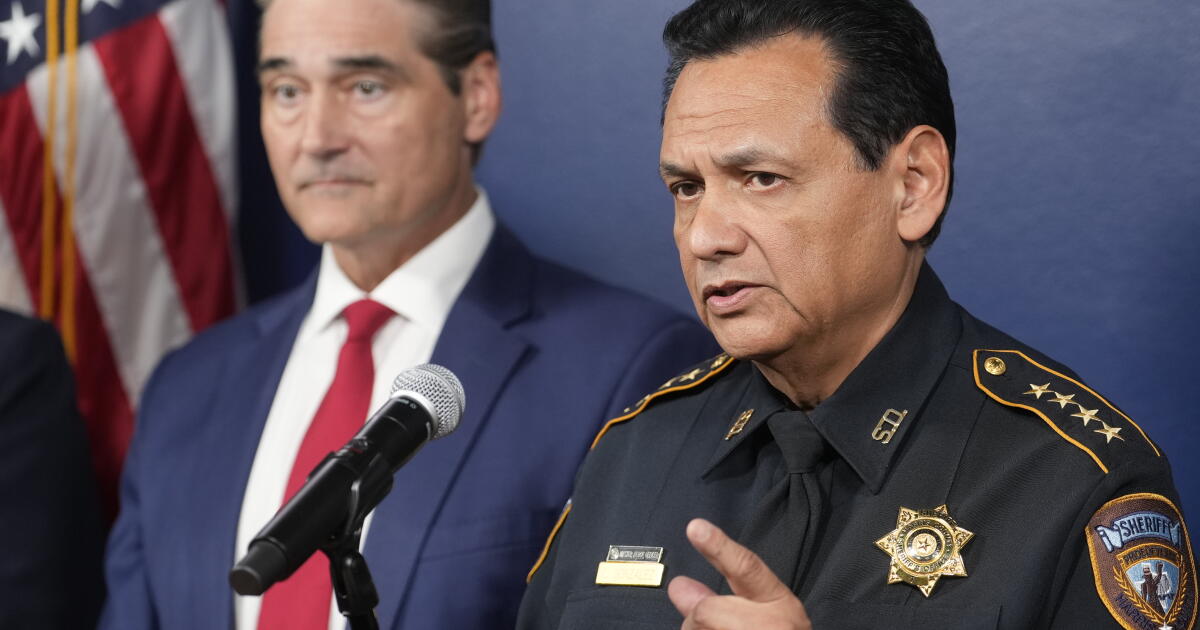
Joining Whitmire at the news conference, Houston Police ⁠Chief J Noe Diaz said he supported the change and that his department had already begun to implement the new policy.

Under the new rules, people stopped for minor traffic violations will no longer be referred to ICE simply because they have an administrative immigration warrant.

The decision reverses a policy Whitmire put in place in April under pressure from outgoing Republican Governor Greg Abbott.

Abbott had threatened to withdraw about $110m in state public safety grants, arguing that a city council ordinance limiting police contact with ICE breached Senate Bill 4, a 2017 state law that bars local police from restricting cooperation with federal immigration authorities.

Texas Attorney General Ken Paxton also sued the mayor, the city council and the police chief over the ordinance.

“We’re taking an interpretation of the law today, working with the newly elected members of the state leadership, in implementing this policy,” Whitmire told reporters. “We don’t want people to worry about ⁠their workers, their family members, their students.”

The issue has drawn intense scrutiny in Houston. The Houston Chronicle found that city police contacted ICE at least 107 times in the first eight months of 2025, compared with nine times in the whole of 2024.

In July, an ICE agent shot dead Lorenzo Salgado Araujo, a longtime Houston resident.

FIEL Houston, an immigrant rights group, called the order a victory for the city but said it was long overdue. “Today Houston won. Today our community can breathe easier,” FIEL Executive Director Cesar Espinosa said in a statement to KPRC.

Whitmire said he expected Houston’s approach to become a model for other cities. In Austin, Mayor Kirk Watson asked city officials on Friday to revise their own policy on ICE warrants.

Source link

Houston mayor signs order to limit cooperation with ICE, says ‘elections matter’ after Democrats win

The mayor of Houston on Friday said the city would limit cooperation with federal immigration authorities, heralding “a new model” of immigration enforcement after Democrats won power in Texas for the first time in decades.

Mayor John Whitmire said the city would go after immigrants “that pose a danger, not those that are going about their family business, work and education.”

A traffic incident “will not even … you write a citation or you warn them and they go about their way. No contact with (U.S. Immigration and Customs Enforcement) over nonviolent, non-jailable offenses. It reduces the fear and anxiety.”

Details of the change were to be spelled out in an executive order but the move by the nation’s fourth-largest city is one of the first steps to curb ICE’s powers since Tuesday’s election.

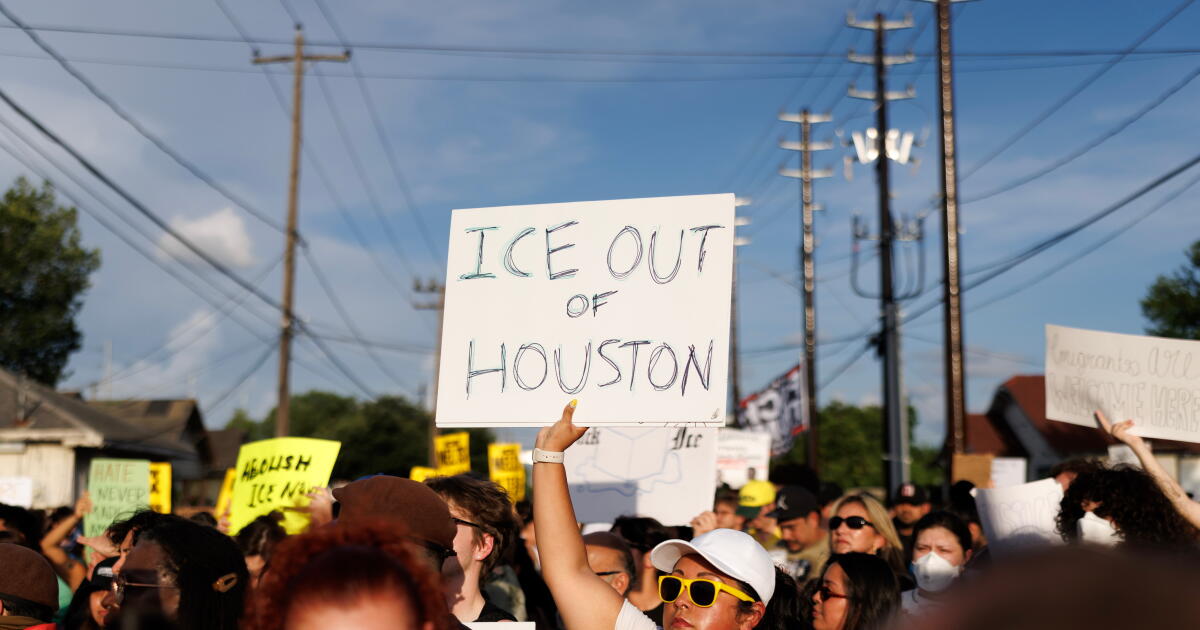
The Trump administration’s immigration crackdown in Houston has sparked protests after an ICE officer fatally shot a Mexican homebuilder this summer and another struck a man with a car.

A grand jury last week indicted ICE officer Mario Alberto Morales on a charge of aggravated assault with a deadly weapon. Prosecutors say Morales intentionally rammed his car into Miguel Parra Hernandez, whose leg was broken. ICE has asserted that Parra Hernandez ran in front of the vehicle, an account that prosecutors say is contradicted by video.

Oyekanmi writes for the Associated Press.

Source link

ICE agent charged with assault in Houston to turn himself in

Cybele Mayes-Osterman and Jack BrookAssociated Press/Report for America 

A federal immigration officer charged with aggravated assault after he ran over a Mexican man with his car in Houston will turn himself in on Monday, according to his attorney.

Mario Alberto Morales, a U.S. Immigration and Customs Enforcement officer, struck Miguel Parra Hernandez, a 48-year-old construction worker, with his unmarked SUV on Oct. 10, as he chased Parra Hernandez through a parking lot. A grand jury indicted Morales on Friday on a felony charge of aggravated assault with a deadly weapon.

Morales is planning to turn himself in at a courthouse sometime Monday, his attorney, David Lindenmuth, told the Associated Press. Lindenmuth previously told the AP that the incident was “clearly just an accident” and that local officials had “invented a crime out of thin air.”

Parra Hernandez broke his leg and is recovering at a rehabilitation facility while in federal custody, Harris County Dist. Atty. Sean Teare told reporters Friday.

ICE has said Parra Hernandez ran in front of Morales’ car.

Previously released surveillance camera video shows Morales’ vehicle drive over a median and strike Parra Hernandez as he runs away.

Teare played video from Morales’ body camera on Friday that showed the agent making sharp turns with his steering wheel. He then stops and exits the vehicle and turns toward Parra Hernandez, who is lying on the ground, screaming.

“I was coming in, and I hit him with the car,” Morales can be heard saying after another ICE agent arrives.

Parra Hernandez told deputies that he fled the traffic stop when Morales started pulling on a mask, and Morales “threw the car” at him, according to a Harris County Sheriff’s Office incident report reviewed by the AP. Morales told deputies that he did not brake before he hit Parra Hernandez, but that he did not intentionally strike him, according to the report.

ICE said after the incident that the target of the operation was a man named Jose Mendoza-Cervantes, who the agency said was seen getting into a car with Parra Hernandez. Mendoza-Cervantes’ daughter told the immigrants’ rights group FIEL that her father has been dead for nearly a decade.

Morales is among a small group of federal agents who have been criminally charged for wounding people during the Trump administration’s aggressive immigration crackdown. ICE agent Christian Castro pleaded not guilty last month to charges that he lied to the FBI after he shot and wounded a Venezuelan man as immigration agents swept Minneapolis earlier this year.

Many other ICE shootings, including some that were fatal, have not resulted in charges for the agents involved.

Morales, 34, has served as an ICE agent for a little over a year, according to Lindenmuth.

Teare said Friday that authorities have a “significant amount of information” on Morales, and that, in his experience, law enforcement agencies would not hire someone with his background. He did not elaborate.

Morales was charged with a misdemeanor in 2013 for stealing four DVDs, according to Harris County court records. Those charges were dismissed after he paid a $270 fine and struck a plea deal.

Morales unsuccessfully ran to represent Texas’ 34th Congressional District in this year’s election cycle under the name “Bam Morales,” which Lindenmuth confirmed. Morales served in the Army’s 82nd Airborne Division and later as a corrections officer and law enforcement officer, he wrote in a Ballotpedia candidate survey. He wrote that his top priorities were veterans’ rights, economic issues and service guided by the Christian principles of “compassion, integrity, service, and accountability.” He listed illegal immigration as one of the country’s greatest challenges.

Morales also wrote in the survey that he was endorsed by an organization called Make America Godlier Again.

Morales appeared at a 2024 Christian conference held by televangelist Johnson Suleman. In video of the conference, Morales appears to act as a Spanish translator as Suleman serves free food and “extends his touch of love to migrants.”

“I want to pray for the immigrants,” Suleman said, as Morales translated those words into Spanish. “I bless you. May the Lord grant your request and open your doors.”

Mayes-Osterman and Brook write for the Associated Press.

Source link

Texas grand jury indicts ICE officer accused of running over man in Houston | Migration News

The officer faces charges after allegedly striking a fleeing construction worker with an SUV during an immigration raid.

A grand jury in Texas has indicted a United States Immigration and Customs Enforcement (ICE) officer accused of deliberately running over a Mexican construction worker during an operation in Houston this month.

ICE officer Mario Alberto Morales faces charges of aggravated assault with a deadly weapon for the October 10 incident, Harris County District Attorney Sean Teare announced on Friday.

Recommended Stories

list of 3 itemsend of list

Criminal charges against federal immigration officers have been rare during President Donald Trump’s immigration crackdown, although several encounters involving officers have prompted investigations.

Morales is accused of striking 48-year-old Miguel Parra-Hernandez, an immigrant who has lived in Harris County for more than 30 years. Teare said that Parra-Hernandez had no criminal record.

Parra-Hernandez was running away from federal agents when an unmarked black Jeep Cherokee struck him in a car park near Clay Road and Highway 6, according to investigators. He suffered multiple fractures to his right leg and an ankle injury which required surgery.

The indictment follows a dispute between local prosecutors and federal authorities over what happened. ICE has maintained that Parra-Hernandez ran in front of the vehicle, dismissing the allegations that the officer intentionally struck him as “reckless and false.”

But Teare has said surveillance video contradicts the agency’s account.

It shows the SUV crossing a median and pursuing Parra-Hernandez as he runs away. Although another vehicle obscures the moment of impact, the video shows the man on the ground moments later.

Authorities also released body-camera footage on Friday. In the recording, Morales can be heard acknowledging that he struck Parra-Hernandez with his vehicle.

Teare also accused federal authorities of failing to cooperate with the investigation, including by removing the Jeep before local investigators could examine it for potential evidence.

A search warrant obtained by local media shows investigators had not been granted access to the vehicle as of October 23.

The case has also raised questions about the operation’s intended target. ICE said agents were searching for a man identified as Jose Mendoza-Cervantes, whom they believed to be travelling with Parra-Hernandez.

But Mendoza-Cervantes’s daughter told The New York Times that her father died in 2017. Parra-Hernandez’s family has disputed that the two men knew each other.

The Morales indictment comes as the Harris County District Attorney’s Office continues investigating the fatal shooting of another Mexican, Lorenzo Salgado Araujo, on July 7.

An ICE officer, Gregory Feathers, has been accused of firing at the vehicle Salgado Araujo was driving on his way to work in Houston.

Federal authorities said the officer acted in self-defence, a claim the surviving passengers in the vehicle dispute.

Source link