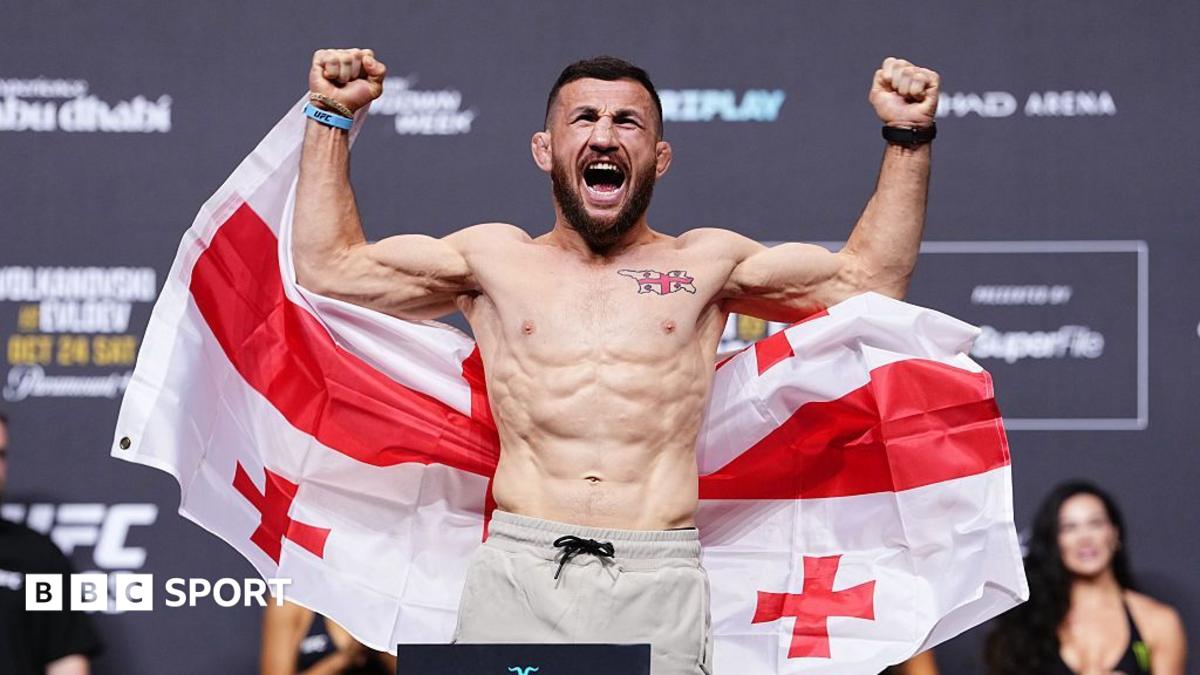
Merab Dvalishvili says he has gained 19lb (1st 5lb) in just five hours after weighing in for his bantamweight title fight against Petr Yan at UFC 333 on Saturday.
The Georgian weighed 135lb (9st 9lb), which was the same as Russian champion Yan, before the pair’s co-main event fight in Abu Dhabi.
Dvalishvili later uploaded a video to Instagram showing the 35-year-old stepping on scales and weighing 154lb (11st 0lb).
“I’ve been drinking water and in only five hours I gain back 19 pounds, that’s what we do, let’s go,” he said.
“Now I’m back drinking and recovering. Now I’m going to start eating. Eat food first, then tomorrow you guys already know who I’m going to eat.”
Fighters typically cut weight by shedding water in the days before a bout, before rehydrating to regain weight – a process that can provide a physical advantage inside the octagon.
The UFC has taken a number of steps to make weight cuts safer over the years, including banning IV drips, which forces fighters to hydrate in a healthier way, and building the Performance Institute, which provides guidance for its athletes from professional health experts.
UFC fighters are recommended to lose no more than 8% of their body weight during fight week.
On fight night they are recommended to stay within 10% of their weight class.
Dvalishvili is aiming to win back the title he lost against two-time champion Yan last December.
During their face-off, the pair engaged in an intense but respectful stare-down.
In the main event, champion Alexander Volkanovski and Movsar Evloev both made weight before their featherweight world title contest.
Australia’s Volkanovski is looking to earn a record ninth win in UFC featherweight title fights against Russia’s Evloev, who is undefeated in 20 bouts.
On the undercard, British flyweight Lone’er Kavanagh takes on Uzbekistan’s Ramazan Temirov.
The 27-year-old Kavanagh is aiming to bounce back from defeat by American Brandon Royval in July.
IN the last six months of her short life, there was one person Amy Jade Winehouse could turn to unreservedly.
Dale Davis, her band leader and confidante, provided her with a shoulder to cry on and a reason for her to break into the infectious laughter that came with her wicked sense of humour.
There was one person legend Amy Winehouse could lean on in her final daysCredit: AlamyDale Davis, 57, was Amy’s band leader and closest confidante from ages 19 to 27Credit: supplied
He was there to give Amy “a cuddle” during her final public outing, and three days later — on the night before she died aged 27 in 2011 — he spent 15 minutes on the phone to her, telling her she was “the best”.
“We were always chatting in those final months,” he says today to mark the 20th anniversary of Amy’s stellar Back To Black album.
“I remember her saying to me, ‘Dale, I’ve just realised that I’ve spent my whole adult life with you’.
“I was with her from when she was 19 to 27. The things I miss about her most are her big grin and that glint in her eyes.”
Dale joined Amy’s band in 2003 as bassist because the original choice was “too expensive” and, as he self-deprecatingly admits, he was “the uglier, cheaper” alternative.
A year later, he became her musical director and remains the keeper of her flame by leading The Amy Winehouse Band on its regular tours of the UK and abroad.
Though he was 17 years her senior, they bonded over a shared love of “hip-hop, soul and Nineties R&B”.
He adds: “We were also the only members of the band who drank Jack Daniel’s — so there was a lot of affinity there. If Amy loved you, no matter who it was, she loved you hard. She always had my back and I always had hers.”
Reaching the 20th anniversary of Back To Black, released on October 27, 2006, is a milestone Dale finds “surreal”.
Amy’s second album, the follow-up to her debut Frank, catapulted the vivacious, naturally talented singer on to the world stage and has sold more than 20million copies (and counting).
It contained raw, personal songs loaded with pathos and humour, such as Rehab, Me & Mr Jones, Tears Dry On Their Own and Love Is A Losing Game, all delivered in deliciously smoky, jazzy tones.
It charted in graphic detail Amy’s turbulent relationship with the love of her life, Blake Fielder-Civil, as well as her battles with drug and alcohol addiction.
“I believe she was the first star of this millennium, of the broadband generation,” maintains Dale.
“She was a most courageous performer and human being. Amy had a massive heart, but it left her open to the highs and the lows.”
To give an example of her inner conflict, Dale vividly recalls being with her on February 10, 2008, when she scooped five Grammy awards in the wake of Back To Black.
“Life was never dull and that night I saw an indication of what she was going through,” he says.
Amy phoned Dale for 15 minutes just hours before she diedCredit: Free for editorial useHe now keeps her memory alive by leading the Amy Winehouse band with members Ade Omotayo, Dale Davis, Nathan Allen and Hawi GondweCredit: PA
Amy could not attend the ceremony in Los Angeles because she’d been denied a visa amid drug and legal issues, but she was hooked up remotely to perform from London’s Riverside Studios.
“When she won her third Grammy, it was just me and her on stage,” continues Dale.
“Everyone else had walked off. I said, ‘Well done, Amy’. And she just said, ‘No, this is s*** because Blake’s not here’.
“While she was winning all those awards, her heart was going through the extreme pain of not being with him. There was no middle ground with Amy, and things like that are so destabilising to your mental health.”
When he considers the Back To Black songs, he says Wake Up Alone was Amy’s favourite, but he singles out a sad track, Love Is A Losing Game, and a funny one, Me & Mr Jones.
There’s an exquisite demo rendition of Love Is A Losing Game on the new, expanded anniversary editions, just Amy’s sublime, soulful voice and the strums of an acoustic guitar.
Dale says: “She was equally comfortable with an orchestra or on her own.
“The great thing about that version is that she delivers the most beautiful performance and then, at the end, she goes, ‘Is that all right?’. That really sums her up.
‘Amy had a massive heart’, said DaleCredit: GettyNext week will see the 20th anniversary of her iconic and most vulnerable album Back to BlackCredit: Getty
“Amy was so bright and so intelligent, but because she spoke so normally, it fooled people.”
Of Me & Mr Jones, with its old-school jazz vibe and jaw-dropping line, ‘What kind of f***ery is this?’, Dale says: “That’s my favourite song on the album. It’s right up my street. It’s got doo-wop. It’s got swing.
“I can imagine the mischievous grin as she’s thinking, ‘Right, I’m going to turn this into a funny old song’.
Also, you can’t play it on the radio. That’s the great thing about Amy — she knew no boundaries.”
Yet Dale senses that the star who burned bright for a fleeting moment “sold herself short in the end”.
“Amy was the most rebellious person I’ve ever come across,” he decides.
In 2004, the year Frank came out, Dale remembers “having breakfast with Nick (Shymansky, her first manager), who said, ‘We’ve got some issues with Amy’. I said, ‘Just leave her be, she’s a punk’.
“She had that spirit which could be destructive. However, the only harm she ever did was to herself.
“At the same time, she was so funny — her observational humour was ridiculous.
“I could always tell something funny was coming when I saw that glint in her eyes.
Back to Black has sold over 20 million copies (and counting)Credit: Not known clear with picture deskThe singer drew inspiration from her turbulent relationship with husband Blake Fielder-CivilCredit: Getty – Contributor
“Had she lived, Amy would have been like Barbra Streisand or Bette Midler — an all-round entertainer.
“I can imagine her having her own TV programme or being a great actress. She even talked about wanting to do some acting.”
When I caught up with Dale this week, he was preparing for last night’s Back To Black 20 show, directed by the album’s producers, Mark Ronson and Salaam Remi, at The Roundhouse in Amy’s London stomping ground of Camden.
Among the singers due to step into her ballet flats at the gig were Baby Rose, Corinne Bailey Rae, FLO, Jessie Reyez, Jorja Smith and Lianne La Havas.
Mention of the venue prompts Dale to cast his mind back to Amy’s final public outing, which took place there on July 20, 2011 — three days before she left us too soon.
Dale was by her side for a showcase by her goddaughter, the singer Dionne Bromfield.
Amy bravely appeared on stage — “dancing and being a good sport” — to support Dionne, but declined to take the mic.
“She was wearing a vest and jacket and looking as well as when I first met her,” says Dale.
“After the show, Amy said, ‘Let’s hang out’. So I spent two hours with her and we chatted so much. Before we left, we went outside and she said, ‘Cuddle me because I’m cold’.
“I spent the last ten minutes holding her. When I look back on that moment, I’m thinking it wasn’t like her because she was never cold.”
Amy was married to Blake Fielder-Civil from 2007 to 2009Credit: PA:Press AssociationBritish soul singer Dionne Bromfield is famously Amy’s honorary goddaughterCredit: Getty
Dale believes Amy’s “eating disorder got her in the end”, a subject of great sadness to him.
He says: “She was never ever big — curvy at most. But I know a comment was made one year and then suddenly all the weight came off. I felt sorry for her.
“It has taken me a long time to realise what eating disorders are.
“I wish I’d had more knowledge so I could have helped.
“Towards the end, her nervous system was getting more and more shocked with the lack of eating.
“And when Blake went to prison, she also stopped sleeping. That had a massive impact on her physical state.”
This brings us to Dale’s phone call with Amy, which started at 11.15pm on July 22, 2011, hours before she died.
Many faced criticism over Amy’s death including father Mitch and mother JanisCredit: Getty – ContributorDale was there to offer Amy ‘a cuddle’ in her final monthsCredit: Redferns
“Even at her funeral service, I ended up right next to the coffin because there was no room for me elsewhere. All those weird things draw me in to make sure that I protect her legacy.”
Dale describes their final conversation: “Amy said, ‘Dale, I’ve had a little bit to drink’. And I said, ‘Well, you don’t sound at all drunk’.
“Then she said, ‘I’ve been watching some old clips of me on YouTube. I CAN sing, can’t I?’. And I just said, ‘Of course you can. You’re the best’.
“I’m so glad that, on her last evening, she could turn round and say that because she was the least arrogant person about her abilities.”
In the wake of Amy’s tragic death, there have been blame games involving various parties — Blake, management, the music industry, the media, her parents.
Mention of this prompts Dale to launch a staunch defence of Amy’s divorced mum and dad, Janis and Mitch.
He says: “I feel so sorry for Janis because when Amy started to get famous, Janis had her own health problems.
“Amy always said her mother was so serene — and then she had to go through her struggles and watch the demise of her daughter.”
Turning to her London cabbie dad, who left the family home when Amy was about ten but became more involved in her life as her career took off, Dale says: “People point the finger at Mitch.
“Me and my dad don’t really get on, but we love each other and are there for each other.
“It was very difficult for someone like Mitch coming back into Amy’s life when she’d become a self-made multimillionaire. It must have been quite hard to try to direct someone when they’ve made it themselves.”
On a more general note, Dale adds: “The industry and everyone else can take steps to do everything they can — but there’s always going to be someone who slips through the net.”
Next up for him is a UK tour with his Amy Winehouse Band, a chance to hear some of that beautiful, rebellious spirit.
“They tried to make me go to rehab but I said no, no, no.”
UK tour details at theamywinehouseband.com. The Back To Black 20 Concert is on BBC Two on Saturday, 9.35pm, and Radio 2, Monday, 7pm. Expanded editions of Back To Black, with unheard demos and a 2007 live show, are out on Friday.
FORGET Santa in Lapland or skiing in France – when winter rolls around you’ll find me sunning myself abroad, trying to find some last-minute warmth to break up the UK’s long, grey months.
Having visited 58 countries as the Deputy Travel Editor, I’ve found some fantastic places that tick all the boxes of a winter sun break, without costing a fortune.
I’ve been to 58 countries – and I always ditch the chilly UK for somewhere hot in winterYou can find some great bargains and get some sun at the same time – if you know where to lookCredit: Alamy
By that, I mean warm weather, direct flights (keeping them under seven hours, for any long-haul flight haters) and some very big bargains when it comes to hotels and beers.
So here are my favourite winter sun spots, some of which aren’t that far – and with hotels from £35 a night.
Marrakech
One of my favourite spots for winter sun that doesn’t break the bank is Morocco.
I’ve explored the Hassan II Mosque of Casablanca, and visited the beaches of Agadir.
But I think the best bargain is found in Marrakech.
Not only is it perfect for some pre-Christmas shopping – I found fantastic dupes of expensive branded candles and curtains in the souks – but you can still get temperatures just above 20C in winter.
Food is cheap too, as you’ll pay just a few pounds for a freshly-made tagine meal.
For an affordable hotel stay, skip the big name chains and go for a local riad – small traditional Moroccan hotels – which you can find for as little as £35 on websites such as Booking.com and Airbnb.
These are usually fantastic locations, and usually with some free mint tea or breakfast thrown in.
Flights are cheap too – Ryanair fly there from £14.99.
We found a deal for a seven-night stay at Aqua Mirage Club from November 26, with return flights from Manchester, for £379pp on Loveholidays.com.
Riads are a great place to stay in Marrakech on a budgetCredit: AlamyYou can pick up some fantastic bargains in the souksCredit: Alamy
Cape Verde
African island, no jet lag and flights under seven hours – enter Cape Verde.
While lots of people head to the island of Sal, I much prefer Boa Vista.
Most of the TUI hotels are right on the beach, with swim-up bars and waterparks.
But leaving the resort is worth it too.
I found white sand beaches like Santa Monica with barely anyone on them, making me feel like I was on a Maldives private island instead.
My favourite was Praia Carlota, where you can lose the days in the hippy Morabeza beach hut with fried fish and local Strela beer.
Sand-boarding, kite-surfing, boat trips; visit in February and you can go whale-watching during humpback mating season too.
We found a deal for a seven-night stay at Hotel Pontao from November 30, with return flights from London Gatwick, for £430pp at On The Beach.
Boa Vista is a quieter alternative to the island of SalCredit: AlamyOr just stay at the hotel’s swim up bars…Credit: PR SUPPLIED
El Gouna
When it comes to Egypt, one of my favourite destinations for winter sun is El Gouna.
Flights there are around 5hr30 which go to Hurghada, with a short transfer.
The gated community means it is extremely safe as only people staying at the hotels can enter, and its still around 25C in December.
Hop on a boat to explore the man-made lagoons, or go on Sunset Desert Safaris, with hiking and stargazing with El Gouna Mountain Goats.
If you don’t mind going further afield, you can even book day trips to Luxor (just expect a very early start).
When it comes to choosing a place to stay, I highly recommend Cook’s Club.
The four-star resort has it all – fantastic restaurant, lagoon-front pool, live DJs, and rooms are super chic.
And seven night stays are as little as £509 each with your flights and breakfast with loveholidays.
We found a deal for a seven-night stay at Doubletree By Hilton Mangroovy El Gouna Resort from December 9, with return flights from London Gatwick, for £379pp at Loveholidays.
El Gouna is built on a man made lagoonCredit: AlamyCook’s Club is affordable and stylish (and has a pool right on the water)Credit: Supplied
Tenerife
If you’re keen not to go much further than Spain for your winter holiday, your best bet is to head to Tenerife which is often considered the warmest of the island (due to its location off the African coastline).
Temperatures are around 22C – not hot but warmer than the UK highs of 9C.
Holidays are a bargain – loveholidays has December seven-night stays for under £200 – but I highly recommend The Ritz-Carlton Tenerife.
The dusty pink building looks like something from a fairytale, complete with beautiful suites and a hidden beach you can get to by funicular.
Seven night holidays here can be found for £797pp with flights and breakfast thrown in.
If you can drag yourself away from the hotel, there are some fantastic outdoor adventures on the island such as whale watching and hiking.
Otherwise get ready for a night out on the town of Playa de las Américas, where you will find the best bars and restaurants.
Try Spain’s cheap chain 100 Montaditos, called the Wetherspoons of Spain where sandwiches are €1 (80p) and beers are €1.50 (£1.29).
We found a deal for a six-night stay at BLUESEA Interpalace from November 15, with return flights from London Stansted, from £349pp atLastminute.com.
The Ritz-Carlton Tenerife is a huge pink hotel that is worth the splurgeCredit: AlamyIt even has a hidden beach for guests to get to by funicularCredit: Alamy
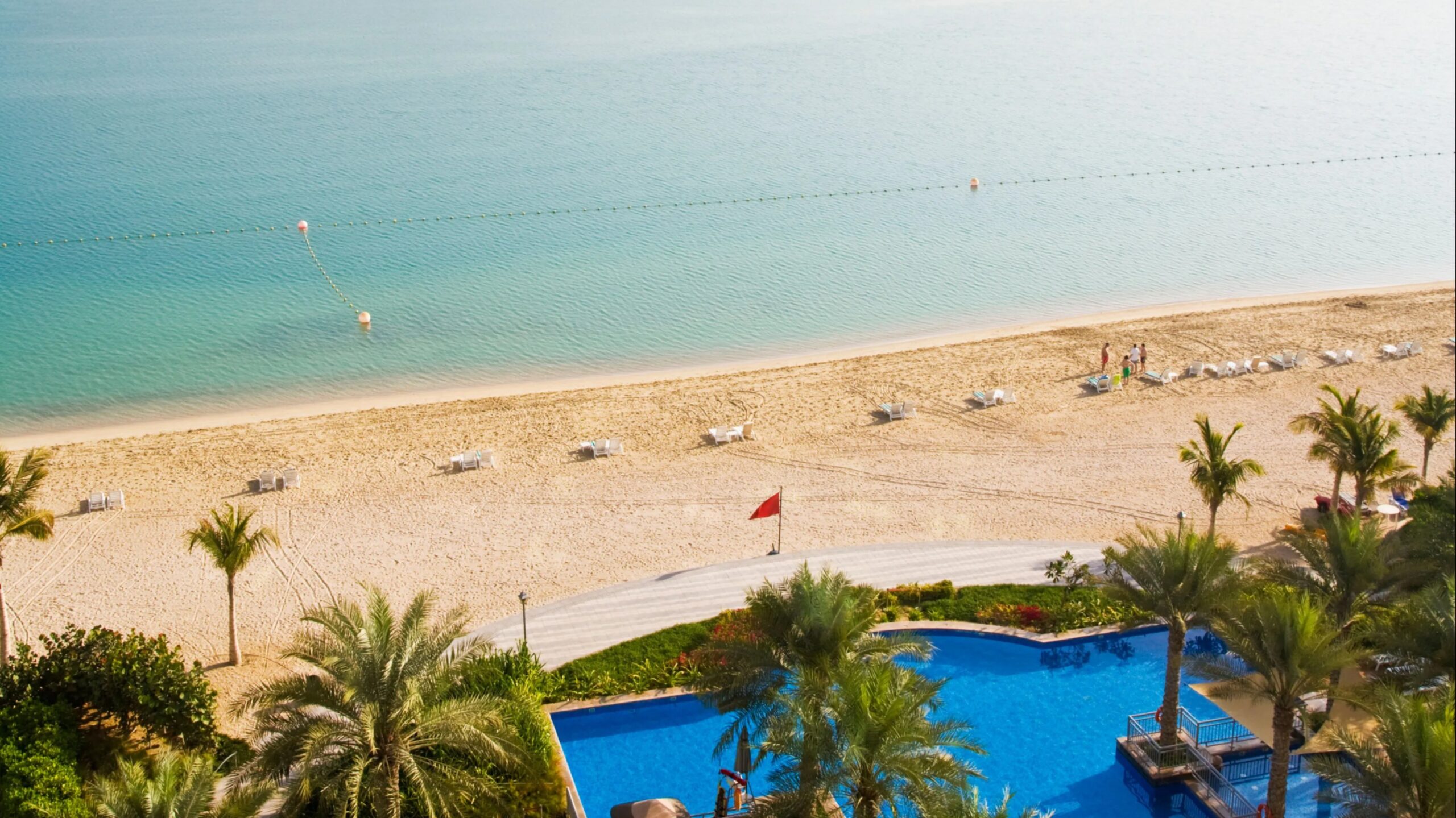
The United Arab Emirates is currently on the safe to travel list, with Emirates still offering daily flights from the UK.
First, the hotels – I was blown away by the Premier Inns here, which are just as cheap as the UK at around £30, but some come with rooftop swimming pools. Yes, really.
Beach clubs can also be done on a budget.
Some, like DRIFT, can cost a little as £30 midweek, which can be used against your food and drink (with Ladies Days costing just £20 instead) while others like Lucky Fish are currently free to visit Monday to Thursday.
And lunch deals let you visit some of the famous restaurants without the price, like Ce La Vie offering a three-course meal for £28 rather than their dinner menu which has £30 dishes alone.
But my favourite place to go was the Grand Souk, where you’ll find breads stuffed with cheese or Nutella for £1.22, or Iranian falooda — a sorbet-like dessert made of thin rice noodles and syrup — for £1.
Return flights from the UK can currently be found for around £500.
We found a deal for a six-night stay at Ibis Styles Dubai Jumeira from November 11, with return flights from London Gatwick, from £867pp with TUI.
Dubai isn’t all expensive skyscrapers and barsCredit: AlamyEven Premier Inn hotels in Dubai have rooftop poolsCredit: Premier Inn
Doha
Similar to Dubai yet often overlooked, Doha makes for a great winter sun destination without too long of a flight.
Flights from the UK are with Qatar Airways – often being named one of the world’s best airlines – and take around 6hr40 (and around £530 return).
It is a great ‘luxury on a budget’ for some royalty without the riyal.
My favourite hotel to go for is The Ned; while not ‘cheap’ it is much cheaper than the one in the UK and feels much fancier than it costs.
As little as £102 a night (compared to London’s £330), it’s retro glamour with gorgeous interiors and an outdoor swimming pool.
If you just want a base, there are also Premier Inn hotels for around £28 a night.
Taxies are cheap, it feels very safe as a woman travelling around and one of the best attractions is affordable – go to the National Museum of Qatar (currently around £5 entry).
Otherwise head straight to the beach clubs – for example, Doha Beach Club is around £12 each (or ladies visit on Tuesday for free). What more could you want?
We found a deal for a seven-night stay at Steigenberger Hotel Doha from January 17, with return flights from London Stansted, from £705pp with On The Beach.
The Ned is luxury on a budget but much cheaper than the London hotelCredit: JOE CHUA AGDEPPAYou can also find cheap beach clubs in Doha tooCredit: Alamy
IT IS two years to the day since Liam Payne’s family – and his millions of fans – had their hearts broken when the pop star plunged to his death from a third-floor balcony at the Casa Sur Hotel in Buenos Aires.
Now, a bombshell update has ripped through the investigation. Argentinian businessman Rogelio ‘Roger’ Nores, 38, once facing the terrifying prospect of prison for negligent homicide, has been officially cleared of all criminal liability. Two hotel workers have also walked free.
It has been almost two years since Liam Payne plunged from a third-floor balcony at a hotel in Buenos AiresCredit: Shutterstock EditorialLiam’s close friend Rogelio ‘Roger’ Nores, left, with the former One Direction star in the days leading up to his deathCredit: Unknown
Meanwhile, two defendants charged with selling cocaine to Liam await their fate, but case sources now think a full trial over his death will never take place.
For Liam’s grieving family and millions of devoted fans, Roger being cleared does not bring closure.
It simply shines a spotlight on the agonising black holes still in the official narrative as a UK inquest into Liam’s death is still ongoing, despite a series of setbacks.
Here are the chilling questions that still demand answers:
Who really delivered the fatal dose?
Liam and Argentinian waiter Braian Nahuel Paiz, who is accused of supplying drugs to the pop star
While Nores and two hotel workers, Gilda Martin and Esteban Grassi, have had manslaughter charges dropped, the drug trail hasn’t gone cold. Toxicology reports confirmed a lethal cocktail of “alcohol, cocaine, and a prescription antidepressant” in Liam’s system.
Two men, Ezequiel Pereya, 22, and Braian Paiz, 26, are currently languishing in an Argentine jail awaiting trial, accused of selling Liam the narcotics.
Braian Paiz was working at a high end restaurant in Buenos Aires when he first met the One Direction singer on October 2, 2024.
He has claimed as Liam was leaving he asked the starstruck waiter if he had any cocaine and the pair exchanged Instagram handles.
Over a week later Liam, who was still in the Argentine capital, contacted him to ask for drugs.
Braian admitted in his witness statement: “He ended up convincing me to get [drugs] for him. And, in all honesty, I didn’t want to miss the opportunity to see him again. That’s why I agreed to do it.”
In a later newspaper interview, he said: “I’ve suffered so much psychological damage due to all this and the social condemnation, and of course I’m worried now I might be in prison for many years. But I don’t regret meeting Liam. I was a fan.”
But it has become clear Liam was getting drugs from many sources, so the question remains: how did a global superstar, supposedly in a secure VIP suite, become a target for local dealers? Was there a wider network exploiting vulnerable guests at the Casa Sur?
When will the trial of the two accused take place?
Floral tributes to Liam in his hometown of WolverhamptonCredit: PA
The two defendants charged with selling cocaine to Liam in the lead up to his death are still awaiting trial.
Restaurant waiter Braian Nahuel Paiz, 26, and hotel worker Ezequiel David Pereyra, 22, served over one year in police precincts and in a federal prison until they were released in March.
The Sun understands that there have been negotiations for a plea deal for the two young men.
That could mean that a full trial over Liam’s death never takes place.
The pair are accused of selling drugs to Liam but if the plea deal goes ahead that charge could be reduced to supply of drugs for free, which carries a maximum sentence of six months.
According to legal experts, given the pair have no prior criminal convictions, the sentence would already be covered by time served.
Pereyra’s defense attorney, Augusto Maria Cassiau, told The New York Post: “We would be inclined to accept the offer.”
What part will Cheryl play in the ongoing investigation?
Cheryl has been officially named as a co-administrator of Liam’s massive estateCredit: PA:Press Association
Since Liam tragically passed away without leaving a will, his entire £25.7 million estate will eventually pass to his young son.
In May 2025, Cheryl was officially named as a co-administrator of his massive estate alongside attorney Richard Mark Bray.
However, her power is strictly administrative. She and Bray can “manage the money” but cannot distribute it without further legal authority.
Shortly after Liam’s passing, Cheryl issued a searing statement condemning the “abhorrent reports and media exploitation” surrounding his death, begging for Liam to be given “the little dignity he has left”.
Cheryl is a plaintiff, on behalf of their son Bear, in the case against the waiter and the hotel worker, who are charged with supplying Liam drugs.
The Sun understands that she could ultimately have the last say over any plea deal agreed with the Argentine authorities – but she, or her lawyers, have so far not objected to the rulings in Roger’s favour.
Now as the inquest stalls, how much longer will Cheryl and Bear have to wait for the final legal chapter to close?
What happened on the balcony?
An aerial view of the poolside area of the hotel where Liam diedCredit: AFP
The most haunting mystery of all. We know Liam fell from the third floor of the hotel, where he was staying in Room 10.
But the moments leading up to that fatal plunge are still shrouded in silence. The UK coroner, Crispin Butler, has been desperately chasing “eyewitness statements” from Argentina since late 2025.
Following his death, it was reported that Liam jumped off his balcony, perhaps trying to reach the swimming pool below that it was claimed he had been denied access to because of his intoxicated state.
But it later became clear he had fallen backwards, possibly after falling unconscious, causing unsurvivable injuries to his head and dying instantly.
The toxicology report read: “Due to the position in which the body was found and the injuries from the fall, it is presumed that Payne did not adopt a reflexive posture to protect himself and may have fallen in a state of semi or total unconsciousness.”
After forensic experts studied the singer’s hands, they did not find any defensive injuries, which led them to believe that “the injuries on the body were vital and produced at the same time, and that no injuries were observed that could suggest the intervention of third parties”.
Are there witnesses who saw the build-up? Were there warning signs ignored by hotel management before he stepped onto the balcony? And why did they let him back into his room?
Why are the Argentine authorities not working more closely with their UK counterparts?
For Liam’s family, the wait for justice is becoming a cruel joke.
The UK inquest has been delayed repeatedly, first pushed to May 2026, and now stalled again because British coroners are still waiting on fully translated case files and evidence disclosures from the Foreign, Commonwealth and Development Office.
Coroner Crispin Butler told a pre-inquest hearing there had been no updates since a last review in January 2025, when he said he would seek full reports and eyewitness statements before a final inquest.
He added: “We have had no further disclosure of evidence from Argentina via the Foreign, Commonwealth and Development Office.”
It has been 24 months. Why are the Argentine authorities dragging their heels in handing over the final, unredacted timeline?
IT’S easy to get into the festive spirit at a Christmas market and they’re even better on the cheap.
In one city that Brits can reach in three hours for less than £30, hotels are £15 per night, and mulled wine at festive stalls is as little as 82p.
Sibiu Christmas has stalls, rides and mulled wine for less than £1Credit: AlamySibiu can be reached from the UK with direct flights that take 3 hoursCredit: Alamy
Sibiu in Romania is the ideal city for a festive break and it was even named as the 18th most underrated destination by Time Out last year.
Not to mention it’s cheap, eurochange has compared the prices of mulled wine across 55 Christmasmarkets across Europe, and Sibiu came out on top.
Sign up for the Travel newsletter
Thank you!
A warm cup of infused red wine can be bought from 82p which is hugely cheaper than in the UK, where it can more than £7 a cup.
And you’ll be able to buy it soon too, as its Sibiu Christmas Market is set to open on November 13 all the way through until January 3, 2027.
Held in the Grand Square, the Christmas Market is completely free to enter.
There’s plenty to do, from hopping on the Ferris Wheel, to visiting Santa in his workshop, ice skating, and relaxing at the Chalet where festive drinks (including mulled wine) are served.
On certain evenings, the Chalet will even turn into a party spot with a live DJ.
One visitor described is as ‘magical’ and a ‘photographer’s playground’.
Outside of the Christmas market, there’s lots to see like The Bridge of Lies which has lots of legends and myths behind it – and when lit up at night, can make for a great picture spot too.
Another must-see spot in Sibiu is Muzeul Astra, the largest open-air museum in Europe.
The Christmas market in Sibiu will open in early NovemberCredit: Alamy
Talking to Sun Travel, one Wizz Air flight attendant explained why Sibiu is a must-visit destination.
Niko said: “I’ve been to Sibiu in Romania several times already.
“You have the mountains, so there’s lots of nature, the food is amazing, everything is cheap and the people are so friendly.
“And you should try Papanasi. It’s a Romanian dessert that’s like a doughnut. It tastes amazing, but not good if you’re on a diet.”
It’s not just mulled wine in Sibiu that’s affordable – the price of a local pint of beer is less than £2 on average, according to Wise.
The price of a meal can be bought for less than £5 and coffee on average is also less than £2.
Brits can fly directly from London Luton to Sibiu three times a week with Wizz Air and one-way fares start from £26.99.
On Booking.com, one-night stays during November in Sibiu can cost less than £30 per night – or £15 each.
The Old Town is filled with pretty cafes and restaurantsCredit: Alamy
Here are the cheapest place for mulled wine in 2026…
Here are eurochange’s cheapest places for mulled once – and the average price of a cup…
Sibiu, Romania – 82p
Brașov, Romania – £1.63
Craiova, Romania – £1.63
Sofia, Bulgaria – £1.76
Olomouc, Czechia – £1.77
Brno, Czechia – £1.77
Gothenburg (Christmas at Liseberg), Sweden – £1.89
The breathtaking island is about a four-hour flight from the UK and boasts heaps of history, culture, TV links and a new hotel that is going to be a hit with rock fans
(Image: Getty Images)
There are few better places where you can move effortlessly between sunshine, sea and centuries of history than the stunning island of Malta. Friends and family had recommended it to me as the perfect holiday for a mix of sightseeing and relaxation, and it certainly delivered.
As a small island, Malta packs a punch, offering tourists everything they want right on their doorstep. There are few bigger mood killers than a day tour entailing hours and hours cooped up in the car, but Malta’s size means you can hop from place to place in no time at all.
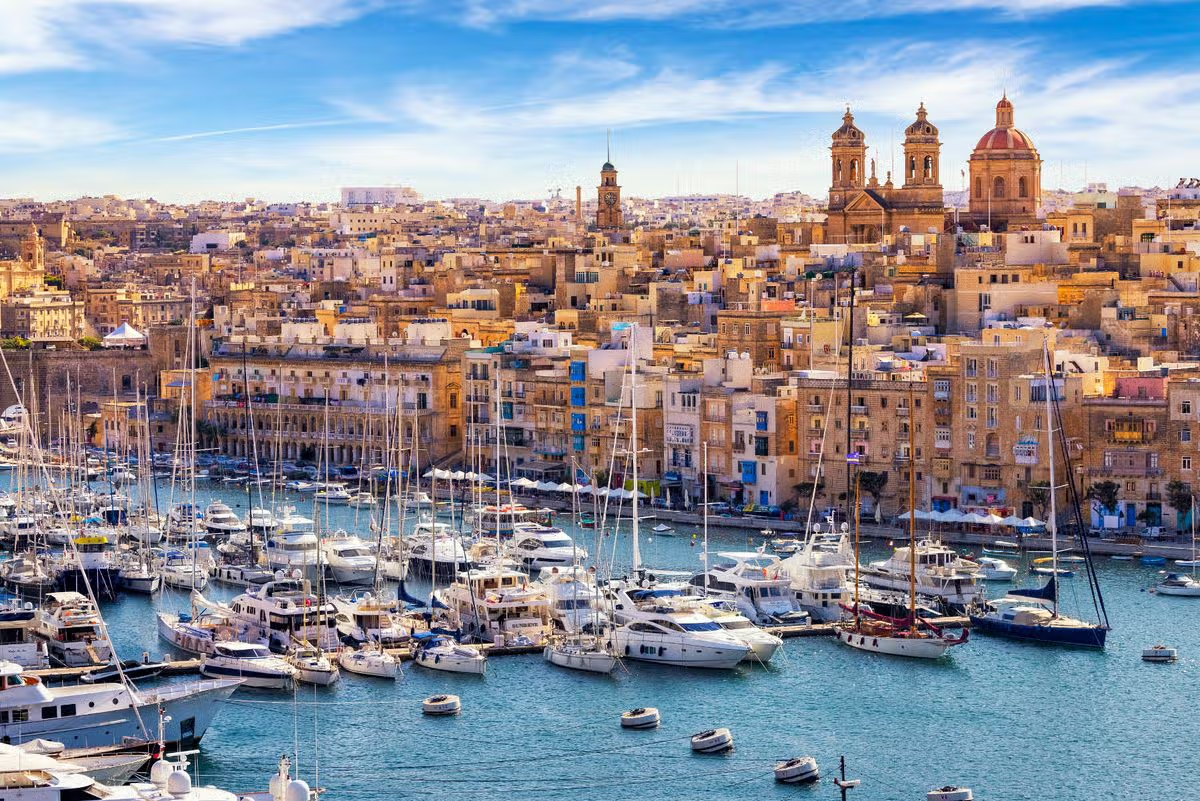
You can easily get a boat to Gozo or the Blue Lagoon in half a day, drink in the incredible sights of Malta’s shoreline, and be back in time to hit the pool before dinner. Meanwhile, Valletta, the EU’s smallest capital, is easily accessible by car or bus, and you need only a few hours to soak up the famous yellow architecture, pretty alleyways and sea views.
The city blows you away with its vivid colours as you arrive. Valletta may be modest in size, but it is extraordinary to look at, boasting a rich history closely connected to the UK. It played a major role in World War Two and became a favourite destination of Queen Elizabeth II and Prince Philip. Even today, a British influence is visible on the streets, with our famous red postboxes and iconic Victorian architecture everywhere you go.
Despite being only 0.3 square miles, Valletta offers plenty for a day trip; it boasts 320 historic sites, from the famous St John’s Co-Cathedral to Fort St Elmo. Not only that, it has been the backdrop for several hit Hollywood films, including Assassin’s Creed and Napoleon, making the city a treat for film buffs. At every turn, you are greeted by grand churches and colourful balconies, and all with a jaw-dropping coastline backdrop. A mere few hours was the perfect amount of time to explore before settling down with an Aperol Spritz.
Just a few miles along one of Malta’s most vibrant stretches of coastline lies St Julian’s, a perfect spot for those who like to swim and sunbathe during the day and head out at night. If Valletta is Malta’s historic beating heart, St Julian’s is its party spirit. As it gets dark, restaurants spill onto terraces and the waterfront fills up for sunset drinks.
Nestled nearby in the beautiful St George’s Bay is the Hard Rock Hotel Malta, which opened its doors this summer and could quickly become Malta’s go-to destination. Boasting stunning panoramic sea views, a state-of-the-art gym, a luxury spa area, and eleven (that’s right) swimming pools, it has truly thought of everything. Forgotten your sunscreen? That’s okay, because the hotel even has its own huge shopping centre and supermarket, with everything you could possibly need just a few steps from your room.
The swim-up bar at Hard Rock Hotel was also a particular highlight; I loved basking in the water with a chilled glass of wine while people-watching down onto the beach below. It made the lazy afternoons flow perfectly into the evenings, with sunbathing by the water giving way to sunset drinks on the terrace as guests soaked up the views at all points of the day.
Inside, music memorabilia gave a personal touch, while the hotel’s luxury amenities almost tempt you to forgo exploring. The hotel also boasts a wide range of stylish restaurants and bars serving impeccable food and cocktails from around the world. The experience could be a little overwhelming, but as someone who typically prefers a smaller, boutique stay, I loved the convenience that the Hard Rock Hotel offers when you have only a few days to enjoy. The spacious rooms were also gorgeous with sea-themed decor and a large balcony, and the best part is you’re guaranteed a sea view, with both sides of the hotel offering a stunning glimpse at the Maltese coastline.
If you do want to venture a little further afield for dinner, Cristiano Ronaldo’s restaurant TATEL is a must. Expect beautiful views of the bay’s sparkling waters and a menu that served up some seriously delicious fare (don’t miss out on the iconic Basque Cheesecake).
That’s why Hard Rock Hotel’s location is ideal. The comfort, convenience and style summed up my stay in Malta – everything you need is right in front of you. Exploring doesn’t have to be an ordeal when a morning in ancient streets can be quickly followed by a slow afternoon by a gorgeous pool. You have the beach, the sights, delicious food and drinks all at your fingertips. After a day of sightseeing, returning to the hotel and settling down for a terrace drink felt like part of the holiday rather than a break from it.
Travellers looking for a cost-effective and peaceful Mediterranean escape that offers more than beaches would do a lot worse than enjoy Malta’s ideal combination of history, culture, food and contemporary island life right on your hotel doorstep.
Book it
Rooms at the Hard Rock Hotel Malta start from £210 a night, based on two adults sharing a Superior Room. Book at hotel.hardrock.com/malta.
Rail minister Lord Hendy said: “Manchester Airport is a vital transport hub and this £115m investment from government will deliver more reliable services, increase capacity, and improve connections for the millions of passengers who use the station every year.
“This is the sort of improvement Great British Railways will be designed to deliver.
“By bringing track and train closer together under public ownership, we can take a more joined-up approach to investing in the railway, improving performance, putting passengers at the heart of every decision and growing the economy in the North.”
The £115m investment will be delivered by Network Rail and contractor Kier, and is expected to be completed sometime in 2028.
Passengers will face travel disruption as the programme gets underway.
Network Rail senior sponsor, Simon Daly, praised the improvement plan and apologised for any disruptions it may cause.
Daly said: “Manchester Airport station plays a vital role in connecting people across the country so these improvements will create more capacity for passengers, allow longer trains to serve the station and improve the reliability of services for years to come.
“The station closure on 6 December is an important first step in delivering these benefits. We recognise that any disruption is inconvenient and have worked closely with our partners to put plans in place, so passengers are kept on the move.”
The ex-HGV driver left the UK with his family to interrail and now works just 10 hours a week
Aimee Bedford, 38, and Lee Bodell, 47, sold their house and all their belongings in July 2026(Image: Aimee Bedford/SWNS)
A former “workaholic” ditched the UK with his family to interrail Europe – and is funding it by working just 10 hours a week selling solar panels on eBay. Lee Bodell, 47, hadn’t taken a sick day in eight years from his job working 50-hours a week as a HGV driver when the pandemic forced him to spend time off at home.
The dad-of-four said it completely changed his mindset and he quit his job and Lee and his partner Aimee Bedford, 39, sold their house and all their belongings in July 2026 and flew to Paris in September. Along with daughters Matilda-May, 10, and Mila, nine, they have since visited seven countries in just three weeks, spending £1,800 on 60-day continuous first-class train tickets that allow them to travel across the continent.
By November, when their tickets expire, they plan to visit as many European countries as possible before heading to Thailand to spend Christmas and New Year. In the future, they hope to settle somewhere abroad but plan to “see where life” takes them.
They are funding their travels through Lee’s remote job selling solar panels for mobile homes on eBay and his own website, which he spends just 10 hours a week doing, making between £500 and £1,000 a week. The family reckon they have spent around £6,000 in total so far, including the Interrail tickets, but once they fly to Southeast Asia, they plan to budget around £1,500 per month.
Lee, a former HGV driver from Birkenhead, Merseyside, says: “What first triggered it off was during Covid, I was placed on furlough and was off work for 10 weeks. I was always a workaholic and never missed a day off work in eight years being sick and I was constantly doing overtime.
“Spending 10 weeks at home with the family completely changed my mind set on life and I thought ‘I want to do this full-time’. I started thinking about ideas and online businesses and stuff like that.
“I’ve built it up over the past few years. It’s mostly buying and selling on eBay and Amazon and I have my own Shopify store. It should give us enough income to keep us travelling and even settle down somewhere in the future.”
In May 2025, the couple decided to see if running Lee’s business abroad was possible and hired out a villa in Cyprus for 10 days to “test the waters”. On their return home, they put their four-bed home up for sale, and it sold in July 2026 for £330,000, leaving them with £140,000 in equity.
Mum Aimee, who used to work as a family support worker at a primary school prior to their travels, says: “We set a couple of grand aside from the house sale and Lee’s wages top that up, with some savings as well. The money that was made from selling our belongings and cars has gone towards the trip.
“We’ve invested the rest of the house money and hope to earn off that as well. We were spending with a mortgage, bills, days out, running the house and cars with four children around £3,000 to £4,000 a month.
“Obviously we’ve been travelling for one month and to get set up it’s 100% cheaper to be doing what we’re doing at the moment. We knew it would be more expensive in Europe and at the end of it when we get to Southeast Asia we will easily be living on £2,000 per month all in.”
Jetting off to Paris in September, the family have since visited the Netherlands, Austria, Germany, Switzerland, Belgium and Italy. “We’d reached the point where we really felt like we just existing rather than living,” Aimee says.
“We had jobs and the kids were attending school all day long and we were lucky if we had two hours with them at the end of the day. We wanted more time to experience life together. We came away with three suitcases”.
Daughters Matilda-May and Mila have been de-registered from school and despite being “initially sad” to leave behind family and friends, are settling into life on the move. “I think we’re deliberately choosing to give them these experiences, and I think we want them to learn through travel rather than just recreating school at the kitchen table if you like,” Aimee says.
“They do enjoy learning but we’re not shoving it in their faces as it’s very early days. I think personally I’d be ok with them not attending school for at least two years.
“But that can change and we’re led by them. If they want to learn more and there are other subjects they are interested in, we will make it happen, but that will be online.
“We’re not planning on sending them to international schools. It’s definitely sparked curiosity and they’re forever asking questions so as long as that continues, we’ll be happy.”
Despite not having a set budget, the family choose to stay outside of tourist hotspots and city centres and instead travel in to see the sights, keeping costs low. “We don’t keep tabs on our spending but also equally we will go shopping for food,” Aimee says.
“We’ve been staying at a Eurocamp in Italy and have been shopping at Lidl. We’re very clear about it not being a holiday as well. We do have to make decisions about money like not eating out every night.
“It’s about being mindful and the things we want to splurge on are experiences. Travelling on a gondola in Venice cost a fortune but we’ll eat in for two days because of that. We’re living life and taking the hit.”
The couple’s eldest two children Billy, 18, and Lyla, 17, chose to stay at home with family but have flown out with Aimee’s sister Katie, 37, to celebrate Aimee’s 39th birthday in Italy. They hope to eventually settle outside the UK, but are not sure where that will be yet.
“We’ll see where life takes us,” Aimee says. “The beauty of being able to travel is we might find somewhere and it might be our forever home.”
Sharing their decision to ditch the UK online, they want to “inspire” other families to make the leap. You can follow Aimee and Lee on TikTok @the.bodells and Instagram @the_bodells.
Yemen’s Saudi-backed government forces claim to have killed hundreds of Houthi fighters as they attempt to retake swathes of lost territory. The Houthis said they targeted an Aramco facility in Riyadh, although Saudi authorities have not confirmed the strike.
Government forces close a key crossing connecting Houthi-held al-Houban to government-held Taiz city.
Published On 3 Oct 20263 Oct 2026
Yemen’s internationally recognised government forces have carried out nearly 500 military operations, killing or wounding 1,540 Houthi rebels in the past 24 hours, according to the army.
Warplanes, drones, artillery, missiles and rocket launchers were used to target Houthi positions in various parts of Yemen, military spokesman Colonel Majed Abdullah al-Nazili said on Friday evening.
Recommended Stories
list of 3 itemsend of list
Most of the casualties came in the governorate of Taiz where the operations halted the Houthi advance, al-Nazili said. The government-held city of Taiz has become a focal point of the renewed fighting.
The army spokesman did not mention any casualties among government forces.
Key border crossing closed
On Saturday, the army’s media official Ammar al-Sami’i told Al Jazeera that the government had closed the al-Houban crossing in Taiz.
The crossing had previously been closed for nine years and was later reopened to civilians in 2024 for “humanitarian reasons”, Sami’i said, as the road is one of Yemen’s most important connections between territory held by the opposing sides. It connects Houthi-held al-Houban to government-held Taiz city.
Sami’i said security reasons are behind the closure, following an attempt by the Houthis to infiltrate Taiz via the road, attacks in the vicinity and a general military buildup.
A fragile truce struck between the government and the Houthis in 2022 collapsed in July this year, and fighting in Yemen has escalated significantly since then.
In mid-September, the Houthis swept across parts of western Yemen, seizing the port city of Mocha and key strategic islands in the Bab al-Mandeb strait.
Since then, anti-Houthi forces have largely stabilised the front lines.
Yemen has been embroiled in civil war since the Houthis seized the capital of Sanaa in 2014, forcing the internationally recognised government to retreat to Aden.
Nigerian dancer Benjamin Daniel Gabriel is trying to dance for 168 hours straight. He’s taking on the seven-day challenge in Lagos in a bid to set a Guinness World Record and put African dance on the global stage.
Netflix and Saudi powerbroker Turki Alalshikh’s fight announcement was striking for who it included – and who it did not. The event was presented as a collaboration involving Alalshikh’s The Ring and White.
There was no mention of Matchroom’s Eddie Hearn, who has promoted Joshua throughout his professional career, or Queensberry’s Frank Warren, Fury’s long-time promoter.
White’s involvement was not entirely unexpected.
The Zuffa Boxing promoter has been saying for weeks he would be involved in Fury-Joshua.
Hearn has been equally adamant he would not. After Thursday’s announcement, Hearn said Joshua’s contract specifically prevented White and American sports entertainment company TKO from having a promotional role, claiming Netflix had not been made aware of that provision.
Hearn said there had been breaches of the agreement which needed to be resolved and cast doubt on whether Wednesday’s news conference would go ahead.
Fury says a similar restriction originally appeared in his own contract but was removed because he wanted White involved.
Warren has taken a more pragmatic position. Speaking to BBC Sport before the latest dispute escalated, he said his understanding was White had helped secure the Netflix deal and compromises had been necessary to get the fight made.
On Saturday, White was generally non-committal on the future of the contest but much clearer in his criticism of Hearn. “The guy who is supposed to be helping the fight has been hurting the fight,” White said. “He hasn’t done the fight any favours.”
Big Brother continues to be plunged into chaos with explosive rows almost daily
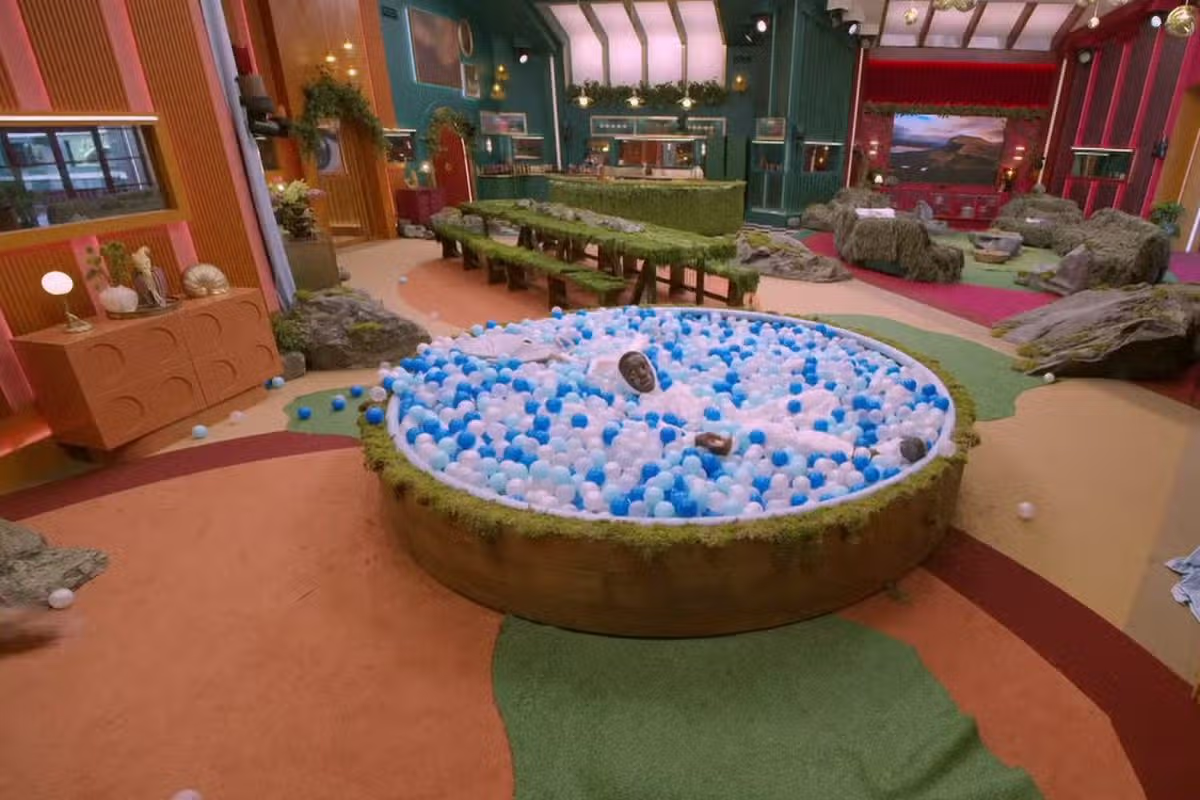
Big Brother viewers have been distracted by a background detail as the chaos continues (Image: ITV)
ITV’s Big Brother has certainly been delivering plenty of drama and chaos since it launched earlier this month, from explosive rows to clear divides and feuds.
Just last night (September 24) yet another row broke out as Rochelle and Johanne went head to head following concerns over uncooked chicken.
Wanting to cook her chicken further, Rochelle hit back at Johanne to say this would be against the rules for this week’s shopping task.
Rochelle also hit back at Johanne before she was called into the Diary Room and warned against making “threats to violence”.
But with all the chaos to keep viewers entertained, fans cannot help but be distracted with one background detail, which they say continues to make them feel sick.
That detail is the state of the house, with housemates leaving clutter in each room. Taking to Facebook, one person wrote: “How can BB not sit there and punish them all for the living conditions of the house.
“Ok they cleaned ABIT last night but my god it’s a squat, and putting it on TV is embarrassing. How can adults not know how to clean up and make there home clean. Which it is now there home it’s madness.”
One person replied: “There should be house rules and that be part of one”, as another branded it as “disgusting”. A third added: “I don’t understand how they can relax and be comfortable and eat and sleep in such squalor.” A fourth echoed: “Totally agree, I keep getting distracted by the absolute state of the bedroom, I mean it’s disgusting.”
They then continued: “When Big Brother said last night the punishment for talking about nominations would be to clean the house I thought thank God for that . It should be part of the rules to keep it half decent at least !!”
A fifth fumed: “Should be made to tidy bedroom and make beds. Hang clothes in wardrobes”, as another penned: “Didn’t they normally have to clean every now and then back in the day.”
The living conditions were also picked up on The Group Chat spin off show when hosts GK Barry and Kate Lawler took a secret trip to the house.
It’s not just viewers though that are appearing to struggle with the messy conditions, with housemate Rochelle often seen in tears over the lack of cleaning.
Earlier this week she was seen crying to Big Brother needing a vacuum cleaner, with last night’s instalment saw her raising concerns over the mess in the kitchen.
The concerns come as Pauline and Chelsey face the live eviction tonight (September 25) with only one housemate being forced to say their goodbyes.
Big Brother continues tonight at 9pm on ITV2 and ITVX
Chelsey and Pauline are both at risk of being sent packing and according to the bookies, the odds “do not look good” for one of the housemates.
Bookmaker Coral makes Chelsey 1-20 to be evicted from the Big Brother house this evening. Those odds indicate there is a 95% chance she will lose the public vote. Pauline is 8-1 to depart.
Coral’s John Hill: “The odds do not look good for Chelsey. We think there is a 95% chance she will be evicted this evening, making her one of the shortest-priced contestants in history in our Big Brother eviction betting.”
Pauline had the most votes with six housemates nominating her; Chelsey, Charlotte, Omar, Frankie, Rochelle and Philip and Sam, Harry, Pauline, Johanne and Rob nominated Chelsey, leaving her with five votes.
Millie became the first housemate to be evicted from this year’s series last Friday (September 18) after facing a public vote alongside fellow housemates Pauline and Rochelle.
Speaking after her eviction, Millie admitted she was surprised by the result, telling presenters AJ and Will: “I am actually quite shocked, I’m not going to lie but do you know what, I had the best time and I love absolutely everyone in there.”
She added: “I could hear the reaction from out here, and Rochelle doesn’t want to be in there. It’s a mix of everything, but I’ve made friends for life in there. So I’m happy.”
Since her exit, Millie has appeared on spin-off show Big Brother: The Group Chat, where she revealed her very honest opinion housemates Omar and Rhianna’s romance.
When hosts GK Barry and Kate Lawler asked Millie if she was a fan of the pair, she instantly replied: “No, I’m not.” She was then asked if she thought their romance was for convenience as there was no one else in the house.
She said: “100%. Number one, [Rhianna] she’s a very boring person herself. And I think the only way she knows she’ll get kept in is if she hooks up with someone. I genuinely think that’s what it is.”
Kate then asked if Rhianna was playing a game with Omar and Millie replied: “She is playing it 100% because she is not interested in Omar at all. When I was watching and I watched them kissing under the covers, I was like, ‘Sorry, what? Make it make sense’.”
Omar and Rhianna are not the only housemates sparking up a romance in the house. Nominated housemate Chelsey has also been getting to know Lynx leaving fans moaning “This is not Love Island“.
Big Brother continues tonight on ITV2 and ITVX at 9pm