hotspot

‘We visited Brit holiday hotspot and found bars and strip empty – we can’t wait to return’

Mark and Judy opted to visit the hotspot off-season and could be seen enjoying a leisurely stroll through the main strip “days before the tourists arrive”, but the destination could face a struggle this summer

Two sun-seeking Brits who visited a holiday hotspot facing a decline in tourism have remarked that they’d “return in an instant”. Mark and Judy were recently blown away by the peaceful, crowd-free scenes greeting them in the eastern Cypriot resort town of Protaras.

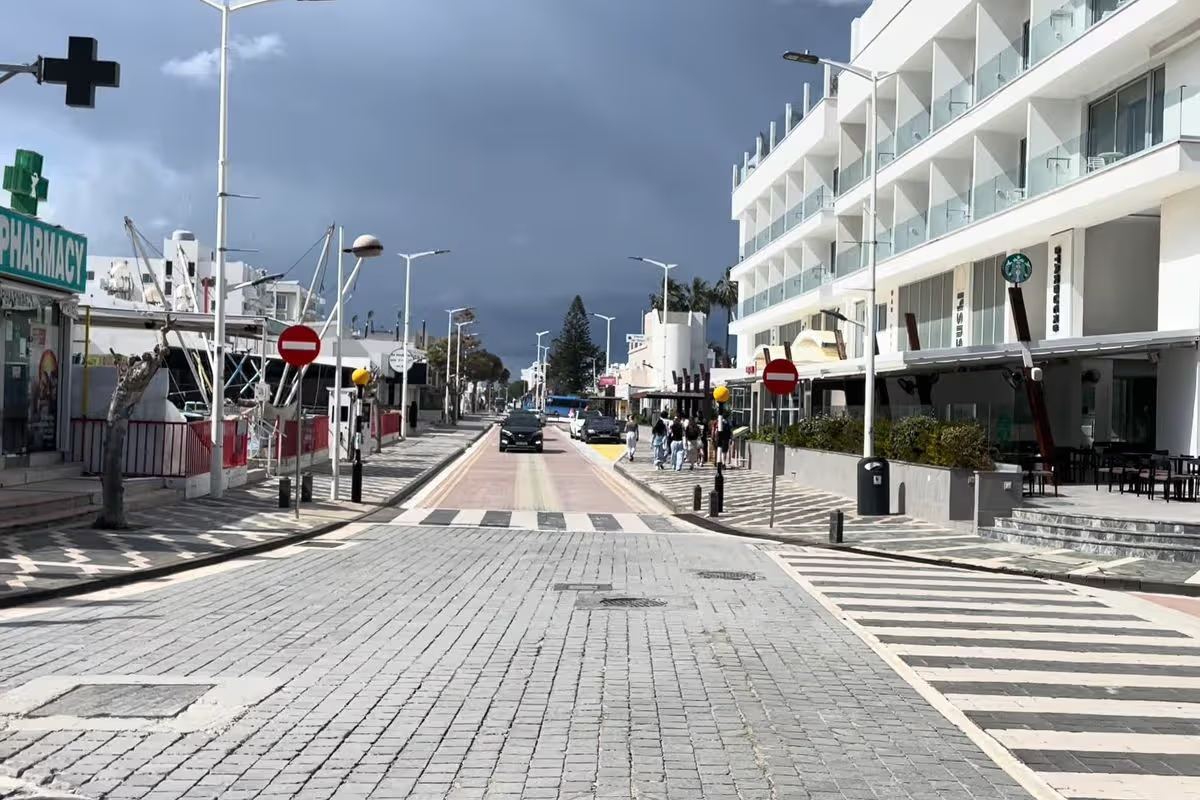
Protaras is known for its crystalline waters, breathtaking beaches and booming nightlife, being just a short, 17-minute drive from the premier European party capital of Ayia Napa. Mark and Judy opted to visit the hotspot off-season and could be seen enjoying a leisurely stroll through the main strip “days before the tourists arrive”.

In a recent vlog for their YouTube channel, Gypsy Souls, they kicked off proceedings by mentioning that local businesses were starting to “open up for the season”, with Mark remarking that they were “coming out of hibernation”. Setting off in search of a drink to beat the heat, the pair departed from their location near a fountain and a prominent Protaras sign.

Judy gave viewers a lay of the land, pointing out Easter egg statues and highlighting the nearby Capo Bay Hotel and the route to the stunning Fig Tree beach. As they made their way down the street, Judy noted that the businesses in sight were “quite closed”, but they detected the welcoming aroma of food and heard “tunes thumping”.

Hotel bookings to the country have fallen 40% after the recent conflict in Iran, but the couple said the emptiness they witnessed was simply down to it being off-peak.

Judy went on to explain that their viewers had recommended some bars to them. But, seemingly highlighting a downside to off-season travel, Judy sadly pointed out that some weren’t yet open. Not to be disheartened, though, she noted that some still were, specifically the Greenery.

Once they reached the end of the road, Mark and Judy turned around and headed back, drawing the viewers’ attention to more closed businesses on the other side of the street. Judy said: “We’re hoping that by the time we go, some of these will start to open. So, as we come into the end of our time here, hopefully, they should all start to open, and you’ll be able to see the transformations.”

Mark and Judy eventually found their way to the Greenery, where Mark enjoyed a pint and they shared a kebab and chips. Summing up their off-season experience, they told the Mirror: “We had a wonderful holiday and would return in an instant.” As Cyprus prepares for the looming holiday season, however, reports indicate that many tourists will be avoiding the Mediterranean island this year.

Hotel bookings are reportedly down by 40% as US and Israeli-led military action in Iran continues. As part of the so-called Operation Epic Fury, the two countries launched a bombing campaign against the Middle Eastern nation on February 28, with the conflict still ongoing.

In response, Iran launched widespread retaliatory strikes on its Gulf neighbours and blocked passage through the Strait of Hormuz, a key shipping lane for 20 per cent of the world’s oil and liquefied natural gas (LNG). Earlier this month, a pro-Iranian militia launched a drone attack on RAF Akrotiri, a British base in Cyprus.

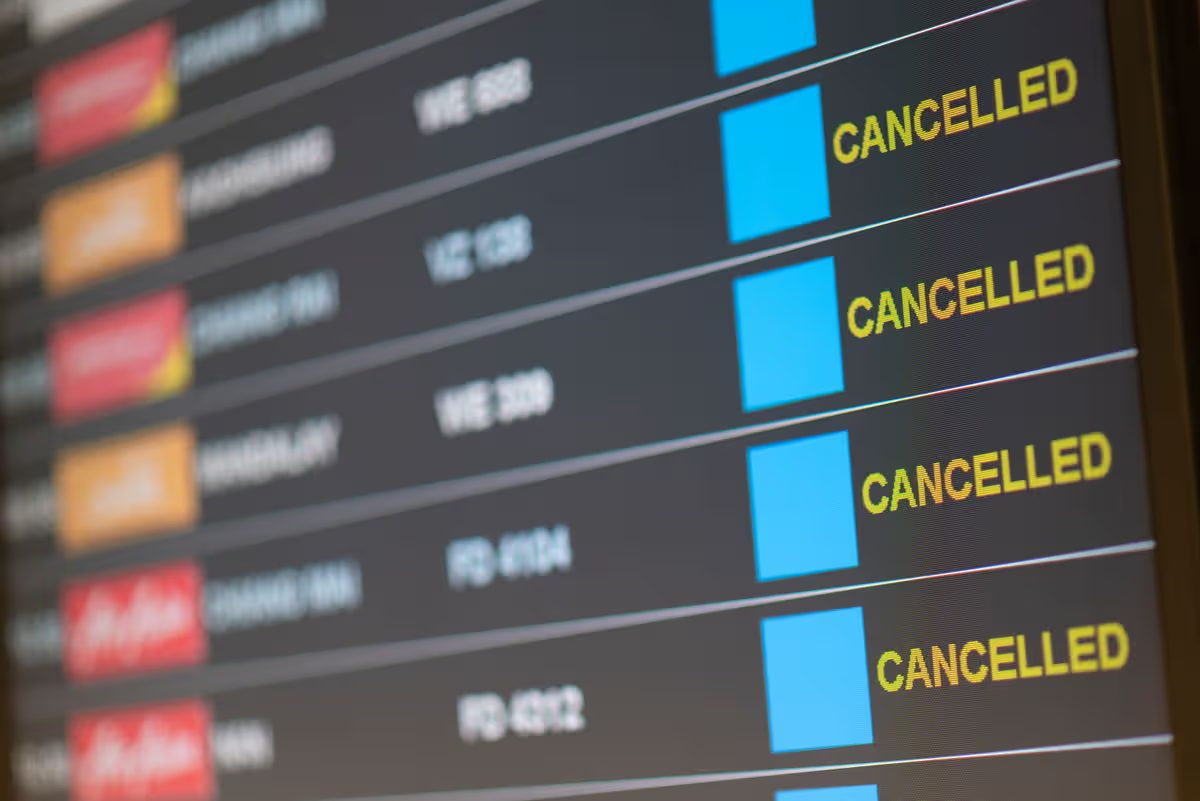
AirDNA figures show that cancellation rates for short-term rentals in Cyprus surged from about 15% before the conflict to as much as 100 per cent in the days after the war began. According to the Daily Mail, about a third of Cyprus’ tourists are British travellers, with four million international visitors travelling to the island in 2025 in total.

Chris Webber, head of holidays and deals at TravelSupermarket, told the outlet: ‘When global events change holiday plans, we tend to see travellers pivot quickly. The Caribbean is a natural beneficiary. What’s striking here isn’t just the overall jump in searches, but how broadly that interest is spread. Destinations like Turks and Caicos and Tobago aren’t typically where British holidaymakers look first, so to see them surging suggests people are still keen to try somewhere new.”
Source link

Warning as tourist is detained for going on a walk in holiday hotspot

The tourist reportedly admitted that he walked from a villa in the Ubud area because his stay there had come to an end and he’d been unable to find a driver to take him to a new accommodation

A tourist was detained while out on a walk on holiday.

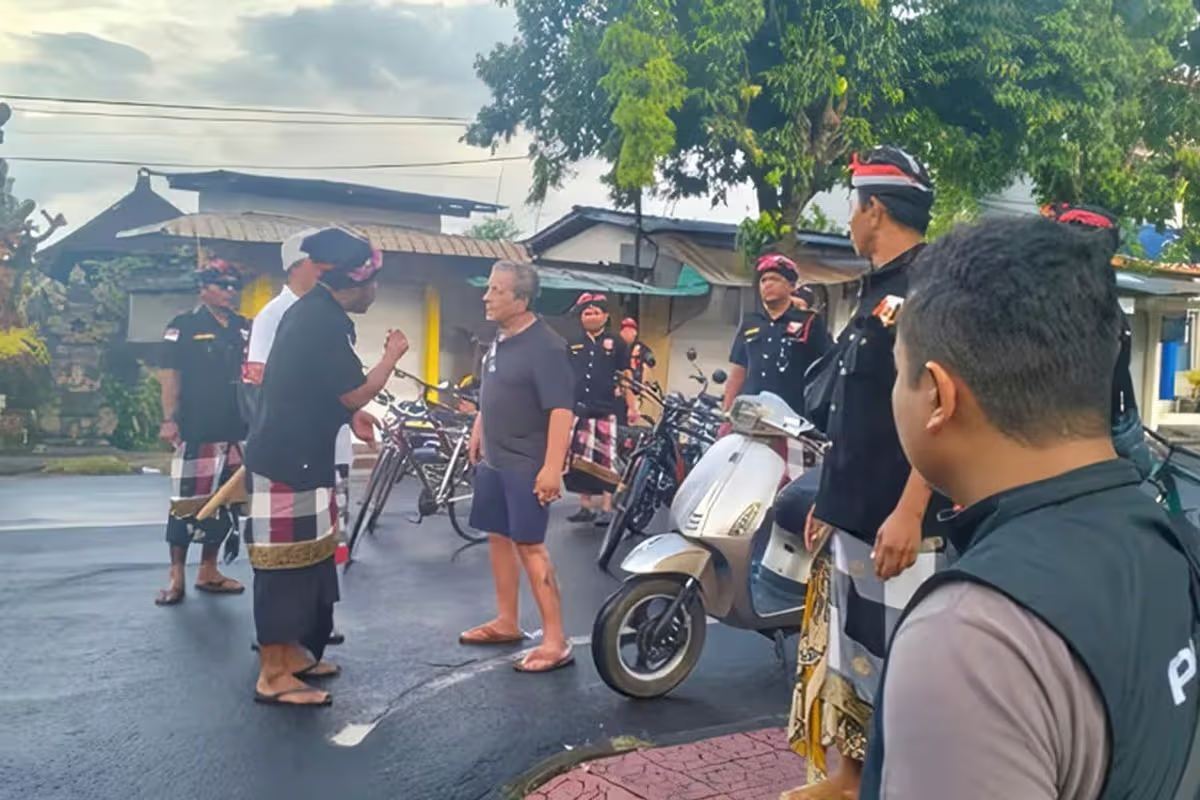
The American citizen, Karl Adolf Amrhein, was detained at 7.15 am on March 19 while walking with bags along Jalan Raya Sukawati in Gianyar Regency, Bali, Indonesia’s police force said in a press statement.

The Pecalang officers patrolling the area discovered the foreign national traveling on foot.

“After initial communication failed, he was escorted to the Sukawati Police Station for clarification,” said Superintendent Chandra Citra Kesuma, the Chief of Gianyar Sub-regional Police.

According to Antara News, the tourist admitted that he walked from a villa in the Ubud area because his stay there had come to an end and he’d been unable to find a driver to take him to a new accommodation.

READ MORE: ‘I’ve been to every country in the world and my favourite was so good I moved there’READ MORE: ‘We booked a £99 mystery holiday and ended up outside Malta near a corner shop’

“Upon receiving this acknowledgement, Sukawati Police personnel, assisted by the Pecalang of Sukawati Traditional Village, explained that currently there is a Nyepi celebration on the island of Bali, where there is no activity for one day,” said Superintendent Chandra.

Mr Amrhein was told that all activities in Bali were temporarily suspended for Nyepi Day, it was reported. He was offered the opportunity to rest at the Sukawati Police Headquarters until the next day, but he reportedly asked for accommodation in a holiday villa, which was granted.

A mandatory stay-at-home order is in place across Bali during the Nyepi Day of Silence celebrations, during which all outdoor activities and public transport are banned.

The celebrations mark the start of the new year. However, unlike in other parts of the world, Balinese Hindus don’t mark the new year by having a huge booze-soaked party or letting off fireworks. Instead, they embrace the silence.

From 6am on March 11 until the same time the following day, adherents switch off their electrical devices, fast, meditate, and stay home with their families. Outside a group of specialist security officers patrol the street, ensuring that no one is outside causing a ruckus.

Although 8% of Bali’s population is not Hindu, the entire island is impacted by the holiday, which sees the roads completely cleared of vehicles aside from the occasional ambulance and all tourist attractions closed. Hotels do not check anyone in or out during the period. If you do find yourself on the island over the holiday, then you’ll be treated to an experience like no other.

The day before Nyepi is Ngrupuk, which is essentially a time to get all of the noise out of your system. Children parade effigies of evil spirits made out of papier-mâché around the streets before torching them, while men launch burning coconuts at one another. Carrying torches while yelling and spitting spice into the corner of homes is another common custom on the day.

Many hotels such as the Viceroy Bali do not allow customers to book in over Nyepi. Those who are already checked-in cannot leave the hotel grounds but are able to use the pool, spa and gym there. The Wi-Fi is also kept on.

“We respect our culture, but we also respect our guests. They are not the same religion as us, so that means our hotel is still operating normally,” resort manager Jero Mangku Tindih told CNN. On Ngrupuk guests of the hotel can head on an arranged trip to a nearby village to watch the flaming coconut battle and masked parade.

Chief Chandra urged all international visitors to respect Balinese customary laws to maintain communal harmony during high-level cultural observances.

Source link

Urgent warning as Brit holiday hotspot Malta faces ‘major ecological disaster’

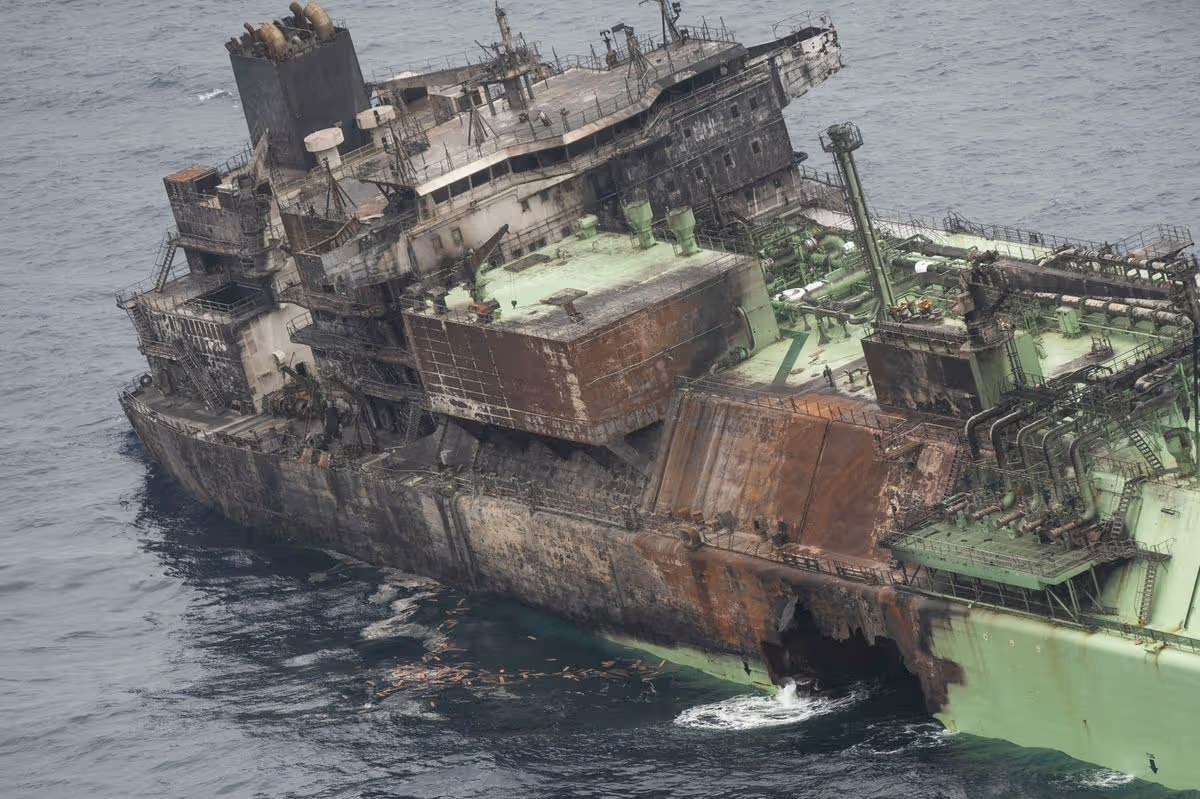
The 900ft Arctic Metagaz, a charred Russian ghost tanker, has drifted dangerously close to Malta, an archipelago in the central Mediterranean known for its history and culture

Malta — a popular holiday hotspot — is said to be under threat of a “major ecological disaster”.

A charred Russian ghost tanker is believed to be around 50 nautical miles southwest of the island, and is drifting crewless towards the archipelago. The vessel was blitzed two weeks ago by Ukranian drones and has since, the hole-ridden 900ft Arctic Metagaz has moved towards Malta.

And now multiple European countries have warned an ecological threat is imminent. In a letter to the European Commission, seven nations said the “precarious condition of the vessel, combined with the nature of its specialised cargo” posed a “serious risk”. These countries have described the situation as a “dual challenge” – upholding maritime safety and preventing an ecological disaster against the background of EU sanctions imposed on.

READ MORE: Keir Starmer gives defiant message on Iran after ‘Trumpflation’ cost of living warningREAD MORE: Ryanair flight in mid-air emergency as fire crews scrambled for ‘maximum alert’

Russia claimed that Ukraine used “uncrewed sea drones” to target the Metagaz in the Mediterranean Sea between Libya and Malta. The Security Service of Ukraine has not responded to the accusation.

According to Russia, the attack took place on March 4 and was launched from the Libyan coast. The vessel had previously been sanctioned by the United States and the European Union for being part of Moscow’s so-called “shadow fleet.”

Composed largely of ageing tankers, the fleet moves Russian oil and gas worldwide while bypassing Western restrictions. Authorities in Malta and Italy have been closely monitoring the wreck amid concerns about potential pollution. Rome said the vessel was carrying “significant quantities of gas, heavy oil, and diesel fuel.”

READ MORE: What war would actually look like for Brits from conscription incentives to cyber attacks

WWF Italy warned in a statement: “A potential spill could cause fires, cryogenic clouds lethal to marine life, and widespread and long-lasting pollution of water and the atmosphere.”

It added: “The affected area is of exceptional ecological value, with fragile deep-sea ecosystems and some of the highest biodiversity in the Mediterranean basin.”

Salvage experts are already in Malta in preparation for the ship’s arrival in Maltese waters, while a specialist vessel is on its way, a maritime source told AFP on Sunday.

Initial reports indicated that the ship sank after explosions sparked a fire on board. Libyan authorities said the tanker went down about 130 nautical miles north of the port of Sirte. Around 30 Russians were on board the Arctic Metagaz, according to Russia’s transport ministry. They were all found “safe and sound in a lifeboat” by Malta’s armed forces, Maltese Home Affairs Minister Byron Camilleri said.

However, Malta’s transport authority said last week that the wreck was still afloat. Ministry of Foreign Affairs of the Russian Federation acknowledged that the vessel was drifting in the Mediterranean and said Russia’s further involvement in resolving the situation would depend on “concrete circumstances”. It added that efforts to address the situation — including surveillance, monitoring and other technical support — could risk “undermining the integrity, effectiveness and the deterrent value of the EU sanctions regime”.

Russian foreign ministry spokeswoman Maria Zakharova said the ship had no crew and was carrying 700 metric tons of various types of fuel along with “a substantial amount of natural gas”.

“The international legal norms applicable to the current situation imply the responsibility of coastal countries … for resolving the situation with the drifting vessel and preventing an environmental disaster,” Zakharova wrote.

“Further involvement by the shipowner and Russia as the flag state will depend on the specific circumstances.”

Source link

European hotspot Greece given UK tourist travel update amid Iran conflict

Brits heading to Greece have been urged to check the latest travel advice as tensions linked to the Iran conflict raise wider security concerns across the region

Brits planning a Mediterranean getaway are being urged to check official travel guidance before heading abroad. Experts say no trip can ever be guaranteed completely safe amid growing tensions linked to the Iran conflict.

The latest reminder comes from the Foreign, Commonwealth & Development Office, which publishes travel advice for British holidaymakers. Its guidance for Greece stresses that travellers should read all advice carefully before departure.

On the UK Government travel advice website, officials warn: “No travel can be guaranteed safe.” It urges visitors to research destinations carefully and make sure they have comprehensive travel insurance before travelling.

The guidance also highlights passport rules that travellers must meet before entering the country. Greece follows Schengen Area rules, meaning passports must have been issued within the last 10 years and remain valid for at least three months after leaving the region.

British tourists can visit Greece without a visa for short trips. According to the government, travellers can stay in the Schengen area for up to 90 days within any 180-day period for tourism, family visits or business meetings.

However, new border procedures are also on the horizon for travellers heading to Europe. The European Union is introducing its Entry/Exit System, which will require visitors to register biometric details such as fingerprints or a photo when entering the bloc.

The system is expected to become fully operational from April 10. Officials warn the process could add several minutes to border checks for each passenger.

It comes as tensions continue to grow in the Middle East following the ongoing conflict involving Iran. The crisis has raised wider regional security concerns across parts of the eastern Mediterranean.

Neighbouring Cyprus, which lies roughly 800km from mainland Greece and around 300km from parts of the Middle East, has already been monitoring the situation closely. The island has previously served as an evacuation hub for foreign nationals during regional crises.

According to reports cited by international media and the United Nations, the latest escalation has fuelled fears of broader instability across the region. Military exchanges between Iran and its rivals have already heightened security alerts across several neighbouring countries.

The UK has also stepped up its military presence in the region. The HMS Dragon has been deployed to Cyprus as a precautionary measure. The Royal Navy says vessels may be deployed to support British nationals and regional security as required.

Despite the geopolitical tensions, Greece remains one of Europe’s most popular holiday destinations. Data from the Greek National Tourism Organisation shows the country welcomed more than 36 million international visitors in 2024.

Officials say the key message for travellers is to stay informed. Checking the latest government advice and ensuring documents meet entry requirements can help avoid problems when travelling abroad.

Source link