
Where is hot and sunny every month of the year including Spain, Portugal and Greece – The Mirror
Need to know
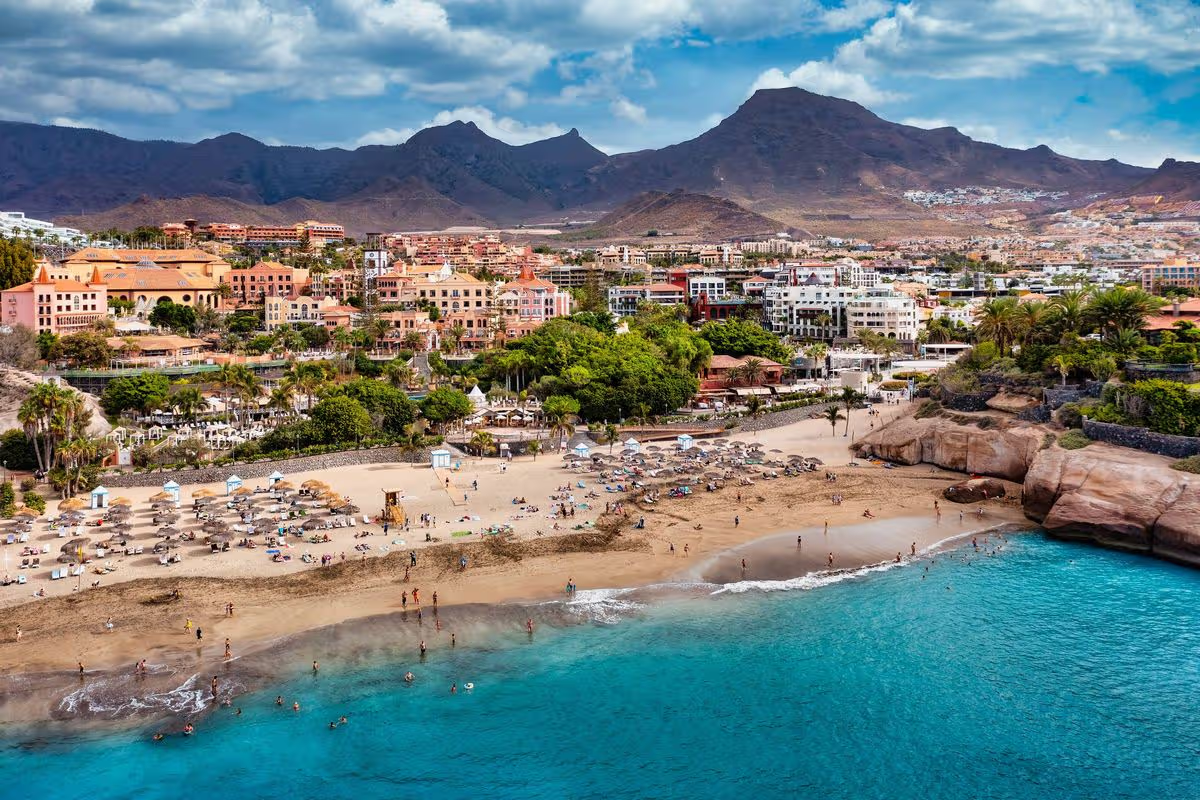
We take a look at the best destinations for hot and sunny weather all year round including the Canary Islands, Portugal, Greece, Spain, Thailand, Dubai, Caribbean islands, Mexico and more
(Image: Getty Images)
If your idea of a dream holiday involves hot and sunny weather, cocktails on a beach and plenty of daylight, we’ve got you covered with our guide to the best sun-drenched destinations every month of the year.
January: For a city break head to Dubai where temperatures average 15-24C so it’s not too hot to explore the likes of Burj Khalifa or Dubai Mall, while beach fans won’t want to miss out on Mexico and the Caribbean (Barbados, Jamaica and the Dominican Republic are particularly popular spots) when the weather is at around 30C making for perfect excuses to laze on those pristine sands or take a dip in the crystalline waters.
February: Cape Verde boasts around 21-27C in February with up to eight hours of sunshine every day, while Thailand is a must-visit given you’ll be outside of monsoon season, with weather around 24-33C whether you’re heading to the beaches in Phuket, or getting your culture fix in Bangkok. Feeling particularly adventurous? February is one of the best months to see Costa Rica; you’ll miss the peak winter sun crowds but get in just before April brings the rainy season.
March: Morocco has balmy weather with around 21C in February, with hotspots like Agadir and Marrakech both easy enough to visit from a host of UK airports. If you really want beaches, Egypt’s Sharm-el-Sheikh is calling with 27C days and crystal-clear waters, or head to Hurghada for a glimpse into the Valley of the Kings or the Karnak Temple.
April:US States including Nevada, Arizona and Florida all have hot and sunny weather in April, and you’d be unlucky to experience rainfall. Meanwhile Cape Town in South Africa offers pleasant weather for sightseeing at around 24C. There is plenty to see, from climbing to the top of Table Mountain (there is a cable car if you don’t fancy the hike), to the iconic Boulder’s Beach and its penguin colonies.
May: If you’re not tied to the school holidays and in dire need of some sunshine, you won’t need to venture too far. Portugal, Spain and Greece all start to enjoy weather around 20-25C, but if you do want to explore far-flung destinations, then Peru’s dry season starts in May with ideal conditions for hiking up to Machu Picchu.
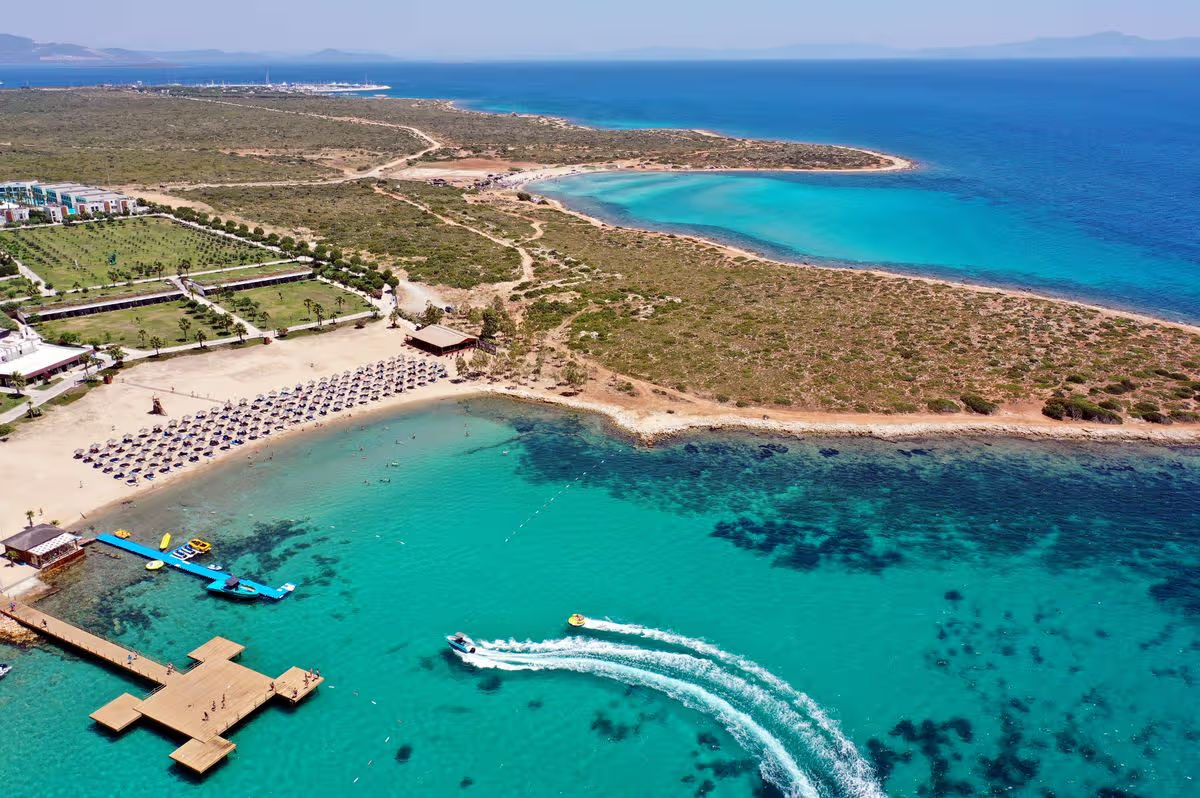
June, July, August: We’ve grouped the peak holiday months together as they tend to have the same type of weather. European hotspots including Portugal, Spain, Greece, France, Turkey, Canary Islands, Greek Islands, Malta, Italy and Cyprus all boast temperatures of the high 20Cs (and sometimes even high 30Cs during heatwaves).
September: Italy’s beautiful Amalfi Coast offer 20-28C weather that’s ideal for wandering around, not to mention you’ll miss the peak summer crowds. Meanwhile the island of Sardinia with its Maldives-worthy sandy beaches has average temperatures of 27C so it’s still warm enough to have a dip in the sea. For a city break head to Croatian cities including Dubrovnik and Split with 25C sunny weather, historic landmarks and beautiful islands you can explore on a boat trip.
October: Cyprus is still warm enough for beach days, without the summer crowds, while the Canaries continue to enjoy temperatures of up to 27C, so it’s still warm enough to enjoy the beaches, eat a fresco, or take on the hiking trails in those volcanic landscapes.
November: Fancy ticking off a bucket list destination? This could be one of the best months to go exploring in Australia, but stick to hotspots in the south including Sydney, Melbourne, Perth is where you’ll find sunnier weather. A word of caution; November can be the start of rainy season is some northern parts of Australia, so swerve those if it’s sunshine you’re after.
December: Thailand’s monsoon season tends to end in October, so by December you’ll have the best chances of sunny days (hence why it’s such a popular winter sun hotspot).
Have a travel story you want to share with us? Email us at webtravel@reachplc.com
The water bubbles up hot from the earth and sunlight filters down through the branches of mighty oaks.
But before you can soak in Santa Barbara County’s highly popular Montecito Hot Springs, you’ll need to hike a little over a mile uphill, threading your way among boulders, oaks and a meandering creek. And before the hike, there are two other crucial steps: getting to the trailhead and knowing what to expect.
The trail to Montecito Hot Springs.
These rustic spring pools are about 95 miles northwest of L.A. City Hall, just upslope from well-to-do Montecito, whose residents include Oprah Winfrey, Prince Harry and his wife, Meghan Markle, and Gwyneth Paltrow.
Though the trail and hot springs are part of Los Padres National Forest, the trailhead is in a residential neighborhood of gated mansions. Beyond the trailhead parking area (which has room for eight or nine cars), the neighborhood includes very little curbside parking. After visitation surged during the pandemic, some neighbors were accused by county officials of placing boulders to obstruct public parking. Parking options were reduced further when county officials added parking restrictions earlier this year.
Share via
Bottom line: Unless you can arrive on a weekday between 8 and 10 a.m., you’re probably better off taking a rideshare service to get there. Whenever you arrive, you’re likely to have company. And you might want to wait until the landscape dries out a bit from the rains of recent weeks.
As Los Padres National Forest spokesman Andrew Madsen warned, “the foothills of Santa Barbara are especially fragile and hiking is especially precarious in the aftermath of heavy rains.”
All that said, the hike is rewarding and free. From the Hot Springs Canyon trailhead at East Mountain Drive and Riven Rock Road, it’s a 2.5-mile out-and-back trail to the hot springs, with about 800 feet of altitude gain on the way.
Arriving at 10 a.m. on a Tuesday, I got the last parking spot at the trailhead, stepped past the signs forbidding parking before 8 a.m. or after sunset, then stepped past another sign warning that “this is a challenging and rugged hike.” Also, there are no bathrooms or trash cans on the trail or at the springs.
“It’s important that people know what’s going on up there before they show up,” said Madsen. “It’s not all that glamorous.”
Even though it’s only 1.2 or 1.3 miles to the hot springs, plan on about an hour of uphill hiking. Once you’re above the residential lots, you’ll see pipes along the way, carrying water down the hill, along with occasional trailside poison oak. As you near the pools, you’ll pick up the scent of sulfur and notice the water turning a strange bluish hue. Then the trail jumps across the creek — which I initially missed.
But there was a silver lining. That detour gave me a chance to admire the stone ruins of a hotel that was built next to the springs in 1870s. After a fire, it became a private club. Then it burned in the Coyote fire of 1964, which blackened more than 65,000 acres, destroyed more than 90 homes and killed a firefighter. The hot springs and surrounding land have been part of Los Padres National Forest since 2013.
Hikers look west from the ruins near Montecito Hot Springs.
(Christopher Reynolds / Los Angeles Times)
On a clear day with the sun in the right place, you can stand among the overgrown ruins, look west and see the ocean, a few old oil platforms and the long, low silhouette of Santa Cruz Island. This is what the native Chumash would have seen (minus the oil platforms) through the many years they used the springs before European immigrants arrived.
Pleasant as that view was, I was ready to soak, as were the two couples who got momentarily lost with me. (We were all Montecito Hot Springs rookies.) Once we’d retraced our steps to the creek and crossed it, the trail took us quickly past a hand-lettered CLOTHING OPTIONAL sign to a series of spring-fed pools of varying temperatures.
A dozen people were already lazing in and around the uppermost pools (one woman topless, one man bottomless), but several pools remained empty. I took one that was about 2 feet deep and perhaps 90 degrees. In one pool near me sat Ryan Binter, 30, and Kyra Rubinstein, 26, both from Wichita, Kan.
Hikers Ryan Binter and Kyra Rubinstein, visiting from Wichita, Kan., soak at Montecito Hot Springs.
(Christopher Reynolds / Los Angeles Times)
“She found this,” said Binter, praising Rubinstein’s internet search savvy.
At the next pool were Emanuel Leon, 20, of Carpinteria, Calif., and Evelyn Torres, 19, of Santa Barbara. The last time they’d tried this hike, they’d strayed off-track and missed the hot springs, so this time, they were savoring the scene.
“Revenge!” said Leon, settling in.
The soaking was so mellow, quiet and unhurried that I was surprised to learn that the pools were not erected legally. As Madsen of the Los Padres National Forest explained later by phone, they were “created by the trail gnomes” — hikers arranging rocks themselves to adjust water flow and temperature, with no government entities involved.
Legal or not, they made a nice reward after the hike uphill. The downhill hike out was easier and quicker, of course, but still tricky because of the rocks and twisting trail.
On your way out of Montecito, especially if it’s your first time, take a good look at the adobe-style grandeur of the Our Lady of Mt. Carmel Catholic Church building, which looks like it was smuggled into California from Santa Fe. For food and drink, head to Coast Village Road (the community’s main drag) or the Montecito Village Shopping Center on East Valley Road. Those shops and restaurants may not match the wonder and comfort of a natural bath in the woods, but for civilization, they’re not bad.
KEEPING the kids occupied over weekends and half term holidays can be difficult in the colder months.
So we’ve rounded up the best indoor waterparks across the UK.
Sign up for the Travel newsletter
Thank you!
Indoor waterparks make for a great family day out, no matter the weather – like Sandcastle Waterpark in BlackpoolCredit: Sandcastle
With a mix of high-thrill slides and rides, relaxing spa treatments and adults-only zones, these waterparks are the perfect place to spend a day indoors.
The famous Thunderbolt ride is known for being the UK’s first trap door drop waterslide – a water flume which shoots you down at 25mph.
Meanwhile one of the newest rides, Hurricane, descends at 17mph with spooky lightning effects.
The popular Python ride has also been recently refurbished, with slithery twists and turns gentle enough for toddlers.
Most read in Best of British
There’s also calming bubble pools, relaxation areas, and a restaurant serving up pizza, bubble waffles and milkshakes.
And if you visit in the warmer months, there’s an outdoor pool and loungers to soak in the rays.
The waterpark is within Waterworld Leisure Resort, which is also home to the tiki-themed Adventure Mini Golf and the new M Club Spa and Fitness facility.
General entry starts at £24.00.
The Wave is a UK award-winning indoor waterparkCredit: The WaveThe lazy river is a more chilled option at this indoor waterparkCredit: The Wave
The Wave, Coventry
This indoor waterpark in Coventry holds the record for the largest wave pool in the UK.
The famous wave pool churns a whopping 20 million litres of water per day, with waves that deepen gradually as you wade in.
The indoor waterpark also has six slides, ranging from The Rapids water coaster to The Riptide – a rubber ring ride set at an exhilarating 90° angle.
The Cyclone is one of the waterpark’s fastest rides, swirling riders around in an open bowl before falling into the pool.
The Wave is also home to a lazy river which whisks swimmers around a winding path, as well as a splash zone for younger children named The Reef.
Adults visiting can enjoy a dedicated pool for lane swimming, fitness centre or a trip to the dedicated spa.
The Mana Spa has a steam room, sauna and offers a variety of massages and facials.
Tickets for ages 12+ start at £14.50 (off peak). Junior tickets start at £12.50, and infants aged 1 and under go free.
Sandcastle Waterpark is one of the UK’s top indoor waterparksCredit: Sandcastle Waterpark
Sandcastle Waterpark, Blackpool
This indoor waterpark is the UK’s largest, with your pick of waterslides and flumes for the kids, as well as a spa for the adults to unwind.
Here you can treat yourself to a tropical holiday in Blackpool, as this waterpark is set in a tropical 84° climate.
The park boasts 18 waterslides, including the UK’s longest indoor rollercoaster.
Family friendly slides range from the Treetops Water Chutes, multi-lane slides perfect for little ones, to the pirate-themed HMS Thunder Splash.
The waterpark is also home to 5 record-breaking “white-knuckle rides” – exciting options for the thrill-seekers in the family.
The Sidewinder is the world’s first Indoor half-pipe waterslide, whilst the Masterblaster has been named the UK’s longest indoor rollercoaster waterslide.
The Caribbean Storm Treehouse, on the other hand, is an interactive water climbing frame – complete with a giant coconut that pours 600 gallons of water onto unsuspecting swimmers every few minutes!
And if you want a break from all the screaming and laughter, the Sea Breeze Spa has a sauna, steam room, foot spas and even an aromatherapy room.
The spa costs £7 per person and must be booked alongside an admission ticket.
There’s also a “Tiki Cabana” experience for ultimate relaxation.
For £60 per person adults can unwind in a private area with a flatscreen TV, fridge stocked with cold drinks, and a private hot tub.
The price also included full-day admission, lunch and access to the spa.
General entry starts from £24.95 for ages 12+, £15.95 for kids aged 3 – 7, and under 3s go free.
You can see the winding slides from outside of the attractionCredit: Sandcastle
“Humidity levels really drop in planes and recirculated air can contribute to overall dryness of our skin”.
In fact, the humidity levels onboard can drop extremely low.
Airplane cabins often have a humidity of around 20 per ent compared to the 40-60 per cent we are used to on the ground.
This is because outside air at 30,000 feet contains almost no moisture.
Therefore when it’s pulled into the cabin and pressurised, it stays dry.
The air is then recirculated within the cabin – without any extra moisture being added back in.
This can lead to your skin feeling more dry than usual.
If you then jump straight into a hot shower, this can dry your skin out even more.
Not only do hot showers post-flight dry out your skin, they can also come with a host of other problems.
One of which is that they can increase your chance of getting acne, explains aesthetician Rhea Souhleris Grous to Apartment Therapy.
They said: “Because dryness triggers the sebaceous glands to produce more sebum, hot water can worsen preexisting acne or cause a breakout”.
Hot water can break down natural oils and kill your skin’s good bacteria, which “play a major role in keeping moisture in – and the bad stuff out”.
To help beat the feeling of “airplane skin“, you can treat it onboard instead of relying on your post-flight shower.
To retain your skin’s moisture levels, experts recommend treating your skin both onboard and also ahead of time.
Packing moisturising products can save your skin onboardCredit: Getty
“To best take care of your skin on a plane, follow a hydrating skincare routine before and during the flight” said celebrity skincare expert Sarah Akram to Vogue.
“Avoid touching your face frequently, and reapply moisturiser and face mist periodically”.
“Also, avoid heavy makeup as it can contribute to dryness and clog pores.”
Your skincare routine could include packing a small bottle of nourishing moisturiser, a moisturising sheet mask, and drinking plenty of water onboard.
And if you like a salty snack from the trolley when flying, it’s even more important to keep hydrated.
“Top this off with reduced water intake and salty foods and it can lead to really dehydrated, parched skin” said dermatologist Cristina.
So next time you’re travelling by air, make sure to drink plenty of water before, during and after your flight.
The recommended amount of water for adults is two litres per day – but it is a good idea to increase your intake on days you’ll be flying.
Qantas customer service manager Travys Carinci flies on average 59,952 miles per month – and swears by drinking plenty of water.
“I start my day with a pint of water before my coffee and try to drink 2.5 litres of water every day” he told CN Traveller.
So if you are set on having a shower after your flight, turn the temperature down to lukewarm or cold – and you won’t strip as much moisture from your skin.
If you do choose to shower after a flight, opt for lukewarm or cold waterCredit: Getty
THE Canary Islands are one of the most popular holiday destinations for Brits with Tenerife and Gran Canaria being some of the most well-known.
However, there’s one island that most won’t have visited or perhaps even heard of with ragged coastlines, black sand beaches and natural pools.
Sign up for the Travel newsletter
Thank you!
El Hierro is known for its natural landscape with high mountain peaks and small villagesCredit: Getty ImagesThe island receives much fewer visitors than its neighbours
Unlike its neighbours, the island of El Hierro offers a peaceful, nature-filled break rather than one for parties and cheap bars.
Off the coast of the island are diving reserves, natural pools and further inland, you can hike up volcanic trails.
The island will be much less busy than the other Canary Islands too as it only gets between 20,000 to 30,000 visitors each year.
In comparison, Tenerife attractions around 7million tourists each year, while Gran Canaria welcomes around 4.7million.
As Brits we often seek out sun, and El Hierro is sunny and warm for most of the year as it sits on theMorocco-Western Sahara border.
Temperatures tend not to dip below 15C and in January it can be as hot as 20C – in comparison it tends to sit between 3-6C in the UK.
Timon van Basten has lived in Spain for the last five years and works as a tour guide in the country and he recommends a trip to El Hierro.
Timon told Euro News: “The tiny, remote island has an end-of-the-world vibe with lava flows, volcanic craters, and lush cliffs plunging into the Atlantic.
Most read in Beach holidays
“Explore at your own pace, with quaint towns, secluded beaches, and tranquil hiking trails to discover.”
When it comes to popular attractions on the island, a top one is the El Tamaduste Pool.
Along the coastline are natural swimming pools like Charco AzulCredit: Alamy
It’s a natural swimmingpool in a sheltered bay in the village of Tamaduste.
Visitors can take a dip in the pool while being protected by the strong sea waves. Aside from swimming, visitors can also enjoy water sports like diving or paddle boarding.
Another natural pool is Charco Azul which is one of the most famous and sits on the north of the island with a huge rock acting as the barrier between the pool and the sea.
Another is the viewpoint called Mirador de la Peña which overlooks a huge landslide valley with views across the sweeping coastline.
Of course there are plenty of beaches, some of the most popular are Playa de Tacorón, which is ideal for families.
There’s alsoPlaya del Verodal, the largest beach the island which has incredible sunset views, but not so good for swimming due to strong currents.
The beaches have either red or black sandCredit: Alamy
There aren’t any white or golden sandy beaches on the island because of volcanic activity.
El Hierro’s sands are rich in iron, causing it to turn red, and the black granules are created from volcanic glass.
Cala de Tacorón beach is the hidden gem of the island with soft red sands and as it’s in a cove, has much calmer waves.
If you fancy getting a souvenir, there are stalls and street markets dotted around El Hierro where you can buy jewellery, homemade gifts, as well as locally produced honey, wines and cheeses.
To get to El Hierro from the UK, you’ll need to fly to another Canary Island like Tenerife or Gran Canaria and take a connecting flight.
From Tenerife to the neighbouring island, flights take just 40-minutes, or 55-minutes from Gran Canaria.
Another option is to take a connecting ferry which from Tenerife takes just over two hours.
Here’s why one man loves the Canary Islands from award-winning restaurants to its beautiful beaches…
One man who has visited over 100 countries reveals that the one place he always goes back to is the Canary Islands…
“It’s the world’s most varied archipelago – on Tenerife alone you can party at the world’s second biggest carnival, bash around the world’s best waterpark (Siam Park) and climb a mountain almost three times higher than Britain’s Ben Nevis.
“La Graciosa could be on a different planet. There are no tarmac roads, nevermind an airport.
“It’s a brilliant escape from the modern world, hiking and cycling around rough tracks, up volcanoes and out to windswept beaches.
“You can still tuck into British comfort food across the resorts, but there is far more to savour today. Lanzarote and Gran Canaria boast Michelin star restaurants and foodies flock to Tenerife to dine at eight Michelin star restaurants.
“Tenerife boasts more Michelin stars than Wales and the Royal Hideaway Corales Resort has more stars than any hotel in Spain with four. And Tenerife just keeps winning stars. This year Il Bocconcino snared a star.
“Tenerife is not my favourite island for beaches – I prefer the third largest isle, Fuerteventura.
“The Parque Natural de Corralejo boasts mile upon mile of Sahara-esque dunes and gorgeous beaches.
“It’s just south of Corralejo, a resort popular with Brits and is easily my favourite Canarian resort.”
If it began to sound a lot like Christmas earlier than usual this year, it wasn’t your imagination.
Halloween wasn’t even over before Spotify users began curating songs about mistletoe, snow and presents under the tree.
Holiday playlists created on Spotify in the U.S. jumped 60% in October over last year, the Swedish audio company said. Some Spotify users started crafting holiday playlists as early as summer.
“It’s a combination of wanting to feel good and nostalgia, and these are testing times,” said Talia Kraines, editorial lead for pop at Spotify. “Somehow Christmas music brings comfort and I think that’s a real part of it.”
Indeed, eight of the top 10 songs on Billboard’s Hot 100 chart for the week that ended Saturday were Christmas songs, with the top five being familiar holiday classics, including Mariah Carey’s 1994 hit “All I Want for Christmas Is You,” Brenda Lee’s 1958 recording of “Rockin’ Around the Christmas Tree” and Wham!’s “Last Christmas,” released in 1984.
On-demand streams for holiday music in the U.S. increased 27% to 8.3 billion this year, compared to a year ago, according to L.A.-based data firm Luminate.
The popularity of music streaming has helped to fuel a surge in users seeking out more holiday music, and earlier in the year.
The change has been driven by technology. In the pre-streaming era, consumers would play Christmas music through CDs and, records or catch tunes on the radio during the winter months.
But the rise of Spotify, Apple Music and other streaming services opened the floodgates by offering large libraries of songs on demand.
The new platforms created and marketed holiday playlists, making it easier for consumers to discover seasonal songs and add new ones to their own song collections.
“You used to have a bunch of Christmas albums around and rotate them through as you’re decorating the house or wrapping the presents,” said Dave Bakula, vice president of analytics and data insights at Iconic Artists Group. “The availability of all the music, all the time is such an incredible gift that streaming services have given us.”
For musicians and record labels, holiday music also has taken on growing importance.
Vince Szydlowski, executive vice president of commerce at Universal Music Enterprises, the centralized global catalog division of Universal Music Group, said he starts planning the year’s campaign for holiday music in January.
“For UMG and many of the artists that you associate with holiday music, it will be the most important time of the year, without a doubt,” Szydlowski said. “In some cases, especially with certain legendary artists, it could make or break their year.”
Artist Brenda Lee performs at the “Rockin’ Around the Christmas Tree” concert at the Country Music Hall of Fame and Museum in Nashville in 2015.
(Laura Roberts / Invision / AP)
One campaign Universal Music Enterprises worked on was promoting Elton John’s 1973 holiday song “Step into Christmas.” The song was featured in Amazon Prime Video’s holiday movie “Oh. What. Fun,” starring Michelle Pfeiffer.
John posted viral social media videos with the song playing in the background that drew more than 100 million views.
Those efforts helped boost the track’s consumption by 44% this year compared to last year, according to Universal Music Group, citing data from Luminate.
“It’s a very comprehensive campaign in which to continue to boost that track visibility among the holiday perennials,” Szydlowski said.
Many of the popular Christmas songs in the U.S. date back decades, making it challenging for new, original holiday songs to break through.
The holidays are an important time for older artists like Brenda Lee, whose rendition of “Rockin’ Around the Christmas Tree” remains a winter hit.
In November 2023, Lee’s version of the song topped Billboard’s Hot 100 chart for the first time, 65 years after the song’s debut, making Lee, then 79, the oldest woman to top the Hot 100, according to UMG.
Then there are artists like the late Nat King Cole, known for hits like the holiday classic “The Christmas Song,” and Dean Martin, who died in 1995 and whose rendition of “Let It Snow! Let It Snow! Let It Snow!” is especially popular during winter months.
Nat King Cole in 1963. “The Christmas Song” became one of his enduring hits.
(Capitol Records Archives)
Another source of appeal for Christmas music is that it‘s timeless.
It isn’t really affected by trends and the songs highlight themes like love, hope, joy and family that remind us of our friends, family and past Christmases, said Jimmy Edwards, president of Iconic Artists Group.
“It’s the one music that you can share it together from any age. As Nat would say, from one to 92, right?” Edwards said, referencing a lyric from Cole’s “The Christmas Song.” “Those emotional bonds you have with that music stay with you forever … It promotes the best of us and all the good things. That’s why people love it so much.”
Best destinations where it’s hot and sunny in January, February and March – The Mirror
Need to know
If you’re over the winter weather and want some promise of hot and sunny climates, we’ve got you covered with a round-up of the destinations to have on your radar
It’s not too late to book a winter sun getaway(Image: Getty Images)
Where is hot and sunny in winter?
In January, some of the best destinations for that glorious sunshine include Mexico and the Caribbean islands. You can expect temperatures ranging around 29C in the daytime making it ideal for lazing on those postcard-worthy beaches or having a dip in the sea, not to mention that you’ll be avoiding the peak holiday crowds. Barbados, Jamaica and the Dominican Republic are just some of the beautiful spots you can visit – and with the Caribbean’s monsoon season ending in November, you’ll get the best chance for good weather.
Dubai in the UAE can also be a good January getaway as temperatures range from 15-24C, so it can be ideal to visit before the weather gets into the 30-40C summer heat, which may be unbearable for some.
Come February (and with it, half term), there are some brilliant adventure destinations on offer. Cape Verde’s islands boast temperatures around 21-27C and an average of seven to eight hours of sunshine a day if you want to enjoy the beaches and watersports. Meanwhile it’s similar in Thailand with minimal rain, making for ideal conditions to explore the islands or discover hotspots like Bangkok and Chiang Mai. Costa Rica is another destination for February; you’ll miss the peak winter sun crowds and get in before the April rainy season.
If you’re not tied to school holiday dates, March can be a great time to enjoy the last of the winter sun. Morocco is just a few hours’ flight from the UK and offers up some sun-soaked city breaks in Agadir and Marrakech, with temperatures around 21C so you can enjoy the bustling markets and still enjoy a dip in the hotel pool.
Egypt is popular with Brits in the winter months as it offers year-round warmth and sunshine, but in March the temperatures start to hit 27C so you can make the most of Sharm-el-Sheikh’s beaches and crystal-clear waters, while in Hurghada it’s still cool enough to take a day trip to Luxor and enjoy sights such as the Valley of the Kings and the Karnak Temple.
THE Signet Collection is one of my personal favourite hotel brands in the UK, with properties tucked away in countryside locations where you can snuggle down in cosy nooks near a roaring fireplace.
The Barnsdale is its third property, which opened in 2023. Here’s everything you need to know.
Sign up for the Travel newsletter
Thank you!
People come for the outdoor Signet SpaCredit: The Barnsdalefamily rooms that come with a double bed and a separate bedroom with bunk bedsCredit: The Barnsdale
Where is The Barnsdale?
This elegant retreat sits just a stone’s throw from one of the UKs most famous reservoirs, Rutland water.
It’s immersed in isolated countryside, so you’ll want to drive and take advantage of the parking on site.
Oakham train station is around a ten-minute drive away if you’d rather use public transport.
What is The Barnsdale like?
The Barnsdale has all the charm of a dainty cottage in the Cotswold, but with the hospitality benefits of a 4* hotel.
A former hunting lodge constructed in 1760 that – despite the installation of modern amenities – still has an old world feel to it in the form of grand paintings and varnished wooden furnishings.
It has an air of posh members club to it, only without the price tag.
What are the rooms like?
Each of the 46 rooms is decorated in a typically English style with pastel-toned walls, frilly cushions and patterned armchairs.
The Classic is the smallest and cheapest of the bunch and worth it for the lower price.
Most read in Best of British
The only difference in rooms, bar the decorative tweaks, tends to be size and the view (the Royal Room has one of the best).
Classic rooms cost from £85 per night with brekkie. Click here to book.
What is there to eat and drink?
The hotel’s 1760 Brasserie serves classic British favourites including seared scallops doused in butter and a mouthwatering 32-day dry-aged rib-eye served with chips.
I opted for the Atlantic cod which was seasoned well and served with an unctuous vermouth sauce.
Anyone with a sweet tooth will love the sticky toffee pud – this one’s a real crowd pleaser.
What else is there to do at The Barnsdale?
People come for the outdoor Signet Spa where wood-fired hot tubs, a heated pool and a glass-walled sauna overlook fields of grazing Highland cows.
It’s a lovely way to spend a Sunday afternoon, sipping on sparkling wine and admiring the creatures munching away on the grass.
The only downside to the spa being entirely outdoors is the unpredictability of the British weather.
Fret not, though – every spa guest is given a DryRobe and flipflops to plod around in.
They can keep this for the duration of their stay.
When the drizzle hit, we persevered in our tub. Big thanks to the staff member who swiftly came to the rescue with a couple of umbrellas.
Massages can often be overpriced, but not here.
My therapist truly listened to my needs and pressure preferences, ensuring I enjoyed every one of those 60 blissful minutes.
Is The Barnsdale family friendly?
Families are well accommodated at The Barnsdale with specific family rooms that come with a double bed and a separate bedroom with bunk beds which comes complete with a cuddly lion toy to keep.
When little ones aren’t taking advantage of the outdoor play areas they can have a get stuck into some classic board games in the Rod Room.
Looking for a place to stay? For more hotel inspiration click here.
The hotel sits close to Rutland WaterCredit: AlamyBarnsdale in Rutland. Supplied by The BarnsdaleCredit: The barnsdale
Carl Carlton, the funk and R&B singer known for upbeat, era-embodying singles like “Everlasting Love” and “She’s a Bad Mama Jama (She’s Built, She’s Stacked)” has died. He was 72.
Carlton’s son, Carlton Hudgens II, posted to social media confirming the death on Sunday. “RIP Dad, Legend Carl Carlton singer of She’s a Bad Mama Jama. Long hard fight in life and you will be missed.” The post did not cite a cause of death.
Born Carlton Hudgens in Detroit in 1953, he debuted as “Little Carl” Carlton, but changed his stage name and moved to Houston after he was signed to the local label Back Beat Records. He had a minor soul-scene hit in 1971 with “I Can Feel It,” and broke through nationally in 1974 when his regal cover of Robert Knight’s “Everlasting Love” hit No. 6 on Billboard’s Hot 100 and spent 15 weeks on that chart.
Carlton is perhaps best known for his 1981 single, “She’s a Bad Mama Jama (She’s Built, She’s Stacked),” a grooving and awestruck ode to the female form that hit No. 22 on the Hot 100 and helped his self-titled album that year reach gold status.
The song has enjoyed a long life in popular culture — it’s been sampled by rappers like Foxy Brown, BigXThaPlug and Flo Milli, and frequently appeared on soundtracks for TV shows and films like “Friends.”
He continued releasing records into the ‘80s, and appeared several times on “American Bandstand” and “Soul Train,“ though his output slowed in the ‘90s. In 2003, he performed for Barry Glazer’s TV special, “American Soundtrack: Rhythm, Love, and Soul,” which featured Aretha Franklin and other marquee R&B and soul acts. His last album was 2010’s gospel LP “God Is Good.”