Hosts

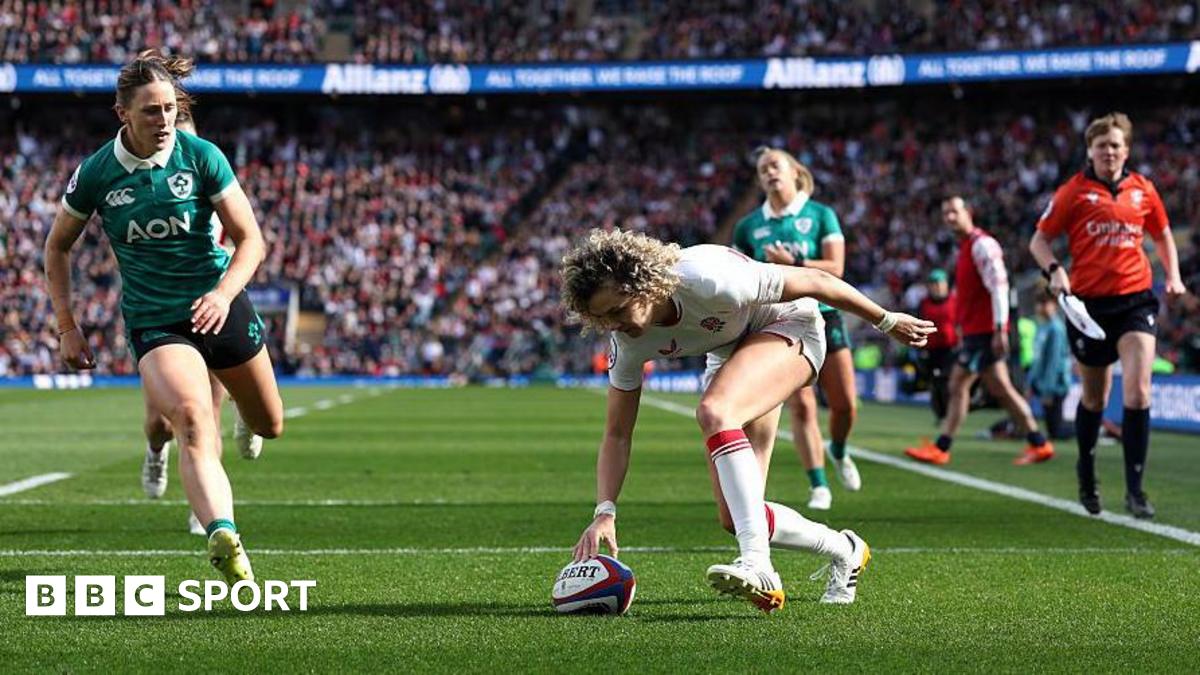
England 27-23 Argentina: Hosts hold off Pumas fightback

England just about rode out a second-half fightback from Argentina as an eye-catching Twickenham debut from Max Ojomoh helped extend their winning streak to 11 successive Tests.

Ojomoh scored one try and made another with a crossfield kick in the first half as England stretched out into a 17-3 lead at the break.

Their advantage could have been even more emphatic had hooker Luke Cowan-Dickie not had a try ruled out for a slight knock-on on the final play of the first half.

Argentina, who fought back from 21 points down to beat Scotland last weekend, crowbarred their way back into the contest though.

Justo Piccardo slid in before a pair of penalties from Tomas Albornoz and Santiago Carreras reduced the deficit to 17-16 on the hour.

But England seemed to recapture the momentum just in time.

A big break from Alex Coles set up a platform from which Ojomoh popped up for Henry Slade to stroll in under the posts.

George Ford’s conversion and penalty pushed England 11 points clear, only for Rodrigo Isgro’s converted try in the final minute to set up a grandstand last play.

The Pumas, needing a try to snatch victory, pounded away, with support from a small but loud collection of fans in the stands.

However, a final line-out, within 10 metres of the England line, went astray to wild cheers from the majority of the 80,807 spectators and Alex Mitchell kicked to the stands to ensure his England side successfully round off a 2025 that has featured only one defeat, a reverse against Dublin in February.

More to follow

Source link

Wales v South Africa: Hosts move onto Springboks after New Zealand defeat

Fight and character only takes you so far in international rugby circles and New Zealand were undoubtedly a step up in class and quality.

This victory extended the All Blacks winning run against Wales to 34 games, a sequence stretching back to 1953.

Wales might have matched their opponents for 50 minutes but still conceded 50 points at home for the third time this year, after England and Argentina also brought up a half-century at the Principality Stadium.

The All Blacks also scored more than 50 points for the third consecutive match in Cardiff.

There was defiant and dogged home defence in evidence, but New Zealand still secured seven tries, with the boot of Damian McKenzie adding 17 points, while Wales missed 38 tackles.

The match statistics demonstrated that New Zealand dominance. The All Blacks managed 1,362 metres from 167 carries, compared to Wales’ 593 from 77. Tandy’s side made 223 tackles, compared to New Zealand’s 85.

For all of Wales’ endeavour, the All Blacks crossed the gainline repeatedly with powerful wing Caleb Clarke and dynamic number eight Wallace Sititi emphasising how the visitors appeared bigger, faster and stronger.

“Our power game was strong,” said All Blacks coach Robertson.

“We’re ranked one and two in the world in a lot of areas and one of them is our power game.

“We knew it would take a little while to break them down and they’d be in it at 50 or 60 minutes, but fatigue would set in and we could make the most of that.”

Wales have now shipped 127 points in three games this November with world champions South Africa arriving at the Principality Stadium next weekend.

Source link

England v Argentina: Hosts’ new-look attack takes on Pumas

The baggage is unavoidable.

So Clarin, Argentina’s biggest newspaper, steered straight into it instead.

In the first two lines of their preview of Sunday’s match, “history, politics, the Falklands War and England’s persistent imperialist views” were all referenced., external

The story of a teenage Federico Mendez ironing out England second row Paul Ackford with a blindside haymaker 35 years ago was retold.

On Thursday, Franco Molina threw in another piece of the Anglo-Argentine back story.

“It was a goal, the referee gave it, it was a goal!,” the Argentina second row said, recalling Diego Maradona’s contentious ‘Hand of God’ goal in the 1986 quarter-final meeting at the football World Cup.

But it was all with a smile.

If all that history is being brewed up as pep-talk kerosene, Molina, who spent last season playing for Exeter, hid it well.

For him there was too much to get excited about in the 80 minutes to come, without dredging up the past.

“It is a big game, just because of the context of the international game,” he said.

“It is really special playing at Twickenham.

“It is going to be a really physical game and every English team is tidy in what they do, all the kicks from the field, all the play with the ball in hand.

“We will need to be really connected and precise across the whole 80 minutes to beat them.”

Source link

Wales v New Zealand: Hosts lose number eight Aaron Wainwright

Wales: Murray; Rees-Zammit, Llewellyn, Hawkins, Rogers; Edwards, T Williams; Carre, Lake (capt), Assiratti, D Jenkins, Beard, Mann, Deaves, Plumtree.

Replacements: Coghlan, G Thomas, Griffin, F Thomas, Morse, Hardy, J Evans, Tompkins.

New Zealand: Love; Jordan, R Ioane, Lienert-Brown, Clarke; McKenzie, Ratima; T Williams, Taukei’aho, Tosi, S Barrett (capt), Holland, Parker, Kirifi, Sititi.

Replacements: Bell, Newell, Bower, Lord, Lio-Willie, Christie, Fainga’anuku, Reece.

Referee: Hollie Davidson (Scotland)

Assistant referees: Andrea Piardi (Italy), Gianluca Gnecchi (Italy).

Source link

Trump Hosts Saudi Crown Prince on a Visit Centered on Deals and Display

President Donald Trump is set to welcome Crown Prince Mohammed bin Salman of Saudi Arabia at the White House, emphasizing the rehabilitation of the crown prince’s global standing after the controversial assassination of journalist Jamal Khashoggi in 2018, and the strengthening of U.S.-Saudi relations. This visit marks bin Salman’s first return to the White House in over seven years, and he will experience a grand ceremonial reception orchestrated by Trump. The discussions are anticipated to enhance security cooperation, promote civil nuclear collaboration, and explore substantial business opportunities, including issues around a $600 billion investment commitment made during Trump’s earlier visit to Saudi Arabia.

However, despite these discussions, major advancements in Saudi Arabia’s normalization of relations with Israel are not expected. This meeting highlights the critical partnership between the U.S., the world’s largest economy, and Saudi Arabia, the leading oil producer, a relationship that has become a focal point for Trump during his presidency, particularly as the international outrage related to Khashoggi’s murder has diminished over time. While U.S. intelligence indicates that bin Salman sanctioned Khashoggi’s assassination, he has publicly distanced himself from the act, accepting accountability only in his capacity as leader.

The agenda includes strategic talks at the White House, a lunch in the Cabinet Room, and a formal black-tie dinner. Notably, Trump has indicated plans to approve the sale of F-35 fighter jets to Saudi Arabia, a significant policy adjustment that would be the first U.S. sale of these aircraft to the nation, potentially shifting the military dynamics in the region. Alongside military discussions, Saudi Arabia seeks new security guarantees, with expectations of an executive order from Trump forming a defense pact similar to that offered to Qatar, but less comprehensive than a NATO-style treaty.

Experts express that Trump is keen to forge a diversified partnership that secures Saudi Arabia’s alignment away from China’s influence, thereby deepening cooperation across security, finance, and technology sectors. Additionally, Trump is likely to push for Saudi involvement in the Abraham Accords to normalize relations with Israel, a notion the Saudis are hesitant to embrace without clear advancements towards Palestinian statehood amid current regional conflicts.

The overarching goal for Trump regards solidifying a broader Middle East peace arrangement through Saudi participation in the Accords, which represent a crucial geopolitical pivot. While pressure on bin Salman regarding normalization with Israel is expected, analysts believe that a U.S.-Saudi security agreement could still be established independently of significant progress on this front. Overall, the visit aims to reaffirm the longstanding U.S.-Saudi alliance while navigating the complex regional context.

With information from Reuters

Source link

Alan Carr breaks silence on replacing Strictly hosts – ‘I just don’t want to ruin it’

Alan Carr is back with a new series of Changing Ends – however, he may be following in the footsteps of his Celebrity Traitors co-star Claudia Winkleman as Strictly’s new host

The job offers haven’t stopped rolling in for Alan Carr since his momentous Celebrity Traitors win, with the comedian even tipped to take over hosting duties on BBC One’s Strictly Come Dancing. While he’s back with a new series of his hit comedy Changing Ends, the 49-year-old admits he’s unsure whether he could handle the challenge of stepping into Claudia Winkleman and Tess Daly’s sparkly shoes.

“My name is in the hat,” he says. “What an honour. It’s a bit like when my name got bandied about for Britain’s Got Talent and The Great British Bake Off – I’m always on the periphery.

“I don’t know how serious it is. No one has approached me. People are so passionate about it and you saw me sweating in the castle when I was a Traitor, imagine me doing live telly with how many million people watching!”

READ MORE: BBC Celebrity Traitors star admits ‘one thing dawned on me early on’READ MORE: Celebrity Traitors finalist says ‘this is what Claudia Winkleman was really like’

Although, after a star turn on The Celebrity Traitors, he knows how to convincingly lie – and that could come in handy on Strictly. “If someone’s cha-cha-cha is a bit s**t, I’ve got the poker face!” he jokes.

“So many things have come from The Celebrity Traitors – so many job offers coming in – I’d be flattered but I don’t know if I could do it [Strictly] justice. I just don’t want to ruin it for people.”

Alan is back on more familiar ground with Changing Ends – the semi-autobiographical sitcom about his childhood in 1980s Northampton. Series three follows teenage Alan (played by Bafta nominee Oliver Savell) as he navigates obstacles such as stressful swimming lessons, and, more importantly, his first big crush – young Alan is smitten with Jake, the Saturday boy at the charity shop.

“I really got into charity shopping,” Alan smiles. “I used to go in there every Saturday and flick through the posters to catch his eye. I must have stunk like an old woman because I would get flares, I wore my dad’s sheepskin and we didn’t have dry cleaning like we do these days.

“I just wanted to be in love really. It still hasn’t happened!” With Alan now single after divorcing ex-husband Paul Drayton back in 2022, is he hoping his teenage crush will reach the real-life inspiration behind Jake?

“The boy knew then because I was just as unsubtle as I am now,” he laughs. “When I went back to Northampton, I saw him queuing up at a cash point. My knees went to jelly and I thought, ‘Oh my God, there he is.’ But I didn’t want to say hi.

“There’s still something there, but I don’t want a Surprise Surprise moment. He had his chance and he missed it! He could be dating a national treasure now.”

Fans will already know that Alan’s father Graham was famous himself – having been a professional footballer in the 1960s who went on to manage Northampton Town among other clubs. However, the new series also sees Alan’s mother Christine embracing life as a local WAG.

“We would drop my brother [Gary] off at Beavers and me and mum would sit in the Tesco café for an hour with a cup of tea and a Chelsea bun,” he says. “I remember this woman coming over in the canteen to ask for an autograph – I mean, it was funny.

“It sounds weird but in Northampton, my dad was famous – people would stop him. My mum didn’t get the same standard as my dad, but it was funny. She was stopped a few times and people whispered, ‘That’s Graham Carr’s wife.’ Now she gets, ‘That’s Alan Carr’s mum – that’s the Traitor’s mum!’”

Christine isn’t always pleased with how Alan portrays his childhood, with Nancy Sullivan and Shaun Dooley playing his long-suffering parents. “My mum goes, ‘Oh Alan, it wasn’t that obvious you were gay when you were a child.’ My mum, bless her – she’s still that she-wolf who goes up the school. ‘Don’t you pick on my Alan, he does fancy girls!’ I don’t think she realises how camp I am, she just loves me.”

Both his parents visited the show’s “surreal” set in Enfield, north London, which completely recreates his childhood home. “My poor dad walked up the stairs and nearly fell to his death because he thought the bedroom was upstairs,” he says. “How weird is that? It’s identical to the house. To have it decompartmentalised in a warehouse is so strange.”

As for whether we can expect more episodes of Changing Ends in the future, Alan says that it’s up to the fans. “I like the stage it’s at – that weird puberty stage,” he says. “If people are watching and they want it to come back, I’ll think about writing some more.

“But when it gets to the call centre years at 18 and when I started packing shampoo and dog food, I think I’m going to run out of stories because that was a really bleak time. It could be like The Office and be called The Warehouse!”

Although, after managing to make it all the way to the very end of The Celebrity Traitors without being found out as a Traitor, Alan is concerned that viewers won’t trust him any more. “I want it to be really authentic, but I worry now after doing The Celebrity Traitors people aren’t going to believe a word of Changing Ends!” he laughs.

Changing Ends airs Sunday at 10:05pm on ITV1 and ITVX.

Join The Mirror’s WhatsApp Community or follow us on Google News , Flipboard , Apple News, TikTok , Snapchat , Instagram , Twitter , Facebook , YouTube and Threads – or visit The Mirror homepage.


Source link

Scotland v Denmark: Lady Luck, sickies & Hampden noise favour hosts

How could Scotland start so poorly and finish so impressively?

“Was it because we’ve got that mindset where a point might do, so it’s cautious?” Dodds wondered. “Maybe the cautious approach came from what we needed out of the game, but then we realised at the end, we’re desperate and we nearly did it, but it didn’t really matter in the end, did it?

“It’s all about energy and belief. That’s when we’re at our best. It’s about having a go.”

McFadden thought “lousy defending” and “a nervousness” from their previous recent meetings with Greece contributed to Saturday’s eventful defeat.

“I thought our press was really poor,” he said. “They found it far too easy to play in the areas they wanted to play and we didn’t stop them.

“The distances were too big between defence and midfield and attack, so the press was never going to work, but then the second half started much better, much more aggressive, we’re getting players forward.

“You look at Andy Robertson’s cross for Ryan Christie’s goal. Earlier in the game, he probably turns back, because it’s not perfect, it’s bouncing.

“Earlier, John McGinn wasn’t driving forward, Scott McTominay wasn’t driving forward. We are at our best when McGinn’s driving forward, when McTominay’s getting into the box, when Robertson’s getting up the line and getting crosses into the box and, for whatever reason, the last three games have not been like that.”

Clarke said afterwards that “we need to believe in ourselves more”.

“I don’t know why they don’t believe in themselves, being the players we all know they can be,” McFadden said, recalling the struggle to beat Belarus at Hampden.

“I don’t know if it’s lack of belief, I don’t know if it’s confidence, but when you watch players and they’re doing things they don’t normally do, not for the better of the team, then you start to think is it maybe time for some of these players to be replaced and then you see them driving forward and playing how they can play.

“Is it because it’s a World Cup and there’s a real fear of failure?”

Source link

England 33-19 New Zealand: Hosts come from behind to claim stunning win

England: Steward; Roebuck, Lawrence, Dingwall, Feyi-Waboso; Ford (vc), Mitchell; Baxter, George (vc), Heyes, Itoje, Coles, Pepper, Underhill, Earl

Replacements: Cowan-Dickie, Genge (vc), Stuart, Cunningham-South, T Curry, Pollock, Spencer, M Smith

New Zealand: Jordan; Carter, Proctor, Tupaea, Fainga’anuku; B Barrett, Roigard, De Groot, Taylor (vc), Newell, S Barrett (c), Lord, Parker, Savea (vc), Lakai

Replacements: Taukei’aho, Williams, Tosi, Lord, Sititi, Ratima, Lienert-Brown, McKenzie

Source link

Scotland v Argentina: Why it would be no shock if Pumas stun hosts

More consistent success raises expectations of Argentina, something they have not always handled well.

In the summer they lost a home series 2-0 to England, despite Steve Borthwick’s side missing 14 players who were touring with the British and Irish Lions.

In the Rugby Championship, they started with a defeat and a win at home against New Zealand and went to Australia with a big chance to cement their status as title contenders.

Despite leading by 14 points at half-time, they ended up losing 28-24 after conceding a last-gasp try.

They avenged that loss the next week and ran the Springboks close in their final game after a 67-30 defeat in Durban, but finished bottom of the table.

Argentina went to Cardiff as favourites last week and put up 52 points, but Scotland are unlikely to be as charitable as Wales and the Pumas do not usually tour well in the northern hemisphere either.

The last time they won more than one game in November Tests was 2014.

However, with Wales dispatched and Scotland and England to come, this team has the chance for a historic clean sweep.

The odds might be against them, but three wins on British soil is not farfetched for this Argentina side.

Argentina team to face Scotland: Cruz Mallia, Isgro, Moroni, Chocobares, M Carreras, Prisciantelli, Benitez Cruz; Vivas, Montoya (capt), Delgado, Petti, Rubiolo, S Grondona, Martin Gonzalez, Oviedo.

Replacements: Ruiz, Gallo, Coria Marchetti, Elias, Matera, Moyano, S Carreras, Piccardo.

Source link

England v New Zealand: Damian McKenzie sets example for hosts

For 20 minutes at Murrayfield last weekend, little was going right for Damian McKenzie.

The 30-year-old, 5ft 8in, 12 stone, fair hair, fresh face, looks a little out of place among the flying breeze blocks elsewhere on the pitch.

Initially, after coming off the bench in the 44th minute against Scotland, he felt it too.

“Kyle Steyn had just scored for them when I came on,” he said.

“We kicked off, they put up a box kick from nine, I went up to catch it and wasn’t able to. I knocked my head as well.

“Blood started pouring out. We were most of the time on defence. We got a scrum, I kicked it out, but didn’t make too many metres.

“Then I missed a tackle on Darcy Graham, luckily Cam Roigard saved the try in the corner, but I cut my chin. That started bleeding and I thought, ‘here we go, it’s going to be a long last 15 minutes’.”

It was a crucial 15 minutes as well.

At that point, the score was 17-17. The All Blacks were a man down via Wallace Sititi’s yellow card. Scotland were sniffing history.

In 120 years of trying, a first win over New Zealand was a single point and a quarter of an hour away.

Source link

Scotland v Argentina: Rory Darge starts in one change for hosts

Scotland: Blair Kinghorn (Toulouse), Darcy Graham (Edinburgh), Rory Hutchinson (Northampton Saints), Sione Tuipulotu (Glasgow Warriors, capt), Kyle Steyn (Glasgow Warriors); Finn Russell (Bath), Ben White (Toulon); Pierre Schoeman (Edinburgh), Ewan Ashman (Edinburgh Rugby), D’arcy Rae (Edinburgh); Scott Cummings (Glasgow Warriors), Grant Gilchrist (Edinburgh), Gregor Brown (Glasgow Warriors), Rory Darge (Glasgow Warriors), Jack Dempsey (Glasgow Warriors).

Replacements: George Turner (Harlequins), Nathan McBeth (Glasgow Warriors), Elliot Millar Mills (Northampton Saints), Josh Bayliss (Bath), Matt Fagerson (Glasgow Warriors), Jamie Dobie (Glasgow Warriors), Tom Jordan (Bristol Bears), Duhan van der Merwe (Edinburgh).

Source link

Trump hosts Syrian leader Al-Sharaa for first time at the White House

President Trump hosted Syrian President Ahmad al-Sharaa at the White House on Monday, welcoming his once-pariah state into a U.S.-led global coalition to fight the Islamic State group.

Al-Sharaa arrived at the White House around 11:30 a.m. and shortly after began his Oval Office meeting, which remained closed to the press. The Syrian president entered the building through West Executive Avenue, adjacent to the White House, rather than on the West Wing driveway normally used for foreign leaders’ arrivals. He left the White House about two hours later and greeted a throng of supporters gathered outside before getting into his motorcade.

“We’ll do everything we can to make Syria successful because that’s part of the Middle East,” Trump told reporters later Monday. The U.S. president said of Al-Sharaa that “I have confidence that he’ll be able to do the job.”

Syria’s foreign ministry, in a statement, described the meeting as “friendly and constructive.”

Trump “affirmed the readiness of the United States to provide the support that the Syrian leadership needs to ensure the success of the reconstruction and development process,” the statement said.

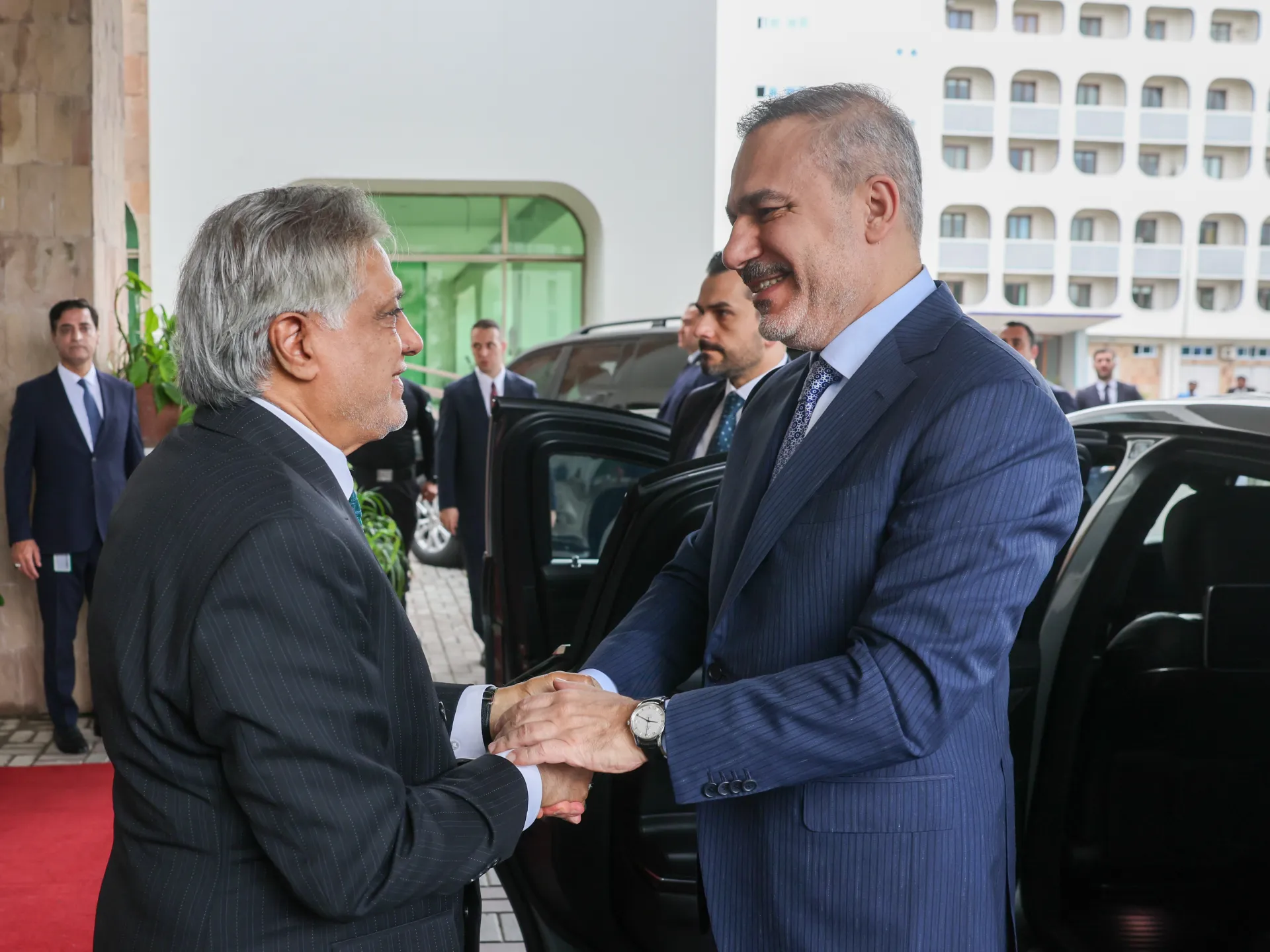
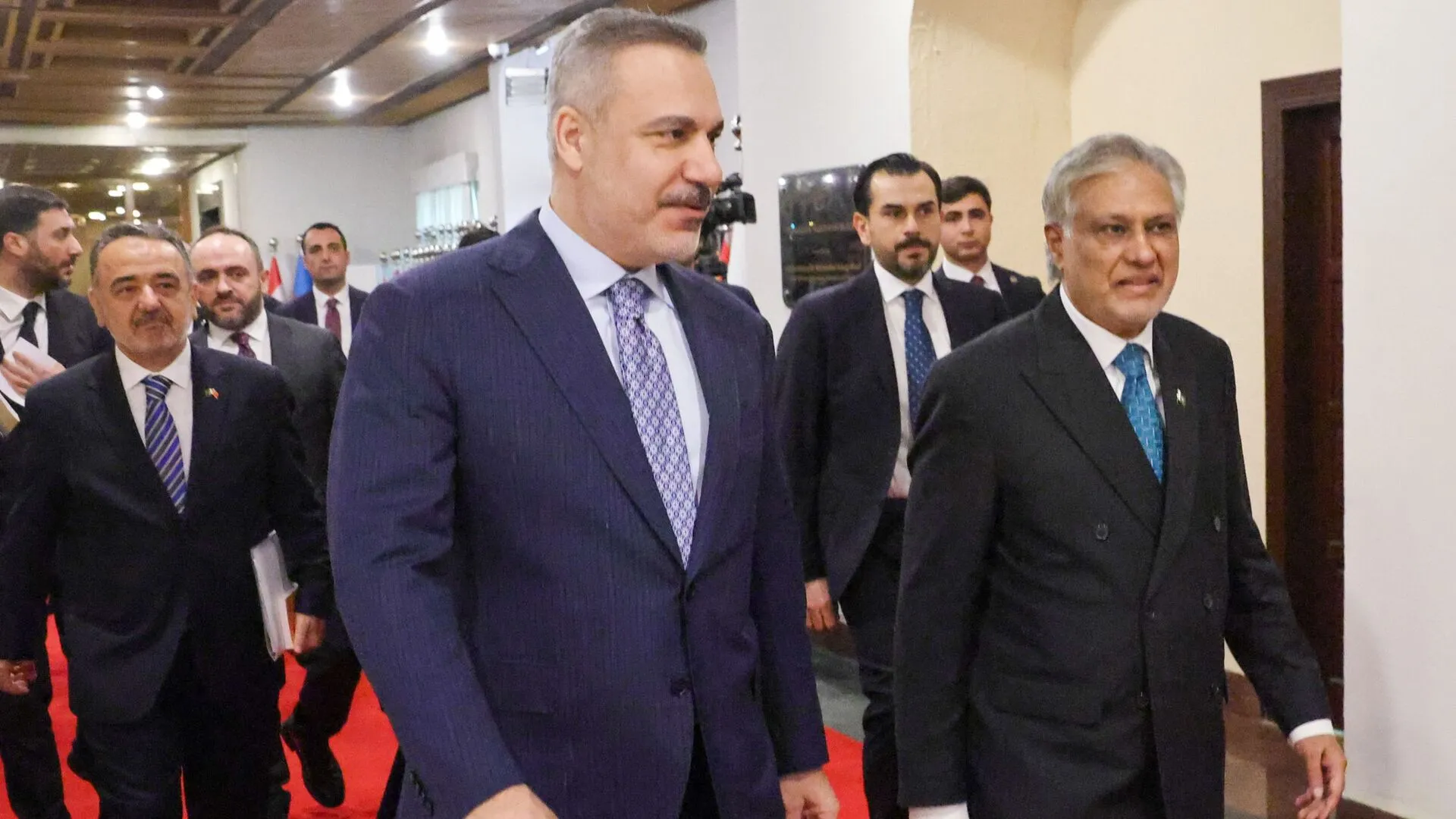
It added that U.S. Secretary of State Marco Rubio had then met with Syrian Foreign Minister Asaad al-Shibani and Turkish Foreign Minister Hakan Fidan, who arrived in Washington on Monday, and that they agreed to proceed with implementing an agreement reached in March between Damascus and the Kurdish-led Syrian Democratic Forces to integrate the SDF into the new Syrian army. Implementation of the deal has repeatedly stalled amid tensions between the two sides. It was unclear what concrete steps were agreed upon in Monday’s meeting.

The statement said the “American side also affirmed its support for reaching a security agreement with Israel,” but it did not say how Syria had responded.

Al-Sharaa’s visit was the first to the White House by a Syrian head of state since the Middle Eastern country gained independence from France in 1946 and comes after the U.S. lifted sanctions imposed on Syria during the decades the country was ruled by the Assad family. Al-Sharaa led the rebel forces that toppled Syrian President Bashar Assad last December and was named the country’s interim leader in January.

Trump and Al-Sharaa — who once had ties to Al Qaeda and had a $10-million U.S. bounty on his head — first met in May in Saudi Arabia. At the time, the U.S. president described Al-Sharaa as a “young, attractive guy. Tough guy. Strong past, very strong past. Fighter.” It was the first official encounter between the U.S. and Syria since 2000, when then-President Clinton met with Hafez Assad, the father of Bashar Assad.

White House Press Secretary Karoline Leavitt said Monday’s visit is “part of the president’s efforts in diplomacy to meet with anyone around the world in the pursuit of peace.”

One official with knowledge of the administration’s plans said Syria’s entry into the global coalition fighting Islamic State will allow it to work more closely with U.S. forces, although the new Syrian military and the Kurdish-led Syrian Democratic Forces in the country’s northeast had already been fighting the group.

Before Al-Sharaa’s arrival in the U.S., the United Nations Security Council voted to lift sanctions on the Syrian president and other government officials in a move that the U.S. ambassador to the U.N., Mike Waltz, said was a strong sign that Syria is in a new era since the fall of Assad.

Al-Sharaa came to the meeting with his own priorities. He wants a permanent repeal of sanctions that punished Syria for widespread allegations of human rights abuses by Assad’s government and security forces. While the Caesar Act sanctions are currently waived by Trump, a permanent repeal would require Congress to act.

One option is a proposal from Sen. Jeanne Shaheen of New Hampshire, the top Democrat on the Senate Foreign Relations Committee, that would end the sanctions without any conditions. The other was drafted by Sen. Lindsey Graham (R-S.C.), a hawkish Trump ally who wants to set conditions for a sanctions repeal that would be reviewed every six months.

But advocates argue that any repeal with conditions would prevent companies from investing in Syria because they would fear potentially being sanctioned. Mouaz Moustafa, executive director of the Syrian Emergency Task Force, likened it to a “hanging shadow that paralyzes any initiatives for our country.”

The Treasury Department said Monday that the Caesar Act waiver was extended for another 180 days.

Kim writes for the Associated Press. AP writers Abby Sewell in Beirut and Fatima Hussein and Konstantin Toropin in Washington contributed to this report.

Source link

British Carrier Hosts Largest Number Of F-35Bs On A Ship Ever

The U.K. Royal Navy flagship, HMS Prince of Wales, is now carrying 24 F-35B fighters — the largest number of the jets to go aboard either of the U.K.’s two aircraft carriers, or any ship, for that matter. All 24 of the jets are British, a significant achievement for the British F-35 force, which has long faced questions about the feasibility of deploying a meaningful number of the short takeoff and vertical landing (STOVL) jets at sea, without U.S. Marine Corps aircraft making up the numbers.

The Royal Navy announced today that the 24 British F-35Bs were aboard HMS Prince of Wales for planned multinational maneuvers in the Mediterranean, called Exercise Falcon Strike. The service has not so far published photos showing all the jets on deck, instead posting imagery from Operation Highmast, the eight-month cruise that took the carrier to the Indo-Pacific region.

HMS Prince of Wales entered the Mediterranean, via the Suez Canal, around a week ago. Six additional British F-35Bs embarked in the carrier once it had arrived in the Med, flying from their base at RAF Marham in England.

A pair of F-35Bs landing on board HMS Prince of Wales during Operation Highmast in May 2025. Crown Copyright

As part of the U.K. Carrier Strike Group, the conventionally powered HMS Prince of Wales is accompanied by the Type 45 destroyer HMS Dauntless, the Type 23 frigate HMS Richmond, the replenishment tanker RFA Tidespring, and several allied ships. A Royal Navy Astute class nuclear-powered attack submarine is normally also part of the Carrier Strike Group.

For Exercise Falcon Strike, the U.K. Carrier Strike Group is joined by the Italian frigate Luigi Rizzo, as well as Norwegian warships, for what are Italian Navy-led air and maritime maneuvers.

Commodore James Blackmore, commander of the U.K. Carrier Strike Group, said that Falcon Strike is “a real demonstration of the warfighting readiness” of the group.

The British F-35Bs on the carrier are from the two frontline units, the Royal Air Force’s No. 617 Squadron and the Royal Navy’s 809 Naval Air Squadron, as well as from the training unit, No. 207 Squadron, RAF, which serves as the Operational Conversion Unit (OCU).

Well done to everyone at Marham for making this happen. Whilst it did require the rather unprecedented deployment of the OCU to achieve a totemic milestone, it has readily demonstrated that our Carriers can be reinforced anywhere in the NATO region in a matter of hours. https://t.co/eIWNIyKkLX

— Greg Bagwell (@gregbagwell) November 7, 2025

It’s notable that, in the past, larger F-35B complements on U.K. carriers were assisted by detaching U.S. Marine Corps aircraft during these cruises.

For example, in 2021, HMS Queen Elizabeth deployed with a Marine Corps-augmented air wing. On that occasion, eight F-35Bs from No. 617 Squadron were joined by 10 from Marine Fighter Attack Squadron (VMFA) 211, the “long.” This total is still smaller than the current F-35B complement for Exercise Falcon Strike.

A U.S. Marine Corps F-35B operates from HMS Queen Elizabeth during the U.K. Carrier Strike Group 21 deployment. Crown Copyright POPhot Jay Allen

The number of F-35Bs now on HMS Prince of Wales is also bigger than has been deployed aboard any amphibious assault ship by the Marine Corps. Back in 2022, the USS Tripoli (LHA-7) hosted 20 of the jets during a test of the “Lightning Carrier” concept. This is based upon essentially turning a big-deck “Gator Navy” amphibious assault ship into a light aircraft carrier, packed with F-35Bs.

The biggest carrier embarkation involving fifth-generation fighters also makes an interesting parallel with developments in China, which is now also flying the J-35 stealth fighter, as well as fixed-wing airborne early warning and control (AEW&C) aircraft from its latest flattop, the Fujian. Elsewhere in the Indo-Pacific region, Japan is meanwhile preparing for regular F-35B operations aboard its two amphibious assault ships that have been modified to become STOVL carriers.

A J-35 launches from the Chinese aircraft carrier Fujian. PLAN

Having a larger number of F-35Bs on board the British carrier means that HMS Prince of Wales can contribute more to Falcon Strike, which also involves air assets from France, Greece, Italy, and the United States.

More importantly, a carrier deployment with 24 British F-35Bs is a major requirement for the declaration of full operating capability for the U.K. Carrier Strike capability, once planned for 2023, then delayed to the end of this year. A 24-aircraft total is the minimum required for this declaration, with the Queen Elizabeth class having the capacity to embark more jets, if required.

The move toward full operating capability is also welcome, considering recent criticism of the British F-35 program.

Last week, the U.K.’s Public Accounts Committee released its latest report on the program. Among others, this highlighted the effects of a lack of overall investment in the program. According to the report, cost-cutting measures have had an adverse impact on the F-35B’s capability, availability to fly, and value for money.

The number of British F-35Bs that will ultimately be available to the Royal Navy’s two carriers has long been a matter of intense debate.

To date, the United Kingdom has only placed firm orders for 48 F-35Bs. The previous Conservative government confirmed it was negotiating to buy another 27 F-35Bs for delivery by 2033. However, this batch of 27 jets will now be divided between F-35As (12) and F-35Bs (15). The conventional takeoff and landing F-35A offers a number of advantages, including being cheaper, possessing a bigger weapons bay, having a nuclear capability, and improved performance in many scenarios. However, it cannot embark on a carrier.

Most analysts consider that many more than 48 F-35Bs would be required to meet the ambition of 24 jets available for the baseline Carrier Strike mission, across two carriers, as opposed to just one. Considering training and other demands, a figure of 60-70 jets is generally thought to be reasonable. It is for this reason that U.S. Marine Corps F-35Bs have been relied upon to make up the required aircraft numbers during carrier cruises.

Officially, at least, the U.K. Ministry of Defense says that it still expects to procure 138 F-35s over the lifetime of the program. However, this total now includes at least 12 F-35As. Having a smaller pool of F-35Bs will also put more strain on the fleet of STOVL jets that are required for missions aboard the carriers.

“The new fast jets will be based at RAF Marham, with the Government expected to procure 138 F35s over the lifetime of the programme.” Everything else aside, this is about as clear a commitment to the UK’s full programme of record as you’re ever going to get……

— Gareth Jennings (@GarethJennings3) June 25, 2025

Whatever the final F-35B numbers, the Royal Navy is increasingly looking to the potential of uncrewed aircraft to bolster its carrier air wings. The Royal Navy hopes that a combination of drones and long-range weapons will help to make a more balanced ‘hybrid carrier air wing,’ as you can read about here.

In 2023, the Royal Navy revealed details of its plan to fit its two carriers with assisted launch systems and recovery gear, enabling operations by a variety of fixed-wing uncrewed aircraft and, potentially, also conventional takeoff and landing crewed types.

“We are looking to move from STOVL to STOL, then to STOBAR [short takeoff but arrested recovery], and then to CATOBAR [catapult assisted takeoff but arrested recovery],” Col. Phil Kelly, the Royal Navy’s Head of Carrier Strike and Maritime Aviation, told the Combined Naval Event conference in 2023. “We are looking at a demonstrable progression that spreads out the financial cost and incrementally improves capability.”

A General Atomics rendering of a catapult-equipped HMS Prince of Wales with a Gambit-series drone ready to launch. The rendering also depicts an air wing that includes carrier-capable MQ-9B drones fitted with a STOL kit, as well as F-35Bs. GA-ASI

By the time a British carrier makes its next scheduled deployment to the Indo-Pacific, planned for 2029, the Ministry of Defense hopes that it will include some kind of Collaborative Combat Aircraft (CCA). This aspiration was laid out by First Sea Lord General Sir Gwyn Jenkins earlier this year, when he said he wanted to “launch the first jet-powered collaborative platform drone as a concept demonstrator off a Queen Elizabeth class aircraft carrier” before the end of 2026.

Nevertheless, for the foreseeable future, the F-35B remains the cornerstone of the carrier air wing’s strike capability. Putting the largest number of the stealth jets on a Royal Navy carrier is a visible demonstration of the aircraft’s central role and underscores the British F-35Bs’ progress, despite lingering concerns over final aircraft numbers and other criticisms of the program.

Contact the author: [email protected]

Thomas is a defense writer and editor with over 20 years of experience covering military aerospace topics and conflicts. He’s written a number of books, edited many more, and has contributed to many of the world’s leading aviation publications. Before joining The War Zone in 2020, he was the editor of AirForces Monthly.


Source link

England 38-18 Fiji: Hosts extend winning run

England: M Smith; Freeman, Lawrence, Dingwall, Feyi-Waboso; F Smith, Mitchell; Genge, Cowan-Dickie, Heyes, Coles, Chessum, Pepper, Earl, Cunningham-South

Replacements: George, Baxter, Opoku-Fordjour, Itoje, T Curry, Pollock, Spencer, Arundell

Fiji: Rayasi; Ravutaumada, Ravouvou, Tuisova, Wainiqolo; Muntz, Kuruvoli; Mawi, Ikanivere, Doge, Nasilasila, Mayanavanua, Sowakula, Canakaivata, Mata

Replacements: Togiatama, Hetet, Tawake, Vocevoce, Murray, Wye, Armstrong-Ravula, Maqala

Sin-bin: Ravutaumada

Source link

Sunday Brunch hosts forced to halt show and apologise after outburst from guest

Sunday Brunch hosts Simon Rimmer and Tim Lovejoy were left in a flap when one of their guests dropped a swear word – before then asking, too late, if his language choice was acceptable

Channel 4 stars Simon Rimmer and Tim Lovejoy were left embarassed and scrambling to clear the air after one of their Sunday Brunch guests swore live on air. The warm natured weekend daytime show sees celebrities join the hosts to cook and discuss projects.

Among the stars joining the presenters on the Channel 4 show this weekend was 55-year-old American actor Nick Offerman who was on air promoting his Little Woodchucks book. But things took an unexpected turn when the Parks and Recreation star dropped some coarse language while fellow guests sat around clutching mugs of tea.

Nick was asked by the hosts to open up about one of his biggest fears in life – and he explained that he worried about letting down his parents.

READ MORE: Inside Tess Daly’s home life with Vernon Kay after 21 years of StrictlyREAD MORE: Martin Lewis calls for urgent action after new price rise for 15million people

He said: “My parents are the greatest citizens I’ve ever met. They lived these beautiful lives of service and they had incredible values. And so naturally, as their kid, I experimented with the other direction.”

He went on: “And eventually with maturation, I learned to try and be a decent person, but I’m always catching up. So when I wake up in a sweat at night, I just think, ‘Are my parents ashamed of me?'”

Asked if he ever apologised to his parents, Nick continued: “I have. When I got to college and I was out on my own for the first time and I had to have my own chequebook, I realised that they had given me all the tools I needed to just be a good person.”

He then sparked anxious laughter and blushes when he added: “I called my dad and said, ‘Dad, I’m sorry for the last four or five years’. And then, ‘I’ve been quite a real t**t.’ Can I say that?”

Tim then desperately jumped in to declare: “You can’t. I am going to apologise for that. But carry on.” Nick then completed his story while everyone in the studio laughed nervously. Sunday Brunch is no stranger to controversy – with guests going off script in the past and causing the hosts to issue an apology.

And earlier this year, there were even reports that comedian Katherine Ryan had breached Ofcom rules when she was a guest on the show. The Canadian stand up was left full of remorse after being told off for repeatedly mentioning Gousto recipe boxes on the show.

It was found that her repeated mentioning of the brand went beyond acceptable limits for what can be deemed “editorially justified”. Channel 4 reacted to the findings by promising to issue “further training” to the makers of the show – which was enough to satisfy the broadcast regulator.

Channel 4 said “the presenters were transparent about Ms Ryan’s commercial connection with Gousto” – however they added the “repeated references to Gousto were unsolicited, unscripted, spontaneous, outside the scope of the agreed contribution and clearly not part of the editorial intent”.

Channel 4 told Ofcom: “Ms Ryan was spoken to by a member of the editorial team. She expressed remorse at having strayed from the agreed script and gave her assurances that there would be no more mentions of Gousto in the programme.”

Follow Mirror Celebs on TikTok, Snapchat, Instagram, Twitter, Facebook, YouTube and Threads.


Source link