Senate rejects resolution to limit hostilities in Iran
WASHINGTON — Senate Republicans blocked a war powers resolution Wednesday designed to withdraw U.S. forces from hostilities in Iran, as the Trump administration accelerates its military campaign in a conflict that has killed hundreds, including at least six American service members.
The motion failed in a vote of 47-53.
In addition to pulling out military resources from the Middle East, the measure — introduced by Sens. Chuck Schumer (D-N.Y.), Adam Schiff (D-Calif.) and Tim Kaine (D-Va.) — would have required Congress’ explicit approval before future engagement with Iran, a power granted to the legislative branch in the Constitution.
The House, where Republicans also hold an advantage, is scheduled to weigh in on a similar measure Thursday. Even if both Democratic-led measures were to succeed, President Trump was widely expected to veto the legislation.
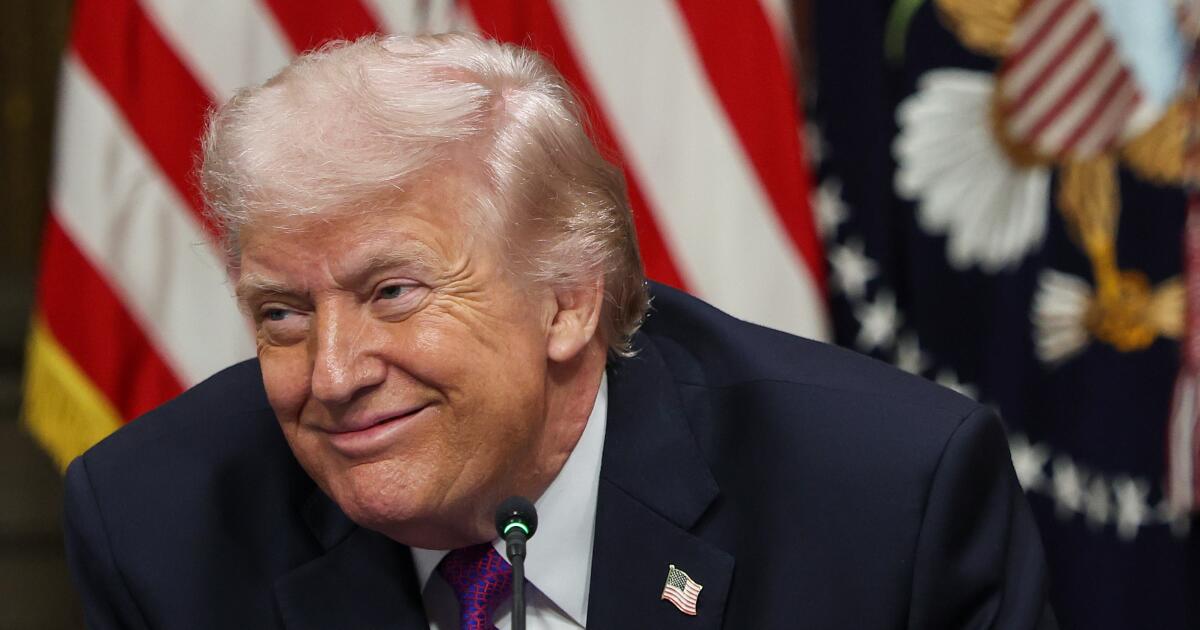
“We are doing very well on the war front, to put it mildly,” President Trump said at a White House event on Wednesday afternoon. The president, who has come under scrutiny for offering shifting explanations on the war’s endgame, said that if he was asked to scale the American military operation from one to 10, he would rate it a 15.
Democrats dispute that Trump possesses the authority to wage the ongoing operation in Iran without explicit congressional approval.
Acknowledging the measure was unlikely to succeed, they framed the vote as a strategy to force lawmakers to put their support for or opposition to the war on record.
“Today every senator — every single one — will pick a side,” Schumer said. “Do you stand with the American people who are exhausted with forever wars in the Middle East, or stand with Donald Trump and Pete Hegseth as they bumble us headfirst into another war?”
Senate Majority Leader John Thune (R-S.D.) and most of his Republican colleagues have maintained that the president carried out a “pre-emptive” and “defensive” strike in Iran, giving him full authority to continue unilateral military operations.
Republicans saw the vote as the “last roadblock” stopping Trump from carrying out his mission against the Islamic Republic.
“I think the president has the authority that he needs to conduct the activities and operations that are currently underway there. There are a lot of controversy and questions around the war powers act, but I think the president is acting in the best interest of the nation and our national security interests,” Thune said at a news conference.
Senators largely held to party loyalties, with the exception of Kentucky Republican Rand Paul, who broke ranks to support the measure, and Pennsylvania Democrat John Fetterman, who opposed it.
The vote comes as Defense Secretary Pete Hegseth said Wednesday that the war against Iran is “accelerating,” with American and Israeli forces expanding air operations into Iranian territory. He pointed to evidence released by U.S. Central Command of a submarine strike on an Iranian warship, and also lauded other strikes throughout the region as civilian casualties in Iran surpassed 1,000 on the fourth day of the conflict, according to rights groups.
“We’re going to continue to do well,” Trump said Wednesday. “We have the greatest military in the world by far and that was a tremendous threat to us for many years. Forty-seven years they’ve been killing our people and killing people all over the world, and we have great support.”
Republicans blocked a similar war powers vote in January after the president ordered U.S. special forces to capture and extradite Venezuelan President Nicolás Maduro in Caracas on drug trafficking charges.
GOP leaders argued that the outcome of that mission equated to a quick success in the Middle East, despite an uncertain timeline from the Department of Defense.
In the House, lawmakers will vote on a separate war powers effort Thursday. That bill is led by Rep. Ro Khanna (D-Calif.) and Rep. Thomas Massie (R-Ky.), the two lawmakers who authored the Epstein Files Transparency Act.
“Instead of sending billions overseas, we need to invest in jobs, healthcare, and education here,” Khanna said on X.
In addition to that proposal, moderate Democrats in the House have introduced a separate resolution that would give the administration a 30-day window to justify continued hostilities in the Middle East before requiring a formal declaration of war or authorization from Congress.