
hopes

Venezuela Hopes for a New José Gregorio Hernández Miracle

Despite being a pacifist, Hernández joined a voluntary militia to face foreign threats. (Venezuelanalysis)

On October 19, the Venezuelan people celebrated the sanctification of José Gregorio Hernández, the “doctor of the poor.”

With his beatification process launched under Pope Francis, the first Venezuelan to hold this honor was in a way an “exception” to the Catholic Church’s rules: the threshold is two “miracles” attributed to the candidate, and Hernández only has one. 

Now, during the holiday season and with the year drawing to a close, a second miracle comes to mind: halting a foreign military operation against our country and staving off the collapse of the Venezuelan economy in the wake of the US naval blockade.

Why turn to José Gregorio for this? It actually makes perfect sense. In December 1902, German, British and Italian ships joined forces to blockade Venezuela’s coasts. It was a tactic to force the Cipriano Castro government to pay back exorbitant debts accrued by its predecessors.

In response, Castro issued his famous proclamation, “The foreigner’s insolent boots have desecrated the sacred soil of the Homeland!”, and called for national unity. His call was overwhelmingly backed, even by his adversaries.

Students, professionals and even doctors like José Gregorio Hernández were quick to enlist in a voluntary militia. Nationalist fervor, inspired by the memories of the independence struggle and figures like Bolívar and Ayacucho, contrasted with Venezuela’s military shortcomings in facing the powerful foreign fleets. History does have a way of repeating itself.

In spite of his pacifism, commitment to medicine and strong religious beliefs, Hernández did not waver for a second in answering the nation’s call.

After a lot of “gunboat diplomacy,” the Venezuelan government held its ground and ensured that the debts were subjected to international mediation. 

The doctor of the poor, fortunately, did not have to change his stethoscope for a rifle. In contrast, he managed to do what we all want to do today: continue working for our country and its people.

Hernández studied in Europe and was a pioneer of experimental medical research in Venezuela. He created the histology, experimental physiology and bacteriology branch in the Central University of Venezuela. He introduced the use of the microscope and promoted modern scientific methods in the country.

Still, it’s not so much these achievements that have him worshiped by Venezuelans. Rather, it was his immense generosity, which included seeing patients free of charge and even leaving a little bag with money outside his office so that the poorest patients could buy medicines and food. Hernández saw medicine as a tool at the service of the majority.

Therefore, after his death in 1919, former president and writer Rómulo Gallegos wrote: “It wasn’t the common pain of losing a dedicated and eminent citizen, but a deeper, nobler feeling, something that poured in generous torrents.”

As time went on, this feeling would only grow. Thousands of faithful began to attribute “impossible” medical feats to Hernández; they printed out prayer cards with his face, built little statues to put on bedside tables, placed him on personal altars and filled churches with plaques and candles to acknowledge the “divine favors” bestowed.

The myth began to spread amongst the people. In contrast, Catholic authorities spent decades grappling with the phenomenon. But he was already a saint for the masses. Unlike the Church, he actually delivered…

In fact, Venezuelan religious authorities tried to undermine their believers’ wishes by claiming that Hernández could not be a saint. They claimed his figure was used by “sorcerers,” they disparaged him by claiming he was gay, forbade priests from naming him in public events, and even attempted to censor a song by Puerto Rican musician Daniel Santos dedicated to him.

But Venezuelans don’t really care that José Gregorio had no known love relationships, that he liked to dye his grey hairs or that he dressed outlandishly. On the contrary, we think that is awesome. There is nothing more Venezuelan than ignoring the norms!

The Venezuelan people looked at his virtues and, just in case, made up new ones, until he was consolidated as a religious, kind and serene myth, one who was dedicated to the common good. In the “popular pantheon” he stands alongside figures like independence hero Simón Bolívar, a military genius who traveled the entire continent on horseback several times.

Some historians posit that the peoples create myths that work as role models and express their inner beliefs. I think that’s a correct and very inspired conclusion. In that light, we have quite a spectrum of heroes. It goes from Bolívar, a republican warrior, all the way to José Gregorio Hernández, the pacifist healer. On one hand, a man who fought to liberate people from colonialism, and on the other, a man who heals them; one who proffered great victory speeches and one who triumphed quietly in a laboratory. But one thing they, and all our other heroes, have in common is that they never hesitated to defend the homeland against outside threats.

It is worth clarifying that the peoples, and not “miracles,” are responsible for turning the wheels of history. But with a bloodthirsty maniac like Trump in the White House, there is no harm in reaching out to divine entities as well…

José Gregorio Hernández, like Bolívar and so many others, bequeathed us a lot more than statues and official celebrations. They left us the example of fighting for something bigger than us, a nation that belongs to everyone. And facing a real imperialist threat, resistance is not optional. The struggle continues.

Jessica Dos Santos is a Venezuelan university professor, journalist and writer whose work has appeared in outlets such as RT, Épale CCS magazine and Investig’Action. She is the author of the book “Caracas en Alpargatas” (2018). She’s won the Aníbal Nazoa Journalism Prize in 2014 and received honorable mentions in the Simón Bolívar National Journalism prize in 2016 and 2018.

The views expressed in this article are the author’s own and do not necessarily reflect those of the Venezuelanalysis editorial staff.

Source link

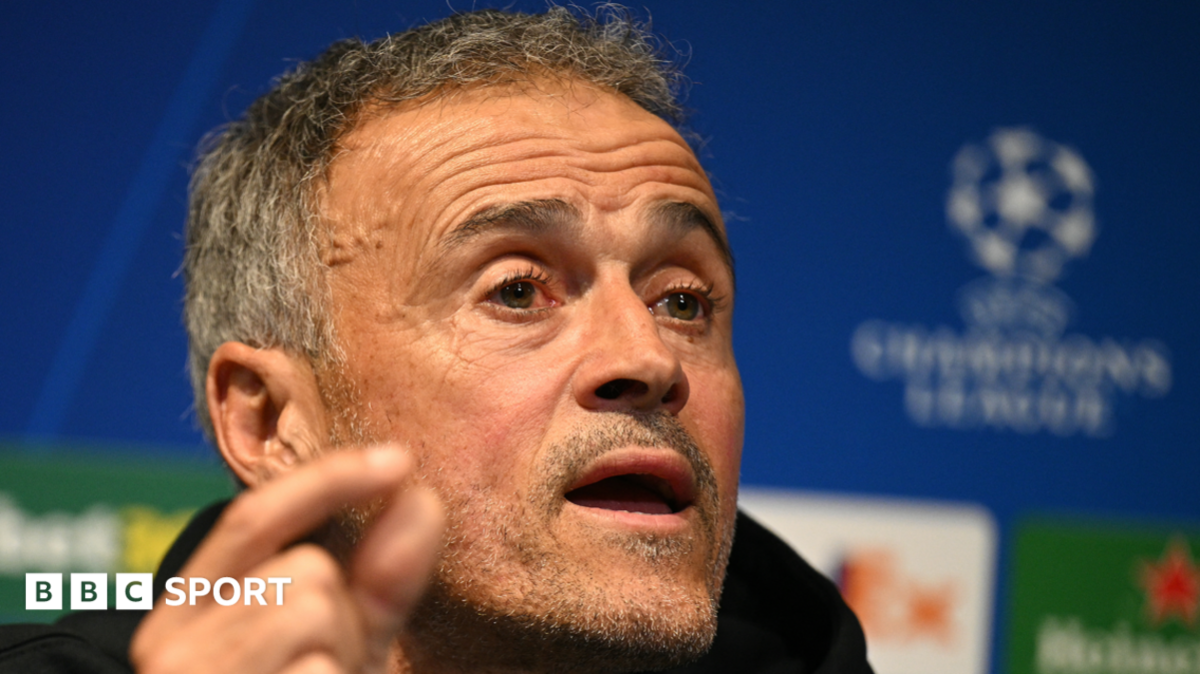
How a bizarre 2-point conversion unraveled Rams’ No. 1 seed hopes

In a matter of minutes, the home of the Seattle Seahawks went from a painfully quiet Lumen “Library” to a rollicking madhouse that sent seismologists scrambling for their ground-motion sensors.

Call it the Sheesh-Quake Game.

In a historic comeback, the Seahawks dug their way out of a 16-point, fourth-quarter ditch to beat the Rams in overtime, 38-37.

Oh, the visitors will agonize over some of the bizarre calls, some deserving of further explanation from the NFL. An ineligible-man-downfield call that wiped out a Rams touchdown when they were a yard away from the end zone? That had people scratching their heads. Then there was that do-or-die two-point conversion that seemingly fell incomplete… but later was reversed. More on that in a moment.

  • Share via

Gary Klein breaks down what went wrong for the Rams in their 38-37 loss to the Seattle Seahawks at Lumen Field on Thursday night.

When the Rams wincingly rewind the video of the collapse, they’ll be peering through the cracks in their fingers.

You’ve heard of a no-look pass? This was a no-look finish.

As soothing wins go, this was a warm bubble bath for the Seahawks, who secured a playoff berth and assumed the driver’s seat in the race for the NFC’s No. 1 seed.

“You hear people late in the year have losses, and you hear people come up here and say, like, ‘Man, this is going to be a good thing for us,’” said Seahawks receiver Cooper Kupp, a onetime Rams hero. “It’s much better to be up here right now saying this is going to be a good thing for us.”

Kupp atoned for his first-half fumble with a successful two-point conversion in the fourth quarter — the first of three in a row for the Seahawks — and a 21-yard reception on the winning drive in overtime.

“If you find a way to get a win when you do turn the ball over three times, you do end up down 16 points, or whatever it was, in the fourth quarter, just finding ways to win games when the odds are against you and things aren’t going right — finding a way to fight back — it’s going to be a good thing for us,” Kupp said. “A good thing for us to draw on.”

The Rams are sifting through the debris of a different lesson. It was a reminder that this charmed season, with Matthew Stafford in line to win his first Most Valuable Player honor, can come crashing down at any moment. There’s no more smooth glide path to Santa Clara for the Super Bowl.

As good as it was for most of the game, picking off Sam Darnold twice and sacking him four times, the Rams defense failed to hold up when it counted most. Shades of the three-point loss at Carolina.

Darnold will have a story to tell. He exorcised a lot of demons. The Rams sacked him nine times in the playoffs last season when Darnold was playing for Minnesota, and intercepted six of his passes in two games this season.

“It’s not great when you have interceptions and turnovers, you want to limit that,” said Darnold, the former USC star. “But all you can do is fight back. For us, I was just going to continue to plug away.”

Darnold came through when it counted, completing five passes on the winning drive, then finding the obscure tight end Eric Saubert — his fourth option — wide open in the end zone on the triumphant conversion.

Seattle Seahawks quarterback Sam Darnold looks to pass against the Rams in the first half Thursday.

Seattle Seahawks quarterback Sam Darnold looks to pass against the Rams in the first half Thursday.

(Lindsey Wasson / Associated Press)

The second of the three conversions was the game’s most controversial moment. The Seahawks needed it to forge a 30-30 tie with a little more than six minutes remaining in regulation.

Darnold fired a quick screen pass to his left, trying to get the ball to Zach Charbonnet. Rams defender Jared Verse jumped the route and knocked down the pass. Everyone thought the play was dead, including Charbonnet, who casually jogged across the goal line and picked up the ball as it lay in the end zone.

That proved critical because officials — after what seemed like an eternity — ruled that Darnold had thrown a backward pass and the ball was live when Charbonnet picked it up. Therefore, a fumble recovery and successful conversion, tying the game.

Asked later if it felt like a backward pass, Darnold had a half-smile and said, “Um, yeah. It felt like I threw it kind of right on the side. I’m glad Charbs picked it up, and that turned out to be a game-changing play.”

Was that designed to be a backward pass?

“It just happened to be backwards,” he said. “It wasn’t necessarily talked about. We were just trying to get it in down there on the goal line.”

The Seahawks were lined up to kick off when officials announced that, upon review, the previous play was successful. Suddenly, the most improbable of come-from-victories was within reach.

Earlier in the fourth quarter, when the home team was trailing, 30-14, the Amazon Prime crew had to do some vamping to keep viewers engaged. Al Michaels and Kirk Herbstreit told some Kurt Warner stories from the “Greatest Show on Turf” days. Hey, it had to be more interesting than this game.

Michaels delivered an obscure stat: When leading by 15 points or more in the fourth quarter, the Rams were 323-1.

Informed of that, Seahawks running back Cam Akers — once shown the door by the Rams — had a wry response.

“Now, they’ve lost two,” he said.

Celebration in one locker room. Silence in another.

Do you believe in meltdowns?

Source link

False spring: The end of Tunisia’s revolutionary hopes? | Arab Spring News

Fifteen years ago, a Tunisian fruit seller, Mohamed Bouazizi, despairing at official corruption and police violence, walked to the centre of his hometown of Sidi Bouzid, set himself on fire, and changed the region forever.

Much of the hope triggered by that act lies in ruins. The revolutions that followed in Tunisia, Libya, Egypt and Syria have cost the lives of tens and thousands before, in some cases, giving way to chaos or the return of authoritarianism.

Recommended Stories

list of 4 itemsend of list

Only Tunisia appeared to fulfil the promise of the “Arab Spring”, with voices from around the world championing its democratic success, ignoring economic and political failings through much of its post-revolutionary history that stirred discontent.

Today, many of Tunisia’s post-revolutionary gains have been cast aside in the wake of President Kais Saied’s dramatic power grab in July 2021. Labelled a coup by his opponents, it ushered in a new hardline rule in Tunisia.

Burying the hopes of the revolution

Over the following years, as well as temporarily shuttering parliament – only reopening it in March 2023 – Saied has rewritten the constitution and overseen a relentless crackdown on critics and opponents.

“They essentially came for everyone; judges, civil society members, people from all political backgrounds, especially the ones that were talking about unifying an opposition against the coup regime,” Kaouther Ferjani, whose father, 71-year-old Ennahdha leader Said Ferjani, was arrested in February 2023.

In September, Saied said his measures were a continuation of the revolution triggered by Bouzazzi’s self-immolation. Painting himself a man of the people, he railed against nameless “lobbyists and their supporters” who thwart the people’s ambitions.

However, while many Tunisians have been cowed into silence by Saied’s crackdown, they have also refused to take part in elections, now little more than a procession for the president.

In 2014, during the country’s first post-revolution presidential election, about 61 percent of the country’s voters turned out to vote.

By last year’s election, turnout had halved.

“Kais Saied’s authoritarian rule has definitively buried the hopes and aspirations of the 2011 revolution by systematically crushing fundamental rights and freedoms and putting democratic institutions under his thumb,” Bassam Khawaja, deputy director at Human Rights Watch, told Al Jazeera English.

In the wake of the revolution, many across Tunisia became activists, seeking to involve themselves in forging what felt like a new national identity.

The number of civil society organisations exploded, with thousands forming to lobby against corruption or promote human rights, transitional justice, press freedom and women’s rights.

At the same time, political shows competed for space, debating the direction the country’s new identity would take.

BEIJING, CHINA - MAY 31: Tunisian President Kais Saied attends a signing ceremony with Chinese President Xi Jinping (not pictured) at the Great Hall of the People on May 31, 2024 in Beijing, China. (Photo by Tingshu Wang - Pool/Getty Images)
Tunisian President Saied attends a ceremony with President Xi Jinping in China [ingshu Wang/Getty Images]

“It was an amazing time,” a political analyst who witnessed the revolution and remains in Tunisia said, asking to remain anonymous. “Anybody with anything to say was saying it.

“Almost overnight, we had hundreds of political parties and thousands of civil society organisations. Many of the political parties shifted or merged… but Tunisia retained an active civil society, as well as retaining freedom of speech all the way up to 2022.”

Threatened by Saied’s Decree 54 of 2022, which criminalised any electronic communication deemed by the government as false, criticism of the ruling elite within the media and even on social networks has largely been muzzled.

“Freedom of speech was one of the few lasting benefits of the revolution,” the analyst continued.

“The economy failed to pick up, services didn’t really improve, but we had debate and freedom of speech. Now, with Decree 54, as well as commentators just being arrested for whatever reason, it’s gone.”

In 2025, both Amnesty International and Human Rights Watch slammed Tunisia’s crackdown on activists and nongovernmental organisations (NGOs).

In a statement before the prosecution of six NGO workers and human rights defenders working for the Tunisian Council for Refugees in late November, Amnesty pointed to the 14 Tunisian and international NGOs that had their activities suspended by court order over the previous four months.

Included were the Tunisian Association of Democratic Women, the Tunisian Forum for Social and Economic Rights, the media platform Nawaat and the Tunis branch of the World Organisation against Torture.

‘Plotting against state security’

Dozens of political figures from post-revolution governments have also been arrested, with little concern for party affiliation or ideology.

In April 2023, 84-year-old Rached Ghannouchi, leader of what had been Tunisia’s main political bloc, the Ennahdha Party, was arrested on charges of “plotting against state security”.

According to his daughter, Yusra, after a series of subsequent convictions, Ghannouchi currently faces a further 42 years in jail.

Later the same year, Ghannouchi’s principal critic, Abir Moussi, the leader of the Free Destourian Party, was jailed on a variety of charges.

Critics dismiss the charges, saying the criteria for arrest have been the person’s potential to rally opinion against Saied.

“This is not just the case for my father,” Yusra continued, referring to others, such as the leading post-coup opposition figure Jawhar Ben Mubarak.

“Other politicians, judges, journalists, and ordinary citizens … have been sentenced to very heavy sentences, without any evidence, without any respect for legal procedures, simply because Tunisia has now sadly been taken back to the very same dictatorship against which Tunisians had risen in 2010.”

The head of Tunisia's Islamist movement Ennahdha Rached Ghannouchi greets supporters upon arrival to a police station in Tunis ,on February 21, 2023, in compliance to the summons of an investigating judge. (Photo by FETHI BELAID / AFP)
The head of Tunisia’s Ennahdha, Rached Ghannouchi, greets supporters upon arrival at a police station in Tunis on February 21, 2023, in compliance with the summons of an investigating judge [Fethi Belaid/AFP]

Ghannouchi and Moussi, along with dozens of former elected lawmakers, remain in jail. The political parties that once vied for power in the country’s parliament are largely absent.

In their place, since Saied’s revised 2022 constitution weakened parliament, is a body that is no longer a threat to the president.

“The old parliament was incredibly fractious, and did itself few favours,” said Hatem Nafti, essayist and author of Our Friend Kais Saied, a book criticising Tunisia’s new regime. He was referring to the ammunition provided to its detractors by a chaotic and occasionally violent parliament.

“However, it was democratically elected and blocked legislation that its members felt would harm Tunisia.

“In the new parliament, members feel the need to talk tough and even be rude to ministers,” Nafti continued. “But it’s really just a performance… Nearly all the members are there because they agree with Kais Saied.”

Hopes that the justice system might act as a check on Saied have faltered. The president has continued to remodel the judiciary to a design of his own making, including by sacking 57 judges for not delivering verdicts he wanted in 2022.

By the 2024 elections, that effort appeared complete, with the judicial opposition to his rule that remained, in the shape of the administrative court, rendered subservient to his personally appointed electoral authority, and the most serious rivals for the presidency jailed.

“The judiciary is now almost entirely under the government’s control,“ Nafti continued. “Even under [deposed President Zine El Abidine] Ben Ali you had the CSM [Supreme Judicial Council], which oversaw judges’ appointments, promotions, and disciplinary matters.

“Now that only exists on paper, with the minister of justice able to determine precisely what judges go where and what judgements they’ll deliver.”

Citing what he said is the “shameful silence of the international community that once supported the country’s democratic transition”, Khawaja said: ”Saied has returned Tunisia to authoritarian rule.”

A man holds a flare as protesters rally.
A protest against Saied on fourth years after his power grab. Tunis, July 25, 2025 [Jihed Abidellaoui/Reuters]

Source link