hopeful

Contributor: We need more of the hopeful sci-fi that ‘Star Trek’ gave us 60 years ago

Rod RoddenberryGuest contributor 

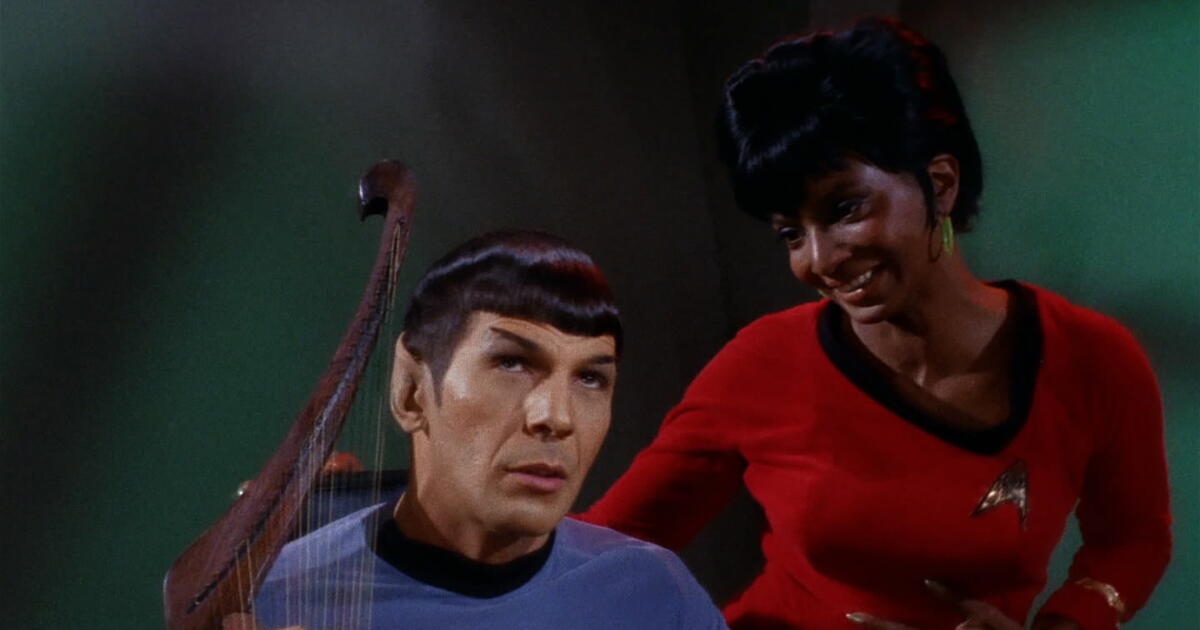
A few years ago, I received a call I’ll never forget. Jeanette Epps, an astronaut aboard the International Space Station, Zoomed into my living room from 250 miles above Earth. During our conversation, she told me that one of the reasons she chose her career was a television show my father created in 1966.

She wasn’t alone. I’ve heard versions of that same story from countless people over the years. Engineers. Scientists. Astronauts. People who saw possibility on a television screen before they ever saw it in the real world.

They credit “Star Trek” for showing them a future they wanted to help build. That’s an extraordinary thing for a television series to accomplish. It didn’t just entertain millions of people. It gave many of them a direction.

And I don’t think that was because of the ships, the gadgets or the aliens. It was because, underneath all of it, was a profoundly human belief that we are capable of becoming something better.

There was a time when science fiction made a bet on humanity. A bet that humanity was worth rooting for. We need storytellers willing to make that bet again.

I don’t think we have an innovation problem. We have an inspiration problem.

We talk a lot about what we’re leaving the next generation. The debt. The climate. The geopolitical mess. But there’s another inheritance we don’t talk about enough: what we show them is possible.

Today, many visions of the future are dominated by collapse, dystopia and fear. Those stories can have value. But conflict doesn’t always have to come from destruction. It can come from discovery. Two minds encountering an idea neither had considered. A crew facing the unknown with curiosity instead of fear. That kind of conflict doesn’t leave you feeling like the world is ending. It leaves you feeling like it’s just beginning.

Most storytelling holds a mirror up to who we are. Our flaws, our failures, our contradictions. But there is another kind. Stories built around characters a step or two ahead of where humanity is. Not perfect. But people who have learned how to cooperate, how to lead, how to stay curious and how to put something larger than themselves first. Characters you don’t just recognize. Characters you want to become one day.

That distinction changes what a story asks of you. And what you walk away believing is possible.

This year, “Star Trek” celebrates its 60th anniversary.

That’s not a milestone you reach by accident. Franchises built on spectacle fade. Ones built on something people actually needed tend to stick around.

The engineers who built Silicon Valley, the astronauts who went to space, the scientists pushing the edges of medicine and artificial intelligence — many of them trace a line back to this show. That wasn’t the plan. Nobody set out to build an innovation pipeline out of a television series. But that’s exactly what happened. When you give people a future worth believing in, they go build it — or sometimes they get inspired to imagine other hopeful destinations and lead us toward them. That’s not nostalgia. That’s a model.

One thing my dad understood that I think gets overlooked: “Star Trek” wasn’t going out into the galaxy to find aliens that looked different. It was going out to find aliens that thought different.

Diversity of perspective is how a species grows. My father gave that idea a name: IDIC. Infinite Diversity from Infinite Combinations. It didn’t mean you had to abandon your own point of view. It meant staying open to someone else’s. Because that’s how you grow. That idea has never been more relevant. And it has never been more achievable.

For the first time in history, a creator anywhere in the world can tell a story that reaches everyone, and now it can come from anywhere. The future belongs to everyone. The stories that shape it should too.

That astronaut who called me from space didn’t just watch a television show. She saw a future worth dedicating her life to.

Every generation needed something to build toward before they ever picked up a tool. A vision. A direction. A story that made the future feel worth the work. And right now, we’re not building enough of that.

We need stories that don’t just entertain us, but also become our compass. We need the kind of storytelling that doesn’t ask what could go wrong, but asks what could go right.

Rod Roddenberry, founder of the Roddenberry Foundation and son of “Star Trek” creator Gene Roddenberry and actor Majel Barrett Roddenberry, is an executive producer on current “Star Trek” television shows.

Insights

L.A. Times Insights delivers AI-generated analysis on Voices content to offer all points of view. Insights does not appear on any news articles.

Perspectives

The following AI-generated content is powered by Perplexity. The Los Angeles Times editorial staff does not create or edit the content.

Ideas expressed in the piece

  • The article argues that optimistic science fiction can do more than entertain: it can give audiences a constructive vision of the future and inspire people to pursue careers in science, engineering and space exploration. “Star Trek” is presented as an example of storytelling that made human progress feel attainable.

  • It contends that contemporary culture is overly saturated with collapse, dystopia and fear. Although such stories can be useful, the article suggests that narratives centered on discovery, cooperation and curiosity can encourage audiences to imagine what might go right rather than merely anticipate disaster.

  • The piece maintains that aspirational characters—people who have learned to cooperate, remain curious and serve purposes larger than themselves—can function as moral examples. In this view, fiction should not only reflect present flaws but also depict people and societies worth becoming.

  • It further argues that “Star Trek’s” emphasis on cultural and intellectual diversity remains especially relevant. The franchise’s principle of “Infinite Diversity in Infinite Combinations” is presented as a model for learning through different perspectives, while the series’ enduring influence is cited as evidence that hopeful stories can shape real-world ambitions.[1][2]

Different views on the topic

  • A contrasting perspective holds that dystopian and cautionary science fiction serves an essential purpose by exposing the consequences of reckless behavior, political failure and technological overreach. Recent commentary argues that many influential works were intended as warnings or satire, not as blueprints for an attractive future.[3]

  • Feminist dystopian fiction offers another counterpoint: bleak speculative narratives can make systemic problems—including misogyny, violence against women, gender inequality and threats to reproductive rights—more visible. From this perspective, darkness is not simply pessimism; it can be a way to represent harms that already exist and demand attention.[4]

  • Critics also caution that “Star Trek’s” hopeful vision can obscure tensions within its own world. The franchise combines ideals of cooperation and equality with armed exploration, alien conflict and interventionist politics, making it both an image of peaceful progress and a vehicle for examining militarism and political failure.[2]

  • Consequently, the strongest science fiction may not choose between hope and warning. Utopian stories can provide direction, while dystopian stories can identify dangers and test whether an envisioned future genuinely addresses exclusion, power and conflict. Treating either mode as sufficient on its own risks producing either inspiration without scrutiny or criticism without a constructive destination.[3][4]

Source link

‘Possible Love’ on Netflix: Meet stars of South Korea’s Oscar hopeful

“My actual personality is not very friendly, I’m afraid,” claims Korean actor Jeon Do-yeon. “Myself and actor Sul Kyung-gu, we can be a little bit brusque. We don’t really have the talent to make the set fun.”

As she says it, though, Jeon and co-star Cho Yeo-jeong are laughing — making the assertion rather harder to believe when it arrives in English from Korean via an interpreter. Throughout our conversation, in fact, the pair chuckles, nods along to each other’s answers, interjects sounds of assent. Enough for me to understand that their chemistry comes naturally, whatever Jeon’s protestations.

“In the film I play a character that chases [Jeon’s character] and it really suited me, almost to the point where I didn’t really need to try and act this role,” as Cho puts it. “I was almost like a sunflower, constantly facing and chasing actor Jeon.”

The actors needed every ounce of the sublime chemistry they forged to portray the magnetic but fatally flawed relationship at the heart of auteur Lee Chang-dong’s first film in eight years, “Possible Love,” which premiered Sunday at the Venice Film Festival. South Korea’s international feature submission for the 2027 Oscars, the Netflix film sees Ye-ji (Cho), a documentarian married to a wealthy businessman (Zo In-sung), cozy up to Mi-ok (Jeon), whose husband (Sul) has been seriously injured in a brutal crackdown on striking factory workers, in order to secure an interview with him — only for divisions of class and professional ambition to expose the fault lines in their relationship, and in turn their marriages.

“It seems like they want to be friends with each other, but then there seems to be a line that just cannot be crossed between them,” says Lee, also through an interpreter, of the actors’ accomplished double act, referring to a scene in which Ye-ji bristles at Mi-ok’s suggestion that her high-end clothes are out of place interviewing unemployed laborers. “[Jeon and Cho] knew of that and they went into shooting that scene knowing that it was quite challenging to express. There were, of course, some things that were up to the camera in bringing that about, but I think that was a scene where the two were able to express just how nuanced and quite strange the relationship can be.”

The film itself is just as slippery and multi-layered, down to Lee’s heady admixture of documentary and dramatic aesthetics. Inspired by real-life labor conflict in South Korea, “Possible Love” uses Ye-ji’s nonfiction study of laid-off workers as a window into the lives of ordinary people swept up in large-scale social change, against the backdrop of which the two women’s competing priorities are thrown into stark relief. Can a filmmaker who totes a $4,000 Lora Piana backpack, however well-intentioned, truly understand the plight of the working class? Is a subject eager to publicize a political struggle prepared for the risk that her personal privacy will be invaded in the process?

To choreograph the film within the film — so compelling that I almost missed seeing its conclusion when “Possible Love” shifts the focus to interpersonal fireworks in the third hour — Lee cast a real-life documentary director and cinematographer as Ye-ji’s crew, lending what Cho calls their “natural energy” to the movements of the camera. Cho herself prepared by consulting the late master of the form, Frederick Wiseman, who was unabashed about the tension between documentary filmaking’s often radical politics and the privilege required to turn it into a profession.

“[Wiseman] was posed the question by some students studying film and documentary: ‘How can I pursue this work in reality?’” she recalls. “And he replied with the immortal words, ‘Marry a rich man.’ And you know, I was preparing for the role of Ye-ji, so it was such an apt response for her situation.”

Jeon, left, and Cho in "Possible Love."

Jeon, left, and Cho in “Possible Love.”

(Joo Jae-bum/Netflix)

The potential for conflict bursts into the open at a seaside home that has been in Ye-ji’s husband’s family for years, where the group has decamped for a supposedly restorative holiday. Reminded of the setting by the location of our conversation — a set of green-curtained, pink-carpeted suites at the Hotel Excelsior, overlooking the northern shores of the Adriatic — I ask the actors what’s going through their characters’ minds when Mi-ok and Ye-ji’s promising connection ultimately severs.

Mi-ok “doesn’t really want to reveal to anyone else what’s going on in the family … She only wants to show the good side that they are trying to live their best life and trying to improve and move forward with hopefulness,” Jeon says, citing an early scene in which Mi-ok asks the crew not to film her son’s awkward taekwondo at a school field day. When the camera’s prying eye becomes more intrusive, though, she “feels a great sense of betrayal, that her family is being used and exploited.”

For Cho, who says Ye-ji is “constantly balancing the ethical dilemma” between documenting the truth and treating her subjects with care, the break was always inevitable, and no amount of Ye-ji’s remorse or guilt can repair the damage.

Against this microcosm of the class war Lee sets the emergence of artificial intelligence, which threatens to further destabilize labor across a range of industries — including his own. Although he’s uncertain if, when or how AI will “intrude” on the “entirely creative” filmmaking process, the “Poetry” and “Burning” director is already using it for everyday tasks.

“Before going to see the doctor, I like to ask AI all the symptoms that I have, ask what’s wrong with me. Or I would ask, you know, ‘What’s the weather like in Venice?’” he says. “AI gives us instant answers, and it goes even beyond that to where it gives you advice these days. And in that sense, AI has indeed really gotten deeply intertwined in my daily life.”

Similarly, Jeon is open to using AI for more “trivial” matters, such as simultaneous translation from English to Korean and vice versa. But she admits to more “extreme thoughts” than Lee about the technology’s role in the future of screen acting.

“I’m going to be starring in a [Korean-language adaptation] of Anton Chekov’s “The Cherry Orchard” upcoming in New York. And I was wondering, actually, is the stage the last place that cannot be conquered by AI, and will not be replaced by AI?”

Perhaps. But the scene in “Possible Love” that best captures the finely honed chemistry of its female leads, in which Mi-ok and Ye-ji drunkenly bond over soju and Korean barbecue as their bemused husbands look on, seems to me beyond the capabilities of AI — it’s too warm, too meticulously rendered to be anything other than fully human, the sort of acting one hopes the Venice jury will remember when it hands out the Volpi Cup for best actress on Saturday.

“It is quite difficult technically and practically — it was a scene that we shot all night long,” Cho says. “But I remember shooting it with a lot of pleasure.”

No protest there.

Source link

Dodgers ‘hopeful’ but not confident Shohei Ohtani will avoid IL

Dodgers manager Dave Roberts’ tone shifted slightly Friday, as he addressed Shohei Ohtani’s absence from the lineup for the second straight day.

Ohtani was still considered day to day, and Roberts again teased his possible availability off the bench.

Roberts wasn’t quite as bullish, however, about Ohtani avoiding the injured list.

After describing an IL stint as “unlikely but not impossible” on Thursday, Roberts said Friday that he was “hopeful, but I wouldn’t say confident,” that Ohtani would avoid the IL.

There are a wide range of possibilities for Ohtani as he continues to deal with lingering pain in his right biceps. Though the Dodgers experimented earlier in the season with ways to manage his two-way workload — holding him out of the batting order on the day he pitched, giving him the day off after a start on the mound, or both — this is the first time he has missed two consecutive games. And he hasn’t pitched since July 3.

Roberts described Thursday as a “spa day,” meaning Ohtani rested, watched the game from the dugout and didn’t do any baseball activities. Roberts said Friday was a day to “start getting his body moving a little bit.”

“Let’s stay in communication, and let’s see when the time to give the green light is,” Roberts said.

Roberts said Ohtani has been “very agreeable” with the decision to rest him. Ohtani has declined multiple requests for comment over consecutive days through a team spokesperson.

“I think he wants to be out there, wants to play,” Roberts said, “but he’s understanding.”

An MRI scan of the area around his biceps and neck showed no structural damage, or as Roberts put it “nothing of note at all,” which is a promising sign. But Ohtani’s swings and body language Wednesday signaled that something was clearly wrong, affecting Ohtani’s play.

The fact that the Dodgers have not put Ohtani on the IL yet doesn’t necessarily mean that he’ll be out fewer than 10 days — it just means that they can’t rule out an earlier return. Teams can backdate IL moves up to three days. But that hasn’t traditionally served as a hard deadline for the Dodgers to make IL decisions. It isn’t expected to in this case, either.

Shohei Ohtani is hurt. The Dodgers’ rotation is injured. The team is in a fairly long slump and a first round bye isn’t remotely guaranteed.

Although having an injured player take up a roster spot for more than a few days isn’t ideal, it’s easier to cover for the designated hitter spot than other positions. And there is no obvious replacement on the 40-man roster pushing for a call-up through an extended period of outstanding play. Those factors mitigate the urgency to make a move.

In Ohtani’s absence, the Dodgers have started outfielder Alex Call at DH against left-handed pitchers, with Dalton Rushing available off the bench in the later innings.

The setup has afforded Rushing more regular at-bats than initially expected when the Dodgers activated him this week. Because Rushing (elbow) is still working through a throwing program, the original plan was to have him pinch hit one at-bat per game until he was ready to return to catching duties.

The Dodgers also have not officially ruled out Ohtani’s return to pitching, seeing even one or two innings from him as a plus. But the longer he’s out, the less likely it’ll become.

Ohtani’s planned buildup from tossing live batting practice on Aug. 22, to preparing to possibly start a little more than a week later, instead ended with the Dodgers shutting him down from throwing. Ohtani hasn’t even gone through weighted plyo ball drills in “a few days,” according to Roberts.

Asked what that meant for Ohtani’s return-to-pitching timeline, Roberts said it “certainly pushes it back.”

The priority, however, is getting Ohtani back to himself on the offensive side before the postseason — whether that means a couple days off or more than a week.

Roberts described the two-day break from the lineup as not just a physical one, but also a mental reprieve for Ohtani. He recorded just two hits in his last six games (23 at-bats). And over the past four weeks, he has a .703 OPS — compared to his .903 OPS overall this season.

“With a lot of players, when they’re not feeling well physically it adds to the toll mentally and emotionally,” Roberts said. “So I think Shohei is like that, like most players. We’re just kind of balancing how many days is sufficient to then be worth the time to get back, versus running this play out of days off and it not being adequate.”

Source link