CITY breaks are a perfect short-haul holiday option for Brits, and in some cases even top-tier ones won’t break the bank.
TravelSupermarket has found the cheapest five-star European city holidays and the Portuguese capital has topped the list at under £310pp.
Sign up for the Travel newsletter
Thank you!
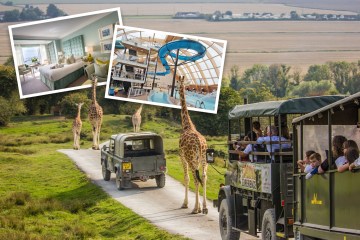
Lisbon has been revealed as the top city break destination for a cheap five-star holidayCredit: AlamyA two-night city break at the five-star Vintage Lisboa starts from £269ppCredit: The Vintage Lisboa
TravelSupermarket found that the average price for a five-star break to Lisbon works out at £308pp.
On TravelSupermarket Sun Travel found some five-star accommodation deals for under £200.
Another is The Vintage Lisboa where you can book a two-night city break in March from £269pp.
The boutique hotel is in the heart of the city and has modern interiors as well as a restaurant and bar.
Each room has a flatscreen TV, air conditioning and private bathroom with rain head shower.
It has a spa with a full menu of massages, as well as a sauna, steam bath, hammam and a gym.
The city itself is known for its steep streets, trams and its position on the coastline.
British expat Lauren Clark, who left her life in London for Lisbon reveals it’s an affordable city once you’re there too.
She even said that you can catch up with a friend over a glass of wine for the price of a coffee in the UK.
Lauren explained: “You can pick up a fruity ‘vinho verde’ from a quiosque or restaurant terrace, enjoyed in the sunshine, might set you back just a few euros.
“One of the reasons why the top-notch wine is so affordable – with a bottle of my favourite white costing around three euros in the supermarket – is because Portugal is covered in swathes of vineyards.”
Vinho verde translates to ‘green wine‘, but it’s not actually anything to do with colour.
What is actually refers to is the young age of the grapes.
Wine doesn’t cost more than a few euros in LisbonCredit: Jordi SalasWhile it doesn’t have beaches for sunbathing, Lisbon has great coastline viewsCredit: Alamy
When it comes to choosing where to drink – you can get views of the city if you go up high onto a rooftop bar.
One trendy place is Park Bar which is at the very top of a parking garage.
Here you can pick up a selection of beers and wines, sangria and some bar snacks – and on Sundays it serves up all-day brunch.
Another is Topo Chiado which has view downtown that one visitor described as ‘breathtaking’, and it has a DJ during the evenings.
While Lisbon is easily walkable it also has lots of trams – it has six different routes and 58 trams.
Lisbon tram tickets usually cost between €3.10 (£2.70) and €3.30 (£2.87) if you buy it onboard.
You can save money in Lisbon by getting a Lisboa card too, which you can buy from £27 and it then gives you access to 51museums and galleries across the city.
Lisbon doesn’t have many main beaches for sunbathing as such – but just a short-ride away are some lovely coastal spots.
Two popular beaches are Praia da Ursa and Praia do Ribeiro do Cavalo which are both less than an hour’s drive away from the city centre.
For Brits, Lisbon is easy to get to with direct flights taking just two hours and 50 minutes.
In April, flights from London Luton to Lisbon start from £21.
When it comes to other city break destinations, cheap five-star holidays include destinations like Krakow and Prague.
Berlin rounds out the top three at £357 per person on average.
Chris Webber, Head of Holidays and Deals at TravelSupermarket said: “There’s a real appetite among British travellers for luxury city breaks, but many assume five-star automatically means five-star prices.
“What this data shows is that destinations like Lisbon, Krakow and Berlin are delivering genuinely premium experiences at remarkably competitive price points.
“As ever, Eastern Europe in particular offers exceptional value, and with so much history, culture and food on offer in cities like Prague and Budapest.”
These are the top 10 destinations for a cheap five-star break…
Here are the cheapest destinations and the average price for a five-star city break in Europe from TravelSupermarket…
WEARING protective suits, masks, hats and gloves, we approach the buzzing hive in front of us.
The Canarian black bee, our guide tells us, is a hardy species adapted perfectly to the high heat and dry lands that make up Lanzarote’s volcanic climate.
Sign up for the Travel newsletter
Thank you!
Puerto del Carmen beachCredit: AlamyThe pool at Seaside Los JameosCredit: SuppliedHannah goes full beekeeperCredit: Supplied
My mum Rhona and I seem to have adapted pretty well ourselves, as we soak up the last of the afternoon sun.
The fourth-largest Canary Island, Lanzarote was the ideal destination for a pre-Mother’s Day trip, with its year-round “eternal spring” climate, lunar-like landscapes and white-sand beaches.
While a fly-and-flop holiday is always tempting, particularly when it’s 21C, I was determined to include some bonding experiences during our visit.
And our beekeeping tour was just that. Ahead of reaching the hive, our guide taught us all about the insects that live there.
Then, after shedding our protective suits, we were treated to samples of the organic honey, taking note of the sightly different flavours depending on which plants the bees had visited.
We felt fully connected to the surrounding nature.
When we weren’t off exploring, we could relax at the 4H Seaside Los Jameos, in Puerto del Carmen, one of the island’s most popular resorts.
With its beachfront location, palm tree-lined pools, gym, spa and cactus gardens, the recently renovated hotel is an oasis within the town, with plenty of activities on site.
I’m lucky enough to have a mother who can run rings around me, so we started each day with a jog on the beach.
I picked up pace as the week progressed, but never quite managed to catch up with my mum.
It was the perfect way to work up an appetite for the plentiful buffet breakfast.
The Sun’s Hannah Hope and mum RhonaCredit: SuppliedA bee gets busyCredit: Alamy
My highlights were the mimosa station, with crisp cava and freshly squeezed orange juice, and the DIY waffle machines.
In the evenings, guests can expect live entertainment from acts such as an ABBA tribute band, as well as magic shows and children’s discos.
Outside of the hotel, nearby restaurants included beachfront tapas joint Restaurante El Molino, which was within walking distance, and Sebastyan’s Atlantico Lounge on the water (be sure to arrive in time for the stunning sunset).
Lanzarote also has a thriving plonk scene, with wineries dotted all around the island.
Our final First Choice excursion took us on a tasting and museum tour at Bodega Finca Mota, a charming family-run winery surrounded by Lanzarote’s distinctive volcanic landscape, where grapes grow in the black sand.
We started our visit with an introduction to vintage winemaking tools in the museum, before sitting down for some sipping.
We tasted three different wines accompanied by locally-produced cheese and traditionally-cured tuna, and enjoyed it so much we bought a bottle each to take home.
On our final day, we decided to explore the picturesque village of Yaiza, famed for its beautifully maintained whitewashed houses and palm-lined streets.
Mum and I both love to shop, so we enjoyed a potter around the boutiques selling jewellery and ceramics and found a delightful cafe to have coffee and baked goods.
Literally the cherry on top of the cake to end a dreamy Mother’s Day getaway.
GO: LANZAROTE
GETTING/STAYING THERE: Seven nights’ half-board at the 4* Seaside Los Jameos is from £719pp including flights from Manchester on April 30.
A TikToker shared his experience staying at a hotel in one of the UK’s most popular cities with tourists, and people were completely flabbergasted by how much it cost
09:00, 15 Mar 2026Updated 09:00, 15 Mar 2026
People couldn’t believe how much the man paid for the hotel stay (stock image)(Image: Getty Images)
Edinburgh attracts millions of visitors from across the globe annually, so it comes as little shock that even the most modest accommodation in Scotland’s capital can leave a sizeable dent in your wallet. A couple of nights’ stay can easily run into hundreds of pounds, with costs skyrocketing exponentially during major occasions like Hogmanay or the Festival Fringe.
That’s why one TikToker left viewers gobsmacked after discovering a hotel within walking distance of the city’s premier landmarks for a mere £49.50 per night. Spencer Lyon, who has 135,000 followers on TikTok, where he routinely dishes out bargain-hunting tips, booked a room at the Edinburgh House Hotel.
Kicking off the video, Spencer approaches the hotel on Pilrig Street before walking into reception. “Oh my goodness, this is like Fawlty Towers,” he remarks. “Amazing.”
Moving along, Spencer proceeds to check in and is asked for a £100 security deposit. Locating his room, Spencer steps inside to discover not one but two beds – a double alongside a single, reports Edinburgh Live. “I feel like the three little bears for some reason,” he says.
Inspecting the all-important tea and coffee facilities, he comments: “I’m liking how close it is to the pillow so I can boil the kettle with my ear. Loads of options. No shortbread biscuits, that’s a shame.”
Spencer gazes through the window at the view – predominantly overcast skies – before shifting his focus to the telly, remarking: “Teeniest TV in the game, but I’m not paying to sit and watch TV am I?” He then inspects the bathroom, noting the toilet is tucked away round a corner, before bouncing on one of the beds – after removing his shoes, naturally.
He also draws attention to a modest clothes rail mounted on the wall, observing: “There’s no wardrobe in here, it’s just hang it on the top just there.” Wrapping up, he notes: “This was a last little minute endeavour ‘cos I’ve not been booking them on the go. But yeah, this was £49.50.”
Viewers shared mixed opinions in the comments section. One wrote: “That’s better than I expected. The deposit is a little expensive. Could have stayed at easyHotel in centre for probably same price.”
Another commented: “£100 refundable deposit for a £50 hotel is mad to me. Literally just stayed in Edinburgh end of November in a modern hotel that was like £120 a night and was only a £50 refundable deposit. Like, what in that room is costing them £100 to get it fixed or replaced besides the TV and even then they can get it cheap enough in charity shops.”
However, another responded: “I mean.. you get the £100 back and you’d be shocked at the amount of damage that inconsiderate guests can cause. This just gives the owner some peace of mind and you get the money back anyway so I don’t see the issue.”
Content cannot be displayed without consent
Others were taken aback by the price. One commented: “Very cheap for Edinburgh. Looks perfectly acceptable.” Another posted: “That’s ridiculously cheap for Edinburgh rates.” Whilst someone else remarked: “Looks absolutely fine, for £50 it’s decent.”
The Edinburgh House Hotel presently holds a rating of 2.5 out of five on Tripadvisor. A quick online search reveals rooms at the establishment begin at a mere £38. The hotel’s description on Tripadvisor states it “offers a budget-friendly setting with an array of amenities designed for travellers like you.” It notes the renowned Royal Mile sits within a 1.3-mile stroll, alongside other prominent attractions in close proximity.
True to its 2.5 rating, guest feedback proves divided. One branded it “run-down and poorly maintained”. “Room was in an awful state of disrepair,” they claimed. “Happy with basic accommodation but this fell well below that standard. Endless list of faults and damages in the room we stayed.”
However, another guest countered: “Clean and tidy place, beds very comfortable had a great night sleep. Bit dated but I would stay again.”
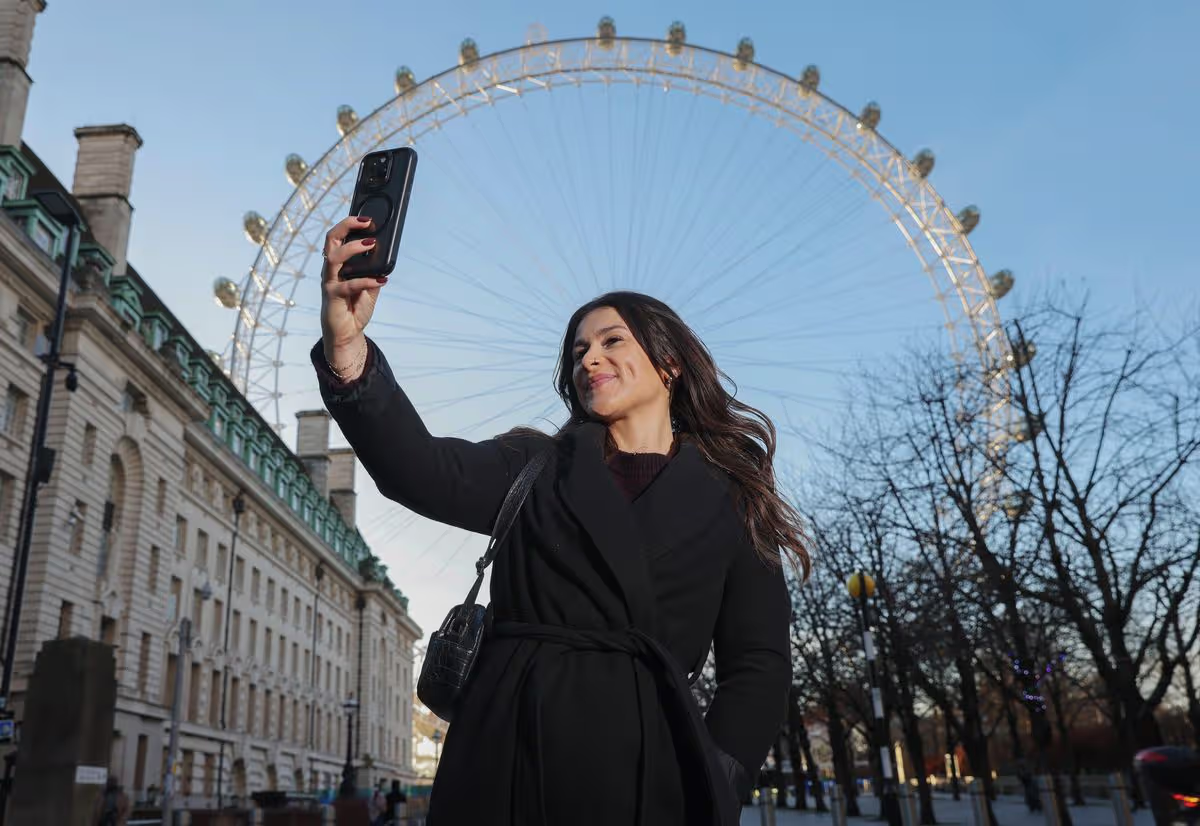
One in five adults living outside London haven’t visited the capital in over 10 years due to costs – but a new challenge proves you can experience the city on just £150
easyHotel challenges presenter to budget stay in London
A fifth of adults living outside of London haven’t set foot in the city for more than 10 years. A poll of 2,000 adults who live outside the capital found more than half (52%) admitted the cost of accommodation makes it too expensive to visit. Additional factors preventing people from visiting include transport costs (50%), the price of dining out (27%) and lacking the time to organise a major trip (21%).
Meanwhile, one in 10 have avoided it because the Tube leaves them baffled. However, 58% would welcome the opportunity to discover the city, with more affordable accommodation, reduced attraction prices, smaller crowds and a straightforward itinerary likely to entice them.
The study was commissioned by easyHotel, which tasked presenter Hattie Carter with experiencing London in 24 hours on a £150 budget, beginning from its Croydon location which has recently completed a full renovation.
Nathan White, UK operations director for the hotel chain, said: “There’s no denying that London is often seen as expensive and out-of-reach for those on a budget, particularly as the cost of living continues to rise. However, with a few simple hacks such as opting for affordable accommodation, the capital becomes much more accessible to all.
“Croydon has quick transport links reaching central London in under 15 minutes, so it’s a great option for those who want to spend their budget on the experiences that make a London trip worth it.”
The survey revealed that a quarter of adults typically organise their trips between two and six months ahead, although younger travellers are leaning towards more spontaneous plans, with 60% of 18- to 24-year-olds preferring to book within one month or less.
Kew Gardens (51%), Tate Modern (50%), and Camden Market (44%) were the top attractions people expressed a desire to visit. Additionally, 36% of participants indicated they would be most likely to visit London during the summer season.
Cheaper travel options are what 44% of adults claim would make them more inclined to visit London in the forthcoming 12 months – with the average adult prepared to spend £66.15 on a return train ticket.
Accommodation ranked second to travel as 37% of those surveyed via OnePoll.com would be persuaded if it was more affordable, expressing willingness to pay an average of £118.13 for an overnight stay.
However, despite 32% brimming with excitement at the prospect of planning a trip to the city, 24% feel anticipation – and 21% associate it with stress.
A spokesperson for easyHotel Croydon, where an average overnight stay costs just £58.27, commented: “It’s clear there is still a huge appetite to visit London and explore everything the city has to offer, but for many it’s about how to make it happen without breaking the bank.
“Our £150 budget challenge proves it can be done. By staying smart at an accessible and affordable hotel, London is doable.
“We want to help more people visit the capital for a memorable and positive experience, while keeping their budget firmly under control.”
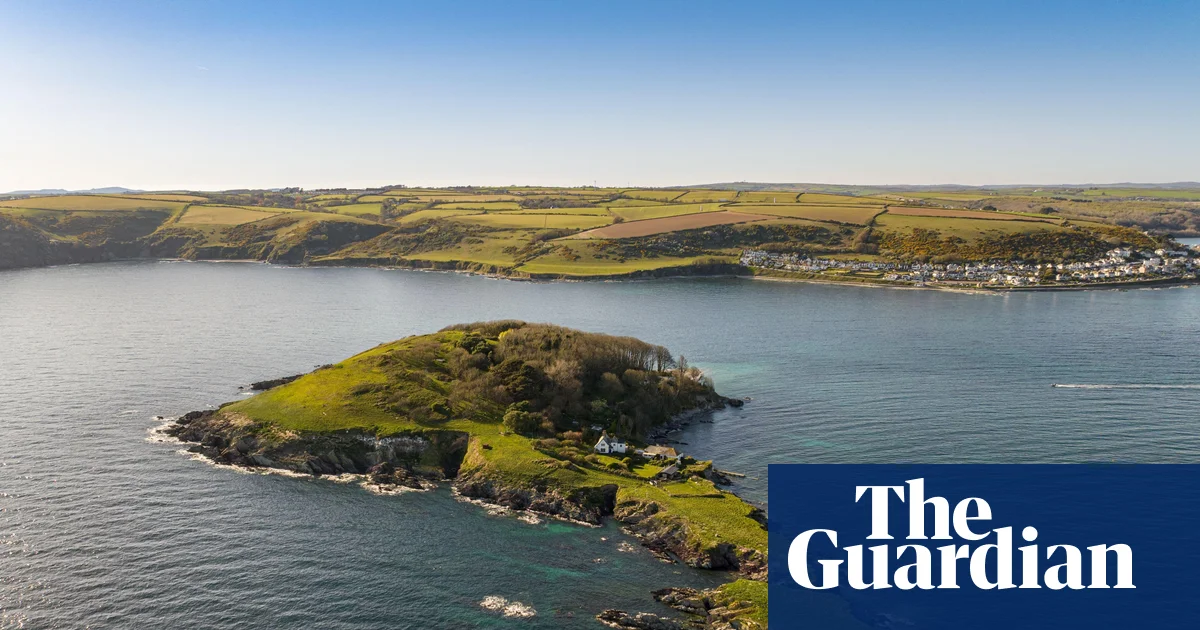
It is just after dawn and from a viewpoint on Looe Island, Cornwall, I watch two seals on the beach below. The pair entwine in the surf, her freckled, creamy belly against his, flippers wrapped around each other, eyes closed in blissful bonding. I feel like a peeping Tom, watching from behind a bush. It feels too intimate a moment to be spying upon, but the emerald-eyed cormorants guarding the beach seem unbothered.
I had arrived on Looe Island, also known as St George’s Island, off the south coast of Cornwall, the previous morning via the romantically named Night Riviera sleeper train from London, changing early in the morning in Liskeard, then 15 minutes across the waves in a small fishing boat. The island is managed by the Cornwall Wildlife Trust and can only be accessed on organised visits, and while most people come on day trips, I’m staying for a little longer. I have come loaded down with all the food and bedding I will need for my three-night visit, but also with the mental baggage of workaday life. Now, that weight lifts as I watch the male seal court his lady in the shallows.
Rain threatens, and I return to Smuggler’s Cottage, a pretty whitewashed house that sleeps two, tucked into a garden of fruit trees and fading flower heads. The cottage, with a bedroom, tiny kitchen, bathroom and cosy living room with a wood burner, is a homely place and was once lived in by a pipe-smoking, fist-fighting smuggler called Black Joan and her brother, Finn. The rain drips steadily from the sycamore trees clambering up the hillside and clings like frost to the spiders’ webs hanging from the windowsills. I snuggle back into bed with a cup of tea and feel the warmth that comes from a wildlife encounter in which the wildlife never knew you were there.
Undoubtedly it was to preserve moments such as these that the former owner of Looe Island, Roselyn “Babs” Atkins, left her home to the Cornwall Wildlife Trust as a nature reserve. Babs and her sister, Evelyn “Attie” Atkins, were women who defied the conventions of their time. The pair never married and instead invested in their careers and took up hobbies such as mountaineering and rifle shooting. Then, when Attie was in her mid-50s, the chance came to realise a long-held dream to own an island. She bought Looe Island along with her sister in 1965 for £22,000 and became a daffodil farmer; Babs joined her later when she retired.
Smuggler’s Cottage, a cosy holiday home for two on Looe Island
Cornwall Wildlife Trust took over the island in 2004, after Babs’s death, and the charity manages the 9 hectares (22 acres) of woodland, maritime grassland and rocky shoreline for the benefit of wildlife, including one of Cornwall’s largest breeding colonies of great black-backed gulls (stately birds with a wingspan of over 1.5 metres) and marine wildlife such as the graceful compass jellyfish, which can be spotted in the rock pools.
Apart from the cottage, visitors can stay in a bell tent, which sleeps two, overlooking Trelawny Island to the south-east, where breakers crash on the rocks and seals sleep, nose skywards, kissing the surf. Additional revenue comes from the landing fee charged to day trippers, who come across with Looe Sea Safari a few times a day when the weather allows. There is also a diminutive museum and giftshop, where wardens Claire and Jon, who live on the island year-round, sell homemade chutney, chillies from their veg garden and charming books on island life written by Evelyn Atkins.
Today, the seas are too rough for day trippers and I have the island to myself. I read in a meadow, something I never find the time to do at home, and explore the winding pathways that climb steeply up to the summit, 47 metres above the sea.
There’s a self-guided trail (free from the bookshop) for further exploration. One of the stops is Babs’s meadow, where she is buried looking out over her beloved home. The whole route could easily be walked in an hour, but why rush? The trail winds past Island House, Roselyn and Evelyn’s old home, and follows the coastline, with views out over the reefs that fringe the island, before returning through woodland bright with bird calls.
In the afternoon, I head for a swim on the island’s main beach, where the black-backed gulls roost in between fishing trips. I try hard to follow Claire’s instructions, staying close to the tree line and not looking in the birds’ direction to avoid disturbing them, and am delighted when the colony largely ignores me. The sea is icy and the surf threatens to pummel me, but I spot silver striped mackerel swimming inches away and relish the thrill of taking a dip from a little-visited cove. Afterwards, dried and bundled in layers, I sit propped up between the boulders, hands warming around a cup of hot chocolate from my Thermos as I catch the last light of the dying sun. I gaze across the water, my mind clearer than it has been in weeks, as the gulls take off into the wind and sail past along the coast.
Aerial view of Looe estuary. Photograph: Wirestock/Getty Images
When I watch the two seals again later that evening with Claire and Jon, she explains that they hope to encourage visitors to respect coastal wildlife and minimise disturbance. “When the seals are resting,” she says, “they are laying down layers of fat from their meals, which helps the adults survive the winter and enriches the milk females give to their pups. Each time they are woken by a boat, even if it’s only for a few minutes, they use up a little bit of energy and the effect accumulates.”
For each seal, disturbance can be the difference between life and death, she says, but agrees that protection needs to be balanced against the need for people to engage with wildlife in order to increase empathy and support. Staying on – or visiting – a nature reserve is one way that people can get to know the wildlife on its terms. “The island forces them to slow down, to notice the small things,” Jon says. “People put their phones away and spend the afternoon watching a spider building its web.”
After only a day watching the seals, I can already feel that kinship. After all, these animals look so much like us that they were once mistaken for mermaids. It is these priceless moments of connection that Claire and Jon hope will stay with guests and teach them to be humble in the way they live alongside other creatures.
I have come to realise, as Babs and Attie did before me, that it is the lordly gulls and the amorous seals who are the real owners of the island. Still, I am grateful for the opportunity to share their home, if only for a few days, and for the sense of peace and reconnection with the wilder world it has allowed me.
The trip was provided by the Cornwall Wildlife Trust. Smuggler’s Cottage is available to rent from spring until October and costs £450 for a three-night stay for two. Looe Sea Safari runs day trips either side of high tide in daylight hours and fair weather, £12 adults, £7 children 10 and under, plus Cornwall Wildlife Trust’s landing fee of £8 adults, £3 children.
TRAVELLERS are rushing to Amazon to bag a large-sized Samsonite suitcase that’s now almost half-price in the retailer’s Spring Sale.
This soft-shell, big-brand luggage usually costs £209, but has since dropped to £112.
Sign up for the Travel newsletter
Thank you!
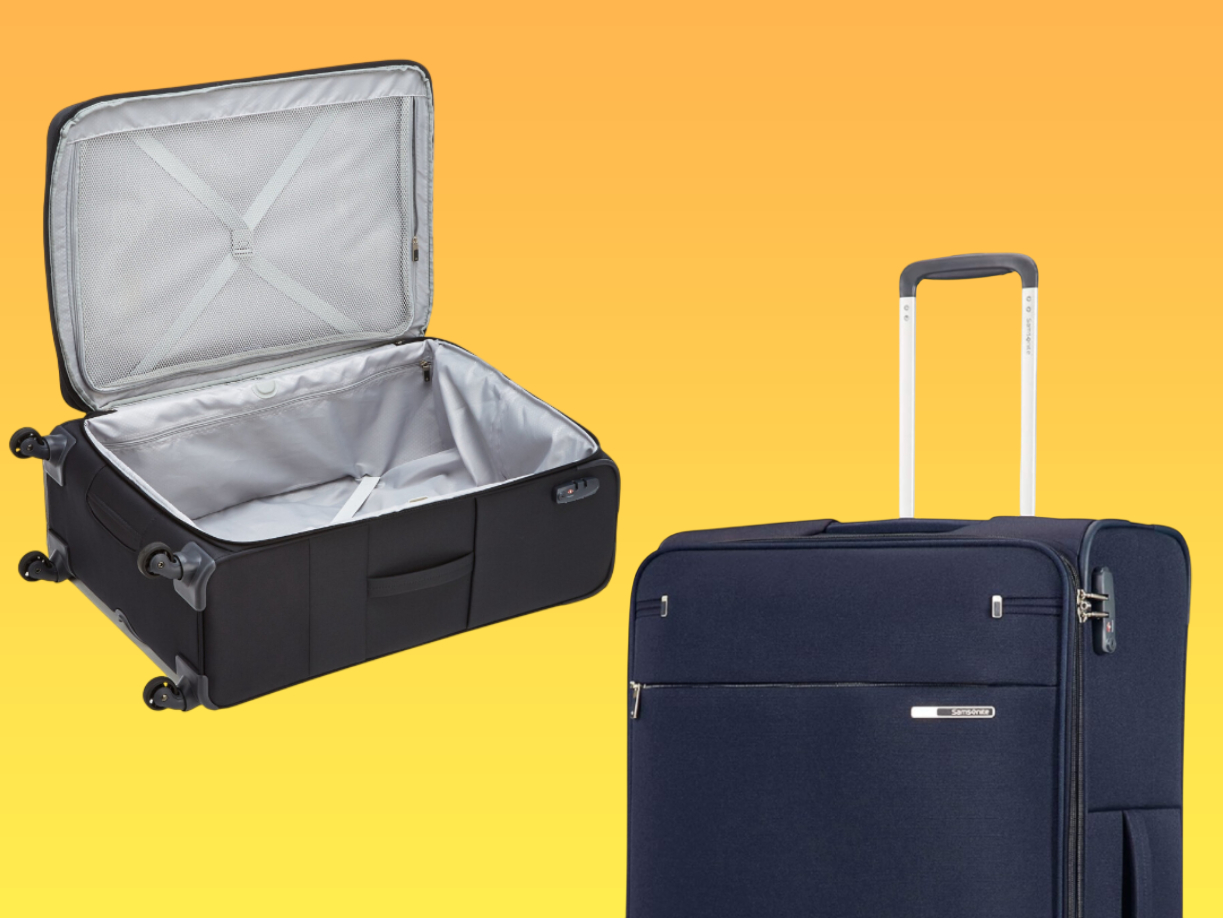
Samsonite’s soft-shell Base Boost case has a 112.5-litre capacity
Samsonite Base Boost Soft Luggage, £112.19 (was £209)
The retail giant’s Spring Deal Days sale is now in its penultimate day, with thousands of prices plummeted across the site.
With the holiday season fast approaching, small wonder the online giant has decided to drop prices across a wide range of suitcases.
And yes, you’ll find all sorts of third-party options for much less – but if you’re looking for assured levels of quality on your hols, then go for a well-known maker like Samsonite.
Originally £209, the Base Boost Soft Luggage Suitcase has been dropped to just £112.19.
This, by contrast, is a 112.5-litre beast that’s best for families and those long trips away.
Despite its size, it remains incredibly lightweight at just 3.1kg, which gives you more of an opportunity to fill up the case while steering clear of those dreaded overweight baggage fees.
It comes in black and navy blue, with the black being a little cheaper.
For security, it’s got a fixed TSA combination lock built-in for stress-free travel, and inside, it’s got a buckle system to keep your clothes in place and a zipped mesh divider for easy organisation.
Better yet, Samsonite also includes a 10-year warranty with this case.
I SPEND a lot of my time looking at holiday prices – comparing deals, breaking down packages, and figuring out where the strange little pricing tricks are hiding.
There’s one trend I keep seeing again and again. In some family resorts, it can actually work out cheaper to stay as an adult and a child than as one adult on their own.
Holiday expert Rob Brooks has scoured the internet for holidays that are cheaper with childrenCredit: Robb Brooks
That’s not because flights suddenly get cheaper, but because the hotel part of the package drops in price.
It sounds odd, but when you look at how hotels price their rooms, it starts to make sense.
Why does this strange holiday pricing trick happen? The main reason is something called a single supplement.
Most hotel rooms are priced for two people sharing, so when just one person stays, hotels often increase the price to make up for the empty bed.
Solo travellers can end up paying a hidden surcharge, but when you add a child, the pricing works differently.
Family resorts – especially in places like Turkey, Spain and Greece – are built around rooms designed for two adults and a child, and children usually cost hotels less to accommodate.
They often sleep on sofa beds, eat smaller portions and have discounted all-inclusive rates.
Because of that, hotels often price children very cheaply – and sometimes the total hotel cost actually drops compared with a solo booking.
Hotels are usually happy with this because families tend to spend more around the resort, from drinks and snacks to activities and excursions.
So, filling a room with an adult and a child can be more valuable than one guest travelling alone, which occasionally leads to the strange situation where bringing a child makes the hotel portion of the holiday cheaper.
When I looked at the data, I found several resorts where this pricing quirk shows up.
I compared the price of a 7-night stay as a solo traveller versus the cost when bringing one child at a variety of holiday resorts.
Here are some of the best examples, and the biggest savings of up to £698.
Labranda Targa Club Aquapark, Marrakech
Average saving: £30
Just outside Marrakech, Labranda Targa Club Aquapark combines Moroccan sunshine with a proper family-friendly resort setup.
Kids get water slides and splash pools, while adults can explore the markets and gardens of the city nearby.
And the pricing still shows a small advantage, with adult and child bookings averaging £30 cheaper for a 7-night stay than solo travellers.
Labranda Targa Club Aquapark is a family-friendly option in sunny Marrakech, MoroccoCredit: On the Beach
BLUESEA Puerto Caleta, Fuerteventura
Average saving: £43
Located in Caleta de Fuste, Puerto Caleta is a relaxed apartment complex perfect for an adult and child beach holiday.
You’ve got sandy beaches, boat trips and plenty of restaurants right on your doorstep.
When I priced it up, holidays average a £43 saving for an adult and child per 7-night stay compared with travelling alone.
Sol Barbados, Majorca
Average saving: £45
Sol Barbados in Magaluf is one of the most family-friendly resorts in Majorca.
There’s a huge waterpark-style pool area, kids’ entertainment and easy access to the beach.
For an adult travelling with a child, it’s a simple sun-and-pool holiday – and the pricing shows an average saving of around £45 for a 7-night stay compared to booking solo.
BLUESEA Puerto Caleta in Fuerteventura is just steps away from a golden sand beachCredit: Alamy
At Staycity Aparthotels near Disneyland Paris, you’re just minutes from the Disney parks, which makes it ideal for an adult taking a child on their first big theme park trip.
And the pricing structure means the average holiday can come out around £60 cheaper for a 7-night stay when you book as an adult and child instead of travelling alone.
The Staycity Aparthotels are just minutes’ walk from Disneyland ParisCredit: Alamy
Oludeniz Beach Resort by Z Hotels, Dalaman
Average saving: £81
Oludeniz Beach Resort sits right by one of Turkey’s most famous beaches – the stunning Blue Lagoon at Ölüdeniz.
It’s an easygoing, all-inclusive resort where an adult and child can spend the day swimming, exploring the beach or watching the paragliders drift down from the mountains.
And package bookings for this hotel show an average saving of £81 for a 7-night stay when adding a child versus travelling solo.
There is an average saving of £81 when you bring a child to Oludeniz Beach ResortCredit: On the Beach
Gran Castillo Tagoro, Lanzarote
Average saving: £212
This five-star resort in Lanzarote is practically designed for family holidays.
Gran Castillo Tagoro has dedicated kids zones, family pools and incredible views over the volcanic coastline near Playa Blanca.
For an adult and child travelling together, it’s the perfect mix of relaxation and activities.
Bookings here show an average saving of around £212 when bringing a child for a 7-night stay compared with a solo holiday.
You can save up to £212 on a stay at the five-star Gran Castillo Tagoro in LanzaroteCredit: On the Beach
It’s close to the beaches of Salou and just minutes from PortAventura theme park, which makes it perfect for a trip packed with rides, waterparks and ice cream stops.
Thanks to family-friendly pricing, the average holiday price drops by about £251 per 7-night stay when a child is added to the booking.
Golden Port Salou is just a short walk away from the Spanish theme park PortAventuraCredit: On the Beach
Rixos Radamis Sharm El Sheikh, Egypt
Average saving: £279
If you’re looking for something more luxury, Rixos Radamis in Sharm El Sheikh is one of the most impressive resorts in Egypt.
Huge pools, beach access on the Red Sea, kids clubs and endless all-inclusive food options make it a dream for families.
And the pricing structure here means an adult travelling with a child can save around £279 for a 7-night break on average compared with booking the same trip alone.
Auramar Beach Resort, Algarve
Average saving: £349
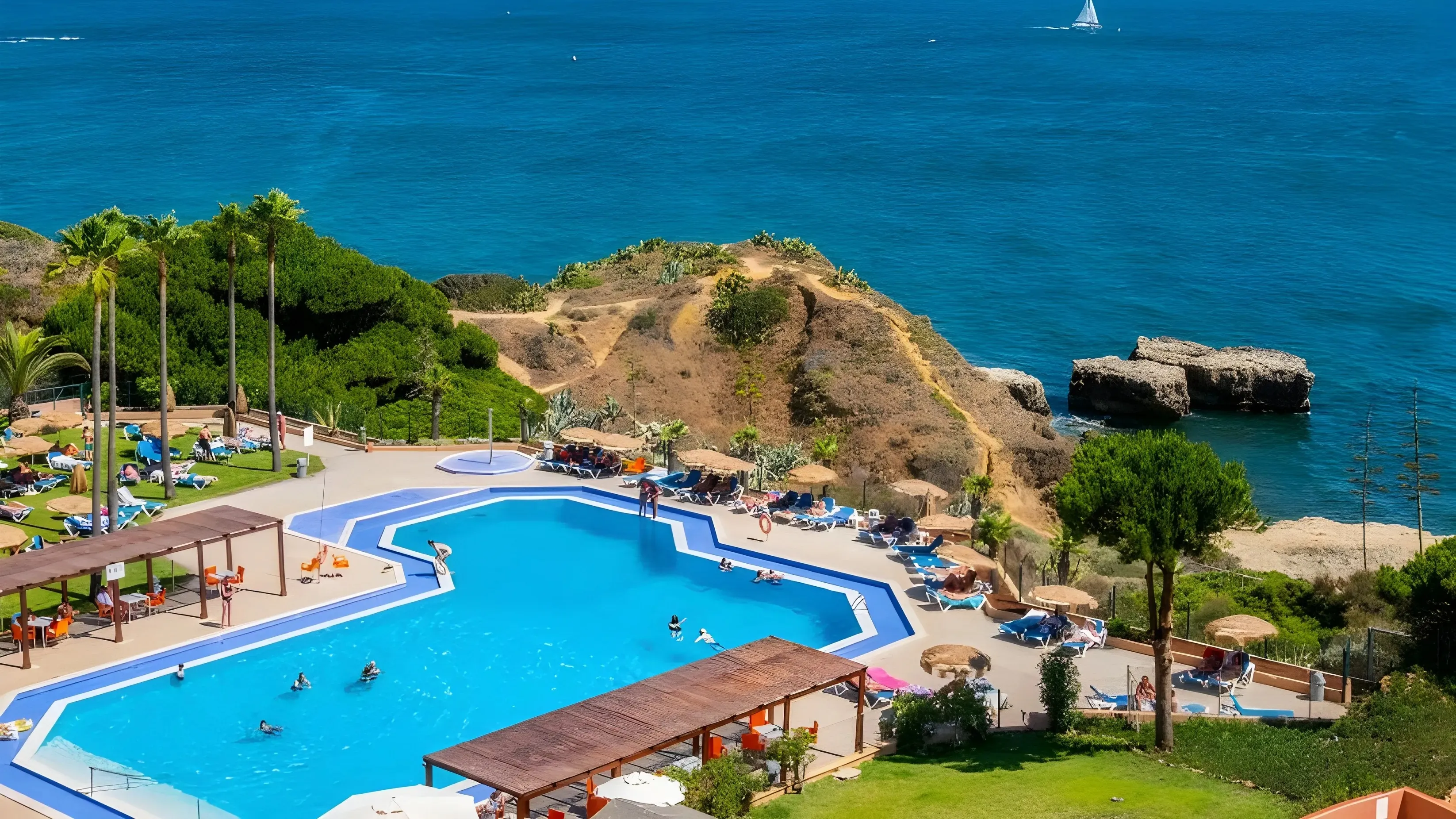
Over in Portugal, Auramar Beach Resort sits right above the cliffs near Albufeira with incredible sea views.
It’s a laid-back all-inclusive hotel where an adult and child can spend the day between the beach, the pools and the buffet before watching the sunset over the Atlantic.
Because it’s built for families, adding a child actually brings the average holiday price down by around £349 for a 7-night break compared with travelling solo.
The Auramar Beach Resort in Albufeira has stunning views over sapphire seasCredit: On the Beach
Eftalia Blue, Antalya
Average saving: £698
One of the biggest differences I found was at Eftalia Blue on Turkey’s Mediterranean coast.
This is a classic big Turkish all-inclusive resort with huge pools, slides, and easy access to the famous Eftalia Island beach complex.
For an adult and child travelling together, it’s ideal – kids get waterparks and entertainment all day while parents can relax by the pool or head down to the beach.
And the pricing quirk here is huge, with holidays averaging almost £700 cheaper for an adult and child for a 7-night stay compared to travelling alone.
Here’s my key takeaways for travellers.
Holidays can become nearly £700 cheaper at Eftalia Blue if you bring a child rather than go soloCredit: Eftalia Hotels
I should make it clear: holidays aren’t always cheaper with kids.
Flights are still one of your biggest spends, and plenty of hotels price things normally.
But when you start digging through package holiday deals, you occasionally find this strange pricing quirk.
Because of single supplements and heavily discounted child rates, this is one of those travel industry secrets you only really notice when you spend your days digging through holiday data.
In this picturesque North Yorkshire town, famed for its seafood and imposing abbey, I indulged in fish and chips, admired the views, and enjoyed a walk up a particularly famous set of steps
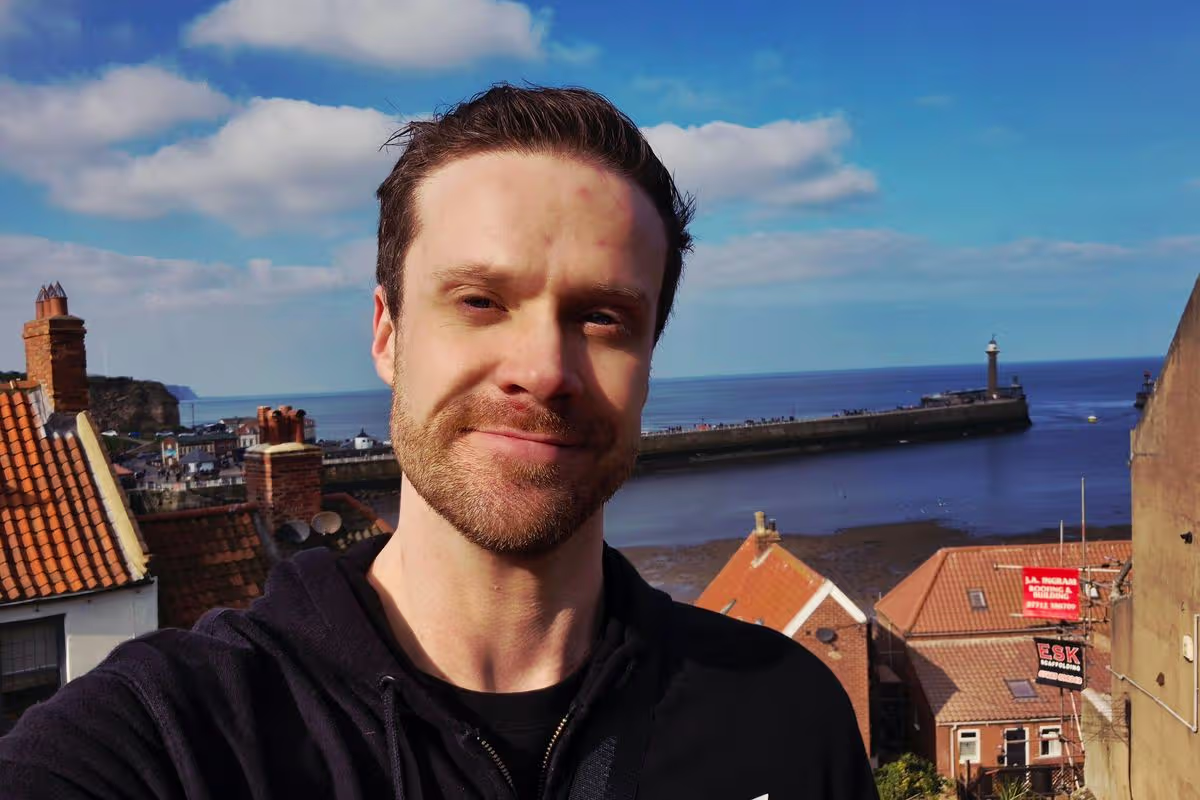
I paid a visit to a picturesque North Yorkshire harbour town
(Image: Matt Davies)
A seaside town with award-winning fish and chips, friendly locals, and a literary claim to fame can be summed up in one word. In an enviable assignment last weekend, I paid a visit to the picturesque North Yorkshire harbour town of Whitby, famed for its imposing Gothic abbey ruins, prominent links to Dracula and Captain Cook, and, of course, its nationally renowned fish and chips.
As I drove into town on a bright Saturday morning in March—one of the first truly sunny days of the year—I couldn’t help but notice a sign proclaiming Whitby as the “Home of Scampi” (or words to that effect), which immediately raised my expectations for the day’s task.
Whitby’s reputation for seafood is well known, with an abundance of chippies to choose from. Among them is Trenchers on New Quay Road – the proud winner of this year’s Best Restaurant at the prestigious National Fish and Chip Awards.
In what was perhaps a testament to Trenchers‘ recent culinary acclaim, I was surprised to find a long queue already forming outside the restaurant when I arrived at around 10.30am.
Accompanied by my excitable cocker spaniel, Luna, I opted for Trenchers’ takeaway next door, where I found myself in the company of just one other patron, who was quick to praise the quality of Whitby’s seafood.
Opting for cod, chips, mushy peas and a side of curry sauce for £16 in total, I sat on a bench opposite the eatery and took in the seaside scene, where market traders catered to the busy foot traffic at pop-up stalls.
Quickly polishing off my chippy lunch, a delicious serving of fish with light, crispy (albeit slightly pale) batter and golden chips, I found myself hard-pressed to find anything to criticise, mentally awarding the meal a comfortable 8.5 out of 10.
Having disposed of the rubbish, I decided to take a stroll into the harbour area towards Whitby Swing Bridge over the River Esk, so I could access the other side of the town and the looming abbey on the hillside.
As I breathed in the sea air and admired the views across the water, my attention was drawn to an impressive ship, which I later discovered was The Whitby Endeavour restaurant.
Luna and I set off on a walk to the bridge, only to discover that it was temporarily closed. It meant that I had to walk some distance around to reach the other side, according to some friendly locals, but I was keen to walk off my meal, so we set off.
As I crossed a larger bridge, I was offered spectacular views over the entire town, the river flowing beneath me and many boats resting on the bank next to the train tracks awaiting their next outing.
I eventually worked my way around to the other side and passed the Tolkien-themed Middle Earth Tavern as I entered the narrow, shop-filled Church Street. There, I found myself ogling the many books, trinkets and baked goods on display.
Next, I made my way to the famous 199 Steps on Whitby’s East Cliff, which lead up to St Mary’s Church and the breathtaking 7th-century Whitby Abbey beyond.
In Bram Stoker’s Dracula, the titular vampire takes the form of a dog and bounds up the steps to the church. In similarly exuberant fashion, Luna hauled me up all 199; though, in my case, it was likely a blessing for my fitness.
Stopping for several photos along the way, I couldn’t help but be left awestruck by how beautiful Whitby is; it’s something that you really notice as you ascend the steps, each level revealing a different angle of the town.
Once you arrive at the church, its distinctive Gothic atmosphere is palpable – dozens of gravestones overlook the town below, while a sharp sea breeze envelops you as you admire the coastal vistas.
Whitby Abbey is also a sight to behold, a majestic ruin that’s sure to inflame the imagination of any visiting history buffs, and to top it all off, there was a dog-friendly café nearby.
After a quick latte and a Twix – while Luna enjoyed some water and a few meaty dog treats – we made our way back down the steps, just as the crowds began to gather in the early afternoon.
In a surprising but touching twist that may offer some insight into the beauty of the town, I even spotted a man going down on one knee and proposing to his girlfriend outside the church.
Once we were safely back in the car, I ultimately found myself wishing that I could have stayed longer. Whitby has found itself a lifelong fan, one who will most definitely be returning.
And, if I had to sum it up in one word, although this is a hard task with a place I like so much, it would probably have to be stunning.
Many European destinations and warming up, and spring is definitely on the way. But which short-haul spot is most likely to give you sunshine and dry days over Easter? Here’s the destination with the best odds.
This article contains affiliate links, we will receive a commission on any sales we generate from it. Learn more
This is the destination to book for the best possible chance of Easter sunshine(Image: Ferdi Uzun/Anadolu via Getty Images)
It feels like winter has dragged on forever this year, and many parts of the country are only just emerging from months of endless rain and grey skies to see a little bit of sunshine. With Easter on the way, which can be an unpredictable time for UK weather, many people will be looking to get away to the sunniest spot they can find for a few days.
Luckily, TUI has put together a list of the Easter getaways that are most likely to give you the ideal weather conditions, analysing historic data on the average rainfall, wind speed, and temperature in early-April to work out a Good Weather Score. Brits will be pleased to hear that topping the rankings is a destination just over four hours away from the UK that’s expected to see highs of 19C over the next couple of weeks.
According to TUI’s rankings, Turkey historically has the “most ideal weather conditions” during the Easter holidays, usually offering holidaymakers average temperatures of 18C. It’s also the destination where you’re least likely to be caught in an April shower. In the Easter holiday months, the amount of rainfall is just 0.01mm on average.
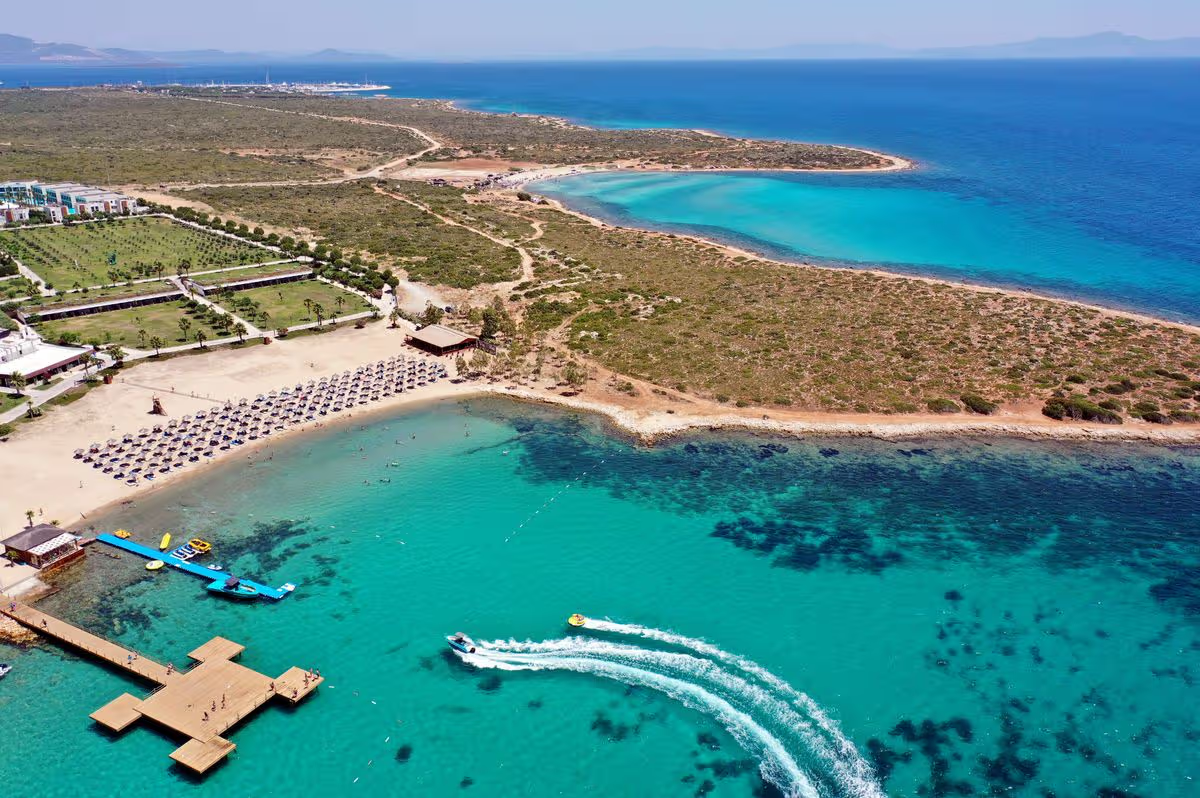
When the data was broken down into individual destinations, Marmaris in Turkey was the place most likely to give holidaymakers the best Easter weather conditions. It often reaches highs of 19C around Easter, and is usually dry with only light winds. Marmaris is in southwest Turkey in an area dubbed the Turkish Riviera. This lively port town has a marina, bustling grand bazaar, and historic sites such as the 16th-century Marmaris Castle.
Marmaris also has an amazing selection of sandy beaches that sit alongside its turquoise seas. Marmaris Long Beach (Uzunyali), is around six miles long, starting at the city centre, and has a lively promenade full of hotels, restaurants, and bars. A quieter alternative can be found at İçmeler Beach, just south of the city, where you’ll find sandy coves and incredible mountain views.
Second on the list for good weather was Greece, and this time of year brings mean temperatures of around 16C and long sunny days. Meanwhile, Bulgaria ranked third for its “pleasant and balanced climate”. Like Turkey it offers light winds and low rainfall, and Easter can be a good time to explore as tourist don’t have to contend with the intense summer heat. Bulgaria is becoming a major hiking destination, especially around the Rila and Pirin mountain ranges which combine gentle trails with more intense, steep climbs.
Bulgaria is also known for its stunning beaches. The Black Sea coast has 200 beaches to choose from and resorts to suit all sorts of holidaymakers. Sunny Beach is known for its lively nightlife and cheap drink deals, while Varna is a historic and cultural hub that has soft golden sand beaches and clear blue seas.
Anyone planning an Easter break can also check TUI’s holiday weather guide, which gives a breakdown of weather by month for popular tourist spots.
Europe’s top 10 destinations for good Easter weather
Turkey
Greece
Bulgaria
Spain
Croatia
Italy
Hungary
Portugal
Montenegro
Gibraltar
Have a story you want to share? Email us at webtravel@reachplc.com
The journey is the longest in the world(Image: Mario Gutiérrez/Getty)
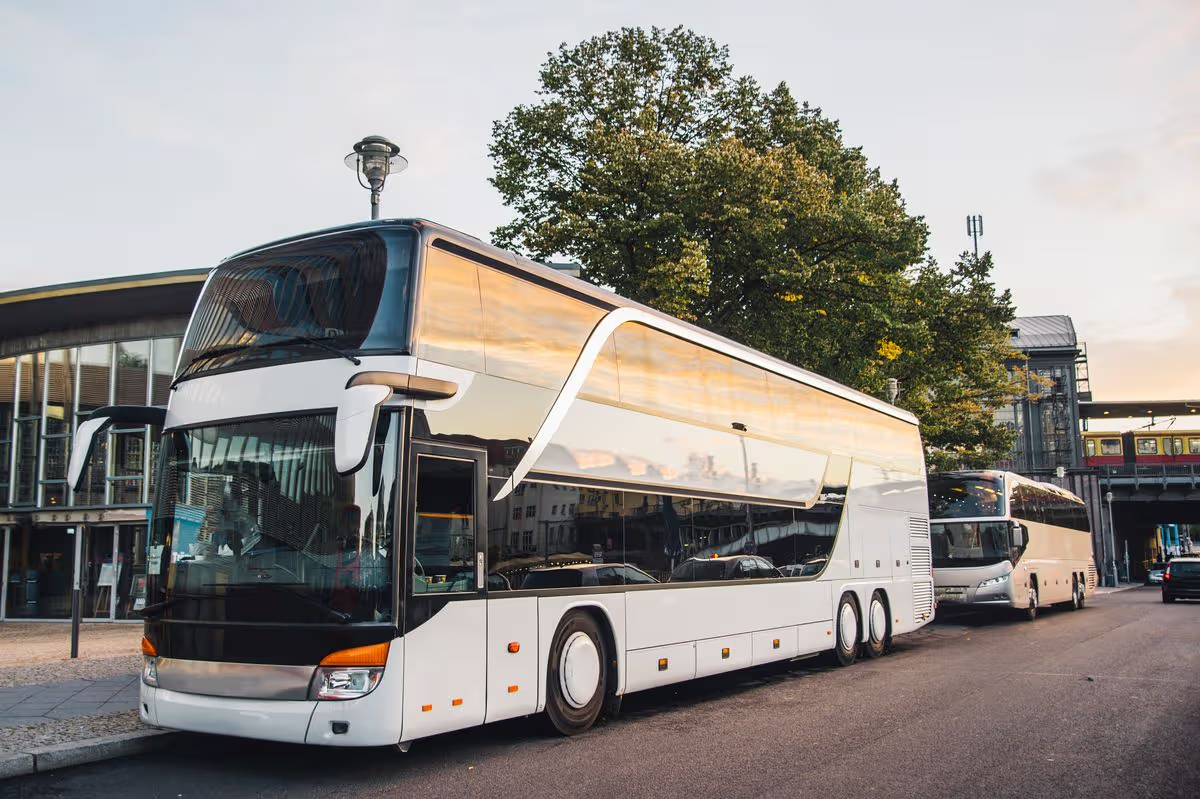
The world’s longest bus journey spans 4,000 miles and has racked up a negative reputation. It takes over 100 hours to travel the route, which is roughly six days.
The journey connects the Pacific and Atlantic oceans as it goes from Lima in Peru to Rio de Janeiro in Brazil. It is made possible thanks to the Trans-Oceanic Highway.
The legendary Transoceánica holds the title of being the longest regularly scheduled, direct commercial bus route in the world.
It runs weekly by the Brazilian bus company and passes through coastal cities, savannas, wetlands, rainforests and the Andes Mountains.
The bus departs on Thursdays at 1pm and promises to be a ride passengers won’t forget. There are 44 regular seats and 12 sleeping berths on board. There’s also a toilet, small sink, water dispenser and Wi-Fi.
However, there are no showers on board. To be able to wash, passengers use facilities during the three scheduled stops per day at roadside stations.
The bus is driven by two alternating drivers, with one resting in a sleeping cabin while the other drives. According to Check My Bus, the ticket price is approximately R$1,300, which is around £186.
From the bus, passengers are able to see world-famous sites including the Amazon Basin, Andes Mountains, Christ the Redeemer and Machu Picchu.
Starting in Rio de Janeiro, the bus makes its way through São Paulo, Mato Grosso do Sul, Mato Grosso, Rondônia and Acre, until it reaches the border with Peru.
It then goes through the Peruvian Amazon, crosses the Andes and takes the Transoceanic Highway to Lima, the capital of Peru.
Despite the stunning scenery, some passengers have found the journey very tricky.
YouTuber Noel Phillips travelled the route and branded it “gruelling” and “absolute hell”. He said that on the bus, personal space was a non-existent concept.
In a video documenting the trip, Noel said: “Nobody has [headphones]; everyone just plays everything on full blast. And when they can’t hear it above everybody else’s, they just turn theirs up so in the end you just have 15 phones playing different things at 55,000 decibels.”
Noel admitted that by the time he reached Brazil, the journey felt repetitive. He faced a number of delays on his journey as well as a lack of heating on the bus.
KIP with the kids in a two-bedroom lodge at The Mole Resort or try the boujee airport hotel alternative of a grand Italianate mansion.
In search of the perfect pit stop, Lifestyle Editor Catherine Bennion-Pedley found out all that both had to offer.
Sign up for the Travel newsletter
Thank you!
The Mole Resort
The Mole Resort is a country-house hotel set in 125 acres of rolling countryside
As I slam on the car brakes, my kids Poppy, seven, and Raffy, four, shout: “Woah!” In the middle of the road is a local walking her dog – which happens to be the size of a small pony.
Yep, it’s safe to say rural Devon is proving to be an eye-opener for us all.
We’re kipping at The Mole Resort, a country-house hotel that had a spruce-up a couple of years ago, set in 125 acres of rolling countryside.
Our two-bedroom, two-bathroom lodge in the grounds comes with floor-to-ceiling views of a verdant meadow and a hot tub, which proves particularly restorative after the long drive.
Another huge win is the raft of activities on site – from pickleball to pétanque, disc golf to axe-throwing, and archery to pottery painting.
Talking of which, the kids adore painting egg cups, £14 each, and are thrilled to pick up their newly glazed souvenirs the next morning.
There’s also a restaurant, games room and health club with a pool – though this has seen better days.
The village it sits in, Chittlehamholt, is also home to excellent 16th-century pub The Exeter Inn.
Stay in a two-bedroom, two-bathroom lodge in the groundsCredit: SuppliedLodges come with floor-to-ceiling views of a verdant meadow
Owners Hazel and Steve welcome visitors like family, as does their gorgeous cockapoo Frankie.
Flavour-packed dishes like Peking duck bon bons with hoisin, £9.50, and beef and ale pie topped with stilton, £17, are spot-on.
As are the proper puds – pick spiced sticky toffee, £8.50, for the win.
With more than 80 gins and local ales aplenty, you won’t go thirsty, either (Exeterinn.co.uk).
Just 20 minutes’ drive away is another absolute gem – Quince Honey Farm, which brings joy even on the drizzliest day.
Here, we roll our own beeswax candles, forage for wildflower seeds and taste five varieties of the golden stuff – the dandelion honey is crowned our fave.
Entry per adult and child over five costs £10.80 (Quincehoneyfarm. co.uk).
Leaving armed with brilliant bee facts, we all agree this pretty nook of Devon makes for a super stop-off en route to a beach break.
Stays in a two-bedroom lodge at The Mole Resort cost from £120 per night (Themoleresort.co.uk).
Down Hall Hotel
Down Hall Hotel is less than 20 minutes’ drive from London Stansted
I’m not a huge fan of airport hotels, which is why the boujee alternative of a grand Italianate mansion in the Essex countryside instantly appeals.
Less than 20 minutes’ drive from London Stansted, its rural setting will help you to properly relax before take-off.
A giant chessboard, tennis courts and a mini football pitch in the expansive grounds keep the whole gang entertained.
Meanwhile, the newly opened Barn Spa offers mini-me treatments, including head and scalp massages, from £25 per child, and the recently refurbed family rooms come with a Nintendo Switch, so the kids are more than alright.
Family rooms at Down Hall Hotel cost from £212 per nightCredit: Niall CluttonDine at the Garden Room, which holds two AA RosettesCredit: Supplied by hotel
Tuck into dinner treats, such as crab with apple gel, cucumber and nasturtiums, £16.50, followed by venison loin with a dark-chocolate jus, £41, at The Garden Room, which holds two AA Rosettes.
And it would be rude not to try the moreish house cocktail – a Down Hall Bramble, made with the hotel’s own garden gin, £15.
WE ARE just a couple of weeks away from the new Disneyland Paris World of Frozen opening and fans are in for a real treat.
Officially opening on March 29, the World of Frozen at Disneyland Paris was first announced back in 2018 – and Sun Travel has been lucky enough to see it today, before the gates officially open.
Sign up for the Travel newsletter
Thank you!
Sun Travel Reporter Cyann Fielding got a sneak peek at the new World of Frozen opening at Disneyland Paris on March 29There’s a family-friendly boat ride called Frozen Ever After, where you travel on a journey through ArendelleCredit: DisneylandParis NewsIn addition to the ride, visitors can head to a new Nordic-themed restaurantCredit: DisneylandParis News
The land features a life-sized 36-metre North Mountain with Elsa’s Ice Palace, a Frozen Ever After boat ride and A Celebration in Arendelle show on the water.
There is also a Nordic-themed restaurant, as well as themed shopping experiences and character meet and greets.
This weekend I got a sneak peek at the new land and let me tell you, there’s a lot to share.
The Frozen Ever After ride
The main attraction of the new land is the musical Frozen Ever After boat ride.
With no height restrictions,the family-friendly ride heads on a journey through well-known scenes from the Frozen franchise.
Starting at the Royal Docks, you head through the village and forest meeting Sven and Olaf on the way, then you glide past Troll Valley and up The North Mountain (and then down the other side!).
But don’t worry, the drop isn’t dramatic…yet.
The boat journey continues on past a magical moment with Anna and Kristoff, before being halted at the doors of Elsa’s Ice Palace.
Swiftly, the doors open to reveal Elsa singing from her balcony.
This is where the ride gets really special as you are propelled backwards through her glistening palace.
The air turns cold as fog emerges and the ice monster Marshmallow appears, with a blast of his icy breath you’re spun back around and plummet down the remainder of the mountain.
But don’t forget to smile, as this is the photo moment before parking back up at the Royal Docks.
Meeting Olaf
A few months back during the first peek at World of Frozen, videos circulated on social media of the interactive Olaf, quickly gaining millions of views.
Olaf is powered by AI but you wouldn’t know as he walks and talks just as you would expect him to if he had stepped out of the film.
He makes an appearance on the new boat show, but it’s not yet been confirmed where else he will appear around Arendelle.
A Celebration in Arendelle
Of course, World of Frozen wouldn’t be complete without its own show.
The land is set during the Snowflower Festival and as a result, the daily show features your favourite characters as they sing and dance and celebrate the festival together.
It’s a magical moment to sing your heart out to Let It Go.
You can expect a water display, snow and fireworks.
And you can meet characters from the film including an interactive Olaf powered by AICredit: Cyann FieldingThe new land includes an exclusive show set for the Snowflower Festival as wellCredit: Cyann FieldingMeet Anna and Elsa inside the Royal Palace
Royal Encounters
Head to the Royal Palace to meet Anna and Elsa who are welcoming guests for a private experience.
In a waiting area, there are several paintings that feature in the film including a reimagined version of Jean-Honoré Fragonard’s famous painting The Swing.
Then there is the room where you get your Royal Encounter, which features the royal orb and sceptre as well as the clock young Anna leans against in the song ‘Do You Want to Build a Snowman?’
You won’t get a moment where you are closer to the two sisters and can take a photo to remember your time in Arendelle.
You can meet other characters too of course, back in the Kingdom including Mossie the troll and Oaken (from the trading post and sauna).
The Arendelle Boutique and the Fjord View shop sell Frozen merchandise that is exclusive to Disneyland ParisCredit: Cyann Fielding
Arendelle Boutique
Inside Arendelle Boutique, which is next to the Clock Tower, guests will discover the world of Bjorn and Thea who are a couple of toymakers whose wooden creations are loved by Elsa and Anna.
There’s even a wooden Arendelle Castle with Anna, Elsa and Olaf.
And for visitors who really want to feel as if they are one of the people who live in the Kingdom, they can grab Nordic-inspired dresses with floral patterns.
A great activity for little ones is sending a postcard from the village mailbox, which is next to the shop.
Fjord View Shop
Similar to the Arendelle Boutique, the Fjord View Shop sells exclusive merch, but one particularly special thing is the troll toys.
Inside this shop there is a real hidden gem too, you can adopt your very own Runa troll, who is interactive.
When you leave the shop with Runa, she also interacts with different parts of the World of Frozen.
The outside of the Nordic Crowns Tavern is inspired by the UNESCO-listed Bryggen district in Bergen, NorwayCredit: DisneylandParis NewsAt the Nordic Crowns Tavern, the menu is inspired by Norwegian and more widely, Scandinavian cuisineCredit: Cyann FieldingThe tavern also serves a swirl of tutti frutti ice cream in Frozen’s famous blue or vanilla ice cream sprinkled with snowflakes and edible flowers.Credit: Cyann Fielding
Nordic Crowns Tavern
When it comes to having a bite to eat and a tipple, you can head to the Nordic Crowns Tavern, which is set just steps away from Arendelle’s harbour.
The outside of the Tavern is inspired by the UNESCO-listed Bryggen district in Bergen, Norway, which is known for its wooden buildings.
Two buildings meet at the entrance to the Tavern, one painted green for Anna and one painted blue and purple for Elsa.
Inside, visitors are greeted by cosy wooden paneling with nautical touches such as maritime charts and paintings of the rolling fjords.
And of course, there are two portraits of the princesses in the main hall.
The menu is inspired by Norwegian and more widely, Scandinavian cuisine with dishes featuring salmon and meatballs.
For dessert, I enjoyed my very own white chocolate and berry snowflake, but you can also opt for a swirl of tutti frutti ice cream in Frozen’s famous blue or vanilla ice cream sprinkled with snowflakes and edible flowers.
There’s also a new light and drone show at the park that takes place in the eveningCredit: Cyann Fielding
Disney Cascade of Lights
While not exclusive to just Frozen, the new Disney Cascade of Lights is Disneyland Paris‘ second night-time show.
Set over Adventure Bay, the show features fountains, lights, projections, pyrotechnics and drones.
The show features firm Disney favourites including Mulan, Moana, Hercules and the Zootopia police force.
With its ancient church ruins and historic houses, walkers and history enthusiasts flock to see the UK’s ‘best preserved’ medieval village
Emily Malia GAU Writer and Ketsuda Phoutinane Spare Time Content Editor
15:46, 14 Mar 2026Updated 15:47, 14 Mar 2026
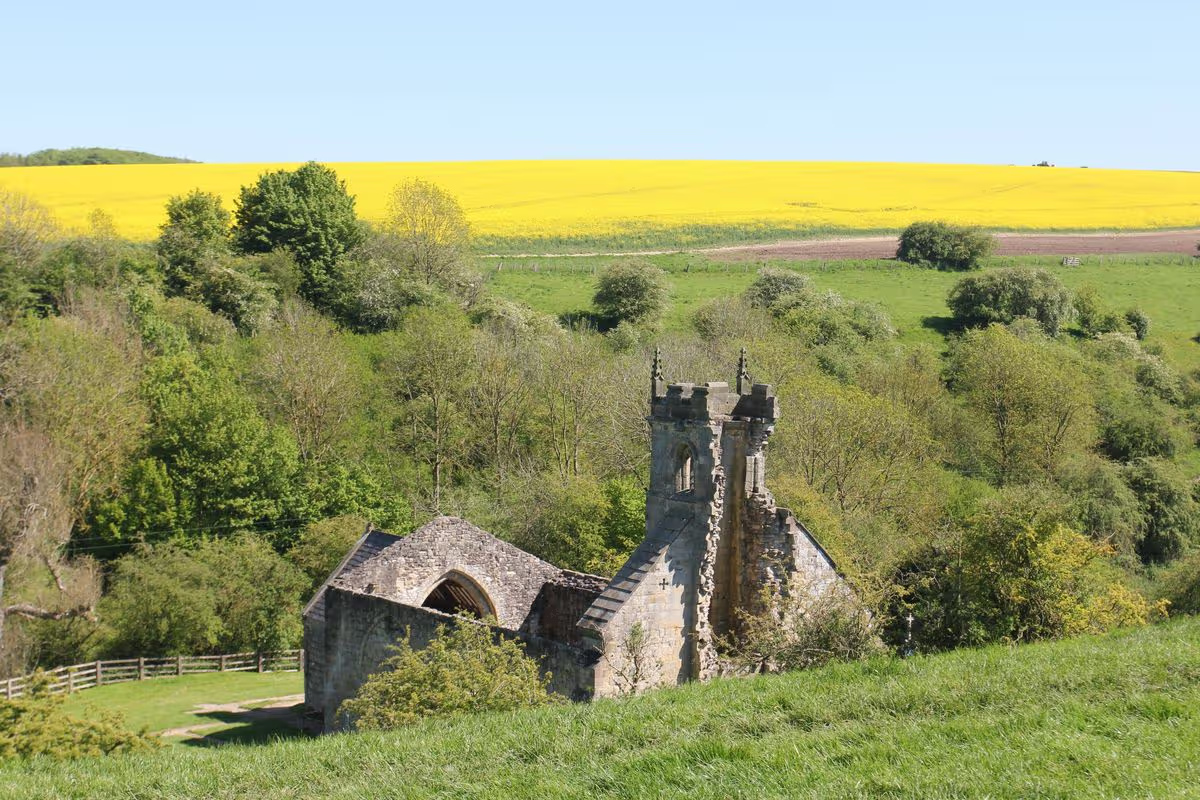
Wharram Percy is a deserted medieval village(Image: ian driscoll via Getty Images)
Tourists flock from far and wide to witness the UK’s ‘best preserved’ medieval village. Wharram Percy has stood empty for hundreds of years and now provides a captivating destination for ramblers and heritage buffs.
Tucked away in North Yorkshire, Wharram Percy ranks amongst Britain’s largest deserted medieval settlements and is certainly the most celebrated. Guests can wander freely across the ancient site, exploring the vestiges of centuries-old dwellings, a church, and manor house remains.
Perfectly positioned midway between crowd-pulling destinations Scarborough Castle and Clifford’s Tower in York, it proves an ideal pit stop when travelling between these two landmarks. Whilst admission to the settlement is complimentary, visitors face a modest £2 parking fee.
Throughout a remarkable 60-year span, archaeologists have steadily uncovered fresh insights into Wharram Percy’s past. Their discoveries have revealed why the location was originally forsaken and how residents lived during earlier eras.
Situated on a Yorkshire valley’s rim, this extraordinary settlement was home to communities for as long as six hundred years before being abandoned following the 1500s. Experts believe that even now, traces of former dwellings remain visible in the earth, alongside the more prominent ruins that draw inquisitive sightseers.
The history requires some unpacking, but specialists reckon the first settlement stretches back to around 50 BC. This territory was later converted into agricultural land but remained abandoned throughout the 5th century, before ultimately evolving into a Middle Saxon community.
It’s worth bearing in mind that accessing the village involves approximately a 3/4 mile trek from the car park to the principal area, which is often both precipitous and waterlogged. The location presents uneven ground across its entirety, which can prove difficult for certain visitors and is largely impractical for wheelchairs or pushchairs.
A TripAdvisor reviewer emphasised this point, noting: “Parking on the Heritage car park off the B1248 prepare for a trek to the village.”
They proceeded to characterise it as a “sharp gravelled decline” and a “daunting” expedition unsuitable for those with restricted mobility, as the path traverses farmland.
After their excursion, one enthusiast commended their experience, remarking: “Lovely walk from the car park to the site, but people with mobility issues may struggle. It’s a fascinating historical site that has been really well managed. Only a few visitors when we visited, which added to the peace and tranquillity of the place. Loved it!”
Another visitor commented: “This lovely deserted mediaeval village is truly fascinating! The history is incredible, and it was wonderful to wander around and explore. We really lucked out and had beautiful weather, so we got to sit on the grass by the pond and soak it all in.”
BORED of regular hotels? Why not head off on a staycation… to spend the night in a train carriage instead.
Nestled in the West Sussex countryside, you will find a restored vintage train carriage that is stopped in its own ‘station’.
Sign up for the Travel newsletter
Thank you!
Lowe Comotion is set in the West Sussex countrysideCredit: HostUnusual
Named the Lowe Comotion, the carriage is in Batchmere, Chichester and sleeps up to four people, with one main bedroom.
Inside, guests will be greeted by vintage decor and quirky train signage that not only makes you feel as if you are stepping onto a long, luxury train journey but also back in time to the golden age of train travel.
There’s a log burner and comfy sofa that transforms into bunk beds as well, to make it truly feel like a first-class experience.
When it comes to having a bite to eat, there is a dining table and chairs by the window, so you can enjoy your food whilst looking out at the view.
The kitchen has everything you’d need including a kettle, grill, toaster and microwave.
In the middle of the carriage is where you will find the bathroom, complete with a vintage bathtub.
Outside there is a spacious patio with seating too and a barbeque for the summer.
The carriage has to be booked for a minimum stay of two nights and is pet-friendly, so your four-legged friend won’t be left out.
It also includes towels and linen, so you don’t need to worry about bringing your own.
One recent guest said: “A lovely railway carriage with loads of great touches and details.
“Definitely first class. We had a grand time staying here and loved the birdsong as well as the rain on the roof when the weather let us down a bit!
“Woodburner ensured a cosy night was had and would definitely recommend to friends. Lovely private area with space for kids and dog!”
Another guest added: “Wow – what a unique and wonderful place – superbly converted 1870’s railway carriage with so many thoughtful and stylish design details we hardly wanted to go out – but also couldn’t resist the huge private lawn that comes with it – a huge hit with our over excited sheep dog! We were overexcited to sleep in it.
“Never been happier to sit on a train carriage that’s not moving!”
There’s even a kitchen inside with a kettle, grill, toaster and microwaveCredit: HostUnusualGuests can also make use of an outdoor patio and barbequeCredit: HostUnusual
A third guest said: “This place is absolutely stunning! It’s so quirky and one-of-a-kind.
“Our stay here was incredibly peaceful and tranquil, exactly what we needed to unwind and recharge.”
Lowe Comotion costs from £150 per night to stay.
As for the area surrounding the carriage, you can head off on lovely countryside walks or bike rides.
Just nine minutes down the road is West Wittering Beach, which is known for its natural beauty.
The beach has a number of facilities including the Beach Cafe, where you can grab a bite to eat such as a Beach Breakfast with poached eggs, sausage, bacon, mushrooms, tomato, beans, potato rosti and toasted brown bloomer for £11.95.
And the beaches at Selsey, East Wittering, and Bracklesham Bay are all close by as well.
West Wittering Beach is also less than 10 minutes away in the carCredit: Google
If you want to see some of the local nature, then you can head to RSPB Medmerry.
The reserve boasts 6.25miles of trails and features a lot of birdlife including avocets.
If you’ve got kids, jump in the car for 12 minutes to Selsey, where you will find West Sands Fun Fair.
It costs just £15 for unlimited rides on the attractions, which include Waltzers, Dodgems, pedal boats and toddler’s rides.
I SKULK swiftly through the labyrinth of shrubs. The grass is so tall it strokes my shoulders with each stride.
Fresh dung and paw prints in the sandy pastures point to South Africa’s most famous mammals lurking nearby — but they stay hidden.
Sign up for the Travel newsletter
Thank you!
Spot the ‘big five’ of lions, leopards, buffalo, rhino and elephantsCredit: SuppliedWe had to pull to a halt for a lion sleeping in the roadCredit: Supplied
Suddenly, among the chorus of bird call, a rustle and a huff from the nearby shrubs sends adrenaline surging through me.
My feet spring into action before my brain, as I pelt in the opposite direction, following the urgent calls of my rifle-carrying guide.
We had found ourselves mere metres from two wild buffalo, part of the elusive Big Five and one of Kruger National Park’s deadliest animals.
In the east of South Africa and arguably the most famous park for safari in the world, Kruger is celebrating its 100th anniversary this year.
That’s in part thanks to the committed rangers, who are continually working on the park’s infrastructure and a fierce anti-poaching programme.
And their work meant my chances of spotting wildlife hadn’t been diminished.
In fact, within 24 hours of checking into Rhino Walking Safaris’ Plains camp, I ticked off the Big Five — lions, leopards, buffalo, rhino and elephants — almost twice over.
Lounge area at Rhino Walking Safaris’ Plains CampCredit: Photo: Roger de la Harpe/Africa ImageryMdluli Safari Lodge tents have aircon and wifiCredit: mdlulisafarilodge.co.za
Full credit goes to the guides accompanying me, James and Orance, who know precisely how to spot clues, including claw marks on trees, with their hawk-like eyes.
Earlier that day, we had pulled to a halt for a lion sleeping in the road.
He was within touching distance.
Not that you’d risk extending an arm beyond the truck.
You have a greater chance of a lion fleeing than attacking, though.
Out in the bush with guidesCredit: Photo: Roger de la Harpe/AfricaThe Sun’s Sophie on safariCredit: Supplied
Guide James tells me the Kruger lions are used to seeing trucks of humans.
They’re still very much wild, but they generally feel safe in our presence, which makes for spectacular observing — that’s if you manage to spot one (more tips on that).
Next it was hippos braving dry land after the blistering heat had subsided, an agile leopard creeping through the long grass, then elephants shaking the last of the green fruit from the branches of a Marula tree.
Smiling broadly, I returned to my luxury safari tent, which featured wooden twin beds, a private bathroom with a shower head that dangles from a tree branch and a large decking area from which you can lazily watch wildlife, beyond the small electric fence.
Rhino Walking Safaris owns a 12,000 hectare private concession within Kruger and its Plains camp is near a popular watering hole, so the chances of spotting creatures even during downtime is high.
Buffalos, a wildebeest named Steve, baboons, and even a duo of young rhinos called by.
With only four tents and no wifi, strangers become friends and you’re wholly immersed in the experience.
The real highlight for me, however, was the morning walks.
A 4.45am alarm may sting, but observing the misty pink sunrise from beyond a buffalo’s resting place makes it all worthwhile.
There’s something magical about safaris on foot, treading the same path as the animal you’re tracking, away from all things man-made and with the exhilaration of imminent danger.
Guides carry rifles, although they’re so knowledgeable about the creatures around us, they’ve never had to fire them.
Morning walks come with snacks and coffee, followed by a brunch feast at camp, a few hours of downtime and high tea.
Then it’s the afternoon game drive with sundowners (in my case a healthy pouring of gin), an 8.30pm three-course dinner back at camp and 10pm stargazing — or bedtime for those whose eyes are too weary.
A leopard spotted in Kruger National ParkCredit: GettyGiraffes take a stroll in the parkCredit: Getty
Exhaustion is combatted by sheer adrenaline, but there are also plenty of less rural camps offering more laid-back itineraries where lazy mornings can be enhanced by spa treatments or dips in the pool.
Mdluli Safari Lodge, on the western periphery of Kruger, has a spectacular infinity pool overlooking a watering hole.
The very large safari tents, of which there are 50, are raised on stilts and come with greater levels of creature comforts such as aircon, plugs in rooms, internet access and a swinging egg chair on the decking.
Choice of game drives is plentiful. You can head out at pretty much any time of day, on short sunset safaris or day-long drives.
We even managed to squeeze in a final early sunrise ride before our transfer to the airport, admiring a mob of dwarf mongoose rustling at the edge of the road.
Before heading home or ahead of your safari, a day in Johannesburg is worthwhile.
Holidaymakers travelling from the UK will fly into this city and it’s a poignant area for delving into South Africa’s troubled past.
June 2026 marks 50 years since the brutal killing of Hector Pieterson, a 12-year-old schoolboy, who was shot by police during the Soweto student uprising.
You can learn all about this tale, and the apartheid regime, on a tuktuk tour with Lebo’s Soweto Backpackers (£35pp, sowetobackpackers.com).
We rolled through modern-day communities and old hostels, before passing Nelson Mandela’s former home, now a museum.
It’s a humbling experience.
Top it with a ride through untrodden pastures with the Big Five for an adventure of a lifetime.
Watching a David Attenborough documentary back in the UK, I feel a little smug.
A TV screen can’t quite capture that magic.
GO: KRUGER, S AFRICA
GETTING THERE: British Airways flies from Heathrow to Johannesburg from £598pp return.
STAYING THERE: Two-person tents at Rhino Walking Safaris Plains Camp start from about £422pp per night, with a minimum stay of two nights, including all meals, walking safaris and game drives.
1. BRING LOTS OF CLOTHES: You’ll sweat a lot and clothes get grubby on both walks and game drives because of the dust. I often changed outfits twice a day.
2. EARTHY COLOURS: When you’re in the truck, it really doesn’t matter what you wear – although bring a fleece or jacket, even in summer, as it gets chilly. On walks you should wear neutral, earthy tones like beige, green or brown – no whites or brights. And don’t worry about buying chic or stylish garments for walks; comfort is key.
3. WAKE UP FOR THE EARLY SAFARIS: Even if you’re knackered and desperate to stay in bed, those early-morning game drives or walks are some of the most spectacular. This is when a lot of animals come out and some of the sunrises were even more impressive than the sunsets.
4. IGNORE THE WEATHER FORECAST: The Met Office and BBC Weather forecast rain for every day I was in Kruger. Yet it didn’t rain once. It’s best to come prepared for all eventualities – rain jacket, shorts, trousers and binoculars.
5. CASH FOR TIPS: Bring more than you think you’ll need. If you run out of money, it’ll be a struggle to get more and gratuities, although not always expected, are very common. We tipped our guides 200-250 rand per day. You’ll likely want to tip other staff too, such as cooks, cleaners and waiters.
6. BRING THE RIGHT EQUIPMENT: Worldwide adaptors rarely work in South Africa – the sockets aren’t common. So order one online before you go and make sure to pack a battery pack if you plan to use your phone to take pictures and videos.
7. DON’T SELF-DRIVE: Self-drives are popular in Kruger and do give you a greater level of independence, but if you’re going for the first time, you’ll see heaps more with the help of a guide. These guides are experts and are connected with all the other guides in the area so will be first to hear of a sighting. They live on site so know exactly where certain herds rest.
8. BRING EARPLUGS: Remember, you’re in the wild, so if you’re a light sleeper, ear plugs are a must. I thought it would be sleep-inducing listening to the hum of animals at night. They were much louder than expected and I was woken up several times by a relentless owl.
9. DON’T JUST CHASE THE BIG FIVE: Everyone likes to say they’ve seen them, but some of my most magical experiences were with creatures I’d never heard of. Even the trees and flora we spotted were fascinating, as were the birds.
10. CHOOSE YOUR STAY WISELY: Camps have their own guides – and each guide or ranger varies in skill and expertise. Do your research and try to book a camp where two guides accompany you on safari as opposed to one – double the people means double your chances of spotting wildlife. We’d met people who were yet to spot a single one of the Big Five in a week, but we’d seen them all in a day and that’s thanks to our guides.
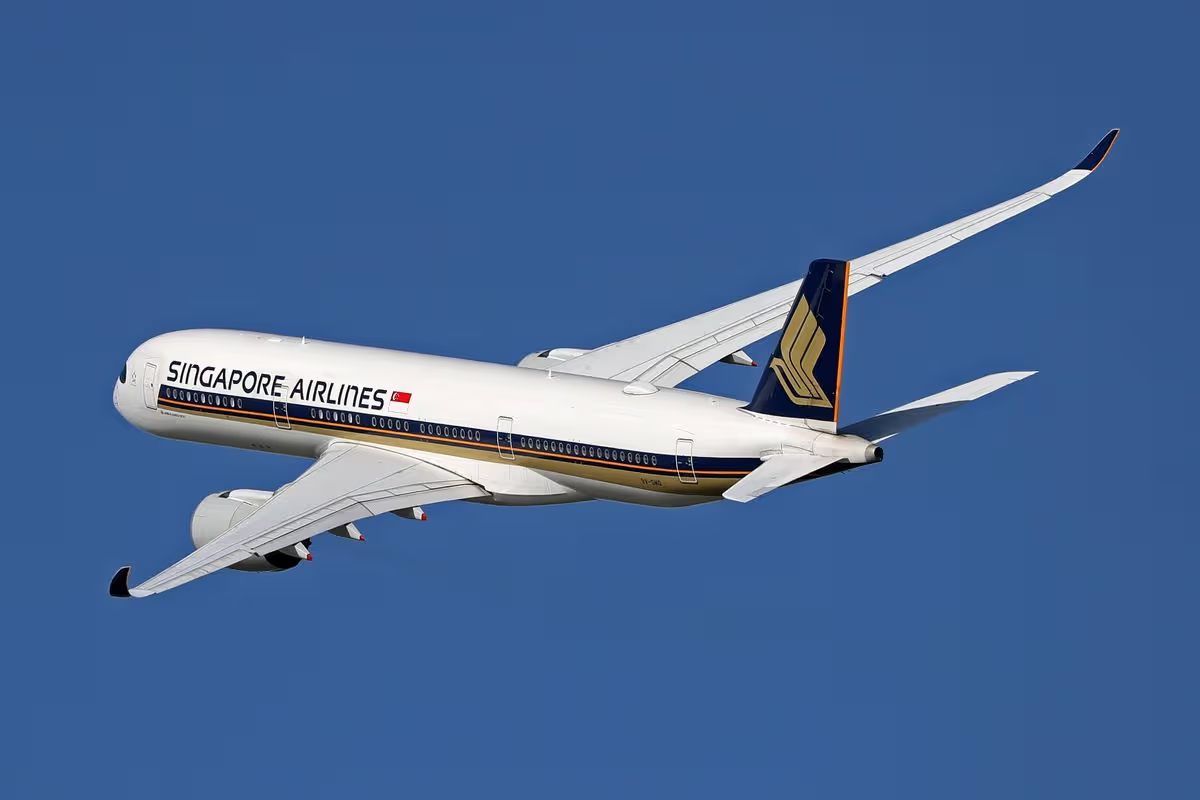
Singapore Airlines holds the record for the world’s longest flight
Millie Bull Deputy Editor, Spare Time and Luke Chillingsworth
12:29, 14 Mar 2026Updated 12:29, 14 Mar 2026
Business class seats transform into fully flat beds.(Image: Singapore Airlines)
The world’s longest flight connects America to Asia, with travellers spending nearly 19 hours in the air. Singapore Airlines currently holds the record for the longest long-haul route, operating between New York’s JFK Airport and Singapore Changi.
Covering an impressive 9,537 miles, the mammoth journey takes 18 hours and 50 minutes and has been running since the airline launched it in 2018. Singapore Airlines deploys its latest Airbus A350-900ULR on the route, an aircraft engineered to remain airborne for more than 20 hours without needing to refuel.
The aircraft achieves these remarkable flight times thanks to an enhanced fuel system, which increases the plane’s total fuel capacity to an extraordinary 24,000 litres.
However, the service isn’t available to all travellers, as Singapore Airlines has removed economy class from this particular route. Instead, the airline offers 67 Business Class seats and 94 Premium Economy Class seats.
Premium Economy travellers can enjoy extra legroom, a footrest, and an adjustable headrest. They’re also given noise-cancelling headphones and WiFi throughout their flight, reports the Express.
Those flying in Business class enjoy maximum privacy, with their seats converting into fully flat beds for a proper sleep whilst airborne. The aircraft features a host of premium amenities including higher ceilings, larger windows and bespoke lighting designed to reduce jetlag.
The carrier maintains that the aircraft’s cutting-edge carbon composite airframe also delivers exceptional air quality.
Those hoping to book a seat will require substantial funds, as fares routinely reach well into five figures. Singapore Airlines’ Chief Executive, Mr Goh Choon Phong, has previously described the new route as the “fastest way” to journey between the two major cities.
He stated: “Singapore Airlines has always taken pride in pushing the boundaries to provide the best possible travel convenience for our customers, and we are pleased to be leading the way with these new non-stop flights using the latest technology, ultra-long-range Airbus A350-900ULR.
“The flights will offer our customers the fastest way to travel between the two cities – in great comfort, together with Singapore Airlines’ legendary service – and will help boost connectivity to and through the Singapore hub.”
Whilst Singapore Airlines’ aircraft is undoubtedly remarkable, the world’s largest plane remains the Antonov An-225 Mriya, capable of transporting “52 mature elephants”.
Brits heading to Greece have been urged to check the latest travel advice as tensions linked to the Iran conflict raise wider security concerns across the region
The conflict in Iran has disrupted air travel across the globe(Image: ANIK)
Brits planning a Mediterranean getaway are being urged to check official travel guidance before heading abroad. Experts say no trip can ever be guaranteed completely safe amid growing tensions linked to the Iran conflict.
The latest reminder comes from the Foreign, Commonwealth & Development Office, which publishes travel advice for British holidaymakers. Its guidance for Greece stresses that travellers should read all advice carefully before departure.
On the UK Government travel advice website, officials warn: “No travel can be guaranteed safe.” It urges visitors to research destinations carefully and make sure they have comprehensive travel insurance before travelling.
The guidance also highlights passport rules that travellers must meet before entering the country. Greece follows Schengen Area rules, meaning passports must have been issued within the last 10 years and remain valid for at least three months after leaving the region.
British tourists can visit Greece without a visa for short trips. According to the government, travellers can stay in the Schengen area for up to 90 days within any 180-day period for tourism, family visits or business meetings.
However, new border procedures are also on the horizon for travellers heading to Europe. The European Union is introducing its Entry/Exit System, which will require visitors to register biometric details such as fingerprints or a photo when entering the bloc.
The system is expected to become fully operational from April 10. Officials warn the process could add several minutes to border checks for each passenger.
It comes as tensions continue to grow in the Middle East following the ongoing conflict involving Iran. The crisis has raised wider regional security concerns across parts of the eastern Mediterranean.
Neighbouring Cyprus, which lies roughly 800km from mainland Greece and around 300km from parts of the Middle East, has already been monitoring the situation closely. The island has previously served as an evacuation hub for foreign nationals during regional crises.
According to reports cited by international media and the United Nations, the latest escalation has fuelled fears of broader instability across the region. Military exchanges between Iran and its rivals have already heightened security alerts across several neighbouring countries.
The UK has also stepped up its military presence in the region. The HMS Dragon has been deployed to Cyprus as a precautionary measure. The Royal Navy says vessels may be deployed to support British nationals and regional security as required.
Despite the geopolitical tensions, Greece remains one of Europe’s most popular holiday destinations. Data from the Greek National Tourism Organisation shows the country welcomed more than 36 million international visitors in 2024.
Officials say the key message for travellers is to stay informed. Checking the latest government advice and ensuring documents meet entry requirements can help avoid problems when travelling abroad.
Passport holders have been urged to avoid wearing a common item of clothing when flying. When travelling on planes, there are certain items you should never wear
10:09, 14 Mar 2026Updated 10:12, 14 Mar 2026
Passport holders have been told to stop wearing the item (stock image)(Image: Images By Tang Ming Tung via Getty Images)
You might be surprised to learn that your choice of attire can significantly influence both your travel experience and your safety. That’s why travellers are being urged to refrain from wearing this specific item when embarking on a flight in future, and it’s advice everyone would do well to heed.
Polly Ann enumerates several garments she personally avoids, but one stands out as crucial from a travel safety perspective. It could have serious implications in the event of an emergency.
She divulged what people need to know in a frank post. It’s advice worth heeding, as it could greatly affect your travel experience.
Imparting wisdom to passport holders, she stated: “Things never to wear on a plane. Open-toed shoes.
“Sandals and open-toed footwear are discouraged because aircraft floors and bathrooms aren’t very clean and they don’t protect your feet in case of an emergency.
“Offensive clothing. Anything with profanity, lewd graphics or offensive messaging could lead to being asked to change or even denied boarding under some airline dress codes.”
She proceeds to mention several other items she’d steer clear of but, regarding safety, footwear is particularly crucial. Whilst they’re not typically prohibited on aircraft, travellers are actually discouraged from wearing sandals.
There are several reasons why it’s advisable to avoid them when flying. You might never have considered they can actually present hazards.
Why should they be avoided?
Experts generally recommend passengers avoid wearing sandals or open-toed footwear on flights due to safety risks during an emergency evacuation, the possibility of foot injuries from falling objects and hygiene issues.
If you do choose to wear them, it’s recommended you also wear socks. There are multiple reasons behind this guidance.
During an emergency, such as an evacuation, sandals can slip off, making it challenging to run or walk across harsh surfaces like tarmac, broken glass or wreckage. Additionally, aircraft floors are frequently dirty and chilly, meaning wearing sandals leaves your feet vulnerable to bacteria.
Aeroplanes are typically cold, and feet have a tendency to swell during lengthy flights, rendering the footwear increasingly uncomfortable. You may also be required to remove sandals at security checkpoints, which could extend your time getting through the airport.
Hence, it’s simpler all around if you refrain from wearing them. There are a few reasons why they could land you in a bit of trouble.
DID YOU know that the word ‘spa’ comes from a European town by the same name that actually is responsible for wellness traditions?
Spa in Belgium is a small town sat in a valley of the Ardennes Mountains and is often known as the Pearl of the Ardennes.
Sign up for the Travel newsletter
Thank you!
Spa in Belgium is often dubbed the Pearl of the ArdennesCredit: Alamy
It’s one of Belgium‘s most popular tourist destinations and with good reason, because the town is full of natural mineral springs.
Perhaps you also know the name of the town due to the racing Circuit de Spa-Francorchamps, which hosts the annual Formula One Belgian Grand Prix.
But Spa’s spa history dates back a lot longer than the noise of a motor engine…
Way back in the 16th and 17th centuries, the town became known for its iron-rich mineral springs that people used to think could heal them of injuries and illnesses.
The original experience in the town was ‘drinking therapy’, where people would drink a large amount of the iron-rich water, rather than bathe in it.
Then in 1717, Peter the Great of Russia visited and drank the water for a month and miraculously, was ‘cured’ of his severe health issues including liver and digestive problems.
This was the start of mass tourism heading to the town, with international visitors flocking to Spa for its healing waters.
This trend continued into the 18th century when Spa became a fashionable resort town known as the ‘Cafe of Europe’.
Many elite members of society would travel to Spa to treat health conditions but also participate a number of other activities including gambling.
Then in the 19th century, there was more of a focus on bathing as the town opened new thermal baths.
It’s because of the town’s long history and fame, that the word ‘spa’ was adopted into the English language and used widely as a term for a resort with therapeutic water.
Finally, in 2021, Spa was recognised as part of UNESCO World Heritage Site’s the Great Spa Towns of Europe.
Today, visitors can still relish in the benefits of Spa’s water.
One of the top spots for visitors today is Thermes de Spa – a resort which overlooks the town with peat baths, traditional copper baths, outdoor pools and relaxation experiences.
The town is full of natural mineral springs that are still used todayCredit: Alamy
The spa experience includes a 70C sauna and a 40C to 45C hammam.
For those who want to embrace naturism, there is an area for this with a panoramic sauna, a hammam, a 36C hot tub, a 38C bath, a 20C cold bath and three foot baths.
There are a number of relaxation areas too including a red light therapy area and a blue light room, which if you spend 20 to 30 minutes in, it is equivalent of a day high in the mountains.
And of course, there are a number of baths as well.
The water for all of the spa comes from the Marie-Henriette Spring, which is the oldest of Spa’s waters dating back over 400 years.
If you fancy learning more about the history of the town, head to the Museum of the City of Water.
Inside, visitors can learn about four centuries of history in the town.
You can also venture into one of the first casinos in the world, which opened in 1763.
The town even has a Museum of the City of Water to learn more about the natural springsCredit: Alamy
Many European royals used to visit Casino de Spa and visitors can still head there today.
For those who love being in the outdoors, there’s RAVeL trails, which are converted railway lines and a great way of seeing the Ardennes and its historic villages including Stavelot and Francorchamps.
Or if you prefer a bit of adrenaline, make sure to check out SpaForest, which is an adventure park with tree-climbing courses, ziplines and rope bridges.
When it comes to choosing somewhere to stay in the town, obviously a lot of the options include wellness facilities.
You could stay at the four-star Van der Valk Hotel Spa with direct access to Les Thermes de Spa thermal Baths.
A room costs from £80 per night.
Or you could decide to stay at the Radisson Blu Balmoral Hotel, costing from £97 per night.
It is surrounded by dense forest, features suites with separate living areas and has an indoor pool, sauna and a Turkish bath.
And the town is home to one of the oldest casinos in the worldCredit: AlamyAnd of course, the famous Formula One race circuitCredit: Alamy
The easiest way to get to Spa from the UK is by flying to Brussels, which costs from £28 return.
From there, you can jump on a train which takes less than two hours to reach Spa, costing from £13.64 a-way.
Alternatively, you could get the Eurostar to Brussels and switch trains to reach Spa.
THE Netherlands’ best-kept secret is out . . . Utrecht is now stealing the spotlight from Amsterdam.
With historic streets, lively bars and quirky shops, it is quickly becoming Europe’s must-visit city.
Sign up for the Travel newsletter
Thank you!
Find out why Utrecht is stealing Amsterdam’s thunderCredit: Getty
Lonely Planet has tipped it as one of 2026’s hottest destinations and people are already flocking to see what all the fuss is about.
With architectural wonders, canal-side restaurants and intriguing after-dark hotspots, it is easy to see why visitors are falling head over heels for the Dutch delight . . .
WHY SHOULD I GO?
WITH a labyrinth of canals and charming gabled houses, Utrecht’s streets brim with character.
It delivers all the allure of capital Amsterdam, but without the crowds.
Beyond the medieval charm, Utrecht offers far more than fairytale backdrops.
It has a vibrant arts and music scene where Johnny Marr, Ride and Wolf Alice have performed.
For a bird’s-eye view of the city, head to the Dom Tower.
Soaring 112 metres, it is the tallest church spire in the Netherlands and has been a landmark since 1382.
Climb right to the top for your panoramic views.
STREETS MADE FOR WALKING?
UTRECHT is one of the world’s most walkable cities, with 75 per cent of locals on foot or bike.
Explore the old town, or hop on a 90-minute canal cruise to discover historic wharves and charming houses — all brought to life by tales from a skipper.
Go full Dutch and cycle the streetsCredit: Getty
ANYTHING FOR BUCKET LIST?
GO underground at DOMunder and wander through 2,000 years of history beneath the streets, including Roman ruins and medieval cellars.
Art lovers will swoon at the Rietveld Schroder house, a Unesco-listed modernist gem.
Meanwhile, the Museum Speelklok lets visitors relive history with its whimsical self- playing musical instruments.
WHERE SHOULD I EAT?
KICKSTART your day at Bunk, a chic spot in a converted church.
The Dutch Breakfast (£16) serves up Eggs Benedict, a cheesy pancake, and a Dutch speciality — a spicy slice of cake for a quirky but delicious way to start your day.
Head to on-trend Café Olivier for refreshmentsCredit: Alamy
For a laid-back lunch, head to Il Pozzo, tucked away on the waterfront. Its wood-fired pizzas are perfect for a lazy meal as you watch the boats drift by.
On the go? Toque Toque sells toasted sandwiches starting at £7.
For an elegant dinner, try Jack Rabbit, with its oversized shimmering rabbit on the walls.
There are small plates of tuna sashimi and sea bass ceviche, crafted cocktails and a buzzing, hip vibe.
If you are after something heartier, Broadway Steakhouse sizzles with a relaxed, stylish setting.
I FANCY A DRINK
CANAL-SIDE sips and cocktail bars set the scene for an evening out.
Kick things off at the on-trend Café Olivier, a converted abbey with vaulted walls serving Belgian beers from £3.90.
Then wander along the Oudegracht to De Rechtbank, a buzzing hotspot with inventive cocktails and a lively terrace.
For a more laid-back vibe, check out Vino Vero, where the expertly chosen wines come at surprisingly great prices.
If you are after something more exotic, duck into the city’s cellars to The Rum Club, where rum cocktails and reggae beats transport you to the Caribbean.
Café DeRat, with a rotating selection of local brews, keeps regulars coming back for more.
And for a touch of glamour, head to Café Lebowski, a speakeasy-style bar where cocktails are expertly crafted in an intimate setting.
WHERE TO STAY
THE Moxy Utrecht is a fun, budget-friendly option in the city centre.
With stylish rooms, a buzzing bar, playful decor, oversized chess sets and complimentary bike hire, it’s the perfect base.
Rooms start from £92 a night.
For those ready to splash out, Grand Hotel Karel V, housed in a former 14th-century monastery, is pure indulgence.
It combines historic charm with modern luxury and also has a Michelin-starred restaurant and a great wellness centre.
GO: UTRECHT
GETTING THERE: Several airlines fly to Amsterdam Schiphol, including easyJet, BA and KLM from London, plus Manchester and Liverpool.
Fares start from £71 return.
From Schiphol, it is less than 30 minutes by train to Utrecht.
STAYING THERE: Rooms at The Moxy Utrecht from £92 per night, Grand Hotel Karel V rooms from £229.
Despite morale-sapping staff layoffs, bizarre executive orders and a 43-day federal government shutdown last fall, the grandeur and serenity of national parks in California remain irresistible to outdoors lovers looking to unwind.
The nine national parks in the Golden State — including Yosemite, Death Valley and Joshua Tree — attracted nearly 12 million recreational visits in 2025, according to statistics from the National Park Service.
That’s up more than 800,000 visits from 2024 and up more than 300,000 from the previous record set in 2019, according to the data, which stretches back to 1979.
Nationally, visits were high, at 323 million, but down a couple of percentage points from the record set in 2024, according to a park service press release.
“America’s national parks continue to be places where people come to experience our country’s history, landscapes and shared heritage,” said Jessica Bowron, acting director of the NPS.
“We are committed to keeping parks open, accessible and well-managed so visitors can safely enjoy these extraordinary places today and for generations to come,” Bowron added.
President Trump’s critics beg to differ.
Since Trump resumed office in January 2025, his administration has slashed the NPS workforce by nearly a quarter, buying out or laying off hundreds of rangers, maintenance workers, scientists and administrative staff across the country.
And last year, as part of his war on “woke,” Trump instructed the park service to scrub all signs and presentations of language he would deem negative, unpatriotic or smacking of “improper partisan ideology.”
He also ordered administrators to remove any content that “inappropriately disparages Americans” living or dead, and replace it with language that celebrates the nation’s greatness.
That gets tricky at places such as Manzanar National Historic Site in the high desert of eastern California — one of 10 camps where the U.S. government imprisoned more than 120,000 Japanese American civilians during World War II.
It’s also hard to dance around disparaging details at Fort Sumter National Monument, where Confederates fired the first shots of the Civil War; Ford’s Theater National Historic Site in Washington, D.C., where Abraham Lincoln was assassinated; and Martin Luther King Jr. National Historic Park, which commemorates the assassination of the country’s best known civil rights leader.
“This administration is actively erasing the history, science and culture that our national parks protect,” said Emily Douce, deputy vice president for government affairs for the nonprofit National Parks Conservation Assn.
Douce argued that morale among staff at the parks — a string of 63 federally protected natural wonders often described as “America’s best idea” — has never been lower.
But the fact that employees still showed up, including without pay during last year’s federal government shutdown, demonstrates their commitment to keeping the beloved parks flourishing.
“The enduring popularity of America’s national parks is not surprising,” Douce added. “What’s shocking is this administration’s relentless attacks on these places and their caretakers, which threatens their future.”
The White House did not immediately respond to a request for comment.
The National Park Service is routinely ranked among the most admired branches of the large and sprawling federal government. Even Americans who have never watched a minute of C-SPAN, or get a little lost in the alphabet soup of other agencies, will probably never forget standing in Yosemite Valley and admiring a towering waterfall.
There were 4.3 million visits to Yosemite in 2025, 2.9 million to Joshua Tree and 1.3 million to Death Valley, according to the data.
The 323 million visits to America’s national parks in 2025 are more than twice the attendance — 135 million — at professional football, baseball, basketball and hockey games combined.
Of course, it’s a lot cheaper to get into a park. U.S. residents pay between $20 and $35 per vehicle for a day pass, or $80 for an annual pass. The Trump administration recently raised the annual fee to $250 for foreign visitors.
National Park Service officials did not respond to emails requesting comment on California’s 2025 attendance.
The Foreign, Commonwealth and Development Office (FCDO) has been refreshing its travel advice for nations across the globe amid ongoing conflict in the Middle East, continuing to wreak havoc on international movement.
Beyond severely disrupting travel plans, the ongoing crisis is set to have far-reaching consequences for inflation, interest rates and commodity markets. British citizens have already been airlifted from Oman, the United Arab Emirates, and neighbouring regions, with Whitehall organising charter flights to repatriate nationals safely.
Those most at risk will receive priority booking on these evacuation flights, with the Foreign Office pledging to reach out to anyone who has registered their whereabouts in the affected zone, reports the Liverpool Echo.
In its guidance covering numerous Middle Eastern nations, the Foreign Office said: “Regional escalation poses significant security risks and has led to travel disruption. Stay away from areas around security or military facilities. Follow the instructions of the local authorities and monitor local and international media for the latest information.”
The advice went on: “If local authorities advise you to take shelter, stay indoors or move to the nearest safe building immediately. The greatest risk is from falling debris caused by intercepts, and you are safest inside a secure structure.
“Choose an interior stairwell or a room with as few external walls or windows as possible for additional protection.”
Political strife, natural calamities and safety issues are among the factors leading the UK Foreign Office to advise Brits against travelling to certain locations.
Afghanistan
Travel to Afghanistan is strongly discouraged. The security climate is unpredictable, with previous tensions between Afghanistan and Pakistan resulting in violent skirmishes in border areas.
Travelling across Afghanistan poses extreme risks, and several border crossings are currently closed.
The likelihood of British nationals being detained in Afghanistan is significantly high. If you’re a Brit and find yourself detained in Afghanistan, you could be looking at a lengthy prison sentence spanning months or even years.
The FCDO’s capacity to assist you is severely restricted, and in-person support in Afghanistan is not feasible.
Belarus
The FCDO strongly advises against all travel to Belarus. If you’ve ever participated in activities now deemed illegal by the Belarusian regime, you run a substantial risk of arrest.
There’s also a minor risk that direct conflict related to the war in Ukraine could spill over into Belarus.
In the unlikely event of conflict breaking out, the FCDO’s ability to aid British nationals will be drastically limited. Ignoring advice from the FCDO could invalidate your travel insurance.
Burkina Faso
The FCDO advises against all travel to Burkina Faso due to the threat of terrorist attacks and kidnappings, coupled with the country’s unstable political situation.
There is no British Embassy in Burkina Faso and all consular support is provided from the British Embassy in Accra, Ghana. They cannot provide in-person assistance.
If there is serious violence, unrest or a deterioration in the security situation, it could be difficult to leave safely.
Haiti
The FCDO advises against all travel to Haiti owing to the unstable security situation. There are currently no British consular officials in Haiti and its ability to provide consular assistance is severely limited and cannot be delivered in person in Haiti.
If you choose to travel to or remain in Haiti against FCDO advice, attempt to avoid all crowds and public events, and take appropriate security precautions.
Iran
The FCDO advises against all travel to Iran. If you are a British national already in Iran, either resident or visitor, the Foreign Office said: “carefully consider your presence there and the risks you take by staying”.
British and British-Iranian dual nationals face significant risk of arrest, questioning or detention. Possessing a British passport or links to the UK can be reason enough for the Iranian authorities to detain you.
Iraq
The FCDO advises against all travel to Federal Iraq and the Kurdistan Region of Iraq. This is due to recent escalation in regional conflict.
There is significant risk of further escalation, and events are fast-moving and unpredictable. The Foreign Office said: “Regional escalation poses significant security risks and has led to travel disruption. The border crossing from Iraq into Kuwait is closed.
“British nationals wishing to cross into Kuwait must contact the British Embassy in Kuwait 24 hours in advance. The British Embassy will share names and passport details with the Ministry of Foreign Affairs who will determine entry.”
Israel
The FCDO advises against all travel to Israel and Palestine: “Regional escalation poses significant security risks and has led to travel disruption. Stay away from areas around security or military facilities.”
Britons should inform the UK government of their presence in Israel, and register if they’re in the region for ongoing updates. You should adhere to instructions from local authorities and keep abreast of local and international media for the most current information.
Mali
The FCDO advises against all travel to Mali in its entirety owing to volatile security conditions. If you’re currently in Mali, you should depart “immediately” via commercial flight if you deem it safe to do so.
“The international airport in Bamako is open, and commercial flights are available. Do not try to leave Mali by overland routes to neighbouring countries as this is too dangerous. This is due to terrorist attacks along national highways.”
There remains a significant threat of abduction and criminal behaviour throughout Mali, including within the capital city of Bamako.
The Foreign Office warned: “If you choose to remain in Mali, you do so at your own risk. You should have a personal emergency plan that does not rely on the UK government.”
Niger
The FCDO advises against all travel to Niger. Officials said: “This is due to the rise of reported terrorist and criminal kidnappings of foreign nationals which have taken place this year in Niger. There is an ongoing risk of terrorist attacks throughout Niger including in the capital, Niamey.”
Support for British nationals is extremely limited in Niger. Assistance is delivered remotely from the British Deputy High Commission in Lagos.
Face-to-face help is unavailable. Should serious violence, civil unrest or a worsening security situation occur, departing safely could prove challenging.
Palestine
The FCDO advises against all travel to Israel and Palestine. UK citizens currently in the region should inform the Government of their whereabouts in Palestine and register their presence to receive ongoing updates.
Should you determine it’s safe to proceed and intend to use commercial departure options, verify the latest information from your airline or tour operator, alongside guidance from local authorities and the status of border crossings prior to travelling.
The Foreign Office cautioned: “The situation could escalate quickly and poses significant risks. Regional tensions may cause international borders (air and land) to close.”
Russia
The FCDO warns against all travel to Russia owing to the dangers and threats stemming from its ongoing invasion of Ukraine, including security incidents such as drone strikes and Russian air defence operations, a shortage of flights back to the UK, and restricted capacity for the UK government to offer assistance.
The Foreign Office said: “There is an increased risk of British nationals being detained in Russia, including if the Russian authorities suspect you of engaging in or supporting activities against Russian law, even if activities took place outside Russia.”
South Sudan
The FCDO warns against all travel to South Sudan due to the threat of armed violence and criminal activity.
“The political and security situation remains unpredictable. Political tensions are high and the security situation across the country could deteriorate rapidly and unpredictably.
“If the unstable security situation deteriorates, routes into and out of South Sudan may be blocked. Juba airport may close or be inaccessible. Flights may be cancelled at short notice.”
Syria
The FCDO warns against all travel to Syria owing to volatile security conditions and the risk of terrorist attacks. Consular support is unavailable from the British government within Syria.
The FCDO may learn of assistance offered by other organisations which can be shared with British nationals. Should you require help, contact the FCDO in London on +44 (0)20 7008 5000.
Yemen
The FCDO warns against all travel to Yemen in its entirety owing to unpredictable security conditions. The guidance states: “If you’re in Yemen, you should leave immediately.”
Assistance for British nationals is extremely restricted in Yemen. The British Embassy in Sana’a has suspended operations, with all diplomatic and consular personnel evacuated.
The UK government is unable to assist British citizens departing Yemen. No evacuation arrangements are currently in place.
Should you decide to stay in Yemen, you ought to keep movement around the country and within urban areas to a minimum, stay informed about changes in the local security landscape and observe other safety measures.