A NUMBER of major train services that head to the country’s biggest airport are currently suspended due to an incident.
Emergency services are dealing with an incident resulting in several rail lines that head to Heathrow Airport being closed.
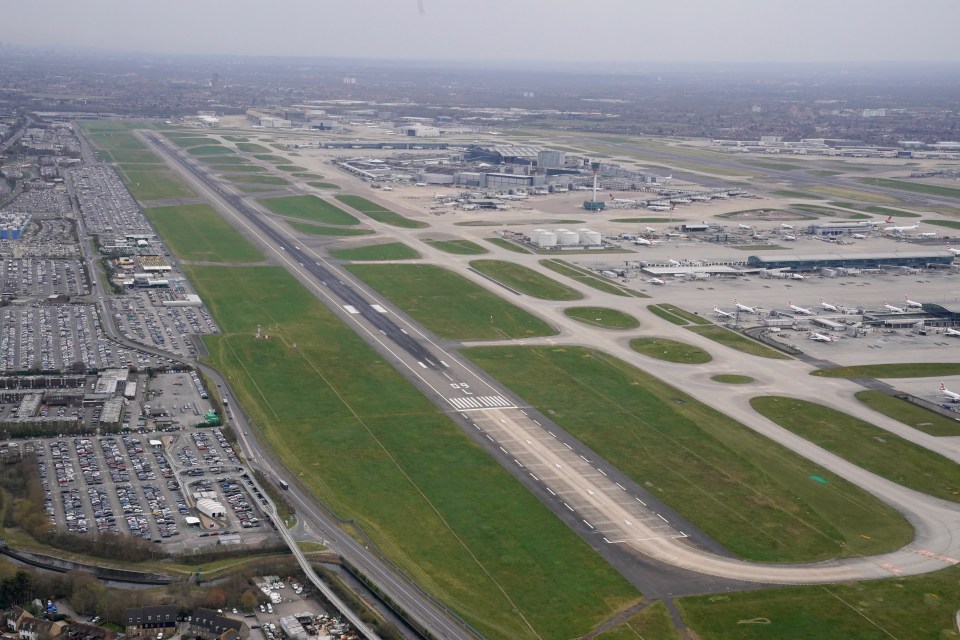
A number of rail services that head to Heathrow Airport have been suspendedCredit: PA:Press Association
The disruption is currently impacting the Elizabeth line, Heathrow Express, and Great Western Railway services, with all lines between London Paddington and Heathrow Terminals and Reading closed.
Elizabeth Line customers are being advised to use bus connections between Hanwell and West Ealing, towards Ealing Broadway or Southall.
Sign up for the Travel newsletter
Thank you!
National Rail is also advising passengers that the disruptions could continue until at least 12pm.
It comes as a casualty was reported on the tracks shortly before 8am.
Tickets are currently being accepted on London Underground, London Buses, Southwestern, Thameslink, DLR, South Western Railways and Chiltern Railway services.
If travelling from central London, the Piccadilly Line is still running so the London Underground is an option.
Services include the Elizabeth Line and the Heathrow ExpressCredit: Alamy
Though, to be on the safe side, travellers should allow extra time to get to the airport.
National Rail’s website currently states: “The emergency services are currently dealing with an incident between London Paddington and Heathrow Terminals / Reading.
“So that they can safely carry out their work, some lines have been closed.
“Trains operating between these stations may be cancelled, delayed by up to 60 minutes or revised as a result.
“Major disruption is expected until 12:00.”
Meanwhile, there are also disruptions between Weybridge and Surbiton.
South Western Railway has stated on X: “A speed restriction over defective track is affecting the railway between Weybridge and Surbiton.
“Trains may be cancelled, delayed or revised because of this problem.”
Foreign Office issues updated Thailand travel guidance for Brits on Monday
11:12, 12 Oct 2026Updated 14:38, 12 Oct 2026
Thailand is hugely popular among UK holidaymakers(Image: ANDREY DENISYUK via Getty Images)
The UK’s Foreign, Commonwealth and Development Office (FCDO) has revised its travel guidance for those planning a trip to Thailand.
The South East Asian destination is growing increasingly popular with British holidaymakers, with over a million making the journey every year. On top of this, tens of thousands of UK nationals live, work, or retire in Thailand – in locations such as Bangkok, Chiang Mai, Hua Hin, and Phuket. To enter Thailand as a tourist, your passport must have an ‘expiry date’ at least 6 months after the date you arrive and have at least one blank page.
The FCDO warns: “You will be denied entry if you do not have a valid travel document or try to use a passport that has been reported lost or stolen.” As of September 15, 2026, if you enter Thailand on a British passport, under the visa exemption scheme, you can stay for up to 30 days for tourism only.
This does not extend to business travel, including attending conferences, meetings or other business activities. Those travelling for business purposes should secure the appropriate visa prior to departure.
New Foreign Office Thailand alert issued
New FCDO Thailand advice, issued on Monday, reads: “Visa-exempt entry for tourism through land-border immigration checkpoints is normally limited to two entries per calendar year. This restriction does not generally apply to arrivals by air.
“If you frequently enter Thailand as a tourist, immigration officials may ask for evidence of your onward travel, accommodation, or sufficient funds, and may refuse entry if they believe you are not a genuine visitor.”
All overseas nationals travelling to Thailand, whether by air, land or sea, are required to complete a digital arrival card online prior to their arrival. Travellers are able to register for an arrival card up to three days before they land.
Should you overstay your visa, you face a penalty of 500 Thai baht (around £11) per day, rising to a maximum of 20,000 baht (around £449). You also risk being detained, deported at your own cost, and banned from returning to Thailand for as long as 10 years.
The EU’s new Entry and Exit System (EES) requires most UK travellers to register their biometric data before entering the Schengen area
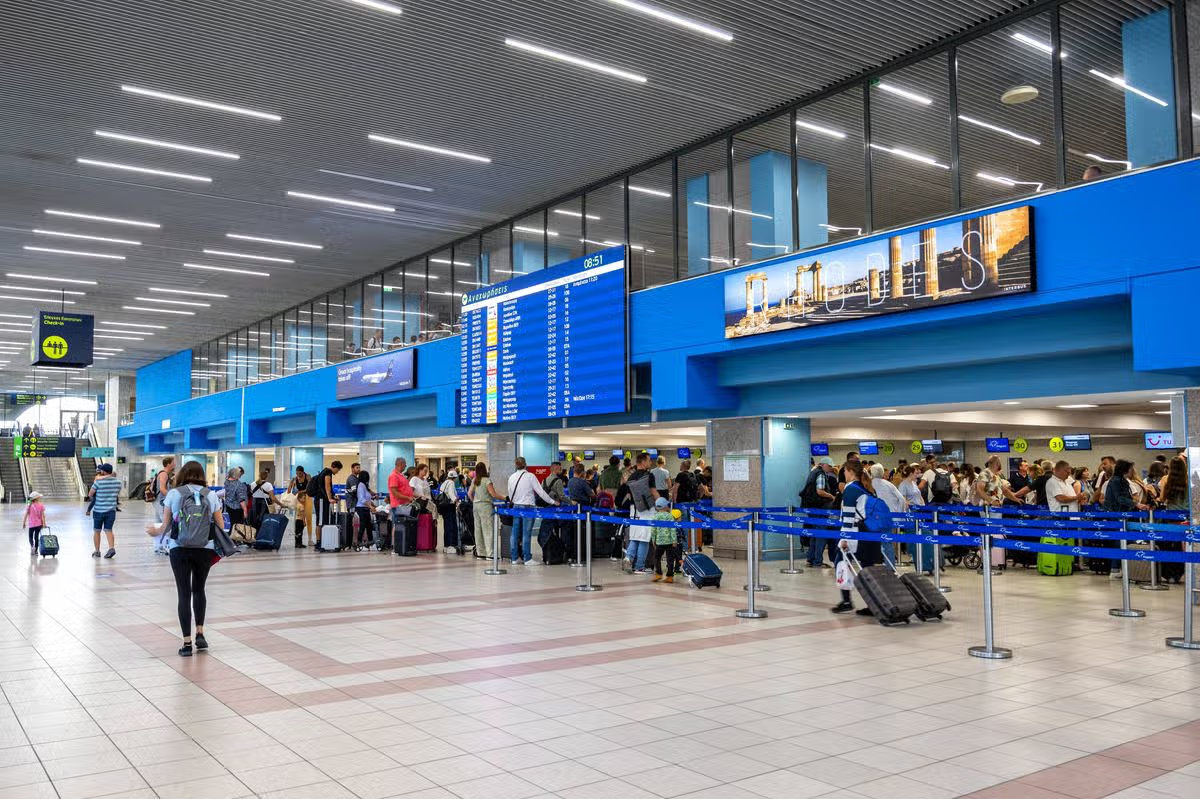
EES has led to queues and delays already this year(Image: Boarding1Now via Getty Images)
UK travellers heading to Europe are now subject to a new Entry/Exit System (EES), which was introduced earlier this year.
This means the majority of non-EU citizens will be required to register their biometric data at one of 29 participating countries, including a host of popular holiday destinations such as Spain and Greece. Some UK travellers will need to have their photograph taken and their fingerprints scanned before they can pass through into Europe’s Schengen area.
Countries that are part of the EES are: Austria, Belgium, Bulgaria, Croatia, Czechia, Denmark, Estonia, Finland, France, Germany, Greece, Hungary, Iceland, Italy, Latvia, Liechtenstein, Lithuania, Luxembourg, Malta, Netherlands, Norway, Poland, Portugal, Romania, Slovakia, Slovenia, Spain, Sweden, and Switzerland.
As a result of the new system, travellers no longer need to have their passports stamped. Over the summer, the EES resulted in lengthy queues and significant delays at a number of airports.
Due to the disruption caused, Greece initially suspended EES checks for UK passport holders in April 2026, though this decision was subsequently reversed in order to comply with EU regulations. Earlier this month, however, Greece and eight other countries – France, Portugal, Germany, Italy, Malta, Switzerland, the Netherlands, and Belgium – have indicated they require additional time before fully implementing the EES.
EU sources say the system is regarded as a success, with approximately 200m registrations and 70,000 people prevented from entering the Schengen area, up from 43,700 in June. These include individuals without visas, those who have exceeded their 180-day allowance, or Britons who have overstayed their 90-day allowance.
People who do not have to register on EES
Some travellers may not be required to register their biometric data on the new system. According to the EU website, you do not need to use the system if the following apply:.
You are a non-EU national who holds a residence card or permit and are immediately related to a non-EU national who can travel through Europe like an EU citizen.
People exempt from border checks due to certain privileges e.g. a head of state.
You are a non-EU national who holds a residence card and are immediately related to an EU national.
You hold a residence permit or long-stay visa.
You are a non-EU national travelling to Europe as part of an intra-corporate transfer for the purpose of research, studies, training, pupil exchange, voluntary services, educational projects, or au-pairing.
You are a national of Andorra, Monaco and San Marino and hold a passport issued by the Vatican City State or the Holy See.
You are a diplomat on a short stay (under certain conditions).
You are a national of a European country using EES, such as Cyprus and Ireland.
Most UK holidaymakers still consult and trust their family and friends’ recommendations over AI for travel advice
08:00, 29 Sep 2026Updated 13:37, 29 Sep 2026
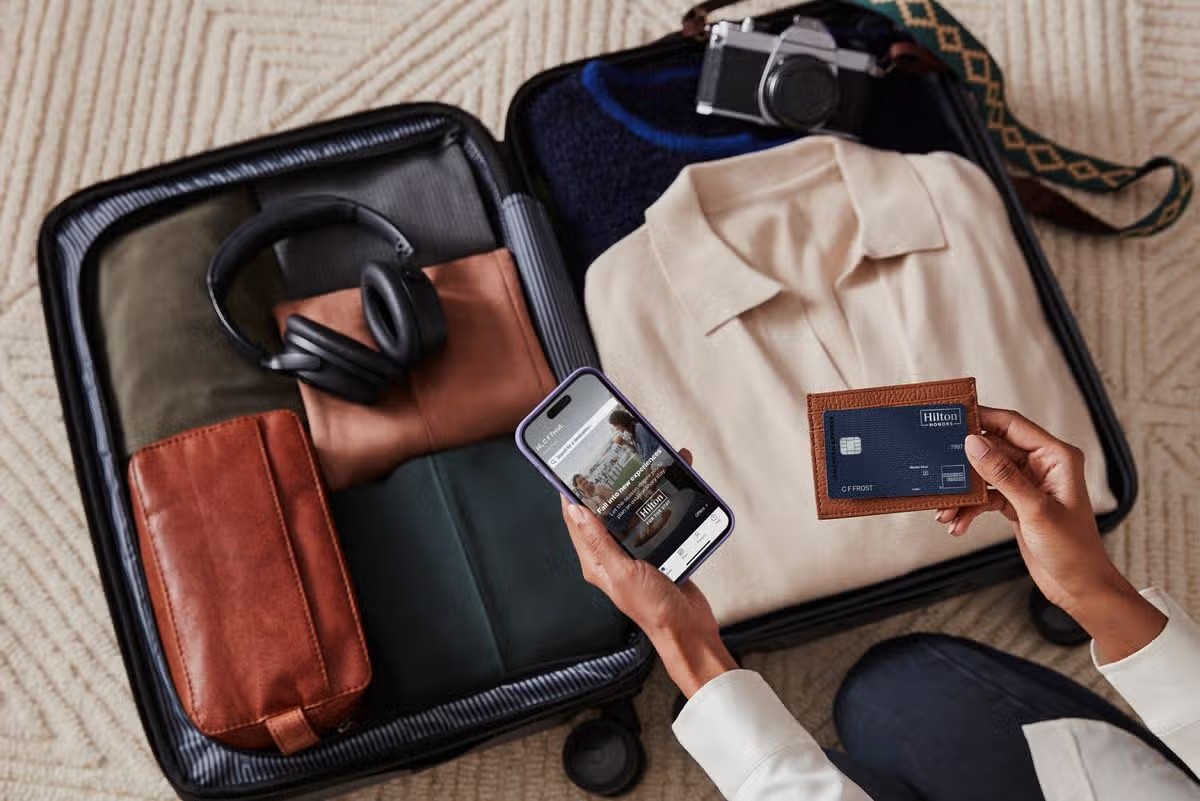
Three-quarters of Brits said having a holiday booked gives them a ‘sense of purpose’(Image: Hilton)
A landmark study of 14,000 travellers from countries including the UK and Australia found that in the UK, family (84%) and friends (81%) trumped AI (45%) for travel tips and holiday hotspots.
Just one in 10 rely on influencers for travel advice – highlighting ‘The Travel Trust Equation’ will be a strong theme emerging for 2027. Artificial intelligence is seen to be transforming the way we travel, but it hasn’t quite replaced the human touch. It also revealed they are set to prioritise things like balance, flexibility and trips that leave a lasting impact.
Of the 1,000 Brits surveyed as part of the Hilton 2027 Trends Report, The Great Rebalance, three-quarters said having a holiday booked gives them a ‘sense of purpose’.
This reflects ‘The Beforeglow’, with booking a trip giving people a much-needed psychological boost and offering them a sense of excitement, motivation and escape weeks, or even months, ahead of departure. More than a quarter (27%) also seek a new perspective through travel, which changes how they view everyday life when they get back home.
Simon Vincent CBE, executive vice president and president, EMEA, Hilton, said: “Travellers are increasingly focused on making their time away count. Rather than chasing a one-size-fits-all idea of the perfect trip, they’re looking for experiences that reflect their own interests and priorities.
“Our job is to help guests make the most of every trip; whether they’re exploring a new destination, reconnecting with loved ones, taking time to switch off – or even a little bit of everything.”
The study also found 60% of all Brits claimed having a holiday booked helps them stick to personal goals, while 53% use them to mark important life moments, meaning travellers are well into their ‘Optimisation Era’.
But 28% of Gen Z travellers see holidays as a chance to kick-start a healthier lifestyle, whereas 63% are more likely to make a significant life change after returning home from their travels.
Nearly three quarters of this generation (74%) also feel motivated to stick to personal goals knowing a holiday is on the cards, and 32% regarded maintaining their fitness routine while away as ‘non-negotiable’.
But the Morning Consult research found 29% of younger travellers feel pressure to plan the ‘right’ kind of trip – compared with just 6% of 62-80-year-olds, showing a rise in ‘Boomer Goals’.
Only 18% of this older generation stick to a strict itinerary, compared with 41% of Gen Z, with 53% of Boomers favoured a spontaneous approach instead. And 72% never feel pressure when making travel decisions, compared with only 27% of Gen Z.
Travel loyalty is emerging as another status symbol among younger holidaymakers, with 27% of Gen Z belonging to a points or miles programme.
The rise of ‘Status Seekers’ suggests travel loyalty programmes have entered a new era, where status matters as much as savings.
With 37% even admitting to feeling jealous of friends with a higher travel status, as 41% see that status as a sign of personal success.
A further 58% of 18-to-29-year-olds believed people with elite travel status have greater influence over group travel decisions.
Where travellers stay is changing too, as gardens were named as an accommodation ‘must-have’ by 40% of Brits, placing them ahead of hotel pools at 33%.
Fresh air and time outdoors were key to holiday relaxation (76%), while 47% will use travel to spend more time immersed in settings such as forests, mountains and coastlines.
UK adults are also reconsidering the traditional big annual getaway in favour of shorter, more flexible breaks, with 65% planning to take more short trips over the next year.
Among these “micro-travellers”, 35% want to tick more destinations off their travel lists, and 26% value the spontaneity offered by shorter breaks.
A further 56% will plan a micro-trip around one standout experience, rising to 74% of Gen Z travellers.
Simon Vincent added: “With a portfolio spanning everything from luxury retreats and city-centre collection hotels to family-friendly resorts and extended-stay brands, we offer travellers the choice and flexibility to find the experiences that are right for them.”
Seven travel trends for 2027
The Travel Trust Equation – AI may be transforming travel, but it hasn’t replaced the human touch.
Status Seekers – Travel loyalty programmes have entered a new era: where status matters as much as savings.
Boomer goals – In contrast to the younger generation’s optimisation obsession, Boomers are making a compelling case for doing less.
The Beforeglow – Booking a trip is giving people a much-needed psychological lift, offering a sense of excitement, motivation and escape weeks, or even months, ahead of departure.
Optimisation Era – Self-optimisation culture continues as travellers will see time away as an opportunity to return home levelled-up.
Wellness Rewired – Nature is the new must-have, with outdoor spaces now valued more than hotel pools.
The Micro-Travel Mindset – More Brits are swapping one big annual holiday for a series of shorter, experience-led escapes throughout the year
Holidaymakers have been left questioning everything after spotting an unexpected airport sign, with some admitting it would have sent their anxiety through the roof
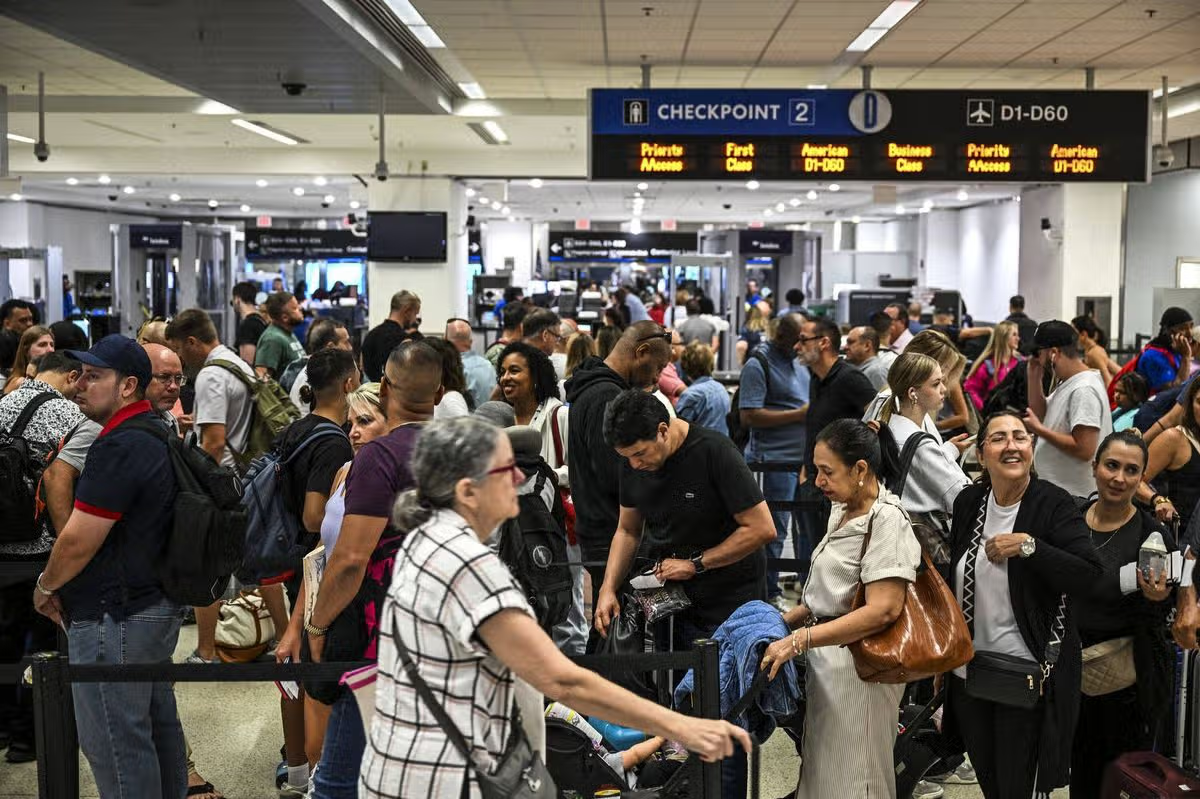
The sign was spotted in an airport (stock image)(Image: Getty)
There are plenty of things you have to remember to check before setting off on holiday, and for lots of people, this can be an anxiety-inducing experience. Before leaving home you’ve likely double-checked the hob is off twice, made sure the windows are closed four times over, and checked every door is locked. So, after checking in your bags and making it into duty free, the last thing you want to see is a reminder about whether or not you left your oven on.
But that’s exactly what some travellers came face-to-face with at one airport, thanks to Notre Dame Federal Credit Union (FCU), which has created what has been described as the “most anxiety-inducing” sign in existence.
The sign was shared on Reddit, where it quickly struck a nerve with travellers who are all too familiar with the fear of leaving an appliance switched on. One user said: “As someone with OCD this would absolutely ruin my day.” Another added: “That’s diabolical.”
A third admitted they have their own method for avoiding the dreaded post-departure panic.
They wrote: “And this is why I take a picture of my stove…every…damn…time….like a weirdo. I routinely go back and clear those photos out.” They added: “Thanks mum for giving me this fear (though for her it was the garage door).”
‘The house didn’t catch fire’
For another traveller, the sign brought back a particularly memorable experience involving an iron.
One user explained that they had once ironed a shirt before an international flight because they wanted to look their best when they arrived. As a single man who rarely irons clothes, he decided to do it on his coffee table.
But two weeks later, when he returned home, he discovered the iron was still switched on.
He said it had been left on its highest heat setting, sitting sideways on the carpet next to the coffee table.
The carpet was left with a deep permanent burn, but thankfully the house hadn’t caught fire.
He said the experience had made him “much more paranoid”, meaning he now double-checks everything before leaving home.
‘Smart marketing’
Not everyone was left traumatised by the sign, however.
Some users praised Notre Dame FCU for coming up with a memorable piece of marketing, pointing out that the message had certainly succeeded in sticking in travellers’ minds.