Several Palestinians were rushed to hospital with severe injuries after an Israeli air strike hit a crowd near the Al Jazeera Club in central Gaza City. Near-daily Israeli attacks have killed more than 700 people since the so-called “ceasefire” entered into effect in October 2025.
The budget airline has issued a message to its passengers, urging them to ‘please note’ the announcement as it ‘does not look cool’ – but many people were not impressed by the new rule
Alice Sjoberg Social News Reporter
15:16, 04 Apr 2026
Ryanair has hit out at passengers who wear one common accessory on flights (stock image)(Image: Getty Images)
For several people, being comfortable while travelling on a plane ranks amongst their top priorities. And given that remaining seated in the same spot for extended periods can be decidedly uncomfortable, particularly when you’re short on legroom, selecting the appropriate attire might be your sole opportunity for achieving comfort. For many, this translates to donning joggers or tracksuits. However, sometimes it’s the accessories that can enhance comfort even further.
This becomes especially important on Ryanair, where seating is typically more confined owing to the airline’s efforts to accommodate as many seats as feasible, forming part of their strategy to maintain ticket prices as low as possible – despite recent threats that prices might go up do to jet fuel prices.
Renowned for their budget-friendly fares, the carrier has also established a reputation on social media, where they frequently poke fun at their own passengers, and jokingly threaten to introduce even more regulations and charges than they currently impose – such as extra legroom seats or late check-in fees.
Nevertheless, Ryanair has now criticised travellers who insist on wearing one particular type of accessory aboard aircraft, claiming it ‘does not look cool‘.
Posting on their Facebook page, the airline issued a statement to their passengers. They wrote: “Please note: Passengers do not look cool wearing sunglasses on board.”
However, many weren’t convinced, as numerous people quickly flocked to the comment section to express their own views.
“Could be true, but we don’t care,” one person posted. Others went on to suggest it was ‘necessary’ due to the vibrant interior of Ryanair flights.
One person contended: “Gotta shield our eyes from that highlighter-yellow cabin.”
“I put mine on so I can sleep,” another person clarified. Another concurred and stated: “Sunglasses at night-flight for a better sleep.”
Someone else remarked: “With sunglasses on during the flight the 3 days vacation lasts longer.”
Nevertheless, some sided with the airline, as one person commented: “Only pilots should wear sunglasses.”
This isn’t the first occasion Ryanair has joked about and poked fun at its passengers. Recently, they threatened to introduce a ‘toilet usage fee’ for any passengers wishing to use the lavatory facilities onboard an aircraft.
However, many travellers soon cottoned on this was a joke, as they noted it sounded like an April Fool’s prank that was posted a few days early.
Tehran says it is the fourth attack near the nuclear plant amid the US-Israel war on Iran.
Published On 4 Apr 20264 Apr 2026
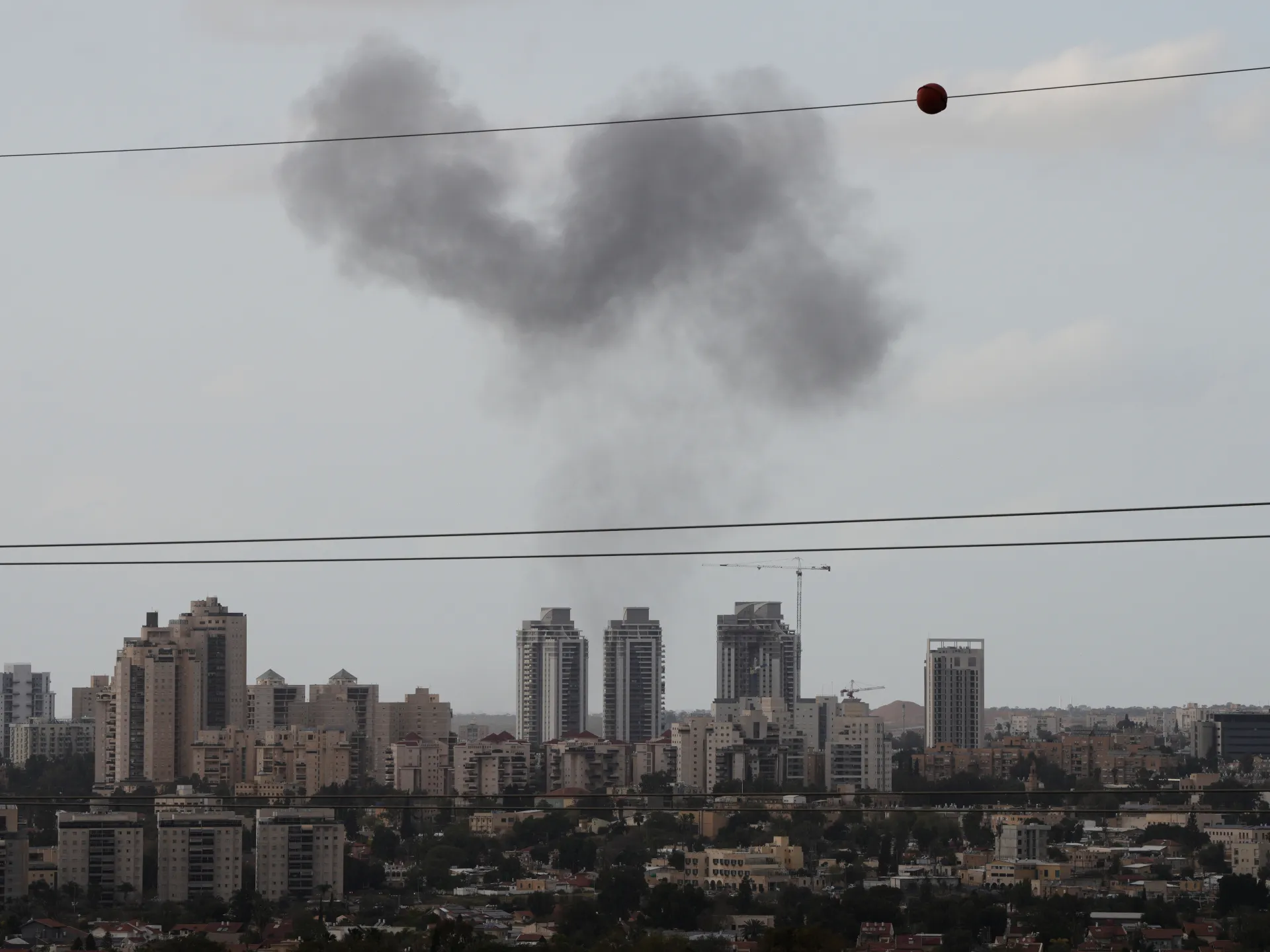
One person has been killed by projectile fragments after United States-Israeli strikes targeted a location close to Iran’s Bushehr nuclear plant, according to the International Atomic Energy Agency.
The agency, citing confirmation from Iranian authorities, said in a statement on X that there was “no increase in radiation levels” after Saturday’s attack.
Recommended Stories
list of 4 itemsend of list
Later on Saturday, Iran’s Foreign Minister Abbas Araghchi claimed the Bushehr facility had been “bombed” four times since the war erupted, criticising what he described as a lack of concern for its safety.
The strike comes as the US and Israel escalate their targeting of Iranian industrial sites, even as experts warn of the high risks of striking nuclear or petrochemical facilities.
IAEA Director General Rafael Grossi expressed “deep concern about the reported incident and says [nuclear] sites or nearby areas must never be attacked, noting that auxiliary site buildings may contain vital safety equipment”, the statement read.
Grossi also reiterated a “call for maximum military restraint to avoid risk of a nuclear accident,” the IAEA added.
The Atomic Energy Organization of Iran (AEOI) confirmed the incident, also in a post on X.
An “auxiliary” building on the site was damaged, but the main sections of the power plant were not affected by the strike, the government agency said, adding that the person killed was a member of security personnel.
It’s the fourth time the site has been attacked since the start of the US and Israel’s war on Iran, the AEOI noted.
The Bushehr plant is Iran’s only operational nuclear power plant. It is located in Bushehr city, home to 250,000 people, and is one of Iran’s most important industrial and military nodes.
Meanwhile, US and Israeli strikes on Saturday hit several petrochemical plants in the southern Khuzestan region, an important energy hub, according to Iranian media.
At least five people are reported injured.
Explosions were heard, and smoke was also seen rising after missiles hit several locations across the Mahshahr Petrochemical Special Economic Zone.
The state-run Bandar Imam petrochemical complex, which produces chemicals, liquefied petroleum gas (LPG), polymers and a range of other products, was struck and sustained damage, Iran’s Mehr news agency reported.
A provincial governor in Khuzestan added that the Fajr 1 and 2 petrochemical companies, as well as other nearby facilities, were also hit, according to the Fars news agency. The extent of damage is unclear.
Iran’s Islamic Revolutionary Guard Corps (IRGC) claimed it shot down an MQ-1 drone over central Isfahan province on Saturday, hours after authorities said they forced down two US warplanes.
Isfahan, which houses an underground uranium conversion and a research site, was one of three facilities bombed during US and Israeli strikes on Iran last June.
Cruz Beckham appeared to take another dig at his estranged brother Brooklyn before poking fun at his mum VictoriaCredit: instagramCruz made crepes for his girlfriend Jackie before replying to someone in the comments and involving his mumCredit: instagramVictoria Beckham maintains her slender figure by not having eaten chocolate since the 90sCredit: Getty
Brooklyn, who launched a nuclear attack on his ‘controlling’ parents and vowed not to reconcile earlier this year, famously shares cookery videos on social media and deems himself a budding chef.
In Cruz’s video, he cooked some crepes for his girlfriend Jackie Apostel, and served them up with some Nutella.
A man called Daley Thompson penned: “I love when a son cooks for his mum,” which seemed to be a dig at Brooklyn being a chef and being estranged from his family.
Cruz then cheekily replied: “You think VB is eating a Nutella crepe [laughing emoji] no chance Daley.”
His initial statement read: “I have been silent for years and made every effort to keep these matters private.
“Unfortunately my parents and their team have continued to go to the press, leaving me with no choice but to speak for myself and tell the truth about only some of the lies that have been printed.
“I do not want to reconcile with my family. I’m not being controlled, I’m standing up for myself for the first time in my life.”
He then went on to recall the night of his wedding and how his mother danced in an “inappropriate way”.
Brooklyn often shares cookery videos on his social media accountsCredit: InstagramThe Beckham family has been somewhat estranged in recent yearsCredit: Splash
Gurdaspur, Punjab, India – Ramesh Kumar, 42, is anxiously doing the calculations for his crops this year.
Standing at the edge of his wheat field in northwest Punjab’s Gurdaspur, he runs through the numbers in his head, totting up fertiliser costs, expected yield, and market prices.
Then he shifts to more personal concerns: School fees, household expenses, loan repayments and the money he has been saving for his daughter Varsha’s wedding.
“I don’t know if we can afford it this year,” he says. “Everything depends on the crop.”
The uncertainty has crept in quietly.
Fertiliser, once a fairly predictable staple in farming, has become more expensive and harder to secure in time. For Kumar, it is not so much a question of cost as it is the difference between stability and strain.
“If prices go up more, we will have to cut somewhere,” he says. “Maybe delay the wedding. If things get worse … even children’s education becomes difficult.”
School fees for his eldest son, Amit, 12, are due in the coming weeks, and Kumar has been setting aside money for his younger daughter Varsha’s future wedding.
It’s never easily affordable, even in good times. “We somehow manage,” Kumar says. “But if the harvest is weak, then we have to think about what to prioritise, what to delay.”
For farmers like him across South Asia, the United States-Israel war on Iran – unfolding thousands of kilometres away – is not just a matter of distant geopolitics.
It is shaping decisions inside their homes.
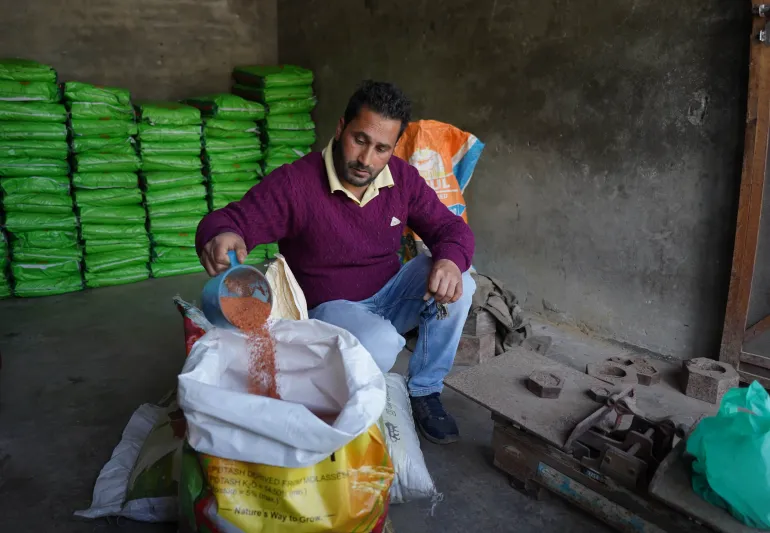
A worker pours fertiliser into a sack at a storage facility in Srinagar, Indian-administered Kashmir [Sajad Hameed/Al Jazeera]
A distant crisis with local consequences
At the centre of the unfolding crisis is the Strait of Hormuz, a narrow shipping lane more than 2,000km (1,240 miles) from India’s northern plains. It lies between Iran and Oman, linking the Gulf and its oil producers to the open ocean and, from there, to global markets.
About one-fifth of the world’s oil and liquefied natural gas (LNG) supplies pass through this body of water, which Iran closed down shortly after the first US-Israeli strikes on Tehran on February 28.
Vast volumes of LNG, essential for manufacturing nitrogen-based fertilisers, are transported from Gulf producers to Asia via this route. Any disruption can delay shipments, push up freight and insurance costs and place a stranglehold on supply.
Interruptions to the supply of fertiliser can ripple quickly, reducing crop yields, increasing costs and raising food prices.
The risks are already being felt thousands of kilometres away.
South Asia, home to nearly two billion people, relies heavily on fertiliser-intensive farming to produce staple crops such as wheat and rice. Over the past few decades, the increasing use of fertilisers – which can hugely boost crop yields – has played a key role in agricultural productivity across the region.
The agriculture sector now employs about 46 percent of the workforce in India, about 38 percent in Pakistan, nearly 40 percent in Bangladesh, and more than 60 percent in Nepal.
A farmer spreads fertiliser around apple trees in an orchard in Baramulla, Indian-administered Kashmir, March 2026 [Sajad Hameed/Al Jazeera]
The degree to which countries in the region depend on the Strait of Hormuz varies, but all rely heavily on the trade in fertilisers that this shipping route facilitates.
In India, the agriculture sector is worth $400bn, according to Indian government and World Bank data, and supports the livelihoods of more than half the population, either directly or indirectly. More than 100 million farming families are directly dependent on the sector.
The country imports a substantial share of its fertiliser requirements and other key raw materials, particularly phosphates and potash, as well as natural gas used to manufacture fertiliser, with about 30–35 percent of these supplies moving through or originating from routes that pass via the Strait of Hormuz.
In Pakistan, the agriculture sector contributes close to 20 percent of gross domestic product (GDP), according to Pakistan government estimates, and employs millions. About 20-25 percent of Pakistan’s fertiliser imports, particularly DAP (diammonium phosphate), pass through the Strait of Hormuz at some point in transit. Additionally, the sector relies on domestic natural gas for the production of urea, a key nitrogen-based fertiliser and, with Gulf natural gas supplies held up in the Strait of Hormuz, the price of natural gas everywhere – even at home – is on the rise.
In Bangladesh, where millions of smallholder farmers rely heavily on imported fertilisers, the agricultural sector accounts for about 12-13 percent of GDP, according to government data. The country’s farming industry relies heavily on imported fertilisers to sustain crops, meaning farmers are highly exposed to international supply shocks and price swings.
Furthermore, roughly 25-30 percent of Bangladesh’s imported fertiliser is shipped via routes passing through the Strait of Hormuz.
Nepal, where agriculture contributes about 24 percent of GDP, imports nearly all of its fertiliser needs, with about 25-30 percent of arriving via India, via the Gulf and the Strait of Hormuz.
A worker handles granular fertiliser at a storage facility in Punjab, northern India, March 2026 [Sajad Hameed/Al Jazeera]
Livelihoods at stake
Overall, even minor disruption in the Gulf – let alone the complete closure of the critical Strait of Hormuz – can have dire consequences for hundreds of millions of people.
The Indian government has sought to reassure farmers that supplies remain secure – for now.
Prime Minister Narendra Modi told Parliament on March 23: “Adequate arrangements have been made for fertiliser supply for the summer sowing season…The government has diversified options for oil, gas and fertiliser imports… Domestic production of urea, DAP and NPK [nitrogen, phosphorus and potassium fertilisers] has been expanded… Farmers now have access to Made in India Nano Urea and are encouraged to adopt natural farming…”
He added: “Under the PM Kusum scheme, more than 22 lakh (2.2 million) solar pumps have been provided, reducing dependence on diesel… I am confident that through joint efforts, India will manage these challenges effectively and continue to support our farmers.”
On the ground, however, confidence is low. Farmers say uncertainty is already influencing decisions.
In Pampore, in the south of Indian-administered Kashmir, 53-year-old mustard farmer Ghulam Rasool says price signals travel faster than supply disruptions.
“We hear about war, about shipping problems,” he tells Al Jazeera. “Even before shortages happen, fertiliser becomes expensive.”
Rasool says farmers often respond early by cutting down on the amount of fertiliser they are using, even before actual shortages emerge.
“If we use less, production will fall,” he says. “But sometimes we have no choice.”
In Pakistan’s South Punjab, wheat farmer Muneer Ahmad, 45, is preparing for the next sowing cycle.
“If fertiliser becomes expensive, it will affect everyone here,” he says.
Government officials have expressed confidence in Pakistan’s fertiliser supply amid the Middle East conflict, and claim the government is fully prepared to ensure adequate supplies during the region’s peak sowing period, which typically begins between April and June, depending on the crop.
According to a statement by Pakistan’s federal secretary for agriculture to Al Jazeera, Federal Minister Rana Tanveer Hussain told a meeting on March 25 that the government has started proactive monitoring, is expanding domestic urea and DAP production and taking steps to ensure fertilisers reach farmers at affordable prices.
However, urea production requires supplies of natural gas, meaning global energy price shocks can still translate into rising production costs.
A farm worker spreads fertiliser across a field as part of routine crop management during the growing season in north India [Sajad Hameed/Al Jazeera]
For farmers, even small increases matter
“We already have loans and expenses,” Ahmad says. “If costs go up, we feel it immediately.”
In Rangpur, northwestern Bangladesh, farmer Mohammad Ibrahim, 41, says fertiliser supplies are already becoming unpredictable.
“Sometimes it is available, sometimes not,” he says. “And when it comes, the price is higher.”
Meanwhile, in Nepal’s Gulmi district, farmer Meghnath Aryal, 38, worries that crops will be reduced if a major supply problem does appear.
“If fertiliser does not arrive on time, the crop suffers,” he says. “If it becomes expensive, we reduce use.”
Bangladesh’s Agriculture Secretary Rafiqul Mohammad told Al Jazeera the government is “closely monitoring the situation” and officials have tried to reassure farmers that fertiliser supplies are sufficient for the coming months.
The government has finalised plans to import about 500,000 tonnes of urea in the near term, while also exploring alternative suppliers such as China and Morocco to secure additional supplies in the longer term.
There is no immediate shortage at present, the Agriculture Ministry says.
Ram Krishna Shrestha, joint secretary at Nepal’s Ministry of Agriculture and Livestock Development, told Al Jazeera that fertiliser distribution within the country remains largely stable for now, with supplies already secured for the upcoming rainy season, particularly for paddy crops such as rice.
However, he warned that there may be delays to contracted shipments as a result of the Middle East crisis.
“We have managed fertilisers for the upcoming season, but there could be challenges in timely supply because of the current situation,” he said, pointing to global price increases and logistical disruptions, including those caused by the closure of the Strait of Hormuz.
Shrestha added that as companies report shortages and rising prices in international markets, the government has asked suppliers to expedite deliveries.
“Authorities are also advising farmers to increase the use of traditional nutrient sources such as farmyard manure, compost, green manuring and azolla [a natural fertiliser] to offset any potential shortfall in chemical fertilisers,” he said.
No immediate new fertiliser subsidies have been announced, he said, though adjustments remain under discussion as the situation evolves.
Mustard farmer Ghulam Rasool scatters fertiliser by hand in a field in Pampore, Kashmir, India [Sajad Hameed/Al Jazeera]
Rising food prices on the horizon
The implications extend beyond individual farmers.
Across South Asia, fertiliser use has been central to maintaining crop yields – and keeping large populations fed. Any reduction in availability or increase in costs can quickly lower production. That, in turn, pushes up food prices, a sensitive issue in a region where households spend a large proportion of their income on food.
For governments, the challenge is complex.
In the past, subsidies have kept fertilisers affordable for farmers, but this becomes a fragile balancing act if global prices rise, placing additional pressure on public finances.
In India, Ramesh Kumar is already making adjustments – but he is walking a tightrope.
He has decided to use less fertiliser this season, even though he knows it could reduce yields.
“It is a risk,” he says. “But what choice do we have?”
Lower production will mean less income and harder decisions at home.
“School fees have to be paid,” he says. “Household expenses cannot stop.” He looks across his field.
“And the wedding… we will see.”
Ultimately, sacrifices will have to be made in his household.
Across borders, the same uncertainty is unfolding.
In Pakistan, Ahmad is worried about rising costs. In Bangladesh, Ibrahim is mostly concerned about the availability of fertiliser and, in Nepal, Aryal fears delays in supply.
For Ramesh Kumar, the stakes are clear.
“For others, this is about war,” he says. “For us, it is about whether we can take care of our family.”
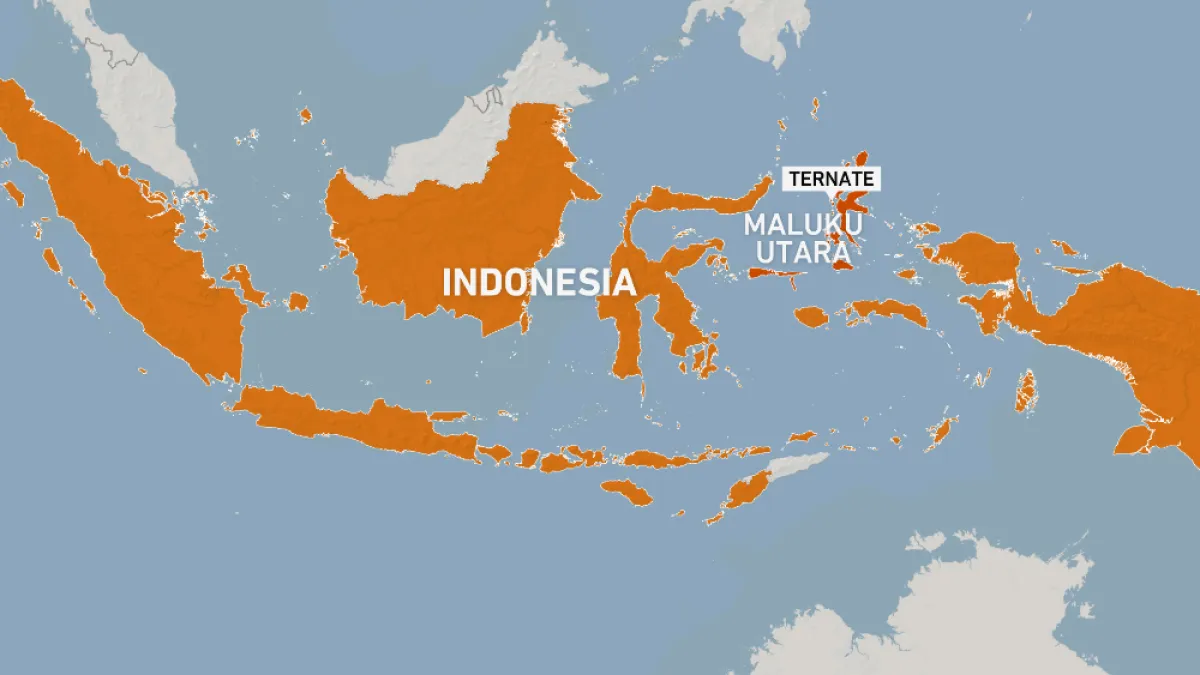
The epicentre of the earthquake was about 120km (75 miles) from Ternate, in Indonesia’s North Maluku province.
Published On 1 Apr 20261 Apr 2026
A magnitude 7.4 earthquake has hit the Northern Molucca Sea off the coast of the city of Ternate, in Indonesia, killing at least one person and triggering a tsunami warning that was subsequently lifted.
The United States Geological Survey (USGS) said Thursday’s quake, which was initially recorded at a magnitude of 7.8, struck at a depth of 35km (22 miles), greater than the early figure of 10km (six miles). There were no immediate reports of injuries.
The epicentre of the earthquake was about 120km (75 miles) from Ternate, in Indonesia’s North Maluku province.
Local authorities in some cities, such as Ternate and Tidore, were urged to prepare citizens for evacuation, while news channel Metro TV broadcast images of damaged buildings.
One person was killed when a building collapsed in the city of Manado in North Sulawesi province, a local search and rescue official told AFP news agency.
“The quake was felt strongly and around Manado … one person died and one person had a leg injury,” George Leo Mercy Randang told AFP by telephone. The victim was “buried under the rubble” of a collapsed building, he said.
The Hawaii-based Pacific Tsunami Warning Center (PTWC) initially said hazardous tsunami waves were possible within 1,000 kilometres (621 miles) of the epicentre along the coasts of Indonesia, the Philippines and Malaysia.
Within half an hour of the quake, waves up to 75 centimetres were recorded in North Minahasa and 20 centimetres in Bitung, both in the north of Sulawesi island, according to Indonesia’s BMKG geological agency.
Thirty-centimetre waves were also logged in North Maluku province.
The PTWC lifted its warning just over two hours after the tremor, saying the tsunami threat “has now passed”.
Indonesia straddles the so-called Pacific Ring of Fire, an area of high seismic activity where tectonic plates meet and earthquakes are frequen
New Zealand all-rounder Amelia Kerr hit a stunning 179 not out off 139 balls to inspire her side to chase down 346 against South Africa in the highest successful run chase in women’s one-day international history.
Laura Wolvaardt’s 69 from 74 balls, a 91 from 90 balls by Anneke Bosch and Chloe Tryon’s 25-ball 52 helped South Africa post 346-6 in the second ODI of their series against the Kiwis.
Kerr came in at 21-1 in New Zealand’s reply and struck 23 fours and one six at a strike rate of 128.78 during her match-winning knock.
She was helped by Izzy Gaze, who made 68 from 48 balls, as the Kiwis made 350-8 in reaching their target with two balls to spare and levelling the series.
The previous highest successful chase in women’s ODI cricket was when India made 341-5 in reaching a 338 target set by Australia in their World Cup semi-final last October.
Kerr is no stranger to producing heroics, especially against South Africa, as she inspired New Zealand to victory against them in a T20 World Cup final in 2024.
She was also the ICC’s women’s cricketer of the year in 2024.
Kerr also holds the record for the highest individual innings in a women’s ODI, having hit an unbeaten 232 against Ireland when aged 17 in 2018.
CONCORD, N.H. — An ad for Republican presidential candidate Patrick J. Buchanan that features a quick image of the exploding Challenger space shuttle will be redone following criticism of its airing in the home state of one of the crew members killed in the disaster.
Buchanan said Thursday the image of the explosion will be deleted “out of sensitivity” for the family of Sharon Christa McAuliffe, a Concord schoolteacher and one of the shuttle crew members killed 10 years ago this month. The ad contains a clip of the explosion, followed by a photo of Buchanan at President Reagan’s side. The ad aimed to emphasize Buchanan’s service in past Republican administrations.
Experts say families could save more than £100, though Ryanair disagrees
09:08, 29 Mar 2026Updated 09:13, 29 Mar 2026
Ryanair has disputed the claims(Image: turbo83 via Getty Images)
Passengers flying with Ryanair are being encouraged to follow several steps to reduce costs on their journeys, though the airline has responded by dismissing the advice as “fake news”.
Consumer champion platform Which? claimed its research revealed travellers may have been spending more than necessary. Last month, Which? suggested families could potentially save over £100 on their next Ryanair flight by simply disregarding the airline’s “recommended” fare option. When arranging a summer journey from London to Alicante for a family of four, Ryanair promoted its “Regular” fare as the “ideal” selection.
But opting for this choice would have cost £59 more than picking the “Basic” fare and adding the identical seats and luggage manually later during the booking process, Which? claimed. The article continues: “If our family decided that we could get by with four cabin bags instead of the eight included in Ryanair’s ‘Regular’ fare, then we could reduce the fare by £163 from Ryanair’s recommendation.
“The Regular fare comes with priority boarding, carry-on luggage and free standard seat selection included, but on around 30 checks over the past two years we’ve only once found it cheaper. We looked at 15 flights to a range of locations in February 2026 and only once was the Regular ticket cheaper, even if we wanted all those extras.”
Ryanair has made its feelings on Which?’s findings abundantly clear. A spokesperson for the airline told Sky News: “This is more fake news from Which? Thankfully no one reads, or takes any notice of Which’s fake recycled news articles or your spurious ‘advice’, as our traffic growth from 200 million to 208 million passengers in 2025 proves.”
March 27 (UPI) — The U.S. Department of Homeland Security announced Friday that Transportation Security Administration employees will begin receiving paychecks as the department’s shutdown continues.
There was movement on Capitol Hill toward ending the shutdown and partially funding DHS on Friday. After the Senate unanimously voted to pass a bill that would fund the department, aside from Immigrations and Customs Enforcement, the U.S. House rejected the bill outright.
House Speaker Mike Johnson, R-La., said the House will pursue its own bill that would fully fund the department for 60 days. Johnson said the Senate’s bill would not move forward because it did not include funding for ICE.
President Donald Trump was also critical of the Senate-passed bill, saying it “wasn’t appropriate.” He signed an executive order to direct payment toward the more than 60,000 TSA employees.
“Today, at the direction of President Trump and the Secretary of Homeland Security Markwayne Mullin, TSA has immediately begun the process of paying its workforce,” a DHS spokesperson said in a statement to UPI. “TSA officers should begin seeing paychecks as early as Monday, March 30.”
Alan Fyall, associate dean of the University of Central Florida’s Rosen College of Hospitality Management, told UPI that news of TSA receiving pay is welcome, though for some it may be too late.
“If they’re going to get paid, that’s excellent,” Fyall said. “I’m sure there are quite a few who have left and probably won’t return.”
As of Friday, TSA agents were on their second pay period without receiving a paycheck.
On Wednesday, Ha Nguyen McNeill, deputy administrator of the TSA, told the House Homeland Security Committee that more than 480 workers have resigned and workers have missed $1 billion in pay.
“Most people in lower to middle salaries, if you miss two paychecks, that’s a problem,” Fyall said. “That’s not unique to TSA agents. As they would say, ‘do the math.'”
This is the second time the government has at least partially shut down, affecting the pay of TSA workers, in the past six months. The TSA has been shut down for more than 85 days this fiscal year.
“Many of our workforce have missed bill payments, received eviction notices, had their cars repossessed and utilities shut off,” McNeill told the House committee. “Some are sleeping in their cars, selling their blood and plasma and taking on second jobs to make ends meet.”
When the shutdown ends, Diego Bufquin, professor of practice at the Freeman School of Business at Tulane, told UPI he expects relief to come to TSA workers and travelers quickly, though the end of spring break adds to the long lines.
“We’re not going to have this resolved by this weekend,” Bufquin said. “Lines are going to be very long this weekend. There will be lots of complaints from passengers for sure.
“The thing is that the job market right now is not looking fantastic either,” Bufquin said. “I don’t think those TSA agents who are now considering switching jobs are in a good spot to easily find jobs in other sectors, given the current job market.”
Fyall said that the air travel industry as a whole is “resilient,” though the repeated government shutdowns will cause some travelers to change their habits, opting for direct flights when possible.
“If it’s a one-off, everybody complains but life gets back to normal pretty quickly,” Fyall said. “One of the things about the long queues is you might be waiting 3 or 4 hours, but that tells you that they’re doing their job properly. You want to get on your plane and be secure.”
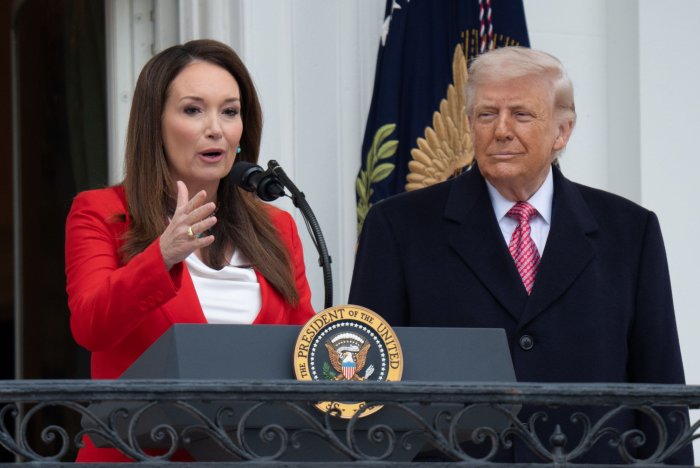
President Donald Trump stands with U.S. Secretary of Agriculture Brooke Rollins during an event celebrating farmers on the South Lawn of the White House on Friday. Photo by Aaron Schwartz/UPI | License Photo
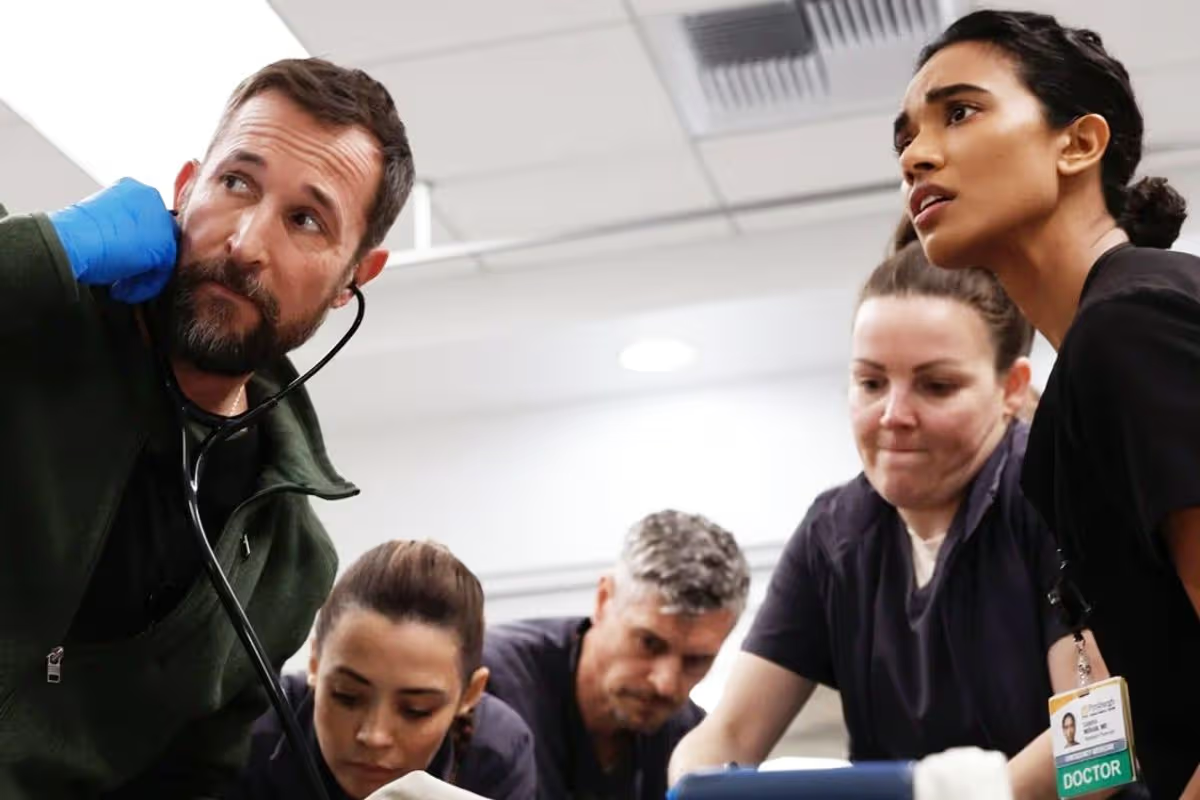
With hit medical drama The Pitt finally available to watch in the UK on HBO Max, leading man Noah Wyle has shared some tantalising insight into its future beyond season two
The Pitt’s Noah Wyle drops thrilling update on season 3(Image: HBO)
The Pitt’s Noah Wyle has delivered an exciting update on the third season of HBO’s smash-hit medical drama.
He also teased his hopes for the future of the drama, hinting it could run “forever” if audiences are still tuning in.
Wyle portrays Dr Michael ‘Robby’ Robinavitch, a senior attending physician working in a crowded and underfunded emergency room in Pittsburgh.
Throughout each season, Dr Robby, along with a team of doctors, nurses, and medical students, experience a single 15-hour shift, with the second instalment taking place during a busy 4th of July.
The former ER star was in London this week for the UK launch of the series where he spilled two important rules that every episode of the hit series must follow.
Speaking to HBO Max Chairman Casey Bloys, Wyle was asked how soon the cast and crew will be ready to start up production on season three.
“Very soon, boss, very soon,” Wyle joked. “We are in the process of writing character arcs for season three for everybody.”
He went on to explain how the series’ unique storytelling format presents a compelling challenge for the writers, which includes himself and creator R. Scott Gemmill.
“It’s a very interesting show to break because, unlike a lot of shows that are 22 episodes that may play over a calendar year, this is 15 hours of one day,” he continued. “So you’re painting with a much finer brush.
“The character’s arc is not really enough to go through the courtship of a romance, but it’s enough to get your head turned.
“It’s maybe enough to lose faith, maybe enough to find faith, but these are really small arcs that happen over the course of the day but can be really satisfying if you’re engaged with that character.”
Thankfully, The Pitt quickly found a devoted audience in the States, with the second season premiere amassing an impressive 7.2 million US viewers within its first week of release.
“We have these characters who seem to be resonating on a one-to-one with audiences,” Wyle added.
“Everyone’s feeling, ‘I’m a little Javadi (played by Shabana Azeez), I’m a little Samira (Supriya Ganesh), and I have a little Langdon (Patrick Ball) in me, or I know a Whitaker (Gerran Howell)’, and that makes it really exciting to see where they’re going to go next, and to write for where they’re going to go next.”
Hinting at the third season’s narrative, Bloys and Wyle revealed that the upcoming instalment is also building to an explosive and potentially life-changing event in much the same way as the first two seasons.
“We’ve built a pressure cooker where every hour we turn up the temperature, we add more ingredients, then just when it’s about to explode we drop a piano on it,” Wyle revealed.
“You’ve done that successfully for season two and now you’re thinking about it for season three?” Bloys clarified, and Wyle confirmed “Yes”.
Get HBO Max free with Sky
This article contains affiliate links, we will receive a commission on any sales we generate from it. Learn more
Sky is giving away free subscriptions to HBO Max with its £22 Ultimate TV bundle, which also includes Netflix, Disney+, discovery+, Hayu, and around 135 channels at no extra cost.
“One of the gratifying things about season two is that we realised we don’t need a big ‘deus ex machina’ plot device to keep this engaging,” he said. “There’s something really satisfying about watching everyday people trying to get through the course of the day, beset by all the trials and tribulations that come over the course of that day.
“If that is satisfying television then this show could run forever, because we don’t need a helicopter to come down in the ambulance bay, we don’t need to jump the shark.”
The Pitt is available to stream on HBO Max with new episodes on Thursdays.
Katie revealed she and Lee are planning a second wedding in the UKCredit: InstagramShe shared the news while hitting back at a troll who left a scathing comment about her relationshipCredit: InstagramThere is ongoing speculation that Lee is unable to leave DubaiCredit: Unknown
But Katie, 47, appeared to deny the claims as she responded to a follower on Instagram who mocked her romance with the businessman.
After the former glamour model posted a loved-up snap of her and Lee, one troll was quick to reply: “Till the next.”
But Katie soon fired back: “Thank you for the follow. I’ll pass on your follow back request but please look forward to our wedding in the UK.
But some concerned fans suggested it was actually Lee commenting back on Katie’s account.
When Lee suddenly appeared in the comments to have a pop at the troll, someone replied: “That was you responding wasn’t it on Katie’s page LOL. Katie doesn’t engage with people like that.”
It’s not the first time Lee has been accused of hijacking Katie’s social media.
Nate McFall has spent the past six years travelling the globe curating tourism content for social media, but he says a cold North East beach town is still one of his favourite places
Alan Johnson Politician and Alan Johnson
15:52, 25 Mar 2026
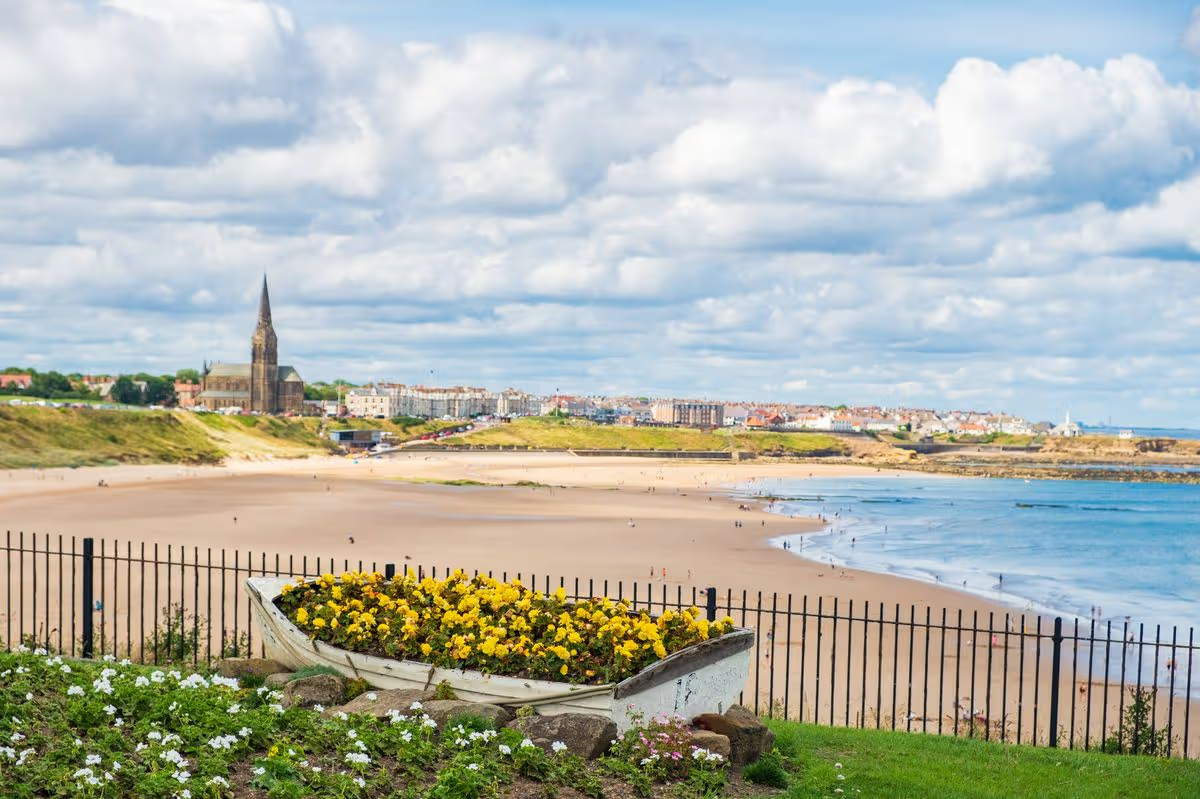
A travel content creator has highlighted a North East town as one of his favourite places in the world(Image: palliki via Getty Images)
A globetrotter who has dedicated the last six years to travelling the world claims the finest destination he’s discovered is a “cold little beach town” in the North East of England.
Nate McFall, whose videos focus on highlighting unusual accommodation and travel adventures, posted on Instagram where he admitted there’s nowhere quite like home.
“I spent six years travelling the world, and yet somehow this is still one of my favourite places I have ever been,” he opened in a clip filmed on the shoreline. “I didn’t realise when I left, but this place shaped me in more ways than I can explain.”
While he may have visited Australia, New Zealand and South East Asia recently, Nate maintains this chilly North East coastal spot still “hits different” whenever he returns.
Content cannot be displayed without consent
“It was actually here about eight years ago that I tried surfing for the first time,” he went on, displaying a photograph from the moment in 2018.
“It was cold – like properly cold – but something shifted in me that day because if I could surf in the freezing cold North Sea, what else is possible?”
Nate admitted that throughout his journeys he had been “chasing something” he’d already discovered.
“This is Tynemouth,” he revealed. “A small coastal town, but it’s full of life. Wherever you look, people are enjoying this place running along the seafront, swimming in the sea and surfing.”
Nate also pointed out the wealth of coffee shops dotted around the town, noting that at weekends, Tynemouth’s Victorian railway station “turns into a bustling market” of people selling “delicious food, crafts and handmade trinkets.”
The traveller also declared Tynemouth home to the “best chip shop in England”. He made his way back down towards the beach to show the reasons why.
“It’s served out of what is basically a shipping container [called The View],” he explained. “There’s a fresh sea breeze and with fishcake in hand, I top it off by looking at 1,000 year old ruins [Tynemouth Priory and Castle] right next to me.”
Nate concluded by stating he’s utterly convinced the UK possesses beauty that countless people fail to appreciate.
Enjoying a chilli fish empanada from Riley’s Fish Shack, he closed: “It’s proof that you don’t always need palm trees or plane tickets. Some of the most unreal places are right here on our doorstep.”
Writing in response, one Instagram user enthused: “I love this – I’m from Whitley Bay and am a wild swimmer so am always at the beach when I visit home. It’s such a special place.”
A second person declared: “Love Tynemouth and Riley’s fish shack, on a summers night as it gets a little chillier, sitting around one of the fire pits with friends is such a good way to finish a weekend.”
A third commented: “Love this. I am in New Zealand. So many beautiful places in the world. No country has the title of best place. Tynemouth looks cool. I will visit it now when I next visit UK.”
And a fourth person praised: “Thanks Nate. Spent many lovely days at Tynemouth as a child. Haven’t been back in 50 years since my family moved to Florida, USA. But still have fabulous memories. Thanks so much for reminding me.”
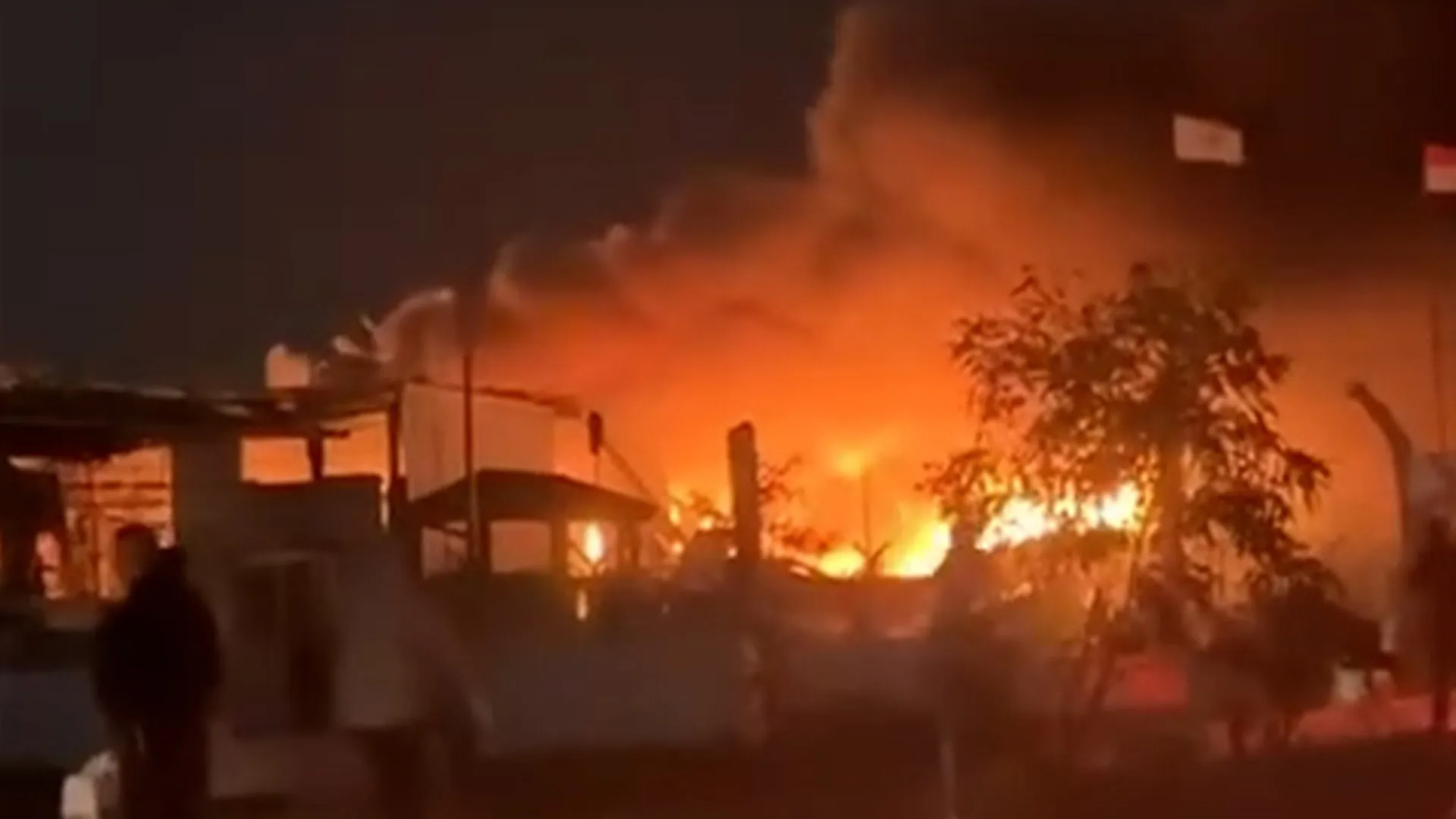
Video shows the aftermath of an airstrike in Iraq’s Anbar province on a headquarters of the pro-Iran Popular Mobilisation Forces, where at least ten people were killed during a commanders’ meeting.
Nick Endacott-Gibb, 57, said he was conceived long before Lulu began dating his dad Maurice GibbCredit: MirrorpixLulu discussed her marriage to Bee Gees star Maurice on The Louis Theroux PodcastCredit: The Louis Theroux Podcast
But Nick Endacott-Gibb, 57, insists he was conceived around two years before Lulu and Maurice’s romance began.
He told the Mirror: “I was born in April 1968, conceived in August 1967. Lulu and Maurice weren’t married until 1969, after what has been described for decades as a ‘whirlwind’ romance.
“Were you together with him, Lulu? Two years does not a whirlwind make. I’m as curious as she is about whether Maurice was with her at the time I was conceived. It was the summer of love, after all!”
Hove-based Nick was adopted from a children’s home at 18 months old by secretary Peggy and her chartered quantity surveyor husband David.
Nick’s biological mum is former music studio manager Patti Nolder, who he met for the first time in 2003 after uploading his details onto the Missing You database — a long-running message board style online community that helps reunite families.
Initially, she told him his dad was Chris Andrews, guitarist and vocalist of 60s psych-pop band The Fleur de Lys, but a DNA test confirmed this was not the case.
It was Patti’s sister who threw Maurice’s name into the mix and, after uploading his DNA to an ancestry website, he matched 100 per cent with Maurice’s other son Adam, who had uploaded his own DNA.
Further matches with cousins of the Gibb brothers followed and Nick struck up a close relationship with their older sister Lesley and her daughter Debbie, who live in New South Wales,Australia.
Nick never got the chance to meet Maurice before his death from a heart attack in 2003, but he said: “I’m sad he died before I got the chance to meet him, but his memory lives on in the songs.”
Lulu was married to Maurice for six years, with their relationship officially ending in 1975. They never had children together.
She admitted the news of Nick’s existence came as a complete surprise decades after their relationship ended.
Louis said: “You know, we’re not always our best selves and that Maurice, I think it’s openly acknowledged now, had a fling with Barbara Windsor while he was with you.”
Maurice died in 2003 from a cardiac arrest, aged 53Credit: GettyThe Bee Gees are one of the most successful groups everCredit: AP:Associated Press
Lulu admitted: “I think he’s got a son. It might have happened when we were married.”
She continued: “I just found out someone showed me something with a guy, and I can’t remember the year he impregnated this girl after a one-night stand, and she has a son who has had his genes taken.
“It’s proven he’s 100 per cent Maurice.”
A shocked Louis asked: “While he was with you?”
Lulu answered: “I didn’t do the math because it wasn’t that important.”
Louis replied: “Why isn’t it important?”
Lulu responded: “Today, c’est la vie.”
The Bee Gees are one of the most successful bands of all time, dominating the charts with a string of global hits.
From disco anthems like Stayin’ Alive and Night Fever to timeless ballads, the group sold over 200 million records worldwide and helped define an entire era of music.
He had two children — daughter Samantha and son Adam — with his second wife, Yvonne Spenceley.
Following her divorce, Lulu went on to date celebrity stylist John Frieda but the romance was rocked by a short-lived affair with David Bowie.
She continues to perform live, with shows lined up in the UK, including a major concert at London’s Royal Albert Hall in 2026.
As well as music, she’s been opening up about her life in recent years, releasing her memoir, If Only You Knew, and speaking candidly about her past struggles, including her battle with alcoholism and journey to sobriety.
Lulu rose to fame in the 1960s with her breakout hit ShoutCredit: AlamyLulu got engaged to Maurice Gibb when she was just 18 years oldCredit: Times Newspapers LtdTheir marriage lasted six years, from 1969 until their split in 1975Credit: GettyThe singer has toured the UK, including a major concert at London’s Royal Albert Hall in 2026Credit: Splash
The fate of an Iranian woman caught in a US-Israeli bomb attack is unknown, after video emerged of the moments she filmed the bombardment on her phone.
Storm Therese is battering the Canary Islands with heavy rain, 100km/h winds and significant snowfall, with over 40 flights cancelled and schools closed across the islands
Samantha Bartlett Assistant Editor, Social News
10:41, 21 Mar 2026
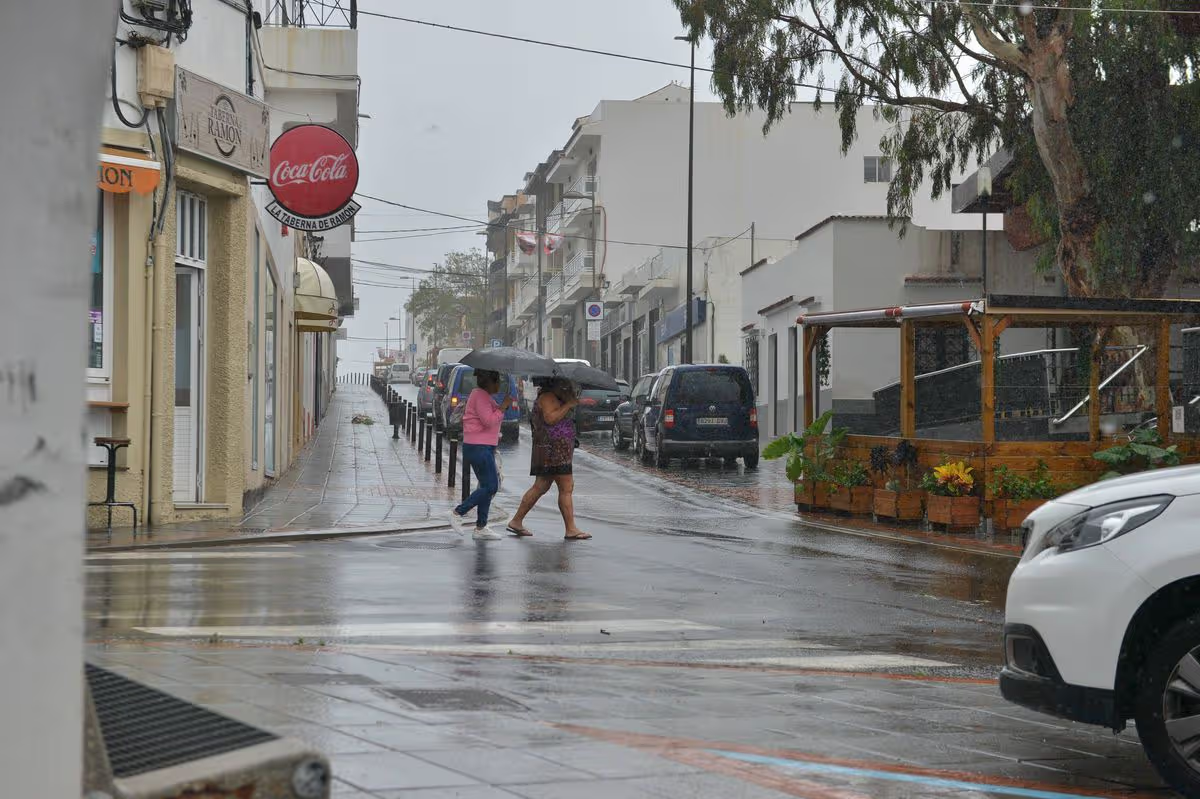
Storm Therese is currently battering the Canary Islands (stock image)(Image: Europa Press News, Europa Press via Getty Images)
Storm Therese is currently wreaking havoc on the Canary Islands, particularly Tenerife and La Palma, with an unusual mix of heavy rain, 100 km/h (62 mph) winds, and significant snowfall at high altitudes. Authorities have declared a full-scale emergency in Tenerife, labelling it as one of the most severe storms to batter the archipelago in over a decade.
Spain‘s meteorological agency, AEMET, has issued several alerts that will remain active throughout the weekend. Orange (high risk) warnings have been dispatched for northern Tenerife and parts of La Palma due to wind gusts reaching 90–100 km/h and heavy rainfall. Concurrently, yellow warnings are in place across all seven islands for rain, thunderstorms, and choppy seas with waves reaching up to 6 metres (20 feet).
Unusually for this time of year, significant snowfall has also blanketed Mount Teide and surrounding peaks above 1,800–2,000 metres.
Content cannot be displayed without consent
The storm has led to widespread cancellations and safety closures across the islands. Over 40 flights were cancelled or rerouted by Friday, March 20, primarily at Tenerife North and South airports. Travellers are advised to check their flight status via Flightradar24 or their airline.
Schools and universities in Tenerife, Gran Canaria, and several other islands were shut on Thursday and Friday, whilst key roads, including access to Teide National Park and the TF-445 to Punta de Teno, are closed due to ice and snow.
Major international events such as the Tenerife Bluetrail 2026 race have been cancelled or postponed.
Providing an update on the weather situation on Friday (March 20), one Tenerife resident known as @theknightstrider1 on TikTok took to the platform to share details with his 115,000 followers.
The car hire and bar owner, who is based in Playa de las Américas, was heard saying: “A little weather update for you then, it’s raining… it’s pretty grim and it’s gone really overcast as well.
“The rain showers are on and off, we haven’t really had any rain until now. It was okay this morning, but yeah it is raining. The current temperature’s around 18 degrees, not too cold but the umbrella’s are out, people are sheltering and it’s really not that nice.”
Content cannot be displayed without consent
He added: “Bear in mind, you might get caught in the rain, have a brolly with you. Maybe some of the rain macs as well if you’ve got any, if not buy some because it’s on and off.”
One person wrote: “Weather’s been awful the last three days, can’t wait to go home.”
Whilst another added: “Arrive tomorrow, packed a brolly.”
A third chimed in: “This makes me so happy as someone who was going to go this week and changed to last week! Phew.”
Whilst a fourth asked: “Why is it every time it’s sunny in the UK it rains in Tenerife?”
Another resident of the Canary Islands also posted a weather update on TikTok from Santa Cruz de Tenerife, captioning the clip, ‘Rain, wind and choppy ocean. Flights cancelled and diverted. Flooding in El Médano and roads closed. The storms Theresa and Samuel are hitting Canary Islands.’
He then said in the video: “Here if your weather update from Tenerife South on Friday March 20th, 2026. The two storms – Theresa and Samuel – are hitting the Canary Islands with force.
“As you can see here, we have quite a lot of waves here in the Troya area of Las Americas. The storms have caused quite a few incidents on the island, we have had 11 flights cancelled yesterday, 10 flights have been cancelled during the day today.
“We have had quite a few flights deviated to other airports as well and we have had ferries that have been cancelled because of the conditions out on the see.”
He explained the temperature was currently hovering around 19 degrees and there had been some rain which was “coming and going” along with overcast skies.
Are flights from the UK to Tenerife being cancelled?
Yes, flights from the UK to Tenerife are currently experiencing cancellations and significant disruptions due to severe weather from Storm Therese.
As of Saturday, 21 March 2026, authorities in Tenerife have declared an island-wide emergency due to extreme conditions including heavy rain, strong winds, and rare snowfall over high ground.
Over 36 flights were cancelled earlier this week, with further disruptions reported today. While many cancellations involve inter-island services, several international flights have been diverted or cancelled due to poor visibility and high winds.
Currently, the most affected airport is Tenerife North (TFN), which has seen the greatest impact, though Tenerife South (TFS) – where most UK flights land –is also experiencing delays and some rerouted services.
Conditions are expected to remain hazardous through Saturday, with a gradual improvement predicted for Sunday, 22 March.
Major airlines serving the UK to Tenerife route, such as Ryanair, easyJet, Jet2, and TUI, are urging passengers to check their flight status before heading to the airport
If your flight is cancelled, contact your airline immediately to discuss rebooking or refund options.
SCREEN star Sydney Sweeney is rolling in dollar frills — after her new lingerie line helped to quadruple her fortune.
The American actress is now worth $40million, up from $10million just two years ago.
Sign up for the Showbiz newsletter
Thank you!
Sydney Sweeney’s fortune has soared to $40million after her lingerie line helped quadruple her wealthCredit: Instagram/SyrnSydney models underwear from her Syrn brandSydney’s Seductress line launches next week after her original designs sold out in the US
The news came as Sydney, 28, showed off a range of sexy pink and white underwear from her Syrn brand.
The Seductress line launches next week after her original designs sold out in the US.
Sydney launched the business on the back of becoming one of Hollywood’s most in-demand stars.
She was worth some $10million in 2024 thanks to roles in black comedyThe White Lotus, teen drama Euphoria and the rom-com movie Anyone But You.
Lucrative deals with Armani Beauty, Ford and Samsung followed — while controversial adverts for clothing brand American Eagle saw sales shoot up, along with Sydney’s profile and potential earnings.
Last year she raked in $7.5millon for her role in hit psychological thriller The Housemaid.
Sydney launched Syrn in January in a bid to take on fellow celebs Rihanna and Kim Kardashian — who have become billionaires through their clothing brands Savage x Fenty and Skims.
The star’s racy photo shoots have seen her criticised for not being a “girl’s girl”. But hitting back, Sydney said: “People will say, ‘Oh, she’s doing this for guys’.
“I’m like, ‘What’s more ‘girl’s girl’ than owning your body and doing it for yourself?’.”
The star in her controversial advert for clothing brand American EagleCredit: American EagleLast year, Sydney raked in $7.5millon for her role in hit psychological thriller The Housemaid
Women chat in Havana on Monday. Cuba’s national electrical grid has suffered a total collapse after a three-month halt in foreign oil shipments. Photo by Ernesto Mastrascusa/EPA
March 17 (UPI) — A magnitude 5.8 earthquake struck eastern Cuba early Tuesday, hours after the island’s national power grid collapsed, leaving nearly the entire country without electricity and compounding an already severe economic and social crisis.
The U.S. Geological Survey reported the quake at magnitude 5.8, while Cuba’s National Seismological Research Center measured it at 6.0. The epicenter was located off the coast of Guantánamo province and was widely felt across eastern Cuba.
State local newspaper Granma reported no fatalities or significant material damage.
The tremor followed the total disconnection of Cuba’s National Electric System shortly before 2 p.m. Monday, the sixth nationwide blackout in roughly 18 months. The Ministry of Energy and Mines said on X that the causes remain under investigation.
The outage left nearly 10 million people without electricity, disrupting water pumping, telecommunications and Internet service. Residents relied on candles, torches and battery-powered radios, according to a report by Mexican broadcaster TV Azteca.
The ministry said the failure affected the entire country, including Havana. The U.S. Embassy in Cuba issued a security alert saying no information was available on when power would be restored.
Energy Minister Vicente de la O Levy said on X that authorities are following established protocols and working to restore electricity to the country’s largest generating units.
Independent outlet Diario de Cuba reported that the government has yet to explain the collapse, which coincided with renewed protests in Havana and growing signs of public discontent.
Officials initially said service was being partially restored through localized “microsystems” in several provinces, prioritizing essential facilities while attempting to restart major thermoelectric plants. Full recovery could take time, especially due to fuel shortages that have limited distributed generation since January.
Frequent blackouts have slowed industrial activity and strained public services nationwide. Recent demonstrations in several cities have resulted in arrests.
Official figures show the Cuban economy has contracted more than 15% since 2020. Much of the state-run industrial sector remains idle and essential services have deteriorated sharply.
Independent experts estimate that fully restoring the power system would require between $8 billion and $10 billion, sums widely seen as beyond the reach of the Cuban economy.
Days after President Miguel Díaz-Canel acknowledged talks with the United States to address longstanding disputes, the government announced measures to allow greater entry of private capital, including from U.S. companies and Cuban expatriates in Miami.
In an interview with state-run Canal Caribe, Vice Prime Minister Óscar Pérez-Oliva Fraga said investors could own private companies on the island and access the financial sector. He confirmed that Cuban emigrants may become partners or owners of private businesses without living in Cuba and may associate with local firms under the Foreign Investment Law.
They also would be allowed to enter the national financial system, open foreign currency accounts and create cooperation and investment funds with authorization from the Central Bank.
Pérez-Oliva Fraga said the measures respond to demands from the diaspora and aim to expand its role in economic development as the government seeks to attract foreign capital and diversify the private sector.
He said “Cuba’s doors are open” to foreign investment, including U.S. companies, while again blaming the U.S. embargo for the island’s energy crisis and fuel shortages.
On Monday, President Donald Trump said he would have “the honor of taking Cuba,” describing the country as weakened after decades of rule by what he called violent leaders.
“You know, all my life I’ve heard about the United States and Cuba. When will the United States have the honor of taking Cuba? That would be a great honor,” Trump said from the Oval Office, according to CNN.
“Taking Cuba in some way, yes, taking Cuba. I mean, whether you free it or take it, I think I can do whatever I want with it,” he added.
His comments came as senior administration officials have repeatedly said a conflict with Iran could end within days and after Trump suggested that Cuba could be next on his agenda.
CCTV footage released by Israeli police shows the moment an Iranian missile struck a street in Tel Aviv. Emergency crews say at least three people were injured, and several vehicles were destroyed.