The December closures will affect the two Sundays before Christmas, so travellers are being warned to plan ahead.
This will then follow a huge 38-day closure from Christmas Eve (December 24, 2026) to January 31, 2027.
Liam O’Shaughnessy, TRU programme delivery lead for Northern, said: “The work that has been completed over the last 16 days in the Huddersfield area is another crucial step towards delivering the benefits that the Transpennine Route Upgrade will bring for customers across the north.
“We have worked closely with our industry partners to keep customers on the move, and these works have continued, and we would like to thank customers and local communities for their patience and cooperation, whilst these improvement works have been taking place.”
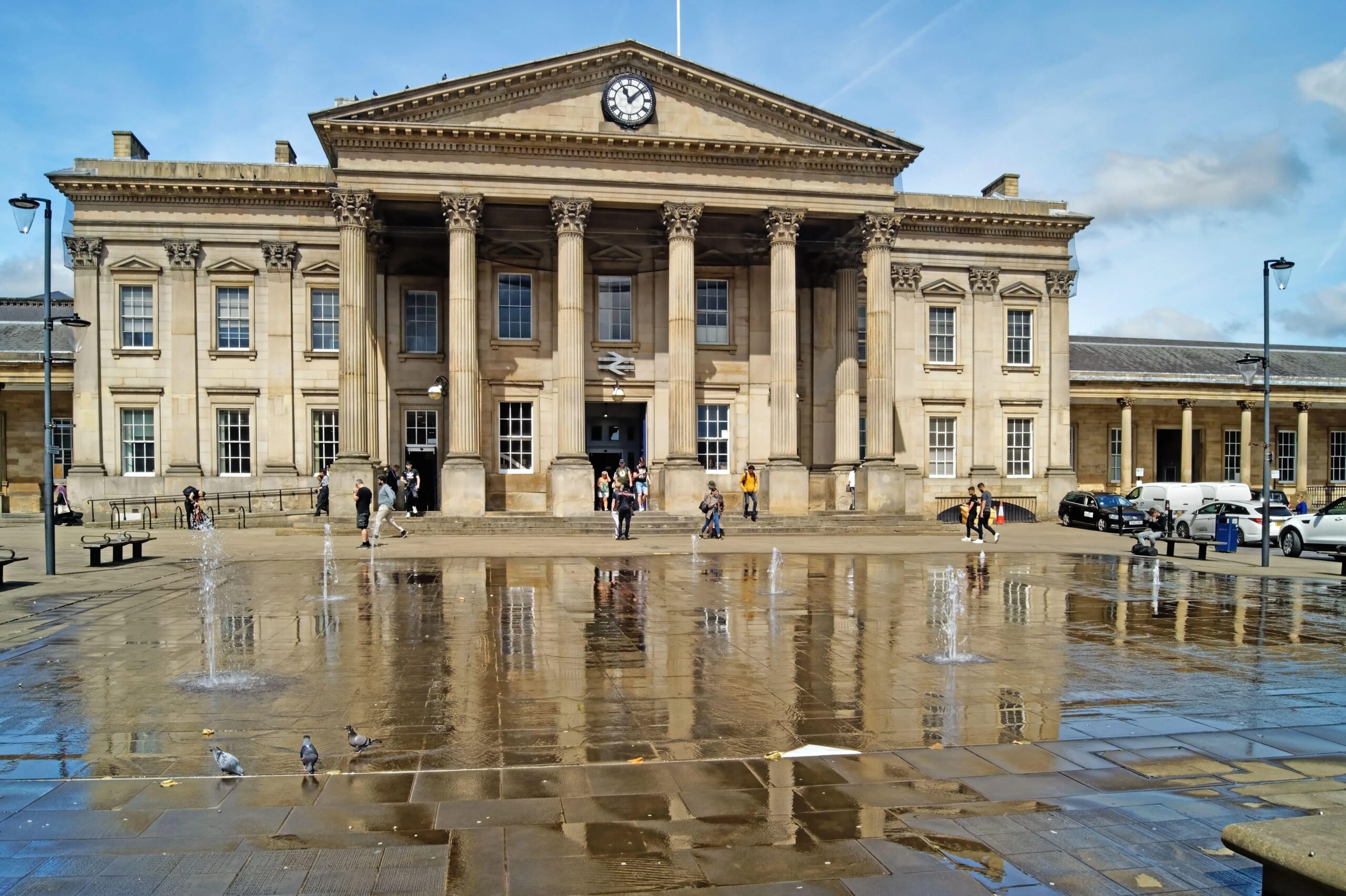
Upgrades include two new track lines through Huddersfield, restoration of the station’s roof and platforms, as well as upgrades at Deighton Station, and nearby road upgrades.
The station dates back to 1850, and named one of the most beautiful by Lonely Planet.
Now, it welcomes 3.1million passengers a year with routes across Yorkshire.
Few pubs boast a more idyllic setting. As I emerge from the woods after a 15-mile hike, The Bridges, on the banks of the Onny River, in the rolling south Shropshire hills, glistens in the late afternoon sun. Inside it’s all wooden beams, with light streaming through stained glass and huge bunches of homegrown flowers adding splashes of colour. There’s time for a pint before general manager Sam Thompson shows me to my room in the recently converted stables.
I’m here exploring part of the 185-mile (297km) Shropshire Way, on a two-day Heart of the Hills hike – one of the county tourist board’s new Rail-Ready Short Breaks. Designed for people who don’t have time to tackle the whole route, the itineraries focus on loops that are easy to access by train, with illustrated PDF downloads, GPX files, accommodation suggestions and highlights of what to do along the way. My route will take me from Shrewsbury to Bishop’s Castle via Ratlinghope – about 27 miles, perfect for a weekend.
The Bridges pub in Ratlinghope.
Shrewsbury itself is worth lingering in – the historic market town is crammed with independent shops and restaurants (I loved Csons for its creative small plates) and impressive Tudor architecture. But I’m most intrigued to learn that beavers have been reintroduced here by the council and the Shropshire Wildlife Trust. The first kit in the county in 400 years was born late last year and the Trust’s Tom Freeland shows me around the site, the Old River Bed nature reserve, just two miles north of the town centre. A boardwalk crossing wetlands allows an up-close view of the rewilding project. Although we don’t spy the elusive creatures (we see heron and plenty of moorhen), there’s still lots to learn. “It’s been a great success in inspiring the community to find out more about our local wildlife,” says Tom. Nature talks and guided tours of the beaver enclosure are in the pipeline, too.
Back at my base, the 16th-century Lion + Pheasant townhouse hotel, I dine on pan-roasted trout in the beamed restaurant (there’s a popular wine and tapas bar on site too) and the next morning set off to walk the first leg to Ratlinghope. Crossing the River Severn, the city soon peters out and quiet country lanes lead to Lyth Hill Country Park where expansive views open up across Shropshire.
It’s a steady climb to Wilderley Hill, past fields of rape, bright patches of yellow in a sea of green, and I stop under an oak tree to picnic. There’s no one around, just the songs of wren and chaffinch filling the air. The landscape changes on the approach to Ratlinghope as the route traces a brook, crosses wooden bridges and winds through pretty woodland. Just off the path lies the 12th-century St Margaret’s Church, the burial place of 19th-century farmer Richard Munslow, the last known “sin-eater”, whose job it was to eat bread and drink ale over corpses to absorb their sins.
I enjoy a drink instead in the pretty beer garden at The Bridges. The seven immaculate, minimalist rooms are round an adjacent courtyard – and guests have access to a lounge above the pub, too. The food in the bar includes Guinness rarebit and duck terrine, while the light-filled restaurant focuses on organic fare from the owners’ regenerative farm on the Linley Estate and the Welsh Marches. I feast on huge radishes with anchoïade, and hake with fennel, capers and crispy polenta. Breakfast the next morning – homemade granola and poached rhubarb – is equally delicious. It’s such a lively, friendly place I’m tempted to move nearby for the pub alone. They’ll even drive locals home if they’ve had one too many, Sam tells me.
Blue skies and gentle sunshine greet me for day two of the hike, a 12-mile yomp across rugged moorland and pastures to Bishop’s Castle. The pub lies on the edge of the Long Mynd, a heath and moorland plateau, but I’m heading north to the Stiperstones, a national nature reserve with a wild, dramatic ridge of quartzite rock formations that pierce the ground. I climb higher, passing Devil’s Chair tor, watching skylarks and buzzards soar overhead.
The Devil’s Chair on the Stiperstones Ridge, Shropshire. Photograph: Vincent Lowe/Alamy
It’s a beautiful walk. After several hours, a magnificent avenue of Linley Beeches line the descent into Bishop’s Castle, a pretty town of half-timbered houses. Bank House B&B, a Georgian renovation with an oak-panelled drawing room and five antique-filled rooms, is my home for the night. I pop into the Poetry Pharmacy where prescriptions are poems chosen to spark specific emotions, to be “taken” when required (I leave with a bottle of Joy). Although little remains of the medieval castle that once stood here and gives the town its name, the grand Castle Hotel, with its pretty gardens and welcoming restaurant, is worth a visit.
With more time, I could, of course, carry on and add another loop of the trail. But the train back home beckons – Craven Arms station is a short bus or taxi ride away – and I leave feeling pleased to have dipped my toe into a small segment of the Shropshire Way. As far as rambling weekends go, it’s ticked all the right boxes, and whetted my appetite to discover more.
Many favour a circular walk, but you can give a linear one new shape with the addition of a novel form of transport. My wife Helen, our friend Tom Cox and I take the water taxi – a rigid inflatable boat (Rib) – from West Bay on Dorset’s coast to Lyme Regis, with a plan to walk back to our starting point.
The rain stops as the boat leaves the harbour, the views open along Chesil Beach to low-lying Portland to the east, and west to Lyme Regis; on the far horizon, we can see Start Point on the Devon coast. Our skipper, Nick, is highly knowledgable and takes time to stop and point out the history of the shoreline and the treacherous waters of Lyme Bay. The seabed is studded with wrecks – fishing boats and smugglers’ ships, but some are from the two world wars.
The Cobb at Lyme Regis. Photograph: Martin Augustus/Alamy
On New Year’s Day 1915, the battleship HMS Formidable was torpedoed by a German submarine. Of its crew of 750, no more than 200 survived. In the second world war, the Dorset coast was a huge mustering station for the allied forces in preparation for D-day. During Exercise Tiger, a large-scale rehearsal for the Normandy landings, hundreds of American service personnel were killed in an attack by German boats later known as the Battle of Lyme Bay – the wreck sites are now designated war graves.
At Lyme Regis, we disembark on to the Cobb, the harbour wall that snakes unsteadily into the bay and was made famous by Jane Austen, who had Louisa jump from it in Persuasion, and by John Fowles, who lived in Lyme. The movie adaptation of his novel The French Lieutenant’s Woman starred Meryl Streep as Sarah Woodruff. Its famous trailer begins with the actor sweeping across the Cobb, the hood of her cloak covering her face. For the filming, many buildings in the town were given a 19th-century facade. For a film that plays with time, it seems appropriate that the town’s bookshop kept its temporary fascia for many years.
Our walk back to West Bay is 10 miles long and begins not along the coast but by heading inland. The west Dorset coast is friable – the cliffs keep falling on to the beaches, and the path to Charmouth takes a diversion through a golf course. It wasn’t always like this: once there was a coastal road, Long Entry, between the two settlements. In 1725, Henry Fielding, then aged 17, attempted to abduct his cousin Sarah, with whom he was infatuated, from Lyme. The future novelist made his escape along Long Entry before being stopped by her guardian.
The statue of Mary Anning in Lyme Regis. Photograph: Darren Galpin/Alamy
Our walk back to the coast is interrupted by a sculpture on the path. The shape of a woman, angular and determined, a hammer in her outstretched right hand, the other holding above her head the skeleton of a prehistoric animal. There’s another recent sculpture of the same subject, Mary Anning, in Lyme Regis, recording her importance to palaeontology and to the town, but this upland creature, made by Greta Berlin, is wilder, perfectly suited to its woodland setting. The representation of the fossil held aloft is Anning’s discovery: Ichthyosaurus anningae. One cannot walk this section of Dorset’s coast without being aware of its ancient past and the fragile geology close to the surface. Our boat trip began on crumbly sandstone, which gave way to fossil-rich clay as we travelled west.
Charmouth is a pretty village with no harbour; its shallow waters make it popular with those learning to swim or paddleboard. This next section of the South West Coast Path, to West Bay, coincides with the Monarch’s Way, the route that Charles II took to flee to mainland Europe after the civil war. Our day is more peaceful but the path is steep. We’re grateful for Tom’s company – his latest novel, Everything Will Swallow You, is infused with the history and landscape of the Dorset coast and his knowledge enlivens our walk, as do the pasties he brings, baked by his wife, Ellie.
The Anchor Inn at Seatown. Photograph: Darren Galpin/Alamy
We pass the remains of St Gabriel’s Church, which fell into disuse in the 18th century, although smugglers found within its walls useful shelter for their contraband. Soon we’re on Golden Cap, the highest point on the south coast – 191 metres (627ft) above sea level, with extraordinary views over Lyme Bay. At Seatown, we stop at the Anchor Inn for refreshments, meeting friends who have opted for a shorter walk. From Thorncombe Beacon, we descend to Eype Mouth – in Old English Eype is “Steep Place”; the church in this secluded village was chosen by PJ Harvey to record Let England Shake, a Mercury prize-winning album rich with the echoes of war.
There are further reminders of the coast’s fragility on the final stretch to West Bay – one sign references a cliff fall in 2020, and the path is frequently redirected to safer routes. West Bay, a small stone town, was once the harbour from where Bridport exported its rope and was originally called Bridport Harbour, but had its name changed by the railway company hoping to attract tourists. The railway is long gone – its station now hosts a restaurant in railway carriages – but West Bay, with its stalls for chips and views back towards Lyme, is a fitting place to end, a town out of time.
WHAT makes a city the best in the world? Well, there are lots of factors that go into it, according to Oxford Economics which has just named the top 100.
Looking at subjects like governance and quality of life, it has created the Global Cities Index 2026 and four UK cities have made the cut, with one coming in second place.
London has been revealed as the second best city in the worldCredit: Getty New York City came in first place according to Oxford EconomicsCredit: Getty
It might be a surprise to some, but London was named second best city in the world – only beaten by New York City.
Oxford Economics made their decision on the factors of economics, human capital, quality of life, environment and governance.
Sign up for the Travel newsletter
Thank you!
Talking about the city, Oxford Economics said: “London remains one of the clearest examples of a truly global city.
“Its influence extends across business, science and technology, education, and the arts, giving it a reach that few other cities can equal.”
It named its top strengths with its universities, large GDP size and low emissions.
It’s not the first time London has been named one of the world’s best cities – earlier this year it was named THE best city by Tripadvisor.
Almost as many as 80,000 people visit every day to see its historic landmarks like Big Ben, the Tower of London, St. Paul’s Cathedral and Tower Bridge.
Or its more modern ones like the London Eye, The Shard and the Sky Garden.
And if you want some ideas on what to do in the capital for all ages, Sun Travel has some recommendations for you from its attractions to rooftop bars and free things to do.
The next UK city in the top 100 is Edinburgh in Scotland which came 71st on the list.
Edinburgh came in 71st place – it has a huge castle and cobbled streetsCredit: Getty Images
The historic city has cobbled streets – one of which being the Royal Mile which is considered one of the most beautiful in the world.
Edinburgh also has around 385 pubs, plenty of cafes, independent shops and of course it’s hilltop castle.
Another activity that lots of visitors embark on during a trip to Edinburgh is the hike up to Arthur’s Seat.
The extinct volcano is the highest peak in Holyrood Park just east of the city and you can see across the whole city from above.
Coming in at number 90 on the list is the city of Manchester – it was also named one of the world’s up-and-coming cities.
The publication described the city as “booming” thanks to its “productivity growth”.
It was also praised for its “thriving cultural scene” thanks to its two football clubs, Manchester City and Manchester United – as well as Co Op Live and AO Arena which both hold live events.
For more on what to do in Manchester, one local has lots of recommendations like exploring Warehouse Project for seeing live bands or DJs and stopping by the bars on Canal Street.
Dublin, known for its lively nightlife, came in sixth positionCredit: GettyEuropean cities like Stockholm took up 44 positions in the top 100Credit: Getty
Just about making the list is the city of Cambridge which placed in 100th position.
The city in the East of England is most famous for its prestigious university which is often ranked as being one of the best in the world.
Popular activities include exploring the historic colleges, punting along the River Cam and exploring the shops and its many pubs.
One of which, The Eagle, is where Francis Crick and James Watson burst in to announce they discovered the DNA.
Other cities that deserve a mention are Dublin in Ireland which came in at number six.
It’s is largely known around the world for its lively nightlife, but it also has world-class museums, restaurants and historical sites.
Also in the top 10 were Paris and Zurich, as well as Tokyo in Japan and American cities, Seattle, San Francisco and San Jose.
Within the top 100, Europe represents almost half with 44 cities, a lot also belong in North America with its 34 cities making the list.
There are the top 100 cities according to Oxford Economics…
SCARBOROUGH Spa Cliff Lift was closed with immediate effect last month – with fears it might never reopen.
The funicular is the oldest of its kind in the country and has been described as a ‘landmark’ for the town.
Scarborough’s funicular is the oldest of its kind in the UK first opening in the 1800sCredit: AlamyIt was closed last month due to safety concernsCredit: Alamy
Another assessment that examined the tracks and carriages said that the lift operates in a “challenging coastal environment, where salt-laden air, high winds and severe weather can accelerate wear and corrosion”.
The cliff lift is the oldest of its kind in the country, first opening in 1875.
Originally, it was used to transport passengers between the hotels on the Esplanade and the spa.
It was powered by water and gas engines until the 1950s when it was converted to run on electricity.
The funicular has been subject to coastal erosion due to its proximity to the seaCredit: Alamy
Council leader Carl Les, said: “The lift is an important part of Scarborough’s history and identity, and we recognise the affection people have for this landmark attraction.”
Last year when the attraction turned 150-years-old, live performances and exhibitions were held in the town to celebrate its anniversary.
There are roughly 12 funicular’s left in the UK with fewer that still function.
The Saltburn Tramway, which shut back in January 2026, reopened earlier this month.
And another one that’s set to open next year after a 10-year-closure is Folkestone’s Leas Lift which was forced to close in 2017.
Trump boasted that “to the victor belong the spoils” in reference to a recent oil deal with Venezuela. (Presidential Press)
Caracas, September 22, 2026 (venezuelanalysis.com) – Venezuelan Acting President Delcy Rodríguez and US President Donald Trump held a first face-to-face meeting on Tuesday night in New York amid the rapid rapprochement between Washington and Caracas.
The closed-door gathering took place at the Lotte New York Palace hotel during a reception for world leaders participating in the ongoing 81st session of the United Nations General Assembly. Trump was flanked by Secretary of State Marco Rubio, Treasury Secretary Scott Bessent, and other White House officials, while Rodríguez was joined by Foreign Minister Félix Plasencia.
The Venezuelan government published photos of the meeting, with the two leaders smiling for the cameras in front of the countries’ flags.
On her social media channels, Rodríguez praised the “historic” sit-down with Trump and reported that the discussions focused on strengthening “cooperation in strategic areas such as energy and mining.”
“We thanked President Trump and his government […] for its support for Venezuela’s reinsertion into multilateral spaces,” she stated. “Venezuela and the United States share a historic relation that, in this new era, we must drive forward through dialogue.”
Tuesday’s summit was the first between US and Venezuelan leaders since a brief encounter between Barack Obama and Nicolás Maduro during the 2015 Summit of the Americas in Panama.
Rodríguez is also set to be the first Venezuelan head of state to participate in the UN General Assembly since Maduro in 2018, during Trump’s first term. In 2019, then as vice president, Rodríguez addressed the UN General Assembly, denouncing US sanctions as a form of “state terrorism” and accusing Trump of “sticking his imperial claws” against Venezuela and Cuba
The high-level meeting follows a rapid diplomatic rapprochement between Caracas and Washington following the January 3 US bombings and kidnapping of President Nicolás Maduro and First Lady Cilia Flores. In the months since, the acting Rodríguez administration has fast-tracked energy and mining reforms tailored to US and Western corporate interests while also realigning the country’s foreign policy.
The Venezuelan acting president and her diplomatic team have yet to mention Maduro in their New York trip. Maduro and Flores are presently detained in Brooklyn, some 10 miles from the UN headquarters, and facing drug trafficking conspiracy charges. Both pleaded not guilty.
At the time of writing, the White House has offered no details on Tuesday’s summit with Rodríguez.
However, in his UN speech earlier in the day, Trump hailed the US’ military operation to kidnap “outlaw dictator” Maduro.
“Our actions in Venezuela are proof that the United States will no longer permit threats to America to gain a foothold anywhere in the Western Hemisphere. And if necessary, we will use our unmatched military might to secure the vital national interests of the United States,” he said.
Trump went on to boast about US corporations entering the Venezuelan energy sector and praised a recent deal giving privileged access to more than 20 percent of the Caribbean nation’s reserves to a Pentagon-controlled firm as “perhaps the biggest deal ever made.”
“To the victor belong the spoils,” he added. Rodríguez and the Venezuelan delegation were shown listening to Trump’s speech in the UN live broadcast.
Prior to the high-profile Trump sit-down, Venezuela’s acting president held meetings with Inter-American Development Bank (IDB) President Ilan Goldfajn, International Monetary Fund (IMF) Managing Director Kristalina Georgieva, and World Bank President Ajay Banga to discuss Venezuela’s reintegration into international financing and cooperation mechanisms.
“We are promoting new stages of engagement with the international financial system and working to ensure joint efforts for the benefit of the Venezuelan people. Venezuela’s future is built through partnerships, hard work, and the firm determination to keep moving forward and creating opportunities for our nation,” Rodríguez said.
She also met with UN Secretary-General António Guterres, with whom she reportedly discussed Venezuela’s political and economic situation, cooperation with the UN, human rights, and dialogue.
The Venezuelan leader likewise held a brief conversation with Spanish Prime Minister Pedro Sánchez and Foreign Minister José Manuel Albares.
IF you want a historic stay in one of the UK’s coolest seaside towns, we’ve found one of the best.
Here’s everything you need to know about staying at Margate‘s The George & Heart House.
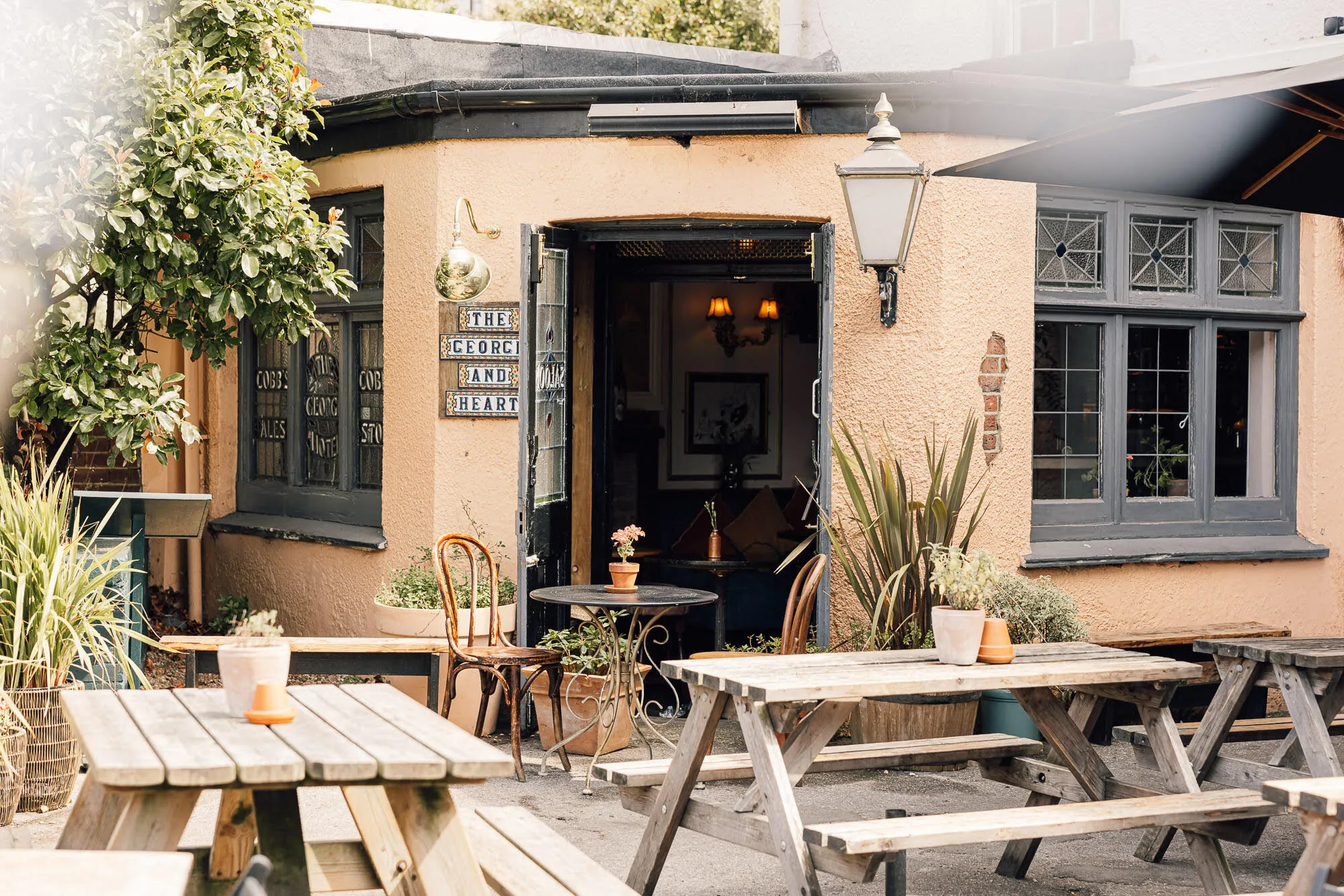
One of Margate’s most stylish places to stay is The George & Heart HouseCredit: SuppliedThe pub dates back to the 18th centuryCredit: Supplied
Where is The George & Heart House?
You couldn’t ask for a much better spot from which to explore Margate.
Across the road are the Old’s Town’s vintage shops, cafes and pubs while just a five-minute walk away is the beach as well as the Turner Contemporary art gallery and retro amusement park Dreamland, both of which are free to enter.
Sign up for the Travel newsletter
Thank you!
Margate train station is a ten-minute stroll from the hotel.
What’s it like?
Sat on the edge of Margate’s Old Town, this revamped 18th-century coaching inn is full of character.
The charming interior features exposed brickwork, velvets, fringes and drapes with eco-friendly up-cycled furniture and a colour scheme of pink and dark green.
What are the rooms like?
There are six compact rooms designed by Kent creatives, all with their own unique style and names.
Among them, Burley & Field has Art Deco and Oriental influences while Home Alone With Mrs Jones is a riot of 1970s Biba-style imagery.
There is also the plush and spacious Heritage Suite, where I stayed, which takes up an entire floor.
It comes with two bedrooms and a big living space complete with a small kitchen area, two sofas, wall-mounted flatscreen TV and a dining table.
The hotel is the perfect base for exploring the rest of MargateCredit: Supplied
What is there to eat and drink?
Definitely eat here. The restaurant delivers mainly pub classics, including burgers and fish and chips, but also more elaborate dishes such as pork Milanese.
I had the halibut in a tomato and caper sauce with new potatoes and tenderstem broccoli which was perfectly cooked and delicious.
In the summer you can also dine in the pub’s airy Stables Courtyard.
The breakfast is continental, including juices, muesli, fruit, croissants, ham and cheese.
What else is there to do?
The hotel has a Zen Den, which offers massages and facials by appointment, but can also be used by guests for morning stretches or meditation.
Is it family friendly?
The hotel’s two-bedroom Heritage Suite sleeps four, so works for families.
Is it accessible?
Due to being a historic pub, the hotel is not wheelchair accesible
Autumn is the perfect time to explore what’s going on across the UK
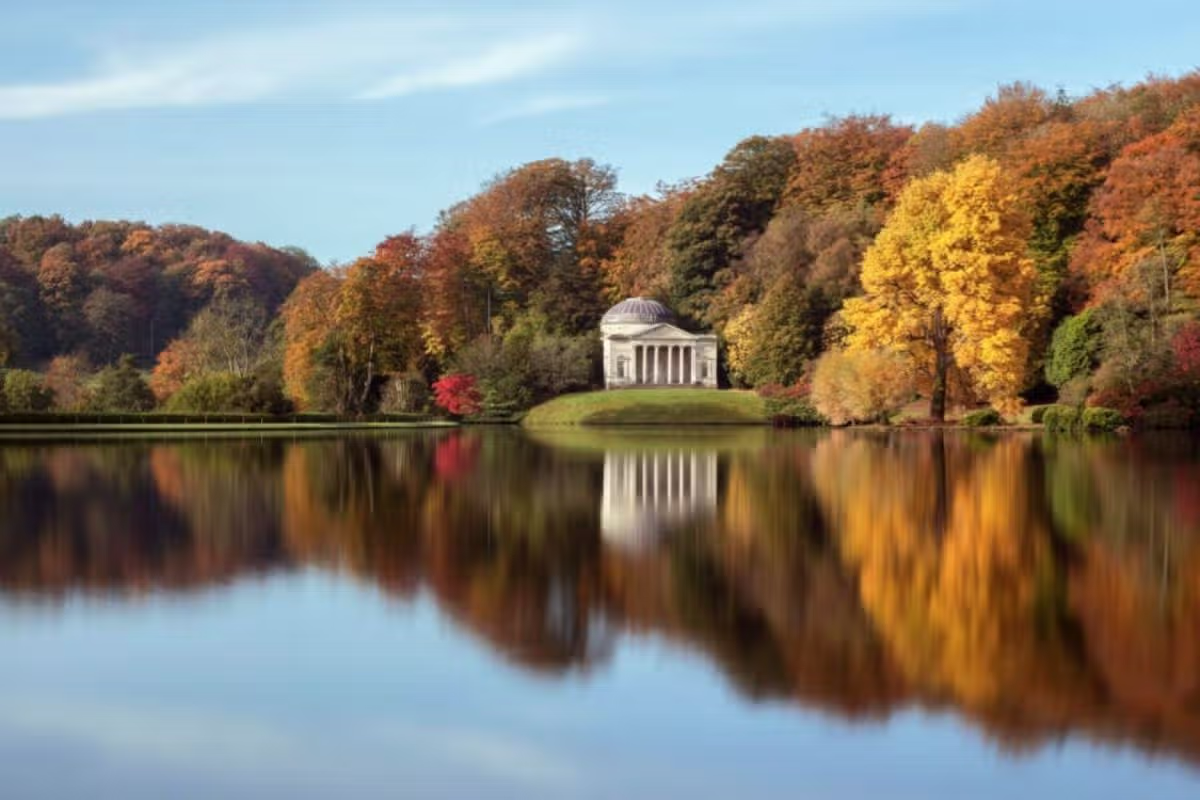
This gorgeous place is a must-see in autumn(Image: Western Daily Press)
Autumn is here, and this season is when the UK truly shines. On a crisp bright day there is nothing more beautiful than a country walk, soaking in the technicolour trees as their leaves change from green to all the red and orange shades of autumn.
The only thing that is better is the promise of a cosy pub at the end with a roaring fire, tucked away on a high street that’s teeming with independent shops. This situation might sound like a utopian dream – but there is one place in the UK where you can enjoy all of this.
If it’s the autumn colour you want, you need to start your day at Stourhead in Wiltshire.
This National Trust home and garden was one of the first grand Palladian style homes built in England, and has been kept beautifully preserved.
The home is set within 2,650 acres of lush English countryside with walking paths criss crossing the land.
There’s a vast lake on the ground and at its shores is a hidden grotto where you can look out over the water and see the bright fiery trees reflecting in the still water.
The gardens are also home to several Roman inspired temples, including temples of Apollo and Flora. Once you have enjoyed the house and the garden and maybe even stopped for a cup of tea in the cafe, you can head to the charming town of Mere.
The town is just a 15 minute drive from the property, and is a quiet haven away from the hustle and bustle of city life.
Mere is an historic town nestled beneath the South West Wiltshire Downs and close to the borders of Somerset and Dorset.
The charming high street has florists, antique stores and tea rooms, perfect for a weekend wander. There’s also a selection of pubs to choose from – and the oldest is one of the best.
The George Inn, located at the Square in Mere is the town’s oldest pub and dates back to the 16th century.
The main bar has a large, roaring log fire with cosy seating and the menu serves up classic pub food, perfect for warming up after a chilly autumn walk.
The Bangsamoro region in the southern Philippines is holding its first elections on Monday, after a five decade-long armed struggle that claimed over 120,000 lives. The vote is the result of a 2014 peace agreement between the Philippine government and the Moro Islamic Liberation Front.
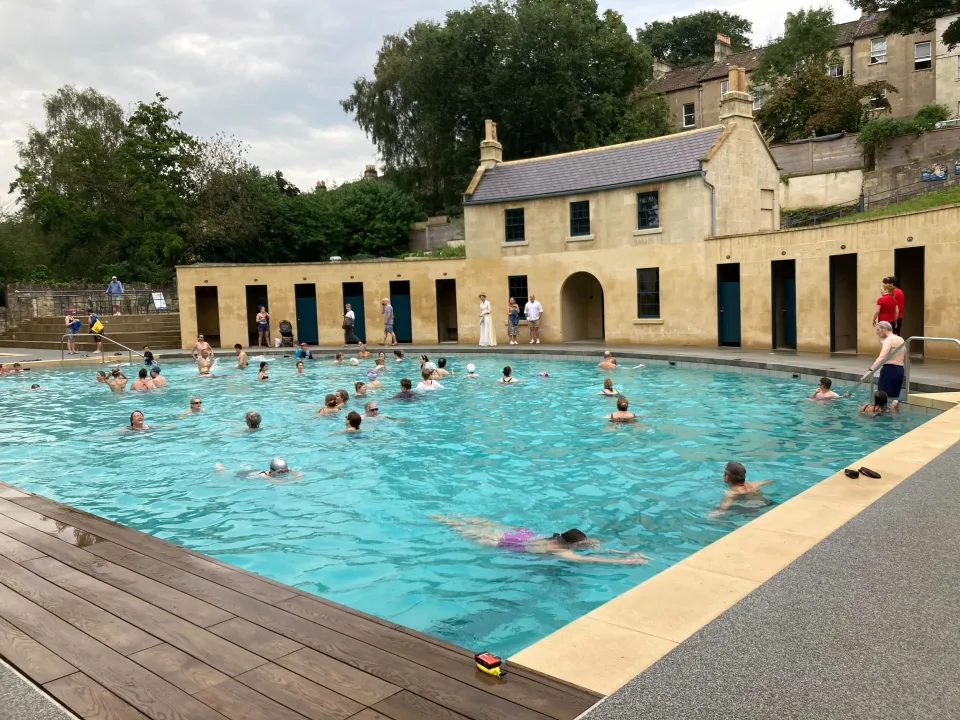
It is important to note that the pools are not currently open for swimming.
So while this is not a chance to have a swim, you will have a chance to hear talks on the future of the site.
Visitors will be able to meet the trustees and volunteers to hear about their vision for the site.
The free event will also have children’s activities and heritage walks around the site.
“This Open Day is an opportunity to shape the future of the pools as we explore a viable and appropriate route to re-opening,” a note on the trustee website explains.
It is running from 10:30am to 4pm, on Sunday, September 13 at Cleveland Pools, Hampton Row, Bath, BA2 6QS.
RIYADH: Perched atop Mount Munikh west of Al-Majmaah, the historic Munikh Observatory offers a striking example of how traditional Najdi builders used natural terrain and local materials to defend settlements and monitor the surrounding landscape.
Rising about 25 meters above the mountain, the watchtower commands panoramic views of Al-Majmaah and the surrounding farms. Its elevated position once allowed guards to watch approaches to the settlement through narrow openings built into its thick walls.
Historical sources, including writings by Al-Hamdani, associate the name “Munikh” with an ancient town near the mountain. The observatory’s origins are traditionally dated to the 15th century, with the watchtower at the summit specifically dated to 820 AH, or 1417 CE.
What was once a military outpost overlooking a Najdi settlement has been transformed into a year-round cultural destination.
The site was traditionally known as a marqab, or observation post, and formed part of a broader defensive network surrounding the settlement. A stone wall once encircled Al-Majmaah, following the mountain’s natural ridges and incorporating three defensive bastions.
Much of the ancient outer wall was absorbed by modern urban development, but the section on Mount Munikh remains preserved. Its features include thick, tapering stone foundations and strategically placed firing slits designed for defense and surveillance.
The main structure consists of two cylindrical towers, one nested within the other, rising about 12 meters. Local stone was used for the lower sections, while the upper levels were built of mud brick. Tamarisk wood was used for ceilings and lintels, reflecting the builders’ reliance on materials readily available in the Najd environment.
Five projecting defensive balconies strengthened the structure, with four positioned to protect the flanks and another covering the main entrance. The towers are topped with traditional Najdi crenellations, while specialized openings allowed defenders to monitor and respond to threats.
Rising about 25 meters above the mountain, the watchtower commands panoramic views of Al-Majmaah and the surrounding farms
The observatory originally served as an early-warning post, with night-fire beacons used to signal approaching danger. Following the unification of the Kingdom, its vantage point was also used to monitor trade caravans, seasonal floods and pilgrim routes.
Mount Munikh occupies a strategic position in the historic Sudair region of the Najd plateau, about 180 kilometers northwest of Riyadh. Al-Majmaah was once known as “Baldat Munikh,” reflecting the mountain and its importance to the settlement.
The Heritage Commission has in recent years restored the observatory and sections of its fortified walls, adding visitor paths, stone staircases and lighting to improve access while preserving the site’s historic character.
Much of the ancient outer wall was absorbed by modern urban development, but the section on Mount Munikh remains preserved. (SPA)
A Visitor Center now provides an introduction to the history of Al-Majmaah, Mount Munikh and the watchtower. Bilingual interactive exhibits and guided stations offer visitors a closer look at the region’s architectural and defensive heritage.
What was once a military outpost overlooking a Najdi settlement has thus been transformed into a year-round cultural destination, linking Al-Majmaah’s modern visitors with the landscape and traditions that shaped its past.
THE Great British Bake Off is back in a matter of weeks with a new horde of amateur bakers wanting to prove their skills to the judges.
But did you know that the Channel 4 series films on the grounds of a stunning manor house and you can visit the estate for yourself next month?
Welford Park is the filming location for the Great British Bake OffCredit: High LevelThe Channel 4 baking series filming on the grounds every summerCredit: Channel 4 / Mark Bourdillon / Love Productions
Welford Park, a country house in Berkshire, has been GBBO’s filming location since 2014 – and members of the public usually aren’t allowed inside.
For the majority of the year, the 17th century estate is a private family home and working farm.
Sign up for the Travel newsletter
Thank you!
However, it does open for seasonal events and will open its doors to the public in October for its Spectacle of Light trail.
It will see the grounds, woods and gardens is lit up with lanterns and beautiful light displays for families to explore.
New for this year is its Alice’s Amazing Adventures in Wonderland where you’ll spot the White Rabbit, the Mad Hatter, Cheshire Cat – and even the Queen of Hearts.
There’s food and drink too from hot chocolates to toasted marshmallows and plenty more at Food Truck Village where there’s also a Tipi Bar.
It’s received high praise by families too with one visitor called it a “a magical winter event”.
They added: “The lights at this event were spectacular and the children were in awe of them, as were the adults. The formal gardens in particular were stunning. Hot chocolates were some of the best we’ve had.”
Its Spectacle of Light show will start on October 22Credit: David Hartley
The light trail will be on at Welford Park between October 22 and November 7.
Tickets start from £24 per adult and £14.50 per child (3-15) – infants between 0-2 go free.
For those who want to see the grounds in all their glory, they will reopen to the public for snowdrop season.
Between January 27 and February 28 will be its Winter Gardens & Snowdrops event that has been a tradition for the last 50 years.
The estate is covered in light trail and displays for families to exploreCredit: David HartleyEarly in 2027 the estate will be open again to see the snowdropsCredit: Alamy
The snowdrops flood the grounds of the woods and sit along the riverbanks of the River Lambourn and the gardens.
The gates open at 11am and last entry is 4pm (it is closed on Mondays and Tuesdays).
Tickets start from £12 per adult and £8 per child (4-15) – under 4’s go free.