historic preservation

Supreme Court rules for Trump and his ballroom, dismisses legal challenge

A divided Supreme Court has cleared the way for President Trump to finish building his new White House ballroom with mostly private money and without approval from Congress.

By a 5-4 vote. the justices granted an emergency appeal from Trump and his lawyers on Monday and set aside a judge’s order that would stop the construction.

But Chief Justice John G. Roberts Jr. dissented, along with the court’s three liberals.

The outcome turned on standing.

The conservative majoritysaid the National Trust for Historic Preservation and its members were not personally injured by the White House ballroom project and therefore, did not have to standing to sue Trump or the National Park Service.

They also said Trump and his appointees had stressed the new ballroom was needed for national security and said the lower courts judges should not have interfered.

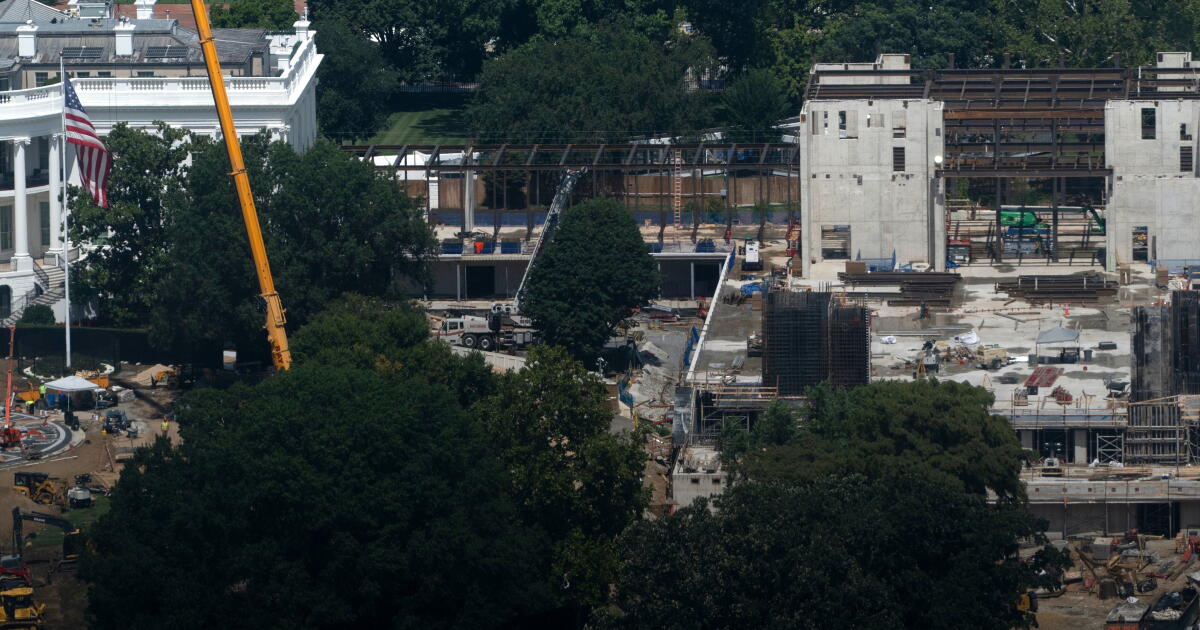
The decision in effect gives a green light to Trump’s go-it-alone approach which is in keeping with his history as a hotel builder. He believed the White House needed a grand ballroom that could seat hundreds of dignitaries. And he ordered the East Wing torn down in October to make room of his larger ballroom.

He also said most of the project would be paid for by $400 million in private donations.

But the Constitution gave Congress the power to manage property belonging to the United States. A 1912 law says new buildings “shall not erected…on public grounds within the District of Columbia without express authority of Congress.”

Trump chose to ignore the law and did not seek approval from Congress which is led by Republicans.

The National Trust for Historic Preservation sued in December, contending Trump was a “temporary tenant, not the owner” of the White House.

U.S. District Judge Richard Leon ruled Trump had no authority to build a new ballroom on the White House grounds without the approval of Congress, and he ordered a halt to the above-ground construction.

The D.C. Circuit Court affirmed his decision by a 2-1 vote.
“Congress has not ceded unfettered authority to the Executive Branch to dramatically redesign, reshape, and reconstruct the White House—the People’s House—to fit a particular President’s desires,” wrote Judge Patricia Millett for the appeals court.

Trump’s lawyers sent a fast-track appeal to the Supreme Court on Aug. 14.

The court’s majority allowed Trump to fend off the legal challenge by concluding the historic preservationists could not show they were harmed by a huge new ballroom that may dwarf the historic Executive Mansion.
Source link

Justices urged to block Trump’s new ballroom so Congress can decide

The Supreme Court was urged Tuesday to block construction of President Trump’s huge new ballroom until Congress weighs in. A decision, perhaps only temporary, is likely by Friday.

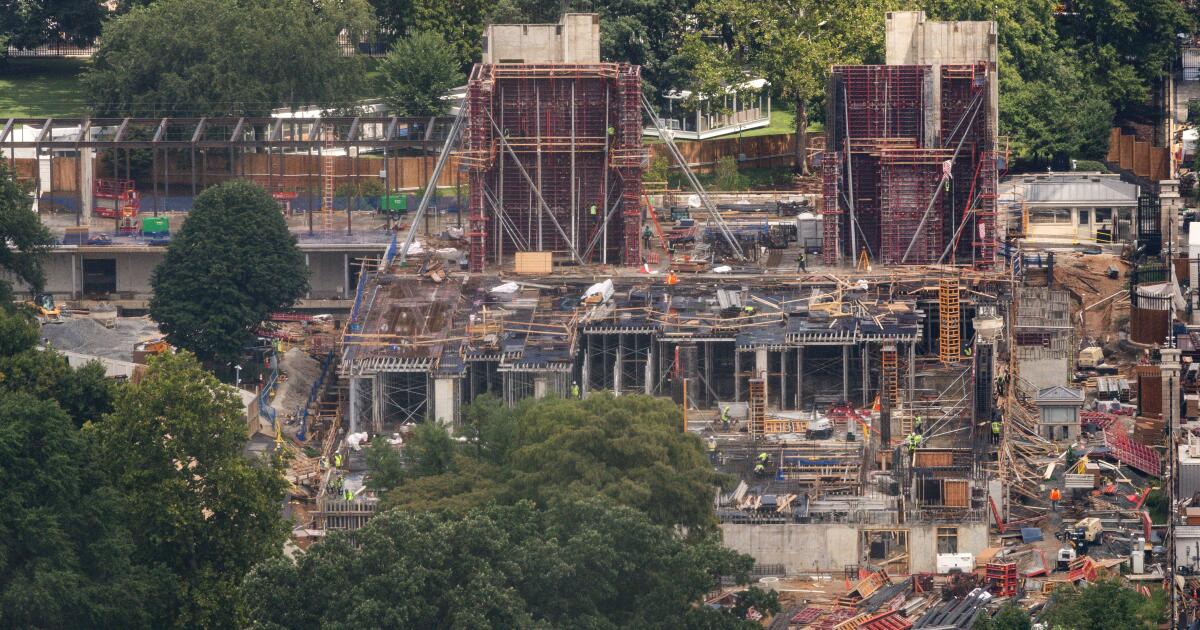
Acting on his own, Trump had the East Wing of the White House torn down in October and ordered work to start on a massive new building that would dwarf the old executive mansion and seat 1,000 guests for dinner.

But a federal judge in Washington ruled that Trump had overstepped his authority, and the U.S. Court of Appeals agreed in a 2-1 ruling on Aug. 7.

Those judges would stop the above-ground construction but put their decision on hold until this Friday. This gave the administration time to appeal to the Supreme Court.

The National Trust for Historic Preservation had sued, arguing that the president has no authority to erect new buildings on government property.

Federal law protects “historic buildings, parks, and places, including perhaps the most revered site in our nation: the White House and President’s Park,” the group told the court Tuesday. It is “more than the President’s residence” and “is owned by American people.”

The historic trust said Trump is moving quickly so as to bypass the law.

“Rather than obtain permission from Congress,” Trump and his appointees “have instead decided to try to outrun judicial review,” it said.

Meanwhile, Trump’s lawyers have taken to describing the ballroom as a national security project.

Last week, Solicitor Gen. D. John Sauer told the justices they should throw out the “extraordinary and unlawful injunction that will halt the ongoing construction of the integrated military complex” because “a totally secure ballroom space … is vitally required by national security.”

He also contended it is too late for judges to intervene.

“Today, the project is 65% complete in its entirety, and moving quickly toward total completion. A concrete-and-steel superstructure stretches five stories deep and 70 feet high, and occupies nearly 50,000 square feet, with construction on and above the second-story level above ground.”

While the plans have changed, the “work has followed a single coherent design,” he wrote. “By now, it has passed the point where major changes to [that] design are feasible.”

U.S. District Judge Richard Leon, a George W. Bush appointee who ruled on the lawsuits, agreed the White House may proceed with the underground work to create a safe and secure location for the president, his family and White House employees.

The solicitor general said a new and secure ballroom is also crucial for social gatherings and foreign dignitaries.

He said that if Leon’s ruling is “allowed to go into effect, the injunction would wrongfully install a single district judge as sole arbiter of what further construction is strictly necessary to protect the safety of the President, his family, staff members, and visitors to the White House, including foreign dignitaries, and presidents and prime ministers of other countries.”

Sauer also argued the lawsuit should be thrown out on the grounds that National Trust for Historic Preservation and its members have no standing to sue because they have not suffered a particular injury.

The D.C. Circuit judges split on that issue. Judges Patricia Millett, an Obama appointee, and Bradley Garcia, a Biden appointee, ruled the plaintiffs had standing to sue. Judge Neomi Rao, a Trump appointee, dissented and said the members of the historic trust did not have standing.

Source link